Showing posts with label Journal of Cancer. Show all posts

Saturday, 9 September 2023

Lupine Publishers | Beer Consumption: Health Effects

 Lupine Publishers | Journal of Oncology and Medicine


Abstract

Background: Beer is one of the most seasoned and most broadly expended alcoholic beverages on the planet and is the third most commonly consumed drink after water and tea world over.

Aim: The aim of this review article was to study the health effects of beer consumption and compare the positive effects of consumption of wine, beer and spirits when consumed in moderation.

Methods: Literature was searched in the form of epidemiological studies, prospective studies and clinical trials and the health effects of different alcoholic beverages were studied and compared when consumed in moderation. Moderate consumption of beer was defined as non bingeing utilization of 1 beverage for every day in ladies and upto 2 beverages for each day in men.

Conclusion: Although alcohol consumption is a two-sided coin, moderate alcohol consumption in the form of wine or beer has been shown to have a protective role for the cardiovascular system and in addition to being anti-carcinogenic. Both wine and beer consumption in moderation have been associated with health benefits, but to a lesser degree with beer as compared to that of wine , probably because of beer’s lower phenolic content. Healthy effects of wine and beer are greater in combination with a healthy diet. The main protective effects on the cardiovascular system and cancer resulting from moderate wine and beer intake is mainly due to their common components, alcohol and polyphenols. The general recommendations are one drink (150mL of wine or 10g of alcohol) daily for women and two drinks (300mL of wine or 20g of alcohol) daily for men.

Keywords: Beer; Alcohol; Wine; Spirits; Moderate consumption; Xanthohumol

Introduction

Doctors ought to know about the developing proof supporting the dietary and medical advantages of moderate utilization of alcohol as a component of a sound way of life Beer is one of the most seasoned and most broadly expended alcoholic beverages on the planet and in America it adds to 55.3% of the liquor devoured. It is the third most commonly consumed drink after water and tea world over. Beer is fermented from oat grains-most usually from malted grain, however wheat, maize, and rice may likewise be utilized. Moderate, non-bingeing beer utilization as 1 beverage for every day in ladies and upto 2 beverages for each day in men, diminishes the danger of cardiovascular ailment. This impact is like that of wine, at similar alcohol amounts [1]. The strength of current brew is more often than not around 4% to 6% alcohol by volume (ABV), in spite of the fact that it might differ somewhere in the range of 0.5% and 20%.

A big No!

Consumption of beer, at any measurement isn’t prescribed for youngsters, teenagers, pregnant ladies, people in danger to create liquor abuse, those with cardiomyopathy, cardiovascular arrhythmias, depression, liver and pancreatic illnesses or anybody occupied with activities that require fixation, aptitude or coordination [1].

Wine

The off late affirmed willful mark on wine saying that” The proud people who made this wine encourage you to consult your family doctor about the health effects of wine consumption” suggests that doctors ought to advance wine as the favored wellspring of dietary alcohol. However, studies evaluating the relative benefits of wine versus beer versus spirits suggest that moderate consumption of any alcoholic beverage is associated with lower rates of cardiovascular disease. From a nutritional standpoint, beer contains more protein and vitamin B complex than wine [2]. The antioxidant content of beer is equivalent to that of wine, but the specific antioxidants are different because the barley and hops used in the production of beer contain flavonoids different from those in the grapes used in the production of wine [2]. Wine has a long history of use as a medicine making it the world’s oldest documented human made medicine and is recommended as an antiseptic for treating wounds, a digestive aid, for lethargy, diarrhoea and as an analgesic for pain from childbirth [3]. The risk of colon cancer, prostatic cancer and breast cancer can be reduced by consuming moderate amounts of wine and has been proven to have positive health effects in patients with diabetes mellitus and cardiovascular diseases [3].

Arterial Stiffness

Increased arterial stiffness has been identified as an independent risk factor for future cardiovascular disease [4]. Epidemiological examinations uncover a J‐shaped relationship between liquor utilization and blood vessel stiffness, with blood vessel hardening lower among mild‐to‐moderate consumers than overwhelming consumers or non-drinkers [5]. The changes in arterial stiffness are generally thought to results from structural changes (i.e., elastin and collagen content), functional changes (i.e., sympathetic nervous activity, vasoactive substances), or a combination of both [6]. Consumption of alcoholic beverages in excess of the mild‐tomoderate level is known to elicit a reduction in arterial compliance, which means an increase in arterial stiffness [7].

Pattern of drinking and type of alcoholic beverage

Moderate drinkers have a lower risk of developing coronary heart disease and less mortality compared to both heavy drinkers and abstainers, heavy drinkers being the ones with the highest risk [8]. Mukamal et al. reported that alcohol intake distributed over the week inversely associates with the risk of myocardial infarction independently of the type of beverage or the proportion consumed with meals [9]. Some studies supported the benefits of wine on cardiovascular outcomes and mortality and depicted that a J-shaped relationship was found in wine, but neither in beer nor spirits [10]. A recent study reported by Costanzo et al. provided evidence that the J-shaped association is found in both wine and beer, but not in spirits [11]. Fermented beverages, both wine and beer are rich in antioxidants, mainly polyphenolic compounds [12], that are missing in spirit beverages.

Mechanism of action

A number of studies and clinical trials have suggested that alcoholic beverages may exert different protective effects against atherosclerosis development either by modulating lipid metabolism, platelet activity, inflammation, and thrombogenic factors [13]. Specific interest focuses on fermented alcoholic beverages such as wine or beer wherein epidemiological evidence and results from prospective clinical trials suggests that these beverages with heterogenous content of non-alcoholic components might confer better cardiovascular protection than spirits [1,14].

How much is too much!

Epidemiological and clinical studies have pointed out that moderate consumption of beer viz one glass a day for females and two glasses a day for males, is associated with decreased incidence of cardiovascular disease (CVD), hypertension, diabetes, and certain types of cancer, including colon, basal cell, ovarian, and prostate carcinoma. Excessive intake has been associated with hypertension and atrial fibrillation [15].

Content

Beer is rich in nutrients such as carbohydrates, amino acids, minerals, vitamins and other compounds such as polyphenols. Hop (Humulus lupulus L.) is one of the raw materials of beer which serves as an important source of phenolic compounds. Dried hop cones contain about 14.4% of polyphenols, mainly phenolic acids, prenylated chalcones, flavonoids, catechins and pro- antocianidins [16]. Around 30% of polyphenols from beer comes from hops and 70%–80% originates from malt [17].

Given a choice!

A recent meta-analysis including a parallel and separate evaluation of wine and beer consumption indicated a similar protective effect for beer and wine against cardiovascular risk [18]. On the contrary, no statistically significant association with vascular events was apparent for the intake of spirits- the type of alcoholic drink with the highest alcohol concentration and the lowest polyphenolic concentration- suggesting that the polyphenolic constituents found in wine or beer could be responsible for the beneficial effect of alcoholic beverages on vascular events [19]. Results of another study reveals that moderate consumption of alcoholic drinks with a high alcoholic grade (liquors and distillates) also has a cardio-protector effect [20] explaining the fact that part of the beneficial effects of alcoholic beverages is largely due to ethanol, and not to the other specific components of each type of drink.

Anti- cancer role

Xanthohumol is the best studied anti-carcinogenic present in beer which acts by inhibiting the metabolic activation of procarcinogens, detoxifying enzyme inducers of carcinogens [21]. Other compounds in beer with anti-carcinogenic capacity are 8-prenilnaringenin, isoxanthohumol and other prenilflavonoids, as well as the flavanones, humulones and proantocianidins [22].

Conclusion

Although heavy and excessive beer consumption exerts deleterious effects on the human body, with increased disease risks on many organs and is associated to significant social problems such as addiction, accidents, violence and crime, literature shows no harm with moderate beer consumption for major chronic conditions and some benefit against cardiovascular disease [1]. The main protective effects on the cardiovascular system and cancer resulting from moderate wine and beer intake is mainly due to their common components, alcohol and polyphenols.

It must be emphasized that the benefits associated with wine and beer are dependent upon moderate consumption. The general recommendations are one drink (150mL of wine or 10g of alcohol) daily for women and two drinks (300mL of wine or 20g of alcohol) daily for men. These different recommended daily doses of alcohol between genders are explained by the fact that women are more sensitive to the effects of alcohol on the body.

Healthy effects of wine and beer are greater in combination with a healthy diet. The health benefits associated with the Mediterranean diet, which combines moderate wine and beer consumption with a diet rich in fruits, vegetables and whole grains, suggests that polyphenols have synergistic effects with compounds found in other groups of foods.

There is no evidence to support endorsement of one type of alcoholic beverage over another [2]. However some studies have revealed that although both wine and beer consumption in moderation have been associated with health benefits, but to a lesser degree with beer as compared to that of wine , probably because of beer’s lower phenolic content.

Although alcohol consumption is a two-sided coin, moderate alcohol consumption in the form of wine or beer has been shown to have a protective role for the cardiovascular system and in addition to being anti-carcinogenic. American Heart Association recommends that heavy drinkers or alcohol abstainers should not be encouraged to drink wine for health reasons.

Read More About Lupine Publishers Journal of Oncology Please Click on below Link:
https://lupine-publishers-cancer-journal.blogspot.com/

Friday, 9 June 2023

Lupine Publishers | Myocardial Perfusion Imaging Reveals Breast Cancer

 Lupine Publishers | Journal of Oncology


Abstract

Diagnostic evaluation of chest pain using myocardial perfusion imaging (MPI) is a common method employed to look for coronary artery disease (CAD). The isotopes used in MPI are also useful for imaging cancer, including breast cancer. We present a case where breast cancer was diagnosed using a quantitative method which simultaneously looks for cancer and CAD.

Introduction

Diagnostic evaluation of patients with chest pain may include myocardial perfusion imaging. During the initial stress imaging evaluation, differences in regional blood flow and metabolism differentiates normal coronary blood flow from abnormal – viz. ischemia. Breast cancers are also associated with increased regional blood flow and metabolism and can be seen during the initial imaging as was done in this woman. Awareness of these similarities resulted in identification and successful treatment of her breast cancer prior to further spread of the cancer.

Case Report

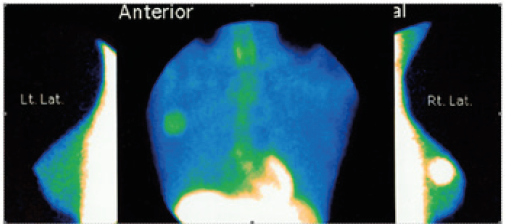
A 39-year old woman presented with atypical chest pain. She was referred for myocardial perfusion imaging. Following pharmacologic stress, her initial images - shown here - were acquired 5-minutes after isotope injection. A mass was identified in her right breast and was surgically removed revealing a Stage IIA breast cancer without LN involvement. Additional workup revealed no evidence of metastatic disease. The patient elected to undergo no further treatment.

Discussion

Quantitative measurement following enhancement of regional blood flow differences, which reflect both changes in metabolism and regional blood flow, can be measured to unmask ischemia and cancers [1]. These changes can reflect CAD, which is itself caused by inflammation [2], as well as pre-cancerous changes, which can also be associated with inflammation.

Conclusion

By understanding the fundamental differences in tissue resulting from changes in metabolism and regional blood flow differences, nuclear imaging can quantitatively unmask CAD and hidden cancer (Figure 1).

Figure 1: Figure of FMTVDM.

Lupinepublishers-openaccess-cancer-Oncology

Acknowledgment

FMTVDM issued to first author. Figures reproduces by expressed consent of first author.

Read More About Lupine Publishers Journal of Oncology Please Click on Below Link:
https://lupine-publishers-cancer-journal.blogspot.com/
Saturday, 25 February 2023

Lupine Publishers | Epigenetically Reprogrammed Methylation as a Gifted Potential Cancer Biomarker

 Lupine Publishers | Journal of Oncology


Introduction

Ontrary to genetic changes of DNA molecule which change exactly the sequence of DNA and are not reversible, the DNA methylation involves in addition of a methyl group to cytosine nucleotide to control genes expression which is reversible [1,2]. Methylation is unique change that consequence in different gene expression pattern and finally may trigger the onset of diseases like cancer [3]. Epigenetic reprogramming in cancer cells represents a unique methylation landscape concerning the net loss of global DNA methylation simultaneously with an increase in the levels of in CpGs islands. So, cancer epigenetically reprogrammed methylation landscape (i.e., Methylscape) can be a common feature exhibited by most cancer types and therefore can be a universal cancer biomarker. The DNA methylation in molecular level change the gene expression pattern of the cell but methylation can change the physicochemical properties of DNA polymer in solution including DNA structure and its affinity as well.

It is shown by Abu Ali Ibn Sina and his colleagues examined the consequence of levels and genomic distribution of methylcytosines on the physicochemical properties of DNA to sense the Methylscape biomarker [4]. They found that DNA polymeric behavior is powerfully affected by differential patterning of methylcytosine resulting in fundamental differences in DNA solvation and DNA-gold affinity as the discriminative biomarker between cancerous and normal genomes. They use the Methylscape differences to develop simple, greatly sensitive and selective electrochemical or colorimetric one-step assays for the detection of cancer.

In mammalian genomes, DNA methyltransferases (DNMTs) duty is transferring the methyl group from S-adenosylmethionine to cytosine at CpG dinucleotides (CpG islands) [5]. The majority of the methylation happens through DNA duplication in the S-phase of the cell cycle, and is the supreme rich form of post-replicative DNA alteration of eukaryotic organisms [6,7]. DNA methylation cause the 180° flip out of the DNA backbone into an active-site pocket of the enzyme where methylation of cytosine takes place [8]. In fact, well methylated DNA (hypermethylated) is classically coupled with inactive genes, whereas methylation depletion (hypomethylation) can be observed in active genes.

Actually it is confirmed that DNA segments containing methylated Cytosine like something which is happening in cancer cells, are very stiff and hard to bend, and present an inferior tendency to circularize or form nucleosomes by wrapping around histones and can be used as the discriminative universal cancer biomarker [4]. There is a big hope that in the near future by using some physical properties of methylated DNA in comparison to nonmethylated DNA the diagnostic kits will be approved with no advanced complicated molecular technologies.

Read More About Lupine Publishers Journal of Oncology Please Click on Below Link:
https://lupine-publishers-cancer-journal.blogspot.com/

Saturday, 1 October 2022

Lupine Publishers | Carbon Nanotubes: Exploring Intrinsic Medicinal Activities and Biomedical Applications

 Lupine Publishers | Journal of Oncology


Introduction

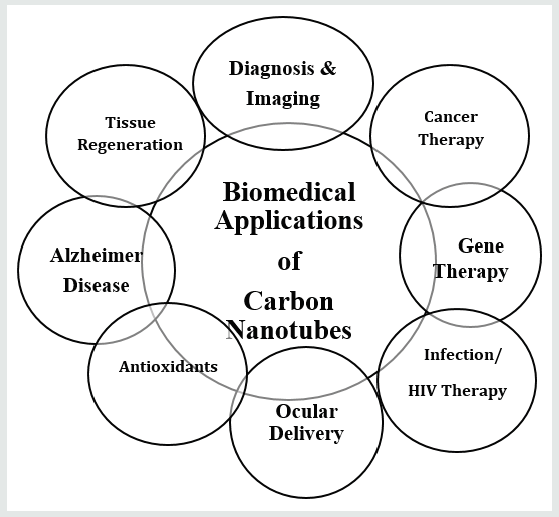
Carbon Nano materials the king of nonmaterial’s have fascinating nanofamily including buckyballs or buckminsterfullerenes [1], multiwalled carbon nanotubes [2], the single-walled carbon naotubes(SWCNTs) [3], Carbon Nanohorns(CNHs), Carbon nanocones, Carbon nanofibers (CNFs), carbon nanothread, Buckypaper, carbon dots, nanodimons, nanoonions, nanorods, nanoribbons. Also called as powerful particles, CNTs (carbon nanotubes) has thus bloomed over the past decade [4,5]. Increasing evidence has shown that certain CNT properties such as nano-sized dimension, high surface energy, and large reactive surface area are directly correlated to their biological activities [6,7]. Great property of loading various biomolecules, diagnostic and therapeutic moieties resulting in diversified biomedical applications of CNTs (Figure 1).

Figure 1: Intrinsic Biomedical Applications of Carbon Nanotubes (CNT).

Lupinepublishers-openaccess-cancer-Oncology

I. Diagonsis and Imaging: CNT act as biosensor or Nanorobots, which helps in diagnosis of disease, their progression level and their pathological condition in quick and better way. CNT biosensor are made up by conjugating different biochemicals with CNTs, like in glucuometer biosensor, glucose peroxidase is conjugated with CNTs that is use for the detection of blood sugar level in diabetic patients. Another example is SWCNTs-DNA biosensor that is use of detection of antigen –antibody comlex, which further helps in molecular diagnosis in pathology [7,8]. Complex of fluorescent agents and CNTs act as radio-opique agent that is use for the detection of cell and biological system in In-vivo organs [9].

II. Cancer Therapy: Carbon nantubes are effective against Pancreatic Cancer, Brain Cancer, Blood Cancer, Breast Cancer, Colon Cancer, Liver Cancer, Lymph Node, Metastasis, Prostate Cancer by using different anticancer drugs like Paclitaxel, Daunorubicin, Amphotericin B, Carboplatin, siRNA, Doxorubicin, Metal halides, Methotrexate etc. Apart from drug delivery route there are another two methods for cancer therapy using CNTs are immunotherapy and anti-tumor hyperthermia therapy [10].

III. Gene Therapy: CNTs and CNHs are used as vector in genetic engineering due to their cylindrical nature, which wrap the desired DNA and deliver it to target site to cure the genetic disorders by correcting misread or missense gene sequence [7].

IV. Infection/HIV Therapy: CNTs itself have antimicrobial activity by oxidising intracellular glutathione and resulted increase the oxidative stress on microbial cell that cause natural death of pathogen. CNTs also used in number of vaccinations to active immune response by triggering MHC-II, which further promote natural antibody production to stop the infection [11]. HIV( human immunodeficiency virus) that attack the immune response and decline the natural immunity, till date we cannot stop it completely but we can suppress or stop virus multiplication and control the disease .In this case conjugation of CNTs with siRNA that further deliver to T-Cell to stop virus proliferation [12].

V. Ocular Delivery: In case of ocular delivery there are number of challenges to deliver the drug to get adequate response with minimizing risk of infection. So therefore, SWCNTs-NH₃+ used as carrier to deliver antigen synthetic vaccination, safely and effectively by avoiding risk of necrosis and tissue degeneration [13].

VI. As Antioxidant: CNTs and CNHs are natural anti-oxidants. They are used in preserving drug molecules in formulation by inhibiting their oxidation. Furthermore, due to this property they are also used in anti-aging cosmetics products that oxidized the skin and stay it healthy and young [7].

VII. Neurodegenerative (ND)/Alzheimer Disease: Graphene sheets, and by extension CNTs, are excellent conductors of electricity, and thus are highly useful in the regeneration of neurons. Neurons can grow successfully on CNT beds, and modifying the surface with 4-hydroxyonoenal, known to be involved with neuron growth, can improve the neuron length and degree of branching over CNTs [11]. CNTs have many small additional sites that provide high surface area for external modification that’s why it is use as carrier to deliver the acetylcholine through blood brain barrier (BBB) and to treat Alzheimer Disease [14-16].

VIII. Tissue/Bone Regenreation: CNTs for the purpose of bone regeneration are being developed, which use negatively charged functional groups with calcium bonded to them. This can provide a scaffold to which hydroxyapatite, the most common inorganic component of bone, can attach. CNTs are very strong, stiff, and flexible which makes them an excellent alternative to the titanium or ceramic bone scaffolds [17,18].

IX. Carbon based nonmaterial by virtue of its therapeutic and diagnostic dual functions have emerged as theranostic nanomedicine. Carbon nanotubes intrinsic medicinal activities along with drug candidates may enhance the effectiveness of drug delivery. Unprecedented growth of patents and publication in last decade has forecasted the future of carbon based drug materials. A precise control for synthesis, purification and tools to increase solubility and further bio-functionality may lead to the development of carbon naotube based formulations. There is a need of clinical investigations for exploring the intrinsic medicinal activities of carbon nanotubes.

Read More About Lupine Publishers Journal of Oncology Please Click on Below Link:
https://lupine-publishers-cancer-journal.blogspot.com/

Friday, 7 January 2022

Lupine Publishers | Acute Erythroblastic Leukemia Revealed by Dermatological Manifestations

 Lupine Publishers | Journal of Oncology


Abstract

Acute erythroblastic leukemia is characterized by the proliferation of a predominant erythrocyte population on other lineages. Cutaneous manifestations remain rare and misleading, making the diagnosis of difficult to suspect as first-line. Here, we report an unusual and rare case of acute leukemia in a 24 year old male with gingival hypertrophy and dermatological manifestations. This case emphasizes that dentist and dermatologist should be well acquainted with these manifestations of systemic diseases.

Case Report

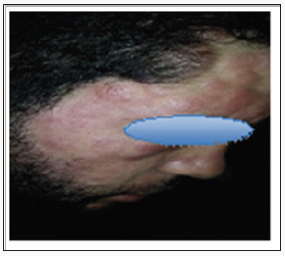
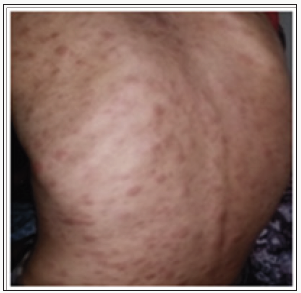
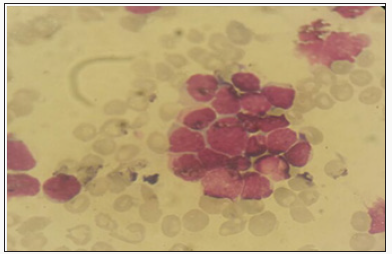
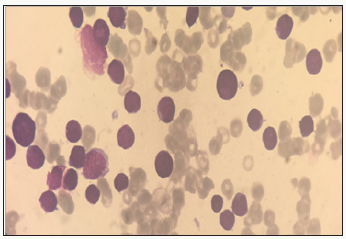
We report the case of 24 years old patient, with no significant pathological history, who had a rash for 10 days in a context of fever and very bad general condition. At admission the patient was febrile, tachycardic and dyspneic. Physical examination revealed erythemato-purplished papulo-nodules on the face, trunk, limbs and a gingival hyperplasia. The oral state was deplorable. Bilateral cervical lymphadenopathy was also found without the patosplenomegaly (Figures 1-3). The biological assessment showed a CRP of 150 and a pancytopenia with a Hbat 7.5g / dl, normal VGM and CCMH, a deep thrombocytopeniaat 85000 / l, leukocytesat 1500 / l. The blood smear showed 35% of circulating blasts and 22% of erythroblasts (Figure 4).

Figure 1: Clinical Manifestations of AML.

Figure 2: Clinical Manifestations of AML.

Figure 3: Clinical Manifestations of AML.

Figure 4: Blood smear showing 35% of circulating blasts.

The medullo gram showed a hyper-cellular marrow with a rate of myeloblasts greater than 45% compared to all non-erythroblastic elements and erythroblastic hyperplasia estimated at more than 65%; with signs of dyserythropoiesis suggestive of the diagnosis of erythroleukemia (Figure 5). Blood immune phenol typing was positive for CD13, CD33, MPO and Glycophotin A. The evolution was unfavourable; the patient died due to massive alveolarhemorrhage.

Figure 5: Hyper cellular marrow infiltrated by a blastic contingent estimated at 45%.

Discussion

Acute erythroblastic leukemia is characterized by the proliferation of a pre dominantery throcyte population on other lineages. There are two types: Erythroleukemia: defined by the presence in the bone marrow of more than 50% of the erythroid precursors of all the medullary cells, and more than 20% of myeloblasts of the whole non-erythrocytemedullary cells - Pure erythroid leukemia: it presents a neoplastic proliferation made of more than 80% of erythrocyte cells without obvious presence of the myeloblastic contingent [1]. It is usually manifested by signs of bone marrow failure and cytopenia [2,3], skin involvement remains rare, varied and disorienting the diagnosis; they are found mainly in Acute myelovlastic leukemia [4,5]. Cutaneous manifestations during leukemia are infrequent and varied. They designate all the cutaneouslesions related to the haematological malignancy directly or indirectly following their treatment; we essentially distinguish.

The specific dermatological lesions which can reveal hematological diseases [4], are mainly represented by leukaemides (leukaemia cutis), which are red brown to purple dermal papules, plaques or nodules. Granulocyticsarcom as an extra-medullary tumour masses, ulcerated plaques and gingival hypertrophy [5]. The infectious dermatoses secondary to the biological disturbances accompanying the malignan themopathy and their treatments. The occurrence of specific cutaneouslesions in leukemia is synonymous with a major aggravation of the prognosis (with for example a survival twice as short if there is a specific cutaneous involvement); this seriousness make some authors propose different treatments with a medium-long stay hospitalization[6-8].

In our case, acute myelonlastic leukemia 6 (AML 6 ) was revealed by diffuse leukemias resulting from the infiltration and proliferation of malignantha ematological cells (blasts) in the skin and by gingival hyperplasia secondary to mucosal infiltration [5]. The clinical presentation of acute leukemia including AML6 in the form of ulcer ativenecroticgingivitis in the foreground, is a rare form to be remembered, mentioned in all courses of medicine and dentistry, stipulating that Gingival involvement is a classic feature of leukemia [6] The frequent association of skin cancers with haematological malignancies is also highlighted in several publications [5].

Conclusion

The cutaneous localizations are among the rarest extreme dullary lesions of acute myeloid leukaemia’s (AML) not exceeding 1%. They are generally considered as factors of worse prognosis. Their cytogenetic or mutational specificities remain un established to date.

Read More About Lupine Publishers Journal of Oncology Please Click on Below Link:
https://lupine-publishers-cancer-journal.blogspot.com/