Showing posts with label Journal of Civil Engineering. Show all posts

Monday, 2 October 2023

Lupine Publishers | Development of Treatment Unit for the Treatment of Municipal Wastewater of Rajshahi City

 Lupine Publishers | Journal of Civil Engineering and its Architecture


Abstract

This research paper deals with the development of filter unit to treat the wastewater collected from municipal drain near City Hat area of Rajshahi City. The horizontal flow filtration process was considered for treatment of wastewater. Whole filtering system contains three to four layers where sand layer acts as the main filtering media. Besides, various sizes of coarse aggregates which works as filter media and base materials. The thickness of sand layer was used 600mm while other coarse aggregate layers were about 150mm. There were three different sizes coarse aggregate. Top most layer contained the coarse aggregate of size varying from 3mm to 6mm. The intermediate layer contained the coarse aggregate of size varying from 20mm to 40mm and the last layer contained the large coarse aggregate of size varying from 40mm to 65mm.The main purpose of this study was to reduce the pollutant concentration.

Keywords: Municipal water; Treatment; pH; Turbidity; Alkalinity; Organic content; Filter; Rajshahi

Introduction

Wastewater is defined as the water which is negatively impacted by public use. It can be formed by many operations such as domestic, commercial or agricultural operations etc. Such kind of water includes many pollutants above their permeable limits. Wastewater depends on its source, it may be household or it can be generated from industry. Households produce such kind of wastewater by daily activity. It generates from dishwashers, flush toilets, sinks, bath tubs etc. In case of urban communities, the wastewater produced by households with sewers is called municipal wastewater or sewage. Wastewater is comparatively less produced in households that use dry toilets than using flush toilets. The transportation of wastewater either be done by municipal sewer or combined sewer. After completing the treatment of wastewater in a treatment plant, the treated effluent is released to a receiving water body. Then this water is ready for use.

Rajshahi stands by the river of Padma and about 43lpcd municipal wastewater is discharged into the river without any considerable treatment [1]. As a result, water of this river is populated day by day. Besides, researchers and scientists said that the Baranai River flowing through the northern part of city is heavily polluted and contaminated with wastes and chemicals. The surrounding crop fields are also being polluted every day due to hazardous waste water. This water is being used by farmers for irrigation purposes. Fisher men are catching fishes every day from these rivers, so every is hazardous and harmful to human health and environment.

Many people from various parts of the country are gathering to Rajshahi city for study, seeking jobs and working in the city’s cottage and small industries. Meanwhile, the multistoried buildings, clinics, hospitals, diagnostic centers, small industrial units are also increasing constantly with an increasing number in the city. From these sources also from Rajshahi Medical College Hospital a large amount of toxic wastes is being disposed to nearby rivers through drains of RCC (Rajshahi City Corporation). Moreover, toxic effluent without any treatment from the BSCIC industrial units and textile industries are also pouring through the city drains into these rivers. This wastewater which is called polluted water bears many impurities which are harmful for public health and environment. The impurities present in wastewater refractory organics, biodegradable organics, are suspended solids nutrients, heavy metals, pathogens dissolved organic solids. These impurities cause communicable diseases, eutrophication, toxicity, anaerobic conditions in aquatic environment [2]. So, in a word, this wastewater is harmful for human health and environment. The untreated wastewater can cause severe damage on public health and nature. Even if, it can break down the ecosystem. Treatment of municipal wastewater is difficult due to extremely complex and variable composition. As a result, the lack of fresh water is increasing but with the increment of population, the demand of fresh water is increasing day by day. With increasing need of potable water there is no enough drinking water to supply. Primary treatment followed by secondary biological treatment by activated sludge of wastewater is ineffective in decolorization and toxicity removal, for this reason, tertiary treatment is needed for advanced oxidation process. But the techniques for this treatment are more costly and intensive. So, this advanced oxidation process means tertiary treatment is not always possible to apply. Sometimes, Bacterial biomass was used to treat municipal wastewater but in this case, there is possibility of forming byproducts which are more harmful to environment than existing compounds. Intrusion of contaminated water into ground water and fresh water bodies pose a serious threat to communities using these sources for water use [3].

According to the above information, every day a huge number of polluted water is discharging to the water bodies which is very harmful for public health and environment. If it continues, it will be very dangerous, and our existence will be at risk. So, it is important to treat this municipal wastewater to protect ourselves and our environment and this treatment system should be cheap and easy to operate. It will be best if it is possible to make this system using local materials having low market value. In this case, slow sand filtration process is more acceptable which is very cheap and easily to use and prepare.

Slow sand filter may be a method that is employed in water purification for treating raw water to supply a potable product. It can be 1-2 meters deep and its shape may be rectangular or cylindrical. According to the flow rate of filter, the length and breadth of filter is determined, which typically has a loading rate of 0.2 to 0.4 liters per hour (or cubic meters per square meter per hour) [4-7].

Table 1: Maximum Permissible Limits (MPL) for wastewater discharging into natural receiving bodies and for irrigation (IS: 2490, Part-I-1981).

Lupinepublishers-openaccess-journals-Civil-engineering-Architechture

In this study, an attempt has been made to check the qualities of wastewater and tried to treat them with slow sand filtration process to make them suitable for irrigation purposes, even freely discharge in Padma river without any hazardous elements. Maximum permissible limits for wastewater discharging into natural receiving water bodies and for irrigation are shown in Table 1.

Background

The first documented use of sand filters to purify the water supply dates to 1804, when the owner of a bleachery in Paisley, Scotland, John Gibb, installed an experimental filter, selling his unwanted surplus to the public. This method was refined in the following two decades by engineers working for private water companies, and it culminated in the first treated public water supply in the world, installed by engineer James Simpson for the Chelsea Waterworks Company in London in 1829. This installation provided filtered water for every resident of the area, and the network design was widely copied throughout the United Kingdom in the ensuing decades.

The practice of water treatment soon became mainstream, and the virtues of the system were made starkly apparent after the investigations of the physician John Snow during the 1854 Broad Street cholera outbreak. Snow was skeptical of the then-dominant miasma theory that stated that diseases were caused by noxious “bad airs”. Although the germ theory of disease had not yet been developed, Snow’s observations led him to discount the prevailing theory. His 1855 essay On the Mode of Communication of Cholera conclusively demonstrated the role of the water supply in spreading the cholera epidemic in Soho, with the use of a dot distribution map and statistical proof to illustrate the connection between the quality of the water source and cholera cases. His data convinced the local council to disable the water pump, which promptly ended the outbreak [8-10].

The Metropolis Water Act introduced the regulation of the water supply companies in London, including minimum standards of water quality for the first time. The Act “made provision for securing the supply to the Metropolis of pure and wholesome water”, and required that all water be “effectually filtered” from 31 December 1855.This was followed up with legislation for the mandatory inspection of water quality, including comprehensive chemical analyses, in 1858. This legislation set a worldwide precedent for similar state public health interventions across Europe. The Metropolitan Commission of Sewers was formed at the same time, water filtration was adopted throughout the country, and new water intakes on the Thames were established above Toddington Lock.

Water treatment came to the United States in 1872 when Poughkeepsie, NY opened the first slow sand filtration plant, dramatically reducing instances of cholera and typhoid fever which had been seriously impacting the local community. Poughkeepsie’s design criteria were used throughout the country as a model for other municipalities. Poughkeepsie’s original treatment facility operated continuously for 87 years before being replaced in 1959 [11-14].

Design and Construction

A treatment unit is developed in this study which is like as slow sand filter. The developed treatment unit is horizontal filter unit means the slope of the filter unit is very small. So, water is passed through the filter media at a slow rate. This filter unit is developed using available local materials.

In this study, the filter unit is developed using the following materials –

1. UPVC pipe. This is used as filter unit’s body. The length of the pipe was 6ft and diameter 6 inch.
2. Fine sand. Main filter media of this filter unit.
3. Small size coarse aggregate used as filter media.
4. Medium size coarse aggregate used as filter media.
5. Large size coarse aggregate used as filter media.

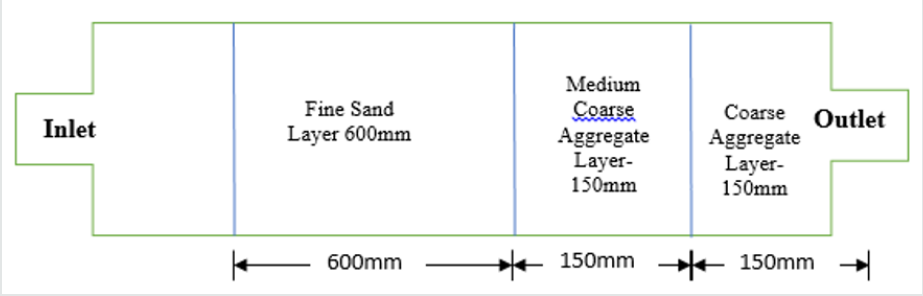
The developed filter unit is divided into two steps based on the number of layers. In the first step, three layers are used in the filter unit and in the second step an additional layer is added to the filter unit. In first step, following three layers are used-

1. Fine sand layer. Size of the fine sand varies from 0.2mm to 0.3mm. The length of this layer is 600mm.
2. Medium size coarse aggregate. Size of the medium size coarse aggregate varies from 20mm to 40mm and the length of this layer is 150mm.
3. Large size coarse aggregate. Size of the large size coarse aggregate varies from 40mm to 65mm and the length of this layer is 150mm

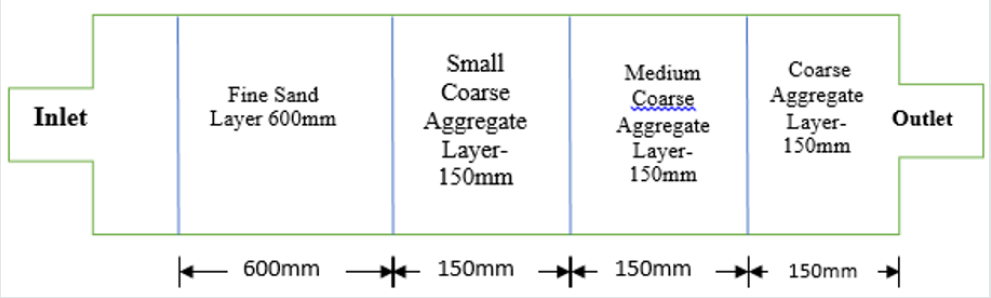
In case of second step, another layer is added, and that layer is-

1. Small size coarse aggregate.

Size of the small size coarse aggregate varies from 3mm to 6mm and the length of this layer is 150mm.

In front of the filter unit there is an empty space just after the inlet. Here, wastewater is poured from collected container. And the water can pass through the filter media. The slope of this filter unit is 1 in 125 which is within the standard value [4]. The treated water is then collected in another container at the outlet of the filter unit (Figure 1 & 2).

Figure 1: Plan of filter with three layers.
Lupinepublishers-openaccess-journals-Civil-engineering-Architechture

Figure 2: Plan of filter with four layers.
Lupinepublishers-openaccess-journals-Civil-engineering-Architechture

Methodology

The characteristics of wastewater sample collected from City Hat need to be determined by various tests like determination of pH, conductivity, total solid, suspended solid, dissolved solid, alkalinity, acidity, organic content etc. The allowable limit of these properties of water, to use in irrigation channel, needs to be compared with the wastewater samples properties. The characteristics properties which are beyond the allowable limit should be reduced if the water is to use in irrigation channel. Wastewater treatment process like coagulation reduces these properties and can make the water fit for using it in irrigation channel.

Wastewater sample was collected from primary drain located at City hat in Rajshahi City Corporation area. Representative wastewater sample was collected in PET bottle in sufficient quantity by following standard procedure. The sample was brought as early as possible to the laboratory and kept in chiller below 4 oC temperature to protect from the physical, chemical and biological changes. The experiment was done with great care and timely. There are three characteristics of municipal wastewater, such as physical characteristics, chemical characteristics and biological characteristics. Considering the intended treatment of municipal wastewater, the physical and chemical characteristics were determined based on turbidity, TDS, TSS, TS, pH, conductivity, acidity, alkalinity and organic content.

Results and Discussion

All tests were conducted in Public Health Laboratory, Rajshahi University of Engineering and Technology, Rajshahi. The results, obtained from laboratory test are shown in this chapter. Firstly, the quantification of the wastewater was done, then, untreated wastewater was characterized and compared with the standard values. In the second case, wastewater was treated with three layers of filter and all parameters were compared with the maximum permeability. At the final stage, wastewater was treated with four layers of filter and all parameters of the wastewater were below their permeable limits.

Quantification of waste water

For the determination of quantification of municipal wastewater of Rajshahi City, at first a certain length of flow had been taken. Then the width of the flow channel was taken. Finally, the height of the flow channel was also taken. Using stop watch required time was recorded. The cross-sectional area of the certain portion of the flow channel was measured from width and height. Then velocity was calculated. So, the quantification was obtained using the equation Discharge, Q = AV where, A = cross sectional area and V = velocity. Q=25.98 x10⁶ (m3/yr.)

Characterization of untreated waste water

The sample of untreated wastewater which was collected from City Hat in Rajshahi City was analyzed by different physical and chemical parameter test. At first pH and conductivity test was performed for various samples and result obtained was compared to allowable limits, pH and conductivity was within tolerable limits. Then Turbidity machine was calibrated, and reading was taken. Turbidity of untreated sample was very high and crossed maximum permissible value. After that alkalinity and acidity was measured by titration, although the value was high, but it was under permissible limit. Then total solid, total suspended solid and total dissolved solid test were performed, the value obtained was very high and crossed permissible limit. Finally, organic content test was performed, and results obtained was within permissible limit. Results obtained are shown as follows

Determination of pH

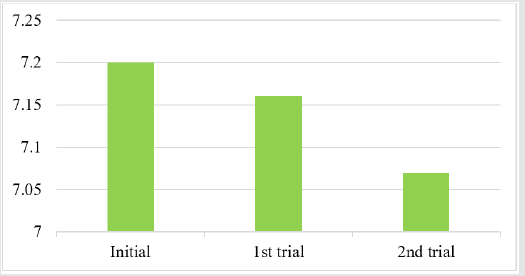
Table 2 pH values of municipal wastewater of Rajshahi City. The value of pH found from the sample is within permissible limit as the tolerable limit is between 5.5 and 9.0. So, the pH value found by experiment shows that the water possesses moderate pH and it has no significant effect in pollution of wastewater (Figure 3).

Figure 3: pH values of municipal wastewater of Rajshahi City.
Lupinepublishers-openaccess-journals-Civil-engineering-Architechture

Table 2: pH values of municipal wastewater of Rajshahi City.

Lupinepublishers-openaccess-journals-Civil-engineering-Architechture

Determination of conductivity

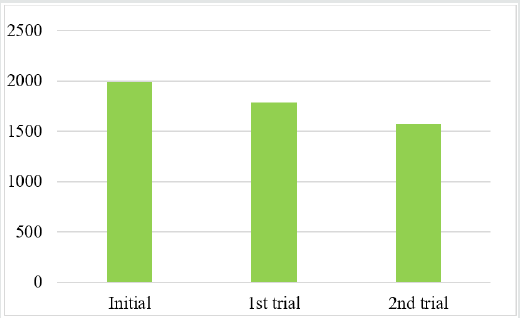
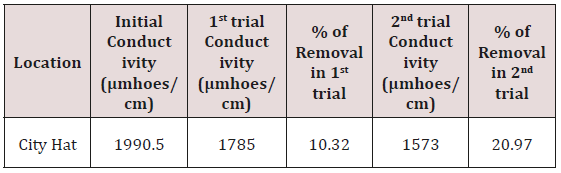
The maximum permissible limit of conductivity is 2250μmhoes/ cm. The results are shown in Figure 4.

Figure 4: Conductivity values of municipal wastewater of Rajshahi City.
Lupinepublishers-openaccess-journals-Civil-engineering-Architechture

The value of conductivity found from the sample is within permissible limit as the tolerable limit is 2250 micromhos/cm. So, the value found by experiment shows that the water possesses tolerable and it has no significant effect in pollution of wastewater (Table 3).

Table 3: Conductivity values of municipal wastewater of Rajshahi City.
Lupinepublishers-openaccess-journals-Civil-engineering-Architechture

Determination of turbidity

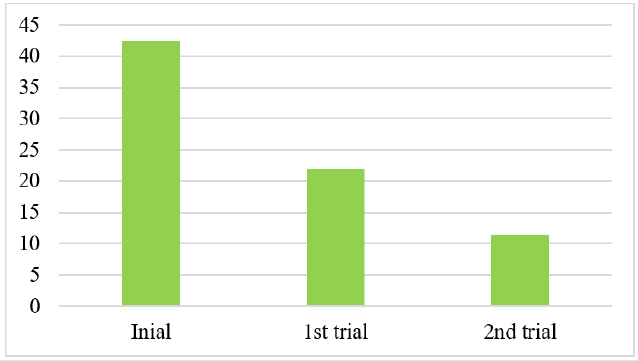
The maximum allowable limit for turbidity is 35NTU. The results are shown in Figure 5. The value of turbidity found from the sample has crossed permissible limit as the tolerable limit is 35NTU and the sample possesses turbidity value beyond the tolerable limit. So, the value found by experiment shows that the wastewater is very highly turbid, and it has significant effect in pollution of wastewater (Table 4).

Figure 5: Turbidity values of municipal wastewater of Rajshahi City.
Lupinepublishers-openaccess-journals-Civil-engineering-Architechture

Table 4: Conductivity values of municipal wastewater of Rajshahi City.

Lupinepublishers-openaccess-journals-Civil-engineering-Architechture

Determination of alkalinity

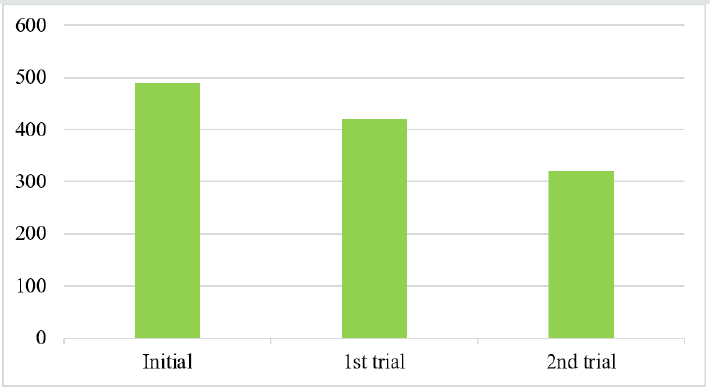
The Maximum allowable limit 600mg/L. The results are shown in Figure 6. The value of alkalinity found from the sample is within permissible limit as the tolerable limit is 600mg/L and the sample possesses conductivity value within the tolerable limit. So, the value found by experiment shows that the water possesses alkalinity that is permissible, and it has very less effect in pollution of wastewater (Table 5).

Figure 6: Alkalinity values of municipal wastewater of Rajshahi City.
Lupinepublishers-openaccess-journals-Civil-engineering-Architechture

Table 5: Alkalinity values of municipal wastewater of Rajshahi City.

Lupinepublishers-openaccess-journals-Civil-engineering-Architechture

Determination of total solid, total suspended solid and total dissolved solid

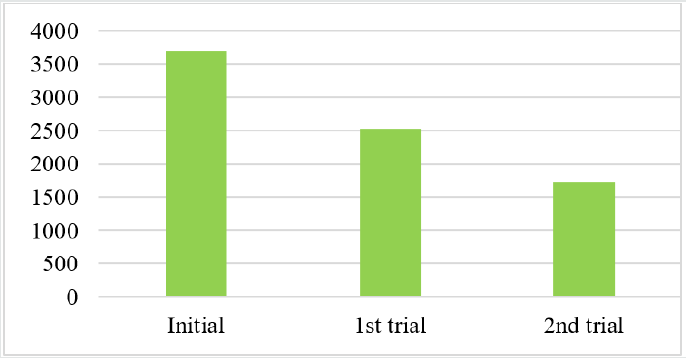
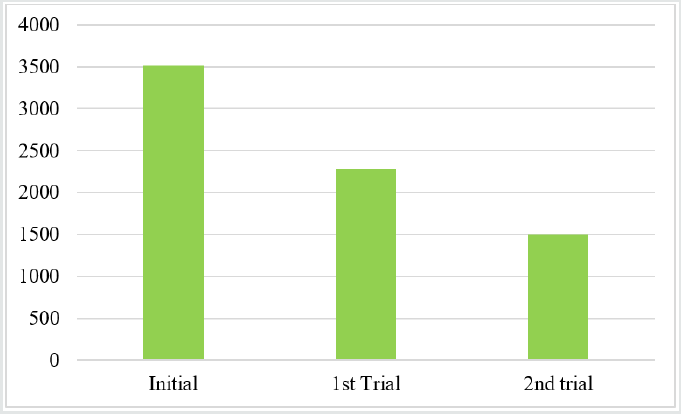
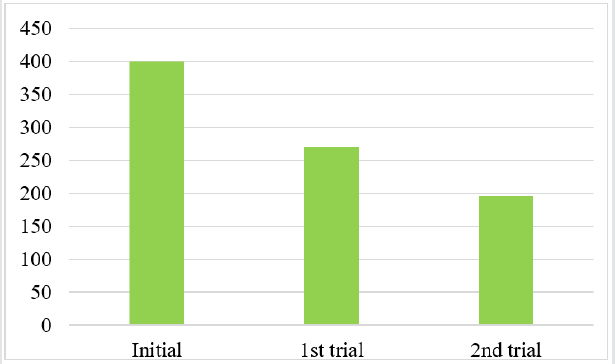
Total solid is the material residue left in the vessel after evaporation of the sample. Total suspended solids (TSS) give a measure of the turbidity of the water. Total dissolved solid (TDS) is nothing but the dissolved inorganic impurities present in the sample. The maximum permissible limit of Total Suspended Solid (TSS) is 100mg/L for direct discharge into natural water bodies and 200mg/L for use in irrigation. The maximum allowable limit of Total Dissolved Solid (TDS) is 2000mg/L. The results are shown in Figure 7-10 (Table 6 & 7).

Figure 7: Values of Total Solid of municipal wastewater of Rajshahi City.
Lupinepublishers-openaccess-journals-Civil-engineering-Architechture

Figure 8: Values of Total Dissolved Solid (TDS) of municipal wastewater of Rajshahi City.
Lupinepublishers-openaccess-journals-Civil-engineering-Architechture

Figure 9: Values of Total Suspended Solid (TSS) of municipal wastewater of Rajshahi City.
Lupinepublishers-openaccess-journals-Civil-engineering-Architechture

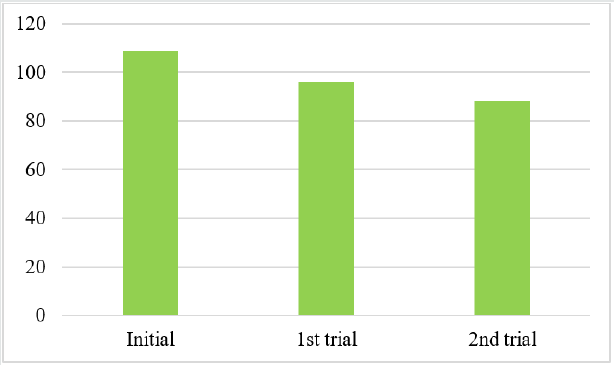
Figure 10: Total organic content values of municipal wastewater of Rajshahi City.
Lupinepublishers-openaccess-journals-Civil-engineering-Architechture

Table 6: Values of Total Solid (TS) of municipal wastewater of Rajshahi City.

Lupinepublishers-openaccess-journals-Civil-engineering-Architechture

Table 7: Values of Total Dissolved Solid (TS) of municipal wastewater.

Lupinepublishers-openaccess-journals-Civil-engineering-Architechture

The value of TSS and TDS found from the sample has crossed permissible limit as the tolerable limit is 2000mg/L for total dissolved solid and 200mg/L for total suspended solid and the sample possesses value exceeding the tolerable limit. So, the value found by experiment shows that the water possesses TS, TDS and TSS that is not permissible, and it has very significant effect in pollution of wastewater. It exceeded maximum permissible limit for both direct discharge into natural water bodies and for use in irrigation (Table 8).

Table 8: Values of Total Suspended Solid (TS) of municipal wastewater.

Lupinepublishers-openaccess-journals-Civil-engineering-Architechture

Determination of organic content

The maximum allowable limit of total organic content is 200mg/L. The value of total organic content found from the sample is within permissible limit as the tolerable limit is 200mg/L and the sample possesses total organic content value within the tolerable limit. So, the value found by experiment shows that the water possesses organic content that is permissible, and it has very less effect in pollution of wastewater (Table 9).

Table 9: Total organic content values of municipal wastewater of Rajshahi City.

Lupinepublishers-openaccess-journals-Civil-engineering-Architechture

Conclusion

From this study, the following conclusions can be drawn from the experimental results:

1. Water of Rajshahi City is highly turbid. But after treatment, it is below the permeable limit and turbidity is removed at a successful rate. Up to 90% turbidity of the wastewater has been removed.
2. Total solid, total suspended solid and total dissolved solid of the wastewater have be removed up to more than 50%. After all, all values are within the permeable limits.
3. All other parameters are under permeable limit and don’t bear any harmful effect.

Recommendation

Based on the research, following recommendations are given for further study in future:

1. The turbidity of the wastewater of Rajshahi City was high and above the maximum permissible limit. In this study it has been tried to reduce the turbidity at a high range. Up to 90% turbidity has been removed. There is a scope to reduce its value up to 99%. If proper steps and change the filter media of the filter unit, it may be possible to do this.
2. In this study a short range of total solid, total suspended solid and total dissolved solid has been removed. These values are just below their maximum permissible limit. These values may be increased up to 95%. This is a great scope to do this in this experiment.
3. In this study maximum number of layers of filter media is four layers and the lengths of these layers are not long. So, there is a great scope to use more than four layers and increasing their lengths which will increase the performance of the filter unit.

Read More About Lupine Publishers Journal of Trends in Civil Engineering and its Architecture click on the Below Link : https://lupinepublishers-civilengineering.blogspot.com/


Monday, 7 August 2023

Lupine Publishers | Antimicrobial Efficiency of Selected Wastes and By- Products for Building Applications

 Lupine Publishers | Journal of Civil Engineering and its Architecture


Abstract

Article deals firstly with studying antimicrobial efficiency of ground metallurgical slags: granulated blast-furnace slag, aircooled blast-furnace slag, demetallized steel slag, calcareous ladle slag and copper slag. The efficiency was tested on microbial representatives: G+ and G- bacteria; yeasts; fungi. The efficiency was determined by dilution methods in agar growth media with resulting slag concentrations of 10, 20, 40 and 60%. The results gained by testing the antimicrobial efficiency of individual slag samples on selected representatives of biodeteriogenic microflora can be summarized as follows: the tested slag samples are characterized by selective toxicity on the model bacteria, yeasts, and microscopic filamentous fungi. Calcareous ladle slag possesses the highest antimicrobial efficiency, while granulated blast-furnace slag and demetallized steel slag have medium activity. Air cooled blast-furnace slag has still lower activity and copper slag has the lowest activity. Secondly, antifungal effects of fluidized bed combustion fly and bottom ash, pulverized fly ash, carbide lime slurry, commercial lime and granulated blast-furnace slag as well as cements made from it were tested on fungi according to technical standard ČSN 72 4310. The study confirms fungistatic properties of all samples as well as Blastfurnace cements containing the granulated blast-furnace slag additions from 65wt.% to 95wt.%, with exception of pulverized fly ash and Blastfurnace cements containing the granulated blast-furnace slag additions lower than 65wt.%, which have no fungistatic properties.

Keywords: Metallurgical slags; Antimicrobial efficiency; Mould-proof properties; Fungistatic properties; Fluidized bed combustion fly and bottom ash; Pulverized coal combustion fly ash; Carbide lime slurry; Fungistatic cements

Introduction

Every year increasing enormous amounts of wastes and industrial by-products are generated worldwide, which result in environmental problems. Their high cost disposal or low effective recovery and utilization lead to depositing in a landfill site. However, wastes and by-products can represent an important source of secondary raw materials in order to replace natural resources. The representatives of such materials can be metallurgical slags, coal combustion ashes, carbide lime slurries etc. Typical for these materials can be mentioned ground metallurgical slags: granulated blast-furnace slag with finenesses 340 (1Sa) and 520m2.kg-1 (1Sb), air-cooled blast-furnace slag (2S), demetallized steel slag (3S), calcareous ladle slag (4S) and copper slag (5S) as well as fluidized bed combustion fly (FBCFA) and bottom ash (FBCBA), pulverized fly ash (PCCFA), carbide lime slurry (CLS). Reuse of these materials for new applications is of great international interest. The antimicrobial properties, focusing on antifungal effects of the wastes and by-products have been previously studied [1-4]. Results of these investigations have shown that some of these materials possess significant antimicrobial efficiency and thereunto fungistatic properties and so can be readily used for building materials and products providing them increasing resistance against biodeterioration.

Biocorrosion, subsequently connected with biodeterioration of concretes, mortars, and building materials and products is a serious problem wherever the conditions suitable for particular microorganisms occur. Biodeterioration reduces the utility efficiency of concretes, as well as their service life. Biocorrosion, as a specific type of chemical corrosion, is caused by various biogenic organic acids and mineral acids (sulphuric acid, H2SO4, and nitric acid, HNO3), as well as by corrosive hydrogen sulphide H2S, and ammonia, NH3, which result from the metabolic activity of microorganisms [5-8]. These aggressive metabolites react mainly with calcareous components of concrete and mortar stone, with development of their non-binding calcareous salts. Some of them cause sulphate degradation, resulting in extreme expansion in the hardened concrete and leading to the complete destruction of concrete structural elements.

The article aims to review the previously measured results of antimicrobial efficiency of selected wastes and industrial byproducts for increasing their utilization in building materials and products, as well as for enlarging civil engineering applications with respect to higher biodeterioration resistance and sustainable development.

Materials and Methods

Materials

The tested wastes and industrial by-products have been as follows: granulated blast-furnace slag with finenesses 340 (1Sa) and 520m2.kg-1 (1Sb), air cooled blast-furnace slag (2S), demetallized steel slag (3S), calcareous ladle slag (4S), copper slag (5S) [1], fluidized bed combustion fly ash (FBCFA) and bottom ash (FBCBA), pulverized coal combustion fly ash (PCCFA) [2], carbide lime slurry (CLS), industrially manufactured commercial lime (IMCL) [3] as well as ground granulated blast furnace slag (GGBS) and the cements made from it (mixtures of GGBS, ground Portland cement clinker (PCC) and gypsum (Gyps)) [4], respectively. The samples were ground to the finenesses of 400m2.kg-1.

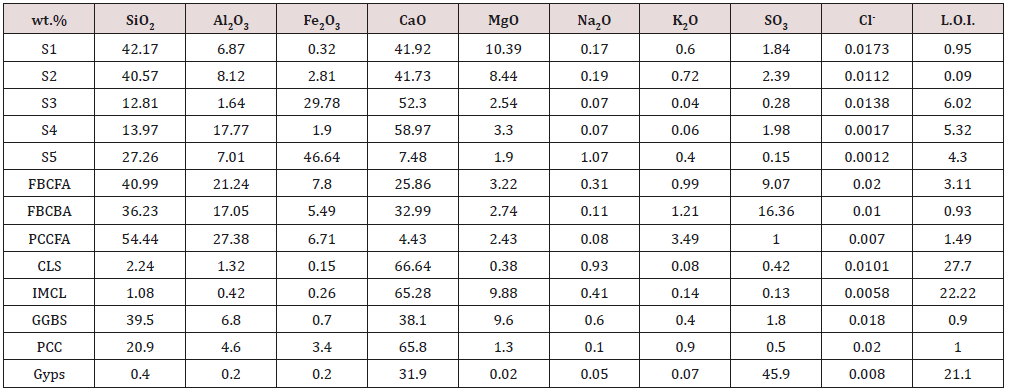
Table 1: Chemical composition of ground samples in wt.% used for testing.

Lupinepublishers-openaccess-journals-Civil-engineering-Architechture

L.O.I. – Loss on Ignition.

The chemical composition of samples was analysed by X-ray fluorescence analysis (XRF) according to EN 196-2 using a SPECTRO X-LAB 2000 apparatus. The semi-quantitative chemical composition of the samples is introduced in Table 1.

The mineralogical composition of the samples was determined by XRD technique using BRUKER AXS D8 Advance device. The identified mineralogical composition of the samples is as follows: S1a and S1b – melilite (solid solution of C2AS–C2MS2); S2 – melilite C2AS–C2MS2, brownmillerite C4AF, quartz SiO2; S3 – wüstite FeO, brownmillerite C4AF, free lime CaO, portlandite Ca(OH)2, larnite β-C2S, quartz SiO2; S4 – free lime CaO, larnite β-C2S, shanonite γ-C2S, gehlenite C2AS, C3A, gypsum CaSO4.2H2O, quartz SiO2 and S5 – fayalite 2FeO.SiO2, anortite CAS2, pyroxene type CaAlAlSiO6; FBCFA – quartz SiO2, anhydrite CaSO2, free lime CaO, anorthite CAS2, hematite Fe2O3, magnetite Fe3O4, glass phase; FBCBA – quartz SiO2, anhydrite CaSO4, free lime CaO, calcite CaCO3, hematite Fe2O3, magnetite Fe3O4, glass phase; PCCFA – quartz SiO2, mullite A3S2, hematite Fe2O3, magnetite Fe3O4, glass phase; CLS – calcite CaCO3 (22.40wt.%), portlandite Ca(OH)2 (70.10wt.%), hydrocalumite (structurally like as Friedel’s salt 3CaO.Al2O3.CaCl2.10H2O) Ca4Al2(OH)12(Cl,OH)2.4H2O (5.13wt.%), graphite C (2.37wt.%); IMCL – portlandite Ca(OH)2, calcite CaCO3, quartz SiO2, periclase MgO; GGBS – fully glassy, sometime containing a small amount of melilite C2AS–C2MS2 or merwinite C3MS2; PCC – C3S (70.5wt.%), C2S (10.2wt.%), C3A (5.7wt.%), C4AF (10.9wt.%) and free lime CaO (1.0 wt.%); Gyps – gypsum CaSO4.2H2O (min. 95wt.%), limestone CaCO3 (max. 2.5wt.%), respectively.

The determination of free calcium oxide CaOfree content in the metallurgical slags was performed using the hot ethylene glycol titration method [2]. The CaOfree content in the slags is given in Table 2. The ground slags were leached in distilled water at 20 °C for 24h. The pH was determined in the slag water leachates by an Agilent Technologies 3200P pH Meter with an electrode reference system. The measured pH values of the water leachates are also shown in Table 2.

Table 2: The free calcium oxide CaOfree content in the samples and pH of the water leachates.

Lupinepublishers-openaccess-journals-Civil-engineering-Architechture

GGBS1 – pH of the water leachate at 20 °C; GGBS2 – pH of the water leachate at 100 °C

Methods

Determination of antimicrobial efficiency of metallurgical slags under in vitro conditions

The antimicrobial activity of the metallurgical slags S1 – S5 was tested on selected representatives of biodeteriogenic microflora, such as bacteria, yeasts, and filamentous fungi. Microbial strains (bacteria and filamentous fungi) used in this work were either from the Czech Collection of Microorganisms, (CCM) T. G. Masaryk University, Brno, Czech Republic or yeasts from the Collection of Microorganism of the Institute of Biochemistry and Microbiology, Slovak University of Technology, Bratislava, Slovak Republic [1].

The tests were performed in the laboratory incubator at temperatures of 30 °C for bacteria, 28 °C for yeasts and 25 °C for filamentous fungi at a relative humidity of 95% for four days. Antimicrobial activity was determined by dilution methods in standard agar growth media, so that the resulting concentration of tested slags in growth media was 10, 20, 40, and 60% [1]. The pH of the growth media with the addition of the slags was strongly alkaline (pH 11); thus, half the samples of each slag was tested at this pH, and the second half was tested at a modified pH (bacteria pH 7.2, yeasts, and filamentous fungi pH 6.6). The first half of the samples with the original pH represented real conditions for growth of microorganisms in concrete; the second half with a modified pH represented optimal conditions for growth of the microorganisms in vitro [1]. The growth intensity of bacteria and yeasts was compared with the growth of bacteria and yeasts in the control growth media without slags. The growth of filamentous fungi in the presence of slags was monitored by the measurement of average diameter of growing colony at regular time intervals and was compared with the filamentous fungi growth in the control growth media without slags [1].

Method of testing the mould-proof properties of building products and materials

The antifungal effect of the materials was tested using the procedure given in the technical standard ČSN 72 4310 [9]. The mould-proof properties expressed as the intensity of fungi growth on building products and materials are determined by both artificial and natural contamination, with exposure to the selected testing moulds under the prescribed conditions presented in [9]. The scale of evaluation of the mould-proof properties of the tested materials according to [9] is expressed by a value from 0 to 5, which is the degree of fungal growth (DFG). The value 0 means that no growth of fungi occurs and the tested materials possess fungistatic properties; in some cases, fungicide properties also occur after the formation of an inhibiting zone in the broth medium around the sample. The building products and materials are not mould-proof, when the intensity of mould growth on the sample surface itself is from 1 to 5 of DFG.

The testing has been realized in the accredited microbiological laboratory of Testing Institute for Textiles in Brno, Czech Republic. A mixture of fungi - cultures delivered from the Czech collection of microorganisms, has been used for the testing. The test conditions are as follows: sample size Ø 5.5cm; temperature in the incubator 28±1 °C; rel. humidity in the incubator 95%; incubation period 3 months; standard broth media. The tested samples have been exposed to the contamination by the chosen microorganisms in the broth medium according to exactly defined conditions given in [9] during 3 months, after which their mould-proof properties have been evaluated.

Results

Antimicrobial efficiency of individual slag samples

Firstly, the antimicrobial activity of individual slag samples on selected representatives of biodeteriogenic microflora was determined; subsequently the antimicrobial efficiency of individual slags was mutually compared. The tests were also carried out at A–alkaline pH of growth media and N–neutral pH of growth media, as well [1].

Based on the obtained results of determining the antibacterial efficiency of individual slag samples on the selected model Grampositive bacteria (G+) and Gram-negative bacteria (G−), it can be stated that the inhibitory effect of the slag samples differs. Slag S4, which intensely inhibited growth of G+ and also G− bacteria, had the highest antibacterial activity, which was also proven at the lowest concentration of slag S4: 10% in growth media. The bacteria, except M. luteus, did not grow at higher concentrations of slag S4 in growth media, whereas the pH values of the growth media (alkaline, neutral) did not affect the inhibition intensity of bacterial growth.

The growth of G+ bacteria S. aureus and B. subtilis was inhibited in the presence of slag S3 in growth media as early as at a concentration of 10%, and at higher concentrations growth was completely inhibited. However, slag S3 did not affect the growth of G− bacteria, except for E. coli, at the highest concentration used (60%). Inhibition of bacterial growth in the presence of slag S2 was more intensive in the alkaline pH of growth media. The complete inhibition of the growth of G+ bacteria S. aureus and B. subtilis was detected with slag S2 at concentrations of 20, 40, and 60% in growth media and, inhibition of growth of G− bacteria E. coli, S. marcescens and P. aeruginosa was detected at a slag S2 concentration of 60% in growth media. Slag S1a caused total inhibition of B. subtilis growth at concentrations of 40 and 60% in growth media at both a neutral and alkaline pH. A 40 and 60% concentration of slag S1b in growth media at neutral as well as alkaline pH led to total inhibition of the growth of B. subtilis. No growth of E. coli was observed at a slag S1b concentration of 60% in growth media at neutral pH. Slag S5 did not significantly affect the growth of the model bacteria. Slags S1a, S1b, S2 and S5 caused a change in S. marcescens growth at alkaline pH. Based on the obtained results, it can be stated that the antibacterial efficiency of the individual slag samples decreased in the order: S4 > S3 > S2 > S1a = S1b > S5 [1].

From the results of determining the anti-yeast efficiency of the individual slag samples on the selected model yeasts, it can be stated, that Slag S4 possessed the highest anti-yeast activity. Growth of all model yeasts was completely inhibited at concentration as low as 10% of slag S4, at both alkaline and neutral pH of the growth media. Slags S1a, S1b, and S3 caused total inhibition of the growth of all model yeasts from a concentration of 20% in growth media at alkaline and neutral pH, as well. The growth of the model yeasts was intensively reduced in the presence of slag S2 at concentrations of 40 and 60% in growth media. Slag S5 partially inhibited the growth of the model yeasts; however, total inhibition of the growth of yeasts was not observed even at the highest concentration of 60% in growth media. Based on the measured results, the antiyeast efficiency of the individual slag samples decreased in the order: S4 > S1a = S1b = S3 > S2 > S5 [1].

From the results of determining the antifungal efficiency of the individual slag samples on the selected model filamentous fungi, it is evident that the model filamentous fungi used were sensitive to the presence of slag samples in various ways. As is apparent from the results of inhibition, all slags inhibited the growth of filamentous fungi by 40–100% at a concentration of 60% slag. The most sensitive to the presence of all slags were A. niger and T. viride. Their growth was completely inhibited when 20–60% concentrations of all slag samples at neutral and alkaline pH were used. The growth of these two fungi species was stopped, thus causing a fungistatic effect. A 60% concentration of slag S4 led to the inhibition of T. viride growth with fungicide effect (killed fungal spores). Slag S4 had the most inhibiting activity for all fungi. It completely inhibited growth of almost all model filamentous fungi in concentrations from 20– 60% at alkaline pH, with mostly a fungistatic effect. Only T. viride growth was inhibited totally with a fungicide effect at alkaline pH of growth media at a slag S4 concentration of 60%. At neutral pH of growth media, the growth of model filamentous fungi was inhibited completely at concentrations from 40–60% of slag S4 and at slag S4 concentration of 60% with fungicide effect on A. alternata, A. niger, T. viride and Ch. globosum.

A lower inhibiting effect on filamentous fungi growth was observed in the case of slags S1a, S1b and S3, but they inhibited the growth of all tested filamentous fungi from 40–100% at a concentration of 40%. The lowest impact on the growth of model filamentous fungi was observed in the presence of slags S2 and S5 in growth media, which affected only the growth of the most sensitive fungi, A. niger and T. viride. The most resistant was A. alternata. Its growth was most intensely inhibited by slag S4, with total inhibition observed at 40–60% of slag, with mostly a fungistatic effect.

Regarding the fact that model filamentous fungi were selectively sensitive to the presence of the tested slags, it is possible to determine only an approximate order of inhibition efficiency of the slags to filamentous micromycetes: S4 > S3 = S1a = S1b > S5 > S2. The pH values of the growth media did not significantly influence the intensity of inhibition of the model microorganisms’ growth [1].

The results gained by testing the antimicrobial efficiency of individual slag samples on selected representatives of biodeteriogenic microflora can be summarized as follows: the tested slag samples are characterized by selective toxicity on the model bacteria, yeasts, and microscopic filamentous fungi; calcareous ladle slag (S4) possesses the highest antimicrobial efficiency; slag S4 best inhibits the growth of bacteria, yeasts, and microscopic filamentous fungi of all tested slags; total growth inhibition of Trichoderma viride and Aspergillus niger was detected in the presence of all tested slags at a concentration of 10% in growth media, except for copper slag (S5); the calcareous ladle slag (S4) and granulated blast-furnace slag (S1a) possessed fungicidal (lethal) effect on spores of some filamentous fungi at a concentration of 60% in growth media; copper slag (S5) is characterized by the lowest antibacterial and anti-yeast efficiency, despite having the highest Cu, Cr, As, Zn, Pb, and Hg contents from all tested slags; air cooled blast-furnace slag (S2) and copper slag (S5) have the lowest antifungal efficiency [1]. Slag S4 is characterized as having the highest CaO content of 58.97 wt.% and the highest CaOfree content (3.30wt.%) as well as the highest pH (12.93), in comparison with the other tested slags (Table 2). Calcareous ladle slag (S4) has the highest antimicrobial efficiency, while granulated blast-furnace slag (S1a, S1b) and demetallized steel slag (S3) have medium activity. Air cooled blast-furnace slag (S2) has still lower activity and copper slag (S5) has the lowest activity.

The mould-proof properties of the selected wastes and by-products

After the 3-month incubation period, the mould-proof properties of tested samples were evaluated by the degree of fungi growth (DFG) according to technical standard [9] and the results are summarized in Tables 3 & 4. The samples possess different mould-proof properties, most of them is characterized in 0 value of the degree of fungal growth (DFG) i.e. there was no growth of fungi on sample surface.

Table 3: Antifungal properties of the tested samples.

Lupinepublishers-openaccess-journals-Civil-engineering-Architechture

DFG – degree of fungal growth on the sample surface, 0 – absence of fungal growth, 5 – fungal growth = 100%

Table 4: Antifungal properties of ternary mixtures of GGBS, PCC and Gyps.

Lupinepublishers-openaccess-journals-Civil-engineering-Architechture

*Gyps is expressed as sulphate content SO3 wt.% added into the binary GGBS and PCC mixtures.

The FBCFA, FBCBA and PCCFA possess different mould-proof properties, depending on the amount of free lime CaO [2]. The results imply that the higher the amount of free lime CaO in the ash, the more antimicrobially active the particular ash becomes. The mould-proof properties of the FBCFA and FBCBA reach 0 degree of fungi growth [2], they have a fungistatic effect according to technical standard [9]. The results for the mould-proof properties of PCCFA reach 5 degree of fungi growth i.e. PCCFA does not have a fungistatic effect and the sample surface is fully covered by fungi (fungi colonies cover 100% of the sample surface). However, FBCFA and FBCBA increases pH values of the water leachate up to 12.3 and 12.5, which affects the viability of microorganisms [2].

Generally speaking, CLS and IMCL are suitable for reaching 0 degree of fungi growth according to technical standard [9]. On the basis of the experimental results, it can thus be stated that the CLS and IMCL are defined as the fungistatic building materials [3] according to technical standard [9].

GGBS with 0 degree of fungi growth is fungistatic building materials [4] according to technical standard [9]. The ternary mixtures of GGBS, PCC and gypsum possess different mould-proof properties, depending on the amount of GGBS that was added to the mixture (Table 4). The results imply that the higher the amount of GGBS in the mixture, the more antimicrobially active the particular cement mixture becomes. With GGBS content in the mixtures of 65wt.% and higher, the mould-proof properties of the cements reach 0 degree of fungi growth.

In general, GGBS, CEM III/A 32,5 N (with GGBS content of 65 wt.%), CEM III/B 32,5 N and CEM III/C 32,5 N are suitable for reaching 0 degree of fungi growth [4] and they are defined as fungistatic building materials according to technical standard [9]. The inhibiting zone did not form on the agar around all of the tested samples. This means that the tested samples do not have a fungicidal effect. From a practical point of view, the fungistatic wastes and by-products are suitable for achieving a mould-free environment and potentially offer wide application possibilities in the building industry from preventive use to the purposes of repairing and reconstruction. However, the mechanism of the antimicrobial effects of the tested samples should be a subject of further study.

Conclusion

From the results of determining the antimicrobial efficiency of individual slag samples, it can be stated, that calcareous ladle slag (4S) intensely inhibited growth of G+ and also G− bacteria, had the highest antibacterial activity, which was also proven at the lowest concentration of slag S4: 10% in growth media. Slag S4 possessed the highest anti-yeast activity. Growth of all model yeasts was completely inhibited at concentration as low as 10% of slag S4, at both alkaline and neutral pH of the growth media. Slag S4 had the most inhibiting activity for all fungi. It completely inhibited growth of almost all model filamentous fungi in concentrations from 20-60% at alkaline pH, with mostly a fungistatic effect and at slag S4 concentration of 60% with fungicide effect on some of the selected model filamentous fungi. On the contrary, copper slag (5S) did not significantly affect the growth of the model bacteria. Slag S5 partially inhibited the growth of the model yeasts; however, total inhibition of the growth of yeasts was not observed even at the highest concentration of 60% in growth media. The lowest impact on the growth of model filamentous fungi was observed in the presence of air-cooled blast-furnace slag (2S) and slag S5 in growth media.

Based on the obtained results, the antibacterial efficiency of individual slag samples decreased in the order: S4 > S3 > S2 > S1a = S1b > S5. The decrease in anti-yeast efficiency of the individual slag samples was in the order: S4 > S1a = S1b = S3 > S2 > S5. Model filamentous fungi were selectively sensitive to the presence of tested slags, but it is only possible to determine the approximate order of inhibition efficiency of slags to filamentous micromycetes: S4 > S3 = S1a = S1b > S5 > S2.

The study confirmed the fungistatic properties of of fluidized bed combustion fly (FBCFA) and bottom ash (FBCBA), carbide lime slurry (CLS), commercial lime (IMCL) and granulated blastfurnace slag (GGBS) as well as Blastfurnace cements containing the granulated blast-furnace slag additions from 65 wt.% to 95 wt.%, with exception of pulverized fly ash (PCCFA) and Blastfurnace cements containing the granulated blast-furnace slag additions lower than 65 wt.%, which have no fungistatic properties. The study of mould-proof properties can be summarized: FBCFA, FBCBA, CLS, IMCL, GGBS, Cements with GGBS content of 65 wt.% and more are fungistatic building materials according to technical standard ČSN 72 4310.


Read More About Lupine Publishers Journal of Civil Engineering and its Architecture Please Click on the Below Link:

https://lupinepublishers-civilengineering.blogspot.com/


Monday, 12 June 2023

Lupine Publishers | Clinical Waste Management Scenario of Private Health Care Establishment in Rajshahi City

 Lupine Publishers | Trends in Civil Engineering and its Architecture


Abstract

The increasing number of clinics and hospitals in Bangladesh has been resulting in the increased amount of waste generation. Clinical waste contains toxic chemicals and hazardous materials from several diagnosis and treatment processes. The improper disposal of clinical waste in the country poses a high health risk to humans as well as the environment.

The study of clinical waste management systems was performed to understand the various handling and disposal procedures in different clinics and diagnostics center in Rajshahi city, the knowledge and awareness of individuals involved in medical waste generation, handling and disposal, and the potential impacts of the waste stream on both human health and the natural environment. The purpose of the study is to provide direction for further study. Data were collected by field investigation and interview in the selected clinics and diagnostics center. It was found that a variety of methods were used by the medical facilities to dispose their wastes including burning, burial, entombing, selling, dumping, and removal by municipal bins. The waste disposal practice was found to be quite unsafe, and both clinical and non-clinical wastes were found to be thrown together. There was insufficient awareness of the magnitude of the medical wastes issue by concerned individuals at different levels from director or divisional head to tokai (waste pickers). This study aims at bringing safety, health and environment together as a basis for prioritizing national programmed, through collection of data on types, quantities, sources handling procedures and basic understanding by those in charge. In addition, it is also aimed at proposing ways of reducing levels of contact with hazardous health-care waste.

The improvement of waste management in clinics and hospitals is essential to minimize the spread of infectious diseases. The study was conducted at different 19 clinics and diagnostic centers at Rajshahi city in Bangladesh to quantify amount of clinical waste generated from the medical services; determine physical composition of; find out the correlation of waste quantity with relevant factors; identify problems and develop future guideline regarding waste management.

Keywords: Hazardous materials; Medical wastes; Health risk; Infectious diseases

Introduction

A hospital is a service-oriented residential establishment that provides medical care facilities comprising of observational, diagnostic, therapeutic and rehabilitative services for persons suffering from or suspected to be suffering from many kind of diseases or injury. The basic concept of waste management in a hospital do not differ basically from that in hotels, schools and catering establishments since certain areas of the hospital render the same type of basic services. But some wastes generated in a hospital are too hazardous to be treated negligently, and any carelessness in the management of these wastes in a hospital tends to spread infection and contaminate in the entire living environment prevailing in a hospital. The delay in the recovery and overburden of weak patients, endanger the patients survival and may also generate health hazards to those persons who work in the hospital environment.

Over the years, the world has witnessed the rapid population growth in different patterns and extra-ordinary waste generation. In many developed and developing countries, collection, transportation, treatment and disposal of waste are the major challenges for government, organizations and other institutions. Different types of solid wastes depending on the generation resource can be classified into household waste or municipal waste, industrial waste as hazardous waste and biomedical waste.

Biomedical waste or clinical waste is classified as one of the most dangerous wastes in the world. Clinical waste refers to any waste that is generated during medical activities such as diagnosis, monitoring, and treatment of human beings or animals. It includes viruses and bacteria that potentially cause diseases which are produced by hospitals, clinics, doctor’s offices and other types of healthcare institutions.

In recent years, concern over clinical waste has increased throughout the world. Improper management of clinical waste poses a public health risk. Therefore, appropriate Clinical Waste Management is a crucial issue for maintaining human and public health. The Clinical waste management practices cover all processes from the point of identification the wastes, to the place it is disposed in an incinerator. Initial handling, collecting, transporting, disposing and monitoring of waste materials are collectively called waste management. The primary objectives of waste management are reducing the amount and hazards of waste. Reusing the waste through the provision of secondary raw materials and use of the waste as energy resource are other objectives of waste management.

Clinical waste has been considered as one of the major health and environmental concern in Bangladesh over the last three decades. Poor management, lack of handling knowledge and unscientific disposal of various health care wastes pose serious direct and indirect public health threats to health-care personnel, nurses, technicians, waste workers, hospital visitors, patients, surrounding communities and hence, the environment [1,2]. Clinical waste, due to its content of hazardous substances such as heavy metals, chemical solvents and preservatives, poses serious threats to environmental health such as, air pollution through release of toxic pollutants (e.g. dioxin), water pollution through surface run off and infiltration of leachate into water bodies and underground aquifer.

Clinical waste contains highly toxic metals, toxic chemicals, pathogenic viruses and bacteria, which can lead to pathological dysfunction of the human body. Clinical waste presents a high risk to doctors, nurses, technicians, sweepers, hospital visitors and patients due to arbitrary management.

It is observed that the solid clinical wastes are being disposed-off in the City Corporation’s collection bins in and around the hospital premises. The waste is then collected by City Corporation’s vehicles and then transported to the open municipal dumping sites. Simply disposing it into dustbins, drains, and canals or finally dumping it to the outskirts of the city poses a serious public health hazard. It is a common observation in Rajshahi City that poor scavengers, women and children collect some of the diagnostic wastes (e.g. syringeneedles, saline bags, blood bags etc.) for reselling despite the deadly health risks. It has long been known that the re-use of syringes can cause the spread of infection such as AIDS and hepatitis [2]. The collection of disposable medical items (particularly syringes), its resale and potential re-use without sterilization could cause a serious disease burden. The safe disposal and subsequent destruction of diagnostic waste is a key step in the reduction of illness or injury through contact with this potentially hazardous material, and in the prevention of environmental contamination [3]. The transmission of blood-borne viruses and respiratory, enteric and soft tissue infections through improper clinical waste disposal is not well described. The management of clinical waste therefore, has been of major concern due to potentially high risks to human health and the environment [4].

Objectives

The objectives of the study are as follows:
(a) To study the existing situation of clinical waste management in Rajshahi city.
(b) To quantify the amount of solid wastes generated by each health care establishment.
(c) To identify the problems and inadequacies associated with the current situation of the clinical waste management in the Rajshahi city.

Clinical Waste Types and Sources

Generally, clinical waste is defined as the discarded or unwanted material or garbage or solid waste which is generated from the diagnosis, treatment, or immunization of human beings or animals, in research pertaining thereto, or in the production or testing of biological. These have the potential to cause disease and are a health risk. It is by-product of health care that includes sharps, non-sharps, blood, body parts, chemicals, pharmaceuticals, medical devices and radioactive materials. The Health Care Establishments are one of the major producers of solid wastes which are hazardous in nature. Poor management of clinical wastes exposes heath workers, waste handlers and the community to infections, toxic effects and injuries.

Sources and Types of Clinical Wastes

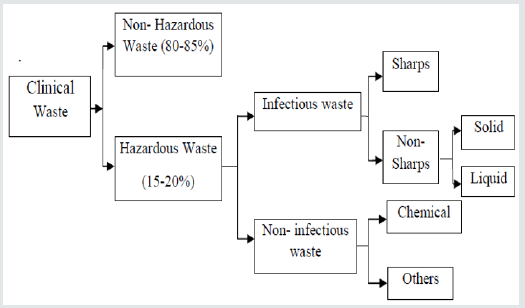
Medical wastes are mainly categorized into non-hazardous and hazardous wastes. The non-hazardous waste includes wool, kitchen wastes, etc. that do not pose any special handling problem, hazard to health or the environment and is generated in the patients’ ward areas, out-patient-department (OPD), kitchens, offices, etc. [5]. The hazardous waste includes pathological, infectious, sharps and chemical wastes and are normally produced in labor wards, operation theatres, laboratories, etc. [5]. Some definitions of clinical wastes are [5] (Figure 1) (Table 1).

Figure 1: Flow Chart for different types of clinical waste (WHO, 2001).

Lupinepublishers-openaccess-journals-Civil-engineering-Architechture

Table 1: Sources and Types of clinical Wastes (ACHWD, Health Department Victoria, 1988.

Lupinepublishers-openaccess-journals-Civil-engineering-Architechture

Clinical Waste in Environment

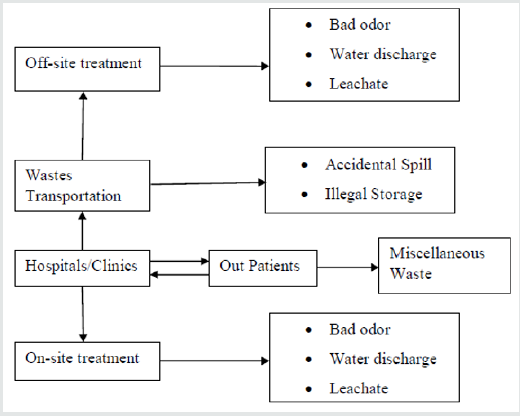
Cheremisinoff & Shah identified the relation between the waste system and its wastes in the environment as shown in below. This can be relied that clinical wastes are released to the environment by many hospital activities in terms of as air emission, waste water and solid wastes (Figure 2).

Figure 2: Clinical Wastes in Environment (Cheremisinoff and Shah, 1990).

Lupinepublishers-openaccess-journals-Civil-engineering-Architechture

Public Health Risk

Meany and Cheremisinoff has defined that infectious diseases occurred as a result of interaction between an infectious agent (pathogen) and a susceptible host. Clinical wastes are a source of pathogen. Interaction between the host and the pathogen may take one of two forms-infections. Infection is the host by the pathogen and is a more common form of diseases introduction [6-10].

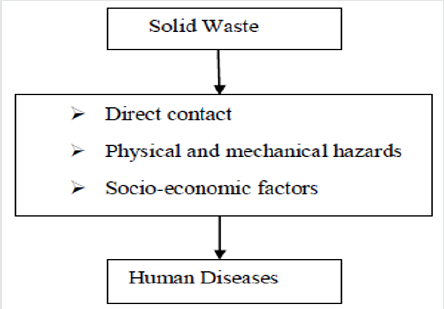
There are several modes of diseases transmission from solid wastes but lack of information makes statistical confirmation impossible. In recent years, the USEPA has initiated research in epidemiology and this should promote a greater understanding of the solid waste as shown in Figure 3.

Figure 3: Pathways of Diseases Transmission (Meaney and Cheremisinoff, 1990).

Lupinepublishers-openaccess-journals-Civil-engineering-Architechture

Treatment Method for Clinical Wastes

There are many treatment methods for the clinical wastes such as Incineration, Autoclaving (stream or heating), Chemical treatment, Microwave radiation and other thermal system and etc. Therefore, clinical wastes should be treated with the suitable treatment method [11-17] (Table 2).

Table 2: Treatment Method for Clinical Wastes.

Lupinepublishers-openaccess-journals-Civil-engineering-Architechture

Methodology

The methodology of the study included field observation and field level data collection through inventory, questionnaire survey and interviews with formal and informal ways, a review of related literature etc., to observe the physical composition of clinical waste; and to collect information regarding quantity and quality of diagnostic waste. Data were also collected through both direct observations and interviews with different officials of the studied health care establishments. Waste materials from a hospital as a whole were analyzed (sorting, segregating, and weighting) (Figure 4).

Figure 4: Flow chart for methodological procedure of the project.

Lupinepublishers-openaccess-journals-Civil-engineering-Architechture

Sources and Quantification of Clinical Waste

Medical wastes are produced by various activities. Different units within a hospitals and clinics such as Medical ward, Operation theatres and surgical ward, Health-care units, Laboratories and Pharmaceutical and Chemical stores would generate different wastes. The amount of waste generated in hospitals depends upon various factors such as the number of beds, types of health services provided, economic, social and cultural status of the patients and the general condition of the area. It was observed that the surveyed Health Care Establishments generated sharp instruments (e.g. needles, syringes, and broken glassware instruments), pathological wastes (e.g. blood, urine bags, cotton-bandages, hands glove), pharmaceutical wastes (e.g. drug shell, saline, glass bottle) and general wastes (e.g. plastics, polythene, papers, food wastes etc) which are considered for segregation of waste. The all Health Care Establishment`s solid wastes are measured in kg/day (Figure 5).

Figure 5: (a) Average Percentage of Clinical Waste in all Health Care Establishments.
(b) Average percentages of Hazardous and Non-hazardous waste.

Lupinepublishers-openaccess-journals-Civil-engineering-Architechture

Results

Percentage of clinical waste at Islami Bank Hospital

Islami Bank Hospital is the largest private hospital and very popular having all the facilities (e.g. pathology, radiology and imaging, microbiology, surgery, pharmacology, gynecology and so on). The hospital has 50 beds capacity for resident patients and provides outdoor facilities for about 500 patients daily.

Total amount of waste generated is 39.083kg/day (average) on which hazardous waste is 10.7kg/day. The rate of waste generation is 0.071kg/patient/day. Most of the hazardous wastes are surgical wastes. In this hospital it was found that the percentage amount of general waste generation is 54%, sharp waste is 14%, pathological waste is 9% and the pharmaceutical waste is 23% which is shown in below (Figure 6).

Figure 6: Percentage of clinical Waste at Islami Bank Hospital.

Lupinepublishers-openaccess-journals-Civil-engineering-Architechture

Percentage of clinical Waste at Rajshahi Royal Hospital

Rajshahi Royal Hospital is another popular private hospital in Rajshahi city. The hospital has 30 beds capacity for resident patients and provides outdoor facilities for about 150 patients daily. In this hospital at first total wastes were segregated first and then different types were weighted. Total amount of waste generated is 13.09kg/day (average) on which hazardous waste is 2.667kg/ day. Most of the hazardous wastes are surgical wastes. The rate of waste generation is 0.072kg/patient/day. The percentage amount of sharp waste is 15%, pathological waste is 13%, pharmaceutical waste is 25% and general waste is 47% (Figure 7).

Figure 7: Percentage of clinical Waste at Rajshahi Royal Hospital.

Lupinepublishers-openaccess-journals-Civil-engineering-Architechture

Percentage of clinical waste Zamzam Islami Hospital

Another popular private hospital in Rajshahi city is Zamzam Islami Hospital. The hospital has 30 beds capacity for resident patients and provides outdoor facilities for about 200 patients daily. Hospital having facilities are pathology, radiology and imaging, microbiology, surgery, pharmacology, gynecology and so on).

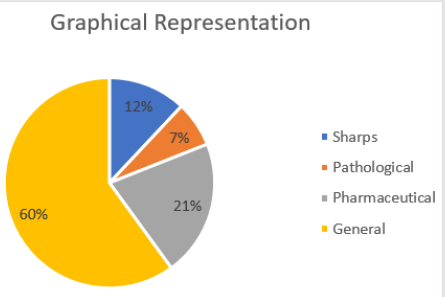
Total amount of waste generated is 18.618kg/day (average) on which hazardous waste is 4.61kg/day. Most of the hazardous wastes are surgical wastes. The rate of waste generation is 0.08kg/patient/ day. The percentage amount of sharp waste is 12%, pathological waste is 7%, pharmaceutical waste is 21% and general waste is 60% (Figure 8).

Figure 8: Percentage of clinical Waste at Zamzam Islami Hospital.

Lupinepublishers-openaccess-journals-Civil-engineering-Architechture

Percentage of clinical waste at Popular Diagnostic Centre

Popular Diagnostic Centre is one of the largest diagnostic centres in Rajshahi city having latest technology for pathogenic test, blood test, urine test etc. The hospital has no bed capacity for resident patients but provides outdoor facilities for about 700 patients daily.

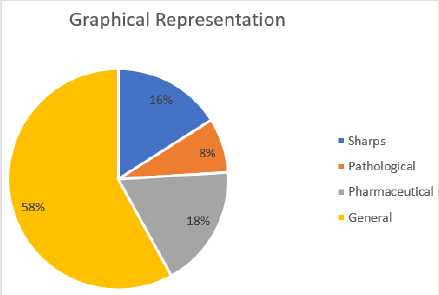
Total amount of waste generated is 39.83kg/day (average) on which hazardous waste is 9.2kg/day. The rate of waste generation is 0.057kg/patient/day. The percentage amount of sharp waste is 16%, pathological waste is 8%, and pharmaceutical waste is 18% and general waste is 58% (Figure 9).

Figure 9: Percentage of clinical waste at Popular Diagnostic Centre.

Lupinepublishers-openaccess-journals-Civil-engineering-Architechture

Analysis of Clinical Waste Management in Selected Hospitals

Waste segregation

The key to minimization and effective management of healthcare waste is segregation and identification of waste. Appropriate handling, treatment and disposal of waste by type reduce costs and do much to protect public health. It was observed that there were no segregation systems for infectious and non-infectious wastes at the site of production almost in all the Health Care Establishments. There was little systematic collection in the surveyed Health Care Establishments. They keep hazardous wastes such as syringes, gauges, cotton, blades, knives and infectious substances in red and yellow colored containers and non-hazardous wastes such as saline bags, plastic bottles, paper, kitchen garbage etc. in the green and black colored containers (Figure 10).

Figure 10: Segregation of waste.

Lupinepublishers-openaccess-journals-Civil-engineering-Architechture

On-site handling and Temporary storage

This is an important element in the overall solid waste management system because it can have significant effects on public health and on subsequent functional elements on the systems. Onsite handling refers to the activities associated with the handling of solid wastes until they are placed on containers for storage before collection. The place/storage area where medical wastes were kept before transporting to the incinerator or final disposing site was termed as temporary waste storage (Figure 11).

Figure 11: Temporary waste storage containers.

Lupinepublishers-openaccess-journals-Civil-engineering-Architechture

Off-site transportation

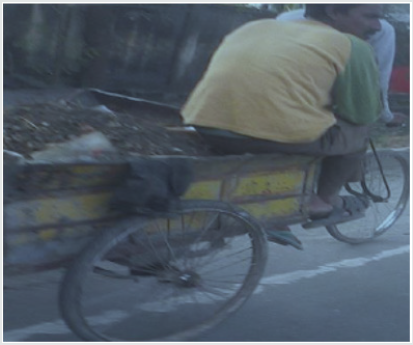
Clinical waste should normally be collected everyday due to its hazardous nature. The Rajshahi City Corporation has the responsibility for off-site transportation of the waste for final disposal or dumping. Rajshahi City Corporation authorities provide a van for collecting wastes from different Health Care Establishments. Every early morning, they collect wastes from Health Care Establishments and these collected wastes were transported to either the incinerator which is located at Rajshahi Medical College Hospital premises or Nowdapara Bhagar for dumping (Figure 12).

Figure 12: Waste collection vans.

Lupinepublishers-openaccess-journals-Civil-engineering-Architechture

Final disposal

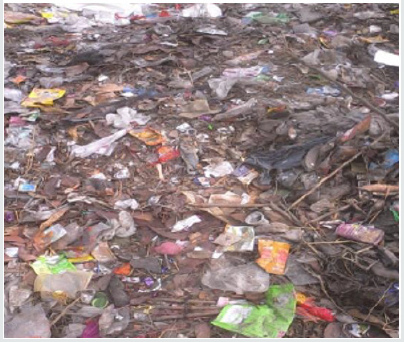
Figure 13: Final disposal site.

Lupinepublishers-openaccess-journals-Civil-engineering-Architechture

The final disposing site in Rajshahi City Corporation was situated at Nawdapara which was locally called “Nawdapara Bhagar”. Medical wastes were collected everyday by rajshahi city corporation van due to its hazardous nature. Every early morning, the collected wastes are finally dumped by city corporation registered cleaners to this “Bhagar”. It was found from the survey that there was no consideration of distinguishing infectious waste with non-infectious waste when dumping. So, it may cause pollution to the environment as well as health hazard to people (Figure 13).

Discussion

From the field investigation, we observed that some Health Care Establishments are more systematic for color coding and segregation. Others follow color coding system and segregation but comparatively less than WHO standards. The hospital staffs from selected hospitals have awareness about hospital waste management practices but they need more training to do this in systematic way. Hazardous hospital waste is the serious problem for the Rajshahi city. Therefore, the efficient hospital waste management practice is essentially needed for all hospital in the Rajshahi city. The authorized person from hospital and solid waste management organization should try for possible waste reduction way from the hospitals. All the selected hospitals should follow the WHO guideline in the case of color coding. Temporary storage is kept separate for the general waste and hazardous waste.

The workers from all hospitals should carry the waste with trolley but at present they carry and transport with their own hand. Moreover, the workers have no protective clothes during the hospital waste handling. Clinical waste management in the Rajshahi is needed to provide training for hospital staff.

Rajshahi City Corporation manages treatment and disposal of hospital waste in Rajshahi City. They use incineration method for treatment. They cannot follow WHO guideline properly. General waste from hospital is sent to the open dumping site. Therefore, all of the hospital of Rajshahi City should try to improve their waste management practice.

Conclusion

The collection, storage and disposal of clinical wastes are of growing environmental problem in Bangladesh. Clinical wastes pose a significant impact on health and the environment. There is not enough information on clinical waste management technologies and impacts in developing countries. All selected clinics and diagnostic centers are joined with Rajshahi City Corporation for waste disposal and treatment. The collected field data showed that all the Health Care Establishment generate pathological wastes, used syringes, broken glass and bottles, textile stained with blood and papers. The level of awareness on clinical waste is very high, but they are not able to manage the waste systematically since there are lacking of systems, rules and regulations and financial support. The Rajshahi City Corporation also has some limitation for proper clinical waste management. Actually, when they collect these wastes, they used to collect hazardous and non-hazardous waste in a single van and then the wastes are mixed. Also, they dispose the all clinical wastes in the same area. So there remains a great chance of environmental pollution. Hence, we should raise the level of awareness and should follow the proper rules and regulation for clinical waste management.

Read more about Lupine Publishers Journal of Civil Engineering and its Architecture Click the below link : https://lupinepublishers-civilengineering.blogspot.com/