Showing posts with label LOJNHC. Show all posts

Saturday, 23 September 2023

Lupine Publishers | A Worksite Health Promotion Project in The University Setting A Doctor of Nursing Practice Project

 Lupine Publishers | Journal of Nursing & Healthcare


Abstract

Non-communicable diseases (NCD) have become the leading cause of death and disability worldwide. This public health issue has driven the development of innovative solutions, one of which has been implementing wellness programs at work. Historically, the university has been characterized as a low physical activity setting, which made it the perfect place to test the potential benefits of a workplace wellness program. This Doctor of Nursing Practice (DNP) project was designed to improve health behaviors in a satellite university faculty. The project implemented a 10-week worksite wellness program intervention comprised of education and walking. The intervention effectiveness was evaluated with American Heart Association My Life Check® (AHA MLC) online tool. Although there was not a significant difference between the pre-intervention heart scores (M=6.04, SD=1.66) and post-intervention heart scores (M=6.31, SD=1.57); t (19) =1.47, p=0.159), this project demonstrated improvements in several independent areas of the AHA MLC, which included weekly activity levels, overall cholesterol, increased fruit, and grain intake, and decreased sugary beverage intake. This project contributed to research by offering an example of how an innovative web-based wellness program could impact faculty health behaviors in a satellite university setting. Future studies are needed to identify types of wellness programs that yield positive results in various workplace settings.

Keywords: worksite wellness program; workplace wellness program; wellness program wellness program in the university setting

Introduction

Background and Significance

Non- communicable diseases (NCDs), rather than infectious agents, have become the primary source of illness among Americans. While these diseases have not been infectious or transmittable, they have been considered chronic and preventable. Diabetes, cardiovascular disease, cancer, and chronic lung disease have emerged as the most common NCDs [1] (World Health Organization [WHO], 2017). NCDs have been directly related to increased mortality rates of 88% in the United States (US) and 70% across the globe [2] (WHO, 2014). The macro and microeconomic impact associated with NCDs has been substantial. Macroeconomic issues have included increased health care expenditures and lost labor and productivity for businesses and employers. Microeconomic issues have included increased personal costs associated with disease treatment, work-related absenteeism, and lost personal independence [3] (WHO, 2009). Risk factors for developing NCDs have included a sedentary lifestyle, obesity, stress, as well as alcohol and tobacco use. The American way of life has changed substantially since the 1950s, when more than 50% of the workforce was employed in physically demanding jobs (Centers for Disease Control and Prevention [4] [CDC], 2016b). Today, less than 20% of workers are in positions requiring physical labor. Technological advances have shifted labor from physically demanding jobs to service-oriented jobs requiring minimal strenuous activity. Occupations necessitating minimal physical activity have been classified as sedentary. Over the last half-century, there has been an 83% increase in sedentary work environments (American Heart Association [5] [AHA], 2015b). Both sedentary jobs and lifestyles have contributed to the development of NCDs.

Modern technological conveniences have resulted in decreased physical job requirements, altered eating habits, and increased sedentary leisure time. Improved access to public and private transportation has reduced the amount of time people spend walking to everyday activities, contributing to decreased daily movement [5] (AHA, 2015b). The 1970s heralded a shift in eating patterns. Readily available food options, in the form of processed and fast food, have replaced home-cooked, home-grown meal preparation. Additionally, food consumption volume has doubled, and overall levels of nourishment have decreased. This flip-flop in nutrition has resulted in obesity, vitamin and mineral deficiencies, and immune system dysfunction [6]. While activity and nutrition have decreased, the average American is suffering from an increase in stress. Job stress has contributed to missed days at work and could lead to other unhealthy behaviors, including increased substance abuse, decreased physical activity, and unhealthy eating trends (Center for Disease Control and Prevention [7] [CDC], 2016a). For decades, Americans have been educated on the poor health outcomes associated with tobacco and alcohol consumption. Multiple forms of tobacco use have been linked to cardiovascular disease and different types of cancer. Heavy alcohol intake, classified as more than eight drinks a week for females and ten for males, has been linked with cardiovascular disease, liver impairment, highrisk sexual behaviors, accidents, and if consumed during pregnancy, can cause fetal harm [7] (CDC, 2016a). These changes have affected the population across all socioeconomic levels. Unfortunately, these evolutionary alterations have not improved physical and mental health, but have contributed to decreased physical activity, increased stress, poor nutrition, and continued alcohol and tobacco use [8] (AHA, 2015a). The burden of chronic disease has inspired the nation to examine innovative health improvement strategies. One solution has been the incorporation of worksite health promotion programs. These programs have been encouraged to offer onsite health-related activities to promote physical activity, proper nutrition, relaxation techniques, and tobacco and alcohol cessation for employees [9].

Sedentary work environments have unintentionally become poor health behavior breeding grounds. Less than ideal working conditions characterized by low activity levels, limited nutritional choices, and increased stress have contributed to poor health choices. Unfortunately, the university setting has been one such environment, defined by desk jobs, vending machines, and high-stress deadlines [10]. Nursing education jobs have long been considered sedentary, associated with mostly deskbound clerical tasks such as computer use, grading papers, and course development. As health promoters, an integral part of the nurse’s role has been to recognize negative health habits and develop programs to improve the health of individuals and society [11] (American Association of Colleges of Nursing [AACN], 2006).

Purpose and Significance

This project aimed to evaluate the effect of a worksite wellness program on faculty health behaviors at a satellite university campus. This study intended to determine if a workplace wellness program could improve health behaviors. Additionally, the project provided data to illuminate how employers could offset adverse health outcomes by implementing workplace health programs. This project helped university employees establish a worksite wellness program with the intent of increasing participants’ overall health. The project included evidence-based interventions and provided health and productivity research directed at satellite university faculty, which was generalizable to other similar professions. A needs assessment was conducted to determine the facility baseline wellness status using the CDC Health Scorecard (HSC). Each section of the HSC tool gave the facility a score based on the presence or absence of specific health activities. Categories with a low numerical rating identified areas of need. The results were as follows: tobacco control 11/19, nutrition 1/21, physical activity 6/24, weight management 0/12, stress management 10/14, depression 7/18, elevated blood pressure 2/10, cholesterol 0/15, diabetes 2/15, signs and symptoms and response plans for heart attacks, strokes, and occupational safety 22/22, and vaccine-preventable disease 6/18. According to the CDC HSC results, the lowest scores were in nutrition, physical activity, weight management, hypertension, hyperlipidemia, and diabetes. The employee wellness needs assessment focused on these areas and determined the best worksite wellness intervention for the project.

Method and Design

Considerations

Expedited approval for this quality improvement project was obtained from the Institutional Review Board at Northwestern State University of Louisiana and Southeastern Louisiana University prior to initiation. Approval was based on the probability of no greater than minimal risk to the participants.

Participants and Setting

Convenience sampling was used for participant recruitment by campus email. The naturalistic study setting was the university satellite campus. The campus was comprised of classrooms, offices, and a library. Classrooms were rectangular with desks and chairs and short carpet. The campus outside was flat, even pavement conducive for an activity intervention. The intervention and data collection settings varied from individual and small groups to indoor and outdoor campus areas.

Intervention

Phase one of the study was the administration of the Alliance for a Healthier Generation EWIS to assess current wellness behaviors in employees and identify areas of need [12] (Alliance for a Healthier Generation, 2015). The EWIS survey was chosen because it was specifically designed to determine the needs and wants of employees in a school setting [13] (Alliance for a Healthier Generation, 2016). The survey examined healthy activities, including various types of exercise, health screening interest, weight and stress management, and nutritional education. Survey specifics have been discussed under the outcomes measured section. The results of the study were calculated and used to formulate a relevant intervention. The results of the EWIS revealed that employees were interested the most in dietary and nutritional education, followed by physical activity and stress management. This information was used to develop a 10-week wellness intervention that focused on nutrition and physical activity. The purpose of phase two was to deliver the wellness intervention to a group of 20 participants. Identification of one set day and time was impossible due to faculty schedule variations. Creating an intervention that offered participants flexibility was a project goal. Therefore, after researching various web-based tools, the DNP student created a centralized project content delivery area, where invited participants could access information on their own time. The university’s Microsoft Office 365 account was used to create a group site, upload content, and interact with study participants.

Each week participants had various videos and educational content they were asked to review. The educational content focused on Life’s Simple 7 and healthy eating videos from the Physicians Committee for Responsible Medicine (PCRM). Life’s Simple 7 detailed seven steps that were associated with improved health. The seven steps were: managing blood pressure, controlling cholesterol, reducing blood sugar, getting physically active, eating healthier, losing weight, and smoking cessation [14] (AHA, 2017c). PCRM was comprised of healthy eating videos that encouraged a diet high in fruits and vegetables to improve overall heart and health status. In addition to the weekly educational information, participants were asked to walk half a mile twice weekly. Although participants were not required to submit proof of weekly walking at the end of the study, they were asked to identify if they completed this part of the project. Indoor and outdoor walking routes were mapped and provided for subjects. Subjects were expected to have the physical ability to complete the one-half-mile distance during the project timeframe. The AHA MLC was used, both pre and post intervention, to assess intervention effectiveness. The AHA MLC tool was developed specifically to evaluate WWP, making it appropriate for this project.

Outcome Measures and Instruments

All study participants completed the EWIS and MLC assessment tools. The EWIS was an anonymous two-part survey administered through Survey Monkey. The EWIS measured individual healthy activities and health behavior interests. The first part included 16 questions regarding healthy activities. The healthy activity list was comprised of the following: fitness plan development, exercise classes, dancing, team sports, walking, bicycling, yoga, etc., and also health screening, weight and stress management, and nutritional education. Participants indicated their level of interest by choosing one of the following: “very interested,” “might be interested,” or “not interested.”

The subsequent 12 questions evaluated participant interest in the following categories: health promotion programs, healthy snack options, and preferred physical activity types and times. These 12 questions were scored with a four to one Likert scale: “4=very likely,” “3=somewhat likely,” “2=not very likely,” and “1=not likely at all” [15] (Healthier Generation, 2016). The EWIS tool was offered as a free assessment from the Alliance for a Healthier Generation, which was founded by the American Heart Association and the Clinton Association [16] (American Heart Association, 2017a). The results of the EWIS were used to determine participant interest and develop a tailored wellness intervention. Although the validity and reliability of the EWIS survey were not available, the EWIS survey was supported by the AHA and used by the Wellness Council of America, The California Department of Public Health, and The United States Department of Agriculture as a recommended wellness assessment tool [17] (Healthier Generation, 2013). The MLC was an innovative science-based tool created by the AHA specifically for WWP. The MLC assessment tool evaluated seven behaviors associated with good health, also known as Life’s Simple 7. The key outcome measured by the MLC was an overall heart score, also known as an overall heart health score. The heart score was a valid and reliable measurement [18] (American Heart Association, 2017c). The original research study by [19] reported the Heart Score demonstrated good discrimination (Harrell’s c-index, 0.72; 95% confidence interval [CI], 0.71, 0.74 [females]; 0.77; 05% CI, 0.76, 0.79 [males]), fit, and calibrated.

Gathering the following information generated the overall score: smoking status, nutrition, activity, weight, blood pressure, cholesterol, and blood glucose. MLC obtained information such as age, height, weight, gender, and ethnicity, as well as seven additional questions, which included three questions on blood components such as cholesterol and blood glucose and four questions on daily activities such as fruit and vegetable intake and activity levels that impact health. The information was entered into the MLC online tool, and an individual heart score along with an action plan was generated. One feature of the MLC tool was that participants could access it multiple times, enabling them to track improvements over time.

Data Analysis

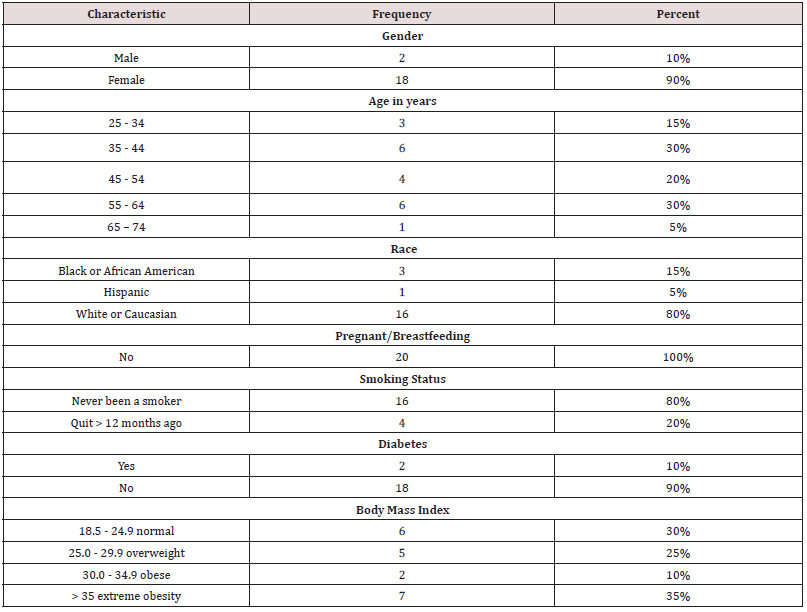
Demographic data were collected on the AHA MLC but not the EWIS. The demographic data and characteristics obtained, provided in Table 1, included gender, age, race, pregnant/breastfeeding status, smoking status, diabetes status, and BMI. Of the 20 study participants, 10% (n=2) were male and 90% (n=18) female and the age ranges in years were as followed 15% (n=3) were 25-34, 30% (n=6) were 35-44, 20% (n=4) were 45-54, 30% (n=6) were 55-64, and 5% (n=1) was 65-74. The study participants were Caucasian 80% (n=16) followed by African Americans 15% (n=3), and Hispanic 5% (n=1). None of the study participants reported being pregnant or breastfeeding. Ninety percent (n=19) of participants denied having diabetes; 10% (n=2) were self-reported diabetics. Regarding smoking status, 80% (n=16) identified as “never been a smoker,” and the remaining 20% (n=4) reportedly quit over 12-months ago. Finally, the sample study participants’ BMI was as follows: 30% (n=6) were 18.5- 24.9 normal, 25% (n=5) were 25.0-29.9 overweight, 10% (n=2) were 30.0-34.9 obese, and 35% (n=7) were classified as extremely obese. In summary, the majority of participants were female, age 35-44 or 55-64 years, Caucasian, never smoked, without diabetes, and classified as extremely obese.

Table 1: My Life Check® Demographic Characteristics.
lupinepublishers-openaccess-nursing-healthcare
American Heart Association My Life Check®

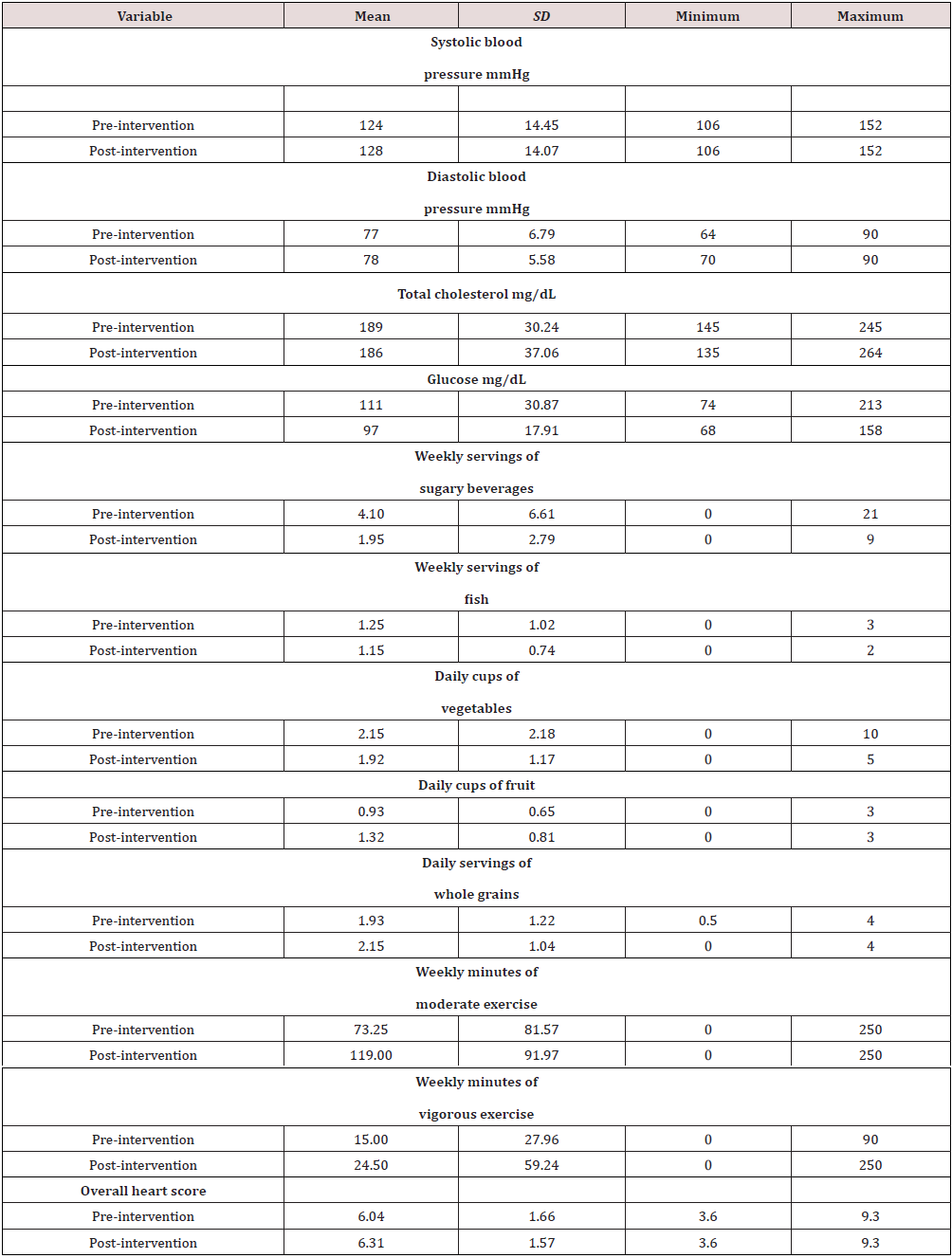
The AHA MLC online tool was used to calculate each participant’s overall heart score. The AHA MLC heart score was computed using participant demographics, underlying cardiovascular disease presence, blood pressure, glucose, total cholesterol, exercise, and dietary habits. All 20 participants completed the pre-intervention AHA MLC. The result of the pre-intervention AHA MLC has been reported in Table 2. The mean systolic blood pressure (SBP) was 124 mmHg, and the mean diastolic blood pressure (DBP) was 77 mmHg. The mean total cholesterol was 189 mg/dL, with the highest at 245 mg/dL and the lowest at 145 mg/dL. The mean glucose was 111 mg/dL, with the highest glucose recorded being 213 mg/dL, and the lowest was 74 mg/dL. Dietary habits were assessed in regard to sugary beverages, fish servings, fruits, vegetables, and grain consumption. The average number of sugary beverages consumed in a week was 4.1. The average number of fish serving was 1.25 per week. The average number of daily servings of fruits, vegetables, and whole grains was 0.925, 2.15, and 1.93, respectively. The preliminary data used to calculate the heart score also reported participant exercise activity as 73.25 minutes a week of moderate exercise and 15.00 minutes a week of vigorous exercise. This data, along with the demographic characteristics, were used to calculate participants’ heart scores. The mean pre-intervention heart score was 6.0, with the highest heart score being 9.3 and the lowest at 3.6 on a 0-to-10-point scale, with 10 representing the lowest risk for cardiovascular disease.

The AHA MLC online assessment tool was used to calculate each participant’s pre and post-intervention heart score. All 20 participants completed the post-intervention AHA MLC. The result of the post-intervention AHA MLC was reported in Table 2. The mean SBP was 128 mmHg, and the mean DBP was 78 mmHg. The mean total cholesterol was 186 mg/dL, with the highest total cholesterol at 264 mg/dL and the lowest at 135 mg/dL. The mean glucose was 97 mg/dL, with the highest glucose recorded being 158 mg/dL, and the lowest was 68 mg/dL. Dietary habits were re-assessed regarding sugary beverages, fish servings, fruits, vegetables, and grain consumption. The average number of sugary beverages consumed in a week was 1.95. The average number of fish servings was 1.15 per week. The average number of daily servings of fruits, vegetables, and whole grains was 1.32, 1.92, and 2.15. The final data used to calculate the heart score also reported participant exercise activity as 119 minutes a week of moderate exercise and 24.50 minutes a week of vigorous exercise. The mean post-intervention heart score was 6.31, with the highest heart score being 9.3 and the lowest at 3.6 on a 0-to-10-point scale, with 10 representing the lowest risk for cardiovascular disease.

Table 2: Pre and Post Intervention My Life Check® Data.
lupinepublishers-openaccess-nursing-healthcare

Findings

When comparing the pre and post-AHA MLC Mean (M) data (n=20), improvements were noted in several areas. In regard to nutritional intake Means: the weekly sugary beverage intake decreased from 4.1 to 1.95 servings, and the daily fruit serving intake increased from 1.93 to 2.15. Increases were seen in the Mean scores of both average weekly minutes of exercise from 73 to 119 and vigorous weekly minutes of exercise from 15 to 245. The average glucose and cholesterol decreased from 111mg/dL to 97 mg/dL, and 189mg/dL to 186 mg/dL, respectively. Finally, the Mean heart score increased from 6.0 pre-intervention to 6.3 post intervention. The project intervention was delivered in a flexible format where participants could access information at their leisure. This non-traditional design forced participants to be self-directed. Therefore, the post-intervention data also collected a response from each participant to assess study compliance, presented in Table 3. Compliance was defined as completing 80% of both the weekly intervention information sessions and the weekly walking. Of the 20 participants, 75% (n=15) reported study compliance, 5% (n=1) reported non-compliance, and 20% (n=4) did not answer the question.

A paired t-test was used to compare the heart scores for participants’ pre and post-workplace wellness intervention for both the entire group (n=20) and separately for the group who reported study compliance (n=15); see Table 4. There was not a significant difference between the pre-intervention heart scores (M=6.04, SD=1.66) and post-intervention heart scores (M=6.31, SD=1.57); t (19) =1.47, p=0.159) for the total group; t (14) =2.14, p=0.051 for the compliant group. The Shapiro-Wilk test of normality (n=20) was performed and showed a significance of p=0.018 (α 0.05) which indicated data did not follow a normal distribution. Consequently, the Wilcoxon signed-rank test was used for comparison. However, the Wilcoxon signed-rank test (n=20) also showed no statistical significance (W=14; p=0.227). Tables 4, 5, and 6 have been provided with the statistical data information.

Table 3: Self-Reported Intervention Compliance.

lupinepublishers-openaccess-nursing-healthcare

Table 4: Statistical Analysis of Heart Scores.

lupinepublishers-openaccess-nursing-healthcare

Table 5: Shapiro-Wilk Tests.

lupinepublishers-openaccess-nursing-healthcare

Table 6: Wilcoxon Signed-Rank.

lupinepublishers-openaccess-nursing-healthcare

For several decades non-communicable diseases (NCDs) were responsible for the majority of deaths and disabilities worldwide [7] (CDC, 2016a). The impact of NCDs in the United States matched this disturbing trend. One of the most shocking features of common NCDs was the fact they have been considered preventable. Each year the NCD related death toll has continued to rise, which has made the issue a public health priority. Despite advances in NCD prevention, the number of people affected has continued to rise. The two main reasons for this increase were attributed to decreased activity and poor nutrition. Technological growth has altered the occupational environment, changing the way people work, leading to less daily physical movement. Compounding this activity issue has been the proliferation of processed and fast food consumption. These two major shifts in modern society have contributed to an increase in cardiovascular disease, the number one NCD associated with increased morbidity and mortality [7] (CDC, 2016a). The growing realization that declining employee health has become a global health concern has sparked employers to utilize the workplace as a wellness intervention site. Higher education settings, especially those focused on health education like nursing, have had a unique opportunity to foster collaboration between disciplines and departments to promote workplace wellness programs. Furthermore, higher education settings where faculty jobs are considered sedentary have provided an optimal setting for this project.

The main result of this DNP project, which consisted primarily of nutrition and activity interventions, was a mean heart score increase from 6.0 to 6.3 on a 0-to-10 point scale. The American Heart Association (AHA) My Life Check® (MLC) online total heart score tool evaluated intervention success. The AHA MLC was a recommended tool to evaluate overall health in the workplace [9]. In addition, key findings included improvements in total cholesterol, weekly sugary beverage intake, daily fruit, and grain intake, and weekly moderate and vigorous exercise. Improvements in inactivity and nutrition were consistent with the previous studies from [20,21]. There were no participants who dropped out of the study. The final data collection tool added a question on program compliance. Compliance was described as subjects completing 80% of weekly information sessions and the twiceweekly one-half mile walks. According to the final data collection tool, 75% of participants self-reported project compliance. Among the 20 program participants, the majority were Caucasian (80%) and female (90%). Furthermore, 70% of participants were classified either as overweight, obese, or extremely obese, showing that wellness programs aimed at improving weight loss through nutrition and activity were relevant for this population. Although the purpose of this study was not aimed at weight loss per se, healthy eating and nutrition are known contributors to a healthy weight. The five participants who did not self-report study compliance were all classified as extremely obese. A second statistical analysis was completed on the compliant participants. Interestingly, the AHA MLC score was still not statistically significant even after the non-compliant group was removed from the analysis (p=0.051).

Consistent with previous research, the study found that workplace wellness can positively impact employee health behaviors [21,22,23]. This DNP project’s contribution to the literature was an example of a workplace wellness program delivered in a non-traditional style to sedentary university faculty employees. However, the best type of WWP in this setting will still need additional investigation and planning. The project provided information on the effects of a workplace wellness program on faculty health behaviors. This was important because as health educators, nursing faculty should have opportunities and resources to promote personal health. This project also depicted faculty health characteristics like weight, body mass index, physical activity levels, and basic eating habits. Although the final heart score change was not statistically significant, several areas of improvement were seen in various participant health behaviors, including increased weekly activity and daily fruit consumption. These results were consistent with the previous WWP studies by [20,21]. Moreover, this project provided detailed employee interest information for facility future wellness adventures. Employers might be inspired to invest in workplace wellness programs if they view the investment as beneficial. As stated previously by [22], successful WWP needs leadership involvement, including policies that promote a culture of health. The sustainability plan of establishing a workplace wellness committee, including a human resource person, could improve long-term wellness opportunities for the university. Workplace wellness programs have been linked to positive outcomes, but the question then becomes which program is the best fit for various facilities. This question should be best answered individually by organizations. Similar to the study by [24,25,26], the internetbased WWP approach was doable by most participants. Embracing innovative approaches to wellness that encourage employee input may have improved the chances of successful wellness program implementation and sustainability.

Strengths and Limitations

Several limitations were related to the sample. First, a sample of 20 participants is considered small (Faber & Fonseca, 2014).

Secondly, the project participants were from a satellite university campus concentrated in a Southern region, with the majority of participants being Caucasian and female. Therefore, the study group may not be reflective of the larger population and may limit generalizability. Another limitation of the project was the time of year that it was implemented. This project took place during the fall and ended the week after the Thanksgiving holiday. Participants may have found it challenging to maintain healthy eating habits during a holiday known for eating in abundance. The main strength of the project as it provided the needs assessment and employee interest of a specific facility. This site-specific comprehensive exploration could be used to develop current and future university health practices. Additionally, the recommendation of developing a wellness committee could improve the future health of employees.

Future studies should target more generalizable samples from various regions of the United States. Research focusing on WWP intervention time length, specific program measurement tools, and various seasonal influences would also be beneficial. Finally, specific studies evaluating types of wellness programs yielding effective for university faculty will also be needed.

Discussion and Conclusion

The findings of this study suggested that workplace wellness programs can positively impact faculty health behaviors. Seventyfive percent of the study participants acknowledged that a onceweekly time commitment to wellness activities was both acceptable and sustainable. While the total participants’ group findings were not statistically significant, the author notes that the small sample size and further lack of compliance by some subjects may have impacted the outcomes. A larger sample would have yielded a more reliable result. Workplace wellness programs benefit both employees and employers by improving worker health. More research needs to be conducted to determine if workplace wellness programs could be used to halt the progression of NCDs in an increasingly sedentary world.

Read More About Lupine Publishers Journal of Nursing & Healthcare  Please Click on below Link:
https://lupinepublishers-nursing-healthcare.blogspot.com/

Friday, 4 August 2023

Lupine Publishers | Factors of Early Marriage and its Consequences on Reproductive Health from Teenage Mothers’ Perspectives and their Families

 Lupine Publishers | Journal of Nursing & Health Care


Abstract

Background: Earlier marriage (EM) is a threatening concern for young females. The healthy young females reproduce a healthy prospect generation. While women’s reproductive health complications such as bleeding, low birth weight, premature birth, miscarriage, and unwanted pregnancy will reproduce weak, and ill generation. Purpose of the study to determine early marriage factors and its consequences on reproductive health from teenage mothers’ perspectives and their families.

Method: The study used a descriptive-cross-sectional design. The study conducted at the outpatient clinic in Women’s Health Hospital and four maternal and child health centers in Assiut University. Study Sample: A convenient sample of teenage mothers recruited to achieve the aims of this study. A Structured interview questionnaire used for data collection.

Results: The total teenage mothers were (112). The mean age + (SD) at the time of marriage is 16.62±1.74.and current age is 24.95±5.95. About 60% of the currently married women were aged (18-22) years old. Two-thirds of participants revealed that early fertility was one of the essential factors of early marriage. Complications of early marriage were CS, bleeding, perineal tear, preeclampsia and one-fifth of newborn had physiological jaundice and health problems. There was a statistically significant difference between teenagers’ mothers and parents’ perspectives regarding consequences of early marriage.

Conclusion: The study reveals significant differences in most of the factors and also consequences. The study concludes that perspectives of adolescents’ women match with the findings of the previous studies, reflecting their accurate perspectives regarding early marriage and its consequences.

Implications for practice: Initiates an obligation session for each woman in maternal outpatients/clinics, especially in rural/ remote areas, to increase awareness regarding early marriage consequences and integrates the health education regarding early marriage consequences in the school curriculum to increase awareness level among adolescents’ girls.

Keywords: Early Marriage; Factors; Consequences; Reproductive Health; Teenage Mothers and Families

Introduction

Early marriage defined as any marriage carried out below the age of 18 years before the girl is physically, physiologically, and psychologically ready to carry the responsibilities of marriage and childbearing [1]. Child marriage is a human rights violation and has adverse effects on the future of their girl’s children (overwhelmingly girls) who enter into these marriages, creating an intergenerational cycle of disadvantage [2]. Adverse health consequences of child marriage include poor maternal and reproductive health.

Early marriage negatively affects the health and well–being of women and children [3]. It leads to early child-bearing, closed spaced pregnancies, unwanted pregnancy, pregnancy termination, maternal morbidity, and mortality [4]. It also increases the risk of intimate partner violence [5], which further linked to sexually transmitted diseases, including HIV. Early Child Marriage also associated with increased risk of children’s physical growth, lower educational attainment, morbidity, and mortality [6,7].

The World Health Organization (WHO) defines adolescents as those between 10 and 19 years of age. It considered a period of transition from childhood to adulthood. Adolescent girls constitute about 1/5th of the total female population in the world. The period of adolescence for a girl is a period of physical and psychological preparation for safe motherhood. As direct reproducers for future generations, the health of adolescent girls influences not only their health but also the health of future generations [8].

Millions of girls are affected by child marriage (CM) throughout the world. It widely practiced in the countries of South Asia, where millions of girls-preteens and teens become the wives of older men every year. Young girls are married when they are still children. It is a violation of human rights. Their development is limited due to early marriage (EM) and often results in early pregnancy and social isolation (UNCF, 2014).

The causes of early child marriage occurrence depend on the condition, the community’s social life, the culture, and contextspecific norms. First, early marriage is a strategy to survive economically [9]. Poverty is one of the main factors that pivot the foundation for early marriage [10]. Poverty forces parents to marry–off their daughter at a very early age because the demand for dowry is low for younger girls. [11,12].

The second cause is to protect their daughter. Marriage is one way to ensure their daughter protected as a wife from non-marital sexual behavior or non-marital pregnancy. [Wikigender 2016,12]. Besides education and economic status, there are several other factors such as level of development, socio-cultural and religious norms, women’s status, and geographical residence have significant influence in determining girls’ age at marriage [13,4].

Significance of the Study

Globally, 36% of women aged 20-24 were married or in a union, forced or consensual, before they had reached 18 years. An estimated 14 million teenage women between the ages of 15 and 19 give birth each year. They are twice more likely to die during pregnancy or childbirth than women in their 20 years. Girls who marry between the ages of 10 and 14 are five times as likely to die during pregnancy or childbirth as women in their early 20s [UNICEF,2019]. early child-bearing increases risks to women’s health, as maternal disorders1 including complications during pregnancy and childbirth, are the leading cause of death among women aged 20–24 years globally and the second leading cause among adolescent girls aged 15 to 19 years.

In Egypt, early marriage is very high. The women ages 18-22 who married as young is 16.5 percent. In addition to very early marriage, of female before the age of 15-year-old. Early marriage is allied with poverty, lesser education levels, and higher nonemployment condition or low wages. These are however only correspondences, in addition to negative series of consequences and potential causal effects such as reproductive consequences [14]. So, this study aimed to determine factors of early marriage and its consequences on reproductive health from teenage mother’s perspectives and their families.

Research Question

1-What are the factors and consequences of early marriage on reproductive health from teenage mother’s perspectives.

Subjects and Method

Research design: A descriptive- cross-sectional design used in this study.

Study settings: The study conducted at Women’s Health Hospital, Assiut University. It included many units that provided the services the clients needed; these units included labor, postpartum, high-risk maternity unit, and gynecologic units. In addition to four maternal and child health centers in Asyut city, as El-Arbaen, Qulta, El-waleedea, and Gharb district.

Sample: A convenient sample of teenage mothers recruited to achieve the aims of this study. They recruited during their follow up at the previously mentioned clinical settings from March to June 2016. The participants selected according to the following:

Inclusion criteria: mothers who fewer than 18 years old and agreed to participate voluntarily in the study. The study conducted within three months from the period of the beginning of June until to August 2018

Sample size: The sample size calculated based on Raosoft application program (2004) the margin error (α error probability = 0.05) and confidence level (Cl) = 0.90) and the population was 160 per 3 months, so the sample size in adolescents’ mothers’ group = 101 but to avoid withdrawal rate we increased the sample size to be 112.

Tools of the study: Tool (1) A Structured interview questionnaire developed by the researchers based on previous studies [15-34] Prakash et al. 2011; ARWAO, 2006]. It consisted of three parts: The tool composed of 75 items divided into the following parts.

a) First part: demographic data included six items: marital status, age at marriage, and current age and residence, religion, and education levels of the wife. Obstetric data included 12 items such as current mode of delivery, the complication of delivery, new-borns condition of after delivery, skilled attendance at birth, number of children born, died, live births, most recent pregnancy, first pregnancy, unintended pregnancy, complication during pregnancy and antenatal visit during pregnancy. Contraceptive data included (3) items such as using family planning method, types of family planning, duration of uses family planning, and termination of pregnancy. Labor data included 3 items such as complications of labor, new-born status, and new-born weight.

b) Second part: Factors affecting early marriage included 22 items, 12 items regarding social factors, five items regarding economic factors, and five items regarding education factors.

c) Third part: Consequences of early marriage included 28 items, four items regarding economic consequences of early marriage, and seven items psychiatric consequences of early marriage. Nine items were regarding early marriage’s social consequences, and the last eight items were about the reproductive health consequences of early marriage.

Validity and Reliability

The content validity of tools was established by five experts in (obstetrics and gynecology and gynecological nursing and community health nursing) who reviewed the data collection tool for clarity, relevance, comprehensiveness, understanding, and applicability. The modifications made accordingly, and then the tool is re-designed for the final format and tested. The content reliability was estimated by Cronbach’s test. The tool proved to be reliable and acceptable at (0.81).

Ethical consideration

The written approval obtained from the faculty, research committee, and Ethical committee. In addition to the approval from the director of Woman health hospital and all maternal and child health centers in Assiut to collect the necessary data. Then the researcher obtained written informed consent from each woman intend to participate in the study after explanation of the study aim. Participant’s privacy considered during the collection of data. Anonymity, confidentiality assured, and the right to refuse participation emphasized to the participants.

Statistical Analysis

Data was collected and coded through SPSS (Statistical Package for Social Science) program version 20. The descriptive statistics are done in the form of frequency and mean ± SD also used t-Test to compare the groups of the quantities data. In addition to correlation test (Pearson r test) to correlate between teenage mothers and parents’ perceptions. Also, P-value considered statistically significant if it is less than 0.05. The analysis is done in two categories in the first category. The study focused on factors and consequences of early marriage of women, while in the second category, the analysis focused on the association between selected demographic factors and consequences on women’s reproductive health outcomes. There was no missing data in the statistical analysis.

Results

Table 1 shows the three categories of participants’ age at marriage per socio-demographic characteristics. The mean age + (SD) at the time of marriage is 16.62±1.74.and current age is 24.95±5.95. The most sociodemographic characteristics (45.5%)) categorized in age (15-17), (42.9%) aged (<18) and 11.6% aged (<14) years old respectively. About 60% of the currently married women were aged (18-22) years old. The majority (80 %) lived in rural areas aged (15-17), (100%) were Muslims aged (<18) while (11.8 %) were Christians and aged (15-17) years old. Regarding education, the majority (84.6%) of the primary level was (<14) years old, while (37 .5%) of secondary and (16 .7%) of universitylevel were aged (<18) years old.

Table 1: Distribution of socio-demographic data for Study sample (N=112).

lupinepublishers-openaccess-nursing-healthcare

Figure.1 illustrates the obstetric characteristics of the total (112) participants. The mean (SD) of Gravidity, number of dead and living children, reveals 2.95±1.86, 1.62±0.94, and 2.88±1.78, respectively. Two-thirds (66.1%) of participants reveals that early fertility was one of the essential factors of early marriage, while (1.8%) not have the desire in the first pregnancy. Complications during pregnancy, occurred in (44.8 %) and revealed that (21.4%) had an abortion, ectopic pregnancy and unintentional were (5.4%), stillbirth and IUGR) occurred equally (3.6%) illustrates the childbirth complications among the participants. More than One-third (38%) of participants delivered by CS, while the vast majority (94.6%) of the labor process managed by obstetricians. Regarding childbirth complications, it reveals that (14.3 %) had bleeding, (4.6%) had a perineal tear, and (3.6%) had pre-eclampsia. Regarding new-born condition, about one-fifth (21.4%) born had physiological jaundice, (8.9%) admitted to nursery, while (17.9%) had health problems. Table 2 shows the difference between teenage mothers and parents’ perspectives toward the factors of early marriage. Social and tradition factors reveal that both adolescents and parents referees to customs and traditions among families, the desire to drop out of education, desire to multiply offspring, and family keen not to fall in the underworld girl as a factor of early marriage and there is a statically significant difference at (p=0.008, p=0.001, p=0.001p=0.004 ) respectively. The Psychological factors reveal a statistically significant difference in the belief in marriage as destiny and protecting youth from delinquency (p= 0.001& p=0.000). Regarding the economic factors, the participants reveal a statistically significant difference in the feeling of that girl is an economic load, and the family preserves a financial wealth and the poor economic status at (p= 0.001, p= 0.021 & p= 0.035) respectively. Factors associated with education, reveals a statistically significant difference in the inability of the family resources to complete the education stages, family direction to education, preference between males and the inability of mothers either widow or divorced to educate their children at (p=0.002, p=0.001, p=0.005 & p=0.021) respectively.

Figure 1: Correlation between age at marriage and reproductive outcomes. **Correlation is significant at the 0.01 level (2-tailed).

Lupinepublishers-openaccess-Nursing-healthcare

Table 2: Comparison between perspectives participants and their parents toward factors of early marriage.

lupinepublishers-openaccess-nursing-healthcare

*” The significance level p<0.05”.

Table 3: Teenage mothers and parents’ perspectives on early consequences marriage on reproductive health. Total are more than 112 due to more than one perspective for each participant.

lupinepublishers-openaccess-nursing-healthcare

*” The significance level p<0.05”

Table 3 illustrates that the difference between teenage mothers and parents’ perspectives toward the consequences of early marriage on the reproductive health. The consequences on maternal health revealed that (76.9 vs. 35.4) % of adolescent mothers versus parents confirmed a fatigue due to load married life was one of the consequences, there is a statistically significant difference (p= 0.001). However, the maternal mortality consequence showed that (61.5 vs. 16.9) % with a statistically significant difference (p= 0.001) while increase maternal morbidity surprisingly, showed that (44.6 vs. 76.9) % with a statistically significant difference (p= 0.001). Regarding childbirth consequences, the early abortion and post-partum hemorrhage showed similarity (76.9 vs. 44.6) % and (75.4 vs. 56.9) % with a statistically significant difference (p= 0.001 and p= 0.026) respectively. The violence consequence showed that Physical violence was similar in both groups (60.0 vs. 58.5) % with no statistically significant difference, while sexual violence showed (50.8 vs. 13.8) % with a statistically significant difference at (p= 0.001). The consequence on the newborn showed (73.8vs. 12.3)% while low birth babies showed (47.7 vs. 18.5)% and neonatal mortality showed (26.2 vs. 63.1)% with a statistically significant difference at (p= 0.001, p= 0.001 & p= 0.001) respectively. illustrates the correlation between age at marriage and reproductive outcomes. This figure showed longitudinal Axis (r values) and horizontal Axis (Reproductive outcomes) and Red, and the blue line is the P values of age in correlation with reproductive outcomes. There is no correlation between the reproductive outcomes and the age of marriage. The only clear correlation occurs between the age and the increasing maternal mortality rate, which showed a significant relationship with (Pearson r = 0.259) and (p=0.007) between age at marriage and increased maternal mortality rate. Table 4 shows the relationship between age at marriage and the complication during pregnancy and labor. This table shows that the most categorized in age (15-17), (52.9) % (61.5) % aged <14) and (37.5) % aged (<18) years old complain from abortion. While (30.8) % <14 and (35.3) % (15-17) aged years old were IUGD and equally in pre-eclampsia. There was a statistically significant with p≤0.05) association between participant’s age, and sepsis.

Table 4: Relationship between age at marriage and the complication during pregnancy and labor.

lupinepublishers-openaccess-nursing-healthcare

*” The significance level p<0.05”

Discussion

Early or child marriage (CM) considered a violation of young female’ rights because they cannot complete their education, and their health is influenced by it. The timing of first marriage is an important factor in women’s reproductive behavior. Adolescents are mostly affected by CM, mainly adolescent girls. (Zannatul & Zebunnesa, 2019). The study of Knox, 2017, recommended that there is a need to search about responding to the indirect factors encouraging adolescent girls towards early marriage. However, the reasons for early marriage depend on the culture and specific traditions or poor economic status, which is a common cause due to the release of the financial burden of girls’ education (UNCF, 2015). So this study highlighted the perspectives of young women who married early during the adolescent stage and their families toward social, psychological, economic, and educational factors that motivated the early marriage and its consequences on reproductive health. Therefore, this study revealed that women who married early more compromised by severe consequences on reproductive health, including childbirth outcomes.

Relationship Between Socio-Demographic Characteristics and Early Marriage

Since this study about the early marriage of females so, the socio-demographic characteristics of participants age showed that the age at early marriage ranged from less than fourteen up to eighteen years old. The most socio-demographic characteristics categorized in the first category early age, which was less than 18 years-old as the majority lived in rural areas. The majority were in the primary level of education. Similarly, Prakash et al. study, 2011 & Afrouz et al 2018) revealed that the majority of who got married at an early age lived in rural areas. Hence, the age category in our study ended at 18 years-old to focus on the consequence of early marriage on reproductive health; however, Prakash’s study was based on the whole reproductive age from fifteen to forty-nine to compare the early marriage before eighteen and after eighteen-years- old.

Regarding increased early marriage based on residence area, a study by Barry et al. 2016 who reflected similarity as indicated that education and place of residence have a significant impact on early marriage which matching the fact that for each extra year of education, the possibility of early marriage reduced by 4.5 percent (DHS/MICS, 2012). Moreover, Iranian study by studies Mardi et al. 2018, showed that teenage marriage end the education process, as adolescents forced to leave school before or after marriage, while in continuing. In the same line, Safavi et al. 2015 reported that the majority of teenage women only had elementary education. Similarly, Zahangir et al. 2011, confirmed their findings and concluded that early marriage was an obstacle to public education. Our findings revealed a statistically significant difference between adolescents and parents regarding customs and traditions among families, which encouraged the parents to drop out of the adolescents from education, desire to multiply offspring, and avoidance of girls’ underworld problem. However, the psychological factors revealed a statistically significant difference in the belief in marriage is destiny, and protecting youth from delinquency. On the other hand, the economic factors revealed a statistically significant difference regarding the feeling that girl is an economic load. The family preserves a financial wealth and the poor economic statuseven the economic status associated with the inability of the family resources to complete the education stages. Likewise, Barry et al. study 2016 in Nigeria showed that early marriage considered a value, as marriage improves the social status and self-respect of the women in the local societies. In the same way, (IntHEC, 2010). & Abedokun, Adeyemi and dauda (2016) confirmed that marriage also serves a social purpose: preventing potential family humiliation associated with early sexual behavior and premarital pregnancies.

The Consequences of Early Marriage on The Reproductive Health

The main goal of this study, and the findings, to find out the effect of early marriage on the reproductive health. So, it showed that two-thirds of participants reported that early fertility was an important factor in early marriage, while less than twopercentage did not want in the first pregnancy. During pregnancy, complications occurred in fifty percent and revealed abortion, ectopic, stillbirth, unintentional pregnancy, and IUGR. In the same line, Prakash et al. study, 2011 confirmed that the same group age of early marriage intensifying the risk of pregnancy complications such as higher fertility and more unplanned pregnancies, abortions, and stillbirths. The findings our study, also revealed maternal and infant complications as more than One-third of participants delivered by Cesarean section, in addition to postpartum bleeding, perineal tear, and pre-eclampsia. As well as new-born condition, as physiological jaundice, and admission to nursery. In the same line, Irani and Latifnejad study in 2019 reported that early marriage threats sexual and reproductive health in different ways. Such as the maternal and infants who exposed to the adverse outcomes of early marriage. Reproductive health problem experiences by early married respondents were infection, bleeding LBW, premature birth, and unwanted pregnancy. In the present study, most items in consequences agree with Rosmala, et al. 2019 early–age marriage and the impact of health reproduction women. The highest percentage of disorder was hemorrhage, infection, preterm babies, and malnutrition. There was a significant relationship between the age of early marriage ant disorders; this was presumably because pregnancy and childbirth for women below 20 years have not matured physically and psychologically so that the risks of death were much higher than the age of 20 years and above. Not only mothers and children who born also have a risk of death or highrisk disability. In the same lines with Abedokum, et al. 2016 who found that very high reproductive health disorders occurring in married couples at an early age that allows for a long reproductive period unwanted pregnancies and abortion and disagree with the present study in a negative effect on nutrition status. That evidenced (DHS/MICS 2012 and WHO, 2011) reports, which reflected that more than one-third (35 percent) of maternal mortality occurred among adolescents 15 to 19 years of age, also increases the risk for dystocia, fistula, and other damaging outcomes to the reproductive system. The study from Niger similarly confirmed that neonatal mortality is high among adolescent pregnancies. Fifteen percent of children born from married adolescent girls were stillborn or died soon after birth. Also, 14 percent of adolescent mothers gave low birth babies less than 2.5 kilograms (Barroy, et al. 2016).

The Participants’ Perspectives Regarding Early Marriage

Participants’ perspectives regarding the consequences of early marriage on maternal health revealed that a statistically significant difference between adolescent mothers versus parents confirmed fatigue due to load married life was one of the consequences. Also, the maternal mortality consequence showed a statistically significant difference, while increase maternal morbidity surprisingly showed a statistically significant difference, but the parent perspective was higher than adolescents’ perspectives. Besides, the correlation between age at marriage and reproductive outcomes showed a significant relationship between age at marriage and increased maternal mortality rate. The consequences from participants ‘perspectives on the childbirth showed a statistically significant difference regarding early abortion and postpartum hemorrhage. In accord with Mardi et al. 2018 study, which confirmed the consequence of the new-born showed a statistically significant difference regarding low birth babies and neonatal mortality. However, disagrees with Nasrullah et al. (2014). Knowledge and attitude towards child marriage practice among women married as a children-a qualitative study in Lahore, Pakistan, among married age at 11-17 years revealed the majority participants were unaware of the adverse health outcomes of early marriage. This difference interpreted by the age group started with 11 years while our group started with 14 years-old which reflect little awareness in our study participants. Regarding to the marriage life load, our findings showed a statistically significant difference between adolescent mothers and parents perspectives which confirmed that the fatigue due to load married life was one of the consequences. This finding matches the Mardi et al. 2018 study, which showed that most teenage women complained about the heavy load of life and the ambiguous future. Regarding maternal mortality, Ganchimeg et al. 2014 study confirmed that early marriage means a high mortality rate due to the complication of early pregnancy and delivery. Since, the violence perspectives is a necessary consequence, our study focused only on Physical violence, in which, two-thirds of adolescents and parents confirmed it as an extraordinary consequence.

In contrast, sexual violence showed a statistically significant difference in both group perspectives, with fifty percent of adolescents’ women versus only thirteen of parents who confirmed it; this reflected that sexual violence is an impressing issue for parents to disclose while the physical violence is visible and cannot hide. In the same line, a study in Niger reported that sexual violence was more likely to affect younger than older adolescents. However, instead of that, sexual violence was confirmed as rare in Niger as it was socially condemned. Therefore, the families in rural areas handled the retribution by hiding this issue, which is similar to our finding as to the majority the parents denied it (Barroy, et al. 2016). Moreover, the findings of Mardi et al. 2016 showed that early marriage has led to unpleasant or coercive sexual experiences for some of them. Correspondingly, Allen et al. 2017 found that teenage women suffered from the health risks and social costs of early enforced marriage and coercive sexual relationships.

Conclusion

This study spotting lights on the factors motivate early marriage and its consequences on reproductive health from the two essential members of this issue “adolescent women and their parents” to detect how their perspectives are matching or different. The study reveals significant differences in most of the factors and also consequences except in maternal morbidity consequences perspective was higher among parents than adolescents’ women may be because the parents always in the first line when their daughters diseased. The study concludes that perspectives of adolescents’ women matching with the findings of the previous studies, which reflects their accurate perspectives regarding early marriage and its consequences and reflects that the circumstances drive parents and their daughters to accept the undesirable early marriage.

Implications for practice

a) Initiates an obligation session for each woman in maternal outpatients/clinics, especially in rural/remote areas, to increase awareness regarding early marriage consequences.

b) Integrates the health education regarding early marriage consequences in the school curriculum to increase awareness level among adolescents’ girls.

c) Further studies should be on the actual plans of adolescents’ mothers regarding the avoidance of early marriage to their daughters.

d) Strengths: This is the first study done Egypt to discuss the problem of early marriage from participants and their parents who are the main backbone of the problem.

Limitation

The number of participants supposed to be more than current sample but it was limited due to the estimated time for data collection.

Conflicts of interest:

There is no conflicts of interests regarding this study.

Funding:

There is no funding resources issued in this study.

Read More About Lupine Publishers Journal of Nursing Please Click on Below Link:
https://lupinepublishers-nursing-healthcare.blogspot.com/

Saturday, 22 April 2023

Lupine Publishers | Impact of The Nurses on Maintaining Oral Health in Institutionalized Elderly

 Lupine Publishers | Journal of Nursing & Health Care


Abstract

Dental and oral care are important for institutionalized elderly because oral diseases can have a negative impact not only on quality of life but also on general health. Maintaining adequate oral hygiene among the institutionalized elderly is most important, especially on patients that need help for basic or additional oral and dental care. Most often responsible for maintaining oral hygiene are the persons responsible for long-term care of the institutionalized elderly - nurses and paramedics. The education of stuff responsible for institutionalized elderly includes the usage of appropriate lectures with adequate audiovisual effects, appropriate presentations and exercises and discussions among the participants. For adequate dental care of the institutionalized elderly, it is necessary for the elderly, as well as the staff responsible for their care, to be highly aware and motivated to pay enough attention to oral health and hygiene, as well as wearing dentures. Oral health programs and protocols can also be used to educate institutionalized elderly, as well as non-dental staff caring for the institutionalized elderly such as GPs, nurses, nutritionists, and social workers, to change the approach to oral health and its promotion. When the patient is unable to maintain oral hygiene on his / her own, it is necessary to educate the family members and the staff responsible for them regarding their knowledge and training in maintaining oral hygiene.

Keywords:Institutionalized Elderly; Long Term Care Institution; Oral Health; Oral Hygiene

Introduction

The establishment of a protocol for the promotion of oral health and hygiene among institutionalized elderly should be of specific interest not only to dentists, but also to all professionals involved in the care of these people. Institutionalized people have a strong need for oral care and treatment, although they are extremely rarely aware about it and very rarely aware for the need. The institutions for long-term care of the elderly meet most of the medical, social and personal needs of those elderly who cannot take care of themselves [1]. Dental and oral care is important for institutionalized older people because oral diseases can have a negative impact not only on quality of life but also on general health. Also some diseases can influence on the oral health. Characteristics of the oral health among institutionalized elderly are presence of a small number of remaining teeth, problems with teeth and periodontal tissues and xerostomia. These conditions can greatly affect the feeding process, the diet and food selection, the elderly do not take essential nutrients and are prone to malnutrition and hypovitaminosis, psychological state and interpersonal communication [2]. Maintaining adequate oral hygiene among the institutionalized elderly is most important, especially on patients that need help for basic or additional oral care. Stuff primarily responsible for caring for institutionalized seniors need to be aware about the fact that oral diseases are more complex over time [3]. Main goals for adequate maintaining of oral hygiene among institutionalized elderly people are in context of:

a) Regular removal of dental from teeth and prosthetic devices

b) Cleansing of the oral mucosa from debris

c) Regular dental check-ups

d) Constant oral hydration due to the high prevalence of xerostomia

According to this, there is necessary for development of the high-quality prevention program.

Influence of nurses in maintaining oral health in institutionalized elderly

Due to the fact that there are not always opportunities for obtaining adequate dental care in the institutions by a dentist, the people responsible for their care are ideal candidates for implementation of these activities. The staff responsible for institutionalized elderly plays a huge role in the dental care of the institutionalized elderly within the institution. This is due to the fact that they come into direct contact with the elderly and know their needs and opportunities for performing daily oral hygiene [4]. Elderly population institutionalized in long-term care institutions mainly has inadequate or insufficient oral health and hygiene. This condition is especially characteristic of people who need help to maintain adequate oral hygiene. Activities for regular maintenance of oral hygiene should be related to the use of appropriate toothbrushes, manual or electric, using additional techniques for maintaining oral hygiene, toothpaste, which should be fluoridated as with chlorhexidine-containing agents. For proper oral hydration it is necessary to use mouthwashes or gels [5]. The activities for adequate oral hygiene can be undertaken by the staff responsible for the care of the elderly, by the elderly themselves or by both groups. Maintaining adequate oral hygiene among institutionalized elderly is main responsibility of the staff for longterm care of the institutionalized elderly - nurses and paramedics. The need for training related for adequate oral hygiene activities for institutionalized elderly of this stuff is necessary. One of the reasons why nurses are avoiding activities related to oral care for the elderly is associated with insufficient recognition of oral hygiene proprieties among institutionalized elderly. Nurses have deficient knowledge about oral hygiene and oral diseases. Problems related to maintaining oral hygiene among caregivers are:

a) Shortage of time

b) Inadequate knowledge about techniques for maintaining oral hygiene

c) Non-communicative and inappropriate patients [6].

The training of these staff can improve the quality of oral hygiene among institutionalized elderly. Guidelines for educational programs for improving oral health and hygiene for caregivers are targeted to:

a) Importance of daily maintenance of oral hygiene among institutionalized elderly.

b) Theoretical bases and practical improvement of the techniques for maintaining oral hygiene among institutionalized elderly.

c) Recognition of clinical signs and symptoms of the most common oral diseases [6]

According to these facts, educational programs must include activities mainly targeted to:

a) oral health evaluation of institutionalized elderly

b) education of staff for maintain oral hygiene

c) education of institutionalized elderly

d) prevention of oral diseases [7].

The role and attitude of long-term care staff can influence on understanding and improving of oral health. It can be easily noticed that the management of the institutions for long-term care of the elderly indicate that oral health and hygiene is better than it is in reality [8]. The education of stuff responsible for institutionalized elderly includes the use of appropriate lectures with adequate audiovisual effects, appropriate presentations and exercises and discussions among the participants. Also, it is important to adapt the educational program according to their prior knowledge.

The goals of the educational program of the professionals responsible for the care of the elderly are aimed to

a) Obtaining information about oral conditions and diseases as well as the possibilities for their prevention

b) The importance of regular maintenance of oral hygiene, as well as the negative effects of not maintaining oral hygiene on oral and general health

c) The impact of xerostomia on oral health, nutrition and general health

d) Detection of changes in the oral mucosa caused by improperly dentures

e) The importance of tooth replacement especially in chewing and nutrition

f) Introduction to the positive effects of the use of fluoride toothpastes and mouthwashes [9].

Working with the elderly is not just a waste of time and it is always necessary to consider their needs as well as their health. Based on the high percentage of institutionalized people who are medically compromised, it is necessary for the staff to be familiar with the characteristics of their oral health and oral hygiene depending on the present diseases. Patients with mobility impairment or inability to understand the instructions for maintaining oral hygiene need to be properly cared by the staff responsible for them. A special problem are people with cerebrovascular diseases or arthritis, in which there is a predominantly reduced manual activities, is necessary if they are able to be trained for independent oral hygiene using a regular toothbrush. People with higher physical disabilities are among those who need help with regular oral hygiene. Professionals responsible for caring of institutionalized elderly in many cases need to make some adjustments to the toothbrushes to facilitate oral hygiene. Such adaptations are increasing the length or changing the angulation of the brush handle. Today, some manufacturers of products for maintaining oral hygiene in daily production have released such brushes. Oral hygiene activities can be performed in the baths from the hospital rooms or in the beds among the patients with disabilities. It is best for these patients to be in a sitting position. The importance of the training of this type of staff is especially important in the cases when the activities for maintenance of oral hygiene among the institutionalized elderly people who are „tied to the bed”. In such persons, the position in which the person should be is the lateral decubitus position [10]. Brushing the teeth of people who need help is best to be done at bedtime, but due to the shortage of staff in night shifts, brushing their teeth at least once a day, sometime after breakfast or lunch is also satisfactory. The average time it takes for a patient is 2 minutes, with small variations in people who have small number of natural teeth. The use of an electric brush in such persons is important in saving both the time and the physical condition of the persons responsible for maintaining oral hygiene. Additionally, it is necessary to use 0.12% chlorhexidine solution in patients who don’t have problems with swallowing and spitting [11].

Staff which is taking care of the oral hygiene of institutionalized elderly people needs to be trained for hydratation of the oral mucosa of people with severe xerostomia who are unable to take care of themselves. It can be used a gauze (preferably sterile) that is immersed in saline, and their lips should be coated with neutral cream. People who have xerostomia are also advised to use sugar-free chewing gum or gums with artificial sweeteners, nonalcoholic solutions and gels, and in the most severe cases after the recommendation of dentist artificial saliva can be used [3]. Caries reduction and the number of extracted teeth as a result of caries, reducing the number of teeth lost due to periodontal disease, reducing the number of people who use tobacco due to its side effects, reducing the number of toothless individuals, increasing in the number of natural teeth, as well as increasing of the percentage of persons who meet the criterion of optimal oral health are the longterm aims of geriatric preventive dental medicine. Guidelines for regular screening for oral cancer and xerostomia among the elderly aged 65-74 are also provided in the most developed countries [12]. For adequate dental care of the institutionalized elderly, it is necessary for the elderly, as well as the staff responsible for their care, to be highly aware and motivated to pay enough attention to oral health and hygiene, as well as wearing dentures. Activating the elderly in performing various activities for maintaining oral hygiene is aimed to restore their self-confidence, as well as to enable physical and muscular activity and coordination. This is also an important role of the nurses in the long-term care institutions.

The basic activities for implementation of oral health and hygiene protocols among institutionalized elderly aimed for solving the following problems

a) Improving and maintaining adequate dental hygiene, by brushing all teeth sides with the use of fluoride paste. Mobile prosthodontic appliances, before undertaking such activities, it is necessary to be removed from the mouth. This is based on fact that fluoride dental pastes have been scientifically proven to be effective in reducing coronary and root caries. Institutionalized elderly with mobile prosthetic appliances should know that prostheses need to be removed from the mouth overnight. If there are financial possibilities, additional chemical solutions can be used for additional denture hygiene.

b) Rinsing the oral mucosa with chlorhexidine. Daily rinsing of the mouth with this solution for at least one minute is recommended. Usage of chlorhexidine is due to its scientifically proven role against bacteria.

c) Solving the xerostomia. It is necessary to educate the staff who takes care for the institutionalized elderly as well as the institutionalized elderly for proper nutrition, rich with fresh vegetables and fruits, rinsing with mouthwashes that can regulate the xerostomia [6].

Oral health programs and protocols can also be used for education of institutionalized elderly, as well as non-dental staff caring for the elderly such as GPs, nurses, nutritionists, and social workers, to change the approach to oral health and its promotion. The knowledge, attitudes and habits they will acquire and develop can have long-term implications for the oral health of the elderly.

Most often the goals of such prevention programs are:

a) Understanding the importance of reducing carbohydrate intake between meals, due to the fact on reducing the prevalence of dental caries

b) Understanding the meaning of having bigger number of natural teeth in the mouth

c) Increasing the percentage of the elderly population that makes regular dental check-ups

d) Ideal or optimal oral health is imperative for institutionalized elderly. The need for the staff caring for the institutionalized elderly to get acquainted with the optimal oral health and to understand the role of the oral health and hygiene.

And maybe the most important is when the patient is unable to maintain oral hygiene on his / her own, there is necessary to educate the staff responsible for them regarding their knowledge and training in maintaining oral hygiene. Institutionalized elderly people have a lot of oral changes and disorders such as: caries and periodontal disease, xerostomia, inadequate restorations, bruxism, tooth loss, as well as other general factors that may affect the oral health of these individuals. Therefore, when performing dental interventions, during each visit before the intervention, it is necessary to go through the medical history again, due to the possibilities of changes in the health condition of the elderly [12]. Psychological and economic moments influencing poor oral health and hygiene can have a negative effect on quality of life should be also taken as the basis of any oral health improvement protocol. Hence the importance of a multidisciplinary approach is to meet the health needs of the elderly.

Conclusion

Based on the fact that the oral health and hygiene among institutionalized elderly are poor and inadequate, a proper protocol for education of the staff responsible for them is more than needed. Educational activities of this protocol should be based on the evidence-based facts and on their prior knowledge. The staff must be aware and should perform activities targeted to improve the oral health and hygiene among institutionalized elderly.

Read More About Lupine Publishers Journal of Nursing Please Click on Below Link:
https://lupinepublishers-nursing-healthcare.blogspot.com/

Wednesday, 31 August 2022

Lupine Publishers | Risk Assessment of Type 2 Diabetes Among Population of Rawalpindi Pakistan

 Lupine Publishers | Journal of Nursing & Health Care


Abstract

Objective: To determine the risk for developing type 2 diabetes among population of Rawalpindi city.

Subjects & Methods: A cross-sectional descriptive study was conducted among 90 healthy attendants of the patients admitted in wards of Holy Family Hospital, Rawalpindi to assess their risk for developing type 2 diabetes. Data was gathered through consecutive sampling. All study participants knew they did not have any type of diabetes and they were not receiving anti-diabetic drugs. The data was collected during 2 weeks in July 2018 by means of structured questionnaire. The data was analyzed by using SPSS version 25.0

Results: Of the total 90 study subjects, 57 were females. Mean age of respondents was 44.6±5.78 years. About 10% respondents had Body Mass Index (BMI) greater than 35kg/m2 and had very high risk of developing type 2 diabetes within next 10 years. Daily consumption of fruits and vegetables seemed to have statistically insignificant relationship (P>0.20) with reduction in risk for type 2 diabetes. Only 01 respondent out of those physically active at work was at high risk for type 2 diabetes. About 27.8% respondents had positive family history. Risk of developing type 2 diabetes was insignificantly associated with gender (P>0.94). Overall, only 6 respondents predominantly females 55-64 years old had high to very high risk of developing type 2 diabetes.

Conclusion: Majority of the study participants had low to slightly elevated risk of developing type 2 diabetes. This risk can better be eliminated by lifestyle modification.

Keywords: Type 2 Diabetes; Risk Assessment; Body Mass Index; Family History

Introduction

Type 2 Diabetes is a chronic metabolic disorder showing enormously raised prevalence worldwide. Number of people affected by this epidemic is expected to double in next decade [1]. This disease is incurable. However, various treatment modalities endorsed are lifestyle modifications, reducing obesity, intake of oral hypoglycemic drugs and insulin sensitizers [1]. Type 2 Diabetes is among the greatest public health threats associated with drastic escalation of its incidence globally [2]. Type 2 Diabetes ought to investigate in overweight adults of any age with history of one or more risk factors [3]. This disease is attributed to amalgamation of numerous environmental and genetic risk factors [3]. However, investigation of type 2 diabetes should commence at age of 45 among people not having relevant risk factors [4].
Type 2 diabetes is found to be prevalent in certain races like African Americans, Hispanics and Native Americans who are more susceptible to diabetes than Caucasians [5] Even victims are unaware of their disease due to mildness of associated symptoms [5]. WHO has regarded population of developing countries as more prone to develop type 2 diabetes [6]? According to International Diabetes Federation Report 2015, 415 million people are suffering from this disease globally and about 642 million people are expected to be victimized by 20406. Proportion of diabetics is likely to double in near future primarily due to increased life expectancy and urbanization irrespective of the prevalence of obesity [7]. However, there is likelihood to arrest this increase by lifestyle modifications [8]. A systematic analytical study carried out among Pakistani population in 2015 showed 11.8% people with type 2 diabetes and situation was expected to be grave with passage of time [9]. The present study is intended to assess the risk factors for type 2 diabetes among Pakistani population specifically of Rawalpindi city to identify the risk factors for this disease. This research will provide useful information to our policy makers for strategic planning in this concern.

Subjects and Methods

A cross-sectional descriptive study was carried out among healthy attendants of the patients admitted in wards of Holy Family Hospital, Rawalpindi to determine their risk of developing type 2 diabetes. Information was gathered from 90 attendants not suffering from type 2 diabetes through consecutive sampling during two weeks in July 2018. Confirmed diagnosed cases of type-II diabetes were excluded from this study. The information was collected from study participants by using Type 2 diabetes risk assessment form designed by Prof. Jaakko, Department of Public Health, University of Helsinki. Data was collected from study participants pertinent to their demographic profile, BMI, waist circumference, physical activity, dietary habits, family history and relevant health profile. Waist circumference was measured by means of inch tape and weight was measured by weight machine. Data was analyzed by using SPSS version 25.0. Frequency and percentage were calculated for all variables. Gender based risk of type 2 diabetes was statistically confirmed by applying Fisher’s Exact test. Statistical association of type 2 diabetes risk with regular consumption of fruits and vegetables was verified by chi-square test. P-value≤0.05 was taken as significant.

Results

Figure 1: Age wise gender distribution of study participants (n=90).

lupinepublishers-openaccess-nursing-journal

Majority of study participants (63.33%) were females. Mean age of respondents was 44.6±5.78 years. Most of the males (48.5%) were observed to have waist circumference less than 94cm while majority of female respondents (43.9%) had 80-88cm waist circumference. About 75.6% study subjects were under 45 years of age and only 2.2% respondents were above 64 years old. Age based gender distribution of the study subjects is shown in Figure 1. Fruits, vegetables, and berries were consumed every day by 44.4% of study subjects. Moreover, daily consumption of fruits and vegetables revealed statistically non-significant relationship (P>0.20) with reduction in risk of type 2 diabetes. Most of the females in comparison with males had BMI greater than 35kg/ m2 as depicted below in Figure 2. Out of 9 respondents with BMI>35kg/m2 only 3 were determined to be at high to very high risk (Risk score 15-20) of developing type 2 diabetes. Out of 90 study participants, 31.6% females had waist circumference more than 88cm while only 18.2% males had waist circumference more than 102cm. About 42% of females and 67% of males were found to have 30 minutes of daily physical activity at work. Only 1 study subject out of those engaged in daily physical activity at work was found to be at high risk of developing type 2 diabetes within 10 years as depicted below in Table 1. Only 16.7% respondents were taking medication for hypertension regularly while only 12.2% participants gave history of hyperglycemia during their lifetime out of which 54.5% were males. According to type 2 diabetes risk assessment scale designed by Prof. Jaakko, risk of developing type 2 diabetes within next 10 years among study subjects is illustrated below in Figure 3. However, risk of developing type 2 diabetes was found to be insignificantly associated with gender as depicted below in Table 2. 27.8% respondents had their immediate family members suffering from type 2 diabetes while 37.8% subjects had no relevant family history.

Figure 2: Gender Based BMI of study participants.

lupinepublishers-openaccess-nursing-journal

Figure 3: Gender based risk of developing type 2 Diabetes within 10 years.

lupinepublishers-openaccess-nursing-journal

Table 1: Risk of developing type 2 Diabetes in relation to physical activity (n=90).

lupinepublishers-openaccess-nursing-journal

Table 2: Association of Gender with risk of developing type 2 diabetes within 10 years.

lupinepublishers-openaccess-nursing-journal

Discussion

The prevalence of diabetes mellitus is estimated to rise from 2.8% in 2000 to 4.4% in 2030. This means that about 366 million world population will be diabetic by the end of next 10 years [10]. This prevalence is more likely to grow exponentially in third world countries [11]. In response to the current scenario, implementation of primordial preventive measures to control this modern epidemic is the need of time. In present study, low risk of developing type 2 diabetes within next 10 years was found among 36 (40%) study subjects whereas high to very high risk was found among only 6 (7%) respondents out of which 5 were females. Another Asian study carried out in 2016 on 150 urban slum developers using Finnish Diabetes risk score showed 11.3% people at high to very high risk of developing type 2 diabetes within next 10 years [12]. The reason for low risk in current study might be inadequate sample size (90). Real picture could better be achieved by conduction of research on more individuals. The current study showed high risk (1%) of developing type 2 diabetes among 5% of study subjects found to be physically inactive and were taking medication for high blood pressure. Similarly, an Indian study showed about 11% risk of developing type 2 diabetes among 53.3% study subjects found to be physically inactive [12]. Both research showed proportionate relationship of lack of physical activity/exercise with risk of developing type 2 diabetes. Although social and print media is playing marvelous role in getting our people aware of diverse physical activities in accordance with their circumstances and workplace but apart from physical fitness people should also be sensitized specifically for their wellbeing. This study concluded high to very high risk of developing type 2 diabetes among 7% respondents with their positive family history, while a study by [13] among population of Bangladesh revealed 47.7% of participants with positive family history [13]. A similar Brazilian research carried out in 2013 reflected that 47% of respondents had positive family history of type 2 diabetes [14]. Contrary to international research, current study is depicting raised percentage of positive family history among Pakistani population. This factor can better be scrutinized by conduction of research on large number of individuals.

About 14% female study subjects in current study had BMI>35kg/m2. Another research revealed higher risk of type 2 diabetes among females due to greater tendency of putting weight among them. This feature is significantly attributed to variations in sex hormones in addition to genetics, familial tendency, and lifestyle [15]. There is need to do rigorous research on this aspect across countries by eliminating confounders to determine scientific association of obesity with hormones. According to our study, 5 females out of 6 were determined to be at high to very high risk of developing diabetes. Contrary to these results, an international study concluded the high risk for type 2 diabetes among males [16]. The reason for this variation might be the racial difference and social set up. However, these factors need in depth insight to reach the accurate conclusion. The present study revealed that consumption of fruits and vegetables is insignificantly associated with protection from risk of developing type 2 diabetes (P>0.20). Likewise, a study by [17] portrayed insignificant association (P>0.20) in this regard [17]. This aspect entails detailed elaboration of associated factors like intake of fatty foods and protein diet apart from consumption of fruits and vegetables. Our results showed that only 15 respondents were regularly taking medication for high blood pressure out of which 5 subjects were at high risk of developing type 2 diabetes within next 10 years. On the other hand, a prospective study carried out among hospitalized patients of Bulgaria revealed higher risk for developing type 2 diabetes among hypertensive patients [18]. As current study is cross-sectional descriptive and carried out among non-diabetics, this might be the reason for less individuals at high risk for developing type 2 diabetes within next 10 years.

Conclusion and Recommendation

High risk of developing type 2 diabetes was found among females 55-64 years of age with very high BMI, no physical activity and specifically with diabetic history of immediate family members. Considering study results, risk of developing type 2 diabetes in the community can be minimized by increased physical activity and weight reduction However, these study subjects should regularly be followed up for development of type 2 diabetes.

Read More About Lupine Publishers Journal of Nursing & Health Care Journal Please Click on Below Link:
https://lupinepublishers-nursing-healthcare.blogspot.com/