Showing posts with label Obesity Open access Journals. Show all posts

Wednesday, 15 March 2023

Lupine Publishers| Diabetes in Older People: Comprehensive Approach

   Lupine Publishers| Journal of Diabetes and Obesity


Abstract

The clinical management of older people with diabetes requires a comprehensive evaluation and a holistic approach for the individualization of objectives and strategies of treatment. In older people with diabetes, geriatric syndromes, frailty and sarcopenia are considered at present as a third category of chronic complications. These situations are added to traditional microvascular and macrovascular complications, leading to significant disability and increasing the costs. In this context, two clinical scenarios can be considered: the first one, elderly subjects without significant comorbidities and good functional condition, in which an approach to diabetes similar to that of younger patients must be made. The second scenario, elderly and frail subjects, in which it will be essential a correct identification of these conditions and the evaluation of geriatric syndromes. This evaluation will guide the adaptation in the goals of treatment and in global management of diabetes.
Some basic principles should guide our decision-making: starting drugs at low - medium doses, with progressive increase according to tolerability; selection of drugs according to evidence-based medicine (considering the limited evidence in this age group), favoring agents with the lowest risk of hypoglycemia, avoid polypharmacy. Finally, patient´s safety and quality of life should be the main objectives.

Keywords: Diabetes; Older; Frailty; Evidence-Based-Medicine

Opinion

Clinical management of older diabetes people requires a comprehensive evaluation and a holistic approach for the individualization of objectives and strategies of treatment. Geriatric syndromes, frailty and sarcopenia are considered at present as a third category of chronic complications [1]. These situations are added to traditional microvascular and macrovascular complications, leading to significant disability and a significant increase in costs.
In this context, two clinical scenarios can be considered: first, elderly subjects without significant comorbidities and without frailty, in which an approach to diabetes similar to that of younger patients must be made. The second scenario, elderly and frail subjects, in which a correct identification of frailty and an evaluation of geriatric syndromes is mandatory, guiding modifications in the goals of treatment and in the global management of diabetes.

Initial Approach

1. Consider evaluation of medical, functional (self-care skills) and geriatric sphere to establish a frame of reference that determines the objectives and therapeutic strategies diabetes management (Evidence B) [2].
2. Assess presence of geriatric syndromes (polypharmacy, cognitive impairment, depression, urinary incontinence, falls, chronic pain) as conditions that interfere with patient’s management of diabetes and reduce quality of life (Evidence B) [2].

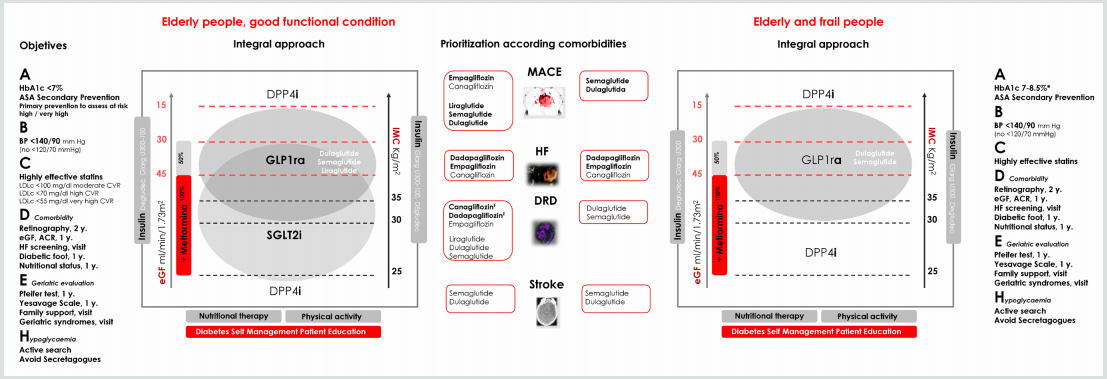
Figure 1: Comprehensive approach in older people with T2DM.
Bold therapy: grade A evidence. * Clinical situation: Intermediate / complex HbA1c 7-8%, TA <140/90 mmHg; very complex HbA1c <8.5%, TA <150/90 mm Hg.
ASA, acetylsalicylic acid; BP, blood pressure; LDLc, LDL cholesterol; y., every “number” years; eGF, estimated glomerular filtration; ACR, urine albumin creatinine ratio; HF, heart failure (evidence limited to patients at risk of heart failure or patients with FH diagnosis and reduced ejection fraction); Ŧ eGFR <30 mL/min/1.73 m2: Initiation not recommended, but once established, it can be maintained until the start of dialysis.
GLP1ra, glucagon-like peptide-1 receptor agonists; SGLT2i, sodium-glucose transport protein 2 inhibitors; DPP4i, dipeptidyl peptidase 4 inhibitors; Glarg, glargine
Lupinepublishers-openaccess-journal-diabetes-obesity

3. Evaluation of frailty. The most validated and simple evaluation tools are Fried criteria and FRAIL scale. Consider potentially reversible causes that contribute to frailty such as presence of hypothyroidism, vitamin D deficiency, anemia, etc., is advised [3].
4. In those over 65 years of age, an early diagnosis of mild cognitive alterations is recommended, at diagnosis and subsequently annually [2]. Pfeiffer questionnaire or Minimental test are validated tools. In patients with cognitive dysfunction, simplify treatment, and adapt care structure.
5. Patient safety, preferences and quality of life should be the main objectives.
Treatment objectives, therapeutic approach and the assessment of comorbidities, are shown in (Figure 1).

Treatment Objectives (ABCDEH):

A. Glycemic control (A1c)

General recommendation, which should always be individualized, is a target of HbA1c 7.5-8.5% (58-69 mmol/l) in advanced frailty, and HbA1c 7-8% (53-64 mmol/l) in mild to moderate frailty. In frailty subjects, HbA1c <7% (53 mmol/l) should be avoided, especially if drugs with risk of hypoglycemia are used [2]. Many frail subjects have medical conditions that can interfere with HbA1c determination (chronic kidney disease, anemia, transfusions), and capillary blood glucose measurement may be necessary for assessing glycemic control [2].

B. Blood pressure (BP)

The objective of elderly subjects with diabetes, including those with dementia, is <140/90 mmHg, avoiding values <120/70 mmHg. A goal of <150/90 mmHg may be more suitable for the frail and dependent elderly. Whenever possible, measure BP standing and sitting, to detect orthostatic hypotension that increase the risk of falls. Withdrawal of treatments should be evaluated as frailty progresses [2,3].

C. Hypercholesterolemia

Statin treatment is recommended in the same situations as in non-elderly subjects: secondary prevention and primary prevention with high cardiovascular risk. Treatment of hypercholesterolemia in elderly patients has some differential characteristics. Lifestyle changes may not be possible. Furthermore, statin myopathy is more frequent (up to 10%) due to sarcopenia, so it is advisable to use low or moderate doses of statins. Treatment of vitamin D deficiency can improve statin-associated myalgia [3]. In situations of advanced frailty and dependency, suspension of statins may be considered.

D. Assessment of chronic complications

It must be individualized, with particular attention to those with higher influence on functional state (retinopathy, diabetic macular edema and diabetic foot). Heart failure, chronic kidney disease, and vitamin B12 deficiency should not be forgotten [2,4].

E. Geriatric Evaluation

Consider the assessment of geriatric syndromes: polypharmacy (use of three or five drugs simultaneously or the need to indicate one drug to supply the side effects of another), cognitive impairment, depression (Yesavage scale annually), urinary incontinence, falls, chronic pain (visual analogue pain scale), and frailty [2,3].

F. Hypoglycemia

In older people prevention of hypoglycemia is especially important because of the repercussions on the risk of falls, fractures, and emergency department visits and hospitalization. Elderly patients have impaired recognition of hypoglycemia and difficulties in acquiring basic skills for self-care and for resolution of hypoglycemia, which determines a greater severity of the episodes. Also, there is a bi-directional relationship between hypoglycemia and cognitive decline [5].

Comprehensive Pharmacological Treatment in the Elderly with T2DM

In general terms, disease modifying therapies should be used in combination with metformin, that is, with benefit in morbidity - associated mortality, low risk of hypoglycemia, and benefits in terms of control of BP and excess of weight (if appropriate) [6].
The patient and their caregivers should be aware of the “sick days” rule for metformin and sodium-glucose transport protein 2 inhibitors (SGLT2i), to avoid the potential risk of impaired renal function, lactic acidosis, and euglycemic ketoacidosis. Also, simplification of complex regimens is recommended, especially in patients with insulin therapy, to reduce the risk of hypoglycemia and polypharmacy, always based on individualized HbA1c targets.
The use of SGLT2i in frail elderly patients with a diagnosis of heart failure (HF) with reduced ejection fraction (FEr), is a reasonable therapeutic option, given its potential benefits. Diuretic and blood pressure treatment must be revised to avoid volume depletion (hypotension, orthostatic hypotension, dizziness, syncope, and dehydration), and impaired kidney function.
DPP4 inhibitors (DPP4i) may be reserved for elderly people with renal function contraindicating other therapies, or those patients with normal weight, in whom the additional weight loss may be a problem; in this case, sitagliptin [7]. and linagliptin [8] must be prioritized. Sulfonylureas and glinides (hypoglycemia risk), and pioglitazone (risk of heart failure and fractures), must be avoided.
In frail elderly people with obesity, the use of weekly glucagonlike peptide-1 receptor agonists (GLP1ra) may be a good option given the low risk of hypoglycemia, the weight loss benefit, the potential benefits in comorbidities and the weekly administration [9]. Its use must be accompanied by adapted nutritional therapy, and appropriate physical activity recommendations (aerobic and resistance training) to avoid the loss of muscle mass, including strength, flexibility and balance exercises [10]. Also, the appearance of gastrointestinal effects should be monitored.

Read More about Lupine Publishers Journal of Diabetes and Obesity Please Click on Below Link: https://diabetes-obesity-lupine-publishers.blogspot.com/

Tuesday, 14 March 2023

Lupine Publishers| Identification of The Downregulation of TPD52-Like3 Gene and NKX2-1 Gene in Type 2 Diabetes Mellitus Via RNA Sequencing

  Lupine Publishers| Journal of Diabetes and Obesity


Abstract

A recent study using next-generation RNA sequencing was reported on genome-wide changes in gene expressing in the skin between patients with type 2 diabetes mellitus, compared to non-diabetic patients. Ex-post review, based in part on both the existence of lipid droplets, peridroplet mitochondria and cytoplasmic mitochondria, selected in the gene metabolism category the most downregulated gene TPD52L3, and in the gene regulation category the most downregulated gene NKX2-1. There is strong evidence that these two genes are involved in the disease process of type 2 diabetes mellitus.

Keywords: Gene Expression; Lipid Droplets; Mitochondria; RNA Sequencing; Type 2 Diabetes Mellitus

Opinion

In an earlier study, it was proposed that the final consequence of hereditary anomaly results in the development of type 2 diabetes, which already emerges in the prediabetic phase. It was thought to occur due to an increased flux, as compared to the healthy controls where protons (H+-ions) from the mitochondrial intermembranespace re-enter the matrix via uncoupling protein-1 (UCP1). This causes hyperthermia in and around the mitochondria [1].
But the key question that remains to be answered here is for the connection between the increased flow of protons and type 2 diabetes mellitus. In the past decade, a study reported on the visual documentation of the possible interaction of lipid droplets with mitochondria. This interaction was found to be quite intimate with the involvement of membrane attached receptor proteins such as SNAP23 [2]. Also, the cellular population of mitochondria in brown adipocytes tissue could be divided into two subpopulations; i.e. mitochondrial population having physical evidence of adherence to a lipid droplet or peridroplet mitochondria, and a non-lipid droplet-bound cytoplasmic mitochondrial population without any adherence to lipid droplets [3,4].
Although both the peridroplet mitochondria and cytoplasmic mitochondria are similar in their cell membrane composition they differ in other fundamental respects [3,4]. A comparison of the purified peridroplet mitochondria to cytoplasmic mitochondria suggests that peridroplet mitochondria are more elongated, whereas cytoplasmic mitochondria tend to be smaller. Also, peridroplet mitochondria have enhanced oxidative phosphorylation capacity, TCA cycle activity, ATP synthesis, as well as increased ATP-dependent triglyceride synthesis compared to cytoplasmic mitochondria. The measured fatty acid-driven respiration and UCP1 content in the isolated mitochondria suggests that for thermogenic fat oxidation peridroplet mitochondria are not specialized compared to cytoplasmic mitochondria [3]. This signifies that, under healthy conditions, in the peridroplet mitochondria the protons derived from free fatty acids (FFAs) and generated by the electron-transport chain during the oxidation process of FA are used for the production of ATP without any escape of protons via UCP1 to produce heat. On the other hand, the protons generated by the oxidation of cytoplasmic mitochondrial FA are mainly used for the production of heat. So, peridroplet mitochondria have an increased coupled respiration, while cytoplasmic mitochondria have an increased uncoupling activity. The existence of peridroplet mitochondria demonstrates that the essential processes of fat metabolism can be selectively confined to exclusive and segregated subsets of mitochondria. The fatty acids intended for storage undergo synthesis of triacylglycols followed by their storage in the lipid droplets.

Most eukaryotic cells can store lipids in the form of droplets [5]. Lipid droplets are cytosolic storage organelles at the center of the lipid and energy homeostasis. They have a unique architecture consisting of a hydrophobic core of neutral lipids, mostly triacylglycerol and sterol esters and are enclosed by a phospholipid monolayer membrane. This single layer is derived from the endoplasmic reticulum, whereby triacylglycerols are synthesized between the two leaflets of the endoplasmic reticulum membrane. Associated with the monolayer is a specific set of proteins, which decorates the surface of the lipid droplet but is absent from the hydrophobic core [6]. These proteins associate with the membrane through hydrophobic hairpins, amphipathic helices and fatty acid modifications, and are also thought to control lipid droplet positioning inside the cell and association with other organelles.
In 2016, researchers demonstrated that the exogenous expression of human tumor protein D52 (TPD52) in the cultured 3T3 cells result in a significant increase in the numbers of lipid droplets [7]. Starting with the bulging of a triglyceride lens within the endoplasmic reticulum bilayer, lipid droplet biogenesis factors including TPD52 are recruited to the lens structure and facilitate the growth of the nascent lipid droplet [8,9]. Moreover TPD52- expressing 3T3 cells form more lipid droplets following oleic acid supplementation, which contributes to the lens formation [10]. As a previous study has shown, an increase in carbon-carbon double bonds in the acyl chains of phospholipids promotes the flexibility of cellular membranes [11]. So, TPD52 expression increases lipid storage, co-distributes with lipid droplets and is recruited to lipid droplets to stabilize lipid droplets [12]. Moreover, it is interesting to note that TPD52 knockdown decreased both lipid droplet sizes and numbers [12].
Tumor protein D52 is the founding member of the TPD52-like protein family representing four paralogous mammalian genes, i.e. TPD52, TPD52L1, TPD52L2, and TPD52L3 [7,13,14]. The group of Cao demonstrated that human TPD52L3 interacted with itself and with TPD52, TPD52L1, and TPD52L2 [14]. The four human linear proteins of this family are TPD52, TPD52L1, TPD52L2, and TPD52L3, which consist of 184, 204, 206, and 140 amino acid residues, respectively. Their first exon-coded protein located at the N-terminal side is unique to each isoform, and all the members contain a highly conserved coiled-coil motif located towards the N-terminus which is required for homo- and heteromeric interaction with other TPD52-like proteins [14,15] and share a sequence identity of ~50% [7]. Byrne et al. proposed that TPD52 may exert and/or regulate its activities through interaction with itself and its related proteins [15]. The coiled-coils were predicted by use of pairwise residue correlations and were not based on their crystal structures [16].

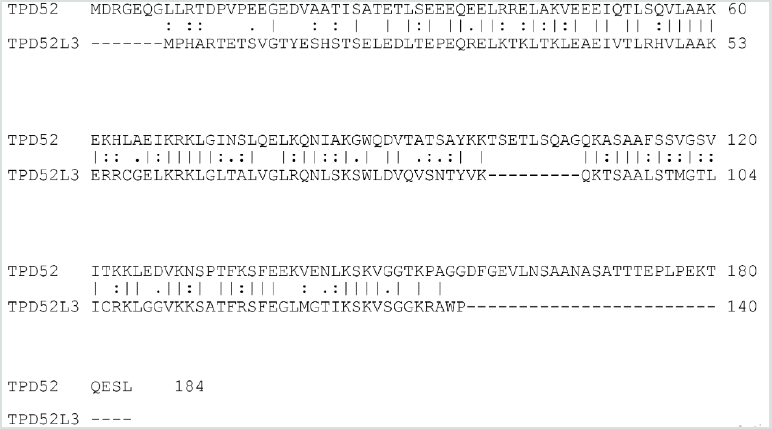
Figure 1: Alignment of the human TPD52 (upper row) and the human TPD52L3 (lower row) protein sequences. Amino acid residues are indicated by single letters. Vertical lines indicate identical residues and colons/dots indicate highly/weakly conserved residues.

Lupinepublishers-openaccess-journal-diabetes-obesity

The analysis was focused on the sequences of TPD52 and TPD52L3. The two sequences revealed an obvious similarity, they share 63 identical positions and 42 similar positions resulting in an overall homology of 57.1% (Figure 1). The coiled-coil motif near the N-terminus was found in all TPD52-like proteins. Uniprot predicts a coiled domain for residues 28-57 of TPD52L3, and also for residues 21-70 of TPD52 [17]. The common part of these two coiled-coil protein sequences has an overall homology of 67.9% (Figure 1). The information regarding the amino acid sequences of human TPD52 (P55327-2) and TPD52L3 (Q96J77-1) was retrieved from the UniProtKB/Swiss-Prot databank. Interestingly, although the coiled-coil motif is very important for the interactions mediated by TPD52-like proteins [15,18], the TPD52L3 shortened coiled-coil motif successfully interacted with TPD52-like proteins.

A recent study using next-generation RNA sequencing was reported on genome-wide changes in gene expression in the skin between patients with type 2 diabetes mellitus, compared to nondiabetic patients [19]. The most downregulated gene of patients with type 2 diabetes in the gene metabolism category is TPD52L3 with a “log2 fold change” value of -28, compared to skin samples from non-diabetic patients. So far, this gene has not been linked to type 2 diabetes or wound healing.

The fact that the exogenous expression of human TPD52 increases the number of lipid droplets [7], TPD52 knockdown decreases the number of lipid droplets [12], and the activity of TPD52 depends on the interaction with TPD52L3 [14], support the idea that the major function of TPD52L3 is the lipid storage at the center of the lipid and energy homeostasis [8,9]. In other words, in brown adipocytes tissue, it seems likely that the significant downregulation of TPD52L3 causes a reduction in the number of lipid droplets in the skin samples of type 2 diabetes mellitus patients.

This indicates that an essential reduction in the lipid droplets suggests a substantial decrease in the peridroplet mitochondria for patients with type 2 diabetes and consequently an increase in the saturated plasma FFAs. As the unsaturation index (UI; number of carbon-carbon double bonds per 100 fatty acyl-chains) of FFAs from human white fat cells is substantially lower compared to the UI of serum FFAs in the healthy controls (85.5 and 191.9, respectively), these events force a shift from unsaturated to saturated acyl chains in the phospholipids of both the erythrocyte and vascular membranes [20]. This reduction in UI translates into an increase in the attractive forces between the mutual membrane phospholipid acyl chains, which redistributes the lateral pressure profile of the cell membrane [21]. This redistribution reduces the pore diameter of the transmembrane glucose transport channels of all Class I glucose transporter proteins, leading to a marked reduction in the transmembrane glucose transport [22].

On the other hand, the increased uncoupling activity of the cytoplasmic mitochondria [4] takes up the remaining fatty acid oxidation, including the formation of protons. The rationale is that the overall balance between the number of protons which re-enter the matrix through ATP synthase on the one hand, and the number of protons which re-enter the matrix through UCP1 on the other hand, might shift to the latter side, which in turn promotes an increase in the production of heat. To keep a narrow range of mitochondrial temperature compatible with life, the slow-down principle enters into force, which also results in an essential reduction in UI [1]. This chain of events is a blueprint of the development of type 2 diabetes mellitus.

A second result of the earlier mentioned genome-wide analysis study is the most downregulated gene in the gene regulation category, NKX2-1, of type 2 diabetes patients with a “log2 fold change” value of -28 compared to skin samples from non-diabetic patients [19]. Notably, a study also reported a novel heterozygous mutation in exon 3 of the NKX2-1 gene, which is related to a reduction in the muscle mitochondrial respiratory chain complex activity, a characteristic of type 2 diabetes [23]. It is to be noted that the reduced mitochondrial activity is one of the characteristics of type 2 diabetes [24]. This may be in advance of the patients with type 2 diabetes mellitus as the reduced mitochondrial activity implies a reduction in heat production.

Finally, it is worth considering about the potential benefit of the use of (modified) synthetic TPD52L3 for combating the adverse effects of type 2 diabetes mellitus.

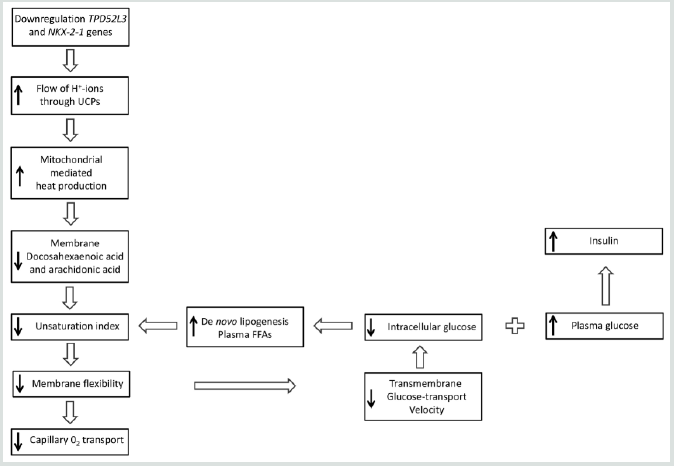
Briefly, the idea is that two genes are pertinently involved in the disease process of type 2 diabetes mellitus: one concerns the downregulation of human TPD52L3 gene expression, which yields a significant reduction in the lipid droplets, whereas the second one relates to the downregulation of human NKX2-1 gene expression which reduces the mitochondrial respiratory chain activity (Figure 2).

Figure 2: Although the results of genome-wide screen for type 2 diabetes susceptibility genes are still under debate, a refined working hypothesis proposes that the primary effect of the downregulation of the human genes TPD52L3 and NKX2-1 generates an increased flux of mitochondrial intermembrane-space protons through UCP1 into the matrix, which causes an increase of extra heat. This process initiates the slow-down principle. UCP: Uncoupling protein; FFA: Free fatty acid; GLUT: Glucose transporter.

Lupinepublishers-openaccess-journal-diabetes-obesity


Read More about Lupine Publishers Journal of Diabetes and Obesity Please Click on Below Link: https://diabetes-obesity-lupine-publishers.blogspot.com/

Wednesday, 1 February 2023

Lupine Publishers| Properties of Mitochondrial-Derived Peptides (Mdps), Type 2 Diabetes, and Relationship with Oxidative Stress

 Lupine Publishers| Journal of Diabetes and Obesity


Abstract

Objective: In addition to its role in energy production and metabolism, mitochondria play a major role in apoptosis, oxidative stress, and calcium homeostasis. This review highlights the intricate role of mitochondria derived peptides (MPs), oxidative stress, and age-related disease such as diabetes.

Key Findings: The mitochondria produce MDPs: specific peptides that mediate transcriptional stress response by its translocation into the nucleus and interaction with DNA. MDPs are regulators of metabolism with cytoprotective effects through anti-oxidative stress, anti-inflammatory responses and anti-apoptosis. This class of peptides comprises: humanin (HN), MOTS-c, Small HN-like peptides. HN inhibits mitochondrial complex 1 activity and limits oxidative stress level in the cell. HN has been shown to prevent apoptosis by decreasing the reactive oxygen species production. Mitochondrial dysfunction and oxidative stress are implicated in the pathogenesis of diabetes. Data suggested that MDPs had a role in improving type 2 diabetes (T2D).

Summary: The goal of this review is to discuss the newly emerging functions of MDPs and their biological role in ageing and age-related diseases such as T2D.

Keywords:Mitochondrial-Derived-Peptides; Humanin; Oxidative Stress; Diabetes

Introduction

Mitochondria play a critical role in maintaining cellular function by ATP production. In addition to its role in energy production and metabolism, mitochondria play a major role in apoptosis, oxidative stress, and calcium homeostasis. A mitochondrial stress signal, or a ‘mitokine’, could confer protection and promote survival, while priming the cell’s readiness for subsequent insults with increasing severity. The term ‘mitohormesis’ for such a phenomenon has been created [1]. The mitochondrial unfolded protein response (UPRmt) is a central part of the “mitohormetic” response. The UPRmt may be an alternative way in relationship with mitochondria signal in the cell. The mitochondria produce some specific peptides that mediate transcriptional stress response by the translocation into the nucleus and interaction with DNA. Mitochondrial derived peptides (MDPs) are regulators of metabolism and various studies have shown that MDPs exerted cytoprotective effects through anti-oxidative stress, anti-inflammatory responses and anti-apoptosis [2,3]. The goal of this review is to discuss the newly emerging functions of MDPs and their biological role in ageing and metabolic diseases such as T2D.

Mitochondrial Metabolism Modulation

Functions in the Mitonuclear Communication Pathways

Mitochondria booked a portion of the original bacterial genomes that co-evolved with nuclear genome. However, mitochondria import over a thousand proteins encoded in the nuclear genome to maintain their diverse functions, reflecting their adjacent relationship [4].

The mitochondrial genome inherits bacterial-like traits: the DNA molecules (mtDNA) are circular, double stranded, small (16,569 nucleotides in humans) and compact. mtDNA contains 37 genes, including 22 tRNAs, 2 rRNAs (12S and 16S rRNA) and 13 mRNAs encoding the proteins of the electron transport chain [5]. The mtDNA has no introns but a few non-coding nucleotides between adjacent genes and small open reading frames that encode functional MDPs. This class of peptides comprises humanin (HN) and mitochondrial open reading frame of the 12S rRNA-c (MOTS-c) and expands the expression of mitochondrial proteome [6]. It has been established that mitochondria can export peptides and also import cytosolic peptides. It is the class of “cell-penetrating peptides” designed also as “mitochondrial cell-penetrating peptides” [7]. Many age-induced processes and degenerative diseases are related to mitochondrial dysfunction, further highlighting the critical importance of this organelle [8]. Complex human diseases, including diabetes, obesity, fatty liver disease and aging-related degenerative diseases are associated with alterations in mitochondrial oxidative phosphorylation (OXPHOS) function.

Overview on Concepts of Retrograde Signaling and Unfolded Protein

Numerous implications of these anterograde and retrograde signaling pathways between the mitochondria and the nucleus are appropriate for therapeutic exploitation with bioactive molecules.

Concept of Retrograde Signaling

The hallmark of mitochondrial retrograde signaling is the modification of the expression of nuclear genes induced by a signal from mitochondria [9]. Retrograde signaling must be triggered by a mitochondrial signal that in turn is relayed via molecules that finally reach the nucleus. In mammalian cells, altered nuclear expression in response to mitochondrial dysfunction is reported; a number of signaling pathways being implicated in this retrograde communication [10]. Mitochondrial retrograde signaling is a signaling pathway connecting mitochondria and the nucleus. Signal transducers in the yeast retrograde response are Rtg1p, Rtg2p, and Rtg3p proteins [11]. The outcomes of mitochondrial retrograde signaling go far beyond the maintenance or biogenesis of the organelle, affecting the homeostasis of the whole organism through body weight or immunity.

Concept of Unfolded Protein

Mitochondrial protein homeostasis is maintained through proper folding and assembly of newly translated polypeptides. Several factors challenge the mitochondrial protein-folding environment including reactive oxygen species (ROS) that are generated within mitochondria, as well as environmental situations such as exposure to toxic compounds. To promote efficient mitochondrial protein folding mitochondria possess molecular chaperones located in both the intermembrane space and matrix [12].

UPRmt is a mitochondria-to-nuclear communication mechanism that promotes adaptive regulation of nuclear genes related to mitochondrial response, and metabolism, implicated in the cellular homeostasis [13].

Mitochondrial-Derived Peptides: Classification

MDPs are a series of peptides encoded by mitochondrial DNA. This class of peptides comprises HN, MOTS-c, Small HN-like peptides (SHLPs) and expands the expression of mitochondrial proteome [6].

Humanin

The first MDP discovered back in 2001 was HN; the term based on the potential of this peptide for restoring the “humanity” of Alzheimer’s disease (AD) patients. HN promotes cell survival in response to a variety of insults.
It is a small, secreted, 24 or 21 amino acid peptide, depending on cytoplasmic or mitochondrial translation, respectively. If HN is translated within the mitochondria, the peptide will be 21 amino acids; and if it is translated in the cytoplasm, then the result is a 24 amino acid peptide [14]. HN is encoded by an HN open reading frame (ORF) within the gene for the 16S ribosomal subunit within the mitochondrial genome [15]. HN was discovered during a search for survival factors in unaffected areas of an AD patient’s brain. The initial studies were first performed in cell culture and then followed by in vivo studies using both pharmacological mimetics of AD as well as mutant gene: amyloid-β precursor protein. The most recent studies used transgenic models of AD. As HN is a relatively short peptide, exhaustive mutational analysis of the importance of each amino acid has been possible. Interestingly, single amino acid substitutions of HN can lead to significant alterations in its potency and biologic functions. S14G-HN in which the serine at position 14 is replaced by glycine, is a highly potent analogue of HN.
Finally, HN may be the first small peptide of its kind representing a putative set of MDPs, a novel concept that modifies the established concept about retrograde mitochondrial signaling as well as mitochondrial gene expression. HN is a neuroprotective peptide and a cytoprotective factor against oxidative stress [16].

Read More about Lupine Publishers Journal of Diabetes and Obesity Please Click on Below Link: https://diabetes-obesity-lupine-publishers.blogspot.com/

Tuesday, 20 December 2022

Lupine Publishers| Variability in Plasma FGF21 Levels in Rats Fed A Standard 15% Protein Diet is not Sensitive Enough to Reflect Differences in Protein Requirements

 Lupine Publishers| Journal of Diabetes and Obesity 


Introduction

Fibroblast growth factor 21 (FGF21) is a hepatokine member of a subfamily of “fibroblast growth factors” that responds to multiple metabolic stresses as protein deficiency [1-4]. FGF21 is produced in various tissues but the FGF21 circulating form is primarily of hepatic origin [1,2]. FGF21 affects numerous metabolic and behavioural parameters, and in particular, increases appetite for protein in subjects fed a protein-deprived diets [5,6]. In a recent still unpublished study, we observed that plasma FGF21 levels were higher in adult male Wistar rats fed a standard diet, formulated according the AIN93 recommendations for rats’ feed, containing 15% protein by energy [7] than in rats fed a 30% protein diet. In addition, inter-individual variability of plasma FGF21 levels was larger in rats fed the standard 15% protein diet than in rats fed the 30% protein diet. We therefore considered the hypothesis that higher levels and inter-individual variability in plasma FGF21 levels in rats fed a standard 15% protein diet would reflect the variability in protein requirements between individuals and thus, that measurement of plasma FGF21 levels can be used as a simple, rapid, and minimally-invasive test to estimate the adequacy of protein intake.
Dietary self-selection is a method that has been largely used in farm animals and laboratory rodents to study the requirements for macronutrients (carbohydrates, lipids and proteins), vitamins and minerals [8,9]. Many studies using this method, in our lab and others, showed that rats self-selecting between a protein diet and a protein-free diet often ingest up to 30-50% of total energy intake as protein [10-15], so much higher than the level considered as sufficient for an optimal growth in adult rats (10-15% by energy), which comforted our hypothesis that 15% dietary protein was possibly not the optimal dietary content.
The objective of this study was to verify that variability in plasma FGF21 levels in rats fed a standard 15% protein diet was indicative of differences in protein requirements. To this end, we have analyzed the relationship between FGF21 levels, and the level of protein subsequently selected during self-selection between a protein diet and a protein-free diet.

Experimental Procedure

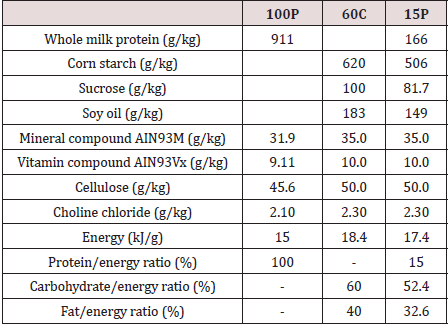
24 adult male rats (215-240g) of the Wistar RccHan strain (ENVIGO) were used and individually housed (22°C ± 1°C, 12/12 L/D, cycle lights on at 08:00). After 1 week of adaptation to the laboratory conditions, the rats were fed for 12 days (Basal period) a standard diet formulated according to the AIN93 requirements [7] that contained 15% protein (15P); then, for 28 days (Choice period), 6 rats (Control group) continued to be fed with the standard diet and 18 (Self-selecting group) were given a choice between a pure protein diet (100P) and a protein-free diet containing a mix of fat (soy oil) and carbohydrate (corn starch and sucrose) in which carbohydrate amounted 60% by energy. The diets were provided, as necessary.

The food pellets were prepared twice a week by mixing the macronutrients, vitamins, and mineral mix with the amount of water required to make a thick dough. Food intake (g/day) was measured twice a week and converted in kJ/day based on the energy content of the diets (Table 1).

Table 1: Composition and energy content of the 3 used diets.

lupinepublishers-openaccess-journal-diabetes-obesity

100P: diet containing only proteins; 60C: protein-free diet containing only lipids and carbohydrates and in which carbohydrates amounted 60% by energy; 15P: standard diet containing 15% of protein by energy.

Blood samples (0.5 mL) were collected from the tail vein in EDTA tubes: once during the basal period and once during the choice period. Blood collection was made in the morning (10:00- 12:00) in rats that were not previously fasted. Blood samples were centrifuged (5000g, 15min, 4°C) and the plasma stored at -20°C. Plasma FGF21 levels (pg/ml) were measured by ELISA tests using commercial kits from Bio Vendor (Mouse/Rat FGF-21 ELISA RD291108200R).

Statistical Analysis

Statistical tests were performed using RStudio software, 2015. Changes in protein intake and plasma FGF21 level were compared using mixed two-factor ANOVA tests (parameter ~ group*period), which were followed by the main effects analysis by Bonferroni adjusted pairwise comparisons. Values are presented as means ± standard error of the mean (SEM). Linear regression analysis was used to study the link between plasma FGF21 levels during the basal period and protein intake during the choice period and was performed using Excel software. Significance of correlations was assessed using the Pearson correlation coefficient. A threshold of P≤0.05 was chosen as significant.

Results and Discussion

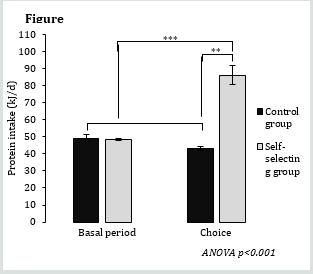
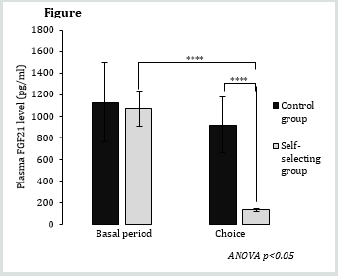
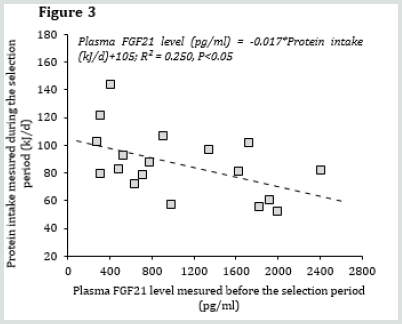
Protein intake was similar between the control and selfselecting group during the basal period but increased by 80% in the self-selecting group during the choice period (+37.8 kJ/d, p<0.0001) (Figure 1). This response significantly increased the contribution of protein to total energy intake from 15.0% to 23.5% (p<0.001). Mean plasma FGF21 levels averaged ~1,100 pg/mL in both groups during the basal period and decreased to 131 pg/mL in self-selecting group during the choice period (P<0.001) (Figure 2). Finally, contrary to our hypothesis, not only did we not observe a positive correlation between plasma FGF21 levels during the basal period and protein intake during the choice period, but instead we observed a weak and inverse correlation (Figure 3).

Figure 1: Protein intake (kJ/d) according to diet group and period.
(*:0.05; **:0.01; ***:0.001; ****:0.0001) Values are represented as means ±SEM, only the p-value of the interaction of ANOVA tests are indicated.

Lupinepublishers-openaccess-journal-diabetes-obesity

Figure 2: FGF21 level in plasma (pg/ml) according to diet group and period.
(*:0.05; **:0.01; ***:0.001; ****:0.0001) Values are represented as means ±SEM, only the p-value of the interaction of ANOVA tests are indicated.

Lupinepublishers-openaccess-journal-diabetes-obesity

Figure 3: Protein intake (kJ/d) during the choice period as a function of plasma FGF21 levels during the basal period in the self-selecting group.

Lupinepublishers-openaccess-journal-diabetes-obesity

Conclusion

In conclusion, inter-individual variability in plasma FGF21 levels in rats fed a standard 15% protein diet did not appear to be a parameter sensitive enough to reflect inter-individual differences in protein requirements. Therefore, plasma FGF21 level cannot be used as a test to determine inter-individual variability in protein requirements in individuals. Nevertheless we observed that plasma FGF21 levels in P15 fed rats were ~7 fold higher than in selfselecting rats ingesting 23.5% protein, which points on the fact that changes in plasma FGF21 levels are very sensitive to dietary protein intake, even when protein intake is well above essential protein requirements (~8-10 % in adult male rats).

Read More about Lupine Publishers Journal of Diabetes and Obesity Please Click on Below Link: https://diabetes-obesity-lupine-publishers.blogspot.com/


Tuesday, 6 July 2021

Lupine Publishers| Evaluation of the Prevalence of Gestational Diabetes Using Fasting Blood Glucose and Glycated Heamoglobin in Yenagoa Metropolis

 Lupine Publishers|  Archives of Diabetes & Obesity (ADO)


Abstract

There is understanding that most pregnant women with gestational diabetes mellitus stands the risk of having adverse obstetric and perinatal outcome. The need for an early detection and effective management of this problem with a view to ensure better maternal and fetal protection was the driving thrust for this study. Through the application of spectrophotometric methods employing enzymatic and non-enzymatic systems, the concentration of fasting blood glucose (FBG) and glycated Haemoglobin (HbA1c) were determined in 2nd and 3rd trimester pregnant women and compared with non-pregnant women. Data were analysed using student’s t-test with the aid of Graph pad Prism (R) software version 6.10 at p<0.05 values considered statistically significant. Result reveals that 11% of pregnant women investigated had gestational diabetes mellitus in Yenagoa metropolis. Our findings elucidate the danger of gestational diabetes mellitus, its prevalence and the need to allow for effective proactive intervention program regarding screening and management and in addition highlight areas requiring further research.

Keywords: Gestation; Diabetes mellitus; Fasting blood glucose; Glycated hemoglobin

Abbrevations: FBG: Fasting Blood Glucose; GDM: Gestational Diabetes Mellitus; RBC: Red Blood Cells; EDTA: Ethylene Diamine Tetrachloro Acetic Acid

Introduction

Diabetes mellitus is a group of metabolic disease conditions that have significantly contributed to increasing health burden and financial problem of many countries worldwide. Although the prevalence and screening methods for the two major clinical subgroups type 1 and type 2 diabetes are well researched and to a large extent, the mechanism are understood, other subgroups of this disease notably gestational diabetes mellitus (GDM) are less established. Gestational diabetes mellitus is defined as glucose intolerance of variable degree with onset or first recognition during pregnancy which as a concept, existed since 1964 [1,2] established that GDM occurs in about 2-10% of all pregnancies and the condition may improve or disappear after delivery. Studies of [3] have observed that GDM is estimated to affect 1% to 14% of pregnancies in the United States annually, depending on the population studied and the diagnosis test method used. It has been shown in [4] that gestational diabetes mellitus prevalence has been steadily increasing with the rise of obesity and type 2diabetes. Both birth certificates and pregnancy risk assessment monitoring system which include questionnaire completed by others can provide population based prevalence estimate of gestational diabetes mellitus.

Studies indicates that whereas specificity for gestational diabetes mellitus is high, on the birth certificate sensitivity is as low as 48%, thus gestational diabetes prevalence obtained from the birth certificate alone is likely underestimated. In contrast, pregnancy risk assessment monitoring system may overestimate GDM prevalence. The exact mechanism underlying GDM is still not clear. The hallmark of GDM however, is increased insulin resistance. As elucidated [5] pregnancy hormones and other factors are thought to interfere with the action of insulin as it readily binds to the insulin receptor. Insulin resistance is known to be a normal phenomenon which sparks up in the second trimester of pregnancy and progresses further thereafter to levels seen in non-pregnant patients with type 2 diabetes. It is unclear why some patients are unable to balance needs and develop GDM but it has been shown by [6] and [7] that autoimmunity, single gene mutations, obesity and other mechanism cannot be ruled out. Studies by [8-10] have ascribed this problem to loss of insulin producing beta cells of the islet of Langer hans. It had earlier been shown [11] that women with gestational diabetes are at high risk for pregnancy and delivery complications including infant macrosomia, neonatal hypoglycemia and cesarean delivery. Earlier work by [12] revealed that women who are affected by GDM have more increased risk of developing type 2 diabetes 5 to 10 years after delivery. It has also been shown by [13] that children born to mothers with gestational diabetes are also more likely to develop impaired glucose tolerance. It has been shown by [14] that glycated hemoglobin is a form of hemoglobin that is measured primarily to identify the three month average plasma glucose concentration. The test is limited to three months average plasma glucose concentration. This is because the life span of a red blood cell is four months about (120 days). However, since red blood cells (RBcs), do not all undergo lysis at the same time, glycated hemoglobin is taken as a limited measure of 3 months. Glycated hemoglobin is a measure of the beta-N-1-deoxyfructosyl component of hemoglobin. Previous report shows that normal levels of glucose produce a normal amount of glycated hemoglobin [15]. When blood glucose is high, glucose molecules attach to the hemoglobin in red cells. The longer hyperglycemia persists, the more glucose bind to the hemoglobin in the red blood cells and the higher the glycated hemoglobin. Once hemoglobin molecule is glycated, it remains that way. A build up of glycated hemoglobin within the red cell therefore reflect the average level of glucose to which cells have been exposed during its life-cycle.

Measuring glycated hemoglobin assesses the effectiveness of therapy by monitoring long-term glucose regulation. It has been shown that measurement of glycated hemoglobin is effective in monitoring long-term glucose control in people with diabetes mellitus [16]. It provides a retrospective index of the integrated plasma glucose values over an extended period of time and is not subject to the wide fluctuations observed when assaying blood glucose concentration. Our findings and implications for life of gestational diabetes mellitus patients are encapsulated in this work.

Material and Methods

Location/subjects

The study was conducted in Yenagoa, Bayelsa State, Nigeria among pregnant women in second and third trimester of pregnancy attending clinic in Diette Koki Hospital and Niger Delta University Teaching Hospital. The study population consisted of 100 pregnant women and 100 non-pregnant women that served as control.Ethical approval for this human study was obtained both from the Niger Delta University and the Diette Koki Hospital. Patients consent were sought for and agreed before sample collection commenced.

Samples

5.0ml of venous blood was collected from fasting subjects at 8.30am and the samples were ali quoted to fluoride bottle and ethylene diamine tetrachloro acetic acid (EDTA) containers. Sample in fluoride containers were spun to obtain serum for glucose determination. Samples in EDTA bottle were used for glycated hemoglobin (HbA1c) determination.

Analytical method

Glucose was determined by the glucose-oxidase-peroxidase method (Randox Product, UK). The glucose in sample was catalysed oxidatively by the glucose oxidase and converted to hydrogen peroxide and gluconic acid. The hydrogen peroxide was broken down by peroxidase and oxygen released reacts with 4-aminophenozone and phenol to give pink color whose absorbance was measured at 540nm with the use of spectrophotometer 22D+ (product of UNISCOPE, England). Glycated hemoglobin was determined nonenzymatically by first cleaving hemoglobin into peptides by the enzymes endoproteinase Glu-c, and in a second step by the glycated and non-glycated N-terminal hexa peptides of the ß–chain obtained were separated and quantified by ion-exchange high performance liquid chromatography (HPLC-Esi/ms) with UV-detection. Principle depend on the fact that a non-enzymatic reaction occurs between glucose and the N-terminal of the Beta-chain forming a Schiff base which is itself converted to 1-deoxyfructose an Amadori rearrangement. The longer hyperglycemia occurs in blood, the more glucose binds to hemoglobin and the higher the glycated hemoglobin concentration.

Statistical analysis

Data were analysed using student’s t-test with the aid of Graph pad Prism (R) software version 6.01 p values of <0.05 were considered statistically significant.

Result

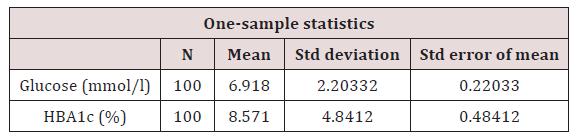
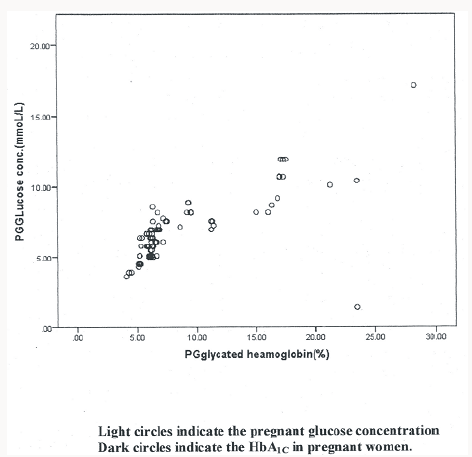
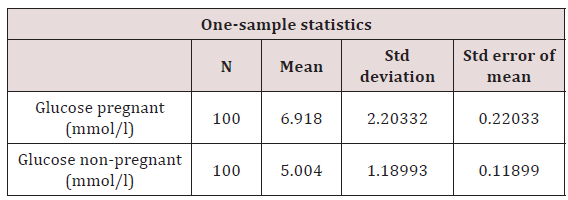
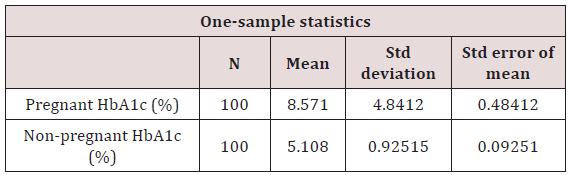
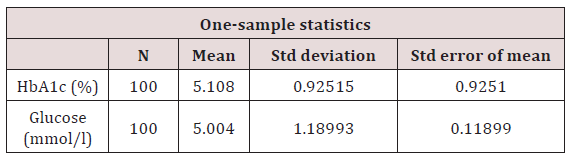
The concentration of glucose and glycated hemoglobin in pregnant and non-pregnant subjects is shown in tables below. Table 1 is a one sample statistics for the pregnant women showing their glucose level and glycated hemoglobin. In Table 2 below show a comparison plot of glucose concentration in pregnant and nonpregnant. In Table 3 below a one sample statistics is shown for glycated hemoglobin concentration in pregnant and non-pregnant (Table 4) and (Figure 1).

Table 1: Glucose and HbA1c concentration.

lupinepublishers-openaccess-journal-diabetes-obesity

t=31.398, p=0.0001. P is significant at <0.05. Values on table suggest a relationship at p = 0.0001

Figure 1: Is a scatter plot showing the relationship of glucose with glycated hemoglobin. The plot shows that both parameters correlate positively.

lupinepublishers-openaccess-journal-diabetes-obesity

Table 2: Glucose concentration in pregnant and non-pregnant subjects.

lupinepublishers-openaccess-journal-diabetes-obesity

t=31.398, p=0.0001. P is significant at <0.05. Values on table suggest a relationship at p = 0.0001

Table 3: Glycated Haemoglobin in pregnant and non-pregnant.

lupinepublishers-openaccess-journal-diabetes-obesity

t=17.71, P=0.0001. P is significant at <0.05. Values on table suggest a relationship at p = 0.0001

Table 4: Glucose and glycated Haemoglobin concentration in non-pregnant.

lupinepublishers-openaccess-journal-diabetes-obesity

t=55.21. P=0.0001. P is significant at <0.05. Values on table suggest a relationship at p = 0.0001

Discussion

Concern for the health of the pregnant woman and he unborn child have driven the heightened interest in the investigation of gestational diabetes mellitus. The diagnostic criteria for gestational diabetes are varied and include screening of high risk patients, strong history of diabetes, and history of abnormal glucose metabolism, presence of glucosuria, diagnosis of polycystic ovarian syndrome, overweight and being a member of an ethnic/racial group with a high prevalence of diabetes mellitus. Pregnancy is known to induce a state of insulin resistance. This condition is usually elucidated especially at late pregnancy due to lowering of the renal threshold. Under this condition there is an increased demand on ß-cells function which may reveal sub-clinical aberrations in carbohydrate homeostasis which may not be normally apparent in a non-pregnant woman.

The present study which is the first of its kind undertaken in this part of the country showed the prevalence of GDM as 11%. It has however been reported variably from 1.4-14% worldwide and differently among racial and ethnic groups [3]. It was revealed that values obtained also depend on the population studied and the diagnostic test used [2]. Studies by [17] revealed that gestational diabetes mellitus rate differ by state with the greatest variation attributable to difference in obesity. Obesity is known to be associated with gestational diabetes and could be prevented if we reduce the risk of overweight women. Preventing obesity is a key component of good women care regardless of pregnancy intention.

We have used only those pregnant women whose glucose was close or above the threshold of 10.0mmol/l in this study in determining the prevalence on account of the criticality of the threshold value. The inclusion of the glycated hemoglobin in this study was intended to show how they correlate in GDM in consideration of the complications in diabetes. Earlier result [18] had epitomized this epidemiological profile of diabetics in pregnancy. The study by [19] also brought to the fore the need for care of diabetic mothers. It has also been recognized that most women with GDM revert back to normal glucose metabolism after delivery of their babies. It has however been observed that they stand the risk of developing type 2 diabetes later in life as are their offspring. Other common maternal complications include hypertension, vaginal candidiasis and abruption placenta with the possibility of macrosomia and stillbirths occurring in the fetus.

Our findings in this work are to a large extent at tandem with those found in the literature both at national and international level. The inference to be drawn from this study is that Yenagoa metropolis inspite of its differential ethnicity being a state capital, living standard, and variation in food is not significantly different from the diabetic incursion world over.

In conclusion, this work buttresses the need to initiate effective policy guidelines with intervention programmes to systematically structure and strengthen care for the pregnant woman and the fetus.

Read More About our Lupine Publishers Archives of Diabetes & Obesity (ADO) Please Click on Below Link: https://diabetes-obesity-lupine-publishers.blogspot.com/