Showing posts with label SJPBS. Show all posts

Friday, 6 October 2023

Lupine Publishers | Relationship Between the Relational Coordination Model and Quality in the UTEQ

 Lupine Publishers | Journal of Psychology and Behavioral Sciences


Abstract

The objective of this study was to build an organizational typology that explains the relationship between relational coordination (RC) and satisfaction in higher education. 4,000 cases were analysed in diverse socioeconomic contexts. 19 RC variables were measured. By applying factor analysis, 6 factors have been obtained that explained a 66.23% of variance. The first three factors were more relevant and are linked to coordination with administration, representative`s cooperation and lectures´ cooperation. Discriminant analysis results showed a strong relationship between RC and quality. Quality exhibited high discriminating power in the model (71.64%), which used 6 factors of RC. The cluster analysis assigned high quality to group 3, associated to high levels of coordination with administration and representatives’ coordination. It evidences that an improvement of RC allows reaching best results in terms of quality in higher education

Keywords: Relational coordination; satisfaction; higher education; shared objectives; mutual respect; communication; quality

Introduction

La Coordinación Relacional (CR) es un proceso comunicativo que busca la integración de tareas a través de la comunicación efectiva y las relaciones entre los agentes de la organización [1-5]. Entendiendo la Universidad como organización, con la aplicación del modelo se busca una mejora de la calidad en la Educación Superior. Actually, la higher education es un elemento clave en la sociedad. Con mejores profesionales, todas las organizaciones contarán con un capital humano más cualificado, lo que supondrá mejores resultados productivos [6,7]. La comunicación entre los distintos agentes de una organización está estrechamente ligada con el nivel de calidad de los resultados que ésta produce [8,4]. La Universidad Técnica Estatal de Quevedo, localizada en Ecuador, es una universidad centrada en titulaciones acordes a las exigencias de su entorno, tales como Ciencias Agrarias, Ciencias Pecuarias, Empresariales, Ciencias Ambientales o Ciencias de la Ingeniería. It is graded with “B” category by the CEAACES (Council of Evaluation, Accreditation and Quality Assurance of Upper Education), in a classification from “A” up to “C”, in a decreasing scale. El objetivo de este estudio fue construir una tipología basada en factores obtenidos de la observación del modelo de RC en la UTEQ así como conocer la relación entre relational coordination and Quality [5].

Methods

Se tomó una muestra de 4,000 alumnos de Universidad Técnica Estatal de Quevedo (Ecuador) durante el curso académico 2014 configurada. Se aplicó un cuestionario que recoge las dos dimensiones de CR. A la dimensión de comunicación pertenecen las variables comunicación precisa, comunicación oportuna y comunicación para la resolución de problemas. A la dimensión de relación pertenecen las variables conocimientos compartidos, respeto mutuo y objetivos compartidos. Los perfiles sobre los que se preguntó fueron personal de administración, profesores, compañeros, representación de estudiantes y “yo mismo” [4].
Se realizó un análisis factorial (AF) como una forma de reducir el número de variables y revelar un modelo de CR mediante relaciones entre variables. Para probar la adecuación del tamaño de la muestra se utilizaron las pruebas de Kaiser-Meyer-Olkin (KMO) y Bartlett [2,6]. El coeficiente alfa de Cronbach, que se calculó aplicando un análisis de confiabilidad en factores designados, indicó alta consistencia interna (α=0.92) [5]. Posteriormente, se construyó una tipología de modelos organizativos a través de una análisis clúster. Por último. se relacionaron los elementos obtenidos en los análisis previos con la calidad percibida por los estudiantes [8].

Results

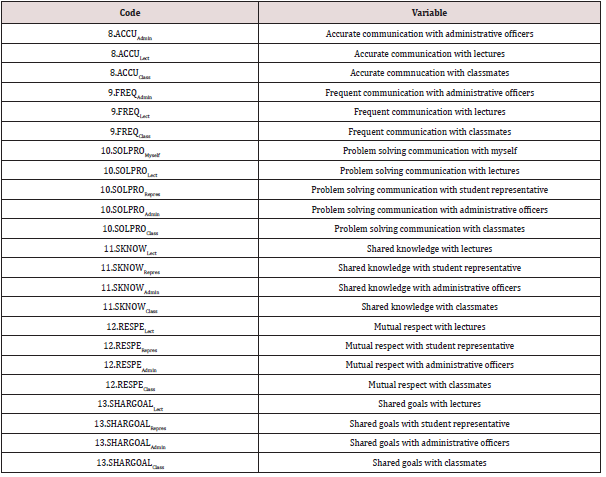
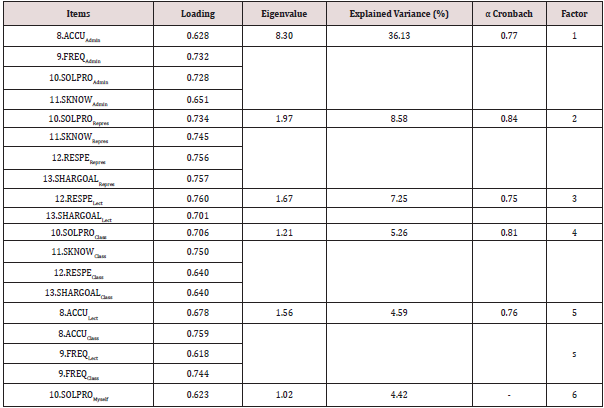
Applying factor analysis (FA), variables were assigned to 6 factors than explained a 66.23% of variance with an eigenvalue under one (Tables 1 & 2). Factor 1 represents a 36.13% of the variance. It´s composed by variables of both RC dimensions. It shows highest values invariables likre accurate communication, fequent communication, solving problem communication and shared knowledge. All of these variables are related with the profile of administrative officers. This factor is called coordination with administration. Second factor explains a 8.58% of the variance. It contains variables of both RC dimensions, too. Solving problem communication, shared knowledge, mutual respect and shared goals are the variables of thise factor. The prevailing selected profile in the variables was the one representing students ´representatives, and it`s called representatives ´coordination. Third factor represents the 7.25% of the variance. It shows high scores invariables of relartionship dimensión, lie mutual respect and shared goals, all of them related with lectures profile. In this way, this is lectures`cooperation factor. Fourth factor explains a 5.26% of variability and, it is associated to variables related to solving problem communication and some variables of relationship RC dimension like shared knowledge, mutual respect and shared goals with classmates. Highest scores in this factor are related to the need to proportionate higher levels of solving problem communication and shared knowledge. This factor represents classmates´ coordination. The fifth one explains a 4.59% of the variance. This factor showed high scores in the profiles related to lecturers and classmates in the items of accurate and frequent communication. This factor represents classroom communication. Finally, the sixth factor, with the 4.42% of the variabce, is related to the individual capacity to solve problems and it is named autonomy.

Table 1: Relational coordination dimensions.
Lupinepublishers-openaccess-journals-psychology-behavioral-science

Table 2:Factor loading matrix of rotated components.
Lupinepublishers-openaccess-journals-psychology-behavioral-science

Table 3: Centroids for each cluster.

Lupinepublishers-openaccess-journals-psychology-behavioral-science

Note: a,b,c,d Within row, averages with different superscript differ significantly according to indicated value p.

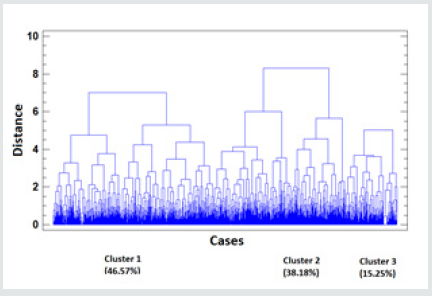
Cluster analysis which presented the most significant results, was the solution of four groups with Ward’s method, based on the Euclidean distances (Figure 1). Table 3 shows the main characteristics of each organisational type. Cluster 1 comprised 46.57% de los casos. Estre grupo muestra valores intermedios en práticamente todos los factores. Destaca levemente un valor más bajo correspondiente al factor autonomy (factor 6), aunque no supone una gran diferencia con el resto de factores. Cluster 2 comprende el 38.18% de los casos. Es el grupo que present valores negativos encodes los factories. Predominant los factories coordination with administration and representatives` coordination. Los valores medias se Encuentros end lectures’ cooperation, classmates’ coordination, classroom communication. El valor más alto dentro de Este grupo avarice end el factor autonomy. Cluster 3 comprende el 15.25% de los casos. Aunque es el grupo de manor tamanu, present los valores más altos. Desta can las atlas punctuations en coordination with administration and representatives’ coordination. Medium values are found in lectures’ cooperation, classmates’ coordination, classroom communication and to a lesser extent to student’s autonomy.
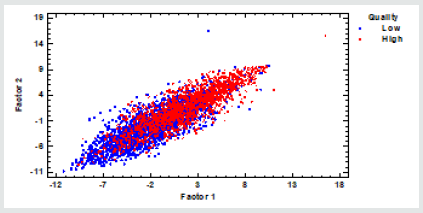
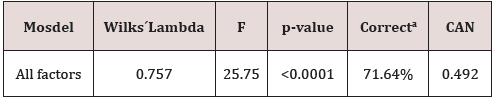
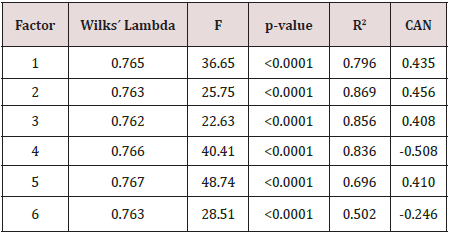
Table 4 shows the general results of the canonical discriminant analysis with all the variables measured [1,7]. In this case, discrimination power was evident because the F statistics of the Wilks’ lambda were significant for the discriminant variables. The Model classifies 71.64% of the cases correctly. Figure 2 shows the distribution of cases with respect to factors 1 and 2. The higher values of quality correspond to high scores of both factors. Table 5 shows the results of the canonical discriminant analysis for each factor. Wilkes´ Lambda indica el alto poder discriminante de la calidad referido a cada factor de forma individual. Coeficientes foro canonical variables muestran una alta relación entre la mayor parte de los factores, destacando coordination with administration and representatives’ coordination. On the otear hand, los factores classmates’ coordination and autónomo shows valores más bajos, indicando una menor relación con la calidad. Mahala Nobis distances indicant la relation existents entre los dos gropes de collided observations (low and high), mestranol una distances de 1.278 entre ambos, con un p-value <0.0001.

Figure 1: Relational coordination clusters.
Lupinepublishers-openaccess-journals-psychology-behavioral-science

Figure 2: Representation of cases according first and second factors and quality level.
Lupinepublishers-openaccess-journals-psychology-behavioral-science

Table 4: Results of the canonical discriminant analysis.
Lupinepublishers-openaccess-journals-psychology-behavioral-science

Note: aPercent correctly classified into farms assignment (R2=1-tolerance); (-) Non-significant values for this canonical component.

Table 5: Results of the canonical discriminant analysis for each factor.
Lupinepublishers-openaccess-journals-psychology-behavioral-science

Note: aPercent correctly classified into farms assignment (R2=1-tolerance); (-) Non-significant values for this canonical component.

Discussion

El análisis factorial muestra 6 factores extraidos de las variables del modelo de RC. Los factores con mayor incidencia en el modelo son coordination with administration representatives’ coordination and lectures’ cooperation, que suponen más del 50% de la varianza. Los dos primeros factores son los asociados a una mayor calidad de la universidad. El sexto factor, autonomy, se asocia con peores niveles de calidad. De la tipología se extraen tres modelos organizativos. El primer modelo, de mayor tamaño muestra una presencia general de todos los factores organizativos. De este modo, se observa una calidad media generalizada en la universidad. El segundo modelo, de tamaño intermedio, muestra valores negativos en todos los factores. Destacan como más bajos los factores coordination with administration and representatives’ coordination. Según se observa en el análisis discriminante, estos dos factores están asociados a mayores niveles de calidad en la universidad. Por otra parte, el valor más alto de este grupo se encuentra en el sexto factor, autonomy, que está asociado a niveles más bajos de calidad. De este modo, este grupo representa el sector con menor calidad en la universidad. En el tercer modelo, el más pequeño, el factor autonomy presenta una baja puntuación, mientras que los factores con más peso son coordination with administration and representatives’ coordination. Por lo tanto, este grupo está asociado a niveles altos de calidad universitaria.

Conclusion

Existe una relación directa entre calidad y el modelo de RC, de este modo se verifica este modelo para la UTEQ. Según este estudio, la calidad de la universidad se encuentra en un punto medio. Muestra valores balanceados en sus elementos, aunque la autonomía de los estudiantes y la actividad comunicativa de los alumnos en clase son bajas. Para conseguir un mayor nivel de calidad se propone centrar la atención en elementos que mejoren la comunicación con el personal de administración y con la respresentatives´students. Una mejora de las TICs podrá suponer una comunicación más fluida entre esos perfiles y el alumno.

Read More About Lupine Publishers Journal of Psychology Please Click on Below Link:
https://lupine-publishers-psychology-journal.blogspot.com/

Friday, 25 August 2023

Lupine Publishers | Usa Facing to Challenge for the Future: Domination or Cooperation? the Final Choice

 Lupine Publishers | Journal of Psychology and Behavioral Sciences


Abstract

The path we have attempted to describe briefly in the previous pages shows the evolution of a society that no longer seems able to make head or tail of what is going on in a moment of great difficulty. An incredulous society faced with facts it fails to understand but that it seems incapable of questioning. It remains locked in an ideological impasse between the return to ancient glories and ostentation of the past, and the idea that instead a new road must be found at the end of a journey that has come to a dead-end. So it is driven towards a form of “compulsion to repeat in a regressive manner”. In 1949 British historian A. J. Toynbee in his book entitled Civilization on Trial made the point that an individual’s character (and I would say also human society’s) is always forged by having to face setbacks and obstacles. However, the toughest situations are those that arise in the middle of fortunate, prosperous periods that people fatuously believe can never end. In such situations people, fighting with destiny, give in to the temptation of looking for scapegoats who will bear the burden of their own incompetence. But trying to saddle someone else with one’s own responsibilities in hard times is even more dangerous than believing in everlasting prosperity. Toynbee postulated that the real challenge at that time came from Western society’s enormous technical progress that made it the master of non-human nature. It was indeed this magnificent advance in the knowledge of “secrets” that had illuded the past generation to the point of daydreaming that conveniently history had come full circle [1-4].
The extremely perspicacious Toynbee already saw the risk of a decline of our society. Much water has passed under the bridge of history, but his considerations have indeed been borne out, also as regards the role of Asia in terms of global domination. In fact in his posthumous work Mankind and Mother Earth Toynbee already saw that Western Europe had lost its leading role to the United States. Having said this he believed that American supremacy would not last longer than that of the Mongol Empire a mere two generations! Looking ahead, he felt that it was quite likely that leadership in the future would pass from America to East Asia [5,6]. Today we are facing a new chapter in history, one in which the United States must try to map out the role it intends to play. Whether this will be oriented towards a dangerous hegemony or possibly will experiment a role that is more oriented towards promoting cooperation. As the great Bard wrote -‘To be or not to be: that is the question’. For the very first time after the collapse of the Soviet empire, the United States is faced with a new situation. It no longer has a well-defined enemy as the USSR had been; it is no longer the world’s only power as has been the case for the past twenty years; it can no longer play a dominant role, because its very own history means that its cultural model is now open to debate. It seems unsure of which role to play: one of continuity with the past twenty years or one more oriented towards the legitimation of a position focused on reducing global tensions [6-12].

Introduction

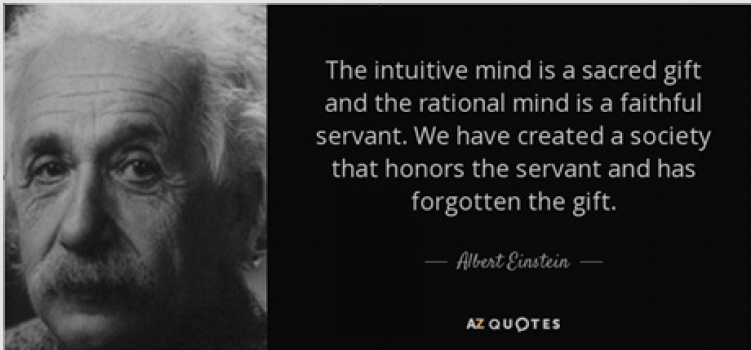
This doubt sums up the country’s dilemma. On the one hand Obama is in favour of a constructive dialogue, one not only based on military power. On the other hand his political opponents consider this to be a sign of weakness, they want the US to continue to play the dominant yet disastrous role embarked on in the Bush era. But times have changed and this position is no longer tenable. The Republicans’ deep-rooted cultural model has led them to believe they are omnipotent, making Obama’s rivals incapable of learning history’s lesson and turning over a new leaf [13]. To think that America’s first Republican president, Abraham Lincoln, in the middle of an extremely stormy period reminded Americans that: ‘The dogmas of the quiet past, are inadequate to the stormy present. The occasion is piled high with difficulty, and we must rise with the occasion [14-17]. As our case is new, so we must think anew, and act anew. We must disenthrall ourselves, and then we shall save our country’ Figure 1. The history of the United States and the cultural model that has asserted itself has been primed by the unjustified idea of infinite technical progress. It has adopted technical knowledge as being the basis for unquestionable moral guidance. Whereas an awareness of the limits of that model could well bring down the castle of dreams of unlimited success on which it is based [18].

Figure 1: The intuitive mind is a sacred gift and the rational min.

Lupinepublishers-openaccess-journals-psychology-behavioral-science

Dramatically, the USA has illuded itself that the time of omnipotence never ends, a mistake the ancient Romans also made, and that the sun could be halted at the zenith indefinitely without even pronouncing Joshua’s password. However, as the tenth chapter of the book of Joshua says: ‘And there was no day like that before it or after it, that the Lord harkened unto the voice of a man [...]’. So requests like the one above stand even less chance of being heard. Unrestrained liberalism without moral rules has ended up by eroding US society, instead it must be relaunched by such rules to achieve a social cohesion capable of reconstructing a foundation of shared values. This is the first problem, because if the US fails to question its social and economic model it will never manage to understand the new role that the march of history is asking it to play. Or it manages to question its unequal society or it becomes extremely difficult to understand what role a great power like the USA can possibly have in a globalized world. Also Ortega Gasset highlights how coming face to face with suffering and a new awareness this provokes is decisive in order to rethink the sense of human society and solidarity. The United States cannot set itself up as the champion of world social values before experiencing suffering as a result of becoming aware of its own unequal, sick society that, if left to its own devices, could well end up losing itself. The Obama presidency has tried to propose a new model, the right one [19]. But this change questions those wellestablished powers that control the media and that, opposed to this action, weaken it and make it more difficult. In a country where 19% of the population find it difficult to read and understand a newspaper article, media communication becomes a difficult tool to fight against. The dominant approach seen in past years is deeply engrained in a highly oligarchic society that wants to maintain its position in spite of a society that is weakening at the base. It has pursued this course by always displaying a military force for which the USA spends 50% of global military expenditure. But even the armed forces are showing signs of weakness given that the number of suicides is sometimes higher than those who die in battle [20].

This choice has led to other countries rearming for instance, Russia and China have started to spend on weaponry again. And while Russia has lost power its nuclear arsenal still remains intact. Other levers used to exercise its dominant power have been to extend US models of the economy and consumption to countries with different histories and recourse to the use of finance governed by lobbies whose interests do not always coincide with those of the USA. Exporting entrenched lifestyle and consumption models to other countries with different histories and traditions presents the risk already indicated by Toynbee in 1948 and as mentioned previously in La Competizione Collaborativa. ‘Other countries have absorbed our economic models while maintaining their own cultural models; their history has become part of ours and we must learn to live with it. It is unclear, said Toynbee, how they will react to this Western occupation’. The first reaction he saw was the creation of a Soviet communist empire, however, in Civilization on Trial he stated that it was likely that in the long term India and China would have a much greater impact on life in the West than the hopes of Russia and its Communism. And this is exactly what has happened!

The reactions foreseen by Toynbee were due to the fact that only models of consumption had been exported but not the religious roots, because the economic model could propagate in far less time than a total global culture. And so the Chinese were given a stone instead of bread, whereas the Communist ideal gave them a few grains of nourishment for that spiritual life without which people cannot survive. Today China has to face social problems that its need to grow rapidly had put to one side, in particular the longstanding conflict between its urban areas and agricultural world [21]. The exercise of financial dominance, instead, is especially evident in tensions that have developed between the dollar and the euro. The weakening of the dollar could have oriented “markets” to choose the euro as the reserve currency, perhaps even the settlement currency for oil. In order to dissuade this idea the weakening of the euro would seem like a good move.

Weakening the euro meant weakening Germany, but as the German Bund is much stronger than the US Treasury Bond this meant that the euro had to be progressively surrounded and weakened. As in World War II Germany was defeated by conquering Greece, Italy and, lastly, France , with the Normandy landing. In the same way the financial markets first attacked Greece, then Portugal, Ireland and lastly, Spain and Italy. It must be admitted that these countries, which mostly have strong roots in Catholicism, had done everything to get into trouble without any help! Concerning this game plan, we must first get the facts straight. The attack on Italy got under way in early July 2011, playing on the country’s fundamentals and the risk of a possible default. But the fundamentals were exactly the same as they had been at the beginning of the year, when the risk represented by the country’s growing debt was already quite clear. A trend of rising interest rates could have been unsustainable for Italy’s financial equilibrium and economy. Despite the fact that everything was already clear in January the rating agencies didn’t see any country risk but then this oversight was rapidly remedied in July when Italy’s Treasury Bonds came under fire. In the meantime the bloody campaign in Iraq had come to an end with the announced withdrawal of American troops, also thanks to the capture and killing of Osama Bin Laden two months earlier on 2 May 2011. But the Middle East question continued to be an open issue for the world, together with the unresolved issue and consequences of its threat to Israel [22].

The autumn of “our discontent” grew worse and financial tension hit Italy enabling Wall Street’s merchant banks to make profits by speculating on the country’s Treasury Bonds. It must be said that in the past ten years Italy had made all the wrong moves, by increasing the debt to capture votes and failing to make the necessary reforms, and so the action was quite justified and, what is more, Italy served it up on a silver plate. However, the anomalies of the rating agencies’ assessments continued although to a certain degree they loosened their grip. In January 2012 the agencies lowered their ratings for nine European countries and the European Financial Stability Facility (EFSF) started to become a target for gamblers. But exactly one week later, for the first time, the spread between Italian and German bond rates dropped to 400 base points.

There was an evident contradiction: how come the rating was cut while the spread improved? Technically there was no explanation. But for those interested in coincidences, that same day the Council of Europe stated it would take a harder line as regards the embargo against Iran by ceasing to buy Iranian oil starting from the end of June. As regards Italy, from that moment on the conflicting trend between an improving spread and a rating, public debt, employment and GDP that were getting worse continued to be unexplainable. Are markets rational or not? As always, the most obvious answers are those that are less easy to see [23,5].

And lastly, the current dilemma concerns the role of the BCE as regards the EFSF. Positions of the markets and the Bundesbank have hardened, in particular the latter feels it should not give an open-ended guarantee to purchase bonds on the secondary market. On the other hand, without a protective shield acting as a disincentive against speculation of US banks, which can operate in a market without the rules applying to European banks, and with a Fed monetary policy oriented towards printing an unlimited supply of money, the fund would certainly not last long on the secondary market. The problem for Italy doesn’t change because it needs to cure the ills of its public finances or it will always be an easy target for speculation [11,8]. But the action of markets and media focus on them make it easy to lose sight of the real problem: is it right to say that markets are rational and never make mistakes as economic theory would have us believe, or is this not true? If, in terms of finance, we are not just rational but also act based on our emotions, and if as a consequence markets are not rational (or not entirely so), the conclusion we can come to is that their trend is perhaps more comprehensible if we understand the true, undeclared interests that move those operators who are mainly capable of influencing the underlying market trends. The choice between a dominant or cooperative position is in effect the key issue for the future of the USA. And the outcome will largely depend on the ability of those governing the country to manage to bring order to and create an equilibrium within the country and the world a finance, which currently seems completely free to act independently. Today such an oversized financial compared to real economy represents a mortal threat to a return to a focus on people and the real economy. This is the challenge not only facing the USA but also the entire world. So it would seem that the very history of the USA, as it has developed over a period of time that enables us to grasp the sense of what has inspired it, is the most obvious demonstration of the theory on which this and my previous book are based. The economy and finance are not the foundation on which to build a good society, that is, a cohesive society inspired to realize values that put people at the centre of our interests [14,10]. Exactly the opposite is true: a good society is the foundation on which to create the conditions for a durable, long-term economic and financial equilibrium.

Conclusion

When I came to the end of my previous work it was still not yet clear how an interpretation of the facts could be confirmed by history. Although I have now made considerable headway the same words I wrote then still hold good today. ‘In a context of uncertainty unparalleled in history, one that in no way compares to developments in our ability to dominate nature, people now aspire to a valid order that can remain under their power. An order that is both useful and promotes human progress, capable of reconciling humanity with the extent of its scientific knowledge, which today is perceived as an absolute value, placing it at the service of the search for a more widespread common good’. (La Competizione Collaborativa) Now, perhaps, the boundary of the enigma and this hope seem better defined and can therefore lead to a clearer answer for everyone, while remaining fully aware, however, that responsibilities are always an individual concern. Let us hope that in the middle of all this confusion and uncertainty we manage to see the light and find the right path to follow. A path that humanity must find in order to fulfil its destiny and its unique and creative mission on this Earth.

Read More About Lupine Publishers Journal of Psychology Please Click on Below Link:
https://lupine-publishers-psychology-journal.blogspot.com/
Thursday, 6 July 2023

Lupine Publishers | A Review on Gender Differences in Schizophrenia in Indian Settings

 Lupine Publishers | Journal of Psychology and Behavioral Sciences


Abstract

The present article is a scientific review aimed to explore the various gender differences, which are seen in individuals with schizophrenia. Cultural difference is seen as one of the factors playing a major role in the gender differences of people with schizophrenia. The present article presents a comprehensive review of the research done in the past in the area of schizophrenia, thereby presenting a significant summary of the previous research findings. This article focusses on the researches on gender differences in Schizophrenia in Indian context as well as worldwide. It suggests that there are various factors, which have not been further explored, and there is a scope for research in the Indian context, thereby helping to fill in the gaps in the literature related to the factors involved in contributing to the gender differences in Schizophrenia.

Keywords: Schizophrenia; Gender Differences; Indian context; Worldwide

Introduction

Schizophrenia is one of the widely studied disorders across the globe. It is the most widely researched topic by scholars worldwide. It is a chronic and disabling mental illness affecting millions of people worldwide [1-5]. The annual prevalence of Schizophrenia worldwide is 0.2-0.4/1000 [6]. The prevalence of Schizophrenia in India is 3/1000 [7]. The annual incidence rates obtained were 4.4 and 3.8 per 10,000 for rural and urban areas, respectively. There are many gender differences observed in the individuals with Schizophrenia. Men tend to show more Negative symptoms as compared to women who display more of Affective symptoms [8]. Gender differences in terms of prognosis is noted, where women have better outcomes in terms of clinical course and occupational and social functioning [9-11]. Disability being one area where gender differences are evidently seen, men face disability in occupational functioning [12] whereas women in the marital functioning [13]. The cumulative lifetime risk is the same in both the genders [14].

Prevalance and Incidence

Sex differences in the incidence and prevalence of Schizophrenia may be dependent on the stringency of diagnostic criteria applied. When the diagnostic criteria are broader, there sex differences are less significant [15].

Age of Onset

Majority of studies done in this area suggests that men have an earlier age at their 1st hospitalisation as compared to woman [16,17]. They further noted that these differences in the age of 1st hospitalisation have ranged from 2-6 years. Another research suggests that there has been a general shift in the age of onset between both genders, with women being at a higher rate to have a later onset of symptoms regardless of when hospitalisation first occurred [18]. Castle and [3,8] did a prospective study where they go the average onset of males, which was 31.2, was almost 10 years younger than the average onset age for females, which was 41.1. In addition, when family ratings of then1st appearance of Schizophrenic symptoms was used, it was clearly seen that men show an earlier onset of schizophrenic symptoms than women [7,10]. This difference in the age could also be affected by the familial values versus non-familial status. Albus and [5] conducted a study to see the differences in the age of onset related to familial and nonfamilial status and found that there is no difference in onset age in familial cases of schizophrenia (38 Male-male pairs and 29 femalefemale pairs). It was also evidently seen that the age of onset of earlier for males in non-familial cases. It is widely seen that females have a much later onset of Schizophrenia. Researchers suggest that the females also have a better course of illness than males. They suggest that these two phenomena are related to one another, I.e., worse subtype of illness occurs earlier and hence results in later onset in women results in a less aggressive illness thereby resulting into a better outcome. These views are encouraged by epidemiological literature to s great extent [6].

Premorbid Functioning

Andia [3] did a research on the sex differences in the premorbid functioning in individual with schizophrenia. It was found that females had a higher level of functioning which majorly included greater educational attainment. It was also evidently found that females had a greater likelihood of getting married prior to their onset of illness. There is a positive correlation between premorbid functioning and prognosis. Better the premorbid functioning, better is the prognosis for illness. Shtasel, Gur & Heinberg [14] found gender differences in premorbid functioning being worse in men than women. McGlashan and Bardenstein [5,9]

did a research related to gender differences and found that females had better premorbid functioning and marital adjustment. Symptomatologic characteristics: Gender differences are vividly seen in symptoms and its exhibition. Females are more likely to present with comorbid depression or even anxiety disorders as opposed to males who are more likely to receive a diagnosis for substance abuse or alcohol abuse and difficulties in impulse control during the first psychiatric admission. When the symptoms are expressed, it is seen that men tend to experience more affective flattening and negative symptoms at the time of their 1st episode as compared to females [4]. These results were also supported by the study done by Rachel Willhite in California. In addition, males were found to have more difficulties related to emotions and were found to be impaired on emotional and social withdrawal, blunted affect, poor rapport. Females on the other hand were seen to have severe somatic symptoms.

Course and Outcome

Alice & Chue [2] did a study to explore the gender perspective in course of schizophrenia and found that the course was more favourable in women with less smoking and substance abuse. It was also seen that women presented higher rates oh remission, less days of hospitalisation and better response to typical anti psychotics than men. However, research has contrast view related to gender differences in hospitalisation. Haro and his colleagues [1] found that women presented higher risk of hospitalisation than men. Another study done by Usual and colleagues in 2001 reported that number of previous hospitalisation were similar to both men and women. These 3 contradictory results pave way for further investigation in this regard.

Types of Research Done in India

Prevalence & Incidence

The prevalence of schizophrenia in India is observed to be lower as compared to that in the western countries [16]. In addition to this, it was also seen that the prevalence rate in “least developed” countries was significantly lower as compared to emerging and developed countries. One of the factors which might affect this difference would be “under reporting” (Avasthi [5]). Considering the important aspect of the incidence and prevalence rate across gender, various kinds of results have been noted by differences researchers. Rode [3] did a study on 196 individuals having schizophrenia, of which 55.61% were males and 44.39% were females. It is interesting to note these sex differences and understand the factors related to it. This area of research remains least explored in Indian context and is in need of further research.

Age of Onset

Similar to the research from western countries, it was seen that the gender differences do exist in the age of onset of schizophrenia in Indian population too Murthy [8] found that the males had an earlier onset of the illness as compared to that of females. The males were seen to develop it 5 years earlier than the females [12]. But another study done by Gangadhar and colleagues found contradictory results. It was seen that there was no difference in the onset age between the genders. Although, it was further seen that the proportion of females was higher in group if under 20 years of age. Janakiramiah [11] said that this could be due the over representation of younger ages. Murthy and colleagues in 1998 did a study and found no sex differences in the age of onset. These studies contradict in results thereby paving a way for further research. It is important to find that if the difference in the onset age is really a true onset age or age at case finding. Many factors could affect it and they play a major role. It can be highly possible that the early hospitalisation in men is due to quicker response to symptoms by society rather than early manifestation. It is also possible that the females are cared at home prior to diagnosis which postpones hospitalisation.

Premorbid Functioning

Stusser [9] reported various types of premorbid abnormalities in individuals with schizophrenia. These abnormalities are exaggerated in intellectual and social areas. Foerster [13] added to these results that such abnormalities I’m the premorbid functioning are seen more in men as compared to women who develop schizophrenia. Other studies also supported the findings where in it was seen that males have higher premorbid abnormalities than females Childers [11]. Retrospective studies reported children seeking mental health services and those at high risk suggest similar results. These premorbid deficits also result in an early onset of illness especially in Male gender. According to the neurodevelopmental model of schizophrenia, the premorbid functioning has abnormal development in early years. Crow [10] confirmed this view adding gender differences related to it. Men have an irritable, disagreeable premorbid functioning. They also tend to be defiant of authority, whereas women tend to be secure and shy and participate less in groups [1,6].

Clinical Representation

Gender also influences the way the symptoms are expressed. Seeman [1] did a research and found that females are seen to have more affective symptoms and fewer negative symptoms. They also tend to get a diagnosis of schizoaffective disorder. Roberta & Handel [4] found that females with schizophrenia tend to be more hostile as compared to males. They also are physically active and dominating, with more sexual delusions. They tend to be more emotional than men. McGlashan & Bardenstein [6] did a study and results were consistent with earlier findings that women experience affective symptoms and less negative symptoms. They also said that females exhibit more or anxiety and paranoid symptoms. The meaning of symptoms seems differ across genders and manifest in different ways. Symptoms of withdrawal and dependency reflect as depression syndrome in women whereas negative symptoms in men.

Course and Outcome

Thara [1] did a longitudinal study of 25 years in madras and found that there were no differences in genders in the course and outcome of schizophrenia. These results contradict the results from western countries. Although, there have been studies which support that women have favourable outcomes than men. Dutta & Kapur [7] did a research related to course and outcome of schizophrenia and the gender differences in it. They looked at the prognostic factors and found a negative correlation between chances of improvement and duration of illness. Shorted the duration of illness (less than one year), higher are the chances of improvement. Other factors playing important role in improvement are no family history of mental illness, acute onset and younger age. It was also seen that gender and previous history of mental illness had no prognostic significance.

Cultural Influences

“Culture” plays a very important role in the entire journey of schizophrenia especially in the Indian context. Various studies focus on the culture and its influence on overall functioning of individuals with schizophrenia. Loganathan and Murthy did a research on gender differences and doing marriage, job and children as most important factors being affected. Women had a ear if rejection and were not comfortable disclosing about their illness to their husbands. They used concealing as a strategy. Females also preferred to stay unmarried. It was seen that separation was a common event occurring when told about their illness. Women who expecting were forced to abort their child, and of given birth, were separated from child. On the other hand, men with schizophrenia, faced a lot of frustration in securing jobs. They were highly stigmatised. It was therefore seen that women were separated or divorced while more men remained single.

Lacunae in Researches Today

The “culture” as a factor which broadly influences the expression of symptoms across genders needs to be investigated further. This investigation may help to identify the unexplored link between the illness and related factors. In the Indian context, religious influences need to be investigated further. To determine various causal mechanisms across the genders, longitudinal studies need to be done.

Studies Required in Indian Setting

The prevalence and incidence of schizophrenia is seen more in men in India. But the reasons for this higher proportion in one gender remains unexplored. Ignorance and underreporting could be some factors that can be studied in Indian context. Factors involved in favourable outcomes for women in Indian context can be studied further Another area which needs to be explored are the religious influences on the overall course of schizophrenia. Studies related to practising spirituality and outcomes of schizophrenia can be done.

Conclusion

The evidences noted throughout the paper point towards general susceptibility across genders for schizophrenia. Despite of contrary results in various studies, most of the work consistently show that males are more prone towards early onset, have negative symptoms and less favourable outcome towards Schizophrenia in both, Indian as well as western context. However, research done in India has been without much structure and organisation. Wellcoordinated studies are needed to arrive at clear, structured and organised reports of the gender differences in India. In addition, the results can also be used effectively in planning for gender-sensitive mental health services in India.

Read More About Lupine Publishers Journal of Psychology Please Click on Below Link:
https://lupine-publishers-psychology-journal.blogspot.com/

Friday, 26 May 2023

Lupine Publishers | Incidence and Clinical Outline of Hyponatremia in Psychiatric Inpatients: a Native Preliminary Evaluation

 Lupine Publishers | Journal of Psychology and Behavioral Sciences


Abstract

Introduction: Hyponatremia is one of the most frequent ion and water disorders and severe hyponatremia is associated with well-known clinical symptoms and manifestations. In the present assessment the incidence and clinical profile of hyponatremia have been probed among a great sample of non-western psychiatric inpatients and compared with the available data in literature regarding prevalence and other associated clinical characteristics.

Methods: All inpatients with idiopathic hyponatremia during the last sixty-four months had been included in the present study. Clinical diagnosis, as well, was in essence based on ‘Diagnostic and Statistical Manual of Mental Disorders, 5th edition (DSM-5)’. Statistical significance had been defined as a p value ≤0.05.

Results: While the annual incidence of hyponatremia in current evaluation was around 0.01%, the annual incidence of mortality due to hyponatremia was around 0.001%. It was significantly more prevalent among male psychiatric inpatients (p<0.04) and patients with duration of illness in excess of one year (p<0.04). Furthermore it was meaningfully more evident among schizophrenic patients (p<0.007), in comparison with remaining primary psychiatric disorders. There was no significant relationship between hyponatremia and symptomatic profile, or serum level of sodium and occurrence of seizure.

Conclusion: Hyponatremia was significantly more prevalent among male patients and cases with duration of illness in excess of one year. Furthermore it was meaningfully more evident among schizophrenic patients.

Keywords: Hyponatremia; Psychiatric disorders; Psychotropic drugs; Schizophrenia

Introduction

Hyponatremia (serum sodium concentration < 136mEq/L) is one of the most frequent ion and water disorders. It is generally due to disproportionate renal water retention. Severe hyponatremia (<125mEq/L) is associated with well-known clinical symptoms and manifestations. However, even mild reductions in sodium blood levels have been shown to be associated with increased mortality and with the risk of falls and fractures. The diagnosis of hyponatremia, although requiring simple clinical and laboratory tests, may be complex and difficult [1]. Hyponatremia is a prevalent and potentially dangerous medical comorbidity in psychiatric patients, too [2]. Hyponatraemia can occur in the context of water intoxication, where water consumption exceeds the maximal renal clearance capacity along with a low serum and urine osmolality. Cross‐sectional studies of chronically ill, hospitalized psychiatric patients have found the prevalence of water intoxication to be approximately 5% [3]. It may occur, as well, due to drug‐induced syndrome of inappropriate antidiuretic hormone (SIADH), where the kidney retains an excessive quantity of solute‐free water. In this situation, serum osmolality is low and urine osmolality is relatively high. The prevalence of SIADH has been estimated to be as high as 11% in acutely ill psychiatric patients [4]. Risk factors for antidepressant induced SIADH (increasing age, female gender, medical co‐morbidity and polypharmacy) seem to be less relevant in the population of patients treated with antipsychotic drugs [5].

Overall prevalence of antipsychotic‐induced hyponatremias has been estimated at 0.004% [6] and 26.1% [5]of patients. Mild to moderate hyponatremia presents as confusion, nausea, headache and lethargy. As the plasma sodium falls, these symptoms become increasingly severe and seizures and coma can develop. So while monitoring of plasma sodium is desirable for all those receiving antipsychotics, signs of confusion or lethargy should provoke thorough diagnostic analysis, including plasma sodium determination and urine osmolality [3]. Prevalence of polydipsia in a population of chronic psychiatric patients can be as high as 6 to 17% [7]. Schizophrenia represents 80% of cases reported [8]. Early onsets of psychiatric disorder and long duration of that or poor response to psychopharmacotherapy have been identified as significant risk factors for appearance of hyponatremia [9]. Patients with hyponatremia may be asymptomatic or present with nausea, anorexia, muscle cramps, weakness, fatigue, confusion and disorientation. Severe hyponatremia may result in serious neurologic sequelae such as coma and seizures, and death. Advanced age, too, appears to be a risk factor for this adverse effect, as does the concomitant use of diuretics [10]. Like other psychotropic medications, it is suspected that atypical antipsychotics can induce hyponatremia by either stimulating antidiuretic hormone release from the brain or enhancing antidiuretic hormone activity in the kidneys [10]. Currently, there are no reliable estimates of incidence or risk of hyponatremia from atypical antipsychotic drugs in older adults [11]. On the other hand, while acute hyponatremia is characterized by onset of symptoms in less than 48h, chronic hyponatremia develops over 48h and most patients have chronic hyponatremia. The serum sodium concentration is usually above 120meq/L. Brain adapts itself to hyponatremia by generation of idiogenic osmoles. This is a protective mechanism that reduces the degree of cerebral edema; it begins on the first day and is complete within several days. Hence in chronic hyponatremia patients may appear asymptomatic [12]. Mild chronic hyponatremia is not benign as previously thought and can directly contribute to increased morbidity and possibly, mortality [13,14]. In the present assessment the incidence and clinical profile of hyponatremia have been probed among a great sample of non-western psychiatric inpatients and compared with the available data in literature regarding prevalence and other associated clinical characteristics.

Methods

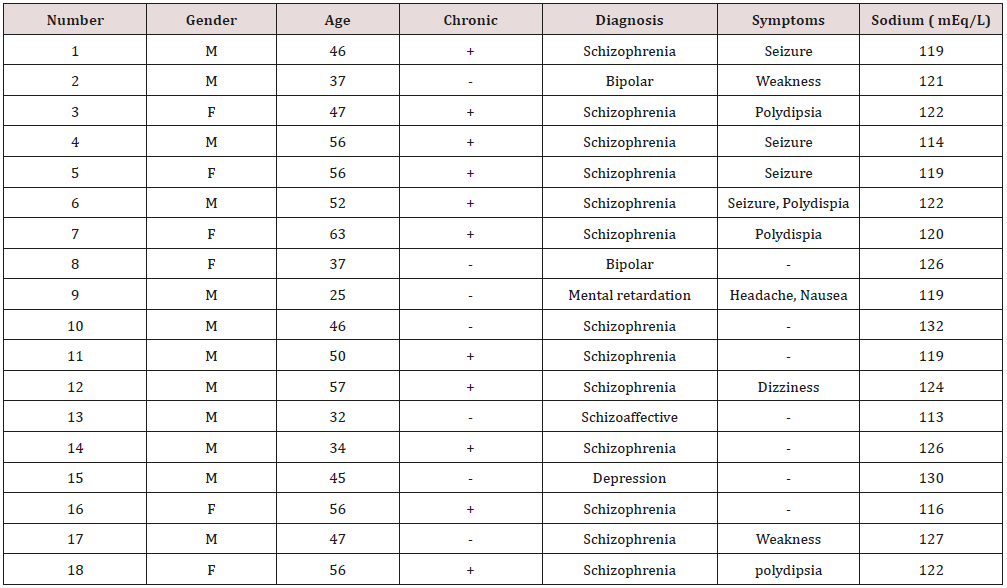
Razi psychiatric hospital in south of capital city of Tehran, as one of the largest and oldest public psychiatric hospitals in the Middle East, which has been established formally in 1917 and with a capacity around 1375 active beds, had been selected as the field of study in the present retrospective assessment. For evaluation, all inpatients with idiopathic hyponatremia during the last sixty-four months had been included in the present study. Hyponatremia had been detected during systematic baseline laboratory checkups or later as a result of clinician’s request and examination due to various symptoms or signs. Clinical diagnosis, as well, was in essence based on ‘Diagnostic and Statistical Manual of Mental Disorders, 5th edition (DSM-5)’ [15]. Among eighteen detected cases, twelve patients were male and six patients were female. Also, the necessary general permission had been obtained from the patients or their relatives during admission. The mean age of samples, as well, was around 43.92±9.51 years old and 52.50±8.34 years old for male and female patients, respectively. Most of the patients met with diagnosis of schizophrenia (n=13), and the remaining met with diagnosis of mental retardation (n=1), schizoaffective (n=1), bipolar disorder (n=2) and major depressive disorder (n=1) (Table 1).

Table 1: Demographic and clinical characteristics or hyponatremic patients.

Lupinepublishers-openaccess-journals-psychology-behavioral-science

Abbreviations: M= male; F= female; Chronic= duration of illness more than one year.

Statistical Analysis

Analysis of dependent variables had been accomplished by ‘t-test’ and appraisal of independent variables had been explored by means of ‘comparison of proportions’. Statistical significance, as well, had been defined as a p value ≤0.05. MedCalc Statistical Software version 15.2 was used as statistical software tool for analysis.

Results

As said by results, among 20118 psychiatric patients hospitalized in razi psychiatric hospital, during the last sixty-four months (April of 2014-August 2019), eighteen patients had been diagnosed as hyponatremic, whether symptomatic or asymptomatic, during their inpatient treatment, based on laboratory checkups. So, the annual incidence of hyponatremia in the current inpatients’ evaluation was around 0.01%. In spite of referral to intensive care unit and given medical treatment, one elderly chronic female patient died by reason of hyponatremia. Accordingly, in the present survey the annual incidence of mortality because of hyponatremia was around 0.001%. Also, with regard to gender difference and in keeping with results, while there was no significant difference regarding age between male and female patients (t = 1.962, p< 0.08, CI 95%: -18.29, 1.13), hyponatremia was significantly more prevalent among male psychiatric inpatients (z= 2.00, p<0.04, CI 95%:0.006, 0.660). Besides, concerning chronicity of psychiatric disorders, comparison of proportions showed that hyponatremia was significantly more prevalent among psychiatric patients with duration of illness in excess of one year (p<0.04) (twelve patients in the chronic wards versus six patients in the acute districts of the hospital). Moreover, with respect to prevalence of primary psychiatric disorders among patients, who have experienced hyponatremia during the last 64 months, schizophrenia was significantly more prevalent in comparison with remaining disorders (z=2.66, p<0.007, CI 95%: -0.11, 0.77). While, eleven patients had different clinical symptoms due to hyponatremia, seven cases were asymptomatic and diagnosis had been confirmed based on merely coincidental checkup. Quantitatively, analysis revealed no significant difference between those groups (z=1.33, p<0.18, CI 95%: -0.54, 0.10). Also, though mean total plasma level of sodium was around 121.72±4.97mEq/L, there was no significant difference between serum level of sodium in seizure cases (mean total= 119.75±1.29mEq/L) and non-seizure patients (mean total=122.64±5.06mEq/L) (t = 1.929, p< 0.28, CI 95%: -6.07, 0.29).

Discussion

Many psychiatric patients have polydipsia and polyuria without identifiable underlying medical causes. Hyponatremia develops in some polydipsic patients and can progress to water intoxication with such symptoms as confusion, lethargy, psychosis, and seizures or death [16]. This syndrome is sometimes called “compulsive water drinking,” “psychogenic polydipsia,” and “self-induced water intoxication.” Although the underlying pathophysiology of the syndrome is unclear, several factors have been implicated in producing polydipsia and symptomatic hyponatremia. These include a possible hypothalamic defect, the syndrome of inappropriate secretion of ADH (SIADH), and neuroleptic medication. Evaluation of psychiatric patients with polydipsia includes a search for other medical causes of polydipsia, polyuria, hyponatremia, and SIADH. Treatment modalities currently available include fluid restriction and medications [16]. Polydipsia, chronic or intermittent, with or without hyponatremia, frequently occurs among chronic patients with schizophrenia. The pathogenesis of polydipsia remains poorly understood.

It has been suggested that maybe in some of these patients, polydipsia and hyponatremia are consequences of patients’ adjustment to a prolonged intake of an insufficient diet, dominantly poor in potassium. Deficits of potassium, without significant hypokalemia, may cause impairment of the urine-concentrating ability with polyuria-polydipsia. A fall of intracellular tonicity, dominantly due to a decreased amount of K (+) and attendant anions in cells, should be accompanied with a fall of extracellular osmolality. Because of the diminished content of ions that may diffuse out of cells and because osmotic equilibrium between the extracellular fluid and intracellular fluid compartments cannot be established in a short period of time, these patients have a diminished ability to adapt to an excessive intake of fluids. These mechanisms might be related to the development of polydipsia and water intoxication in patients with different mental and somatic disorders [17]. On the other hand, while mild chronic hyponatremia, as defined by a persistent (>72 hours) plasma sodium concentration between 125 and 135mEq/L without apparent symptoms, is common in ambulatory patients and generally perceived as being inconsequential [18], hyponatremia at time of inpatient admission is associated with increased severity of illness and mortality in patients hospitalized for treatment of medical conditions and should trigger enhanced clinical monitoring to identify and treat somatic disorders [19]. Drug-Induced hyponatremia is a frequent and potentially seri¬ous adverse reaction with many psychopharmacological agents, mediated in most cases by SIADH. This condition most often leads to subtle psychomotor symptoms due to its slow progression, permitting a compensatory adjustment of intra-cellular volume in the central nervous system. Subtle psycho¬motor symptoms and motor imbalance readily resolve after discontinuation of the responsible pharmacological agent [19]. In contrast, rapid onset of hyponatremia may present with life-threatening encephalopathy, which requires emergent in¬fusion of intravenous hypertonic saline to reverse acute cerebral edema [20]. Back to our discussion and along with analysis, while our estimate respecting prevalence of hyponatremia was lower than the approximations of [4,5,9,12], it was higher in comparison with the calculations of Letmaier [6]. These variances can be due to diverse variables and confounding factors, like the principal of analysis, sample selection and settings of study. On the other hand, in spite of its acknowledgement as a known risk factor, a deficiency of epidemiological studies regarding hyponatremia is palpable, which is not limited to prevalence and incidence, too.

Regarding the risk of mortality as a result of hyponatremia, our outcome, though limited to only one elderly and chronic female schizophrenic patient, was, more or less, in harmony with the conclusions of Naticchia [1], Rodon Berrios [18] and Siegel [2], who had indicated that, even mild reductions in sodium blood levels have been shown to be associated with increased mortality and hyponatremia should be regarded as a prevalent and potentially dangerous medical comorbidity in psychiatric patients. Moreover, consistent with the outcome of the present evaluation, male gender could be regarded as a risk factor for occurrence of hyponatremia, at least among psychiatric patients. Concerning chronicity of psychiatric disorders, conclusion of the current appraisal was in accord with the suppositions of Oshawa [9] and Gandhi [11], who had found a long duration of psychiatric disorder and a prolonged admission as statistically significant factors in occurrence of hyponatremia, though the later had specified that due to atypical antipsychotic medications among older patients.

Moreover, with regard to higher prevalence of hyponatremia among schizophrenic patients, our conclusion was again in harmony with the findings of Ohsawa [9], Lapierre [7] and Siegel [2], who had found the aforesaid medical complication more among that disorders. Furthermore, regarding clinical profile of hyponatremia, our outcome, which had revealed that there was no significant difference, quantitatively, between symptomatic and asymptomatic hyponatremic cases, was in agreement with the report of Liu [4], who stated that patients with hyponatremia may be asymptomatic or present with nausea, anorexia, muscle cramps, weakness, fatigue, confusion and disorientation. Besides, our result as regards the insignificant relationship between sodium levels and severity of clinical symptoms, like seizure, was somewhat in accord with the findings of Manu [19], who had found medical deteriorations incidences in both hyponatremic and non-hyponatremic patients, although more among the first group. Anyhow, as the most common electrolyte abnormality in medical prac¬tice, recent evidence from meta-analyses indicates that hypo¬natremia is associated with increased morbidity and excess mortality, and psychiatric patients are at substan¬tial risk for this adverse event, which may occur with many pharmacologic agents. Since SIADH is the most common underly¬ing mechanism, accounting for over 80% of cases in psychi¬atric patients, in contrast to less than 30% in general medi¬cal practice, clinicians prescribing pharmacological agents conferring risk for dilutional hyponatremia should main¬tain a high index of suspicion for the full spectrum of conse¬quent clinical severity [20]. Restricted period of study, due to inadequate registration and documents in the last decades, and thus insufficient number of cases with idiopathic hyponatremia, and no concurrent checking of osmolality of serum and urine for proper classification of hyponatremia into water intoxication and drug‐induced syndrome of inappropriate antidiuretic hormone, do not permit generalization of outcomes to more than a preliminary survey. No doubt, further methodical studies in future will improve our clinical idea concerning diagnosis and management of this important medical problem among psychiatric patients.

Conclusion

Hyponatremia was significantly more prevalent among male patients and cases with duration of illness in excess of one year. Furthermore it was meaningfully more evident among schizophrenic patients.

Read More About Lupine Publishers Journal of Psychology Please Click on Below Link:
https://lupine-publishers-psychology-journal.blogspot.com/
Friday, 24 March 2023

Lupine Publishers | Prevention Methods of Posttraumatic Stress Disorder (PTST) in Cancer Survivors

 Lupine Publishers | Journal of Psychology and Behavioral Sciences


Introduction

It is quite appropriate to say, people are less likely to look for diagnostic ways of cancer because of the fear of having cancer. In addition, many people have phobias of cancer treatment methods (such as surgery, chemotherapy, and radiotherapy) [1,2]. The fact remains that, many people are unwittingly exposed to the posttraumatic stress disorder (PTST) because of severe stress [3]. Nevertheless, many researchers do not believe to the psychology complications of cancer, but psychological distress during and after cancer treatment increased concerns about sexuality, intimacy, and physical well-being. These disorders can occur after the stressor agent such as cancer [4]. It is widely supposed that PTSD is psychological disease and separate from physiological system. Whereas, PTSD can have physiological consequences such as elevated blood pressure, cholesterol, and cortisol levels [4]. However, disabling subsyndromal PTSD symptoms is not known for each individual, but the consequences of this disorder make it more important to treat it [4,5]. Distress and anxiety and less optimal quality of life are caused by PTSD in cancer survivor. It would be better to say that PTSD has a direct effect on the quality of cancer treatment. As detailed, patient’s spirit has a great impact on the positive response of cancer to chemical drugs and radiation doses during treatment. Also, treatment conditions can get worse PTSD. So that, the treatment environment, the attitude of the treatment technicians plays an important role in the recovery and doesn’t involve them to PTSD. Passing on now to treatment methods of PTSD, we should try to suppress PTSD and comorbid symptoms by utilize treatment methods. Variety of psychotherapy (such as eye movement desensitization and reprocessing and cognitive restructuring method) and pharmacotherapy (such as prazosin, anticonvulsants and risperidone) that have been practiced on patients who suffer from PTSD symptoms induced by cancer that we will discuss below. Prazosin Utilize in PTSD is effective, particularly in reducing nightmares and improving sleep. PTSD is often associated with alcohol misuse, prazosin can reduce alcohol dependence [6]. Anticonvulsants have some beneficial attributes in treatment PTSD, particularly where irritability and a startle response are prominent [7]. Risperidone is associated with improvement in overall PTSD symptoms and specific sleep variables [8]. Some resources presented that benzodiazepines (BZDs) are treatment drugs for PTSD [9], But to be honest BZDs should be considered relatively contraindicated for patients with PTSD. Because it caused to worse psychotherapy outcomes, aggression, depression, and substance use [10]. Eye movement desensitization and reprocessing (EMDR) is faster and more effective psychotherapy method than other treatments. This method is a complex treatment that incorporates many different interventions, including imaginal exposure and free association [11]. Cognitive restructuring method included socratic questioning, guided discovery, the devil’s advocate technique and determining the pros and cons of the validity of the assumption. Also, it has vital role for the effectiveness of the intervention [12]. Patients follow up after treatment is one of the most important in radiotherapy. Important considerate to the PTSD symptoms besides clinical examination after cancer treatment can help improved patient cancer. However, the emergence of PTSD can have a direct effect on the cancer treatment benefits. Thereby PTSD can pose a big challenge for cancer treatment researchers. The importance of this issue could provide the basis for a new collaboration between psychologists and oncologists to treat cancer with high therapeutic benefit without side effects.

Read More About Lupine Publishers Journal of Psychology Please Click on Below Link:
https://lupine-publishers-psychology-journal.blogspot.com/

Thursday, 9 February 2023

Lupine Publishers | Well-being at a glance:with special focus on Geriatric population


Introduction

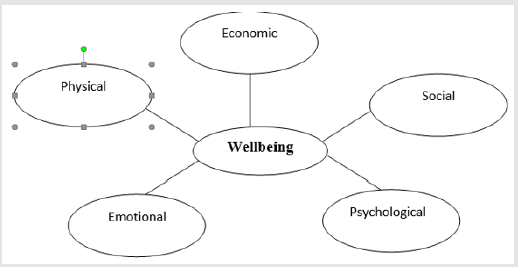
The various models on wellbeing define wellbeing as a multidimensional construct integrating mental and physical health regarding health promotion by preventing disease. WHO also holds a holistic view of health comprising of physical mental and social wellbeing. Researches nowadays are more alert towards public health model rather than the medical model proposed during earlier times. The advent of positive psychology has led to a paradigm shift in health management strategies from pathogenic orientation which lays more emphasis on treatment and cure for illness to maltogenic approach that focuses on prevention of illness and health promotion. At an elementary level, wellbeing can be defined as how people perceive and evaluate the actions and activities in their life, the positive outcome that stands significant for individuals. The factors that can significantly affect the state of an individual’s wellbeing are presence and the degree of positive relationship, self actualization, resilience, positive emotions contentment and purpose in life. Researches reveal global judgment of life satisfaction and feelings ranging between joy to depression to be included under wellbeing [1-6].

Numerous cross sectional and longitudinal researches have revealed that wellbeing is associated positively with the following variables [5,7]:

a) Self-perceived health
b) Longevity
c) Healthy behaviors
d) Mental and physical illness
e) Social connectedness
f) Productivity
g) Factors in the physical and social environment

Research studies also state higher levels of wellbeing are associated with decreased risk of physical ailments like cardiovascular risk, injury and other types of illnesses; it improves immune functioning leading to quick recovery from ailments thus increasing the longevity. Further it is also related positively to job productivity and social contributions. The positive affect component of wellbeing is associated with extraversion and negative affect component to neuroticism [8-10].

Aspects of Wellbeing

The Concepts Identified are the Following

a) Attitude of an individual towards his own self
b) Self actualization
c) Integration
d) Autonomy
e) Perception of reality
f) Environmental mastery

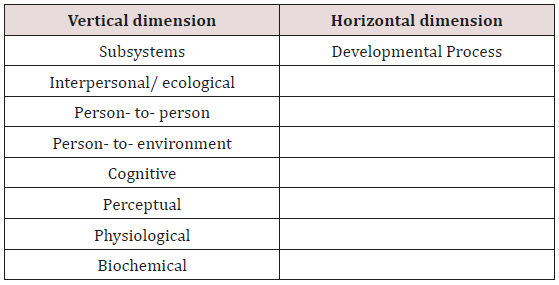
Seeman’s model is based on the behavioral subsystems of all human systems. It is based on the concept of organismic integration where organismic would refer to a pervasive process that comprehends all the subsystem such as biochemical, physiological, perceptual cognitive and interpersonal dimensions of behavior. The model proposed, looks like (Table 1). The horizontal dimension of the model emphasizes the point that wellbeing is a longitudinal development terms so as to include the concept of health as an ongoing process. Crompton’s model finally proposes that psychological wellbeing can best be assumed by a tripartite model that includes subjective wellbeing, personal growth and religiosity. Research conducted by Crompton (2001) found that as people strive to gain greater psychological wellness they may seek interpersonal relationship to enhance self esteem, search for existentialism for self actualization. He further concluded that the conflict people experience in search of their happiness and good life may be related to a relative stable sense of identity. Correlates and determinants of individual wellbeing: Wellbeing is dependent upon good health, positive social relations and the basic/ primary needs of the individual, so as to quote the definition of health by W.H.O. “The physical, mental and social health of the individual”. Individual wellbeing is determined by factors like autonomy, environmental mastery, life satisfaction, self acceptance, positive regard with others, and purpose in life and happiness. As individual correlates are based on the environment, might vary from one individual to the other. Personality and genes at the individual level are related to wellbeing. Researchers have shown that positive emotions are heritable to some degree suggesting that there may be some set points for emotions like happiness and sadness to be felt or experienced. Although it is not solely the genetic effects that would determine positive emotions, environmental factors would also play a role significantly. Genetic factors and personality factors would interact closely to influence the individual wellbeing of individuals. Age and gender as correlates of wellbeing show that men and women would almost have the similar levels of wellbeing, however with age [8] there has been found a U shaped distribution wherein, wellbeing will be more among the younger and older population than the middle aged adults [1]. In terms of relationships, positive relations turn up to be one of the strongest correlates of wellbeing, having a positive effect altogether [10-12].

Table 1: Interpersonal dimensions of behavior.

Lupinepublishers-openaccess-journals-psychology-behavioral-science

Some Reviews on Well Being Based on Report Prepared by CDC

a) Employed women would show higher levels of wellbeing and also used fewer professional services to cope with stress than non employed ones, data from NHANES (1971-1975) revealed [13].
b) The other review from NHIS and quality of wellbeing scale (2001) found that males and females between the age group of 20-39 showed significantly better sense of wellbeing than the ones aged 40 years and older [7].
c) Data from BRFSS revealed that 8.6% of adults in US reported of never or rarely receiving emotional and social support [12].

Statistics on Wellbeing

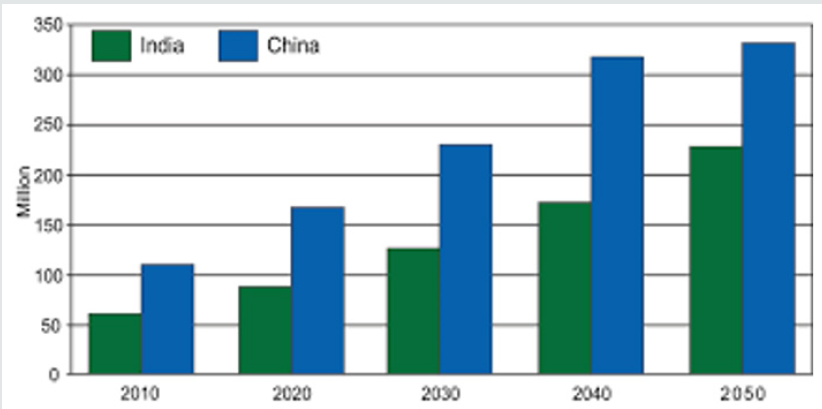
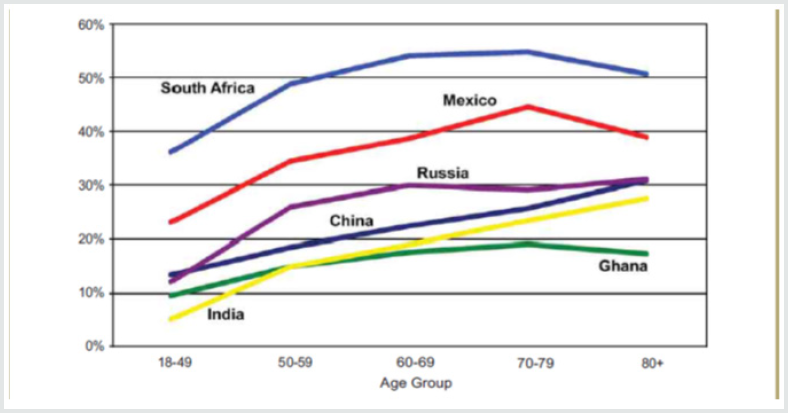
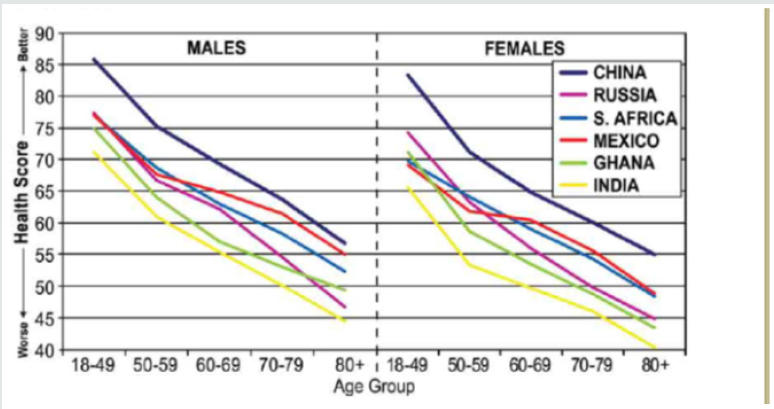
Report presented on ageing statistics by World Health Organization shows that India’s current elderly population is 60 million, which is projected to increase to 227 million in 2050 which shows an increase of 280 percent from the current situation. Similarly, glancing at China’s current elderly population i.e. 65 and above, from 110 million shall likely reach to 330 million by 2050 (Figure 2). In a study conducted by global AGEing and adult health (SAGE) six major health risk factors viz. physical inactivity, current tobacco use, heavy alcohol consumption, high risk waisthip ratio, hypertension and obesity have been identified. The study reported that three of these six health risk factors rises with age however the patterns and percentage would vary by country. The pattern and percentage has been depicted in Figure 2 below. One of the goals of further researches in this direction might be to study and find out the outcome of such health conditions on the well being of the country’s population. Number of disabilities seems to increase among the developing nation as the number of older people tends to increase. Health services in the developing nations needs improvement in their health services in order to understand the health risks faced by older people and accordingly plan for prevention and intervention. Further studies conducted in this direction show the health status score of males and females from six different countries. In the figure below (Figures 3 & 4), it has been depicted that health status score declines with age, as expected. The graph shows the score for males is higher than females. However females tend to live longer than males on an average but have poorer health status. The health score in the figure ranges from 0 (worst health) to 100 (best health).

Introduction

Figure 1: psychological Life cycle.

Lupinepublishers-openaccess-journals-psychology-behavioral-science

Figure 2: Showing the growth of elderly population aged 65 and above in India and China

Lupinepublishers-openaccess-journals-psychology-behavioral-science

Figure 3: Showing the percentage of people with three major health risk factors country wise.

Lupinepublishers-openaccess-journals-psychology-behavioral-science

Figure 4: Showing the health status scores for six countries for both males and females.

Lupinepublishers-openaccess-journals-psychology-behavioral-science

Conclusion

India has acquired the label of “an ageing nation” with 7.7% of its population being more than 60 years. In India, the elderly population suffers from dual health issues i.e. either communicable or non communicable diseases. According to the Government of India statistics, cardiovascular diseases account for one third of elderly mortality. Respiratory disorders account for 10% mortality. As a concept, wellbeing can be defined as to how people evaluate their lives. Psychological well being as a construct comprises of positive affective state like happiness on one end and optimal functioning on the other end [14]. Thus accordingly, psychological wellbeing can be observed as a combination of feeling happy and functioning effectively. Studies and researches conducted further have reported that people who are high on psychological wellbeing report of feeling happy capable and good availability of social support and higher degrees of life satisfaction. The authors in a study concluded positive emotions as a potential promoting agent for population longevity and health [15]. Apart from the psychological factors it is also dependent upon physical health conditions that can be mediated by brain activation patterns neuro chemical effects and also genetic factors. The focus of any future research can be to increase the life expectancy rate of the elderly population and accordingly explore the ways of ensuring good quality of life with increasing age. With a special focus on the developing nations of the world, better medical aid and services should be provided by the community based health care centers and hospitals. The aim of these health care centers should be to plan interventions and improve the overall health conditions of the elderly population.

Read More About Journal of Psychology Please Click on Below Link:
https://lupine-publishers-psychology-journal.blogspot.com/

Saturday, 3 December 2022

Lupine Publishers | Thoughts are Mental Model to Create Your Past, Present and Future Life

 Lupine Publishers | Journal of Psychology and Behavioral Sciences


Abstract

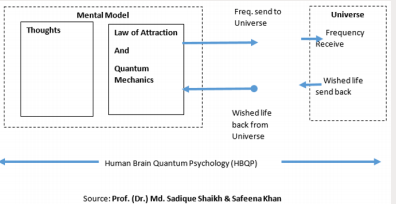
This piece of research communication I wrote on the basis of my personal experience of life with my own relevance which would be great contribution to Human Psychology. I coined very fresh term “Human Brain Quantum Psychology (HBQP)” [Refer my Article on it.] and using HBQP how one can switch his/her life from worst to good, good to nice and Nice to Excellent with the creation of positive thoughts for positive mental model which form successful and joyful life of everyone using “Law of Attraction” and the principles of “Quantum Mechanics” in universe must use positive thoughts for needs, desires, love, things, person, home, fame and family and universe offer according to what thoughts send by you using your all over available and surrounded electromagnetic force and frequencies to the Universe to structure present and future of someone as they want. Whereas past also because of same happened (Figure 1).

Figure 1: Human Brain Quantum Psychology(HPQP).

Lupinepublishers-openaccess-journals-psychology-behavioral-science

Introduction

Above illustration gives you the idea what I wanted to interact with you and what is the point of attention, switching and refurbish your life if bad or average with turning it into excellent one. Everything start with your thoughts, if your thoughts are negative your feeling and thinking would be bad and in result bad frequencies send to the Universe and bad life in return because universe just obey your command what your thought emits without knowing good or bad, hence unwanted life back. If your thoughts are positive your feeling and thinking would be good and good frequencies send to the Universe and in return Universe fulfill your good wishes in the form of happy, healthy and wealthy life. Therefore everything even Universe and your life start with thoughts process which create your mental model, if thoughts are negative tends to bad/ frustrated/stressed/ depressed/weak/demotivated mental model whereas if thoughts are positive tends to good/happy/strong/ motivated/.innovative/confident mental model. This is because when your brain processing and formulating thoughts the law of attraction and principles of Human Brain Quantum Psychology (HBQP) as well as Quantum Mechanics work on it for you and emit frequency with electromagnetic everywhere near take formation of frequency which emit by your brain thoughts to the Universe and the Universe tune your frequency with match frequency as wishes of life and wished life send back to you from Universe and this is the universal fact you believe or not on it. Hence every time think positive thoughts then Ask, Believe and Receive all your wishes and your dreams come true with your positive mental model to form “Your Life and Your Own Universe”.

Read More Lupine Publishers Journal of Psychology Please Click on Below Link:
https://lupine-publishers-psychology-journal.blogspot.com/