Showing posts with label Journal of Respiratory. Show all posts

Thursday, 16 June 2022

Lupine Publishers | Clinical and Dermoscopic Features of Lichen Amyloidosis : A Case Report

 Lupine Publishers | Journal of Respiratory & Skin Diseases


Abstract

Lichen amyloidosis (LA) is the most common form of primary cutaneous amyloidosis. It’s a very pruritic hyperkeratotic and coalescent papules usually localized on the anterior tibiae. The diagnostic is clinical, dermoscopy reveals two major dermoscopic patterns characteristic of LA, namely, ‘central hub’ and ‘scar-like’.

Keywords: Lichen amyloidosis; Dermoscopy; Pruritus; Papules

Introduction

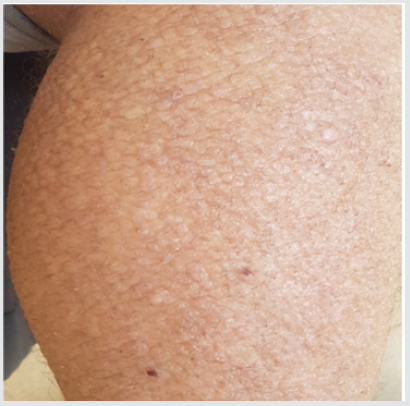
Papular amyloidosis, formerly called lichen amyloidosis (LA) is the most common form of primary cutaneous amyloidosis, histologically characterized by accumulation amyloid deposits in the dermis. It’s a very pruritic hyperkeratotic and coalescent papules usually localized on the anterior tibiae. We reported the case of a 70 year old man with 2 years history of a pruritic papular eruption on the lower legs (Figure 1).

Figure 1: The clinical picture of a patient with lichen amyloidosus on the lower limb.

lupinepublishers-openaccess-journal-respiratory-skin-diseases

Clinical case

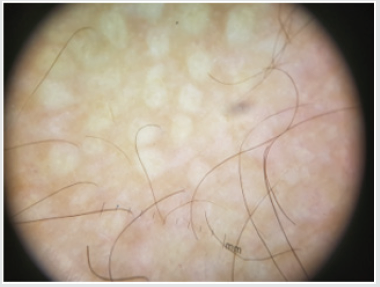
Figure 2A: Dermoscopic examination showing scar-like structureless area.

lupinepublishers-openaccess-journal-respiratory-skin-diseases

An 80 years old woman with antecedents of high blood pressure and diabetes has consulted for pruriginous lesions of the anterior surfaces of the legs and knees evolving since 2 years. The clinical examination revealed multiple yellowish papules firm and rough on palpation on the lower limbs. The diagnosis of LA has been made and was confirmed by cutaneous biopsy with compact orthohyperkeratosis, acanthosis and amorphous amyloid deposits in the dermal papillae (Figure 2A). Dermoscopic examination showed a whitish scar-like center with structureless morphology surrounded by some brownish dots which is very specific to LA.

Comments

Figure 2B: Dermoscopic examination showing scar-like structureless area.

lupinepublishers-openaccess-journal-respiratory-skin-diseases

Sarcoid granulomas in the dermis.

Lichen amyloidosis is the most frequent type of primary localized cutaneous amyloidosis [1]. It is clinically characterized by pruritic keratotic distributed frequently on the anterior tibiae and occasionally on the trunk and upper extremities [1-2]. The differential diagnosis is made with mucinosis, lichen simplex chronicus and prurigo nodularis [1-3]. The diagnosis is clinical (Figure 2B). A skin biopsy should be reserved for evolving lesions. Chuang et al. [1] described two major dermoscopic patterns characteristic of LA, namely, ‘central hub’ and ‘scar-like’. Two subtypes of ‘scar-like’ pattern were noticed, including one resembling a volcanic crater and the other displaying completely structureless morphology as we found in our patient [1-4].

Conclusion

Even if the diagnoses of LA is most often clinical, it can now be reinforced by dermoscopy.

Read More About Lupine Publishers Journal of Respiratory & Skin Diseases Please Click on Below Link:
https://lupine-respiratory-skin-and-diseases.blogspot.com/

Saturday, 16 October 2021

Lupine Publishers | Factors Impinging On Lung Function Deficits and Respiratory Symptoms among Workers at Wood-Burning Earth Kilns

 Lupine Publishers | Journal of Respiratory & Skin Diseases


Abstract

Background: Documented evidence confirms that inhalation of toxic substances emitted during charcoal production is associated with lung function deficits and respiratory symptoms nonetheless; other factors could also give rise to the similar respiratory disorders or problems. This study was designed to ascertain the influence other impinging factors wield on the respiratory symptoms and lung function deficits among workers at wood-burning earth kilns.

Methodology: This was a cross-sectional analytic study conducted among workers exposed to wood smoke from wood-burning earth kilns in Southern Nigeria. A comprehensive sampling of all workers who willing consented to participate in this study was done since the workers were few. A modified Medical Research Council Questionnaire as well as a portable spirometer was the study instrument. Data analyzed with SPSS version 22. Association for categorical data was tested with chi-square while Student's t test was applied to estimate the difference between means. Significance level was pre-determined by a p value less than 0.05.

Results: The modal age group was 40-49 years (28.4%), about half (48%) of the respondents were burners and less than two- fifth (38.5%) were domestic biomass users. All indices were worse among workers with a history of asthma (p <0.05) where same indices but PEFR were higher among workers with a history of moulding blocks (p<0.05). However, for the three workers who cooked in their rooms only their mean FVC and FEV1/FVC were significantly higher than others. The association of duration of work with the prevalence respiratory symptoms was not significant (p > 0.05). Wood setters had the highest prevalence of chronic cough, wheeze, breathlessness and chest tightness, whereas the association of job description and prevalence of symptoms was not significant (p > 0.05).

Conclusion: History of asthma significantly and negatively impinged on lung function deficit among these workers. Duration of job amongst other factors did not influence the prevalence of respiratory symptoms. Pre-employment screening of workers for respiratory disorders may be a worthwhile venture to pursue in the long term.

Introduction

Biomass remains one of the most primeval sources of energy however there is uncertainty about sustaining its viability, particularly as rural-urban development trailing deforestation is becoming popularin developing countries [1]. This apparent developmental activity thrives on commercialization of forest wood reserves as it provides substantial financial proceeds for rural residents, without an immediate evaluation of the negative environmental impact that would invariably jeopardize their continued subsistence [2,3].This perceived threat to availability of wood fuel has lent itself to exploration for renewable energy such as solar and wind. Nevertheless, in sub-Saharan Africa the technical proficiency for harnessing such inexhaustible energy supplies is grossly undeveloped owing mainly to poverty therefore, biomass is vastly relied [4]. With a step-wise demand for energy sources in urban locales; firewood as the first step, all the way through charcoal, fossil fuel, and to electrical energy ranking the least demanded for among the poor [2]. Firewood is more popular among rural populations and charcoal, due to its virtual weightlessness and smokeless characteristics, tends to be available in metropolitan zones for those who cannot sustainably afford fossil fuel or electricity [5,6].

Charcoal is the manufactured goods that ensue when wood is subjected to high temperature and pressure especially in an air-tight enclosure [7]. The technological methods for making charcoal are diverse with varying costs, levels of required expertise and burning efficiency. Nonetheless, most charcoal production in southern Nigeria as in some other parts of Africa occurs in earth kilns. This device not only has the drawback of low combustion efficiency but also it is fraught with giving off wood smoke [8], a substance with recognized toxicity in the respiratory and other systems of the body [9,10]. Making charcoal with devices such as retort and mekkokilns which condense effluent gases can substantially augment energy recovery and make the environment safer as almost all toxic substances are consumed [7-11] Similar technologies have been operated in Ghana and Costa Rica and might considerably advance charcoal manufacture if utilized in our setting. Nonetheless, their use has high cost implications and is implausible to be effected by the charcoal producers in Nigeria. Documented evidence confirms that inhalation of toxic substances emitted during charcoal production is associated with lung function deficits and the emergence of respiratory symptoms nonetheless [12-14]; other factors such as exposure to wood dust, could also give rise to similar respiratory disorders or problems [15].

Work-related pulmonary diseases (occupational asthma, occupational rhinitis, chronic obstructive airway disease etc.) constitute the highest cause of work-related illnesses in the United States of America [16]. The burden is enormous and exerts a huge toll on government and individuals. The annual spending on asthma in the United States of America is over $17 billion. This includes indirect costs from loss of productive work days due to disease and death [17]. In Africa, asthma has been estimated to affect over 10% of the population, and work-related asthma accounts for about a quarter of all cases of adult asthma [18,19]. A report from Nigeria, valued the annual cost of follow-up for one asthmatic patient to be about $368.4.19 Lung function abnormalities and respiratory symptoms could be accentuated in workers at earth kiln sites who already have respiratory disorders. Thus, this study was designed to ascertain the influence other impinging factors such as domestic biomass, smoking, exposure to other air pollutants, indoor cooking, duration of work could exert on the occurrence of respiratory symptoms and lung function deficits among workers at wood-burning earth kilns. Outcomes of this study could provide a scientific basis for adjudicating apposite recommendations to forestalla deterioration of the respiratory health of workers already involved in occupations with a potential risk of respiratory dysfunction.

Methodology

Study Population

This was a cross-sectional analytic study conducted among workers exposed to wood smoke from wood-burning earth kilns in Southern Nigeria. A comprehensive sampling of all workers who willing consented to participate in this study was done since the workers were few.

Ethical Approval

Ethical approval was given by the Health Research Ethics committee of Delta state University Teaching. Workers' participation in this study was absolutely on volunteer basis, as none of them was coerced; and informed consent was given by each participant before being included in the study.

Procedure

A modified Medical Research Council (MRC) Questionnaire was applied to obtain information from workers about their respiratory symptoms and previous respiratory disorders, job description, duration of work, previous jobs and exposure to air pollutants [20]. A hand-held lung function measuring device manufactured by Micro Medical, Ltd., Kent, UK was employed in conformity with the American Thoracic Society and European Respiratory Society Joint Task Force Guidelines on Spirometry to measure lung function indices [21]. Workers were given a pep talk about the aim of spirometry and spirometric manoeuvres; the latter was demonstrated to them following which they had to be encouraged to exercise repeated trial manoeuvres. A satisfactory performance was taken to be one with a forceful and persistent expiration lasting a minimum of 6 seconds following an in-depth inspiration [21]. With three attempts the best reading recorded was recorded as an acceptable value.

Statistical Analysis

All collected data was synthesized before entry into SPSS version 22 for analysis. Categorical data was expressed in percentages and association tested with chi-square while continuous variable was displayed as means (with standard deviation) and Student’s t test was applied to estimate the difference between means. Significance level was pre-determined by a p value less than 0.05.

Results

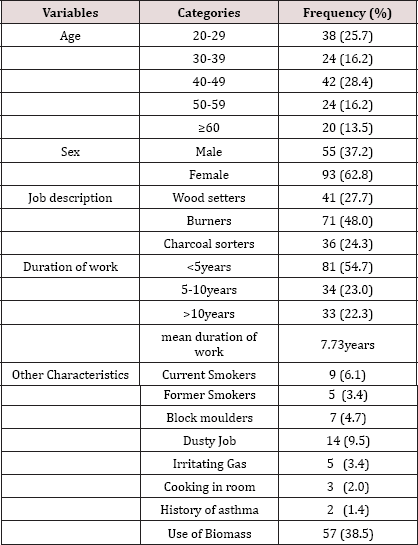
Table 1: Socio-Demographic Characteristics.

lupinepublishers-openaccess-journal-respiratory-skin-diseases

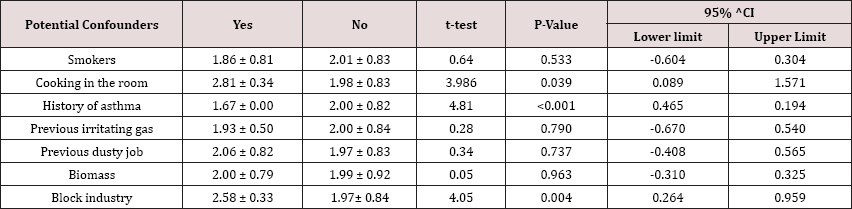
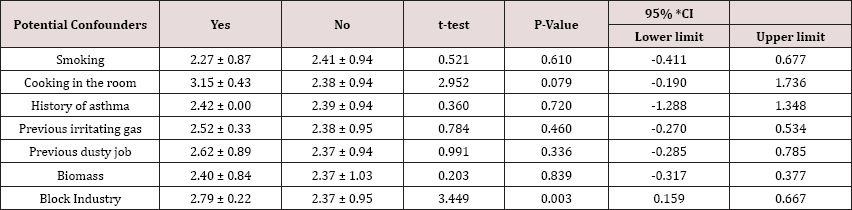
The modal age group was 40-49 years (28.4%), about half(48%) of the respondents were burners and less than two-fifth (38.5%) were domestic biomass users (Table 1). The mean FEV1of charcoal workers who cook in the room was 2.81 ± 0.34L, while that in those who do not cook in the room was 2.00±0.82L. The difference was significant (p = 0.039). The mean FEV1of charcoal workers with a history of asthma were 1.67±0.00L while that among those without a history of asthma was 2.00±0.82. The difference was significant (p<0.001). The mean FEV1of charcoal workers who had worked at a block industry were 2.58 ± 0.33L while in those who have not it was 1.97±0.83L. The difference was significant (p = 0.004).From the result the potential confounder that adversely affected FEV1 -was a history of asthma (Table 2). The mean FVC of charcoal workers who had worked at a block industry was 2.79±0.22L while in those who have not it was 2.37±0.95L. The difference was significant (p =0.003).FVC was not affected adversely by any potential confounder (Table 3).

Table 2: Charcoal workers' FEV1 (L) and Potential Confounders.

lupinepublishers-openaccess-journal-respiratory-skin-diseases

Table 3: Charcoal workers' FVC and Potential Confounders.

lupinepublishers-openaccess-journal-respiratory-skin-diseases

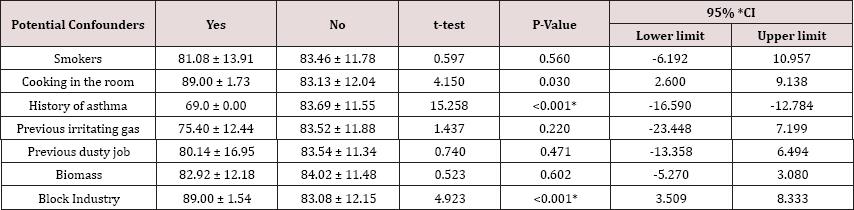
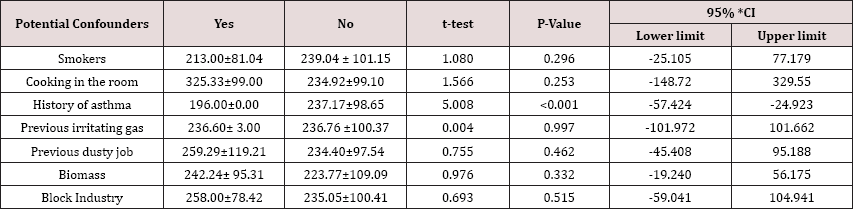
The mean FEV1/FVC ratio of charcoal workers who cook in the room was 89.00±1.73, while that in those who do not cook in the room was 83.13±12.04. The difference was significant (p=0.03). The mean FEV1/FVC ratio of charcoal workers with a history of asthma was 69.0±0.00 while that among those without a history of asthma was 83.69±11.55. The difference was significant (p<0.001). The mean FEV1/FVC of charcoal workers who had worked at a block industry was 89.00±1.54 while in those who have not it was 83.08±12.15. The difference was highly significant (p<0.001). The results show that a history of asthma negatively affected FEV1/FVC (Table 4). The mean PEFR of charcoal workers with a history of asthma was 196.00 ± 0.00L/min while that among those without a history of asthma was 237.17±98.65L/min. The difference was significant (p<0.001).This shows that a history of asthma reduces PEFR (Table 5).

Table 4: Charcoal workers' FEV1/FVC ratio and Potential Confounders.

lupinepublishers-openaccess-journal-respiratory-skin-diseases

Table 5: Charcoal workers� PEFR and Potential Confounders.

lupinepublishers-openaccess-journal-respiratory-skin-diseases

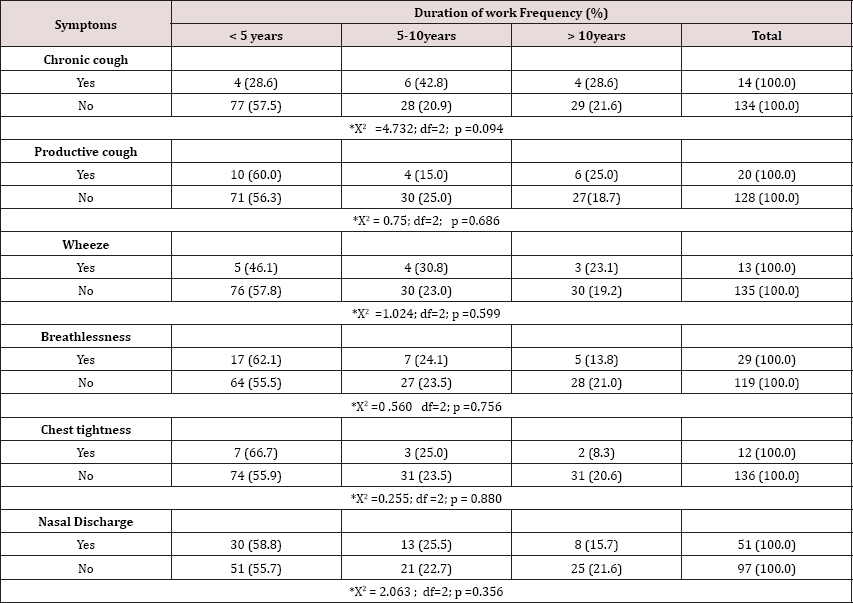
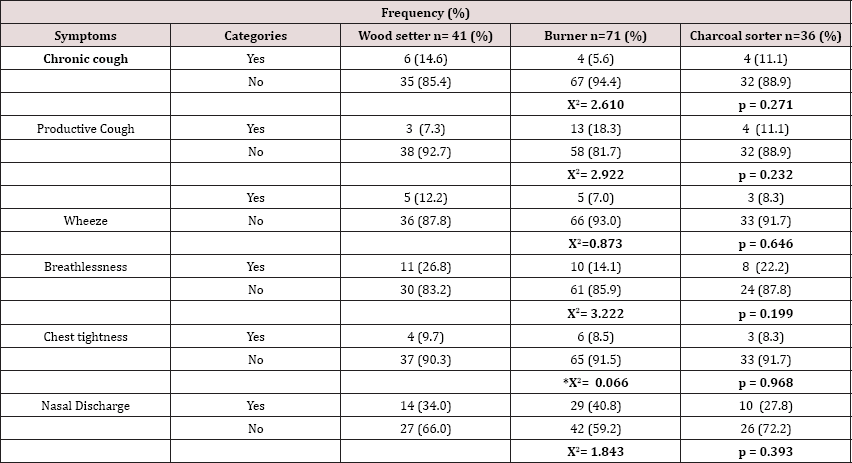
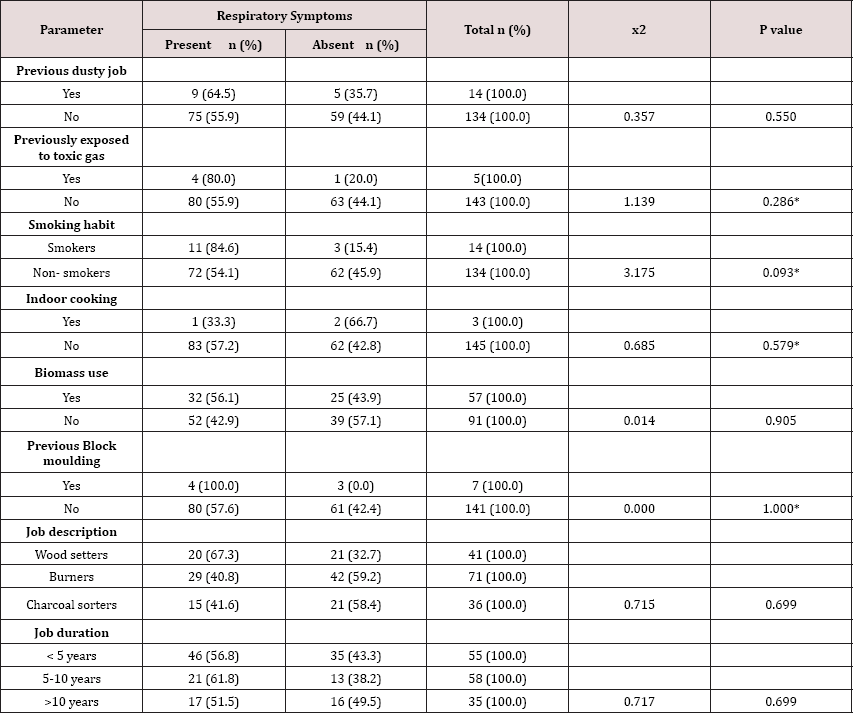
A higher 6 (42.9%) proportion of charcoal workers who had worked for 5-10 years had cough compared to 4 (28.6%) who had worked for less than 5 years. This difference was not statistically significant (p = 0.094). The association of duration of work with the prevalence respiratory symptoms was not significant (p > 0.05) (Table 6). Wood setters had the highest prevalence of chronic cough, wheeze, breathlessness and chest tightness, whereas the prevalence of productive cough and nasal discharge was highest among burners; association of job description and prevalence of symptoms was not significant (Table 7). The association between all variables and presence or absence of respiratory symptom was not significant (Table 8).

Table 6: Respiratory Symptoms among Charcoal workers and Duration of work.

lupinepublishers-openaccess-journal-respiratory-skin-diseases

Table 7: Respiratory symptoms among charcoal workers by Job description.

lupinepublishers-openaccess-journal-respiratory-skin-diseases

Table 8: Factors associated with presence of respiratory symptoms.

lupinepublishers-openaccess-journal-respiratory-skin-diseases

Discussion

The age distribution in this study indicates that the earth kiln workers were mainly a young and middle aged population, particularly as the modal age range representing over a quarter was in the middle age. However, females outnumbered males probably because they were steadier on the job unlike males who frequently changed jobs while seeking greener pastures [22]. Workers who cooked in their rooms had far better mean FEV1 and forced expiratory ratio than those who did not. This is an unexpected finding as indoor cooking is associated with abnormalities in lung function [23-25] notwithstanding, all three workers probably cooked with fossil fuel rather than biomass. On the other hand, the period and extent of contact with wood smoke among earth kiln workers probably exceeded exposure to impinging factors like biomass and tobacco smoke such that it made the influence of those pollutants inconsequential. Thus, there were no significant differences in lung function indices between users of tobacco and biomass and non-users.

Conversely, from the result ofthis study the factor that adversely affected lung function deficit was having a history of asthma; consequently all pulmonary indices were worse in workers with a history of asthma. Further, only among workers with asthma was the forced expiratory ratio less than 70%which substantiates the obstruction to air outflow seen in asthma and can be aggravated by occupational wood smoke exposure [26]. The foregoing suggests that, in the presence of asthma, exposure to pollutants from wood- burning earth kilns further worsens lung function. Therefore, it may be suggested that workers be screened for pre-existing respiratory disorders in order to exclude those with asthma and other lung abnormalities prior to being employed in charcoal production.

All lung function indices except PEFR were much better among charcoal workers who had worked at a block industry than others. Although, the reason for this observation is not distinctly obvious from this study, it could be opined that worker who previously moulded blocks were fewer and probably had a short exposure to dust from moulding blocks. In addition, coarse particles generated from construction-related activities like block moulding are less harmful than fine particles which are capable of reaching deep into the tiniest pulmonary bronchioles and parenchyma [27]. Despite the high prevalence of respiratory symptoms observed in this study, duration of work was not strongly associated with any respiratory symptom. This may suggest that most symptoms were acute and occurred more among those with shorter length of exposure.

In contrast, a study in Kebbi, Nigeria in which more than a quarter of workers had been exposed for over ten years reported that the association between duration of exposure, chest tightness and dyspnoea was significant [28]. Another study conducted in Iran also recorded significant association between work duration and symptoms. This major difference may not be unrelated to the higher proportion of workers with shorter duration of exposure to wood smoke in this study [29]. Even though the average duration of work was almost 8 years only about one-fifth of charcoal workers in this study had been involved in charcoal production for more than 10 years whereas more than half had worked for less than 5 years. This average duration of exposure recorded in this study is absolutely lower than 19.1 years reported from a previous study conducted in Brazil and 14.2 years from the Iranian study [29-31].

A probable reason for the above being that large scale commercial charcoal production is still less well established in this part of the world and workers tend to get involved on short-term basis as a means to get by rather than as a permanent job [22]. This study did not establish a remarkable association between specific types of job performed by workers and the prevalence of respiratory symptoms; nonetheless, the prevalence of most respiratory symptoms was highest among wood setters. From the preceding finding, it is likely that charcoal workers had similar levels of exposure to wood smoke and wood setters possibly had a longer duration of exposure to wood smoke.

Unlike the previous study in Iran where significant relationships were established between harmful pollutants and respiratory symptoms [29] no association was observed for most pollutants and presence of respiratory symptoms in this study. While this contrast is remarkable a plausible explanation is not far-fetched since exposure to pollutants other than wood smoke had already been discontinued for all the earth kiln workers in this study. Prospective cohort studies to assess baseline respiration function and the impact of subsequent exposure to toxic substances discharged from burning wood in earth kilns would be needed in future to highlight lung function deficit regardless of impinging factors.

Conclusion

History of asthma significantly and negatively impinged on lung function deficit among these workers; contrarily biomass exposure did not make any difference in their lung function. Unexpectedly, workers with histories of block moulding as well as cooking indoors separately had better lung function though their small number could have accounted for this difference. Duration of job or job amongst other factors did not influence the prevalence or presence of respiratory symptoms. Pre-employment screening of workers for respiratory disorders to exclude those with asthma and other lung abnormalities prior to being employed in charcoal production may be a worthwhile venture to pursue in the long term.

Read More About our Lupine Publishers Journal of Skin Diseases Please Click on Below Link:
https://lupine-respiratory-skin-and-diseases.blogspot.com/

Friday, 27 August 2021

Lupine Publishers | Smoking Cessation: Review Article

 Lupine Publishers | Journal of Respiratory & Skin Diseases


Abstract

Background

Globally, including the United States, cigarette smoking is the single most important cause of premature death, even though it is preventable. The prevalence of smoking is high, although some resources have been dedicated to this problem. A variety of interventions have been tried on smoking prevention. From the public health perspective, it is the biggest concern. As there are numerous health benefits of smoking cessation, most individuals who smoke express a desire to quit. Studies show that most smokers in the United States and the United Kingdom report that they want to stop or intend to leave smoking at some point in life Hyland [1]. A multitude of non-pharmacological and pharmacological interventions now exist to aid smokers in cessation.

Objectives

To bring awareness among public and policy makers. To provide evidence and recommendations required for effective cessation interventions. To be carried out in public health globally.

Methods

Articles published from 2000 to 2016 were identified through electronic databases such as Medline, Pub Med, and EBSCO host.

Conclusions

This research paper suggests the trends of smoking habits and smoking cessation intervention strategies differ from region to region when viewed from an international perspective. This highlights the necessity for the improvement of new methods that prevent people from starting to smoke, motivate smokers to quit and enable them to sustain long-term cessation. Future research should examine whether increasing the rate of quit attempts would be key to improving the population smoking cessation rate.

Keywords: Smoking Prevention; Tobacco Use; Smoking Cessation; International.

Introduction

This article is a retrospective review of research articles on smoking cessation obtained through a search of selected databases from 1 Aug 2017 back to 31 Dec 2000. The purpose and goal of this report is to bring awareness to the population. Additionally, to provide data for professionals in public health and policymakers, to help make recommendations based on effective cessation intervention evidence. Also, to provide information to youth who indulge in tobacco smoking of the trends, prevalence, consequences and to inspire engaging in programs for smoking cessation.

Methods

The articles published from 2000 to 2017 were identified retrospectively through electronic databases such as Medline, Pub Med, and EBSCO host. Peer review articles relevant to smoking cessation were chosen. Statistical information was gathered and further analyzed. Besides web-based resources, other important resources such as the Center for Disease Control (CDC) and the World Health Organization (WHO) were also utilized for research.

Background

Even though several preventive measures have been taken by the governments and several organizations, smoking remains a constant and severe problem in communities all over the world. Smoking-related diseases claim an estimated six million lives each year out of which 600,000 deaths were from exposure to second-hand smoke, though it is entirely preventable (WHO, 2014). An estimated 126 million Americans are regularly exposed to secondhand smoke each year National Institute on Drug Abuse [2]. More than 43 million adults are current smokers in the USA. Eighty- eight percent of those adults who started smoking at their youth (age 11-12 years) almost became an addict when they turned 14. Globally, as well as in the.com, tobacco smoking has been the leading cause of preventable death. The prevalence of youth smoking is high, although some resources have been dedicated to this problem and the variety of interventions that have been tried to prevent smoking is a big concern from a public health perspective. As there are numerous health benefits of smoking cessation, most individuals who smoke express a desire to quit smoking. Studies show that the majority of smokers in the United States and the United Kingdom report that they want to stop or intend to quit smoking at some point in life.

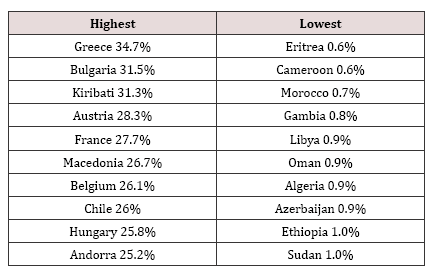
In India, tobacco's associated mortality is the highest in the world, an estimated 700,000 annual deaths attributable to tobacco use Murthy [3]. Whereas, the lowest smoking rates for men can be found in Nigeria, Barbuda, and Antigua. For women, smoking rates are lowest in Eritrea, Cameroon, and Morocco (UW TODAY, 2014). A multitude of non-pharmacological and pharmacological interventions now exist to aid smokers in cessation. The financial burden imposed by cigarette smoking is enormous. Smoking- related illness in the United States costs $96 billion each year in medical expenses and $97 billion in lost productivity due to premature mortality. Cigarette industries are spending billions of dollars on advertising tobacco products, attracting specifically adolescents and young adults who fuel the existing burden. The primary cause of chronic obstructive pulmonary disease (COPD) and lung cancer in adults has been cigarette smoking. There is an association between smoking and periodontal disease in children and adolescents. Smoking is responsible for 87% of the lung cancer deaths in the United States. It is responsible for 30% of all cancer deaths universally. Cigarette smokers have a lower level of lung function than those persons who have never smoked. Smoking hurts young people's physical fitness regarding both performance and endurance, even among young people trained in competitive running. On average, a person smoking a pack or more of cigarettes per day lives seven years less than the person who never smoked (Department of Health & CDC, 2008). In 2007, 1,800 Hispanic women and almost 3,000 Hispanic men died of lung cancer. Cigarette smokers are also known to possess a greater risk than nonsmokers for heart attack (in the same year, about 3,000 Hispanic women and nearly 3,800 men died from heart attack.Smokers have a 70% greater chance of dying from coronary heart disease than non-smokers (Department of Health & CDC, 2011).

Overall, lung cancer is known to be the leading cause of cancer deaths among African Americans. Multiple factors are associated with tobacco use such as social, physical and environmental. Young people are more likely to use tobacco if their peers use tobacco. Perceived smoking is acceptable or normative among their peers. They expect positive outcomes from smoking, such as surviving with stress, anxiety, and depression. Parental and sibling smoking may also promote smoking among children and youth in a household where perceived parental approval plays a significant role in adolescent smoking. In Hispanic and Asian communities, families live intimately with each other. Parents have control over their children and watch their activities, and vice versa offspring also respect parents and elders. Hispanic youth are more likely than other young people to be protected from second-hand smoke by smoking bans at home. Seventy-one percent of Hispanic households do not allow smoking in their homes. Parenteral perceived disapproval of smoking is a protective factor against adolescent smoking McCausland [4]. Other factors like low socioeconomic status, lack of parental support or involvement, accessibility, availability, low level of academic achievement, low self-image and aggressive behavior have been associated with youth smoking Miller [5]. Peer pressure is a significant factor in their decisionmaking process. There are many studies showing that the influence of peers is especially powerful in determining when and how young people first try a cigarette. Even if someone thinks that their child is too smart, all children and adolescents are vulnerable either for negative or positive influence. Kids feel that they are pulled in two directions-on the one hand they do not want to use tobacco but the other side they afraid of losing friends. The smoking rate among children and young adults who have three or more friends who smoke are ten times higher than those who report that none of their friends' smoke Nicotine & Tobacco Research [6].

According to a study concerning accessibility of cigarettes, it is seen that among the 12.9 percent of students nationwide who tried to buy cigarettes 30 days before the study, 48.5 percent them were not asked to show proof of age. The prevalence of students, not having been ID'd to show evidence of age was higher among ninth graders at 70.4% than tenth graders at 55.6%, eleventh graders at 59.2%, and least for twelfth graders at 32.7%. For females, it was higher among eleventh graders at 57.7% compared to twelfth grader females at 29.3%. Among males, ninth-graders were at 65.7%, tenth graders were at 55.6%, eleventh graders were at 59.6% and finally twelfth graders at 34.9%. Illiteracy is another factor in youth smoking. According to the.com Census Bureau report from 2007, 61% of Hispanics in comparison to 85% of non-Hispanics have a high school diploma. While only 12.5% of Hispanics compared to 30.5% of non-Hispanic, have a bachelor’s degree (NSDUH 2010) [7]. Currently, there is an increasing trend of smoking prevalence among young women, low socio-economic, racial/ethnic minorities, and vulnerable populations such as the LGBT community (lesbian, gay bisexual, and transgendered) (USDHS, 2004). As regards quitting smoking, a study shows that Hispanic smokers are less likely than white smokers to be prescribed or to attempt quitting (CDC, 2016) (Table 1, 2).

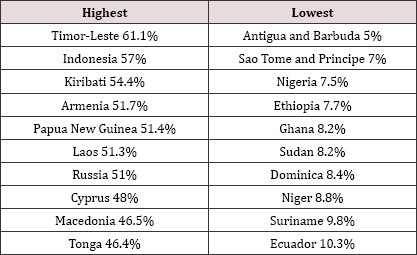
Table 1: Countries that had the highest and lowest smoking prevalence for men in 2012.
lupinepublishers-openaccess-journal-respiratory-skin-diseases

Table 2: Countries that had the highest and lowest smoking prevalence for women in 2012.
lupinepublishers-openaccess-journal-respiratory-skin-diseases

Health impact

Secondhand smoke exposure puts family members of smokers at an increased risk. The following table illustrates the various health impacts in children and adults:

Other benefits of quitting smoking are reduced chances of impotence, having difficulty getting pregnant, having premature births, babies with low birth weight and miscarriage. In children, the risk factors of many second hand smoking such as asthma and other respiratory diseases decrease Stead [8]. After quitting smoking, there are numerous physical and emotional effects the body experiences. These effects consist of are both short-term and long-term benefits. The short term benefits, which can commence as soon as 20 minutes past quitting, include heart rate and blood pressure decrease. Carbon monoxide level drops to normal after 12 hours. There is an improvement in blood circulation and lung function after two to twelve weeks of quitting. Shortness of breath and coughing decrease after one to nine months of stopping. Subsequently, two to three weeks following cessation, several regenerative processes begin to take place in the body. The long-term benefits of quitting reduce the risk of coronary heart disease after one year to one and a half. Five years past quitting, the probability of stroke is reduced to that of a nonsmoker. The potential for lung cancer, cancer of mouth, throat, esophagus, bladder, cervix and pancreas reduces to about half of that for a smoker. Within 15 years of cessation, almost all of the recuperative processes are completed. The risk of heart disease is no greater than someone who has never smoked a cigarette CDC [9]. The advantages of quitting smoking compared to those who continued to smoke are huge. Life expectancy is increased compared to those who continued to smoke. The probability of suffering from another heart attack is reduced by 50% for people who quit smoking after having a heart attack or following the onset of life-threatening disease (Table 3).

Table 3: WHO, 2011.

lupinepublishers-openaccess-journal-respiratory-skin-diseases

Dependence and Relapse

The addictive effect of nicotine once smoked, makes hard to quit smoking. Early initiation increases the likely-hood of habituation, and continuous tobacco smoking eventually ends up in addiction. People who begin to smoke at a very young age are more likely to develop severe levels of smoking than those who start a later age. Tobacco addictions should be treated as a chronic disease with a constant risk of relapse Fiore [10]. Based on literature review, many studies have proved that tobacco is apparently more addictive than any other substance abuse. According to one study high rates of relapse among smoking quitters occurs due to the addiction potential of tobacco. It is reported that brief counseling has resulted in a quit rate of 55% the relapse rate among quitters was 23% Warner [11]. The current improved knowledge of the neurobiology of nicotine addiction has significant implications for the management of its dependency Joy [12].

Challenges for quitting

There are many challenges and barriers to quitting. There are three critical challenges that one should be acquainted with before planning to assist smokers to quit or attempt to quit. All people do not have the same reasons why they smoke and why they could not quit. The reasons have been classified into three categories. Physiological addiction; behavioral and environmental social; emotional or psychological connections WHO [14].

Smoking Cessation, Smoking Prevention and Methods to Quit

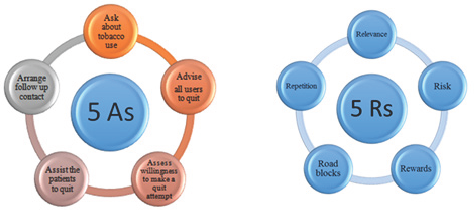
The Treating Tobacco Use and Dependence-Clinical Practice Guideline, issued by the United States Department of Health and Human Services, recommends the 5A’s and 5 R’s approach that should be addressed in a motivational counseling intervention to help those who are not ready to quit (HHS, 2012). The below figure illustrates the motivational counseling interventions:

There are seven first-line medications available that are known to increase long-term smoking abstinence: Nicotine inhaler, Nicotine gum, Bupropion SR Nicotine lozenge, Nicotine patch, Nicotine nasal spray, and Varenicline. Current information on adolescence tobacco use prevention has proposed that macro-level approaches can be effective in reducing the prevalence of tobacco use among adolescents. The stronger tobacco control policy that increased tobacco taxation and counter-marketing campaigns has all proven to be successful strategies for reducing youth tobacco use Backinger [14]. The use of counseling and pharmacotherapy together has been reported as the most effective strategy to achieve tobacco abstinence. The time spent on counseling is very effective since it has got a significant association between the time devoted to counseling a person quitting smoking and their chances of quitting. According to WHO guidelines, more than one type of pharmacotherapy should be offered in combination, if appropriate, for a prolonged period.

After identifying and understanding different sub-groups, various communication strategies should be developed for specific focus groups that enhance the impact of health information. The Community Preventive Services recommends the use of "mass- reach health communication interventions" e.g. television and radio broadcasts, newspapers, billboards, built on solid evidence for their advantageousness in preventing or reducing cigarette smoking and increasing use of cessation services like quit lines. Regarding the use of media, studies suggest that the success of different types of smoking cessation messages may vary by socioeconomic status, predominantly income and education status. Cessation programs must be custom-made to focus on the envisioned audience rather than just providing information Strickland [15] (Table 3).

Nicotine replacement therapy

Among the currently available smoking-cessation treatments, including nicotine replacement therapy (NRT), bupropion and varenicline are well-known pharmacological interventions to raise the chances of quitting tobacco smoking, mainly when combined with health education and counseling programs. Various studies have shown that tobacco cessation assistance provided by health professionals (physicians, nurses, dentists, pharmacists and other health care workers) enhances the quit rate among their patients Gorin [16]. Almost all forms of NRT gum, transversal patches, nasal sprays, inhalers and sublingual tablets can help persons who make a quit attempt and increases their chance of successfully quitting smoking by 50% to 70% irrespective of any setting. The purpose of NRT is to briefly replace considerable nicotine from cigarettes and to decrease the stimulus to smoke and avoid nicotine withdrawal symptoms consequently to ease the transition from smoking to complete abstinence.

Quit-lines

Quit-line is a tobacco cessation program which is a phone based service that helps tobacco users quit smoking. Today, residents of all 50 states in U.S. and Canada, have access to quit lines services. In the recent years, Quit-lines have been able to become a critical part of the tobacco control efforts that are ongoing in the United States. The universal access, demonstrated efficacy and the convenience of remote counseling via telephone have all led to the quick and widespread adoption of Quit lines in the North American region Cummins [17]. Currently over 53 countries have at least one national toll-free quit line with a person available to provide quit line cessation services, with access to its population. All the 50 states of USA and Canada are having multiple quit lines operated by Federal government, state government and non-governmental organizations. Out of 53 countries, 32 (60%) of them are wealthy countries and four countries (8%) are of low income and 17 of them are middle-income countries which made up only18% of all middle- income countries in the world, have at least one national toll-free quit line. There is the noticeable difference in reach as well as type, quality, quantity, volume and of services provided by different quit lines. The counselors and supervisors working in quit lines are well trained by the psychiatrists for operational purpose of smoking cessation assistance. Quit-lines are established in collaboration with health care system, health care providers, nongovernmental organizations, and governments both local and national. Among the primary methods used by countries to promote quit line services are media advertisements (newspapers, television, radio or flyers). Some countries, including Brazil, New Zealand, South Africa, and all the European Union (EU), have printed the quit line number on cigarette packets together with health warnings. In spite of their widespread presence, information including international data on how Quit-lines services operate in practice and their outcome is not readily available Gollust.

Complementary and alternative medicine

Very few studies have been confirmed that the complementary and alternative medicine (CAM) for tobacco cessation, like, yoga, hypnosis, herbal products, acupuncture, relaxation, and massage therapy have been tried and were successful. However, use of complementary and alternative medicine treatments and a higher level of education were significantly associated. Yoga and mindfulness meditation as promising complementary therapies for treating and preventing addictive behaviors. The hypothetical models propose that the skills, perceptions, and self-awareness adapted through the practice of yoga and mindfulness can target multiple psychological, physiological, neural, and behavioral processes that maybe associated with relapse due to addiction.

Electronic cigarettes:

Also, electronic cigarettes are becoming popular and being debated concerning their role in smoking cessation. The electronic cigarettes are similarly known as e-cigarette, which is electronic nicotine delivery system a mechanical device designed to mimic regular cigarettes, looks conventional alike cigarette, and delivers nicotine through inhaling vapors without burning tobacco. These devices are supposed to deliver nicotine without any toxins considered to be a safer alternative to regular tobacco cigarettes. However, there are no sufficient studies to determine the vapors generates from e-cigarettes don't contain any toxic substances harmful to health in contrast to the natural tobacco smoking which has been proved to be carcinogenic. These electronic devices sold as a tobacco delivery device needs to be regulated. Currently, there are no uniform regulations, either no regulations or at some places complete ban on sale. Countries like Canada, Mexico, Israel, Brazil, Hong Kong, Panama, Singapore and the United Arab Emirates have completely banned e-cigarettes. Subsequently, more practical approaches are needed to reduce the burden of cigarette smoking.

E-cigarettes were used much by former smokers to avoid relapse or as an aid to cut down or quit smoking as the second option to nicotine replacement medications. Based one-cigarette literature review, it was found that electronic devices sold as a nicotine delivery device, need further research to gather scientific evidence of their safety, efficacy of device in delivering nicotine and other substances, patterns of use, effectiveness for smoking cessation or quitting, prevention of relapse, and issues associated regulations with the use of e-cigarettes. Many studies have shown that smoking e-cigarette is harmless compared to smoking traditional cigarettes. Most of the devices contain nicotine and inhaling their vapors exposes users to toxic substances, including lead, cadmium, and nickel, heavy metals that linked with significant health problems Grana.

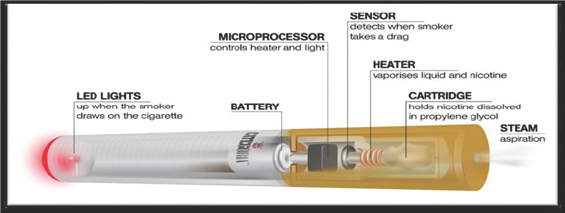
The electronic cigarette which resembles a conventional cigarette is a battery-operated electronic device that is designed to vaporize a liquid solution. The solution is known to contain propylene glycol and or vegetable glycerin in which nicotine or other fragrances may be dissolved. During puffing activates the lithium-ion rechargeable battery that is designed to vaporize nicotine to be inhaled. The modern e-cigarette was invented in the year 2003 by a Chinese scientist Hon Like (Figure1, 2).

Figure 1.
lupinepublishers-openaccess-journal-respiratory-skin-diseases

Figure 2.

lupinepublishers-openaccess-journal-respiratory-skin-diseases

Even though e-cigarette bears a resemblance exactly as the traditional conventional tobacco cigarettes has a perceptible sensation. An e-cigarette consists of a plastic tube, electronic heating element, and liquid nicotine cartridge. The conventional cigarette is soft and light in weight whereas e-cigarette is hard and heavy to feel. The e-cigarette is designed to mimic conventional cigarette provide a flavor and physical sensation like that of tobacco smoke during inhalation, but no smoke is involved in maneuvering.During the inhalation process in e-cigarette device, an electronic sensor senses airflow and automatically activates the heating element that heats the liquid in the cartridge which vaporizes. Also at the same time during puffs, the electronic sensor lights up a LED indicator. The cartridges may be containing nicotine suspended in propylene glycol, glycerol plus water and sometimes contains flavors of different fruits and mint or without nicotine. The nicotine vapors absorb through the mucous membrane of mouth may even enter into the blood stream, but with low concentration comparing to conventional tobacco cigarettes. Since e-cigarettes don’t burn tobacco, may be considered a lower risk substitute for conventional paper and tobacco cigarette Eissenberg [18]. Toxic components, including low levels of carcinogens have been identified in some e-cigarette cartridges during laboratory testing Food and Drug Administration [19].

Many scientific research studies have identified hundreds of toxic chemicals used in the liquids in the canister of e-cigarettes were detected in the bloodstream of some persons which inhaled by smoking were known to cause health effects (may even cause cancer). Even persons have affected second-hand smoke from e-cigarette have detected toxins in the blood stream. The following chemicals are identified in e-cigarettes: Nicotine, butanone, Formaldehyde, Acetaldehyde, Acetic Acid, Acetone, Acrolein, Aluminum, Barium Benzene, Butyl hydroxyl toluene, Cadmium, Chromium, Copper Croton Aldehyde Diethylene Glycol, Glyoxal Iron Isoprene, Lead, Limonene m, p-Xylene, Magnesium, Manganese, Nickel, N-Nitrosonornicotine, Methyl benzaldehyde, Phenol, Polycyclic Aromatic Hydrocarbons, Potassium Propanol, Propylene Glycol, Sulfur, Tin, Toluene, Vale Aldehyde, Zinc Zirconium.

There are numerous unreciprocated questions about their comprehensive influence. For example; are e-cigarette used by young new non-smokers; would e-cigarettes be a gateway to tobacco use or nicotine dependency; is there any tendency for addiction to e-cigarettes or could its use in public places challenge smoke-free laws. The nicotine and other chemicals found in e-cigarettes might harm brain development in young persons and younger persons who start smoking are more likely to develop a habit and are more prone to addiction. Young persons who have never smoked or never tried smoking, when starts to use e-cigarette might get an addiction to nicotine and decide to switch to regular cigarettes is the biggest worry and public health concern, if the government does not ban e-cigarette sale to underage (Jean-Fran^ois Etter, 2011).

Smoking cessation policies and interventions

Smoking cessation is vital to any tobacco control program. It is also one of the important modules of a widespread tobacco policy that strongly contributes to decreasing the smoking prevalence and thereby reduces tobacco-related morbidity and mortality. Numerous policies influence smokers' inspiration to quit smoking. The tobacco control measures such as increased taxation on tobacco and tobacco products, ban on advertising and promotion by global communications media, smoke-free areas and educational campaigns increase smokers’ motivation to stop. These policies also help in creating a climate that makes it easier for former smokers to remain abstained World Health Organization [20]. An international body of research indicates smoking cessation policies and interventions are cost-effective that include two comprehensive types of activities:

    a) Mass population policies and actions aimed to motivate smokers to quit smoking, such as higher prices through taxation, restrictions on smoking in public places and mass media educational campaigns.

    b) 2) Policies and activities designed to help dependent smokers who are already motivated to quit Fronczak [21].

In May 2010, a committee of 20 experts from 12 countries on tobacco control, economics, epidemiology, and public health policy met at the International Agency for Research on Cancer Frank [22]. They discussed the series of evidence gathered after conducting studies on the tobacco pricing and tax related lobbying; tax, price and collective demand for tobacco; tax, price and adult tobacco use, use among adolescents and among poor; and impact of tobacco taxation on health. All the studies were conducted in both the developed and underdeveloped countries including high, medium and low income. From eighteen total studies, twelve study’s conclusions were showing strength of the effectiveness on tax reduction and price increase. A small number of high-income group countries report that higher prices increased smoking cessation rate. Studies from countries of low, medium and high income report that smoking among young people decreases as price increases. After consensus, the expert scientists’ committee concluded that there is sufficient evidence of effectiveness of increased tobacco excise taxes and prices in reducing the prevalence of tobacco use and improvement of public health.

Uruguay, a middle-income country in South America, implemented a comprehensive continued program of multiple tobacco control procedures consisting of a ban on publicity and promotion. Additionally, the ban on smoking in enclosed public spaces and workplaces, the policy for healthcare providers to treat nicotine dependence. Furthermore, a rule, that signs with warnings cover eighty percent of the front and back of every cigarette pack in addition to the ban on using misleading terms such as light and mild, besides a considerable increase in tobacco taxes. The results reported over during six years' period from 2005 to 2011 was about a 23% decrease in tobacco use Abascal [23]. According to a Global Youth Survey (GYT) from Bangladesh, a low-income country in Asia, report between 2007 and 2013, the use of tobacco and its products has not decreased. The rationale being no good smoking cessation programs and lack of resources and insufficient policies on tobacco control. This is despite many students (59.9%) expressing the desire to quit smoking if they have proper guidance and tools World Health Organization [24].

Brazil, an upper middle-income country, being a third largest tobacco producing country in the world, has a comprehensive tobacco control policy including restrictions on publicity, ban on smoking in indoor public areas, mandatory pictorial warning labels on cigarette packs and total ban on menthol cigarettes, increase tax and pricing policies. One study showed that increase taxes and price rise have great potential to stimulate cessation and reduces prevalence among the vulnerable population Gigliotti [25-75].

Conclusions

This review suggests the trends of smoking habits and smoking cessation intervention strategies differ from region to region when viewed from an international perspective. This highlights the necessity for the improvement of new methods that prevent people from starting to smoke, motivate to quit smoking and sustain longterm cessation. Further, we suggest exploring how to change more smokers to try quit and to choose the most appropriate evidence- based practical approach and to try more frequently. If appropriate and applicable, poly pharmacotherapy should be offered for a prolonged period since relapse is more common. Cessation programs must be custom-made to focus on the envisioned audience rather than just providing information. It is observed by many that e-cigarette to be harmless than traditional cigarettes, still a lot of the devices contain nicotine and inhaling their vapors exposes users to toxic substances, including lead, cadmium, and nickel, heavy metals that linked with significant health problems (Grana, 2014).In developing countries due to lack of infrastructure, and funds are the major drawback towards the success of smoking control and smoking cessation, rich countries should extend help in the implementation of intervention programs. Additionally, countries can also contribute by strictly implementing taxation on cigarettes and also increase the price of tobacco and tobacco products in general. Future research should be directed to assess whether increasing the number of quitting attempts would positively impact smoking cessation.

Read More About Lupine Publishers Journal of Respiratory & Skin Diseases Please Click on Below Link:
https://lupine-respiratory-skin-and-diseases.blogspot.com/

Friday, 23 April 2021

Lupine Publishers | Interactions between Measles, Mumps and Rubella (Mmr) Vaccines and Atopic Diseases in Children

 Lupine Publishers | Journal of Respiratory & Skin Diseases


Abstract

Background: Epidemiologic data on atopic diseases are scared. Different studies have shown that the burden of atopic diseases is varying in space and time. Several factors are impacting on epidemiology of atopic in children. Among them, MMR vaccination has been a topic of divergences.

Objective: To establish whether the MMR vaccination may influence the risk of atopic diseases in children.

Methods: We conducted electronic search terms included MESH or key words with "Atopic diseases” and "MMR vaccination” and “Children”. Databases for peer-reviewed articles included Pub Med, CENTRAL, Scopus and CINAHL Plus. Additionally, Grey literature was obtained from Google and WHO database.

Main results: Among 304 potentially relevant articles identified, 8 peer-reviewed articles met the inclusion criteria. Due to the lack of standardized reporting of different outcomes and different study designs, we reported the results narratively based on P-value and 95% CI. We found three studies that demonstrated that MMR vaccination increased the fold of asthma in children (P<0.05). In contrast, two studies have approved that MMR vaccination is benefit in preventing asthma in children. MMR vaccination decreases asthma respectively by OR 0.36 95%CI (0.14-0.91) and OR 0.96 95% CI (0.76-1.21). Two studies reported MMR vaccination increase the eczema OR in two studies with respectively OR: 1.77 95% CI (1.20-2.61) and OR 1.86 95%CI (1.25-2.79). On the other hand, three studies revealed that MMR vaccination did not have any effect on atopic eczema with respectively P=0.830, OR 0.94 95% CI (0.77-1.15) and P=0.90.

Conclusion: Based on the variability between studies, we hypothesize that judging the association between MMR vaccination and atopic diseases could not be fruitful in understanding different mechanisms. In this context, we suggested the interactions between Gene-environment MMR vaccination and atopic diseases that could clarify divergences between the results.

Keywords: Atopic diseases; MMR vaccination; Children

Background

The word atopy (Greek: atopia, out of place) refers in accordance with an inherited tendency to produce immunoglobulin E (IgE) antibodies in response to small amounts of common environmental proteins such namely pollen, house dust mite, and food allergens [1]. The presence of atopy in an individual is associated with an increased risk of developing atopic diseases among which atopic dermatitis, asthma, and allergic rhino-conjunctivitis/hay fever (and food allergy) [2]. However, atopy can be present in the form of asymptomatic sensitization to one or more allergens, which means that an individual with confirmed allergic sensitization does not exhibit clinical allergy [2]. Epidemiologic data on atopic diseases are scared. Different studies have shown that the burden of atopic diseases is varying in space and time. Secular trends in atopic diseases have been studied worldwide. The rise in disease occurrence was particularly apparent between the 1960s and the 1990s, after which the rise evened out. For example, in Australia the occurrence of asthma in schoolchildren rose up from 12.9 to 38.6% between 1982 and 1997, and the prevalence of hay fever increased from 22.5 to 44.0% [1].

In Denmark, the prevalence of atopic dermatitis augmented from 17.3 to 27.3% among children aged 7-17 years between 1986 and 2001, and the prevalence in children living in Scotland increased from 5.3 to 12.0% between 1964 and 1986 [1-3]. In many resources limited countries, atopic diseases occurrence have also seen a marked increase. For example, in South African children the prevalence of eczema increased from 11.8% in 1995 to 19.4% in 2001 [1-4]. Only atopic dermatitis also called atopic eczema affects 1-3% of adults worldwide. Fifty percent of all those with atopic dermatitis develop other allergic symptoms within their first year of life and probably as many as 85% of the patients experience an onset below 5 years of age [5]. Patients generally outgrow the sickness in late childhood as around 70% over the patients with a disease onset during childhood have a spontaneous remission before adolescence. In addition, about 75% of children with atopic dermatitis develop allergic rhinitis and more than 50% develop bronchial asthma [2].

In reality, several elements affect the immune system in early life. Among these factors, routine mass immunization of children against a variety of infectious diseases has been incriminated to rise up the risk of atopic diseases. This topic is subject to contradiction between authors. In effect, immunization in children could directly stimulate TH 1-like immunity or indirectly prevent such immune responses by reducing the occurrence of some infections [6]. The immune response observed during the course of atopic diseases is characterized by a biphasic inflammation. A Th2-biased immune response (IL-4, IL-13, TSLP and eosinophils) is prior in the initial and acute phase of atopic diseases, while in chronic atopic diseases, a Th1/Th0 dominance has been described (IFN-y, IL-12, IL-5 and GM-CSF) [5-7]. Viral infections promote a Th1-biased immune response and live viral vaccines, such as those for measles, mumps, and rubella (MMR), may promote a similar response [8,9]. This is supported by the observation of high levels of the Th1 signature cytokine IFN-c and low concentrations of the Th2 signature cytokine IL-4 in children after measles vaccination [9-11]. Th2 associated first type or immediate hypersensitivity reactions involve immunoglobulin E (IgE)-mediated release of histamine and other types of mediators from mast cells and basophiles Type I reactions underlie the following atopic disorders: allergic asthma, eczema, allergic rhinitis, conjunctivitis [11]. In spite of that, immunologic mechanisms could not explain clearly the interactions between MMR vaccination and atopic diseases which are subject to controversy and no consensus. Reviewing the literature, MMR vaccination could increase, maintain or decrease the likelihood of developing atopic diseases in children. As proven by immunologic mechanism, MMR vaccination may stimulate different pathways and induce atopic disorders. We reviewed different studies in the field of MMR vaccination and atopic diseases and suggest some hypotheses that could highlight the discrepancy in different studies.

Objective

The main objective was to study whether the MMR vaccination may influence the risk of atopic diseases in children.

Methods

We conducted electronic search terms included MESH or other associated terms with 'Atopic diseases" and "MMR vaccination" and "Children". Databases for peer-reviewed articles included Pub Med, CENTRAL, Scopus and CINAHL Plus. Furthermore, Grey literature was obtained from Google and WHO database. Article citations were organized uploaded and reviewed using the review manager (Revman) from their respective databases. The title, author, journal and year of publication were then exported to an excel spreadsheet for title and abstract review. Articles were screened by JLT and JLT to determine whether they included relevant information. JLT and JLT assessed the quality of quantitative data from studies with the Newcastle-Ottawa Scale (NOS). Observational studies were assessed with Newcastle-Ottawa Scale. The following domains were used for bias assessment: -is the case definition adequate? - Representativeness of the cases -Selection of controls -Definition of controls -Comparability of cases and controls on the basis of the design or analysis -Ascertainment of exposure -Same method of ascertainment for cases and controls reporting, external validity, bias, confounding and power [12].

Results

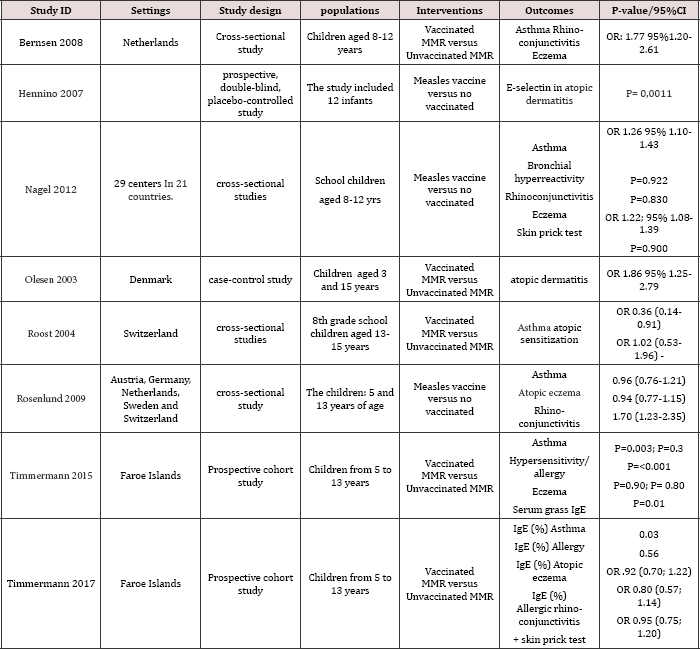
We identified 304 potentially relevant articles. A total of 8 peer- reviewed articles met the inclusion criteria and were included for further analysis. Due to the lack of standardized reporting of different outcomes, we could not undertake meta-analysis. Instead, we categorized studies by their settings, designs, interventions, outcomes and P-value/95%CI (Table 1). We included different study designs among which four cross-sectional studies, three prospective cohort studies and one case control study. We found three studies have shown that MMR vaccination increased the fold of asthma in children. The results were statistically significant with P-value<0.05 or the OR was above 1, the 95%CI did not include the null value [9,13-14]. MMR vaccination increase the eczema OR in two studies with respectively OR: 1.77 95% CI (1.20-2.61) and OR 1.86 95%CI (1.25-2.79) [13-15]. Children that received MMR vaccination were likely to have rhino-conjunctivitis in two studies with OR: 1.77 95%CI (1.20-2.61) and OR 1.70 95% (1.232.35) [13-16]. MMR vaccination increased serum IgE in asthmatic children (P=0.03) [17], however, serum IgE remain normal in both atopic eczema and rhino-conjunctivitis [17]. Only one study used serum selecting outcome in children with atopic dermatitis. Serum selecting was higher in MMR vaccination group than MMR unvaccinated group (P=0.0011). In contrast, two studies have approved that MMR vaccination is benefit in preventing asthma in children [6-16]. MMR vaccination decreases asthma occurrence respectively by OR 0.36 95%CI (0.14-0.91) and OR 0.96 95%CI (0.76-1.21). But, the last 95%CI was not statistically significant. Three studies revealed that MMR vaccination did not have any atopic eczema with respectively P=0.830, OR 0.94 95% CI (0.77-1.15) and P=0.90. In two studies [17] that analyzed skin prick test, MMR vaccination versus MMR unvaccinated did not shown statistically significant results.

Table 1: Characteristics of included studies.

lupinepublishers-openaccess-journal-respiratory-skin-diseases

Discussion and Conclusion

In our review, MMR vaccination and atopic diseases were assessed both by parental and medical reporting as well as objective clinical markers (serum IgE and selecting) [17-18]. Parental recall is likely to be incomplete, particularly for non-specific illness, such as fever or respiratory infections; this could imply ascertainment bias in cases and controls. The sample size was large enough in all studies. In spite of that, cases and controls groups were unbalanced in some studies [13-19]. Consequently, these studies may be prone to selection bias. Besides, we included studies with high power and multiple linear regressions were used to adjust confounding. In effect, variability of results between studies has proven that the interactions between MMR vaccination and atopic diseases are still unclear. Based on this, there is a need of large randomized controlled trials to find the consensus. Even so, the consensus could not be found. According to our analysis, several factors could influence the interactions between MMR vaccination and atopic diseases.

The relationship between some genes and atopic diseases is well known. A study has demonstrated the genes for IL-4, IL-13, HLA- DRB, TNF, LTA, FCER1B, IL-4RA, ADAM33, TCR a/5, PHF11, GPRA, TIM, p40, CD14, DPP10, T-bet, GATA-3, and FOXP3 are associated to atopic diseases [20]. Moreover, the child develops atopic dermatitis in the first months of life accompanied by sensitization to cow's milk, egg, or peanut, and sometimes also vomiting, diarrhea, or anaphylaxis in relation to ingestion of these foods beginning around the age of 6-12 months [1]. This is followed by sensitization to indoor allergens such as house dust mite, cockroach, and furred pets [1]. Thus, we hypothesize, considering only MMR vaccination and atopic diseases could not be fruitful in understanding different mechanisms. In this context, the concepts: Gene-environment- MMR vaccination and atopic diseases could be effective to clarify divergences between studies. Knowing that the studies were conducted in different community genetics, environments and lifestyle; the association between MMR vaccination and allergic asthma, eczema, allergic rhinitis, conjunctivitis could not be established.

Read More Lupine Publishers Journal of Respiratory & Skin Diseases Click on Below Link
https://lupine-respiratory-skin-and-diseases.blogspot.com/