Raya indigenous livestock husbandry practices was conducted in
Emba-Alaje Enda-Mekoni and Ofla Wereda of Southern
Tigray, featured by mountain chains and located at 12°47’ N latitude
39°32’ E longitude. with the aim to determine constraints and
opportunities that exist within the farming systems, for better targeted
improvement and to design policies strategies to support
peculiar livestock husbandry practice, since it is experiences of the
greatest successes stories of developing country agriculture and
one of the most unsung, especially in the disadvantaged marginalized
areas. Single household respondent was used as sampling unit,
using Proportional Probability to Size approach. Out of 156HHs, 73.5%
were male headed while 26.5% female-headed. Educational
status of HHs members was diverse that was composed of 12.8% educated
while 41%HHs members were illiterate. Average family
size was 4.6±1.84. 83.33%HHs used own family labour, while others use
hired labour. Feeding, watering, barn cleaning, animal
keeping, monitoring animal health, cow milking, and selling dung cake
tasks of wives and children, while feed purchase, buying and
selling animals were husband’s duty. Age at first calving was 3.5 years
for local while 2.5years for exotic breeds and calving interval
was similar 1.5 year. The average milk yield was 2±1 litres for Arado,
5±1 litres for jersey and 10±2 litres for Holstein Frisians. The
average cattle herd size were 3+1 in urban, 4.67+4.93 in periurban and
3.75±2.12 in rural farms. There was significant (P< 0.05)
difference for cattle breed in lactation length and milk yield but no
remarked (p>0.05) difference in Wereda level. Housing system of
the study areas were featured backyard compound in 62.18% of the
respondents, partial shelter in 17.95% of the respondents and
improved barn in 19.87% of the dairy farmer respondents. Alternative
interventions for betterment of the indigenous husbandry
practice is with the climate change are timely scenario.
Keywords: Raya, Indigenous livestock husbandry, Arado, Holestain fresian
Introduction
Domestication of ruminant animals and their use to produce
milk, meat, wool, and hides represents one of the cornerstone
achievements in the history of agriculture. The essential feature of
the ruminant animal that has fostered its utility as a dairy animal
is the presence of a large pre-gastric chamber where microbial
digestion of feed particularly fibrous feeds not directly digestible
by human, provides various fermentation products that serve as
precursors for efficient and voluminous synthesis of milk. Without
this symbiosis between animal and microbe, the dairy industry
would not have developed, and indeed human culture would be
vastly different in its food-gathering methods (Weimer and James,
2001).
In Ethiopia, the livestock production system, which is
dominated by indigenous breeds of low genetic potential for
milk production, accounts for about 98% of the country’s total
annual milk production. The low productivity of the country’s
livestock production system in general and the traditional sector
in particular is mainly attributed to shortage of crossbred dairy
cows; lack of capital by dairy producers, inadequate animal feed
resources both in terms of quality and quantity; unimproved
animal husbandry system; inefficient and inadequate milk
processing materials and methods; low milk production and supply
to milk processing centers; and poor marketing system. Making
improvement interventions to the traditional sector is, therefore,
crucial if development of the livestock sector of the country is
targeted. Its large livestock population; the favorable climate for
improved, high-yielding animal breeds; and the relatively diseasefree
environment for livestock make Ethiopia to hold a substantial
potential for dairy development. Considering the substantial potential for smallholder income and employment generation from
high-value livestock products, development of the dairy sector
can contribute significantly to poverty alleviation and nutrition
in the country. With the present trend characterized by transition
towards market-oriented economy, the dairy sector appears to be
moving towards a takeoff stage [1].
Dairy enterprises are the “white gold” of many developing
countries, creating pathways out of poverty while boosting
better human nutrition and health, regular income generation,
employment, crop farming, and natural resource management. The
context for smallholder dairy development in Ethiopia has been
changing rapidly, creating both new opportunities and challenges
[2]. According to Mburu [3] characterization of smallholder dairy
production systems in highlands is critical in understanding
the constraints and opportunities that exist within the farming
systems. It allows better targeting of dairy improvement research
and development. Therefore, information obtained can be valuable
for detailed analysis of constraints and opportunities found in
smallholder dairy systems and to design policies and strategies
to support smallholder dairy development programs in variable
intensification that one has to be aware of the challenges of dairy
which, is one of the greatest successes stories of developing
country agriculture and one of the most unsung, especially in the
disadvantaged marginalized areas.
The bulk of Ethiopian livestock’s provision to the economy is
not properly identified in conventional national accounts as coming
from livestock. These distortions are particularly acute for highland
livestock production systems in which animal energy for transport
and dung for fuel are as important as conventional milk and meat
production [4] that confirmed less attention was given to the
sector despite its indispensible contribution to the economy of the
majority of dairy farmers and the nation.
Livestock production in Ethiopia is constrained by a multitude
of technical, financial, institutional and socio-economic factors
[5]. Coordinating inputs (knowledge, finance, social and political
capital) of various actors and their expectations in a way to create
best practices and innovations could contribute better exploitation
of the resource [2]. ‘When there is no bridge, there is always other
means!’ [1]. The marginalized disadvantaged dairy farmers did not
have exposure and access to affordable improved technological
facilities that enable livestock production ease and profitable;
consequently they do act according to their local resources and
custom which demand due focus and research.
In Ethiopia, particularly in the highlands of Southern Tigray
where previous research is very meagre [5], the indigenous
livestock husbandry system is very peculiar than any other areas
since long period of time but the doubt is their extent of production
in comparison to their demand, nutritional needs and economic
values, that is why the objective of this paper has targeted on the
main indigenous livestock husbandry practices in relation to the
livestock resource potential. Thus this work was initiated with the
following objectives:-
1. To identify indigenous livestock husbandry practices &
constraints in the study area, and
2. To determine the livestock breed composition of the area
Materials and Methods
Description of the Study Area
The research was conducted in Emba-Alaje Enda-Mekoni
and Ofla Wereda of Southern Tigray, from December 01, 2011 to
February 30 2012, which are featured by mountain chains, where
Maichew of Enda-Mekoni is located at 12°47’ N latitude 39°32’ E
longitude and an altitude of 2450m.a.s.l. It has a rainfall ranging
from 600-800mm , temperature ranging 12-24oC, and relative
humidity of 80% , which is highly variable from year to year and
erratic in nature. The district is located on about 90-180km south of
Mekelle city and 600-690Km north of the capital city Addis Ababa.
The study area is also categorized as one of the populated highland
areas of the country where land per household is 0.8h. Korem of Ofla
lay on 12029’N latitude, 39o32’E longitude and that of Adishehu of
Emba-Alaje is located on 120 56’N latitude and 39029’E longitude
[6].
Study Population and Sampling Procedures
Single household respondent was used as sampling unit and
sample size determination was applied according to the formula
recommended by Arsham [7] for survey studies:
SE = (Confidence Interval)/(Confidence level) = 0.10/2.58 =
0.04, n= 0.25/SE2 = 0.25 / (0.04)2= 156
Where, confidence interval=10% and confidence level=99%
Where: N- is number of sample size
SE= Standard error, that SE is at a maximum when p= q = 0.5,
with the assumption of 4% standard error and 99% confidence
level.
The total sample size was determined to be 156 for the
household level interview. Proportional Probability to Size (PPS)
approach for uniformity matters as Desalegn [8]. Three approaches
namely, participatory rural appraisal for base line information and
formal (diagnostic) survey using well-structured questionnaire,
farm visit & group discussions of the entire system were used to
generate qualitative & quantitative data.
Data Collection and Analysis
A translated pretested semi-structured questionnaire was
used to collect information on quantitative and qualitative data:
Demographic situations, level of education, type of dairy breed,
production performance, production objectives, variety of products,
husbandry system, major production constraints, livestock disease incidences; opportunities for improvement and other related
issues.. For the field survey, the method of data collection used was
single- visit-multiple-subject survey. Data collected were analyzed
using Microsoft Excel [9] and Statistical Package for Social Sciences
[10] computer software program. Survey results were summarized
using descriptive statistics like mean, standard deviation, and
percents; mean differences were tested using student’s t.
Result
Household Characteristics of Dairy Farmers
The results obtained on household characteristics are
presented in (Table 1). As shown, 25.6% of the respondents were
less than 40 years of age, 51.3% of them aged 41-60 years while
those with the age of more than 60 were only 23.1%. Of the total
households interviewed, 73.5% were headed by males the rest
being female-headed. When the issue comes to literacy level, the
educational status of the household members was diverse that
was composed of 12.8% educated while 41% of the household
members were illiterate (i.e., do not read and write). Average family
size was 4.6±1.84 that ranged from 1 to 14. Labour use, 83.33%
of the interviewed households used own family labour, where
as the other proportion of them use hired labour in addition for
dairy farming. Feeding, watering, barn cleaning, animal keeping,
monitoring animal health, cow milking, and selling dung cake were
performed mainly by wives and children, while feed purchase,
buying and selling animals were responsibilities of the husband.
Table 1: Family size of respondents based on their respective study Wereda.

Indigenous Livestock Husbandry Practices in Highlands
of Southern Tigray
Milking Procedure Practiced
Milking twice per day (morning and evening) was the tradition
followed by all households. Among the respondent dairy farmers,
25% of both urban and periurban dairy farmers practice zero
grazing and milk their animals at a regular time of the day to
supply the product according to their customers demand (Table
2). Whereas the rest of the proportion do not follow regular time
of milking apart from maintaining the frequency. The housing
systems, the cleaning processes and the procedures followed by
the household are predominantly traditional. Udder washing was
practiced by 10.89% respondents, of which 23.10% were from
Emba-Alaje, 35.3% from Enda-Mekoni, 29.4% were from Ofla urban
and 8.6% were Ofla rural areas who introduced cross breed cows.
Table 2: Family size, age and sex of respondents based on their educational background.

Feeding Practice
Crop residues from teff, pulses, barley, wheat and maize and
sorghum plus hay and natural pasture are the major feed resources
the study area. Coping mechanisms practiced in the study areas
during feed scarcity were moving to areas with available feed
termed as ‘urna’, providing grass harvested from sloppy hills. The other
important feed resources include spineless and thorny Cactus
while some do practice forage development minimally. The crop
residue conservation practices followed by the farmers are subject
to nutritional losses. In the urban dairy farming, use of concentrate
feeds is a potential alternative through which productivity of cows
can be improved; however, the high cost was a limiting factor.
Majority of the dairy farmers use leftover house hold feeds such
as hull of grain after milling. Hatela (slurry from local brew) was
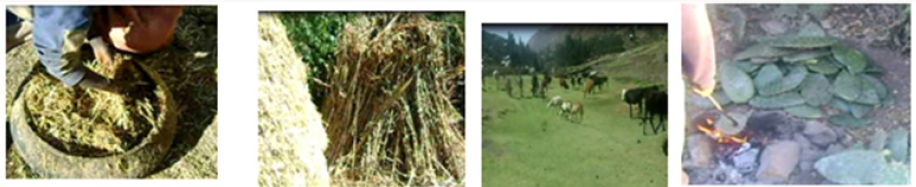
another form of concentrate feed available (Figures 1 & 2).
Figure 1: Traditional crop residue storage practices and crop livestock interaction in the highland mixed farming.
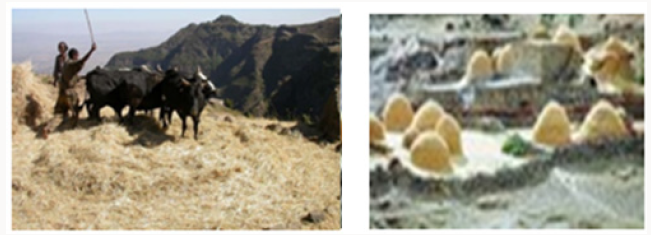
Figure 2: Feed resources of straw hatela mix, straw and stover as well as grazing natural pasture (Adishehu) & thorny cactus
treated by flame before chopping (Maichew).
Housing Systems
Housing system of the study areas were featured backyard
compound in 62.18% of the respondents, partial shelter in 17.95%
of the respondents and improved barn in 19.87% of the dairy farmer
respondents. In Urban Emba-Alaje, 76.92% of the respondents
practiced improved housing but not hygienic for they do not clean
the barn because they deemed crucial bedding to absorb heat for
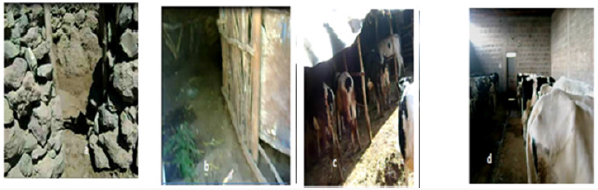
the animals (Figure 3).
Figure 3: Housing systems of the study area: a) A night enclosure in Hashenge b) A modified house with partition for calf pen
in Korem c) A modified house with plastic roof in Maichew model dairy farmer, and d) An improved barn in Maichew dairy
union
Calf Rearing
Cattle are kept in barns under normal circumstances and calves
are kept in houses until they are strong enough to bear the extreme
climatic phenomena. Young animals are managed in a traditional
way. Suckling calves are kept separate from their dams, except
when calves are used to stimulate milk letdown. Traditionally, calve
suckling practice is believed to stimulate milk letdown, prevent
teat blockage and softened the teat for ease of hand milking. If the
calf dies, the hide is stuffed with cereal straw or grass with four
legs made of sticks, rubbed by salt so that the dam would lick it
to simulate the presence of the calf and stimulate milk letdown.
Young children and females in general do mostly attend calves near
encampments. Herders are well aware of colostrum feeding for the
new born animals and understand the beneficial effect on health of
the young.
In all the rural and periurban areas calves are herded in group
by child and/or widowed of misery part of the community and
encouraged by providing milk of every Wednesday termed as
‘tseba rebue’, while urban areas do practice tethering in backyards.
Overnight, calves do spent in calf pen (urban and periurban) or in the
normal household home (rural areas) isolated from their dams
or herd. In local cows majority of the dairy farmers responded
until the cow become dry of that rejects her calf from suckling was
related with end of lactation period. But those owners of exotic
do practice 4-6 months suckling before weaning. Traditionally,
the herders use different types of weaning methods. Weaning is
performed by piercing the nose of the calf with thorns, twisting up
the nose skin of the calves to prevent suckling (as this causes pain
when the wounded nose touches the teat) and smearing of teats
with animal dung (Figures 4 & 5).
Figure 4: An enforced weaning practice, where calf’s nose
pierced with thorns and twisted up the skin to prevent
suckling.
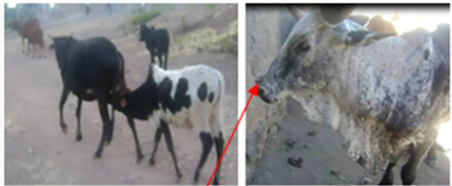
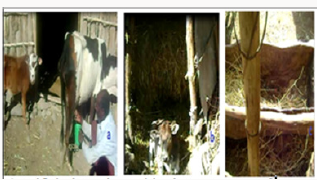
Figure 5: Calf rearing practice: a) A calf tied nearby to his
dam a means of milk let down (Maichew) b) Calf tethered
in shaded hay in Korem.
Record keeping
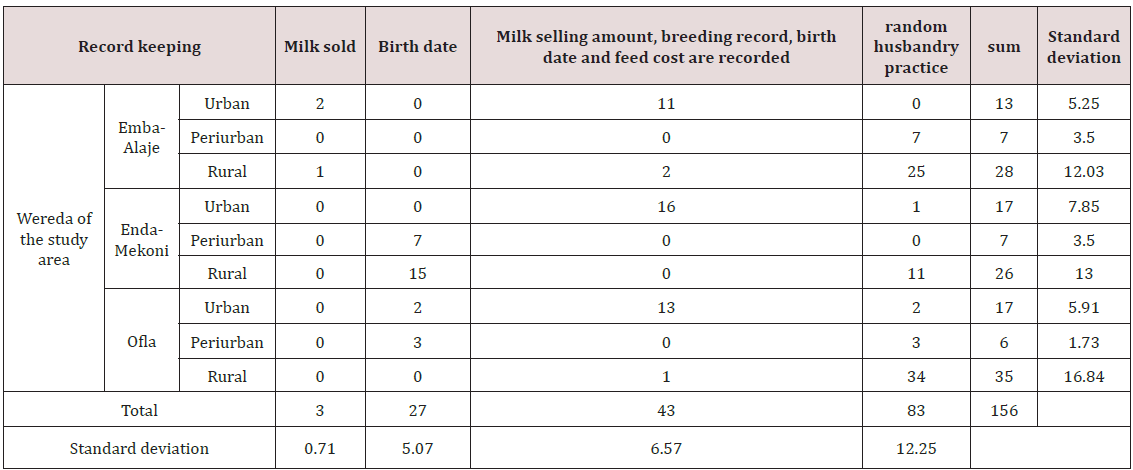
The most important record kept in the dairy farms was
birth date that was considered in 44.9% respondents followed
by 29.49% respondents to record amount of milk sold, 27.56%
respondents used breeding record and 27.56% respondents used
feed expenditure record, while 53.20% of the respondents do
follow random husbandry practice. Breeding record, birth date
and feed cost are recorded. Wereda level 72% of respondents from
Enda-Mekoni, 33.33% respondents from Emba-Alaje and 32.76%
of respondents from Ofla had record keeping trials (Table 3).
Table 3: Number of sampled respondents practiced recod keeping.
Milk Products Marketing
It was noticed that milk marketing was limited to urban and
periurban areas but not in the rural districts. The major milk
marketing challenges the respondents complained were 52.56%
claimed cultural taboos and distance from market areas while
26.92% of the respondent dairy farmers blamed the discouraging
market due to lower understanding of consumers to milk nutrition,
poor talents of entrepreneurship of milk producers, and lack of
road to transport milk from remote areas. Majority of the studied
households reported that the demand for the milk products was
high during dry season and low during wet season, besides to the
fasting periods.
Dairy Farming Function and Performance
In the study area, the smallholders rear livestock for draught
power, milk production, beef production and generate income
through live animal sale, especially as a guarantee in case of risk.
Also respondents indicated that cattle were used as manure for
fertilizing the homestead farmland and compaction of seedbeds.
Hide and skin of the animal was used either as source of cash
income or used as household furniture such as grain storage, mat
and to carry a baby on back of mothers locally termed as “delobo”
Others: include manure, dung to smear floors and walls and also for
fuel (for cooking purpose or to fire alternative thorny cactus feed).
Concerning to dung utilization, 5% of Ofla Wereda respondents do
practice biogas, while the rural Enda-Mekoni in vicinity to Ofla have
exposure and were in infant stage unlike to Emba-Alaje Wereda
where there was no dream of biogas. The interesting thing is dairy
farmers exchange dung cake for hatela concentrate feed contracts in
majority of urban dairy farms or else cover some part of household
earning by selling particularly females of the household (Figure 6).
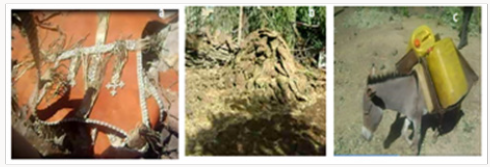
Figure 6: a) Hide locally used for mat and child bearing
‘delebo’ b) dung cake fuel a means of livestock by products
exploitation , and c) Beast of animal-dairy farmers means
of transport.
Age at first calving was 3.5 years for local while 2.5years for
exotic breeds and calving interval was similar 1.5 year. The average
milk yield was 21 litres for Arado, 51 litres for jersey and102
litres for Holstein Frisians. The average cattle herd size were 3+1
in urban, 4.67+4.93 in periurban and 3.752.12 in rural farms. The
population of Holstein Frisian decreased from urban to rural while
that of the Arado breed increased, indicating that dairy farming in
rural destined on Arado while urban destined on Holstein Frisian
breeds. Milking cows of the study areas were 23.1% out of 845
cattle owned by the respondents, which were composed of 631
local including Arado, Raya and Begait breeds and 214 crossbred
of Holstein Frisian and Jersey upgraded cattle (Figure 7) (Table 4).
Figure 7: Dairy animals of the study area (a and b cross
breed; C and d Raya or Harmo type and e and f refers to
arado type dairy cows).
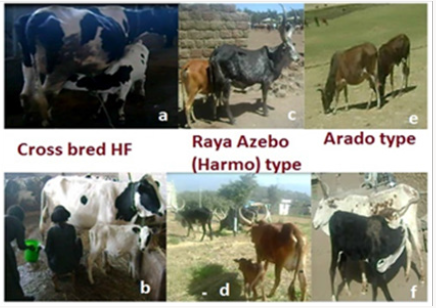
Table 4: Breed wise milking cows’ population in the study area.

Animal Health Challenges
There was outbreak of FMD regional level, in particular, Emba-
Alaje area but controlled due to regional vaccination campaign. In
steep gorges of mountain area and less infrastructure, efficiency of
the veterinary services or the veterinary personnel highly depends
on the availability of facilities such as transportation, veterinary
equipment, drugs. Besides, the farmers practice folklore medicine,
to save their animals by bleeding, branding and use of herbal
medicines. Urban dairy farmers do have better access to veterinary
service that could be affordable in comparative to their income
from milk. The steep gorges of the study area are part of animal and
human hazard losses that enforced some farmers to stick on zero
grazing. The author has also experienced to see severely broken
or death of animals through falling in the steep gorges (Figure 8)
(Table 5).
Table 5: Disease challenges and measures taken in the highlands of southern Tigray.
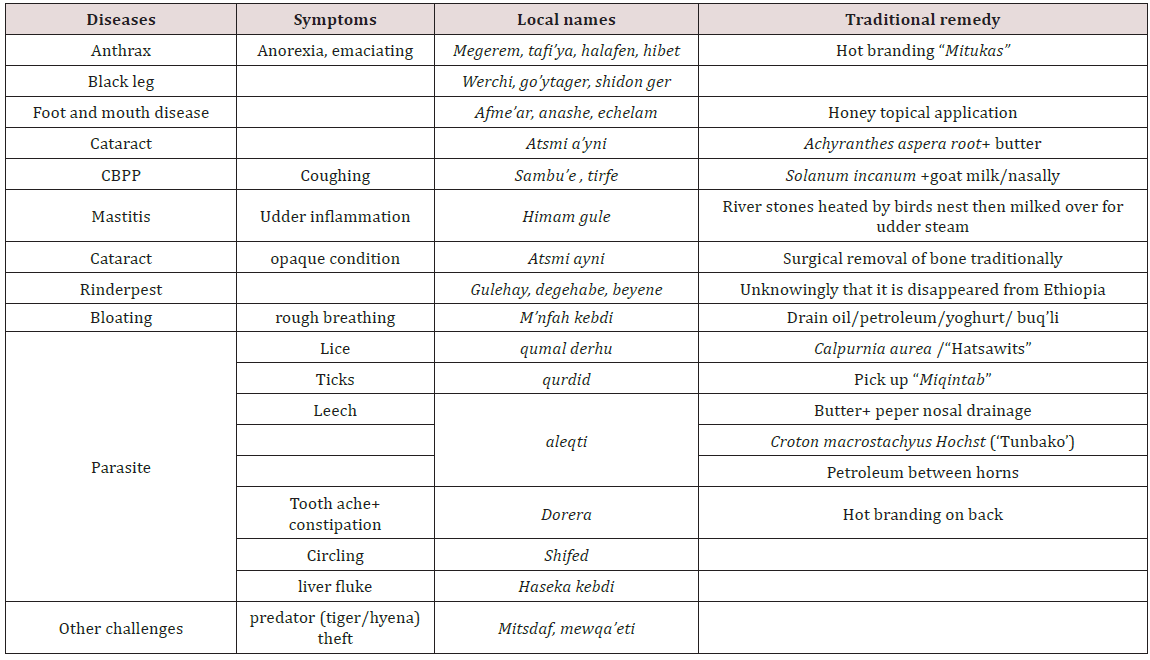
CBPP= Contagious Bovine Pleuro Pneumonia
Figure 8: Traditional Medication: a) Branding for
inflammation; b) Hot branding for broken animals; c) for
tafia (Anthrax), and d) Bleeding means of relif to extend life
or act of Jewish slaughtering.

Discussion
The mean value of family size in the study areas 4.6±1.84
persons was comparable to CSA [6] report which was 4.5 for Enda-
Mekoni, 4.29 for Ofla and 4.36 persons to a household for Emba-
Alaje. This slight difference might be the reflection of the steady
growth of the population. The proportion of the households who
participated in the dairy technology package was 28.8%. In terms of
labour use, 83.33% of the interviewed households used own family
labour, where as the other proportion of them use hired labour in
addition for dairy farming. Feeding, watering, barn cleaning, animal
keeping, regulating animal health, cow milking, churning milk, milk
selling and selling dung cake were more of performed by wife and
children, while feed purchase, buying and selling animals as well as
medication activities (bleeding and branding), were responsibility
of the husband. Sell and purchase of dairy animals belong to the
spouses more of men while women discharge feeding, milking and
dairy products processing and selling. Herding to adolescents or
hired in free grazing on communal natural pastures that constituted
almost the only feed resource for all rural dairy farmers. Similar
work by Girma, et al. [11] characterized that children are the
primary care takers of cattle at day time. Rural dairy farms are
characterized by roofless fenced enclosures to keep cattle during
night times; calves being separated from adults and housed in the
same shelter with households, however, dairy farming packaged
households do abide by zero grazing and modified shelter for the
hybrid Holstein Frisian cows.
Milking cows of the study areas were 23.1% out of 845 cattle
owned by the respondents, which were composed of 631 local
including Arado, Raya and Begait breeds and 214 crossbred of
Holstein Frisian and upgraded Jersey cattle The result is indifferent
from MoA (2004) report in Ethiopia that 11.82% of 2990 cattle
population in 1998 was milking cows. That could be due to time
difference and business mindedness of dairy farmers in urban
agriculture now than draught oxen focus by the then time. The
population of Holstein Frisian decreased from urban to rural while
that of the Arado breed increased, indicating that dairy farming in
rural destined on Arado while urban destined on Holstein Frisian
breeds. Milking twice a day is similar to the milking frequency
practiced in many parts of the country. Time of milking is normally
early morning and late evening that is consistent with Sintayehu
(2008). But time of the day particularly morning hours could vary
that milking is delayed during cool seasons.
Average age at first calving was 3.5 years for local, while 2.5
years for exotic breeds and calving interval was similar 1.5 year. The
lactation length was averaged 61 months for local cows while 81
months for exotic breeds that matched with Dawit (2009) report
in Eastern Tigray who also summarized, milk yield of local breeds
from 1.80.4 in Arado to 50.5 of Begait breeds. The average milk
yield was 21 litres for local breeds, 51.5 litres for hybrid jersey
and102 litres for hybrid Holstein Frisians. There was significant
(P< 0.05) difference for cattle breed in lactation length and milk
yield but no remarked (p>0.05) difference in Wereda level. Highest
lactation length recorded in Maichew Holstein Frisian was 2 years,
contrary to the universal record of 10 months exotic breeds, actually
the cows displayed no observed heat. The study result disagreed
with Mulugeta [12] who reported average daily milk off take from
local cows 1.09 litres and crossbred cow 5.97 litres, with overall
lactation length of both local and crossbred cows was 7.52±1.64
months as per farmer’s statements. Adebabay [13] recorded local
cow’s milk yield of 1.46kg/cow/day. Genzebu (2012) in northern Tigray
also added that Arado cows give an average milk yield of 1 - 2
liters/day for an average lactation period of 7.3 months.
In close affinity to Asfaw (2010) work in Arsi zone, generally
more number of services per conception was reported using AI as
compared to natural mating, attributed to inefficient AI services
that included poor quality semen, poor heat detection techniques
and inaccurate AI services. The same is true in feeding system that
dairy producers practiced inadequate crop residue storage that
hinders productivity of the animals. Similar to the reports of FAO,
IDF [14] and Thapa (2000) dairy production was influenced by
feed problem, poor animal health services and shortage of drugs,
dissemination of poor genetic material, poor government attention
to dairying, unreliable AI service, working land shortage to expand
and/or forage development, market problems for dairy products,
financial problem (absence of credit), waste disposal, lack of
recording system (poor information flow), lack/poor extension
service & training, lower understanding of the respondent, poor
hospitality of AI/ veterinary renders. Traditional medication
practice such as bleeding and hot branding that damage hide
economy of the nation for unreliable remedy could be minimized as
remarked PPLPI [15] by pen side diagnostics for common diseases.
Conclusion and Recommendations
Livestock production plays an important role in the socioeconomic
and cultural life of the people inhabiting in the
mountainous chains of the area. The cows fulfil an indispensable
role for the dairy farmers serving as sources drought ox, milk
food, income from sale of butter, the only determinant women hair
lotion, source of dunk cake for family fuel and served as prestige
and confidence to avert risks. The respondent remarked Wedi
Lahimika for own bull and no one could cheer you what a cow could
do indeed” to mean reliable resource and do have special dignity for
the cow [16,17].
Establishment of dairy shades in the urban areas enabled to
strengthen women economy who could not have initial capital
and land access, to create employment opportunity and access
of protein feeds to the other part of society. The marginalized
disadvantaged dairy farmers do not have exposure and access to
affordable improved technological products to handle and process
their milk products where balanced scenarios are implemented by
avoiding pasteurizing and packaging costs, raw milk markets offer
both higher prices to producers and lower prices to consumers.
Constraints of dairy farming involve higher cost of dairy cows,
disease problems, fasting leads to poor milk demand, low
productivity of the cows, technology to improve shelf life of milk
products, fear of hazards, thefts and predators, and land scarcity
particularly in the case of mountain area where fragmentation of
land is distributed ‘gebo meqolo’ for landless youths. Steep cliff
of the area has its own agro-ecological advantage, but featured by
cattle falling hazards [18-21].
The amount of milk collected for a single churn varies with
the number of milking cows and their productivity. Interventions
in input supply system, production technologies, processing, and
marketing practice including the crossbred heifer supply, AI and
bull services, vaccination, emerging infectious animal diseases
prevention and treatment, development of feed sources, access
to dairy production technologies, access to market and market
information and supportive infrastructure development, and
capacity development on skills of dairy cows management are all in
infant stage in the Wereda that demand integrated implementation.
1. To recommend possible interventions for the betterment
of existing conditions
2. Further study on nutritional composition of cactus feed
mixes.
Read More About Lupine Publishers Journal of Food and Nutrition Please Click on Below Link:
https://lupine-publishers-food-and-nutrition.blogspot.com/