Showing posts with label Computer Science peer Reviewed Journals. Show all posts

Wednesday, 15 September 2021

Lupine Publishers| Comparison between the Second Zagreb Eccentricity Index and Eccentric Connectivity Index of Graphs

 Lupine Publishers| Current Trends in Computer Sciences & Applications (CTCSA)


Abstract

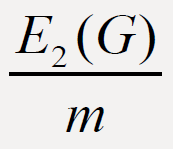
For a graph G, the second Zagreb eccentricity index E2(G) and eccentric connectivity index ∈c(G) are two eccentricity-based invariants of graph G. In this paper we prove some results on the comparison between and of connected graphs G of order n and with m edges.
The authors demonstrated how a combination of both techniques and human interventions enhances control, decision-making and data analysis systems.

Keywords: Graph; Eccentricity (of vertex); Second Zagreb eccentricity index; Eccentric connectivity index

Introduction

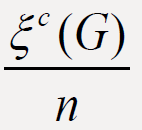
Throughout this paper we only consider the note, undirected, simple and connected graphs. The degree of v∈ V(G), denoted by degG(v), is the number of vertices in G adjacent to v. For any two vertices u; v in a graph G, the distance between them, denoted by dG(u; v), is the length of a shortest path connecting them in G. As usual, let Sn, Pn, Cn, Kn be the star graph, path graph, cycle graph and complete graph, respectively, on n vertices. Other undefined notations and terminology on the graph theory can be found in [1]. For any vertex of graph G, the eccentricity ∈G (v) (or ∈(v) for short) is the maximum distance from v to other vertices of G, i.e., ∈G (v)= maxu≠v dG(u,v). The eccentricity of a vertex is an important parameter in pure graph theory. The radius of a graph G is denoted by r(G) and defined by . Also, the diameter of G, denoted by d(G), is the maximum distance between vertices of a graph G and hence . A vertex v with ∈G(v)= r(G) is called a central vertex in G. A graph G with d(G) = r(G) is called a self-centered graph. A graph which contains only two non-central vertices is called almost self-centered graph [2] (ASC graph for short). Moreover, the eccentricity is also applied in chemical graph theory. There are several eccentricity-based topological indices, including the second Zagreb eccentricity index E2(G) [3] and eccentric connectivity index ∈c (G) [4], of graphs G where



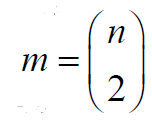
In particular, we have or any graph G. In this paper we prove some comparison results between and of connected graphs G of order n with m edges. Main results In this we prove several results on the comparison between and of graphs G. Firstly we present two useful lemmas.

Lemma 2.1: [5] Let G be a connected graph of order n with maximum degree Ξ” . If Ξ”= n −1 then E2(G) =ΞΎc(G) .Otherwise, E2(G) ≥ΞΎc(G)with equality holds if and only if G is a 2-SC graph.

Lemma 2.1: [6] If u and v are two adjacent vertices of a connected graph G, then ∈(𝒰)−∈(𝒱) |≤1.

Denote by Gn(m; d) the set of connected graphs of order n with m edges and diameter d.

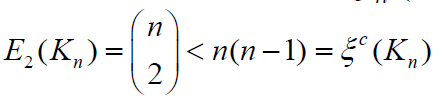
Theorem 2.3. Let G∈ΞΆ(𝓂,𝒹) with n>5 and 𝒹≤2. Then <. Proof. If d = 1, G∈ΞΆ(𝓂,𝒹) contains a single graph Kn with and . Then our result follows. Next it suffices to consider the case when d = 2. If G has maximum degree Ξ” = n −1by Lemma 2.1, we have E2(G) <ΞΎc(G) for any graph G∈ΞΆ(𝓂,𝒹) .Moreover, we have 𝓂≥𝓃−1 If 𝓂=n-1, then G≅Sn with for any n ≥ 5. Moreover,<holds clearly form ≥ n. If Ξ” ≤ n − 2 then G is a 2-SC graph. By Lemma 2.2, G is never a tree. Therefore m ≥ n with equality holding if and only if G ≅ C4 or G ≅ C5 . Consider that n > 5, m > n holds immediately. It follows that . This completes the proof of the theorem.

In the following we consider the graphs G∈ΞΆ(𝓂,𝒹) with diameter d ≥ 3.

Theorem 2.4: Let G∈ΞΆ(𝓂,𝒹). with d ≥ 3, n > 5 be a tree or a unicyclic graph. Then >Proof. If d ≥ 3, then Ξ”(G) ≤ n − 2 . From Lemma 2:1, we have E2(G) <ΞΎc(G). Note that m ≥ n for any tree or unicyclic graph G. Thus, it follows . finishing the proof of the theorem. Next we consider the case
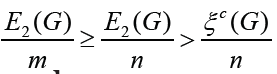
m > n. In the following theorem we give a sufficient condition for the graph G of order n with .

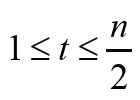
Theorem 2.5. Let G∈ΞΆ(𝓂,𝒹) with d ≥ 3, m = n + t and . If r(G) ≥ 3, then ,

Proof. Making a difference, we have

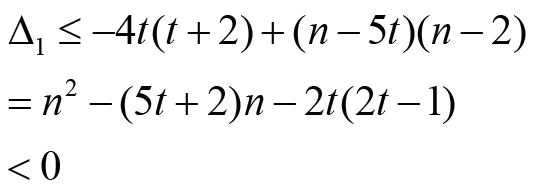
Set Ξ”1= nE2(G)−(n + t)ΞΎc(G) . From Lemma 2.2, we have

Since r(G) ≥3 and , we have

Therefore, Ξ”1 ≥ 0 with equality holding if and only if ∈(π“Š) = 3for each vertex π“Š∈V(G) that is, G is a self-centered graph with radius 3. This completes the proof of the theorem.

F or, G∈ΞΆ(𝓂,𝒹) with d ≥ 3, r = 2 and considering that r(G)≤d(G)≤2r(G) we have d(G) = 3 or d(G) = 4. In this case, the value of Ξ”1 may be negative, zero or positive. Let

Denote by mi the cardinality of i∈{1, 2,3, 4,5}. Then

In the following result we present some comparison results for ASC graphs.

Theorem 2.6: Let G∈ΞΆ(𝓂,𝒹) with d = 3, r = 2, m = n + t, t ≥ 1 where .
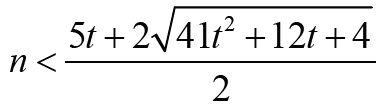
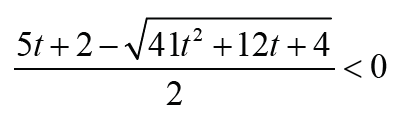
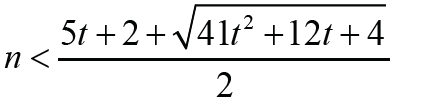
If G is an ASC graph, then < Proof. If G is an ASC graph with d = 3, r = 2, from the structure of ASC graph, we have 𝓂3≤ 𝓃 − 2,𝓂3=0, that is, 1 𝓂 ≥ t + 2 . If 𝓃 ≤ 5t, clearly, we have Ξ”1 ≤ 0 .For n >

5t, we have

holds if and only if Note thatThus Ξ”1 < 0 is equivalent that with t ≥1. Therefore the result holds immediately. It is much interesting to search more generalized graphs G with different comparison results between and which can be a topic for further research in the future. 

Read More About  Lupine Publishers Current Trends in Computer Sciences & Applications (CTCSA) Please Click on Below Link: https://computer-sciences-lupine-publishers.blogspot.com/ 

Monday, 26 July 2021

Lupine Publishers| Mini View on Current Trends in Computer Sciences & Applications

 Lupine Publishers| Current Trends in Computer Sciences & Applications (CTCSA)


Abstract

Computer science has contributed a lot for making the life of human being smooth. The recent developments in the field of computer science are proven to be more smarter and more applicable structures result from marrying the learning capability of the applications with the transparency and accuracy. Foundations of computer science applications highlights the advantages of integration making it a valuable resource for the students and researchers in engineering, computer science and applied mathematics. The authors’ tried to lime light various applications that are an asset to industrial practitioners, corporates, academicians and professionals for control systems, data analysis and optimization tasks. With the continuous improvisation in the computer science applications the need of the young generation is fulfilled, and they can achieve their targets with the help of updated and enhanced support system. Authors are highlighting on current trends in computer sciences & applications and further illustrate how these various technologies integrate with social and economic factors to provide a thorough solution to the real-world problems of the human being in every domain of life.

The authors demonstrated how a combination of both techniques and human interventions enhances control, decision-making and data analysis systems.

Keywords: Computer; Trends; VLSI Technology; Multiprocessor; Parallelism; Configurable Computing; DSP; Internet

Introduction

Although the very state forward answer for the latest trends in Computer science could be Machine learning, cloud computing and Artificial Intelligence. But basically, Industry build the software not only with what is new but by what customer problem can be solve easily and with good future scope and current market trends which covers customer requirements, this force towards innovation and create next generation products that can be quickly adopted for solving new use cases by Connecting to new data sources easily.

Top technologies which are in current trends in computer science & Application are as below:

A. Deep learning or Machine learning (ML).

B. Digital currencies: Example Bitcoin

C. Blockchain.

D. IoT

E. Robotics

F. Big Data Analytics.

G. Cloud Computing

H. Cyber Security

I. Virtual Reality

J. Predictive Analytics

The emerging areas that are seeking attention of many researchers in the field of computer science are designed and developed according to the latest market trends. Now a day trends in information technologies are directly or indirectly associated with the customer centric approach. One of the latest technology like computational biology where in the gathering and processing of biological data with the use of computer programs. This technology covers under Bio Informatics, which works with the combination of computers and living beings. It converts the biological data into readable format. This is helping the medical science a lot. Another most promising technology of today is Data Science or Big Data. This field has a very large and promising scope of research and development considering the huge volume of data being produced by organizations and individually in different sectors worldwide. It deals with the storage processing and analysing the massive data stored across the world in various organization and data centres.

The existence of newest trend of Virtual Reality cannot be ignored. The biggest stakeholders of VR applications are medical science, physical sciences, environment, businesses, space industry and entertainment industry. VR produces the set of the data which is used to develop new models training methods, communications and interaction. The major disadvantages in the use of VR application are time, cost and technological limitations. But because of its support system it is expected to become more affordable in future, today’s generation is grown up having technology at their disposal. They are familiar with smart phones, tablets therefore VR Developments will also increase in number of professionals more acquainted with the technology. Cloud Computing has already become the area of attention by most of the researcher and scientists. Cloud provider is basically data or internet provider. This plays an important role in various fields of business, computing security etc. This application works on the shared pools of configurable computer system recourses and higher-level services that ease the managerial effort with leads to economics of scale and development. It helps in running business more efficiently.

Cloud computing eliminates the capital expenses of buying hardware and software along with other related expenses. Business has become very flexible as cloud computing services are available on demand that leads to delivering right amount of IT resources resulting in scale elasticity. Lots of ‘Racking and Stacking’ task is being eliminated as cloud computing removes the needs for many of these tasks resulting in more time devotion towards more important business goals. Cloud computing services run on a worldwide network regularly upgraded data centres. This reduces network latency for application and improvises efficient computing hardware. It also helps in providing security to the data, apps from potential threats. However, several types of cloud computing is operational to help offer right solution for your needs like public, private and hybrid.

Deep Learning or Machine Learning is sub set of artificial intelligence and in today’s trends it’s one of most widely used computer science application, the ability of ML is to self-trend from data or able to learn from its own experiences, which can improve from application behaviour or experience without being explicitly programmed. Machine learning focuses on the development of computer programs that can access data and use it learn for themselves.

I. Example:

A good example can be a Navigation system or MAP application which initially developed with limited data but later on when this application gets used its design in a way so it trained itself to predict the best possible path.

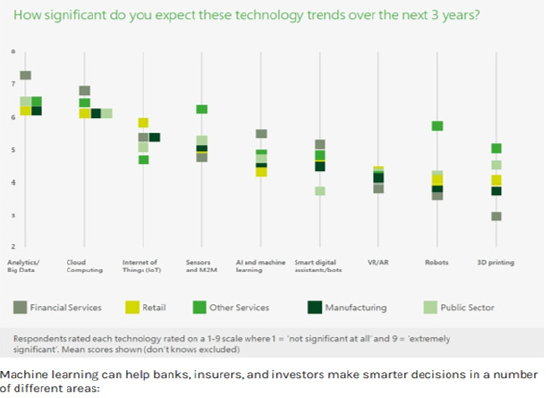
Google search, uber, Pay Pal, Facebook are the good example of ML and these actually improving the usability of their services by applying deep learning algorithms. Below is the comparative example where one sector is using Machin learning and takin its benefits and other one is moving very slowly in digital and it’s far behind (Figure 1). Machine learning can help banks, insurers, and investors make smarter decisions in a number of different areas:

Figure 1:

Lupinepublishers-openaccess-computer-sciences-journal

a) Customer and Client Satisfaction: Machine learning helps financial services on below key points.

i. By analysing user activity.

ii. Smart machines can spot a potential account closure before it occurs.

b) Reacting to Market Trends: Another aspect can be cover by using a good ML algorithm which is generating the alerts or by preserving the trained to track trading volatility or manage wealth and assets on behalf of an investor.

c) Calculating Risk: Good ML algorithms can analyse datasets and based on the dataset (credit scores, spending patterns, financial data etc.) to accurately assess risk in both insurance underwriting and loan assessments, tailoring them to a specific customer profile.

Conclusion

Trends in Computer Sciences & Applications changed drastically the life of one and all. Be it a student learning or business corporate or any other professional, computer science and its applications are extending their updated support system to give more effective performance infrastructure in every sphere. Recent developments gives acceleration to the development of a Digital currency or digital money introduction in the form of digital, Blockchain a digital ledger in which transactions made in cryptocurrency. The contribution is endless and so the developments in this field are boundless.

Read More About Lupine Publishers Current Trends in Computer Sciences & Applications (CTCSA)  Please Click on Below Link:  https://computer-sciences-lupine-publishers.blogspot.com/


Tuesday, 15 June 2021

Lupine Publishers| In Pursuit of Privacy: An Introduction to Anonymization Technologies

 Lupine Publishers| Current Trends in Computer Sciences & Applications (CTCSA)


Short Communication

Privacy in the age of pervasive computing and networking is a very hard topic to fully grasp. Any serious attempt at discussing it must take many different angles into account. User interactions grow richer month after month, and due to Big Data techniques, more information about each individual is known to third parties than to the person in question themselves; this is illustrated in the concept of inverse privacy [4]. What is a user to do to keep at least a basic expectation of privacy? Due to the pervasive analysis, a user can only expect their actions to remain private by becoming anonymous-By incorporating into their everyday activities Privacy Enhancement Technologies (PETs) that avoid each of their actions to be linked into a wide-encompassing profile. Anonymity is often achieved via confusion and blending in the crowd: If a person wants their messages to be concealed, they usually first need to identify and use an active network carrying traffic in which to hide; implementations starting with Chaum’s mix networks [2] expressly assume an existing level of traffic needed for anonymous messages to be hidden. Mix networks are based on public key cryptography, first delineated in 1976 [3]. In a nutshell, each message is encrypted with the public key of several intermediaries, forming a route that must be followed in order to reach its destination. That is, having users A, B, C, D and E, each of whom has an asymmetric key pair {KA, K-1A}, {KB, K-1B} etc. and denoting encryption and decryption of a clear-text message M to a secret-containing cyphertext S respectively as S=Enc(M; KA) (which anybody can do, as the public key KA is known by every actor) and M=Dec(S; K-1A) (which only A can perform, as only this actor has knowledge of K-1A).

Messages are usually split in several packets, and encrypted to follow a route-A wishes to covertly send B a message M, so they send SD to D:

SD = Enc(Enc(Enc(M;KB);KE);KD)

Once D receives and decrypts this message, the contents are just an undecipherable SE. The message is relayed, and E performs the same operation, yielding SB. B relays the message is then sent to B, but the decryption finally yields a cleartext M. Space for this article is quite limited, so it cannot dig in the wealth of existing PETs; suffice it to state that each media will have different needs, reality, and 1 thus the answers will necessarily be quite different. Even ignoring the actual data of which the communication actually consists, a simple comparison between the metadata derived from different media yields very different results. The user requirements for the PET in question is correspondingly different as well. As an example, if a user produces a certain pattern of network activity expressed in the amount and size of packets sent (even if their contents are unintelligible to an observer) and this same pattern can be seen at the destination endpoint, strong correlation can be made; mix networks delineated by Chaum can counteract surveillance by adding random delays and spurious dummy messages to message propagation (so that an external observer cannot easily correlate packets); in the case of e-mail, slowness is a feature-This means, given e-mail is not an interactive media, inducing delays up to several minutes in mail delivery does not harm its usual interaction mode. However, for interactive use (video or audio stream watching, Web browsing, or even instant messaging), delays are definitively not acceptable. Onion routing [5] adds to mix networks the concept of building persistent circuits, each of which operates in a fashion similar to mix networks, but adding the creation of circuits. There are two main reasons for setting up circuits [6].

Latency

Setting up a channel spanning several nodes, each of them encrypted using asymmetric cryptography is computationally very expensive-It both adds latency and hefty processing requirements. Symmetric cryptography is much faster but requires the knowledge of a shared key. So, the circuit set up phase involves the agreement on a randomized session key [1].

Jitter

Each route set up takes a different time to be traversed. Even intuitively, if a connection between two hosts must cross nodes in different countries for each sent packet, the jitter (time deviation from the average) will have huge variation. While email does not, as we said, lead to a lower perception of quality, interactive uses will surely suffer from it. Networks based on onion routing allow for a much more transparent use, sometimes even with nearly imperceptible delay. It does offer, though, far less protection against correlation attacks-A state-level adversary might be able to control enough monitoring points of a network to correlate starting and ending points.

In the current day Internet, the best-known anonymity technology is Tor (https://torproject.org/),a onion routingbased, low latency network which is built over slightly over 6000 volunteer-provided relay servers (https://metrics.torproject.org/ networksize.html), which jointly routes close to 130Gbps. Largescale surveillance is a threat to individuals’ privacy, and anonymity technologies (or, more generally speaking, privacy enhancement technologies) are every day more a need. Be it for the posterchildren of privacy, such as reporters sending to a secure location their ongoing work or whistleblowers exfiltrating documents proving certain misdeeds, to individuals just wanting given 2 searches not to influence the set of ads presented to them in the browser, these technologies are finally entering the mainstream conscience. The author wishes to thank the support granted by the UNAM/DGAPA/ PAPIME PE102718 project.

Read More About Lupine Publishers Current Trends in Computer Sciences & Applications (CTCSA) Please Click on Below Link: https://computer-sciences-lupine-publishers.blogspot.com/