Lupine Publishers| Computer Sciences & Applications
Abstract
Open Shortest Path First (OSPF) is a well known and prominent
Internet Protocol (IP) for network routing. By deploying a
link state routing (LSR) algorithm OSPF comes under the category of
interior gateway routing protocols. In today’s wireless ad
hoc Internet, the current routing domain needs to maintain a peak level
of service accessibility and availability, thus OSPF must be
extended to the wireless ad hoc network for maximizing routing
performance in the network by taking into account key routing
issues, i.e., optimal Hello Interval, efficient flooding schemes,
optimizing the traffic engineering related issues, optimum adjacency
creations, connectivity factors, reducing control overhead, and QoS and
security challenges. In addition, OSPF is very effective
in its adoption of handling the network bandwidth utilization,
therefore, wireless capacity planning is of utmost importance for
today’s Internet with the possible presence of wireless infrastructure.
Improving routing stability in OSPF MANET under topology
change(s) due to variation in link connectivity becomes a very demanding
challenge for the research community. Given a fascinating
volume of review for literature and unavoidable importance relating to
OSPF extension to MANETs, there has still persist a need to
highlight key issues related with routing in OSPF MANET.
Keywords: MANETs; Routing; OSPF; Traffic Engineering; Connectivity Factors; Capacity Planning; Flooding Schemes
Introduction
Open Shortest Path First (OSPF) is a very well-known and
prominent interior gateway protocol (responsible for routing) in
the today’s Internet [1]. The routing functionality of such protocols
can be seen within the domain, which can be, but not necessarily,
is part of or contained within an autonomous system (AS). OSPF
as part of the routing protocol comes under the group of link state
routing protocol, which generally allows every router present in
the network to learn about the complete network topology [2].
However, in order to achieve maximum routing performance, it is
now for almost more than 3 decades that the Internet protocols for
link state routing has been deployed in the Internet on the regular
basis. When we go back in history, the first major and functional
link state routing protocol was deployed in the year 1978, called the
Shortest Path First (SPF) by replacing the popular distance vector
approach in ARPANET at that time.
The OSPF Protocol is now being used by the Internet Service
Providers (ISPs) for almost more than 25 years as a link state
routing functionality in providing the Internet infrastructure. The
maximum years of experience running with the OSPF Protocol and
its wide spread deployment has put a lot of confidence in using it
as a reliable and stable link state routing and has demanded and
motivated the researchers from all over the world to put in the
efforts to create room for further improvements and enhancements
in its application for extending its operation to wireless ad hoc
media in MANETs. As a matter of fact, the quality of service (QoS)
requirements and the attributes of the routing infrastructures
in MANETs is a demanding challenge as the network topology is
frequently changing due to mobility [3,4].
The objective function of the OSPF-MANET Protocol is to
provide highly scalable routing functionality and more flexible
and robust operation on complex and highly dense networks. The
prime concern in today 0 s wireless media is to somehow keep in
limit the bandwidth processing requirements of the protocol while
recovering from the network failure (Speed of Convergence) in
the network topology is the prime concern [3,5]. Whenever there
is a triggered event in the OSPF-MANET domain, in such case the
protocol may typically required a few tens of seconds for recovering
from any sort of router/link failure (network failure). During this
ephemeral state, the network quality of service availability would
go through a serious degradation or deterioration or in other cases
there may be a complete breakdown of the network.
With the establishment of real time operations for certain
applications over the Internet, (e.g. online video con-ferencing) or
networked voice over IP from almost a previous decade, network
service deterioration/ disruption for applications with quick
response time, a few tens of seconds (network recovery time) can
no more be permitted or accepted. The need to quickly recover
from the failure has motivated the research community to present
the possible scenarios to improve the OSPF Speed of Convergence
and also to provide other proactive approaches and strategies for
protecting the network traffic in the interim process [6]. One of
the critical and important requirements for the today0 s routing
infrastructure has highlighted the need of maximizing routing
performance in response to the topology change.
Significantly, reducing the bandwidth/processing requirement
of the Internet routing protocol persuades to be the crucial
framework as before. As the OSPF protocol being distributed in
nature, it incorporates the within limit execution of the certain
operations like processing and generation of the Hello packets by
the active routers taking part in it [7]. It is important to mention
here that the routers may not be highly overloaded, so that it
may continuously decline to do/perform these critical network
resource management operations. Such failures may contribute to
the network failure and eventually result in the complete shutdown
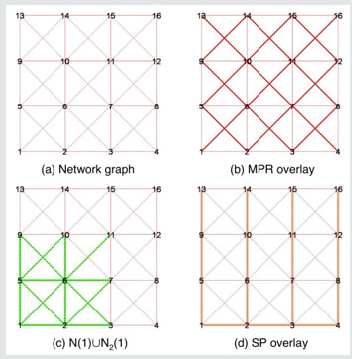
of the entire network. Hence, a novel scheme, refereed to as multi
point relay (MPR) based MANET is introduced to tackle this issue,
as presented in (Figure 1).
Figure 1: MPR based MANET extension. .
Conventionally, OSPF routing protocol has been employed as the
network framework including a wired connectivity by exhibiting
the largely static regional network topology. However, in the recent
times routing infrastructure incor-porates the wireless components
of the network too. These chunk subsist of either mobile or static
network devices, possibly going out or coming in of each other’s
mobile wireless range, or a hodgepodge of both. An illustration/
case of such kind of network can be classified as wireless, mobile
ad hoc networks (MANETs) of objects where some objects exhibits
mobile wireless connections with one or more conventional
wired network(s) running under OSPF routing protocol. In a
pragmatic scenario, lots of routing protocols have been devised to
operate for the MANET, by using the selected routing protocol for
MANET environment; the complex exchange process is required
in such case while going through a transition step for the routing
information of OSPF between this protocol and the other protocol
that is targeted. In such situation, the exchange process might not
evade/shun path for sub optimality. In such compelling situations,
there is a high demand to enhance routing protocol in MANETs for
OSPF domain by providing routing functionality and to intelligently
assimilate the wireless and the wired peripherals of a network in
the routing world.
This argument presented above incorporates a view of
multiple proposals to enhance OSPF for its operation on MANETs.
Researches for the last 2 decades have proposed multiple optimized
OSPF routing protocols for MANET by suggesting the reduced
number of re-transmissions, which are redundant in nature while
disseminating a broadcast message throughout the entire network
and, thus efficiently reducing the computational overhead of the
active control traffic. This proposal eventually enhance the main
characteristics of maximizing routing performance by highlighting
the precise demands of the MANET networking. A few of those
techniques out of the mentioned proposal present in the paper
may be applied to the wireless network and has the capability
to significantly improving both the Convergence speed and the
Scalability factor of the OSPF networks having wireless connectivity.
Introduction to Routing in MANETs
Mobile ad hoc Networks (MANETs), which are also called Mesh
Networks, are characterized by the way in which nodes are placed in
such a manner that give pathways to data to be routed from the user
to the desired destination. In the event that one of the intermediate
node were to come up short (e.g. that user leaves the range), the
system will naturally reconfigure itself, locating a substitute way
from the user to the router [3,6]. Normally, all accessible nodes
additionally arrange users, each sharing the aggregate data
exchange limit (total capacity) of the operational hardware and
operating protocol being incorporated. The network could likewise
associate users to different routers straightforwardly, as would be
done in a modern control and monitoring network. Since there is
no requirement for central organization of the network setup, it is
most proficient to outline the framework for independent operation
of each node. In a modern domain, a circumstance, for example,
an alert would be engendered through the network and reached
directly by each node. Each node would be customized to react as
per its specific requirement machine control, handle observing,
supervisory work force or central office.
MANETs decide their arrangement periodically under topology
change in the network. Every node identify the nodes that are
accessible for communications, on the basis of signal strength,
which is essentially identified with separation between nodes, but
on the other hand is influenced by interference or obstructions
[8]. A nodes may be remote, others might be perceptible yet
have insufficient signal strength for reliable communications.
Once the accessible nodes are distinguished, this information is
communicated to different nodes, along network topology regarding
the desired destination. Incorporating the network configuration
algorithms, the system setup calculations to choose a specific route
for every user to its destination. This procedure requires system
operating software to have better decision making algorithms in
light of pragmatic criteria for signal strength, reliability of path over
time, and configuration parameters for network [9]. After some
time, or even close persistently, the network will change. Users
may go back and forth, nodes might be in motion, or changes in
the electromagnetic environment may modify the spread between
nodes. As these progressions occur, the network will overhaul its
design and distinguish new paths from users to destinations [3,8].
This kind of reconfiguration will be rehashed again and again as
the network changes. It is important to mention here that this is a
similar procedure being incorporated on part of the Internet, where
system loading and other hardware issues require redirection of
user’s information through different routers [2].
The key advantages of ad hoc network includes autonomy from
central administration of network, self-arranging, nodes behave as
routers, self-healing through nonstop re-arrangement, scalabilitymake
room for the expansion of more nodes and flexibility-like
having the capability to get to the Internet from various different
areas. While MANETs are normally utilized where they have the
best accentuation on its advantages, there are a few confinements:
Every node must have full execution, throughput is influenced
by system loading, reliability requires an adequate number of
accessible nodes. Finally, sparse networks can have routing issues
[10].
Large networks can have inordinate latency (time delay),
which influences a few applications. Some of these restric-tions
additionally apply to traditional hub-and-spoke based networks
(like OSPF) or can’t be tended to/by interchange setups. For
instance, all networks are influenced by system loading, and
networks with couple of nodes are hard to legitimize in hard-wired
arrangements [5]. Wireless local area network (W-LAN) is the
underlying application that got a deliberate advancement exertion.
Shared networks of PC/PDA users have become familiar in this
regard. Commercial wireless Internet service providers (WISP)
incorporate repeater nodes to extend to large coverage area, while
user nodes can extend service in their local area. Control systems
(e.g. natural controls) and industrial monitoring of different
processes and control are getting to be significant applications for
mesh networking. These environments are hard to present with
devoted wiring, being spread over a vast area, frequently with
troublesome access.
Key Issues with OSPF MANETs
Some of the important issues regarding MANETs are
security, routing, hidden terminal problem, bandwidth, power
limitation and corroboration of mobile devices. Safeguarding the
data communication in MANETs is one of the key aspect to be
addressed. It is important to mention here that MANETs are highly
dynamic in nature where topology changes, for instance the link
breakage happens quite frequently [5,9]. Thus, we need a security
mechanism which is dynamic in nature too. Some of the important
security requirements of MANETs are certain discovery, isolation
of the in-appropriate nodes and some location policy regarding
node location and network structure. From security aspect of
MANETs, there are basically two types of attacks on the network,
i.e., active attack which inserts arbitrary packets and attempts to
disrupt the network operation and passive attack which do not
disrupt the network operation [7,11]. Another important aspect
regarding security in MANETs is that each node in the network
relies upon the other nodes to forward the data packets while
during communication. Hence, before communication in MANETs
one must tackle efficiently with the presented issues.
Routing in Wireless Adhoc Networking
The no presence of fixed infrastructure in MANETs creates
certain demanding challenges and difficulties. The biggest challenge
among them is routing. Routing is the method of selecting paths in a
network along which data need to be communicated to the desired
destination through nodes [1,9]. An ad hoc network is a tradition, or
standard, routing protocol that controls how routers choose which
way to route the data packets between source(s) and destination(s)
in MANETs. In MANETs, nodes don’t begin acquainted with the
topology of their networks; rather, they need to find it [6,7]. The
fundamental thought is that a new node may declare its presence
and ought to listen for various announcements broad-casted by its
neighbors. In the process each nodes learns about near-by nodes
and how to reach them and may announce that it can get to that
node as well. The routing procedure normally follows forwarding
on the basis of routing tables which keep up a record of route(s) to
different network destinations [2,5]. In this way, building routing
tables, which are held in the memory of router, is critical for
effective routing.
The development of laptops and 802.11/Wi-Fi wireless
networking administration has made MANETs a famous look into
point since the 1990s. Numerous academic papers assess protocols
and capabilities expecting fluctuating degrees of mobility inside a
bounded space, more often than not with all nodes inside a couple of
hops from each other and typically with nodes sending information
at a constant rate. Multiple protocols are then evaluated in view
of the packet drop rate, expected routing load, expected end-toend-
delay, and other different measures [3,11]. The proposed
techniques for routing protocols could be gathered in to three
classes: proactive (or table-driven), reactive (or on-request) and
hybrid protocols. Indeed, even the reactive protocols have turned
into the standard for MANET routing.
MANETs are suited for use in circumstances where network
infrastructure is either not accessible on the other hand not trusted.
For example, a communication network for military officers in a
field, a mobile network of smart phones in a meeting or campus
setting, temporary workplaces in a crusade home office, biological
research in wireless sensor networks, mobile social networks like
Facebook, My-Space and Twitter, and mobile mesh networks for
Wi-Fi devices [8,10]. The main challenges in MANETs are taking
advantage of wireless mesh nodes to build a robust backbone
network for interconnecting all mesh nodes, and probably some
external gateways to/from the Internet. Describing a class of MANET
routing protocols that, by taking advantage of network backbone
can sort out the best path(s) for traffic engineering by solving the
Multi Commodity Flow (MCF) problem inside the network to/from
the Internet and supporting dynamic user topology and mobility
among wireless mesh networks [11]. These challenges are mainly
centered on the major areas like, MANETs application scenarios,
communication protocols, hardware and software requirements
and QoS based optimization techniques.
Read More About Lupine Publishers Journal of Computer Sciences and Applications Please Click on Below Link: https://computer-sciences-lupine-publishers.blogspot.com/



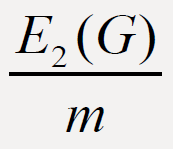 and
and 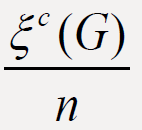 of connected graphs G of order
n and with m edges.
of connected graphs G of order
n and with m edges. . Also, the diameter
of G, denoted by d(G), is the maximum distance between vertices
of a graph G and hence
. Also, the diameter
of G, denoted by d(G), is the maximum distance between vertices
of a graph G and hence  . A vertex
v with ∈G(v)= r(G) is called a central vertex in G. A graph G with
d(G) = r(G) is called a self-centered graph. A graph which contains
only two non-central vertices is called almost self-centered graph
[2] (ASC graph for short). Moreover, the eccentricity is also applied
in chemical graph theory. There are several eccentricity-based
topological indices, including the second Zagreb eccentricity index
E2(G) [3] and eccentric connectivity index ∈c (G) [4], of graphs G
where
. A vertex
v with ∈G(v)= r(G) is called a central vertex in G. A graph G with
d(G) = r(G) is called a self-centered graph. A graph which contains
only two non-central vertices is called almost self-centered graph
[2] (ASC graph for short). Moreover, the eccentricity is also applied
in chemical graph theory. There are several eccentricity-based
topological indices, including the second Zagreb eccentricity index
E2(G) [3] and eccentric connectivity index ∈c (G) [4], of graphs G
where 
 or any graph G.
In this paper we prove some comparison results between
or any graph G.
In this paper we prove some comparison results between 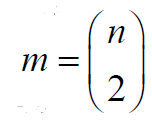 and
and 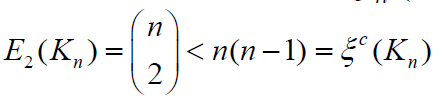 . Then our result follows. Next
it suffices to consider the case when d = 2. If G has maximum
degree Δ = n −1by Lemma 2.1, we have E2(G) <ξc(G) for any graph
G∈ζ(𝓂,𝒹) .Moreover, we have 𝓂≥𝓃−1 If 𝓂=n-1, then G≅Sn with
. Then our result follows. Next
it suffices to consider the case when d = 2. If G has maximum
degree Δ = n −1by Lemma 2.1, we have E2(G) <ξc(G) for any graph
G∈ζ(𝓂,𝒹) .Moreover, we have 𝓂≥𝓃−1 If 𝓂=n-1, then G≅Sn with for any n ≥ 5. Moreover,
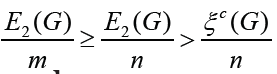 . finishing the
proof of the theorem. Next we consider the case
. finishing the
proof of the theorem. Next we consider the case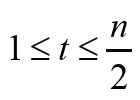 . If
r(G) ≥ 3, then
. If
r(G) ≥ 3, then 




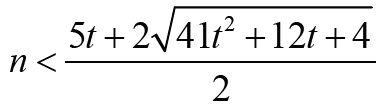 .
.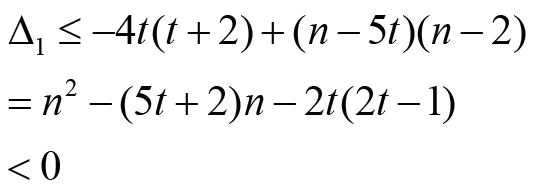
 Note that
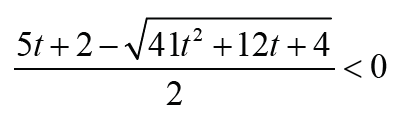 Thus Δ1 < 0 is equivalent that
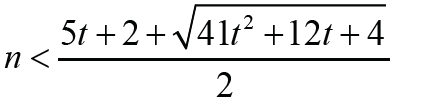 with t ≥1. Therefore the result holds immediately. It is much
interesting to search more generalized graphs G with different
comparison results between
with t ≥1. Therefore the result holds immediately. It is much
interesting to search more generalized graphs G with different
comparison results between