Showing posts with label Drug designing open access journal. Show all posts

Wednesday, 19 October 2022

Lupine Publishers| An in vivo study for the effect of Citrus reticulata (Rutaceae) fruit peels extracts on the onset of toxicity of Cerastes cerastes venom in Albino mice

 Lupine Publishers| Journal of Drug Designing & Intellectual Properties


Abstract

Venom of Cerastes cerastes has been extracted and its toxicity was investigated in the presence of aqueous and methanolic extracts of Citrus reticulata (Rutaceae) fruit peels. The decline in the mean survival time of the male albino swiss mice were used to deduce the venom property in the presence and absence of aqueous and methanolic extracts of Citrus reticulata (Rutaceae) fruit peels. The aqueous and methanolic extracts of Citrus reticulata (Rutaceae) fruit Peels significantly decrease the mean survival time compared to the venom alone. From these results it was evident that the toxicity of Cerastes cerastes venomis increased significantly in the presence of Citrus reticulata in a dose dependent manner

Keywords: Citrus reticulata; Cerastes cerastes; Venom; Toxicity

Introduction

Snakebites are severe socio-medical difficulty that lead to morbid and fatal affect on victims in Libya and other North African countries [1,2]. Immediate antivenom treatment is crucial and vital to avoid morbidity and mortality [3]. The oxidative trauma condition, which result from snake bite envenomation is another measurement of kidney destruction and severe renal failure [4], connected with the antioxidant defense system, that might be subject for treatment by antioxidant therapy [5]. ROS (Reactive oxygen species) are engaged in many inflammatory reactions, thus influencing the physiology of the cells and participate a significant function in the pathological conditions [6]. As have been free radical, ROS are involved in harming cellular components, and they play an important function in venom induced toxicity, as reported among envenomed mice [7]. Ascorbic acid is an antioxidant that has been reported to have useful effects on a number of cancer types [8,9] and could be concerned in alleviation of Reactive oxygen species cellular damage, produced during exposure to toxins, metabolism and carcinogens [10]. In addition to augmentation of protease inhibitor effects concerned in preventing organ efficient injure [11,12]. Citrus reticulata (Rutaceae) is commonly known as narangi or santra (orange). It is a small spiny tree with thick top of slim branches, extensively grown in Egypt, Tunisia and Libya [13]. Mandarin is a collection name for this class of orange with thin, loose peel. The name ‘tangerine might be applied as an interchange name to the entire group, but in trade, it is usually limited to the types with red-orange skin. The fruit has aphrodisiac, laxative, tonic and astringent properties [14,15]. It is also used to alleviate vomiting [16,17]. The fruit peel controls the skin moisture, rough and softens hard skin and possess a cleaning effect on oily skin [18]. Chemical composition of the volatile oil of the fruit peels of this species has been reported [19-23]. The effects of the volatile oil of C. reticulata has been studied against Saccharomyces cerevisiae [24], pathogenic fungi, Paenibacillus larvae, Schistosoma mansoni, Aspergillus flavus , and other microorganisms [25-30]. Very recently, the volatile oil of C. reticulata also demonstrates anticancer activity [31-33]. The main aim of the current study is to investigate the effects of Citrus reticulata (Rutaceae) fruit peels extracts on the toxicity of Cerastes cerastes venom in albino mice.

Materials and Methods

Collection of plant material and preparation of aqueous extract

The oranges were bought from a shop in Tripoli (February 2019), and the Citrus reticulata was identified and authenticated by a botanist. Orange rinds were peeled off carefully with the help of a sharp razor blade, and each rind sample was cut into smaller pieces and 30g mass of the sample was taken. The sample was initially rinsed with distilled water, and the fresh peels (30g) were added to 30ml hot distilled water. In addition, another 30g of the fresh peels were macerated in cold 99% methanol for three hours at room temperature (28-30 °C), the mixture was then filtered under vacuum and the filtrate was stored at 4 °C and used when appropriate [34].

Experimental models

Albino mice (Swiss type) of either sex weighing approximately 18–28g (2 to 2.6 month old) were utilized for investigational purpose. They were kept in cages made from polypropylene in airconditioned room with the temperature retained at 25±2 °C, and twelve hours sporadicing dark and light cycles. The mice were supplied with drinking water ad libitum and an adequate diet during the study. The authorization for the experimental procedures was obtained from the Animal Ethics Committee.

Venoms

Cerastes cerastes venom was extracted by means of physical stimulation and was gained in liquid forms, from the Faculty of Science, Zoology Department, University of Tripoli (Libya) and kept at –20 °C until utilize. A 7.5μl aliquot from the venoms was added to eight hundreds microliter of normal saline. A dosage of hundred microliter (100 nanogram) was administered to the male Swiss Albino mice.

Acute toxicity study

Acute toxicity was commonly performed to determine the LD50 value in experimental animals. The intend of doing acute toxicity study is to establish the therapeutic index of a methanolic and aqueous extracts of Citrus reticulate and to guarantee the in-vivo safety. The acute toxicity experiment was done in mice, in which all animals were overnight fasted prior to treatment and given food one hour after aqueous and methanolic extracts administration, with the period observation of common behavior at 0.5, 1, 8, 12 and 24 hours. The number of animals that died after taken the extracts was monitored daily for 7 days [35,36].

Intoxication of venom by Citrus reticulata extracts The animals (albino mice) used in this study were divided to ten groups, each of them is of six mice (male or female). Five groups were used to investigate the aqueous extracts, while the other were used for methanolic extract. The first group received only hundred microliter (hundred microgram of total protein) of the Cerastes cerastes venom (LD99 5μg/kg). Groups 2 to 4 were used as treatment groups and given an equivalent amount of the Cerastes cerastes venom with 50μl, 100μl and 200μl of aqueous Citrus reticulate extracts intraperitoneally (30g/30ml), respectively. Group 5 was given 100μl of the Cerastes cerastes venom and polyvalent anti-snake venom (ASV) was bought from India from Haffkine Bio-Pharmaceuticals Company. The number of death was recorded within twenty-four hours. Similar experiments were repeated in the same manner with the methanolic extract using groups 6 to 10.

Statistical analysis

The difference among various control group and treated groups were analyzed using ANOVA method of one-way. The obtained results were dealt with using unpaired Student’s test. All results were articulates as the mean±SEM of the number of experiments performed, with P value less than 0.05 showing significant difference among groups.

Results and discussion

Acute toxicity study

With the growing amount of research about naringin as a component of the orange and its potential utilize within the pharmacological and food industries, illuminating its toxicological outline becomes increasingly significant. In the present study, the Citrus reticulata extracts were found to be safe up to 200mg/kg orally. This present study is compared with other previous studies in which an oral single dose of 16g/kg of naringin did not produce acute oral toxicity in rats [37].

Acute toxicity of Cerastes cerastes venom and its reaction with aqueous and methanolic Citrus reticulata extracts and antivenom The Cerastes cerastes venom at the dose five micrograms per kilogram (LD99) produces 100% mortality in mice. The aqueous and methanolic Citrus reticulata extracts significantly decrease the mean survival times by 3, 5 and 6 times for 50, 100 and 200µl (30g /30mL), respectively when compared with the venom alone which was 3.1±0.3 hours. ASV was established to be efficient and showing mean survival of 2-days for 5-mice and absolute survival of one mouse. The Cerastes cerastes toxins contain of cardiotoxin, neurotoxin, proteins and enzymes. The victim may die from respiratory troubles which is the main cause of death. Assisted ventilation and ASV can save life in a lot of cases [38-40].

It has been reported that the citrus species contain glycosides and flavonones in huge amounts, and they play a main function in treating a range of pathological conditions. Hesperidin and naringein, are the major components of the citrus fruits. Intestinal microorganism are able to convert naringin into naringenin (an aglycone part). They established to have metal chelating effect, antioxidant, antidiabetic, antiviral, antiallergic, antiestrogenic, antimicrobial, ischemic heart disease adipolytic activity, anti-inflammatory, antiobesity, hypoxia, anti-cancer and hepatoprotective activity. Because of all these pharmacological action, both naringenin and naringin are assumed to be useful as a food supplement [41-47]. The accelerated death could be related to the interactions of Citrus reticulata components (which were mainly polyphenolic components) with snake venom which is not consistent with the previous studies reporting that secondary metabolites polyphenol are competent to inhibit PLA2 [48]. In the literature, it has been reported that naringin which is a flavonoid that is contained in grapefruit and recognized for its various biochemical activities and pharmacological effects on a secretory phospholipase A (sPLA2 ) of Crotalus durissus cascavella, is concerned in the releasing of arachidonic acid in phospholipid membranes [48]. sPLA2 was incubated with naringin in a ratio of 1:1 mole at 37 °C and a distinct decrease in the ultraviolet absorption signal and a changes of the circular dichroism spectra suggesting a significant effect of PLA2 structure and function [48]. The obtained results are for the whole extract of Citrus reticulate and not for naringin or naringenin and this could be explained for the lack of association between pharmacological and enzymatic activities in which the chemical modification of some amino acids induced by naringin, in particular aromatic amino acids and histidines, affected the toxin’s ability to interact with the pharmacological receptor, but did not lead to eliminate of this function. Our results and those described by Cardoso et al. expressed that enzymatic activity of sPLA2 is not crucial for pharmacological activities of this sPLA2 which was isolated from C. d. cascavella venom [49].

Conclusion

The present study confirmed that the aqueous extract of peeled Citrus reticulate accelerate the onset of toxicity of Cerastes cerastes venomis in a dose-dependent effect.

Read More About Lupine Publishers Journal of Drug Designing & Intellectual Properties Please Click on Below Link: https://lupine-publishers-drug-designing.blogspot.com/

Tuesday, 21 June 2022

Lupine Publishers| Gut Micro biome, Multiple Sclerosis, and Cancer

 Lupine Publishers| Journal of Drug Designing & Intellectual Properties


Abstract

Thanks to their influence on the owner’s gut micro biome, dogs may be beneficial in reducing cardiovascular, diabetes, multiple sclerosis and cancer risk by providing a non-human form of social support and increasing physical activity. Ownership of hunting dog breeds was associated with a decreased risk of CVD, and ownership of all purebred breeds was associated with lower risk of all-cause mortality. Dog ownership has also been associated with elevated parasympathetic and diminished sympathetic nervous system activity, lower reactivity to stress, and faster recovery of blood pressure following stressful activity. We provide evidence that supports epsilon toxin’s ability to cause BBB permeability and show that epsilon toxin kills the brain’s myelin producing cells, oligodendrocytes; the same cells die in multiple sclerosis (MS) lesions. A new study has identified how the environment surrounding a tumor can stimulate metastatic behavior in the individual cancer cells. Researchers found that the tumor cells activate a particular set of genes and begin form blood vessel-like structure when they are confined in densely packed environment

Keywords: Gut Micro Biome, Dog Ownership, Multiple Sclerosis, Cancer, Dyslipidemia, Hypertension and Diabetes, Reduced CVD Risk, Mortality, UCSF: University of California, San Francisco

Abbreviations: MS: Multiple Sclerosis, CVD: Cardiovascular Disease, BBB: Blood Brain Barrier, UCSD: University of California San Diego, CINP: Collagen-Induced Network Phenotype

Introduction

Cardiovascular disease (CVD) is the leading cause of death worldwide, accounting for 45% of all deaths (>4 million) in Europe in 2016. Dogs may be beneficial in reducing cardiovascular risk by providing a non-human form of social support and increasing physical activity. Dog ownership has been reported to be associated with alleviation of social isolation and improved perception of wellbeing, particularly in single persons and the elderly. A metaanalysis of eleven studies found that dog owners walked more and were more physically active than non-owners. Two studies assessing changes in physical activity after acquisition of a dog or other pet found increased self-reported recreational walking. A one study showed that dog ownership also supports the maintenance of physical activity during poor weather.

Dog Ownership is Associated with Decreased CVD Risk

Previous findings on dog ownership and the risk of CVD are conflicting. In individuals without CVD, dog ownership has been reported as inversely associated with the prevalence of cardiovascular risk factors, such as dyslipidemia, hypertension and diabetes, but other studies found absent or inconclusive associations. In patients with coronary artery disease, dog ownership is reportedly associated with improved survival. Although the American Heart Association issued a Scientific Statement in 2013 concluding that “[…] dog ownership is probably associated with decreased CVD risk […]” and that this effect “[…] may be causal […]”, earlier studies have had several limitations, including lack of power, low responder rates and incomplete adjustment for potential confounders. We try to clarify the association of dog ownership with CVD and mortality by the help of published over 3.4 million Swedish adults followed through nationwide register linkage over a 12-year period. In this register-based nationwide prospective study including 3,432,153 individuals, dog ownership was associated with a lower risk of incident cardiovascular disease in single-person households and with lower cardiovascular and all-cause mortality in the general population. Ownership of hunting dog breeds was associated with a decreased risk of CVD, and ownership of all purebred breeds was associated with lower risk of all-cause mortality. Although further investigation in the twin cohort did not show any association between dog ownership and CVD and mortality likely due to the smaller sample size, additional adjustment for detailed lifestyle and socioeconomic factors only marginally altered these estimates.

There might be direct effects of dog ownership on health outcomes. One mechanism by which dog ownership could reduce CVD risk and mortality is by alleviating psychological stress factors, such as social isolation, depression and loneliness - all reportedly lower in dog owners. These factors have been linked to increased risk of coronary heart disease, cardiovascular death and all-cause mortality. Dog ownership has also been associated with elevated parasympathetic and diminished sympathetic nervous system activity, lower reactivity to stress, and faster recovery of blood pressure following stressful activity. Apart from the social support, it has consistently been shown that dog owners achieve more physical activity and spend more time engaged in outdoor activities. Individuals in single households benefitted most from dog ownership regarding protection from CVD. A study on the psychological effects of dog ownership suggested that ownership benefits single persons more than married individuals. Moreover, single dog-owners were shown to walk their dog more often than individuals in multiple-person households, and in general, it is plausible that not all members of a multiple-person interact with the dog as much as a single owner. In both multiple- and single person household strata, can be found lower hazard ratios for dog ownership on all-cause mortality and cardiovascular mortality than on incident CVD. This discrepancy may be explained by less severe disease at hospital presentation in dog-owners, similar to the effect described in physically active persons. Alternatively, owning a dog may improve rehabilitation after an incident disease event by acting as motivation and support to mobilize for walks again. In conclusion, in a nationwide population based study with 12 years of follow-up there was shown that dog ownership is associated with lower risk of cardiovascular disease in single households and with a reduced risk of cardiovascular and all-cause death in the general population Cline [1]; Christian et al. [2]; Mubanga et al. [3].

Dog Ownership Linked to Lower Mortality

A new study by Tove Fall and colleagues shows that dog ownership had a lower risk of death. A team of Swedish researchers have used national registries of more than 3.4 million Swedes aged 40 to 80 to study the association between dog ownership and cardiovascular health. Their study shows that dog owners had a lower risk of death due to cardiovascular disease or to other causes during the 12-year follow-up.

A total of more than 3.4 million individuals without any prior cardiovascular disease in 2001 were included in the researchers’ study linking together seven different national data sources, including two dog ownership registers. The goal was to determine whether dog owners had a different risk of cardiovascular disease and death than non-dog owners. A very interesting finding in their study was that dog ownership was especially prominent as a protective factor in persons living alone, which is a group reported previously to be at higher risk of cardiovascular disease and death than those living in a multi-person household. Perhaps a dog may stand in as an important family member in the single households. The results showed that single dog owners had a 33% reduction in risk of death and 11% reduction in risk of myocardial infarction during follow-up compared to single non-owners. Another interesting finding was that owners to dogs from breed groups originally bred for hunting were most protected, says Mwenya Mubanga, lead junior author of the study and PhD student at the Department of Medical Sciences and the Science for Life laboratory, Uppsala University. These kinds of epidemiological studies look for associations in large populations but do not provide answers on whether and how dogs could protect from cardiovascular disease. Dog owners in general have a higher level of physical activity, which could be one explanation to the observed results. Other explanations include an increased well-being and social contacts or effects of the dog on the bacterial micro biome in the owner, says Tove Fall, senior author of the study and Associate Professor in Epidemiology at the Department of Medical Sciences and the Science for Life laboratory, Uppsala University. There might also be differences between owners and non-owners already before buying a dog, which could have influenced above results, such as those people choosing to get a dog tending to be more active and of better health. Thanks to the population-based design, results are generalisable to the Swedish population, and probably also to other European populations with similar culture regarding dog ownership, says Tove Fall. The study was conducted by researchers at Uppsala University, Karolinska Institute, Stanford University and the Swedish University of Agricultural Sciences Mubanga et al. [3].

Dog-Owners Live Longer

Swedish scientists have found that owning a dog can lower a persons’ risk of mortality, in study published in Scientific Report/ (Nature). Researchers examined data relating to Swedes aged between 40 and 80, who in 2001 (when registration of dog ownership was first made obligatory had no history of cardiovascular disease. Over the next 12 years, dog owners had a lower risk of death due to cardiovascular disease or other causes than those without a dog, according to the study’s results. The effect was particularly pronounced among people who lived alone, with dog-owners in single households having a 33percent reduction in mortality and an 11 percent reduction of heart attack compared to people living alone who did not own a dog. This was one of the most interesting findings: the researchers see that dogs have a larger impact in households without other humans, told Tove Fall, the study’s senior author and an associate professor at Uppsala University to the journal The Local. This could be because if you’re the sole dog owner, you get more physical activity and it could also show that dogs help alleviate stress from loneliness. The finding demonstrates the important role dogs play in most developed countries, such as USA and Europe, where a high proportion of the population, especially among the elderly, live alone.

In these most developed countries people often are not so good at talking to other people, and a dog could help with that: it’s an ice-breaker for interaction. There are several possible reasons for the positive effects dogs appear to have on their owners’ health. One potential reason is the effect on micro biomes. Lots of experts think that nowadays we have poor diversity in micro biome (see also MS!), and it might be that dogs have a positive effect on this by bringing in dirt and bacteria, T. Fall said. The effect also varies across different breed groups, according to the study’s findings, with owners of larger, more active breeds drawing the most health benefits from their canine pals. The breeds with strongest positive effects on owners’ health were the retriever group, including golden retrievers and Labradors, and pointing breeds.

I hope that there will be a higher acceptance of dogs in society, said T. Fall. It’s not so easy to combine dogs with an active work life and they aren’t always allowed in places, so the study could help.com to understand that dogs are really important for their owners, and for example be more understanding if someone’s dog passes away Edwards [4].

Bacterial Toxin a Potential Triggers Multiple Sclerosis

Researchers from Weill Cornell Medical College have added to the growing body of evidence that multiple sclerosis (MS) may be triggered by a toxin produced by common food borne bacteria. Multiple sclerosis is an inflammatory disease of the central nervous system characterized by Blood Brain Barrier (BBB) permeability and demyelization, a process in which the insulating myelin sheaths of neurons are damaged. The disease is thought to be triggered in a genetically susceptible individual by a combination of one or more environmental factors. We provide evidence that supports epsilon toxin’s ability to cause BBB permeability and show that epsilon toxin kills the brain’s myelin producing cells, oligodendrocytes, the same cells die in MS lesions, says Jennifer Linden of Weill Cornell Medical College. They also show that epsilon toxin targets other cell types associated with MS inflammation such as the retinal vascular and meningeal cells. Epsilon toxin may be responsible for triggering MS. Epsilon toxin is produced by certain strains of Clostridium perfringens, a spore-forming bacterium that is one of the most common causes of food borne illness in the United States. The U. S. Centers for Disease Control and Prevention estimates that non-epsilon producing C. perfringens strains cause nearly a million cases of food borne illness each year.

Previous studies have suggested that C. perfringens and in particular epsilon toxin, may play role in triggering MS. J. Linden and her colleagues discovered also C. perfringens type B (a strain that is not known to infect humans and produces the epsilon toxin) in a 21-year old women who was experiencing a flare-up of her MS. To further test their hypothesis J. Linden and her colleagues studied the behavior of the toxin in mice, specifically which cells it targeted. They discovered that the toxin did target the brain cells associated with MS pathology.

Originally we only thought that epsilon toxin would target the brain endothelium and oligodendrocytes, we just happened to notice that it also bound to and killed meningeal cells. This was exciting because it provides a possible explanation for meningeal inflammation and subpial cortical lesions exclusively observed in MS patients, says J. Linden. They also tested samples of local foods for the presence of C. perfringens and athe toxin gene. Of the 37 food samples, 13,5% were positive for bacteria and 2,7% were positive for the epsilon toxin gene. J. Linden says these findings are important, because if it can be confirmed that epsilon toxin is indeed a trigger of MS, development of a neutralizing antibody or vaccine directed against epsilon toxin might stop the progression of the disease or prevent it from developing The American Society for Microbiology, BBC NEWS [5,6].

Gut Bacteria May Cause Multiple Sclerosis

Certain types of bacteria in the gut may play role in the progression of multiple sclerosis (MS). The research, the study authors believe, could lead to new ways to treat multiple sclerosis, an autoimmune neurodegenerative disease that affects about 2.5 million people worldwide. The gut micro biome is very malleable, said Sergio Baranzini, study senior author. You could relatively easily change it in an adult, who has MS or is susceptible - something you cannot do with their genetics. This is not a magical approach, but it is hopeful. MS occurs when the immune system attacks the insulation, or myelin, around nerve cells. This can lead to vision loss, weakness, problems with coordination and balance and, in some cases, paralysis. The study included 71 patients and control group of 71 healthy people. Specific species of gut bacteria, or microbes, were more common in people with MS. When these species of gut microbes were transplanted into mice, the microbes affected their immune system.

The field has been very successful in identifying genes associated with susceptibility to MS, but, we could be not satisfied with the amount of risk that we’ll be able to explain with just genetics, said S. Baranzini, a professor of neurology at the University of California, San Francisco (UCSF). Even identical twins, who share the same genetic inheritance, only share an MS diagnosis about 35 percent of the time. It’s clear the genome is important, but environmental factors, such as diet, smoking and surroundings must play also a major role. Previous studies have shown that gut microbiomes have a direct influence on the immune system, so the UCSF researchers decided to investigate what role these microbes might play in MS. The findings were published online Sept. 11 in the journal Proceedings of the National Academy of Sciences.

A second study in the same journal issue also found that transplanting certain types of gut bacteria from MS patients into mice affected the animals immune system. Two different groups, using two separate cohorts of patients and controls, and two distinct mouse models of the disease, saw very similar results. This is very promising evidence that we’re on the right track, said Egle Cekanaviciute, a UCSF postdoctoral researcher. To be clear, they don’t think the microbiome is the only trigger of MS. But it looks like these microbes could be making the disease progression worse or better-pushing someone with genetic predisposition across the treshold into disease or keeping them safe, E. Cekanaviciute explained. Possible treatments includes diet changes or drugs based on microbial byproducts, according to the researchers. (The U.S. National Institute of Neurological Disorders and Stroke on multiple sclerosis, 2017)

Cells to Metastasize

A new study, conducted by a team of researchers from the University of California, San Diego (UCSD) [7], has identified how the environment surrounding a tumor can stimulate metastatic behavior in the individual cancer cells. Researchers found that the tumor cells activate a particular set of genes and begin form blood vessel-like structure when they are confined in densely packed environment. These structures were observed earlier by physicians in the hospital in a phenomenon known as vascular mimicry, which is linked to some of the most aggressive types of cancers. But the cause of this transformation was unknown to them. 90% of cancer deaths are caused by the metastatic spread of cancer cells from one site of the body to another. The set of genes discovered by researchers, known as a gene module, was capable of predicting the life expectancy of the patient and whether tumors will metastasize across nine cancer types, which includes kidney, pancreatic, lung, and breast cancers. This gene module could be involved in determining whether patients are suffering from an aggressive cancer type and inform the decisions that patients and their oncologists make when choosing particular therapies [8-10].

The researchers made their observations by positioning the malignant cells in a custom 3D collagen matrix built. The identified that the cells turned into resembling blood vessels when surrounded by the matrix made of small pores and short fibers (as opposed to alrge pores and long fibers) and that this transformation was independent of other physical characteristics of the matrix like stifness. Daniel Ortiz Velez, first author of the study, stated that researchers thought that confining cells into more constrained type of environment would stop their spread, but opposite happened. Researchers further added that this type of behavior was not exhibited by the cells in traditional petri dishes. Stephanie Fraley, leader of the study and professor of bioenginiering at the UCSD stated that it’s critical to have the cells surrounded by a 3D environment that mimics what happens in the human body. In addition, researchers indentified that the behavior of the cell is caused by a particular gene module,which they called collageninduced network phenotype (CINP). Confining these cells into a constrained environment rewrites their gene expression. S. Fraley indicated that this phenomenon is almost similar to the matrix encoding the gene module. Furthermore, researchers looked for this gene module in a range of human cancer gene expression and histology databasess, which comprise details of the tissue microscopic structure. The presence of the gene module was a strong predictor of whether the tumor cells seemed to metastasize aggressively, after accounting other factors, like the patient’s age. This makes sense as the channels constructed by the malignant cells permits blood to flow to tumors without coagulating, as well as aiding the collectio of nutrients. This also makes it simple for tumor cells to spread through the patient’s blood. Other researchers have indicated that when cancer cells are connected, it enhances their chances of spreading to distant locations in the body.

Read More About Lupine Publishers Journal of Drug Designing & Intellectual Properties Please Click on Below Link: https://lupine-publishers-drug-designing.blogspot.com/

Monday, 3 January 2022

Lupine Publishers| Preparation of Polyelectrolyte Hydrogels and Study Their Controlled Release of Gabapentin

 Lupine Publishers| Journal of Drug Designing & Intellectual Properties


Abstract

The semi interpenetrating network hydrogels (Z1-Z15) were prepared from different ratio of sodium alginate and linear poly (acrylamide-co-diallyl dimethyl ammonium chloride) then they mixed with the acrylamide and bisacrylamide as cross linking agent and polymerized via redox polymerization to form the semi-IPNs. All prepared semi-IPNs were loaded with three different amounts from Gabapentin as drug model. The swelling characteristics were studied for all semi- IPN hydrogels by determining the swelling ratio (Q).The release of Gabapentin was followed by using U.V. spectroscopy at (202 , 201 and 204) nm at constant temperature (37°C) in distilled water , simulated gastric fluid (SGF) and simulated intestinal fluid (SIF) respectly. The results of Gabapentin released indicated that all semi-IPNs have the ability to release drug to environment and the amount of Gabapentin released about 50% during two hours. Higuchi equation was used to determine the Higuchi constant which is very useful to forecasting the amount of Gabapentin released theoretically.

Keywords: Polyelectrolyte; Polymer Drug Delivery; Gabapentin

Abbrevations: SGF: Simulated Gastric Fluid; SIF: Simulated Intestinal Fluid; TDDSs: Targets Drug Delivery Systems; CDDSs: Controlled Drug Delivery Systems; SGF: Systems In Simulated Stomach Fluid; SIF: The Simulated Intestinal Fluid; WU: Water Uptake

Introduction

It is rare to use drugs as pure chemicals alone, it is given as the formula of drug structures such as drug delivery systems. Simple solutions can be developed to form these systems through the use of appropriate additives or excipients to prepare the pharmacological structures. The effectiveness of many of drugs is often designed to working at the site of the therapeutic act, So the method of delivery of medication can have a significant impact on its effectiveness. In many cases conventional medications reach the target location in a small amount while the most amount of the medication is distributed in the whole ofthe body according to its physicochemical and biochemical properties, so it has developed drug delivery systems that improve the drug's pharmacologic action, reduce side effects and toxicity within the body of the organism [1,2]. The transition from simple tablets to tablets of continuous release and the discovery of sophisticated programmable delivery systems led to the delivery of drugs to the target and cells are more accurate [3].

The synergy between chemists, biologists, doctors and biomedical engineers over the past 20 years has led to the development of controlled release technology and has been the best solution for drug delivery systems. It is a type of drug products that is controlled for long periods of time with maintaining drug concentration in the blood Within optimal treatment limits [4,5]. It is justified to resort to these systems instead of traditional medication formulas due to the problems in metabolism or absorption of medication when using traditional systems or to improve the treatment itself and the release of the drug must be in the right part of the body and the rates required for treatment [6,7]. Controlled drug delivery systems are designed to deliver drugs at controlled rates for specified periods of time and release them at required rates in places where treatment is needed. The concept of drug delivery systems can be classified into two categories:

    i. Targeting is one of the controlled release systems and works on delivery of the active ingredient only to the required tissue or organs called Targets Drug Delivery Systems (TDDSs). Examples of such systems include the delivery of chemotherapeutic drugs to tumour sites directly without damage to other healthy tissues [8].

    ii. The systems that control the rate and speed of release of the active substance are known as Controlled Drug Delivery Systems (CDDSs) [9].

Polymers are the most materials which widely used in controlled release systems because their manufacturing processes are easy and widely used to design drug release systems as well as easy control of their physical and chemical properties during preparation [10,11]. There are several types of controlled release formulations [12], the first type is long-range release system(sustained release), It provides effective concentrations for long periods of time and reduces the repetition of taking doses to improve therapeutic compliance and reduce the need for repeated visits to clinics [13,14]. The second is Prolonged release system; this system reduces the release of the active ingredient, resulting in a reduction in the toxic effects of this substance and maintenance of the therapeutic activity required for it [15,16].The third is Delayed release; This system delays the release and then release of the active substance without hindrance, for example oral capsules that remain in the stomach intact and break down only at the highest acidic function in the small intestine or colon [17]. The fourth is Repeat action dosage forms; this system is designed to release one dose of medication and for a certain period of time the other dose is released and thus [16,18].

This work consist of preparation of a number of new electrolytic gels polymeric compositions adopted in the composition of the presence of (Acryl Amide, Sodium alginate, linear copolymer (Acryl Amide -co-diallyl dimethyl lammonium chloride) as semi interpenetrating polymer network (semi-IPN) with different weight ratio and loading these semi-IPNs with Gabapentin as a pharmacological drug because of its important pharmacological effects to treat cases of epilepsy and neuropathy and finally study the Gabapentin released from the polymer systems in simulated stomach fluid (SGF), the simulated intestinal fluid (SIF)and distilled water.

Experiments

Materials

Chemicals used in this study were supplied from different sources; Gabapentin was supplied from Zhejiang chiral Medicine chemicals Co. Ltd., China, Poly (acrylamide-co-diallyl dimethyl ammonium chloride) solution 10%wt/v), Sodium alginate, N,N\- Methylene bisacrylamide were supplied from Sigma Aldrich, N,N,N\,N\-Tetramethylene ethylene diamine was supplied from Fluka , Acryl amide was supplied from Merck Co. .

Preparation of Semi - IPN Gels (Z15-Z1)

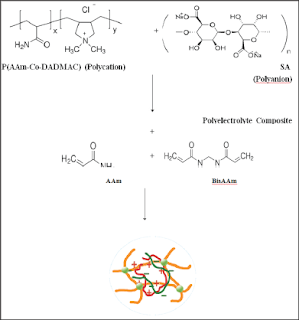
The semi-IPNs (Z1-Z15) which loaded with Gabapentin were prepared from two components. The first constituent consisted of sodium alginate with copolymer (acrylamide-co-diallyl dimethyl ammonium chloride) (AAm-Co-DADMAC) to form polyelectrolyte structure While the second component is cross linked poly acryl amide. 1g of sodium alginate was dissolved in 15 mL of distilled water at 45oC with stirring then 0.2g of Gabapentin,1 mL of copoly (AAm-Co-DADMAC) solution in 10 ml of distilled water were added with stirring until the solution becomes homogenous then2 g of acryl Amide and (0.2 g) of bisacrylamide as cross linker in (5 ml) distilled water were added with stirring and finally 1% sodium per sulphate ( 10% w/v in distilled water) was added as initiator for polymerization reaction and mixed followed by addition 50|il from N,N,N,N-tetra methyl ethylene diamine as accelerator to the decomposition of initiator with stirring for ten minutes to complete the polymerization reaction. The resulting gel is cut into pieces close to the weight and washed with water once and then left to dry at 30 °C and kept in incubator at 20 oC till used. Table 1 shows the quantities that used in the preparation semi-IPN composite hydrogels Z1 to Z15, Scheme 1 shows the chemicals equations for polymerization reactions and Figure 1 showed the photograph of Z1, (Scheme 1).

Read More About Lupine Publishers Journal of Drug Designing & Intellectual Properties Please Click on Below Link: https://lupine-publishers-drug-designing.blogspot.com/

Tuesday, 17 August 2021

Lupine Publishers| From Merck's CCK- Antagonists Via 4-Amino-2(5H)- Furanones towards 5-Hydroxy-Pyrrol-2-Ones: Design, Synthesis and Evaluation of PNB-001 & PNB-081 as Experimental Therapeutic Agents in Pain Management

Lupine Publishers| Drug Designing & Intellectual Properties International Journal (DDIPIJ)

Abstract

Arylated 5-hydroxy-pyrrol-2-ones were prepared in 2 synthetic steps from muco-chloric acid and were optimised as CCK / CCK2 selective ligands using radio labelled binding assays. A potent CCK selective ligand was identified (PNB-081: CCK1=20nM) as well as a potent CCK2 ligand (PNB-001, IC50= 22nM) during a systematic SAR optimisation. The antagonism was confirmed for both ligands by using isolated tissue preparations with CCK5 and CCK8S. Subsequent in vivo evaluation revealed analgesic activity for the gastrin CCK2 antagonist PNB-001, in the hotplate and tail immersion test at 0.5mg /kg by IP administration in mice. The cholecystokinin antagonist PNB-081 potentiated the analgesic effect of morphine and reversed opiate tolerance in mice from doses >1 mg/kg by oral administration.

Keywords: Phenyl-Pyrolone; CCK Antagonist; Cholecystokinin; Analgesic; Opiate Adjunct

Abbrevations: GIT: Gastrointestinal Tract; TT: Test Thresholds; BT: Base Line Withdrawal Thresholds; ANOVA: Analysis Of Variance

Introduction

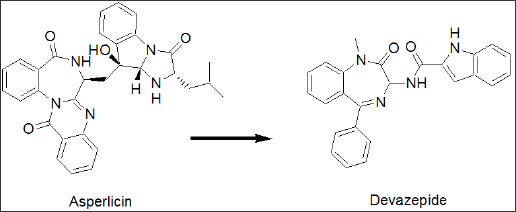
In terms of cholecystokinin-physiology [1], CCK8is the most common peptide hormone, which is extensively found throughout the gastrointestinal tract (GIT) and is also widely distributed through the nervous system [2]. Originally, cholecystokinin was discovered to cause contractions of the gallbladder [3]. It was then rediscovered as pancreozymin, triggering the release of pancreatic enzymes. Finally, it was confirmed that both peptides are identical [4]. Cholecystokinin acts as a neuro modulator as well as gut hormone. CCK-ligands, agonists and antagonists have been extensively investigated as potential drug molecules [5]. Cholecystokinin antagonists have been extensively investigated as potential drug targets [6]. They were studied as growth inhibitors in certain forms of cancer [7], as anxiolytics [8], in the treatment of schizophrenia [9] and satiety [10]. An agonist, the shortened CCK4 was found to induce panic in patients [11] and the CCK2 receptor is known to mediate anxiety [12] and panic attacks [13]. Cholecystokinin does cause proliferation in colon- and pancreatic cancer cell lines and therefore, CCK-antagonists were studied as growth factor inhibitors in certain forms of cancer. Asperlicin was the first non-peptidal lead structure from nature [14] and analogues thereof were studied as CCK ligands [15]. Simplification of this lead structure by Merck led to Devazepide [16], a potent CCK1 selective cholecystokinin antagonist (Figure 1a), containing a 1,4- benzodiazepine template and an indole moiety.

Figure 1a: Discovery; Merck's CCK patents. From the natural product asperlicin to a fully synthetic 1,4-benzodiazepine lead structure.

Lupinepublishers-openaccess-Drugdesigning-Intellectualproperties

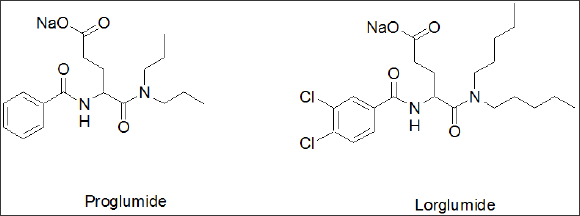
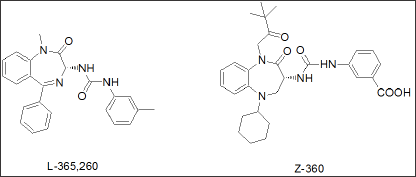
Proglumide [17] was the first glutamic acid based agent, marketed as Milid for the treatment of ulcer. Lorglumide, a derivative of proglumide [18], (Figure 1b) is one of several CCK receptor antagonists [19] and served as experimental standard. The indolyl amide of devazepide was replaced by a urea linkage and Merck's L-365,260 resulted in a CCK2 selective antagonist [20]. Further subsequent SAR optimization led to Zeria's improved Z-360 [21], in which the N-alkyl side chain, the 5- position (cyclohexyl) was optimized for potency and a meta-carboxylic acid on the aryl urea linkage was introduced to enhance water solubility (Figure 1c). Z-360 is a CCK2-gastrin receptor antagonist and progressed into phase 2 trial with pancreatic cancer [22]. Z-360 is the most recent derivative derived from this original lead structure, with improved selectivity and bioavailability.

Figure 1b Cholecystokinin standard-Lorglumide. Rotta Research Labs. Patents based on glutamic acid, agents with little membrane penetration.

Lupinepublishers-openaccess-Drugdesigning-Intellectualproperties

Figure 1c: Merck's SAR optimisation from Devazepide towards a gastrin antagonist L-365,260 with final optimisation by Zeria Ltd and selection patent on Z-360.

Lupinepublishers-openaccess-Drugdesigning-Intellectualproperties

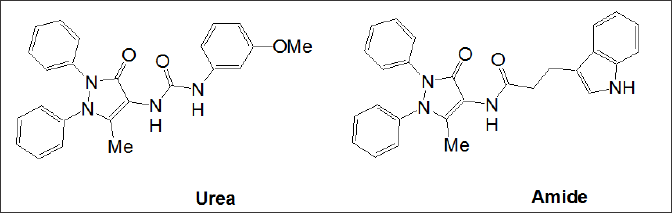
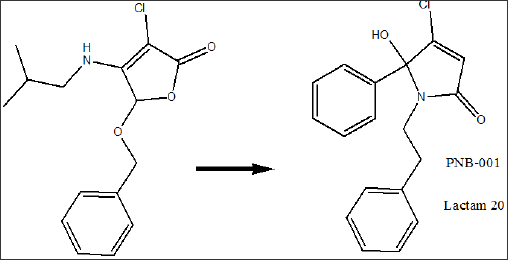
All structural optimisations did only partly address the main underlying problem with respect to poor pharmacokinetic properties, such as a low water solubility and very low membrane penetration, as a result of a large polar surface area of the molecules and a relatively high molecular weight. In our early search for new CCK ligands, in which the 1, 4-benzodiazepine structure [23] was replaced by an achiral diphenyl pyrazolone template, novel CCK antagonists with an indole carboxylic acid [24] and a phenyl urea moiety [25] were found and optimized with excellent animal data on anxiety and depression [26]. The patent was discontinued as structure was part of a Chinese molecular modelling patent application (Figure 1d). The 1,4-benzodiazepine template was varied by a combinatorial solid phase synthesis [27] and it was SAR optimised in terms of CCK binding affinity to a benzodiazepine with a simple propyl group [28]. Again, having realized the poor pharmacokinetic properties these agents, a search for a completely novel, smaller template with a molecular weight <350, a log p about 3 and a polar surface area for membrane penetration of less that 100A, with no urea linkage was initiated. Aim of the drug discovery programme, initiated by PNB Vesper Life Sciences, was to systematically investigate and design the 2(5H)-furanone scaffold [29] in to a hydroxy-pyrolone scaffold with ligands for both CCK pathways (Figure 1e). Molecular pain targets have been reviewed recently [30] and the results are quite disappointing in terms of efficacy and FDA approval rate. Even, this review missed out on CCK antagonists [31] and most importantly on a very positive report, publicised only in form of an abstract [32]. In summary in this study, devazepide at 5 mg was found very efficient in pain management as adjunct to strong opiates in a phase 2 trial carried out at leading UK pain research centres. Initial results for CCK antagonists of the pyrolone scaffold were communicated in the area of cancer therapeutics [33] and GI inflammation [34]. Here, a full biological evaluation of PNB Vesper Life Science's pain moleculesPNB-001& PNB-081, which are covered by an original patent, are reported in detail here with respect to pain management [35].

Figure 1d: Urea / Amide based CCK antagonists covered by Aston University patent replacing the 1,4-benzodiazepine scaffold with a pyrazole.

Lupinepublishers-openaccess-Drugdesigning-Intellectualproperties

Figure 1e: From lactones to lactams. Discovery of pyrolones as a novel CCK-template. From an Aston University user patent on 4-amino-2(5H)-furanonesto a novel original template.

Lupinepublishers-openaccess-Drugdesigning-Intellectualproperties

Results and Discussions

Chemistry

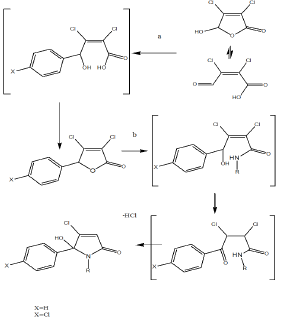
5-arylated dichloro-2(5H)-furanones A and B were synthesised from muco-chloric acid (Scheme 1), which is commercially available from furfural under oxidising conditions with hydrochloric acid. Theses intermediates were evaluated previously as anticancer agents [36]. Muco-chloric acid was reacted with benzene as reagent and solvent at RT under the development of hydrogen chloride gas. Depending on the scale of the reaction cooling with ice was required. For chloro benzene / benzene the powdered or most preferred granulated aluminium chloride served as the best catalyst and during work up with hydrochloric acid on ice the inorganic salts were easily removed from the organic phase. In terms of scope of the reaction arylated 2(5H)-furanones, containing nitro- groups or trifluoro-methyl groups could not be prepared. For the small scale synthesis aluminium chloride worked well as Lewis acid. However, during scale up aluminium chloride was replaced by trifluoroborane in THF as the exothermic reaction become problematic on a kg scale.

Scheme 1: Synthesis and chemical mechanism for the preparation of lactams1-21 from muco-chloric acid.
a) Arene, RT, 10 h, workup: hydrochloric acid; b) amine , excess, ether, RT, 30 min

Lupinepublishers-openaccess-Drugdesigning-Intellectualproperties

Subsequent reaction of the 5-arylated 3,4-dichloro-2(5H)- furanones A and B (Stage 1 intermediate) in diethyl ether with alkyl- and aryl alkyl amines furnished N-alkylated hydroxyl-pyrrolones1- 21(Stage 2 products) in high yields under mild conditions. The general synthetic sequence is outlined in Scheme 1.

Overall, the desired N-alkylated unsubstituted 5-phenyl pyrrolones1-21 was obtained in only a 2 stage process as white crystalline material. The molecule is not present in the ring opened keto form and fully occurred in the 5-membered ring form, as a hydroxy-pyrolone. The 5-arylated 2(5H)-furanones reacted selectively in the ester position and no reaction in the 4-position was observed here. Previously the IPSO substitution (4-position) was described for pseudo- esters [37], and here in Scheme 1, a ring- opening ring-closure mechanism is proposed for the formation of hydroxy-pyrolone. Thus, the first step in the reaction sequence of the dichlorinated 2(5H)-furanone is the ring opening and amide formation from the corresponding lactone. Subsequently, the keto form of the acyclic amide was in situ converted into a lactam under the elimination of hydrogen chloride (middle, scheme 1). The analysis of lactam7 and 20by chiral HPLC showed a 50:50 racemic mixture of both enantiomers in solution in methanol.

Read More About Lupine Publishers Drug Designing & Intellectual Properties International Journal (DDIPIJ) Please Click on Below Link:  https://lupine-publishers-drug-designing.blogspot.com/


Monday, 28 June 2021

Lupine Publishers| Synthesis and Anxiolytic Activity of 2- (Substituted)-5-[(N-Benzotriazolomethyl)-1,3, 4-Thiadiazolyl]-4-Thiazolidinone

 Lupine Publishers| Drug Designing & Intellectual Properties International Journal (DDIPIJ)


Abstract

1,2,3- Benzotriazole (BTA) is a heterocyclic compound with three nitrogen atoms. It is a polar and colourless compound which can be used for its great versatility. The enormous investigations on derivatives of benzotriazole reveal wide applicability of this molecule for tagging and delivering huge number of heterocyclic nuclei. In the present work synthesis of several derivatives of 2-(substituted)-5-[(n-benzotriazolomethyl)-1,3,4-thiadiazolyl]-4-thiazolidinone has been synthesized and are evaluated for their anxiolytic activity. The antianxiety activities of the synthesized derivatives were evaluated using EPM test and Bright and dark box test experimental models of anxiety. All results were expressed as mean± standard error mean (SEM) and analysed by one-way ANOVA. Post-hoc comparisons were performed by applying Dunnefs test. P <0.05 was considered statistically significant

Keywords: Benzotriazole; Thiadiazole; Thiazolidinone; Anxiolytic Activity; Anxiety; Elevated Plus Maize; Bright and Dark Arena

Abbrevations: IP: Intraperitoneally; IAEC: Institutional Animal Ethics Committee; SEM: Standard Error Mean

Introduction

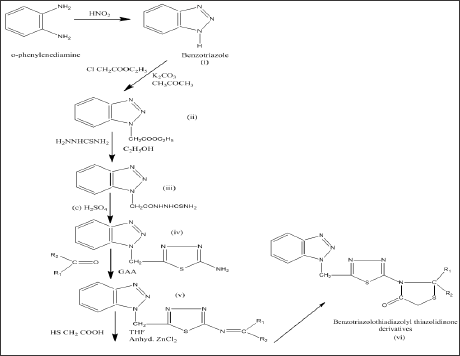
1,2,3- benzotriazoles were reported to have potential fungicidal [1] and antibacterial activity [2]. Similarly 1,3,4-thiadiazole derivatives were also reported to possess fungicidal, herbicidal, bactericidal [3], pesticidal, insecticidal, antihistaminic, antiamoebic [4], CNS depressant, antihypertensive, anticonvulsant, hypnotic, analgesic [5], anti-inflammatory [6] and agonist for 5-Ht receptor [7]. 4-thiazolidinone nucleus has also occupied a unique place in the field of medicinal chemistry due to its wide range of biological activities like antibacterial, anticancer [8], Respiratory, syncytial, virus Inhibitor [9], anticonvulsant [10], sciatic nerve blocking, local anaesthetic, inhibitors of human (CK2) protein kinase [11], hypnotic, fungicidal, cysticidal, anti leukemic and antioxidant activity. In view of potential biological activities of benzotriazole, thiadiazole and 4-thiazolidinone an attempt has made to unite these nuclei together and synthesize some new derivatives of benzotriazole (X^XJ to probe how far these combinations could develop anxiolytic activity. The procedure of synthesis has been outlined in Figure 1.

Anxiety is a normal emotional response which when chronic or severe becomes pathological and can aggravate cardiovascular and psychiatric disorders [12]. Despite the development of new molecules for pharmacotherapy of anxiety, the treatment is challenging as they produce various side effects or exhibit tolerance on continuous use.

Materials and Methods

The chemicals and reagents used in this were of AR and LR grade. They were procured from CDH, Hi-Media, Merck, Sigma Aldrich and Ranbaxy. The melting points of the synthesized compounds were determined by using Thiel's melting point apparatus (open capillary tube method) and all the compounds gave sharp melting points and are uncorrected. Purity of the compounds was ascertained by thin layer chromatography using silica gel-G as stationary phase and appropriate mixtures of the following solvents as mobile phase: n-butanol, glacial acetic acid and water. The spots resolved were visualized using iodine chamber. The IR spectra of the synthesized compounds were recorded on a Fourier Transform IR spectrophotometer (Perkin Elimer BX-II) in the range of 400-4000 using diffuse reflectance system and values of vmax are reported in cm-1. 1H NMR spectra were recorded on Bruker Av- II 400 MHz NMR spectrometer and chemical shifts (5) are reported in ppm downfield from internal reference Tetramethylsilane (TMS). Mass spectra were recorded on Shimadzu LC-MS model 2010A. Elemental analysis of the newly synthesized compounds was carried out using Euro - E 3000 series elemental analyzer. 2-(substituted)-5-[(n-benzotriazolomethyl)-1,3,4-thiadiazolyl]-4- thiazolidinone were prepared as per the method described in the literature [13-15]. The Synthetic Procedure involved the following six steps as stated below.

    i. Step 1: Synthesis of Benzotriazole: In a mixture of 11.5 ml glacial acetic acid and 30 ml water, 0.1M o-phenylenediamine was dissolved and then added a solution of 0.1 M NaNO2 in 15 ml of water, stirred continuously for 15 minutes. The temperature was maintained at 120C, chilled in ice bath and product (i) was collected by filtration. The yield obtained was 85% and M.P. was 990C.

    ii. Step 2: Synthesis of N-Benzotriazolacetate: A mixture of product (i) 0.1M, ethylacetate (0.1M) and 0.3 gm of K2CO3 in 60 ml of acetone was stirred of 10 hrs. The solvent was removed under reduced pressure. A solid m ass was produced which gave needle shaped crystals after recrystallization from the mixture of chloroform and ether (8:2 % V/V). The yield obtained was 70% and M.P. was 400C.

    iii. Step 3: Synthesis of N-Benzotriazol Acetyl Thiosemicarbazide: The crystals obtained from step II (0.08M) and thiosemicarbazide (0.08M) were taken in 50 ml of ethanol, stirred for 6 hrs and then refluxed for 3 hrs. The yellow coloured compound was obtained after recrystallization from the mixture of chloroform and hexane (9:1 %V/V). The yield was 60% and M.P. 1030C.

    iv. Step 4: Synthesis of 2-Amino-5-(N- Benzotriazolomethyl)-1,3,4-Thiadiazole: Compound iii (0.08M) was added in conc. H2SO4 and kept overnight at room temperature, then neutralized with ammonia and extracted with ether. The ether was distilled off and the product recrystallized from methanol, the yield was 52% and M.P. 1210C.

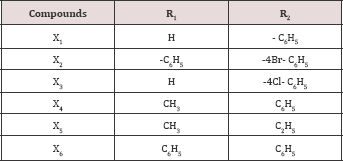
    v. Step 5: Synthesis of 2-Benzylidenylamino-5-(N- Benzotriazolomethyl)-1,3,4-Thiadiazole: Compound iv (0.02M), carbonyl compound (R1R2C=O) (Table 1) and glacial acetic acid (2ml) were refluxed in 50 ml methanol for 8 hrs. Solvent was distilled off and product recrystallised from the mixture of benzene and chloroform (1:6 %V/V). M.P. was 1290C and the yield was 50%.

    Table 1:R1 and R2 values for compound χt to χ6.

    Lupinepublishers-openaccess-Drug-Designing-Intellectual-Properties

    Figure 1:

    Lupinepublishers-openaccess-Drugdesigning-Intellectualproperties

      vi. Step 6: Synthesis of 2-(Phenyl)-5-[(N-Benzotri- azolomethyl)-1,3,4-Thiadiazolyl]-4-Thiazolidinone: The compound (v) 0.01M and mercapto acetic acid (10ml) with a pinch of anhydrous ZnCl2 were added in 30 ml of tetrahydro-furan and refluxed for 12 hrs on water bath. The product was separated and recrystallised from ethanol. The M.P. was 1380C and yield was 58%. The purity of synthesised compounds were established by TLC using 2% silica gel G, n-butanol: glacial acetic acid: water (4:1:5). The M.P. of synthesized compounds χ1 to χ6 was found to be 1380C, 1300C, 1630C, 1560C, 1220C and 1260C respectively (Figure 1).

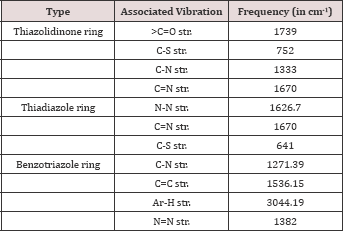
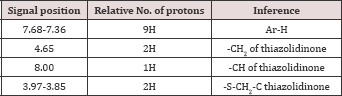
    Structures of the compounds were established on the basis of C, H and N analysis reports, IR and 1H-NMR spectra (Table 2).

    Table 2: Spectra! data of 2-(substituted)-5-[(n-benzotri- azolomethyl)-1,3,4-thiadiazolyl]-4-thiazolidinone.

    Lupinepublishers-openaccess-Drug-Designing-Intellectual-Properties

    (a) Interpretation of IR spectra:

    Lupinepublishers-openaccess-Drug-Designing-Intellectual-Properties

    (b) Interpretation of 1H-NMR spectra:

Determination of Anxiolytic Activity

Methods

Preparation of DMF (Dimethylformamide) Suspension of Synthesized Compounds: All synthesized compounds were dissolved in DMF and used as a suspension in physiological saline containing 2 drops of Tween 80 and produce a final conc. of 0.2 mg/ml. The standard drug used for this study was diazepam. Drugs were administered intraperitoneally (IP) in a constant volume of 1 ml/kg, 60 min before experiments were carried out.

Animals: Adult male Swiss albino mice weighing 25-35g obtained from our animal house. The animals were housed at 24±20C with 12: 12 h light and dark cycle. They had free access to food and water. The animals were acclimatized for a period of 7 days before the study. The experimental protocol was approved by the Institutional Animal Ethics Committee (IAEC) of Institute of Pharmacy, Bundelhand University, Jhansi (U.P.) India. The animals were used according to the CPCSEA guidelines for the use and care of experimental animals.

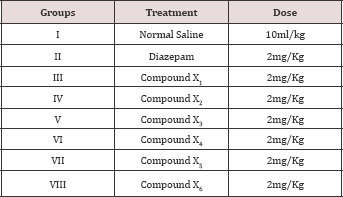
Experimental Design: On the day of the experiment, the animals were divided randomly into control and experimental groups (n=6). Group 1 received the vehicle, normal saline (10ml/kg) and served as the control group, group 2 received the standard drug diazepam (2mg/kg) and group 3 to 8 received DMF suspension of synthesized compounds (X1 to X6) (Table 3). Drugs were administered to the animals 60 minutes prior to the evaluation in acute study, for chronic study once daily for a period of 10 days. Behavioural evaluation was carried out 60 minutes post drug administration on the 10th day. The antianxiety activity of the test drug was evaluated using EPM (elevated plus maze) test and Bright and dark box test experimental models of anxiety.

Table 3: Experimental design.

Lupinepublishers-openaccess-Drug-Designing-Intellectual-Properties

Evaluation of Antianxiety Activity

Elevated Plus Maze Test

According to the method of Kulkarni SK et al. [16] The wooden maze consisted of two open arms (50cmx10cm) and two closed arms of (50cmx10cmx40cm). The arms of same type were opposite to each other with a central square of 10cm.The maze was elevated to a height of 50cm above the floor. Each animal was placed in the centre square of plus maze, facing one of the open arms. The number of entries into and the time spent in open and closed arms in a 5 min period was noted.

Bright and Dark

The apparatus consisted of an open top wooden box. Two distinct chambers, a black chamber (20x30x35cm) painted black and illuminated with dimmed red light and a bright chamber (30x30x35cm) painted white and brightly illuminated with 100 W white light sources, were located 17 cm above the box. The two chambers were connected through a small open doorway (7.5 x5cm) situated on the floor level at the centre of the partition [17].

Behavioural Assessment

Each animal was tested initially in plus maze and, then, in bright and dark arena paradigm in a single setting. In acute study 60 min after and in chronic study 60 min after the last dose on the 10+ day of drug or vehicle administration, each animal was placed in the centre square of the plus maze, facing one of the open arms. The number of entries into and the time spent in open and closed arms and the number of rears in each arm in a five-minute period was noted. Following the elevated plus maze test, the animal was placed at the centre of the brightly lit arena in the light and dark box. The number of entries into and the time spent in the bright arena, the number of rears in the bright arenas were noted. Following each trial, the apparatus were cleaned to mask the odour left by the animal in the previous experiment. Hand operated counters and stop watches were used to score the behaviour of animals.

Statistical Analysis

All results were expressed as mean± standard error mean (SEM) and analysed by one-way ANOVA. Post-hoc comparisons were performed by applying Dunnet's test. P <0.05 was considered statistically significant.

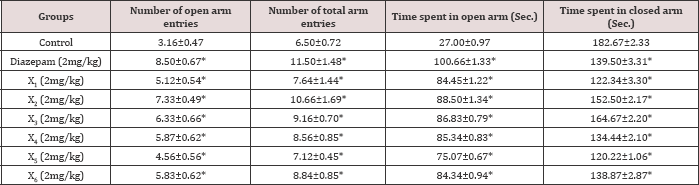
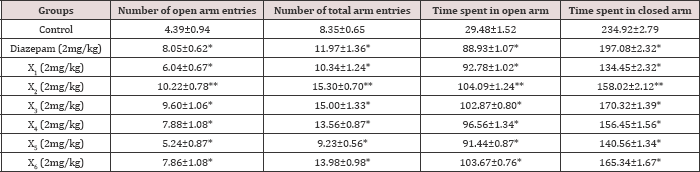
Table 4: Acute effect of synthesized compounds on behaviour of mice in elevated plus maze.

Lupinepublishers-openaccess-Drug-Designing-Intellectual-Properties

Results

Elevated Plus-Maze

A perusal of Table 4 shows that compared to the standard drug, the synthesized compounds X2 and χ3 significantly increased open arm activity, increasing the duration of time spent and number of entries in open arm in EPM test compared to control in acute study but in chronic study the doses of χ2 and χ3 produced a greater increase in duration of time spent and number of entries in open arm in EPM test compared to both control and standard drug diazepam. χ2 had produced better effect than χ3 and Diazepam in chronic study (Tables 4 & 5).

Table 5: Chronic effect of synthesized compounds on behaviour of mice in elevated plus maze.

Lupinepublishers-openaccess-Drug-Designing-Intellectual-Properties

Values represented mean±SEM (n=6), *P<0.05 vs. control, **P<0.05 vs. standard.

Bright and Dark

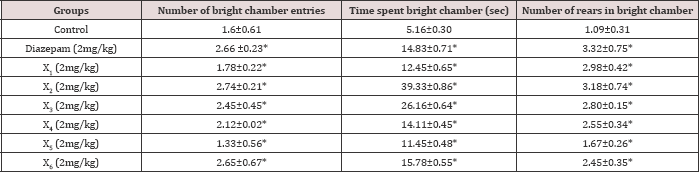
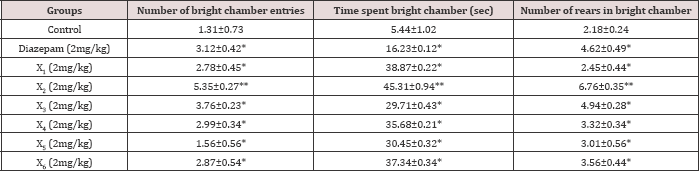
Diazepam (1mg/kg) treated mice significantly increased the number of entries into the bright arena, the time spent and the rears in bright arena. In acute study, both X2 and X3 significantly increased the number of entries into, time spent and rears in bright arena compared to control. X2 and X3 both had shown significantly increased number of entries into, time spent and rears in bright arena when compared to control and diazepam in chronic study (Tables 6 & 7).

Table 6: Acute effect of synthesized compounds on behaviour of mice in bright and dark arena.

Lupinepublishers-openaccess-Drug-Designing-Intellectual-Properties

Values represented mean±SEM (n=6), *P<0.05 vs. control.

Table 7: Chronic effect of synthesized compounds on behaviour of mice in bright and dark arena.

Lupinepublishers-openaccess-Drug-Designing-Intellectual-Properties

Values represented mean±SEM (n=6), *P<0.05 vs. control, **P<0.05 vs. standard.

Discussion

The two experimental models of anxiety, elevated plus maze and bright and dark arena, are based on the assumption that unfamiliar, non-protective and brightly lit environmental stress provokes inhibition of normal behaviour. This normal behavioural inhibition is further augmented in the presence of fear or anxiety like state. In the elevated plus maze, the open arms are more fear provoking than the closed arms. The ratio of entries, time spent and rearing behaviour in open arms to closed arms reflects the safety of closed arms with relative fearfulness of open arms [18]. The reduction in entry, time spent, total arm entries are the indications of high level of fear or anxiety. Anxiolytic drugs increase the proportion of entries, time spent in open arms. In the bright and dark box paradigm, the brightly lit environment is a noxious environment stressor that inhibits the exploratory behaviour of rodents. Reduction in the number of entries, time spent and rearing behaviour in the bright chamber was regarded as markers of anxiety. Rearing reflects an exploratory tendency of the animal that can be reduced due to a high level of fear [19]. In the present study, the compounds X2 and X3 significantly increased the duration of time spent and number of entries in open arm, time spent in closed arm in EPM test indicating anxiolytic activity in both acute and chronic studies. They also showed an increase in the time spent and the rears in bright arena in the bright and dark arena paradigm. Anxiolytic activity of X2 was found to be greater than diazepam in chronic study.

Conclusion

The derivatives of benzotriazole (X1 to X6) were synthesized with the objective to develop better anxiolytic agents with maximum percentage of yield and optimal anxiolytic activity. The results of the present study suggest that the synthesized compounds X2 and X3 have anxiolytic activity better than Diazepam. It was observed that halogen substituted aromatic compounds were more active than unsubstituted aromatic compounds and aromatic compounds were more active than alkyl substituted compounds. Further investigations with appropriate structural modification of title compound may result in therapeutically useful products. Further studies are required to elucidate the possible mechanism of anxiolytic activity and its usefulness in human beings.

Read More About Lupine Publishers Drug Designing & Intellectual Properties International Journal (DDIPIJ) Please Click on Below Link: https://lupine-publishers-drug-designing.blogspot.com/


Wednesday, 21 April 2021

Lupine Publishers| On the Second Harmonic Index of Titania Nanotubes

 Lupine Publishers| Drug Designing & Intellectual Properties International Journal (DDIPIJ)


Abstract

Topological indices which are graph invariants derived from molecular graphs of molecules are used in QSPR researches for modeling physicochemical properties of molecules. Topological indices are important tools for determining the underlying topology of a molecule in view of theoretical chemistry. The second harmonic index has been defined recently. In this study we compute the second harmonic index of Titania nanotubes.

Keywords: Harmonic Index; Novel Harmonic Indices; Second Harmonic Index; Titania Nanotube

Introduction

Graph theory which is one of the most important branches of applied mathematics and chemistry has many applications from the basic sciences to the engineering sciences especially for solving and modeling of real world problems. Chemical graph theory is the common place for graph theory and chemistry. Topological indices are indispensable tools for QSPR researches in view of theoretical chemistry and chemical graph theory. Topological indices have been used more than seventy years predicting and modeling physicochemical properties of chemical substances. A graph G = (V,E) consists of two nonempty sets v and 2-element subsets of v namely E. The elements of v are called vertices and the elements of E are called edges. For a vertex v def0V) show the number of edges that incident to v. The set of all vertices which adjacent to is called the open neighborhood of and denoted by n (v). If we add the vertex v to n(v), then we get the closed neighborhood of v,n(v) . For the vertices u and v, d(u, v) denotes the distance between u and v which means that minimum number of edges between u and v. The largest distance from the vertex v to any other vertex u called the eccentricity of v and denoted by ev.

The first distance based topological index is the Wiener index which was defined by H. Wiener to modeling the boiling points of paraffin molecules [1]. In his study Wiener computed the all distances between the all atoms (vertices) in the molecular graph of paraffin molecules and named this graph invariant as "path number". The Wiener index of a simple connected graph G defined as follows:

Lupinepublishers-openaccess-Drugdesigning-Intellectualproperties

Many years later the path number renamed as "Wiener index" to honor Professor Harold Wiener for valuable contribution to mathematical chemistry. In t he same year, the first degree based topological index was proposed by Platt for modeling physical properties of alcanes [2]. The Platt index of a simple connected graph G defined as follows;

Lupinepublishers-openaccess-Drugdesigning-Intellectualproperties

After these both studies, approximately twenty five years later the well-known degree based Zagreb indices were defined by Gutman and Trinajstić to modeling π-electron energy of alternant carbons [3]. The first Zagreb index of a simple connected graph defined as;

Lupinepublishers-openaccess-Drugdesigning-Intellectualproperties

And the second Zagreb index of a simple connected graph defined as;

Lupinepublishers-openaccess-Drugdesigning-Intellectualproperties

An alternative definition of the second Zagreb index of a simple connected graph is given the following formula:

Lupinepublishers-openaccess-Drugdesigning-Intellectualproperties

In 1975, Randić defined the "Randić index" [4] to modeling molecular branching of carbon skeleton atoms as follows:

Lupinepublishers-openaccess-Drugdesigning-Intellectualproperties

Among the all topological indices, the above mentioned topological indices have been used for QSPR researches more considerably than any other topological indices in chemical and mathematical literature. We refer the interested reader to the following citations for up to date information about these well- known and the most used topological indices [5-15].

Harmonic index of a simple connected graph G was defined by Zhong in 2012 [16] as follows

Lupinepublishers-openaccess-Drugdesigning-Intellectualproperties

Since then, there are more than one hundred papers in mathematical and chemical literature about Harmonic index and its applications. We refer the interested reader to [17,18] and references cited in these articles.

The novel harmonic indices have been defined recently by the present authors [19]. In [19], the fifth harmonic index of H-Naphtalenic nanotube and TUC4 [m, n] nanotube were calculated.

Harmonic indices were defined in [20] as;

Lupinepublishers-openaccess-Drugdesigning-Intellectualproperties

Where Qu is a unique parameter which is acquired from the vertex u ϵ (G).

The first kind of this Harmonic indices was studied by Zhong by considering Qu to be the degree of the vertex u:

Lupinepublishers-openaccess-Drugdesigning-Intellectualproperties

The second kind of this class was defined by considering Qu to be the number nu of vertices of G lying closer to the vertex u than to the vertex v for the edge uv of the graph G:

Lupinepublishers-openaccess-Drugdesigning-Intellectualproperties

The third type of this class was defined by considering Qu to be the number mu of edges of G lying closer to the vertex v than to the vertex u for the edge uv of the graph G:

Lupinepublishers-openaccess-Drugdesigning-Intellectualproperties

The fourth type of this class was defined by considering Qu to be the eccentricity of the vertex u:

Lupinepublishers-openaccess-Drugdesigning-Intellectualproperties

The fifth type of this class was defined by considering Quto be the: Lupinepublishers-openaccess-Drugdesigning-Intellectualproperties

Lupinepublishers-openaccess-Drugdesigning-Intellectualproperties

And the sixth type of this class was defined by considering Qu to be the: Lupinepublishers-openaccess-Drugdesigning-Intellectualproperties

Lupinepublishers-openaccess-Drugdesigning-Intellectualproperties

For topological indices of Titania nanotubes, we refer the interested reader [20-28] and references therein. The aim of this paper is to compute the exact value of the second harmonic index of Titania nanotubes.

Results and Discussion

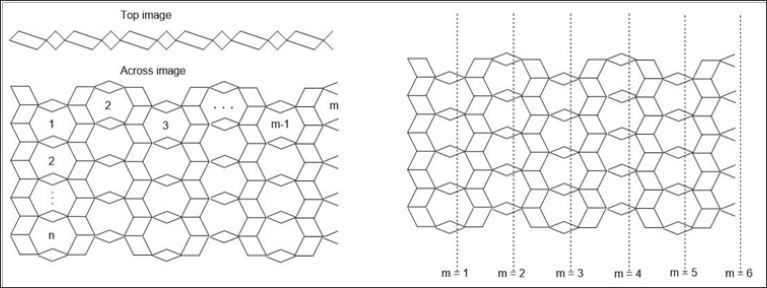
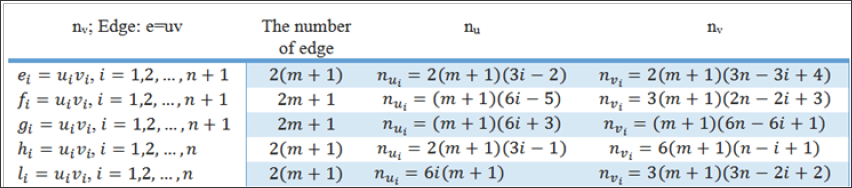
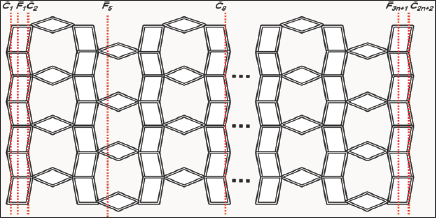
In this section we compute the exact values of the second harmonic index of Titania Nanotubes (Figure 1). Rezaei et al. [28] computed edge vertex version of Co-Pi index of Titania nanotubes [28]. The following table given the classifications of the vertices of TiO2 [m,n] with respect to the parameter nu . We get the results with the help of the article of Rezai et al. [30]. From the help of Table 1, we can state our main result (Figure 2).

Figure 1: A graphical figure of Titania Nano tubes TiO2[m, n].

Lupinepublishers-openaccess-Drugdesigning-Intellectualproperties

Table 1: The edge classification of the vertices of TiO2 [m, n] with respect to the parameter.

Lupinepublishers-openaccess-Drug-Designing-Intellectual-Properties

Figure 2: Orthogonal cuts representation of the Titania Nano tubes.

Lupinepublishers-openaccess-Drugdesigning-Intellectualproperties


Theorem 1. The second harmonic index of Titania Nanotubes TiO2[m ,n] is given as;

Lupinepublishers-openaccess-Drugdesigning-Intellectualproperties

Proof. From the definition of the second harmonic index and Table 1, we can write that:

Lupinepublishers-openaccess-Drugdesigning-Intellectualproperties

Conclusion

In this study we found the exact values of newly defined the second harmonic index of Titania nanotube. This calculation will help to predict and model some physicochemical, optical and biological properties of Titania nanotube. It can be interesting to compute the novel harmonic topological indices of some other nanotubes and networks for further studies. It can also be interesting to study the mathematical and QSPR properties of these novel harmonic indices.

Read More Lupine Publishers Drug Designing & Intellectual Properties International Journal (DDIPIJ) Please Click on Below Link: https://lupine-publishers-drug-designing.blogspot.com/