Showing posts with label Lupine Indexing journals. Show all posts

Friday, 28 February 2020

Lupine Publishers | The Influence of Yoga on Traumatic Brain Injury Related to Sleep and Mood

Lupine Publishers | Open access Journal of Complimentary & Alternative Medicine


Abstract


Sustaining a Traumatic Brain Injury (TBI) has a significant effect on an individual’s physical and mental abilities. Residual effects of TBI include sleep and mood disorders. Sleep disorders include any disturbance in an individual’s quality of sleep and daytime functioning. Mood disorders include depression, anxiety, and adjustment to injury. Rehabilitation after TBI involves a range of therapeutic services in which a holistic approach to therapy addresses both the mind and the body. Yoga may be used to improve functioning for individuals with TBI. The purpose of this convergent mixed methods study was to examine the influence of yoga on the sleep and mood in individuals with TBI. This research study involved an eight-week yoga intervention at a large rehabilitation hospital in the southern United States. Seven individuals who sustained a TBI were recruited for the intervention. Sleep and mood were assessed pre-, mid-, and post-intervention. Upon completion of the intervention, participants and their caregivers took part in focus groups to share their perceptions of changes in sleep and mood. Data were analyzed and describe the influence of yoga on individuals with TBI. Quantitative data revealed no statistical significance, though percent change calculations of pre- and post-data showed a substantial decrease in anxiety and an improvement in adjustment to injury. Qualitative data were consistent with the calculated percent change in addition to an emerging theme of social support amongst individuals with TBI.

Keywords:
Yoga; Therapy; Traumatic Brain Injury; Sleep; Mood; Depression; Anxiety; Adjustment


Introduction

A Traumatic Brain Injury (TBI) is defined as an acquired injury that is the result of direct damage to the brain [1]. A TBI can occur quickly and unexpectedly, but often has a long-term effect on an individual’s physiological and neurological abilities [2,3]. In the United States, approximately 1.7 million people per year are admitted to the emergency room due to sustaining a TBI [4], many of whom continue to live with residual effects [5]. The residual effects of a TBI include, but are not limited to, trouble sleeping, changes in mood, and difficulty adjusting to life after injury [6,7]. Sleep disorders are defined as any consistent internal disturbance in sleep [8]. Regarding people with TBI, poor sleep quality is common [7] and has the potential to decrease emotional and physical abilities, as well as slow the recovery process [9]. In addition to the negative impacts from sustaining a TBI, individuals are also susceptible to mood disorders as a residual effect of TBI. Common behavioral impairments for people with TBI include mood disorders, which can manifest as depression, anxiety, and adjustment to injury [3,6]. Depression is a common secondary factor for clinical conditions related to TBI [10]. Depression is defined by the Diagnostic and Statistical Manual of Mental Disorders (DSM-5) [8] as depressed mood or loss of pleasure in life activities for more than two weeks, change from an individual’s baseline mood, and compromised functioning. Generalized anxiety is defined in the DSM-5 as extreme or unrealistic worry for the majority of the days within six months [8]. Anxiety after TBI may first be seen as a normal reaction to trauma, but individuals with TBI appear to have an increased risk of developing generalized anxiety in comparison to the general population [11]. Individuals with TBI also experience an adjustment to life after injury [12]. Level of adjustment after sustaining a TBI can be observed through the presence of depression, anxiety, fatigue, and irritability [13].

Due to the physical, cognitive, and emotional impacts of sustaining a TBI, treatment for TBI needs to be approached from a multidisciplinary perspective. As an emerging element of physical rehabilitation, complementary integrative health (CIH) interventions are health practices used in combination with traditional medicine [14]. CIH includes a wide variety of healing interventions that counteract illness or assist in increasing health and wellbeing [15]. CIH interventions, such as yoga, can be used as a holistic and complementary treatment to address the physical and mental needs of individuals with TBI [16-17].

In the West, yoga focuses on three main practices: breathing (pranayama), meditation (dhyana), and physical poses (asanas) [18]. Yoga interventions have been utilized in several rehabilitation settings [19-22], for the purpose of providing a complementary form of therapy. Research on the perceptions of yoga, when integrated into inpatient rehabilitation hospitals, shows patients’ rehabilitation was enhanced by the use of yoga due to the added benefit yoga provided, including self-management skills and assisting longterm recovery [21,23]. Yoga for individuals with TBI is likely a useful intervention due to the adaptability of yoga sequences, the potential physical and cognitive benefits, and the research pointing to the potential sleep and mood benefits [19-24]. While there is limited research on yoga for TBI, one small, exploratory study found that when yoga was administered 16 times over the course of eight weeks, individuals with TBI expressed improvement in physical, emotional, and mental domains [25]. In an analysis of the influence of yoga on sleep for people with TBI through sleep-wake diaries, a substantial improvement in sleep quality was found after eight weeks of yoga treatment [19]. Following an adapted yoga group intervention for individuals with TBI, participants expressed favorable improvements in comfort with approaching balance and relaxation, as well as an increased self-awareness that helped with sleep [26]. There is limited research on yoga for individuals with a TBI and yoga, thus there is need for further studies related to the influence of yoga on sleep and mood in this population. Therefore, the purpose of this study was to observe, analyze, and discuss the influence of yoga on TBI related to their sleep and mood.


Methods

Design

This convergent mixed methods pilot study examined the influence of yoga participation on sleep and mood among individuals with TBI. Quantitative data was collected using a repeated measures design, with pre-, mid-, and post-intervention assessments given. Qualitative data was collected through two post-intervention focus groups, consisting of one focus group with participants and one with the participants’ caregivers. Prior to the start of this study, approval through the Rehabilitation Hospital’s Institutional Review Board (IRB) and the Clemson IRB were obtained.

Recruitment and Participants

Purposeful, criterion-based sampling was employed in this study to decrease the variation of diagnosis amongst subjects [27]. Fifteen individuals who sustained a TBI and were prior patients at a large rehabilitation hospital in the Southeastern United States, that provides a continuum of care for individuals with TBI, were contacted by the project coordinator. The project coordinator, a Recreational Therapist at the rehabilitation hospital, screened all individuals interested in the study using the Six-Item Screener (SIS) to assess cognitive status in order to determine eligibility for a program or intervention [28]. The SIS has been used as a screener into yoga studies for individuals with TBI [20]. After screening the individuals, the project coordinator reviewed the inclusion and exclusion criteria with the individuals with TBI as well as their caregivers, to determine if they met the inclusion and exclusion criteria for the study. Inclusion criteria for persons with TBI required that they:
I. Had diagnosis of moderate-to-severe TBI, verified by the individual’s Glasgow Coma Scale score upon admission to the rehabilitation hospital [29],
II. Were a fluent speaker of English, by self-report,
III. Were 18 years of age or older,
IV. Were able to move into different seated, standing, and supine postures without assistance (based on self- and caregiver-report),
V. Had a caregiver that was willing to assist with participant transportation needs throughout the study, and
VI. Had sufficient cognitive status to participate, as determined by a score of at least 4/6 on the Six-Item Screener.
The presence of any one of the following criteria resulted in exclusion from the study:
A. were unable to attend 12 or more yoga classes during the eight-week intervention,
B. had current drug or alcohol abuse, per self-report, and
C. enrollment in another intervention study that could affect sleep or mood. Inclusion and exclusion criteria were also established for caregivers of participants with TBI to ensure they were able to fulfill the role of caregiver throughout the study, although a caregiver was only required if the individual with TBI needed assistance with daily tasks.
Inclusion criteria for the caregivers required that individuals:
a. were age 18 or older,
b. had no prior history of TBI,
c. were the self-identified caregiver of person with TBI,
d. were a fluent speaker of English, per self-report, as being willing to transport participant to all yoga sessions related to the study (as needed).
Exclusion criteria for caregivers of people with TBI were as follows:
i. were unable to report on participant for whom they provide care, and
ii. had current drug or alcohol abuse based on self-report. All participants provided written informed consent prior to the start of the study. Participants admitted to the study were given a $25 incentive, funded by the rehabilitation hospital research department for clinician research projects, upon completion of the study.


Intervention

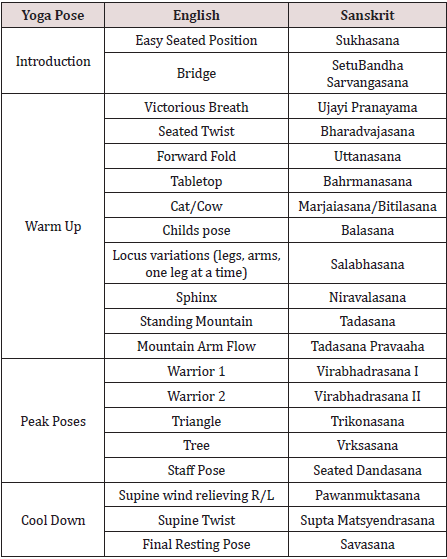
Yoga sessions were conducted in groups in a yoga room within a large rehabilitation hospital in the Southeastern United States. Sessions occurred twice a week for eight weeks, for a total of 16 yoga sessions. A recreational therapist who is a yoga teacher and specializes in yoga for individuals with TBI taught all yoga sessions. The sequences of yoga poses were designed based on the Love Your Brain (LYB) Foundation yoga program, which is designed for individuals with TBI [30]. The project coordinator of this study adapted the LYB yoga sequences to fit this specific study group [31], to focus on influencing sleep and mood. Changes to the LYB protocol included increased time for meditation and a decrease in poses accomplished on hands and knees. See Table 1 for yoga sequence. Each yoga class was one hour long and included a 15-minute centering and focusing of the mind, 30 minutes of gentle physical yoga postures in supine, prone, seated, and standing positions, and 15 minutes of meditation and relaxation. The yoga sessions remained at the same level of difficulty from start to finish, in order to facilitate the transition from the rehabilitation setting to the community setting by encouraging growth towards mastery of the postures as opposed to growth in the number of postures.

Table 1:
Yoga Sequence.

Lupinepublishers-openaccess-complementary-alternative-medicine-journal

Data Collection

Quantitative measures were chosen to focus on sleep and mood for individuals with TBI. Qualitative data were collected through post-intervention focus groups. The primary researcher conducted all data collection.

Quantitative Measures

Sleep quality was measured using the Pittsburgh Sleep Quality Index (PSQI), a self-report questionnaire used to assess the quality of sleep over a one-month period [32]. The 24-items inquire about sleep duration, sleep medication, sleep latency, sleep quality, and how sleep effects an individual’s daytime activity [33]. An individual may be diagnosed with poor sleep if he or she has a global PSQI score of greater than five. The PSQI has been used to screen for insomnia in individuals with TBI in post-acute care [34]. The PSQI has a diagnostic sensitivity of 89.6%, and a specificity of 86.5% when differentiating between individuals who experience ‘poor’ or ‘good’ sleep [32]. Depression was measured using the Patient Health Questionnaire-9 (PHQ-9). The PHQ-9 was developed based on the DSM-V criteria of depression [8] and can be self-administered [35]. The PHQ-9 is a nine-item depression scale that measures level of depression over the past two weeks using four-point likert responses, where 0=not at all, to 3=nearly every day [36]. Once completed, the total score was summed to assess level of overall depressive symptoms. The PHQ9 classifies level of depression based on the sum of responses, with 0-4=minimal depression, 5-9=mild depression, 10-14=moderate depression, 15-19=moderately severe depression, greater than 20=severe depression [37], and a score greater than 12 is the cutoff for being diagnosed with major depressive disorder [38]. The PHQ-9 was also effectively used in a study on combat-related TBI [39].
Anxiety was measured using the Generalized Anxiety Disorder-7 (GAD-7) survey. The GAD-7 is a seven-item anxiety scale that measures level of anxiety of the past two weeks using four-point likert responses, where 0=not at all, to 3=nearly every day [40]. This self-report questionnaire has shown reliability and validity [40,41] and can be used to analyze anxiety in the general population [41]. The GAD-7 classifies level of anxiety based on the sum of responses, with 0-4=minimal anxiety, 5-9=mild anxiety, 10-14=moderate anxiety, 15-21=severe anxiety, and a score greater than 10 is the cutoff for being diagnosed with generalized anxiety disorder [40]. The GAD-7 was validated in primary care facilities [36] but has also been used to measure anxiety in a study on sleep and psychological conditions after sustaining TBI [42] and used to measure anxiety related to mild TBI related to combat [39]. Adjustment was analyzed using Part B of the Mayo-Portland Adaptability Inventory (MPAI-4). The MPAI-4 has four parts, each of which address a different aspect of adjusting to injury. Part B was selected due to the specific focus on adjustment to injury related to an individual’s mood (irritation, aggression, pain, depression, anxiety, fatigue, social interaction, self-awareness, and sensitivity to symptoms). The rating scale ranges from 0-4, from 0=no problem to 4=severe problem that interferes with activities more than 75% of the time [43]. A sum score of 0-7= mild limitations, 8-15=mild to moderate limitations, 16-24=moderate to severe difficulties, and >25=severe limitations with a score of less than seven indicating a good outcome [44]. This scale was designed to assist in the clinical evaluation of participant adjustment during the post-acute (post hospital) period following an acquired brain injury [13]. This scale has been used in multiple rehabilitation settings, including post-acute rehabilitation, comprehensive day treatment, and community-based rehabilitation [45-47].

Qualitative Data Collection. As a convergent mixed methods study, this intervention was best examined through multiple forms of data, addressing research questions in a general and broad quantitative fashion, as well as providing a narrative and explanatory qualitative aspect [48]. The participant focus group focused on the participant’s experience in the yoga intervention, giving an account of their experience, any change they noticed in sleep, depression, anxiety, or adjustment to injury, and any additional comments they had about the influence of yoga over the past eight-weeks. The caregiver focus group facilitator asked similar questions and focused on the caregiver’s observation of participant behavior over the past eight-weeks. These focus groups were held in the private yoga room at the rehabilitation hospital and recorded using two audio recorders.


Data Analysis

Quantitative Analysis

Descriptive statistics were used to describe demographics, which included age, gender, marital status, race, work status, education, time (in years) since injury, and cause of injury. Nonparametric analysis was indicated because of the low sample size; thus, the Friedman Test was used to compare mean ratings of each assessment, using the Statistical Package for the Social Sciences (SPSS) software version 24. Comparisons were made between the group mean Pittsburgh Sleep Quality Index (PSQI) scores, depression scores (PHQ-9), anxiety scores (GAD-7), and adjustment scores (MPAI-4, Part B) from pre, mid, and postintervention assessments. To further examine the quantitative results using the means from each assessment, percent change was calculated using the following formula:
Pre-intervention = [(post-intervention value–pre-intervention value)/pre-intervention value] x 100%.

Qualitative Analysis

The qualitative focus groups were transcribed verbatim to increase descriptive validity [49], and participants and caregivers were assigned a subject number to ensure confidentiality. The project coordinator observed the focus groups to ensure interpretive validity [49], reporting that the project coordinator and primary researcher shared the same perceptions of the focus group discussion. After initial transcription, the primary researcher reviewed the qualitative data for themes, and categorized the responses based on their connection to sleep, depression, anxiety, and adjustment to injury. The project coordinator and an additional researcher reviewed the transcripts from the focus groups before and after analysis to check for consistency and establish interrater reliability [50]. In accordance with Creswell and Creswell’s sequential process of qualitative analysis [50], focus group transcriptions were organized and read thoroughly by the primary researcher. Coding was deductive, to identify patterns within the data relevant to predetermined outcomes (i.e., sleep and mood), and to determine the existence of any emergent codes.

Mixing Quantitative and Qualitative Data

Qualitative and quantitative data were collected and analyzed separately [50]. After individual data analysis, quantitative and qualitative data were compared to discover converging or differing results [48].

Results

Overall, 15 people were contacted and invited to participate in eight weeks of yoga. Ultimately, seven people passed the SIS, met the inclusion criteria, and committed to the study, while eight declined despite having passed the SIS, citing scheduling conflicts, distance from home, lack of interest, and inability to commit to eight sequential weeks. Six people completed the study, five of whom had caregivers, while one person dropped out of the study 1.5 weeks prior to completion due to travel conflicts. Of the six participants who completed the study, four (67%) were female, and the average age was 31, with the ages ranging from 21-43 years old. The majority of participants were White (66%), and most were single (83%). Half of participants had a graduate degree, although 50% were unable to work. The average time since injury was 4.67 years. On average, participants attended 14 of the 16 sessions, with an attendance rate of 89% based on total number of sessions offered. See Table 2 for additional participant demographics. In the following sections, both quantitative data and qualitative data are provided by outcome, as the intent of this convergent mixed methods design was to compare converging or differing results [48]. See Table 3 for the mean pre and posttest, p-value, and percent change.

Table 2:
Participant demographics.

Lupinepublishers-openaccess-complementary-alternative-medicine-journal

Table 3:
Participant demographics.

Lupinepublishers-openaccess-complementary-alternative-medicine-journal

Sleep

The Friedman Test revealed that quality of sleep did not differ significantly when comparing pre-, mid-, and post-intervention PSQI scores (X2=1.46; p=0.48). The percent change from the preand post-intervention scores yielded a result of -5.7% change, indicating a minor decrease in reported issues related to sleep. The qualitative data on sleep was convergent with the quantitative data, supporting that there was no significant change in sleep quality for most participants. Most caregivers and participants commented on an improvement in sleep since the individual sustained the injury, but most did not identify further improvement as a result of the yoga intervention. However, one caregiver believes yoga has enabled her loved one to have deeper rest while sleeping. The caregiver stated that her loved one has “deeper sleep, she sleeps longer in the morning, has trouble to wake up, and she dreams. And she remembers her dreams!” In addition, one participant commented on her ability to sleep, saying sleeping in the past year “I would hear any little noise, it’d just bother me and wake me. So, sleep with earplugs, I slept with earplugs and an eye mask for light. Now I’m much better and I don’t need earplugs or a mask.”

Depression

The quantitative and qualitative data showed converging results regarding depression, as neither form of data collection identified substantial changes following the yoga intervention. The Friedman Test showed insignificant results regarding pre-, mid-, and post- PHQ-9 data (X2=0, p=1.00), while the percent change from the preto post-intervention assessment was -14.9%, indicating a slight decrease in depression. Depression was briefly highlighted in the participant focus group, as one individual stated “I’ve never seen myself as depressed,” and later said “I don’t think I’m depressed but again, the doctors have attributed my past tiredness and sluggishness to depression, and they say that now that I am active, it helps that aspect.”

Anxiety

No significant difference in anxiety was found using the Friedman Test (X2=2.33, p=0.31). However, the percent change from pre- to post-test was -39.9%, representing a substantial decrease in anxiety after the yoga intervention. Complementing the percent change calculation, both caregivers and participants provided meaningful comments related to a decrease in anxiety during focus groups. Caregivers stated that yoga was “calming,” “relaxing,” and “increased the awareness” of their loved ones. Participants shared similar thoughts, using the words “calming” and “relaxing” throughout their discussion of their yoga experience. One caregiver stated: What my daughter seems to get out of it more than anything is the mindfulness and the meditation and just calming her down. Because we go at a high pace, and so this is a good way for her to just relax and help her brain get better. In addition, another caregiver said “she’s maybe more relaxed I would say. Less anxious.” Later on, this same caregiver explained, that yoga “sets her back and somehow it’s relaxing in order to let other things than the panic in her mind.” Participant responses aligned with the caregiver perspectives, as participants commented, “yoga has always relaxed me,” and “it helps me loosen up.” Another participant expressed her appreciation of yoga, saying: It’s perfect how the practice slows down, repeats, and just focuses on just a healthy mind. So, whereas out in the world, we’re supposed to go, go, go. Here we can just slow down, be in our minds, be present, and just be.

Adjustment

Though quantitative data regarding adjustment to injury produced non-significant findings based on the Friedman Test (X2=2.80, p=0.25), the calculated percent change from the preto post-intervention MPAI-4 Part B assessment was -57.6%, indicating a considerable decrease in issues related to adjustment to injury. In addition, the qualitative data showed an improvement in adjustment. Qualitative data showed an increased interest in activity and self-esteem, as well as a decrease in irritability from the perspective of both the caregivers and the participants. When asked about a change in amount of activity for individuals with TBI, one caregiver said, “he’s interested in doing more than just this.” When asked the same question, a participant stated, “I do want to do more activities outside of the house.” Moreover, one participant explained, “I do have more endurance of being able to take on more activities throughout the course of the day.” Caregivers emphasized an increase in self-esteem following the yoga intervention. One caregiver commented on the relationship between improvement in self-esteem, and the eight weeks of yoga, saying:
Self-esteem I think is a big problem. I mean, a huge problem. But um, maybe for the past two months she, I think she’s more aware and more in acceptance. So, it seems like the self-esteem is less of a problem.
While another caregiver explained that her husband is considering taking initiative on a project that she relates to an increase in self-esteem. Concerning irritability, a caregiver stated her son is “definitely getting more pleasant to be with,” and a participant said “yoga, being mindful, the whole practice of presence and really being intentional and present with what you’re doing has positively affected the way I approach anything.” Social Support in the TBI Community. Though not included in the purpose of this study, appreciation of the community that formed as a result of the yoga intervention was evident as a theme throughout the caregiver and participant focus groups. In the profound words of a caregiver, yoga has provided “a place [for the participants] to be injured.” Caregivers expressed “it’s just nice to be with people who are maybe dealing with the same things,” “they need groups to socialize, to exchange because they’re very lonely,” and yoga has “been wonderful for him because the rest of the time he is in the home alone.” In line with caregiver responses, a participant stated that yoga helps in “having community support others who know your situation, experience, having gone through the same things.” One participant expressed an appreciation of the ability to share experiences, saying “it’s better to have friends that you can meet actually, all of you, and to know that they’re doing the same thing that you have to.” The community developed through yoga is unique due to the emphasis on rest and relaxation, which one caregiver highlighted by saying “yoga allows them to have time to think… we’re not the ones that are gonna settle down with them like ‘ah, let’s rest’…we don’t have the time and probably not the patience either.”


Discussion

The primary purpose of this pilot study was to examine the influence of yoga on individuals TBI related sleep quality and mood after eight weeks of bi-weekly yoga. There was not a substantial change in sleep based on the PSQI. The data in this study differ from previous research that found yoga to improve sleep [19,51]. Though sleep disorders are common for individuals with TBI [7], the majority of this study population did not express complaints with sleep prior to or after the yoga intervention, resulting in little to no change in quantitative and qualitative results related to sleep. Considered to be a residual effect of sustaining TBI [52], depression was expected to be present in this study population. The pre-intervention average depression score from the PHQ9 was 4.57, (just beneath the mild depression score of 5-10), showing that participants did not initially experience significant depression symptoms. Depression was not significantly impacted by the yoga intervention, though the percent change showed a slight reduction in depressive symptoms, consistent with previous research claiming yoga yielded decreased reports of depression [53].
The findings of this study support previous work that yoga has the potential to decrease symptoms of anxiety [7,16,54]. Though quantitative measures yielded insignificant results, the percent change showed a substantial decrease in symptoms of anxiety. The qualitative data also demonstrated a reduction in anxiety, which participants identified was due to the emphasis on the calming and relaxing effect of yoga. Furthermore, a study by Verma et al. identified a decrease in anxiety continued beyond the yoga session was supported by caregiver and participant perspective shared during the focus groups [7].
Although not statistically significant, adjustment to injury did substantially improve, as indicated in the percent change calculation and the qualitative data. In congruence with the claim that yoga contributes to overall adjustment for individuals with TBI [55], this yoga intervention contributed to a decrease in irritability, and an increase of interest in activities. In addition, focus group discussions showed considerable improvement of self-esteem and selfawareness, supporting previous work that demonstrated the ability to improve emotional awareness through yoga after sustaining TBI [56]. The yoga intervention focused on awareness of the body and the mind by encouraging participants to bring awareness to specific body parts at time and acknowledge certain emotions that may come up. The focus on awareness throughout each yoga session likely contributed to the comments on increased self-esteem and awareness, consistent with the study results on the impact of an 8-week yoga program for individuals with TBI that indicated an improvement in self-perception [57]. A theme of social support through the yoga intervention became apparent through the focus group discussions. In a study on social support for individuals with TBI, Stålnacke [58] found reports of low-quality social support due to lack of social interaction. Consistent with results from other yoga studies [59-62], caregivers and participants described the yoga sessions as beneficial due to the sense of camaraderie with people who have similar life changes due to sustaining TBI. Caregivers expressed the need for their loved ones to be with other people due to their loss of friends since sustaining TBI. Discussions during both caregiver and participant focus groups indicated an appreciation of the shared experience yoga provides. Participants in an inpatient rehabilitation setting benefited from the social interaction provided by yoga [21] supporting the theme of social support that emerged from this pilot study.


Implications for Further Research and Practice

The diverging results from quantitative measures and qualitative interpretations specific to the influence of yoga on sleep and mood indicate a need for further investigation. In order to expand this study, future research should consider including only those with current complaints related to sleep and mood and involve a larger sample size. Future studies may also consider the use of a yoga sequence that becomes progressively more challenging, as the content of the yoga intervention used in this study maintained the same level of difficulty from start to finish. A progression of poses may produce more substantial results, as challenging activities are more likely to produce change [63]. Yoga is a valuable therapy that can be implemented in a rehabilitation setting [21,23,64]. Attendance was high due to the location of the yoga intervention, since the rehabilitation hospital was a familiar place to all participants. Participants and caregivers also stated that they would like to see yoga included in TBI rehabilitation and they also identified the desire for the yoga intervention to continue and be offered individuals in outpatient programs. The qualitative data supported the value of yoga within a TBI rehabilitation setting as it can decrease anxiety, improve adjustment to injury, and promote social support within the TBI community.


Limitations

Due to the nature of research, this pilot study has limitations. This study took place in one rehabilitation hospital in the southeast and cannot be generalized to all yoga programs within a rehabilitation hospital. Second, while we aimed to observe the influence of yoga on ten people, only six people remained committed to the study from start to finish, resulting in a small sample size, where it is difficult to determine statistically significant changes in outcomes. More clearly stating attendance requirements when recruiting participants may increase commitment to the study. This study was not blind to the primary researcher or the participants, as the primary researcher was in direct contact with the participants, and the participants were informed of the purpose of the study when recruited for the study. Due to the pilot nature of this study, no control group was observed in comparison with the individuals receiving the yoga intervention. By adding a control group, researchers may be able to further understand the influence of yoga versus other environmental and social influences. Finally, the yoga sessions were not designed to build on themselves, but rather involved the same primary moves with variations according to the yoga instructor’s preference. A yoga sequence that becomes progressively more challenging may yield stronger results.


Acknowledgement

This project was funded by the Shepherd Center Research Department located in Atlanta, GA.


Follow on Twitter   :  https://twitter.com/lupine_online

Thursday, 27 February 2020

Lupine Publishers | Subjection between Breast Cancer and Body Mass Index, the Role of L-Carnitine in Prediction and Outcomes of the Disease

Lupine Publishers | Open Access Journal of Oncology and Medicine


Abstract

Increasing the effectiveness of antitumor therapy in breast cancer patients who take L-carnitine during preoperative systemic antitumor therapy compared with patients receiving standard neoadjuvant systemic antitumor therapy served as a prerequisite for studying possible antitumor mechanisms of L-carnitine. The positive effect of L-carnitine is due to the transfer of palm-n-LC through the inner membrane into the mitochondrial matrix, which promotes the formation of a significant number of ATP molecules. It has also been shown that L-carnitine can have a double protective effect, enhancing the energy dynamics of the cell and inhibiting the hyperexcitability of the cell membrane, that making it an ideal nutrient for the prevention and treatment of cancer. This article summarizes the results of epidemiological and clinical studies of the use of L-carnitine in the treatment of breast cancer
Keywords: Body mass index (BMI); Breast cancer (BC); Obesity; Overall survival; L carnitine


Introduction

The incidence of breast cancer in the world in general and in Ukraine in particular is growing. In 2017, in Ukraine the incidence reached 16 percent of female population, for which, the breast cancer ranked first in structure of oncological incidence among women. In analyzing the data of the National Cancer Registry of Ukraine, it should be noted, that in comparison with 2014 year, the prevalence rate of breast cancer in 2016has increased by 5,1%, that indicates importance of improvement diagnostic procedures and methods of treatment it [1]. Studying the scientific literature on this subject, we noticed that there is a strong biological relationship between obesity and a poor outcome of breast cancer. And having analysed the date of Ministry of Health in Ukraine it can be concluded, that about 26% of women in 2017 year had overweight or obesity.
Obesity has a chronic metabolic character, which is the result of the interaction of the endogenous factors, environmental conditions and lifestyle. Endogenous factors could be considered a violation of the genetic and hormonal balance. The external conditions and type of lifestyle include irregular rhythm nutrition, use of substandard products and sedentary lifestyle. Obesity is the first risk factor for metabolic syndrome, diabetes type II, cardiovascular disease and some forms of cancer, including breast cancer. Since overweight is a risk factor for breast cancer, there is reason to believe that among patients with breast cancer the percentage of obese women is higher than in the population. The risk of breast cancer in postmenopausal women by 30%, it is more than in premenopausal, women with obesity-50%. Furthermore it was proven that obesity is associated with poor prognosis in patients with breast cancer, regardless of menopausal status, and effectiveness of systemic medication breast cancer in patients that have over weight is lower than in patients with normal BMI.
Although obesity is associated with a poor outcome in women with breast cancer, it is unclear how weight loss after diagnosis will change its course and results. Recently, complementary and alternative medicine (CAM) is widely accepted among patients with breast cancer, which may provide several beneficial effects including reduction of therapy-associated toxicity, improvement of cancer-related symptoms, fostering of the immune system, and even direct anticancer effects [2]. L-carnitine is a metabolite of C4 oil LC, which is involved in the transfer of palm-n-LC through the inner membrane into the mitochondrial matrix and is a substrate for the formation of ATP molecules. Carnitine is a trim ethylated amino acid naturally synthesized in the liver, brain and kidneys from protein lysine and methionine. Several factors, such as sex hormones and glucagon, can influence the distribution and level of carnitine in tissues [3,4].
In the absence of L-carnitine, the inner membrane of the mitochondria becomes impermeable to fatty acids, which entails a chain of various metabolic disorders in the human body. Carnitine has a modulating effect on the function of acetylcholine excitatory neurotransmitter, glutamate excitatory amino acid, insulin growth factor-1 (IGF-1) and nitric oxide (NO)[3]. Also proved, that L-carnitine may have a dual protective effect by enhancing the energy dynamics of the cell and inhibiting cell membrane hyper excitability, which make it an ideal nutrient for cancer prevention and treatment [5]. In view of the foregoing, the study of the influence of the body mass index on the effectiveness of systemic treatment of breast cancer is an urgent scientific problem and a promising field of research. This article presents the information of epidemiological and clinical studies of the influence of the body mass index on the effectiveness of breast cancer treatment by individualizing therapeutic measures taking into account the characteristics of patient's metabolism.
Studies on the Effects of BMI on The Course and Outcome of Breast Cancer and the Role of L-Carnitine in the Treatment of Cancer: The effectiveness of the prescribing of L-carnitine for breast cancers' treatment, as well as the effect of BMI on the outcome of the disease is proven in epidemiological and clinical studies.

Epidemiological and Clinical Studies

DSM Chan and co-authors [6] reported that women who have BMI> 30 course and outcomes of breast cancer are significantly worse than women with BMI <30. They proved, that women with BMI> 30 have the overall relative risk of total mortality 1.41, women with BMI of 25> 30 - 1.07. At the same time, for every 5 kg / m2 of the increase BMI, the risk of both total mortality and mortality from breast cancer increased, namely by 18% and 14%, respectively M. Protani and co-authors [7] have shown that women with breast cancer, who are suffering in obesity, have lower survival rate than women with breast cancer without obesity. Recently published data of randomized clinical researches by ML Neuhouser and coauthors [8] demonstrated, that for women> 50 years old, with 2 and 3 stages of obesity (BMI> 35) is typically the development of GR+ breast cancer. Similarly, B. Pajares et al. [9] who found significantly worse results for patients with BMI >35 compared with patients with BMI <25, stated that the magnitude of the effect depended on the cancer subtype (estrogen receptor (ER) / progesterone (PR) positive and HER2 negative, HER2 positive, triple negative). An analysis of the pooled data of the three adjuvant studies of the Eastern Cooperative Cancer Group showed significantly worse results for patients with obesity (BMI > 30) than for patients with normal BMI with a hormonal receptor-positive disease. And it was noted absence of negative effect of obesity on survival in patients with other breast cancer subtypes. C Fontanella et al. [10] studied the effect of BMI on different molecular subtypes of breast cancer and concluded that in women with ER / PR-positive and HER2-negative breast cancer, as well as with TNBC, the risk of death is significantly higher than in other subtypes of cancer.
It is proved that even the highest BMI figures are not a risk factor for death for patients with luminal A-like subtype of breast cancer. The reason for this is that fatty tissue produces an excessive amount of estrogen, a high level of which is associated with an increased risk of developing breast, endometrial, ovarian and some other cancers. It has also been proven that the level of adipokine, that promotes cell proliferation, increases in the blood with increasing of level of fat in organism. And adiponectin, which people with obesity have less than people with normal BMI, can have anti proliferative effects. Such data can serve as evidence of the effect of BMI on the course and outcome of breast cancer. Yet another proof of influence developing metabolic syndrome on the course and outcome of breast cancer was proposed by R. Bhandari et al. [11]. They proved that that the presence of metabolic disorders (that is, the metabolic syndrome) is associated with an increased risk of breast cancer in adult women.
The above data led to the need to investigate medicines that contribute to fat burning, such as L-carnitine. Based on the data provided by Rania M. Khalil and co-authors [12], we can prove the positive effect of this medicine on the course and outcome of breast cancer. The study showed that patients who received Tamoxifen with L-carnitine had significant decrease of Her-2 / neu and IGF-1 level (P <0.05) in the serum compared with patients who received only Tamoxifen. Using of L-carnitine led to significant decrease Her- 2 / neu level in the serum (P <0.05) compared to each of the control patients, namely, 59.5%. The effect of tamoxifen on IGF-1 (P <0.05) -decrease its level by 5.4% [13].However, it has been proved that using of L-carnitine in the treatment of ER+ breast cancer does not significantly reduce the level of estradiol, but leads to decrease both tumor markers CEA and CA15.3 (P <0.05,% decrease by 80.9% and 67, 8%, respectively) [13].
Using of L-carnitine in patients with breast cancer and obesity improves the metabolism of fatty acids in mitochondria, restores normal mitochondrial function and, thus, improves the general condition and quality of patients’ life [14]. Carnitine may alsomimic some of the biological activities of glucocorticoids, particularly immunomodulation, via suppressing TNF-a and IL-12 release from monocytes (5). L-carnitine as adjuvant therapy in cisplatin-treated cancer patients proved a beneficial effect in reducing the cisplatin- induced organ toxicity [15]. It is possible that, the extremely lipophilic nature of carnitine may be responsible for the decrease in EGFbinding [16]. Carnitine may insert in the cell membrane and/or interact with one of the many cellular enzymes having lipid substrates or cofactors. In addition, carnitine may interact directly with the EGFR [17].
Experimental evidence is available showing that ROS may induce the light and independent phosphorylation of the EGFR activating Her-2/neu. Moreover, the expression of the receptor is induced in conditions of oxidative stress [18]. L-carnitine, via its free radical scavenging and antioxidant properties, may inhibit ROS-mediated EGFR phosphorylation. It has been found that palmitoyl-carnitine can inhibit the activity of heart and brain protein kinase C in a competitive manner and subsequent phosphorylation of the EGFR [19]. Although the tumor markers and IGF-1 showed no significant difference in TAM-treated patients before and after administration of L-CAR, there was a tendency to decline after L-CAR supplementation [13]. The results of the above studies became a prerequisite for conducting clinical studies aimed at establishing the role of L-carnitine in the treatment of breast cancer.
To date, the search in the online clinical research registration system ClinicalTrials.gov using key words L-carnitine + breast cancer has revealed several studies evaluating the efficacy and safety of L-carnitine in the treatment of breast cancer patients. Analyzing the obtained results, we can conclude that L-carnitine was the drug of choice for neuropathies, as a consequence of chemotherapy, in patients with breast cancer.


Conclusion

L-carnitine is widely used in clinical practice. However, recently this medicine causes growing interest among oncologists. In a number of studies, L-carnitine has proven itself as a medicine that capable, during the preoperative systemic antitumor therapy, to increase its effectiveness compared with standard neoadjuvant systemic antitumor therapy. And also, taking L-carnitine with neoadjuvant systemic antitumor therapy helps to increase the number of cases of complete morphological regression (V degree of therapeutic pathomorphosis). To date, there are several clinical studies that are researching using L-carnitine in various malignant tumors, the results of which are the basis for further in-depth study of the effect of the medicine in the treatment of malignant neoplasms.

https://lupinepublishers.com/cancer-journal/fulltext/subjection-between-breast-cancer-and-body-mass-index-the-role-of-l-carnitine-in-prediction-and-outcomes-of-the-disease.ID.000103.php

For more Open Access Journal of Oncology and Medicine Please Click Here: 
 
 
Follow on Twitter   :  https://twitter.com/lupine_online  

Thursday, 16 January 2020

Lupine Publishers | Hamstring Injuries in Taekwondo: Injury Patterns and Performance Following Conservative Therapy-A Case Series Involving Four Elite Athlete

Lupine Publishers | Journal of Orthopaedics

Abstract

Background: Hamstring injuries frequently occur in sports involving explosive movement patterns and can cause lengthy downtimes. Data on hamstring injuries in Taekwondo is completely lacking. In a case study with four top Taekwondo athletes we describe the specific characteristics of this type of injury, the resulting downtimes and the athletes’ performance following conservative treatment, for the first time.
Methods: In a retrospective study, the hamstring injuries of four top international athletes were examined. Injuries were diagnosed by means of MRI. All injuries were classified according to severity and given an MRI score (min. 3, max. 19 points). Performance parameters for assessment included the number match points achieved in the 12 months prior to and following injury, tournament participation and downtime. Recurrent ruptures and contra lateral injuries were also taken into consideration.
Results: Athletes were aged between 16 and 25 (average age 20.3 years).Injuries were exclusively proximal ruptures. The MRI score was between 5 and 9 (mean value 6.5 points). All injuries involved the semi membranous muscle. Ruptures did not extend significantly into the cross-section of the muscle. Manifestation of all injuries in the MRI was without retraction. The average downtime before returning to competition was 69.2 days. The number of match points gained in the 12 months following injury dropped by an average of 19.8. Two athletes suffered recurrent ruptures and two had contra lateral ruptures.
Conclusion: The most frequent form of hamstring injuries in Taekwondo appears to be the stretching type. They result in downtime and a considerable decline in performance. The high incidence of ruptures and the contralateral ruptures within the subsequent year emphasises the extreme biomechanical strain on this muscle group. Parameters are needed to determine the best time to return to the competitive level following conservative therapy.
Keywords: Conservative Treatment; Hamstring Injuries; Return to Competition Taekwondo

Introduction

Taekwondo (TKD) is a traditional martial art that originated in Korea. It is currently practiced in more than 200 countries throughout the world and became an Olympic discipline for the first time at the 2000 Games in Sydney. TKD is a full-contact martial art characterised by its emphasis on dynamic attack and kicking techniques requiring rapid reactions, speed, agility and endurance. TKD is a popular sport in Germany, where the number of active athletes has risen considerably in the last few years. Injuries to the hamstring group of muscles generally occur in the two-articulated sections following sudden over-extension of the muscles with a maximum degree of hip flexion and knee extension [1]. So far, sprint sports such as American football, in which the rapid changeover from muscle contraction to relaxation occurs, were known to be high-risk sports [2]. In TKD such movement patterns during explosive high kicks are especially important, as attacks to the opponent’s head are only permitted with the feet and generally score highly. The frequency of general injuries to the hip is approx. 11 % [3-5] and to the lower extremities 44.5 % [6]. To date there is no explicit data on the frequency and patterns of hamstring injuries in TKD, as information on the occurrence of TKD injuries in the literature is unspecific [3,4]. This retrospective study is based on a case series and describes injury patterns to the proximal hamstrings among top TKD athletes for the first time.

Materials and Methods

This retrospective study involves four top elite TKD athletes from an Olympic training centre who suffered hamstring injuries during training or a tournament between 2012 and 2016. All were top international athletes from the German national Taekwondo team with regular participation in national and international tournaments. The parameter for the athletes’ performance was the number of World Taekwondo Federation ranking points attained twelve and six months prior to and after injury [8]. This ranking system allows the comparison of different athletes throughout the world. Each athlete is awarded competition points according to the place achieved in an international tournament. The more matches the athlete wins, the more points he is awarded in the tournament.
All athletes were examined by a qualified sports physician. In the case of suspected injury in the hamstring area an advanced MRI diagnosis was made within three days to allow scores and the time interval since injury to be compared [9]. A record was also made of athletes’ other injuries. An experienced sports physician was in charge of the conservative therapy and treatment was based on an adapted training plan. This ensured the avoidance for six weeks of forced flexion in the region of the hip due to high kicks. This was accompanied by measures and exercises to reduce muscle tone in the affected area and stabilise the pelvic muscles. The MRI images were analysed retrospectively by a radiology specialist for musculoskeletal MRI diagnostics. Injuries were classified according to the radiological criteria of the MRI signal and a previously validated MRI score; which denoted the severity of the hamstring injury and was determined on the basis of age, number of injured muscles, and location of rupture, retraction, diameter of injury and intensity of T2 signal [10]. A minimum of 3 and maximum of 19 points were allocated depending on the severity of the injury (Table 1).
Table 1: Competition points 12 month bevor/ after Injury and time for return to competition.

Results

The athletes examined were aged between 16 and 25 (average age 20.3 years). All athletes participated in international tournaments with points system during the examination period (Tables 2 & 3). The MRI score for the hamstring injury was between 5 and 9. The mean value for all athletes was 6.5 points. Injuries and partial injuries were also differentiated (Table 2). With one exception, all athletes suffered injuries to the proximal hamstrings at the tuber are chiadicum. The semi membranous free tendon was involved in all injuries. Ruptures did not extend significantly into the cross-section of the muscle. Just one athlete exhibited an ectasia >75% with an injury at the musculo tendinous junction, the diameters of other ruptures were <25%.Manifestation of all injuries in the MRI was without retraction (Table 2). The athletes competed in an average of 2.8 tournaments in the six months prior to injury, this dropped to 2 tournaments, equivalent to a reduction of 29%, in the six-months following injury [8].
Table 2: Characteristics of Hamstring Injuries and MRI scoring.
Table 3: Involved Muscles and Re-Injuries.
The interval between injury and the return to international competition was between 28 and 158 days (average 69.2 days) (Table 3). The average number of points scored in a tournament during the examination period dropped from 57.8 points before injury to 38 points in the 12 months after injury [8]. This is equivalent to an average reduction of 19.8 points. None of the athletes achieveda score that equal ledor exceeded this level of performance in the six months prior to injury. Just one athlete achieved a higher score in the 12 months after the injury compared to the 12 previous months. It was interesting to note that this athlete also took the longest break before returning to competition after injury (Table 4). One athlete suffered Re-Injury during the examination period, while two athletes suffered contralateral ruptures of the proximal hamstrings (Table 2). No further serious injuries requiring downtime were recorded for any of the athletes during the 12 months after the return to competition.

Discussion

Hamstring injuries are often found in sports requiring sudden sprints such as soccer, football [10,11] and track and field athletics [12]. The result for the athlete, depending on the sport, is often considerable downtime. Sprinting in these sports involves hamstring extension with increasing hip flexion, which is compensated by a relative decrease in knee extension. This means, the hamstrings have a braking effect on the knee during maximum sudden hip flexion [13]. This study deals exclusively with proximal hamstring injuries, which can only be explained as taking place during high kicks with eccentric muscle contraction, inflected hip and (hyper)extended knee [14,15].Hamstring injuries are known to occur often at the myotendinous junction [16].
Risk factors under discussion are insufficient warming up, malalignment of the pelvis, exhaustion and previous injury [17-20]. Due to the insufficient contraction potential, the ischiocrural muscle group does not attain its full range of movement in the hip and the knee joints at the same time [15]. In TKD the opponent is kept at a distance by raising the leg and slightly bending the knee, meaning that initial flexion is usually greater at the hip than at the knee. When the athlete aims for the opponent’s head he or she adopts a position of full hip flexion to allow the leg to reach as high up towards the opponent’s head as possible with almost simultaneous knee extension to make full use of the entire length of the leg. The high kick in TKD is therefore preceded by considerable pretension at the hamstring origin.TKD athletes often exhibit muscular imbalance in the hip to accommodate the heavy demands on the hip flexors. The quadriceps femoris and iliopsoas muscles are generally more developed. The resultant pelvic tilt also increases pre-tension in the proximal hamstrings.
In sprinting sports the most common injury is to the long head of biceps femoris [21]. In this study, however, it was found that almost all athletes suffered injury to the proximal free tendon of semi membranous, also known to be common amongst dancers. The reason for this injury pattern could lay in the small source area with additional muscle adduction moment. In TKD it could therefore more likely to be a stretching type injury rather than a high-speed type [22]. The general limitation of extension and retraction in the injured muscles is also consistent with this observation. A certain predisposition to this injury pattern could also be due to chronic pre-existing damage at the myotendinous junction of this muscle group. The fact that ruptures and injuries to the contralateral muscle group occurred during the study period supports this observation. In a study involving NFL players, the classification of hamstring injuries correlated strongly with the players’ downtimes [23]. The average MRI score of 6.5 among TKD athletes is moderate but resulted in a relatively major downtime of 61 days, comparable to professional dancers with similar injury patterns [22]. The wide range of values (28-158 days) before returning to competition can be explained by the irregular tournament cycle and the systematic competition training plan before important tournaments. Downtimes are therefore more difficult to define than they are in sports with regular match schedules. No statistical correlation between the ascertained parameters could be shown due to the small number of cases.
In American football and rugby [23,24] it could be shown that players with moderate hamstring injuries did not necessarily have to miss an entire season. Good mid-term functional results have been achieved following surgical reification of the proximal hamstrings, however, this is only indicated for high-grade injuries (involvement of the conjoint tendon as avulsion at tuber ischiadicum and retraction > 2 cm) [25-27]. On average, a return to pre-injury performance was not possible until six months after surgery. There is no data whatsoever on outcomes following conservative treatment in TKD. In this study, top TKD athletes returned to the competitive level after an average of 61 days, albeit with significant performance deficits. The direct comparison with the results of surgical intervention is however futile, as injury patterns only exhibited minor retraction. It therefore remains to be seen whether a return to TKD competition is possible, despite the moderate severity of hamstring injuries in an MRI Score. A closer investigation of this question in Taekwondo would require a longterm follow-up study of the injured athletes taking all injuries into account.

Conclusion

There has been no study on the extent and effects of hamstring injuries in world-class TKD. This is the first study to describe in detail the injury patterns and effects on the competitive success of a small number of athletes following conservative treatment. All of them were found to be stretching-type proximal injuries with mid-range MRI scores, which resulted in less frequent participation in competitions and a significant drop in performance. The incidence of ruptures or injury of the contralateral muscles within the subsequent year emphasises the extreme biomechanical strain on this muscle group in TKD. The provision of further recommendations for optimised treatment and parameters for the best time to return to competition in this sport requires the longterm functional follow-up study of a greater number of cases.

For more Lupine Publishers Open Access Journals Please visit our website:
For more Open Access Orthopedics and Sports medicine articles Please Click Here:

To Know More About Open Access Publishers Please Click on Lupine Publishers


Follow on Twitter   :  https://twitter.com/lupine_online

Thursday, 9 January 2020

Lupine Publishers | Challenges in Learning and Understanding Traditional Chinese Medicine and Acupuncture

Lupine Publishers | Open access journal of Complementary and Alternative Medicine

Abstract

Logic thinking is the base of developing TCM and acupuncture theories. Pattern identification developed with Y-n-Yang and the Five Element theories should be the key principle in practice, especially for prescriptions and the scientific research verifying efficacy of TCM and acupuncture.
Keywords: Yin-Yang; The Five Element; Logic Thinking; Pattern Identification

Abstract

  Both Traditional Chinese medicine (TCM) and acupuncture originated in ancient China and has evolved for more than two thousand years. However, most of the people generally in Taiwan present themselves to the medical doctors first when they are in need of medical treatments. Part of this fact is because there are not sufficient scientific researches to prove the efficacy and safety of TCM, acupuncture, moxibustion, acupressure, cupping, Tui na, and tai chi. In Asia, such as Taiwan, Korea, Japan, Hong Kong, etc., herbs, acupuncture, moxibustion, acupressure, cupping, Tui na, and tai chi are often used by TCM practitioners to integrate mind and body to treat or prevent health issues. Compared to the current TCM and acupuncture developments in Taiwan, acupuncture and TCM have gained more and more popularity in the past 40 years and been considered “essential health benefits” by people in the United States and the West, seeing and using acupuncture and TCM primarily as a complementary health approach [1]. TCM and acupuncture have established its status in the health system in the West, though they’re totally different from the Western medicine with the philosophy, diagnosis approaches, and pattern identification for treatment. Challenges exist at present, which deserves attention for those who are determined to learn or interested in understanding TCM and acupuncture. This paper, therefore, tries to present some issues for the better future of TCM, including acupuncture, and the Western medicine when there are integrated.

Fundamental Differences between TCM and West Medicine

TCM, including acupuncture, and Western Medicine have been viewed as two distinct and divergent medicines for long with the approaches to physiology and healing techniques. Therefore, the fundamental differences in both Western medicine and TCM deserve attention when healthcare providers are considering the feasible choices in clinical practice to patients [1].

In Theory

The philosophical concepts like Yin-Yang, the Five Element, pattern identification, and Qi and Blood are, to a certain extent, unique and abstract for learners to catch the whole picture with the functions broader than the anatomical knowledge in the Western medicine and are absolutely different from the theories of the Western medicine. In terms of relation of the human beings and the Heaven that can interact with each other in providing solutions to the health, it is totally different from the Western medicine that TCM sees the human body as a whole and as a microcosm of the universe in diagnosis and treatment, bringing the body, mind and spirit into harmony with Yin-Yang balance. It is believed that the concept of Yin-Yang balance is the unique concept indicating the harmony of internal organs and the dominating key of the TCM, which has served as the foundation and the guideline for the explanation of etiology of diseases, diagnosis, and treatments throughout the history of Chinese medicine and absolutely distinguishes TCM from the Western medicine [1]. Based on this concept, a disease thus refers to the loss of the balance of Yin-Yang [2].
On the other hand, TCM focuses on the “congenital constitution” of the body that can result in “root” problems in health, which can scientifically correspond to the core thesis of Precision medicine (PM), which proposes the customization of healthcare with medical decisions, treatments, practices, or products tailored to the individual patient’s genetic content. In TCM, constitutions of humans are categorized into the five patterns for understanding the “root” causes and predicting the health conditions in the future, based on the Five Element theory [1]. Western medicine is seeking the minor difference from the perspective of etiology and only concerned about diagnosing and treating the symptoms alone. The theory develops with seeing the organs separately and treating parts of the body like a machine. Each part of the organs has its function, and when a particular part fails, it needs the replacement or resection [1,3].

In Practice

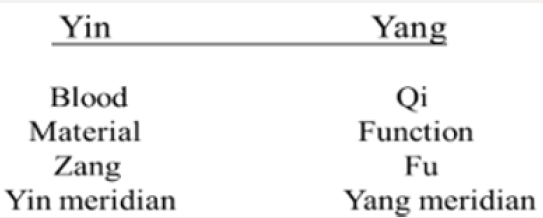
Treatments by medical doctors directly target at the pathogen or etiology with the evidence by a large number of modern scientific instruments, such as blood, urine, and stool tests, X-rays, CT, and MRI, to check on the human body. In addition to history taking and physical examination, doctors do not make diagnosis until all evidence are collected. Without scientific instruments, TCM doctors or acupuncturists can only make diagnosis, based on symptoms related to the imbalance of Yin and Yang rather than diseases itself through analyzing a patient’s tongue, pulse, voice, and whole-body situation, including reaction, hair, and posture [1,3]. The most important key to the successful results is that an experienced TCM doctors and acupuncturists can only rely on four skills for diagnosis to identify the patterns and write up the prescriptions. In other words, patterns, which distinguish TCM from the Western medicine, should be the key concern for the TCM and acupuncture practitioners in making the decisions of treatments. Since diseases are understood to be a loss of balance between Yin and Yang as shown in Figure 1, good results cannot be expected without the positive consideration of Yin and Yang [2,4].
Figure 1: Characteristics of Yin and Yang.
Lupinepublishers-openaccess-complementary-alternative-medicine-journal

Challenging Issues

Challenging issues for those who are interested in and learning TCM and acupuncture are presented in this section. These issues may have been discussed in the previous research, but new viewpoints are presented to attract more attention.

Language

There is no doubt that cultural decoding relies mostly on words. It is strongly accepted that “word-for-word” literal translation method is the way paraphrasing the accurate lexical meaning. However, this cannot be applied to TCM and acupuncture. Language is therefore the most challenging issue that needs to be addressed first. With the popularity of TCM and acupuncture, language barrier surely needs learners’ attention. The fact in the West currently is that not all of the TCM and acupuncture classics are translated into English. On the other hand, correct translation requires good translators excellent in both Chinese and English. In addition to the good command of these two languages, the meanings of the characters used in the ancient time may be different from those at the present time, which may confuse and frustrate readers. Chinese characters, different from alphabet languages which only represent forms and sounds, are called ideographs with three features of forms, sounds and meanings [5]. The difficulties in understanding Chinese characters in the TCM and acupuncture classics can be classified in the following ways [5]:
A. Simplified Chinese is widely used all over the world; however, traditional Chinese is accepted and used in ancient classics and areas like Taiwan, Hong Kong, and Macao. For example, 黃帝內“經” in simplified Chinese is 黄帝内“经” in writing.
B. Pronunciation changed with usage. “能” is correctly pronounced neng in the modern Chinese, referring to “can” in English and. However, this character in Huang Di Nei Jing ( 黃帝內經, Yellow Emperor’s Inner Classic) means “state (態)” and the pronunciation is tai. This condition occurs when the characters were not enough for use in the ancient time.
C. “內” can be used either as a verb or a noun. It is pronounced na (equals納) when used as verb and nee when used as a noun referring to “inner” or “inside” in the modern use.
D. “平” is pronounced pin when it is related to an adjective “flat” in English. With writing mistakes, the pronunciation of this character is bian when it is used as a verb to mean “distinguish” in medical Chinese.
E. Different characters bear the identical meanings. “输”, “ 输”, and “腧” are different characters referring to the identical meaning of acupoint, and all of these three characters are pronounced shu.
The ability to understanding Chinese characters deserves attention as well in learning and understanding acupoints. For mastering acupuncture, understanding the real Chinese meanings of the acupoints is required. ST29-Guilai is the typical example for this aspect because Guilai (歸來) literally in Chinese means “return” and this acupoint is usually used for prolapse of uterus, menstrual irregularity, and dysmenorrhea [6]. 神(Shen) is translated differently into English in acupoints; for example, HT7-Shenmen ( 神門, Spirit gate) refers to the gate for Heart qi to get into and out of the body, while Heart governs Shen in TCM. Compared with the DU24-Shenting (神庭, Shen court), 門refers to gate in Chinese and 庭, court, which suggests that one must go through the “gate (HT7)” first and then get into the “court (DU24)” to hold or calm Shen. This difference highlights the importance of choosing acupoints in calming Shen. An acupoint may have different names with the historical developments. The nickname of KD3-Taixi (太溪) is呂細 (Lvxi) alternatively used in the acupuncture classics. On the other hand, the nickname of HT7 is 中都 (Zhongdu) completely identical with LV6 in Chinese, which may confuses learners.
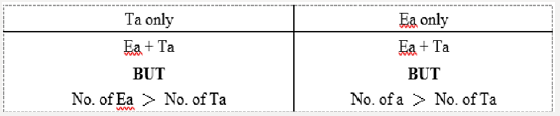
Figure 2: Protocol matrix in using traditional acupoints and extra acupoints.
Lupinepublishers-openaccess-complementary-alternative-medicine-journal
Note: Ea for Extra acupoints and Ta for Traditional acupoints.
In addition to the names of acupoints, extra acupoints also deserve close attention in consideration of combining regular acupoints with extra acupoints. Extra acupoints distinguish themselves from the regular acupoints on the traditional fourteen meridians with the unique indications, actions, and the great effectiveness in acupuncture theory and treatment, even though some of extra acupoints have not been verified with scientific evidence [7]. Pattern identification which derives from the Yin- Yang theory is surely the key concept of TCM. Unfortunately, this concept cannot apply to extra acupoints because they are not incorporated into the traditional meridians with the lack of Yin- Yang. The challenge acupuncture practitioners face is when it is the best time to consider extra acupoints in a protocol. The historical developments of extra points show that an extra point can surely play an essential role in acupuncture and be used alone or with the traditional regular acupoints for the treatment. Unfortunately, the actions and indications of extra acupoints have not be scientifically researched and verified as traditional regular acupoints. In strategy, a practitioner may take the principle of “Least needling for best results” into consideration to keep patients from pain, fear, or worry. The goal can be achieved with the following four choices shown in Figure 2 when it comes to the tactic [8].

Characterizations of Chinese Material Medica

The use of Chinese herb must be based on the patient’s conditions with accurate diagnosis, following the principles of pattern identification. Channels, properties, indications, and actions of the Chinese herbs in the different material medica classics are not always discussed in the same ways. The actions of Radix Ledebouriellae Divaricatae (Fangfeng) in Compendium of Materia Medica (Bencao Gangmu, 本草綱目), for example, are night sweat, migraine and headache, and constipation. However, actions like aversion to Wind, sweating, blurry vision, and vertigo are presented in The Classic of Herbal Medicine (Shennong Bencaojing, 神農本草經).
Licorice root (Gancao, 甘草) with properties of sweet and neutral to tonify and strengthen the Spleen qi is effective for sore throat, bronchitis, cough, and infections caused by bacteria or viruses. This herb is the good example that highlights the time to collect herb is an attention that cannot be ignored. Literature shows the best time to collect and dry Licorice root is in the autumn two to three years after planting [9], but no detailed information is found for the reasons. The possible explanation for harvest time and cultivation time may be much to do with the compound differentiation, which can vary with moisture, temperature, and sunshine. The Chinese term 木瓜 (Mugua) refers to both Chinese herb Fructus Chaenomelis and papaya. In other words, confusing situation like this Chinese herb occurs quite often to TCM and acupuncture learners.

Processing

The nature and indications of Chinese herbs change with processing for the required actions in treatment.
It is beyond doubt that Radix Bupleuri (RB) is one of the most popular traditional Chinese medical herbs in terms of treating diseases related to the Liver. Radix Bupleuri, named “Chaihu ( 柴胡)” in Chinese, is derived from the dried roots of Bupleurum Chinense DC. (Pei Chaihu, 北柴胡) and Bupleurum scorzonerifolium Willd (Nan Chaihu, 南柴胡) [10], which is the main ingredient of the most famous and frequently used preparations Xiao Chai Hu decoction and Da Chai Hu decoction. The major differences between Bupleurum Chinense DC. and Bupleurum Scorzonerifolium Willd are that the indication of Bupleurum Chinense DC. is dispersing stagnated Liver qi while Bupleurum scorzonerifolium Willd is raising Yang Qi in the Middle Jiao deficiency pattern.
For clinical use with indications changed to meet the patients’ needs, Radix Bupleuri is commonly selected in crude, fried, and vinegar-baked [11]. Among the characterizations of Chines herbs discussed above, dosage and ration are also two of the most important issues. Historic evolutions in the measurement show dosage, actually the top secret in learning Chinese formulas, has changed a lot and been a concern in practice for more than thousands of years. Quin (錢), the unique unit of weight measurement always used in TCM herbs, is different from that used in the Han dynasty, in which the author of Treatise on Cold Damage Disorders (The Shanghan Lun, 傷寒論) Zhang Zhongjing was born. In the meantime, one Quin equals 3.125g in China, but 4g in Taiwan, which suggests TCM and acupuncture learns need to bear the differences in mind when doing research. Another attention that should be given to the clinical use of Chinese herbs is dosage, which should draw attention with geographical factor. Zhang Zhongjing was born in Henan located in the south of China, where the temperate climate is humid subtropical. The climate may be one of the factors affecting his logic reasoning in the formulas; for example, the most used herbs in treating gastrointestinal diseases are licorice root, jujube, dried ginger, ginger, and Guizhi (Ramulus Cinnamomi) for the property of spicy to disperse stagnated Qi and tonify Yang. In other words, adjustments must be made, considering geographical factors.
In addition to weight, ration is also the concern that must been taken into consideration for the ingredient percentage of a formula. Liu Yi San (Six to One Powder, 六一散) indicates that the ratio of Talcum and Radix Glycyrrhizae (Licorice root) is 6:1. Actually, for learners who understand Chinese can easily catch the meaning of this formulas from the character 六 referring to six and-, 1. Dosages in practice must be adjusted, depending on the patients’ conditions. This is the most difficult to learn and understand because it reflects the experience of a TCM doctor or an acupuncturist. In other words, there is not golden rule to follow at all, and it is hard to be verified with quantitative analysis.

Discussion

The logic thinking of the Chinese is inductive reasoning, compared to deductive reasoning of the Western people. Based on this logic model, TCM, including acupuncture, features similarities in theories with Yin-Yang, the Five Element, Qi-Blood, and Pattern identification. It is noted that most of the scientific researches for verification of efficacy of TCM and acupuncture only focuses on diseases, instead of following the Pattern identification of TCM, which cannot accurately exemplify the TCM and acupuncture theories to a great extent [11]. The historical developments prove that there are challenges ahead of TCM and acupuncture learners, such as when to combine regular acupoints with extra acupoints, how to decide the accurate dosage and whether or not select dried herbs, etc. More and more population in the Chinese communities like China, Taiwan, Hong Kong, and Macao seems to suggest that TCM and acupuncture benefit public health with its efficacy. This study may recommend that having a good command of Chinese can play a key role to learning and mastering TCM and acupuncture. Unfortunately, it is not easy at all for the Western learners to make a right decision when it comes to learning traditional or simplified Chinese characters. The debate on traditional Chinese characters and simplified Chinese characters has been an ongoing dispute concerning Chinese orthography among users of Chinese characters for years with the establishment of the People’s Republic of China (PRC) in 1949. Looking back at the history of Chinese medicine, all of the great classics are written in traditional Chinese. This fact may give the learners the right direction that learning traditional Chinese enable the Western learners to acquire more profound knowledge of TCM and acupuncture. It is believed that “Englishword- for-Chinese-character” translation surely hinders learners from acquiring accurate understanding of TCM and acupuncture. However, there is not any Chinese medical terminology curriculum offered in the West.

Conclusion

Challenges exist before those who are learning or interested in TCM and acupuncture. Only accurate decoding of Chinese characters can exactly explain TCM and acupuncture concepts, so it is highly suggested that learning traditional Chinese characters must be considered for the Western learners when they really expect to explore and enjoy the beauty of TCM and acupuncture. With the natural and human restrictions, there is a long way to go for the contemporary learners and researchers to verify the efficacy of TCM and acupuncture with evidence-based research.

https://lupinepublishers.com/complementary-alternative-medicine-journal/pdf/OAJCAM.MS.ID.000103.pdf


For more Lupine Publishers Open Access Journals Please visit our website:


To Know More About Open Access Publishers Please Click on Lupine Publishers


Follow on Linkedin : https://www.linkedin.com/company/lupinepublishers
Follow on Twitter   :  https://twitter.com/lupine_online