Showing posts with label Lupine Open Access Journals. Show all posts

Thursday, 6 August 2020

Lupine Publishers | Proposal of dental attention model for children with disabilities in Ecuador

Lupine Publishers | Journal of Pediatric Dentistry

Abstract

Children with disabilities are a vulnerable group that needs special attention and care in dentistry (because of physical, developmental, mental, sensory, behavioral, cognitive or emotional impairment). It is known that disability generates different levels of risk for oral diseases. Ecuador is a country that is at the forefront of global care for people with disabilities, the Catholic University of Cuenca-Ecuador, has proposed an early intervention model (based on evidence) to the control of caries lesions in these patients, through a school based intervention developed at ADINEA school in the same city. This model is currently being applied since August 2017. The purpose of this paper is to present, academically the conceptual model of our intervention. This proposal has 4 principal components parents support, minimal intervention approach, tooth decay control and behavior management.

Introduction

Parents Support

Good communication among the dentist, patient and parents, builds confidence [1]. Commonly children respond positively when their parent is present in the treatment room [2], The intervention begins with parent’s education before the child’s dental visit, the procedures must be discussed with them, and this is called the pre-visit conversation [3]. After that, an informed consent [3] is discussed with the parent, informing about the procedures, risks and benefits of the technique that will be used with their child and all the questions are addressed by the professor of pediatric dentistry. All the parents in this school receive this intervention.

Indication of tooth brush

One of the most important recommendations for parents is the use of fluoride tooth paste when they brush their son’s teeth, evidence shows that the fluoride tooth paste effectiveness is like varnishes and gels to prevent caries [4]. Another study shows an efficacy of 23%; 95% IC (19% a 27%) in prevention of caries prevalence [5]. In this intervention each parent carries their son´s tooth brush and the professional modify the handle of the brush according to the specific needs of the child. All the parents in this school receive this intervention.

Oral health education

A Systematic review shows that traditional oral health was effective in reducing biofilm in school age children, based on this finding our proposal incorporated this kind of educational approach, but addressed to parents. All the parents in this school receive this intervention.

Minimal Intervention Approach

Traditionally dentists used a dental drill to remove all the decay, however the most relevant evidence shows that this method has a 34.7% of probability to expose the nerve of the tooth, meanwhile the partial removal method has a 5% of probability to expose the nerve [2]. This was the reason to incorporate this method in our proposal. All the patients are treated with this philosophy

Tooth Decay Control

Fluoride gel

The scientifics literature shows that the application of fluoride gel has in permanent tooth a pooled prevented fraction of 28% (95% CI 19% to 39%) meanwhile in primary teeth surfaces was 20% (95% CI 1% to 38% [6].

Dietary control

Live stile behaviors increase the risk of disease, thus some interventions which are successful in help people to modify some behavior could be an important tool for public health and prevent caries [7]. An RCT study in 1995 demonstrated the effectiveness of sugar restriction in the decrease of S. mutans and S. sobrinus count in plaque of buccal surfaces [8].

Sealants

Evidence suggest that the children who had sealant applied on molars were less likely to have tooth decay than others. The actual evidence shows that sealants reduces 6% the development of tooth decay even in 4 years follow up studies [9].

Fluor Varnish

Scientific literature revealed that It intervention in permanent teeth has a 43% of efficacy in reduction in decayed surfaces, while in deciduous it has been 37% efficacy [10].

Atraumatic Restorative Technique (ART)

This method may reduce pain experience compared with traditional approach (dental drill) 0. 65 mean difference 95% CI (1.38 to 0.07); but low quality evidence suggest that deciduous tooth treated with ART and high viscosity glass ionomer cement are more likely to result in restoration failure OR= 1.6; 95% CI (1.13 to 2.27) [11]; for this reason, after applying this technique, conventional restoration with composite was carried out.

Periodically oral exam

In children with disabilities this procedure is recommended each three month, and a caries risk assessment should be done [12].

Behavior Management

Tell-Show-Do (TSD)

One of the most popular technique in the pediatric dentistry patient management is TSD, The American Academy of Pediatric Dentistry recommend use it, first verbal explanation(tell) should be carried out, after that demonstrations for the patient of the visual, olfactory, auditory and tactile demonstrations should be do (show) and finally proceed with the completion of the procedure (do) [13]. All the children in this school are attended with this intervention.

Live Modelling

There are some techniques for managing behavior in pediatric dentistry, one of these is the live modelling which is a nonpharmacologic one. In 2009 Farhat-McHayleh, Harfouche and Souaid demonstrated the efficacy in an RCT study; having 11.1 heart beats/min of difference between Tell-Show-Do and a Mother Live modelling technique [14]. All the children in this school are attended with this intervention.

Sedation

Actual evidence shows that the use of oral midazolam in doses between 0.25mg/kg to 0.75 mg/kg have 1.8 points of effectiveness on the six-point Houpt Behavior scale, demonstrating an association with more co-operative behavior [14]. It is used only if the professional considers necessary.

Physical restraint

Named Protective stabilization for pediatric dental patients, consist in use some accessories to reduce movements and resistance and increase the cooperation when is providing dental procedures. Aggressive, uncontrolled and impulsive behaviors may harm the professional and the patient, so the physical restraint should be applied with parent permission and informed consent. Not all the children need this intervention, the professional assess the cooperation and recommend use it for or not.

Conclusion

This proposal of dental attention model for children with disabilities recover actual evidence based recommendations.


Read More Lupine Publishers Pediatric Dentistry Journal Articles: https://lupine-publishers-pediatric-dentistry.blogspot.com/

Read More Lupine Publishers Articles: https://lupinepublishers.blogspot.com/


Friday, 13 March 2020

Lupine Publishers | The Prevention and Treatment of Malaria in Traditional Medicine of Tetun Ethnic People in West Timor Indonesia

Lupine Publishers | Open access Journal of Complimentary and Alternative Medicine


Abstract


Native people in West Timor Indonesia have been exposed to malaria since long time ago. Because of this experience, it is believed that this community has developed their local concept about malaria, and how to manage it. This research was intended to document and analyze local knowledge and practices of malaria prevention and treatment developed by Tetun ethnic people in West Timor. The research was a field study, conducted through some interviews, discussions and observations. The results of this study showed that this community has long been developing various methods to prevent and threat malaria. The prevention and treatment of malaria in traditional medicine of Tetun ethnic people consists of both herbal and non-herbal methods and supported by some prohibitions and restrictions. The results also showed that the practice of traditional medicine for prevention and treatment of malaria by Tetun ethnic people can be explained scientifically. Medicinal plants that widely used like Strychnos ligustrina, Carica papaya, Momordica sp., Cleome rutidosperma, Physalis angulata, Alstonia spectabilis, Alstonia scholaris and Melia azedarach have been proven to have antimalarial activities as anti-plasmodial, antipyretic, analgesic, anti-inflammatory and immunostimulant.

Keywords: Local Knowledge; Traditional Medicine; Malaria Prevention and Treatment; Tetun Ethnic; West Timor


Introduction

Traditional communities in ancient times developed their local knowledge about the prevention and treatment of a disease based on their experience interacting with the disease for a long time. This local knowledge was then become a guidance for them to establish strategies to prevent and treat the disease, which were practiced widely in the community, and become their traditional medicine [1,2]. Traditional medicine is a term imposed on pre-scientific medical systems, and defines as a sum total of knowledge, skills and practices based on theories, beliefs and experiences of different cultural customs used in health care, disease prevention and increased physical and mental performance, which have been used for generations from one generation to the next [3,4]. Malaria is an ancient disease that has not been fully eradicated until this time [5]. Since long time ago, malaria was the main infectious disease that often attacks Timorese people, especially in Belu and Malaka Districts in West Timor (Indonesia). Several old manuscripts noted that Timorese people in early of 19th century were suffered from malaria which caused many deaths [6,7]. Until this time, Belu and Malaka Districts are still hyper-endemic areas of malaria. According to the Global Fund report, in 2014, Belu and Malaka Districts were classified as high malaria endemic areas, with the Annual Parasite Insidence (API) of 12.87o/oo and 11.58o/oo respectively, higher than Indonesian average API 1.38o/oo. Various programs for malaria prevention and eradication sponsored by the Indonesian Ministry of Health and World Health Organization such as insecticide-impregnated net, fogging, mass blood survey for early diagnosis and prompt treatment, and treat malaria patient using Artemisinin Combination Therapy (ACT) have been implemented, but decreasing of the API value is still not too convincing [8]. Cultural factors that influence public attitudes and acceptance on the programs of prevention and treatment of malaria are estimated to be one of the obstacles to the success of these programs. The implementation of various disease control programs and strategies often faces major challenges stemming from the social and cultural situation of the community. The social and cultural situation of a community in a particular place can negatively influence the choice, acceptance and use of interventions in disease control. Many programs of disease control and eradication are unsuccessful because of these social and cultural barriers. Therefore, it is very necessary to understand the local knowledge of the community, including an understanding of the health-illness concept that they believe in. An understanding of this can help policy makers in designing a sustainable and more effective disease control programs [9]. The Tetun ethnic is one of native communities that inhabit territories from the central part of Timor island (in Belu and Malaka districts, Indonesia) to the east (in Republic Democratic de Timor Lester, RDTL). Tetun people are still using traditional medicines to date, and often running various traditional medication rituals [10]. Because of their long-time interaction with malaria, it should be assumed that they have developed their own local knowledge about malaria and methods to prevent and treat it. Therefore, this research was intended to study the local knowledge of the Tetun ethnic people regarding malaria and the methods they have developed for the prevention and treatment of this disease.

Study Design

This study is a kind of research in the field of medical anthropology. This study was conducted as a qualitative exploratory research, with a field study as main technique, supported by a literature study.

Profile of Study Site and People

This research was conducted in Belu and Malaka Districts located in the central part of Timor island. These areas are located at 9°15’ S-9°34’ S and 124°40’ E-124°54’ E. Belu and Malaka are two of Indonesian territories that border directly with the Republic Democratic Timor Leste (RDTL). The topography of Belu Districts is mainly hilly, while Malaka is generally a stretch of flat land. Some areas of Malaka at the south part meet the rainy season twice in a year, while the areas of north part and also Belu areas are only have one rainy season. The main rainy season takes place between November-March due to wind that brings rain from the Indonesian Ocean. This rain occurs evenly in Malaka and Belu regions. The additional rainy season in April-June, which is limited in some areas of Malaka, is affected by wind from Australia that carries moisture from the Timor Sea. Based on the ethnolinguistics, there are four indigenous ethnic groups that live in Belu and Malaka Districts, namely Tetun, Dawan, Kemak, and Bunaq (Marae). Tetun ethnic is the majority ethnic group in Belu and Malaka, consists of approximately 80% of the population. They scaterred in almost all sub-districts of Belu and Malaka [11].

The Informants

The informants of this study were people of Tetun ethnic who have lived for long time in Belu or Malaka Districts. They were people with good knowledge and experiences of traditional medicine practices. The informants were selected through the purpossive and snowball tehniques. A total of 94 informants (42 men and 52 women) with the age of 40-90 years old were involved in this study. They came from 15 vilages of five sub-districts in Malaka (Wewiku, Malaka Barat, Weliman, Malaka Tengah and Kobalima Timur Subdistricts), and 14 vilages of ten sub-districts in Belu (Raimanuk, Tasifeto Barat, Nanaet Duabesi, Tasifeto Timur, Lasiolat, Raihat, Lamaknen, Kakuluk Mesak, Atambua Barat and Atambua Selatan Sub-districts). These informants consist of traditional public healers, home healers, and traditional medicine users.

Data Collection

Data were collected through several interviews, discussions, and observation. Interviews were conducted with a semi-structured questionnaire. Interviews were intended to collect informations about local knowledge on health-illness concept, symptoms, signs and causes of malaria, traditional methods for the prevention and treatment of malaria, and medicinal plants used for the prevention and treatment of malaria. More deep questions were developed spontaneously based on the answers given by the informants to the previous questions. Interviews and discussions were conducted in Tetun (local language) and Indonesian. We recorded the contents of every interview by wrote a detailed essence of the conversation, but not fully word by word. Several interviews were recorded with audio and video recorder. In this field study, we were assisted by several local guides to search for informants, accompanied in the interviews, to interpreted specific local terms that strange for us, and help us to search, document and collect plant specimens. All plants mentioned by informants were collected in-situ and documented by making photographs and herbaria for taxonomic identification. This field study was conducted from April 2017 to December 2017.

Data Analysis

Data obtained from interviews, discussions and observations were analyzed qualitatively, and presented in narrative or qualitative descriptions [12]. The steps of qualitative analysis are as follows:
a) Transcription of data: first of all, the interview data, discussions and field observation records were well-transcribed in a neat text.
b) Data reduction: transcripts were analyzed to marked meaningful parts, and then grouped based on the same characteristics into certain categories, i.e. the local knowledge about health-illness, local concepts about malaria, methods for the prevention and treatment of malaria, and plants used for the prevention and treatment of malaria.
c) Presentation of data: data that has been grouped were arranged regularly according to each category to make them easy to understand. Data of plants used in malaria prevention and treatment were presented in a table.
d) Verification and conclusion: determined the meaning of the data presented.

Local Concepts about Health-Illness

The concept of health and illness in Tetun community is very simple. Tetun people define health as a condition of normal, good and not sick. Illness is interpreted as a condition in which someone feels unwell or sick or has a disease in the body. Tetun traditional people state a condition as health or ill by seeing physical signs. A person is said to be health if he/she looks physically strong, fresh, agile, has a bright face and good appetite; and vice versa, if the physical performance seems weak, lethargic, pale face, lack of appetite, then the person is said to be sick or has an illness in the body. Someone is said to have recovered from illness when showing physical signs such as being able to get up, not feel dizzy anymore, being able to walk quickly and to work again, and his/her appetite is back and improved. The concept of Tetun people about health and illness is also associated with the ability to carry out daily life activities. Someone who is still able to work or move without feeling bad or pain in his body, then that person is not said to be sick. People who are clinically suffering from a certain disease but not feel sick and still able to carry out daily activities without being disturbed by the disease, then that person is not considered sick. WHO and Indonesian Ministry of Health define health as a state of complete physical, mental and social well-being, and not merely the absence of diseases or infirmity [13]. Comparing the concept of health according to Tetun people’s understanding with this official definition, it can be concluded that the concept of health of Tetun ethnic people is inadequate to describes whole condition called health, because for this community, health and illness are more related to physical performance than psychological and social performance.

Local Concept about Symptoms and Signs, and Causes of Malaria

The indigenous people of Tetun know malaria as is in mana’s (hot body, fever) with primary signs and symptoms are high fever, shivering, intermittent fever, headache, muscle and joint pain, pale, yellow eyes, and abdominal pain and/or diarrhea. Many informants did not know that swollen spleen (splenomegaly) is also one of the signs of malaria that is already severe, but they assumed that the swollen spleen can cause fever (they say “malaria”). In general, almost all the informants assumed that malaria is a common, mild and not serious disease, only a sick of hot body or fever. This local concept seems to greatly influences people’s perceptions of the danger of malaria and result in reduction of their alertness on malaria and the seriousness of managing this disease. In the local knowledge of Tetun ethnic people, the causes of malaria are: sweet food and drink, chilled, sunburn, fatigue, presence of other disease in the body, magic, cold food and drink, lack of sleep, inadequate post-natal care, spicy food, alcohol, and oily or fatty food. Tetun ethnic people assumed that sweet food and drink, sunburn, magic, spicy food, alcohol, and oily or fatty food cause an excessive heat in the body, and as a result, someone will get high fever malaria. Chilled, cold food and drink, lack of sleep is assumed to cause cold entering the body, and as the result, someone will get shivering malaria. The fatigue, presence of other disease in the body and inadequate post-natal care for mother and infant are assumed to destroy the equilibrium of hot and cold in the body and result in malaria with high fever and/or shivering. According to some informants, mosquito as malaria transmitter was a new knowledge that coming from outside, introduced by the Catholic missionaries from Europe. According to Foster dichotomous on causes of disease [14], the causes of malaria in the local concept of Tetun people are naturalistic, not personalistic. Factors such as sweet foods or drinks, long time in rain, water or cold places, long working under the hot sun, fatigue and the presence of other diseases in the body are naturalistic properties that cause heat-cold balance in the human body to be disrupted, and then causes someone to get malaria. Many Tetun people do not consider mosquito as carrier of malaria, causing them to have low awareness of the threat of mosquitoes. This may be one of the causes of the still high endemic of malaria in Belu and Malaka until this time [15].

Methods for The Prevention and Treatment of Malaria

The Tetun ethnic people have their own patterns or habits of life that they do for generations to prevent malaria attacks. The methods that are considered effective in preventing attacks of malaria are: luli or hale’u, drink medicinal concoction of bitter herbs, eat bitter food, and drink tua moruk. Luli or hale’u means avoiding things that can cause malaria (according to their local concepts about the cause of malaria), which are: not eating sweets frequently, not working for long time under the rain or hot sun, and not too tired at work or physical activities. Eating bitter foods, especially papaya and bitter melon, and drinking bitter palm sap tua moruk are also considered effective to prevent someone from being attacked by malaria. Some informants who previously linked malaria with mosquitoes stated that repelling mosquitoes using smoke of burned aromatic plants and sleeping under mosquito nets are effective for malaria prevention. The treatment of malaria in traditional medicine of Tetun ethnic consists of herbal and non-herbal methods. Herbal method consists of drinking herbal concoction, inhaling the vapor of boiled medicinal plant, massage with paste of medicinal plant, bath with water of boiled medicinal plant, and attach the paste of medicinal plant as a cataplasm on the swollen spleen. A non-herbal method is sunu kok, that is burning the waist above the swollen spleen using a piece of coconut shell coal or a heated metal. The results of the interviews showed that most traditional medication for malarial patient usually combine two or more methods. It was found also that the role of traditional healer in the treatment of malaria patient is not so important. Tetun ethnic people assumed that malaria is a common and not a serious disease, thus the treatment of malaria does not require a high competency healer. Several informants stated that they usually conducted self- and home-medication for malaria complaint. In the traditional medicine of Tetun ethnic people, the treatment of malaria is a simple treatment for reducing heat or fever [15]. The assumption of malaria as a common, mild and not a serious disease results in lack of awareness about dangers of malaria. It was found that in many cases, health workers often complain of disobedience of patients who stop taking antimalarial drugs immediately after they feel cured (being able to get up, not feel dizzy anymore, being able to work again, and the appetite is improved), even though Plasmodium in their blood has not been completely eliminated. As the result, the success of the malaria eradication program in this area has increased very slowly [8].

Plants Used for The Prevention of Malaria

Tetun ethnic people believe that consumption of bitter food or drink can prevent someone from malaria attacks. Therefore, small children are often forced by their parents to eat stew and drink decoctions of flowers, leaves and young fruit of Carica papaya, or young fruit of Momordica sp. (M. charantia or M. balsamina). Some informants gave information that if they feel tired, achy and lack of appetite, they will drink decoction of Carica papaya leaves, fruit of Momordica charantia, Melia azadarach leaves, Alstonia scholaris, Alstonia spectabilis or Strychnos ligustrina stem bark. Consumption of these plants’ decoction is believed to restoring body freshness, increasing appetite, eliminating fatigue, and thus, preventing from malaria attack. Some informants also believed that drinking tua moruk is effective in malaria preventon. Tua moruk is a traditional drink made by fresh tapped palm sap soaked with the stem bark of Alstonia scholaris, Alstonia spectabilis or Strychnos ligustrina soaked in it. Several publications of other previous studies showed that the bitter plants used by Tetun people to prevent malaria has been shown to have pharmacological activities as antiplasmodium and immunostimulant [16-18].

Plants Used for The Treatment of Malaria

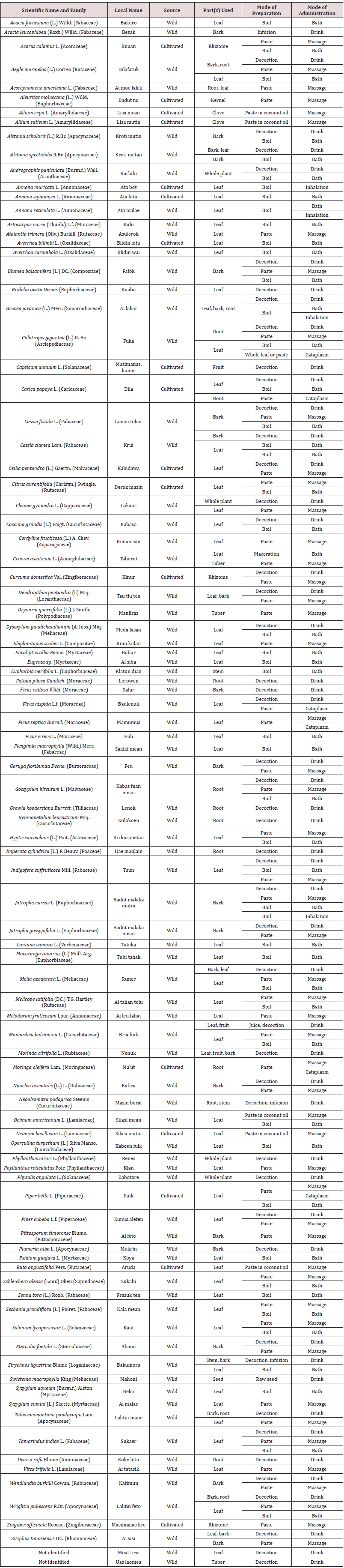
In this study, we recorded a total of 96 species from 39 families used by Tetun people in various formula for drink, massage, bath, inhalation and cataplasm (Table 1). Strychnos ligustrina, Carica papaya, Cleome rutidosperma, Physalis angulata, Alstonia spectabilis, Alstonia scholaris and Melia azedarach are some of the most widely plants used in various formula for drink. For massage, Garuga floribunda, Jatropha curcas, Acorus calamus, Allium cepa, Drynaria quercifolia, Ocimum sp. and Ruta graveolens are common. For bathing, people use Tamarindus indica, Psidium guajava, Melicope latifolia and Blumea balsamifera. Leaves of Brucea javanica, Annona muricata and Annona reticulata are used in inhalation method. Root of Moringa oleifera and leaves of Ficus hispida are used as cataplasm to reduce the swollen spleen [19]. Several plants were found in various formula for more than one mode of application. Several previous publications showed that most of these plants are also used in other traditional medicine for the same purpose in many areas of Indonesia and the world [16,18], and have been scientifically proven to have pharmacological activities as true antimalarial (antiplasmodial) and/or indirect antimalarial such as antipyretic, analgesic, anti-inflammatory and immunostimulant [20].
Table 1: Plants used by Tetum ethnic people for the treatment of malaria.
Lupinepublishers-openaccess-complementary-alternative-medicine-journal


Conclusion

The practice of preventing and treating malaria in the traditional medicine of Tetun ethnic people is a direct implementation of their local knowledge about malaria. The local concept of signs and symptoms and the causes of malaria encourage traditional people to create methods to prevent and treat malaria. The local concept of the Tetun ethnic people about malaria is the main reference in the creation of rules regarding prohibitions and restrictions, and recommendations for preventing attacks of malaria. The local concept of the causes of malaria determines the choice of plants for the treatment of malaria. Scientifically, these plants have been proven to have activities as true antimalarial and indirect antimalarial. The local concept of malaria as a common, mild and harmless disease causes that the role of traditional healer is not always needed in the treatment of malaria. Methods for the prevention and treatment of malaria developed by Tetun ethnic people consist of both herbal and non-herbal methods and supported by the implementation of several prohibitions and restrictions to provide healing for the sufferers of malaria.


Acknowledgement

We thank to Indonesian Ministry of Research, Technology and Higher Education, for financial support (Research Contract No. 0668/K8/KM/2018).

For More Lupine Publishers Open Access Journals Please visit our Website:

To Know More About Open Access Publishers Please Click on Lupine Publishers
Follow on Twitter:  https://twitter.com/lupine_online

Thursday, 27 February 2020

Lupine Publishers | Subjection between Breast Cancer and Body Mass Index, the Role of L-Carnitine in Prediction and Outcomes of the Disease

Lupine Publishers | Open Access Journal of Oncology and Medicine


Abstract

Increasing the effectiveness of antitumor therapy in breast cancer patients who take L-carnitine during preoperative systemic antitumor therapy compared with patients receiving standard neoadjuvant systemic antitumor therapy served as a prerequisite for studying possible antitumor mechanisms of L-carnitine. The positive effect of L-carnitine is due to the transfer of palm-n-LC through the inner membrane into the mitochondrial matrix, which promotes the formation of a significant number of ATP molecules. It has also been shown that L-carnitine can have a double protective effect, enhancing the energy dynamics of the cell and inhibiting the hyperexcitability of the cell membrane, that making it an ideal nutrient for the prevention and treatment of cancer. This article summarizes the results of epidemiological and clinical studies of the use of L-carnitine in the treatment of breast cancer
Keywords: Body mass index (BMI); Breast cancer (BC); Obesity; Overall survival; L carnitine


Introduction

The incidence of breast cancer in the world in general and in Ukraine in particular is growing. In 2017, in Ukraine the incidence reached 16 percent of female population, for which, the breast cancer ranked first in structure of oncological incidence among women. In analyzing the data of the National Cancer Registry of Ukraine, it should be noted, that in comparison with 2014 year, the prevalence rate of breast cancer in 2016has increased by 5,1%, that indicates importance of improvement diagnostic procedures and methods of treatment it [1]. Studying the scientific literature on this subject, we noticed that there is a strong biological relationship between obesity and a poor outcome of breast cancer. And having analysed the date of Ministry of Health in Ukraine it can be concluded, that about 26% of women in 2017 year had overweight or obesity.
Obesity has a chronic metabolic character, which is the result of the interaction of the endogenous factors, environmental conditions and lifestyle. Endogenous factors could be considered a violation of the genetic and hormonal balance. The external conditions and type of lifestyle include irregular rhythm nutrition, use of substandard products and sedentary lifestyle. Obesity is the first risk factor for metabolic syndrome, diabetes type II, cardiovascular disease and some forms of cancer, including breast cancer. Since overweight is a risk factor for breast cancer, there is reason to believe that among patients with breast cancer the percentage of obese women is higher than in the population. The risk of breast cancer in postmenopausal women by 30%, it is more than in premenopausal, women with obesity-50%. Furthermore it was proven that obesity is associated with poor prognosis in patients with breast cancer, regardless of menopausal status, and effectiveness of systemic medication breast cancer in patients that have over weight is lower than in patients with normal BMI.
Although obesity is associated with a poor outcome in women with breast cancer, it is unclear how weight loss after diagnosis will change its course and results. Recently, complementary and alternative medicine (CAM) is widely accepted among patients with breast cancer, which may provide several beneficial effects including reduction of therapy-associated toxicity, improvement of cancer-related symptoms, fostering of the immune system, and even direct anticancer effects [2]. L-carnitine is a metabolite of C4 oil LC, which is involved in the transfer of palm-n-LC through the inner membrane into the mitochondrial matrix and is a substrate for the formation of ATP molecules. Carnitine is a trim ethylated amino acid naturally synthesized in the liver, brain and kidneys from protein lysine and methionine. Several factors, such as sex hormones and glucagon, can influence the distribution and level of carnitine in tissues [3,4].
In the absence of L-carnitine, the inner membrane of the mitochondria becomes impermeable to fatty acids, which entails a chain of various metabolic disorders in the human body. Carnitine has a modulating effect on the function of acetylcholine excitatory neurotransmitter, glutamate excitatory amino acid, insulin growth factor-1 (IGF-1) and nitric oxide (NO)[3]. Also proved, that L-carnitine may have a dual protective effect by enhancing the energy dynamics of the cell and inhibiting cell membrane hyper excitability, which make it an ideal nutrient for cancer prevention and treatment [5]. In view of the foregoing, the study of the influence of the body mass index on the effectiveness of systemic treatment of breast cancer is an urgent scientific problem and a promising field of research. This article presents the information of epidemiological and clinical studies of the influence of the body mass index on the effectiveness of breast cancer treatment by individualizing therapeutic measures taking into account the characteristics of patient's metabolism.
Studies on the Effects of BMI on The Course and Outcome of Breast Cancer and the Role of L-Carnitine in the Treatment of Cancer: The effectiveness of the prescribing of L-carnitine for breast cancers' treatment, as well as the effect of BMI on the outcome of the disease is proven in epidemiological and clinical studies.

Epidemiological and Clinical Studies

DSM Chan and co-authors [6] reported that women who have BMI> 30 course and outcomes of breast cancer are significantly worse than women with BMI <30. They proved, that women with BMI> 30 have the overall relative risk of total mortality 1.41, women with BMI of 25> 30 - 1.07. At the same time, for every 5 kg / m2 of the increase BMI, the risk of both total mortality and mortality from breast cancer increased, namely by 18% and 14%, respectively M. Protani and co-authors [7] have shown that women with breast cancer, who are suffering in obesity, have lower survival rate than women with breast cancer without obesity. Recently published data of randomized clinical researches by ML Neuhouser and coauthors [8] demonstrated, that for women> 50 years old, with 2 and 3 stages of obesity (BMI> 35) is typically the development of GR+ breast cancer. Similarly, B. Pajares et al. [9] who found significantly worse results for patients with BMI >35 compared with patients with BMI <25, stated that the magnitude of the effect depended on the cancer subtype (estrogen receptor (ER) / progesterone (PR) positive and HER2 negative, HER2 positive, triple negative). An analysis of the pooled data of the three adjuvant studies of the Eastern Cooperative Cancer Group showed significantly worse results for patients with obesity (BMI > 30) than for patients with normal BMI with a hormonal receptor-positive disease. And it was noted absence of negative effect of obesity on survival in patients with other breast cancer subtypes. C Fontanella et al. [10] studied the effect of BMI on different molecular subtypes of breast cancer and concluded that in women with ER / PR-positive and HER2-negative breast cancer, as well as with TNBC, the risk of death is significantly higher than in other subtypes of cancer.
It is proved that even the highest BMI figures are not a risk factor for death for patients with luminal A-like subtype of breast cancer. The reason for this is that fatty tissue produces an excessive amount of estrogen, a high level of which is associated with an increased risk of developing breast, endometrial, ovarian and some other cancers. It has also been proven that the level of adipokine, that promotes cell proliferation, increases in the blood with increasing of level of fat in organism. And adiponectin, which people with obesity have less than people with normal BMI, can have anti proliferative effects. Such data can serve as evidence of the effect of BMI on the course and outcome of breast cancer. Yet another proof of influence developing metabolic syndrome on the course and outcome of breast cancer was proposed by R. Bhandari et al. [11]. They proved that that the presence of metabolic disorders (that is, the metabolic syndrome) is associated with an increased risk of breast cancer in adult women.
The above data led to the need to investigate medicines that contribute to fat burning, such as L-carnitine. Based on the data provided by Rania M. Khalil and co-authors [12], we can prove the positive effect of this medicine on the course and outcome of breast cancer. The study showed that patients who received Tamoxifen with L-carnitine had significant decrease of Her-2 / neu and IGF-1 level (P <0.05) in the serum compared with patients who received only Tamoxifen. Using of L-carnitine led to significant decrease Her- 2 / neu level in the serum (P <0.05) compared to each of the control patients, namely, 59.5%. The effect of tamoxifen on IGF-1 (P <0.05) -decrease its level by 5.4% [13].However, it has been proved that using of L-carnitine in the treatment of ER+ breast cancer does not significantly reduce the level of estradiol, but leads to decrease both tumor markers CEA and CA15.3 (P <0.05,% decrease by 80.9% and 67, 8%, respectively) [13].
Using of L-carnitine in patients with breast cancer and obesity improves the metabolism of fatty acids in mitochondria, restores normal mitochondrial function and, thus, improves the general condition and quality of patients’ life [14]. Carnitine may alsomimic some of the biological activities of glucocorticoids, particularly immunomodulation, via suppressing TNF-a and IL-12 release from monocytes (5). L-carnitine as adjuvant therapy in cisplatin-treated cancer patients proved a beneficial effect in reducing the cisplatin- induced organ toxicity [15]. It is possible that, the extremely lipophilic nature of carnitine may be responsible for the decrease in EGFbinding [16]. Carnitine may insert in the cell membrane and/or interact with one of the many cellular enzymes having lipid substrates or cofactors. In addition, carnitine may interact directly with the EGFR [17].
Experimental evidence is available showing that ROS may induce the light and independent phosphorylation of the EGFR activating Her-2/neu. Moreover, the expression of the receptor is induced in conditions of oxidative stress [18]. L-carnitine, via its free radical scavenging and antioxidant properties, may inhibit ROS-mediated EGFR phosphorylation. It has been found that palmitoyl-carnitine can inhibit the activity of heart and brain protein kinase C in a competitive manner and subsequent phosphorylation of the EGFR [19]. Although the tumor markers and IGF-1 showed no significant difference in TAM-treated patients before and after administration of L-CAR, there was a tendency to decline after L-CAR supplementation [13]. The results of the above studies became a prerequisite for conducting clinical studies aimed at establishing the role of L-carnitine in the treatment of breast cancer.
To date, the search in the online clinical research registration system ClinicalTrials.gov using key words L-carnitine + breast cancer has revealed several studies evaluating the efficacy and safety of L-carnitine in the treatment of breast cancer patients. Analyzing the obtained results, we can conclude that L-carnitine was the drug of choice for neuropathies, as a consequence of chemotherapy, in patients with breast cancer.


Conclusion

L-carnitine is widely used in clinical practice. However, recently this medicine causes growing interest among oncologists. In a number of studies, L-carnitine has proven itself as a medicine that capable, during the preoperative systemic antitumor therapy, to increase its effectiveness compared with standard neoadjuvant systemic antitumor therapy. And also, taking L-carnitine with neoadjuvant systemic antitumor therapy helps to increase the number of cases of complete morphological regression (V degree of therapeutic pathomorphosis). To date, there are several clinical studies that are researching using L-carnitine in various malignant tumors, the results of which are the basis for further in-depth study of the effect of the medicine in the treatment of malignant neoplasms.

https://lupinepublishers.com/cancer-journal/fulltext/subjection-between-breast-cancer-and-body-mass-index-the-role-of-l-carnitine-in-prediction-and-outcomes-of-the-disease.ID.000103.php

For more Open Access Journal of Oncology and Medicine Please Click Here: 
 
 
Follow on Twitter   :  https://twitter.com/lupine_online  

Friday, 21 February 2020

Lupine Publishers | Is There Any Relation Between Blood in Urine and Eating Almonds?

Lupine Publishers | Open access journal of Complimentary & Alternative Medicine


Abstract


The main aim of the study is to find out the relation of eating almond with the blood in urine. This is the alarming situation when a person sees blood in the urine, it is called hematuria. Blood in urine is a serious disorder, but there are many situations in which it is harmless. Gross hematuria is a situation in which blood can be seen by a person. There are many benefits to eating the almonds, almonds can be eaten in the raw form or roasted form, but there are more benefits to eat raw almonds. One hundred subjects participated in the present research were students of Bahauddin Zakariya University of Multan, Pakistan [1]. The data analysis showed that 48% females eat almonds had negative results for blood in urine. The present study had been concluded that there is no relation of eating almonds with the urine in blood.

Keywords: Blood in urine; Gross hematuria; Microscopic hematuria


Introduction

This is the alarming situation when a person sees a blood in the urine, it is called hematuria blood in urine is a serious disorder, but there are many situations in which it is harmless. Gross hematuria is a situation in which blood can be seen by a person [2]. If bleeding occur in the urine, when a person test his or her urine then urinary blood test under a microscope, then determine the cause of the bleeding in the urine. Cola, pink, and red colored produce due to red blood cells in the urine, only small amount of blood cause to produce urine with red color. Blood in the urine is not painful for person, but when clots of blood pass in the urine, it would be harmful. When a person sees blood in the urine he or she makes sure to get an appointment from the doctor and test your urine [3]. There are different causes due to which blood in the urine present, such as infection in the urinary tract infection, infection of the kidney, injury in the kidney also cause blood in the urine. Different types of drugs such as cancer drug; cyclophosphamide, antibiotics such as penicillin cause blood in the urine. Enlarged prostate gland in the man of age 50 has occasional hematuria. People who run for long distance can also have blood in the urine [4].
Middle and Southern Asia are Mediterranean climate regions and these areas have almond trees, drupe is the fruit of the almond, that consist of harder shell, remove the shell and seed is revealed. Almonds sold in the market with shelled or unshelled. There are many benefits to eating the almonds, almonds can be eaten in the raw form or roasted form, but there are more benefits to eat raw almonds. Vitamin E, magnesium healthy fats, fiber protein, proteins is present in the almonds [5]. Almonds lower the cholesterol level, reduce the blood pressure, also lower blood sugar level, it also loss the weight, means almonds have fat burning power. Omega -3 fatty acids are found in the almonds, it also give benefits to bones and teeth. The main aim of the study is to find out the relation of eating almond with the blood in urine [6].


Materials and Methods

Measurement of blood in urine

A method was used to check the blood in urine of the subjects. First the sample of urine collects in a container, then a strip is dipped in container for 2-3 seconds, strip will shows colors, then match it with standard one, it will shows values and mark or write down the status of the blood in urine from the sample [7-8].

Projects designing

One hundred subjects participated in that research; subjects were students of Bahauddin Zakariya University, Multan, Pakistan. Urinalysis was performed in this research. Relation of blood in urine with eating almond was observed in this research [9-10].


Results

(Table 1) shows that 10% males eat almonds had negative results for blood in urine, 0% males had showed 10H, and 10N value for blood in urine. 1% males eat almonds showed that showed 50H. 0% males that not eat almonds showed 10H and 50H. 9% males that not eat almonds showed negative results. 1% males that not eat almonds showed 10N. 48% females eat almonds had negative results for blood in urine, 4% females had showed 10H, 1% females showed 10N, and 1% had 50H results. 15% females that not eat almonds had negative results, 1% females showed 10H results, and 1% females showed 50H results, and 0% showed 10N (Table 2).

Table 1: Relation of blood in urine in males with eating and not eating almond.

Lupinepublishers-openaccess-complementary-alternative-medicine-journal

Table 2: Relation of blood in urine in females with eating and not eating almond.

Lupinepublishers-openaccess-complementary-alternative-medicine-journal


Discussion

Number of benefits to eat almonds had been described in different papers. Almonds research and scientific paper had written that cardiovascular vascular disease increased with alarming level, so to eat 1.5 ounces of almonds as per diet, it reduces the heart disease. In 1992 heart health research started, to support the role of almonds. Almonds also beneficial to the cure of diabetes type 2. A research paper hematuria: blood in urine showed that there are two types of hematuria called microscopic hematuria and gross hematuria. 4% females had 10H result to eat almonds.


Conclusion

It is concluded from the study that there is no relation of eating almonds with the urine in blood.


For more Lupine Publishers Open Access Journals Please visit our website: 

Follow on Twitter   :  https://twitter.com/lupine_online

Wednesday, 11 December 2019

Lupine Publishers | No Fact Check, Pharmaceutical Instituions from Reputed Pune University and Socially Situated and Socially Constituted Agency

Lupine Publishers | Journal Of Orthopaedics

Abstract

The behavioral view of corporate governance has derived from the behavioral view of the firm, which arguably rests on more realistic assumptions than the economics rooted positive agency theory with regard to the heuristics of managerial action. In addition to the bounded rationality condition, the principle of satisfying and the assumption on routinisation in the decision-making process, the behavioral view treats organizations as complex social systems. They constitute venues of power battles among the coalitions of corporate actors realizing often conflicting goal agendas. It is therefore probably the most explicit about the existence of phenomena of power and politics in the corporate settings among all theories of the firm.

Introduction

Recently published work, suggest enriching the under socialized agency perspective with the predictions of the behavioural theory of the firm. They refer to this cross theoretical hybridization as the behavioural theory of corporate governance. Within that framework, they distinguish two main mechanisms that impact on behaviour and actions of actors involved in governance processes in corporations, i.e. the socially situated and socially constituted agency [1,2]. PAT, as an under socialized and actor centric theory, concentrates on examining patterns, according to which individuals voluntarily, however rationally, realize their own goal agendas. They are motivated by self-interest and differential personal risk preferences, as well as are subject to informational and incentive constraints. In effect, PAT governance mechanisms tend to be formal in nature. They take a form of either incentive for managers as agents or means of monitoring/controlling them. They are construed to provide safeguards against such actions of managers, who driven by their self-interest may be potentially deviating from the desired organizational and/or societal outcomes. This unfolds by aligning managerial interests with those of shareholders or disciplining managers as agents. Infuse the agency relationships with the social context. They emphasise that corporate leaders do not operate in the social vacuum. On the contrary, they act in the socially constructed and interpreted reality. In the methodological sense, they enrich the of the individual human action in corporate governance, as posited in PAT, with the social fabric of norms, values and beliefs, and point towards the socio-cognitive processes as actual frames, within which particular board members enact their decision-making processes [3,4].
In other words, in this cross-theoretical framework and conceive the missing link between the macro-social explanations of well-functioning corporate governance practice, as offered by the economics-rooted PAT, and the micro-behaviour that is most likely to actually unfold in the boardroom reality. The term ‘socially situated’ is thought of in recognition of the fact that in any given situation individuals are enmeshed in a set of social relationships, networks, as well as institutions, which have influence on their perceived individual agency (e.g., a manager being accountable to non-executive directors directly, and to shareholders indirectly). Therefore, they represent crucial contingencies that ultimately shape the behaviour of individuals. The notion ‘socially constituted’, in turn, is conceived to capture a deeper kind of influence of the social context on the perception of the individual agency than it is the case with the socially situated agency. This concept emphasizes ways in which individuals’ socialization into performance of their particular roles (e.g., as a manager, a Chairman, a non-executive director), as well as their cumulative personal experiences to date, determine what they regard as possible or realistic in a given situation. The perceived individual agency, shaped through these processes, ultimately precipitates in a specific socio-cognitive orientation that particular board members adopt in their socially constructed boardroom reality. There have emerged entire streams of empirical research, which, even if it does not fully explain the theoretical rationale of the suggested behavioural theory of corporate governance, explicitly examines the socio-cognitive processes and behavioural tactics that are likely to unfold in the boardroom reality. They act as contingencies that shape decisionmaking processes by particular board members. For example, predicts the likely board outcomes as a result of competition and collaboration between the executive and non-executive directors in the boardroom. Research pluralistic ignorance on boards. Scrutinize favour rendering, ingratiation tactics and norms of reciprocity. Analyze the processes of symbolic and impression management, together with organizational/ institutional decoupling [4,5]. Finally, look at the social distancing tactics as a means of disciplining and/ or demonstrating ostracism towards those minority coalitions, which step out of the line dictated by the dominant board fraction.

Culturally determined agency

The notions of social situatedness and constitution fall close to concept of habitus. He coined it in elaborating on his view of power as internalized constraints. His perspective is methodologically akin to the conceptualizations of power, who regarded it as a ubiquitous abstract and subtle force that is impacting on individuals in such a way, that they actually act as their own over-seers. They discipline themselves and the existing social relationships thus arise as the natural order. These arguments suggest that the individual agency as perceived by particular social actors is de facto socially constructed, whereby this process is hugely influenced by the position of a given actor in the existing structure of social relationships. In corporate governance of domestic firms, the socio-cognitive processes that shape board members’ perception of their individual agency are described in the aforementioned contributions. However, such developments can also occur on Pharmaceutical Instituions’ boards [6-8]. There is one characteristic, though, which makes corporate governance in Pharmaceutical Instituions distinctively different from corporate governance in their domestic counterparts.
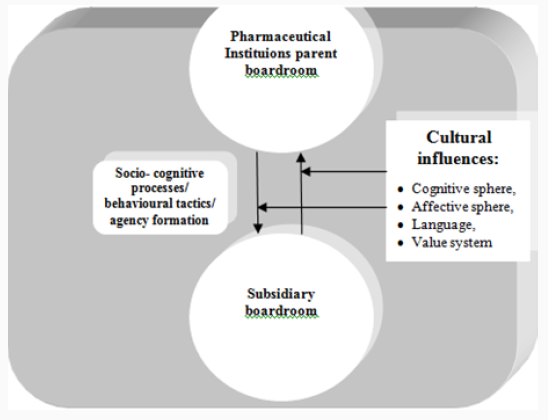
This is the phenomenon of culture and cultural differences between nation states. It is also the distinctive feature of the entire international business research, and hence we have it as a separate field of study in management science. Without drilling deeply into intricacies of accountability chains on boards within the Pharmaceutical Institutions headquarters and within its foreign subsidiaries separately, I therefore propose the view of culturally determined agency. The notion is to capture the socio-cognitive processes that particular board members in a given foreign subsidiary and their counterparts in the Pharmaceutical Institutions headquarters are exposed to, being located at the interface of Luo’s (2005a, 2005b) 1st- and 2nd-tier governance [9,10]. I suggest this view as a specific and distinctive feature of the corporate governance in Pharmaceutical Institutions. It incorporates cultural influences on the processes of social construction of the perceived individual agencies by particular board members at both governance levels and constitutes a significant portion of the overall variance of all types of impact factors on these processes [11,12].

Conclusion

Other corporate governance mechanisms typically distinguished in the academic literature comprise:
a) Minority investors’ protection rights.
b) Ownership concentratio
c) Incentive alignment (performance- related executive pay contingency).
d) Direct shareholders’ control (e.g. voting at the annual general meeting (AGM)).
e) Managerial labour market (reputation effects).
f) Market for corporate control (takeover activity).
g) Product market competition.

Controversies

Pharmaceutical Instituions has putting less effort to national economic systems. Principal of the Institutions has not report to college in time. They have alcohol dependency and smoker addict [13-15]. Self‐Report of such habit, Inconsistent alcohol use and Non-use are Poor Predictors of malpractice Prevalence among Pharmaceutical Instituions principal who have alcohol dependency with other Pharmaceutical Instituions Principal. Assessment of the population‐level effectiveness of the Avahan bad habit ‐prevention programme in Pharmaceutical Instituions in India: a preplanned, causal‐pathway‐based modelling analysis has been under way. This reasoning is summarised in Figure 1 A model of culturally determined agency.
Figure 1:A model of culturally determined agency.

Acknowledgment

This study has been guided by under supervision and guidance of Retd. Director’ National AIDS Research Institute India. I express my deep gratitude towards Respected Sir’ for motivation and being great knowledge source for this research.


For more Lupine Publishers Open Access Journals Please visit our website:
For more Open Access Orthopedics and Sports medicine articles Please Click Here:

To Know More About Open Access Publishers Please Click on Lupine Publishers


Follow on Twitter   :  https://twitter.com/lupine_online

Wednesday, 4 December 2019

Lupine Publishers | The Tall Poppy Syndrome in Orthopedics and Medicine

Lupine Publishers | Journal of Orthopaedics

Opinion

The Tall Poppy Syndrome (TPS) is a metaphor which symbolizes viewing a poppy field and noticing one poppy towering above the others; a penchant by an individual, group or society exists to cut down this tall poppy so that all are equal and uniform. A “tall poppy” is defined as someone with fame, fortune, achievements or skills. The syndrome has been identified in many countries with their own metaphors or phrases since antiquity. The entity is relatively unrecognized in the United States perhaps because of the constitutional rights of the individual and capitalism which is based on meritocracy. Lack of recognition does not negate existence. Daily examples may be found in the industries of sport, business, entertainment and especially politics. TPS may be noted in medicine since antiquity as well. Nearly every new discovery, technique, or rivalry is a breeding ground for TPS. One of medicine’s greatest rivalries occurred between Louis Pasteur (France) and Robert Koch (Germany) regarding the germ theory of disease. Their rivalry leads to denigrating each other privately, and at meetings which would also draw in other doctors often with a dose of nationalism for good measure. Envy was described as an early root of TPS especially in people with low self esteem [1]. The envier lacked what the tall poppy possessed and had the option to improve (good envy) or denigrate or cut down the tall poppy (bad envy). Further psychosocial studies have extended behaviors to include deservingness and resentment as well as others [2].
Deservingness involves value judgments by the cutter about the outcomes of the person to be cut down or “tall poppied”; the persons got what they deserved. Resentment is indignation about unfair treatment; cutting the person down could end in revenge. A recently published career summary of an orthopedic surgeon could also be interpreted as an example of TPS [3]. The young orthopedist entered practice when arthroscopy and the specialty of sports medicine were at their infancy. His surgical techniques were disparaged by his orthopedic colleagues. Membership in the state orthopedic association and other orthopedic organizations were originally denied as were many of scientific papers. As he and the surgical techniques became accepted, so did memberships and publications. As medicine moves to a business model with more physician employment, the hierarchy and promotion will become a new source of TPS. Advancement may not always be based on merit. Specific needs, “pull”, and persons with new social-justice identity politics may prevent the high achiever’s advancement causing the high achiever to be cut down to justify the elevation of the others or forcing the high achiever to do some cutting. The White House Doctor manages a staff of five physicians who provide medical care for all things White House which includes being the President’s physician. Dr. Lonny L. Johnson, President Trump’s private doctor, wrangled with Dr. Jeffry Kuhlman, Johnson’s boss, for control of the White House office. To settle the dispute the Navy’s inspector general services were required which issued a report in 2012. This rivalry forced people to choose sides. When President Trump nominated Dr. Johnson to lead the Veterans Affairs Department, accusations, mostly unfounded, emerged forcing Dr. Johnson to withdraw his name from consideration.
The treatment of any disease begins with defining the disease state, further elucidating studies and recommended treatments. TPS is well defined in most English speaking countries, except the United States, especially in Australia. Treatment involves emotional intelligence. The tall poppy may become conspicuous for some egregious reason which requires behavioral identification and modification. The cutter also must evaluate the basis for proper behavior or judgments versus improper behavior. Behaviors often become so ingrained that outside assistance is necessary to identify and treat them.

For more Lupine Publishers Open Access Journals Please visit our website:
For more Open Access Orthopedics and Sports medicine articles Please Click Here:

To Know More About Open Access Publishers Please Click on Lupine Publishers


Follow on Twitter   :  https://twitter.com/lupine_online