Showing posts with label LUpinbe Publishers. Show all posts

Wednesday, 9 September 2020

Lupine Publishers | About the Influence of Evaporation at Filtration in a Rectangular Interchange with a Particularly Unpermatable Vertical Wall

       Lupine Publishers | Current Investigations in Agriculture and Current Research


Abstract

We consider a plane steady-state filtration in a rectangular bridge with a partially impermeable vertical wall in the presence of evaporation from a free surface of groundwater. To study the effect of evaporation, a mixed multi parametric boundary-value problem of the theory of analytic functions is formulated and using the method of P. Y. Polubarinova-Kochina. Based on the proposed model, an algorithm is developed to calculate the dependence of efficiency and productivity of hydrodynamic analysis.

Keywords: Filtration; Evaporation; Jumper; Ground water; Free surface; Polubarinova-Kochina method; Complex velocity; Conformal mappings; Differential equations of the Fuchs class

Introduction

As it is known [1-6], the exact solution of tasks on inflow of liquid to an imperfect well with the flooded filter (i.e. an axisymmetric task) or the tubular well representing an impenetrable pipe with the filter in its some part is connected with great mathematical difficulties and so far isn’t found. Therefore in due time as the first approach to the solution of similar tasks some corresponding flat tasks analogs about a filtration to imperfect rectilinear gallery in free-flow layer [4,7] and in a rectangular crossing point with partially impenetrable vertical wall were considered [8]. It should be noted that areas of complex speed of the specified cases allow applying by means of inversion at the decision Christoffel- Schwartz’s formula.

In work [9] it is shown that the current picture near the impenetrable screen significantly depends not only on imperfection of gallery, but also on evaporation existence that is strongly reflected in an expense of gallery and ordinate of a point of an exit of a curve depression to an impenetrable wall.

In the real work the exact analytical solution of a task on a current of ground waters through a rectangular crossing point with partially impenetrable vertical wall in the presence of evaporation from a free surface of ground waters is given. In this case in the field of complex speed, unlike [1,4,6-8] there are not rectilinear, but circular polygons that doesn’t give the chance to use classical integral of Christoffel-Schwartz. For the solution of a task P.Y. Polubarinova-Kochina’s method is used [1-6]. By means of developed for areas of a special look [10-12] which are characteristic for problems of an underground hydromechanics, ways of conformal display of circular polygons [13-19] decides mixed multiple parameter tasks of the theory of analytical functions. The accounting of characteristics of the considered current allows to receive the decision through elementary functions that does its use by the simply and convenient. The provided detailed hydrodynamic analysis gives the flavor about possible dependence of filtration characteristics of the movement on all physical parameters. The received results, at least, qualitatively can be postponed for a case of tubular wells.

Formulation of the Problem

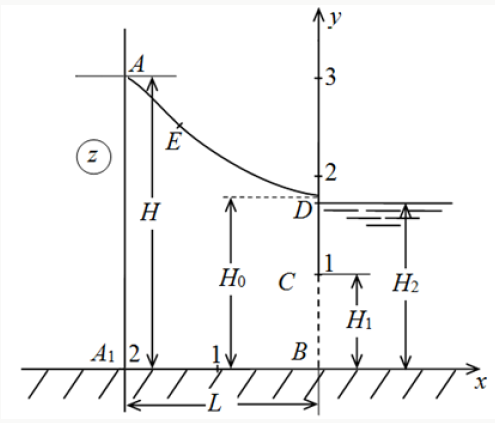
In Figure 1 the rectangular crossing point with slopes of AA1 and DB on the impenetrable horizontal basis of length of L is presented. Water height in the top tail of Н, lower tail with water level of Н2, having partially impenetrable vertical wall CD (screen), adjoins a layer sole. If the working part of the crossing point CB (filter) of width of H1 is flooded, H2>H1, an interval of seepage, usual for dams, is absent [1]. The upper bound of area of the movement is the free surface of AD, coming to the disproportionate CD, screen to which there is a uniform evaporation of intensity ε(0<ε<). Soil is considered uniform and isotropic, the current of liquid submits to Darci law with known coefficient of a filtration κ=const.

Figure 1:
Lupinepublishers-openaccess-Agriculture

We will enter the complex potential of the movement ω =ϕ + iψ ( φ–speed potential, ψ–function of current) and complex coordinates z = x + iy , carried respectively κH and H, where H – a pressure in A point. At choice of system of coordinates specified Figure 1 and at combination of the plane of comparison of pressures with the y=0 plane on border of area of a filtration the following regional conditions are satisfied:

Lupinepublishers-openaccess-Agriculture

The task consists in definition of provision of a free surface of AD and finding of ordinate of H0 – points of an exit of a curve depression to the impenetrable screen, and also a filtration expense of Q.

Creation of the Decision

For the solution of a task we use P Y Polubarinova-Kochina’s method which is based on application of the analytical theory of the linear differential equations of a class of Fuchs [1-6,20]. We will enter: auxiliary area t–semi-strip Ret >0, 0<Imt < 0.5π a parametrical variable t at compliance of points tA =∞, 1 1 0.5 , 0.5 A B t = arcth a + π t = arcth b + π i (1<a1<b<∞), a1, b – unknown affixes of points A1 and B in the plane , 0.5 C t t = π i and 0 D t = ; function z(t), conformally displaying a plane t semi-strip on area z, and also derivative dω/dt и dz/dt. We will address to area of complex speed of w, corresponding to boundary conditions (1) which is represented a circular quadrangle of ACDE with a section with top in E point (the corresponding inflection point of a curve depression) and a corner Πν = 2arctg ε at A, top belongs to a class of polygons in polar grids and was investigated [12-19] earlier. It is important to emphasize that similar areas, despite the private look, however are very typical and characteristic for many problems of an underground hydromechanics: at a filtration from channels, sprinklers and reservoirs, at currents of fresh waters over based salty, in problems of a flow of the tongue of Zhukovsky in the presence of salty retaining waters (see, for example, [9,21]).

The function making conformal display of a semi-strip to area of complex speed of w, has a former appearance [9]

Lupinepublishers-openaccess-Agriculture

Where С (C ≠ 1) – some suitable material constant.

Defining characteristic indicators of the dω/dt and dz/dt functions about regular special points [1-6, 20], considering that w=dω/dz and in view of a ratio (2), we will come to dependences
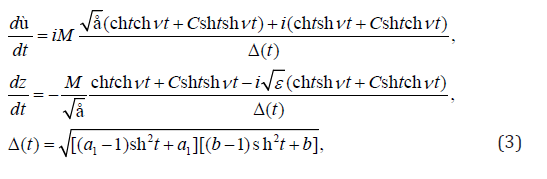
Lupinepublishers-openaccess-Agriculture

Where М>0 – a large-scale constant of modeling.

It is possible to check that functions (3) meet the boundary conditions (1) reformulated in terms of the dω/dt и dz/dt, functions and, thus, are the parametrical solution of an initial regional task. Record of representations (3) for different sites of border of a semistrip with the subsequent integration on all contours of auxiliary area of the parametrical t leads to short circuit of area of a current and, thereby, serves as control of calculations.

As a result we receive expressions for the set sizes: width of the L crossing point, water level in the top H and the lower H2 the tail`s and lengths of H1 of the filter
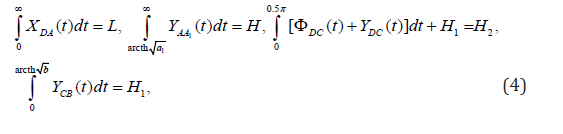
Lupinepublishers-openaccess-Agriculture

and also required coordinates of points of a free surface AD

Lupinepublishers-openaccess-Agriculture

and expressions for a filtrational expense of Q and ordinate of a point of an exit of a free surface to the screen

Lupinepublishers-openaccess-Agriculture

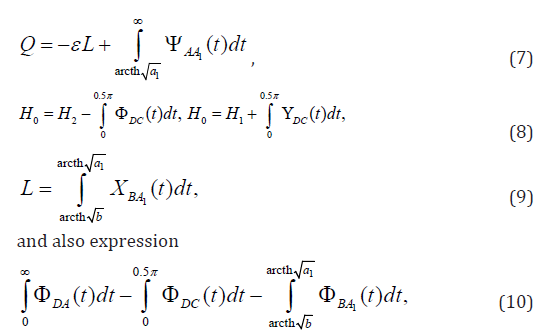
Control of the account are other expressions for sizes Q, H0 and L
Lupinepublishers-openaccess-Agriculture

directly following from boundary conditions (1).

In formulas (4)-(10) sub integral functions–expressions of the right parts of equalities (3) on the corresponding sites of a contour of auxiliary area t. Limit case. At merge of points of A and A1, in the plane t, at a1→1 (arcth a1=∞) the crossing point degenerates in freeflow layer semi-infinite at the left and the task about a current of ground waters to imperfect gallery investigated earlier [9] turns out.

Calculation of the Scheme of A Current and Analysis of Numerical Results

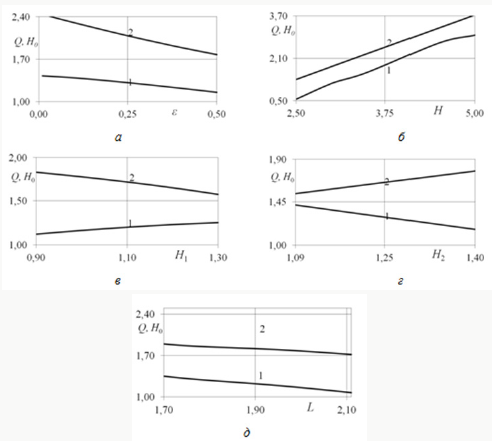
Representations (3)–(10) contain four unknown constants of M, C, a1 and b. The parameters a1, b (1< a1<b<∞), C (C ≠ 1) are defined from the equations (4) for the set sizes H1,H2 (H1≤H2<H) and L, constant modeling of M thus is from the second equation (4), fixing water level H in the top tail of a crossing point. After definition of unknown constants consistently there is a filtration expense of Q ordinate of H0 of a point of an exit of a curve depression to an impenetrable site DC on formulas (6) and coordinates of points of a free surface of DA on formulas (5). In Figure 1 the current picture calculated at ε=0.5 , H=3, L=2, H1=1.0, H2=1.4 (basic option [9]) is represented. Results of calculations of influence of the defining physical parameters ε, H, H1, H2 and L at sizes Q and H0 are given in Tables 1 & 2. In Figure 2 dependences of an expense of Q (curves 1) and ordinates H0 of an exit of a curve depression to the screen (curves 2) from parameters ε, H, H1, H2 and L. Рис.2 Dependences of the sizes Q and H0 from ε (а) at H=3, L=2, H1=1 H2=1.4, , from H (б) at ε=0.5, L=2, H1=1, H2=1.4; от L(в) at ε=0.5, H=3, H1=1, H2=1.4; from H1 (г) at ε=0.5, H=3, L=2, H2=1.4; from H2(д) при ε=0.5, H=3, L=2, H1=1.

Figure 2: Dependences of the sizes Q and H0 from ε(а) at H=3, L=2, H1=1 H2=1.4, from H(б) at ε=0.5, L=2, H1=1, H2=1.4; от L (в) at ε=0.5, H=3, H1=1, H2=1.4; from H1(г) at ε=0.5, H=3, L=2, H2=1.4; from H2 (д) при ε=0.5, H=3, L=2, H1=1.
Lupinepublishers-openaccess-Agriculture

The analysis of these tables and schedules allows drawing the following conclusions. First of all opposite qualitative nature of change of the sizes Q and H0 at a variation of parameters attracts attention ε, H and L (Table 1): also, as well as earlier [9] reduction ε and increase H is led to increase of an expense and ordinates of an exit of a curve depression to the screen. Thus, in relation to a filtration in a crossing point reduction of intensity and evaporation plays the same role, as well as increase in a pressure. Thus the greatest influence on the sizes Q and H0 renders a pressure: at increase of parameter H by only 1.2 times the expense and ordinate increase more, than 52 and 24% respectively. Essential interest is represented by dependences of an expense of a crossing point and ordinate of a point of an exit of a free surface to the screen from water level of H2 in the lower tail, and also from extent of deepening of the screen, i.e. from the size H1 at fixed ε, H and L (Table 2). Here as well as concerning parameters ε and H observed opposite qualitative nature of change of the sizes Q and H0 at a variation of H1 and H2. It is visible that increase in water level of H2 in the lower tail and reduction of deepening of the H1 screen are followed by reduction of an expense and raising of a free surface that, in turn, it is expressed in increase in H0; both of these factors characterize strengthening a sub time.

Table 1: Results of calculations of the sizes Q and H0 at a variation ε, H and L.

Lupinepublishers-openaccess-Agriculture

Table 2: Results of calculations of the sizes Q and H0 at variation H1 and H2.

Lupinepublishers-openaccess-Agriculture

Follows from Table 1 and Figure 2 that reduction of the H1 и H2 parameters respectively at 1.45 and 1.29 times attracts change of size Q for 16.8 % (at fixation of H1) and 12 % (at fixation of H2). Noted regularities lead to the conclusion that the expense of a crossing point depends on the size of lowering of the level in a little bigger degree, than on filter length (or from imperfection of a well or a well). From Figure 2 it is visible that for basic option almost all dependences of the sizes Q and H0 on parameters ε, H, H1, H2 and L are close to the linear. Comparison of the results received for basic option Q=1.155 and H0=1.776 with results Q=1.141 and H0=1.768 for basic option [9] where the current area was limited equipotential at the left shows that the relative error is very small and makes only 0.5 and 1.3% respectively.

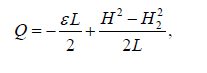
Comparison of value of the expense Q=1.16, received for basic option to Q=1.26, value which follows at application of the generalized I.A. Charny’s formula [1, with. 267] for a usual rectangular crossing point (without screen) in the presence of evaporation leads 8.3% to an error.
Lupinepublishers-openaccess-Agriculture

For comparison with results [7] we will consider option ε=0.1, H=1, L=4, H1=0.05, H2=0.238 for which Q=42, H0=0.75 is received, and, therefore, relative errors make respectively 71 and 61%. Thus, as well as in [9], here too evaporation significantly influences a current picture.

Conclusion

The technique of creation of the exact analytical solution of a task on the movement in liquid in a rectangular crossing point with the screen in the presence of evaporation from a free surface of ground waters is developed. It is shown that the current picture near the impenetrable screen significantly depends not only on the filter size, but also on evaporation existence that is strongly reflected in an expense and ordinate of a point of an exit of a curve depression to the screen. The received results give an idea (at least qualitatively) of possible dependence of characteristics of a current by consideration of a task about a filtration already to an imperfect well or a tubular well.

Read More Lupine Publishers Agriculture Journal Articles:


Thursday, 27 February 2020

Lupine Publishers | Subjection between Breast Cancer and Body Mass Index, the Role of L-Carnitine in Prediction and Outcomes of the Disease

Lupine Publishers | Open Access Journal of Oncology and Medicine


Abstract

Increasing the effectiveness of antitumor therapy in breast cancer patients who take L-carnitine during preoperative systemic antitumor therapy compared with patients receiving standard neoadjuvant systemic antitumor therapy served as a prerequisite for studying possible antitumor mechanisms of L-carnitine. The positive effect of L-carnitine is due to the transfer of palm-n-LC through the inner membrane into the mitochondrial matrix, which promotes the formation of a significant number of ATP molecules. It has also been shown that L-carnitine can have a double protective effect, enhancing the energy dynamics of the cell and inhibiting the hyperexcitability of the cell membrane, that making it an ideal nutrient for the prevention and treatment of cancer. This article summarizes the results of epidemiological and clinical studies of the use of L-carnitine in the treatment of breast cancer
Keywords: Body mass index (BMI); Breast cancer (BC); Obesity; Overall survival; L carnitine


Introduction

The incidence of breast cancer in the world in general and in Ukraine in particular is growing. In 2017, in Ukraine the incidence reached 16 percent of female population, for which, the breast cancer ranked first in structure of oncological incidence among women. In analyzing the data of the National Cancer Registry of Ukraine, it should be noted, that in comparison with 2014 year, the prevalence rate of breast cancer in 2016has increased by 5,1%, that indicates importance of improvement diagnostic procedures and methods of treatment it [1]. Studying the scientific literature on this subject, we noticed that there is a strong biological relationship between obesity and a poor outcome of breast cancer. And having analysed the date of Ministry of Health in Ukraine it can be concluded, that about 26% of women in 2017 year had overweight or obesity.
Obesity has a chronic metabolic character, which is the result of the interaction of the endogenous factors, environmental conditions and lifestyle. Endogenous factors could be considered a violation of the genetic and hormonal balance. The external conditions and type of lifestyle include irregular rhythm nutrition, use of substandard products and sedentary lifestyle. Obesity is the first risk factor for metabolic syndrome, diabetes type II, cardiovascular disease and some forms of cancer, including breast cancer. Since overweight is a risk factor for breast cancer, there is reason to believe that among patients with breast cancer the percentage of obese women is higher than in the population. The risk of breast cancer in postmenopausal women by 30%, it is more than in premenopausal, women with obesity-50%. Furthermore it was proven that obesity is associated with poor prognosis in patients with breast cancer, regardless of menopausal status, and effectiveness of systemic medication breast cancer in patients that have over weight is lower than in patients with normal BMI.
Although obesity is associated with a poor outcome in women with breast cancer, it is unclear how weight loss after diagnosis will change its course and results. Recently, complementary and alternative medicine (CAM) is widely accepted among patients with breast cancer, which may provide several beneficial effects including reduction of therapy-associated toxicity, improvement of cancer-related symptoms, fostering of the immune system, and even direct anticancer effects [2]. L-carnitine is a metabolite of C4 oil LC, which is involved in the transfer of palm-n-LC through the inner membrane into the mitochondrial matrix and is a substrate for the formation of ATP molecules. Carnitine is a trim ethylated amino acid naturally synthesized in the liver, brain and kidneys from protein lysine and methionine. Several factors, such as sex hormones and glucagon, can influence the distribution and level of carnitine in tissues [3,4].
In the absence of L-carnitine, the inner membrane of the mitochondria becomes impermeable to fatty acids, which entails a chain of various metabolic disorders in the human body. Carnitine has a modulating effect on the function of acetylcholine excitatory neurotransmitter, glutamate excitatory amino acid, insulin growth factor-1 (IGF-1) and nitric oxide (NO)[3]. Also proved, that L-carnitine may have a dual protective effect by enhancing the energy dynamics of the cell and inhibiting cell membrane hyper excitability, which make it an ideal nutrient for cancer prevention and treatment [5]. In view of the foregoing, the study of the influence of the body mass index on the effectiveness of systemic treatment of breast cancer is an urgent scientific problem and a promising field of research. This article presents the information of epidemiological and clinical studies of the influence of the body mass index on the effectiveness of breast cancer treatment by individualizing therapeutic measures taking into account the characteristics of patient's metabolism.
Studies on the Effects of BMI on The Course and Outcome of Breast Cancer and the Role of L-Carnitine in the Treatment of Cancer: The effectiveness of the prescribing of L-carnitine for breast cancers' treatment, as well as the effect of BMI on the outcome of the disease is proven in epidemiological and clinical studies.

Epidemiological and Clinical Studies

DSM Chan and co-authors [6] reported that women who have BMI> 30 course and outcomes of breast cancer are significantly worse than women with BMI <30. They proved, that women with BMI> 30 have the overall relative risk of total mortality 1.41, women with BMI of 25> 30 - 1.07. At the same time, for every 5 kg / m2 of the increase BMI, the risk of both total mortality and mortality from breast cancer increased, namely by 18% and 14%, respectively M. Protani and co-authors [7] have shown that women with breast cancer, who are suffering in obesity, have lower survival rate than women with breast cancer without obesity. Recently published data of randomized clinical researches by ML Neuhouser and coauthors [8] demonstrated, that for women> 50 years old, with 2 and 3 stages of obesity (BMI> 35) is typically the development of GR+ breast cancer. Similarly, B. Pajares et al. [9] who found significantly worse results for patients with BMI >35 compared with patients with BMI <25, stated that the magnitude of the effect depended on the cancer subtype (estrogen receptor (ER) / progesterone (PR) positive and HER2 negative, HER2 positive, triple negative). An analysis of the pooled data of the three adjuvant studies of the Eastern Cooperative Cancer Group showed significantly worse results for patients with obesity (BMI > 30) than for patients with normal BMI with a hormonal receptor-positive disease. And it was noted absence of negative effect of obesity on survival in patients with other breast cancer subtypes. C Fontanella et al. [10] studied the effect of BMI on different molecular subtypes of breast cancer and concluded that in women with ER / PR-positive and HER2-negative breast cancer, as well as with TNBC, the risk of death is significantly higher than in other subtypes of cancer.
It is proved that even the highest BMI figures are not a risk factor for death for patients with luminal A-like subtype of breast cancer. The reason for this is that fatty tissue produces an excessive amount of estrogen, a high level of which is associated with an increased risk of developing breast, endometrial, ovarian and some other cancers. It has also been proven that the level of adipokine, that promotes cell proliferation, increases in the blood with increasing of level of fat in organism. And adiponectin, which people with obesity have less than people with normal BMI, can have anti proliferative effects. Such data can serve as evidence of the effect of BMI on the course and outcome of breast cancer. Yet another proof of influence developing metabolic syndrome on the course and outcome of breast cancer was proposed by R. Bhandari et al. [11]. They proved that that the presence of metabolic disorders (that is, the metabolic syndrome) is associated with an increased risk of breast cancer in adult women.
The above data led to the need to investigate medicines that contribute to fat burning, such as L-carnitine. Based on the data provided by Rania M. Khalil and co-authors [12], we can prove the positive effect of this medicine on the course and outcome of breast cancer. The study showed that patients who received Tamoxifen with L-carnitine had significant decrease of Her-2 / neu and IGF-1 level (P <0.05) in the serum compared with patients who received only Tamoxifen. Using of L-carnitine led to significant decrease Her- 2 / neu level in the serum (P <0.05) compared to each of the control patients, namely, 59.5%. The effect of tamoxifen on IGF-1 (P <0.05) -decrease its level by 5.4% [13].However, it has been proved that using of L-carnitine in the treatment of ER+ breast cancer does not significantly reduce the level of estradiol, but leads to decrease both tumor markers CEA and CA15.3 (P <0.05,% decrease by 80.9% and 67, 8%, respectively) [13].
Using of L-carnitine in patients with breast cancer and obesity improves the metabolism of fatty acids in mitochondria, restores normal mitochondrial function and, thus, improves the general condition and quality of patients’ life [14]. Carnitine may alsomimic some of the biological activities of glucocorticoids, particularly immunomodulation, via suppressing TNF-a and IL-12 release from monocytes (5). L-carnitine as adjuvant therapy in cisplatin-treated cancer patients proved a beneficial effect in reducing the cisplatin- induced organ toxicity [15]. It is possible that, the extremely lipophilic nature of carnitine may be responsible for the decrease in EGFbinding [16]. Carnitine may insert in the cell membrane and/or interact with one of the many cellular enzymes having lipid substrates or cofactors. In addition, carnitine may interact directly with the EGFR [17].
Experimental evidence is available showing that ROS may induce the light and independent phosphorylation of the EGFR activating Her-2/neu. Moreover, the expression of the receptor is induced in conditions of oxidative stress [18]. L-carnitine, via its free radical scavenging and antioxidant properties, may inhibit ROS-mediated EGFR phosphorylation. It has been found that palmitoyl-carnitine can inhibit the activity of heart and brain protein kinase C in a competitive manner and subsequent phosphorylation of the EGFR [19]. Although the tumor markers and IGF-1 showed no significant difference in TAM-treated patients before and after administration of L-CAR, there was a tendency to decline after L-CAR supplementation [13]. The results of the above studies became a prerequisite for conducting clinical studies aimed at establishing the role of L-carnitine in the treatment of breast cancer.
To date, the search in the online clinical research registration system ClinicalTrials.gov using key words L-carnitine + breast cancer has revealed several studies evaluating the efficacy and safety of L-carnitine in the treatment of breast cancer patients. Analyzing the obtained results, we can conclude that L-carnitine was the drug of choice for neuropathies, as a consequence of chemotherapy, in patients with breast cancer.


Conclusion

L-carnitine is widely used in clinical practice. However, recently this medicine causes growing interest among oncologists. In a number of studies, L-carnitine has proven itself as a medicine that capable, during the preoperative systemic antitumor therapy, to increase its effectiveness compared with standard neoadjuvant systemic antitumor therapy. And also, taking L-carnitine with neoadjuvant systemic antitumor therapy helps to increase the number of cases of complete morphological regression (V degree of therapeutic pathomorphosis). To date, there are several clinical studies that are researching using L-carnitine in various malignant tumors, the results of which are the basis for further in-depth study of the effect of the medicine in the treatment of malignant neoplasms.

https://lupinepublishers.com/cancer-journal/fulltext/subjection-between-breast-cancer-and-body-mass-index-the-role-of-l-carnitine-in-prediction-and-outcomes-of-the-disease.ID.000103.php

For more Open Access Journal of Oncology and Medicine Please Click Here: 
 
 
Follow on Twitter   :  https://twitter.com/lupine_online  

Tuesday, 26 November 2019

Lupine Publishers | Selected Methods of Spatial Analysis of Soils of Azerbaijan

Lupine Publishers- Environmental and Soil Science Journal

Spatial analysis in GIS Wednesday is based on complex techniques, the results of which depend on the raw data. One of the fundamentals of spatial analysis techniques based on digital hypsometric model is the development of maps of the angles. She gained widespread use, from morphogenetic and geologicalengineering perspective to the agrarian and territorial planning.

Progress of Research and Discussion of Materials

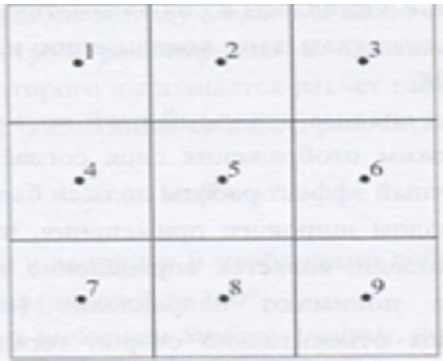
Program Arc Map provides the ability to quickly prepare this type of cards based on raster model hypsometric territory. To calculate the slope of a surface that is specific to a particular screen, used values of absolute height, raised eight surrounding screens (Figure 1). The calculated values of the two parameters (ɑ and (b)), proportional average slant of slope (respectively on the x and y axis) according to the following formulae:
Figure 1.
lupinepublishers-openaccess-journal-environmental-soil-sciences
ɑ = (h3+2h6+h9-h1-2h4 - (h)7 )/8L (1)

(b)=(h1+2h2+h3-h7-2h8 - (h)9 )/8L
Where is:
(h)1 = the absolute height of the surface of the territory in (i) -OM image according to (Figure 1).
L = raster measurement.
The angle of the slope, plant in the central point is cal
tan ɑ= √a2 + b2 (2).
a) In the menu Spatial Analyst pick Surfase Analysis, then Slopethat will lead to opening the window method.
b) With list boxes Input surface Choose created a digital model of the hypsometric of Azerbaijan.
c) The main unit can be marked graphs slope measurement slope on the resultant map-in variant degrees ( Degree) or as a percentage (option) Percent
d) Graphs Z Factor and Output cell size perform the same role as in the Hillshade. Leave them automatic size.
e) In the graph Output raster point localization and name of the source file, then- OK.
f) After completion of the analysis of the source layer appears in the map image.
g) Change the layer display mode according to the technique described previously.
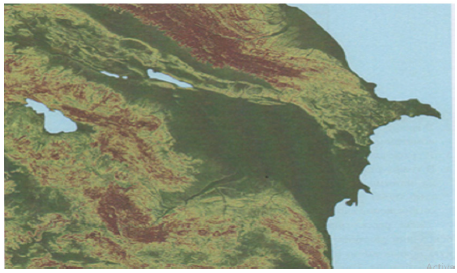
h) The final effect should be similar to (Figure 2).
i) The following method of broad application that is based on digital hypsometric model is the definition of exposure [1].
Under slope Exposition, understand the direction (azimuth) slope steepness of most to the sides of the horizon.
Figure 2.Indexation Scheme of high-altitude points to calculate slope angles.
lupinepublishers-openaccess-journal-environmental-soil-sciences
This option is very important for those kinds of analysis that takes into account the difference of thermal balance of the northern and southern slopes.
This is the initial value for aspects such as the time of occurrence of snow cover duration of vegetation period etc. The method of calculation is similar to the method Slope . It also used high-altitude data from screens placed in the immediate vicinity of the Central screen, for which the calculation of parameters (a) and (b) (in accordance with identical formulas) [2].
Exposition of slopeis calculated as:
tan ß=a/b (3)
If (b) positively, the largest Add 180°, that allows to take into account the magnitude of the azimuth from 0 to 360°.
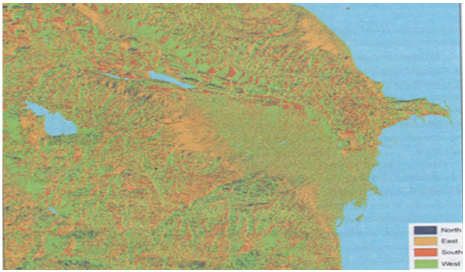
a) In menu Spatial Analyst choose a Surface Analysis, then Aspect-method dialog box appears (Figure 3)
Figure 3: Angular slopes map developed in accordance with method S lope based on a digital model of Azerbaijan hypsometric.
lupinepublishers-openaccess-journal-environmental-soil-sciences
b) In box Input surface traditionally make the filename digitally hypsometric model.
c) In box Output cell size leave unattended.
In box Output raster denote localization and name of the source file, click OK to start following their completion, payments to the image will be added effective map. After you change the display card is similar to (Figure 3). Next, consider the way to an integrated spatial analysis based on raster maps. For example, suppose you want to select a specific localization hypothetical potential investments on the territory of Azerbaijan. Investor demands that the investing territory meets certain conditions. First, the angle of the slopes in the territory’s investment should not exceed 10°. Secondly, the investment should be within the absolute height of surface from 100 to 500 mnm. Using GIS and digital hypsometric model of Azerbaijan (with derived layers), the definition of localizations of this investment takes a few minutes. In menu Spatial Analyst toolbar Select position Raster Calculator. A dialog box appears, represented in the left part of the window, in the Layers highlighted all raster layers project. With right sides are mathematical logical operators that can be used for entering formulas. The formulas are based on arithmetic operators, and the results have a numeric expression. For example, if you want to double increase digital hypsometric model, it is possible to formulate a simple expression: [CGM]. where instead of CGM, you must enter the name of the selected raster layer surface model. As a result of this operation received a raster map, where each point in discrete space is assigned a numerical value, which corresponds to doubling the height of the territory. Such arithmetic operations can be applied to other sectors. For example, having a layer of embossed field precipitation, as well as layer with spatial distribution of filtration coefficient, obtained by multiplying the two layers you can obtain the spatial distribution of effective infiltration of precipitation. Often also used the differencing method. In this way, create a differential maps that document the temporarily-spatial variability of the investigated phenomenon. For example, as a result of the seizure of average precipitation from the actual over the past two years, it is possible to define the territory increases and regression of this phenomenon [4-6].
Use this type of expression to identify the territory within Azerbaijan, which satisfies the conditions of investra. First define the territory where the inclination does not exceed slopes 100.
This requires the formulation of the next task
[Slope] < = 10. (4)
Where on the graph Slope you must submit the name of a bitmap layer with angles of inclination of slopes.
Formulation of issues using Windows Raster Calculator is simple enough:
i. In the graph Layers Select the name of the layer with the angles of inclination of slopes. Note that added layer automatically enclosed in quotation marks.
ii. Of the symbols of the operators choose < =. This results in adding this element to the expression.
Citation: RAE Aliyev ZH. Selected Methods of Spatial Analysis of Soils of Azerbaijan. Open Acc J Envi Soi Sci 1(1)- 2018. OAJESS.MS.ID.000103. 18 iii. Using digital signs in a window or on the keyboard, type 10 in the end of the expression.
iv. The formula is ready, you can go to to do so. Evaluate.
Upon completion of the calculations in the working area of the project will add a new layer using the program Calculation . Layer is only with greatness and 0 1.
Screens marked digital 1, satisfy the conditions of maximum slope slopes up to 10 largest° . Now you must select the area that meets the requirements of investra for its absolute height. To do this, construct the following expression (5) [7-10]:
[CGM] > = 100 and [CGM] < = 500 (5)
On site CGM enter the name of a raster layer with digital hypsometric model territory. For formulating expressions use window Raster Calculator .
a) In Windows Raster Calculator Select layer with digital hypsometric model of Azerbaijani territory in the graph Layers.
b) press the key with the operator > =
c) Enter the value 100
d) Push And
e) Again click on the layer name in the CGM graph Layers.
f) Push the button with the < = operator
g) Enter the value 500
h) Check the correctness of the formula and select Evaluate.
The result of the calculations is a raster layer named program Calculation . 2. similar to the previous layer here showing screens marked cifroj1 that identify the territory, where high-rise relevant criteria. now you must connect both layers to define the territory corresponding to two requirements-surface height and tilt. Use the method the Raster Calculator [11-12].
a) press twice on the layer Calculation in the graph Layers.
b) Select the = operator
c) Enter the value 1.
d) Choose the logical operator And
e) twice click on layer Calculation2.
f) Select the = operator
g) Enter the value 1.
h) The final expression must be of the form:
[Calculation] = 1 & [Calculation2] = 1
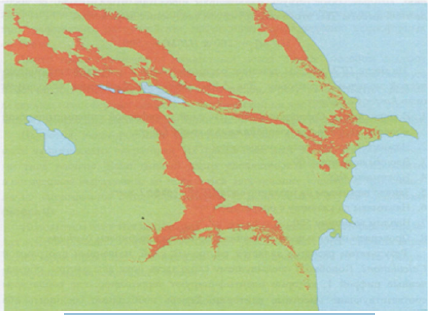
i) Click on Evaluate. In the working area will be added a new layer with the designated (red) territory, which satisfies the requirements of the investor (Figure 4) [13-15].
Figure 4: Map of exposures of the slopes, developed based on digital hypsometric put Azerbaijan.
lupinepublishers-openaccess-journal-environmental-soil-sciences
The resulting image points to a very extensive array, located in the foothill zone of Azerbaijan. It is clear that in such a large territory does not satisfy any investor to potential localization object. In this regard, you can narrow the boundary parameters of each criterion. For example, the choice of the territory where the inclination does not exceed 1 degree. In the analysis process can also take into account additional criteria, such as location, investment plot at a distance of not less than 500 m from the nearest coastline and 1000 m from the urban areas (Figure 5). The possibilities are endless and depend solely on the needs of the user of GIS and spatial information availability [15-18].
Figure 5: Result of the spatial analysis to define the territory of Azerbaijan, the relevant requirements of the investor.
lupinepublishers-openaccess-journal-environmental-soil-sciences


For more Lupine Publishers Open Access Journals Please visit our website:
For more Open Access Environment Journal articles Please Click Here:
To Know More About Open Access Publishers Please Click on Lupine Publishers