Showing posts with label journal of Textile and Fashion Designing. Show all posts

Wednesday, 4 October 2023

Lupine Publishers | The Characteristics of Korean Traditional Fabric of Saekdong

 Lupine publishers | Journal of Latest Trends in Textile and Fashion Designing


Abstract

The origin of Saekdong is assumed from Kyung-Geum of Ancient Joseon of Korea. Kyung-Geum is warp faced multiple colored weave with patterns of relatively thick dense silk fabric and was precious in that time. It’s patterned with the shapes of cloud, antler, swirling objects with gorgeous thick end-curved lines. Go-Joseon is very civilized society focusing Joyang and Geum-Ju near Balhae Bay civilization providence and the people wore colorful clothing trimmed with animal furs with jade and bronze decoration buttons. They produced a variety of yarns and Geum fabrics, and they had various colored design of tripod pottery as well as Saekdong or modernized Kyung-Geum, inferring to their high level of dyeing technique and eye for beauty. And from bronze mirror with delicate-pattern, violin-shaped bronze dagger, and fan-shaped hatchet with elegant curves as well as high-quality Geum design we found out they had high experties in delicate casting and craft skill.

Keywords: Warp Double Fabric of Silk; Antler Pattern; Balhae Civilization; Color Sensation; Pattern Design

Introduction

Sericin, which is the name of silk protein originates from the word ‘Seres’, which is Roman for East Asian fabric merchants and their land. Henry Yule(1820-1889), a Scottish orientalist, about BC 5th century ‘Seres, Serica’ and their land, “Their Country is expansive in size reaching from Bactria, Imaus in the west to the coasts of East Asian seas. They are frugal, and good tempered in nature, they are educated and open-minded people avoiding unnecessary conflicts to neighbor countries but not actively engaging in intimate relations. Also, they were never stingy about trading away their manufacture goods, such as silk, fur and high quality of iron”. Some view ‘Seres’ as the Qin (BC221-206) or Qin people of China, but we believe otherwise, ‘Seres’ is from ‘Suksin 肅 愼 or Joseon’, first country of Korea, because,

a. BC 5th century, the Warring states period, Qin of China did not border coasts of East Asian seas.

b. Chinese imported fur not exported fur.

c. Contrary to the peaceful nature of the Seres people, Jin actively engaged in wars and conquest.

Silk road had its shortest cut of east end to Joyang near Balhae sea for northern hemisphere and topography. Go-Joseon had high manufacturing techniques of iron, fur, dyes and silk as well as horse riding, astronomy and archery skills. Silk road can not be studied without research of north horse-riding people, who was one of tribes of Go-Joseon(古朝鮮), ancient Joseon of Korea. It is told that Geum is first made in East Asia, and it is assumed that Geum was introduced to the western world around the Warrior states period (BC403~BC221)[1]. By Herodotos, Greek and Persian merchants visited East Asia at BC 6-5th century. And Geum silk of Ancient East Asia was spread to Central Asia, north Africa, and Rome. Geum(錦) is silk fabric with beautiful patterns woven using multi-colored warp threads, differing to Ki(綺) which is one colored. The letter of Geum (錦) is a combination word of two different characters meaning of expensive gold(金) and total silk fabric (帛)[2]. The first historical record mentioning Geum is found in the Odes songs (詩經, about BC1000-200), for example, 錦衣狐裘 Geum apparel decorated with fox fur, 裳錦 Geum skirt, 錦衣 Geum apparel, and 貝錦 luxurious Geum.

Kyung-Geum of Ancient Joseon (BC2333~)

While China was going through its Warring state period, GoJoseon(古朝鮮), ancient Joseon of Korea which had an expansive land, located north of China was at its golden age, controlling power East Asia[3]. Go-Joseon has much lower tax than China, and salubrious. Kyung-Geum(經錦), which colored threads are warps, earliest form of Geum, is being massively discovered in the historical site of Joyang, Liaoning (朝陽, 遼寧市), one of the capitals of Go-Joseon. Joyang is not only a big city of Go-Joseon but also the center of cultural development of Balhae bay(渤海灣), which was the center of Hongshan(紅山) or Liao river(渤河) Civilization (BC 5000). And we call this civilization as Balhae civilization or Go-Joseon people. As known, here is the Lelang Commandary(渤 浪), Dangun Joseon(檀君 朝鮮, BC2333~108), Buyeo(夫餘, BC200- AD494), early Goguryo(高句麗) and early Baekje(百濟). The Liao ha river ran besides, and Joyang has lots of rivers running along the city which make the soil rich, and one of those rivers was called Joseon ha (朝鮮河) and the name was changed to Jo ha (潮河) after Ming Dynasty(1368-1644) [4]. In ancient record, Suksin, Jusin or Siksin 息愼 are the names used interchangibly, and the word Joseon originates from Suksin [5].

Silk is told to be originated from Sil-kurry(실꾸리), which ‘Sil’ means threads in Korean(실) and ‘kurry’ means spool(꾸리) or reel from ancient Joseon or Goguryeo time. When Persian merchants saw silk or silk bobbin of Goguryeo, they might call this as silk. Go-Joseon was very rich abundant society and produce enormous quantities of silk, various furs and good iron. Records indicate that even Confucious said hoping peoples good manner that he wanted to live in a peace in Go-Joseon. The Yellow river downstream and neighboring Balhae bay which were both rich and productive soil allowing for Mulberry field, every household had a facility for culturing silk worms[The Odes]. Among the Kyung-Geum being discovered till today, those discovered in Joyang have the longest history [2]. Even these are very small pieces of fabrics, they are high value as first excavated warp double silk woven of multicolored. In Chinese and Japanese historical records, they said the origin of Kyung Geum is unknown, or maybe from Xinjiang Uyghur(新疆). But for the above reasons we believe the origin of Kyung Geum is Joyang region of Balhae or Go-Joseon civilization. Here we have lots of relics proofs from Wee-young-ja (Chaoyang Wei-ingts, 朝陽 魏 營子, BC 13-10C), and Sip-i-dae-young-ja (Chaoyang Sier Tai-ingts remains, 朝陽 十二大營子 遺蹟, BC 9-6C) [6].

Geum-Ju (錦州), which was the center of Geum production, is in the Joyang region. San-hae-kwan(山海關), called as 天下第 一關, the first or number one gate in the world was located near Joyang as international trade harbor BC 9th century as well [7]. This wonderful city of Joyang is possible because Balhae, Hongsan or Liao river civilization existed almost 1000~1500 years ago before Yellow river civilization. And we think Xinjiang Uyghur is more trading center rather than a place of cultivation of silk worms or manufacture of Kyung Geum, which cumulated wealth after activated silk roads between the west and the east. The record says that diplomats from Buyeo(夫餘) which was main country of GoJoseon wore the apparels made of Geum and Kye, wool Geum and overcoat of fur during visits to other countries [8]. Fabrics from Goryeo (高麗, 918-1392) after Goguryo had beautiful patten of luxury Geum(貝錦, PaeGeum) resembling precious sea shells, its patterns and colors were of superior beauty compared to Chinese Donghwa-po(橦華布), its woven pattern were splendid and highly detailed, Jeo-po(苧布) and Mapo(麻布) were as white as fresh snow according to the praises from Chinese emperor of Later Jin 後晋 (936-946) [7]. Therefore, fabrics from ancient Korea has a great value of research due to its beauty and complex weaving techniques, distinct from the fabrics of neighboring countries. But this area of ancient Korean fabrics has never been studied carefully and is mostly unknown. Thus, we will like to collect concrete evidences for the visualization of the clothing and lifestyle of Go-Joseon people.

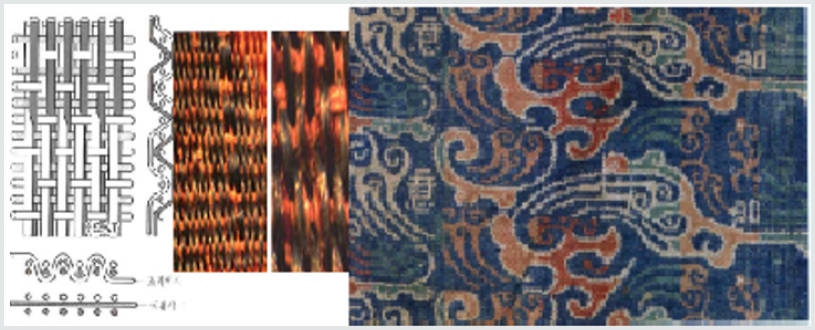
Figure 1: Model of Warp double fabric & Kyung Geum with colored stripe band of Go-Joseon.
Lupinepublishers-openaccess-journals-Textile-Fashiondesigning

In Figure 1, it has overlapping colored yarns as vertical warp threads –creating patterns through occasional emergence of different colored thread layers to the surface (warp faced double rib structure). Thus the fabric is dense and thick, which was not for the hot and humid weather. This fabric swatch was excavated in Sinkiang relic, and we assume that it is of Go-Joseon origin. The warp yarns are ordered as green, yellow, red, green, yellow and green, having constant widths and its own rule of color arrangement. These colored stripes in the Geum pattern are rhythmical yet natural, containing traces of whimsical randomness. The orderly and rhythmical pattern makes Geum aesthetically pleasing through its simpleness, while the randomness incorporated within gives a natural and organic feeling. The Tibetians have similar color stripes in their costume, but theirs are not always vertical, nor have the same thickness throughout the whole pattern (Figure 1) [2]. The weaving technique for the Kyung-Geum travelled to western Asia around AD 0. During this process, the weaving technique was modified to use colored thread as the filling thread. This technique produced a new form of Geum, Wee-Geum(緯錦). Wee-Geum started to replace Kyung-Geum from Balhae dynasty(AD700) [8].

The bigger patterns and curves of Wee-Geum gained more popularity over the traditional Kyung-Geum and Kyung Geum disappeared for its complex manufacture process. But it has survived in Korea as the form of Saekdong, which is warp faced satin with vertical colored band and with simple pattern. The ancient Kyung Geum had its own beautiful characteristics. The patterns were often decorated with vibrant portrayals of clouds, whirlpools and antlers. The fabric consisted of complex combinations of straight and curved lines within the patterns. The Geum pattern also often contained pictures of great beasts, and ancient characters “韓” Han means Korea and “王” wang means king[8]. Art depicting great beasts is characteristic of the Northern horseback-riding tribes’ culture. The records say Goguryeo (BC237-AD668) had lots of Kyung Geum such as beautiful Cloud Geum 雲錦, King letter Geum 王字文錦, and Geum tent or wide long shawl fabrics of Geum [7].

The uniform widths of the stripes represent equality, a valued characteristic of the Go-Joseon people. They valued the virtues of equality, peace, worshiping the heavens, justice, manners, and Hongik Human 弘益人間- Wide goodness for Human [3]. also the stripes composed of five to seven different colors, the garment of the gods. The Mongolians have called the Goryo(高麗) people “Solongus,” meaning “rainbow” in their tongue. From this evidence, we can infer that Goryeo people had a colorful and vibrant culture. The Saekdong consists of colored stripes of uniform widths. The vertically woven warp threads are the main color threads, just like the Geum. The repeated color stripe pattern of Saekdong is rhythmic, concise, natural and elegant – rather than fancy and gorgeous. Within the vertical colored stripes, Geum had gorgeous and complex patterns that symbolize the power of the king or gods. But as it evolved into the Saekdong pattern, the complex designs were simplified in order to emphasize the restrained beauty and order of the striped pattern itself. The color stripes are emphasized, and the patterns are minimalized, opposite to the characteristics of Geum.

Kyung-Geum of Baekje Socks (~AD660)

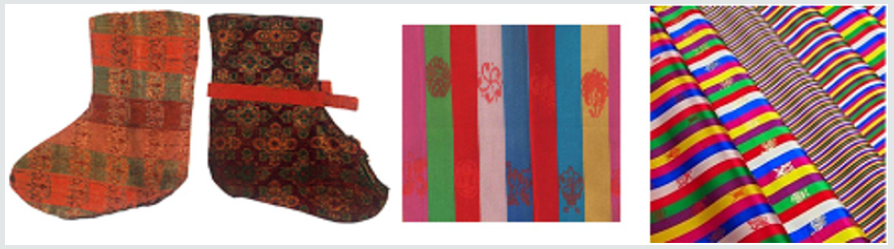
The Figure 2 shows the Kyung Geum socks(Mal, 錦襪) from Baekje, which went oversea to to island and build Nara dynasty in Asuka period. we assume this was worn by Baekjae King Family. After this royal family of Baekje died, Shosoin temple (正倉院, 東大 寺) wanted to keep all of the royal family’s belongings in storehouse as their own treasures. But the Japanese say that this sock belonged to the musicians of temple ceremony, and they sent people all over the world to learn the weaving techniques of Geum and Neung ( 陵, twill) in AD 711 in order to produce their own Geum[9]. But we think that only the skillful master of Geum could make this gorgeous fabric, and because it was precious it was only worn by a royal family. Both socks have colored stripes and small patterns: the purple one has Buddha with lotus, whereas the orange one has curly haired lion’s head (symbol of Buddha). These Geum socks of Baekjae represent religious values as well as the prosperity of Baekjae (Figure 2)[9].

Figure 2: Baekje socks of Kyung Geum, Saekdong of 1950’s, and current of Korea.
Lupinepublishers-openaccess-journals-Textile-Fashiondesigning

Color Beauty of Saekdong

Red, yellow and blue were used as warp thread in Geum. Red represents fire, the sun and summer, while blue represents the supernatural or sky. According to the Yin-Yang theory [10], when these two extremes meet, they support each other through synergy and produce a power of revitalization [11,12]. Additionally, the third color yellow means center, earth, brightness, peace, gold and hope. Using these three colors together, the Go-Joseon people invited good luck and protected themselves from evil [13]. We can easily find Saekdong of three basic colors, but today’s Saekdong includes a larger variety of colors. Adding white creates space and a sense of relaxation, also emphasizing the pattern and accentuating the neighboring colors. And adding colors on the opposite side of the color wheel enhances the color scheme. The Go-Joseon people were ingenious in assembling the Saekong pattern with their unique aesthetics. The vivid color is bordering another vivid color, but they do not collide with each other, forming a harmonious mood [14]. This type of arrangement is crucial in making patterns, since a wrong arrangement can induce a sense of discomfort. Saekdong pattern cleverly avoids this, and on top of being harmonious, it even has delightful touch to it. Even with only 2-3 colors, the complex arrangement of it makes the Saekdong pattern far from monotonous. Recent Saekdong has smaller patterns and longer intervals, compared to the Geum.

Conclusion

As a result of tracing the history of Kyung-Geum - a famous fabric of East Asia –many evidences were found to confirm that Kyung-Geum originated from Go-Joseon around B.C. 500. Joyang, Geum-Ju and Balhae civilization has exposed its oldest swatches. Kyung-Geum is double-woven with vertical colored threads (warp double rib fabric), and it is characteristic for its repeating vertical stripe patterns. The fabric itself is rather thick with a high thread count and was a major export to other surrounding nations during the period. The stripe patterns have a uniform width, as it is with the current Saekdong. Saek dong is a warp satin, and it is a simplified and modernized version of the ancient Kyung-Geum. The Saekdong consists of complementary colors, and its color scheme is harmonious, delightful, simple yet active. Since Saekdong was thought to produce supernatural powers, it is still being used in shaman’s costumes, and in children’s hanbok for a purpose of warding off evil spirits. Go-Joseon was governed through eight major laws (8條禁法), and the people led a prosperous life. Because Geum was so abundant in Go-Joseon, everyone from the king to the common people wore it as daily clothes. During the cold seasons, they would add a layer of fur on top or bottom of their Geum clothing or wool Geum, Kye.

From the excavation sites of Go-Joseon, a variety of spindles were found threads of various thickness were produced to weave all kinds of complex fabrics, and the clothes were decorated by numerous jade gems and bronze buttons. The trims of the fabrics were decorated with furs of tigers, leopards, foxes, and weasels. The Go-Joseon people were fond of using multiple colors: the fashion back then was to wear mismatching colors for top and bottom, pants for riding purpose - which is one of unique styles in the world, colorful pottery of tripod as well as Kyung-Geum fabrics of multiple colored stripes were very popular. The color scheme used by the Go-Joseon people closely resemble the vibrant and complementary color scheme of the modern Saekdong. The Go-Joseon people had an eye for aesthetics and color, which also contributed to their development of advanced fabric dyeing techniques. The cloud and antler patterns present in the Kyung-Geum fabrics can also be found with the bronze mirrors with fine lines and violin-shaped bronze daggers of the Go-Joseon excavation site. These exquisite designs made by the skillful craftmanship highlight and represent the prosperity and elegance of the Go-Joseon people.

Acknowledgment

The research was supported by the National Research Foundation of Korea (NRF) (NRF2016-R1D1A 1B01015336).

Read More About Lupine Publishers Journal of Latest Trends in Textile and Fashion Designing Please Click on the Below link:

https://fashion-technology-lupine-publishers.blogspot.com/


Wednesday, 9 August 2023

Lupine Publishers | Operations Management Strategies for the TextileClothing Sector in Colombia

 Lupine Publishers | Latest Trends in Textile and Fashion Designing


Mini Review

The textile and clothing industry in Colombia represents a productive sector that has more than one hundred years of experience, which has allowed it to position both nationally and internationally, mainly due to the added value of fabrics, the quality of clothing, design innovation, and the occupation of local labor. However, in recent years the textile-confection, design and fashion sector in Colombia has faced many difficulties due to phenomena such as tax reforms, demand contraction, unfair competition, smuggling, money laundering, import and export policies, exchange rates, trade agreements, among others [1,2]. Additionally, challenges related to high energy costs, environmental costs, and demand for a wide variety of products with short life cycles must be addressed [3].

These changes in the textile-clothing industry have motivated the redesign of production and logistics processes, leading to optimization of operations to achieve satisfactory competitiveness levels, which depends on factors such as production costs, sales prices, human capital, technological development, product differentiation, infrastructure, geographic location, market size, among others [4]. Likewise, it should be considered that the apparel sector presents seasonal demands, in which the inventories must be constantly renewed to satisfy the demand, avoiding unsold inventories that represent large losses to the companies, and it requires convergence with the operations planning process in order to increase the inventory turnover and add value to products. Given this situation, it is absolutely necessary to apply operations management and supply chain management strategies, aiming to integrate, optimizing and coordinating business processes from raw material suppliers to the final consumer, managing forecasts to recover consumers and retailers confidence [5,6]. Therefore, members of the textile-clothing supply chain must conduct a thorough analysis of the fundamental logistics and operations to fulfill sale promises to final consumers and increase their productivity. It can be achieved using proper operations management strategies in the textile-manufacturing sector, creating value and addressing the intense competition in both the national and international markets.

Strategies for Inventory Management

In order to reduce the levels of sales and low turnover, the textile-clothing industry can identify the attributes of the supply networks of each type of retailer so that the manufacturers can understand how they should respond to the requirements for different classes of apparel [7]. This allows a greater integration of retailers and producers to manufacture garments under a quick response approach that meet the requirements of the market, even involving vertical integration in some industrial functions [8]. The textile-clothing companies must avoid shelf-out-of-stock at all costs since it implies the loss of a particular sale and the possible future sales of customers. For this, it is recommended use forecasting techniques, such as Fourier analysis methods, that can be easily implemented on SMEs through the use of common spreadsheets [9].

Likewise, it should be considered that the characteristics of the demand in the clothing industry are related to high impulse purchasing, demand uncertainty, high product variety, and a high number of references. In addition, the demand should be classified according to the specific attributes (smoothness, intermittence, uncertainty, and slow-moving). To cope with this issue, it is necessary to manage the historical series to facilitate the use of effective forecasting methods [10].

Strategies for Over Inventory and Overproduction

Over inventory and overproduction not only represent an economic problem for the companies but also an environmental and even social problem, which must be addressed to guarantee the sustainability of the business. For that, it is recommended to design pull production systems guaranteeing the integration of the echelons within the textile-clothing supply chain, such as integrating design and retail processes, leading to a flexible design process, quickly product delivery to the market and avoiding building up stock that will not be sold [11,12].

Similarly, involving retailers and store managers in the S&OP process can help determine what is or is not selling especially in the case of new product introductions and end of life product forecasts [13], and implementing demand forecasting methods such as Arima and Arimax can reduce the difference between planned inventory and real demand because these methods can process multiple variables and consider periods of high demand that vary from year to year, such as holidays [14]. Another strategy is related to integrating Point of Sale systems (POS) with stochastic computer-simulation models to provide quick response procedures for seasonal merchandise, thus reducing the replenishment time and the potential for lost sales [15], thus obtaining timely and accurate inventories for effective and efficient use of automatic replenishment systems and vendor partnerships [16].

Once over inventory or overproduction occurs, refashion strategies can be applied developing prototypes through deconstruction and reconstruction processes. Refashion is a process that intercepts overproduction, over inventory, discarded clothing, reclaims, and re-cuts, returning the item to the clothing stream, reducing wastes and the demand on raw materials required in the manufacture of new textiles and garment [17]. In this sense, another alternative is the donation of overproduction to improve sustainability indicators related to social dimensions (support to communities in need) and environmental dimensions (waste reduction and mitigate the damage to the natural environment). However, these donations must avoid replacing existing markets, so they must go to different and distant markets of the textile-clothing companies that manufacture said overproduction [18].

Strategies for Reducing High Production Costs

Production costs can be reduced through proper production planning and operations scheduling, which optimizes the resources available in the production facilities. For this, it is recommended to perform an adequate aggregate production planning process in order to minimize total costs associated with labor and inventory levels in a medium-term horizon [19]. For the short term, scheduling techniques must be applied to assign jobs to resources in clothing manufacturing plants reducing the time lost in assembly modules and setup operations [20]. Regarding the planning process of the required resources such as manufacturing modules, setup staff, floor area, machinery, equipment, among others, the use of simulation techniques has been proved to allow the minimization of total production costs under different operating scenarios [21]. Likewise, technologies such as RFID and cloud computing can capture and monitor real-time information to provide production scheduling solutions based on intelligent optimization techniques such as heuristics and metaheuristics [22,23]. Production systems based on lean manufacturing are also a great alternative to reduce costs and increase product quality [24-26], promoting the implementation of tools and methods such as 5S, DEMAIC, Kaizen, SMED, and TPM, as well as Six Sigma approaches [27].

On the other hand, under a global supply chain approach, it is necessary to consider global sourcing for materials and production services in order to get products and services with the flexibility and speed required by the market [28-30]. Thus, textile-clothing companies can focus on performing own processes that add value and outsourcing those for which the companies do not have sufficient competitiveness. For the case in which textileclothing companies need to acquire materials from suppliers, it is recommended to implement material requirements planning (MRP) systems to reduce excessive raw materials and provide on-time inventory, avoiding cost overruns and production delays [28,29].

Conclusion

Operations management allows addressing problems related to low levels of sales and low turnover, over inventory and high manufacturing costs in textile-clothing companies in order to improve productivity and competitiveness. Operations management provides strategies that promote the supply chain integration, adequate demand forecasting methods, S&OP methodologies, lean manufacturing principles, implementation of information technologies, and production planning techniques for the long, medium and short term.


Read more about Lupine Publishers Journal of Textile and Fashion Designing Click on the below link:

https://fashion-technology-lupine-publishers.blogspot.com/


Wednesday, 14 June 2023

Lupine Publishers | Sustainability, gives Impetus to Innovation and Research

 Lupine Publishers | Latest Trends in Textile and Fashion Designing


Abstract

An increasing population of the Globe in general and that of India and China in particular brings before us a number of challenges of providing the people enough food, shelter, clothing, sanitation & health facilities, infrastructure, etc. To meet these challenges, unbridled manufacturing activities disregarding environment and society has been taking place almost all over the world which has resulted in alarming level of increase in Green House gases and depletion of valuable nonrenewable resources and water bodies. Under this backdrop business practices based on sustainability are becoming inevitable and textile sector is no exception to it. India’s aspiring young population, like consumers from developed countries, further demands quality apparels with multifunctional performance properties and thus Technical Textiles consumption is growing rapidly. The present paper explains how innovation and sustainability driven research can meet the challenges of coming decades. In this paper a few examples of the research work and their findings are summarized and their potential in meeting such challenges is presented.

Introduction

Indian Textile Industry being Mother industry, its growth is weaved with the future of over 55 million people connected directly or indirectly to this sector. Many a times Business as usual manufacturing activities are carried out with unbridled freedom, and total disregard to optimization and use of raw materials/ processes and energy sources. This is leading to air & water pollution; Green House Gases Emission and rapid depletion of fossil fuels and water resources. It has been reported that Globally we have ploughed in extra 30% of earth’s resources depriving our future generations. Hence, it is natural that Sustainability issues take center stage. It is inevitable that we adapt to Sustainable value model.

Environment has to be protected and people have to be respected and looking after the profitability of any business enterprise. Planet, People and Profit are these three pillars on which business success is to be measured. While following sustainability agenda, the steps to be taken include more and more use of renewable raw materials and energy; process intensification to conserve energy, water, and use of utilities, etc. increase the use of products which are biodegradable, etc. Thus, SUSTAINABILITY is never to be considered as financial burden; in fact, it is a key driver for Innovation based research as well as Technological Developments which can give an enterprise competitive advantage.

When we look at the respect to environment and people over the profitability, it is not a philosophical or wishful thinking. Top management needs to have commitment to sustainability; intern it, it is a matter of commitment to ethically doing the business. Indeed, when ethics becomes core component of business, only then no one would compromise environment and the society for the paltry sum of profits. Sustainability requires multipronged approach. It necessitates exploration of newer ways of processing, newer raw materials, technologies which require minimum energy/water inputs and has lowest level of emissions and effluents. Hence, naturally the regular processes and technologies need to be relooked in to the sustainability lens and explored giving impetus to research and developments. Fortunately, awareness about use of products made by eco-friendly processing technologies is increasing and such products based on green technology are being preferred even paying slight premium. Positive development in India is the introduction of new company law, making it compulsory for the companies to spend 2% profit of theirs for Corporate Social Responsibility projects, which again creates mental frame among the corporates about social commitment and corporate philanthropy.

India is a Young Nation as 65 % of its population is below the age of 35 years. This aspiring young Population with increasing standard of living and surplus disposable income, are quite aware about Consumer rights and environment, and are Brand conscious and quality conscious. They need improved quality of life and Standard Medical care. And to meet these demands of enlightened and economically affording section of customer base, we have to switch from traditional Textile manufacturing to the diversification towards manufacture of Technical Textiles. Coming decade is thus going to be decisive in terms of adapting to various products based

on Technical Textiles of different segments.

Many of the reported technologies such as Digital Printing; Transfer Printing; Ultrasonic /Laser Energy, Supercritical Carbon dioxide dyeing of Polyester; Plasma application etc. can be further extrapolated and up-scaled to see their application potential on large scale level. Also, a number of efforts in Process intensification giving rise to optimum use of utilities, with improved performance of the product and quality , various Fibre Modification processes and Nano -Technological applications need to be thoroughly investigated to extract the un-tapped value in these technologies which can propel us toward the fulfillment of our sustainability agenda.

Personally, I have been privileged to guide the research in the field of fibre science, technical textiles and textile processing for close 40 years with over 200 students for Master and Ph D degrees. Due to the paucity of the space and time, it will be prudent to describe here the outlines of a few pieces of our research work which are deeply rooted in sustainability, process intensification and technical textile applications. The examples taken here are not exhaustive and they are just representative samples.

Ecofriendly and Economical Finishing agents for Cotton and Cellulosic fibres

Cotton and cellulosic fibres enjoy important position in clothing. In fact, today Cotton garments have become revenue earners and are the materials for those who can afford to have them. However, fibre lacks wrinkle resistance and it is important that these required properties are imparted to cotton. Traditional way is to modify this fibre by resin finishing, which makes use of formaldehyde-based resin. This itself gives rise to the issue of release of formaldehyde during wearing. Hence low formaldehyde and formaldehyde free finishing agents are in demand. Polycaroxylic acid such as 1,1,2,2, butanae tetra carboxylic acid(BTCA) is presented as an alternative to this; however, it is cost prohibitive and hence used only in a limited extent. We have worked on similar lines making use of polycarboxylic acids such as polymaleic acid, citric acid and their combination and we have found interesting results with respect to crease recovery properties. The use of Polyethylene emulsion further helps in reducing the stiffness caused and thus fabric does not suffer on that account too. In addition, when this formulation is mixed with Chitosan, (We had prepared the naturally occurring biopolymer Chitosan from shrimp shells obtained from the fish market), it gets further enhanced with regard to imparting antibacterial properties. Padding through the solution was done with Wet pick up of 95% and then drying on pin frames at 80°C for 2 min. This was followed by curing at 160°C for 2 min .The results indicate very good degree of CRA and wrinkle resistance properties as well as acceptable softness level, and antibacterial properties [1].

Dyeing of finished Garments as per the Market needs

The limited aim was to address the need of the Garment dyers to quickly deliver the goods as per the purchase order, which is fluid. Since the demand for typical fashion colors keep changing fast, it is important to avoid the unnecessary large inventory of the garments in specific color combinations. The wise things to do is to have the garments finished in un-dyed form which can be dyed in a short time as per the orders placed and made available promptly. Technologically this is a bit difficult thing to do as after finishing the color uptake of the garments is reduced to as low as 10% of the unfinished garments.

We undertook this work with an aim to convert the finished un-dyed garment into dyeable form as and when needed as per color requirements. To that effect we used N- containing Additives in finishing formulation for garment dyeing. Nitrogen containing additives such as Triethanol amine can act in acidic conditions of dyeing enabling protonation of the fabric due to cationisation effect and the exhaustion of the reactive dye takes place very easily which can then be fixed well. The results were quite promising, and additives used in finishing were found to give the dyeability as good as or near about equivalent to that when finish was absent [2].

Simultaneous ACID Dyeing and Finishing of Cotton

It is well known that Acid dyes are cheaper than that of direct dyes; however, they do not have any substantivity for cotton and hence one is compelled to restrict the use of acid dyes only to proteinic fibres. In this piece of work, we attempted to establish linkage between acid dyes and cotton using a bridging chemical such as multifunctional resin or polycarboxylic acids. The resin as well as polycarboxylic acid while reacting with hydroxyl groups in cellulosic chains on one end, can be made to react with amino groups of acid dyes at the other end ,in one single operation of pad, dry and cure technique. A lot of trials to optimize conditions were taken and it was concluded that acid dyes which contain free primary or secondary amino groups can participate in this reaction with cross-linking agents, which intern can also react with the cellulosic fibre and impart wrinkle resistance properties as well as dyeability. The padding bath contained cross-linking agent, catalyst, acid dye and after padding the fabric with 100%expression, it was dried and cured at 150oC for 3 mins. Detail studies showed that the dye forms a covalent bond with the cross-linking agent which inturn is covalently bonded with the fabric. Hence the fastness properties exhibited by these dyeing were exceptionally good. The Advantages of this process include capacity to make dyeing operation continuous; acid dye application on Cotton and cellulosic fibres; high performance properties; simultaneous resin finishing happening and thus saving on energy, chemicals and water. Shortening of the process will give rise to extra production and thus this process is Eco-friendlier and more sustainable one [3,4].

Development of Hygienic, Fragrant and Mosquito repellent Cotton

Fragrance and essential oil have specific effects on individual’s feelings and emotions such as relaxation, exhilaration, sensuality, happiness and wellbeing through odour via stimulation of brain. Essential oils also have antibacterial, insect repellent, and mosquito repellent properties. However, many of these oils are volatile and hence lose their property very rapidly. However, the storage life of a volatile compound can be increased markedly by micro-encapsulation technique. Microencapsulation of fragrance compounds maintain fresh aroma on textiles, so that material retains its freshness for longer duration. Capsules rupture by friction during wearing giving necessary fragrance and under normal conditions remain intact. Fragrance oil has been encapsulated in gum Arabic and gelatin. The microcapsules containing these oils (Cederwood , Lavender, Lemon grass oils) with aroma are applied on cotton fabric from resin as well as binder bath.

The evaluation of the final finished fabric involved estimation of intensity of aroma, washing durability of the aroma, Antibacterial activity of these oils in microcapsules and efficiency of Mosquito repellency of microcapsule treated fabric. All these anticipated properties were found to be imparted on to the cotton fabric using this one shot natural herbal recipe. In other words, finished fabric in addition to being wrinkle resistant, also showed, pleasant aroma, antibacterial property, as well as mosquito repellency. The feasible end uses of such products include ribbons, handkerchiefs, curtains and furnishing fabrics [5].

Conclusion

These are just a few examples of actual research having carried out by my group of students, it shows that there lies a great potential to exploit commercially the findings of these pieces of research work and convert them into acceptable novel technologies/products which can satisfy the parameters of sustainability and requirement of technical textiles demanded by the modern consumers. Indeed, they can provide the products of high-quality performance, the products which can be delivered in shorter dwell time, the products having optimized use of utilities and thus low Carbon foot prints. The novel products and technologies developed can offer a very good potential of industrial exploitation.

Read more about Lupine Publishers Journal of Textile and Fashion Designing Click on the below link

https://fashion-technology-lupine-publishers.blogspot.com/


Monday, 5 September 2022

Lupine Publishers| “Architecture and Fashion”: Something in Common

 Lupine Publishers| Journal of  Textile and Fashion Designing


Abstract

“Architecture and Fashion - Something in Common”, is exploring the parallels between one of the most two influential fields in the creative design industry; which are “Architecture” and “Fashion”. The purpose of the research work introduced in this paper is to find the common elements between architecture and fashion. “Design” and “Creativity” are major common elements between architecture and fashion, where both fields involves; imagination, art, visualization, creativity, and skill. On the other hand, architects develop a variety of creative design skills during their undergraduate studies in addition to learning their major in “Architecture”, such diversity of skills expands the realm of their job market, so that those who did not manage to find jobs in their field of major as architects may be able to find jobs in fields where they have developed creative design skills, during their undergraduate years of study2. The paper is aiming towards integrating learning fashion design principles as part of the undergraduate architecture syllabus, which in turn may facilitate numerous job opportunities for architects quitting their major field of study but still wish to work in the fashion industry which is a field where they can express and practice their creative design skills. Research introduced in this paper found that most famous and influential fashion designers were architects before they switched to fashion design, it was also found that there were many fashion designers who made architecture designs and great buildings, similarly, many famous and influential architects made great fashion designs.

Keywords: Fashion and Architecture; Fashion Architect; Fashion Designers; Architectural Fashion; Building Fashion

Problem

Job market statistics in USA and Europe found that salaries of fresh graduate architects are very low compared to other professional jobs that require creativity and design skills; also, it was found that finding a job opportunity for a fresh graduate to work as an architect in a design firm is scarce, which caused many fresh graduates to accept working as “Interim architects”1. in the beginning, without receiving any salary for a period of time that may; in many cases, extend to two or three years after graduation, in hope that they will be able to have a permanent employment in the firm at the end. For the above reasons; the concept of expanding the job market for architects have been adopted in many schools of architecture around USA and Europe. Since architects develop a variety of skills during their undergraduate studies in addition to learning their major in “Architecture”, they learn graphic design skills which allow them to work as graphic designers, and in the field of publication design, they also learn 3Dimensional visualization skills so that they can work as visualization specialists, rendering specialists, and animators.

And in some architecture schools; they learn interior design, theatre, and cinema plateau design, web design, multimedia design, and some industrial design principles. This diversity of skills expands the realm of their job market, so that those who did not manage to find jobs in their field of major as architects may be able to find jobs in fields where they have developed creative design skills, during their undergraduate years of study. Since “Design” and “Creativity” are major common elements between architecture and fashion, where both fields involves; imagination, art, visualization, creativity, and skill; integrating learning fashion design principles as part of the undergraduate architecture syllabus may facilitate numerous job opportunities for architects quitting their major field of study but still wish to work in the fashion industry which represents a field where they can express and practice their creative design skills.

Literature Review

The literature introduced in this research paper is exploring the common elements between architecture and fashion, through introducing examples of fashion designs influenced by architectural buildings, and vice versa. It also introduces some of the most famous fashion designers whose background study was architecture, and architects who worked as both architects and fashion designers.

An “Interim job” is a temporary occupation where a worker is employed for a specific period of time, and without the notion for changing such working status into a permanent employment. “Interim architects” are usually fresh graduates who are temporary hired by design firms, as the later prefers those fresh graduates above experienced, or intermediate, and senior architects due to their higher salary rates. However, in some cases the word “Interim architect” is used for describing undergraduate students of architecture who spend some time receiving a “Training opportunity” in a design firm, where the time they spent has been calculated as part of the completion of their credits in order to be eligible for graduation. In general, “Interim employment opportunities” are characterized by its no, or very small compensation.

One of the major working issues that aroused in USA and Europe since 2000 is that major architecture firms started to heavily depend on “Interim architects” as the main back office workforce in order to minimize their major running expenses represented in salaries. Instead, the firm in many cases gives the “Interim architect” a certificate of experience with a little compensation. This situation caused many fresh graduate architects to quit the field and start using skills they learned during their undergraduate years of study to work in the creative design industry, as free lancers, or finding better job opportunities as employees.

Research Goal

The goal of this research is to find the common elements between architecture and fashion, for the purpose of integrating learning fashion design skills in architecture syllabus, especially at the under graduate level, where architecture students developed various creative design skills.

Research Scope

The research work introduced in this paper is focusing on exploring attributes that may be common between architecture design and fashion design. Subjects like “Fashion Cycles” and/or “Fashion Trends” are not within the scope of work introduced in this research paper.

Methodology

In order for the research paper to fulfill its goals; the paper started with an overview about the nature of fashion design, then the paper discussed the following topics:

a) Fashion Designers with Architectural Background

b) Examples of Fashion Designers who Make Architectural Designs

c) Examples of Architects who Make Fashion Designs

d) Examples of Fashion Designs Influenced by Architecture

e) Examples of Architectural Designs Influenced by Fashion

Discussion

Overview

Fashion designs are inspired from all sources; Fine arts, society, culture, nature, architecture, etc. There is a great synergy between architecture and fashion. While architecture provides spaces for living, work, entertainment, learning, health, etc. Fashion provides wearable art. Many Fashion designers use their materials as building blocks, constructing all types of dresses and garments in the same way architects utilize concrete, cement, and glass to build up their structures Stewart Jessica [1].

Fashion Designers with Architectural Background

Fashion giants such as the late “Pierre Balmain”, “Gianfranco Ferré”, “Fernando Garcia”, and “Coco Chanel”; they all came from an architectural background. Also, famous classic fashion designers like “Versace, “Cardin”, and many others studied architecture before switching to fashion.

Balmain: “Pierre Alexandre Claudius Balmain”, or “Balmain” [May 1914–June 1982], was a famous French fashion designer and founder of the leading post-war fashion house “Balmain”, he was known for his sophisticated and elegance fashion designs. “Balmain” studied architecture at the “École des Beaux-Arts” in Paris, France. While in 1934, he switched from architecture to fashion when he was offered a job at the “Edward Molyneux” fashion studio Elle- Balmain [2]. “Balmain” was clear in his words for incorporating architectural elements into his designs, stating that: “Dressmaking is the Architecture of Movement”.

Gianfranco Ferré: “Gianfranco Ferré’s”, [August 1944 – June 2007], was a famous Italian fashion designer who studied architecture at the “Milan Polytechnic Institute” in Milan, Italy. He was also known as “The architect of fashion” for his background study as an architect, and his original attitude towards creating fashion design. BBC News [3]. “Ferré” began his fashion career in 1970 by designing accessories, and then worked as a raincoat designer from 1972 to 1974. Afterwards, he started his own company “Baila” in 1974 and launched his signature collection for women in 1978. His first men’s collection appeared in 1982, followed by his first couture collection in Rome in 1986. Then in 1989, “Ferré” was chosen by “Bernard Arnault” the owner of “Christian Dior”3 to replace its director “Marc Bohan”. (Blanchard Tamsin [4].

Fernando Garcia: “Fernando Garcia” is a famous fashion designer, who grew up traveling between the “Dominican Republic” and “Northern Spain”. His love for drawing on napkins led him to study architecture at the University of “Notre Dame” in USA. Being a creative artist and architect made him switch into fashion design. He found the opportunity to work at “Oscar de la Renta” fashion studio in New York where he built his reputation as a recognized fashion designer; he won with Laura Kim the “Swarovski Award for Emerging Talent for Monse” fashion design award. In his opinion about the interrelation between fashion and architecture he said: CFDA [5]. “I Find A Building’s Façade, For Example, To Be Similar to When I’m Trying to Find A Balance in Designing Any Garment “

Coco Chanel: “Coco Chanel”, or “Gabrielle Bonheur Chanel”, [August 1883 –January 1971] was a famous French fashion designer and businesswoman. She was the founder of the famous “Chanel brand”. “Chanel” was nominated on “TIME” magazine’s list of the 100 most influential people of the 20th century. Her fashion design for females was recognized as the feminine standard of style of the post-World War I era. In her opinion about the interrelation between fashion and architecture she said: (Horton, R. Simmons, and Sally [6]. “Fashion Is Architecture: It Is A Matter of Proportions”.

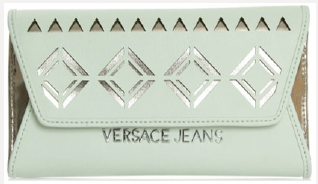
Versace: “Gianni Versace” [1946-1997] one of the most innovative fashion designers of the 20th century, being inspired by studying architectural drafting and the ancient Greek and Roman architecture in his early age; Versace entered the world of fashion with his clothes designed using architectural materials like metals, plastics, and leathers. He was awarded the best fashion designer of the year [1982-83] for his fall/winter collection called the “L’Occhio d’Oro”, or the “Golden Eye”, for designing women garments made of metals cut by laser technology. (Encyclopedia of World Biography [7] (Figure 1).

Figure 1: Showing the “ Selena White Laser Cut Cross- Body Bag” introduced by “Versace” in his Spring 2008 Collection, the bag is made of: White Faux Leather, Silver Hardware, a Popper Snap Closer, with a Detachable Chain Strap, the design was cut by laser and came under the “Versace Jeans” Branding in 2008, Source: Daniel Footware [38].

Lupinepublishers-openaccess-journals-Textile-Fashiondesigning

Cardin

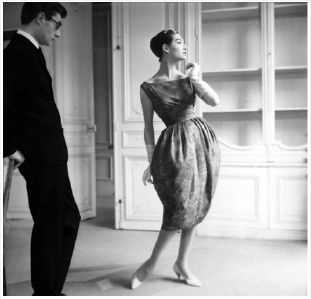
“Pietro Cardin”, also known as “Pierre Cardin”, is a famous Italian-French fashion designer who moved with his wealthy parents from Italy escaping “Fascism”4 to settle in France. In 1945, and after the end of World War II, he studied architecture in Paris. Yet with a great passion for fashion design; he worked with many famous fashion houses like “Paquin”5 “Elsa Schiaparelli”6 and also became the head of design department at “Christian Dior’s” atelier in 1947. “Cardin” founded his fashion house in 1950. United Nations Educational, Scientific and Cultural Organization [8]. Being influenced by his architectural background study; “Cardin” was known for his inclination towards applying geometrical shapes and motifs in his fashion design and often ignoring the female form. He was also known by his “Avant-Garde” style [7]and “Space Age” designs 8. In 1954, he introduced his famous “Bubble Dress” design inspired by the geometrical shapes of ellipsoids and spheres. Pierre Cardin [9] (Figure 2).

Figure 2: Showing “Cardin’s” 1954 Bubble Dress design that was inspired by the geometrical shapes of the ellipsoids and spheres Source: Pierre Cardin [9].

Lupinepublishers-openaccess-journals-Textile-Fashiondesigning

“Christian Dior” is one of the most famous and biggest fashion houses of the twentieth century, founded by the French fashion designer “Christian Dior”, who lived between [January 1905 and 24 October 1957]

“Fascism” is a political ideology that was developed after World War I in Italy and Germany, it was characterized by its extreme nature, almost classifying human beings as superior nations and others that should be dominated by military invasion, “Fascism” was a very oppressive political form of dictatorship that was against “Liberalism” and “Socialism”. The ideology was adopted by “Benito Amilcare Andrea Mussolini” who was the leader and Prime Minister of Italy from 1922 to 1943, “Fascism” was one of the major political ideologies that influenced the beginning of world war II in 1939, (Grimsley Shawn [10]

“Paquin” is a leading French fashion design house founded in Paris by “Jeanne Paquin”. She lived between [1869 and 1936], and she was considered one of the female pioneers in the fashion industry, (Brenda Polan, Roger Tredre [11].

“Schiaparelli” Designs, was a famous fashion house founded by the Italian fashion designer “Elsa Schiaparelli” [1890–1973], she was also considered as one of the most female pioneers in fashion design between world war I and II. Her clients included many prominent figures and celebrities like “Heiress Daisy Fellowes” and actress “Mae West” Bradley Laura, Watt Judith [12].

“Avant-Garde” is an intellectual, artistic, and cultural movement lead by many writers, critiques, artists, and social activists who challenged the main stream of thinking in both their societies and their professional fields. The “Avant-Garde” movement dates back to early 1850’s. And it had great influence on art, writing, architecture, and many other social related fields. Gongini Barbara [13].

“Space Age” is a term defining the time period where the space science technologies began to evolve and introduced to the main stream media, the space age is marked by the launch of “Sputnik” space ship in 1957” Garber Steve [14]

Examples of Fashion Designers Who Make Architectural Designs

What follows are some examples of famous fashion designers who make architectural designs

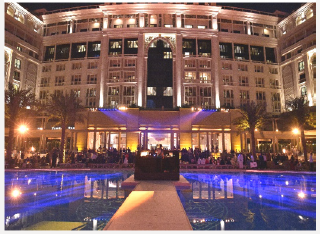
Versace: “Versace” inc. was commissioned by “ENSHAA PSC”; a major real estate developer in UAE to design a luxury 130,000 square meters [1,400,000 sqft] seven stars “Palazzo Versace Dubai” hotel in Dubai, the United Arab Emirates, the hotel consists of 215 hotel rooms and suites, and 169 residencies, together with main entrance, high ceilings, multipurpose halls, restaurants, spa, landscaped gardens with promenades, terraces, water features, reflection pools, and other amenities. The hotel was aimed to reflect the “Versace” lifestyle. Its public spaces and hallways were designed to showcase the artwork, sculpture, featured sketches, and artifacts of the atelier “Versace” gowns, while every interior detail in the hotel including furniture in the hotel rooms and other hotel spaces were exclusively designed by “Versace” to create an immersive experience of his lifestyle Marcellous Jones [15] (Figure 3).

Figure 3: Showing the “Palazzo Versace Dubai” hotel in Dubai, the United Arab Emirates, designed by “Versace”, Source: (Marcellous Jones [15].

Lupinepublishers-openaccess-journals-Textile-Fashiondesigning

Virgil Abloh: “Virgil Abloh” is an American creative fashion designer, and founder of the Milan-based fashion label “Off- White” [9] “Abloh” also studied architecture at the Illinois Institute of Technology. In addition to running a famous fashion line, he collaborated with “IKEA”, to create a capsule furniture collection, and planned to publish a series of books that showcase his clothes alongside iconic structures by “Le Corbusier” and “Mies Van Der Rohe”. (Figure 4). “Abloh” quoted in an interview with the “Architectural Digest”, Maria Bobila [16], Mathew Taylor [17]. “The Idea Is to Teach My Demographic — The Younger Generation Who’s Immersed in Fashion — About Architecture Through These Sites.” Moreover, the style director at the “Architectural Digest” “Jane Keltner De Valle”, an established longtime fashion editor in both the “Women’s Wear Daily”, and “Elle” magazines, after moving to work in the “Architectural digest”; She interviewed “Abloh” and cited him as: “The Brains Behind Off-White and another Designer Who Heavily References Architecture in His Work”. In her personal opinion about the interrelation between fashion and architecture she stated that: Tyler Mccallnov [18]. “I think we’re going through such a seismic Cultural shift right now”.

Read More About Lupine Publishers Journal of Textile and Fashion Designing Please Click on below Link: https://fashion-technology-lupine-publishers.blogspot.com/

Wednesday, 23 June 2021

Lupine Publishers| A Combined Material Substitution and Process Change Approach to Sustainable Batik Production

 Lupine Publishers| Latest Trends in Textile and Fashion Designing (LTTFD)


Abstract

This paper empirically presents a batik production process optimization using sustainable production (SP) methods. The stages of batik production processes involve designing, methodology, dyeing, washing, and finishing. The cost of production is determined by the implementation efficiency and calculation of output to input ratio in the production process. The case study method is employed for production process optimization in two batik enterprises in the Kumasi metropolis. The main objective of this research, is to determine the impact of material sustainability, and the minimization of the production process cost in order to promote maximum operational economic benefits. The implications of this intervention shows that, in batik production process, there could be a saving cost of resisting material by GH₡ 31.00, with a process time of 290mins and an activity cost reduction of GH₡ 68.00 by just replacing paraffin wax with cassava starch. The identified intervention has also been found as significant to address the identified issues that bring a substantial change in the current manufacturing practices of the batik industry. It is recommended that much is to be gained in sustaining the practice when cultural themes are employed in the artifacts created.

Keywords: Batik Production; Environmental Resource; Sustainable Production Practices

Introduction

Batik is a process of dyeing fabric by making use of a resist technique classified by the United Nations Educational, Scientific and Cultural Organization (UNESCO) as part of the “intangible cultural heritage of humanity”. It is a traditional creative selfexpressionistic art form in fabric design which originated from the Far East and known throughout the world [1]. In Ghana today, the batik industry is recognized as a profitable enterprise in the fashion industry and is also classified under the small to medium scale creative industry. The potency of this small and medium industry at the local level cannot be over emphasized as its developmental efforts contribute to the quickening of the nation’s economic empowerment. Its merchandise is well-known in the creative industries as one of the leading developmental enterprises clustered in Ghanaian communities.

The expectation of the industry is to provide important support to the industrial sector’s contribution to local community revenue. However, its production methodology appears to be detrimental to the growth and development of the industry. The cause is not farfetched, in that the prime resist component - paraffin wax - used for its production is a foreign imported material, unsustainable in its supply and harmful to human health due to the heat it generates in the path of the melting and wax application. The cost of production makes its market price much higher than those from foreign lands. Comparatively, the cheapness of foreign batiks and the high selling price of locally produced batik compete unfavorably in the Ghanaian market. To avert this trend there is the urgent need for the implementation of sustainable production practices that offers an advantage for the progress and development of the batik industry.

This is premised on the fact that using cassava starch and its modification for batik making in Ghana due to its accessibility and sustainability is far more beneficial than the traditional use of the exportable paraffin wax which sometimes is unavailable and yet expensive in the marketplace. This makes the end product very expensive to the low income earner. Cassava offers a broad scope of applications with its overall benefits and provides livelihood to most farmers in the rural areas. Cassava cultivation is practiced in all the Agro-ecological zones in Ghana which gives strength to its sustainability in terms of cultivation [2]. In Ghana, it is estimated that 70% of farmers grow cassava, contributing 16% of Ghana’s Agricultural Gross Domestic Product (AGDP) according to Safo- Kantanka [3] and consumed by more than 80% of the population [3,4]. The cassava flours used for this innovative batik print are of two types, the white powdered flour starch used for laundry finishing treatment and the brown powdered flour starch used for food [5].

Thus far, the technique employed in Nigeria and elsewhere in the production of Adire is the white cooked starch as Braide and Adetoro [6] describe. The method of implementation is either by free-hand painting with the cooked cassava starch, or by stenciling the starch on the material. The stencils are made with corrugated zinc or a perforated tin sheet which allows the starch print on the fabric. Kadolph [7] advocates the use of cooked starch paste in Nigeria via the screen print method to force the paste out of the screen onto the fabric with the squeegee to produce Adire. Picton and Mack [8] also affirm the use of cooked cassava starch mixed with a small amount of copper sulphate to produce the Adire Eleko resist dyed fabric using the same procedure mentioned above.

Important materials commonly used as binders for traditional textiles are starch, derived from tree gums (acacia), food grains, stems or bases such as maize, wheat, tapioca and cassava. The choice of cassava starch as the vehicle for sustainable production practices is as a result of the following characteristics when applied in textile printing. Its high molecular weight compounds give a better viscous paste in water below 90⁰C since hot starch pastes continue to lose viscosity if maintained near boiling temperatures [9]. They impart adhesiveness and softness to the printing paste when used on a fabric surface without spreading. They are capable of maintaining the design outlines even under extreme pressure. They hold on to the dye particles in the desired area on the fabric until the transfer and subsequent fixation of dye onto the fabric. Its viscosity is sufficiently high to prevent rapid diffusion of the colour through the fabric and to avoid poor print definition outlines. It delivers a stable paste viscosity, which grants an even and measured flow through the sieve. The viscosity stability is not only durable in terms of the time during which the cloth is being printed, but even through the dyeing operation [10]. The resultant cohesiveness ensures that the forcefulness and the free flowing quality of the paste remains intact after its formulation and execution.

Disadvantages of Paraffin Wax

Burning from paraffin wax emit carcinogens into the air. This high temperature fast-burning wax creates a plethora of byproducts, including benzene, acetone, xylene, formaldehyde and acetaldehyde [11]. Paraffin wax as stated above has some limitations;

a. Their application process generates hazardous chemicals, creating worker safety concerns,

b. They may generate hazardous wastes, and

c. These waxes are not environmentally friendly. The soot created from these wax has been known to cause asthma and allergy flare-ups [11]. Paraffin wax is more expensive than regular cassava starch. Removing paraffin wax from the dyed cloth uses a difficult dewaxing process that requires hot boiling water and even much disturbing when bee wax is used which requires an addition of soap.

Cassava like starch on the other hand can be washed away with just cold water. Hot paraffin wax in use is very hot and thus devastating when it gets in contact with human skin. Cassava starch however is applied virtually in a cold state. “Ice patterns”, usually referred to as vein lines created when wax cools on fabric and the dye liquor penetrates, is perhaps a significant advantage of using paraffin wax over the use of starch. Its operational residue on the floor coming in contact with heat or the sun’s ray becomes a danger to workers due to its slippery nature.

Advantages of Cassava Starch

The natural thickening agent (cassava starch) used for the print paste is available and easily accessible to traditional batik and tie-dye printers all over the country. They impart adhesiveness and softness to the printing paste so it can be applied to a fabric surface without spreading. They are capable of maintaining the design outlines even under excessive pressure. They adhere to the dye particles in the desired place on the fabric until the transfer of the dye into the fabric and its fixation are complete. Its viscosity is sufficiently high to prevent rapid diffusion of the colour through the fabric, in order to avoid poor print definition outlines [12]. It has a stable paste viscosity, which allows an even and measured flow through the screen. The viscosity stability is not only durable in terms of the time during which the fabric is being printed, but even through the dyeing process, [10]. The resultant cohesiveness ensures that the strength and the free flowing quality of the paste remains intact even after its preparation and its execution [13].

Preparation of starch is much slower and at a cooler temperature than does paraffin wax. It is a process that emits less soot, if any, than paraffin wax and therefore environmental toxicity with implications on human health is eliminated. Because the starch is locally made, every purchase of it boosts the starch market and helps support farmers. Creating intricate design patterns with starch is easier to control than paraffin wax due to its cooler temperature and slower fluidity when in use than paraffin wax which tends to work better when hot with low viscosity making it difficult to control or require a higher expertise to control. Perhaps the greatest advantage in the use of starch as a resist medium is the whole change in technique that employs only a screen and squeegee.

Wax application as resist medium however, requires the use of wax application tools to print the design. The starch application technique, with its unique properties, has the ability to mimic any design and produce diverse textural effects on any substrate with high artistic value. The study, therefore, unveils the results of a pilot project that explored an abounding environmentally degradable organic material (cassava starch) as a vehicle and a resist medium in the process of batik production thus effectively reducing the production process time. This was made possible by the varied abilities of cassava to be transformed into different starch types, modified in its preparation to attain varied consistency and characteristics at different temperatures during preparation and application. The inference drawn is that the new methodology adapted is able to replace the melted wax effectively and yet maintain the batik characteristics with an enhanced well-defined images and clarity of colour prints at the end of the printing operation. This unique production methodology not only extends opportunities for adult creative work, but also makes room for kids from age 4 upwards with little help.

Methodology

In this study, a sustainable production method is used to optimize the production process of batik in two prominent batik enterprises in Ashanti Region of Ghana used for the pilot project. The main objective of this optimization is to minimize the costs incurred in the production process of batik in order to obtain maximum benefit. The innovative production method was designed to optimize the production goals of Asfatex enterprise and Craft Consult by using cassava starch and paraffin wax and other common limits of existing resources in their operations. The two basic materials in contention used are the paraffin wax and the starch and its modifications as resist mediums. A mixed methodology comprising case study, experimental and exploratory methods under the qualitative research approach was used. The experimental mainly employed the practice based research that depended on studio activities. The studio experiment contributed to the analysis established in the new sustainable production approach to create the unique type of dye prints [12]. Results of experiments conducted carefully recorded, analyzed and interpreted.

The qualitative research gave a holistic picture of what goes on in the dyeing industry [14]. The purposive sampling technique was used in selecting both the materials and the enterprises for the study, with interviews being a major tool for collecting data that was consequently authenticated by means of triangulation. The respondents were chosen based on their technical knowledge and batik-centered businesses and comprised home-based batik craft artisans, small scale batik enterprises, and consumers. There were 8 hand-drawn batik enterprises, 10 stamped batik enterprises, 2 printed batik enterprises, 7 batik garment manufacturers, 6 knowledgeable academicians, and 13 households-managed business units of batik trade.

These enterprises were used to ascertain their acceptance or rejection of starch as a substitute for paraffin wax in the manufacturing of batik. Since competition is no longer between enterprises, but among sustainable manufacturing practicing firms, effective, sustainable manufacturing practices assume a potentially valuable way of securing competitive advantage and improving industrial performance. This research conceptualizes and developed three dimensions of sustainable manufacturing practices which are the effective utilization of environmental material product and the culturally sustainable production practices and that of the manufacturing product. The anticipated benefits of sustainability though considered as latent variables was to:

A. Minimise health implications

B. Maximize financial benefits

C. And promote cultural communication that will lead to trade opportunities. The parameters used for the pilot experiments in its computations considered the use of water resources, the use of the resist medium, the consumption of the energy resources and its cultural sustainability.

Materials

Aside the main resist materials mentioned in the review, the following common materials were used in the project; 100 % mercerized cotton, tracing paper, powdered cassava starch, vat dye, distilled water for recipe preparation, aluminium/stainless pots, plastic palette bowls, cups and spoons, big plastic bowls as dyebaths. Others included small plastic palette bowls for measuring dyes, wax, mild detergent, heat source (coal pots), metal bucket, rubber gloves, thumb-tacks, P.V.A (Carpenters glue), Potassium dichromate, sodium hydrosulfite (Na2S2O4), sodium hydroxide (NaOH)), wooden ladle and aprons. Tools and equipment employed included, staple machine and pins, a pair of scissors, cutting tool, coating trough, squeegee, mesh, cello-tape, pens and pencils. A ruler, tjanting, masking tape, pressing iron, working table, and working shed, camera, computer, Wooden frames, and water reservoir for washing were additionally used. Corresponding differences in material and tool usage that were considered in the project were as follows; paraffin wax to replace cassava starch and vice versa, wooden designed stamps to replace silk designed screens

Results and Discussion

A Proposed Production Model

Based on the comprehensive study of the batik making process, a new production model was proposed with the aim of minimizing cost by utilizing an available environmentally friendly material like the local starch, to conserve energy. The new sustainable manufacturing model aims at integrating culturally sustainable approach to product design, with new application tools and methodologies in every single step of production. In fact, the case study of enterprises mentioned showed that the implementation of this new paradigm could lead to new market opportunities for the batik industry. Findings suggest that different types of environmentally sustainable manufacturing practices associated with different competitive outcomes may emerge. These specific findings could be helpful to textile designers and practitioners as they respond to environmental and competitive demands.

Though sustainable manufacturing is widely regarded as a business strategy, few researchers have concentrated on the validation of its positive link with business performance [15]. The proposed hypotheses have been tested to empirically validate the proposed model by means of conducting a summation survey among the 2 small enterprises (SMEs) located in Kumasi. The research hypotheses considered in the study indicated that the utilization of environmental resources, to promote economic benefits, and cultural sustainability is feasible in batik production. However, no previous study had tried to propose the possibility of utilizing environmental resources, to promote economic benefits, and the environmental sustainability of batik production in Ghana.

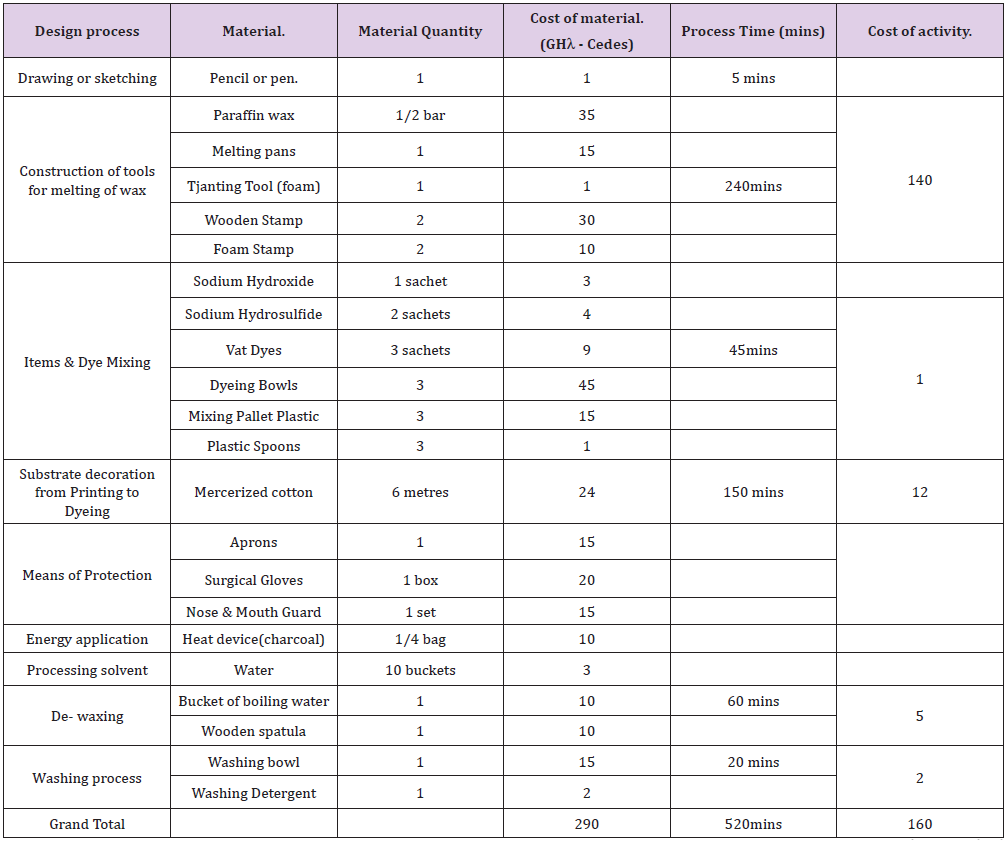
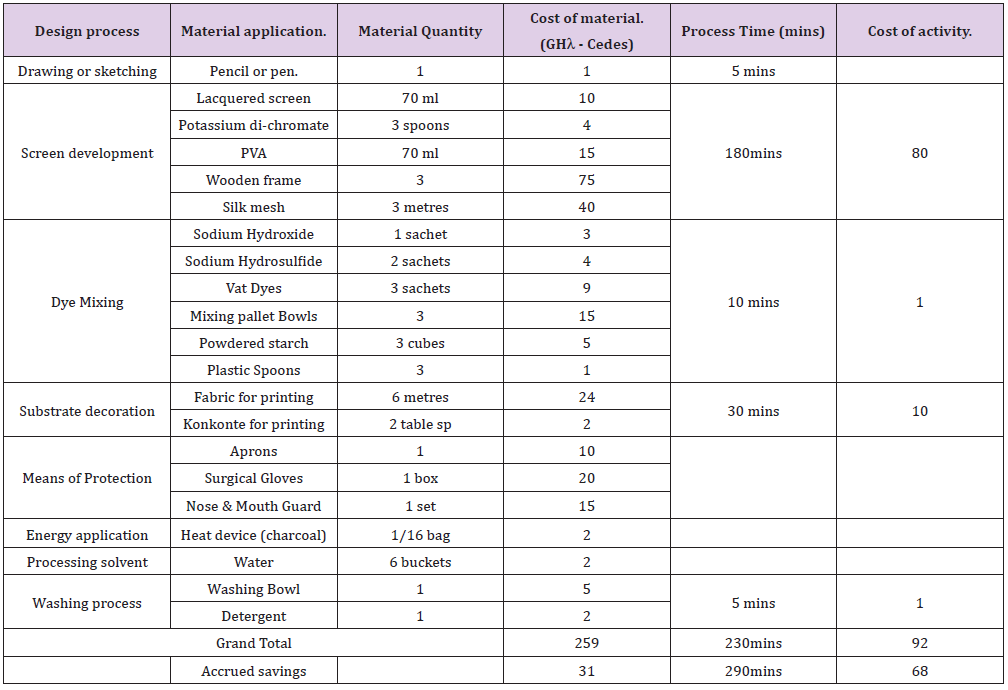
Table 1 shows the current key raw materials, material cost, process time and cost of activity in batik production process used to produce batik cloth. Table 2 shows the raw material, material cost, process time and cost of activity in batik production process used in the intervention model to produce batik. Cost of materials is stated in Ghana cedis, which indicates the amount of cost needed for the procurement of raw materials to produce 6 batik cloths for each model. The processing time is expressed in hours/minutes, which shows the amount of time required for the production process of 6 metres of batik cloth. The cost of an activity is indicated per work done at each stage of production for the 6 yards fabric and not necessarily the cost of production per month of each worker.

Traditional Manufacturing Practices

The entire production process adopted the current traditional practices that batik practitioners are familiar with using the coal pot and charcoal as a source of energy. The process engaged non-consumables and consumables but concentrated on the consumables and function driven activities since the two models all used the same non-consumables for the projects. The duration of the production process was between an hour and 2 days. The production process was executed by 2 employees from each enterprise. The production costs were calculated without taking their salaries into account. Tables 1 & 2 recorded the production process time for batik and the cost of raw materials needed as GHl 290.00 and GHl 259.00 with as much as 520 and 230 mins of production time respectively. The cost of activity for Table 1 was GHl160.00 as against GH₡ 68.00 for (Table 2). The savings accrued for material cost was therefore realized.

Table 1: Key Material Cost, Process Time and Cost of activity in Batik Production Process for traditional Batik manufacturing processes.

Lupinepublishers-openaccess-journals-Textile-Fashiondesigning

Table 2: Key Material Cost, Process Time and Cost of activity in Batik Production Process for the Proposed Intervention.

Lupinepublishers-openaccess-journals-Textile-Fashiondesigning

A critical factor worth mentioning was the fact that the chemical content within the various pastes formulated for Table 2, required a lacquered screen to secure its effectiveness of accommodating the various formulated print pastes. This was extremely important to avoid the chemical corrosion of the photographic film of the screen during the printing process [12]. To commence, four types of screens were developed,

a) Three of them was to transfer the varied dye paste to produce the printed fabrics and

b) The last, was to allow the resist konkonte paste to cover the already printed portions of the fabric, leaving the unprinted portions uncovered to allow the intake of the dye during dyeing by immersion.

Unlike the traditional batik printing process, all the three colors were printed one after the other, before the final konkonte covering and dyeing by immersion. Traditional dyeing however, followed a series of waxing, dyeing, re-waxing and re-dyeing of colour dyes within a two day period to achieve almost the same results. Thus, the differential materials used are the cassava starch and the silk screen instead of wax and wooden block. The outcome of the process is an improved quality, alongside improved efficiency in production, time management and waste minimization, an envisaged increase in market share, creation of new markets, lower costs, innovation and improved flexibility, which are all key performance criteria for industries engaged in sustainable practices. The implication of this intervention shows that use of the locally available raw material saves cost by GH₡ 31.00, with a process time of 290mins and an activity cost reduction of GH₡ 68.00. Additionally, operational cost was reduced, resulting in improved profitability, worker safety and the advantage of using an environmentally-friendly product and minimizing environmental pollution.

The efficient use of cassava starch obviously ensures that manufacturing activity are sustained due to their availability. Having dealt with the main material that impedes safety in batik manufacturing, the youth are likely to be encouraged to engage with the industry to promote sustainable rural and urban development. The implication of this intervention potentially offers the possibility of marketing its products to both local and international markets as it finds expression in traditional clothes and garments to government and private organizations. Its patronage will even increase if their aesthetic characteristics reflect the Ghanaian identity or are the expression of the people’s culture through cherished traditional apparels. This effort made to revitalize batik making is an important driver for sustainable rural development because any economy built on an available natural resource base has the likelihood of improving the vocational sector of the economy [16]. The youth equipped with such skill in schools will also strengthen the concept of made in Ghana goods to facilitate the patronage, promotion and the sustainability of locally made textiles. Holistic Economic Development based on technological innovation processes and natural resource exploitation is believed to be the key to the future of the batik industry

Conclusion

This paper examined the sustainability of batik production and its material development strategies in Ghana. It suggests that the batik enterprises are important in economic and social terms, in the short-run by providing incomes, jobs, especially for artisans, and foreign currency receipts and in the long run by providing the country the opportunity for sustained economic development through appropriate technology to enhance the dynamic effects of batik clothing. The potential of its raw materials and methodology to contribute to long-run growth and sustainable development depend not only on the qualities (desirable or otherwise) of the product, but also on the quality and effectiveness of production processes and availability of raw materials at a low cost within the country’s forest and market space. The effects on employment of the batik enterprises are quite significant for economic development compared to the overall share of the country’s total employment in the cloth manufacturing sector within the various communities in Ghana.

An important factor for the sustainability of an enterprise is the genuine involvement of the local people (farmers) as active participants whose beneficial concerns and experience are essential to the enterprise’s success [17]. The level of community support determines whether the enterprise becomes successfully established, and how it quickly responds and adapts to meet changing needs. By exploiting Ghana’s low labour cost advantages to fill emerging niches and meet buyer demands, its dynamic effects for sustainability becomes even greater, if more linkages can be built up between the production centres and the community. In effect, the characteristics of the batik product (relatively low capital intensity; low investment costs; and use of low skilled labour), also mean that the industry is relatively footloose and able to adjust to changing market conditions quickly and further increasing its sustainability [18].

Though batik making is seen as a productive venture with export potential, it lacks fast production approaches to meet higher consumer demands and therefore needs to be revived and sustained as an industry. Making room for new developmental ideas will inject new techniques of production and make production easier and sustainable. The selection of right material is critical, as it does not only affect the product’s cost, enhance methodology, quality, and growth of batik enterprises, but also impact the environment. Adopting such innovative practices will guarantee the benefits derived in the environment, to promote safety, minimize energy utilization and health of producers [19].

Recommendations

It is highly recommended that batik be introduced into a broader public space to provide a viable platform for engagement between academia and industry through studio base learning (workshops) of batik design processes not only in educational institutions, but also in batik making communities. The focus of sustainability and development in this direction needs to be strengthened using different local material components and design methodologies that relate to traditional African textile culture. Finally, for sustainability of the batik craft to be successful, it is also recommended that skills training of batik producers be intensified and encouraged to create new forms using varied methodologies.

Read More About Lupine Publishers Latest Trends in Textile and Fashion Designing (LTTFD) Please Click on Below Link: https://fashion-technology-lupine-publishers.blogspot.com/

Tuesday, 12 November 2019

Lupine Publishers | Fibre Reinforced Composites: Multiplicity of Application

Lupine Publishers | Journal of Textile and Fashion Designing

Introduction

Today, at the age of developing newer materials, it is needed to relook all textile fibers and materials by introspection of it in depth the strength and weakness of different fibers to be used alone or in combination with other materials as composites. The development of newer composite materials and to find their newer application potential, are still very attractive subjects of research investigation. Among different category of composites being made, fibre reinforced composites i.e. polymer matrix composites containing fibres as further sub-category under the broad heads-(a) fibre reinforced composites having high performance fibres as reinforcing material such as glass, Kevlar, carbon and boron, etc., in an appropriate polymer matrix system, (b) fibre reinforced composites incorporating low-cost natural fibres as reinforcing materials such as jute, hemp, sisal, coir and ramie etc. in an appropriate blend using more than one fibre as reinforcing materials i.e., incorporating one high polymer resin matrix, and (c) fibre reinforced composites having high performance fibre in combination to get advantages of both in the resultant two fibres hybrid composites e.g., jute-glass fibre hybrid composites.
For high performance and specific applications, fibre reinforced composites mentioned in the first sub-category are more useful and for low-cost general performance and less specific applications, the fibre reinforced composite material in the second sub-category are recommended, while the third sub-category of fibre reinforced materials mentioned above have been still finding its applications in many newer areas like making blades of fan, etc. From different applications point of view, different varieties of composites materials can provide tailor-made products of required properties to a precise specification for specific application. However, different applications need different property aspects.
In aerospace application, stiffness for lowest weight is the dominant requirement for engineering structure, where cost is of little account. For many sports application performance, price is much a secondary consideration. There are, however, many other uses which require equal importance of performance and price.
Price-wise, use of jute fibre, as a natural, renewable low-cost reinforcing fibre, in the composite has obvious advantages with the risk of less water and weather resistant property.
Presently, polyester fibre has become cheaper fibre among other synthetic commodity fibres and therefore use of polyester fibre waste as reinforcing composites may be an alternative economical proposition. The order of tensile modulus values of some typical reinforcing fibres given below reveals that jute, together with other conventional commodity textile fibres, are clearly inferior in performance to metals or newer range of high performance fibres, are clearly inferior in performance to metals or newer range of high performance fibres such as Kevlar, glass, boron, carbon (HT) i.e., high tenacity carbon and carbon (HM) i.e., high modulus carbon fibres.

Increasing order of tensile modulus i.e., Stiffness Value:

Nylon<Cotton<Polyester<Jute<Glass <Aluminium<Kevlar<Carbon (HT)<Carbon (HM) <Boron<Mild steel.

Increasing order of Tensile Strength Value

Aluminium<Mild steel<Cotton<Jute<Polyester<Nylon<Carbon (HM)<Carbon (HT)<Glass<Boron<Kevlar.
However, the order of stiffness i.e., tensile modulus or tensile strength do not convey the full picture, as because weight and cost are two important factors in many applications. So modulus (a measure of stiffness) per unit weight i.e., specific stiffness and strength per unit weight i.e., specific strength as well as stiffness/ until cost (i.e., cost normalized stiffness) and strength/unit cost (cost normalized strength) are more important parameters to compare. The followings are in the increasing order of the said parameters.

Increasing order of Specific Stiffness (tensile modulus/ unit weight in N/tex)

Nylon <Cotton<Polyester <Jute<Glass<Aluminium< MildSteel<Kev- lar<Boron<Carbon(HT)<Carbon (HM).

Increasing order of normalized Stiffness/unit cost

Boron<Nylon<Cotton<Kevlar<Caron (HT)<Carbon (HM)<Polye ster<Glass<Jute<Aluminium<Mild-Steel.

Increasing order of specific Strength (Tensile Strength/ unit weight in N/tex)

Aluminium<MildSteel<Cotton<Polyester<Jute<Nylon<Carbon (HM)<Glass<Boron<Carbon (HT)<Kevlar

Increasing order of normalized Strength/unit cost

Boron<Aluminium<Carbon(HM)<Carbon(HT)<Kevlar<MildSteel <Cotton <Polyester <Jute <Glass<Nylon.
Jute has a specific strength greater than that of aluminium and of mild steel, as well as specific stiffness of jute is greater than those of nylon, cotton and polyester, though is lower than that of the two metals (aluminium and mild steel). Thus, on specific stiffness basis, jute is a favourable reinforcing material. Further, considering the implication of price, and looking into the above shown order of cost normalized strength values of different materials, jute stands out as very effective and favourable reinforcing material. However drawback of jute-based composites being its poor water and weather resistance, its use in interior applications and/or in less humid or dry areas as wood-substitute was thought to be more effective.
Jute based composites restricts its use to modest/high temperature, and humid or corrosive environment. Jute, despite its lower strength than high performance fibres, can lead to composites of high specific strength because of its low density compared to metals and high performance fibres like glass, etc. The possibility of using jute as cheap reinforcing fibre for fabrication of composites has been investigated by authors [1-6]. Unlike man- made monofilament reinforcement, jute fibre displayed greater reinforcing efficiency when embedded in a polyester resin matrix than were predicted from measurement of mechanical properties in individual fibres. This is believed to be due to the co-operative interaction of ultimate cells when surrounded by a matrix resin.
However, little has been studied on the possibilities ofapplication of jute based composites as substitute of wooden or metallic parts in different machinery such as looms etc. Substitution of wood by fibre reinforced composites is gradually being increased under economic and environmental pressure. So, with this background information, it was thought appropriate to study the possibilities of use of jute reinforced polyester resin (JRPR) composite materials for making picking stick in non-automatic silk looms and machine parts of other textile machinery. It was also thought useful to produce some jute polyester fibre hybrid composite in polyester resin matrix for other applications considering the potential multiplicity of applications of tailor-made composites of varying composition and design.

Multiplicity in Applications of Fibre-Reinforced Composites

There has been a large growth in variety of fibre reinforced composites developed for different applications point of view. Different fibre reinforced composites can be tailor-made and/or produced considering multiplicity of their application potential. Possible modes of different applications of varied quality of fibre reinforced composites ate tabulated in (Tablel).
Table 1: Different Applications of Varied Quality and Type of Fibre Rein forced Composites.
Lupinepublishers-openaccess-journals-Textile-Fashiondesigning