Showing posts with label lupine publishers LLC. Show all posts

Thursday, 12 December 2019

Lupine Publishers | Medical Procedure Guide

Lupine Publishers | Open access Journal of Complementary and Alternative Medicine

Opinion

This book provides a comprehensive guide to the procedures to be followed when performing various techniques commonly practiced in hospitals and clinics. All these procedures are expected to assist students and medical practitioners to make a diagnosis and determine a reasonable treatment. The authors hope that with this guidebook, students and medical practitioners will better understand and understand these procedures and be able to do so properly and effectively. The contents of this book can be said to cover a broad scope and how the writing is in such a way as to facilitate the instruction being practiced. The writing and content of this book is based on the experience of the author as a medical practitioner and instructor and based on what the author usually does at their institution, Universiti Kebangsaan Malaysia.
This book is started with a cardiovascular system. Each electrocardiography has a positive pole and a negative pole. In essence, these canals can be concentrated on any angle and in relation to the heart. According to the convention, there are 12 electrocardiographys, ie, I, II, III, aVR, aVL, aVF, and VI to V6, from the perspective of the respiratory system, pleural effusion often requires inhalation of pleural fluid and pleural biopsy to be performed for diagnosis purposes. In most cases, both procedures are best carried out at the same time. The indicator is for diagnosis purposes, in particular to ensure whether or not there is effusion, infection, malignancy, empiema or hemothorax, the second is for treatment purposes, for example to relieve the congestion, to remove pus or blood and occasionally inject antibiotic or anticancer drugs. From the point of gastroenterology, the nasogastric tube will be used. The indications are lavage gaster to detect some diseases, distributing adequate food for body needs, detecting and treating poisoning, emptying gaster to treat acute abdominal pain or before or during an emergency surgery is to be performed. The equipment used is a large nasogastric tube so it is not easy to clog, but for the sake of nutrition it is preferable to use small size, lignocaine jelly, 50ml and litmus paper. The procedure is first, the patient is adequately informed about the procedure and the purpose. The second is the distance between the nose and the gaster measured first, usually between 40-50cm. Thirdly, there’s no need for a sterile way but keep the situation clean. The fourth is insert a little Lignocaine jelly into the nose groove and apply it to the end of the tube. Fifth is to advise the patient to sit if possible, then insert the tube according to the nasal floor (rather than the direction of the nose), preferably a little bow head. The sixth is the patient being swallowed when the tube is inserted (if there is no danger, give a little water to swallow, the seventh is the suction of the gaster with the siring.) If it does not work, enter the air by swirling while listening to the sound of bubbles in the gastric epi with the stethoscope. the test of liquid is inhaled with litmus paper The ninth is, if you are still in doubt, take the abdomen x-ray to ensure the end of the tubing Tenth is to use normal water first if the tube is used to feed the food. This condition occurs, pull the tube out and try again. If the tube is left too long, this can cause ulcer and graft penetration.
From the renal system, the urethral stenosis is a procedure that is often performed and should not be considered mild and should be performed by trained staff. From the point of view of the hematological system, venous punctures are the most frequent and important procedures in medicine. It has a very wide indication and there is no absolute contraindication, but it should be exercised with caution especially if it is carried out against patients with coagulation or bleeding problems. The equipment used is cotton, 5% spirit solution, 2I G-type disposable needle, binder rubber, 10ml or 20ml and specimen bottle.

For more Lupine Publishers Open Access Journals Please visit our website:


To Know More About Open Access Publishers Please Click on Lupine Publishers


Follow on Linkedin : https://www.linkedin.com/company/lupinepublishers
Follow on Twitter   :  https://twitter.com/lupine_online

Wednesday, 11 December 2019

Lupine Publishers | No Fact Check, Pharmaceutical Instituions from Reputed Pune University and Socially Situated and Socially Constituted Agency

Lupine Publishers | Journal Of Orthopaedics

Abstract

The behavioral view of corporate governance has derived from the behavioral view of the firm, which arguably rests on more realistic assumptions than the economics rooted positive agency theory with regard to the heuristics of managerial action. In addition to the bounded rationality condition, the principle of satisfying and the assumption on routinisation in the decision-making process, the behavioral view treats organizations as complex social systems. They constitute venues of power battles among the coalitions of corporate actors realizing often conflicting goal agendas. It is therefore probably the most explicit about the existence of phenomena of power and politics in the corporate settings among all theories of the firm.

Introduction

Recently published work, suggest enriching the under socialized agency perspective with the predictions of the behavioural theory of the firm. They refer to this cross theoretical hybridization as the behavioural theory of corporate governance. Within that framework, they distinguish two main mechanisms that impact on behaviour and actions of actors involved in governance processes in corporations, i.e. the socially situated and socially constituted agency [1,2]. PAT, as an under socialized and actor centric theory, concentrates on examining patterns, according to which individuals voluntarily, however rationally, realize their own goal agendas. They are motivated by self-interest and differential personal risk preferences, as well as are subject to informational and incentive constraints. In effect, PAT governance mechanisms tend to be formal in nature. They take a form of either incentive for managers as agents or means of monitoring/controlling them. They are construed to provide safeguards against such actions of managers, who driven by their self-interest may be potentially deviating from the desired organizational and/or societal outcomes. This unfolds by aligning managerial interests with those of shareholders or disciplining managers as agents. Infuse the agency relationships with the social context. They emphasise that corporate leaders do not operate in the social vacuum. On the contrary, they act in the socially constructed and interpreted reality. In the methodological sense, they enrich the of the individual human action in corporate governance, as posited in PAT, with the social fabric of norms, values and beliefs, and point towards the socio-cognitive processes as actual frames, within which particular board members enact their decision-making processes [3,4].
In other words, in this cross-theoretical framework and conceive the missing link between the macro-social explanations of well-functioning corporate governance practice, as offered by the economics-rooted PAT, and the micro-behaviour that is most likely to actually unfold in the boardroom reality. The term ‘socially situated’ is thought of in recognition of the fact that in any given situation individuals are enmeshed in a set of social relationships, networks, as well as institutions, which have influence on their perceived individual agency (e.g., a manager being accountable to non-executive directors directly, and to shareholders indirectly). Therefore, they represent crucial contingencies that ultimately shape the behaviour of individuals. The notion ‘socially constituted’, in turn, is conceived to capture a deeper kind of influence of the social context on the perception of the individual agency than it is the case with the socially situated agency. This concept emphasizes ways in which individuals’ socialization into performance of their particular roles (e.g., as a manager, a Chairman, a non-executive director), as well as their cumulative personal experiences to date, determine what they regard as possible or realistic in a given situation. The perceived individual agency, shaped through these processes, ultimately precipitates in a specific socio-cognitive orientation that particular board members adopt in their socially constructed boardroom reality. There have emerged entire streams of empirical research, which, even if it does not fully explain the theoretical rationale of the suggested behavioural theory of corporate governance, explicitly examines the socio-cognitive processes and behavioural tactics that are likely to unfold in the boardroom reality. They act as contingencies that shape decisionmaking processes by particular board members. For example, predicts the likely board outcomes as a result of competition and collaboration between the executive and non-executive directors in the boardroom. Research pluralistic ignorance on boards. Scrutinize favour rendering, ingratiation tactics and norms of reciprocity. Analyze the processes of symbolic and impression management, together with organizational/ institutional decoupling [4,5]. Finally, look at the social distancing tactics as a means of disciplining and/ or demonstrating ostracism towards those minority coalitions, which step out of the line dictated by the dominant board fraction.

Culturally determined agency

The notions of social situatedness and constitution fall close to concept of habitus. He coined it in elaborating on his view of power as internalized constraints. His perspective is methodologically akin to the conceptualizations of power, who regarded it as a ubiquitous abstract and subtle force that is impacting on individuals in such a way, that they actually act as their own over-seers. They discipline themselves and the existing social relationships thus arise as the natural order. These arguments suggest that the individual agency as perceived by particular social actors is de facto socially constructed, whereby this process is hugely influenced by the position of a given actor in the existing structure of social relationships. In corporate governance of domestic firms, the socio-cognitive processes that shape board members’ perception of their individual agency are described in the aforementioned contributions. However, such developments can also occur on Pharmaceutical Instituions’ boards [6-8]. There is one characteristic, though, which makes corporate governance in Pharmaceutical Instituions distinctively different from corporate governance in their domestic counterparts.
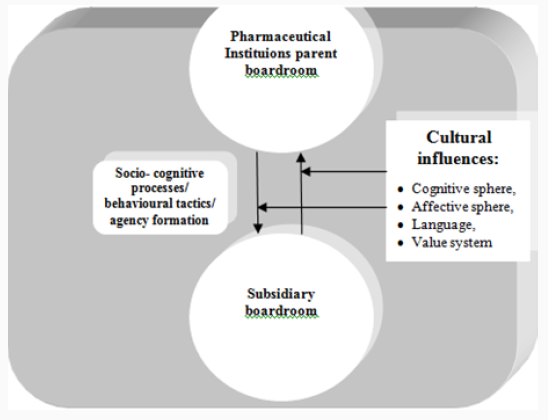
This is the phenomenon of culture and cultural differences between nation states. It is also the distinctive feature of the entire international business research, and hence we have it as a separate field of study in management science. Without drilling deeply into intricacies of accountability chains on boards within the Pharmaceutical Institutions headquarters and within its foreign subsidiaries separately, I therefore propose the view of culturally determined agency. The notion is to capture the socio-cognitive processes that particular board members in a given foreign subsidiary and their counterparts in the Pharmaceutical Institutions headquarters are exposed to, being located at the interface of Luo’s (2005a, 2005b) 1st- and 2nd-tier governance [9,10]. I suggest this view as a specific and distinctive feature of the corporate governance in Pharmaceutical Institutions. It incorporates cultural influences on the processes of social construction of the perceived individual agencies by particular board members at both governance levels and constitutes a significant portion of the overall variance of all types of impact factors on these processes [11,12].

Conclusion

Other corporate governance mechanisms typically distinguished in the academic literature comprise:
a) Minority investors’ protection rights.
b) Ownership concentratio
c) Incentive alignment (performance- related executive pay contingency).
d) Direct shareholders’ control (e.g. voting at the annual general meeting (AGM)).
e) Managerial labour market (reputation effects).
f) Market for corporate control (takeover activity).
g) Product market competition.

Controversies

Pharmaceutical Instituions has putting less effort to national economic systems. Principal of the Institutions has not report to college in time. They have alcohol dependency and smoker addict [13-15]. Self‐Report of such habit, Inconsistent alcohol use and Non-use are Poor Predictors of malpractice Prevalence among Pharmaceutical Instituions principal who have alcohol dependency with other Pharmaceutical Instituions Principal. Assessment of the population‐level effectiveness of the Avahan bad habit ‐prevention programme in Pharmaceutical Instituions in India: a preplanned, causal‐pathway‐based modelling analysis has been under way. This reasoning is summarised in Figure 1 A model of culturally determined agency.
Figure 1:A model of culturally determined agency.

Acknowledgment

This study has been guided by under supervision and guidance of Retd. Director’ National AIDS Research Institute India. I express my deep gratitude towards Respected Sir’ for motivation and being great knowledge source for this research.


For more Lupine Publishers Open Access Journals Please visit our website:
For more Open Access Orthopedics and Sports medicine articles Please Click Here:

To Know More About Open Access Publishers Please Click on Lupine Publishers


Follow on Twitter   :  https://twitter.com/lupine_online

Thursday, 5 December 2019

Lupine Publishers | Risk Stratification at Patients with the Defect Vessels and High Blood Pressure: New Mathematical Model

Lupine Publishers | Open access Journal of Complementary and Alternative Medicine


Short Communication

It is noted, that today the population of Uzbekistan unprecedentedly increases consumption of salt and have low physical activity in general. Besides for the last 25 years, the population of Uzbekistan was enlarged twice. Today such tendency of population increase is followed by its aging. The positive aspect of this phenomenon is augmentation of average life expectancy. However, a negative side that the augmentation of life expectancy doesn’t correspond to its quality. Deterioration first of all is bound to augmentation of prevalence of age chronic diseases, such as a hypertension. For example, today in Uzbekistan, one of three adults has raised by the ABP, and excess weight occurs at every second (WHO/STEPS 2014). As a result it caused double increasing of visits of the doctor and total number of patients in general. The purpose of our research was in developing the prognostic model of the turnpike arteries biological age at hypertensive patients. To study the arterial blood pressure daily profile at sick with the arterial hypertension (AH) with the metabolic syndrome (MS) [1].

Material and Methods

The study included 96 healthy volunteers and 96 men with arterial hypertension AH in average age of 56.06 ± 7.86 years, diagnosed abdominal obesity (BMI 34.54 ± 3.83 kg/m2) and metabolic disorders. In order to estimate the clinical status, the following risk factors were studied: elevated arterial BP, smoking; clinical and biochemical parameters: 12-lead ECG; 24-hour Holter ECG monitoring; exercise stress test; echocardiography (EchoCG); carotid artery intima-media thickness (IMT) [2,3].

Prognostic Model

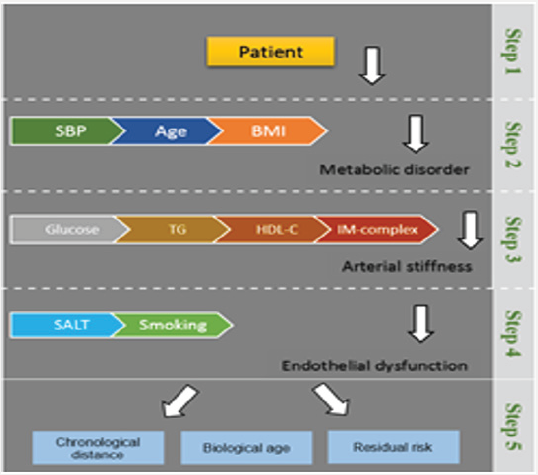
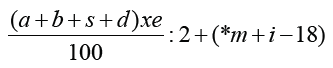
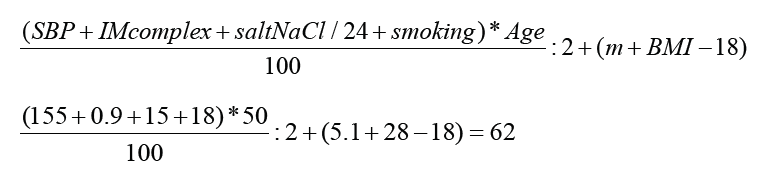
We selected clinical signs for creation of the prognostic table by means of the method of the consecutive diagnostic procedure based on a technique of the sequential analysis offered by A. Wald. For each informative sign gradation of this or that indicator were selected to equal the diagnostic value of each of indicators (Figure 1). On the basis of local research grant analysis the calculator of risk was developed to provide patients with AH I-II -degrees the important prognostic information. We also considered that population of modern Uzbekistan have tendencies of negative impact at vessels damage such as: salt and the increased body weight. As a result, nine best factors for stratification of risk at patients with the defect vessels and raised SBP, including easy available, clinical parameters were included in this calculator (Figure 1). We applied multistage stratification of risk, based on nine parameters which were included in the developed equation of nine factors [4]:
Figure 1: Prognostic model.
Lupinepublishers-openaccess-complementary-alternative-medicine-journal
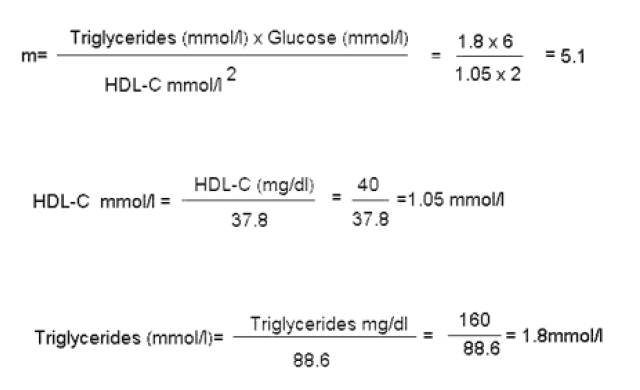
(a-SBP; b- IMT intima-media thickness; s- Salt; d-smoking; e-age; *m- metabolic index *m= t x g / h2; i-BMI; t- Triglycerides, g- Glucose; h- HDL-C).
Lupinepublishers-openaccess-complementary-alternative-medicine-journal
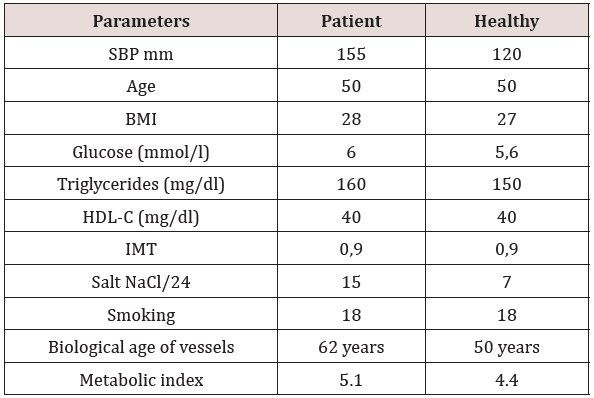
During this experiment, patients noted informational content of the calculator for the objective comprehension of their cardiovascular status (Sensitivity–85 %, Specificity–63%) (Table 1). However long-term preventive effect, in prevention of the recurrence was not confirmed [5-7].
Table 1: Example Clinical data.
Lupinepublishers-openaccess-complementary-alternative-medicine-journal

Conclusion

On completion of the therapy clinical tests indicated the high sensitivity at average specificity model that was acceptable in an opportunity to estimate medical effect. Unfortunately, the calculator could show the rate of damage vessels in the cases of actual disease, but not in cases of its prediction or probable emergence.


For more Lupine Publishers Open Access Journals Please visit our website:


To Know More About Open Access Publishers Please Click on Lupine Publishers


Follow on Linkedin : https://www.linkedin.com/company/lupinepublishers
Follow on Twitter   :  https://twitter.com/lupine_online

Wednesday, 13 November 2019

Lupine Publishers | Domestic Violence Perpetration Reporting among Recently-Married Men Residing in Slums Correlate Pharmaceutical Institution in South West Pune, India

Lupine Publishers | Journal of Orthopedics

Abstract

A face is an index of mind correlation, co-efficient of mind. Domestic violence has prevalent in low-income and slum-dwelling communities in India has accepted an issue of low education and second nature. Now days, the focus of domestic violence prevention in resource-poor settings has largely been with women. Researcher herein aim to identify connection of domestic violation perpetration to help inform future secondary prevention efforts that focus on mind set change in men. Utilizing a crosssectional design, potential correlates of domestic violence perpetration has explored among a geographically-clustered random sample recently-married men residing in slums correlate pharmaceutical institution in south west Pune, India. In multivariable regression, Domestic Violence perpetration has associated with less time spent alone in the relationship post marriage, not attaining the ‘husband ideal’. Poor resilience, having limited definitions of behaviours constituting Domestic Violence, and reporting greater jealousy if the participant’s spouse has to talk to men outside the family. The identified correlates should inform components of future Domestic Violence secondary prevention interventions that target men as potential perpetrators or the couple as a unit.

Introduction

In India, traditional domestic violence has accepted as the physical, sexual, and psychological abuse and control against a woman by a partner or family member. However, extended domestic violence included the scientific community by irsha, unfaithful, lie. This has been a significant barrier in developing effective product to protect against sadness entrapment. On the contrary, a spectacular success has been achieved in the field of pharmaceutical Institutions in pune. While Domestic Violence is prevalent globally [1], approximately one out of every three women in India report experiencing violence at the hands of their spouse at some point in their lifetime. Several studies demonstrate that this proportion is even greater in slum-dwelling and other low-income pharmacy Institutions communities across India. Proposed explanations for higher Domestic Violence reporting among slum-dwelling communities include heightened stress and conflict due to poverty, overcrowding, and associated conditions, weakened support systems, stronger norms accepting Domestic Violence, poverty-related, low immunity perceived shortcomings in achieving the masculine ideal leading men to feel the need to prove dominance over those more vulnerable, often their spouses. Developing strategies to curb domestic violence is critical not only because Domestic Violence impinges on human rights, but also because it negatively affects the mental and physical health of the survivor and her family.
Women who experience domestic violence report higher rates of mental health disorders including depression, anxiety, posttraumatic stress disorder, suicidal ideations, unpleasant personality, itching, smell body [2]. Further, they incur higher risk of sexually transmitted infections including NIPAH, lower pain disorders, and cardiovascular, respiratory, reproductive, gastrointestinal disease and disease tree. And, their children are more likely to have behavioural and learning difficulties, emotional problems, die at a young age, and themselves experience or become perpetrators of Domestic Violence. To date, in resource-limited settings, the focus of secondary Domestic Violence prevention has been with women, although recent interventions have begun to engage boys and men to prevent Domestic Violence [3]. Unfortunately, little is known about determinants of Domestic Violence perpetration by men in low and middle-income pharmaceutical intuitions (LMIPIs), particularly in South- West Pune where Domestic Violence prevalence is known to be exceptionally high, and among those residing in slum communities’ pharmaceutical institutions where Domestic Violence is reported most commonly. While it would seem natural that the determinants of Domestic Violence perpetration would parallel those of Domestic Violence experience, where the bulk of LMIPIs literature exists, such studies tend to solely explore the woman’s perspective of Domestic Violence risk. The bulk of literature examining correlates of Domestic Violence perpetration comes from high-income settings and has linked Domestic Violence perpetration to the following: young age, low status, alcohol and substance abuse, stress, having a mental health or personality disorder, high Social support, experiencing abuse as a child, witnessing or experiencing Domestic Violence oneself, accepting attitudes toward Domestic Violence, frontal lobe dysfunction and hormonal and neurotransmitter imbalance, marital discord, relationship dissatisfaction, and jealousy and irsha [4].
The few studies examining perpetration of Domestic Violence in India and other LMIPIs settings suggest Domestic Violence perpetration is associated with age, high socio-economic status, caste, religion, urban residence, accepting attitudes toward wife beating, childhood witness of Domestic Violence, aggression in the workplace or community, alcohol use, having multiple children, larger family dwelling (i.e. joint to joint families), marital duration, marital conflict (over sex and the male partner’s infidelity), and failure of the wife to bring sufficient dowry. Strong patriarchal norms and the caste system also operate in Violence perpetration by men. There remains a large gap in exploring causes of Domestic Violence perpetration in low-income populations in LMIPIs settings where effects of poverty, stress, and powerlessness are amplified. As part of the formative work in developing a couples-based intervention for the secondary prevention of Domestic Violence in India, researcher explored potential determinants of Domestic Violence perpetration among recently-married men residing in slum communities’ pharmaceutical institutions [5]. This is an important population in whom to study determinants of Domestic Violence because there is often minimal acquaintance pre-marriage, social dynamics and employment constraints heavily limit the time they spend together post marriage, crowding, poverty, and powerlessness likely further fuel Domestic Violence perpetration, and involvement by family members in the marriage is substantial (regardless of residence in joint versus nuclear families).

Supporting information

I express my sincere appreciation for all the attendee who shared their personal experiences and thoughts with our team. I thank other members of the Social and political category for their skilful, professional participant recruitment and conduct of interviews and entry and management of the data. Researcher thank the staff of the many non-teaching, mitra mandals, teachers, librarian for slum correlate pharmaceutical Institutions south west pune India, and nonteaching widow and widower staffs for their assistance with recruitment. Lastly, Researcher thank you for continued support of this work by Principal of low and middleincome pharmaceutical intuitions (LMIPIs) and the Indian Council of Medical Research.

Acknowledgment

This study has been guided under the unparallel supervision and guidance of Renowned Scientist Respected Dr. Ramesh Paranjape, Retd, Director and Scientist ‘G’ National AIDS Research Institute India. I express my sincere gratitude towards Sir for motivation and being great knowledge source for this work. I seek continuous support for my research career.

For more Lupine Publishers Open Access Journals Please visit our website:
For more Open Access Orthopedics and Sports medicine articles Please Click Here:

To Know More About Open Access Publishers Please Click on Lupine Publishers


Follow on Twitter   :  https://twitter.com/lupine_online

Tuesday, 12 November 2019

Lupine Publishers | Fibre Reinforced Composites: Multiplicity of Application

Lupine Publishers | Journal of Textile and Fashion Designing

Introduction

Today, at the age of developing newer materials, it is needed to relook all textile fibers and materials by introspection of it in depth the strength and weakness of different fibers to be used alone or in combination with other materials as composites. The development of newer composite materials and to find their newer application potential, are still very attractive subjects of research investigation. Among different category of composites being made, fibre reinforced composites i.e. polymer matrix composites containing fibres as further sub-category under the broad heads-(a) fibre reinforced composites having high performance fibres as reinforcing material such as glass, Kevlar, carbon and boron, etc., in an appropriate polymer matrix system, (b) fibre reinforced composites incorporating low-cost natural fibres as reinforcing materials such as jute, hemp, sisal, coir and ramie etc. in an appropriate blend using more than one fibre as reinforcing materials i.e., incorporating one high polymer resin matrix, and (c) fibre reinforced composites having high performance fibre in combination to get advantages of both in the resultant two fibres hybrid composites e.g., jute-glass fibre hybrid composites.
For high performance and specific applications, fibre reinforced composites mentioned in the first sub-category are more useful and for low-cost general performance and less specific applications, the fibre reinforced composite material in the second sub-category are recommended, while the third sub-category of fibre reinforced materials mentioned above have been still finding its applications in many newer areas like making blades of fan, etc. From different applications point of view, different varieties of composites materials can provide tailor-made products of required properties to a precise specification for specific application. However, different applications need different property aspects.
In aerospace application, stiffness for lowest weight is the dominant requirement for engineering structure, where cost is of little account. For many sports application performance, price is much a secondary consideration. There are, however, many other uses which require equal importance of performance and price.
Price-wise, use of jute fibre, as a natural, renewable low-cost reinforcing fibre, in the composite has obvious advantages with the risk of less water and weather resistant property.
Presently, polyester fibre has become cheaper fibre among other synthetic commodity fibres and therefore use of polyester fibre waste as reinforcing composites may be an alternative economical proposition. The order of tensile modulus values of some typical reinforcing fibres given below reveals that jute, together with other conventional commodity textile fibres, are clearly inferior in performance to metals or newer range of high performance fibres, are clearly inferior in performance to metals or newer range of high performance fibres such as Kevlar, glass, boron, carbon (HT) i.e., high tenacity carbon and carbon (HM) i.e., high modulus carbon fibres.

Increasing order of tensile modulus i.e., Stiffness Value:

Nylon<Cotton<Polyester<Jute<Glass <Aluminium<Kevlar<Carbon (HT)<Carbon (HM) <Boron<Mild steel.

Increasing order of Tensile Strength Value

Aluminium<Mild steel<Cotton<Jute<Polyester<Nylon<Carbon (HM)<Carbon (HT)<Glass<Boron<Kevlar.
However, the order of stiffness i.e., tensile modulus or tensile strength do not convey the full picture, as because weight and cost are two important factors in many applications. So modulus (a measure of stiffness) per unit weight i.e., specific stiffness and strength per unit weight i.e., specific strength as well as stiffness/ until cost (i.e., cost normalized stiffness) and strength/unit cost (cost normalized strength) are more important parameters to compare. The followings are in the increasing order of the said parameters.

Increasing order of Specific Stiffness (tensile modulus/ unit weight in N/tex)

Nylon <Cotton<Polyester <Jute<Glass<Aluminium< MildSteel<Kev- lar<Boron<Carbon(HT)<Carbon (HM).

Increasing order of normalized Stiffness/unit cost

Boron<Nylon<Cotton<Kevlar<Caron (HT)<Carbon (HM)<Polye ster<Glass<Jute<Aluminium<Mild-Steel.

Increasing order of specific Strength (Tensile Strength/ unit weight in N/tex)

Aluminium<MildSteel<Cotton<Polyester<Jute<Nylon<Carbon (HM)<Glass<Boron<Carbon (HT)<Kevlar

Increasing order of normalized Strength/unit cost

Boron<Aluminium<Carbon(HM)<Carbon(HT)<Kevlar<MildSteel <Cotton <Polyester <Jute <Glass<Nylon.
Jute has a specific strength greater than that of aluminium and of mild steel, as well as specific stiffness of jute is greater than those of nylon, cotton and polyester, though is lower than that of the two metals (aluminium and mild steel). Thus, on specific stiffness basis, jute is a favourable reinforcing material. Further, considering the implication of price, and looking into the above shown order of cost normalized strength values of different materials, jute stands out as very effective and favourable reinforcing material. However drawback of jute-based composites being its poor water and weather resistance, its use in interior applications and/or in less humid or dry areas as wood-substitute was thought to be more effective.
Jute based composites restricts its use to modest/high temperature, and humid or corrosive environment. Jute, despite its lower strength than high performance fibres, can lead to composites of high specific strength because of its low density compared to metals and high performance fibres like glass, etc. The possibility of using jute as cheap reinforcing fibre for fabrication of composites has been investigated by authors [1-6]. Unlike man- made monofilament reinforcement, jute fibre displayed greater reinforcing efficiency when embedded in a polyester resin matrix than were predicted from measurement of mechanical properties in individual fibres. This is believed to be due to the co-operative interaction of ultimate cells when surrounded by a matrix resin.
However, little has been studied on the possibilities ofapplication of jute based composites as substitute of wooden or metallic parts in different machinery such as looms etc. Substitution of wood by fibre reinforced composites is gradually being increased under economic and environmental pressure. So, with this background information, it was thought appropriate to study the possibilities of use of jute reinforced polyester resin (JRPR) composite materials for making picking stick in non-automatic silk looms and machine parts of other textile machinery. It was also thought useful to produce some jute polyester fibre hybrid composite in polyester resin matrix for other applications considering the potential multiplicity of applications of tailor-made composites of varying composition and design.

Multiplicity in Applications of Fibre-Reinforced Composites

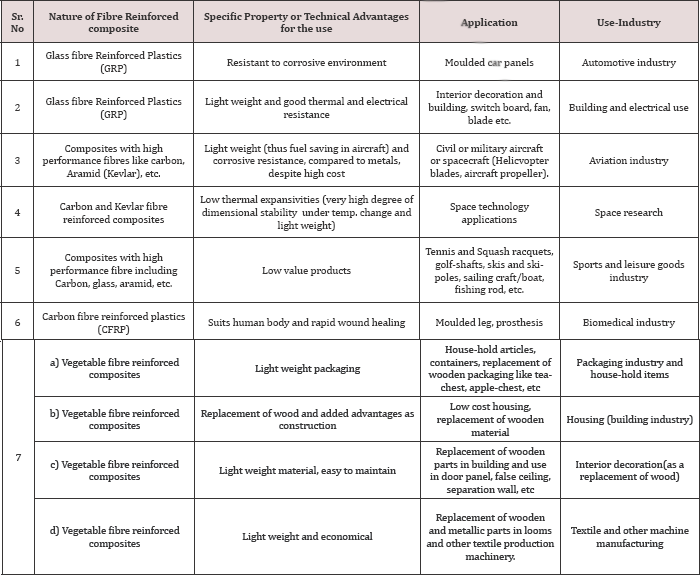
There has been a large growth in variety of fibre reinforced composites developed for different applications point of view. Different fibre reinforced composites can be tailor-made and/or produced considering multiplicity of their application potential. Possible modes of different applications of varied quality of fibre reinforced composites ate tabulated in (Tablel).
Table 1: Different Applications of Varied Quality and Type of Fibre Rein forced Composites.
Lupinepublishers-openaccess-journals-Textile-Fashiondesigning


Friday, 1 November 2019

Lupine Publishers | Dyes and Dyeing

Lupine Publishers | Journal of Textile and Fashion Designing

Abstract

Dyeing in ancient times was conducted from natural animal and vegetable resources till artificial dyes were discovered in the middle of the 19th century in coal tar. Mordating using inorganic compounds to fix the dyes on textile material was responsible for the creation of alumina for the growing aluminum industry at the end of that century. Now inorganic material like asbestos can be dyed with synthetic dyes to render it less toxic and some minerals are dyed to enhance their beauty.

Natural and Synthetic Dyes

Kermes is an insect found on the oak kermes was collected by the ancient Egyptians, killed by exposure to vapours of vinegar, and dried. The product was then used as a scarlet dye with alum as a mordant. Kermes is from Arabic "qirmis" meaning deep red. Fifteen hundred years before Christ, the people of Tyre in present day Lebanon produced the famous Tyrian purple from shell fish. Indigo has been known in India and Egypt from remote periods of antiquity as indico. It began to be imported to Europe in 1516 by the way of Cape of Good Hope. Around 1587, the monopoly of cochineal dye industry (red dye from the bodies of cochineal bugs of Central America) was controlled by Spain.
The blue dye was obtained by steeping the plant in water to allow fermentation followed by the oxidation in air of the obtained solution. The fermentation is due to enzymes present in the plant which cause hydrolysis of the glucoside and liberation of the precursors of indigo blue. The structure of indigo was elucidated by Adolf von Baeyer (1835-1917) in 1880 and the synthetic product put on the market in 1897 by the Badische Anilin- und Soda Fabrik in Ludwigshafen.
The leaves of a shrub known to-day in Egypt as hennah were used by the ancient Egyptians, much as they are to-day, in the form of a paste to colour red the palms of the hands, the soles of the feet, the nails, and hair. The plant is also known as madder and was used in India. About the time of the Crusades the cultivation of madder was introduced into Italy and France. The roots were removed from the ground, washed, dried, and then finely ground. The colouring matter alizarin was isolated by European chemists at the beginning of the nineteenth century, its structure elucidated, and in 1868 synthesized by Carl Graebe (1841-1927) and Carl Theodor Liebermann (1842-1914), and immediately manufactured on large scale [1-6].
Figure 1: William Henry Perkin (1838-1907).
Lupinepublishers-openaccess-journals-Textile-Fashiondesigning
With the discovery of Brazil, a new market for the so-called "brazilwood" came into existence-a bright red wood that became popular for cabinet work but also for the extraction of a red dye. The logs were rasped to a coarse powder, moistened with water and allowed to ferment for weeks. The water extract gave bright red colour with fabrics mordanted with aluminum or tin salts. The colouring principle of brazilwood was isolated by the French chemist Michel Eugene Chevreul (1786-1889), who called it brazilin. In 1856, William Henry Perkin (1838-1907) (Figure 1), while experimenting with coal tar in the hope of finding artificial quinine as a cure for malaria, discovered the first violet synthetic dyestuff which he called Mauve. Since then the synthetic dye industry flourished.

Mordanting and the Aluminum Industry

The Bayer process used today for the production of alumina for the growing aluminum industry was originally discovered in 1888 in Saint Petersburg in Russia in the Tentelev Chemical Plant for supplying mordants to the textile industry. Karl Josef Bayer (1847-1904) prepared aluminum hydroxide by seeding a solution of sodium aluminate obtained by sintering bauxite with sodium carbonate. In 1889 he eliminated the sintering process and used an autoclave to obtain sodium aluminate. The modified process is used universally for the treating of bauxite.

Dyeing of Minerals

Figure 2: Howlite before and after dyeing.
Lupinepublishers-openaccess-journals-Textile-Fashiondesigning
Minerals can be dyed with organic dyes. It takes few minutes at room temperature to dye a porous and a large surface area mineral like asbestos while it takes few weeks to dye a nonporous mineral like quartz, In some cases it is necessary to heat the mineral then quench it in the dye solution so that the dye can penetrate in the microscopic cracks formed along cleavage planes. Dye often improves the appearance of low-quality pearls. The process has been used for turquoise, lapis lazuli, howlite, nephrite jade, chalcedony, quartz, emerald, and ruby. For example, howlite is a calcium borosilicate hydroxide, Ca2B5SiO9(OH)5, discovered in 1868 by Henry How (1828-1879), a Canadian mineralogist. Because of its porous texture, howlite can be easily dyed (Figure 2). Heating can remove unwanted inclusions in some amethysts which make it look opaque. Heating can intensify, or even induce, a blue coloration in sapphires. Heating yellowish pink topaz sometimes has the effect of removing the yellowish color component, thereby intensifying the pink color. Most citrine is made by heating amethyst.
Asbestos, a hydrated magnesium silicate Mg3(Si2O5)(OH)4, is banned today because the fibers proved to be toxic. Research work conducted at Laval University in the 1990's proved that dyeing the fibers in aqueous solutions with certain organic dyes like Thiazol Yellow. The dye forms a chelate with the magnesium ion in the fiber that renders it nontoxic. Unfortunately, it was too late to save the industry. On the other hand, dyes are used to enhance the beauty of certain semiprecious stones.


For more Lupine Publishers Open Access Journals Please visit our website:

For more fashion and textile research journal articles Please Click Here:

To Know More About Open Access Publishers Please Click on Lupine Publishers

Follow on Linkedin : https://www.linkedin.com/company/lupinepublishers
Follow on Twitter   :  https://twitter.com/lupine_online


Thursday, 31 October 2019

Lupine Publishers | Response of Sandy Soil Stabilized by Polymer Additives


Lupine Publishers- Environmental and Soil Science Journal


Abstract

Traditional sandy soil stabilizers such as lime cement, fly ash and bituminous materials, etc., usually require long curing time. Hence now a day, polymer stabilizer is used more extensively because of its stable chemical property and shorter curing time. For the developing organization, it is important to judge the performance of stabilized soil during its developing stages only. This paper aims to highlight a quick and easy test to evaluate the mechanical performance of such polymer based stabilized soil. For this study, three different kinds of polymer stabilizers at developing stage were evaluated against a market ready product. The analysis of the test result include a comparison of the strength, moisture loss rate and strain energy under different curing time, polymer type, polymer additive amount and test conditions. This study shows that the strength of the stabilized sandy soil is significantly increased both under wet and dry conditions by using the polymer additives. With the procedure mentioned in the paper it was easier to identify the relative merits and demerits of each product.

Introduction

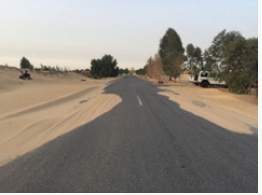
In the desert areas, large amount of soil is lifted by wind, the road is covered by the soil as shown in Figure 1, therefore, soil stabilization is important for road capacity. Soil stabilization is the alteration of one or more soil properties, by mechanical or chemical means, in order to maximize the suitability of soil for a given construction purpose by improving in-situ soil properties. Soils may be stabilized to increase engineering properties like strength and durability; or to diminish erosion and dust generation. The stabilized product should not only enhance desired soil properties, but they should also create a soil material/soil system which can sustain for the design life of the project, under designated load application. In the field application, the polymer dilution is sprayed normally into the loose soil. After polymer dilution penetrates into the soil, compaction of the “wet” soil is carried out. The stabilized soil gains strength after water evaporates from its soil mix. Traditional stabilization of soil relies on cement, lime, fly ash, and bituminous [1-3] material. As the scientists and researchers are developing new engineering materials, many non-traditional materials are available for soil stabilization, for examples polymer emulsion, acids, enzymes and tree resin emulsions [4-7]. As compared to the traditional stabilizers, these stabilizers have the following advantages:
Figure 1: Road covered by sand.
lupinepublishers-openaccess-journal-environmental-soil-sciences
a) Stable chemical properties;
b) They produce less swelling and heaving [8,9];
c) Produce less pollution; and
d) They save natural resources.
Apart from above mentioned benefits another advantage is that the liquid concentrate can be diluted with water and thus it is easy to achieve target additive amount by controlling dilution ratio. In many countries, large percentages of roads and parking lots are unpaved. The vehicles and wind together with the loose soil create dust that are known for adverse environmental and human health impact. Apart from increasing the strength of the soil these stabilizers can also be used as a way for controlling dust. For the ease of transportation and storage these Polymer emulsions can also be prepared in the form of powder. Before field application it is important for the industries to understand the mechanical properties of stabilized soil primarily during development phase of the product. Thus, the main objective of this paper is to highlight a quick and easy way to evaluate the mechanical performance of such stabilized soil before actual field application. Such assessment will quickly provide them a guide to modify their product if at all needed. For a comparison study, three in development products from the same company namely a) L13126; b) L13140; c) L13142 and one a market ready “Product A” is chosen, all as anonymous reference products. Overall, they constitute three polymer emulsions and one polymer powder type as described later in the paper. Goals within the scope of this paper include the following:
a) In detail description of sample preparation
b) To evaluate the property and suitability of the sandy soil before the addition of stabilizer developed by chemical polymerization techniques
c) To evaluate the property and suitability of the sandy soil after the addition of the stabilizer
d) To investigate the influence of the mechanical properties of the sandy soil with the polymer emulsion (in terms of mix proportion, percentage of stabilizing additive, water content and permeability of the stabilized soil matrix)
e) To demonstrate the influence of the emulsion types, curing time and wetting condition on the mechanical response of the stabilized soils
f) At last, present a relative ranking of various soil stabilizer products
The outcome of the tests is analyzed in terms of unconfined compressive (UC) tests. It is hereby noted that other tests such as California Bearing Ratio (CBR) [10,11], triaxial (confined and unconfined), resilient modulus, and cyclic wet dry tests are also valid tests to investigate the performance of the stabilized soils. However, for a rapid screening of stabilizers, the UC test was preferred. In this investigation, the compacted stabilized sandy soil samples were ‘cured’ under controlled temperature and humidity conditions before the soaked and un soaked unconfined compressive strength (UCS) tests were performed.

Material and Method

Materials Used

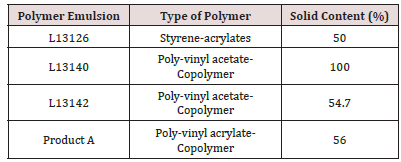
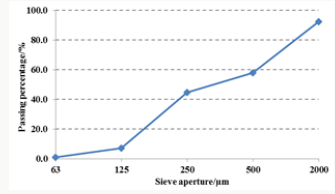
Four different kinds of stabilizers were used in this study, three polymer emulsion type namely: L13126, L13142 and Product A and one powder polymer type namely: L13140. Table 1 lists the polymer type and solid content of individual emulsion type, which was obtained by drying a known weight of emulsion in the oven at 1050C to a fixed weight. The sandy soil samples which contain 10% china clay and 90 % sand were considered which more or less represent a dust prone unpaved soil road. The sand used in this research is natural sand in Netherland, the gradation is showed in Figure 2.
Table 1: Polymer stabilizer type and polymer solid content
lupinepublishers-openaccess-journal-environmental-soil-sciences
Figure 2: Sieving test result of natural sand.
lupinepublishers-openaccess-journal-environmental-soil-sciences

Specimens Preparation

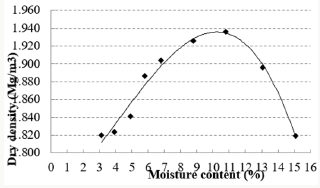
In order to perform compression tests, cylindrical specimens of 100 mm diameter and 150 mm height were prepared. The optimum moisture content of the sandy soil without stabilizer was measured by the modified proctor method (ASTM D1557). Figure 3 shows the result of modified proctor test. From the plot of the Figure 3, it can be observed that the optimum moisture content of this sandy soil is about 10.3%. With the known optimum moisture content and the known maximum dry density of the sandy soil, gyratory compactor was utilized (at 600kPa vertical stress, 30 gyrations/ min and 1.250 tilt angle) for the preparation of specimens. In order to mix the polymer stabilizer and soil uniformly, the stabilizer concentrate was diluted in the water before putting it into the sandy soil mixture. The dilution ratio was based upon the optimum moisture content and the amount of stabilizer used. For providing enough space for the polymer concentrate in the soil matrix, the stabilizer amount and the amount of water to be added is calculated on the basis of the optimum moisture content i.e. 10.3%. The actual density of polymer emulsion was assumed to be 1Kg/L. The preparation of sample was carried out in following six steps: soil preparation, additive preparation, soil-additive mixing, moulding, compaction, curing. The soil was mixed for five minutes before the addition of dilution. The amounts of added stabilizer were 14L/m3 (i.e. 1 m3 compacted soil contains 14L stabilizer concentrate), 19L/ m3 and 24L/m3 respectively. The dilution ratio was calculated by the following equation:
Figure 3: Modified proctor test result.
lupinepublishers-openaccess-journal-environmental-soil-sciences
where: R: dilution ratio
x: optimum water content (%)
y: maximum dry density of soil (Mg/m3)
z: amount of adding polymer (L/m3)
ρ: the density of stabilizer in the test temperature (Mg/L)
Assuming the depth of penetration in pavement to be 15 cm, the amount of addition of stabilizer i.e. 14L/m3, 19L/m3, 24L/m3 is equivalent to 2.1L/m2, 2.85L/m2, 3.6L/m2 respectively. After the soil and additive preparation steps, the dilution was mixed with sandy soil by using rotary mixer, until a uniform mixture was achieved. The specimen was prepared by using a gyratory compactor mould of 102 mm diameter and 254 mm height. The material was placed in three layers in the mold and each layer was compacted with rod for 25 times in order to get a uniform specimen. After molding step, the sample was placed in the gyratory device and compacted until the height of the sample was reduced to 150 mm. The compacted sample was then extruded from the gyratory mould by the hydraulic jack extrusion device mounted on the gyratory machine. The compacted sample was then placed in the curing room at 200C and 40 percent relative humidity. In order to simulate the field condition, air-dried curing process was used. Each sample was weighed after 3 days, 7 days, 14 days, 21 days, and 28 days to get the moisture loss rate.

Unconfined Compression Test

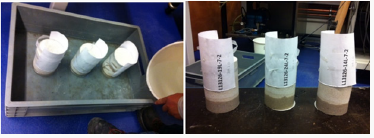
The sandy soil samples stabilized with the different type and number of additives were tested by using unconfined compression (UC) setup under soaked and un soaked conditions. In the soaked UC test, the dry sample was placed in the 25 mm deep water bath for 15 minutes and after removing it from the water it was drained for 5 minutes. Then the soaked samples, as shown in Figure 4, were tested. The soaked UC test reflects the influence of moisture on the strength reduction of the stabilized soil in the field condition.
Figure 4: Samples soaked in the water bath.
lupinepublishers-openaccess-journal-environmental-soil-sciences

Permeability Test

Permeability test was conducted to evaluate the capability of the stabilized soil samples to allow the water pass through it. The falling water head setup, see, is used for measuring permeability of the sandy soil samples with different types and amounts of the additives. In this test a sample is connected to a standpipe which provides both the water head and the means of measuring the quantity of water flowing through the sample. The permeability value is calculating by using the following formula:
Where: Kt: permeability(m/s)
a: cross section area of used manometer tube (cm2)
A: cross section area of sample in permeameter cell (cm2)
t: measured time interval (s)
L: length of sample (cm)
h1: start level manometer tube distance above overflow level (cm)
h2: end level manometer tube distance above overflow level (cm)
The parameters a, A, L were calculated on the basis of geometry of the samples and the manometer tube. The test was carried out after the sample was fully saturated. After that, the water tube is filled to a prescribed starting level h1. After t seconds, the water head level 2 in the manometer tube is recorded. By using the equation mentioned above the permeability Kt is calculated. The procedure is repeated at least three times interval until the Kt value is constant.

Results and Discussion

Optimal Polymer Adding Amount

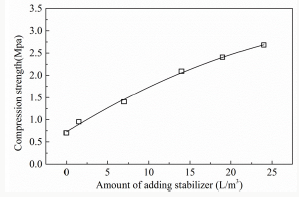
Preliminary test was conducted to get a reasonable amount of stabilizer quantity to be investigated, L13126 polymer was taken as an example, various additive amounts of 0L/m3 (pure water), 1.5L/ m3, 7L/m3, 14L/m3, 19L/m3 and 24L/m3 stabilizer quantity were examined. Figure 5 shows a plot of the additive amount versus UCS results after 28 days curing. As shown in Figure 5, the compression strength increases with stabilizer adding amount, it is expected that higher polymer content leads to thicker polymer matrix and more interaction between the soil particles, the compression strength increase almost linearly. It is hereby defined that “incremental strength” means the UCS of stabilized sample deducted by the UCS of samples with pure water. According to the Netherlands specification, the minimum UCS of bounded base layer shall be not less than 2MPa. Therefore, in this investigation, the incremental UCS value of 2 MPa was set as our minimum strength requirement. As can be seen from the prediction curve of Figure 5, the stabilized soil with 19L/m3 additive amount can reach 2 MPa. Therefore, the additive amount around 19L/m3 i.e. 14L/m3 and 24L/m3 and at 19L/m3 were investigated in the new test plan for all the polymer stabilizers.
Figure 5: Preliminary UCS test results.
lupinepublishers-openaccess-journal-environmental-soil-sciences

Polymer Adding Amount Effect

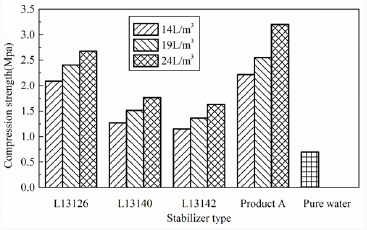
Figure 6 presents the UCS of sandy soil sample stabilized with different type and different adding amount after 28 days curing period. All the stabilized sandy soil demonstrated remarkable increase in UCS than the sample mixed with only pure water. The highest UCS value after 28 days curing period was found for Product A stabilized sandy soil which was higher than the sample stabilized by L13126. The L13140 and L13142 stabilized sandy soil show almost similar UCS values. However, as compared to the L13126 and Product A, these two stabilizers display lower UCS values. It is also noted hereby that UCS value increased with the increase in the stabilizer adding amount.
Figure 6: UCS values after 28 days curing.
lupinepublishers-openaccess-journal-environmental-soil-sciences

Wet and Dry Condition Effect

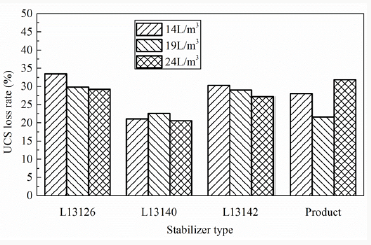
The soaked UCS of the sandy soil samples with pure water were not able to be tested because the samples disaggregated in the water bath. For comparison of moisture sensitivity of the samples, the strength loss rate of different stabilized samples was determined as Figure 7 In general, it can be observed that the strength loss rate decreases with the increase in the stabilizers amount, it indicates the thicker polymer coating will prevent moisture diffusion better. L13140 powder polymer specimens provide better water resistance to moisture deterioration and lose about 20% compression strength, the compression strength loss rate of others stabilizer specimens is about 30%. The specimens without stabilizer begin to disintegrate when they are placed in the water, and then lose load bearing capacity, the polymer can improve the water resistance of sandy soil.
Figure 7: UCS soaked loss rate after 28 curing days.
lupinepublishers-openaccess-journal-environmental-soil-sciences

Curing Time and moisture lose effect

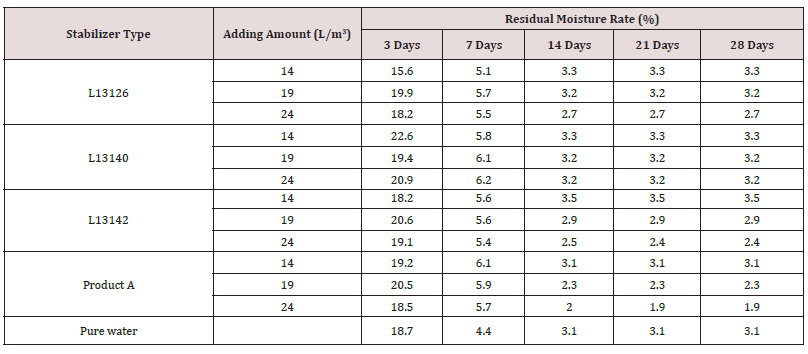
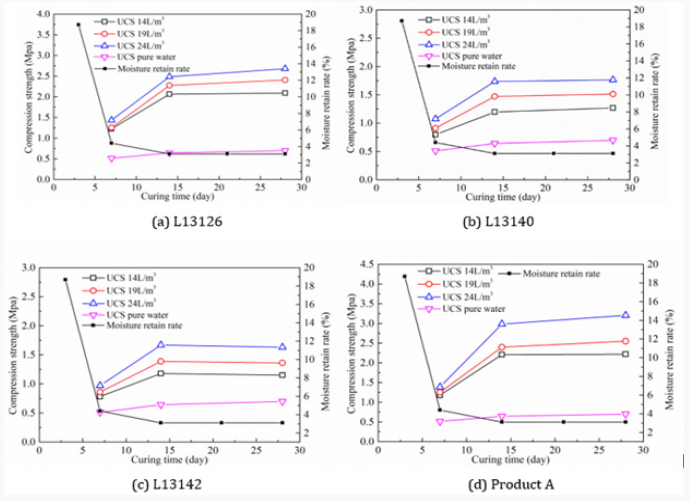
The effect of curing time on residual moisture rate is presented in Table 2, the value is based on the original water adding weight and the water loss weight. The samples were weighted after 3, 7, 14, 21 and 28 curing days, as shown in Table 2, the residual moisture rate became a constant, almost all the moisture has evaporated by the 14th day of curing for all the stabilizer specimens with different adding amount, the final value is not zero duo to the moisture loss in the mixture process. Comparing the values of specimens with stabilizer and pure water, the different is slight, it illustrates polymer do not affect the moisture evaporation. The moisture evaporates from the sample that will enhance the bonding between polymer and soil particles, the relation between compression strength and residual moisture rate are shown in Figure 8, duo to residual moisture rate decrease with curing time for all the specimens is similar, for brevity, the residual moisture rate result of pure water sample is taken as an example to compare with the compression strength variation. The sample with polymer stabilizers develop approximately 60% of the 28 days compression strength within the first 7 days of curing, however, the strength growth after 14 days curing period is not significant, the strength growth trend is similar to that of residual moisture rate decrease, this indicates that the gain in strength of the stabilized sample may only be related to the rate of moisture evaporation and not to any chemical reaction as normally observed in cementitious stabilized products.
Figure 8: Effect of curing time on compression strength.
lupinepublishers-openaccess-journal-environmental-soil-sciences
Table 2: Residual moisture rate.
lupinepublishers-openaccess-journal-environmental-soil-sciences
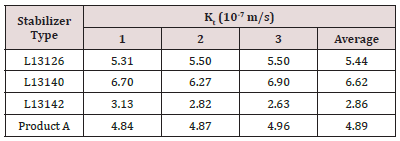
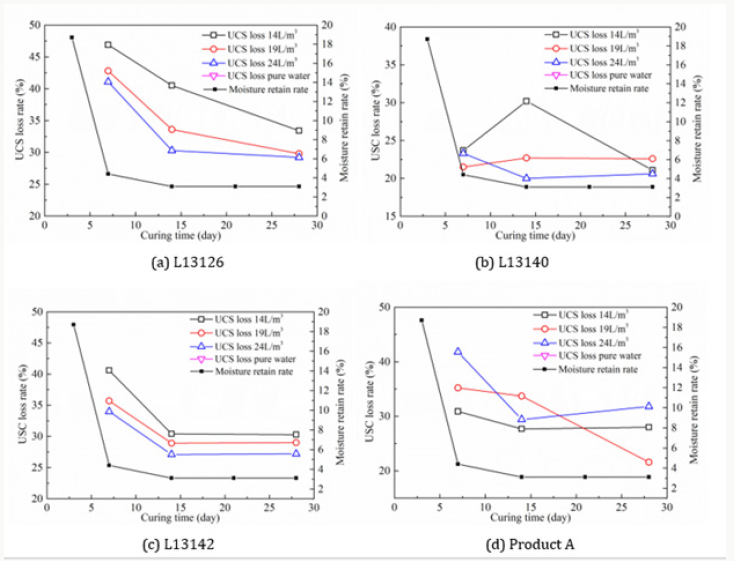
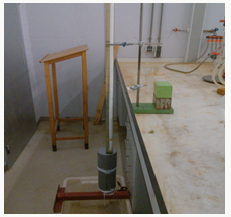
The moisture in the stabilized sample will influence the soaked UCS loss rate, the effect of curing time on USC loss rate is shown in Figure 9. In general, the USC loss rate decrease with the increase of curing time, the trend is similar to that of strength growth, it illustrates the sample with less moisture inside has a better moisture damage resistance. Samples utilized for permeability test were prepared in the same method as the ones used in the UC test (refer to “Specimens preparation” section). As shown in Figure 10, sample is kept inside the tube with no side flow allowed and the bottom 2 cm of the sample is utilized to apply silicon glue. After filling up the tube with water the test equipment is left for one day to be able to fully saturate the sample. The permeability test was carried out on the samples stabilized by L13126, L13140, L13142 and Product A with 19L/m3 additive amount, 3 replicates for each case, the permeability results are presented in the Table 3. It can be observed that all the sandy soil samples stabilized by the polymer stabilizers show lower permeability which is important for pavement surface layer to prevent rain water infiltration into the deeper part of the road foundation, soil stabilized by L13142 show highest permeability.
Figure 9: Effect of curing time on USC loss rate.
lupinepublishers-openaccess-journal-environmental-soil-sciences
Figure 10: Permeability test equipment.
lupinepublishers-openaccess-journal-environmental-soil-sciences
Table 3: Permeability test results.
lupinepublishers-openaccess-journal-environmental-soil-sciences

Implication and Discussion

Polymer is an environmental way for dust control and soil stabilization, as important as dust control, the mechanical and hydraulic property are also key points of polymer application, in this paper, mechanical and hydraulic property include three key indexes: UCS, soaked UCS loss rate and permeability, after 28 curing days, the moisture evaporate from the stabilized soil, the specimens become stronger and have a lower UCS loss rate. Unfortunately, there are no significant relation between the three indexes for all the polymers, the highest UCS is product A, the lowest UCS loss rate is L13140, and the lowest permeability is L13142, therefore it is hard to find a polymer with higher UCS, lower UCS loss rate and lower permeability, for the application, field condition, strength requirement and cost should be considered for stabilizer selection.

Conclusion

This paper in detail describes a quick and easy way, from sample preparation stage to experimental tests, to evaluate the performances of four kinds of stabilizers on sandy soil. With the results obtained from the tests one can examine the relative performances of various stabilizers. Such tests can be performed during product development phase itself. For example, from all the samples examined, tests results indicated that soil stabilized by L13126 has higher UCS both in soaked and un soaked conditions than the one stabilized by L13140 and L13142 and it is comparable to market ready Product A. The 28 days UCS of sandy soil samples stabilized by using 19L/m3 of L13126 and Product A can reach to a desired value of 2 Mpa (as per recommendation). Sandy soil stabilized by polymer powder L13140 is slightly stronger than the one stabilized by the polymer emulsion L13142. Such information can be used in the ranking of various products. Other findings that can be drawn from the results presented in this paper are summarized as follows.
a) This study shows that the strength of the stabilized sandy soil is significantly increased both under wet and dry conditions by using the polymer additives.
b) The UCS values of the sandy soil samples demonstrate that the polymer-stabilized soil properties improve with the curing conditions and the additive amount.
c) The increase in strength is observed due to the deposition of the solidified polymer components after water evaporates from the emulsion. The amount of polymer deposited on the surface of the soil particle depends on the concentration of the polymer and to the degree of mixing.
d) The compressive strength growth rate of the stabilized soil correlates with the moisture loss rate in the sample. There is no further strength increase when sample completely loses its moisture.
e) After 14 days, most stabilized soil samples reach the maximum compressive strength.
f) As compared to the cement & lime stabilized soil in literature, the stabilized soil sample shows higher deformability.
g) Sandy soil sample stabilized by the polymer stabilizers show lower permeability.

For more Lupine Publishers Open Access Journals Please visit our website:
For more Open Access Environment Journal articles Please Click Here:
To Know More About Open Access Publishers Please Click on Lupine Publishers

Follow on Twitter   :  https://twitter.com/lupine_online