Showing posts with label LUpinbe Publishers LLC. Show all posts

Friday, 22 November 2019

Lupine Publishers | The Benefits of Sports Medicine

Lupine Publishers | Journal of Orthopaedics

Opinion

Physiotherapy and Sports Medicine in a new concept focused not only on rehabilitation or treatment of discomfort or pathologies, but to provide all our experience so that all those who wish to start enjoying sports with health. And there is no doubt that thanks to Sports Medicine we are able to discover our own limits while we can carry out an adequate exercise, which in turn allows us to prevent or improve diseases such as diabetes, hypertension or obesity, among others. Thanks to the different personalized programs of physical exercise, which helps us improve memory, mental function, speed and personal autonomy. Besides, of course, help us improve our own body image, our health in general and to enjoy a better feeling of well-being.

Main benefits of Sports Medicine

a) Benefits on the metabolism
b) Increase the consumption of fats.
c) Increases oxygen utilization capacity.
d) Reduces cardiac work
e) Improves glucose tolerance.
f) It generates a loss of weight.
g) Strengthens the structure of bones.
h) It favors the treatment of diabetes.
i) Collaborate in the maintenance of a full sexual life.
j) Benefits on the heart.
k) Increases circulation in the muscles.
l) It reduces the formation of clots within the arteries.
m) Reduces blood pressure.
n) Benefits on the person from a psychological point of view.
o) Increase self-esteem.
p) It reduces stress.
q) Decreases anxiety, anguish and depression.
Sports medicine is the specialty of orthopedics that is responsible for the medical care of athletes, both amateurs and high performance professional athletes. Orthopedists dedicated to this specialty should be familiar with the diagnosis and treatment of the different injuries that an athlete may present, in addition to knowing and attending to situations related to nutrition, the prevention of injuries and the allocation of training programs directed for each athlete. It is important that each evaluation is given an approach according to the age of the athlete, since each individual has different physiological characteristics and at each stage of their life they change and become more specific, especially in older adults and children, who have different abilities and performance than those of a young adult. Each sport has a different pattern of injuries, so the sports doctor must evaluate the patient and base a large part of their evaluation, differential diagnosis and treatment plan on the type of physical activity the patient performs.
It is fundamental in the treatment of an athlete, especially high performance, that there is close communication between the orthopedist and the physical therapist so that personalized work and rehabilitation plans are established in a coordinated manner to return the athlete to their activities safely, without risking a relapse and that it recovers its level and performance as soon as possible. It is necessary to take into account that each person has different physical conditions and that each sport or physical activity has different physical and energetic demands that increase with the passage of time in the same measure in which the athlete improves his performance. This is why sports medicine is necessary; as a specialized doctor can advise the athlete regarding their nutrition, basal conditioning condition, health, training programs, recovery periods and, above all, recommend measures for the prevention of injuries. Although it cannot be ignored that the risk of injury is inherent in the practice of a sport and sometimes injuries are inevitable. Good nutrition is a fundamental element for the success of any athlete, because it provides the energy required to train and compete, decreases recovery time, increases strength and development of muscle mass, preserves bone structure strong enough to withstand the wear and tear that exercise implies and increase the speed of recovery from illnesses and injuries.
It is important that an athlete does not skip meals that he stays hydrated before, during and after physical activity and that he consumes high quality proteins. The athlete must avoid periods of prolonged fasting to avoid the depletion of amino acids and maintain their proper hormonal levels and must consume fruits and vegetables rich in minerals to have an adequate adaptation to the stress generated by exercise. The importance of sports medicine today is due to the fact that nowadays it is necessary, even in certain sports regulations, to carry out a medical evaluation prior to the participation of an athlete in any sporting event, this with the purpose of preventing risks for the general health of the athlete. It is important that during the evaluation it is determined if there are medical conditions that could put at risk the integrity of the individual. Therefore, a cardiovascular evaluation is performed on all athletes, since with the exercise the cardiac, pulmonary and vascular demands increase. It is also important to determine the weight of the individual, identify signs of metabolic problems, perform a musculoskeletal evaluation of the entire spine and appendicle skeleton to be able to give an adequate recommendation about the activity and its risks for the athlete, as well identify possible injuries that could be exacerbated by increased physical demands.
Sports medicine plays a very important role here, because on many occasions, due to the demands of the sport business, athletes take their bodies to the limit with the idea of accelerating their recovery process and the only thing they achieve is to worsen or aggravate their injury, it is therefore important that the orthopedist establish an appropriate treatment and make the athlete understand that there is a minimum recovery time that cannot be accelerated, otherwise there is a risk of suffering a relapse or injury worse than the first one. Children and older adults should also exercise regularly and make it a part of their lives, even if it is not done professionally, but it must be taken into account that they have different capacities and their body is in stages of development different from those of an adult. It is important that you do not overdo it or try to do activities in which your body can be affected.

History of Sports Medicine

This branch of medicine is not a mere subspecialty of orthopaedics and traumatology, its area is so wide that the specialists who practice it must have experience in a wide variety of ailments and areas of the body that are exposed to suffer an ailment, suffering or illness when doing sports. Sports doctors not only cater to professional or high performance athletes, they also take care of the health problems and the diagnosis of injuries and sufferings of amateur athletes or those people who perform physical and sports activities constantly, so they must possessing knowledge not only of traumatology and orthopaedics, but also of nutrition, psychology and sociology, can offer athletes much more complete care than the mere treatment of their injuries, as well as determining when to channel them with another specialist. But sports medicine, as well as sports related injuries, is not a modern and exclusive practice of the 20th century. Its practice extends as far back into the history of mankind as sport itself. The first records of this practice date back to the time of ancient Greece, where the Olympics originated; in these sporting events injuries were even more common than at present.

Conclusion

As we can see the practice of physical activity is healthy for our body. But never forget the supervision of a sports doctor. Sometimes the consequences can overshadow this bonomia.

For more Lupine Publishers Open Access Journals Please visit our website:
For more Open Access Orthopedics and Sports medicine articles Please Click Here:

To Know More About Open Access Publishers Please Click on Lupine Publishers


Follow on Twitter   :  https://twitter.com/lupine_online

Monday, 11 November 2019

Lupine Publishers | 90 90 90 Formulas and Symptoms of Adrenal Fatigue Syndrome (AFS) of Adult Men

Lupine Publishers | Journal of Orthopaedics

Abstract

Early decompressive adrenal fatigues have one of the leading causes of neurological disorders and stroke in pharmaceutical Institutions. Health has the ability of a biological system convert into personal satisfaction. The world health organization (WHO) literature for human health in a broader sense in its 1948 constitution as “a state of complete physical and well-being and not merely the absence of disease or infirmity. It has been subject to controversy, in particular as poor transportation facility in pharmacy institution lacking operational value, the ambiguity in developing low health strategies and because of the problem created by use of the word “social determinants of health”, which makes it practically impossible to achieve healthy environments. Understanding student health and disease with private based co-educational pharmaceutical institution has not transportation facility and low quality food in suburban areas of developing cities in India cannot ignore. Early decompressive adrenal insufficiency has accepted in medical science due to health imbalance. Adrenal fatigue especially from junior students to senior students living with private institution with poor quality of life and facility can translate into permanent disability in the world. We cannot compare adrenal fatigue with joint pain. Adrenal fatigue cannot ignore because it has weaken immunity has unfortunately not measured in the above series.

Case

A Teacher has a person who teaches in school rather than, especially helps others to shows knowledge, competence and value, playing a role of mother [1]. The clinicians has faced with difficult decision of how to best treat these students as there are no evidence based guidelines regarding the management of such complications. The American Heart Association has suggested only empirical therapies to replacement this surgery has difficult for acceptance of low income country. Body mechanism has its own machinery to shape up body in symmetry [2,3]. Body shapes have been depends upon the immunity divided by twenty four hours. Meanwhile adrenal fatigue has collection of nonspecific symptoms, such as body aches, fatigue, nervousness, sleep disturbances, moth odor, itching, and digestive problems (Figures 1 & 2). These symptoms often popular in poor transportation facility Institutions, but it has not an accepted medical diagnosis. It can be developed after a years and shows inches reduce the height of leg. Adrenal glands produce a variety of hormones that has essential to life. The medical adrenal insufficiency (Addison’s disease) refers to inadequate production of one or more of these hormones as a result of an underlying disease. Behavior and symptoms of adrenal insufficiency cannot ignore fatigue, body bend, and unseen weight loss, lightheadedness, loss of body hair, dark skin [4,5]. Adrenal insufficiency can be diagnosed by blood tests and special stimulation tests that show inadequate levels of adrenal hormones. The unproven theory behind adrenal fatigue has that your adrenal glands are unable to keep pace with the demands of perpetual fight-or-flight. As a result, they cannot produce quite enough of the hormones need to feel good. Existing blood tests, according to this theory, has not sensitive enough to detect such a small decline in adrenal function but body is. It has frustrating to have persistent symptoms physician cannot readily explain. But accepting a medically unrecognized diagnosis from an unqualified pharmaceutical practitioner could be worse. Unproven remedies for so-called adrenal fatigue may leave feeling sicker, low level of love hormone while the real cause such as depression or fibromyalgia, continues to take its toll.
Figure 1: Notice how the pupil contracts and expands rapidly.
Figure 2: You don’t have adrenal fatigue.

Summary

In simple terms, adrenal fatigue has not a genetic disorder associated with blood. It has caused by the lack of or errors in immunity in charge for production of hormone, a protein present in the red blood cells. “The complexity of the disease depends on the cross mutations involved in the life style, and their interplay. While adrenal fatigue seen a condition that affects educated pharmaceutical students of individuals across the serving himself with low sanitation and less transport facility, so they cannot produce love hormone enough its awareness has not given as much of importance as the other health conditions such as tongue cancer or diabetes. According to the World Health Organization, and other studies adrenal fatigue can destroy the immunity in individuals and Indian people suffering from the disease [6,7]. It has high time to spread awareness and take appropriate actions about this disease. Here are some facts that can know about this deadly condition. People with this disorder usually do not exhibit any symptoms, which makes it complex to identify. Healthy people can detect the adrenal fatigue. It has thus worthwhile to get tested, in case, any of students or junior students have some form of a disease. The other kind of adrenal fatigue has Alpha and Beta depends on the time of adrenal insufficient. In case of alpha adrenal fatigue, at least one of the alphas has an abnormality. In beta adrenal fatigue, the beta has affected. Each of the forms has sub-types, which vary in indications and rigorousness [8,9]. In case both the parents are carriers for adrenal fatigue, they will have 25 per cent risk to have a child affected with adrenal insufficiently.

The India Story

India, ranks on top of the list when it comes to adrenal fatigue.

Symptoms

Some of the common symptoms of the condition include fatigue, weakness, bone deformities, especially in the face, pale appearance or yellow skin, slow growth rates, lowered immunity levels, iron overload and heart diseases.

How To Prevent It

Transportation has the movement of humans and goods from one location to other, including rowed and sailed vessels, dates back to time immemorial, and has the only efficient way to transport to reach in specific period of time and handling duty in time so It has physical and psychological effects, including influencing social behavior and emotion due to oxytocin has produced, a part of the brain.

What Students Can Do

One should pursue universal immunization to prevent exposure from adrenal fatigue. It has recommended consuming food which has more in calcium and in proper time and less on iron as the students undergoing frequent abdominal pain. People living with adrenal insufficiency can use cinnamon water. Sticking to a healthy diet and routine exercise helps to battle the disease. Campaign against no push more adrenal fatigues in private based co-educational pharmaceutical institution in India has been tested in academic year 2016-2018. The privately merge pharmaceutical institution co-educational controlled by management in regards to traditional laws of pharmacy council of India has been accepted, has the first of its substandard facility. Born out of the Indian legacy its mandate has to provide “high throughput, forensic quality, and metabolic health to support large scale pharmaceutical people as well as basic need with understanding and student stratification [10,11]. As global life-styles change we are seeing increasing cases of obesity, drowsiness, bending, leg bend, irritation, low metabolic rate, diabetes, skin pigmentation and mental health issues. This not only affects a student’s quality of life but also places increased strain on the health-care systems to provide the right treatment whilst managing costs closely. Metabolic disorder offers a unvaluable and ununique insight into the underlying students of diseases as well as the students ’ individual “behavioral ”, diet [12,13], health status, age and stress. To deliver this information the analytical data generated in processed via a variety of analyzing different age group students and analysis methodologies to deliver the relevant biochemical information.
These platforms employed vary from simple multi variant analysis to highly complex based analysis reported in earlier and has presented in a format ready for interpretation by medicine. Facility comprises of high field instruments, accurate result as well as dedicated training facility. In this presentation we will discuss the development of professional’s platform students and students as well as a detailed discussion on the workflow, validation, reporting, explore of knowledge and decision making process. The full presentation will cover the development and validation of the “facilities’ screening methods for transportation facility, cleanliness, separate dumping area of institutional scrap, bio safety institutional committee, scientific advisory committee (SAC), additional other choice of accreditation and basic water drinking
There has been large number of other complaints that are associated with adrenal fatigue cannot avoided anxiety, asthma, allergies or respiratory complaints, Dark circles under the eyes, dizziness, depression, dry skin, extreme tiredness an hour after exercise, insomnia joint pain, lines in fingertips, loss of muscle tone, low blood pressure, lower back pain, high levels of fatigue each day after theory class, inability to handle stress, cravings for salty foods, higher energy levels in the evenings, weak immune system [16,17]. As we discuss in the adrenal fatigue solution, one of the major causes of adrenal fatigue has getting insufficient sleep. Early decompressive adrenal fatigues represent an aggressive life approach, especially for the students who develop opportunistic hemorrhagic complications. The decision to proceed with major surgical intervention requires a competent multi-disciplinary team as well as an open discussion with relative students as depressive adrenal fatigue may preserve both life and functional ability in well selected student. More research has needed in this field to elucidate the potential for both modalities in appropriate students. Getting more rest has therefore one of the best ways to recover. However, when suffering from adrenal fatigue many students wake up extremely tired and ‘foggy’, even after getting a long sleep. Zero aggression lifestyle and not eat food at any time in a day. Selected food may get benefited for people living with adrenal insufficiency and visited (Figure 3).
Figure 3: You Don’t Have Adrenal Fatigue.

Conclusion

Turmeric, with its immense therapeutic properties, beats medication in many cases. Curcumin, the major compound in turmeric has responsible for these restorative properties. There are good reasons for including the potent yellow spice in the preparation of herbal medicines. There are incredible health benefits to including turmeric in your diet, and it can especially help with adrenal fatigue. Detoxification is essential for optimal health. Those with adrenal fatigue should consider mild detox plans as they tend to have more fragile systems. Turmeric is a great detoxifying agent as it gently flushes out toxins from the body without causing any side effects. Turmeric soothes inflammation, enhances bile secretion, enhances healthy blood circulation, kills harmful bacteria in the body, boosts liver function for efficient toxin elimination from the body, and cleanses the entire system. Detoxifying turmeric miso soup contains a blend of healing spices, tofu, and vegetables which helps fight inflammation, detoxifies, and nourishes your body. Student has report late to school and affects their learning frequently; tardiness has associated with lower grades and lower degree.

Acknowledgment

I expressed my deep gratitude to Renowned Laboratory Scientist, Retired Director of NARI Respected Dr. Ramesh S. Paranjape, and Immunologists. I express my sincere gratitude towards Respected Sir for motivation and being great knowledge source for this work.


Wednesday, 6 November 2019

Lupine Publishers | Extraction of Pectic Acid from Citrus Fruit Peels and its Application as Textile Printing Thickener

Lupine Publishers | Journal of Textile and Fashion Designing

Abstract

Extraction of pectic acid by acid hydrolysis from citrus fruit peels and its conversion in to textile printing paste thickener in order to use it as an alternative substitute of sodium alginate thickener in reactive printing was studied in this research. Printing with the alternative thickener, sodium pectate, printed fabric characteristics; color yield, color brightness and wash fastness were improved. Pectic acid is extracted from the identified citrus fruit peels i.e. orange peel, lemon peel and bitter orange peels. Extraction time, type of solvent and extraction pH was standardized based on pectin yield obtained. The research found environment friendly extraction of pectic acid by sodium carbonate instead of acid hydrolysis with HCL or H2SO4.


Introduction

The citrus fruit is formed by the following fundamental parts: the flavedo (external colored part of the peel), the albedo (white internal part of the peel), the pericarp that contains the above mentioned parts, and the pulp subdivided in to segments and viscose containing the juice and the seeds, called endocarp. The peel, rag & seeds from the juice extractors are combined with rejected fruits & becomes the source of byproducts of citrus. The peel part which includes the inner white part of the fruit contains pectin, amino acids and other materials. The production of pectin is considered the most reasonable way of utilization of the juice industry by-product both from economical and ecological point of views. Pectin is present in the middle lamella, primary cell and secondary walls and is deposited in the early stages of growth during cell expansion. From byproducts of citrus fruit dried citrus pulp, Molasses, Citrus peel oil, Citrus seed oil; alcohol, pectin, & feed yeast have been produced to a lesser extent [1]. Pectin is found in most plants, but is most concentrated in citrus fruits (oranges, lemons, grapefruits) and apples. Pectin obtained from citrus peels is referred to as citrus pectin [2].
Pectin is used in a number of foods as gelling agent in jam and jellies, thickener, texturizer, emulsifier and stabilizer in dairy products, fruits preparations or in icings and frostings. It is also used in pharmaceutical, dental and cosmetic industries for its jellifying properties. It is generally produced by acid extraction of citrus peel followed by filtration and precipitation by alcohol as 2-propanol [3]. There are three different extraction techniques of pectin from citrus peels; acid hydrolysis, enzymatic and water extraction methods. Compared with acid hydrolysis, enzymes extraction of pectin is preferred despite of its cost because only a little effluent in the filtrate and because of consumer demands for green products. However, the mechanism of enzymatic extraction is still not fully understood [4]. Water soluble pectins inside the plant cell wall of plants can be easily extracted with boiling water. Although it is conventional and the easiest means of extracting pectin, this method is not applicable for commercial extraction of pectin because longer time and elevated temperature is required to isolate adequate pectin from the peels. Boiling the peels at elevated temperature for long time cause degradation of the pectin during extraction and is relatively costly because of the high energy requirement [5].
In this study, acid hydrolysis of pectin using HCL and H2SO4, new Pectin extraction method using sodium carbonate and Conversion of pectin into sodium pectate for textile reactive printing paste thickener application was investigated. The advantages of sodium pectate as thickener than using sodium alginate is also shown with comparative study of the thickeners in terms of color yield, wash fastness and color brightness.

Materials and Methods

Methods Materials, Equipments and Chemicals

The materials used for this study were 100% cotton full bleached woven fabric, Dried Citrus Fruit peels, 8 scale gray staining and color change scale. Beaker was used to boil the mixture of citrus fruit peel, water and acid, stirring spoon, and thermo meter to control the extraction temperature, weighing balance for weighing the amount of chemicals and materials used for the extraction of Pectin, PH meter to control extraction PH, launder-meter for wash fastness testing, mini dryer to dry and cure printed fabric sample and spectrophotometer to measure k/s value of the printed area [6-10].
H2SO4, HCL and Na2CO3 were used to extract pectin from citrus peels so were used. The solvents used to precipitate pectin were ethanol, methanol and acetone. For the conversion of pectin into sodium pectate, isopropyl alcohol, NaOH and common salt are used. Isopropyl alcohol is used to wash the pectate and common salt is used to solidify the derived sodium pectate. The chemicals used to print cotton fabric were Sodium alginate as a thickener, sodium carbonate as dye fixing agent, Dispersing agent to form true solution of dye paste, Urea to prevent hygroscopic dye paste and Reactive dye.

Method

Preparation of citrus fruit peel: Citrus fruit peels were collected from juice industries. Ripened peels are sorted by identifying with their color; orange color peels are ripened, the peels are washed, dried and grinded into pieces.
Pectin extraction and conversion in to sodium pectate: 250 ml water was measured into a 500ml beaker and heated to 50oC. 25 gm milled citrus peel was added to the water. Measured amounts of acid added to the peel-water mixture trace by trace until the desired PH obtained. The mixture was agitated at a constant temperature until the desired extraction time elapsed. Using polyester fabric filter the solid residue of citrus fruit was removed. The filtered solution is collected and approximately the same the volume of solvent added for overnight precipitation. Extraction of pectin Using Na2CO3 was carried out at 50oC with the same procedure followed in acid hydrolysis but 500ml water and 50gm citrus peel was used in a bigger beaker. The precipitate pectin is removed and pectin is reacted with caustic soda and solidified by common salt [10-15]. The solidified sodium pectate is dried in oven dryer at 50oc overnight and ground in small plastic containers.
Printing and testing: Two Fabric samples were printed using sodium pectate and sodium alginate as thickener. The Reactive printed samples are tested for their color strength, wash fastness and hand feels. Relative to the characterized properties the thickeners; alginate thickener and sodium pectate thickeners were compared.

Result and Discussion

The experimental Design used was OFAT (One factor at a time). Three extractions at PH of 2.6 using 0.5M Hcl, 150 ml of ethanol, methanol and acetone, for 2 hours and 650c incubation temperature. The Experiment was conducted to choose a solvent for the precipitation of pectin which yields more pectin (Table 1). Keeping the other parameters constant, only extraction time is varied to 1hr, 1hr and 30 minutes and 2 hrs and using acetone to precipitate pectin (Table 2). Extractions were carried out for 1 hr and half using acetone to precipitate pectin at varying temperature (65oC, 80oC and 90oC) (Table 3).
Table 1: Keeping the other parameters constant, only extraction time is varied to 1hr, 1hr and 30 minutes and 2 hrs and using acetone to precipitate pectin.

Lupinepublishers-openaccess-journals-Textile-Fashiondesigning
Table 2: Extractions were carried out for 1 hr and half using acetone to precipitate pectin at varying temperature (65oC, 80oC and 90oC).

Lupinepublishers-openaccess-journals-Textile-Fashiondesigning
Table 3: Solvent type selection, Extraction time, Extraction temperature are already optimized. Optimization of PH is done by using the selected solvent type, extraction time and extraction temperature. Optimized temperature is identified by varying extraction PH to 1.6, 2.6 and 3.6.

Lupinepublishers-openaccess-journals-Textile-Fashiondesigning
Solvent type selection, Extraction time, Extraction temperature are already optimized. Optimization of PH is done by using the selected solvent type, extraction time and extraction temperature. Optimized temperature is identified by varying extraction PH to 1.6, 2.6 and 3.6 (Table 4). This study has investigated an alternative way of extracting pectin from citrus fruit peels with minimized environment pollution. The method is environment friendly and also results in more pectin yield than acid hydrolysis of pectin. For hydrolysis purpose sodium carbonate (Na2CO3) was used. For 50gm dried milled peel 10gm of sodium carbonate was used. The result from the experiment is as follows (Table 5).
Table 4:
Lupinepublishers-openaccess-journals-Textile-Fashiondesigning
Table 5:
Lupinepublishers-openaccess-journals-Textile-Fashiondesigning

Effect of pH

The effect of pH on extracted pectin yield was determined by adding trace of HCL to alter the pH to the desired values of 1.6, 2.6, and 3.6. Because of slight changes in solution pH throughout the extraction, it was difficult to repeatedly reach an exact pH so approximately 2% error was allowed when measuring pH. The three experiments showed that pectin yield was 23.2% at pH 2.6. The hydrolysis of pectin is facilitated in soften peels. Lower pH, i.e., more strong acid, dissolves the citrus peels [15,16]. The dissolved peels form a thick paste of citrus peel. Pectin is entrapped in the thick paste instead of dispersing through the filter solution. Less pectin amount in the filter solution minimized the amount of precipitated and extracted pectin. Increased pH above 2.6 result in less softness of peels which result in less pectin wash off from the peels, as a consequence less pectin yield.

Effect of Extraction Time

The noticeable trend occurred with increasing extraction time from 1 hour to 1:5 hour shows increase in pectin yield. Increasing the extraction time further may result in pectin loss. Accordingly when extraction time is increased from 1.5 to 2 hours the yield of pectin. Flowing of pectin into extraction solution increase as extraction time increases up to 1hr and half. Heating the mixture of peels and water-acid mixture more than 1hr and half will dissolve peels instead of softening and minimize the pectin yield.

Effect of Temperature

With increasing extraction temperature up to 65oC pectin yield will increase. Increasing the extraction temperature further result in pectin loss. When extraction Temperature is increased above 65oC the yield of pectin will be minimized. Wash-off of pectin into extraction solution increase as extraction time increases up to 650C after which the yield starts declining. Heating the mixture of peels and water-acid mixture above 65oC will dissolve peels instead of softening and minimize the pectin yield.

Extraction of Pectin using Na2CO3

Extraction with Na2CO3 has some advantages than acid hydrolysis of pectin from citrus fruit peel. Extraction carried out using Na2CO3 hydrolyzing agent has yielded more pectin. It is also environment friendly compared to acid hydrolysis. Na2CO3 extracted pectin has improved solubility compared to acid hydrolyzed pectin due to the presence of sodium ion which may give solubility for the extract.

Conversion of the Extracted Pectin into Sodium Pectate

The isolated precipitate of pectin which is very slightly gummy and somewhat rubbery was grounded to fine powder and the added to a mixture of 50% isopropyl alcohol and NaOH in solution and then stirred every 5 minutes at room temperature until it creates viscose solution. Finally sodium pectate is formed after which it was filtered to remove excess liquid and washed with water followed by isopropyl alcohol wash to remove excess alkali [17-20]. The pectate may be hydrated during water wash and it must be given consideration to not cause so. Then the dried pectate was solidified with common salt and made ready to serve as printing thickener.

Printing Fabric Samples and Testing Printed Fabrics Performance

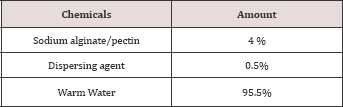
Evaluation of printing performance was carried out in terms of color strength, wash fastness, rubbing fastness and fabric feel. Two printed fabric samples, one sample (S1) printed by commercial sodium alginate and the other one (S2) with the derived sodium pectate. The recipes for the samples were (as shown in Tables 6 &7):
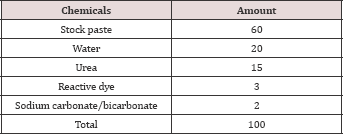
Table 6: Stock Paste Recipe.
Lupinepublishers-openaccess-journals-Textile-Fashiondesigning
Table 7: Printing Paste Recipe.
Lupinepublishers-openaccess-journals-Textile-Fashiondesigning
Procedure for the printing: The printing was carried out using screen printing technique. The procedures followed were as follows.
    a) Prepare printing paste: The paste should be as uniform as possible. For uniform mix prepare the printing the recipe for stock paste (as shown in Table 1) was mixed for 5 min at maximum speed. Then mix the components for printing paste recipe as shown in the Table 2. The actual quantity of water was to vbe determined practically. Viscosity should be in such a way that the paste should flow easily while printing but maintaining the sharpness of the images to be printed. Two printing pastes were prepared for alginate thickener and pectin separately.
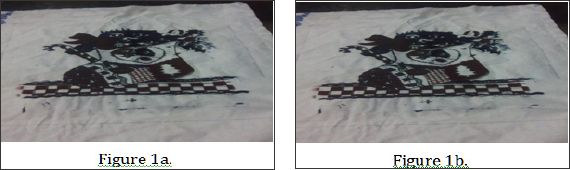
    Figure 1: Printed fabric Samples a) Printed with sodium alginate (S1) b) printed with the derived Sodium Pectate (S2).
    Lupinepublishers-openaccess-journals-Textile-Fashiondesigning
    b) Printing: After preparing the paste and sample, the next process was application of paste onto the sample. Put the sample under the screen with proper positioning of the design, put the paste at one side the screen spread uniformly along the width of the design, move the squeegee from one side to the other pushing the paste towards the other side and down wards at the same time. Here the inclination angle of squeegee and pressure applied was very important, these should be uniform, angle the squeegee should be held at 450C approximately. Accordingly two samples were done for alginate and another two samples were done for pectin printing performance evaluation (Figure 1).
    c) Drying: Then the samples were dried at 60oC for 3 min and cure at 150oC for 5 min.
    d) Printing performances: Of the printed samples were measured in terms of Color strength, wash fastness, handle feel and rubbing fastness. Color yield of each of the samples was measured using Data color 650 TM spectrophotometer and wash fastness was assessed using laundry meter. For assessing the performance of the two thickeners in terms of wash fatness gray scale and gray staining was done. Accordingly printing performance of the thickeners along with the obtained result is concluded in the following (Table 8).
Table 8: Performance in terms of Color Strength (k/s).

Lupinepublishers-openaccess-journals-Textile-Fashiondesigning
As it is observed from the experimental data, sample fabric printed with alginate thickener (S1) has reflectance and K/S value slightly higher than sample fabric printed with the Extracted sodium pectate (S2). Decrease in reflectance and K/S value represents higher shade darkness. Sade darkness increase with increase in dye absorption. This truth has shown sodium pectate thickener yield more color strong print than sodium alginate thickener even though the difference is neglecting (Table 9).
Table 9: Performance in terms of Color Strength (k/s).
Lupinepublishers-openaccess-journals-Textile-Fashiondesigning
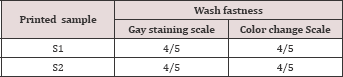
Performance in Terms of Wash Fastness: Wash fastness was tested using the standard test method. 5g/l detergent, MLR 1:30, heat setting at 100oC for 30 minutes was used. Then gray staining and color change scales are tested using 5 scale gray scale and gray staining card. Both alginate and pectate printed fabric samples have shown very good wash fastness.

Conclusion

Pectin extraction from citrus peels can be carried out by either of water extraction, acid hydrolysis, alkali hydrolysis, enzyme extraction and using sodium carbonate as hydrolyzing agent [21,22]. In this particular study extraction of pectin with Na2CO3 is given preference since it yielded more pectin and since it has advantages like environment friendliness, more solubility in water due to presence of the sodium ion which is functional to make compounds soluble.
The conversion of pectin into sodium pectate by reacting pectin with caustic soda in isopropyl alcohol must be controlled and given concentration for the production of high quality pectate thickener. Since the derived sodium pectate is washed with water and then with isopropyl alcohol for the production more pure pectate, care must be given during water washing to not hydrate the derived pectate. Solidification of the pectate is done by using common salt.
Sodium pectate thickener printed fabric sample has absorbed more dye than sodium alginate thickener printed fabric sample. The lower reflectance and k/s value has recorded for fabric sample printed with the derived sodium pectate. Even though the difference is neglect able; this truth justified that sodium pectate is more inert thickener than alginate thickener. That is the suspect behind more color strong of sodium pectate. Both alginate and pectate printed samples have very good wash fastness. Since the printing is reactive printing then the attachment of the dyes to the fibers are by covalent bond.
Generally speaking; citrus fruit peels can be used for the production of reactive printing thickeners by acid hydrolysis, using sodium carbonate to hydrolyze pectin in citrus fruits, or other extraction techniques. First pectin is extracted then pectin is reacted with caustic soda forming crude sodium pectate. The crude sodium pectate is then washed in water and in isopropyl alcohol successively to increase the purity of the pectate. The derived sodium pectate is used as textile printing thickener for reactive printing in the same manner alginate is used.


Tuesday, 5 November 2019

Lupine Publishers | Midshaft Clavicle Malunion with an Atypical Posterior Apex Deformity

Lupine Publishers | Journal of Orthopaedics

Abstract

Purpose: We are presenting this pattern of a rare variant of a clavicle malunion with an apex posterior-inferior deformity. This occurred in an elite major junior hockey player during his draft season. This illustrates that such a deformity will most likely result in shoulder weakness, altered shoulder mechanics and may cause brachial plexus neurological findings. In addition, this can cause associated sterno-clavicular deformity which can lead to sternoclavicular joint subluxation secondary to the increased strain placed on the sternoclavicular joint from an apex posterior inferior malunited clavicle. Deformity of > 20 degrees in any direction interferes with normal motion and normal cortical strength even in a young patient.
Introduction: Symptomatic malunion is fortunately less frequently observed (4) since the significant shift to operative treatment for displaced shortened mid shaft clavicle fractures. Symptomatic patients are typically those with marked displacement and significant shortening at the fracture site. Patient’s report weakness of the involved shoulder with rapid fatigability plus an increased deformity comes with an increased risk of recurrent fractures. Although not commonly described in the literature, clavicle malunion usually has a very consistent deformity pattern. As illustrated by McKee et al, the patient usually presents with a complex three dimensional deformity with shortening, an anterior apex at the fracture site and associated joint pain around the shoulder or sternum (6). The influence of the coraco-clavicular and a cromio-clavicular ligaments on the fracture fragments is hypothesized to cause an effect on the displacement of these fractures which involves the lateral segment of the clavicle being carried forward by virtue of its retained a cromio-clavicular and residual coraco-clavicular attachments. Angulations are more acute the closer the break is to these pivot points. This has had associated significant alteration in normal clavico-scapular motion.
Method: Case report and literature review.
Conclusion: Symptomatic clavicular malunion is rare but definitely higher with non-operative management and can cause discomfort and shoulder weakness. Neurological symptoms and signs are more likely to occur in inferior malunited clavicle, particularly with an inferior-posterior deformity. We illustrated the steps necessary to correct all deformities and lengthen the clavicle using a long working length precountored plate construct. This has improved the clinical symptoms of the patient and illuminated the risk of repeat fracture due to deformity. Plate removal is planned but is still an unanswered question.
Keywords: Mid Shaft; Clavicle Symptomatic; Malunion; Nonunion; Deformity

Case

An 18 year old elite Canadian Hockey player presented with a new fracture to his left clavicle and associated pain at the sternoclavicular joint with an obvious deformity. He had sustained a previous injury to his left mid shaft clavicle two years ago playing hockey. This was treated on operatively and went on to heal with a 25 degree posterior-inferior deformity. A review of his initial injury films, from two years ago, illustrated a moderately displaced mid shaft clavicle with a significant amount of shortening (2 cm)due to inferior apex deformity( 25 degrees).However, it was decided to treat him on operatively as it was a closed injury in a relatively young male and he was neurovascularlyintact. His fracture healed with 2.5 cm of shortening, slight scapular inward rotation and a 25-30 degree posterior-inferior deformity. The sternoclavicular joint deformity on the left side stopped him from playing hockey at an elite level for about two months but a steroid injection seemed to remove most of his symptoms and allowed him to compete. He also complained of an ongoing occasional shoulder weakness and an occasional fleeting numbness in his arm and hand. This was significant enough to warrant a CT of the chest to rule out thoracic outlet syndrome.n 2010, the Czech Republic participated in the World Health OrgAn 18 year old elite Canadian Hockey player presented with a new fracture to his left clavicle and associated pain at the sternoclavicular joint with an obvious deformity. He had sustained a previous injury to his left mid shaft clavicle two years ago playing hockey. This was treated on operatively and went on to heal with a 25 degree posterior-inferior deformity. A review of his initial injury films, from two years ago, illustrated a moderately displaced mid shaft clavicle with a significant amount of shortening (2 cm)due to inferior apex deformity( 25 degrees).However, it was decided to treat him on operatively as it was a closed injury in a relatively young male and he was neurovascularlyintact. His fracture healed with 2.5 cm of shortening, slight scapular inward rotation and a 25-30 degree posterior-inferior deformity. The sternoclavicular joint deformity on the left side stopped him from playing hockey at an elite level for about two months but a steroid injection seemed to remove most of his symptoms and allowed him to compete. He also complained of an ongoing occasional shoulder weakness and an occasional fleeting numbness in his arm and hand. This was significant enough to warrant a CT of the chest to rule out thoracic outlet syndrome.nization WHO Research to determine the quality of medical decAn 18 year old elite Canadian Hockey player presented with a new fracture to his left clavicle and associated pain at the sternoclavicular joint with an obvious deformity. He had sustained a previous injury to his left mid shaft clavicle two years ago playing hockey. This was treated on operatively and went on to heal with a 25 degree posterior-inferior deformity. A review of his initial injury films, from two years ago, illustrated a moderately displaced mid shaft clavicle with a significant amount of shortening (2 cm)due to inferior apex deformity( 25 degrees).However, it was decided to treat him on operatively as it was a closed injury in a relatively young male and he was neurovascularlyintact. His fracture healed with 2.5 cm of shortening, slight scapular inward rotation and a 25-30 degree posterior-inferior deformity. The sternoclavicular joint deformity on the left side stopped him from playing hockey at an elite level for about two months but a steroid injection seemed to remove most of his symptoms and allowed him to compete. He also complained of an ongoing occasional shoulder weakness and an occasional fleeting numbness in his arm and hand. This was significant enough to warrant a CT of the chest to rule out thoracic outlet syndrome.
This 18 year old male continued to play elite major junior hockey (prime pathway to the NHL in Canada) then unfortunately sustained another injury where he was checked into the boards during an elite hockey game. He felt immediate pain and tenderness along his clavicle and therefore presented to the hospital emergency. Interestingly, since his initial incident, he had never been free of symptoms and he subsequently fractured his clavicle with relatively low trauma within 18 months of his last fracture. Plus he had significant sterno-clavicular associated symptoms with pain and anterior subluxation of the ipsilateral sterno-clavicular joint
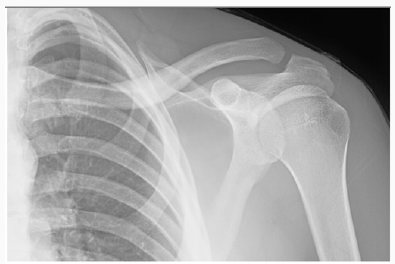
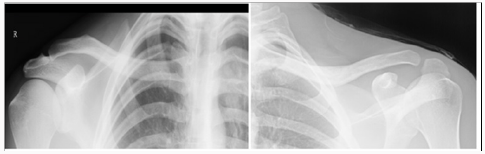
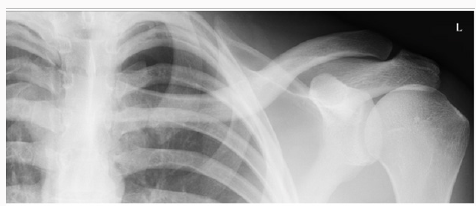
In the Emergency Department he was evaluated by the ER physician and the orthopaedic on call team. He had normal vital signs and good air entry bilateral chest, his neurological exam of both motor and sensory nerves of his left upper extremity showed no deficit, no signs of thoracic outlet syndrome and he illustrated a normal vascular exam. His investigation included x ray of his left clavicle with a contra lateral clavicle x ray for comparison. Both clavicles had an AP and orthogonal clavicular views (see images below). His clavicle demonstrated a more pronounced posterior-inferiorapex deformity (30-35 degrees), shortening and malrotation plus a significantly deformed (anterior subluxation) sternoclavicular joint as noted over the last year.
A detailed discussion with the patient about the findings was complete along with the possible operative and non operative treatment modalities available. Given the latest research and paper by McKee et al on the increased fracture rate in significantly deformed clavicles, an operative approach was chosen. This choice was also enhanced by the history of increased discomfort generally around the shoulder girdle discomfort plus the significant shoulder weakness, sterno-clavicular pain, neurological symptoms and reduced maximal function. We, therefore, elected to book him for a corrective osteotomy to restore length, alignment, rotation and angulations to augment the mechanics of his shoulder and the biomechanical ability of this clavicle to absorb an impact without re-fracturing.

Operative Procedure

The patient underwent general anaesthesia and was placed in a beach chair position in a 45 degree semi sitting position with a small pad behind the left shoulder blade and the involved upper extremity was draped freely with the distal arm placed in a sterile extremity drape. An oblique incision was made along the superior surface of the clavicle to expose the nonunion site. The skin and subcutaneous tissue was raised as a flap, and the underlying myofascial planes identified. This layer was raised as contiguous flaps and was preserved so that a two-layered closure could subsequently be achieved. Next, the malunion site was identified, and a long oblique, superior to inferior, osteotomy was performed. This provided a long osteotomy surface to correct the inferior apex deformity while allowing for the three dimensional correction with excellent bone to bone contact.
The osteotomy was performed with a, well irrigated, cooled, micro sagital saw. After careful dissection a small blunt Haworth elevator was placed underneath the clavicle to protect the neurovascular structures during the osteotomy and elevation of the deformity. Very importantly, the medullar canal was re-established, on both sides of the osteotomy, with a 3.5-mm drill-bit plus very aggressive curettage of the sclerotic bone in order to obtain an excellent opening in the medullar canal in the proximal and distal segments.
However, we have a very novel solution in the Czech Republic - whetSmall reduction clamps were then utilized to perform a reduction that would allow lengthening of the clavicle along with rotational and ambulatory correction utilizing the precountored plate as a reduction tool. First, shortening was corrected and held by translating the medial lateral fragment over the large surface osteotomy area to gain the planned length of 2.5 cm based on our preoperative planning. This was accomplished almost entirely by deformity correction. Secondly, rotation was corrected by rotating the lateral fragment about forty degrees clockwise until the flat surface of the lateral fragment was facing superior as desired. We then placed a long 10 whole precountored clavicle plate on the superior surface of the clavicle using the construct, with its long working length, to help gradually realign the bone back to the plate. This was and should be done very slowly and carefully as the underlying neurovascular structures can be tethered to the deformed bone. This was then held using absolute stability fixation with non locking screws on each side of the osteotomy. The screws were then gradually tightening of screws on either side of the deformity.r you are an individual patient crippled and dying for legal or iSmall reduction clamps were then utilized to perform a reduction that would allow lengthening of the clavicle along with rotational and ambulatory correction utilizing the precountored plate as a reduction tool. First, shortening was corrected and held by translating the medial lateral fragment over the large surface osteotomy area to gain the planned length of 2.5 cm based on our preoperative planning. This was accomplished almost entirely by deformity correction. Secondly, rotation was corrected by rotating the lateral fragment about forty degrees clockwise until the flat surface of the lateral fragment was facing superior as desired. We then placed a long 10 whole precountored clavicle plate on the superior surface of the clavicle using the construct, with its long working length, to help gradually realign the bone back to the plate. This was and should be done very slowly and carefully as the underlying neurovascular structures can be tethered to the deformed bone. This was then held using absolute stability fixation with non locking screws on each side of the osteotomy. The screws were then gradually tightening of screws on either side of the deformity.
Intra operatively, significant improvement in the shoulder contour was obvious as well as a noticeable reduction in the anterior subluxation of the sternoclavicular joint. Screw length was checked with an image at the end of the procedure. Deformity correction usually necessitates some screw changes as the initial screws can be long once the deformity is reduced. Wound closure was done in layers closing the myofascial flap over the plate and subsequently the subcutaneous tissue and the skin was re approximated with narrow skin staples.
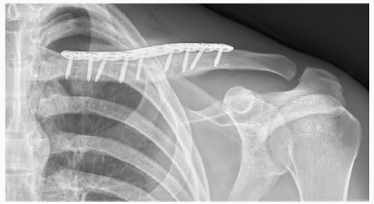
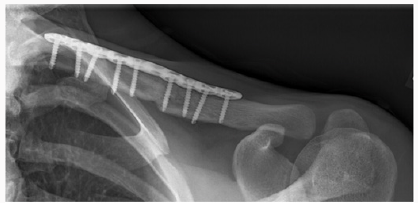
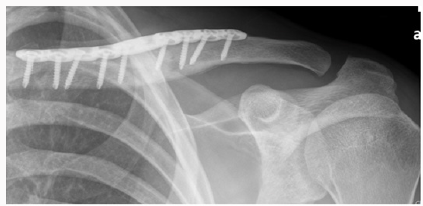
Post operatively the patient was placed in a shoulder sling for comfort and scheduled for early physio to initiate shoulder and elbow function. His post op exam confirmed intact neurovascular status of his left upper extremity. Chest x ray taken in recovery room confirmed we had not created a pneumothorax. The operative procedure was performed as an outpatient. The patient went home on the same day and returned at 10 days for wound examination and staple removal. Aggressive physio was initiated that day following the initial gentle ROM and pendulum exercises which were initiated immediately post op (Figures 1-9).
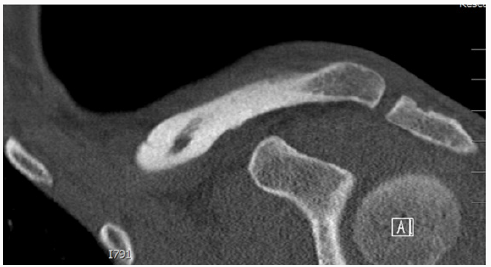
Figure 1: Axial CAT scan of the chest delineating the sternoclavicular deformity related to the clavicle malunion.
Figure 2: Coronal CT showing the direction of malunited clavicle.
Figure 3:
Figure 4: (a) Comparison right (normal)(b) Left (Malunited) clavicle
Figure 5:
Figure 6:
Figure 7: Early post operative.
Figure 8:
Figure 9: Three months post-operative (signs of radiographic healing).

Discussion

Clavicles fractures are common injuries and are reported to represent 2% to 5% of all adult fractures [1]. More recent evidence suggests that specific subsets of patients may be at higher risk for nonunion, symptomatic malunion, or suboptimal functional outcomes [2]. A recent meta-analysis suggests that the incidence of clavicle nonunion after nonsurgical treatment is approximately 5.9%, but can be as high as 15%for some fracture subtypes [3]. Nonsurgical treatment universally results in some degree of malunion; however, symptomatic malunion is fortunately quite low and is usually used particularly in very young patients [4]. Symptomatic patients are typically those with marked displacement at the fracture site, with shortening of >2 cm. Patients that are symptomatic may report weakness of the involved shoulder, rapid fatigability, numbness and paresthesia of the hand and forearm with elevation of the limb, and an asymmetric, “droopy,” “ptotic,” or “driven in”shoulder [5].
McKee et al performed a review of a cohort of patients to analyze the functional results of corrective osteotomy of a mal united clavicular fracture in patients with chronic pain, weakness, neurologic symptoms, and dissatisfaction with the appearance of the shoulder. Fifteen patients (nine men and six women with a mean age of thirty-seven years) who had amalunion following non operative treatment of a displaced mid shaft fracture of the clavicle were reviewed both preoperatively and postoperatively. The mean time from the injury to presentation was three years (range, one to fifteen years).Follow-up, at a mean of twenty months (range, twelve to forty-two months) postoperatively, illustrated that the osteotomy site had united in fourteen of the fifteen patients. All fourteen patients expressed satisfaction with the result. There was one nonunion, and two patients had elective removal of their plates. With regards to the patho anatomy of the deformed clavicle, McKee et al. noted that the deformity of the clavicle was a complex three-dimensional problem with all their patients illustrating a superior-anterior apex deformity. In his series there were certain consistent features seen in patients who presented with symptoms following non operative treatment and a healed clavicle. The hall mark characteristic is shortening in the medial-lateral dimension, with inferior displacement of the distal fragment and superior displacement of the proximal fragment. They, therefore, concluded that the shortening in the medial-lateral plane had a negative effect on muscle-tendon tension, and muscle balance. The anatomic boundaries of neurovascular structures were of paramount importance in the development of symptoms [6].
In a study by Edelson et al, he studied the bony anatomic details in 73 cadaver specimens which had clavicle malunions in different regions of the clavicle. According to the Allman classification. Edelson found that in the middle-third fractures, similar anterior angulations to the lateral third fracture malunion was indeed present. The most consistent finding at the middle-third level was that the lateral shaft fragment was almost invariably displaced posterior to the medial shaft fragment. The author also commented that initial anterior-posterior radiographs of clavicle fractures are often dominated by inferior displacement or ptosis of the lateral fragment. However, in the cadaveric specimens, anterior angulations rather than drooping of the lateral fragment were the predominant deformity. Although often initially displaced in a down ward direction, the lateral fragment does not usually heal in this position, unless it is a greenstick fracture as occurred in our patient.
Therefore the literature concludes that the principle deformity in a healed malunionis anterior, superior angulations. In this series there were only 4 cases in which the lateral clavicle healed with downward angulations of 20° or more at the fracture site as occurred in our young patient with his greenstick type of fracture. The author hypothesized that inferior displacement of the lateral fragment, which predominates on the initial radiographs, is most likely due to post-traumatic muscle a tony, principally of the deltoid and trapezius, similar to that which can cause the glenohumeral joint to appear subluxed after fractures of the humeral head and claimed that as soon as the muscle tonus returns, the clavicle resumes a horizontal orientation, and fracture position is then dominated by the pronators and internal rotators of the scapula and upper arm, which reposition the fragments into the anteriorsuperior apex position [7].
We believe that corrective osteotomy can lead to predictably good results (> 95%), however one should be careful with the inferior dissection as it can and has produced neurological and vascular issues in the past. So which fracture requires surgical correction? In general principles, according to the Canadian Orthopedic Trauma Society (COTS)and the McKee et al papers, “symptomatic deformity” with significant shortening of 2-3 cm , angulations deformity >30 degree or translation of >1cm . This has been supported in numerous repeated studies since 2008. In addition softer indications would be symptoms of thoracic outlet syndrome, weakness or rapid fatigability with overhead activity, a relatively weak arm at over a year from the fracture or more commonly a combination of all of these symptoms, should be considered for an operative correction [6].
Another area of controversy between surgeons who treat this type of injury is the need for hardware removal to decrease the risk of re-fracture. Some surgeons prefer to remove the implant in all patients after clavicle fracture union, whereas others plan for additional surgery only if the patient complains of symptomatic hardware. In either case, adolescent patients undergoing surgical fixation for clavicle fracture must be warned of the possibility of return to the operating room to remove the implant.

Conclusion

Malunion of the clavicle with > 20 to 30 degrees of deformity and symptoms of weakness and malfunction should be considered for corrective osteotomy. The success rate is very high (.95%) and results in excellent patient satisfaction. This again supports McKee’s initial study that highlighted the clinical impact of mid shaft clavicle deformity and the importance of surgical reconstruction with an absolute stability. We also believe that if a surgeon carefully follows the steps of the surgical technique described in this case report; the incidence of vascular and neurological injuries can be mitigated although not entirely illuminated as a risk.

For more Lupine Publishers Open Access Journals Please visit our website:
For more Open Access Orthopedics and Sports medicine articles Please Click Here:

To Know More About Open Access Publishers Please Click on Lupine Publishers


Follow on Twitter   :  https://twitter.com/lupine_online

Wednesday, 23 October 2019

Lupine Publishers | Future Prospect for Sustainable Luxury Textiles from Pineapple Leaf Fibre - An Agro Waste

Lupine Publishers | Journal of Textile and Fashion Designing

Abstract

The treasure of Major natural fibres belongs to cotton, jute, wool, silk, flax, sisal and Manila hemp which are extensively used across the globe. Besides, a large number of fibres grown in lesser quantities throughout the world have local economic importance and are consumed locally. Utilization of underexploited, unexplored natural fibres from crop waste are not only critical issues in the international scenario but are also the need of the hour in developing countries like India to search out a suitable avenue for which separate spinning system is not widely available or established. Pine apple leaf fibre successfully tested as a base material for conveyor belts in the early eighties, could well have been the magic yarn of the day. Pineapple leaf fibre extracted from the green pineapple leaf, an agro waste reveals its immense potentiality in the field of textiles particularly due to the disposal problem after harvesting for cleaner and green environment.
PALF is well known for its silky lustre which possesses some advantageous physical and chemical properties like high tensile strength, dimensional stability, considerable resistance to heat and fire, and good dyeability while the demerits are coarseness, inextensibility. Besides, it is a low cost renewable resource and eco-friendly material. If the apparent demerits can be masked, a diverse range of products can be developed by exploiting the intrinsic properties of PALF. One of the ways of masking is blending of PALF with natural and synthetic fibres. It is felt that such binary blending will help development of textiles with better functional properties by combining positive features of the constituent fibres. Therefore, binary blending will give a wider application for production of value added diversified products which are the need of the hour.
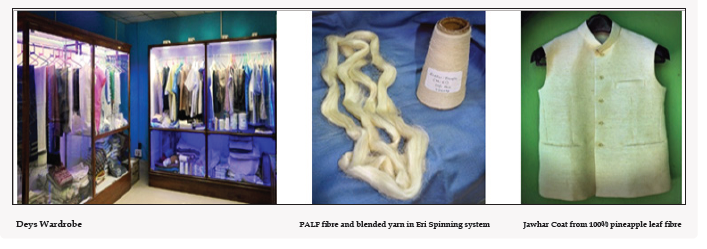
The paper also delineates suitable processing technique for blending of PALF with different natural and synthetic fibres for conversion into textiles using existing fibre processing system since there is no specialized spinning system available for pineapple and their possible commercial utilization. The PALF blended yarn has a bright future prospect for sustainable luxury textiles like fancy apparel products (Figure 1).
Lupinepublishers-openaccess-journals-Textile-Fashiondesigning

Introduction

Wealth from waste is no more a slogan in 21st century but achieved successfully turning pineapple leaves into wealth which not only creates green environmental sense but also turns waste into wealth. Resource depletion and global warming have driven each industry to move toward a greener and sustainable industry. Lignocelluloses, the most abundant renewable biomass is composed of cellulose, hemicelluloses and lignin, as well as other minor components. Pine apple leaf fibre successfully tested as a base material for textiles in the early eighties, could well have been the magic yarn of the day. Research work on pineapple leaf fibre, an agro waste reveals its immense potentiality in the field textiles particularly technical textiles. Sufficient fibre will be available to arouse interest if the fibre is extracted commercially. Due to non-availability of specialized spinning system for PALF in India, it will be much easier to promote PALF in any of the existing spinning systems provided an appropriate processing technology is developed.
Major natural fibres belongs to cotton, jute, wool, silk, flax, sisal and Manila hemp which are extensively used across the globe possess suitable processing technology and developed machinery. Besides, a large number of fibres grown in lesser quantities throughout the world have local economic importance and are consumed locally The pineapple plant AnanasComosus (L) is a member of the family Bromaliaceae of the monocotyledonous, containing 1,300 species; most of which are native to tropical America. Although over nearly 90 varieties of the plants cultivated in various parts of the world, only 3 varieties, namely, Kew, Queen and Mauritius are cultivated commercially. The form of pineapple leaves varies and depends on the position of the stem and age.
According to the data available, Pineapple fibre can be profitably produced in Tripura as well as Siliguri in West Bengal, where extensive pineapple farming takes place. In India, Pineapple leaves are never cut off, and are cleared when the plants naturally shed them. As a result, fewer pineapple plants are grown in India, as the leaves cover a lot of space. In countries like Brazil where extensive pineapple farming is done the leaves are cut away to make space for more plants. "We have gone through the science of it- Interestingly, cutting away of the leaves does not harm the plant and in fact helps it grow bigger fruit, as the leaves normally draw away a lot of the nourishment” says Dr. S. K. Dey, Senior Scientist of ICAR-CIRCOT, Mumbai. Indian farmers mostly throw away the leaves. Research on plantation has established that the leaves can be cut three times a year, without harming the harvest and suitably designed industry for pineapple leaf fibre, can run the year-round on these supplies.
The philosophy of blending between two fibres depends on two basic principles which apparently appear to be a bit contradictory.
    a) PALF may be blended with cheaper fibres so that a cheaper product mix becomes feasible. In this category, blending of ramie with jute, ramies, Mesta, banana, Roselle hemp appear to be worth pursuing.
    b) PALF is often blended with synthetic fibres to produce diversified blended fabrics which are expected to fetch higher prices per unit weight of ramie and consequently higher profitability.
PALF is well known for its silky lustre which possesses some advantageous physical and chemical properties like high tensile strength, dimensional stability, considerable resistance to heat and fire, and good dyeability while the demerits are coarseness, inextensibility. Besides, it is a low cost renewable resource and eco- friendly material.
Normally, the fibre is as fine as the finer quality jute, although about ten times as coarse as cotton. Unlike jute, its structure is without mesh, filaments are well separated and it is two and a half times more extensible with superior bundle strength and L/B ratio. Both the flexural and torsional rigidity of pineapple leaf fibres are comparable with jute fibres of less rigid quality. An interesting characteristic was observed in the case of pineapple leaf fibre and yarn when their tensile properties were studied in wet condition. The bundle strength of pineapple leaf fibre decreases by 50% when in a wet condition but the yarn strength increases by about 13%. A detailed research reveals that the frictional property of pineapple leaf fibre is very high in the wet condition and it predominates over the fall in tensile strength of the fibre so as to increase the wet strength of the yarn.

Different Stages of Blending Process

The development of blended yarn from PALF with natural and synthetic fibres can be achieved in the three stages of processing as given below.
    a) Blending at carding or drawing.
    b) Blending at spinning
    c) Union blending i.e. at fabric stage.

Blending at Carding or Drawing

    I. Jute Spinning System: The processing technology of pineapple leaf fibre in jute, cotton, semi-worsted and flax systems as well as to compare performance, research work was undertaken at Jute Technological Research laboratories which later on renamed as National Institute of Research on Jute and Allied Fibre Technology, Kolkata.
    II. Performance of jute/Pineapple Leaf Fibre on Jute Spinning System: When the golden fibre blends with pineapple, a magic yarn is born. The fibre is best used as decorative material. Firstly, the natural colour is creamy white-hence unlike jute it does not need bleaching. We have tried various combinations of the fibre at our pilot plant and blended it with jute and synthetic material. When blended with synthetic material, the product is an extra fine material. It can work wonders with jute. If pineapple fibre is blended with jute up to 20-25% fine yarn of linear density of 69 tex or less can be created. This is very difficult to achieve with Indian jute alone.
    III. PALF-Ramie Blended Yarn: PALF and ramie yarns spun in dry and wet spinning systems are comparable but wet spun yarns reveal better performance than dry spun yarns due to better inter fibre friction in the wet spinning system. By gradual increase in the percentage of PALF in the blend, a gradual decrease in tenacity of the blended yarn has been observed. And this may be due to the difference of fineness of the two fibres.
    IV. PALF-Viscose Blended Yarn: 100% viscose yarn spun in jute spinning system shows higher tenacity for wet spinning and lower extension compared to dry spinning. Gradual increase of PALF in the blend brings about gradual improvement in the tenacity of the blended yarns due to higher strength of PALF. The wet spun blended yarn from PALF-viscose show better performance than corresponding blended yarns spun on the dry spinning system.
    V. PALF-Polypropylene Blended Yarn: Binary blending of PALF -Polypropylene for its use in sophisticated area of textiles, Polypropylene fibre of 15 denier and 120 mm length was used. Both PALF and Polypropylene fibres were processed separately in Flax Finisher card with the developed technology of processing the above fibres and a linear density of 138 tex was spun with 5.5 T.P.I in both dry and wet spinning system. Binary blending of the carded material was achieved at Mackie's First Screw Gill Drawing frame with a blend proportion of 75:25, 50:50 and 25:75. No difficulty was encountered during spinning of blended yarn and control yarn.
    VI. PALF-Acrylic Blended Yarn: PALF: Acrylic: 50:50 blended yarns having linear density of 84 tex with a T.P.I of 7.5 were developed in jute spinning system in dry and wet spinning conditions. Four blended yarns were spun by blending PALF and acrylic at four different stages of Jute processing viz, carding and three drawing frames. The performance of the blended yarns was studied to evaluate the optimum stage of mechanical processing for binary blending of PALF and acrylic.

Wet Spinning Technology

Wet spinning brings about improvement in short-term weigh irregularity of the yarns resulting in better regularity of yarn diameter. This is chiefly due to better control of fibres in the drafting zone of the spinning frame during wet spinning. The diameter of wet spun PALF yarn of equivalent linear density is lower and its packing coefficient is also higher than that of the dry spun one. The tenacity of the wet spun yarn is higher than that of the dry spun one as the regularity of wet spun yarn is better and the higher packing coefficient is expected to generate transverse pressure during tensile loading. The strength C.V % of wet spun yarn was also lower compared to dry spun yarns. There was no significant difference in breaking elongation of dry and wet spun yarns.
Short staple Cotton Spinning System
Pineapple leaf fibre was first stapled to 32 mm, opened in a single opener machine, blended with Indian cotton in two proportions
A. 67% cotton: 33% Pineapple leaf fibre
B. 80% cotton: 20% pineapple leaf fibre and yarn of a coarse count 14s spun. The performance of the blended yarns showed that on increasing the proportion of pineapple leaf fibre in the blend, the count strength product and regularity deteriorated and a higher percentage of droppings of fibre was noticed in the blow room and carding machine. Spinnability of PALF improves after chemical treatment which was not achieved from cotton/raw PALF (67:33) blend composition. It is clear that the Spinnability increased from 14s to 22s with higher blend composition of PALF: Cotton:: 70:30. Yarn performance indicates that the C.S.P of the blended yarn is lower compared to cotton yarn. The cohesiveness of chemically treated PALF needed higher twist multiplier than normal cotton yarn of same count.
Semi-Worsted Spinning Systems
PALF were blended with Chokla variety of coarse Indian Wool at Central Sheep and Wool Research Institute, Avikanagar, Rajasthan, a sister concern of Indian Council of Agricultural Research. Yarns of nominal linear density of 138 tex were spun on the semi-worsted spinning system by varying the blend proportion of PALFs. Blending of PALFs by 25% could bring about a sharp drop in breaking elongation of yarns and blending by 50% results a sharp increase in tenacity of blended yarns. Besides, by blending PALF with wool at 25:75,the bulk resilience of yarn decreased only by 10% as compared to all wool yarn. The blended materials of PALF-Wool, all PALF and all wool were processed separately on the semi worsted spinning systems.
Eri Silk Spinning Systems
Latest finding reveal that pineapple leaf fibre was successfully processed and blended with red eri available in north eastern region only using Chinese silk processing facilities available at Fabric Plus, Guwahati. Red eri and softened pineapple leaf fibre were processed through the sequence as follows:
Floss Cutter - First Circular Dressing - Second Circular Dressing - Third Circular Dressing - First Spreader - Second Spreader - Slivering - First Drawing-Second drawing - Third Drawing- Roving - Ring spinning - Winding - Twisting - Conditioning - Singeing - Package.
Finer linear density of PALF: Red Eri blended yarn reveals its immense potentiality to be used in the field of Luxury textiles. Finest blended yarn could not be spun except this spinning system. The mechanical properties of the blended yarn were up to textile quality.

Conclusion

Investigation on pineapple leaf fibre clearly indicates that the agro waste can be suitably processed into useful products. Development of appropriate processing technologies for generating yarn with improved properties can widen the application ofthis agro waste.The extractor can effectively be used to extract the fibre from the agro waste of pineapple leaves and the residual sludge obtained after scratching the leaves can be used for vermicomposting successfully. Investigation on pineapple leaf fibre clearly indicates that the agro waste can be suitably processed into useful products. Development of appropriate processing technologies for generating yarn with improved properties can widen the application of this agro waste. The integrated technology for the extraction of pineapple leaf fibre and the vermicomposting altogether becomes remunerative to pineapple cultivators which can be adopted by all pineapple growers not only for additional income but also proper utilization of wastes particularly agricultural wastes which is an important factor in planning the economic progress of a developing country like India.


For more Lupine Publishers Open Access Journals Please visit our website:

For more fashion and textile research journal articles Please Click Here:

To Know More About Open Access Publishers Please Click on Lupine Publishers

Follow on Linkedin : https://www.linkedin.com/company/lupinepublishers
Follow on Twitter   :  https://twitter.com/lupine_online