Showing posts with label Material science journal. Show all posts

Wednesday, 22 June 2022

Lupine Publishers| Study the Corrosion and Corrosion Protection of Brass Sculpture by Atmospheric Pollutants in Winter Season

 Lupine Publishers| Journal of Material Science


Abstract

Brass is an important metalloid which is used in construction of sculptures. It is noticed that sculpture of brass is corroding due to interaction of pollutants. The pollutants develop chemical and electrochemical reaction on the surface of base material. Their concentrations of corrosive pollutants are increased in winter season. The air quality becomes very poor in winter season. Inside sculpture different forms of corrosion are observed like galvanic, pitting, stress, crevice etc. The major components of pollutants are oxides of carbon, oxides of nitrogen, oxides of sulphur, ammonia, ozone and particulates. Among these pollutants oxides of sulphur and ammonia are major corroder of brass. Ammonia is observed moist air to form ammonium hydroxide. It produces chemical reaction with brass metal and form complex compounds like [Zn(NH4)4](OH)2, [Zn(NH4)4]SO4, [Zn(NH4)]CO3, [Cu(NH4)4](OH)2, [Cu(NH4)4]SO4, [Cu(NH4)]CO3 etc. Oxides of sulphur react with moist air to exhibit sulphurous and sulphuric acids. They interact with brass to develop corrosion cell zinc metal and it is oxidized into Zn2+ ions and these ions are active to humidity and carbon dioxide to yield Zn(OH)2.ZnCO3.2H2O. Copper is converted into Cu2+ and it reacts with moist air and carbon dioxide to produce Cu(OH)2.Cu(CO3)2 and these complex compound detached on the surface of brass metal by rain water. These pollutants change their physical, chemical and mechanical properties and they also tarnish their facial appearance. Brass’ sculpture is affected by uniform corrosion. This type of corrosion can be control by nanocoating and electrospray techniques. For this work (6Z)-5,8-dihydrazono- 5,8-dibenzo[a,c][8]annulene and TiO2 are used as nanocoating and electrospray materials. The corrosion rate of material was determined by gravimetric and potentiostat technique. The nanocoating and electrospray compounds are formed a composite layer on surface of base metal. The formation of composite layer is analyzed by thermal parameters like activation energy, heat of adsorption, free energy, enthalpy and entropy. These thermal parameters were calculated by Arrhenius, Langmuir isotherm and transition state equations. Thermal parameters results are depicted that both materials are adhered with sculpture through chemical bonding. The surface coverage area and coating efficiency indicates that nanocoating and electrospray are produced a protective barrier in ammonia and sulphur dioxide atmosphere.

Keywords: Brass sculpture; Corrosion; Atmospheric pollutants; Nanocoating; Electrospray; Sulphur dioxide; Composite barrier

Introduction

The sculpture of brass comes in contact of contaminated air thus its deterioration starts for protection various types methods can be applied [1]. Brass [2] has major components is copper and zinc. Zn reacts the hot air to produce ZnO which is active in humidity [3] to convert into Zn(OH)2. In moist air [4], they form CuO, ZnO, Cu(OH)2 and Zn(OH)2. Both metals are active with sulphur to yield Cu2S, CuS and ZnS and these metallic sulphides [5] react with moist air to give Cu(OH)2, Zn(OH)2, CuSO4 and ZnSO4. The hydroxides of these metals interact with CO2 to produce CuCO3 and ZnCO3. Sulphur dioxide [6] is a culprit of brass. It undergoes with Cu(OH)2 and Zn(OH)2 to convert into CuSO4 and ZnSO4. Moist SO2 yields H2SO3 and H2SO4 whereas they create acidic environment [7] for brass and generate corrosion cell on their surface. It accelerates disintegration [8] in metal components of sculpture of brass. Brass is highly sensitive to ambient of ammonia gas [9]. It interacts with humid atmosphere [10] to NH4OH and it deposits on the surface brass metal [11] thus it converts into a complex layer of [Cu(NH3)4] (OH)2 and [Zn(NH3)4](OH)2 that layer erosion starts in rain water. [Cu(NH3)4](OH)2 and [Zn(NH3)4](OH)2 complex compounds [12] come in contact of H2SO4 environment to produce [Cu(NH3)4]SO4 and [Zn(NH3)4]SO4 that complex layer is eroded in rain water. In acidic medium brass outer face has developed CuSO4 and ZnSO4 when dust particulates [13] are deposited on their surface which contains Fe to remove Cu and Zn from outer surface. Dust particulates are possessed oxides of alkali metal in presence of moisture, it produces NaOH or KOH [14] that is create hostile environment for Zn and it forms complex compound [15] Na2[Zn(OH)4]or Na[Zn(OH)3.H2O] or Na[Zn(OH)3.(H2O)3]. The oxides of NO2 reacts with moist air to give HNO3 that acid produces chemical reaction with Cu and it converted into Cu(NO3)2. Some organic acids [16] available in air like acetic acid which develop corrosive environment for Cu and Zn which converts Cu into Cu2(CH3COO)4.H2O and Zn into (CH3COO)6. Zn4O complex compounds [17]. They are eroded by rain water on the surface of brass. Organic compounds [18] like amnio and sulpur increased day by day in atmosphere. They develop hostile environment for brass and corroding it. Corrosive pollutants [19] concentrations like oxides of carbon, oxides of nitrogen, oxides of sulphur, hydride of sulphur and nitrogen, ozone and particulates are enhanced due to industrials wastes, effluents, flues and other factors are like burning of coals, woods and cow dung cakes. Harmful pollutants [20] come into atmosphere through agricultural wastes, human wastes, pharmaceutical wastes, household wastes, food wastes and decomposition of living things. Various types of transports like road, water and air are evolving CO, NO2 and SO2 gases which produce acidic environments for brass. Several types of techniques are used to control the corrosion of brass like metallic coating; polymeric coating, paint coating, organic and inorganic coating of materials but these didn’t give satisfactory results in corrosive medium. Some organic and inorganic inhibitors are applied to protect the corrosion of materials in acidic but they provide good results. Hot dipping, electroplating and galvanization techniques is used as protective tools for brass corrosion in acidic medium but these methods don’t shave base metals. In this work it is to mitigate corrosion of brass corrosion by nanocoating and filler techniques. These materials form composite barrier on the surface base metal and blocked porosities and stop diffusion or osmosis process of pollutants.

Experimental

Brass coupons 15sqcm were taken for experimental analysis. Samples surface were rubbed with emery paper, rinsed with acetone, dry them and kept into desiccators. Sample kept 20meter height of roof in open sky and it observed that colour of brass can be changed. Corrosion rate was determined in winter season by weight loss method. The concentration of SO2 in November 75ppm, December 90ppm, January 105ppm and February 120ppm and temperatures recorded in this period were 298K, 294K, 291K and 295K. Synthesis organic compound (6Z)-5,8-dihydrazono- 5,8-dibenzo[a,c][8]annulene used as nanocoating and TiO2 as filler and corrosion of brass metal calculated in above mentioned concentrations and temperatures in winter season. Both compounds formed a composite barrier on surface of base metal (Figures 1-4). Surface adsorption phenomenon studied by thermal parameters like activation energy, heat of adsorption, free energy, enthalpy and entropy.Potentiostat/Galvanostat model EG&G used for corrosion potential, corrosion current and corrosion current density. Brass sample put between H2|Pt electrode as auxiliary electrode and Hg2Cl2|HgCl2 electrode reference electrode.

Figure 1: .
Lupinepublishers-openaccess-material-science-journal

Figure 2:

Lupinepublishers-openaccess-material-science-journal

Figure 3:

Lupinepublishers-openaccess-material-science-journal

Figure 4:

Lupinepublishers-openaccess-material-science-journal

Synthesis of (6Z)-5,8-dihydrazono-5,8-dibenzo[a,c][8] annulene

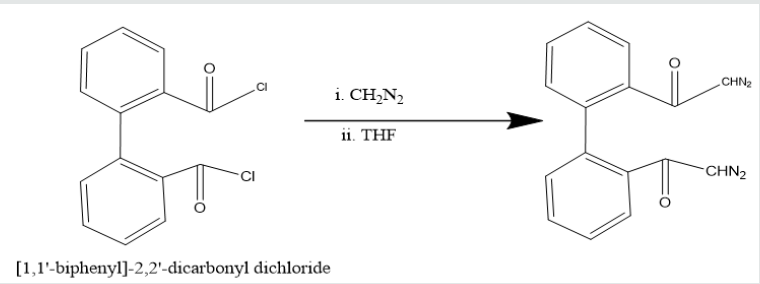
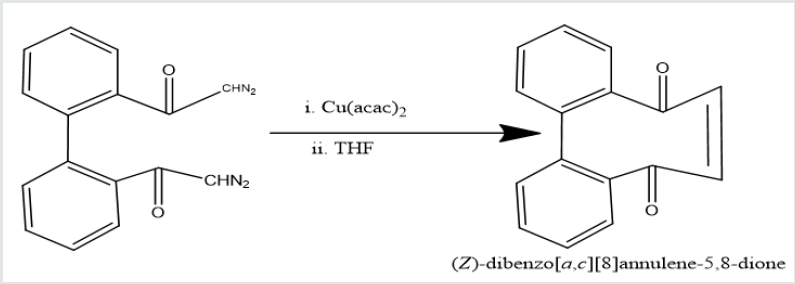
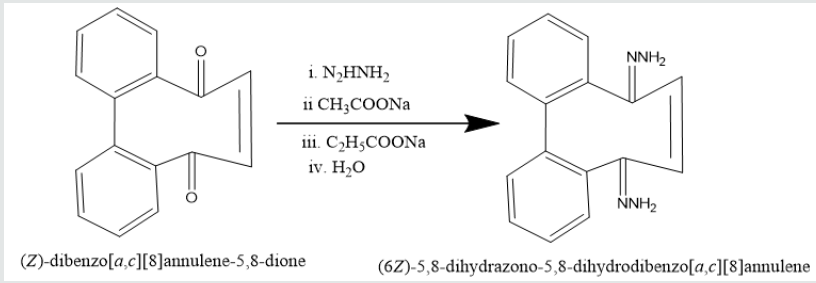
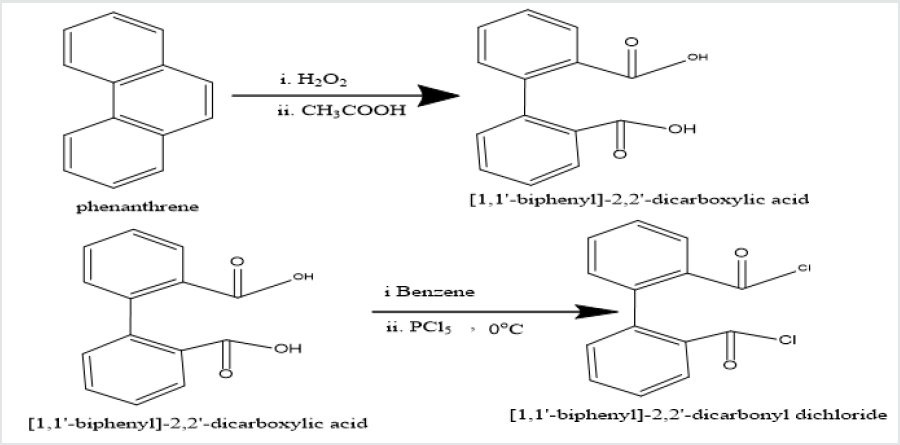
Phenatharene was oxidized into [1,1’-biphenyl]-2,2’- dicarboxylic acid by the use of H2O2 in presence of CH3COOH. When [1,1’-biphenyl]-2,2’-dicarboxylic acid was treated in PCl5 in benzene solution at 0 oC temperature, [1,1’-biphenyi]-2,2’-dicarbonyl chloride was obtained. It reacted with diazomethane to produce yield [1,1’-biphenyl]-2,2’-dicarboxodiazomethan which heated Cu(acac)2 in presence THF to yield (Z)-dibenzo[a,c][8]annulene- 5,8-dione. It was used with hydrazine hydrate in ethyl alcohol to give (6Z)-5,8-dihydrazone-5,8-dihydrodibenzo[a,c][8]annulene.

Results and Discussion

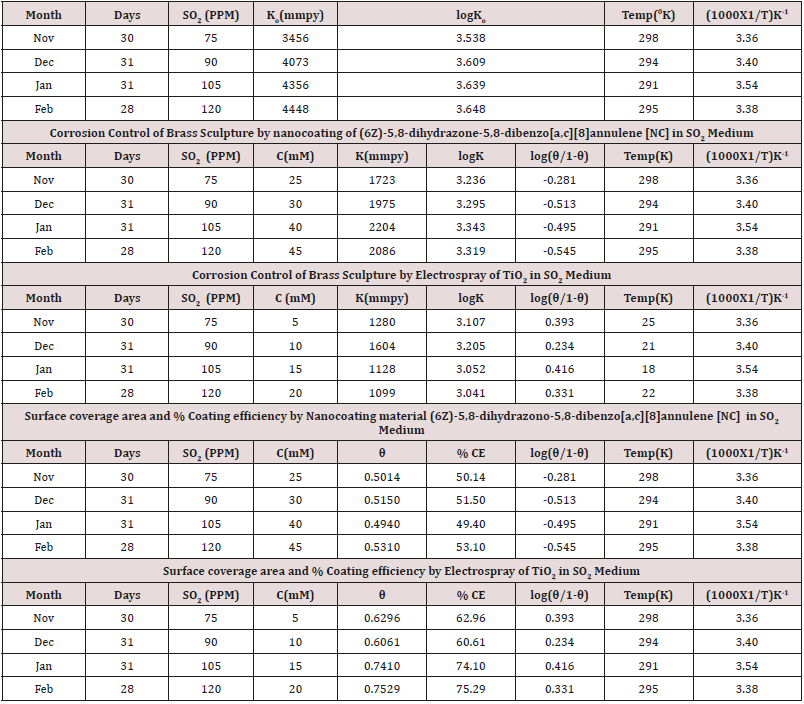
Brass metal was exposed in moist SO2 environment in 75ppm, 90ppm, 105ppm and 120ppm concentrations and 298 0K, 294 0K, 291 0K and 295 0K temperatures. The corrosion rate of brass metal was determined in winter season without coating and with coating (6Z)-5,8-dihydrazone-5,8-dihydrodibenzo[a,c][8]annulene and TiO2 electrospray of by weight loss formula K= 534 W/DAT (where W is weight loss, D is density and T is time) and their values were mentioned in (Table 1)

Table 1:Corrosion of Brass Sculpture in Winter Season in SO2 medium.
Lupinepublishers-openaccess-material-science-journal

The corrosion rate of brass metal was recorded in the months of November, December, January and February, the results (Table 1) was shown that corrosion rate of metal increased in January to February but theses values were reduced with coating and filler materials like (6Z)-5,8-dihydrazone-5,8-dihydrodibenzo[a,c][8] annulene and TiO2. It was clearly noticed in (Figure 5) K versus Month. Brass metal kept into 75ppm, 90ppm, 105ppm and 120ppm of SO2 medium in month of Nov, Dec, Jan and Feb without coating. It was coated with 25mM, 30mM, 40mM and 45mM concentrations of (6Z)-5,8-dihydrazone-5,8-dibenzo[a,c][8]annulene, and again kept into same concentrations of SO2. After coating of (6Z)-5, 8-dihydrazone-5,8-dibenzo[a,c][8]annulene electrospray coating of TiO2 used at 5mM, 10mM, 15mm and 20mM concentrations and same concentrations SO2 Nov to Feb. The corrosion rates of in these three cases were written in (Table 1). These results were shown that corrosion rates without coating increased, it values decreased coating with (6Z)-5, 8-dihydrazone-5,8-dibenzo[a,c][8]annulene but their values more reduced with TiO2 electrospray. These trends were shown in (Figure 6) which plotted K versus C. The corrosion rates of brass metal at different temperatures 298 0K, 294 0K, 291 0K and 295 0K without and with coating were recorded in (Table 1). The addition of nanocoating and electrospray were reduced the corrosion rates as temperatures variation, it noticed in K versus T in (Figure 7).

Read More About Lupine Publishers Journal of Material Science Please Click on Below Link: https://lupine-publishers-material-science.blogspot.com/

Wednesday, 2 March 2022

Lupine Publishers| Prevalence of Staphylococcus Aureus among Children Diagonosed with Acute Diarrhea in Kano, Nigeria

 Lupine Publishers| Journal of Material Science


Abstract

The burden of diarrheal disease is most critical in developing countries, facilitated by unsafe water supplies, poor sanitation, and nutritional deficiencies. The research was aimed to study the prevalence of Staphylococcus aureus among children diagnosed with acute diarrhea in Kura General Hospital Kano, Nigeria. Fecal specimens were collected in clean, dry and leak proof sterile bottle from 58 child patients (ranges from 1-5 years) admitted to Kura General Hospital and diagnosed with acute diarrhea from period of March to August 2017. The isolates were isolated and identified using Gram staining, Biochemical test (Catalase, Coagulase and DNase test), Mannitol fermentation and haemolysis test. The result showed that 34 samples out of 58 were positive for S. aureus. Higher incidence was found among males (20 subjects which accounted for 59%) than female with total of 14 subjects accounted for 41%. Highest frequency of diarrhea infection is found among subject with age between 1-2 years and more male (53%) were infected than female (47%). Statistical analysis of the result showed that there is no considerable statistical difference on prevalence of S. aureus among sex group and age categories of the subject at p<0.05. It is recommended that proper environmental sanitation, good personal hygiene and complete immunization against diarrhea disease are recommended.

Keywords:Acute diarrhea; children; prevalence; Staphylococcus aureus

Introduction

Over 1.7 billion cases of diarrheal infection are reported every year and these are associated with about 2.2 million deaths annually [1]. The burden of the disease is most severe and critical in a developing country which is facilitated by poor sanitation, unsafe water supply and nutritional deficiencies. Diarrhea may be infectious or non-infectious. It can be infectious when caused by bacteria, virus or parasite. Bacteria are one of the major causative agents of food illness such as diarrhea and accounted for about 60% of cases requiring hospitalization [2]. The global impact of foodborne illness is difficult to assess. However, it has been estimated that about 2.1 million children die due to diarrhea related in developing countries annually. It has been reported that water and food are the vehicle of diarrhea related illness [1]. Due to biological nature of food, it is capable of supplying consumer with nutrients, and hence, equally capable of supporting the growth of contaminating organisms. Three types of bacterial foodborne diseases are recognized: intoxications, infections, and toxico-infections. The foodborne bacterial intoxication is caused as result of ingesting food containing bacterial toxins and such toxins are produced by organisms such as Staphylococcus aureus and Clostridium botulinum, resulting from bacterial growth in the food. According to Infectious Diseases Society of America (IDSA) and the American College of Gastroenterology (ACG), Diarrhea is defined as the passage of three or more loose or liquid stools per day. The diarrhea can be further classified by the duration of the symptoms [3]. Patients diagnosed with acute diarrhea shows symptoms lasting less than 14 days. Those showing symptoms for more than 14 days or 1 month are said to have persistent diarrhea.

Those having diarrhea for more than 30 days are said to have chronic diarrhea.

Staphylococcus aureus is gram positive bacteria, spherical in shape (cocci) mostly occur in singles, tetrads and irregular grape like cluster. It is the only strain that produce enterotoxins that can cause food poisoning. The food handler with lesion or carriage may initiate infection [4,5]. The species are host adapted with most of the known species inhibiting humans and other animals. These species are found in large number near opening of the body surfaces such as the anterior nares, inguinal and perineal areas. There are six types of enterotoxins produced serologically by S. aureus. These include enterotoxin A, B, C1, C2, D and E and they differ in their toxicity. Most food poisoning is caused by enterotoxin A followed by D. These enterotoxins are heat stable, with type B being most heat resistant. Enterotoxin stimulates Central Nervous Systems (CNS) vomiting center and inhibit water and sodium absorption in the small intestine. Staphylococcal enterotoxins, along with the toxic syndrome toxin and others, are classed as bacterial super antigens relative to in vivo antigen recognition in contrast to conventional antigens [6]. Food poisoning by S. aureus is characterized by a short incubation period typically 2-4 hours. The onset is sudden and is characterized by vomiting and diarrhea but no fever. The illness lasts less than 12 hours. In severe cases dehydration, masked pallor and collapse may require treatment (intravenously) infusion. The short incubation periods are the characteristics of intoxication where illness is the results of ingestion of the preformed toxin in the food [7]. The research was aimed to study the prevalence of S. aureus among children diagnosed with acute diarrhea in Kura General Hospital Kano, Nigeria.

Materials and Methods

Ethical approval

Ethical approval (with reference no. BHM/GEN/488/VOL.1) for the study was obtained from Kano State Hospital Management Board (HMB) based on the consent of Kura General Hospital ethical committee.

Study area

The samples for the study were collected at Kura General Hospital in Kura local Government area of Kano State, Nigeria. It is located at a distance of about 35 kilometer south west from the state capital. Kura is located at Latitude 110 46’17” N and Longitude 80 25’ 49” E. It covers an area of about 206 Km2 of land and population of about 144,601 according to 2006 census [8]. Kura local government share common boundaries with Dawakinkude (East), Garun-mallam (West), Madobi (North) and Bunkure (South) [8].

Sample Collection

Fecal specimens were collected in clean, dry and leak proof sterile bottle from 58 child patients (ranges from 1-5 years) admitted to Kura General Hospital and diagnosed with acute diarrhea from period of March to August 2017. The specimens were immediately transported to Microbiology Laboratory in the Department of Microbiology, Kano University of Science and Technology Wudil for isolation and identification of S. aureus.

Isolation of S. aureus

A sterile wire loop was deep into the fecal sample of the patients and streaked onto the surface of Nutrient agar (Life save Biotech, USA), using standard method described by of Prescott et al. [9]. This procedure was applied for each of the sample and the plates were incubated at 370 C for 24 hours. The presumptive colonies of S. aureus on the plates were further sub-cultured to obtained pure culture. The pure isolates of S. aureus were preserved for further bacterial identification.

Bacterial Identification

The bacteria isolated were confirmed as S. aureus by conventional microbiological methods namely; Gram staining, biochemical test (such as catalase, coagulase and DNase test), mannitol and haemolysis test. Gram staining was done according to the methods described by Chessbrough [10]. Catalase, Coagulase and DNase test were done according to the method described by Holt et al. [11] and Cheesbrough [10]. Mannitol fermentation and haemolysis test was done according to the method described by Holt et al. [11].

Gram Staining

Gram staining was done according to method described by Cheesbrough [10]. A thin smear was made by emulsifying an overnight culture of the isolate in normal saline on a well labeled clean glass slide. The smear was air dried and fixed by heat. This is followed by flooding the slide with crystal violet as primary stain for 30 seconds and then rinsed the slide with distilled water. The smear was flooded with Lugol’s iodine as a mordant to fix the primary stain and then rinsed with distilled water after 60 seconds. The slide was decolorized using acetone and rinsed immediately. Counter stain with safranin followed and left for 30 before being rinsed off. The stain smear was air dried and observed under microscope.

Biochemical Tests

Catalase test

Catalase test was conducted using procedure described by Holt et al. [11]. A drop of 3% hydrogen peroxide was placed on a clean glass slide. An overnight culture of the isolate was picked using sterile wire loop and placed on the drop of the hydrogen peroxide; presence of bubbles observed indicated a positive catalase test.

Coagulase test

Three drops of blood plasma were placed on clean and greasefree slide. A colony of the isolate was picked by means of sterile wire loop from incubated Nutrient agar plate. The coony was emulsified in the blood plasma and observed for clot formation [11].

DNase test

Deoxyribonuclease agar medium was prepared according to manufacturer’s instructions. An overnight over night broth culture of the isolate was spot inoculated on the surface of the medium and incubated at 370C for 24 hours. At the end of the incubation period, the agar surface was flooded with 1N hydrochloric acid and excess drained off [10].

Bacteriological analysis

The pure isolate obtained on Nutrient agar medium was picked using sterile wire loop and inoculate on the surface of Mannitol salt agar and blood agar (Lifesave Biotech, USA) and incubated at 370C for 24 hours. The changes in color of the medium from pink to yellow indicated positive results [11].

Statistical analysis

The prevalence of S. aureus isolates between sex and age categories was compared by using the Chi-square test (SPSS Version 19). Differences between the prevalence rates were considered significant when p<0.05.

Results

Demographic distribution of patients

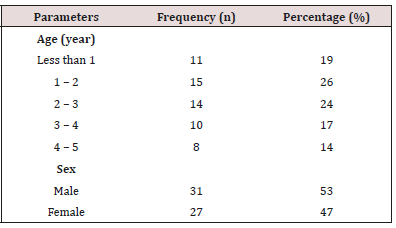
The demographic distribution of child patients diagnosed with acute diarrhea is presented in (Table 1). A total of 58 subjects (31 male and 27 female) were considered in the study. The age distribution of the subjects ranged from 1-5 years. Highest frequency is found among subject with age between 1-2 years.

Table 1:Demographic distribution of child patients diagnosed with acute diarrheap>

Lupinepublishers-openaccess-material-science-journal

Identification of S. aureus

The identification of S. aureus from the fecal samples of the subjects is presented in the table below (Table 2). The S. aureus was identified using Gram staining, biochemical test and Mannitol fermentation test. Result showed that the isolates were positive for Gram staining, catalase, coagulase, DNase and Mannitol fermentation test. The isolates showed β-haemolysis on blood agar plates.

Read More About Lupine Publishers Journal of Material Science  Please Click on below Link: https://lupine-publishers-material-science.blogspot.com/


Monday, 23 August 2021

Lupine Publishers| New Advances in Environmental Friendly Materials

 Lupine Publishers| Modern Approaches on Material Science (MAMS)


Mini Review

This last decade has been characterized by the acquisition of new materials based on the biomass, with the objective of replacing the materials obtained from petroleum derivatives, due to the high costs, added to the fact that they are non-renewable inputs and as a measure of the preservation of the environment [1]. In all areas of study has been this responsibility of searching for new and versatile materials. Packaging, medical materials, agro-industry, cosmetics, even energy applications, in all these fields are in constant search to be at the forefront and at the same time reduce all those materials that, during and at the end of their life cycle, cause damage to the environment, either due to the emission of greenhouse gases, or because they lack biodegradable and / or compostable properties [2]. Carbohydrates and lignin are the most abundant compounds in biomass and are used as biomolecules to replace oil derivatives. In this field, starch has many advantages over synthetic materials such as the possibility of obtaining thermoplastic films with important characteristics [3], in addition to being a renewable and low-cost resource. In cases where these materials have been limited by the mechanical properties and a greater permeation, this event has been improved with the incorporation of nanofillers of starch materials of biomass origin to overcome these disadvantages [4,5].

Taking into account the bionanocomposites can be considered as the new emerging group of nanostructured hybrid materials. Bionanocomposites is defined as a mixture of naturally occurring polymer (biopolymer) and inorganic or organic filler materials that have at least one dimension on the nanometer scale. This new class of composites exhibits significant improvements in mechanical, barrier, and thermal properties, and dimensional stability. Furthermore, it also offers benefits like transparency, low density, better surface properties, good flow properties and recyclability [6]. In this sense, Garcia et al. described the nanonocomposite capable to use in agricultural applications [7]. On the other hand, the proposal to use cellulose nanofillers from the bamboo inside polymer matrices is a promising and innovative way around materials for several applications [8].

The use of carbohydrate polymers associated with hydrophobic polymers need to perform chemical functionalized onto polymer matrix and the addition of natural nanocharges, have already been proven to completely change the mechanical properties of the whole material until its response to the hydrophobicity or hydrophilicity of same [9]. In the medicinal field the biopolymer-based hydrogels, such as chitosan or alginate are used to prepare new systems for drug delivery. These macromolecules are obtained from the renewable biomass and have properties as biocompatibility, non-toxicity and availability [6]. Moreover, oil production and transportation generate serious concern because accidental spills compromise the environment. Then, renewable resources emerge as our great ally. In matter of fact, biomass compounds, such as xanthan or guar gum are currently used to increase the reserves, increasing the amount of oil accessible for exploitation. Meanwhile, biomass sorbents (like straw or sawdust) have proved to be effective to absorb oil spills. So, research on biomass materials can be considered as a clever strategy to optimize yields and protect the environment until a definitive solution for oil problem can be found. All this description previously exposed, makes us glimpse the great field that remains to be explored around materials based on the renewable biomass. This is a field that arouses a lot of interest, and that it is the duty of all researches to develop in order to obtain the best materials that comply with current standards. It is important to know these new materials must be with the environment friendly to preservation the planet in which we live.

Read More About Lupine Publishers Modern Approaches on Material Science (MAMS) Please Click on Below Link: https://lupine-publishers-material-science.blogspot.com/


Monday, 28 June 2021

Lupine Publishers| Corrosion of Snails in H2CO3 Medium and Their Protection by Aloe Vera

 Lupine Publishers| Modern Approaches on Material Science (MAMS)

Abstract

Snails are beautiful creation of nature. They occur in rivers as well as ponds. But these sources of water are contaminated by effluents, pollutants, acid rain, particulates, biological wastes etc. They can change the pH of water. Water is absorber of carbon dioxide and it converts carbon dioxide into carbonic. Other above-mentioned wastes also increase the concentration of H+ ions in water. They produce hostile environment for snails. The outer part of snails is made of CaCO3. It produces chemical reaction in acidic medium and corrosion reaction is accelerated thus deterioration starts on the surface of snails. This medium their survival becomes miserable. For this work corrosion of snails study in the pH values of water is 6.5 in H2CO3 environment. The corrosion rates of snails were calculated by gravimetric methods and potentiostat technique. Aloe Vera was used for corrosion protection in acidic medium. The surface adsorption phenomenon was studied by Lungmuir isotherm. Aloe Vera formed thin surface film on the interface of snails which adhered with chemical bonding. It confirmed by activation energy, heat of adsorption, free energy, enthalpy and entropy. The results of surface coverage area and inhibitors efficiency were indicated that Aloe Vera developed strong protective barrier in acidic medium.

Keywords: Corrosion; Snails; Aloe vera; Carbonic acid; Potentiostat; Thin film formation

Introduction

Corrosion occurs in living organisms [1]. The animals’ outer layer is created by calcium carbonate [2] to corrode in acidic environment. Corrosive substances interact with living organism [3] to produce corrosion cell which is exhibited autoredox with snails [4] and disintegrated their outer layers. It observed that carbon dioxide [5,6] reacts with water to form carbonic which produce hostile environment [7] for snails and [8] Ocean water [9] is major absorber of carbon dioxide to change pH. Carbonic acid interacts with snails to exhibit chemical thus calcification [10] starts on their surface. The oxides of Sulphur [11] dissolve in water to produce sulphrous and sulphuric acid. These acids produce corroding [12] effect with snails. Oxides of nitrogen [13] absorb water to form nitrous and nitric acids and they generate corrosive environment for molluscs [14] Acid rain [15] can change pH of water and produce acidic medium for snails. Industrial wastes and human wastes contaminate water sources and alter the pH values of water in this way it makes water corrosive for snails and molluscs. The temperature [16] of the earth is increasing due to global warming thus water sources temperature is also increased and snails [17] undergo corrosion reaction. Various types of techniques use for corrosion protection [18] like anodic and cathodic protection, galvanization and electroplating, dipping [19] anodization, spray, nanocoating and inhibitors action. Aloe Vera is used for skin corrosion protection in acidic environment. Snails’ corrosion [20] can be control by inhibitor action of Aloe Vera in above mentioned environment. Aloe Vera form a thin barrier on the surface of snails and it is confirmed by activation energy, heat of adsorption, free energy, enthalpy and entropy and these thermal parameters results is noticed that Aloe Vera has good inhibition properties in acidic medium. It forms complex barrier on the surface of snails.

Experimental

Snails dipped into carbonic acid solution which pH value was 6.2. The corrosion rates of snails were determined by gravimetric method at mentioned periods 1,2,3,4 and 5 years at 288,298,303,308 and 3130K temperatures without use of Aloe Vera. Aloe Vera was used as inhibitor in carbonic acid medium and the calculated of corrosion rate of snails above mentioned years and temperatures at 50, 60, 70, 80 and 90M concentrations. Potentiostat 324 model used to determine the corrosion potential, corrosion current density at different temperatures and concentrations. These results were obtained by application of calomel electrode as auxiliary electrode and Pt reference electrode. The snail kept between these electrode and external current passed through without and with inhibitor. The results were noticed that anodic current decreased and cathodic current increased by the use of Aloe Vera. The gravimetric method corrosion rate results were approximated to potentiostat corrosion obtained results.

Results and Discussion

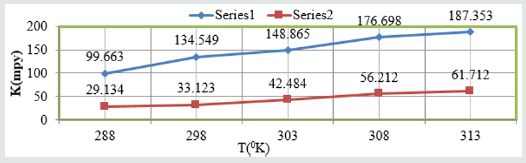
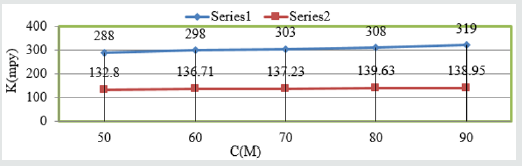
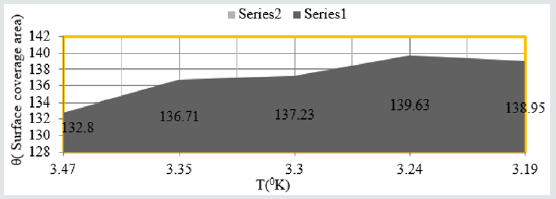
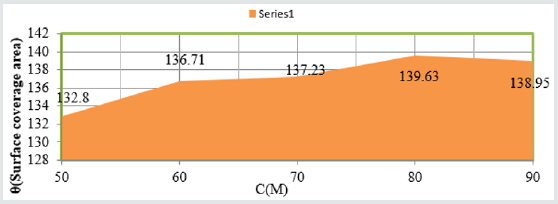
The corrosion rate of snails were determined by without and with Aloe Vera in mpy (miles per year) at different temperatures, concentrations and times in years by the use of formula K=534XΔW/D A t (where ΔW is weight loss in g, A is area in sq inch, t is immersion time in year). The dipping times were 1,2,3,4 and 5 years and temperatures are 288,298,303,308 and 3130K without inhibitors corrosion rate of snail is calculated and their values were recorded in Table 1. The addition of Aloe Vera in carbonic acid medium and corrosion rate of snail calculated at 288,298,303,308 and 3130K temperatures and 50, 60, 70, 80 and 90M concentrations and its values were mentioned in Table 1. It observed that without action of inhibitor corrosion rate of snail increased as duration of times and temperatures were increased and, but its values were decreased after addition of Aloe Vera such types of trends noticed in Figure 1 K Vs t, Figure 2 K Vs T and Figure 3 K Vs C. The surface coverage area and inhibitor efficiency were calculated by formula θ= (1-K/Ko) and %IE= (1-K/Ko) X100 (where Ko corrosion rate without inhibitor and K corrosion rate with inhibitor) and their values were given in Table 2. The surface coverage area and inhibitor efficiency were calculated by formula θ= (1-K/Ko) and their values were given in Table 2. The results of Table 2 were shown that surface coverage area and percentage inhibitors efficiency were enhanced when inhibitors added at different temperatures and concentrations as per year. Such types of trends were noticed in Figure 4 θ Vs T and Figure 5 θ Vs C.

Figure 1: K Vs t for snails at different years.

Lupinepublishers-openaccess-material-science-journal

Figure 2: K Vs T for snails at different tempertaures.

Lupinepublishers-openaccess-material-science-journal

Figure 3: K Vs C for snails at concentations.

Lupinepublishers-openaccess-material-science-journal

Figure 4: θ Vs T for snails in Aloe Vera.

Lupinepublishers-openaccess-material-science-journal

Figure 5: θ Vs C for snails in Aloe Vera.

Lupinepublishers-openaccess-material-science-journal

Table 1: Corrosion rate of snail absence and presence of Aloe Vera in H2CO3.

Lupinepublishers-openaccess-material-science-journal

Table 2: Surface coverage area develop by Aloe Vera on the snails in H2CO3.

Lupinepublishers-openaccess-material-science-journal

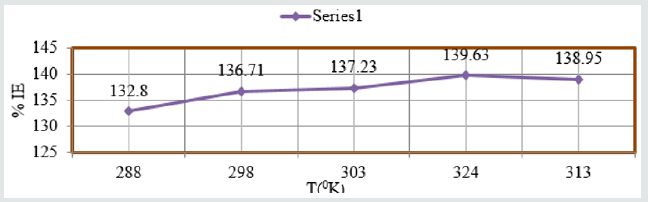
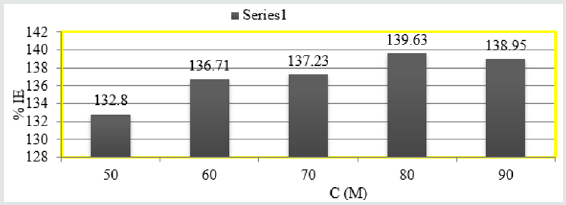
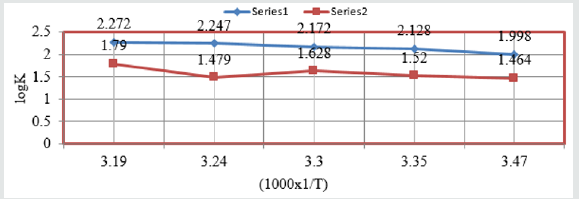
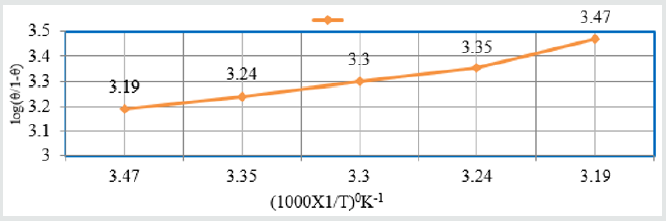
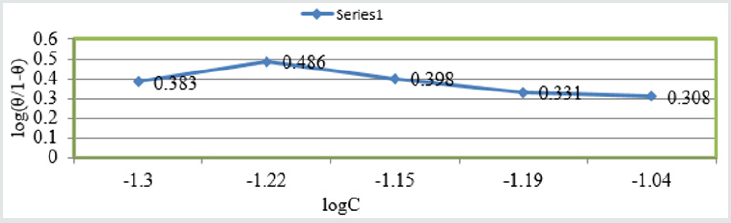
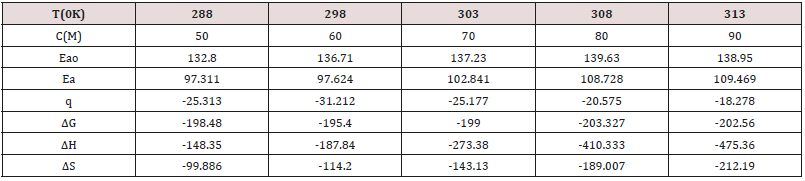
The percentage inhibitors of Aloe Vera at different temperatures and concentrations as one-year interval were calculated by %IE= (1-K/Ko) X100 (where Ko corrosion rate without inhibitor and K corrosion rate with inhibitor) and the values were written in Table 3. The results of Table 3 were depicted that percentage inhibitors efficiency were increased as temperatures and concentration were enhanced. Such types of trends also observed in Figure 6 %IE Vs T and Figure 7 %IE Vs C. Surface adsorption phenomenon was studied by activation energy, heat of adsorption, free energy, enthalpy and entropy. Activation energy was determined by formula K=A e-Ea/RT (where K is corrosion rate, Ea is activation energy and T is absolute temperature without and with action of Aloe Vera at different temperatures and concentrations and their values were recorded in Table 4. It observed that activation energy increased without inhibitors but its values decreased after addition of inhibitors. These results were shown in Table 4 which indicated that inhibitors adhered on snails by chemical bonding and their values were obtained by Figure 8 plotted logK Vs 1/T. Heat of adsorption values were found to be negative which indicated that Aloe Vera was shown an exothermic reaction in H2CO3 medium. It adsorbed on the surface of snail by chemical bonding. The values of heat of adsorption were determined by Langmuir isotherm log(θ/1-θ) = logA +logC-q/2.303RT and Figure 9 plotted log(θ/1-θ) Vs1/T and Figure10 plotted against log(θ/1-θ) Vs logC and their values were recorded in Table 4.

Figure 6: %IE Vs T for snails in Aloe Vera.

Lupinepublishers-openaccess-material-science-journal

Figure 7: %IE Vs C for snails in Aloe Vera.

Lupinepublishers-openaccess-material-science-journal

Figure 8: logK Vs 1/T for snails in Aloe Vera.

Lupinepublishers-openaccess-material-science-journal

Figure 9: log(θ/1-θ) Vs 1/T for snails in Aloe Vera.

Lupinepublishers-openaccess-material-science-journal

Figure 10: log(θ/1-θ) Vs logC for snails in Aloe Vera.

Lupinepublishers-openaccess-material-science-journal

Table 3: Inhibition efficiency develop by Aloe Vera in H2CO3.

Lupinepublishers-openaccess-material-science-journal

Table 4: Thermal parameters of Aloe Vera with Snails.

Lupinepublishers-openaccess-material-science-journal

Table 5: Potentiostatic results of snails for Aloe Vera.

Lupinepublishers-openaccess-material-science-journal

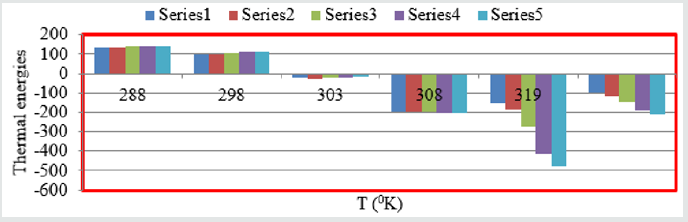
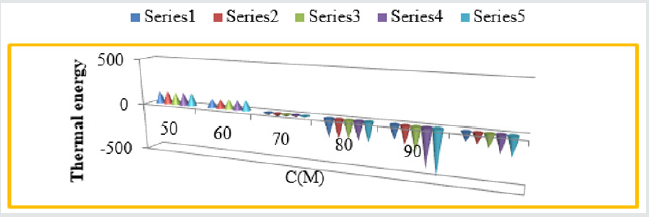
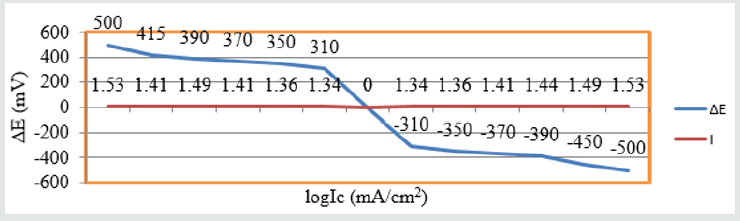
Free energy of inhibitor Aloe Vera was calculated by equation ΔG=2.303 log(33.3K) and their values were given in Table 4. Their values noticed that inhibitor action a chemical reaction because free energy values were negative, and their values mentioned in Table 4. Enthalpy of used inhibitors was determined by transition state equation K=RT/Nh eΔS/R e-ΔH/RT and its values were recorded in Table 4. These values indicated that inhibitor’s Aloe Vera boned with snail by chemical bonding. Entropy of Aloe Vera was determined by equation by ΔG = ΔH – TΔS and their values were mentioned in Table 4. Their values were shown that deposition of Aloe Vera on the surface of snail was an exothermic process. It formed stable barrier on the surface of snail. All five values of thermal parameters plotted against T in Figure 11 and Figure 12 against C. The corrosion potential, corrosion current density and corrosion rate were determined by the equation ΔE/I=1/2.303 βaβc/(βa+βc) and C R(mpy)=0.1288 Ic (mA/cm2) XE/ρ and values were recorded in Table 5. It observed that without inhibitor corrosion potential and corrosion current were decreased but after addition of Aloe Vera corrosion current densities were increased. It also reduced the corrosion potential and corrosion current. The corrosion rate calculated by potentiostat technique and their values were tallied with the corrosion rate determined by gravimetric method. Corrosion potential versus corrosion current density was plotted in Figure 13. This plot indicated that anodic current reduced as addition of inhibitor but cathodic current enhanced Table 5.

Figure 11: Themal energies Vs T for Aloe Vera with Snails.

Lupinepublishers-openaccess-material-science-journal

Figure 12: Thermal energies Vs C for Aloe Vera with snails.

Lupinepublishers-openaccess-material-science-journal

Figure 13: ΔE Vs Ic for snails with Aloe Vera.

Lupinepublishers-openaccess-material-science-journal

Conclusion

Snails’ corrosion occurs due to change the pH of water. Water pH is altered by contamination effluents, industrial polluters, and various types of wastes and acids rain. Snails outer layers are constructed by calcium carbonate. In acidic medium calcification starts on their surface by chemical process. It produces pitting, stress and crevice corrosion. For the protection of such types corrosion Aloe Vera is used as inhibitors. Aloe Vera forms thin film on the surface of snails. The thin film formation is confirmed by thermal parameters like activation energy, heat of adsorption, free energy, enthalpy and entropy. Aloe Vera surface adsorption phenomenon on snails is also satisfied by Langmuir isotherm. Aloe Vera is reduced the concentration of H+ ions and enhance the concentration of oxygen molecules. It is nitrogen containing rich organic compounds which capture H+ ions and less H2 gas is released thus corroding effect of snails suppressed.

Read More About Modern Approaches on Material Science (MAMS) Please Click on Below Link:https://lupine-publishers-material-science.blogspot.com


Monday, 24 May 2021

Lupine Publishers| Groups 4 and 15 and Organotin Condensation Polymers for The Treatment of Cancers and Viruses

 Lupine Publishers| Modern Approaches on Material Science (MAMS)


Abstract

This short review describes the use of group 4 metallocenes, group 15 organometallics and organotin polymers in the treatment of human cancer tumors and viruses. These metal-containing polymers show good inhibition of all the main group solid tumors including pancreatic, lung, brain, breast, prostate and colon human cell lines. They also show inhibition of a variety of viruses including zika, herpes and vaccinia viruses. Synthesis of the polymers is rapid employing interfacial polymerization and commercially available reactants. They offer physicians a new class of drugs for the treatment of a variety of cancers and viruses.

Keywords: Cancer; Viruses; Interfacial polymerization; Brain cancer; Pancreatic cancer; Zika virus; Vaccinia virus; Breast cancer; Herpes virus

Introduction

Use of metal-containing agents to treat various medical problems is well known [1-22]. Here the focus is on activities to supply metalcontaining polymers for the treatment of various cancers and viruses. While we have had extensive experience with platinum and palladium polymers for the treatment of a variety of cancers, the current emphasis is on polymers formed by incorporation of groups 4 and 15 metals and organotin condensation polymers for the treatment of cancers and viruses [23-41]. These two polymer types are different with their own separate biological characterizations [26]. For instance, the platinum and palladium polymers are addition products and not stable for long times in solution. By comparison, the groups 4 metallocene and organotin and group 15 polymers are condensation polymers and exhibit good stability to over 30 weeks in solution so can be treated differently with respect to biological and physical characterizations [26-41].

Synthesis

Synthesis occurs employing interfacial polymerization [42- 46]. It is a rapid polymerization system because high-energy reactants are employed. These high-energy reactants are acid halides. A typical condensation reaction has an activation energy of about 30-40Kcal/mol whereas the activation energy for the acid halide reactions is on the order of 20Kcal/mol. The interfacial polymerization is employed industrially to synthesize aromatic polyamides (nylons) and polycarbonates so industry is familiar with the system [47,48]. These interfacial polycondensation reactions form polymer within less than one minute in decent yield. For the syntheses described here, commercially available reactants are employed allowing ready reproduction and scale-up to ton levels in a somewhat straightforward manner. Rapid stirring is employed, generally about 18,000 rpm. This allows both the rapid polymerizations to occur with an increase in interfacial contact area of over ten thousand compared to non-stirred systems, and good reproducibility. For the systems described here, the reaction vessel is a simple glass reaction vessel, one-quart Kimax emulsifying jar, fitted onto a Waring Blender. To illustrate the overall reactions, products formed for the organotin polymers have a repeat unit described as follows.

R2SnX2+X-R-Y-> -(-SnR2-R-)-

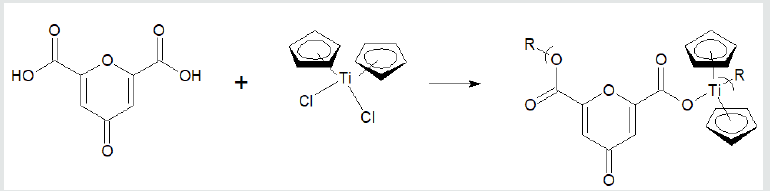
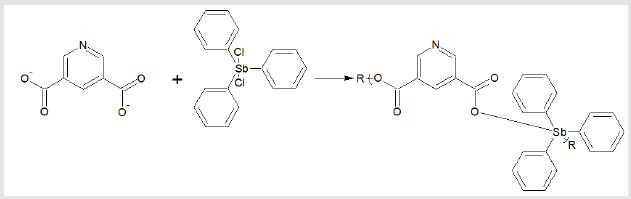
where X and Y are normally Lewis bases such as alcohols, amines, acid salts, thiols, etc. These reaction sites are often varied for a single Lewis base such as an amino acid, shown below, that has both acid and amine reactant sites. Examples of overall reaction products for each of the three condensation polymer groups are given following. Reaction between the amino acid diglycine and dimethyltin dichloride is described (Figure 1). The polymer is described as a poly (amine ester) with the organotin unit considered an organic moiety such as a methylene unit in such naming. For the Group 4 metallocenes, the reaction employing titanocene dichloride as the Lewis acid, the repeat unit for a product formed from titanocene dichloride and chelidonic acid is given (Figure 2). Finally, for reactions involving group 15 metals, the repeat unit formed from reaction between triphenylantimony dichloride and 3,5-pyridinedicarboxylic acid forming a polyester is given (Figure 3). The metal is generally located in the Lewis acid portion while the non-metal reactant is the Lewis base. In certain cases, the Lewis base portion may also contain a metal, usually iron and cobalt. The iron is present as a ferrocene while the cobalt is present as a cobaltocene [32].

Figure 1: Synthesis of organotin poly (amine esters) from reaction of diglycine and dimethyltin dichloride where R represents simple chain extension.

Lupinepublishers-openaccess-material-science-journal

Figure 2: Synthesis of polyesters from reaction with titanocene dichloride and chelidonic acid where R represents simple chain extension.

Lupinepublishers-openaccess-material-science-journal

Cancer

It was initially mistakenly assumed that these metal-containing compounds inhibited cancer by the same mechanism as the platinum-containing drugs as cisplatin and other similar platinum containing drugs [26,50]. (The platinum-containing drugs currently are employed in over 60% of the chemo drug treatments generally as one of the components.) It is now known that this is not true so that they can be coupled with the drugs described here as co-drugs that will affect inhibition of cancer through two distinct avenues. The platinum-containing drugs are quite toxic resulting in the presence of many negative side effects [26]. Our effort is to create drugs that have similar or superior ability to inhibit cancer but without the unwanted side effects. All of the metal-containing drugs operate primarily on the DNA site for inhibition of the cancer cell lines [26,50].

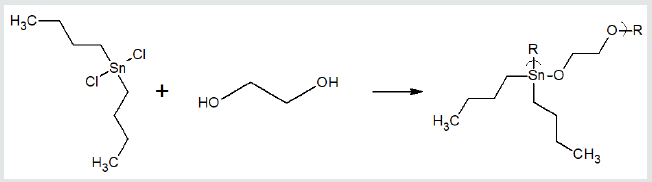
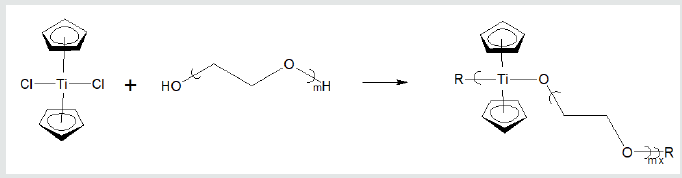
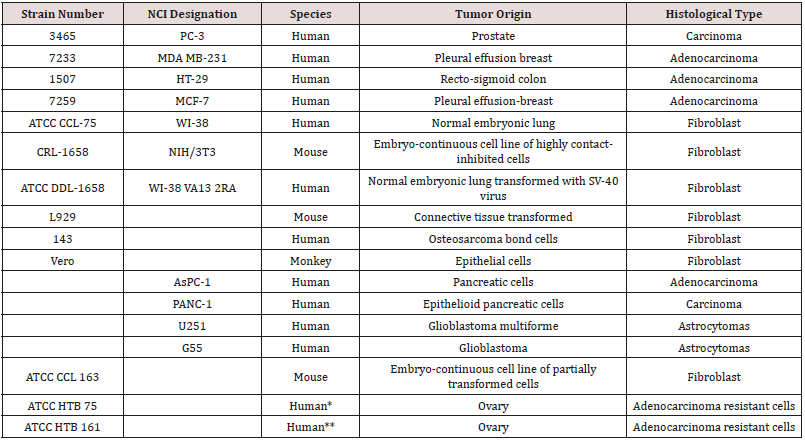
The polymers synthesized by us have shown good ability to inhibit a variety of cancer cell lines Table 1. These cell lines represent all of the major human solid tumor cell lines. These cell lines include resistant cells meaning cell lines that have shown ability to resist treatment with the traditional anticancer drugs [39] (Table 1). Inhibition depends on the metal atom present as well as the nature of the Lewis base. With respect to the metal, in general, inhibition is of the order Hf=Zr>Ti>Sn>Sb, Bi, As. Inhibition is also dependent on the specific Lewis base. A primary measure of the ability for a drug to inhibit cancer growth is the effective concentration, EC. The 50% effective concentration, EC50, is the concentration of a toxicant, drug, or antibody that induces an inhibitory response halfway between the baseline and maximum after a specified exposure time. The desired outcome is to have low EC50 values as this indicates that only a small concentration of the anti-cancer agent is needed to elicit inhibition. For the compounds described here, once inhibition begins, the slope of the dose/concentration curve is high with inhibition being total. Depending on the specific Lewis acid/base the EC50 value is typically between milligrams/mL to nanograms/mL. The metal-containing compounds are often coupled with a Lewis base that exhibits some biological activity hoping for a syngeneic effect. Drugs that have been employed as the Lewis bases include ciprofloxacin, diethylstilbestrol, cephalexin, acyclovir, thiamine, dicumarol, camphoric acid, histamine, 2-ketoglutaric acid, salicylic acid, dipicolinic acid, isomanide, glycyrrhetinic acid, phentolamine, thiodiglycolic acid. Lewis bases that themselves exhibit no ability to inhibit cancer can also exhibit good inhibition when coupled with a metal-containing moiety. These include a wide variety of diols such as ethylene glycol, Figure 4 [29,50]. Recently, water-soluble drugs possessing the metal-containing unit were synthesized [29] employing as the Lewis base poly (ethylene glycol), PEG. The resulting water-soluble polymers exhibit good inhibition of the cell lines. Figure 5 contains the reaction between titanocene dichloride and PEG forming water soluble polyethers (Figures 4 & 5).

Figure 3: Synthesis of triphenylantimony polyesters from reaction with 3,5-pyridinedicarboxylic acid where R is simple chain extension.

Lupinepublishers-openaccess-material-science-journal

Figure 4: Reaction between ethylene glycol and dibutyltin dichloride forming polyethers.

Lupinepublishers-openaccess-material-science-journal

Figure 5: Formation of water-soluble polyethers from reaction of titanocene dichloride and various poly (ethylene oxides) where R represents simple chain extension.

Lupinepublishers-openaccess-material-science-journal

Viruses

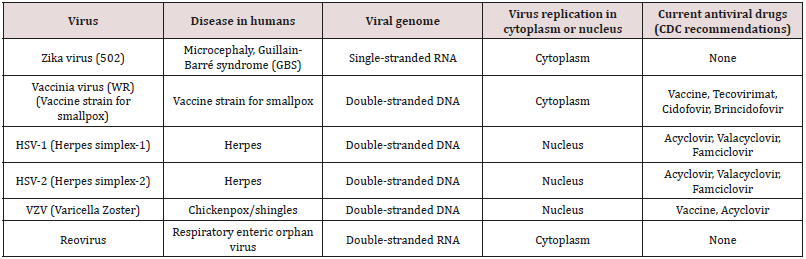
These metal-containing polymers also inhibit a variety of viruses including ones where no current drugs are available for treatment [40,41,49]. Table 2 contains viruses that have been inhibited by our metal-containing drugs including most recently the zika virus. These viruses include both DNA and RNA viruses. They include several that have been identified as possible weapons of mass destruction, namely the vaccinia virus. Three DNA viruses are effectively inhibited by the metal-containing polymers (Table 2). They are the vaccinia virus used to vaccinate humans against smallpox; herpes simplex virus 1, the virus responsible for over 45 million infections yearly in the US, comprising one of five adolescents and adults; and the varicella zoster virus, also a herpes virus and responsible for chickenpox and shingles. Thus, the metalcontaining polymers represent a possible potent approach towards inhibiting unwanted viruses (Table 2).

Table 1: Caner cell lines inhibited by metal-containing polymers described here.

Lupinepublishers-openaccess-material-science-journal

From a cancer patient with ovarian cancer that had previously been treated with cytoxan, adriamycin, 5-fluorouracil, and Fur IV. From a cancer patient with ovarian cancer that had been treated with adriamycin, cyclophosphamide, and cisplatin.

Table 2: Viruses inhibited by metal-containing polymers discussed in this report.

Lupinepublishers-openaccess-material-science-journal

Why Polymeric Drugs?

A critical question is “Why Polymeric Drugs?” What advantageousness do polymeric drugs offer [50-60]. Following briefly describes some advantages. Each of these advantages is related to the size of polymers and what such size offers. First, because of their size, polymers travel through the body, in particular the kidney and bladder, more slowly lessening organ damage allowing the organs to limit the negative effect [50,61]. Second, cancer cells are less cohesive, offering greater porosity, and are not as coherent as normal cells with relatively “rough” exteriors. This allows polymers to have a greater opportunity to be “snagged” by the cancer cells allowing them extended ability to be associated with the cancer cells resulting in a greater ability to inhibit cell growth. This scenario is described as the enhanced permeability and retention effect [50,62-64]. Third, increased size allows for a greater designing of the drug increasing its effectiveness [65-69]. This fine tuning includes attachment of “biological homing agents”. Thus, polymeric drugs offer advantageous over small molecule drugs that can be used to more effectively combat unwanted diseases compared to small molecule drugs.

Summary

Metal-containing polymers show ability to inhibit all the major solid tumor cancers as well as important viruses. They are easily synthesized and offer physicians new drugs to attack these harmful illnesses.

Read More About Lupine Publishers Modern Approaches on Material Science Click on Below Link:

https://lupine-publishers-material-science.blogspot.com/


Monday, 26 April 2021

Lupine Publishers| Palm Oil Fuel Ash as A Cement Replacement in Concrete

 Lupine Publishers| Modern Approaches on Material Science (MAMS)


Abstract

To produce concrete, cement is an essential material that binds together solid bodies but also is the largest producer of carbon dioxide (CO2) emission. Up to 10% of global CO2 emission comes from cement production thus making the sustainability of concrete a major issue that needs addressing. The processes of producing concrete consume heavily on natural resources such as sand, gravel, water, coal and crushed rock, mining of which damages the environment. It is however possible, that energy and cost efficiency can be achieved by reducing on the amount of clinker, and in its place utilizing partial cement replacements/pozzolans that require less process heating and emit fewer levels of carbon dioxide. This study investigates the effectiveness of agro waste ash by-product Palm Oil Fuel Ash (POFA) as an alternative material to replace Portland cement (OPC). Experiments were carried out by supplementing CEM I cement by weight in concrete mixes with POFA at 2.5%, 5%, 10%, 15% and 20% steps at the point of need, with water to cement ratio of 0.5. Results were compared with a control specimen, which was made with 100% cement. The results showed impressive compressive strength, especially at early age; in fact POFA specimens containing 2.5% and 5% POFA replacement displayed greater early compressive strength in comparison to the control, which is similar in behaviour to concrete containing silica fume which is an established partial cement replacement used in high strength applications. The results showed good repeatability and highlight the potential of POFA as an effective pozzolan which could enhance the sustainability and economic aspect of concrete.

Introduction

Sustainability has widely emerged in recent years to resist climate change and pollution caused by ineffective waste management. The cement industry, as one of the fundamental materials industries, plays a very important role in the social and economic development as well as imposes a great challenge in terms of its large consumption of natural resources and energy and the emission of greenhouse gases. Cement is one of the main constituents in concrete and is thus one of most utilized commodities in the world [1]. From an environmental perspective, the production of 1 tonne of cement directly generates about 1 tonne of CO2 [2]. Cement production is therefore responsible for 7-10% of the world’s total CO2 emissions; compare this to the aviation industry, which is 2.8%, three times less than the production that comes from cement industry [3-8]. As a result, the use of supplementary cementing materials (SCMs), like pulverised fuel ash (PFA) and ground granulated blastfurnace slag (GGBS) have been established over the past 30 years as they not only reduce the embodied CO2 of concrete, the long-term strength and durability is improved. Both PFA and GGBS are waste products from the coal and steel industry; due to the recent decline of both these industries, focus has shifted on other alternative SCMs. One potential alternative from agricultural waste is POFA. POFA is ash obtained by incinerating the by-products of palm oil mill. The tall-stemmed oil palm tree belongs to palm family Palmea and the countries that cultivate oil palm are Benin Republic, Colombia, Ecuador, Nigeria, Zaire, Indonesia and Malaysia of which the last one is the largest producer of palm oil and palm oil products [9]. In Malaysia the total solid waste generated by this industry in about two hundred palm oil mills has been estimated at about ten million tons a year. These by- products are commonly used as fuel in the boiler of palm oil mills and become ash. The ash is a waste material the disposal of which poses enormous environmental pollution because the ash is usually disposed of without any commercial return [7,9,10] in the Far East millions of tonnes of waste is generated annually. It has been suggested [11] POFA may have pozzolanic qualities, however, very little research has been done in this area. This paper investigates the plausibility of POFA as a pozzolanic addition in concrete.

Methods

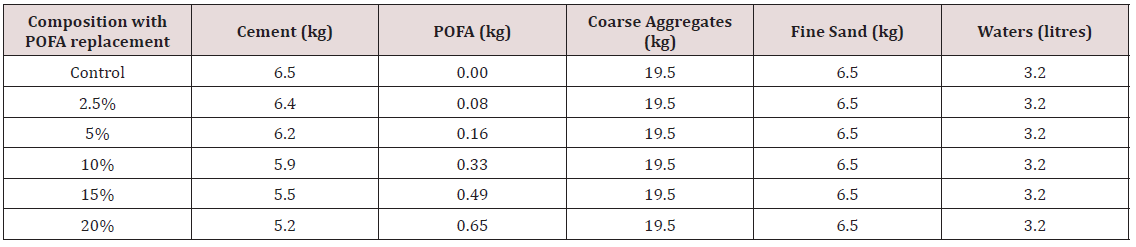
Palm Oil Fuel Ash was sourced from Malaysia. The cement used was Portland cement– CEM I 52.5R (Snow Crete). Cement was replaced with POFA in concrete by volume at steps of 0%, 2.5%, 5%, 10%, 15% and 20%. The 0% replacement, also referred to as the control was taken as the point of reference from which all performance was measured. Water to cement ratio (WCR) of 0.5 was used for the mixes to achieve a good balance of workability and strength in line with Abram’s law which states that the strength of concrete mix is determined by the WCR, with lower WCR having higher strengths and vice-versa [12]. The quantities of each mix were measured as detailed in Table 1. Workability was measured using the slump test method, whose apparatus were a slump cone and a tamping rod conforming to BS EN 12350-2:2009 [13]. Cube moulds for compressive measured 100mm x 100mm x 100mm, whereas cylinder moulds for tensile strength testing were 150mm in diameter and 300mm in height, conforming to dimensional guidelines of BS EN 12390-1:2012 [14]. The method used to make cubes conformed to BS EN 12390-2:2009 [15]. Cylinders conformed to BS EN 12390-4:2000 [16]. The specimens were left on the moulds for 24 hours after which they were stripped, marked and submerged in a water tank at temperatures of 20 °C±2 until their age of testing conforming to BS EN 12390-2:2009 [15]. Specimens were cured for up to 28 days. Compressive strength tests were conducted to BS EN 12390-4:2000 [16]. After the application of an initial load of 0.6±0.2N/mm2.s, which, according to BS EN 12390-4:2000 [16] does not exceed 30% of the failure load, further constant load was applied at a rate of±10% until no further load could be sustained. Compressive tests were carried out at 7 and 28 days. Results were taken as an average of the three cubes per test, and expressed in N/mm2.Tensile strengths were conducted to BS EN 12390-6:2009 [17]. The testing machine conformed to BS EN 12390-4:2000 [16] while packing strips conformed to BS EN 316:2009 [18]. Initial load was applied at a constant rate of stress of 0.04 N/mm2.s, which, according to BS EN 12390- 6:2009 [17] does not exceed 20% of the failure load. Further constant load was thereafter applied at a rate of ±10% until no further load could be sustained. As POFA is a very fine low- density material the cement was replaced by weight and at lower percentage, similar dosage to Silica Fume.

Table 1: Proportions of POFA concrete mix using CEM.

Lupinepublishers-openaccess-material-science-journal

Results and Discussion

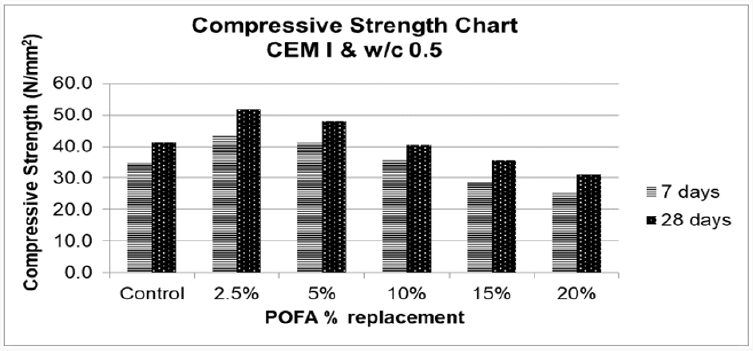
Figure 1: Compressive strength Development Chart (CEM I and w/c 0.5).

Lupinepublishers-openaccess-material-science-journal

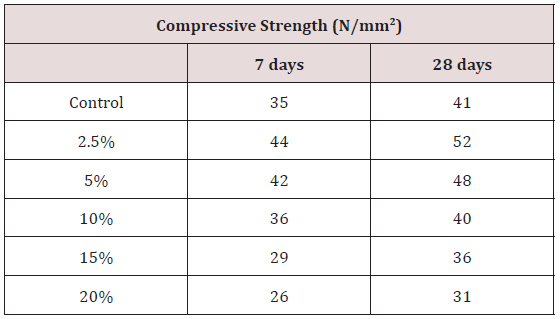
Compressive strength is the most important property of concrete, and it measures how much load concrete structures can sustain before failing. (Table 2) and (Figure 1) show the compressive strengths at 7 and 28 days of hardened concrete with 0%, 2.5%, 5%, 10%, 15% and 20% POFA replacement. Replacements of up to 10% achieved strengths that were above the targeted class C32/40 at 28 days, is among strength classes listed by BS EN 1992-1-1: 2004 [19] and BS 8500-1:2015 [20], as being suitable for structural applications. It is possible to predict the higher replacements could achieve strengths that are far above this class strength at 91 days or longer, due to the fact that pozzolanic concrete continue to gain strength up to and beyond 91 days. Palm Oil Fuel Ash can also be used as an alternative to cement in highway pavement as the minimum 28-day compressive cube strength requirement using pozzolans for highway pavements in the UK is 9.6N/mm2. Therefore 2.5%, 5% and 10% replacement of POFA is sufficient to use in highway pavement and road construction. It is worth noting, as POFA is a very fine and low-density material, a 10% partial cement replacement constitutes a large volume of POFA, similar to silica fume. Like similar fume [21] at low percentage cement substitution of up to 5% POFA yields greater early age strengths in comparison to the control. In limited work reported elsewhere, other researchers [7,9,11] found the optimum level of replacement to be at 15%-20% which are different results from this research. The findings suggest that Palm Oil Fuel Ash is an effective pozzolan to replace cement at low percentages. The 2.5% and 5% POFA replacements had remarkable high early strength concrete compare to the control one. According to [22,23], the early age strength is due to the hydration of cement, with POFA acting as a filler of voids and contributing to the strength gain, while the latter age strength in pozzolanic concrete is associated with the reaction of SiO2 present in the POFA with free lime Ca(OH)2 from the hydration of cement in a secondary reaction over time, to form calcium silicate hydrate (C-S-H). The optimum replacing level of cement by POFA is at 2.5%. This amount of replacement could be effective in large projects where large amounts of OPC are used and an early high compressive strength is required. The replacement of OPC with POFA helps in decreasing the pollution as well as has many economic benefits. Palm Oil Fuel Ash particle size can be compared to that of silica fume and therefore could have similar applications to silica fume especially in terms of mix design. It can be used in high-strength concrete and could include long span bridges, mainly of precast and prestressed girders to allow for longer span in structural bridge design and high-rise sky scrapers by building smaller columns and increasing usable space.

Table 2: Compressive strength for POFA using (CEM I and w/c 0.5).

Lupinepublishers-openaccess-material-science-journal

Tensile strength

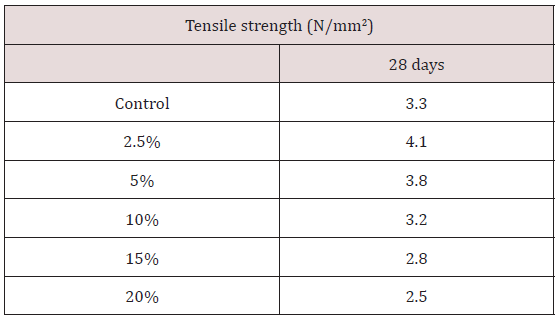
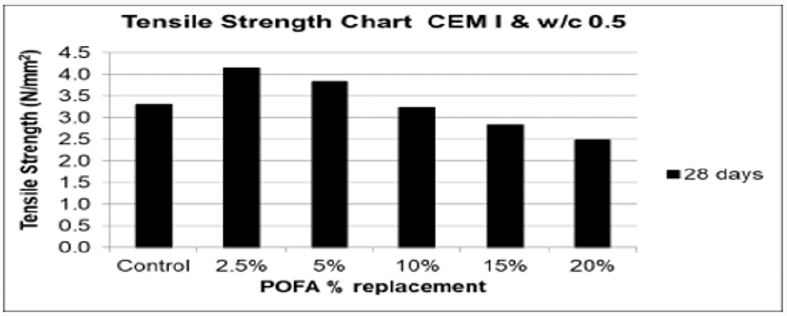
(Table 3) and (Figure 2) show the tensile strength results for POFA concrete at 28 days, the tensile strength initially increases with increasing POFA replacement up to 5% then subsequently decreases at higher levels; this trend is not consistent with the general behavior of PCRs [22-26] whereby the tensile strength decreases with increasing amount of PCRs.

Table 3: Tensile strength for POFA using (CEM I and w/c 0.5).

Lupinepublishers-openaccess-material-science-journal

Figure 2: Tensile Strength of POFA replaced concrete at 28 days.

Lupinepublishers-openaccess-material-science-journal

Workability

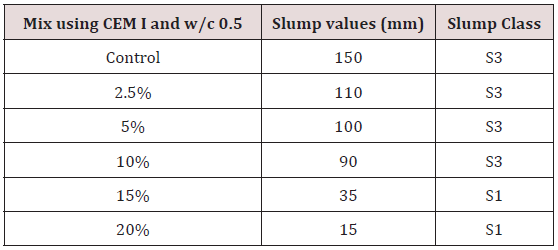
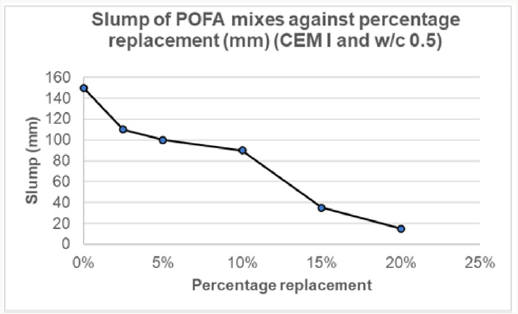
Table 4 and Figure 3 show the slumps of POFA replaced mixes at different replacement levels. One of the basic attributes of any cementitious material is its workability or “consistence”, which is largely determined by how wet the concrete is. This is referred to as “slump”. Basically, the wetter the concrete, the higher the slump. Although slump is often seen as an indication of water content, it is more reasonably interpreted as a measure of consistence. Consistency is a term that describes the state that concrete is when it is delivered on site, how easily can fresh concrete flow. Concrete is said to be workable when it is easily placed and compacted homogenously, however workability is very difficult to assess. Slump test is the most well-known method to examine the characteristics of concrete workability. It is used to measure the consistency of concrete as well. The slump test values depend on a variety of factors such as types and properties of concrete ingredients. Workability of POFA concrete was observed to decrease with increasing replacement; this is due to the high-water demand of POFA which can be countered by the use of admixtures. Like with silica fume [21], the water demand of concrete containing POFA increases with increasing amounts of POFA. This increase is caused primarily by the high surface area of the palm oil fuel ash.

Table 4: Slump readings for POFA mixes.

Lupinepublishers-openaccess-material-science-journal

Figure 3: Workability of POFA replaced mixes.

Lupinepublishers-openaccess-material-science-journal

Conclusion

The usage of partial cement replacements or pozzolans is gaining popularity for a variety of reasons including enhancing concrete performance, reducing the cost of using traditional concrete ingredients and serve the environment. Cement production is one of the highest contributors to CO2 emission. Partial cement replacements not only confer environmental benefits, but they also have a positive impact on concrete properties. This study investigated the effect of Palm Oil Fuel Ash as a pozzolan replacement in concrete and the main findings are:

a) Palm Oil Fuel Ash is an effective pozzolan to replace cement at low percentages with the optimum level is at 2.5%

b) Specimens made with 2.5% and 5% POFA replacement had higher strengths compared to the control at 7 and 28 days; very similar behaviour to silica fume

c) Workability decreases with increased amount of POFA unlike with PFA and GGBS concrete; like silica fume POFA has a high-water demand.

d) Based on strength findings, palm Oil Fuel Ash concrete have the potential to be used in superstructures including long span bridges, mainly for precast and prestressed girders to allow for longer spans in structural bridge design and high-rise sky scrapers by building smaller columns and increasing.


Wednesday, 20 March 2019

Material science journal-Lupine Publishers


In order to appreciate, in all its magnitude, the development of new materials (the totally new, the derivated, the transformed and combined ones), we need to observe through a prism of several faces, but all its converging on the plane of the climate change urgencies and the survival of the human being as a species on the planet Earth. Thus, the development of new atomic and molecular structures, the transformation of others already known, is a phenomenon closely linked to contemporary and high priority problems, such as the depletion of non-renewable sources of energy, the care and protection of the environment, and the health of people. It is possible to sustain that the emergence of modern approaches to new materials had its initial rebound in two periods of great activity: from 1821 to 1851, three decades in which it was understood at the macroscopic level and discovered the possibilities of thermoelectric; and from 1930, when it was possible to understand, from the microscopic level, thermoelectricity. To know more click on below link.


For more Lupine Publishers Open Access Journals Please visit our website: http://www.lupinepublishers.com/
For more
material science journal Please Click Here: https://lupinepublishers.com/material-science-journal/

Thursday, 7 March 2019

Coal Mining_Lupine Publishers

Groups 4 and 15 and Organotin Condensation Polymers for The Treatment of Cancers and Viruses by Charles E Carraher  in Modern Approaches on Material Science (MAMS)in Lupine Publishers


This short review describes the use of group 4 metallocenes, group 15 organometallics and organotin polymers in the treatment of human cancer tumors and viruses. These metal-containing polymers show good inhibition of all the main group solid tumors including pancreatic, lung, brain, breast, prostate and colon human cell lines. They also show inhibition of a variety of viruses including zika, herpes and vaccinia viruses. Synthesis of the polymers is rapid employing interfacial polymerization and commercially available reactants. They offer physicians a new class of drugs for the treatment of a variety of cancers and viruses.


For more Lupine Publishers Open Access Journals Please visit our website: http://www.lupinepublishers.com/