Wednesday, 12 August 2020

Lupine Publishers | Scientific Substantiation of Rational Irrigation Technologies for Mountain Agriculture Region in Azerbaijan

   Lupine Publishers | Current Investigations in Agriculture and Current Research

Introduction

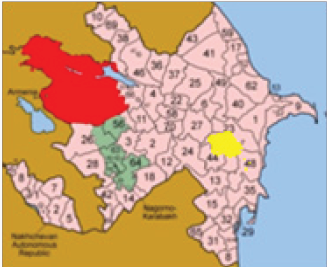
Figure 1 At present, in the field of agricultural reclamation irrigation questions inadequately represented in Azerbaijan. Underdeveloped questions rational application of different methods of irrigation and improve the design of irrigation networks.

Figure 1: Train the farmers for operation and maintenance of solar desalination system.
Lupinepublishers-openaccess-Agriculture

Objectives of Research

Today’s challenge lies in land development with high and steep slopes. In these circumstances, you must, first and foremost, to replace open irrigation network in earthen channel with the use of devices for water allocation between slots by more sophisticated devices that will fundamentally solve the issue mechanization and automation of distribution of water in irrigated fields.

Strokes: Study

Given the importance of these issues, we have developed concepts for various slope area. This enabled one site cover a wide range of conditions, where various methods were tested and irrigation technique. The outcome of many research proved that the large slopes (more than 80) to avoid a direct hit on the ground rain Jet an unbroken structure, you must navigate to the sectorial sprinkler irrigation. The angle of the sector here is calculated depending on the angle of the irrigation area. When sprinkling the terraced slopes, rainfall value is assigned from slope and soil conditions on the slopes of terraces. When slopes 6-8 you can apply irrigation machines type DTTS applying irrigation water by flexible hoses, namatyvajushhimsja and razmatyvajushhimsja sprinkling machines, SIDAD and other types of micro-irrigation systems [1]. Downhill 4-5 degrees use semi-permanent sprinkling systems based on flexible high-pressure polymer hoses. In this direction were carried out research scholars of Georgia, Tadzhikstana, Kazakhstan, Russian federation, etc. Special interest research V.a. Surina, entitled “development of irrigation technology on the slopes of the Fergana Valley. According to the description of the author notes that in the irrigated areas of Central Asia with each passing year, there is a growing shortage of land and water resources. At the same time-in the regions with high density of population and fertility, the problem arises of employment of the working population.

Given the above, it is considered that the steep slopes can successfully be sprayed podpoch Govt. or drop way, on high permeable soils can use sprinkler irrigation. Most common in the arid zone surface gravity irrigation. However, in its current form to recommend them for irrigation of steep slopes with low permeable soils is impossible. According to the results of multi-year experiments proved that irrigation erosion on gray Earth becomes palpable when slopes 0.008. 0.03. When further increase slope and application of irrigation technique it increases dramatically [2-4]. Therefore, the higher the slope, the more careful you should be suitable to the development of slopes by applying glaze furrow here only in an improved form. Our studies (1998-2015 years) watering instructions tilled crops (cotton) and perennial plantations (vineyards and orchards) on large slopes, slope up to 170 (slope 0.3) in the foothills of Shamakha and Guba districts the results show that the surface gravity irrigation by furrows in improved form is perfectly acceptable for irrigation of lands with steep slopes up to 0.3 (17 angle) irrigations on furrows and agricultural processing possible without the device [5]. On slopes more than 170 need to terracing.

The ways and techniques to improve irrigation on furrows on the big slopes and steep slopes are:

a) layout of surface slopes;

b) selection of the optimal direction of irrigation furrows;

c) watering across the aisle on condensed tractor wheels furrows;

d) selection of the optimal furrow length and costs of irrigation Jet;

e) device perfect onfarm irrigation network and technical means water in furrows to ensure accurate dosing and adjustment of irrigation Jet in time;

f) optimization of irrigation regime of irrigation systems;

As noted above, the layout event is mandatory while mastering the slopes, but the possible volumes of it depend on the power of melkozemistogo soil layer. The powerful soil podzolic soil and loess-layout fix terrain dramatically, giving it a smooth character. Volumes greater than here planirovochnyh works srezok reach in some places a few meters (2.3 and more). On soils with lowlayer melkozemistogo podstilaemogo shingle or rock strata, planning perform small amounts in order to preserve the top layer melkozemistogo. Therefore, after the relief of the irrigated plots planirovochnyh works can have a calm nature, or remain challenging as the arid lands, specific lands Top Guba-shirvan and Hachmasskih regions. One of the most important measures to improve methods of irrigation on large hillsides and steep slopes is correctly selected direction of irrigation furrows. Direction of irrigation furrows to the underlying terrain slope on steep slopes, in view of the chosen quality irrigation and mechanized crop treatments possible. For example, modern three-wheeled tractors can work across a slope on slopes not exceeding 0.1 and middle massive crawler tractors-on slopes of not more than 0.2. When the big slopes, there is a risk of sliding tractor down the slope.

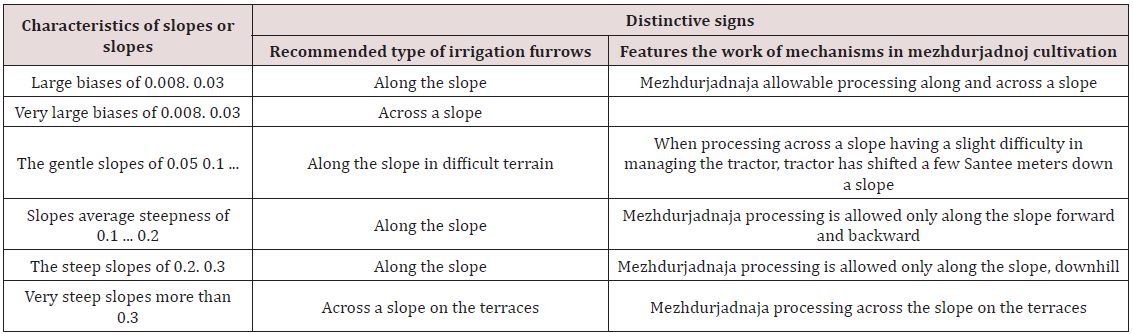
Therefore, on the fields at hillsides 0.1 agricultural equipment should operate only in the direction of greatest slope. When slopes 0.2. they can spend 0.3 tillage only going down the slope, and they climb up the idling speed across the field, or on the road [5]. On slopes of more than 0.3 mechanized inter-row cotton processing almost impossible, and it is recommended that you move to the terracing on the terraces of vineyards and orchards. On the basis of the above considerations, the following classification of irrigated lands in the foothill zone in Table 1. Here are some ranges of authors Aliyev B.H., Aliyev Z.H., eti., similar, but watering instructions differ significantly. In particular, Aliyev b., believes that on slopes 0.1, 0.25 and more, with difficult terrain need terracing [3-5]. The author recommends terracing on slopes or more 0.3 and 0.1 on slopes and 0.35 irrigation along the slope by short furrows small squirt. The author’s recommendations confirmed by experiences put us under production conditions on OJeB erosion and Irrigation research institute of ANAS Shamakhi district. Studies have shown that the large slopes (0.008 in 0.03) furrow irrigation be directed along the slope. Change the direction of the grooves on these slopes can cause increased amounts of planning works. In addition, when deficient planning biases along the furrows in some areas may be less than optimal, and are equal to 0.02 in 0.03. As a result, poorquality irrigation in Ganja-Kazakh izrezhennost zone of vineyards increased with each passing year, the harvest fell and after 8 years after planting had to undertake the reconstruction of vineyards. On new vineyards in these areas give the direction of furrows on the slope.

Table 1: Classification of irrigated lands in the foothill zone largest slope surface.
Lupinepublishers-openaccess-Agriculture

On slopes 0.03, 0.1 when flat relief irrigation furrows it is advisable to cut into sloping 0.01 ... 0.03 across a slope. This gradient ensures water movement in furrows with a small filling them. When the furrows not overflowing with water and does not cause soil erosion on slopes. When difficult terrain irrigation furrow directed by the greatest slope of the terrain [6]. It is not recommended to send furrows across a slope also strongly stony soil, because here it is possible to strong water filtration through stony fraction of upstream furrows in below. This phenomenon has been observed on a slope of terrain and content of 0.05 stony fractions in the number 55.. 85%. On slopes 0.1, 0.3 irrigation furrows should be directed by the greatest bias, because on these slopes when working till the tractor across a slope, it is slipping and tipping. As you can see from the above, watering through the aisle to condensed furrow is an important point for spending watering steep slopes. On large slope terrain inter-row spacing, obviously, should be 60 cm, increase the width of spacing up to 90 cm here does not allow to increase irrigation Jet (due to soil erosion), nor the length of the furrow. Experiments have shown that the large slopes at 60 cm spacing and watering in each furrow irrigation norms constitute the actual 2,4thm3/ha or more against the estimated 1.2,1.5 thousand m3/HA. At the same time, Central Asia outline width sierozems soil moisture reaches the 1.1,1.2m more width of a path under the sealed slots. Compacted layer plays the role of a screen, which contributes to a better diffusion of moisture.

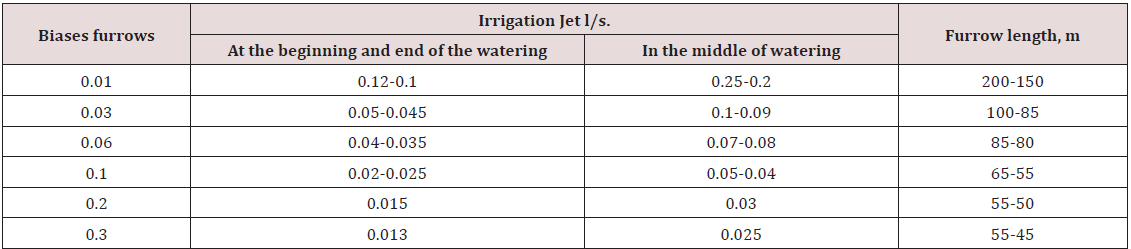
In compacted advance until the end of time grooves grooves less the result is a more uniform wetting the soil along the length of the furrow and a little soil erosion. Analysis of the results of the studies showed that on the big slopes and steep slopes of interrow spacing must be 60cm, and watering should be conducted through the aisle (via 120cm) soft wheels tractor furrows. A characteristic feature of irrigation technology on steep slopes is to regulate irrigation jets in time: at the beginning of watering give small Jet, then through 5-7 hours increase in 2 times, after the Jets advance to the end of the furrow, and stabilization of waste Jet flow reduced to its original size. Increased irrigation Jet in the middle of watering you can lengthen the furrow irrigation and improve the evenness of its moisture. The specified lengths and irrigation furrows jets slight flush the soil at the beginning of the furrow and accumulation of soil smytoj in the end of the furrow. Takeaway soil outside irrigation plot is negligible and is for irrigation season not more than 0.8, 1mm soil layer or 8,10cm/ha. Some violations of microrelief dicofol and accumulation of soil recovered operating design. For carrying out irrigations on steep slopes should be improved on-farm irrigation network. On-farm irrigation network should provide clear irrigation water flow management (Table 2). Most meets these conditions tubular irrigation network, consisting of closed distribution pipelines and irrigation pipelines with holes. For example, the author described the results of the Experimental research natural area and Embedded Development Institute Erosion and irrigation NASA fully closed irrigation network to irrigate orchards and vineyard on the square 8.3ha and polustacionarnaja irrigation network has become acceptable to solve problems. Because samonapornaja polustacionarnaja irrigation network is recommended for irrigation of crops on large slopes (0.008.0.3.) for the distribution of water in furrows here apply polyethylene piping (hoses) diameter 100-160mm [7-9].

Table 2: The optimum length of furrow irrigation and Jet.
Lupinepublishers-openaccess-Agriculture

Polustacionarnaja irrigation network versus temporary irrigation network in earthen channel allows to 20-25% to save irrigation water in 2-3 times increase labour productivity in the fields, on 10-15% improve land use, support optimal irrigation regime and due to this the 25-30% boost cotton yield. Even more technically perfect and cost effective closed irrigation network for irrigation of vines and orchards. Technical entity is closed irrigation network in earthen channel system consisting of a stationary distribution and irrigation pipelines with control valves and progressive irrigation technique developed in Institute of Erosion and irrigation NASA. Closed network allows operatively and given technology to supply water to any part of the irrigated array. New irrigation technology of closed irrigation network allows successfully combine the necessary variability irrigation jets with a constant flow of water supplied in the Brigade. This technique is achieved with simultaneous work of two or three or more irrigation pipes, one of which works with a maximum flow rate, and the rest with a minimum consumption. Estimated diameter of irrigation holes allow to strictly dose costs irrigation jets in the furrows.

Conclusion

From the above it follows that the benefit of micro-irrigation furrow is to reduce soil erosion, uniform spacing by the width of the hydration and along the length of the field, reducing surface discharge and increase productivity


Read More Lupine Publishers Agriculture Journal Articles:

Tuesday, 11 August 2020

Lupine Publishers | Climate change Mitigation and Adaptation through Biotechnology Approaches: A review

  Lupine Publishers | Current Investigations in Agriculture and Current Research

Abstract

Climate change associated factors including temperature increases, changes in rain fall pattern and occurrence of pest and diseases negatively influence agricultural production, productivity and quality. Climate change effects particularly in region suffer persistent soil and water resource scarcity significantly increases production risk. The effects of climate change on agriculture may depend not only on changing climate condition, but also on the ability to adapt through changes in technology and demand for food. Biotechnology positively reduced the effects of climate change by using modern biotechnology. Modern biotechnology through the use of genetically modified stress tolerant and high yielding transgenic crops also stand to significantly counteract the negative effects of climate change. Convectional biotechnology such as bio fertilizer and energy efficient farming are among reasonable options that could solve problems of climate change. Also this paper deals with the modern technology like omics, system biology and other technology has discussed to combat abiotic stress of plant. Finally, the paper highlighted the current challenges and future perspective of biotechnology for climate change adaptation and mitigation.

Keywords: Biotechnology; Climate change; Omics; System biology; Mcyo biotechnology

Introduction

CAccording to IPCC (Intergovernmental Panel on Climate Change), climate change is the mean change or variability of its properties for long period. As per report of IPCC climate change mainly caused by both anthropogenic which include change in land use by human being action and natural forces like accent of solar cycles, volcanic eruption and continental drift [1]. Climate change is one of the chief intimidations to agriculture in the vicinity of futures. Its most apparent effects would be on temperature, precipitation, insect pest and pathogen, weeds soil and water quality. It observed that agricultural activities contribute 25% green houses gas emission and major source of methane (48%) and nitrous oxide (52%) from rice fields [2]. Green house gases are element of both natural and anthropogenic which avert radiation from being to reflect into atmosphere and causing warm environment. These gases mainly emit by industry and other activities like carbon dioxide (CO2), methane (CH4), nitrous oxide, hydrofluorocarbons (HFCs) and Sulphur hexaoxide (SF6). In long run their concentration in the atmosphere increased by different activities and lets the global climate changes Kumar et al. 2015.

Adaptation to climate change can be done by reducing the vulnerability of natural and human systems [1]. Climate change mitigation is another policy retort to climate change which reduces the negative impact of climate change through involvement of human action particularly by reducing the concentration of green house gasses either by decreasing the source and increasing their sink (plants). Climate change can be mitigated by reforestation and other sink to remove concentration of CO2 from the atmosphere and shifting from biomass to renewable energy [2]. Crop yield and quality is decreased as frequent and intense precipitation events, elevated temperature, drought, and other type of damaging weather, which is making the challenge of feeding fast growing population intricate Hatfield et al. 2011. To feed the ever increasing world’s population, there must be a need to boost agricultural production.

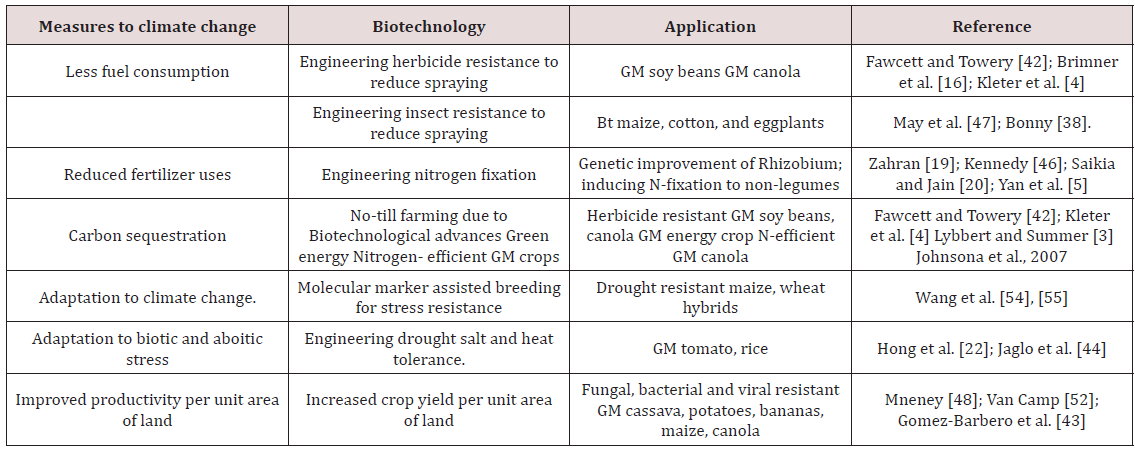
Agricultural biotechnology involves the practical application of biological organisms, or their sub-cellular components in agriculture. The techniques currently in use include tissue culture, convectional breeding, and molecular marker assisted breeding and genetic engineering. Biotechnology is a promise way for mitigating the negative effects of climate change through reduction of green house gasses Teasury, 2009 use of bio fuels [3], carbon sequestration [4], less use of fertilizers [5], tolerance of a biotic [6] and biotic stress [7]. Under this context the present paper emphasize the intervention of biotechnology in climate change adaptation and mitigation for sustainable yield production and food security.

Role of Biotechnology for Climate Change Mitigation

Reduction GHGS emission

Agricultural practices such as use of synthetic fertilizer, cultivation rice crops, over grazing and deforestation are contributes 25% of Green houses gasses (carbon dioxide, methane and nitrous oxide) emission to atmosphere. Biotechnology is one of the most reliable answers to mitigate climate change through use energy efficient farming, carbon sequestration and reduced synthetic fertilizer usage [8]. Planting genetically modified crops has shown significant reduction in the amount of greenhouse gases emitted. This is owing to the fact that since genetically modified crops does not need as much maintenance as regular crops; farmers are not wasting as much fuel to power their equipment, resulting in a reduction of greenhouse gases emitted [9]. This reduction of greenhouse gases emitted is not a negligible reduction. The reduction of these greenhouse gas emissions in 2012 was equivalent to “removing 27 billion kg of carbon dioxide from the atmosphere or equal to removing 11.9 million cars from the road for one year” [10]. The simple yet effective implementation of genetically modified crops in farming leads farmers to expend less fuel as a result of not demanding to ride on farm equipment as long, leading to a reduction of the carbon footprint that is left behind.

Use of energy efficient farming

Now a day’s green biotechnology (the creation of more fertile and resistant plant resources by using specialized techniques) has been used in eradicating world hunger by using different technologies which enable the production of more fertile and resistant plants towards both biotic and abiotic stress (Kafarski, 2012). This technology allow farmers to use less and environmental friendly energy and fertilizer, and practice soil carbon sequestration. Production of bio fuels, both from traditional and GMO crops such as oilseed, sugarcane, rape seed and jatropha will help to reduce the adverse effects of pollution by the transport sector [8,11]. Efficient farming will therefore help in cleaning the atmosphere through plantation of perennial non edible oil-seed. Thus, directly get involved in production of bio diesel for direct use in energy sector. Then it blends along with fossil fuels, which helps to reduce the emission of carbon dioxide [12,13].

Carbon sequestration

Carbon sequestration is the uptake of carbon containing substances particularly carbon dioxide from the atmosphere. It helps to collect CO2 from the atmosphere and increase the soil organic carbon content with implication of that increased soil carbon storage mitigates climate change [14]. From this point of view carbon sequestration is one the best way to mitigate climate change impact by sequestering the ever increasing concentration of CO2 from the atmosphere. One way of increasing carbon sequestering is by conservation tillage, any tillage and planting system that covers more than 30% of the soil surface with crop residue after planting to reduce erosion by water there by enhances methane consumption and sequesters soil carbon [15].

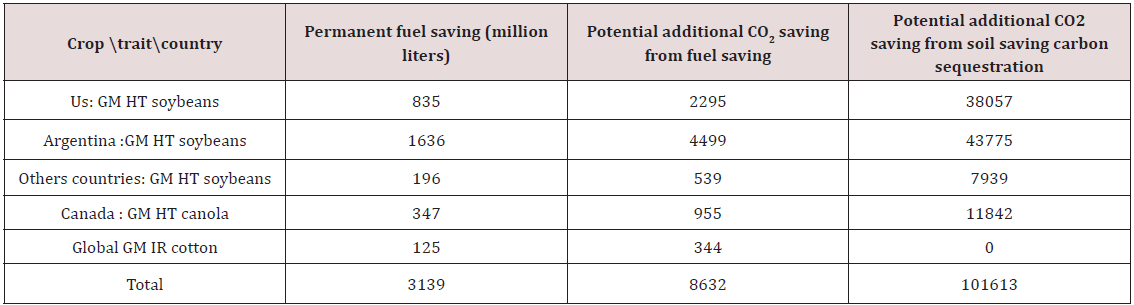
Genetically modified crops are led to sequestration million tons of carbon dioxide from the atmosphere. One of the best examples is Roundup Ready TM which is herbicide resistant of soybean was found to sequester 63,859 million tones of CO2 in USA and Argentina [8,16]. The improvement of crops opens door for the farmers to use no till farming practice. In context of climate change mitigation (Table 1), these techniques improve soil quality and anchor carbon in the soil [17]. FAO have quantified the contribution of conservation tillage to carbon sequestration. Soil carbon sequestration for the first decade of adoption of best conservation agricultural practice was seen to decreased 1.8 tons CO2 per hectare per year, with better cycling of nutrients and avoiding nutrient losses among the key benefits to farmer FAO [18].

Table 1: Summary of carbon sequestration impact 1996-2008.

Lupinepublishers-openaccess-Agriculture

Source: Europa bio, 2009.

Reduced use of synthetic fertilizer

Uses of synthetic fertilizer in agriculture sector have led to contaminate the environment with hazardous toxic chemicals. These synthetic fertilizers contribute for the formation as well as releases of certain green houses gasses (N2O) by bringing from the soil to surrounding atmosphere when they interact with common soil bacteria. Ammonium chloride, Ammonium sulphate, sodium nitrate, calcium nitrate are the examples of inorganic fertilizers that are responsible for the formation and releases of green house gasses [17]. Biotechnological option bids an advantage to reduce the use of synthetic fertilizer. Nitrogen fixing characteristics of Rhizobium inoculants were improved by using genetic engineering [19]. A bright prospect of non leguminous plants (rice and wheat) being enable to fix nitrogen in the soil as reported by Yan [5] and Saikia [20]. Another strategy is planting crops in the use of nitrogen more efficiently. An example of such crops is genetically modified Canola which has shown significant reduction in the amount of nitrogen fertilizer that lost into atmosphere and leached into soil and water ways, and maximizing the economies of farmers through the improved profitability [8].

Biotechnology for Crop Adaptation to Environmental Stress

The ultimate climate change effects on agriculture are reduction crop yield due to rainfall, extreme temperature, emergence of weeds, occurrence pest and disease Johnsona et al. 2007 (Table 2). One of the possible ways of adapting to such global problem is apply agricultural biotechnologies that combat the negative effects of such changes is by using genetic engineering offer new opportunities for improving stress resistance [21].

Table 2: Modern agricultural biotechnologies for climate change adaptation and mitigation.

Lupinepublishers-openaccess-Agriculture

Source: Mtui et al. [2].

Adaptation to abiotic stresses

Climate change causes a lot of challenges in agricultural land water uses. Of these challenges, abiotic stress including like salinity, drought, extreme temperatures, and chemical toxicity have negative impact on agriculture production. Climate change creates a gigantic challenge in terms of available agricultural land and fresh water use. The agricultural sector uses about 70% of the available fresh water and this is likely to increase as temperature rises [17]. Furthermore, about 25 million acres of land is vanished each year owed to salinity caused by unsound irrigation technique [18]. It is also estimated that increased salinity in arable land will lead to 30% land uncultivated within 25 years and this number will reach up to 50% by the year 2050 as reported by Valliyodan (2006). Molecular control mechanisms for abiotic stress tolerance are based on activation and regulation of specific stress-related genes. It has been reported by Zhu 2001, that salt tolerant plants also often tolerate other stresses including chilling, freezing heat and drought. Already, a number of abiotic stress tolerant, high performance GM crop plants have been developed. These include tobacco [22]; Arabinopsis thaliana and Brasicca napus [23]; Tomato (Hsieh et al., 2002); rice (Yamanouchi et al., 2002); maize, cotton, wheat and oilseed rape (Yamaguchi and Blumwals, 2005; Brookes and Barfoot, 2006).

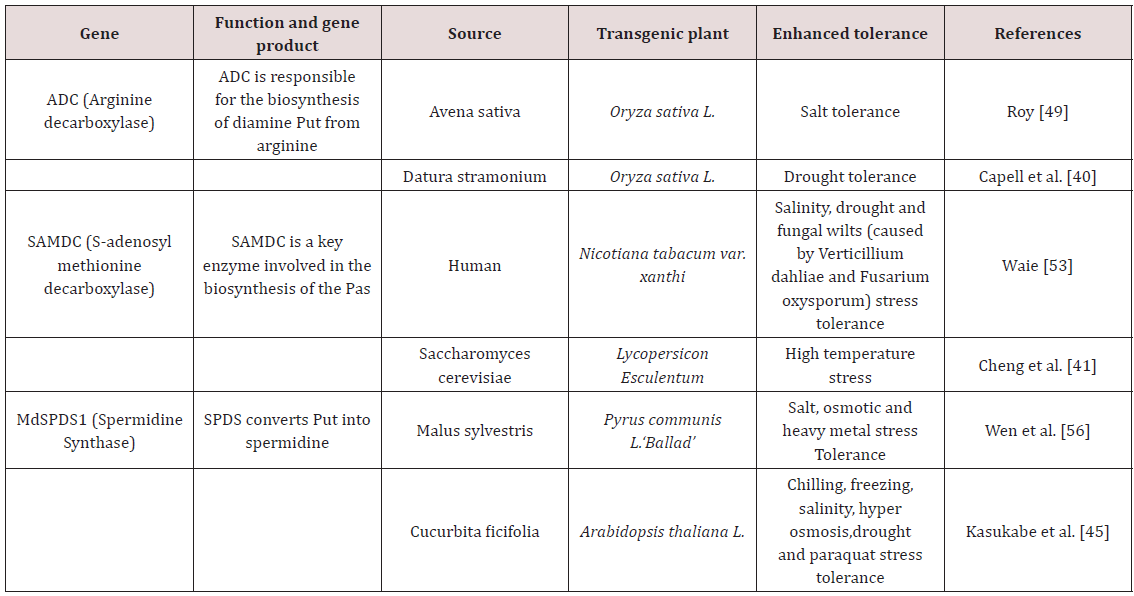
These transgenic plants maintained higher photosynthetic capacity and elevated levels of photosynthesis-related enzymes. Recently, a gene encoding aquaporin (NtAQP1) was identified in tobacco (Nicotiana tabacum) and shown to provide protection against salinity stress in transgenic tomato (Solanum lycopersicum) [24]. NtAQP1 plays a key role in preventing root or shoot hydraulic failure, enhancing water use efficiency and thereby improving salt tolerance. Recently, a large body of study shows that plant Polyamines (PAs) are involved in the achievement of tolerance to such stresses as high and low temperatures, salinity, hyper osmosis, hypoxia and atmospheric pollutants [25,26]. I hereby summarized in Table 3 few transgenic plants engineered to make Polyamines for boosted abiotic stress tolerance. Plants may also be engineered to reduce the levels of poly (ADP ribose) polymerise, a key stress related enzyme, resulting in plants that are able to survive drought compared to their non-GM counterparts. Field trial results have shown a 44% increase in yield in favour of such GM crop plants [17]. With the availability of whole genome sequences of plants, physical maps, genetics and functional genomics tools, integrated approaches using molecular breeding and genetic engineering offer new opportunities for improving stress resistance [21].

Table 3: Transgenic plants engineered to synthesize Polyamines for enhanced abiotic stress tolerance.

Lupinepublishers-openaccess-Agriculture

Source: Sarvajeet and Narendra [51].

Recent technology developments allow studies of such stress responses at a global molecular scale using omics data (metabolome, proteome and transcriptome). The following studies are discussed to highlight good examples of System biology and omics approaches that have been used to identify key genes regulating stress tolerance and then followed with proof of those responses and phenotypes in multiple experiments including field conditions. One of the example is a SNAC1 (NAC transcription factor that induces the expression of a stress-tolerance genes and improves the drought and salt tolerance of rice in the field) gene which was identified from microarray experiments of stress treatments on rice [24]. The transgenic plants exhibited increased sensitivity to ABA and reduced water loss. An exhaustive screen of greater than 1500 transcription factors in Arabidopsis identified nearly 40 transcription factors that when over expressed, improved stress tolerance [27]. One of these transcription factors NF-YB1 was further characterized and shown to display significant drought tolerance in Arabidopsis. Microarray data of this over expressing line showed few differences in gene expression and the genes identified were not known previously to be involved in drought tolerance.

This functional genomics approach provided a new strategy for improving drought tolerance in plants. A homolog of NF-YB1 was cloned in maize (ZmNF-YB2), over expressed and tested for drought tolerance in the greenhouse and field plots. The transgenic maize lines were more droughts tolerant having increased chlorophyll content, photosynthesis, stomatal conductance and grain yields. One line consistently had more than 50% yield improvement in drought conditions over two different years. Oh et al. [28] used microarrays to identify 42 AP2 transcription factors whose expressions were affected by stress. The two transcription factors are meticulously linked but have distinct differences in affecting rice phenotype. AP37 responded to drought, salinity, cold and ABA; over-expression improved stress tolerance to all three environmental conditions. AP59 responded improved stress tolerance to drought and salinity only. Both over expressing lines showed improved photosynthetic efficiency under stress conditions.

Mycobiotechnology

Climate change is major challenge that is already affecting people and the environment by changing average global temperature mitigates the negative effects of extreme temperature and precipitation thereby reducing the vulnerability of farmers and ecology by improving the agro ecological resistance [29-38]. Mycobiotechnology is fungal application of biotechnology which is used mainly for solving environmental problems and restore degraded ecosystem. These technique endeavor to use fungi for restoration harmed ecology. Saikia [20] reported that both endo and ectomycorrhizal symbiotic fungi together with actinomycetes have been used as inoculants for regeneration of degraded forests. Myco biotechnology, are part of a larger trend toward using living systems to solve environmental problems and restore degraded ecosystems. Now a day the sciences of myco forestry and myco restoration are part of an emerging field of research and application for regeneration of degraded forest ecosystems [39]. Myco restoration attempts to use fungi to help in restoration of ecologically injured environments. Whether the environments have been damaged from anthropogenic or natural disasters, saprophytic and mycorrhizal fungi can help to navigate the course to recovery.

A number of non-legume woody plants such as casuarinas (Casuartna sp.) and alders (Alnus sp.) can fix nitrogen symbiotically with actinomycete bacteria (Frankia sp.), a phenomenon that is beneficial to forestry and agro forestry [40-42]. Both endo and ectomycorrhizal symbiotic fungi together with actinomycetes have been used as inoculants in regeneration of degraded forests [20]. Consequently, both mycorrhizal fungi and actinorhizal bacteria technologies can be applied with the aim of increasing soil fertility and improving water uptake by plants [18]. A forestation would indirectly contribute to improved agricultural productivity and food security because forests create microclimates that improve rainfall availability. Moreover, forests act as carbon sinks thereby contributing in sequestration and greenhouse reduction effects for climate change mitigation. Consequently, forestry and agro forestry offer the potential to develop synergies between efforts to mitigate climate change and efforts to help vulnerable populations to adapt to negative consequences of climate change [43].

Challenges and Futures Line of Work

Climate change has far reaching implications for food security, health and safety, and approaches are required for adapting to new climates. Impacts of climate change are becoming evident and there is no indication that these will reverse in the foreseeable future; action must be taken now to adapt in a timely manner and prevent unpredictable and undesirable outcomes. The world population, currently at 7 billion, is predicted to increase to 8 billion by 2025 and peak at about 9 billion in 2050 [44-47]. According to Ruane [18] developing countries will need to cultivate 120 million additional hectares by crops for feeding ever increasing populations. Therefore, modern agricultural science should implement to boost crop production. Efforts should be made to incorporate local and conventional biotechnologies with modern biotechnology approaches within national policies and legal frameworks in order to increase resilience of local crop varieties against changes in environmental dynamics Stinger et al. 2009.

Though promising result was obtained from modern biotechnology, abundant applications of biotechnology have not encountered their full potential. Of many challenges the major challenges was presented below.

a) Doubt about the cause of climate variation (Natural or Human made) [48-52].

b) Biotic and abiotic stress threatens for food production to feed ever increasing population [21].

c) Raises questions about public safety issues with related to environment and health including: creation of more rigorous pests and pathogens, exacerbating the effects of existing pests, harm to non-target species, disruption of biotic communities and loss of species and genetic diversity within species [34].

d) Raises ethical and socio - cultural issues like loss of traditional crops and fear of the unknown future [35].

e) The role of Polyamines for the abiotic stress tolerance is just commencement to be understood. A lot of effort is still required to uncover in detail the molecular mechanism of protective role of Spd, Spm and Put in abiotic stress tolerance.

In order to solve the challenges presently faced in development and application of modern biotechnology, governments ought to put in place appropriate bio safety and biotechnology policies and legal frameworks before adopting such technologies [53-57]. Anxieties on negative effects of GMOs have to Science based and should be studied case by case in specifying in details with true evidence. Both conventional and modern biotechnology involvements are needed to elucidate the problem. Polarized thought should be based on science not from self or political interest.

Conclusion

To sum up access to information and expertise in developing countries, where the need to counteract climate change and increase food production is most urgent and will be a key factor in the use of biotechnology for continued production. Plant biotechnology can contribute positively towards climate change adaptation and mitigation through reduction of green houses gas emissions, carbon sequestration, less fuel use and energy efficient farming and reduced artificial use. This measures help to improve agricultural productivity and protecting the ecosystem from extreme weather event. Sound application of modern biotechnology will help to counteract climate related problems and thereby securing crop production for fast growing population. An approach to safe applications of modern agricultural biotechnologies will contribute to increased yield, food security and also it will also significantly contribute to climate change adaptation and mitigation initiatives.

Read More Lupine Publishers Agriculture Journal Articles:

Monday, 10 August 2020

Lupine Publishers | Resistance of Laminated Veneer Lumber (LVL) Produced from Rubberwood, Radiata Pine and Larch Against Subterranean Termites And White Rot Fungi

 Lupine Publishers | Current Investigations in Agriculture and Current Research


Abstract

Laminated veneer lumbers (LVLs) were fabricated using rubber wood, radiate pine and larch wood. Solid rubber wood was used to serve as control for comparison purpose. All of the wood samples were exposed to subterranean termites and white rot fungi for durability evaluation. The results showed that rubber wood LVL had the highest resistance against both deterioration agents in comparison to control, confirming that the resistance of non-durable wood species could be improved by converting them into LVL.

Keywords: Termites resistance; Fungal resistance; Low density wood; Hardwood; Softwood

Abbrevations: LVL: Laminated Veneer Lumber; PF: Phenol Formaldehyde; AWPA: American Wood Preserves Association; ANOVA: Analysis of Variance; SPSS: Statistical Package for the Social Sciences.

Introduction

Improper forest management and the rapid population increment have induced the continuous growing of timber demand and subsequently led to timber resources depletion around the world. The supply of high quality raw timbers with large diameter is declining accompanied by increasing timber price due to the aforementioned matter. Rising timber costs had shifted the manufacturer’s attention from solid sawn wood to engineered wood products, for example, laminated veneer lumber (LVL). In order to attain better compression and higher strength of LVL products, wood with lower range of densities are often being used. In US, LVL has been typically constructed from southern pines, western softwoods and yellow poplar [1], while in the case of Malaysia, rubber wood are the most common used materials owing to its readily availability. Never the less, one of the disadvantages of these low density wood species is their poor durability against deterioration agents such as termites and fungi. Therefore, better durability could be anticipated by converting these low density wood into LVL bonded by phenol formaldehyde (PF) resin as PF resin has long been recognized as an effective way to enhance the wood properties [2,3]. To the author’s knowledge, there is little or no information regarding the resistance of LVLs fabricated form low density hardwood and softwoods such as rubber wood (Hevea brasiliensis), radiata pine (Pinus radiata) and larch (Larix spp.) against both subterranean termites ((Coptotermes curvignathus Holmgren)) and white rot fungi (Pycnoporus sanguineus). Therefore, this study evaluates and compares the biological resistance of LVLs fabricated from rubber wood, radiate pine and larch with that of solid rubber wood.

Materials and Methods

Nine-ply laminated veneer lumber (LVL) having a dimension of 200 mm longx50mm widthx10mm thick was supplied by Wood Research Institute, Kyoto. These LVLs were fabricated from rubber wood, radiata pine and larch wood using phenol formaldehyde (PF) resin as binder. Solid rubber wood was used as control in this study for comparison purpose. For resistance tests, subterranean termites (Coptotermes curvignathus Holmgren) and white rot fungi (Pycnoporus sanguineus) were used. The termites were collected from Bukit Expo, University Putra Malaysia using pine blocks as baits. A total of 40 samples, five samples for each material used, were assigned to both resistance tests (4 materials (solid rubber wood, rubber wood LVL, radiate pine LVL and larch LVL) x2 resistance tests x5 replicates). LVLs and solid rubber wood were cut into dimensions of 20x20x10mm prior to the tests. Termite tests were conducted in accordance to American Wood Preserves’ Association (AWPA) Standard E1-13. 200g of sterilized sand mixed with required amount of distilled water were added into a culture bottle. Each test block was exposed to approximately 1±0.05g of termites comprising 10% soldiers and 90% workers. The cultured bottles were then wrapped with black paper and kept at the room temperature (25±2 ̊C) for 4 weeks. The cultured bottles were examined daily to record the mortality rate of the termites. After 4 weeks of exposure to termites, the test blocks were removed and conditioned until they reached constant weight. The mass of the blocks was weighed and the percentage of weight loss was then calculated using Equation (1).

Weight loss(%)=((Wa-Wb)/Wa)x100 (1)

Where Wa = conditioned weight of the test block before exposure (g) and Wb = conditioned weight of the test block after exposure (g).

The mortality of termites was calculated using the following equation:

Mortality (%) = (Number of dead termites / initial number of termites) x 100 (2)

Decay resistance test against white rot fungi was carried out according to American Wood Preserves’ Association (AWPA) Standard E10-12. LVLs and solid rubber wood were cut into dimensions of 20x20x10mm prior to the test. The cut test blocks were then sterilized in an autoclave at 121 °C for 1 min. Next, the sterilized test blocks were placed on mycelium covered strips and kept in capped culture bottles. The culture bottles were incubated at temperature of 25±3 °C for 12 weeks. At the end of the incubation period, the test blocks were carefully removed and the mycelium was brushed off. The blocks were then conditioned in a conditioning room and weighed once the blocks reached constant mass. The extent of the fungal attack will be expressed as percentage of weight loss using Equation (1). The effects of materials used on termites and fungi resistance were analyzed using statistical package for the social sciences (SPSS) procedure for the analysis of variance (ANOVA) at 95 % confident level (P≤0.05). The significant level of the mean values was further analyzed using Duncan’s multiple range tests.

Table 1: Termites’ mortality rate and mean weight losses of samples against both termites and white rot fungi.

Lupinepublishers-openaccess-Agriculture

Means followed by same letters in the same column are not significantly different at P≤0.05; ±=SD

Results and Discussion

The average weight loss of sample blocks caused by both termites and white rot fungi are summarized in Table 1. The mortality rate of the termites at the end of the test is also listed in the same table. From Table 1, one can see that the larch LVL had the highest weight loss against termites (81.8%), followed by radiate pine LVL (39.6%) and rubber wood LVL (6.1%), while 64.8% of weight loss was recorded in solid rubber wood. It was also observed that all termites (100%) in the culture bottles that contained rubber wood LVL and radiate pine LVL died after 4 weeks of exposure. 48% and 50% mortality rates were observed in the culture bottes that contained solid rubber wood and larch LVL, respectively, suggesting lower resistance against termite attack. Larch LVL had lost higher weight even compared to solid rubber wood, implying that larch wood is more preferred by termites and even in the presence of PF resin, it could still cause severe damage to the wood. This phenomenon could be explained by its lighter density among the materials that used in this study. Larch wood that used in this study has a density of 530 kg/m3, while rubber wood and radiate pine have density of 640kg/m3 and 600kg/m3, respectively. Logically, it is much easier for the termites to nibble softer wood like larch in comparison with harder radiate pine and rubber wood. Rubber wood LVL showed the highest resistant among the three wood species used and the reason could be due to the fact that rubber wood itself contains relatively high amount of formaldehyde content [4]. It is interesting to note that the resistance to termites was prominently improved by converting solid rubber wood to LVL. The fact that rubber wood LVL is more resistance to termites could be explained by the presence of PF resin in the glue line, which imparted some preservative properties to the LVL. Poisonous nature of the phenol and the toxicity of the free formaldehyde released during the exposure period might have caused the death of the termites [5].

According to Table 1, surprisingly, LVL made from radiate pine and larch wood had higher weight loss against white rot fungi (6.8% and 6.0%, respectively) in comparison to rubber wood LVL and solid rubber wood. These findings were in disagreement with Nilsson [6] who suggested that the higher susceptibility of hardwoods is due to their lower lignin content compared to that of softwoods. On the other hand, rubber wood LVL revealed better performance against white rot fungi compared to solid rubber wood, with weight losses of 0.7% and 3.9%, respectively. Similar to the findings against termites, the presence of PF resin might have some influence on the fungi preference. The cured PF resin is very hard and thus made it more difficult for the white rot fungi to grow on the edges of the LVL. Therefore, only the tangential surface was fully colonized by the fungi. Whilst in the solid rubber wood all of the four surfaces were colonized by the fungi resulting in more severe degradation.

Conclusion

Based on the weight loss and mortality rate, rubber wood LVL is the most resistant toward termites among the three species studied in the present work, followed by radiate pine and larch. By converting solid rubber wood to rubber wood LVL, the resistance against termites had improved approximately 10-folds owing to the presence of PF resin glue line which might have toxic effect against termites. On the other hand, both radiate pine and larch LVL are more susceptible to white rot fungi compared to that of rubber wood LVL. In the comparison between solid rubber wood and rubber wood LVL, once again, rubber wood LVL displayed better resistance against white rot fungi. Rubber wood exhibited a superior resistance ability might be due to several factors. One of the probable theories is that the rubber wood contains a substantial amount of formaldehyde which may provide a better resistance towards both termites and white rot fungi. Further study in quantify the amount of formaldehyde in all the wood species used in the study is therefore needed to be conducted to verified the above statement.


Read More Lupine Publishers Agriculture Journal Articles:

Friday, 7 August 2020

Lupine Publishers | Pre-cochlear Implantation Aural/Oral Rehabilitation, Is it Mandatory?

Lupine Publishers | Journal of Otolaryngology Impact Factor


Abstract

Background: The use of cochlear implantation (CI) can fully restore hearing. Consequently, speech production can improve over time and enters the normal rang when traditional amplification Devices (hearing aids) are unable to restore access to the full range of phonemic components of speech, a cochlear implant (CI) is a widely used treatment option for children with sensorineural hearing loss (SNHL).

Purpose: The aim of this study is to compare the functional benefit of the communicative skills of children with CI without pre-implantation aural/oral rehabilitation in relation to those with CI with pre-implantation 6 months aural/oral rehabilitation in order to compare the role of pre-implantation aural/oral rehabilitation on the communicative abilities of severe to profound and profound sensorineural hearing impaired children.

Method: This study has a prospective design. It started after final diagnosis and decision that all children are candidates for CI but half of them are fitted with behind the ear hearing aids and the other half of children are immediately implanted provided that the primary language assessment before rehabilitation is present in the medical files of these children. A 2nd language assessment was done after 12 months of language therapy to detect the progress of the language development. These sixty patients were divided into two groups:

a) Group A: Thirty children, who have used behind the ear hearing aids for one year before CI and attended regular language therapy.

b) Group B: Thirty children, who shifted immediately to cochlear implantation, and were enrolled in auditory training and language therapy for one year.

Results: Total language age of children using cochlear implant without pre-implantation aural/oral rehabilitation is significantly higher than that in the children while using hearing aids for one year before CI. Also, there is highly significant difference between frontal and back speech sounds in the children after immediate implantation with positive correlation.

Conclusion: Cochlear implant is safe & reliable technique. The fact that many profoundly hearing impaired children using immediate cochlear implant without pre-implantation aural/oral rehabilitation can develop functional levels of speech perception & production, develop competency level in a language other than their primary language and continuation of language therapy together with proper mapping accordingly is a must to enroll these children in main stream education.

Keywords: Hearing Aids; Cochlear Implant; Language; Speech Intelligibility Pre-implantation Rehabilitation

Abbreviations: SNHL: Sensorineural Hearing Loss; HA: Hearing Aids; CI: Cochlear Implantation

Introduction

Language in children begins to develop since birth and is nearly complete by the age of 6 years. Language skills, speech quality, expressive and receptive vocabulary are enhanced by exposure to aural language since as early an age as possible [1]. Children spend many hours in acoustic environments where target speech signals are embedded in competing sounds from multiple sources. In these environments, perception of target speech is assisted by a listener’s a listener’s ability to segregate the multitude of sounds into separate auditory streams, one cue to which is the angle of incidence of different sounds [2]. Children with profound sensorineural hearing loss (SNHL) experience delays in learning to understand the speech of others and to produce intelligible speech. There is solid evidence that moderate (or more severe) hearing impairment exerts a negative impact on speech, language, cognitive development, and early identification and management may be of great benefit to these children, through improved language, communication, mental health, and employment prospects [3]. The use of Hearing Aids (HA) or Cochlear Implantation (CI) can partially or fully restore hearing. Consequently, speech production can improve over time and enters the normal range. After hearing is restored, hearing impaired individuals use auditory feedback to adjust voice features such as voice intensity, intonation and vowel duration [4]. When traditional amplification devices (hearing aids) are unable to restore access to the full range of phonemic components of speech, a cochlear implant (CI) is a widely used treatment option for children with SNHL [5]. Cochlear Implants (CI) which are called as bionic ears are effective in trans- mitting salient features of speech, especially in quiet [6]. Because the goal of restored hearing in a deaf child is to enable useful hearing, a key measure of outcome should reflect how a deaf child’s experience with a CI develops into the effective use of spoken language. Parental surveys indicate that the outcome of their greatest concern after surgical intervention in children with SNHL is the level of spoken language achieved [7]. Cochlear implants have become a popular option for children with profound hearing loss. Evidence supporting the benefits of early implantation is found in experimental [1], developmental [2], and clinical cochlear implant studies [3]. The consensus is that children have the best opportunity to learn language during their first 5 years of life. According to [2], this critical period for language learning is particularly important in deaf and hearing-impaired children. Providing cochlear implants to deaf children at a young age may enable them to take advantage of this critical period for learning language and is likely to increase their chances for developing speech and language skills like those of normal-hearing children. Early implantation would also result in a decrease in the duration of auditory deprivation, a decrease considered to positively influence performance with a cochlear implant [4].

Objectives

The aim of this study is to compare the functional benefit of the communicative skills of children with immediate CI without preimplantation aural/oral rehabilitation in relation to those using hearing aid with pre-implantation aural/oral rehabilitation in order to compare the role of each amplification device and the effect of pre-implantation aural/oral rehabilitation on the communicative abilities of severe to profound and profound sensorineural hearing impaired children.

Subjects & Methods

This research was conducted during the period between the years 2017 and 2018. The study protocol was approved by the Otolaryngology Department Council of Beni-Suef University and Otolaryngology Department Council of King Abd Elaziz specialized hospital Jouf, Saudi Arabia. Consent to participate in this research was obtained from the subjects’ parents before commencement of the study. This study employed a comprehensive design to examine outcomes in multiple domains of communication in children who used either bilateral behind the ear hearing aids and preimplantation aural/oral rehabilitation or an immediate unilateral cochlear implant without pre-implantation rehabilitation for a period of one year. These were selected from children seeking language rehabilitation in Phoniatrics Unit, Beni-Suef University Hospital and children seeking language rehabilitation in Phoniatrics Clinic, King Abd Elaziz specialized hospital Jouf, Saudi Arabia. Shortly after confirmation of bilateral permanent hearing loss, thirty children were typically fitted with bilateral behind the ear hearing aids using the desired sensation level (DSL) prescription method and regularly attend aural/oral rehabilitation sessions. Thirty children underwent a comprehensive team evaluation for cochlear implant candidacy and received immediate unilateral cochlear implants without pre-implant aural/oral rehabilitation. All children received audiologic management and preschool rehabilitation and all children were enrolled in rehabilitation programs with a focus on the development of receptive &expressive language. Children were regular in Phoniatrics clinic, were asked to follow up auditory rehabilitation & language therapy program twice per week. Children with cochlear implants were followed every month for mapping of their speech processor and speech recognition testing. The study received ethical approval from the Hospital of Beni-Suef University and from King Abd Elaziz specialized hospital and written informed consent was obtained from all their parents. Collaboration between ENT clinic, Audiology clinic& Phoniatrics clinic was done in the form of ENT examination, audiological assessment, and language assessment and rehabilitation for all children. This study has a prospective design. It started after fitting half of the children with bilateral behind the ear hearing aids with aural/oral rehabilitation sessions and the other half of the children are immediately implanted, mapped, and regularly attended aural rehabilitation sessions provided that the primary language assessment before rehabilitate- ton is present in the medical files of all children. A 2nd language assessment was done after 12 months of language therapy to detect the progress of the language and the efficacy of pre-implantation aural/oral rehabilitation. These sixty patients were divided into two groups:

a) Group A: Thirty children, who have used behind the ear hearing aids for one year and attended regular language therapy despite those children, are candidates for cochlear implants.

b) Group B: Thirty children, who shifted immediately to cochlear implantation and had regular language therapy and were enrolled in auditory training.

Half patients were fitted with bilateral powerful digital signal processing BEHAs and used them for at least a 12-months period before CI. Hearing aid use was determined by parental and therapist reports. After surgical implantation of the device and an adequate healing period for the other half of the patients, the implants were activated (usually 4 weeks after surgery). The children were fitted with one of the two brands of speech processors using a behind the ear controller. Speech processors used in this study were OPUS 2 with standard Sonata electrode & Cochlear Freedom Processor with nucleus 24 k straight electrode.

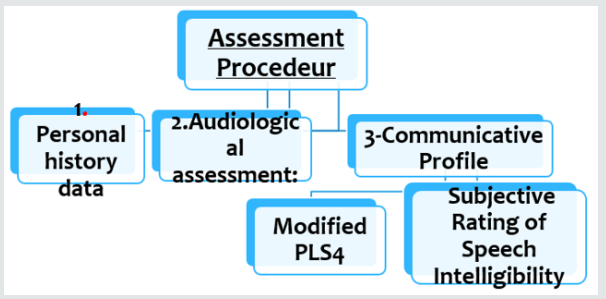
In this study using Modified Preschool Language Scale & Subjective Speech Intelligibility Test gave us a summary of the improvement of these children. This is matched with other studies which focused that both comprehension and expression of spoken language are important markers of parent-perceived success of a CI (Figure 1).

Figure 1

lupinepublishers-openaccess-journal-otolaryngology

Language Improvement Quotient: The language improvement quotient [8] was used to compare between the rates of progress in language in order to overcome the bias of age matching between the individuals in the study.

Language Improvement = 2nd language age -1st language age divided by duration of language rehabilitation.

a) A1 refers to language development of group (A) after using bilateral behind the ear hearing aids for 12 months which is calculated by this equation:

A1= 2nd language age -1st language age divided by 12(duration of rehabilitation)

b) B1 refers to language development of group (B) after using unilateral CI for 12 months which is calculated by this equation: B1= 2nd language age -1st language age divided by 12(duration of rehabilitation).

Speech analysis was performed using the Ain Shams assessment protocol which includes analysis of supra-segmental phonology (rate, stress and tonality), segmental phonology (consonants and vowels), nasal resonance and general intelligibility of speech. Assessment of auditory perception skills was performed evaluating a hierarchy of listening skills ranging from detection, to discrimination, identification, recognition and comprehension. Assessment of speech reading abilities was done and expressed as percent change over time.

Statistical Studies

Data was analyzed using SPSS, Statistical Package for the Social Sciences version 17 (SPSS Inc., Chicago, IL). Numerical data were expressed as mean, standard deviation, and range. For quantitative data, comparison was done using Mann-Whitney test (non-parametric t-test). A p-value < 0.05 was considered significant. Spearman-rho method was used to test correlation between numerical variables (r > 0.3 = no correlation, r = 0.3-0.5 = fair correlation, r = 0.5-0.1 = good correlation).

Results

Group (A) are hearing aids users for one year, Group (B) are CI users for 1 year. Demographic data of the 2 groups:

a) Age

b) Gender.

c) Incidence of hearing loss.

d) Psychometric evaluation.

e) Pure tone Audiometry.

f) First language age.

g) Radiology.

a) Age Distribution: Both groups are matched according to age. In group (A) the age of the children ranged between 3 years and 7years. In group (B). The age of the children ranged Between 3 years & 7 years, provided that all children were implanted before the age of 6 years.

b) Gender: No significant difference was noted in gender of both groups.

c) Incidence of Hearing Loss: In group (A) there were 24 children (80%) with congenital hearing impairment and 6 children (20%) with acquired hearing loss, while in group (B) there were 18 children (60%) with congenital hearing impairment and 12 children (40%) With acquired hearing loss.

d) Psychometric Evaluation: All children in group (A) had normal psychometric evaluation with a mean Value 87.5± 4.6; also, in group (B) all children had normal psychometric Evaluation with a mean value 86.4±5.1.

e) Pure Tone Results: Pure tone results of group (A) maintained a mean value of 27.9 dB HL. Group (B). Decreased in mean values from 65.7±8.2 dB HL. There was a highly significant difference (P=0.001) between group (A) and group (B) in favor of group (B).

f) First Language Age: Before start of therapy, both groups had no passive vocabulary and were Nonverbal. They used either babbling or vocal play.

g) Radiology: All Children both in groups (A) and (B) were having normal CT and MRI of Petrous bone.

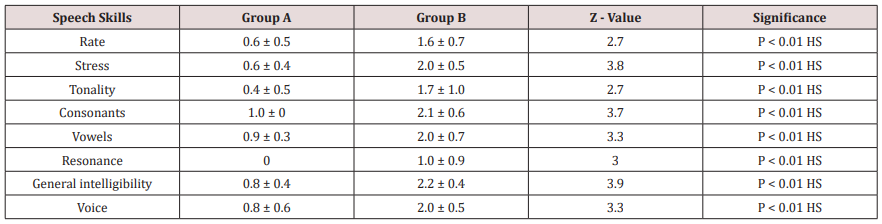
Tables 1-3 demonstrate the progress of the language abilities, the auditory abilities and the speeding reading abilities of both groups, respectively, from the time just prior to the rehabilitation (either oral\ aural in group A or aural in group B) as compared to the evaluation done one year the rehabilitation (Table 4).

Table 1: Results of collective language improvement in both groups using paired-T test.

lupinepublishers-openaccess-journal-otolaryngology

Table 2: Results of progress in speech reading ability before and after rehabilitation in the 2 groups (using Paired-T test).

lupinepublishers-openaccess-journal-otolaryngology

Table 3: Difference in the speech ratings between the 2 groups after 3 years of rehabilitation (using Mann-Whitney test).

lupinepublishers-openaccess-journal-otolaryngology

Table 4: Results of collective language improvement in both groups using paired-T test.

lupinepublishers-openaccess-journal-otolaryngology

Discussion

The primary purpose of this study was to obtain comprehensive data on the development of language and speech skills in a group of permanent hearing impaired children. This group shared the common degree of bilateral hearing impairment (severe to profound or profound hearing impairment), they all sought amplification, and they all sought language rehabilitation after receiving amplification using primarily auditory-based cues. The study aimed also to investigate the difference between the language and speech development under two amplification conditions; bilateral behind the ear hearing aids and unilateral cochlear implants. The choice of language age deficit to compare language skills development among the studied groups is justified by the fact that three variables usually co-vary when language results are analyzed in children; age of use of the amplification device whether hearing aid (HAs) or cochlear implant (CI), the language age before start of rehabilitation, and the language age of children after the time of rehabilitation. The difference in ages at evaluation places the younger children at a maturational and developmental disadvantage in comparison with their older peers. Thus, analyzing the results in terms of language age scores might put the younger group at a disadvantage. At the same time, analyzing the results in terms of language age deficits, although more reasonable, but still, in theory, puts the older group at a disadvantage because of the impact of their ages giving higher values for the deficit from the scored language age. That’s why the hypotheses of using the language improvement quotient [8] after determining the exact language age, may be more realistic and less biased by the chronological age differences at the time of evaluation. In this study using Modified Preschool Language Scale & Subjective Speech Intelligibility Test gave us a summary of the improvement of these children. A perfect model for comparing the results of both devices may be practically impossible, given the current indications of cochlear implant use. In this study, which was applied on two groups with comparable ages, a comparison was made between the outcomes of the 2 devices along a period of (re)habilitation of one year in their course of therapy. If the CI group were doing better than the HA group, it would indicate that the selection criteria were too conservative and some of the HA users might be better off with a CI. This raises the suspicion of the fact that HA users plateau after a period of little progress or at least their progress continue at a less pace. Cochlear implants may have a superior effect on the acoustic environment of children more than hearing aids. During the 90s of the last centuries, and using the early models of speech processes, studies proved that CI users gained better results than HA users in language and perception skills [9-14]. The minimum age for implantation has progressively reduced [15]. Advantages of cochlear implants over hearing aids extended also the adult population [15]. In a study by [16], they found CIs and children with HAs, aged 4 to 5 years, differ significantly on language abilities and there were differences in articulation skills in favor of the CI users. Advances in sound processors and related software have enhanced the fidelity with which complex sounds are processed into physiologically meaningful codes [17]. This study pointed to the importance of conducting comprehensive assessments when evaluating whether a child with severe to profound sensory neural hearing loss would likely derive greater benefit from a cochlear implant compared to a hearing aid. To date, only a few systematic studies have involved large numbers of children who received implants at various ages and have investigated both the effects of age at implantation and the amount of experience with an implant. Most of such studies were concerned with the speech perception skills after cochlear implantation with a clear evidence of the effect of early implantation on rate of acquisition of such perception skills when they are implanted at 2 – 4 years of age [18]. Concerning the auditory abilities, the progress imposed by the effect of cochlear implantation group produced better abilities than the hearing aids group in the auditory abilities. This may be explained by the fact that the hearing aids group were more rigid to their habits of relying on their visual cues making the children less efficient in acquiring the training proficiency provided to them during therapy sessions. In an explanation of this, [19] described recruitment of the auditory cortex by the visual and somatosensory systems in congenitally deaf humans. They reported that the extent of crossmodal recruitment of the auditory cortex increases as the duration of deafness increases, deterring the restoration of auditory processing in the auditory cortex of long-term deafened individuals after cochlear implantation. They also suggested that the age beyond which the effects of cross-modal plasticity in the auditory cortex are more difficult to reverse is about 6.5 years. It has also been documented that there is a change in the cochlear place code during development [20]. This may be necessary for the formation of normal and effective connections between auditory centers and for the proper development of elements within the central auditory pathways. Early cochlear implantation may contribute to the maintenance of these important developmental milestones.

Conclusion

CI children showed better rate of language acquisition skills along a one-year use of the implant compared to a similar period of HA group of HA users. The implanted group demonstrated significantly better auditory abilities, better speech production skills, and better speech intelligibility one year after implantation and with aural rehabilitation - than the aided group with oral\aural rehabilitation. The implanted group also ended with significantly less or no speech reading abilities than the aided group one year after implantation. These results indicate the favorable effect implantation over the previous parameters. Language skills shows a significant difference between the two groups. Consequently, oral\aural rehabilitation with hearing aids – even for few monthsis not mandatory.


Read More Lupine Publishers Otolaryngology Journal Articles:
https://lupine-publishers-otolaryngology.blogspot.com/

Read More Lupine Publishers blogger Articles: https://lupinepublishers.blogspot.com

Thursday, 6 August 2020

Lupine Publishers | Proposal of dental attention model for children with disabilities in Ecuador

Lupine Publishers | Journal of Pediatric Dentistry

Abstract

Children with disabilities are a vulnerable group that needs special attention and care in dentistry (because of physical, developmental, mental, sensory, behavioral, cognitive or emotional impairment). It is known that disability generates different levels of risk for oral diseases. Ecuador is a country that is at the forefront of global care for people with disabilities, the Catholic University of Cuenca-Ecuador, has proposed an early intervention model (based on evidence) to the control of caries lesions in these patients, through a school based intervention developed at ADINEA school in the same city. This model is currently being applied since August 2017. The purpose of this paper is to present, academically the conceptual model of our intervention. This proposal has 4 principal components parents support, minimal intervention approach, tooth decay control and behavior management.

Introduction

Parents Support

Good communication among the dentist, patient and parents, builds confidence [1]. Commonly children respond positively when their parent is present in the treatment room [2], The intervention begins with parent’s education before the child’s dental visit, the procedures must be discussed with them, and this is called the pre-visit conversation [3]. After that, an informed consent [3] is discussed with the parent, informing about the procedures, risks and benefits of the technique that will be used with their child and all the questions are addressed by the professor of pediatric dentistry. All the parents in this school receive this intervention.

Indication of tooth brush

One of the most important recommendations for parents is the use of fluoride tooth paste when they brush their son’s teeth, evidence shows that the fluoride tooth paste effectiveness is like varnishes and gels to prevent caries [4]. Another study shows an efficacy of 23%; 95% IC (19% a 27%) in prevention of caries prevalence [5]. In this intervention each parent carries their son´s tooth brush and the professional modify the handle of the brush according to the specific needs of the child. All the parents in this school receive this intervention.

Oral health education

A Systematic review shows that traditional oral health was effective in reducing biofilm in school age children, based on this finding our proposal incorporated this kind of educational approach, but addressed to parents. All the parents in this school receive this intervention.

Minimal Intervention Approach

Traditionally dentists used a dental drill to remove all the decay, however the most relevant evidence shows that this method has a 34.7% of probability to expose the nerve of the tooth, meanwhile the partial removal method has a 5% of probability to expose the nerve [2]. This was the reason to incorporate this method in our proposal. All the patients are treated with this philosophy

Tooth Decay Control

Fluoride gel

The scientifics literature shows that the application of fluoride gel has in permanent tooth a pooled prevented fraction of 28% (95% CI 19% to 39%) meanwhile in primary teeth surfaces was 20% (95% CI 1% to 38% [6].

Dietary control

Live stile behaviors increase the risk of disease, thus some interventions which are successful in help people to modify some behavior could be an important tool for public health and prevent caries [7]. An RCT study in 1995 demonstrated the effectiveness of sugar restriction in the decrease of S. mutans and S. sobrinus count in plaque of buccal surfaces [8].

Sealants

Evidence suggest that the children who had sealant applied on molars were less likely to have tooth decay than others. The actual evidence shows that sealants reduces 6% the development of tooth decay even in 4 years follow up studies [9].

Fluor Varnish

Scientific literature revealed that It intervention in permanent teeth has a 43% of efficacy in reduction in decayed surfaces, while in deciduous it has been 37% efficacy [10].

Atraumatic Restorative Technique (ART)

This method may reduce pain experience compared with traditional approach (dental drill) 0. 65 mean difference 95% CI (1.38 to 0.07); but low quality evidence suggest that deciduous tooth treated with ART and high viscosity glass ionomer cement are more likely to result in restoration failure OR= 1.6; 95% CI (1.13 to 2.27) [11]; for this reason, after applying this technique, conventional restoration with composite was carried out.

Periodically oral exam

In children with disabilities this procedure is recommended each three month, and a caries risk assessment should be done [12].

Behavior Management

Tell-Show-Do (TSD)

One of the most popular technique in the pediatric dentistry patient management is TSD, The American Academy of Pediatric Dentistry recommend use it, first verbal explanation(tell) should be carried out, after that demonstrations for the patient of the visual, olfactory, auditory and tactile demonstrations should be do (show) and finally proceed with the completion of the procedure (do) [13]. All the children in this school are attended with this intervention.

Live Modelling

There are some techniques for managing behavior in pediatric dentistry, one of these is the live modelling which is a nonpharmacologic one. In 2009 Farhat-McHayleh, Harfouche and Souaid demonstrated the efficacy in an RCT study; having 11.1 heart beats/min of difference between Tell-Show-Do and a Mother Live modelling technique [14]. All the children in this school are attended with this intervention.

Sedation

Actual evidence shows that the use of oral midazolam in doses between 0.25mg/kg to 0.75 mg/kg have 1.8 points of effectiveness on the six-point Houpt Behavior scale, demonstrating an association with more co-operative behavior [14]. It is used only if the professional considers necessary.

Physical restraint

Named Protective stabilization for pediatric dental patients, consist in use some accessories to reduce movements and resistance and increase the cooperation when is providing dental procedures. Aggressive, uncontrolled and impulsive behaviors may harm the professional and the patient, so the physical restraint should be applied with parent permission and informed consent. Not all the children need this intervention, the professional assess the cooperation and recommend use it for or not.

Conclusion

This proposal of dental attention model for children with disabilities recover actual evidence based recommendations.


Read More Lupine Publishers Pediatric Dentistry Journal Articles: https://lupine-publishers-pediatric-dentistry.blogspot.com/

Read More Lupine Publishers Articles: https://lupinepublishers.blogspot.com/