Showing posts with label Journal of Research. Show all posts

Friday, 2 September 2022

Lupine Publishers | Can Dimple on Face is Affected by Blood Group?

 Lupine Publishers | Journal of Research & Reviews


Abstract

The objective of the present study was to correlate dimples on face with blood group system in humans. Total 180 subjects were participated in this activity. The subjects were student at Bahauddin Zakariya University Multan, Pakistan. Blood is to be checked against three types of antibodies, antibody A antibody B and –Rh serum. I took the blood group of the subjects and checked their blood type. Then we made list of subjects with their blood group types and asked them do they have dimple on their face or not one by one. Then we mentioned whether they have dimples or not after their blood group type in the list. It was concluded from the present study that O+ blood group people have maximum chance of having dimples and AB- have minimum chance of having dimples.

Keywords: ABO blood group system; Face dimples; Dimples and Blood grouping

Introduction

The most important blood group system in human blood transfusion is ABO blood group system. It is also present in some other animals like chimpanzees, bonobos and gorillas. ABO blood group system is discovered by Karl Landsteiner who discovered three different blood types in 1900. Our blood contains white blood cells, red blood cells, platelets and plasma. A person with blood group A, he have antigen A on red blood cells surface and antibodies B on his blood plasma. On the otherhand a person with blood group B have B antigen on red blood cells surface and A antibodies in his plasma. If he have blood type AB, then he have both antigen A and B on his red blood cells surface and no antibodies. If he has O blood group than neither he have antigen A nor B on red blood cells and both A and B antibodies present in plasma. A person having blood group A can donate blood to the person having blood group A. B blood group can only be donates to a person having blood group B and so on. If a person receive another type of blood or donate blood to a person with another type of blood than antibodies will match to the donors blood antigen. Red blood cells will clump in donated blood. Antibodies bind with the foreign red blood cells which cause agglutination.

Agglutinated red blood cells will break after a while and their content will leak out. Persons having AB blood are universal receivers and they receive blood from all blood groups. Persons with O blood group are universal donors and they donate blood to all types of blood groups. Rh blood group system is another and important blood group system after ABO [1]. Term Rh is abbreviation of “Rhesus factor” discovered in 1937 in rhesus monkey red blood cells. Rh blood group system related with many antigens, one of which is antigen D. Rh+ blood type have antigen but Rh- do not have antigen. Those individuals who lack antigen D do not make it naturally. Rh+ antigen lack the antigen and pose a danger for Rh- persons. Adverse effects may not be occur the after first time when blood with Rh+ is given to the person having Rhblood group. But the immune system produces anti Rh antibodies by responding to the foreign Rh antigen. If we give again Rh+ blood then after forming antibodies they cause agglutination because foreign red blood cells cause them to clump together. Hemolysis occur which cause destruction of red blood cells and also cause serious illness [2].

Dimple is a small hollow area on a part of human body mostly noticed on the cheek or on chin. There are two kinds of dimples, chin and cheek dimples. Cheek dimples shown when a person make a face expression. But in the case of chin dimple there is a small line on the chin that stays without making any face expression. Dimples may be appear or disappear for an extended period of time. Some researchers conclude that dimples are genetically inherited and as a dominant trait. But some said that they are irregular dominant trait controlled by one gene that may be influenced by some other genes. It is a genetic defect that cause irregular growth of certain facial muscles during embryonic development. They are formed by structural variation in facial muscle which is zygomaticus major. Presence of double zygomaticus major muscle form cheek dimples. The muscle that is shortened is responsible for stretching or pulling our lips behind into corners when we smile. They occur in those persons having dominant dimple gene. If both parents have dimples than there would be 50% chance that this deformity passed into next generation. Dimples are incredibly attractive and so many people wish that they could have dimples. If a person feels uncomfortable with their dimples than there are some ways to help them. They can never be removed but there are procedures that can reduce dimple size. The objective of present study was to correlate dimple on face with blood group system in humans.

Materials and Methods

Blood Grouping

In order to check blood group of any person, a blood sample is needed. First of all sterilize finger with alcohol wipes then take blood from fingertip by pricking it. Blood is checked by mixing it with three types of antibodies in test tube against Antibody A, Antibody B and anti-Rh serum. Cells clumps, or blood clotting tells about the type of Blood group. Then I Put blood group sample in test tube then add antibodies in it. After adding antibodies to blood sample wait for few seconds to observe precipitates formation. If blood is clot it means one of the antibody will react to the blood. If blood cells do not clot on antibodies A or Antibodies B then it is blood group O, If it clots on both antibodies A and B then Blood group is AB. If blood cells clot against Antibodies A then it is Blood Group B and if blood cells clot against Antibodies B then it is Blood Group A. After this blood sample is checked against anti-Rh serum which confirms the positivity and negativity of that blood group. Drop anti-Rh serum on blood sample if blood cells clot on Rh antibodies then blood group type is positive and if do not clot then it is negative blood group type.

Project Designing

Firstly, we took consent from each subject to take their blood sample and collected information by making questionnaire that do they have dimples on their face or not? Then we took blood sample of each subject and checked their blood group type by the procedure mentioned above. Then we made list of subjects with their blood group types and asked them do they have dimple on their face or not one by one. Then we mentioned whether they have dimples or not after their blood group type in the list. Total 180 subjects were participated in this activity. The subjects were students in Bahauddin Zkariya University Multan, Pakistan.

Statistical Analysis

MS Excel is used to perform statical analysis.

Results and Discussion

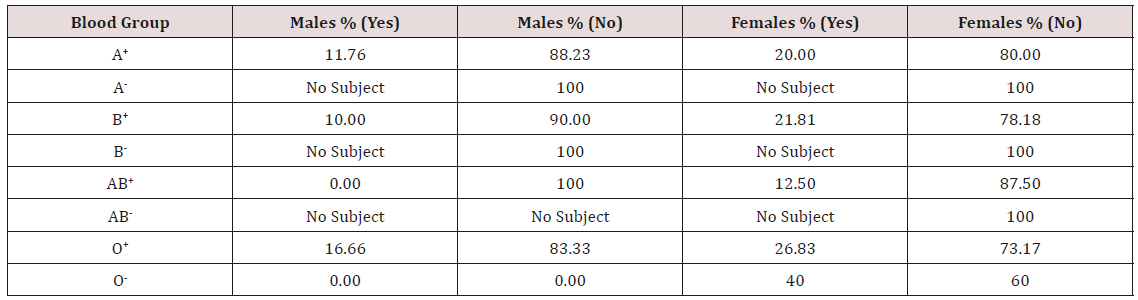
Table 1: Dimple on face with respect to blood group.
Lupinepublishers-openaccess-Research-Reviews

Following Table 1 shows the percentage of dimples in A+ males is 11.76% while in A+ females is 20%. Percentage of dimples in both A- males and females is 0%. B+ males have 10% and B+ females 21.81% dimples. B- males and females both have 0% dimples. AB+ males have 0% dimples while AB+ females have 12.50%. ABboth males and females have 0% dimples. O+ males have 16.66% and females have 26.83% dimples. O- males have 0% and females have 40% dimples on their face. Questionnaire based studies have given an important advancement in recent studies. Four scientists in 2015 work on five different Genetic Traits in Association with the Distribution Pattern of ABO and Rhesus Phenotypes among Families in Calabar and Nigeria one of which was dimples [3-10].

Conclusion

It was concluded from the present study that O+ blood group people have maximum chance of having dimples and AB- have minimum chance of having dimples.

Read More About Lupine Publishers Journal of Research & Review Please Click on Below Link:
https://lupine-publishers-research.blogspot.com/

Friday, 20 May 2022

Lupine Publishers | Circadian Disruption, Sleep Loss, and Low-Grade Inflammation

 Lupine Publishers | Journal of Research and Reviews on Health Care


Abbreviations: SCN: suprachiasmatic nucleus; CRP: C-reactive protein; SASP: senescence-associated secretory phenotype; DDR : DNA damage response; AD: Alzheimer's disease

Editorial

Circadian rhythmicity is a fundamental property of the majority of organisms, including bacteria, unicellular eukaryotes, fungi, plants and animals. It is generated by cellular oscillators and may have evolved to cope with adverse phases in the cycle of a day that bear the risk of damage by radiation and reactive metabolites, such as free radicals. In a complex organism like the human, the circadian system is composed of numerous, internally communicating, oscillators including a coordinating master clock, the suprachiasmatic nucleus (SCN) [1]. It provides a program for structuring countless physiological functions in a sophisticated temporal pattern that optimizes the alignment of processes and also the anticipation of regularly expectable changes, such as an approaching time of arousal and locomotor activity, of food intake and even social interactions.

Sleep is one of the functions that are controlled by the circadian system, in addition to the homeostatic drive to sleep and immunological influences. The benefits of sleep concern recovery, but additionally other processes such as memory consolidation take place in specific sleep phases [2]. Shift work and on-call duties during night are necessities in our modern world. Many scientists also know what it means to conduct an experiment that lasts for, e.g., 35 hours, without any chance to sleep in between. The consequence to the body is, however, not just subsequent fatigue, but also a disturbance of the finely tuned physiological rhythms. The resilience of individuals to such disturbances is highly variable. Not rarely, subjects also wake throughout the night for private reasons.

Although this shall not be generally criticized, one should know how many changes are induced by sleep loss, with the potential of pathophysiological alterations that should not accumulate to avoid disorders and diseases. Sleep deprivation is frequently associated with disruptions or inappropriate phase shifts of the circadian system, also known under the term of chronodisruption. In humans, one typical reason of the dual changes results from light exposure at night. This can induce phase shifts of circadian rhythms, but also involves another complication, as light at night causes rapid decreases in the levels of the pineal hormone, melatonin, known as the so-called photic shutoff, in addition to the circadian changes [3]. These reductions in melatonin are in multiple ways undesired. First, melatonin is a highly pleiotropic regulator molecule that orchestrates countless functions in all organs of the body [4].

Second, melatonin participates in the entrainment of the master clock and various peripheral oscillators [5]. Third, melatonin is a neuro protective, antiapoptotic and antioxidant agent, with additional functions in immune modulation [4,6]. Low-grade inflammation is of particular relevance in immunosenescence, in aging acceleration and in neurodegenerative disorders, but contributes to many other pathologies. Immunosenescence can lead, in addition to other traits, to the development of a proinflammatory phenotype characterized by elevated proinflammatory cytokines and C-reactive protein (CRP), especially in subjects that have acquired an immune risk profile [7]. Moreover, the age-dependent increase in DNA-damaged cells represents a further source of proinflammatory factors via the senescence-associated secretory phenotype (SASP).

SASP, being part of the DNA damage response (DDR), allows non-immune cells to release proinflammatory cytokines and chemokines which spread inflammatory responses [8,9]. In the central nervous system, astrocytes with SASP can become neurotoxic [10]. Another brain-related aspect concerns neuronal overexcitation, which results via NO release in microglia activation and astrogliosis, followed in vicious cycles by mutual stimulations between the three cell types [7,11]. Moreover, the balance between formation and clearance of amyloid-β (Aβ) peptides and oligomers, which are both prooxidant and proinflammatory can be disturbed. This is not exclusively a matter of Alzheimer's disease (AD), but rather plays - at lower level - a role in normal aging, too. Finally, insulin resistance in the brain has been identified as an early sign and, presumably, stimulus of neuro inflammation in AD [7,12-14], a potentially important link to the inflammatory aspect of type 2 diabetes and metabolic syndrome.

Sleep deprivation, often in conjunction with circadian disruption, can favor in multiple ways processes that are known to be related to low-grade inflammation. Apart from various reports that demonstrated oxidative stress as a result of primary insomnia or experimental sleep deprivation, which shall not be discussed here in detail, direct evidence for increased inflammation has been obtained in clinical and preclinical studies. In humans, sleep deprivation or disturbance elevated TNF-α [15,16] and IL-6 in monocytes [16,17], CRP [17,18], TNF-α [18,19] and IL-6 [20,21] in the plasma. In whole blood preparations, mRNA levels of TNF-α and of its soluble receptor sTNFR1 were reported to be enhanced [22]. Moreover, sleep deprivation was shown to induce DDR and SASP in elderly subjects [23]. Of course, studies in humans have limitations concerning the availability of tissue material. Moreover, blood analyses revealed a certain degree of divergence with regard to the increases in specific inflammatory markers [24]. However, the basis for judgments is considerably broader in laboratory rodents.

In the murine brain, sleep deprivation enhanced the proinflammatory cytokine TNF-α, and the NO metabolite nitrite, in addition to indicators of oxidative stress [25]. Up regulation of TNF-α, IL- 1β and IL-6 was observed in numerous rat organs, such as adipose tissue, colonic mucosa, liver and spleen, sometimes also rises in IL-17 and IFNϒ (details not cited). More importantly, respective changes were observed in brain regions. Increases of IL-6 and IL-8 were demonstrated in the hippocampus [26-28], and of IL-6 in the cortex [28,29]. Moreover, anti-inflammatory cytokines, IL-4, and IL- 10, were found to be decreased in the hippocampus [26,27]. While data on the important proinflammatory cytokine IL-1β were rather divergent in humans, the situation is rather unambiguous in rats and mice. It was enhanced in the hippocampus [26-31], cortex [2932], basal forebrain [30], and hypothalamus [31]

Finally, findings of utmost interest were detected upon sleep deprivation [33] or slow wave sleep disruption [34] in the CSF of healthy humans, in which the levels of Aβ1-42 or Aβ1-40, respectively, were increased, perhaps a sign of reduced Aβ clearance. With regard to the proinflammatory properties of β peptides and oligomers, these results provide another hint for the role of sleep disturbances in inflammation and, in older subjects, in brain inflammaging. Collectively, results summarized in this editorial emphasize the importance of inflammatory responses to sleep deprivation and disturbances. These may not be generally avoidable during professional life, but they should not be enhanced by lifestyle and can be prevented later in life, when these effects become more relevant and increasingly contribute to inflammaging.

Read More About Lupine Publishers Journal of Surgery Please Click on Below Link:
https://lupine-publishers-research.blogspot.com/

Thursday, 24 March 2022

Lupine Publishers | The Electric Potential of the Female Body Liquids and the Effectiveness of Cloning

 Lupine Publishers | Journal of Research and Reviews


Abstract

It was previously shown that the electric potential of biological liquids of the female body correlated with the stages of the menstrual cycle: these liquids have a negative potential at the stage of ovulation, but the positive potential on the phases before and after ovulation. It was also shown that the electric potential of the water determines its surface tension, as well as its ability to hydrate the polysaccharides. On the basis of obtained results it is concluded that the electrical potential of the body liquids of women, and is the surface tension and the ability to hydrate the polysaccharides of these liquids, can be cyclically varied during the menstrual cycle. It is demonstrated that the use of these ratios allows influencing the processes of reproduction and increasing the efficiency of cloning.

Keywords: Arborisation; Menstrual cycle; Female body liquids; Electric potential; Cloning

Introduction

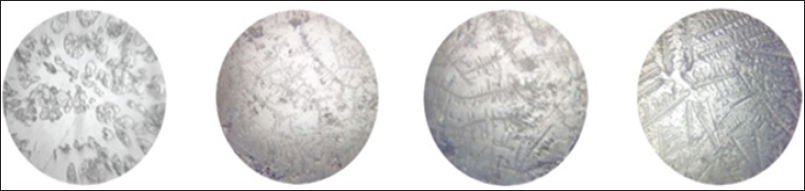
It is known that the evaporation of the female body liquids is accompanied by the formation of crystals of different shapes. It is also known that the shape of these crystals depends on the stage of the menstrual cycle: cubic or rhombic crystals are formed before and after the stage of ovulation; arbor-shape crystals are formed in the ovulation step (Figure 1) [1].

Figure 1: There are crystals which are formed during the evaporation of the liquids of the female body in the first half of the menstrual cycle: from 1 (left) to 14 (right) days [1].

Lupinepublishers-openaccess-Research-Reviews

Body

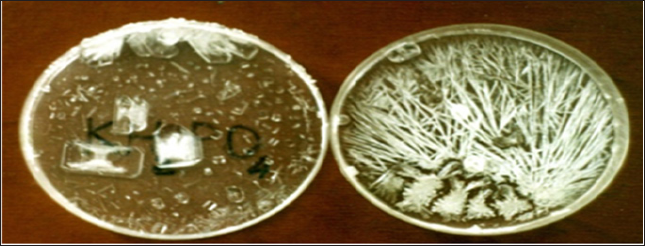
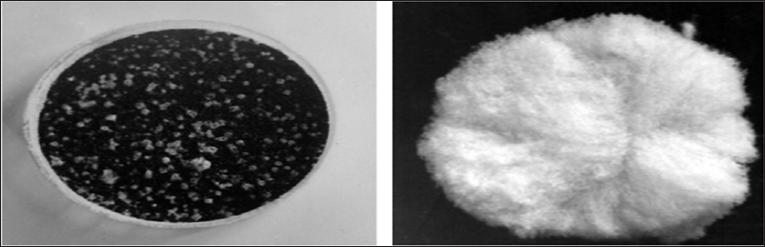
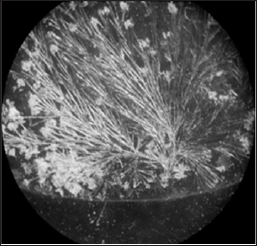
In the study of the physical nature of this phenomenon, it was discovered that the shape of the crystals formed by evaporation of salt solutions depends on the sign of the electric potential of the solution, and the sign of the electric charge of the surface on which the formation of salt crystals. Cubic or rhombic crystals are formed by evaporation of salt solutions prepared on the water with a positive electric potential (Figure 2, left) or (and) on the positively charged surfaces (Figure 3, left). In contrast, the needle- or arborshaped crystals are formed by evaporation of salt solutions prepared on the water with a negative electric potential (Figure 2, right) or (and) on the negatively charged surfaces (Figure 3, right) [2,3]. It is very important that this correlation is true for NaCl (Figures 3 & 4), the main salt component of biological liquids of the human body.

Figure 2: Left: the rhombic crystals formed upon drying of an aqueous solution of KH2PO4 prepared on the water with positive electric potential. Right: the needle-shaped crystals formed upon drying of an aqueous solution of KH2PO4 prepared on the water with negative electric potential [2,3].

Lupinepublishers-openaccess-Research-Reviews

Figure 3: Left: These are the small cubic crystals formed on positively charged surface of activated carbon, pre-wetted with a solution of NaCl. Right: These are the needle-shaped crystals formed on negatively charged surface of silica gel, pre-wetted with a solution of NaCl; in this case, the interlacement of acicular crystals forms a kind of wool [2].

Lupinepublishers-openaccess-Research-Reviews

Figure 4: The arbor-shaped crystals formed upon drying of an aqueous solution of NaCl prepared on the water with negative electric potential [2].

Lupinepublishers-openaccess-Research-Reviews

This correlation gave an opportunity to conclude that the various forms of crystals, formed by evaporation of biological liquids of women reflect the changes of electric potential such liquids occurring during the menstrual cycle [2]. In particular, it has been made such findings:

    a) the menstrual cycle reflects the cyclic changes of the electric potential of biological liquids of the female body;

    b) biological liquids of the female body have a positive electric potential (charge) before and after ovulation;

    c) the female body liquids have a negative electric potential (charge) in the ovulation step [2].

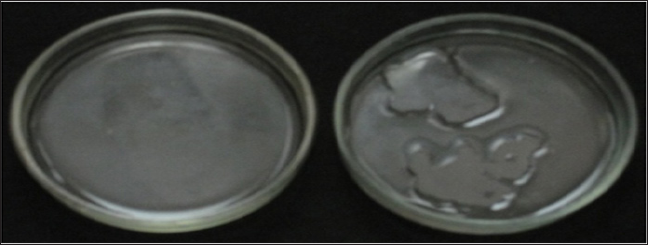
In further studies, it was found that the surface tension of water also depends on its electric potential. In particular, it was shown that the surface tension of water with a positive potential is always greater than the surface tension of water with negative potential. It is noteworthy that this dependence can be visualized with simple and clear experiments. So, if to pour 5ml of water (exact!) with a negative potential in a standard Petri dish and mix, it can be saw that the water completely covers the bottom of a Petri dish (Figure 5, left). On the other hand, if to pour 5ml of water (exact!) with a positive potential in a standard Petri dish and mix, it can be saw that the water does not cover all the bottom of a Petri dish (Figure 5, right).

Figure 5: Left: 5 ml of water with an electric potential of �200 mV cover all the bottom of a Petri dish. Right: 5 ml of water with an electric potential of +200 mV do not cover the bottom of a Petri dish; the surface of such water decreases rapidly after mixing [3].

Lupinepublishers-openaccess-Research-Reviews

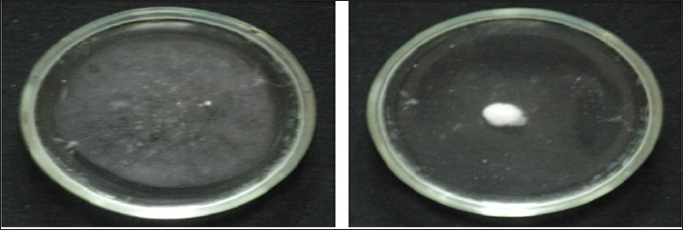
The difference can be also visualized by means of a powder of starch deposited on the surface of charged water. By this simple test, it can be saw that the forces acting on the surface of positively charged water dispense powder starch on the surface of the water (Figure 6, left); such a distribution of powder of starch takes place over 1-2 seconds. It can be also said that the surface forces of negatively charged water do not distribute the starch powder across the water surface (Figure 6, right). Moreover, it can be observed that the starch powder sinks into negatively charged water [3]. In our opinion; the experiments clearly demonstrate the difference in the surface tension of water with positive and negative potentials. This can also be concluded that the positive electrisation of the water will increase its surface tension, and the negative electrisation of water will lead to its reduction.

Figure 6: Left: the starch powder covers the surface of the water with potential +250 mV practically wholly Right: powder starch remains in the same place where it was put in water potential -200 mV [3].

Lupinepublishers-openaccess-Research-Reviews

(It is necessary to say that a similar difference in surface tension is observed also for some other liquids and some solid materials [3]. This provides the fundamental possibility of extrapolation of this dependency to other objects, including biological.) This dependency also helps to explain the main dependence (Figure 2). The high surface tension of water with a positive potential, determines the formation of compact cubic and rhombic crystals. In contrast, the low surface tension of the water with a negative electric potential determines the formation of non-compact needle- and arbor-shaped crystals.

On the basis of recent results (Figures 5 & 6), it is also possible to draw the following assumptions:

    a) The surface tension of female body liquids cyclic changes during the menstrual cycle;

    b) The female body liquids have lowest surface tension in the ovulation step;

    c) The female body liquids have the greatest surface tension before and after ovulation.

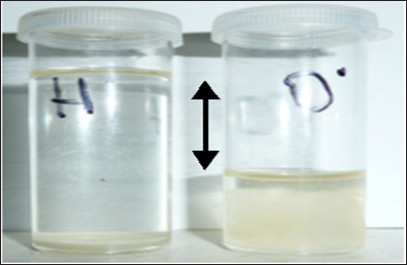
Extrapolating the basic correlation on the oocytes, it can be assuming that a similar change of the surface tension is also correct with respect to the water that is part of oocyte membranes. Taking this extrapolation, it can be concluded that the reduction of surface tension of the membranes of oocytes occurring at the stage of ovulation, creates optimal conditions for penetration of spermatozoids into oocytes. Using the same extrapolation, it can be also assumed that the increase in surface tension of the membranes of oocytes that occurred before and after ovulation prevents penetration of spermatozoids inside the oocyte. Further studies revealed that the electrical potential of the water also determines its ability to hydrate the polymers of biological origin: the water with a positive potential is better hydrates biological polymers than water with negative potential [4]. This dependence it is convenient to show also with starch (Figure 7).

Water with a positive potential can evaporate even from a closed plastic dishes: the arrow shows how during the day decreased the water level to the positive potential. During the last experiment, it was observed another interesting property of water with positive potential. It can be seeing (Figure 7, right), this water is able to penetrate through the plastic and evaporate from a closed polyethylene bottle. (It should be noted that the increase in the permeability of polyethylene to water vapour is known: this phenomenon was observed earlier in the oxidation of polyethylene ROS induced by ionizing radiation [5]. Recently we proposed a detailed analysis of the physical forces causing this phenomenon [6]. Apparently, the high penetrating ability of the water with a positive potential determines the nature of its interaction with polymers, in particular - hydrating ability of this water (Figure 7, right).

Extrapolating the dependence established (Figure 7) on the oocytes, it can be assuming that similar dependence is also correct with respect to polysaccharides that are associated with the outside of the membranes of the oocyte and form a glycocalyx. If this extrapolation is correct, it can be assumed that the decrease of oocyte hydration of the glycocalyx, which occurs at the stage of ovulation, is accompanied by a decrease in the thickness of the glycocalyx, which creates optimal conditions for penetration of spermatozoids into oocytes. Using the same extrapolation, it can also be assumed that the increase in hydration of the glycocalyx of the oocyte that occur before and after ovulation, accompanied by an increase in thickness of the glycocalyx, which prevents the penetration of spermatozoids inside the oocyte.

Figure 7: There is a swelling of starch in water with a different electric potential. Starch does not swell in water with the potential of -500 mV (left) and swells in water with a potential of +500 mV (right) [3]. Water with negative potential was obtained by bubbling hydrogen (left); water with a positive potential was obtained by bubbling oxygen (right) [4]. The temperature of the water in both vials was + (20- 22°C).

Lupinepublishers-openaccess-Research-Reviews

On the basis of last result (Figure 7), it is possible to draw the following assumptions:

    a) the menstrual cycle reflects the cyclic change in the thickness of the oocyte glycocalyx;

    b) the thickness of the glycocalyx increases in the step preceding ovulation, as well - in the step after ovulation;

    c) The thickness of the glycocalyx decreases in the ovulation step.

One ofthe most important functions ofglycocalyx connected with its glue ability. (The importance of glycocalyx function is due to the fact that most cells of multi cellular organisms are glued together!) It is obvious that this ability of the glycocalyx depends on the degree of its hydration: hydrated glycocalyx is the glue and dry glycocalyx- no. Figure 7 enough adequately displays this dependence. Thus, it can be expected that the adhesive capacity of other polysaccharides is also potential-dependent. If this extrapolation is correct, it can be assumed that a decrease in hydration of the glycocalyx of the oocytes, which occurs at the stage of ovulation, accompanied by a decrease in its adhesive ability, which creates conditions for release of the oocytes from the ovarian follicles. It also suggests that the increase of hydration of the glycocalyx of the oocytes, which occurs after ovulation, can cause a fixation the fertilized egg in the uterus.

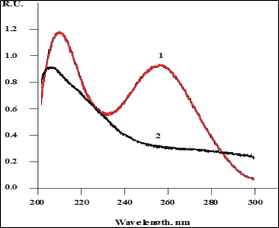
Thus, the electric potential of biological liquids of the female body may define two (at least) of a kind of the factors affecting the membrane permeability of the oocytes to spermatozoids. Therefore, there are at least two factors that depend on the electric potential of biological liquids of women that determine the effectiveness of female fertilization. In addition to these factors should also be borne in mind the fact that DNA has an extraordinary sensitivity to the electric potential of the aquatic environment [7,8]. In particular, this sensitivity is confirmed by the spectra of UV absorption of DNA solutions prepared in water with a different electric potential (Figure 8). Indeed, if the electrical potential of biological fluids affects only the properties of the oocyte membrane, this may turn out to be strange.

Figure 8: TUV absorbance spectra of the aqueous DNA (~20 ^g/ml): 1 - DNA, dissolved in the positively charged water; 2 - DNA, dissolved in the positively charged water.

Lupinepublishers-openaccess-Research-Reviews

Also, high sensitivity of DNA to the electric potential of the aquatic environment can be demonstrated in an experiment similar to that described above (Figure 7). For these reasons, the electric potential of the tissue liquids of living organisms, it was proposed to accept as an epigenetic factor [8]. In addition, the role of the electrostatic potential of DNA in the organization of the promoter has been demonstrated [9,10]. Obviously, the knowledge shown of the dependencies is required for professionals involved in cloning and reproductive technologies, generally. In particular, the demand for such knowledge is dictated by the well-known low efficiency of cloning [9,10]. A possible reason for this is the lack of attention to the electric potential of the working solutions (including women's bodily liquids) and hydrated biological objects.

So, usually ignores the fact that the evaporating working solutions and wet objects clearly get a negative charge (potential) due to the evaporation of water from their surfaces [6]. Due to the negative electrification, oocytes successfully fertilized. But, because of their negative electrification, the fertilized egg cannot stick to the uterine wall. As a result, even successfully fertilized oocytes are not attached to the walls of the uterus that leads to the unfortunate result, in general. Thus, the results obtained and the findings allow hoping that the biological value of the information reported by the crystals formed during the evaporation of the female body liquids (Figure 1), in general there is clear

Conclusion

The shape of the crystals formed during the evaporation of bodily fluids of the female body, reflects the sign of their electric potential. Changing the electric potential of the female body liquids, you can control over the menstrual cycle, properties of oocytes and fertilization efficiency, in particular artificial. Thus, the onset of the stage of ovulation and efficiency of fertilization can be stimulated by reducing electric potential of biological liquids of the female body.

Read More About Lupine Publishers Journal of Research and Reviews Please Click on Below Link:
https://lupine-publishers-research.blogspot.com/