Showing posts with label Open access Journal of Medical Sciences. Show all posts

Friday, 2 December 2022

Lupine Publishers | Determination of Knowledge, Attitude and Behaviors of Pesticide Dealers and Applicators in Different Cities of Turkey

 Lupine Publishers | Journal of Medical Sciences


Abstract

Introduction: Biocidal products refer to the general name of substances used in order to prevent, control or reduce the harmful effects of hazardous organisms present in all areas of public health describing human settlements, working areas, physical places and environment related to daily living [1]. The use of biocidal product around the world is, on average, 3 million tons per year; this amount is 13.000 tons in Turkey.

Objective: Objective this study is to measure the knowledge, attitude and behaviors of Pesticide sellers and Pest Control Companies during February-May 2017 in the cities of Antalya (Aksu), Denizli (Center), Isparta (Center) and Ankara (Center).

Materials and Methods:This study was conducted in the cities of Antalya, Denizli, Isparta and Ankara during the months of February-May 2017 by means of surveys prepared to measure knowledge, attitude and behaviors of pesticide sellers and home pest control companies. In the survey study, 37 questions in total were addressed to pesticide sellers while 48 questions were directed to managers and workers in home pest control companies. Statistical significance value was accepted as p< 0.05. For statistical analyses and calculations, IBM SPSS Statistics 21.0.

Results:The average age of respondents was 36.77±10.73 years for home pest dusters and 37.50±9.74 for pesticide sellers. Pesticide sellers (86.7% was university graduate) were found to have higher education level in comparison to home pest dusters (53.3% was university graduate). When the questions of surveys were evaluated, average score of home pest dusters were defined as 64.69±7.79 whereas pesticide sellers scored 64.18±9.74 on average.

Keywords: Biocidal product; Pest control; Biocide poisoning; Agriculture

Introduction

Biocidal products refer to the general name of substances used in order to prevent, control or reduce the harmful effects of hazardous organisms present in all areas of public health describing human settlements, working areas, physical places and environment related to daily living unknown [1]. Although the concepts of biocidal product and pesticide are usually substituted for each other, pesticides are used as a general term involving all kinds of chemical substances used in implementations of agricultural pest control [2]. Rapidly growing world population and unchanging world acreage point out that the yields from cultivated areas should be increased [3]. Illness and detrimental weeds lead to product losses up to 25-30% in cultivated plants. In order to minimize or prevent this loss, chemical control is the most preferred method as it is easy to implement and quickly yields solution [4]. Hazardous chemicals started to be widely used in pest control during mid 1940s [5]. 75 % of all biocidal and pesticide usage in the world occur in developed countries. However, in developing countries, both biocide and pesticide usage have been increasing [6]. Besides, 95% of poisoning and mortality related to biocide and pesticide takes place in developing countries.

Whereas the use of biocidal product around the world is, on average, 3 million tons per year; this amount is 13.000 tons in Turkey. With the aim of maximizing productivity of agricultural lands, use of pesticide in pest control has been increasing more each year due to ease of implementation and quick solution [7]. In pesticide use against pests, illnesses and weeds leading to yield loss; only 0.015%-6.0% of pesticides reach the target organism and the remaining 94.0%-99.9% reach non-target organisms and soil or meddle with other ecosystems as contaminant [8]. Inappropriate use of biocidal products can lead to acute and chronic intoxication, food and environment pollution and development of resistance against these products in target organisms [9,10]. It is quite hard to evaluate the impacts of biocidal products on human since there are many unknown factors related to the exact nature of problem. Socio demographic attributes such as age, gender, race, economic situation change the extent and results of influence considerably [11,12].

In this study, “home pest dusters” refer to the people who actually do the pest control with biocidal products used in public health areas and natural or legal persons who sell these products are stated as “pesticide sellers”. The study evaluates knowledge, attitude and behaviors of pesticide sellers and staff working in pest control companies in four selected cities as well as investigates the factors that might have an impact [13]. The amount of pesticide consumption per hectare is lower in Turkey than European Union Countries yet there is not any tracking and control system regarding the implementation of standards and procedures in preparation, application and sales of these pesticides. In addition; health education as well as education about the pre-and post-processes of pesticide application are necessary to perform balanced and conscious application and to avoid adverse effects of pesticides. The safety of workers applying pesticides is protected by some regulations with active participation of health, environment and business sector. Regulations for workers mainly include components such as the update of acts related to employee and employer, employee protection standard development, extending risk benefit analysis, guidance and training certification [14]. Although there are limited studies about attitude and behaviors of agricultural laborer in use of pesticide, there is no study done regarding pesticide dealers and home pest dusters.

Materials and Method

This study was conducted in the cities of Antalya, Denizli, Isparta and Ankara during the months of February-May 2017 by means of surveys prepared to measure knowledge, attitude and behaviors of pesticide sellers and home pest control companies. Four provinces have been selected in the agricultural sector, which have export licenses and are important in the country of agriculture. While the ratio of the total agricultural area of Ankara to Turkey is about 5%, the ratio of the fruit area of Ankara to Turkey is 8.46%; the ratio of vegetable area of Ankara to Turkey is 5.93% and the ratio of cultivated area to Turkey is 5.01% [15] (Ankara Kalkınma Ajansı, 2017). The city of Antalya constitutes 28.41% of cucumber production; 27.28% of orange production and 78.15% of avocado production in Turkey Antalya İl Gıda Tarım ve Hayvancılık Müdürlüğü [16] and takes the first place in Turkey in Isparta apple production Bashimov [17] (20.2% of total Isparta apple production) Yaman et al. [18].

The share of agricultural production in Denizli South Aegean production basin in 2010 was 30%. According to 2011 data, about 99% of Denizli’s agricultural production is wine grapes. When agricultural products exported in Denizli in 2013 are examined, 11.081 tons of fresh grapes are in the first place; and they are exported to countries such as Russia, Ukraine, Germany, Bulgaria and Azerbaijan. Denizli meets 90% of thyme production in Turkey, 15% of sunflower seeds and 80% of chickpea production in Turkey. Denizli is the world’s top producer in thyme, Turkey’s top producer in sunflower seed and opium, Turkey’s second producer in grape production and in milk production, it is the largest fourth producer of Aegean region and the largest ninth producer of Turkey Öselmiş [19]. The main materials of study include the pesticide sellers in the cities mentioned, pest control company executive, employees and survey questions addressed to these people. Lists of Pesticide dealers were obtained from Directorates of Provincial Food Agriculture and Livestock in the cities of Ankara, Antalya, Denizli and Isparta. Based on the obtained data; 57.69 % of pesticide dealers within the study were reached and 37-question surveys were applied.

Furthermore, lists of home pest control companies were obtained from environmental health units of Ankara, Antalya, Denizli, Isparta Municipalities. 48 question surveys were applied to 10 out of 14 companies in Antalya, 3 out of 4 in Denizli, 3 out of 5 in Isparta and 14 out of 22 companies in Ankara. Selection of companies were made randomly in both survey studies. Distribution of continuous variables such as age, working years was reviewed with Shapiro-Wilk Test and graphs of normality. Kruskal- Wallis test was used in comparison of points of knowledge by cities whereas Mann-Whitney U test and t-test based on the distribution of knowledge point were used in comparison of points of knowledge by education level. In comparison of categorical variables such as education level etc. depending on poisoning, chi square test was applied. The relations between education point and age, working years were assessed by Spearman’s correlation analysis. Statistical significance value was accepted as p<0.05. For statistical analyses and calculations, IBM SPSS Statistics 21.0 (IBM Corp. Released 2012. IBM SPSS Statistics for Windows, Version 21.0. Armonk, NY: IBM Corp.)

For 35 knowledge measurement questions in the survey measuring the knowledge, attitude and behaviors of home pest dusters and 25 questions in the survey measuring the knowledge, attitude and behaviors of pesticide sellers, “knowledge score” was calculated out of 100 points. During the calculation of knowledge score, every question measuring knowledge level was evaluated in equal weight. Multiple answer questions were scored by adding the number of correct answers for related question. The main professions of home pest dusters and pesticide sellers were divided to two categories as area and non-area for statistical analyses. Professions such as Agricultural technician, agricultural engineer, environmental engineer, health personnel and chemist were regarded as in area while accountant, tradesman, business manager, teacher and other professions were accepted as non-area.

Results

In this study, survey questions were applied to 150 people in the group of pesticide sellers and to 30 people in the group of home pest dusters. In the survey study, 37 questions in total were addressed to pesticide sellers while 48 questions were directed to managers and workers in home pest control companies. Average ages of home pest dusters in study were 36.77±10.73. 53.3% of the 30 home pest dusters within the scope of research were university graduate and 46% were high school graduate. 70.8% of the home pest dusters were among area professions. Average time spent in professional life was 6.03±4.85 years. As for pesticide sellers, average age was 37.50±9.74. 86.7% of them was university graduate, 12.7% high school graduate and 0.7% of them was primary school graduate. 92.1% of pesticide sellers were within the group of area professions. Average time spent in working for pesticide sellers were 9.27±7.02 years. Average knowledge level of home pest dusters was 64.69±7.79 while that of pesticide sellers was 64.18±9.74. Knowledge level of home pest dusters was seen to be higher than that of pesticide sellers. There was no statistically meaningful difference between the knowledge levels of pesticide sellers and home pest dusters (z=0.207, p=0.836).

When the knowledge levels and professions of home pest dusters are compared, it was seen that there was no statistically meaningful difference between the knowledge level of participants with in-area (n=17) and non-area (n=9) professions (Z=1.647, p=0.107). In comparison of professions and knowledge levels in pesticide sellers, there was also no meaningful difference between the knowledge level of participants with in-area (n=137) and nonarea (n=13) professions (Z=0.164 p=0.870). In addition, there was no meaningful relation found between ages and knowledge levels of home pest dusters and pesticide sellers (p>0.05). Also, there was no meaningful relation between daily working period and knowledge levels (p>0.05). A moderate negative linear relation was detected in working years and knowledge levels of home pest dusters (p=0.026). As working period of home pest dusters decreased, their knowledge levels increased. According to this result, it can be deducted that as working years of home pest dusters increased, they could not sufficiently keep up with current issues and they supposed that the knowledge they possess is enough for them. On the other hand, when working years and knowledge levels of pesticide sellers are compared, there was no meaningful linear relation found between working period and knowledge level (p>0.05).

According to results, there was no meaningful difference between education level and knowledge level of home pest dusters (t=1.081, p=0.289). Also, when pesticide sellers’ education level and knowledge level are compared, there was no meaningful difference in score between high school and university graduates (z=0.515, p=0.607). When knowledge levels and the cities home pest dusters live are compared, there was again no meaningful difference (x2=0.343, p=0.952). On the other hand, knowledge level and the cities of pesticide sellers are compared, knowledge levels were detected to show meaningful difference based on the cities (x2=18.706, p<0.001). As a result of pair comparisons, it was determined that pesticide dealers from Denizli had higher scores than the participants from Antalya and Isparta (p<0.05) and pesticide sellers in Denizli was found to be more knowledgeable in terms of professional knowledge when compared to other cities.

It was detected in this study that average daily working hours of home pest dusters were 9.47±1.28, there was first aid kit and medicine chest in all workplaces, safety measures were being taken against fire in 90% of the workplaces, there was a separate changing room for the workers in 50% of the workplaces. 40% of companies participating the survey were detected to prepare biocidal products for application in workplace; 13.3% of companies in vehicle and the remaining percentage in application area. However, it was well known that preparation for application should be done in workplaces. Maintenance and calibration of the equipment used in pesticide application was being done regularly by all home pest dusters or through outsourcing. All home pest dusters were using back pomps for spraying and no treatment was done with living things that have died after pesticide use. Yet it is laid down by laws that these dead animals should be disposed properly.

Based on the answers of surveys, it was observed that all home pest dusters think that an ideal biocidal product should be harmless to humans and other organisms, 16.7 % of them think that biocidal product has influence over more than one species, 10% of them think it has influence over only one species, 10% that it should be easy to use and 10% believe that it should be cheap. As for pesticide sellers; it was determined that 53.3% supposed that an ideal biocidal product should be harmless to human and other organisms, 24.0% that it should be easy to use, 21.3% that it has influence over more than one species, 21.3% that it should be cheap and 20.7% that it should impact only one type of species. The main characteristic of an ideal biocidal product is that it should be affectless to human and other organisms. While all home pest dusters have knowledge of this, only 53.3 of pesticide sellers have it.

According to research results, 36.7% of home pest dusters and 79.3% of pesticide sellers believe that even small doses of biocidal products are harmful to other organisms. Among home pest dusters, 93.3% of suppose that biocidal products leave residues in the environment after being used. 100% of participants answering this question believe that residues remain in air, 3.6% believe they remain in rain and there was no one thinking that residues stay in earth, water, food, household goods and clothing. As for pesticide sellers, 75.2% think that residues stay in earth, 37.6% in food, 24.0% in water, 20.0% in air and 4.8% in rain. While pesticide sellers think that after use of biocidal products, residues remain mostly in earth, food and water; home pest dusters believe that they stay in air and rain at most. According to the results obtained, all of home pest dusters were seen that they think biocidal products are not hazardous to human health while 78% of pesticide sellers think they are. As a result, pesticide sellers think they are harmful to human health at a higher rate than home pest dusters. 96.7% of home pest dusters consider that biocidal products enter the human body via inhalation, 16.7% think they enter orally while no one thinks that they enter via skin, touch, eye contact or other ways. 67.3% of pesticide sellers state that biocidal products penetrate the human body via inhalation, 27.3% orally, 52.7% via skin contact, 13.3% via another way, 12% via eye contact. While pesticide sellers consider that biocidal products enter the human body via inhalation and skin contact at most; home pest dusters believe that they do through inhalation and mouth.

All of home pest dusters stated that they know the symptoms of biocide poisoning. Having looked at the distribution of answers; we saw that 100% is nausea and vomiting, 13.3% dizziness, 13.3% weakness, 6.7% fainting and 6.7% excessive perspiration. However apart from these signs, no one considered encopresis, seizures, lachrymation, dyspnea, stomachache, being unable to urinate are among the symptoms of poisoning. As for pesticide sellers, 98.7% stated that they know the symptoms of biocide poisoning. 86.5% marked nausea and vomiting, 48% dizziness, 28.4% excessive perspiration, 23% weakness, 18.2% fainting, 14.2% lachrymation, 14.2% dyspnea, 6.8% stomachache, 11.5% seizures and 10.8% marked encopresis among the symptoms of biocide poisoning. These results showed that although pesticide sellers stated that they are less informed about the symptoms of biocide poisoning than the home pest dusters, they could count the signs more comprehensively.

96.7% of home pest dusters stated that it is necessary to use protective material to avoid biocide poisoning while 83.3% of pesticide sellers confirmed the necessity of protective material, 30% stated that long term exposure should be avoided, 28.7% that unconscious use should be restrained, 26% that they should be kept under safety conditions, 21.3% that their mix with water and food should be avoided and 1.3% that other ways should be done to avoid biocide poisoning. When these answers were analyzed, it was detected that the pesticide sellers knew the ways of protection from biocide poisoning more comprehensively than home pest dusters. Based on the survey answers, it was seen that all of home pest dusters stated they use personal protective equipment; gloves, mask and boots. 20% of survey participants mentioned they use apron, 6.7% goggles and 3.3% safety helmet. On the other hand, only 85.3% of pesticide sellers were using personal protective equipment. 93% of those who use prefer gloves, 26% mask, 18.8% goggles and 3.1% another personal protective equipment. All in all, while pesticide sellers use gloves and mask more as personal protective equipment, home pest dusters mostly use gloves, mask and boots. Surveys showed that all of home pest dusters believe that biocidal products are not harmful to human health while 78% of pesticide sellers thinks they are. 78% of pesticide sellers mentioned that they believe biocidal products cause respiratory system disease, 47% dermatological disorders, 24.8% cancers, 12.8% gastrointestinal and 7.7% cardiovascular, 4.3% blood diseases and 0.9% other diseases. It was found out that the home pest dusters in study did not know the phone number of National Poisons Information Center (UZEM) while only 46.7% of pesticide sellers did know it.

While 76.7% of home pest dusters think that insecticides have antidote, 6.3% think they don’t. As for pesticide sellers, 70% mentioned that they believe biocidal products have antidote and 75.3% definitive treatment of biocide poisoning can be carried out. The study revealed that none of the home pest dusters got examined in regular intervals whereas 100% had no health complaint during or after the application of biocides. 19.3% of pesticide sellers got poisoned while no one among home pest dusters had biocide poisoning. 89.7% of pesticide sellers who had been poisoned consulted a medical institution. This situation can result from the fact that usage ratio of personal protective equipment among home pest dusters is 100%. All the home pest dusters see themselves at no risk of biocide poisoning while only 26% of pesticide sellers see themselves under risk. It was observed that pesticide sellers see themselves under risk of biocide poisoning at a higher rate than home pest dusters. It is considered that awareness level of pesticide sellers was higher than that of another group. All home pest dusters mentioned that they stored biocidal products in accordance with safe storage conditions while only 3.3% of pesticide sellers informed that they did not keep them safely.

According to survey results, 70% of home pest dusters were eating at work. All the workers were washing their hands before meal and after contact with biocides. On the other hand, 96% of pesticide sellers were washing their hands before meal and 86.7% were washing hands after contact with biocides. It was observed that behavior of pesticide sellers about this issue is less conscious when compared to home pest dusters. The study revealed that 93.3% of home pest dusters were following the related legal developments. 73.3 of them took part in training programs about biocidal products and 100% participated courses about preparation and application of biocides. 100% of home pest dusters were making arrangements at home before application and giving information to the hosts about the application. In Turkey, trainings for pest controllers are arranged in two categories: responsible manager trainings and operator trainings. Operator training programs are arranged by authorized relevant occupational organization, university or directorate for minimum 24 hours not to be less than 3 days and more than 10 days [20]. Pesticide sellers were found to follow up legal developments about biocidal products at a higher rate (99.3%) than home pest dusters. Again, the participation rate of pesticide sellers in education programs related to biocidal products (91.3%) was higher than that of home pest dusters.

According to the results of the research, 63.3% of home pest dusters read the contents of biocides. 70% of home pest dusters think that biocidal products are used consciously while %40 of pesticide sellers think so. 98.7% of pesticide sellers stated that they informed buyers about the biocidal products. It was determined that 76.4% of the survey participants gave information about dose, 65.5% about how to apply, 39.9% about the content, 5.4% about side effects of exposure, 4.7% about the symptoms of poisoning, 4.1% about immediate first aid in case of poisoning, 4.1 % about actions to be avoided in case of poisoning, 2.7% about other issues apart from these.

93.3% of home pest dusters pointed out that they knew the necessary immediate actions in case of biocide poisoning. 92.9% of home pest dusters believe that things to do in urgent cases include helping to enable regular breathing, according to 7.1%, it is to get one out of the scene, according to 7.1%, it is to wash the person, according to 3.6% it is to help the person vomit. Among pesticide sellers, the ratio of those who know the necessary immediate actions in case of biocide poisoning is 96%. 37.5% of pesticide sellers stated that in case of biocide poisoning, the person poisoned should be made to vomit immediately, 36.1% stated that the poisoned person should be get out of the scene, 34.7% that the clothes of the poisoned person should be removed, 36.6% that he/ she should be helped to breath regularly, 18.1% that the person should be washed, 7.6% that another action apart from these must be taken. According to 26.7% of home pest dusters, the poisoned person must not be made to drink water and according to 46.7%, movements of the person should not be hindered during seizures. As for pesticide sellers, 44.7% of them stated that to make one drink water was wrong and 33.3% that to hinder the movements during seizures and 22.7% that to make one eat yogurt is wrong.

The rate of biocide poisoning in pesticide sellers is 25.0% in Ankara (n=8), 28.6% in Antalya (n=20), 0.0% in Denizli (n=0) and 5.6% in Isparta (n=1). Distribution of poisoning varies across the cities (p=0.003). Poisoning rate in Denizli is lower than Ankara and Antalya. This meaningful low level in poisoning rate of Denizli is accordant with the high level of knowledge in the participants from Denizli. Pesticide sellers who did not have biocide poisoning had a higher rate of not using personal protective equipment (p=0.008). Among pesticide sellers who had biocide poisoning, the ratio of those who thought biocides were used consciously was higher (p>0.001). It has been determined that the persons who had biocides poisoning were not using biocidal products consciously although they thought themselves conscious user. It was detected that the ratio of those who were aware that biocidal products might enter human body via skin contact was lower among those who had biocide poisoning than those who did not get poisoned (p=0.017). The poisoned people were not aware that the biocides might enter through skin. Similarly, the ratio of those who knew that biocidal products might enter human body via eye contact was lower among those who had biocide poisoning than those who did not get poisoned (p=0.024).

Discussion

It is demanded that the biocides used in biocidal applications are to have a minimum impact on human beings and other organisms and even low doses of these chemicals should have harmless contents for other organisms. However, it has been announced in the studies done that these products might cause problems in nontarget organisms. Tolosana and his friends (2009) who researched the dermatological impacts of pesticide use at home among 740 families in rural, urban and informal residential areas of Cape Town (South Africa) determined that exposure to pesticide was highest among children in informal residential areas (89%); followed by children in rural areas (78%) and children in urban areas (63%) and 53.9 of children with atopic dermatitis (73%) were ill due to exposure to pesticide use at home [21]. All home pest dusters in our study considered that an ideal biocide should be harmless to human beings and other organisms; yet 36.7% of home pest dusters and 79.3% of pesticide sellers knew that even small doses of biocidal products are harmful to other living things.

Agricultural laborers stand out as the leading risk group in terms of biocide exposure. In South Africa, 913 female agricultural laborers’ knowledge, attitude and behaviors were analyzed and it was detected that a large majority of the women had acute or chronic exposure while working on the field while the remaining part had it while washing the biocide-contaminated clothes of their spouses and/or consuming contaminated food [22]. Mistakes done during storage, preparation and spraying of biocidal products appear among the factors increasing exposure risk. A study which investigated the knowledge, application and exposure of farmers with respect to biocidal product exposure in rural area villagers who derived their livelihoods from agriculture in Tanzania pointed out that biocidal product exposure is a potentially serious public health problem [23]. Tuncdemir (2015) did research on attitude and applications regarding biocidal products and knowledge levels of 384 farmers in Adıyaman (Turkey) about impacts of biocides, ways of entry into the human body, toxic symptoms and protective equipments. It was determined that during biocide application, the farmers were not using gloves (45.6% were using sometimes) and masks (46.6% were using sometimes) regularly; and that boots (73.4%) and protective clothing (80.7%) were mostly not being used [24]. 37.6% of pesticide sellers in this study expressed that biocidal products leave residues in food while 24% said they leave residues in water. 67.3% of pesticide sellers stated that biocides enter the human body through inhalation; 52.7% through skin contact and 27.3% said they enter orally. 85.3% of pesticide sellers stated that they use personal protective equipment. Among those who use personal protective equipment, 93.0% use gloves, 26% use masks, 19.5% goggles, 18.8% aprons and 3.1% use another protective equipment. The studies carried out reveals that especially biocide applicators and sellers are required to receive more vocational education.

One of the most important points during biocide applications and the following period is that biocide applicators are aware of the impacts of chemicals and they believe that these chemicals can be hazardous. It has been determined that a large majority of the 89 people in Cambodia who engage in agricultural production and biocide application themselves believe that the biocides penetrate the body and have harmful effects on their health and 46% have investigated the explanations on the labels of biocidal products. In this study, it was found that most farmers (88%) showed symptoms of acute biocidal product poisoning and that these symptoms were significantly related to the time spent by biocidal product spraying. However, it was determined that educated farmers reduced the risk of biocidal product poisoning by 55% with extra personal protection measures [25]. In another study, it was found that 97.9% of agricultural laborers knew the harmful effects of pesticides on human health and 64.7% of the survey participants reported that the most common symptom was burning on the face and eyes. The people who felt these signs showed high dose pesticide usage and mixtures of different drugs as the reason of these symptoms [26]. According to results obtained in our study, 98.7% of pesticide sellers stated that they knew the symptoms of biocide poisoning. The answers revealed that the most known symptoms of poisoning were nausea, vomiting, dizziness and excessive perspiration. 83.3% of pesticide sellers argue that use of personal protective equipment is necessary to avoid biocidal product poisoning.

Studies have shown that exposures to agrochemical-based exposures are a major problem globally and this has led exposure studies to focus on pesticides. As mentioned above, reduction in exposures is only possible with training activities. A study made in Lebanon states that a vast majority of pesticide applicators and sellers (85%) need pesticide safety education given by experts. The information obtained about pesticides has been shown to be obtained orally among farmers (52.3%) or from their previous experience (44.9%). In the same study; the knowledge, attitude and behavior scores obtained for agriculture workers who had previously been trained in pesticides had an average score of 7.4 out of 19, and the average score of more than 75% of the workers included in the survey remained below 10. The updating of the provided trainings and information is also important both in exposure control and in the use of appropriate chemicals. 61 farmers and their spouses in the West Bank (Palestine) in 1998 and 250 male farmers in the same village in 2006 were examined for their knowledge, attitudes and behaviors regarding the use of biocidal products. In 1998, 17 banned biocidal products were used while in 2006 only 5 prohibited biocidal products were used. This successful outcome has been reported to be related to the introduction of different policies and regulations related to pesticides in the country after 1998 [27]. In Bolivia, differences in terms of biocidal product poisoning were examined among a group of farmers trained in pest control in the years of 2002, 2004 and 2009 and another group of neighboring farmers who have not received training and progress was observed over time in both groups [28]. 99.3% of the pesticide sellers in our research stated that they followed legal developments related to their professions and 91.3% stated that they participated in training programs related to biocidal products.

However, when the data obtained are evaluated, it is seen that there is a lack of conscious use of pesticides, preservation of pesticides and protection from pesticides, even though legal developments are followed and participation rates in education programs are high. It is thought that these deficiencies can be reduced by actualizing and following the programs including necessary trainings in order to awaken and gain awareness about these issues. As a result, it has been determined that home pest dusters and pesticide sellers in the cities where the study was conducted did not fully comply with the binding rules when doing this work, and that their level of knowledge and education were not sufficient. In addition to these, the physical conditions of the workplaces were also detected to have inadequacies. It is thought that all staff who would work in the application of biocidal products which are highly important products in terms of public health should be able to work in the field after receiving an education program with this aim and being provided with certificate. Many wrong applications which were found in this study can be prevented in this way. Again, according to this research, it has been revealed that authorized dealers who sell pesticides known to be of great importance in terms of public health do not have accurate and sufficient information about the sale and application of these chemicals. It is considered important that these and similar researches are carried out in wider range of areas in the following years, that trainings are given by public and private institutions in both occupation groups, their results are followed and developments in attitude, behavior and knowledge level of these people are monitored.

The fact that about one fifth of pesticide sellers participating in the study had poisoning case as well as poisoning frequency was seen higher in people with lower knowledge score and that while the high level of knowledge score is irrelevant to the school of graduation, it is inversely correlated to the years spent in profession emphasize the importance of certificate trainings renewed in regular intervals for people dealing with pesticides. As a result, home pest dusters and pesticide sellers in this study have been found to have insufficient knowledge about requirements of this application, low level of knowledge and inadequate education. In addition, deficiencies were also detected in the physical conditions of workplaces. As this issue is of concern to not only pesticide sellers, home pest dusters but also to the society and environmentwide in terms of public health; international organizations, nongovernmental organizations should be much more supported to carry out projects about these issues. Also, more actions should be taken to provide applications based on international standards and related competent authorities should develop stricter follow up mechanisms about this issue.

Read More About Lupine Publishers Journal of Medical Sciences Please Click on Below Link:
https://lupine-publishers-medical-sciences.blogspot.com/

Monday, 2 May 2022

Lupine Publishers| The ins and outs of elimination

 Lupine Publishers| Journal of Medical Sciences


Abstract

The interdependence of all living things affects human health. Food is more than energy alone. There are varieties of minerals that are balanced by the body according to its needs and what it does not need is expelled. If they remain, they cause problems.

Introduction

Animals and plants are hosts for bacteria. The sun is the source of all energy that is converted into reproduceable life and the forms that the life takes change continuously by mutation. Common to all life is nutrition going in, being absorbed and then something coming out. That absorption is done mostly by bacteria. Let it perform as it prefers and the result is called healthy. Most medical understanding is about what goes in. Equally important is what comes out. If waste does not emerge, there will be illness.

Our health depends on the health of all forms of life around us because the exchange of nutrients and bacteria is all-embracing. No part of the mix can survive in isolation. Feel unwell, consult a doctor and you will most likely be given something to take, something to put into your body. There will be an assumption that either something breeding inside you needs to be killed or that the nutrients necessary for sustaining your energy are inadequate. Seldom is the output mechanism questioned.

Bladder

The bowel and bladder are two of the main emitting organs. With a healthy diet and exercise [1], constipation should never occur. Elimination of urine is evidence of the kidneys working. Note that they are not the only exit route. By perspiration, the skin releases a lot of liquid and it is seldom realised how essential it is to sweat. Sweat a lot leaving nothing for the kidneys and the result can be dire. Without flushing, the kidneys accumulate particles which can solidify to stone and grow in size. The northern and southern flanks of the Mediterranean Sea and further into the Middle East are described by urologists as The Stone Belt. This is where kidney stones frequently form. People sweat a lot, do not drink enough and the kidneys are not irrigated. Suffers claim that kidney stones inflict the worst of all types of pain. Removing kidney stones used to be a major surgical operation and patients would avoid surgery and suffer the pain until large deposits called stag horn stones formed and surgery was unavoidable. Thankfully, lithotripters were developed to break the stones into tiny particles that would flush out with the urine [2]. The history of the development of lithotripters is one of the most important accounts in the evolution of medicine because it leads to the healing of diabetic ulcers rendering amputation unnecessary [3] and eventually to discovering how to stop cancer cells replicating further mutant cells [4].

Kidney Failure

The importance of the kidney is evident for we have two. Would it help if we had more than one heart? Dialysis three times a week occupies three days and still leaves the patient encumbered.

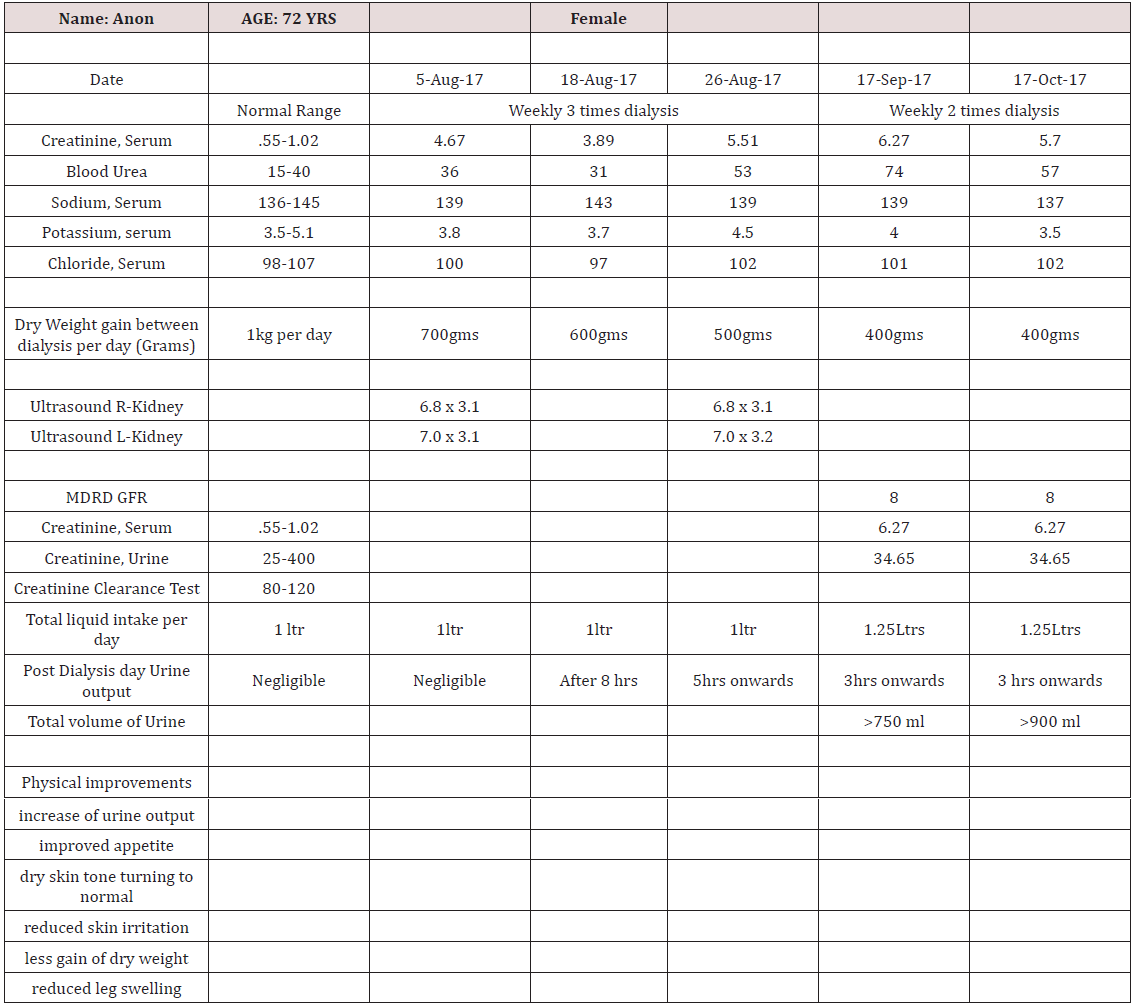
a) Physical improvements

b) increase of urine output

c) improved appetite

d) dry skin tone turning to normal

e) reduced skin irritation

f) less gain of dry weight

g) reduced leg swelling

Overall improvement in health & relief from depression, anxiety & other problems

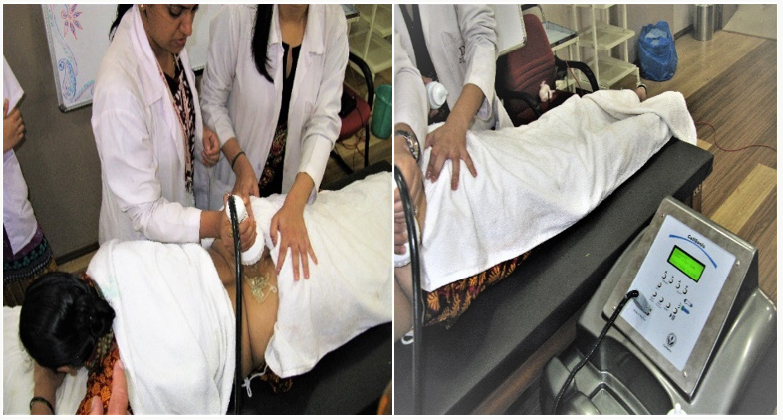
I was introduced to the patient at Professor Chouhan’s clinic. She was with her son who spoke English and he confirmed that his mother looked forward to the CellSonic treatments because they always left her feeling much better and she was now seeing that they would restore her kidneys to normal. More patients have been added to the CellSonic kidney treatment programme and good progress is reported for all of them. It is not an instant cure because new tissues take time to grow and have to be stimulated to grow. It is interesting that no drug can cause these changes. Only the effect of the VIPP (very intense pressure pulse) technology works. Quite apart from the benefit to the patient, the cost and time savings are enormous (Figure 1) and (Table 1).

Figure 1: Here we see a treatment in progress with CellSonic VIPP

Lupinepublishers-openaccess-biomedicalengineering-biosciences

Table 1: Physico-chemical parameters at refrigerator temperature (2 °C-8 °C/40% Rh).

Lupinepublishers-openaccess-biomedicalengineering-biosciences

Flexible plumbing

If the skeleton is the chassis, the organs and tubes are the plumbing. There has to be constant flow through the pipes. Blood must circulate carrying oxygen and platelets to all parts of the body. If blood is not present, tissues die. To maintain flow, the body must move. Exercise is a term we have started to use in recent years since it became possible to sit and lie for hour after hour. We now know that we must move to keep the contents of the flexible pipes travelling along. Think of the body as a factory in which raw materials come in to be processed into energy with unwanted side products ejected. Without the body moving, only the heart is beating and that too slows down until it is unable to push anymore. Idleness kills.

I remember almost fifty years ago, a friend in the cycling club, remarking that the colour of urine on a Monday was darker than later in the week. We were cycling up to a hundred miles at the weekends. That exercise flushed from our bodies rubbish that showed in the urine as dark brown. During the week, riding fewer miles, the elimination process was less vigorous and the urine became almost colourless. Not scientific measurement, of course, but evidence nevertheless and I believe that friend went on to a distinguished academic career in science. Note that all investigations begin with a simple observation. It was later realised when on a long cycle tour lasting more than two weeks that the urine colour remained almost colourless. The conclusion was that all the impurities were being flushed through continuously with regular exercise and by drinking more water than usual.

Sweat

A further observation when cycling in the heat is that the skin is dry. Don’t let that fool you into thinking you are not sweating. Come to a stop and within a minute you are covered in sweat. Whilst riding with air blowing over you, the sweat is dried as soon as it emerges. Only when you stop and lose the cooling effect of the draught do you realise the amount of water being lost. This volume is not available to the kidneys and has to be replenished to avoid dehydration. Interestingly, the sit-up posture on a bicycle is more efficient than the recumbent, lying down, position because the body acts as an air-cooled engine [5]. Overheating reduces efficiency. Although the upright rider creates more wind resistance, the air draught aids cooling. A streamlined cocoon that makes the recumbent bicycle look like a torpedo is only efficient over short distances during which high speeds can be attained and then the rider emerges lathered in sweat.

When exercising, an average person can sweat 1.4 litres an hour. [6] This is mostly water because the prime function of sweat is cooling by evaporation. With the water comes sodium plus minerals, lactic acid and urea, potassium, calcium and magnesium. Some trace elements are also found of zinc, copper, iron, chromium, nickel and lead. The significance of sweating can best be understood by thinking of the consequences of not sweating; all those chemicals and minerals would remain and accumulate in the body. Without sweating, would they filter out through the bladder and bowel? It is doubtful because we see in the body an operating system to maintain health dependant on exercise [7] without which health fails. Sweating is therefore as necessary as all the other bodily functions. Unfortunately, there was a social attitude that deplored women sweating. Gone are those attitudes of previous years when skirts had to be long enough to hide an ankle and waists squeezed so tight that the stomach failed.

Alcohol

The chemical name for alcohol is ethanol (CH3 CH2 OH). Medically, it is a poison. Socially, it is a lubricant. That people like to detach their minds is observable everywhere. Governments cannot ban it and have tried. Some religions succeed in banning it and others support it. The medical consequences of imbibing ethanol are serious. This is not just something that goes in and will flow out. When it is in, metabolic changes are made before the residues come out. A paper by Laura A. Stokowski, RN, MS entitled “No Amount of Alcohol Is Safe” should be compulsory reading for anyone over the age of twelve [8]. An earlier report from 2007 by the United States Department of Health and Human Services, Alcohol Alert, is not sanctimonious and the warning is clear [9].

Chemicals called enzymes help to break apart the ethanol molecule into other compounds (or metabolites), which can be processed more easily by the body. Some of these intermediate metabolites can have harmful effects on the body. Most of the ethanol in the body is broken down in the liver by an enzyme called alcohol dehydrogenase (ADH), which transforms ethanol into a toxic compound called acetaldehyde (CH3CHO), a known carcinogen. However, acetaldehyde is generally short-lived; it is quickly broken down to a less toxic compound called acetate (CH3COO–) by another enzyme called aldehyde dehydrogenase (ALDH). Acetate then is broken down to carbon dioxide and water, mainly in tissues other than the liver.

Although acetaldehyde is short lived, usually existing in the body only for a brief time before it is further broken down into acetate, it has the potential to cause significant damage. This is particularly evident in the liver, where the metabolism takes place. Some alcohol metabolism also occurs in other tissues, including the pancreas and the brain, causing damage to cells and tissues. Additionally, small amounts of alcohol are metabolized to acetaldehyde in the gastrointestinal tract, exposing these tissues to acetaldehyde’s damaging effects.

You should read the Alcohol Alert paper and if it leaves you in need of a drink, be sure it is spring water.

The notion that alcohol can flush out of the body is nonsense. Like all poisons, it does damage. It may be possible to repair that damage over time and abstinence. The frustration, medically, is that the patient voluntarily swallowed the poison and usually paid a lot of money for it. This desire to detach the brain and ignore the consequences is a feature unique to humans. Our brain distinguishes us from other animals, is supposed to be clever and yet fails in many cases to protect the individual. We cannot help those who do not want to be helped.

In addition to alcohol which has been distilled from ancient times even before agriculture, humans also like ingesting anything else that leaves them disoriented or worse. Magic mushrooms are celebrated. Narcotics are big business. Their addictive quality strengthens demand to the level of prioritising its consumption above all else, even to accepting a longer stay in prison (which confirms that for this problem prison is useless).

There appear to be more people eager to endanger their health than to preserve it. Cancer and diabetes are not infectious diseases and are now seen as avoidable. As Laura Stokowski points out, the role alcohol plays in preventing the immune system from intercepting and destroying mutant cells is denied when the patient is asked about their drinking habits. Prosperity allows many families to have wine with every meal. Do they think it is healthy and full of vitamin C from grapes?

Since I developed the means of stopping cancer more than two years ago, I have become acquainted with nutritional cures for cancer which have the merit of supporting the immune system and thereby killing incipient cancer cells. In all cases, the nutrients and food supplements contain minerals and vitamins which do not store in the body and if they did they may become as much a danger as the problem they are trying to solve. For the cure to work, what goes in, must come out. This means that all exits have to be open, not just the bowel and bladder. Eyes wash with water when we blink, saliva glands wet the mouth, the nose runs and wax forms in the ears. As well as oiling the skin to protect against constant water and at other times the baking of the sun, our pores release chemicals that should come out after they have fulfilled their role in maintaining balances.

The Microbiome Balance

One way to understand the balance is to think not just of the balance of the body’s nutrition but the requirements of our microbiome, the masses of bacteria that collectively support our health. It can be argued that the microbiome is not there to support us but that we are living to host the microbiome. There is a constant balancing programme running to keep the bacteria fed so that it can reproduce without harming its host. The behaviour of gut bacteria is controlled through the vagus nerve, the 10th cranial nerve that runs from the brain stem down to the abdomen [10]. Dr Mercola reports that the makeup of gut microbiome can have a tremendous influence over psychological health and well-being affecting both the general mood and a risk of more serious mental health dysfunction (Figure 2).

Figure 2: The bowel

Lupinepublishers-openaccess-biomedicalengineering-biosciences

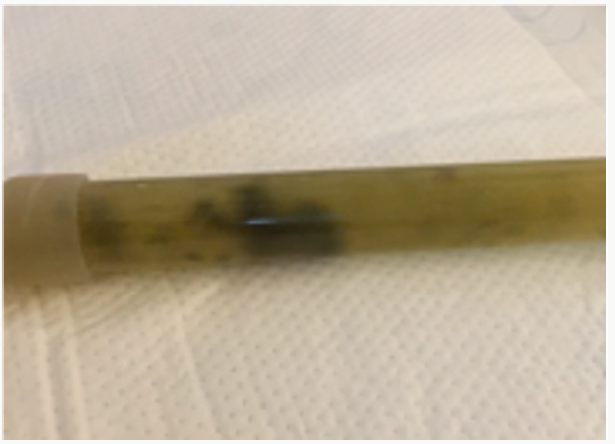
The black, hard pieces of gravel in the tube in this photo were for many years in the bowel of a patient who was being treated for cancer. Thankfully, the doctor took a holistic approach and by a thorough examination found what had been causing pain. That was a problem; some of the pain was from cancer and some was from other failings such as this bowel detritus. That the immune system had been unable to support the patient is obvious. The doctor succeeded in returning the health to where it had been twenty years earlier and hoped that the patient had learned what to do to stay healthy.

Opening the valves

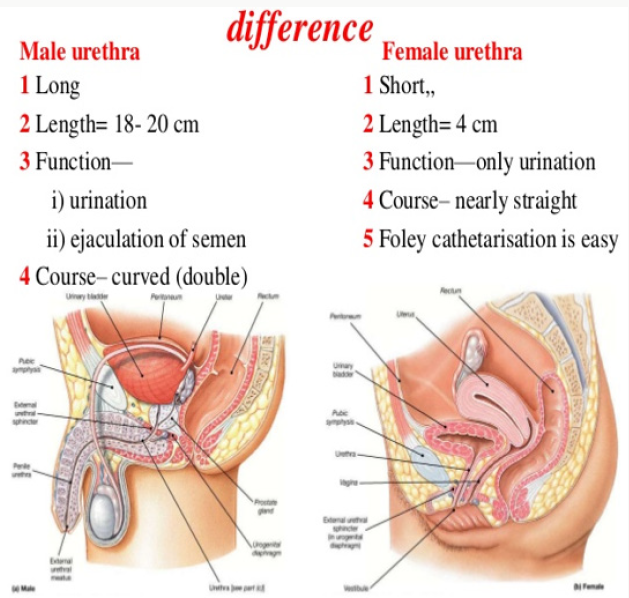
Figure 3: The source of this cross-section diagram is unknown. It was found on the internet.

Lupinepublishers-openaccess-biomedicalengineering-biosciences

It may seem unnecessary to advise a man how to urinate but what is obvious to a child is more difficult as he ages. The ladies have problems of a different kind. As the urology student soon learns, the old men have difficulty opening the valve whilst the ladies may have trouble keeping it closed. The main difference is that the female urethra is short and the male urethra more than four times longer. The source of this cross-section diagram is unknown (Figure 3). It was found on the internet. There is a lot of publicity advising men to have their prostate checked if they are frequently needing to urinate. If the prostate gland compresses the urethra, the flow of urine is restricted. The frequency of urination and the amount passed is measured with a uroflow meter [11]. The importance of the prostate inspection is to check if a cancer growth is causing the obstruction.

A problem seldom admitted by the elderly is reduced elasticity. This can be see easily in wrinkled skin. It is also happening internally. A young bladder would fill and then empty powerfully squeezing the contents. As the elasticity of the bladder deteriorates, it lacks the pressure to expel the urine. It could be this, not just an expanding prostate gland, that is the problem.

As you get older, you learn where the toilets are. When you go to a new place, identify the toilets in readiness and the rule is never miss an opportunity to use the toilet because you don’t know when you will find the next one. When you urinate and think the bladder has emptied, wait, maybe thirty seconds, and then a few more drops will come out. That delay has given the bladder time to shrink. Removing the last few dregs is important because if they are left inside they can cause infection leading to further problems. The usual cure is to drink an excessive amount of water and flush out the infection. The body protects itself from dehydration. When it senses aridity from dry air which can be the weather or air conditioning, it will retain water. The stomach can be bloated. Ankles and wrists swell. Move to a cooler, humid environment and quickly the bladder will be back in action. Opening the bowel is assumed to be a matter of squeezing. That is sometimes easier said than done. Toilet seats are a recent invention in the evolution of humans and always too high. The natural posture for defecating is to squat. This positions the bowel and anus ideally to release the contents.

Food and soil

Food intake is fundamental. If the food lacks nutrients, the body suffers. The nutrients come from soil either into plants eaten directly or by the plants to animals that are eaten. Either way, soil quality is essential for human health. The industrialisation of agriculture has leached soils. Yields are sustained by fertiliser that does not lead to better nutrition. Crops are sold by weight, not by nutritional quality. Fifty years ago, the strong man, cartoon character, Popeye ate spinach for strength. Now he would need to consume fifty times more spinach to ingest the same amount of iron that he got fifty years ago. The crops may look and weigh the same but what is needed in them is not there. Just as the pharmaceutical industry has replaced natural foods with synthetic additives so too has the fertiliser industry ignored the benefits of natural methods of recycling bacteria back into the soil [12,13]. An interesting company is CBX based in Arizona in the USA and known in Europe as Envirom Green based in Norway. CBX discovered Leonardite, an ancient geological deposit of plant material that has not turned to coal and decomposed slowly over millions of years until only the mineral elements remain. Their websites show with and without photos of crops treated with and without CBX and the differences are startling [12a]. Follow the link to what CBX call the 5th element. There is life in soil.

Soil

In 1 teaspoon of soil there can be the following numbers of microbes:

a) 1 to 600 million individual bacteria

b) 5 to 60,000 yards of Fungal Hyphae

c) 100 to 100,000 Protozoa

d) 5 to 500 beneficial nematodes

e) few to several hundred thousand Microarthropods

These organisms help convert organic matter and soil minerals into the vitamins, hormones, disease-suppressing compounds and nutrients that plants need to grow. Healthy soil makes healthy plants and promotes the health of those who eat the plants. The concept of what goes in, must come out is displayed in the soil enrichment company called Bat Master [14] They have found an inexhaustible supply of bat guano (dung) in deep caves that rebalances and replenishes exhausted soils so successfully that it rids plants of disease better than any pesticide. They call their product a plant food. Apparently, there would be legal complications if it were called fertiliser. Bats eat insects. Ingesting the variety of foods from many types of insects delivers to the bat’s faeces a bountiful range of minerals and decayed bacteria. This is what Popeye needs at the start of his food chain.

Conclusion

We are scared. We do not know where the food and drink we put into ourselves comes from. We have to trust the suppliers because we have no choice. Even farmers buy food in the shops. In this modern world, hardly anyone grows everything they need for every day of the year. The best we can do is be careful and hope that what goes in will come out without doing harm whilst inside us.

Read More About Lupine Publishers Journal of Medical Sciences Please Click on Below Link: https://lupine-publishers-medical-sciences.blogspot.com/
Wednesday, 6 April 2022

Lupine Publishers| Cefpodoxime Proxetil and its By-Products: A Comparative Study as Per EP-7

 Lupine Publishers| Journal of Medical Sciences


Abstract

Cephalosporins are the highly used Broad-spectrum antibiotics, belong to β-lactam class. Cephalosporins resemble penicillin in that they have a β-lactam structure, but the five-member thiazolidine ring characteristic of the penicillin is replaced by a sixmember dihydrothiazine ring. The bactericidal action of beta lactam antibiotics is directly attributable to their ability to react with PBP’s. The research work relates to a by-products during process for the industrial manufacture of Cefpodoxime Proxetil. The drug is registered in USP and belongs to 3rd generation drug. It was discovered by Brotzu in fungus Cephalosporium Acremonium which produces a chemical which show antimicrobial activity. Abraham isolated the three fragmentation patterns of cefpodoxime proxetil. Data from this systematic study will help improve the safety and quality of cefpodoxime proxetil types of cephalosporin antibiotics cephalosporin P, cephalosporin N, cephalosporin C.7-ACA is widely used as the substrate for synthesizing cephalosporin antibiotics. Modification of the 7-ACA side-chains resulted in the development of useful antibiotic agents, and the first agent is Cephalothin (cefalotin) was launched by. Eli Lilly Company in 1964 There are many patents which gives the procedure of Synthesis of Cefpodoxime ProxetilStability of three Cefpodoxime proxetil products available in indian market at fridge temperatures (2-8 °C), room temperature (25 °C) and elevated temperature (42 °C). Flow properties, rheological and the physicochemical parameters of both powder and reconstituted powder were used to evaluate the stability of different brands of Cefpodoxime proxetil available in india. The powder of stability samples was eluted through a C18 column with formic acid-methanol-water as the mobile phase. In total, 15 impurities were characterized in commercial samples, including 7 known impurities and 8 new impurities. The structures of these unknown compounds were deduced via comparison.

Introduction

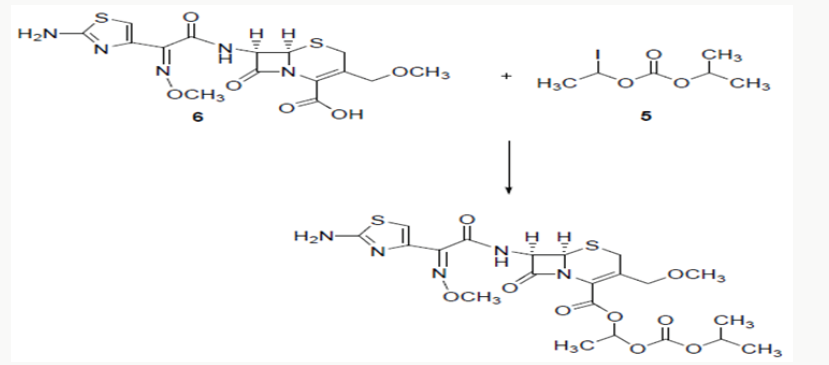
Scheme 1: Synthesis of cefpodoxime proxetil [1].

Lupinepublishers-openaccess-biomedicalengineering-biosciences

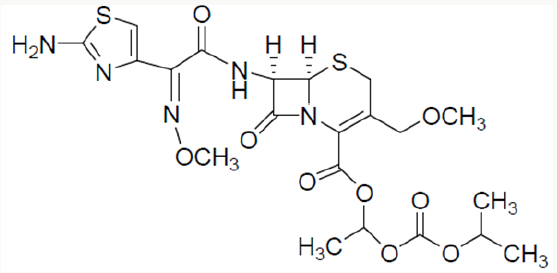
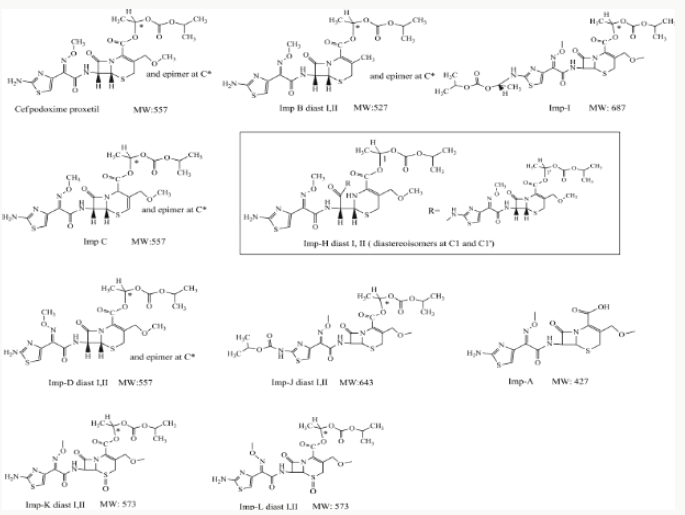
Cefpodoxime proxetil1 is chemically known as 1-(isopropoxycarbonyloxy) ethyl (6R,7R)-7-[(Z)-2--(2-amino-4- thiazolyl)-2- (methoxyimino)acetamido]-3-methoxymethyl-3- cephem-4-carboxylate. Cefpodoxime proxetil is a potent antibiotic and is of great therapeutic interest in the treatment of acute bronchitis, exacerbations, pneumonia, sinusitis, recurrence of chronic tonisillitis, pharyngitis and acute otitis media. Several methods have been reported in the literature2-4 for the synthesis of cefpodoxime proxetil [1]. Cefpodoxime acid (6) is treated with 1-iodoethyl isopropyl carbonate (5) to produce cefpodoxime proxetil 1, as shown in scheme 1. 1-iodoethyl isopropyl carbonate (5) is prepared5-7 from 1-chloroethyl chloroformte 2, as shown in scheme 1. 1-chloroethyl chloroformate (2) is reacted with isopropanol in presence of a base to produce 1-chloroethyl isoprpopyl carbonate (4). 1-chloroethyl isoprpopyl carbonate (4) on further treatment with sodium iodide results 1-iodoethyl isopropyl carbonate (5).

Cefpodoxime proxtil is a cephalosporin class of antibiotic used for the treatment of bacterial infection. It consists of eight steps namely Methoxilation, condensation side chain formation, work up charcolisation, crystallization and drying [2]. Stage 1: Methoxylation of 7-ACA is carried out with methanol and BF3 complex at low temperature. filter and pH of the filtrate is adjusted with TEA to get 7-AMCA (Stage-I). Stage 2: 7-AMCA is condensed with MAEM in presence of methanol and TEA. By product is removed by filtration. Filtered mass is treated with activated carbon. Product is isolated by adjusting its pH with sulphuric acid. It is centrifuged, washed with acetone and dried at 45 °C to get Cefpodoxime acid. Stage 3 1-Iodoethyl isopropyl carbonate is further subjected to condensation with the Cefpodoxime Acid in the presence of dimethyl acetamide using the 1,8- Diazabicyclo [5,4,0] unde-7-ene (DBU) as a catalyst which on further workup with water & washing with sodium thiosulfate & sodium chloride ethyl acetate, cyclo hexane and treatment with Methanol & EDTA & its further crystallization using the ammonia solution for pH adjustment yields the Cefpodoxime Proxetil 10.

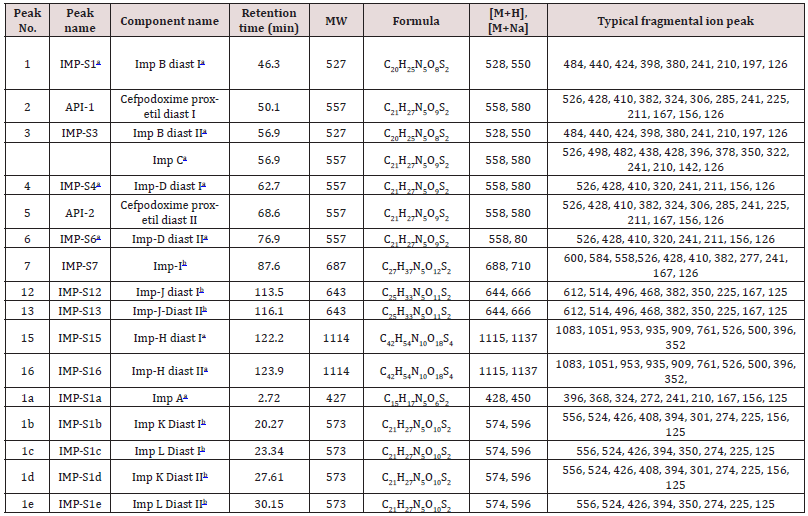
Cefpodoxime proxetil an oral, broad-spectrum third generation cephalosporin antibiotic. It has in vitro activity against many common Gram-positive and Gram-negative pathogens associated with common pediatric infections, so it is a useful option for empirical therapy. It is listed in the United States Pharmacopeia 36th Edition, the European Pharmacopeia 7.0 Edition and the Japanese Pharmacopeia 15th Edition. Different analysis methods have been developed and compared to measure impurities and degradation products. Fukutsu et al. identified three degradation products of cefpodoxime proxetil by high-performance liquid chromatography-hyphenated techniques. However, ICH guidelines Q3A require that all impurities (from processing and degradation) be identified above a certain threshold. Yet, currently, a systematic study for identifying cefpodoxime proxetil impurities is not available11-12. Hence, we focused on identifying unknown process impurities and degradation products in cefpodoxime proxetil using a chromatographic system from the European Pharmacopeia 7.0 Edition using liquid chromatography with diode array detection (LC-DAD), multiple stage mass spectrometry (MSn), and liquid chromatography-high-resolution mass spectrometry (LC-HRMS) methods along with stress degradation tests, degradation and mass fragmentation mechanisms of cephalosporins, and related synthesis processes. These studies will inform future quality control and safety of cefpodoxime proxetil products. We characterized 15 impurities including 4 new degradation products and 4 new process impurities, along with 7 known impurities as identified in the European Pharmacopeia. We would discuss these as well as the most likely cause of their appearance and the mass fragmentation pathways of the impurities.

Stability of a pharmaceutical product may be defined as the capability of a formulation in a specific container/closure system to remain within its physical, chemical, microbiological, toxicological, protective and informational specifications [3]. Although there are exceptions, 90% of the labelled potency is generally recognized as the maximum acceptable potency level [4]. Thus, stability study maintains the product quality, safety and efficacy throughout the product shelf-life [3]. The stability of pharmaceutical products depends on many factors, such as stability of the active pharmaceutical ingredient, the potential interaction between the active ingredient and the excipient, the dosage form, the storage condition, handling and length of time between manufacture and final usage. Although factors like environmental influence like light, moisture and heat are important in stability study of pharmaceutical products [5]. Dry powders for oral suspension are powder mixtures which require reconstitution at the time of administration mostly for paediatric use [6]. We therefore investigated the effect of temperature on the physicochemical characteristics of some oral re constitutable Cefpodoxime proxetil dry powder and suspension available in Nigerian pharmaceutical market and also to be able to select and recommend the best from the series of possible choices. This study specifically aimed to achieve these objectives by applying a simple, accurate and less time-consuming validated UV spectroscopic method for the quantification of Cefpodoxime proxetil in samples subject to variable storage conditions, thus their physicochemical stability assessment over a period of time. Three brands of Cefpodoxime (40mg/5mL, 50 mg/5mLl and 40 mg/5mLl) containing 800 mg, 1000 mg and 800 mg respectively for reconstitution in water for oral use were used in this study. The brands used (A: Innovator product, B: Generic product-Indian origin, and C: Generic product Indian origin) [7-10].

Physical properties determination18-19 The samples (reconstituted and non-reconstituted) were evaluated for physical stability by determining the aesthetic appeal (odour, taste, colour and texture), sedimentation volume, ease of re-dispersion, viscosity, particle size, flow rate, angle of repose, bulk density, tapped density, compressibility index and Hausner’s ratio as applicable. All parameters were performed in triplicate 13-15. Powder material and degradation products under different forced degradation conditions: 60 °C water bath degradation; high-temperature degradation; oxidative degradation, UV degradation; and, UV+ oxidative degradation). Acetonitrile was purchased from Thermo Fisher Scientific. Formic acid (98.0%) was supplied by Sigma- Aldrich Co. Ltd. and analytical-grade hydrochloric acid (HCl), NaOH and (H2O2, 30%) Merck A milli-Q (Millipore, Billerica, MA) was used to further purify glass-distilled water. RS (Batch17-201802, containing 95.9% of cefpodoxime, India.

Reference standard and sample solutions preparation

Approximately 3mg of cefpodoxime proxetil systematic RS was transferred to a 10mL volumetric flask, and dissolved in 10mL of a mixture of water, acetonitrile and acetic acid (99:99:1, v/v/v). This was the systematic RS solution. Next, 3mg of cefpodoxime proxetil impurity H RS was added to a 10mL volumetric flask and dissolved in 10mL of a mixture of water, acetonitrile and acetic acid (99:99:1, v/v/v). This was the impurity H RS solution. Then, cefpodoxime proxetil capsule contents (50mg) were dissolved in 50mL of a mixture of water, acetonitrile and acetic acid (100%) (99:99:1, v/v/v) [11-13]. This was the sample solution. Cefpodoxime proxetil bulk material (50mg) was dissolved in 50mL of a mixture of water, acetonitrile and acetic acid (99:99:1, v/v/v). This was the forced degradation stock solution.

Instrumentation

The LC/MS system consisted of a 3201 S1-2 binary pump, a 3202 S1-2 vacuum degasser, a 3014 S1-2 column heater, a 3012 S1-2 column switch system, a 3133 S1-2 sampler from SHISEIDO (Tokyo, Japan), an Accela PDA detector (Thermo Fisher Scientific Inc., Waltham, MA) and a 3200Q TRAP mass detector (Applied Biosystem Inc., California), controlled by Analyst® software (version 1.5.1).

Forced degradation study

The forced degradation stock solution was transferred and degraded under acidic, basic, 60 °C water bath, oxidative, UV and high-temperature conditions, separately.

Acid degradation solution

About 5mL of stock solution was transferred into a 25mL volumetric flask. Then, 2mL of 0.1mol/L hydrochloric acid was added. This mixture could stand for 2h, and then the acidic solution was neutralized with 2mL of 0.1 mol/L sodium hydroxide. Base degradation solution: About 5mL of stock solution was transferred into a 25mL volumetric flask and 2mL of 0.1mol/L sodium hydroxide was added and maintained for 2h. The basic solution was then neutralized with 2mL of 0.1mol/L hydrochloric acid16. Oxidative degradation solution: About 5mL of stock solution was transferred into a 25mL volumetric flask. Then, 1.0 mL of 10% hydrogen peroxide solution was added. This mixture was maintained for 2 h. Water bath degradation solution: About 5mL of stock solution was transferred into a 25mL volumetric flask. This solution was kept in a 60 °C water bath for 45min, and the solution could cool to room temperature. UV degradation solution: About 10 mL of stock solution was placed under UV light (254nm) for 12h. Hightemperature degradation solution: About 100mg of cefpodoxime proxetil bulk material was placed in an oven at 60 °C for 2h. Then 10mg of the above sample was transferred into a 10mL volumetric flask. The sample was dissolved and diluted with a mixture of water, acetonitrile and acetic acid (99:99:1, v/v/v).

Chromatographic Conditions

The analysis was carried out on a Kromasil 100-5 C18 column (4.6 mm×150 mm, 5 μm-particle diameter). Mobile phase A contained formic acid-methanol-water (1:400:600, v/v/v). Mobile phase B contained formic acid-methanol-water (1:50:950, v/v/v). UV detection was at 254nm and the flow rate was kept at 0.6mL/ min. Column oven temperature was 25 °C and the data acquisition time was 165min. The pump mode was gradient, and the program was as follows, time (min)/A (v/v): B (v/v); T0.01/95:5, T65.0/95:5, T145.0/15:85, T155.0/15:85, T155.1/95:5, and T165.0/95:5.

Mass Spectrometry

Tuning and MSn investigation of cefpodoxime proxetil and impurities was carried out using the following optimized MS conditions16 ,17:

a) Electro spray ionization: (EPI) positive ionisation mode, decluster potential (DP) 50 V, entrance potential (EP) 10 V, collision energy (CE) 40 V, curtain gas: 20.0 L/h. Ion source gas 1: 65.0 L/h, ion source gas 2: 60.0L/h, ion spray voltage (IS): 5500 V, temperature (TEM): 500.0 °C, and Interface heater. Enhanced MS (EMS) and enhanced product ion (EPI) spectra were acquired from m/z 50 to m/z 1200 in 0.1 amu steps with dwell time of 2.0 s. Analyst software (version 1.5.1) was used for data acquisition and processing. Molecular weights of each component were deduced using protonated.

b) Molecular ions- ([M+H]+) and were confirmed using minor adduct ions of [M+Na]+ and [M+K]+ peaks: High resolution-mass spectrum (HR-MS) investigation was accomplished with a dual gradient Ultimate 3000 HPLC system (Dionex Inc., Sunnyvale, CA) equipped with a LTQ Orbit trap XL high resolution mass spectrometer (Thermo Fisher Scientific Inc.) with the following MS conditions: positive ionization mode, FT cell recording window from m/z 100 to 1200, and resolution 60,000. Data processing was performed using Perl script (Quant Merge) software.

Results and Discussion

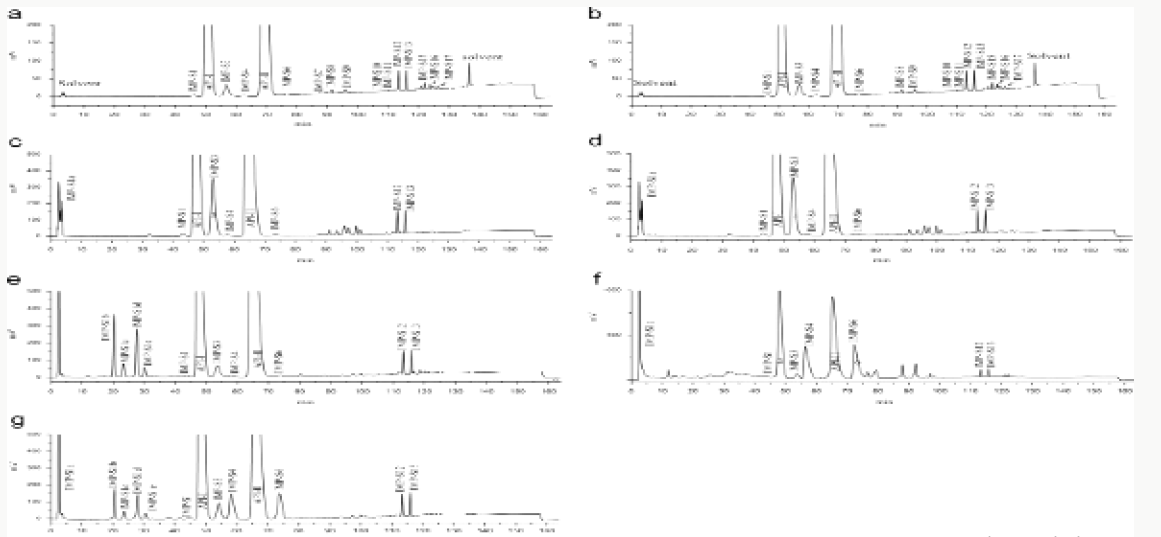
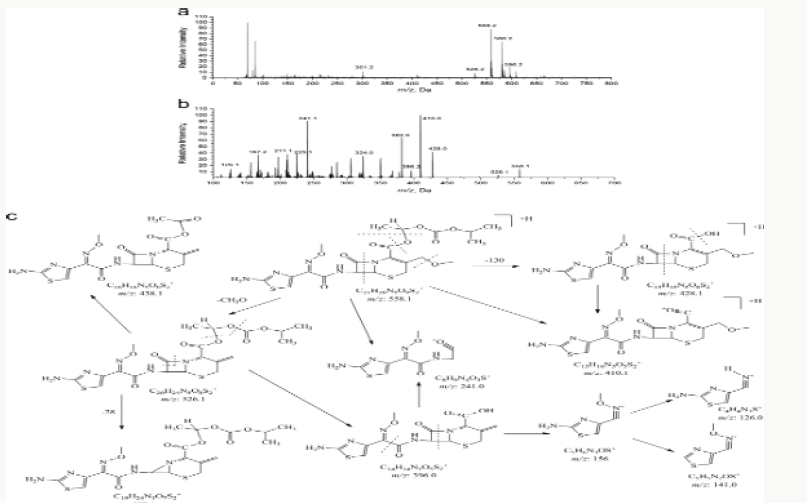
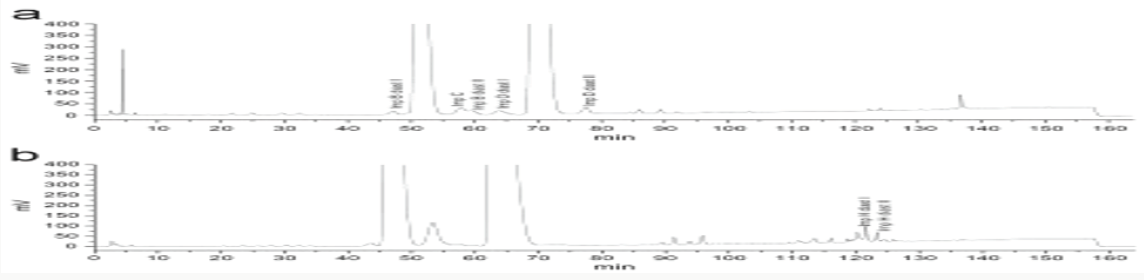
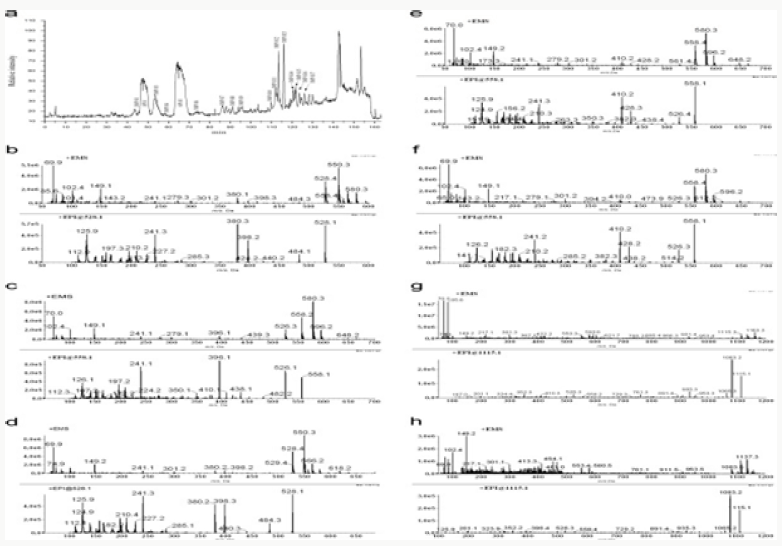
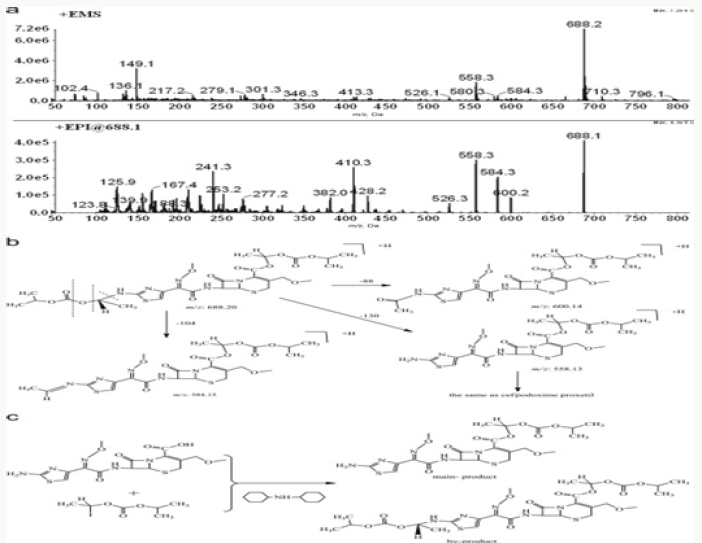
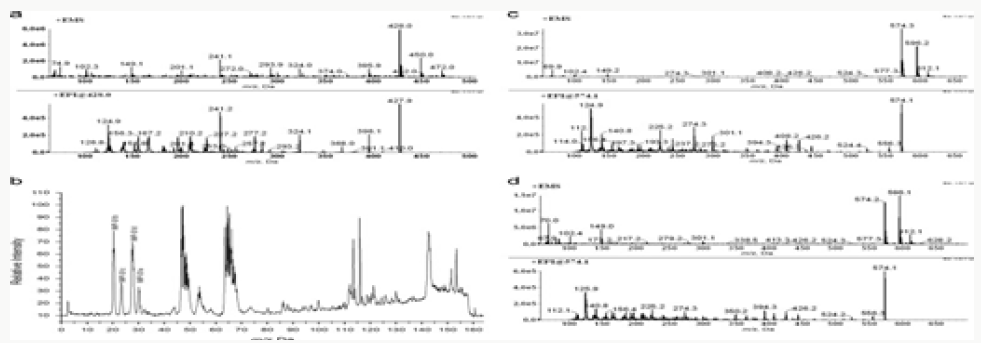
Impurity analysis by HPLC- Bulk materials were analyzed using the HPLC-DAD FIG a and b) and 15 impurity peaks were detected from the two samples. All 15 impurities originated from cefpodoxime proxetil bulk material. To determine the source of impurities, cefpodoxime proxetil bulk material was degraded under alkaline, acidic, 60 °C water bath, oxidation, hightemperature, and UV irradiation conditions, based on published cephalosporin degradation conditions. Typical chromatograms for the different forced degradation conditions are shown. Mass fragmentation pathway of cefpodoxime proxetil Understanding cefpodoxime proxetil fragmentation pathways can help identify impurity structures. Cefpodoxime proxetil was analyzed in positive ion mode firstly by direct flow injection using a methanol/water (1:1) mixture as the solvent through MSn. Mass spectra and the cefpodoxime proxetil mass fragmentation pathway are shown in Figures 1-3. The primary reason why drugs are formulated as a suspension for reconstitution is inadequate chemical stability of the drug in aqueous vehicle [14]. In this study we investigated the effect of temperature on the physicochemical characteristics of some brands of oral re constitutable Cefpodoxime proxetil to determine their stability profile. All the samples were within the expiry period and registered with appropriate drug regulatory agency in India. The colours of the un reconstituted product varies from off white to cream colour (sample “A”) and yellow to brown (sample “B’’) in spite of the fact that sample “C” maintaining its cream colour all through the duration of the study. The colours of individual sample depend on other formulation excipients. The reconstituted samples were banana flavoured, sweet with smooth texture. Chemical stability was analyzed through the drug content assay and by chromatography for possible degradation product of active drug (Cefpodoxime proxetil). The percentage of the labelled claim of the non-reconstituted samples decreased with time, across the different samples and at different storage conditions. Product “B” had the least percentage content across all storage conditions used (Figures 4-6).

Figure 1: structure of cefpodoxime proxetil [1].

Lupinepublishers-openaccess-biomedicalengineering-biosciences

Figure 2:

Lupinepublishers-openaccess-biomedicalengineering-biosciences

Figure 3:

Lupinepublishers-openaccess-biomedicalengineering-biosciences

Figure 4:

Lupinepublishers-openaccess-biomedicalengineering-biosciences

Figure 5:

Lupinepublishers-openaccess-biomedicalengineering-biosciences

Figure 6:

Lupinepublishers-openaccess-biomedicalengineering-biosciences

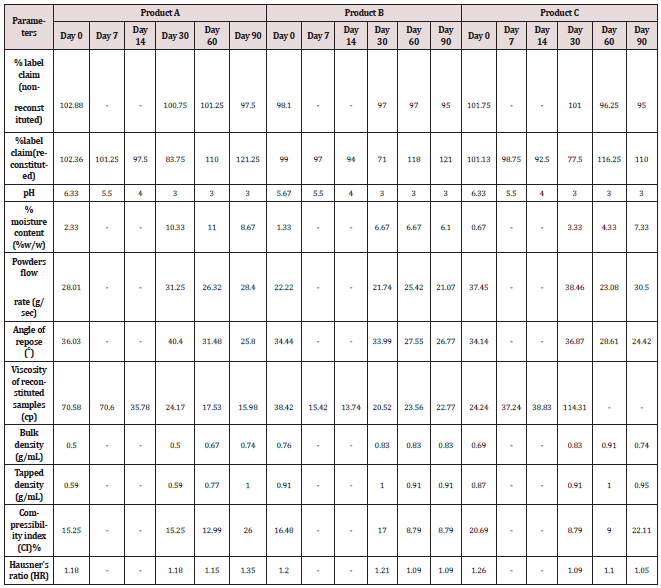
The drug content of samples in the refrigerator were within the USP specification for the duration of the study, except Product “B” whose drug content could not meet the specification on day 90 at room temperature [15]. Degradation of Cefpodoxime occurs either acidic, alkaline, oxidative, photolytic stabilities or combination thereof, but in this study as a result of the type of dissolution medium and the ester functional group present in the drug one is tempted to say hydrolysis must have play an important role in the degradation of Cefpodoxime proxetil [16]. The decrease in drug content of the samples as the sample ages for the non-reconstituted samples were reversed on day 60, across all brands and storage conditions. The chromatographic analysis of the reconstituted products showed two distinct retention factor values on days 60 and 90 (Tables 1 and 2). The implication of this is that before/on day 60 another product (possibly the degradation product) has been formed which possibly might have a similar wavelength of maximum absorption close to that of the pure Cefpodoxime proxetil, thereby increasing the absorbance value obtained and therefore the corresponding increase in the calculated amount of the Cefpodoxime present in the samples (Further research is ongoing in our laboratory to characterize the product that gave the second Rf value) (Figures 7-10). Changes in concentration may be caused by the mechanisms associated with hydrolytic decomposition and higher temperatures during the long period of storage [17].

Figure 7:

Lupinepublishers-openaccess-biomedicalengineering-biosciences

Figure 8:

Lupinepublishers-openaccess-biomedicalengineering-biosciences

Figure 9:

Lupinepublishers-openaccess-biomedicalengineering-biosciences

Figure 10:

Lupinepublishers-openaccess-biomedicalengineering-biosciences

Table 1: Physico-chemical parameters at refrigerator temperature (2 °C-8 °C/40% Rh).

Lupinepublishers-openaccess-biomedicalengineering-biosciences

Table 2: Physico-chemical parameters at room temperature (25 °C/60% Rh).

Lupinepublishers-openaccess-biomedicalengineering-biosciences

Weakly acidic or basic drugs show good solubility because of ionization and thus their degradation rate is faster. For the reconstituted samples, the pH decreases as the suspension ages across all the storage conditions and brands (Tables 3). The decrease in pH value is expected Cefpodoxime being an ester which readily hydrolysed in water to form carboxylic acid, though the acid produced is either poorly soluble or it exceed its solubility product thereby leading to product colour change or cloudiness [18]. This explains the colour changes earlier discussed. Most disperse systems are stable over a pH range of 4-8. The pH of the sample decreases as the samples ages. Products “A” and “C” have similar pH variation, although the pH of product “B” (3.00) deviate from the standard pH range stated above as early as day 14 at elevated temperature while, the pH values of products “A” and “C” only deviated from the standard range on day 60 across the storage conditions. The three brands evaluated were banana flavoured and sweet to taste throughout the duration of the study for refrigerated and room temperature conditions while the taste turned sour on the 30th day for all the brands at elevated temperature. Sour tastes rely on ion current to conduct the taste signal, thus stronger ionic taste. Recall that hydrolysis of Cefpodoxime lead to more ionic degradation products. Particle size has profound effect on the dissolution of a formulation. The bigger the particle size the lower the dissolution rate and the less intense the taste of the particle. The particle sizes for products “A” and “C” were similar and significantly smaller than that of product “B”. Within the first 30 days of this study all the reconstituted samples were of smooth and sticky texture except for those kept in the refrigerator which is smooth. The increase in temperature at both room and elevated temperature might have increase the kinetic energy of the individual particles of the molecules, thereby leading to an increase in their rate of collision which resulted in the samples being sticky.

Table 3:

Lupinepublishers-openaccess-biomedicalengineering-biosciences

Conclusion

The purpose of stability testing is to provide evidence on how the quality of a drug substance or drug product varies with time under the influence of a variety of environmental factors, and it enables us to predict the storage condition, predict the period in which the product should be re-tested and finally determine the product shelf life. This research studied three brands of Cefpodoxime proxetil poeder (Products A, B and C) at potential temperature of exposures, which shows that the refrigerator temperature condition (2 °C -8 °C/40% Rh) is best for storing the reconstituted suspensions and the non-reconstituted samples is best stored at room temperature condition (25 °C/60% Rh). Product A showed a very good chemical, physicochemical and physical stability profile over time when compared with Product B and Product C. Thin layer chromatography show the presence of the degradation product after prolonged storage which underscores the importance of manufacturer instruction for storage and disposal of the product after usage. The increase in the absorbance of the reconstituted suspension after day 30. The impurities in commercial cefpodoxime proxetil samples were characterized based on MS/MS fragmentation pathways and chromatographic behaviours. In total, 15 impurities were detected in the sample. Based on published cephalosporin degradation mechanisms, stress tests were designed and performed. The data showed that four impurities were degradation products and 11 impurities originated from the synthesis process. In addition, five impurities were potential degradation products. Seven known impurities were accurately elucidated by comparison with the mass spectra of the systematic RS and impurity H RS. Eight new impurities were elucidated for the first time based on the synthesis process and the mass fragmentation pathway of cefpodoxime proxetil. The remaining five synthetic impurities were not characterized by MS/ MS methods because they were in very low concentrations. This systematic study to identify impurities in cefpodoxime proxetil samples will assist us to improve its quality and safety. Note: These impurities are reported in European Pharmacopeia 7.0.b-These unknown impurities are characterized for the first time.

Read More About Lupine Publishers Journal of Medical Sciences Please Click on Below Link: https://lupine-publishers-medical-sciences.blogspot.com/
Monday, 4 April 2022

Lupine Publishers| Doctors should be paid more

 Lupine Publishers| Journal of Medical Sciences


Abstract

Only by increasing productivity can earnings be increased. This applies to doctors as much as all trades. Better techniques enable diseases to be cured that have hitherto been impossible by traditional methods. By these means, a doctor can heal more patients more easily. Thus, a doctor can earn more, and patients be charged less.

Introduction

In every country, a medical doctor is highly respected and usually paid double the average wage and often much more especially if they can be self-employed and charge the patients directly. Governments and insurance companies always control the medical providers. Doctors are seen as having the power of life and death over people and this is feared by politicians who seldom understand medicine. So long as students continue to apply to medical schools, the renumeration is settled by supply and demand. If there are enough doctors, the pay must be enough. If doctors left the profession and fewer students enrolled, the pay would be increased to attract more.

All this assumes that a doctor is able to restore health and postpone death. Longevity has increased, so doctors and the medical industry claim to be earning their keep. But is living longer a result of what a doctor can do when called upon to stop an illness? What about the improvements in sanitation that happened over a hundred years ago in the modernised countries and are being installed now in emerging countries. Soap does more to maintain health than aspirin. It has to be said that a headache is never the result of an aspirin deficiency [1]. Plumbers contribute more to health than doctors. Some can earn as much as doctors by working hard and taking on unpleasant jobs. To become a doctor requires more study and expense than ever faces an apprentice plumber and the skills are different.

The makings of a doctor

Think back to school days. Those who passed exams all had good memories. They may have lacked imagination but when it came to remembering names and dates, they had total recall and that is all an exam tested. Medical students are similarly tested on their memory [2]. Now ask whether a good memory is more important than an instinct for asking the right questions when it comes to puzzling out what the cause of an illness is. Having learned a lot of case histories, a doctor may remember that what he sees in the clinic is the same as reported in a text book and on that basis prescribes drugs which should help. That, unfortunately, is not good practice and usually supplied with the advice, “If you don’t feel better in a few days, come back and we’ll try something else.” Whether the medicine works or not, the doctor gets paid. By contrast, if the new toilet did not flush, the plumber would not be paid until it worked properly.

A doctor’s priority

The doctor will have provided the patient with a medicine that can be justified as correct by reference to existing practice. It will have been used before and tested. Whether the circumstances are the same, one can never be sure but at least the uncertainties are limited if the drug, and it usually is a drug, has been around long enough to be well tested. This is all about legalities. The doctor’s first responsibility is to protect himself and his colleagues. It is not about doing the best for the patient.

A patient who has not been treated by a doctor, cannot sue that doctor. This is now the first rule of medicine.

The language of medicine is deliberately non-conventional. It will be argued that it eliminates misunderstandings and can be more precise. So, who misunderstands? It is always the patient. Who dares to argue with a doctor? His rebuttal will be to let you seek a second opinion. Go for an operation and you will have to sign a disclaimer. Only another doctor would understand the legal clauses. Dentists are the same. As you sit in the waiting room two minutes before the appointment, the nurse presents you with a tenpage document and asks you to sign it; you do, so that if anything goes wrong, it is your fault and you still have to pay.

Where’s the money?

The whole procedure should be changed to put the patient first. In every other business, the customer comes first. Ask any doctor about their pay and they will tell you they do not do it for the money, they do it for the satisfaction of helping people. Does that mean they would work for less pay? No way! It means they know what to say to maintain their status. The world’s first welfare state was created by Aneurin Bevan [3] in Britain after the tragedy of the second world war. He wanted all hospitals to be government owned and all doctors to work for the government. The doctors’ unions protested. They were self-employed and could charge whatever the patients would stand. Eventually Bevan had to compromise and allowed the doctors to work for others as well as the government. In other trades, this is known as moonlighting and is generally frowned upon but for doctors it is regarded as the step up to the high earnings. Private medicine was allowed to run alongside the National Health Service and gave the surgeons and those at the top of the NHS an opportunity to put in a few extra hours in private hospitals so that they can bring their total earnings to about five times more than they would get from the NHS alone. Usually insurance companies were covering the costs of treatment in the private hospitals. The doctors were the same whether the patient was in private care or the NHS. The difference being that the floors in the private hospitals are carpeted and patients had individual rooms with a television. The patient would also jump the queue. The NHS would keep the patient waiting and that wait would be longer if the surgeon was not available due to commitments in the private hospital. Bevan’s socialist ambitions were thwarted, not by the patients who are the electorate, but by the doctors. Nevertheless, the NHS, now in its 70th year grumbles along with almost daily complaints about insufficient money. The assumption that spending more on health care will improve health is false and based on pleas from the medical profession. Never having worked in any other job, they think they work harder than anyone else and have higher responsibilities. How often does a doctor say, Unfortunately, you are not responding to the medication? It is the patient’s fault.

Payment by results

Pay doctors and their support staff according to results and their attitude will change. All other workers are paid on this basis. Productivity is the measure of efficiency and performance. No longer should the medical profession be allowed to hide behind their failure to apply better means of healing. If a doctor is unable to cure a disease, let him sue his medical school or employers for keeping him ignorant.

Patients should complain

There are many examples where failure to cure or heal should not be tolerated. The belief that it is better to let a patient die than treat them with something that has not been proven over many years on thousands of patients is a scam perpetrated for profit by corrupt regulators supported by existing suppliers. Despite asking for innovation, the obstacles to innovation in medicine are colossal. The complaints should be aimed by patients at their politicians who control the laws and regulators governing medical practice.

Non-healing wounds

In Britain there are 140 amputations a week, mostly because diabetic ulcers cannot be healed. This figure is rising, having doubled in the last few years. An amputation costs £25,000 plus the cost of equipping the patient with a prosthesis and their rehabilitation. Twenty years ago, the ability of low powered lithotripters to heal non-healing wounds was announced by orthopaedic surgeons who had observed the effect when treating wounds; they healed better than expected. Roll forward to the present day and NICE, National Institute of Clinical Excellence, in Britain states that the technology is still experimental [4]. That statement was made by a lawyer, not a doctor. In Germany, treatments are paid for (reimbursed) by insurance companies, so they only pay for approved treatments. CellSonic VIPP was being used successfully by Dr Christian Busch [5] at Tübingen University and following a complaint by a patient to her insurer for not getting adequate treatment and knowing that Busch with his CellSonic machine could help she informed the insurer and a director then telephoned Dr Busch. He agreed that CellSonic is the best of all methods for wound healing and criticised the insurance company for reimbursing the negative pressure machine which does not work. The company director agreed and asked for €400,000 for further trials. With adequate trials already done, why should the insurance company want more money?

In 2017, the total cost of wound care in Britain was £5.3 billion. The number of wounds in a year is 2.2 million so the cost to the NHS of each wound is £2,409. As these wounds never heal, the costs run on until the patient dies or has an amputation. Even an amputation often fails to intercept the infection preventing the wound closing, so the crisis continues [6]. The cost of healing a wound with CellSonic VIPP including labour and the machine is £130.00 plus 30% for cleaning and dressings totalling £169.00. This gives a saving of £2,240 per wound (£2,409 - £169) which spread over 2.2 million patients would be a saving of almost £5 billion a year. This amount is of no interest to the politicians or the NHS management. They think that the answer is to have more to spend on methods that do not work. The refusal of doctors to try machines offered to them free of charge confirms a major failure in the system. They have no incentive to improve.

Pain

One of the main reasons for absenteeism from work is lower back pain. The nurse at the local clinic will prescribe a pain killer. This will numb the brain making the pain tolerable, not cure the cause of the pain and not make the person able to perform better at work. Over many years, CellSonic VIPP has been found to cure all types of back pain and even succeeded in growing new nerves in cases of severed spinal cord. The treatment does not use drugs so there are no side effects [7]. For lower back pain, the treatment takes a few minutes and can be done by a nurse. Severed spinal cord takes longer and repeat treatments have to be carried out for a few months but given the fact that this is bringing a patient back from paralysis it is a breakthrough that restores life to a patient. I met a young girl in India who had been treated and asked her if she could now tell when she needed to go to the toilet. She smiled and realised I appreciated the enormity of her predicament. Her nerves from the waist downwards were working again. She was now getting back her dignity and independence. Only Cellsonic VIPP is able to bring about this transformation [8].

Cancer

A third of the world’s population is affected by cancer at some stage in their life and it remains a major killer. There is a general belief that cancer is caused by a bio-chemical failure and the cure has to be a drug. The aim is to selectively kill cancer cells with a deadly poison called chemotherapy (banned in warfare where is it known as mustard gas) but it also kills all cells, not just mutating cells. Radiation is more dangerous and causes cancer, yet it is used to burn away cancer cells whilst trying to avoid harming adjacent healthy cells. The cure rates from chemo and radiation are miserably low and during the treatment the patient is tortured.

CellSonic VIPP has been described by Dr Steve Halti wanger [9]

When you educated me on the fact that CellSonic not only produced sound waves but also CellSonic produces a short duration, high powered electrical field it looks more likely that you have created a nonsurgical form of irreversible electroporation using a combination of sound waves PLUS a high-powered electric field. The combination of VIPP sound and high-powered electrical fields have never been combined before to my knowledge to treat cancer. Noble prize work if you can live to collect it. This is a paradigmbreaking disruptive technology. WOW!

I think we now have a good working theory to explain why VIPP works in cancer

In my opinion, it is the combined effect of sound and electric field that produces the unique effects of VIPP which is why your technology is different from your competitors. So, if I can hang around, I may get a Nobel prize for medicine. Great! The real reward will be to know that deaths and pain have been halted. It surprises me that the medical establishment does not want a cancer cure. In Britain, the 1939 Cancer Act forbids advertising anything to do with cancer. The purpose is to prevent people being given false hope. Why that act was used to threaten a company selling a bright light to help a woman check if there are lumps in her breast only the woman at the Advertising Standards Agency knows. The breast light had been approved by a renowned doctor [10]. Their website now refers to cancer, so I hope they are not now legally threatened.

The opioid crisis

In the USA, the opioid crisis is killing and costing. The Financial Times article [11] says that pharmaceutical companies will be sued just as tobacco companies were sued for the damage their products inflicted on the innocent public [12]. The US Department of Health and Human Services reports [13] that in the late 1990s, pharmaceutical companies reassured the medical community that patients would not become addicted to opioid pain relievers and healthcare providers began to prescribe them at greater rates. Increased prescription of opioid medications led to widespread misuse of both prescription and non-prescription opioids before it became clear that these medications could indeed be highly addictive.

At the core of this problem is pain and mostly the pain of cancer. CellSonic VIPP has now been approved in the USA to treat pain in Stages III & IV Cancer and chronic disease Patients. The CIRBI link is Pro0002913 and the submission was written by Annie Brandt of the Best Answer for Cancer Foundation [14]. CellSonic does not use drugs so there are no side effects and the results are apparent within three days. The procedure works on all types of cancers. Big Pharma is in a self-inflicted crisis. CellSonic can help them as well as patients. Cancer is an electrical fault as explained by the researchers at Bradford University in England [15]. Pharmaceuticals will not resolve an electrical fault.

The value of life

With the title of this article suggesting that doctors should be paid more, the question should now be that if CellSonic can save the life of a cancer patient, what could the doctor charge? To help answer this, we have the value of a life. In August 2018, a jury in California awarded $289 million to a school’s ground-keeper with cancer after finding that the weed killer he used had not adequately described the risks to human health. The weed killer contained glyphosate and was made by Monsanto, a chemicals company that was recently taken over by Bayer. The German company’s share price plunged after the jury’s decision [16].

Does this mean that CellSonic should approach the victim and offer to clear his cancer for $289 million less a sum to pay for the legal costs he has suffered? The idea is fanciful, but the amount of money is real. This is what a court places on the value of the man’s shortened life and discomfort. There are millions of people suffering as is this man and their cancers are the results of all things such as tobacco, pollution, electrical powerlines, smartphones and the stress of divorce. The cost of treating cancer with CellSonic is about the same as healing a wound. It is not even as much as one night’s board in a private hospital. Therefore, the profit margin could be astronomical. It won’t be because I will not allow it and it will cost considerably less than the useless cancer treatments now inflicted. In the USA, a cancer patient incurs a spend of $200,000 a year either personally or from an insurance company and they die in the fifth year.

Conclusion

With doctors paid by results, they would increase their incomes by providing a better service. Only by changing the terms of remuneration will doctors be lifted out of their complacency and be taken back to the basics; by the best means available, to save their patients from pain and death. Like any other tradesman, they need the right tools to do the job and that equipment is readily available and affordable.

Read More About Lupine Publishers Journal of Medical Sciences Please Click on Below Link: https://lupine-publishers-medical-sciences.blogspot.com/