Showing posts with label Drug Designing & Intellectual Properties International Journal. Show all posts

Monday, 9 October 2023

Lupine Publishers | Plant Extracts as An Alternative to Synthetic Medicines

 Lupine Publishers | Journal of Drug Designing & Intellectual Properties


Abstract

Mankind first medicines were extracts from plants. However, over the years, mankind has resorted to the use of synthetic medicines. Whilst, synthetic medicines have fulfilled their roles and save millions of people around the globe, there is still a need to promote the use of herbal medicines, considering that synthetic medicines have severe side effects when administered and the cost of synthesising drugs, is an expensive endeavors for developing countries like Guyana. Guyana has an adundant of diverse flora, whose extracts have been shown by us and others to have potent and selective antimicrobial activities and antidiabetic activities. However, there is a need to promote the isolation of antimicrobial, antidiabetic and anti-cancer drugs from plants, an elucidation of their structure and modulation of their medicinal activities. This entails significant finance to aid in the purchase of requisite equipment etc. in Novel Drug Discovery. The Guyanese Diaspora and the Entrepreneurship Sector can promote such research in Guyana via the provision of finance to purchase “State of the Art” equipment to conduct such research or the establishment of a National Herbal Research Institute. Such an institute will promote further research on our current herbal medicines and also on the discovery of new Herbal medications.

Keywords: Medicines antimicrobial activities Antidiabetic activities Anti-cancer activities Diaspora Entrepreneurship

Introduction

Mankind first medicines were extracts from plants. Plants have had a long history in modern medicine [1-18]. For example, long before the advent of modern medicine, the Peruvians were fending off malaria with the Cinchona bark from the “quinaquinas” tree. It was given as a cure to a Spanish countess who fell ill with the disease in Lima in around 1630. Then Bernabe Cobo, a Spanish missionary and naturalist was the first to bring the bark to Europe. Quinine was purified from the bark by a team of French pharmacists19. Over the years, mankind has resorted to the use of synthetic medicines. Whilst, synthetic medicines have fulfilled their roles and save millions of people around the globe, there is still a need to promote the use of herbal medicines, considering that synthetic medicines have severe side effects when administered and the cost of synthesising drugs, is an expensive endeavours for developing countries like Guyana.

Antimicrobial endeavours

Guyana, has an adundance of diverse flora, whose extracts have been shown by us and others to have potent and selective antimicrobial activities against human pathogens such as E.coli, S.aureus, K. pneumoniae, B. subtilis and Candida albicans. We have also shown that selected plant extracts exhibited antidiabetic activities. Our initial efforts to evaluate the antimicrobial properties of plant extracts focuses on the leaves and stem extracts of plants. These were inclusive of those of Samanea Saman, Smilax schomburgkiana, Mormordica charantia, Phyllanthus Acidus, Sphagneticola Trilobata and Doliocarpus Dentatus [10-15]. Later on, we focused our antimicrobial studies of fruits. The idea is that a fruit is edible and so an evaluation of its antimicrobial properties, singly and in combination, would eventually lead us to find some good natural antimicrobials, without the need for clinical trials. In all our studies on antimicrobial activity of leaves, stems and fruit extracts, the diameter of Zone of Inhibition, DZOI and the Area of Zone of Inhibition, AZOI were used as guage of antimicrobial studies. Amongst the fruits investigated were passion fruit (passiflora edulis), Vicia faba L [16-20]. In search for natural antimicrobials, our aim is to find leaves, stems and fruit extracts that would be selective and potent as synthetic antimicrobials such as penicillin, aminoglycosides, and tetracyclines etc.

Antidiabetic endeavour

Diabetes mellitus is a chronic health problem around the world and in Guyana with long term consequences that are potentially preventable. It is a heterogeneous group of disease, characterized by high blood glucose levels resulting from impaired insulin secretion, impaired insulin action, or both [20-27]. In a hyperglycemic state, the body tries to remove excess glucose by excreting in the urine. This increases urine output, causing glycosuria and result in frequent thirst. In addition, the body is deprived of glucose energy and seeks alternative energy sources such as fats and muscle tissues, leading to weight loss [23]. A diminishing growth effect and increased predisposition to certain infections, may also be present with chronic hyperglycemia 4. These combinations along with polyuria, polydipsia, polyphagia, and blurry vision produces the common symptoms of diabetes [24]. As this disease progresses, vascular damage ensues leading to severe diabetic microvascular and macrovascular complications [25]. Therefore, diabetes covers a wide range of diseases which are the major causes of chronic morbidity and death in diabetic subjects [26,27].

Selected plants are a potential complementary source of hypoglycemic drugs to combat diabetes, in addition to the use of synthetic drugs: insulin, metformin etc. We have shown that the aqueous extract of the fruits of Psidium guajava, Averrhoa bilimbi and the peel of Tamarindus indica exhibited hypoglycemic effect on normoglycemic guinea pigs. Administration of extracts of Psidium guajava, Tamarindus indica and Averrhoa bilimbi resulted in a marked hypoglycemic (reduction) activity in blood glucose levels when compared to the control and Glibenclamide treated group on the 12th day: Psidium guajava (90 ± 3.0 to 75.7 ± 3.5mg/dL), Tamarindus indica (89.0 ± 5.6 to 70.7 ± 2.1mg/dL) and Averrhoa bilimbi (110.0 ± 9.2 to 86.7 ± 10.0mg/dL). Glibenclamide also resulted in a reduction (88.0 ± 2.0 to 67.3 ± 3.5mg/dL) as compared to the control [27].

Antidiabetic effect of the ethanolic extract of Phyllanthus emblica fruits in evan rats has been reported and is dose dependent [28]. The anti-hyperglycemic effect of Quercetin, a major constituent of the methanolic extracts of Phyllanthus emblica fruit in Streptozotocin (STZ) induced diabetic rats were determined [29]. There are several herbs that are used to treat diabetes in Guyana and internationally [30-34]. Locally Momordica charantia [30], an herbaceous, tendril-bearing vine contains a compound called charantin, which have hypoglycaemic effect. It has been found to increase insulin sensitivity. A daily dose of 100mg per kilogram of body weight is comparable to 2.5mg/kg of the anti-diabetes drug glibenclamide taken twice per day. Other compounds in M. charantia have been found to activate the AMPK, the protein that regulates glucose uptake. The whole plant is used as a decoction for diabetes. The dry leaf and stem are boiled, and the water drunk as an anti-diabetic. The fruit is cooked and eaten as an anti-diabetic. Use with almond oil for a vulnerary. Tablets of M. charantia extract are sold in the United Kingdom.

Phyllanthus niruri [30] contains alkaloids, flavonoids and triterpenes. The whole plant is used as a blood purifier (bitter tonic) to reduce blood sugar level. It’s available as capsules. Cajanus cajan [30]. Pigeon peas contain high levels of protein and the important amino acids methionine, lysine, and tryptophan. Leaves and flowers are boiled for a diuretic and diabetes remedy. The whole plant of Desmodium barbatum [30] is use to reduced blood sugar level. The wood of the plant, Telitoxium [27]. is used for diabetes. The active adaptogenic constituents of Tinospora cordifolia [30] are diterpenoid compounds: polyphenols, and polysaccharides, including arabinogalactan polysaccharide. T. crispa and T. rumphii are used in Thailand and Philippines for treatment of diabetes. A decoction of the leaves of Azadirachta indica [30], Neem is used as a bitter tonic for treating diabetes and jaundice. Internationally, the juiceof the leaves of Abrus precatorius [31-34] are given to diabetic patients. Achyranthes aspera [32-34] is used as a decoction in the treatment of diabetes mellitus. Likewise, the roots of Catharanthus roseus is used as decoction in the treatment of diabetes mellitus. The entire plant ofCentella asiatica [32-34] is also used as a decoction in the treatment of diabetes mellitus. [32-34] Curcuma longa is a rhizomatous herbaceous perennial plant which is used in the treatment of diabetes mellitus. Phyllanthus emblica [32-34]. Edible fruits are antidiabetic in nature. Piper bettle [32-34] lea extract is used in the treatment for diabetes mellitus. Sphaeranthus indicus [29-31].

Anticancer endeavours

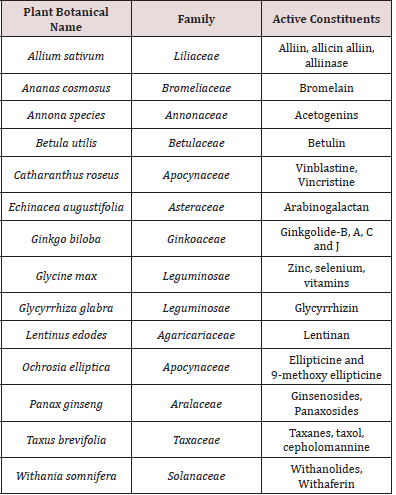
Table 1: Some selected anticancer plants and their active constituents.
lupinepublishers-openaccess-drug-designing-journal

While plants have been tested over the years for their anticancer activities abroad and proven positive, such research is lacking in Guyana. There is a need to screen plants in Guyana for their anticancer activities. This stem from the fact that cancer is on the rise in Guyana. Cancer has been a constant battle globally with a lot of development in cures and preventative therapies. Cancer is the uncontrolled growth in human cells and will result in the formation of tumours of malignant cells with the potential to be metastatic35. Treatments include chemotherapy, radiotherapy and the use of synthetic drugs such as cis-platin. Using chemotherapy can put patients under a lot of strain and further damage their health. Thus, there is a need for an alternative complimentary medicine in herbal treatments36.However, this research is hampered by the lack of cancer research equipment. There needs to be the establishment of a cancer research unit in Guyana, to assess the anticancer proficiency of plants. (Table1). shows a list of plants tested abroad for their anticancer proficiency [37-45].

Diaspora role in promoting herbal medicines in Guyana

However, there is a need to promote the isolation of antimicrobial, antidiabetic and anti-cancer drugs from plants, an elucidation of their structure and modulation of their medicinal activities. Also, an investigation of their activities. This entails significant finance to aid in the purchase of requisite equipment etc in Novel Drug Discovery. A separate research laboratory, with modern equipment and instrumentation is necessary at the University of Guyana to realize the above. Also, lacking in Guyana is the equipment to conduct anticancer and antiviral studies A step can be taken further by the Government in the establishment of a National Herbal Research Institute to further explore our herbal folklore medicines and undiscovered herbal medicines. Such an institute will promote further research on our current folklore or traditional herbal medicines and also on the discovery of new Herbal medications. The Guyanese Diaspora, Entrepreneurship Sector and Foreign investors can promote such research in Guyana via the provision of finance to purchase “State of the Art” equipment to conduct such research. Our whole objectives is that we can be a leading exporter of herbal medicines in the Caribbean and one of the best in the world. Guyana has a richbiodiversified flora, whose herbal proficiency needs to be further investigated.

Read More About Lupine Publishers Journal of Drug Designing & Intellectual Properties Please Click on the Below Link:

https://lupine-publishers-drug-designing.blogspot.com/

Monday, 14 August 2023

Lupine Publishers | Danger of Buying Medicines in Any Place Other Than the Pharmacy

 Lupine Publishers | Journal of Drug Designing & Intellectual Properties


Introduction

There are medicines registered as such-and subject to the legislation of pharmaceutical specialties-and products that, without being registered as medicines, are sold and actively promoted, giving them medicinal virtues.
Among the medications it is necessary to distinguish those of prescription or prescription sale, of those without prescription or over the counter (over the counter or OTC counter medications in Anglo-Saxon terminology). On these there is the wrong an installed assumption among the general public, which considers “over-the-counter” medicines safe.
All medications without exception, used in excessive doses or for too long periods, in situations where they would not be indicated, can cause side effects, collateral, undesirable or adverse effects, generate interactions with other drugs or substances, induce behaviors of abuse or dependence and even delay the diagnosis of a condition that requires medical care.
Thus, for example, according to a study by Morlans, M., Laporte, J. et al., About 13% of all the etiological burden of terminal nephropathy that leads to dialysis or transplantation in our environment is due to the chronic use of painkillers, almost always in the framework of self- medication.
The sale of any medicine outside the pharmaceutical establishments is highly risky for the health of population. As the Argentine Pharmaceutical Confederation (COFA) warns, 20 percent of the drugs consumed in the country are purchased outside pharmacies, such stores include kiosks, supermarkets, service stations, gyms and even hotels accommodation. Sometimes this also applies to prescription drugs.
The traceability of a drug is the monitoring of the route that the product takes at all stages of its marketing, it is essential to achieve a correct use of the medications (pharmacovigilance, detection of chronic patients, patient monitoring) as well as to establish an action Therapeutics free of complications. It is also a tool that uses the health system to detect counterfeits, adulterations on medications. When separating from the original sales channel, traceability becomes difficult, if not impossible [1].
There is also a legal vacuum over their control by the national authority, since ANMAT has no jurisdiction over establishments that are not authorized by the Ministry of Health. In other words, the referred “sales channels” (kiosks, warehouses, service stations) are outside their jurisdiction and competence.

Advertising

The impact of the advertising of medicines on the behavior of consumers is undeniable, and hence the potential risks it represents for the health of the population. The National Academy of Medicine warned on repeated occasions about “advertisements that encourage the use of treatments and medications without medical supervision, and the proliferation of advertising messages advising medications and therapeutic procedures of benefit sometimes not established and sometimes exaggerated, with the purpose to encourage their consumption”.
The World Health Organization (WHO) created the “Ethical criteria for the promotion of medicines”, a theoretical framework where recommendations are made on advertisements aimed at the public “should help the population to make rational decisions about the use of medicines that are legally available without a prescription.
According to studies carried out by the Maimonides University and the Argentine Institute of Pharmaceutical Care (IADAF), the advertising of medicines encourages self-medication or drug misuse, a problem that takes 700 lives per year in the country.
In a note from health issues journalist Pedro Lipcovich, ( “Today we are addictive”) analyzes a television message of aspirin (acetylsalicylic acid) mentioning the striking omission of any of its therapeutic properties as anti-inflammatory, anti-fever, anticoagulant, associating its consumption “with ageneric welfare state and high social and labor performance”.
We passively assist in the promotion of bad eating habits, widely publicized, to increase the sales of a medicine that supposedly counteracts the effects. The induction to the conduct of immediacy in the installation of a treatment according to the symptoms, gives results: everything can be solved with a tablet and even some dietary supplements are preferred to be marketed as medicines because they “sell more”. But this attitude has its When a teenager is offered a “tablet” of ecstasy, with the promise of well-being and pleasure, it is utopian to think he could say “no.”
To all this must be added the lightness with which we assist in the prescription of medications. The mother, the coworker, the hairdresser, the kiosk and even the doctor’s office, among patients, recommend medications.
Advertising and active promotion by mass media, increases irresponsible self-medication and irrational use of medications. Medicinal drugs or medicines thus leave their place of social good, essential for public health, and become a consumer good.

Drug dependence

Numerous medications are used to produce changes or changes in mood, alone or in association with drugs or substances of abuse. According to the 2008 National Survey on Prevalence of Psychoactive Substance Consumption, conducted by INDEC, almost 4% of the population between 16 and 65 years of age consumes tranquilizers.
It cannot be taken into account that almost all drugs of abuse today were initially medications, which due to their pharmacological and toxicological characteristics (tolerance, abuse, dependence) began to be used for their psychoactive effects, being then restricted or withdrawn in your pharmacological employment. Such is the case of cocaine, some opiates (morphine, codeine), amphetamines, anesthetics (ketamine), ephedrine, popper, etc.
The Abuse Medicines Observatory (WCO) in Spain conducted a study that verified the non-medical consumption (substance abuse) of a total of 27 substances. 22% consumed analgesics, some 12% anxiolytics or tranquilizers (benzodiazepines); 10% stimulants and the rest a wide range of substances.
Majority use patterns included mixtures with drugs and alcohol and abuse of tranquilizers. Medications have always been part of the “drug culture” in non-therapeutic uses, in order to experience new sensations or obtain better yields. The modalities of drug abuse change and it could be said that some of them “become fashionable”. Currently, the “crazy jar” is the most common form of alcohol and medication use-mostly benzodiazepines- among teenagers and young adults.
According to data from the Toxicology Unit of the “Juan A. Fernández” Hospital of the City of Buenos Aires, during 2008, 2182 consultations related to acute poisoning by substances of abuse were attended; 292 of them were due to abuse of some type of medication and another 205 were due to the association of some medication with alcoholic beverages [2].
The equation between inappropriate promotion of drug use, forms of facilitated or uncontrolled accessibility and patterns of inappropriate use and substance abuse constitutes an increased risk trilogy, which exposes the potentially most vulnerable population.

Read More about Lupine Publishers Journal of Drug Designing & Intellectual Properties Please Click on the Below Link:

https://lupine-publishers-drug-designing.blogspot.com/


Monday, 19 June 2023

Lupine Publishers | Insecticidal Activity of Plant Extracts

 Lupine Publishers | Drug Designing & Intellectual Properties International Journal


Abstract

Insecticides are a group of compounds with heterogenous toxicity, whose intended purpose is to kills insects. Synthetic insecticides are known for their very harmful environmental and health impacts. This therefore generates a need for a safer solution. Botanicals are a special group of insecticides with a natural origin, obtained primarily from plant parts. There is a continued interest to screen plants for their insecticidal activities in light of the great destruction done to crops that affect the livelihood of the populace worldwide, especially in countries, whose GDP depends primarily on agriculture. Guyana, a country on the mainland of South America is no exception. Agricultural produce is now threaten by emerging new species of insect pests, such as in the rice sector. Thus, there is a need to screen Guyana’s richly biodiversified flora for its insecticidal activities and to promote research in biological control of crop pests and boost the agro industry.

Keywords: Insectides; environmental; Guyana; biodiversified flora

Introduction

Background

Insects, though useful in many ways to mankind, have had negative effects in the field of agriculture. They have attacked plant parts such as stored grains, seeds, flowers, leaves, stems, fruits etc and have had a significant effect on the agroeconomy of many countries [1-3] . One way to control insects deleterious effects on crops is to utilize chemical pest control, which employs potent chemical pesticides to curb, reduce or eliminate pests and thus sustain crop production throughout the world. However, most synthetic insecticides used to date are deleterious to human health and the environment [4]. Thus, an alternative strategy is necessary. That alternative strategy is the use of plant extracts and phytochemicals as natural antifeedant, insect deterrents and repellent [4]. Plant extracts are safe alternatives that are of low cost, convenient to use and environmentally friendly. Plant products have been successfully exploited as insecticides, insect repellents and insect antifeedants [1-3]. In addition, natural products insectides have been isolated from plants and serve the basis for structure mimicry synthesis. Figure 1 show a list of structure of some isolated natural products from crude plant extracts. Figure 2 shows a notorious insecticidal natural product, Azadirachtin Many countries whose GDP (Gross Domestic Product) depends on agriculture, have in recent times being affected by insects. Guyana, a country on the mainland of South America is of no exception. Agricultural produce is currently threaten by emerging new species of insect pests. One notable example is in the field of rice cultivation. Recent research in Guyana has shown that rice production is threatened by paddy bugs, leaf miners, water weevils and caterpillars [6]. Natural insecticides from Guyana flora, should be a good choice, apart from the synthetic analog imported. Thus, there is a need to screen Guyana’s richly biodiversified flora for its insecticidal activities and to promote research in natural pesticides control. There is not much report of plant being screened for their insectidal activities here, even though research is currently being done. So, this area of research needs intensification in Guyana. In addition, the crude plant extracts can be subjected to chromatographic separation, which will lead to the isolation of known and unknown natural products which will continue to provide the platform for novel insectidal discoveries and structure activity relationship.

Figure 1: The structure of some selected isolated insecticides.

Figure 2: Azadirachtin, a notorious insecticidal isolate from Azadirachta indica.

Brief survey of some selected natural insectides

Internationally, there are many reports of plant extracts being used for their insecticidal properties. Several will be briefly reviewed here. For example, Morinda citrifolia leaf extract was tested for larvicidal activity against three medically important mosquito vectors such as malarial vector Anopheles stephensi, dengue vector Aedes aegypti, and filarial vector Culex quinquefasciatus Insecticidal activity of essential oil [7], extracted from Morinda lucida was tested on pulse beetle Callosobruchus maculatus, which is a pest that causes serious damage to several pulses. The insecticidal activity was compared with two pesticides, Phostoxin and Primo-ban-20. Results clearly indicate that M. lucida essential oil can be used as an effective alternative for pulse beetle C. maculatus control, and it could be tested against other pulse beetles affecting Asia and Africa and throughout the world, thereby reducing use of synthetic pesticides [8].

The insecticidal and antifeedant activity of the ethanolic extracts from Allium rotundum L has been noted against the larvae of the L.decemlineata [9]. It was found that the ethanolic extracts from the aerial part possessed moderate level (40.0%) of insecticidal properties against the larvae of the L. decemlineata and low against the imago (6.7-13.3%0) [9]. The petroleum ether, ethanol and aqueous extracts from the leaves of Artemisia herbalba, Asso, Euclayptus camaldulensis Dehnh and Rosmarinus officinalis L were investigated for their insectidal activity against 3 to 4 days old Myzus persicae individuals at 1,2.5, 5 and 10% and observations were made after 24 hours. Etheric extracts of all plants were effective and induced mortalities (100%, 53% and 60% respectively) at the highest concentration. However, the ethanolic and aqueous extracts did not show any significant insecticidal effect [10] Sixteen aromatic plant extracts from three species belonging of the Asteraceae family, were tested for their insectidal activity against adults and larvae of confused flour beetle Tribolium confusum du Val (Coleoptera Tenebrionidae).

The methanolic and ethyl acetate extracts of Mantisalca duriaei Briq. Cavill. and petroleum ether, chloroformic and methanolic extracts of Raconteur acute DC, significantly induced larval growth. Antifeedant properties were detected in methanolic extracts of M. duriaei and R. acaule, petroleum ether and chloroformic extract of R. acaule and ethyl acetate extract of M. duriaei. For all extracts, mortality was higher for larvae than adults. Values of 83% and 77% were obtained using petroleum ether and methanolic extracts of R. acaule. These results suggest that M. duriaei and R. acaule may be used in grain storage against insect pests [11]. Leaf oil of Psidium guajava L obtained from Soxhlet extraction was tested for insecticidal effect and phytochemical screening against khapra beetle, Trogoderma granarium Everts (Coleoptera: Dermestidae. The application of the oil at the rate of 0.5ml gave significantly (p < 0.05) higher percentage mortality than the control [12].

A study was conducted to determine the insecticidal activity of essential oils from oregano, Origanum onites L. (Lamiales: Lamiaceae), savory, Satureja thymbra L. (Lamiales: Lamiaceae), and myrtle, Myrtus communis L. (Rosales: Myrtaceae) against three stored-product insects such as the flour moth Ephestia kuehniella Zeller (Lepidoptera: Pyralidae), the Indian meal moth Plodia interpunctella Hübner (Lepidoptera: Pyralidae) and the bean weevil Acanthoscelides obtectus Say (Coleoptera: Bruchidae). A. obtectus was the most tolerant species against the essential oils. However, the insecticidal activity of the myrtle oil was more pronounced than other oils tested against A. obtectus adults. The essential oils of oregano and savory were highly effective against P. interpunctella and E. kuehniella, with 100% mortality obtained after 24hrs [13].

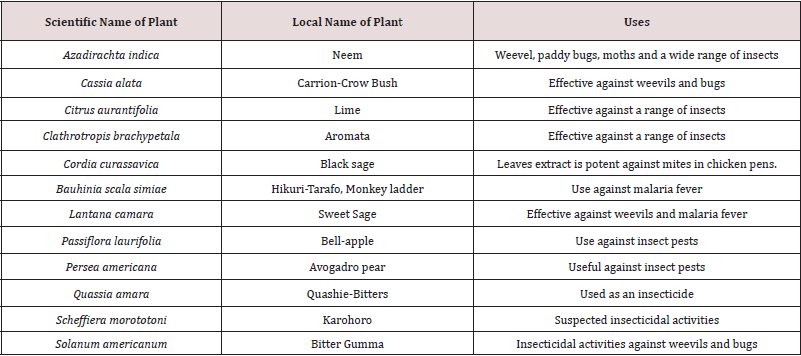
Table 1: Some selected plants from the Guyanese flora with folklore insecticidal activities.

lupinepublishers-openaccess-drug-designing-journal

Six different indigenous plants were screened for antifeedant and insecticidal activities against fourth instar larvae of Epilachna beetle, Henosepilachna vigintioctopunctata, a severe pest on brinjal. Amongst the plants screened, Achyranthes aspera showed higher activity against the selected pest. Ethyl acetate extracts of A. aspera showed higher antifeedant index and insecticidal activity against fourth instar larvae of H. vigintioctopunctata. Preliminary phytochemical analysis revealed that the presence of alkaloid and quinines in the ethyl acetate extracts indicating higher percentage of activities [14]. The insecticidal activities of four local plants extracts Rhazya stricta Decne, Lantana camara L., Ruta chalepensis L. and Heliotropium bacciferum Forssk against subterranean termites Psammotermes hybostoma (Desneux) were reported. Of the four extracts, the hexane extract of R. stricta was more pronounced, having an acute (24hr) and chronic (48hr) LC50s of 194.8 and 147.4ppm, compared to 221.7 and 149.9; 288.9, 185.6 and 391.3 and 244.5ppm for L. camara, R. chalepenesis and H. bacciferum respectively [15]. There are other reports of plant extracts used for their insecticidal activities [16-22]. There are few reports of plants from the Guyana flora with insecticidal activities, even though research has been pursued in that direction. Table 1 shows a list of ten plants with selected insecticidal activity from the richly biodiversified Guyana flora.

Conclusion

Insects are indeed a threat to mankind, especially in the field of agriculture. Many countries, whose economy depends on the agro-industry are threaten with new emerging destructive insects. Guyana is of no exception. Whist synthetic insecticides can do the job in many cases, there use is deleterious to the environment etc. Insecticides derived from plant extracts is far more environmentally friendly and far less expensive to make compare to synthetic ones. From an economical point of view, it would be best to use the aqueous extract of selected plants with insecticidal activities. There are many plants with folklore insecticidal activities in Guyana and their extracts: organic and aqueous need insectidal investigation. Also, the isolation of natural products from the crude plant extracts can lead to the discovery of new isolates and it would form the basis for continued novel drug discovery.

Read more about Lupine Publishers Journal of Drug Designing and Intellectual Properties Click on the below link: https://lupine-publishers-drug-designing.blogspot.com/