Showing posts with label Journal of Clinical Pharmacology & Biopharmaceutics. Show all posts

Monday, 18 April 2022

Lupine Publishers| Emergency Pharmaceutical Care in ED and ICU: Toxicology, Infectious Disease, Life Saving Drugs Management, Pharmacoeconomy as Synergic Knowledge Instrument to Reduce Mortality Rate and Healthcare Cost 2019

 Lupine Publishers| Journal of Pharmacology & Clinical Research


Introduction

Ward Clinical pharmacy, pharmaceutical care, and consultant pharmacist service can be considered interesting instruments in the world of cognitive service to improve global clinical/ economical results in multi-disciplinary medical team. This pharmacist field of working can be considered as an opportunity in this time in with a great number of new drugs molecules, medical - diagnostic procedure added to the more complexity of cure, politherapy and more necessity to containment cost for drugs and medical devices than past. Reduction of medication therapy errors is needed and actively requested by patients and health organization institution and government. Multi-professional healthcare team is the right keywords in today health- care systems. Clinical pharmacist contributes today in many disciplines like oncology, toxicology, emergencies medicine, ICU, nuclear medicine, infectious disease, nephrology, nutrition service and other. To be developed pharmacist competence in field of Emergency medicine, ICU, toxicology ,imaging , medicine laboratory , biochemistry molecular biology, genetic, immune-histochemistry for relationship in pharmacological therapy and in new biological agents. Management of new innovative pharmacological- therapies and the necessity of cost containment represent a key to make the difference in medical TEAM. At the same time clinical service as consultant out of hospital settings is a great opportunity for patients and their needs. A consultant pharmacist for patient in the complex world of drugs therapies can be referent point in the different medical speciality and in the complex health care world. The specific pharmaceutical chemist and pharmacology competence conjugated with clinical activity can give an improving in clinical some outcomes , in patient health and quality of life. A reduction in mortality rate is an undeniable fact. Also, economic monitoring of therapies costs receive benefit in this approach. Emergency department and ICT are setting with high complexity of patient and the clinical pharmacist can add specific professionality to improve also clinical outcomes.

Materials and Methods

In this work we observed and analyze some relevant biomedical literature involved in clinical pharmacist presence in some medical team and the results obtained from an practical experience in order to produce a global conclusion.

Results

From Literature

[1] in 2007clinical pharmacy service , pharmacy staffing , and hospital mortality rates. : “ in 7 hospital, clinical pharmacy service reduces mortality rates.” In a significant way [2] in “Pharmacist’s effect as team members on patient care: A systematic review and meta-analyses”: “Pharmacists provided direct patient care has favorable effects across various patient outcomes, health care settings, and disease states. (significant p< 0,005)” [3]. This paper wants to improve the pharmaceutical care application in countries with advanced healthcare system in order to provide a more rational drug therapy to patients. When this is not possible, it would be a good idea using the pharmaceutical care, in determinate populations such as: severe disease, critically ill, patients with multiple illnesses, transplants, immunosuppression, oncology or other serious conditions, at least when the treatments are very expensive.” And “In these studies, we observe a general positive influence of pharmacist’s presence in the medical equips also in different clinical outcomes” [3].

The relevance of pharmaceutical care to diagnostic imaging can be considered from 2 approaches. Diagnostic imaging modalities either are based upon or employ drugs. radio-pharmaceuticals are the key to nuclear medicine procedures and radiopaque contrast agents are essential in many radiographic studies. The principles and practice functions touted for therapeutic medications and therapeutic patient- management apply to drugs employed in diagnostic imaging, as well. Diagnostic imaging modalities are also intimately involved in determining the disease state in many patients. diagnostic imaging is utilized to follow the course of therapy; i.e., determining therapeutic outcomes. Pharmacists, not only specialists, must be knowledgeable of the role diagnostic imaging plays in pharmaceutical care and be prepared to provide the pharm. care in diagnostic imaging [4-5]. The intent of this work is to provide pharmacists with an introduction to the clinical pathology laboratory discipline. As clinical pharmacy services expand, interactions between pharmacists and the laboratory will increase. Laboratory results are an essential tool for pharmacists involved in monitoring the drug therapy and adjusting dosing regimens. Laboratory medicine is a complex and rapidly changing field with new analytical techniques - instruments and continually being developed. methodologies vary greatly from one lab. to another and even within the same laboratory from time to time. Quality control QC are necessary to ensure accurate and reliable results. The medical technologists who staff clinical laboratories are highly trained professionals. Pharmacists should utilize the medical technologist as a consultant on the interpretation / limitations of laboratory tests. there are many areas, such as therapeutic drug monitoring TDM , in which the pharmacist can serve as a consultant to the laboratory. Pharmacists involved in patient care will benefit from a greater understanding of the clinical laboratory and may also find new opportunities for the clinical pharmacy practice and interaction with other health care professionals [5].

According Clinical Pharmaceutical Care: A New Management Health Care Discipline in 2016 UKJPB “The development of clinical pharmacy in 1960-70s and pharm. care in 1990 has represented an interesting innovation in pharmacy field. clinical pharmacy and Pharm. care showed some practice critical limits:

(a) clinical pharmacy approach is more oriented to the clinical population needs or pathology but is not strictly request to manage at the level of every single clinical patient case.

(b) In hospital setting Pharmaceutical care can not to be applied to the entire patient for economic reason (limited number of pharmacist applied).

To give a more rationale priority of actions and to select the patient to be seen in priority way we think a good solution to apply the principle of pharmaceutical care with the instrument of clinical pharmacy into a new management system [6].

According article Infectious Disease Pharmaceutical Care:

Analyzing the article reported in this work we can see a relevant role of clinical pharmacist in field of the infectious disease [7]. Infectious clinical pharmacist provides direct patient care in different inpatient settings (internal medicine a, critical care hemology/ oncology, solid organ transplant with other, as well as outpatient settings such as HIV clinics). Antibiotic stewardship/surveillance programs can be considered efficacy instruments available today as well as a guideline of protocols, procedure, EBM criteria and many others. Clinical pharmacokinetic consultant service, microbiologic and laboratory assay and assessment, scientific drug information, toxicity management, ADR, interactions, medicinal chemistry competences are the core curriculum of clinical pharmacist course and for this reason the permanent presence of clinical pharmacists results in general positive outcome in many clinical equip”[7,8]. To review the effects of pharmaceutical care on hospitalizations, mortality and clinical outcomes in patients. “Systematic searches were conducted in biomedical database like MEDLINE, EMBASE and International Pharmaceutical Abstracts (IPA) databases to identify studies that were published between 2004 and January 2017. Studies included in this review were randomized controlled trials (RCTs) that spanned across both community and hospital settings. Using strict inclusion/exclusion criteria studies were included if they reported level 1 or 2 outcomes in the hierarchy of outcome measure i.e. clinical and surrogate outcomes (e.g. blood pressure (BP) control, blood glucose level, cholesterol BMI).

54 RCTs were included in the present review. 46 of these studies ranked high- quality according to the Jadad scoring system. Studies were categorized into their general condition groups. Interventions in patients with diabetes, depression, respiratory disorders, cardiovascular disorders, epilepsy, osteoporosis, and interventions in older adults were identified. In the majority of studies pharmaceutical care was found to lead to significant improvements in clinical outcomes and/or hospitalizations when compared with the non-intervention group. Some conditions had a large number of RCTs, for example for cardiovascular conditions and in diabetes. Statistically significant improvements were seen in the majority of the studies included for both of these conditions, with studies indicating positive clinical outcomes and/ or hospitalizations rates. Within the cardiovascular CV condition, a subset of studies, focusing on cardiac heart failure and coronary heart disease, had more mixed results. In other conditions the number of RCTs conducted was small ,the evidence did not show improvements after pharmaceutical care, Example in depression, osteoporosis, and epilepsy. The majority of interventions were face to face interactions with patients, whilst a smaller number were conducted via phone and one with a web-based system. Patient education was a key component of most interventions, verbal and/ or written. Longitudinal data, post intervention cessation, was not collected in the majority of cases.

RCTs conducted to evaluate pharm. care appear to be effective in improving patient short-term outcomes for a number of conditions including diabetes and CV conditions, other conditions such as depression are less well researched” [8,9]. “Pharmacists were consulted by the physicians to correct any drug-related issues that they suspected may cause or contribute to a fatal outcome in the cardiology ward. A total of 1,541 interventions were suggested by the clinical pharmacist in the study group; 1,416 (92.0%) of them were accepted by the cardiology team, and violation of incompatibilities had the highest percentage of acceptance by the cardiology team. All-cause mortality was 1.5% during Phase I (pre-intervention) and was reduced to 0.9% during Phase II (post-intervention), and the difference was statistically significant (P=0.0005). After PS matching, all-cause mortality changed from 1.7% during Phase I down to 1.0% during Phase II, and the difference was also statistically significant (P=0.0074)” [9,10]. Clinical pharmacists did not perform any interventions during the phase 1 (pre-intervention) and consulted with physicians to address drug related problems (DRPs) during phase 2 (postintervention). The main outcome was a decrease in mortality from AMI. The 2 phases were compared using propensity score matching (PSM).

Results Obtained

1388 interventions were suggested by clinical pharmacists during phase 2, of which 1239 (89.2%) were accepted. Logistic regression- analysis demonstrated that interventions of clinical pharmacists were significantly associated with a reduced mortality in patients with both ST segment elevation myocardial infarction (STEMI) (OR 0.449; 95% CI 0.296 to 0.680) and non-ST segment elevation myocardial infarction (NSTEMI) (OR 0.268; 95% CI 0.125 to 0.572). Using PSM analysis, mortality reduced from 6.8% to 4.3% in STEMI patients (P=0.0034) and from 3.2% to 0.7% in NSTEMI patients (P=0.0202) after interventions. DRPs that caused or contributed to possible mortality were detected by clinical pharmacists in patients with AMI. Correcting these DRPs after pharmacists’ interventions could result in a significant decrease in mortality” [10,11]. “This research -study was conducted with 13 health-system pharmacists and 5 local health managers that were involved in the CPS implementation. The pharmacists who consented to participate were those who agreed to implement CPS in their respective workplaces. In order to get a comprehensive understanding of the facilitators that influenced the CPS implementation process, the health-system pharmacists were divided into 2 groups:

(i) 7 accredited pharmacists, who fulfilled all steps of the process and implemented CPS in their workplaces; and

(ii) 5 non-accredited pharmacists, who did not complete all steps of the process and did not fulfill implement CPS in their workplaces setting . The local health managers were those who held important positions in the local healthcare network (directors, supervisors, and coordinators) during the implementation of CPS.

Regarding the structure of the local healthcare network, the organization of services, health facilities, and local pharmaceutical services was reported to be a facilitator. Some units presented infrastructure as a facilitator, with adequate - comfortable physical space for pharm. care (private acclimatized room), computer equipment, and clinical devices (tensiometer, glucometer, et other). “Accredited pharmacists reported facilitators related to their attitudes, as willpower, commitment, proactivity to learn and perform clinical activities. The motivation generated by the positive results of CPS boosted the progress of these services. Managers reinforced the availability and intellectual/personal commitment of pharmacists to obtain knowledge that would help the implementation of CPS. “A great facilitator, in the first place, was my willpower to want to do, to learn, despite the difficulties; I think the proactivity of each one was fundamental for this” (Accredited Pharmacy D).

The clinical profile was cited as facilitator. We defined this profile as a set of intrinsic characteristics of a professional who is motivated a, had an affinity for clinical activities, previous knowledge, skills and attitudes. Some pharmacists reported having a previously created clinical profile to act directly with the patient, which was stimulated by the CPS implementation process. lifelong knowledge has helped pharmacists in clinical practice and patient management. “I want to be with the patient, not only as a pharmacist, but like a human who wants to make a difference in the patient’ life, since the time they are diagnosed until the moment they know that it is possible to live with the disease and have a good quality of life” (Accredited Pharmacist G).

The pharmacists’ work process, integrating collaborative practices with other members of the health-care team, in a different setting was pointed out as important facilitator. access to medical records, previous pharmacist-patient interactions. “I have full access to the patients’ medical records, and physicians are accessible. With RT [reference technicians] we can talk about patients, like any healthcare team” (Non-accredited Pharmacist C)

Facilitators Related to Implementation Process of CPS

Participants reported that assistance provided by supporters during the implementation of CPS was an essential facilitator, both in theoretical and practical training, as mentoring activities during pharm. care. The local health- manager also recognized the expertise and contributions of supporters in CPS implementation. the systematization of the pharmacists’ work process through documentation in medical records helped assimilate and incorporate clinical activities into the work routine of the pharmacists.

Strategies to Implement CPS Related to the Local Healthcare Network

 I do not think [local health- management] giving us a glucometer in December is a support. Support is to be together, to attend. (Nonaccredited Pharmacist C).

Read More about Lupine Publishers Journal of Pharmacology & Clinical Research Please Click on Below Link: https://lupine-publishers-pharmacology.blogspot.com

Tuesday, 8 June 2021

Lupine Publishers| Reversal of Rocuronium-Induced Neuromuscular Block with Neostigmine in the Libyan Patients

 Lupine Publishers| LOJ Pharmacology & Clinical Research (LOJPCR)


Abstract

Background: Reversal of the enduring effect of rocuronium by neostigmine is a common procedure performed in the Libyan hospitals. The reversal of the continuing effect of rocuronium by neostigmine was also evaluated.

Methods: eighty adult surgical patients were included in the study using neostigmine 2.5mg (0.05-0.07mg/kg) to reversal the block induced by rocuronium 0.6 mg/kg. Anaesthesia was induced and maintained using i.v. propofol (2.5mg/kg) and fentanyl (1.5μg/kg). Reversal neuromuscular function was monitored using clinical signs includes patient responsiveness, subjective measurements of muscle strength (5 second head lift, hand grasp), eye opening, and tongue extrusion.

Results: Reversal of block was sustained in all patients from the enduring effect of rocuronium by neostigmine. Ninety-six patients were had a similar time of recovery but eleventh were not. There were no serious adverse effects from neostigmine and no significant changes in any measure of safety.

Conclusions: neostigmine is capable of reversing rocuronium-induced blockade in the Libyan patients by monitoring the muscle strength, eye opening, and tongue extrusion.

Keywords: Acetylcholinesterase; Neostigmine; Propofol; Fentanyl; Anaesthesia; Rocuronium

Introduction

Acetylcholinesterase (AChE) is catalyzing the quick hydrolysis of acetylcholine (ACh) to acetate and choline. The main biological function is being annihilation of impulse transmission at cholinergic synapses. In addition, AChE is believed to have nonclassical roles in nerve and muscle growth and in hematopoiesis [1,2]. Additionally, AChE has been concerned in Alzheimer’s disease [3,4], hypersensitivity to pesticides and Gulf War syndrome [5]. Rocuronium is frequently used non-depolarizing neuromuscular blocking agents (NMBAs) to facilitate tracheal intubation and affording muscle relaxation throughout surgery. Patients receiving these agents are at danger of outstanding curarization, which is a cause of postoperative pulmonary complications and might augment postoperative mortality [6,7]. Anticholinesterases drugs act mainly by inhibiting acetylcholinesterase and butyryl cholinesterase, prolonging the existence of acetylcholine at the motor end-plate [8]. Additionally, anticholinesterases may have a direct agonistic effect by increasing the release of acetylcholine from presynaptic nerve terminals [9]. For, edrophonium the maximum effective dose is 1.0-1.5mg/kg and for neostigmine, is 60-80μg/kg [8]. The use of two antagonists together is avoided as they are not additive and insufficient reversal can occur. It is not sensible to administer extra anticholinesterase if maximal doses of edrophonium (1.5mg/ kg), neostigmine (70μg/kg), or pyridostigmine (350μg/kg) fail to antagonize the residual blockade and might in turn increase the weakness [9]. They are combined with atropine or glycopyrrolate in order to counteract the muscarinic side-effects of these drugs. Neostigmine is the most potent and the preferred drug [9]. Highdose neostigmine or unnecessary use of neostigmine could interpret to increased post-operative respiratory morbidity [10,11]. Current rules identify the use of reversal with neostigmine based on the train of four (TOF) monitoring with the neuromuscular monitor. Neostigmine can be given for reversal in patients: who were receiving drugs which enhance the action of NMBAs (inhalational agents). The reversal should not be given in case of TOF counts four in patients receiving anaesthetic drugs which do not boost the blockade by NMBAs (intravenous anaesthetics) [10,11]. Moreover, the rules also identify that if the TOF counts less than 2 reversal should not be delayed. A lower dose of neostigmine (20μg/kg) must be considered if TOF counts four and no fade is apparent or if TOF ratio is 0.4:0.9 on qualitative neuromuscular monitoring [12]. Neostigmine is a cholinesterase inhibitors and it is wildly used in Libya as indicated in the literature as reversal agents for NMBAs [13,14]. Sugammadex, which is a novel agent for the reversal of neuromuscular blockade, is adapted gamma-cyclodextrin. Sugammadex is able to form a complex with rocuronium, eradicates it from the circulation and terminates neuromuscular blockade [15]. Sugammadex is a very safe agent with a little risk of serious side effects [16]. The high cost of sugammadex, which is one of the costliest drugs in anesthesia practice, prevents it from being used in Libya as a standard neuromuscular reversal drug. Even though it has been suggested by many doctors in Libya that the cost of sugammadex use in anesthesia could be reduced by shortening the duration of recovery [17,18], further clinical studies on sugammadex in Libya are needed to introduce it to the governmental and private hospitals.

It has been reported that the co-administration of neostigmine with some Nonsteroidal Anti-inflammatory Drugs (NSAIDs, e.g. aspirin) resulted in a synergistic interaction, which may provide evidence of supraspinal antinociception modulation by the increased acetylcholine concentration in the synaptic cleft of cholinergic interneurons. The interaction obtained between neostigmine and the NSAIDs could carry important clinical implications [19,20]. Acute toxicity from using cholinesterase inhibitors is related to the inhibition of acetylcholinesterase activity at the neuromuscular junction and in the brain, resulting in depression of circulatory centers in the medulla, weakness of the muscles of respiration, and pulmonary edema [21]. Because of the toxicity relates with inhibition of acetylcholinesterase activity rather than butyryl cholinesterase activity, it would seem reasonable to spotlight on genetic variants of acetylcholinesterase. Though genetic variants of human acetylcholinesterase exist, harmful mutations are uncommon and occur only in the heterozygous state [22]. The aim of this study is to investigate the effects of neostigmine’s introduction on the incidence of residual neuromuscular paralysis and postoperative Libyan patient outcome at Al-Shyfaa Private Clinic, Tripoli, Libya.

Materials and Methods

Qualitative and Quantitative Determination of Neostigmine: The Neostigmine methyl sulphate was obtained from four different companies which are: Neostigmine methyl sulphate (Rotexmedica, Germany); Plantigmine (Polifarma, Turkey); Flagstig (Thexopharma, UK) and Neostigmine (Adeka, Turkey). The reference standard was obtained from Sigma-Aldrich (cat. no. 2126). The identification test for the neostigmin was done using absorbance spectra which were measured on a Jenway UVvisible spectrophotometer, model 6505 (London, UK) using quartz cells of 1.00 cm path length. The UV-Vis absorbance spectra were recorded in the 200-500 nm range, and spectral bandwidth of 3.0 nm. It was performed the baseline subtraction of the water for the final spectrum of each solution analyzed. An equivalent to 5 mg of neostigmine methylsulfate Injection according to the labeled amount was taken and completed to 10 mL with distilled water, and the absorption spectrum of this solution was measured by Ultraviolet-visible Spectrphotometry which should exhibit a principle band at 261nm. In addition the identity of neostigmine was also determined using HPLC technique by determining the retention time of the major peak in the chromatogram of the four Neostigmine methylsulphate brands preparations compared to the retention time of the major peak in the chromatogram of the standard preparation. The quantitative assay of the neostigmine (Neostigmine Methylsulfate Injection) was perofromed by Waters HPLC using the Japanese Pharmacopoeia (Sixteenth Edition), page 1168.

Molecular Docking: The starting geometry of neostigmine was constructed using chem3D Ultra (version 8.0, Cambridgesoft Com., USA). The optimized geometry of neostigmine with the lowest energy was used in the molecular docking. The crystal structures of human acetylcholinesterase in a complex with a transition-state analogue were downloaded from the Protein Data Bank. The molecular dockings of neostigmine with human acetylcholinesterase was accomplished by AutoDock 4.2software from the Scripps Research Institute (TSRI). Firstly, the polar hydrogen atoms were added into human acetylcholinesterase and neostigmine molecules. Then, the partial atomic charges of the human acetylcholinesterase and neostigmine molecule were calculated using Kollman methods [23]. In the process of molecular docking, the grid maps of dimensions (62Å X 62Å X 62Å) with a grid-point spacing of 0.376Å and the grid boxes is centered. The number of genetic algorithm runs, and the number of evaluations was set to 100. All other parameters were default settings. Cluster analysis was performed on the results of docking by using a root mean square (RMS) tolerance of 2.0Å, and this was dependent on the binding free energy. Lastly, the dominating configuration of the binding complex of neostigmine and human acetylcholinesterase with minimum energy of binding can be determined.

Study Design and Patient Selection: This study was conducted at APC (Al-Shyfaa Private Clinic, Tripoli, Libya) during July/August 2018. The protocol was accepted by the Independent Ethics Committee at the clinic and conducted in fulfillment with the recent amendment of the Declaration of Libyan Guidelines, present regulatory requirements and Good Clinical Practice. Eighty patients were included in the study and they were aged 20-60 years and experiencing surgery in the supine position under general anaesthesia (Laparoscopy surgery) which are requiring muscle relaxation. Patients were excluded if they were anticipated to have a neuromuscular disorder, difficult intubation for anatomical reasons; family history of malignant hyperthermia, significant renal dysfunction; or a known allergy to NMBAs, narcotics, or other medication used throughout general anaesthesia. Patients receiving anticonvulsants, antibiotics, or magnesium at a time possible to hinder with neuromuscular block effect were also excluded. Female patients who were breastfeeding, pregnant, childbearing potential were also excluded. All patients have presented written consent. Subject numbers were allocated to patients in chronological order of their participation into this study. Anaesthesia was induced with i.v. propofol (2.5mg/kg) and fentanyl (1.5 μg/kg) and maintained using a continuous infusion of propofol and additional increments or infusions of analgesic as needed. After the establishment of neuromuscular scrutinizing, rocuronium 0.6mg/kg was given as an i.v. bolus over 10 seconds into a quick running i.v. infusion. Tracheal intubation was performed once the maximum neuromuscular block effect is achieved and intermittent positive pressure ventilation started to achieve a standard end-tidal CO2 concentration (4.5-5.5 kPa). Additional doses of rocuronium 0.1-0.2mg/kg up to a highest of two dosages were administered if required. Once the last dose of NMBA was administered and reappearance of T2 then neostigmine 0.05-0.07mg/kg (maximum of 2.5mg) was administered within 10 seconds into a quick-running i.v. infusion.

Monitoring: Using clinical signs comprises patient responsiveness, individual measurements of eye opening, muscle strength (5 second head lift, hand grasp), and tongue extrusion. After extubation (removal of the endotracheal tube (ETT) and it is the final step in liberating a patient from mechanical ventilation), clinical evaluation of level of consciousness and neuromuscular recovery (5 s head lift and general muscle weakness on a scale of 1-9) were carried out each 15 min until the first continued head lift for 5 second was attained. Oxygen saturation using breathing frequency and pulse oximetry were watched during anesthesia and in the recovery room for at least one hour after operation. Heart rate and arterial blood pressure were traced at the screening, before administration of rocuronium, before and two, five, ten, and thirty minutes after administration of neostigmine, and during the post-anaesthetic visit, which was carried out within the first twenty-four postoperative hours. Diastolic pressure of ≤45 or ≥95 mm Hg, systolic arterial pressure of ≤90 or ≥160 mm Hg, and heart rates of ≤50 or ≥120 beats per minutes were admitted as clinically noteworthy. The ECG was monitored constantly in the operating theater and the recovery ward in a way consistent with classical anaesthetic practice APC (Al-Shyfaa Private Clinic, Tripoli, Libya). Physical examination was done prior to the surgery and at the postanaesthetic visit. Ten milliliters of blood samples were withdrawn from every patient for haematology and biochemistry evaluations prior administration of rocuronium, from four to six hours after administration of neostigmine, and at the post-anaesthetic visit. Urine samples were gathered for analysis on the day prior surgery or on the same day of surgery before anaesthesia and at the postanaesthetic visit.

Anesthesia and Neuromuscular Block: To evaluate the efficacy of neostigmine, the time from the start of administration of neostigmine to recovery was determined. In addition, the clinical signs of recovery after extubation, but before transfer to the recovery room and before discharge from the recovery room were also recorded. The time from administration of the intubating dose of rocuronium to event of highest block was also studied (i.e. onset time).

Statistics: Results were expressed as mean ± standard error (SE). Statistical differences between the three parameters (muscle strength, eye opening, and tongue extrusion) were evaluated by one-way analysis of variance (ANOVA). All data were analyzed with SPSS 10.0 software. P < 0.05 was considered statistically significant.

Results and Discussion

Qualitative and Quantitative Determination of Neostigmine: The qualitative determination of neostigmine was confirmed by the presence of the principle band at 261 nm of the UVvisible absorption spectrum of the four Neostigmine methlsulphate brands which is corresponding to the spectrum of the neostigmine reference standard (cat. no. 2126, Sigma-Aldrich) and all spectra exhibit identical absorption spectrum. In addition, retention time (9 min) of HPLC chromatogram is also confirming the identity of the neostigmine. Regarding to the quantitative assay; the HPLC results have shown that the content profiles of the four brands are within the pharmacopeia limit which is not less than 93% and not more than 107% of the labeled amount of Neostigmine methylsulphate C13H22N2O6S:334.39.

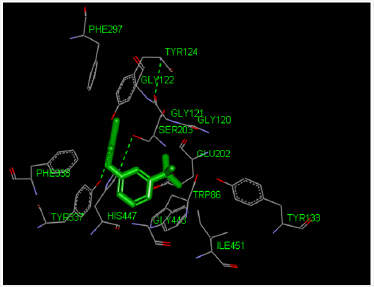
Molecular Docking Analysis: The modeling study was performed in this paper showed great interactions between neostigmine and human acetylcholinesterase. The binding energies of neostigmine and acetylcholine human acetylcholinesterase were -6.52 and -4.83 kcal/mole, respectively. The geometry of docking obtained with neostigmine with human acetylcholinesterase as shown in Figure 1. Neostigmine was able to form hydrogen bonds (HBs) with the residues Try337 of the enzyme, pi-pi stacking with the residue Trp86 and Pi-alkyl interaction with the residue Trp86. In addition, the molecular docking results showed that other amino acids residues are involved in the interactions with the neostigmine.

Figure 1: Three-dimensional representation of neostigmine interacting with active site of target macromolecule human acetylcholinesterase.

lupinepublishers-openaccess-journal-pharmacology-clinical-research-journal

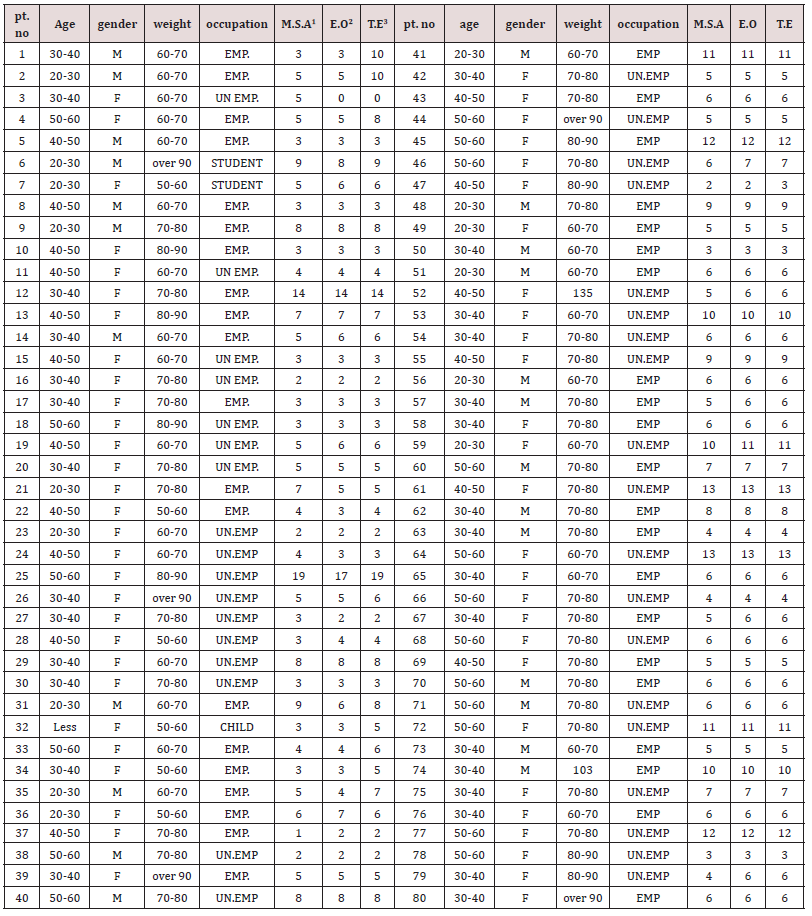
Clinical Elements: Eighty patients were randomized to treatment (rocuronium–neostigmine, n=80). All treated patients had three efficacy parameters that assessment carried out as shown in Table 1. The time from the start of administration of the reversal agent (neostigmine) to recovery, 11 patients used neostigmine had very late recovery time (≥ 9 min). These data were not excluded from the analysis. Mean systolic and diastolic arterial pressures and heart rates were not very similar in all patients. Systolic arterial pressures of ≥150 or ≤90 mm Hg, diastolic pressures of ≥98 or ≤45 mm Hg, and heart rates of ≥121 or ≤55 beats min−1 were observed in six patients used neostigmine. None of these was believed clinically important. Full recovery from neuromuscular block postoperative is crucial since residual neuromuscular block may augment morbidity (hypoxia, dyspnea, airway obstruction,). The use and monitoring of classical reversal agent is important to avoid residual neuromuscular blockage [24,25]. The usual neostigmine therapeutic dose is 0.04-0.07mg/kg whereas a toxic dose is 0.08mg/kg. Neostigmine uses has restrictions such as recurarization, muscarinic effect, weakness of respiratory muscle and ceiling effect [26,27]. Some adverse effects of neostigmine are dependent on the dose. Recent studies were performed to estimate the lowest neostigmine dose to obtain recovery from neuromuscular block (TOF ratio, TOFR 90%, the lower TOFR value, the deeper the neuromuscular blockade) lacking adverse effects [28]. The allocation of essential characteristic in this study is including age, gender, body weight and occupation for all patients. The duration of surgery in this study was limited to 30–90 minutes owing to the pharmacokinetics of rocuronium. Rocuronium has a moderate duration of action between 35-75 minutes [29,30]. However, Debane et al. has reported that the pharmacological effect of rocuronium is existing until 120 minutes after single dose administration [31]. All patients do not need to use additional neuromuscular blocking agents dose during operation in this study. Table 1 showed that a dose of neostigmine 2.5mg was as efficient as attuned dose based on the TOFR value for reversal of single dose rocuronium 0.6mg/kg. Table 1 showed that the total patients who reached TOFR ≥ 90% at 0-9 minutes after reversal administration were 69 and who reached TOFR ≥ 90% at 10-20 minutes after reversal administration were 11 (underline numbers). However, the differences were not statistically significant (p=0.718, F=0.331, F critical 3.034). All patients (except one patients had 19 minutes) had already reached TOFR ≥ 90% in interval of 0-15 minutes after reversal administration, the data obtained in this study in which the mean of the time required to reach TOFR ≥ 90% after reversal was 0-15 minutes were consistent with the data reported by Fuchs- Buder et. al which showed that the time required was 10 or more minutes [32]. In addition to that our results are consistent with other study by Cappellini et. al who reported that the recovery time of the patient was 10 minutes after neostigmine 0.01-0.03mg/kg with a shallow degree of neuromuscular block at the end surgery [33].

Table 1 also showed that the recovery time of the patient number 25 (who is on Aspirin tablets) was 17-20 minutes after neostigmine administration and this delayed action could be related to the fact that co-administration of neostigmine with some aspirin or other NSAIDs like diclofenac resulted in a synergistic interaction, which may provide evidence of supraspinal antinociception modulation by the increased acetylcholine availability in the synaptic cleft of cholinergic interneurons. The interaction obtained in this study between neostigmine and the NSAIDs have important clinical implications and it is consistent with the literature as reported by Hugo et.al [20]. For the present study, patients No. 12, 41, 45, 53, 59, 61, 64, 72, 74, and 77 had delayed action could be related to the mutational structure perturbation approach to expose longrange communication and the presence of conformational switches in the interior of the acetylcholinesterase enzyme. It is known that mutations are changes to the base sequence. The base sequence determines the amino acid sequence. A different base sequence therefore codes for a different amino acid sequence. Amino acids interact with each other by H-bonds, ionic bonds, and disulphide bridges. When the amino acids sequence of the acetylcholinesterase is changing then these interactions and bonds will be affected and the 3D shape of the acetylcholinesterase changes (tertiary structure). acetylcholinesterase work by interacting with substrates through their ‘active site’ as shown in Figure 1. A change in acetylcholinesterase shape will change the shape of the active site. The neostigmine cannot bind to the new shape of the active site so no acetylcholinesterase-neostigmine complexes are formed easily so the acetylcholinesterase cannot be inhibited or inhibited very slowly. Hasin et. al. has reported a total of 13 acetylcholinesterase single nucleotide polymorphisms (SNPs) and they might have deleterious adverse drug responses to acetylcholinesterase inhibitors [34]. In addition, Johnson and Moore have reported that the homo sapiens acetylcholinesterase mutations and they study the active site residues and they found the mutations could lead to differences in both steric and electrostatic properties of the active site [35]. The delayed onset of action of neostigmine as shown in Table 1 could be attributed to SNPs and mutation in Libyan patients. Our findings in addition to the published record suggest that the genetic variation could effect on neostigmine pharmacological action. Further studies need on Libyan people to be done in the future in order to confirm these results.

Table 1: Time (min) from start of administration of neostigmine to recovery.

lupinepublishers-openaccess-journal-environmental-soil-sciences

1M.S.A = Muscle Strength Assessment (5-second head lift, hand grasp),

2E.O = eye opening

3T.E = tongue extrusion

Conclusion

This Libyan study was the first comparative study between the three parameters (measurements of muscle strength, eye opening, and tongue extrusion) that are used to reversal of the enduring effect of rocuronium by neostigmine. It is found that rocuroniuminduced neuromuscular block and can be reversed by neostigmine. It increased the amount of safety data available about neostigmine, although this was not the main reason for the study. Clinical signs of recovery were similar with the three parameters, which is to be expected. This indicates that the results presented are realistic in the Libyan patients. The faster time to recovery with most of patients (n= 69) compared with eleventh patients (n=11) in this study is consistent with that previously reported. The rapid time to recovery with neostigmine observed in Libyan patients is similar to that reported in previous studies, demonstrating a consistency in observed efficacy.