Showing posts with label Journal of Computer Science and Applications. Show all posts

Tuesday, 12 September 2023

Lupine Publishers | Review of Recent Applications in 6G Communication Networks: A Descriptive Case

 Lupine Publishers | Journal of Computer Sciences & Applications

Abstract

The world is on the cusp of a new communications revolution. The next generation of communication networks, known as 6G, will enable a wide range of new applications and services that are not possible with current 4G or 5G networks. In this descriptive case, we will review some of the most promising applications of 6G technology. Some of the key applications that are being developed for 6G communication networks include Digital Twin (DT), Holograms, Robot Avatar, High Density (IoT), and AR & VR. The use of these applications in 6G communication networks is not a new concept. These applications have been around for some time now and have seen various improvements over the years. However, with the advent of 6G communication networks, the use of AR and VR is expected to see a drastic change.

Keywords: Digital Twin (DT); holograms, robot avatar; high density (IoT); AR & VR; 6G

Digital Twin (DT)

Digital Twin is a virtual representation of a physical object or system used to monitor, analyze, and optimize performance [1]. It is becoming increasingly popular in a variety of industries and is expected to continue to grow. It can be used to reduce the cost of service migration, make 6G networks more secure, and create a secure, immutable, and transparent digital representation of physical objects. Challenges include the cost of implementation, complexity of data, and accuracy and reliability [2]. 6G networks use DT technology to create a virtual replica of physical objects or systems, allowing them to detect any unauthorized access or changes and take appropriate action to protect them from malicious activity [3]. This technology also makes the network more secure. For example, if a sensor detects a temperature change in a machine, the digital twin can be used to adjust the temperature to ensure optimal operation. Digital Twin in 6G is a complex system that combines the physical and digital worlds. It is composed of hardware, software, and data that creates a digital representation of a physical object or system [4]. This representation is created using data from sensors, cameras, and other sources, and is used to monitor, analyze, and control the physical object or system. The data is then stored and analyzed on a cloud-based platform, which can be used to create predictive models to anticipate future events and take proactive action. Digital twins and blockchain technology can be used together to create a secure, immutable, and transparent digital representation of physical objects [5]. This digital representation can be used to track the performance of the physical object, store and share data related to the object, and create smart contracts that are stored on a blockchain and automatically executed when certain conditions are met [6]. This can help to reduce costs and increase efficiency. Digital Twin technology is a powerful tool, but it comes with a few challenges [7]. These include the cost of implementation and maintenance, the complexity of data collection and analysis, and accuracy and reliability issues [6]. All of these require significant resources and expertise to address. Furthermore, Digital twin technology is a complex process that requires a lot of expertise and resources to collect and analyze data accurately [8]. Despite its potential, there are still issues with accuracy and reliability, and it can be difficult to keep the digital twin up to date. Additionally, the digital twin must be kept up to date in order to remain useful, which can be a challenge.

Holograms

Holograms are a 3D imaging technology used to create realistic images of objects and people [9]. It is now being used to create a more immersive experience for customers, such as allowing them to interact with a customer service representative in a virtual environment [10]. This could be especially useful for customers in remote areas or who have difficulty traveling to a physical location. Furthermore, Holographic Nondestructive Testing (HNDT) is a type of non-destructive testing (NDT) that uses holography to detect flaws in materials [11]. It is used to inspect a wide variety of materials, including metals, plastics, composites, and ceramics, and is used in industries such as aerospace, automotive, and medical. HNDT is a powerful tool for detecting flaws that could lead to failure or malfunction, as well as corrosion, fatigue, and other types of damage [12]. It is an important tool for ensuring the safety and reliability of components and materials. Additionally, Hologauze is a revolutionary new technology that allows for the projection of large scale 3D holograms [13]. It is a lightweight, transparent fabric made up of tiny, reflective particles that create a 3D image when light is shone through it. It is versatile, cost effective, and easy to set up and use, making it a great choice for those on a budget or with limited technical knowledge [14]. Holograms are a new technology with a number of challenges that must be overcome before they can become mainstream. These include the cost of specialized equipment and materials, lack of standardization and compatibility, complexity of the technology, low resolution, and difficulty of interaction [15].

Robot Avatar

Robot avatars are computer-generated characters that can be used to represent a person in a virtual world [16]. They can be used for a variety of purposes, from providing a virtual presence to providing a more realistic representation of a person. They can be programmed to perform tasks such as navigating a virtual world, playing games, or providing assistance to other avatars, allowing for a more realistic interaction between people in the virtual world [17]. The use of robot avatars in 6G for service migration presents numerous challenges, such as creating a realistic avatar that can interact with humans, integrating the avatar into existing services, ensuring security and reliability, and providing a high-quality user experience [18]. These challenges require extensive research and development, technical expertise, security measures, and user testing and feedback [19]. Robot avatars and blockchain technology are two of the most promising advancements in 6G technology, with the potential to revolutionize how we interact with the world.

AI-powered robot avatars can understand and respond to human commands, while blockchain technology can securely store and transfer data [20]. This combination could lead to more efficient and cost-effective services, as well as more secure and transparent transactions.

High Density (IoT)

The Internet of Things (IoT) is a rapidly expanding network of connected devices that can communicate with each other and other networks. High-density IoT solutions are designed to provide a secure, energy efficient mesh network architecture for efficient data transmission between multiple devices [21]. These solutions are ideal for applications that require a large number of connected devices in a limited space, such as smart cities, industrial automation, and healthcare. 6G promises to bring immense potential benefits, such as faster data transmission speeds, more secure data transmission, and more efficient use of spectrum [22]. It will also enable new applications and services, such as smart cities, autonomous vehicles, and the Internet of Things (IoT), to connect millions of devices in a single area for more efficient data collection and analysis [23]. IoT devices are becoming increasingly popular and are being used to provide a variety of services [24]. By integrating these devices with blockchain technology, service providers can create a secure, distributed, and automated system for delivering services, which can provide a number of benefits such as increased security and reliability [25]. The integration of IoT and blockchain in service migration can provide a more efficient, cost-effective, and transparent system for delivering services [26]. Blockchain technology can automate the process of delivering services, reducing time and cost, and ensure that all data related to the service is visible and accessible. Integrating IoT and blockchain technology presents a number of challenges, such as scalability, security, and interoperability [27]. Scalability is a major challenge due to the large amount of data generated by IoT devices, and security is a concern as IoT devices are vulnerable to attack [28]. Interoperability is also a challenge, as IoT devices must be able to communicate with each other and with the blockchain network [29]. To address these challenges, a secure and resilient blockchain network is needed that is able to support multiple protocols and standards.

AR & VR

6G promises to be a faster, more reliable, and more secure wireless technology than ever before, allowing AR and VR applications to take advantage of its increased speed and reliability to provide users with an even more immersive experience. AR and VR have already been used in a variety of applications, from gaming to education to healthcare [30]. 6G networks provide users with a more immersive experience due to increased speed and reliability. This allows for more realistic graphics and smoother gameplay in gaming, virtual classrooms and teachers in real-time in education, and more accurate diagnosis and treatment of patients in healthcare [31]. 6G networks offer increased speed, reliability, and security compared to previous generations, making them ideal for AR/VR applications [32]. The combination of 6G and blockchain technology can enable secure, distributed applications with realtime, immersive experiences [33]. This could be used in a variety of contexts, such as gaming, education, and healthcare, to protect user data and privacy. The potential of 6G and blockchain technology when combined in the AR/VR space is immense [34-37]. This combination can create a powerful platform for applications, as well as new business models and secure, distributed networks for data sharing and collaboration [38]. This could enable developers to monetize their applications and create new revenue streams, as well as leverage the collective intelligence of the network.

Conclusion

In this essay, we reviewed the existing under-developed applications in 6G communication network that have a huge advantages in next years in different area including education, healthcare, technology, economic and businesses. These applications are digital twins, holograms, robot avatar, high density IoT and AR & VR in 6G networks. Furthermore, the characteristics, advantages and possible challenges were included as part of this essay.

Read More About Lupine Publishers Journal of Current Trends in Computer Sciences & Applications Clock on the Below Link: https://computer-sciences-lupine-publishers.blogspot.com/


Tuesday, 18 July 2023

Lupine Publishers | Towards Consensus Algorithm for Healthcare Management Systems in Blockchains

 Lupine Publishers | Current Trends in Computer Sciences & Applications


Abstract

Medical-hospital records produced by computational management systems must ensure confidentiality, integrity, and availability of information. Literature studies point to the Blockchain technology as a promising candidate to accomplish these needs. Among the various functionalities existing in Blockchain-based systems, one of them is the consensus mechanism. Within this context, this article proposes enhancing the H-BFT consensus algorithm. The operation of this new algorithm is demonstrated by exploiting two case studies which briefly address the Brazilian SUS and the US Medicare-Medicaid, respectively. At last, general considerations and suggestions for future work close this article.

Introduction

The systems responsible for managing medical information records from patients must allow adequate conditions for storage and analysis, providing subsidies for a better diagnosis and treatment [1-3]. These systems are complex [4,5] and must implement requirements to adequately provide integrity, confidentiality, and availability of medical records, besides processing large data volumes [6]. Blockchain technology shows great promise in the implementation of systems capable of dealing with common problems in the field of healthcare management [7- 9]. It is defined as a distributed database, where records are stored in blocks [10], embedding elements such as cryptography, ledger, and consensus algorithms [11], besides owning properties such as immutability, integrity, transparency, availability, decentralization, and disintermediation [12]. Systems developed on Blockchainbased platforms need to establish an agreement between network nodes regarding the validity of transactions then carried out. The consensus occurs from the execution of algorithms that allow communication between the nodes of the Blockchain network, allowing unknown elements, or even competitors, to reach to an agreement regarding the previous and current state of the stored data. Within this context, this article proposes an enhancement of the H-BFT consensus algorithm [13] for use in healthcare management systems. Our proposal is the result of a theoretical study on the most important requirements for healthcare management systems based on Blockchain. The operation of this new algorithm is demonstrated by exploiting two case studies which briefly address the Brazilian SUS [14-16] and the US Medicare-Medicaid [17-19], respectively. The remainder of this article is structured as follows. Section “Literature Proposal” succinctly reviews the H-BFT algorithm. Section “Novel proposal” explains the enhancements we herein propose to the H-BFT algorithm, named as EH-BFT. Section “Performance Analysis” presents an overall discussion to highlight the benefits of the enhanced version of the H-BFT algorithm, by especially delving into two real case studies. This enhancement is named as EH-BFT algorithm. At last, Section “Conclusions and Future Work” present final remarks and gives directions for further research.

Literature Proposal

This Section brings the H-BFT protocol’s motivations, briefly explaining its characteristics and advantages of its use in healthcare management systems.

Healthcare Management System based on Blockchain Requirements

In order to understand the biggest concerns in the development of solutions that could meet the needs of a healthcare management system based on Blockchain technology, a plethora of studies were carried out (e.g., [20-26] in which it was found that there was no definition regarding the type of consensus mechanism that could be used, but some characteristics were present in almost all of them. One of those characteristics was the use of private Blockchain networks, resulting from the need to restrict access to this type of information, valuing the privacy of data produced by medical diagnoses. Another feature was the preference for deterministic consensus algorithms over probabilistic models, for reasons such as the number of participants involved and lower computational cost. With the common characteristics identified in the frameworks aimed at healthcare management, five essential requirements were listed, which guided the specification of the H-BFT: confidentiality, integrity, availability, scalability, and security. Confidentiality is the guarantee of protection against undue access to information [27] and was the main focus of concern, both due to constant cyberattacks and legal issues in countries such as Brazil [28,29] and the USA [30].

Another requirement of great importance was that of integrity, which is linked to the impossibility of changing data by unauthorized individuals, in order to avoid losses due to damage to this asset [31]. The concept of availability refers to the guarantee of access to data by people authorized to do so, whenever necessary, and the system needs to guarantee the continuity of its services and timely responses [8]. Scalability can be defined as the ability of a system to preserve quality in the delivery of its services, even if there is an increase in the number of customers [32], and security pivotally relates to protect the system against any type of attack. For instance, the implementation of a system based on Blockchain technology needs to establish implementations that seek to mitigate already identified vulnerabilities, such as those that allow exploitation of the network by Sybil-type attacks [33,34]. where a node maliciously tries to take control of the network by creating other nodes linked to it [35].

H-B FT algorithm features

The Byzantine Fault Tolerance to Health (H-BFT) consensus mechanism was proposed to meet the identified high-level requirements, incorporating features that aim to meet the already established needs of confidentiality, integrity, availability, scalability and security. It is a voting-based and Byzantine faulttolerant algorithm, inspired by the PAXOS algorithm [36]. Three distinct roles are presented during the execution of the H-BFT: leader, acceptors and verifiers. The leader receives the values and proposes them to obtain consensus; acceptors are responsible for choosing the proposed value, and verifiers are responsible for the list of reliable nodes in the network. A feature of H-BFT is the creation of a list of reliable nodes, asynchronously by verifiers, applying a reputation algorithm [37]. The purpose of this is to mitigate possible Sybil attacks by establishing quality control over the nature of the elements that will be able to vote and receive votes.

To meet the scalability criterion and solve a common problem in voting-based consensus mechanisms, the H-BFT brings the concept of continuous slicing to obtain consensus, which was inspired by the idea of quorum slicing in the FBA algorithm [38,39]. This principle establishes that consensus occurs from a minimum quorum of reliable nodes in the network, expressed by the formula [(T – i)/2] +1, where T is the total number of individuals verified and i the individuals already selected. If consensus is not obtained in a round, a new execution is performed, applying the same criteria for obtaining the minimum quorum. Moreover, H-BFT uses the reputation concept described in the dB FT algorithm [40] and, added to the list of verified nodes, proposes a Peer-to-Peer (P2P) classification mechanism dynamically selecting respectable nodes [37]. With this, it is possible to replace the leader after a certain time has elapsed.

Algorithm Workflow

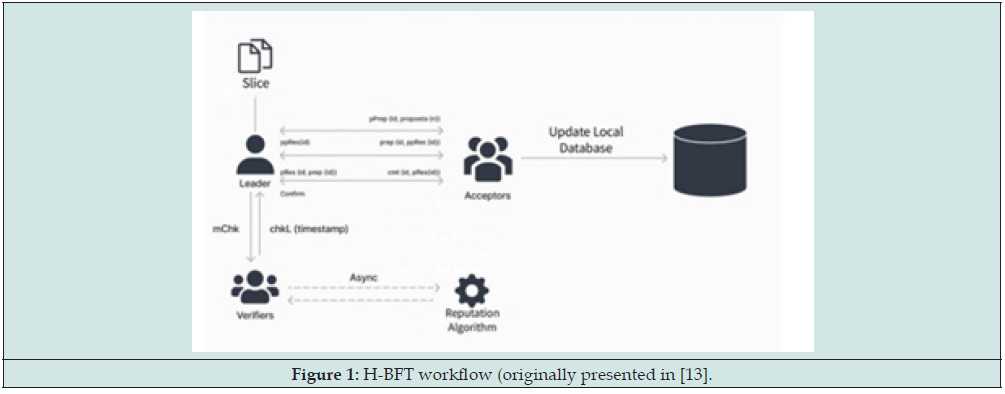
H-BFT is an algorithm with a three-stage flow, which starts when the leader receives a proposal to insert a new record, then messages are exchanged with the verifiers to provide the list of trusted nodes. After the procedures for obtaining the list, the leader sends a preprepare message to the constant acceptors in the quorum slice. The remaining steps may be then noted in the algorithm execution:

a) When an acceptor receives the message, it checks its local database to confirm its integrity, after which it responds to the leader with a pre-prepared response message, informing that it is ready to start the consensus round.

b) The leader evaluates the number of responses received and, if the quorum is still not enough for consensus and there are still honest nodes in the network, it executes the flow from the beginning; otherwise, it sends a prepare message to each acceptor that responded. The acceptors receive the prepared message and acknowledge it to the leader.

c) The leader receives responses from acceptors and sends a commit message to the acceptors that responded. The acceptors confirm the transaction after receiving the commit message sent by the leader, send a response message and update their bases.

Finally, Figure 1 shows message exchanges between network nodes during the execution of H-BFT, representing the routine to obtain consensus among network nodes.

Figure 1: H-BFT workflow (originally presented in [13].

Lupinepublishers-openaccess-computer-sciences-journal
<
EH-BFT Algorithm

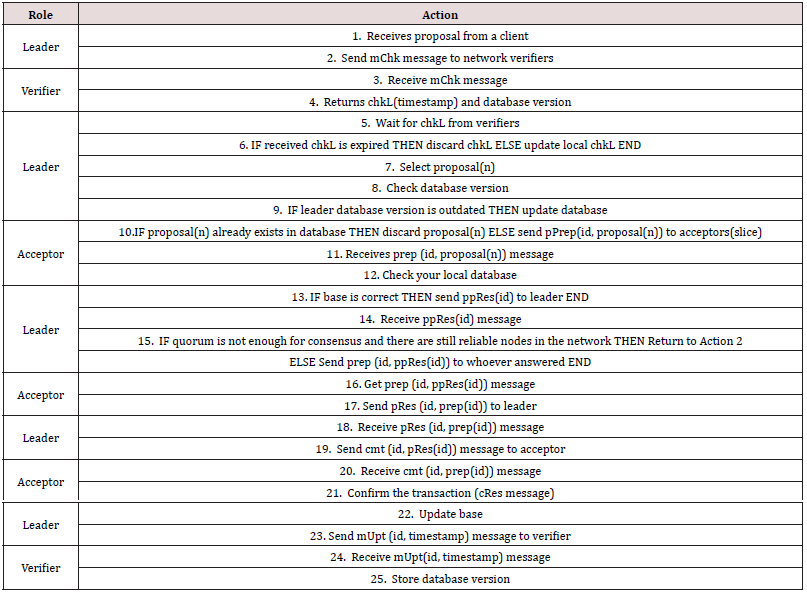
The Byzantine Fault Tolerance to Health Enhanced (EH-BFT) algorithm has two modifications comparing to the H-BFT algorithm. The proposed modifications are associated with the optimization of the database versioning and adjustments in the execution flow to avoid its anomalous functioning during its execution. The two modifications are shown in the following. Additionally, all its steps are detailed in Table 1. One may note that the proposed modifications increase routines, seeking to improve the original algorithm by granting security and consistency of the stored information, without forgetting the original goal of adequately supporting healthcare management systems.

Table 1: H-BFT Algorithm’s Specification.

Lupinepublishers-openaccess-computer-sciences-journal

a) The first modification is in the role played by verifiers, which were originally only responsible for maintaining the list of trusted nodes. With the EH-BFT, they gain one more attribution, which is to maintain the most current version of the database, and with that, together with the message requesting the list of suitable nodes, the most recent version of the database will be sent. In the end of the consensus round, the verifiers will keep the current state of the ledger.

b) The second modification is in the routine executed by the leader to verify the current status of the records, the proposal received with the existing records the database received from the verifier, seeking to mitigate problems like double spending.

Performance Analysis

This Section presents a general discussion, highlighting the benefits presented by the EH-BFT. To this end, we consider two real case studies, namely the Brazilian Public Healthcare System [35] [36][37] and US Medicare-Medicaid [18,19].

Case: SUS

The Brazilian Public Healthcare System (SUS) is a healthcare system designed to guarantee medical-hospital care to approximately 215,491,518 people [41] free of charge, from simple medical appointments, exams or transplant of organs [42]. Its performance is based on three pillars: promotion, protection and recovery of health, with activities ranging from promoting quality of life, reducing/eliminating health risks to early diagnoses for timely treatment [37]. The structure of the SUS is organized into Basic Healthcare Units, for outpatient care, Emergency Care Units, for less complex urgent and emergency care, and Public Hospitals or clinics, which provide any type of care and have resources to perform complex procedures [43]. The SUS still has public laboratories and maintains an agreement with private healthcare institutions, to complement the services [36]. An Electronic Health Record-EHR is created for every citizen in their first consultation [38], which will accompany them throughout their lives and will be accessed during consultations by the medical professional responsible for the care, except in cases where that the consultation is carried out at a private institution with an agreement. The current model adopted by SUS for EHR management has some shortcomings, which generate bottlenecks in access to the platform that manages patient information, cause insecurity in the maintenance of diagnoses and procedures performed, in addition to not guaranteeing consistency of data stored in its bases. The data produced during medical appointments are accessible only at the place of care, that is, if the patient moves to another state, the healthcare professional who will assist him will not have access to his medical history and access to patient information is limited, carried out without the use of more robust security mechanisms, restricting itself to the use of username and password.

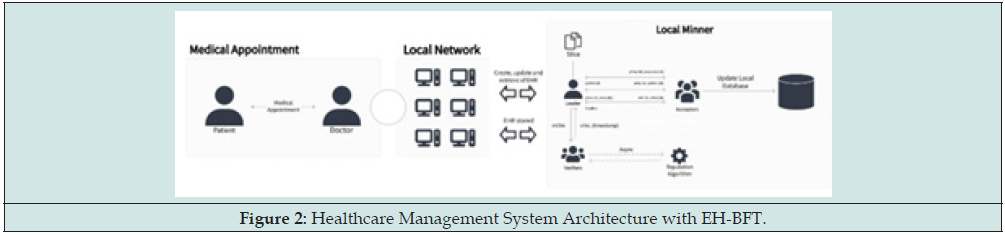
In the context of SUS, the use of the EH-BFT algorithm (Figure 2), would bring the following benefits.

Figure 2: Healthcare Management System Architecture with EH-BFT.

Lupinepublishers-openaccess-computer-sciences-journal

a. The first benefit is linked to the concept of availability of patient information, so that the patient or the healthcare professional responsible for the care can access the medical history quickly, allowing for accurate diagnoses and saving resources, as the treatment would already be more effective, no waste. The decentralized structure, characteristic of Blockchainbased systems, would allow access to the information managed by it anywhere and at any time.

b. Another extremely important factor concerns the integrity of the stored data. The use of EH- BFT would guarantee the consistency and veracity of the records, since the records would be immutable and non-redundant, inserted from the agreement established between the nodes. The consensus mechanism would not only guarantee the veracity of the data, but it would also bring confidence to the professional responsible for the diagnosis.

c. The issue of scalability, something of great impact in a Blockchain network with the size necessary to serve the SUS,is handled by the EH-BFT when it performs the continuous slicing of the quorum necessary for approval of the insertion of the proposed record, which would solve a difficult problem to measure in a healthcare management system of this size.

d. The confidentiality required of the information, through the LGPD [28], would be fully guaranteed, since the data circulating on the network is encrypted, and accessible only to those who need to do so, including the patient himself.

Case: Medicare and Medicaid

In the United States of America, the healthcare service is private [40], however, there are two assistance programs, maintained by the Federal Government. The first of these is Medicare [41], created in 1966 and aimed at people over 65, people with disabilities or those unable to work for some reason. It provides four types of service: Hospital insurance, medical insurance, extension coverage (maintained by companies to serve their employees) and medication coverage. Medicaid [42], on the other hand, was created to serve people below the poverty line, and is maintained entirely by the Federal Government and by the States. Each hospital or independent healthcare professional that provides care to the insured person will receive the reimbursement due, following a specific cost table, which never mirrors the reality of the market.

This model is extremely bureaucratic, since the government establishes different levels of demand, which means that many people do not get the necessary medical care. As there are no public hospitals, all care is provided by professionals and accredited establishments, which exponentially increases decentralization and redundancy in diagnoses. In the two American forms of public healthcare service, there is a large volume of appointments where professionals need to establish new diagnoses at each consultation, without a reliable base of medical histories, without integration between the two healthcare systems, which does not allow the availability of the data, it is not possible to assess the integrity of the records or the confidentiality of the diagnoses.

a) In the context of Medicare and Medicaid, the use of the EH-BFT algorithm (Figure 2), would bring the following benefits.

a. The first benefit of using a healthcare management system based on Blockchain technology would be the integration between the two public models of medical care, allowing the exchange of information produced by diagnoses made by healthcare professionals.

b. The dispersed nature of the services would make each establishment or healthcare professional a node in the Blockchain network, impacting scalability. This problem has already been solved by the EH-BFT during the routines carried out during its execution, in addition to that, the very decentralized model would guarantee availability for access to authorized persons at any time.

c. Keeping a single EHR available to everyone who needs access to it makes the more economical, faster, and more accurate diagnoses, bringing relief to the patient, in addition to savings and efficiency for the Government. This EHR would also be protected by the cryptography used by the Blockchain, which would guarantee the required confidentiality. In both case studies, the implementation of a healthcare management system based on Blockchain, which implements the EH-BFT, would bring performance benefits, cost reduction, accuracy in diagnoses, availability, and integrity of information, bringing benefits to citizens and for governments.

Conclusions and Future Work

This article presents an improvement proposal for enhancing the Byzantine Fault Tolerance to Health (H- BFT) algorithm. This enhancement, called Byzantine Fault Tolerance to Health (H-BFT), is characterized by optimizations in the flow of the algorithm and on its versioning control of the database. The EH-BFT maintains the specifications regarding continuous quorum slicing, role rotation, and generation of the list of suitable nodes, besides, it also assigns to the verifier the responsibility of controlling the version of the database in use by the system, which will be consulted at each necessary round for establishing consensus among network nodes. Additionally, to exemplify the deployment of EH-BFT, two case studies were herein presented, namely the Brazilian Unified Healthcare System and the US public healthcare systems Medicare and Medicaid, respectively. By means of the exploitation of these two scenarios, the effectiveness of the EH-BFT was demonstrated. As future works and being aware of this research’s limitations, we suggest the execution of tests in simulated environments besides the implementation of the EH-BFT algorithm with the goal of validating the processes and results derived herein.

Read More about Lupine Publishers journal of Current Trends in Computer Sciences & Applications Click on the below link: https://computer-sciences-lupine-publishers.blogspot.com/


Wednesday, 27 October 2021

Lupine Publishers| An Image Secret Sharing Method Based on Shamir Secret Sharing

 Lupine Publishers| Journal of Computer Science and Applications


Abstract

This paper presents an image secret sharing method based on Shamir secret sharing method. We use the matrix projection to construct secret sharing scheme. A secret image to be divided as n image shares such that:

i) Any k image shares (k ≤n) can be used to reconstruct the secret image in lossless manner and

ii) Any (k-1) or fewer image shares cannot get sufficient information too reveal the secret image.

It is an effective, reliable and secure method to prevent the secret image from being lost, stolen and corrupted. In comparison with other image secret sharing method this approach’s advantages are its strong protection of the secret image and its ability for real time processing.

Keywords: Image secret sharing; Finite field; Matrix projection

Introduction

The effective and secure protection for important message is a primary concern in commercial and military applications. Numerous techniques, such as image hiding and watermarking, were developed to increase the security of the secret. The secret image sharing approaches are useful for protecting sensitive information [1]. The main idea of secret sharing is to transform an image into n shadow images that are transmitted and stored separately. The original image can be reconstructed only if the shadow images that participated in the revealing process from a qualified set [2]. The (k; n)-threshold image sharing schemes were developed to avoid the single point failure. Hence the encoded content is corrupted during transmission. In these schemes, the original image can be revealed if k or more of these n shadow images are obtained. Moreover, the users who with complete knowledge of k 1 shares cannot obtain the original image. Blakley [3] & Shamir [4] independently proposed original concepts of secret sharing in 1979. In these (k; n)-threshold schemes encode the input data D into n shares, which are then distributed among k recipients. D can be reconstructed by anyone who obtains a predefined number k, where 1 k n, of the images.

Noar & Shamir [5,6] extended the secret sharing concept into image research and referred it as visual cryptography. Visual cryptography requires stacking any k image shares (or shadow images) to show the original image without any cryptographic computation. The disadvantages are

i) Image shares have larger image size compared to the size of the original secret image and

ii) The contrast ratio in the reconstructed image is quite poor [7].

A better image secret sharing approach was presented by Thien & Lin [1]. They used Shamir’s secret sharing scheme to share a secret image with some cryptographic computation. The method significantly reduces the size of the secret image and the secret image can be reconstructed with good quality. Ramp secret sharing schemes are another types of secret sharing schemes [8- 11]. In ramp schemes, a secret can be shared among a group of participants in such way that only sets of at least k participants can reconstruct the secret and k1 participants cannot [12]. The rest of this paper is organized as follows. Section II reviews the Shamir’s scheme. The proposed secret image sharing method and experimental results are given in Section III. It is also explained the advantages of proposed scheme in this section. The last section collects concluding remarks.

Review of shamir’s secret sharing scheme

Shamir [4] developed the idea of a (k, n)-threshold based secret sharing technique (k ≤n). The technique allows a polynomial function of order (k -1) constructed as,

, where the value of s0 is the secret and p is a prime number. The secret shares are the pairs of values (xi, yi) where, and 0⩽𝓍11⩽𝓍2⩽.........𝓍n⩽p-1 The polynomial function f(x) is destroyed after each shareholder possesses a pair of values (xi, yi) so that no single shareholder knows the secret value s0 [7]. Actually, no groups of (k 1) or fewer secret shares can discover the secret s0. That is when k or more secret shares are available, then we may set at least k linear equations yi = f(xi) for the unknown si’s. The unique solution to these equations shows that the secret value s0 can be easily obtained by using Lagrange interpolation [4].


Proposed Method

In this section, we examine the application of some secret sharing schemes. We have worked a new approach to construct secret sharing schemes based on field extensions in [13]. In this paper, we generalise the results of [13].

The application of some secret sharing schemes

Digital image consists of by transporting images in the nature through the agency of sensors to the computer. Digital images are sampled signals at regular intervals. These sampling points are called the pixel. The image is a two dimensional matrix which consists of pixels. It should be determined that how many bits of each pixel value will be stored when this matrix is constructed. This value is called the bit depth. For an image with a bit depth of 8, the maximum value that a pixel can have is 255. In general, it is used 3 bands to obtain a color picture. These bands have same size and each matrix represents a different color component. Each color component corresponds to red, green and blue.

Proposed scheme

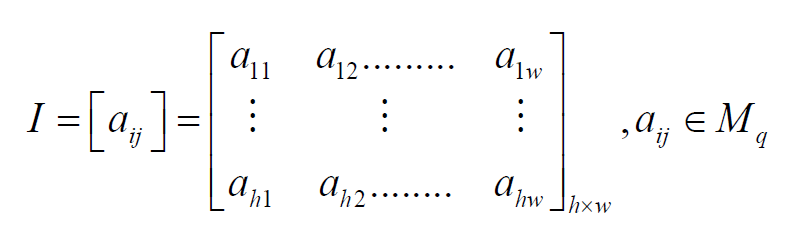
Consider the matrix I is an image with height of h and wideness of w. The height corresponds to row number of matrix and the wideness corresponds to column number. Let the secret space be Mq for a pixel, where

. This set consists of the elements of the matrix I. Let the secret be the image I and the threshold structure be (k; n). In this case, it can be constructed a secret sharing scheme as follows.
Lupinepublishers-openaccess-computer-sciences-journal

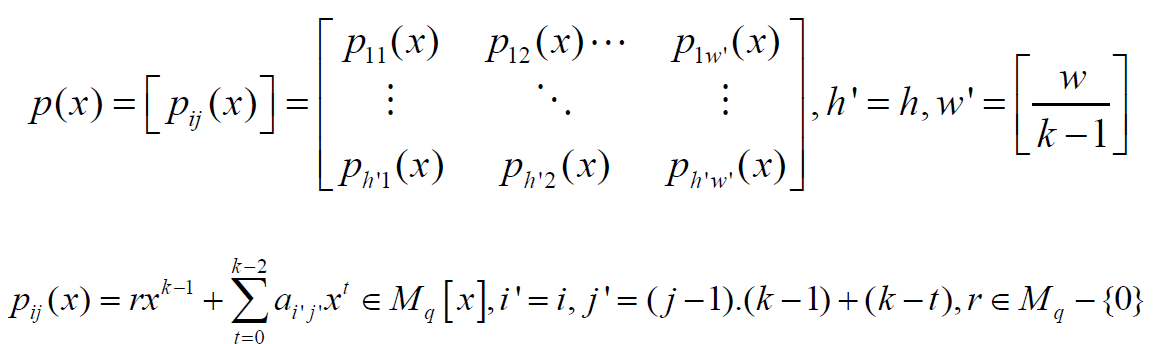
The matrix P(x) is generated which consisting of height of h and wideness of by using I.

Lupinepublishers-openaccess-computer-sciences-journal

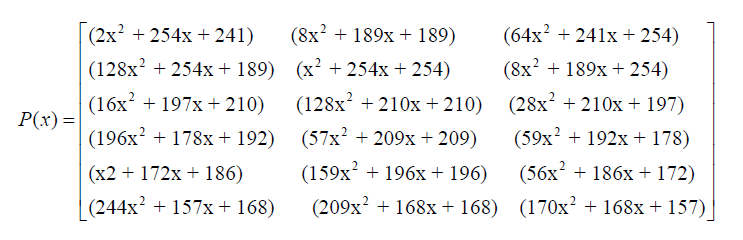
The aij entry corresponds to i th row and j th column of matrix I. It is clear that the degree of polynomial pij is (k -1). The columns of the matrix I are divided into pieces that has length of (k -1). j th piece in the i th row is represented by the vector Hij = {h1; h1…. hk-1}. It is used the vector Hij to construct the element pij=1(1≤𝒾≤𝒽',1≤𝒿≤𝓌') of the matrix p(x). The first entry of Hij is located i th row and [(j - 1) (k - 1) + 1] th column of the matrix I. The leading coefficient of polynomial pij(x) is randomly chosen from Mq – {0}. The coefficient of term which is the degree of t = (0 ≤ t ≤ k − 2) of polynomial pij(x) is chosen as (k - t -1) th element of Hij. This corresponds to [(j - 1) (k - 1) + (k - t)] th column in the ith row. The matrix P(x) is written as the elements of matrix T(x) by using Algorithm 1 [13].

Lupinepublishers-openaccess-computer-sciences-journal

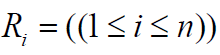
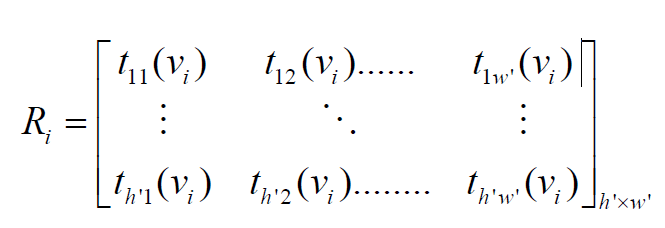
It is determined an ID number for each participant. The secret piece is obtained by equality (5) for each participant and These ID numbers are transformed to the.

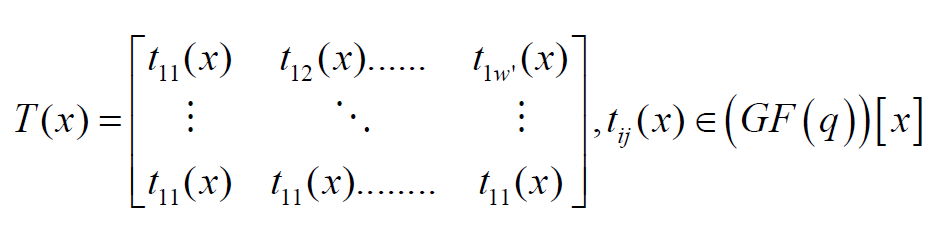
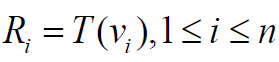
by Algorithm 1 [13]. Then the matrix is transformed to the matrix T(x) as follows.
Lupinepublishers-openaccess-computer-sciences-journal

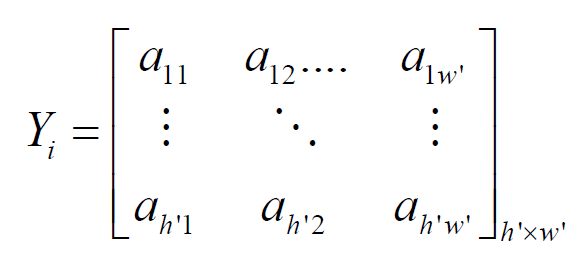
This polynomial matrix is written as the matrix Yi by using Algorithm 2 [5].

Lupinepublishers-openaccess-computer-sciences-journal

Secret retrieval procedure

To reach the secret, at least k pieces of secret must be known. On the other hand, the number of elements of must be at least k. In the ordered pair (𝓊ti; Y𝓊ti) the ordered of participant in the W is denoted by i, the order of the set of participant of ti th participant in the W is denoted by 𝓊ti. Y𝓊ti is the secret piece which is given to participant with ID of 𝓊ti. These ordered pairs are transformed to the ordered pairs (𝒱ti;R𝓊ti) i ti t u v R by using algorithm 1 in [13]. It is used to Lagrange Interpolation for the ordered pairs ( ; ) i ti t u v R . Hence it is obtained the matrix T(x) again. Then it is found the matrix P(x). The image is constructed with the coefficients of this polynomial.
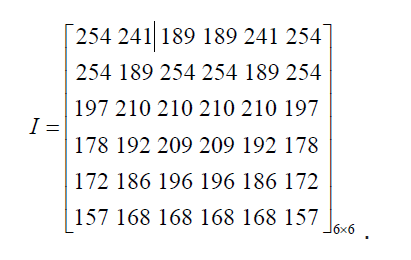
Example. Let the secret space be M256 and the irreducible polynomial be f(x) = x8 + x4 + x3 + x2 +1∈(GF(2))[x] to construct GF (256). It can be constructed a (3; 5)-threshold schemes by using the following matrix I.

Lupinepublishers-openaccess-computer-sciences-journal

The matrix P(x) can be constructed as follows. The leading coefficient is randomly selected and the other coefficients are chosen from matrix I.

Lupinepublishers-openaccess-computer-sciences-journal

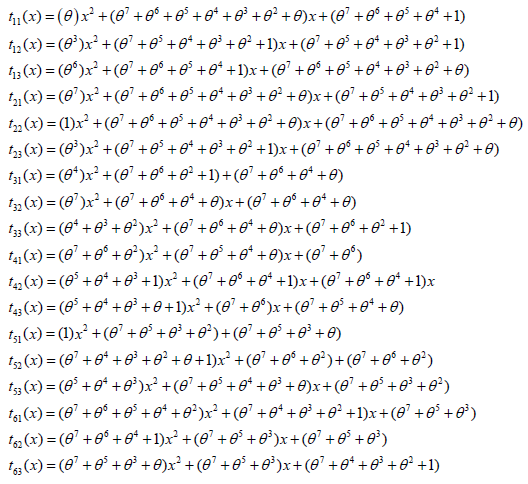
The coefficient of polynomial in the matrix P(x) is moved to GF(256). Therefore, it is obtained the elements of matrix T(x) = [tij(x)]; (t(x) 2 (GF(q))[x]).

Lupinepublishers-openaccess-computer-sciences-journal

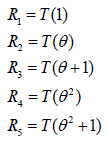
Let the IDs of participants be 𝒰1 = 1, 𝒰2 = 2, 𝒰3 = 3, 𝒰4 = 4 and 𝒰5 = 5. These elements correspond to 2 𝒱1 =1,𝒱2 =θ ,𝒱3 =θ +1,𝒱42 and 𝒱5 =θ +1∈GF(256)

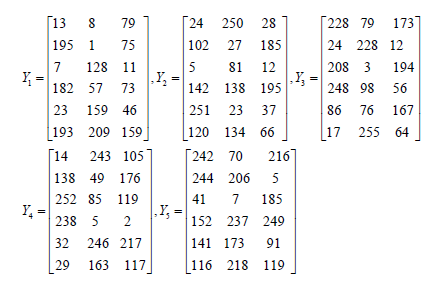
The pieces of participants are as follows.

Lupinepublishers-openaccess-computer-sciences-journal

These elements correspond to the following matrices in M256.

Lupinepublishers-openaccess-computer-sciences-journal

At least 3 participants can recover the image by combining their shares by using Lagrange Interpolation in [13]. It is seen that the original secret image in Figure (1a) and the secret pieces are seen (1b-1d). Reconstructed image is seen in Figure (1f).

Advantages

It is known that a file in the computer environment can be expressed with a bit string. A bit string consists of 8 bits is called a byte. A byte gets value in the range (0-255) and is an element of M256. A file D consisting of m bytes can be expressed as a vector such that D = (a1 a2……… am) (ai∈Mq) . Consider any file (text, image, video, etc.) by using the proposed scheme, the file is also secret. The operations an secret sharing schemes can be applied to this file. The participants know that the secret is the image. The secret sharing scheme is defined over GF(256). So it is a lossless scheme. As in the Shamir’s scheme if the operations were done in GF(251), then the large values of 250 would be lost. That is the file will be corrupted. So, the entire file could be lost. At result the image could not reconstruct again.

Conclusion

We proposed an image secret sharing method based on Shamir secret sharing. We have two techniques. i) Secret sharing scheme using matrix projection and ii) Shamir’s secret sharing scheme. A secret image can be successfully reconstructed from any k image shares but cannot be revealed from any (k-1) or fewer image shares. The size of image shares is smaller than the size of the secret image. Our scheme is defined over GF(256). So it is a lossless scheme. This is another advantage of our scheme. So the proposed scheme stands well, in terms of security.

Read More About Lupine Publisher Journal of Computer Science and Applications Please Click on Below Link:
https://computer-sciences-lupine-publishers.blogspot.com/