Showing posts with label Journal of Sexual Disorders. Show all posts

Friday, 10 June 2022

Lupine Publishers | Sleep Disorders in Perimenopausal Women and Metabolic Syndrome, is that True?

 Lupine Publishers | Journal of Reproductive System and Sexual Disorders


Abstract

Sleep disorders (SD) are a common complaint in women going through menopause transition. It is well known that there is a close relationship between SD and one of the main menopausal symptoms: vasomotor symptoms (VMS). To acknowledge this association is essential when investigating menopausal transition and SD. The Study of Women’s Health across the Nation (SWAN), shows that the prevalence of sleep disturbance increases with age. The prevalence in perimenopausal and postmenopausal women varies from 39% to 47% and 35% to 60% respectively. Although both menopausal transition and aging increase sleep disturbances, etiology in menopausal women is probably multifactorial. A decline in the levels of reproductive hormones and melatonin, and the complex interaction among these hormones can significantly contribute to sleep problems, poor concentration, fatigue and decreased quality of life. On the one hand menopause nearly adversely affects all components of metabolic syndrome (MS) and on the other hand the cumulative long-term effects of deprived sleep have been associated with many cardio metabolic consequences including hypertension, obesity, and impaired glucose metabolism. Management strategies should be taken into account to help women ameliorate their night sleep, in order to prevent future complications and to improve their quality of life (QoL).

Keywords: Sleep disorders; Menopause; Vasomotor symptoms; Metabolic syndrome

Abbreviations: SD: Sleep Disorders; VMS: Vasomotor Symptoms; SWAN: Study of Women’s Health Across the Nation; MS: Metabolic Syndrome; QoL: Quality of Life; OSA: Obstructive Sleep Apnea; FSH: Follicle Stimulating Hormone; IR: Insulin Resistance; DBT: Type- 2 Diabetes; CVD: Cardio Vascular Disease; HPA: Hypothalamus-Pituitary-Adrenal; AHI: Apnea Hypopnea Index; GABA: Gamma- Amino Butyric Acid

Introduction

Despite the fact that most adults need at least eight hours sleep every night to be well rested, not everyone achieves it. Not getting enough sleep for a long time might cause health problems. According to the Third Edition of the International Classifications of Sleep Disorders, both insomnia and obstructive sleep apnea (OSA) are identified as part of the seven major categories of SD [1]. SD are highly prevalent in general population, for example, insomnia is estimated to affect up to 30% of people [2]. The latter is more prevalent in women than in men and several studies, which evaluated SD with subjective scales, indicated that women in general population have worse sleep quality than men [3]. Prevalence of SD increases dramatically from 30% in premenopausal women to approximately 50% in peri and postmenopausal women [4]. The Study of Women’s Health across the Nation (SWAN), a multiethnic female sample of 12,603, found that 38% of women aged 40-55 referred sleep difficulties, significantly related to menopause. The SWAN study also found that the prevalence of SD was related to ethnic origin, varying from 28% in Japanese women to 40% in Caucasians [5]. It is important to mention the fact that compared to Asian women; Latin American mid-aged women display a higher prevalence of VMS [6].

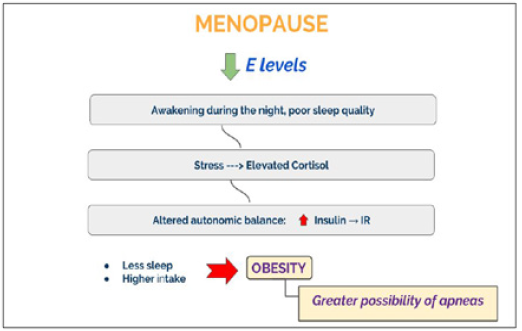
A total of 6079 women aged 40-59 of 11 Latin American countries were invited to fill out validated scales. Insomnia and poor sleep quality were highly prevalent in this mid-aged female sample in which the influence of age and the menopause was only modest and rather linked to menopausal symptoms already occurring since the premenopausal [6]. Referring to our experience in Argentina, we analyzed the prevalence of SD in postmenopausal women using validated scales, and concluded that insomnia presented a prevalence of 22.2% [7]. The causes of SD are multifactorial, the high prevalence in peri and postmenopausal women, shows that VMS, changing reproductive hormone levels, circadian rhythm abnormalities, mood disorders, coexisting medical conditions, and lifestyle (such as troublesome drinking, drug use: hypnotics and hormone therapy) may play an important role. Higher educational level related to less insomnia and better sleeps quality [6] (Figure 1).

Figure 1:
Lupinepublishers-openaccess-Reproductive-Sexualdisorder

Estradiol, Melatonin and Changes in Sleep

At a physiological level, the decreasing levels of estradiol and increasing follicle stimulating hormone (FSH) levels may interfere with melatonin secretion and other circadian hormones [8]. Melatonin levels decrease particularly during the perimenopausal period. In addition, aging may be an important consideration. While women age, their circadian rhythm changes and decreases melatonin secretion resulting in shortened sleep duration and early morning awakening. Reduced levels and atypical secretion patterns of melatonin have been also observed in OSA [9]. However other studies have found that the best predictor of SD in menopause was the history of previous SD [10]. Taking into account that changes in estradiol levels produce sympathetic activation, we might consider as a hypothesis that this contributes to the initiation of hot flashes by narrowing the thermo neutral zone [6]. Anxiety and depression have also been linked to estradiol fluctuations. Four distinct neurotransmitter systems have been shown to be affected during the menopause: gamma amino butyric acid, serotonin, nor adrenaline and dopamine.

It is of interest to mention that dopamine and serotonin have been implicated in the regulation of sleep, and estrogendependent changes in serotonergic neuronal transmission during menopausal transition have been cited as a possible cause for sleep changes, mood fluctuations and memory loss. Good sleep quality is required for both good health and QoL [6]. Polysomnography was used to evaluate hot flashes and their correlation with SD in a group of healthy premenopausal women who received leuprolide (gonadotropin-releasing hormone agonist) to rapidly induce menopause. By isolating the effect of hot flashes on women’s sleep without confusing with age, this experimental model showed that nocturnal VMS correlate with increased sleep fragmentation. The number of women studied was small but consistently suggests the specific contribution of VMS to sleep interruption [11].

Key points [12]

a. Around 40 to 60% of women reports sleep impairment during menopause

b. Etiology of SD in menopausal women is probably multifactorial.

c. VMS and depressive symptoms could be the most important risk factors for impaired sleep quality.

d. Menopausal transition has been documented as an important hallmark for increased about 3.4 times the risk of sleep disorders in postmenopausal women compared with premenopausal women.

e. 20% of women in this category say they have a difficult time sleeping due to hot flashes or night sweats at least a few nights each week.

Health Consequences of Sleep Deprivation

Evidence has emerged in recent years that sleep plays an important role in modulating weight gain, neuro endocrine signaling, and consequently insulin and glucose homeostasis [13]. Health consequences of SD involve vascular, metabolic and neuropsychiatric outcomes, including hypertension, heart disease, arrhythmia, stroke, heart failure, insulin resistance (IR) and type-2 diabetes (DBT). Sleep also impacts negatively on mood. Insomnia, for example, is co morbid with depression and anxiety [14]. The longitudinal Penn State Cohort study of 1344 adults followed for a mean of 16.6 years found that odds of metabolic syndrome (MS) associated all-cause and cardiovascular disease (CVD) mortality were greater for individuals who slept <6 vs. ≥6 hours each night. The authors found that the effect modification of sleep duration was observed mainly on the elevated blood pressure and glucose dysregulation components of the MS [15]. Circadian rhythm desynchrony has likewise been shown to adversely affect glucose metabolism. Studies suggests that superimposing circadian desynchrony with sleep restriction leads to a decompensation of β-cell function characterized by severely impaired insulin secretion [16]. Another mechanism that has been proposed is that sleep loss, especially slow wave sleep, exerts adverse effects on glucose homeostasis by stimulating the hypothalamus-pituitary-adrenal (HPA) axis and sympathetic activity [17].

Metabolic Syndrome and Sleep Disorders: Which Comes First?

Considering the prevalence of SD in the general population, the epidemiological and pathophysiological links between MS, incident DBT and CVD, the association of OSA with MS and IR is of critical importance [18].

Which comes first? This supposition is based on the following premises [18]:

a. Many sleep apneas do not have structural abnormalities in their upper airways and, vice versa, many patients with narrow upper airways owing to anatomical abnormalities do not have sleep apnea.

b. Obesity increases the risk of OSA

c. Sleep apnea is very frequent in disorders in which IR is a primary pathophysiologic abnormality, e.g. polycystic ovary syndrome, in which IR is the strongest predictor of the presence of sleep apnea.

d. IR, by releasing growth factors, may lead to soft tissue edema and tissue proliferation in the neck

e. Some metabolic abnormalities are associated with excessive daytime sleepiness.

f. Pro-inflammatory mediators (known to be elevated in OSA) are also independently associated with excessive daytime sleepiness

g. Anti-inflammatory interventions have the potential to decrease sleepiness and apnea hypopnea index (AHI).

There are several connection points between MS and SD. For example, every 10 kg gained OSA risk twofold and with an increase in waist or hip circumference by 13-15cm OSA risk fourfold. Visceral fat especially predicts OSA and significantly correlates with apnea hypopnea index. On the other hand, there may be a reciprocal relationship between obesity and OSA, such that not only does obesity increase the risk of OSA, but also that sleep apnea may predispose to weight gain and obesity. Indeed, patients with newly diagnosed OSA have difficulty losing weight and, in fact, are predisposed to excessive weight gain, far more than are evident in similarly obese control subjects proven to be free of OSA [18]. Association between OSA and dyslipidemia is causal and independent of other confusing factors (especially obesity), it is noteworthy that OSA lowers HDL, raises total cholesterol/HDL ratio and triglycerides [18].

Abundant evidence supports the role of enhanced daytime sympathetic activity, which results not only from a carry-over effect from the nocturnal events, but may also be related to chemoreceptor resetting and tonic ‘normoxic’ chemoreceptor activation. Other potential contributing mechanisms that have been at baseline described in OSA include baroreflex and endothelial dysfunction. Irrespective of the exact mechanism of action, it appears that OSA can, in and of itself, lead to elevated blood pressure and thus contribute to yet another component of the MS [18]. Evidence has accumulated over the last few years, however, to support the concept that OSA may be directly related to IR, independent of obesity and other anthropometric measures, in both obese and nonobese subjects. OSA is also characterized by a pro-inflammatory state and elevated cytokine levels (e.g. tumor necrosis factor-α, TNF-α). Furthermore, OSA may induce oxidative stress owing to repetitive episodes of intermittent hypoxia, and increased oxidative stress has been shown to be an important pathogenic mechanism of IR [18]. OSA-related hypercoagulability may be related to increased platelet aggregability, increased haematocrit, elevated fibrinogen levels and increased blood viscosity [18].

Sleep and Cortisol

Sleep has a modest but clearly detectable effect on the HPA axis since it exerts an inhibitory action on the secretion of cortisol. Sudden changes in sleep rhythm induce a disruption in cortisol daily rhythm. Both the OSA and awakenings during the night would determine an activation of the axis generating an increase in cortisol levels leading to disruption in the daily rhythm. If this persists chronically, it could have metabolic, cognitive and psychiatric consequences [19]. As a consequence of the autonomic disbalance, insulin levels raise leading to IR. Moreover, sleep deprivation is accompanied by an increase in food intake that could bring to obesity and greater possibility of apneas.

Sleep and Inflammation

Many pro-inflammatory cytokines regulate sleep and physiological functions. Restriction between 25 to 50% of a normal sleep cycle alters these mediators of inflammation [20]. Studies suggest that sleep loss is associated with an increased monocyte production of IL-6 and TNF-alpha. These variations in this circulating markers of inflammation are associated with the development of cardiovascular events, hypertension, obesity and type 2 diabetes [21]. Summarizing, menopause comprehend a period of high risk for SD. A marked decrease in the production of estradiol, which results in VMS, such as hot flashes and night sweats, is related to awakening during the night and poor sleep quality. Also circadian rhythm changes and decreases melatonin secretion. These hormonal changes seem to affect sleep directly. Insufficient sleep has been associated with increased risk of obesity, disorders of glucose, insulin homeostasis, and MS.

Treatment

Non - Pharmacological Approaches

The FDA suggests several tips for sleep hygiene [22]:

a. Go to bed and get up at the same time each day.

b. Avoid caffeine, nicotine, beer, wine and liquor four to six hours before bedtime.

c. Don’t exercise within two hours of bedtime.

d. Don’t eat large meals within two hours of bedtime.

e. Don’t nap later than 3 p.m.

f. Sleep in a dark, quiet room that isn’t too hot or cold for you.

g. If you can’t fall asleep within 20 minutes, get up and do something quiet.

h. Wind down in the 30 minutes before bedtime by doing something relaxing.

Advice about psycho education and sleep hygiene includes the following Strategies [23]:

a. Relaxation training: The progressive muscle relaxation, autogenic training, imagery training, meditation help to get a better sleep. Yoga and Therapeutic Massage are a helpful option.

b. Stimulus control therapy: Consists in a set of behavioral instructions designed to re-associate the bed/bedroom with sleep and to re-establish a consistent sleep-wake schedule.

c. Sleep restriction therapy: Points to curtail the time in bed to the actual amount of sleep being achieved.

d. Cognitive Behavioral Therapy: Is a psychological method designed to identify, challenge and change misconceptions about sleep and faulty beliefs about insomnia.

e. Exercise

Pharmacological Approaches

Furthermore, dietary supplements (melatonin and tryptophan), sedative hypnotics (benzodiazepine and non-benzodiazepine hypnotics) and antidepressants (selective serotonin and nor epinephrine reuptake inhibitors: SSRIs and SNRIs) are an important complementary option to non-pharmacological directions [23].

What about Hormone Therapy?

Primary pharmacological treatments for menopause related VMS including insomnia revolve around replacing the diminished levels of estrogen and/or progesterone levels. The added estrogen contributes to sleep through metabolizing nor epinephrine, serotonin and acetylcholine, which consequently increases REM cycles. On the other hand, progesterone stimulates benzodiazepine receptors, causing the release of gamma-amino butyric acid (GABA), a sedating neurotransmitter that can potentially facilitate sleep [23]. Micronized progesterone at a dose of 300mg/night significantly reduces VMS and thus, adding its sedative effect, improves the quality of sleep [24].z

Conclusion

Identifying women at risk for developing SD during menopausal transition is essential in preventing the consequences of sleep deprivation. Good sleep quality is required for both, good health and QoL. Sleep restriction contribute to increase the prevalence of MS in postmenopausal women. Early and comprehensive treatment plays a central role in the prevention of cardiovascular disease.

Read More About Lupine Publishers Journal of Reproductive Medicine Please Click on Below Link:
https://lupine-publishers-reproductive.blogspot.com/

Thursday, 10 March 2022

Lupine Publishers | Nonmosaic Klinefelter Syndrome Successful Conception after TESE/ICSI: A case report

 Lupine Publishers | Journal of Reproductive System and Sexual Disorders


Abstract

Klinefelter syndrome patients are mostly clinically azoospermic, and before the era of TESE, were unable to father genetically their own offspring. Nonmosaic Klinefelter [NMK] patients have chances of fatherhood once sperm is harvested from the epididymal seminiferous tubules and further injected in the ovarian cytoplasm. We report a case of 36y old NMK patient, treated for 3 months with supportive and hormonal medication achieving a pregnancy after TESE/ICSI. This is the first published case of successful conception in a couple with a nonmosaic Klinefelter father in Egypt using TESE/ICSI. Review of the literature for any advantages of mTESE over TESE and conception demonstrated higher pregnancy rates by TESE although the sperm retrieval rate was similar in both techniques.

Conclusion: Nonmosaic Klinefelter patients should no longer be considered sterile.

Keywords: Klinefelter Syndrome; Azoospermia; Male Infertility; TESE; ICSI

Introduction

Klinefelter syndrome [KS] was first described in 1942 by Harry Klinefelter [1]. It is the most common chromosomal disorder in men. The estimated prevalence of K Sis 0.2% in the general population, 3% among infertile men, and up to 11% in men with non-obstructive azoospermia [2]. Yet, KS remains frequently under diagnosed, because of the wide phenotypic variation among affected individuals, and the lack of established screening programs. Only 25% of men with KS are diagnosed during their lifetime, with fewer than 10% being diagnosed before puberty [3]. The disorder is categorized by X-chromosome polysomy, with X-disomy [47, XXY] being the most common variant representing about 85%- 95% of the cases. Characteristic features of KS include small testes, hypogonadism, and infertility [4]. Higher grades of X chromosome polysomy are associated with a more severe clinical presentation, whereas genetic mosaicism (46, XY/47, XXY) usually results in a milder phenotype [5].

Since the introduction of intra-cytoplasmic sperm injection [ICSI] [6] and testicular sperm extraction [TESE] [7], a considerable number of men with Klinefelter syndrome have been able to father genetically own offspring. Looking at the three of the more recent published studies, in 2015 Ozveri et al. [8] confirms that sperm retrieval is possible in azoospermatic Klinefelter Syndrome patients, and recommends the use of artificial reproductive techniques (ART) for those wishing to conceive. In 2016 Ishikawa et al. [9] concluded that the use of mTESE to extract motile sperm is vital in the use of Klinefelter Syndrome cases in order to maximize the chances of achieving a clinical pregnancy and embryological development. In 2016 Vicdan et al. [10] concluded that with regards to the use of fresh vs. cryopreserved sperm in ICSI cycles demonstrated an equal chance of success. In this case report a successful conception in an azoospermic nonmosaic Klinefelter father using a combined TESEICSI protocol is highlighted.

Case Presentation

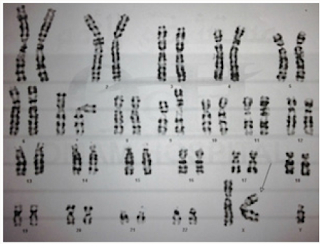
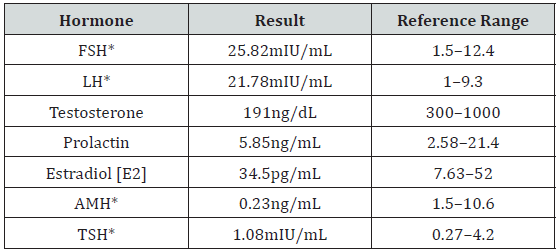
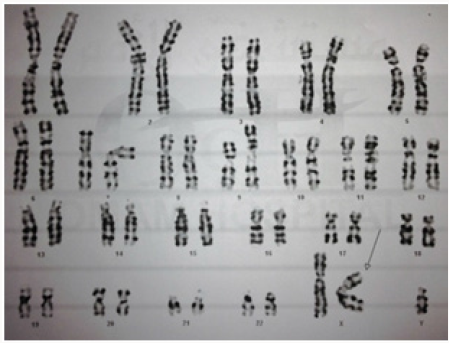
A 36 year old Egyptian male of rural origin presented to our fertility clinic complaining of primary infertility for 9 years. He enjoyed a good sex life, without any concern regarding libido, erection, intercourse and ejaculation. His wife was 10 years younger and her menstrual history was unremarkable. General examination diagnoses well developed secondary male sexual characteristics, 187cm tall and weight of 82Kg. Genital examination revealed an average sized penis with normal male pubic hair pattern and two small firm testicles. Both vas were palpable and showed no abnormality. Repeated spermo grams in 3 months intervals and 3 days of abstinence diagnose total azoospermia. The second result was a duplicate of the first one and the results of the hormonal assay showed a hypergonadotrophic hypogonadism state (Table 1). Karyotyping followed clinical data, raised suspicion of Klinefelter Syndrome, reporting a nonmosaic Klinefelter (Figure 1).

Table 1: The hormonal assay of our patient.

lupinepublishers-openaccess-journal-reproduction-sexual-disorders

*FSH=Follicle Stimulating Hormone, LH=Luteinizing Hormone, AMH=Anti-Mullerian Hormone, TSH=Thyroid Stimulating Hormone.

Figure 1: Karyotyping of the patient. Notice the arrow pointing out the extra X chromosome.

Lupinepublishers-openaccess-Reproductive-Sexualdisorder

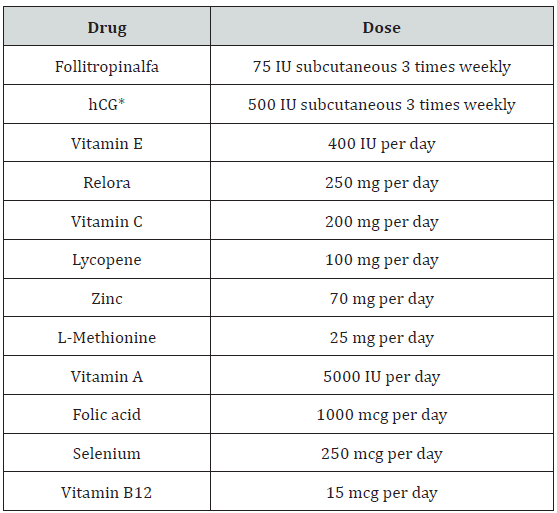
Although the value of treatment of cases with hypergonadotrophic hypogonadism is controversial, the patient was treated for 3 months with combined hormonal and nonhormonal supplement therapy prior to TESE (Table 2). An attempt to enhance the harvest of the scheduled testicular sperm extraction and improving ICSI chances of fertilization. TESE was performed and multiple sections were retrieved from both testes. Primary scanning of the surgical harvest revealed azoospermia. After processing, the left testis showed motile sperms from 2 tissue cores, allowing for ICSI as well as a cryopreservation vial for future interest. The operation was uneventful. Postoperatively mild left orchitis was diagnosed which subsided after a 10day course of quinolones, anti-inflammatory drugs and scrotal elevation.

Table 2: Details of our 3 month regimen prescribed to our patient prior to TESE.

lupinepublishers-openaccess-journal-reproduction-sexual-disorders

The wife was treated with long GnRH agonist regimen, pituitary down-regulation with Triptorelin 0.1mg once daily SC injection [decapeptyl;Ferring], commenced in the midluteal phase of the menstrual cycle and continued for 2 weeks. This was followed by estradiol blood level and Trans vaginal ultrasound confirmation of down-regulation, recording the leading follicle diameter and antral follicular count [AFC]. Human menotropin, gonadotropin injections at a dose of 225IU/day [menogon;Ferring] initiated and continued until leading follicle reach 24mm maximum diameter, within high range estradiol level and low progesterone level. The hCG injection [Choriomon 5000 IU/day; IBSA; Egypt] was administered when at least three follicles reach R17 mm in diameter. Vaginal egg collection was scheduled 36 hours following hCG triggering. TESE was performed before oocyte retrieval in order to confirm a positive retrieval of sperms. Microscopy of the retrieved semen isolated 28 out of total 58 spermatocytes. The rest were either immotile or with sluggish tail movement. Overall 22 oocytes were retrieved while 15 diagnosed at MII stage. ICSI was performed and 6 good quality A and B embryos progressed to day 3. Three embryos at stage A were transferred on day D3. Twelve days post ET the beta hCG was 141.0mIU\m. The lady delivered at term, a healthy female baby of 3000gr.

Discussion

Historically, men with KS were considered infertile. However, it is now well accepted that isolated foci of spermatogenesis can exist in the testes of patients with KS [11]. This discovery, along with advances in assisted reproductive technologies [ART] during the past two decades, has made paternity possible for men with KS. Surgical sperm retrieval and intracytoplasmic sperm injection [ICSI] have dramatically improved the fertility potential of men with KS. Tournaye et al. first reported on successful sperm retrieval in men with KS using TESE in 1996 [12]. The first pregnancies achieved using ICSI of ejaculated and testicular sperm were reported 2 years later [13]. Since then, there have been reported 101 children born to fathers with nonmosaic KS [14].

With the use of micro dissection TESE, sperm retrieval rates in patients with KS are considered equivalent to those in men with non-obstructive azoospermia. The outcome of mTESE versus TESE in non-obstructive azoospermia was also investigated by a systematic review published in 2014. Seven out of 62 identified studies were included in the final analysis. SRR was significantly higher in the mTESE group (42.9-63%) in comparison with TESE (16.7-45%) [15]. In another retrospective cohort study among 714 men with NOA, 40.5% had successful sperm retrieval at their first TESE. In total, 261 couples had 444 ICSI cycles and 48 frozen embryo transfer cycles, leading to 129 pregnancies and 96 live birth deliveries. The expected cumulative delivery rates after six ICSI cycles were 78%.Authors indicated the intrinsic limitations related to the retrospective cohort study design [16]. Our recent published, review results demonstrate among 1,070 KS patients treated by ICSI the SRR was 46.3% and PR was 21% with mTESE and 45.6% SRR and 44.4% PR with TESE [17]. Fewer complications were observed on ultrasound examination after mTESE procedure [15].

Mehta A et al. [18] published a systematic review/metaanalysis to investigate the effect of early hormonal therapy [HR] on sperm retrieval rates in patients with Klinefelter Syndrome [KS]. Although the studies varied in their conclusions as to predictors of sperm retrieval, positive predictors included young age and preoperative Testosterone levels close to or within the normal range, either at baseline or with hormonal therapy [aromatase inhibitors, clomiphene citrate [CC], or hCG] [19-22] Several authors have identified ‘‘young’’ patient age, usually defined as age <30 years, as being the most consistent positive predictor of sperm retrieval in patients with KS [23,24]. The age of the reported patient was 36 years who does not fit with most the studies age predictor for successful retrieval. However, his testosterone level was low and the treatment before surgery might have had a positive impact upon successful sperm retrieval.

Conclusion

The majority of 47, XXY males are azoospermic and considered sterile until the introduction of TESE/ICSI. Solid parameters to distinguish patients with KS and fertilization potential and chance of fatherhood are missing. A prospective randomized control study would probably reveal those important parameters indicating KS patients with higher chance to achieve a pregnancy.

Read More About Lupine Publishers Journal of Reproductive System and Sexual Disorders Please Click on Below Link:
https://lupine-publishers-reproductive.blogspot.com/
Friday, 19 November 2021

Lupine Publishers | Schistosomahaematobium and Urogenital Disorders

 Lupine Publishers | Journal of Reproductive and Sexual Disorders

Introduction

Schistosomiasis, also known as bilharziasis, is one of the most serious of tropical diseases that occurs in the world. In fact, schistosomiasis has been reported from 76 countries, being:

I. Intestinal schistosomias is caused by

a. Schistosoma mansoni recorded in Africa, the Middle East, the Caribbean, Brazil, Venezuela, and Suriname

b. S. japonicum in China, Indonesia and the Philippines

c. S. mekongi in several districts of Cambodia and the Lao people’s Democratic Republic

d. S. guineensis and related S. intercalatum recorded in rain forest of Central Africa

II. Urogenital schistosomiasis caused by S. haematobium recorded in Africa, the Middle East, Corsica (France) [1].

Concerning Europe, we are in the presence of a re-introduction of this disease, since it had been recorded in Portugal, where several foci had occurred in Algarve-Southern Portugal [2,3] Still in Europe, the record of new localization of intermediate hosts of S. haematobium can be a risk of expansion of this parasite in European continent [4,5]. S. haematobium is a blood fluke and part of its development occurs within freshwater snails (intermediate hosts) and the diseases is contracted when cercariae larvae (infectant stage for humans) are liberated from the snails and penetrate the skin of anyone that is in contact with infected water (bath, domestic activities, fishing, etc.,). The cercariae, after penetration are known as schistosomulae. These migrate and develop into mature adult schistosoma worms, their habitat being inside blood vessels. Then, the adults inhabit the veins of the vesical plexus, although some parasites may live in the portal vein and its mesenteric branches. Oviposition normally occurs in the small terminal venules of the vesical plexus, but occasionally in the rectal venules, the mesenteric portal system and ectopic sites. Ectopic migration of the S. haematobium adults and Oviposition can occur anywhere in the body, resulting in a variety of lesions [6].

Concerning reproductive organs, the female genital tract is frequently found to harbor S. haematobium ova [7], and ova have been found at autopsy in the vas deferents, prostate, scrotal skin pampiniforme plexus and epididymis [8,9]. Urogenital schistosomiasis presenting genital and urinary tract lesions has been referred by several authors, as well as responsible for female sterility and it can affect up to 50% of women with S. haematobium infection in endemic areas. Even in the absence of urinary ova excretion, 23-41% of women have been found to suffer from genital of schistosomiasis [10]. Urogenital schistosomiasis associated with cases of female sterility have been observed [11,12]. The histophatology of 176 cases of schistosomiasis reported from Malawi during the period 1976-1980 has showed schistosomiasis infection throughout the genital tract with 60% of cases including the cervix. Schistosomiasis was a significant case of gynecological morbidity, particularly when infection involved the lower genital tract, however in a proportion of cases ova were found coincidentally in other lesions or normal tissues, and were not apparently causally linked with symptoms [13].

Another aspect deserving attention is the association between urogenital schistosomiasis and cancer observed in men. Effectively, cases of prostate carcinoma associated with schistosomiasis have been published worldwide [14]. For that if can to have a general idea of the potential risk of urogenital disorders in the world, we also make here a short information on urogenital schistosomiasis in European travelers and migrants. Then, according to TropNet Surveillance Data [15], in an analysis of 14 years- from 1997 to 2010- on urogenital schistosomiasis due S. haematobium in European travelers and migrants, the species information was available in 898/1,465 (61%) of the cases (young with an median age of 29). Urogenital schistosomiasis due to S. haematobium was diagnosed in 22%of cases (318/1,465). Among these 63.8% (203/318) were found in non-European, 4.7% (15/318) among expatriates, and 31.5% (100/318) among Europeans. The authors have concluded, “That schistosomiasis remains a relevant infection in travelers and migrants in Europe. Most infections in Europeans occur in travelers visiting a small number of countries in west and east Africa. These travelers should be counseled intensively on the risk of schistosomiasis infection.”

To avoid the serious consequences of urogenital schistosomiasis prevention and early treatment should be an important health care target in endemic areas [16]. Also schistosomiasis needs to be considered as a differential diagnosis of female infertility and sterility [11]. Finally, we are in agreement with [17] in the following “considering that female genital schistosomiasis is a significant risk for ectopic pregnancy and infertility in schistosomiasis endemic areas a detailed histology is necessary and parasitic evaluation of patients presenting with ectopic pregnancy or sub fertility in areas where the disease is endemic, and with [18] “the scarcity of integrated approaches to address female genital schistosomiasis from case reports to a call for concerted actions against this neglected gynecological disease”.

Read More About Lupine Publishers Journal of Reproductive and Sexual Disorders Please Click on Below Link:
https://lupine-publishers-reproductive.blogspot.com/
Saturday, 21 August 2021

Lupine Publishers | Selective Androgen Receptor Modulators (SARMs): A Mini-Review

 Lupine Publishers | Journal of Reproductive System ans Sexual Disorders


Abstract

Selective Androgen Receptor Modulators (SARMs) were discovered in the late 1990’s.They may have an application in treatments of various diseases, including muscle wasting, cancer cachexia, breast cancer, osteoporosis, andropause and sarcopenia. In this minireview the development, pharmacodynamics, and the phase 1 and 2 trial results of the SARMs are discussed with a special emphasis on the illicit use of the SARMs.

Introduction

The androgen receptor (AR) is a member of the steroid hormone receptor family that plays important roles in the physiology and pathology of diverse tissues.AR ligands,which include circulating testosterone and locally synthesized dihydrotestosterone bind to activate the AR to elicit their effects.Ubiquitous expression of the AR metabolism and cross reactivity with other receptors limit broad therapeutic utilisation of steroidal androgens.However,the discovery of selective androgen receptor modulators (SARMs) provide an opportunity to promote the benificial effects with greatly unwanted side effects. In the last two decades SARMs have been proposed as treatments of choice for various diseases, including muscle wasting, breast cancer and osteoporosis. In addition, they may have an application in andropause, sarcopenia, cancer cachexia and as selective anabolic steroids in performing body building sports [1-6]. In this mini-review the development, pharmacodynamics and the phase 1 an2 trial results of the SARMs are discussed,with a special emphasis on the illicit use of the SARMs.

Development of SARMs

Synthesized steroidal androgens due to their ability to mimic the actions of their endogenous counterparts have been used ckinically as valuable therapeutic agents to target a variety of male and female disorders resulting from androgen deficiency. The principle clinical indication of androgens is as replacement therapy for hypogonadal men [1,2]. Other documented clinical uses of androgens include delayed puberty in boys, anemias, primary osteoporosis, heriditary angioneurotic edema, endometriosis, estrogen receptor-positive breast cancer and muscular diseases, as Duchenne’s muscular dystrophy [3-6].

Since the discovery of the therapeutic benefits of testosterone in the 1930’s a variety of androgen preparations have been introduced and tested clinically.

Unfortunately, all current available androgen preparations have severe limitations [2,6]. Unmodified testosterone is impractical for oral administration due to its low systematic bioavalability [7]. Testosterone esters (e.g., testosterone propionate and testosterone enanthate) are presently the most widely used testosterone preparations, usually administered by intramuscular injection in oil-vehicles [8,9]. A prolonged duration of action is achieved with these esters. However,they produce highly variable testosterone levels. 17-alpha alkylated testosterones (e.g., methylteststerone and oxandrolone) can be given orally. Nevertheless,they often cause unacceptable hepatotoxicity and are less efficacious; hence they are not recommended for long-term androgen therapy [9-11].

At the end of the 1990’s studies with affinity ligands for the androgen receptor started. The discovery of these nonsteoidal androgens offered an opportunity for the development of a new generation of selective androgen receptor modulators (SARMs) superior to current androgens. Theoretically, SARMs are advantegeous over their steroidal counterparts in that they can obtain better receptor selectivity and allow greater flexibility in structural modification. Thus SARMs can potentially avoid the undesirable side effects caused by cross-reactivity and achieve superior pharmacokinetic properties [12].

Pharmacodynamics of SARMs

Structural modifications of the acryl propionamide analogues bicalutamide and hydroxyflutamide led to the discovery of the first generation SARMs. The compounds S1 and S4 in this series bind AR with high affinity and demonstrate tissue selectivity in the Herzberger assay,that utilizes a castrated rat model [13-20]. Both S1 and S4 prevented castration induced atrophy of the levator ani muscle and acted as weak agonists in the prostate. At a dose of 3mg/kg/day, S4 partially restored the prostate weight to <20% of intact weight, but fully restored the levator ani weight, skeletal muscle strength, bone mineral density, bone strength and lean body mass and suppressed LH(luteinizing hormone) and FSH( follicle stimulating hormone) [20,21].

S4 also prevented ovariectomy-induced bone loss in a female rat model of osteoporosis [22]. The ability of SARMs to promote both muscle strength and bone mechanical strength constitutes a unique advantage over other therapies for osteoporosis, that only increase bone density. S1 and S4 are partial agonists thus in intact male rats [20,21]. S1 and S4 compete with endogenous androgens and act as antogonists in prostate, such SARMs with antagonistic or low intrinsic activity in prostate might be useful in the treatment of benign prostate hyperplasia (BPH) or prostate cancer. The suppressive effects of this class of SARMS on gonadotrofin secretion in rats suggests a potential application for male contraception [21]. The ether linkage and B-ring para-position substitution are critical for agonist activity of the acryl propionamide SARMs [19]. Based on crystal structures, compounds with ether linkage appear to adapt a more compact confirmation than bicalutamide due to formation of an intramolecular H-bond, allowing the B-ring to avoid steric conflict with the side chain of W741 in AR and potentially explaining the agonist activity [23].

The hydantoin derivatives developed by the BMS group have an A-ring structure that is similar to that of bicalutamide. The cyanonitro group of these molecules interact with Q711 and R752 [24- 26]. The benzene ring or the naphtidyl group,together with the hydantoin ring overlaps the steroid plane, while the hydantoin rings forms a H-bond with N705.BMS-564929 binds AR with high affinity and high specificity. BMS-564929 demonstrated anabolic activity in the levator ani muscle and a high degree of tissue selectivity as indicated by a substantially higher ED50 (Effective Dose for 50% of the population receiving the drug) for the prostate. Hydantoin derivatives are potent suppressors of LH. BMS=564929 is orally available in humans with a half-life of 8-14 hours. The prolonged half-life of these ligands in rats may explain the lower dose needed to achieve pharmacological effects. Differences regarding in vivo activities of SARMs, that share similar binding affinity and in vitro activity,may be related to the differences in pharmacokinetics and drug exposure [27].

Hanada et al. [28] Pharmaceutical Co. reported a series of tetrahydroquinolinone derivatives as AR agonists for bone. Although these compounds displayed high AR affinity and strong agonist activity in prostate and levator ani,they demonstrated little selectivity between androgenic and anabolic tissues [27]. Significant in vivo pharmacological activity was only observed at high subcutaneous doses [27,28]. Ligand Pharmaceuticals developed LGD 2226 and LGD 2941, that are bicyclic 6 anilino quinolinone derivatives, showing anabolic activity on the levator ani muscle as well as on bone mass and strength, while having little effect on prostate size in a preclinical rodent model [29-31]. LGD 2226 was also shown to maintain male reproductive behavior in the castrated rodent model [30].

Scientists at Johnson and Johnson replaced the propionamide linker with cyclic elements such as the pyrazoles, benzimidazoles, indoles and cyclic propionanilide mimetics [31]. Merck scientists have developed a number of 4-azosteroidal derivatives and butanamides [32]. All the above mentioned SARMs belong to the so called “first generation SARMs”. The mechanisms that contribute to the tissue specific transcriptional activation and selectivity of biologic effects of the SARMs remain poorly understood.Three general hypotheses have been proposed, although these hypotheses are not mutually exclusive.

a) The coactivator hypothesis assumes that the repertoire of coregulator proteins that associate with the SARM-bound AR differs from that with testosterone-bound AR leading to transcriptional activation of a differentially regulated set of genes.

b) The conformational hypothesis states that functional differences in ligand classes (agonist, antagonists and SARMs) are reflected into conformationally distinct states with distinct thermodynamic partitioning. Ligand binding induces specific conformational changes in the ligand binding domain, which could modulate surface topology and subsequent proteinprotein interactions between the AR and other coregulators involved in genomic transcriptional activation or cytosolic proteins involved in non-genomic signalling. Differences in ligand-specific receptor conformation and protein-protein interactions could result in tissue-specific gene regulation, due to potential changes in interactions with the AR effectors, coregulators or transcriptional factors.

c) The third hypothesis states that the tissue selectivity of SARMs could also be related to differences in their tissue distribution,potential interactions with 5-alpha reductase or CYP19 aromatase or tissue specific expression of coregulators [33]. Testosterone actions in some androgenic tissues are amplified by its conversion to 5-alpha dihydro testosterone [34]. Nonsteroidal SARMS do not serve as a substrate for 5-alpha reductase. Tissue selectivity of SARMs might be related to tissue specific expression of coregulatory proteins. Similarly, some differences of the action of SARM of testosterone could be related to the inability of nonsteroidal SARMs to undergo aromatization.

Preclinical and early clinical trials with SARMs

A large number of candidate SARMs have undergone preclinical proof of concept and toxicology studies and have made it iinto phase 1 and phase2 clinical trials [29,35]. These compounds are being positioned for early efficacy trials for osteoporosis,frailty,cancer cachexia and aging-associated fundamental limitations. The use of SARMS for the treatment of androgen defiency in men has been proposed. However, the relative advantages of SARMs over testosterone for this indication are not readily apparant. Many biological features of testosterone, especially its effects on libido and behavior, bone and plasma lipids require its aromatization to estrogen. Because the currently SARMs are neither aromatized nor 5-alpha reduced, these compuonds would face an uphill regulatory bar for FDA approval, as they would be required to show efficacy and safety in many more domains of androgen action, than has been required of testosterone formulations.

While the FDA regulatory pathway for the approval of drugs for osteoporosis has been well delineated, because of precedence set by previously approved drugs, the pathway for approval of function promoting anabolic therapies has not been clearly established. Efforts are underway to generate a consensus around indications, efficacy outcomes in pivotal trials, and minimal clinically important differences in key effective outcomes These efforts should facilitate efficacy trials of candidate molecules. There are 2 types of administering SARMs: orally or in injectable dosages. Well known SARMs are LGD-4033, Ostarine (MK-2866), S4(Andarine), RAD 140, Cardarine(GW 501516) and SR9009. The last two preparations are usually grouped with SARMs, but are not the same and are used as endurance supplements.SARMs have been prohibited by the World Anti-Doping Agency (WADA) since 2008. SARMs have the potential to be misused for performance enhancement in sport due to their anabolic properties, as well as their ability to stimulate androgen receptors in muscle and bone. THey are currently prohibited atall times-in the category of “other anabolic agents” under section S1,2 of the WADA Prohibited List [36] Full clinical FDA approval for human consumption as prescription drugs has not yet been accomplished for any of the SARMs until now.

Ligandrol (LGD-4033)

Ligandrol is a SARM discovered by Ligand Pharmaceuticals and currently under licensed development by Viking THerapeutics [37]. There has been a lot of research into the efficacy of SARMs, but very little published research to date on LGD-4033. Ligandrol has exhibited desirable in vivo efficacy on skeletal muscle and bone measurements in animal models of disease. There is only one published study on the effects of LGD-4033 in humans, as well as phase B1 clinical trial results. A 2010 phase1 clinical trial was the first study in humans of LGD-4033 and evaluated the safety, tolerability and oharmacokinetic profiles of the molecule in a single escalating dose, double-blind, placebo-controlled study in 48 healthy volunteers [38].

In 2013, Bhasia et al. [36] conducted a rigorous 3-week pacebocontrolled study of 76 healthy men (21-50 years),that looked at the safety and tolerability of LGD-4033. During this study participants were randomized to placebo,0,1.0,3 or 1mg LGD-4033 for 21 days. The study evaluated the safety, tolerability, pharmacokinetics and the effects of ascending doses of LGD-4033 on lean body mass, muscle strength, stair climbing power and sex hormones [39]. The sample size was still small and the study was not based on considerations of effect sizes, as the study’s primary aim was to establish safety and tolerability, rather than efficacy. Similarly, the 3-week study duration was not designed to demonstrate maximal effects on muscle mass and strength. Therefore larger and longer studies are needed to access the efficacy of LGD-4033. Furthermore the study was supported by Ligand Pharmaceuticals, who developed LGD-4033.

Ligandrol showed a dose-dependent suppression of total testosterone from baseline to 21 days, rather than an increase. Ligandrol did not result in fat loss in this study. It promoted muscle growth, but the evidence is very early weak evidence at this stage. There was an increase in lean body mass, that was doserelated. The mechanisms by which androgens increase muscle mass remain incompletely understood. However, the increase in strength measured by stair climbing speed and power also showed improvement, but not enough to be statistically significant. With a larger sample size and or longer study, it is possible that this effect may be demonstrated. LGD-4033 displayed an immediate effect on hormones in the body from the time it was taken. The research showed gains in lean muscle mass within the 21 days of the study. Adverse effects were not noted. LGD-4033 displayed a prolonged elimination half- life of 24-36 hours. Upon discontinuation of LGD- 4033 the hormone levels returned to baseline by day 56 [39]. There is just not enough research to show the efficacy of Ligandrol at this stage,despite it was safe and well tolerated at all doses administered.

Ostarine (MK-2866,Enobosarm)

Merck presented the results of a phase2 clinical trial evaluating Ostarine (MK-2866),an investigational SARM in patients with cancer induced muscle loss,also known as cancer cachexia at the Endocrine Society Annual Meeting in Washington in 2009 [40]. In this study 159 cancer patients with non-small cell lung cancer, colorectal cancer, non-Hodgkins lymphoma, chronic lymphocytic leukemia or breast cancer were randomized. Participants received placebo,1mg or 3mg Ostarine daily for 16 weeks. Average weight loss prior to entry was 8,8 percent and patients were allowed to receive standard chemotherapy during the trial. The drop-out rate during the trial was 33%.

Ostarine treatment led to statistically significant increases in lean body mass (LBM) and improvement in muscle performance measured by stair climbing in patients with cancer cachexia compared to baseline in both the Ostarine 1mg and 3mg cohorts. In the study Ostarine met the primary endpoint of LBM mesured by DEXA(dual energy x-ray absorptiometry) scan, by demonstrating significant increases in LBM compared to baseline in both the Ostarine 1mg and 3mg treatment was o,1kg(p=0,874 compared to baseline, 1,5kg(p=0,001) and 1,3 kg(p=0,0045) at the end of the 16 week trial.

The study also met the secondary endpoint of muscle function as measured by a 12 step stair climbing test measuring speed and calculating power with each Ostarine treatment arm demonstrating a statistically significant average decrease in time to completion and average percentage increase in power exerted.The change from baseline in stair climb power in the placebo,1mg,and 3mg treatment groups was 0,23 Watts (p=0,66,compared to baseline)8,4Watts (p=0,002) and 10,1 Watts (p=0,001),respectively. A critical appraisal results in the same critics,as depicted for the Ligandrol results. Ostarine is also known as Enobosarm and S-22 SARM by various licensing contracts in the body building world.

Ostarine had already shown significant improvement in the ability of healthy,elderly men and women to climb stairs in a phase2A study in 2007.Elderly men and women improved climbing stairs in speed and power,accompanied by significant increases in LBM and decreases in fat mass after only 86 days [41]. Enobasarm (GTx-024,Ostarine and S-22) is the most well characterized clinically and has consistently demonstrated increases in LBM and better physical function across several populations, along with a lower hazard ratio for survival in cancer patients. Enobosarm was eveluated in the POWER 1(Prevention and Treatment of Muscle Wasting in Patients with Cancer)and in the POWER 2 trial. These are the first phase 3 trials for a SARM. Full results from these studies will soon be published and will guide the development of future anabolic trials [42].

Andarine (S4)

Andarine(S4) was studied in 120 ovariectomized rats for 120 days. The study found that treatment with S4 (Andarine) was benificial to maintain cortical bone content and whole body and trabecular bone mineral density (BMD) measured by DEXA scan. The S4 treatment also decreased body fat and increased body strength in these animals. It was further disclosed by this study that S4 had the ability to reduce the incidence of fractures via minimizing the incidence of falls, through increased muscle strength and through direct effects on bone,as compared to current therapies that are primarily antiresorptive in nature. The study also found that dosages of S4 were effective to increase LBM and reduce body fat in intact and ovariectomized rats. It was also revealed that Andarine provides the unique potential to prevent bone resorption, increase skeletal muscle mass and strength positions and promotes bone anabolism, that makes it a possible new alternative for the treatment of osteoporosis [43]. To date there are no clinical human studies of Andarine in osteoporosis.Andarine has a half-life of 4-6 hours and is prized for weight loss and building and repair of muscle as a muscle boosting supplement in the fitness community.

RAD 140 (Teslolone)

RAD 140 is a SARM that stimulates muscle weight increases at a lower dose than that required to stimulate prostate weight. It results in the expected lowering of lipids (LDL,HDL,triglycerides),without elevation of liver enzyne transaminase levels.RAD 140 has excellent pharmacokinetic properties and is a potent anabolic [44]. RAD 140 is a potent AR agonist in breast cancer cells with a distinct mechanism of action,including the AR-mediated repression of estrogen receptor1 (ESR1).It inhibits the growth of multiple AR/ ER+ breast cancer PDX (patient –derived xenograft) models as a single agent,and in combination with palbociclib.These preclinical data present support for further investigation of RAD 140 in AR/ ER+ breast cancer patients [45].

RAD 140 is a SARM that stimulates muscle weight increases at a lower dose than that required to stimulate prostate weight. It results in the expected lowering of lipids (LDL,HDL,triglycerides),without elevation of liver enzyne transaminase levels.RAD 140 has excellent pharmacokinetic properties and is a potent anabolic [44]. RAD 140 is a potent AR agonist in breast cancer cells with a distinct mechanism of action,including the AR-mediated repression of estrogen receptor1 (ESR1).It inhibits the growth of multiple AR/ ER+ breast cancer PDX (patient –derived xenograft) models as a single agent,and in combination with palbociclib.These preclinical data present support for further investigation of RAD 140 in AR/ ER+ breast cancer patients [45].

In the fitness community Testolone is seen as one of the latest additions to the line of SARMs. Testolone is developed by Radius Health Company. The increase in LBM and fat loss are highly appreciated, as its androgenic-anabolic ratio of 90:1, compared to testosterone. Recommended dosages of Testolone vary from 20- 30 mg once daily and it is used in cycles of 12-14 weeks duration. Because Testolone does not interact with the aromatase enzyme and is not liver toxic, no adverse effects are claimed. The half-life of Testolone is estimated 12-18 hours.

Cardarine(GW 501516) and SR 9009 (Stenab0olic)

These two preparations are usually grouped with the SARMs in the fitness community, but are not the same. Cardarine is used as an enhancing running endurance supplement. Cardarine is not a SARM, but a peroxisome proliferative activated receptor-omega agonist (PPAR-omega), that increases PPAR-omega, and regulates muscle metabolism and reprograms muscle fibre types to enhance running training endurance. While training alone increases the exhaustive running performance Cardarine treatment enhances running endurance and the proportion of succinate dehydrogenase(SDH)- positive muscle fibres in both trained and untrained mice. It appeared while training increases energy availability by promoting protein catabolism and gluconeogenesis, Cardarine enhances specific consumption of fatty acids and reduces glucose utilisation [47]. In the fitness community Carderine is regarded as”king of the gym”. Half-life is between 16-24 hours and it should be taken at 10 mg once a day or twice daily. It is claimed to be useful in conjunction with anabolics and stimulants of any kind without adverse reactions in 12-14 week cycles.

SR 9009 (Stenabolic) is a REV-ERB (revised-viral nuclear erythroblastosis receptors) agonist, that can modulate the expressions of circadian core clock proteins and therefore help to modulate the circadian rythm. Modulation of the REV-ERB activity by synthetic agonists e.g., SR 9009 SR 9011 alters the expression of genes involved in lipid and glucose metabolism and, therefore plays an important role in maintaining the energy homeotasis. Effects of SR9009 and SR9011 in animal studies are increased basal oxygen consumption, decreased lipogenesis, cholesterol and bileacid synthesis in the liver, increased mitochondrial content, glucose and fatty oxidation in the skeletal muscle and decreased lipid storage in the white adipose tissue. The observed increase in energy expenditure and decrease in fat mass make the REV-ERB agonists promising drug candidates for the treatment of several metabolic disorders.They are also attractive for performance enhancement by athletes. Such use can be classified as doping [48].

SR9009 (Stenabolic) has been developed by Scripps Research by the team of Prof. Thomas Burris. Stenabolic is taken orally as a metabolism enhancer in the fitness community. It is believed to have results similar to Cardarine, but with considerable more extra benefits. It is recommended as a very good addition to any steroid (Anavar or Trembolone) or SARMs cycle, especially when used together with Cardarine. The half-life is short, 30-60 minutes,so the dose should be spaced through the day e.g.,10 mg 4-6 times daily. Again no adverse effects are reported.

Illicit use of SARMs

Recently, the FDA issued a consumer warning letter against supplement-like bodybuilding products,that contain SARMs. The FDA warning came on the heels of warning letters sent to three companies, that market products containing the ingredients. FDA had this to say about the offending products distributed by Infantry Labs LLC,Iron Mag Labs and Panther Sports Nutrition: “ Although the products identified in the warning letters are marketed and labeled as dietary supplements, they are not dietary supplements. The products are unapproved drugs, that have not been reviewed by the FDA for safety and effectiveness” [49]. FDA told consumers among the dangers associated with SARMs are liver toxicity and the potential to increase the risk of heart attack and stroke.But the agency said the long- term effects of these substances are unknown. However, these FDA health risk statements can not be supported by the few small clinical human phase 1 and2 SARMs studies performed and the ongoing POWER trials. Furthermore, the FDA did not mention that Ostarine and Ligandrol have previously been investigated as new drugs, which makes them ineligible for use as dietary supplements.

Nevertheless, as clinical research of SARMs is slow, we are now in the wonderful situation the real world clinical SARMs experience is now represented by the fitness and body building world. It is estimated that ther are between 2 and 4 million young people in the U.S. alone, who have used performance-enhancing drugs sometime in their life. There are thousands of internet sites offering SARMs in and outside the U.S [50]. So the magnitude of the problem is completely unknown,if there is any problem at all. In general,these young people are very concerned about their health and “looks” and have the good right of their own responsability.

A recent JAMA publication found that the chemical analysis of 44 products sold via the internet as SARMs revealed, that only 52% contained SARMs and another 39% contained another unapproved drug. In addition, 25% of products contained substances not listed on the label, 9 percent did not contain an active substance and 59% contained substance amounts,that differed from the label [50]. Although these figures must be frightening,there is no registered SARMs epidemic at the U.S. emergency rooms. At present the biggest problems are the “loopholes” in the FDA regulation of dietary supplements.

Conclusion

The SARMs were discovered in the late 1990’s. Clinical development is slow. Few human phase 1 and 2 clinical studies are available Results of the phase 3 POWER trials,studying SARMs in wasting, are awaiting and will guide the development of future anabolic trials. Until now no SARM has received FDA approval. Due to “loopholes” in the FDA regulations the SARMs are widespread used as dietary supplements in the fitness community and body building world. This results in the wonderful situation the clinical experience with SARMs is represented by illicit SARMs use and not by clinical science.

Read More About Lupine Publishers Journal of Reproductive System Please Click on Below Link:
https://lupine-publishers-reproductive.blogspot.com/