Showing posts with label Journal of forensic science and research. Show all posts

Thursday, 30 March 2023

Lupine Publishers | Footprint Evidence Solved the Mystery in a Suspicious Death: A Rare Case Report

 Lupine Publishers | Journal of Forensic & Genetic Sciences


Abstract

Death investigation is complicated endeavours, taking an immense amount of time to take in a scene. The general rule of thumb in death investigation is that all death investigations are handled as homicide until proven otherwise. The three critical components of any death investigations are medical/social history, examination of the body and scene investigation. Sometimes in death investigation, the body posture may cause confusion or complication and difficult to explain. A death is suspicious if it is unexpected and its circumstances or cause are unexplained in the early investigation. Normally, this occurs in the context of suicide or suspected criminal activity. The following is a case report in a death scene wherein a young woman was found hanging by a rope around the neck under suspicious condition in her residence, as it was claimed to be a homicidal hanging, allegedly murdered and hanged. But the presence of dust footprint in the scene identified as suicidal hanging and solved the mystery. The fact was explained to the blood relatives in the crime scene itself by the criminalist and made them to understand. The blood relatives understood the scientific fact and accepted the forensic explanation.

Keywords:Crime Scene Investigation; Case Study; Suspicious Death; Partial Hanging; Footprint

Case report, a Real Crime Scene Investigation

Introduction

Forensic Science is an important tool for crime investigation. Scene of crime is the starting point in Forensic Science. Death investigation is complicated endeavours, taking an immense amount of time to take in a scene. The general rule of thumb in death investigation is that all death investigations are handled as homicide until proven otherwise. The three critical components of any death investigations are medical/social history, examination of the body and scene investigation. Sometimes in death investigation, the body posture may cause confusion or complication and difficult to explain. A death is suspicious if it is unexpected and its circumstances or cause are unexplained in the early investigation. Normally, this occurs in the context of suicide or suspected criminal activity.

Hanging or self-suspension is a form of ligature strangulation where the pressure is produced by the weight of the body itself [1]. The incidence of hanging cases differs as per the variation in the community, geographical location and socio-economic condition [2]. Crime scenes contain physical evidence that is pertinent to a criminal investigation. Physical evidence is any and all subjects that can establish that a crime has been committed or can provide a link between a crime and its victim or perpetrator. The successful crime investigation depends upon the recognition, collection and analysis of various kinds of evidence [3]. Footprint is a valuable physical evidence found mostly in burglary and violent crime scenes, left by the perpetrators. But some of the investigators have underestimated the value of footprint evidence and neglected to collect this evidence during crime scene search [4,5]. In Asian countries like India, Thailand, Malaysia and Indonesia, people in the rural area are still walk barefooted [6]. Researchers have proved that footprint may be used to estimate stature [7,8], body weight [9,10] and sex [11] and to solve the crime. The present case report is unique and rare case of suspicious death, wherein the manner of death (suicide or homicide) was identified in the death scene itself through footprint. Later the autopsy examination confirmed the footprint findings.

Case Study Report

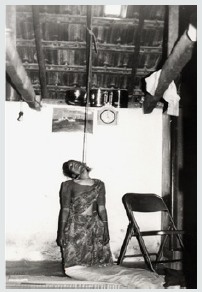
A village woman aged about 25 years was allegedly murdered and hanged the body and the body was found hanging partially by a rope around her neck under suspicious condition in her residence. A case was registered by the police under section “Suspicious Death” and requisitioned the service of the field criminalist (the corresponding author while as field criminalist in India) to visit the death scene and assist the investigation. The field criminalist visited the death scene and examined the scene. The body was found hanging in kneeling position as shown in Figure 1.

Figure 1: Kneeling Position of the Deceased-Partial Hanging..
Lupinepublishers-openaccess-Forensic-Genetics

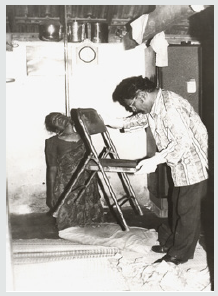
Figure 2: Observation of a dust print on the folding chair.
Lupinepublishers-openaccess-Forensic-Genetics

The house was tiled roof with wooden rafters and the body was found hanging in kneeling position. As an Indian Tamil woman, she worn saree, blouse and bangles. The rope was made of coconut fibre, normally available in all shops for the regular domestic and other uses. The position of the knot was on the left side with prominent ligature mark but non-continuous in the neck. The body did not show any injuries or bleeding but noticed faecal discharge. No struggling mark was noticed. A metal folding chair was found near the dead body and examination of chair showed the presence of right dust footprint on the seat (Figure 2). In general, before hanging, one end of rope should be tied on the wooden rafter of the roof and then another end of the rope to be used to make the ligature loop for the purpose of constriction of neck. Since the rafter was high, the person should have used the folding chair to reach the rafter to tie the one end of rope. This footprint formed a vital clue and deciding factor to fix the manner of death.

Possibility of Footprint Formation

If the death was caused by suicidal hanging, the deceased should have climbed the chair to reach the rafter to tie one end of coconut fibre rope and left dust her footprint on seat surface of chair. Since the village girl used to walk barefooted in and around the house, the feet should have been stained with dust. Or else, if the death was caused by homicide, the murderer might have murdered the woman and made her hang with coconut fibre rope and masqueraded as suicidal hanging. For that, the murderer should have used the chair to reach the rafter with one end of rope and thus dust footprint of the murderer should have been transferred. Who left this dust footprint on the chair?

The dust footprint was photographed and lifted by using “electrostatic dust print lifter” and preserved for comparison analysis. The scene was photographed. Before autopsy the footprints were collected from the deceased for comparison. As the field criminalist (author) was also a “declared footprint expert”, the footprint comparison analysis was conducted in the crime scene itself and opined that the dust footprint in the chair was left by the deceased. Also, the parents have suspected a person in this regard and his footprint was also collected and footprint comparison analysis showed that the dust foot print did not match with suspected footprint. The field criminalist also showed the comparison analysis to the parents and relatives of the deceased. In the crime itself, the field criminalist explained the parents and relatives about forensic science, footprint evidence, suicidal hanging, homicidal hanging etc. and made them to understand the fact.

The body was sent to autopsy room and the Professor of Forensic Medicine also invited the field criminalist to attend the post-mortem. The autopsy examination revealed that the death was due to suicidal asphyxia, ruled out the possibility of homicide and confirmed the result findings of footprint. The field criminalist prepared a crime scene report and handed over to the investigator and the autopsy report was also received. Thus, the keen crime scene observation, recognition, evidence collection, analysis of footprint evidence and crime reconstruction at length put an end to the suspicious death of the woman, beyond any doubt and came up with truth. The whole family members had also accepted the findings.

Discussion

Hanging is one of the commonest methods of approach in case of suicidal deaths in India [12]. Hanging is a process in which the body is suspended with a ligature around the neck, which causes constriction of air passage preventing exchange of air between atmosphere & alveoli of lungs, leading to asphyxia & death. The constriction force is either the weight of the whole body or the weight of the head alone. A weight of 2Kg is enough for death in hanging [13]. The present case report is an atypical hanging since the ligature was found on the left side of neck. The ligature mark on the neck of the woman was more detectable because the coconut fibre was narrow and hard material [14]. Broad object like cloth may not produce appreciable ligature mark. In a case report, an autopsy team have reported a suicidal hanging case wherein a 42-year-old male was found hanging by plastic rope and the rope was found attached to two suspension points and the middle part of it used for the binding of neck and blood stain was present on the floor below the dead body. Crime scene examination, police investigation and autopsy supported death due to suicide [15]. Some researchers have conducted study on different types of ligature materials used to commit suicide by hanging to understand the medicolegal significance of ligature mark [16].

Conclusion

Crime scene is a treasure of information. The investigators should apply their knowledge and skill to identify the fact in the crime scene, so that the fact may be accepted by the sentencing authorities in the court. The present case report provided valuable information in a suspicious partial hanging case and highlighted the value and importance of footprint evidence. The presence of footprint is not only aiding the burglary and violent cases but also useful in complicated investigation like suspicious deaths.

Read More About Lupine Publishers Journal of Forensic & Genetic Sciences Please Click on Below Link:
https://forensic-journal-lupine-publishers.blogspot.com/

Saturday, 29 May 2021

Lupine Publishers | The Aging Process and Time

 Lupine Publishers | Journal of Forensic & Genetic Science


Abstract

In the common sense view, time is the cause of aging. But common sense knows nothing about either one or the other; to the extent that common sense confuses age, aging and old age, breaking all the rules of terminological precision.

Introduction

The concept of Aging

First of all, let's see why aging is a consequence rather than a cause., through three examples:

    a) The gradual staining of teeth does not result from aging; instead of that, it's a prodrome of aging.

    b) Wrinkles are not the result of aging; they appear when cells have exhausted their ability of scissiparity. We can say that wrinkles are one of causes of aging among others (inter alia)

    « Wrinkles (observed reality) « ⇒ aging (concept) »

    c) Osteoarthritis is not the result of aging; it results rather from antecedent factors. In fact, aging is a consequence of osteoarthritis:

    « Osteoarthritis (observed reality » ⇒ « aging (concept) »

    Wrinkles and osteoarthritis are syndromes of aging

    Medicine draws a distinction between chronological age, which is expressed with time units, and biological age, which depends on the physical health of an individual, and which is expressed in units of estimated time. For non living things, such as artifacts, we have introduced the expression "technical age".

The Chronological Age

Age, that is chronological age, is a concept of time. It is roughly evaluable, but not observable: no medical expert can accurately guess the exact age of an individual. Strictly speaking, age is a concept corresponding to "what separates birth from today": the relevant information, expressed as a number of years, months, and days, is very poor. Age of all things, alive or not, increases at the same rate. A person who has been around for a great many years is considered aged, something that does not inform in any way as to his or her physical or mental health. The verb "to age" has a double meaning: to become aged (age increase) and to become old (deterioration of physical condition). Early in 2014, a Frenchman almost 103 years old beat his personal cycling record by travelling 26 km in one hour: this was the feat of a man who was "advanced in years" - Cicero would say "grandis natu" Gaffiot [1]- but not old.

The Biological Age

Aging, that is the increase in biological age, is a gradual and unavoidable degradation of the physical condition; biological age concerns the physical condition at a given point in the process of aging. This is a reality which is observable, but which is difficult to evaluate. Indeed, there are countless criteria for assessing aging and old age, and the selection of one of them is necessarily arbitrary and incomplete anyway: the information contained by reality is extremely rich.

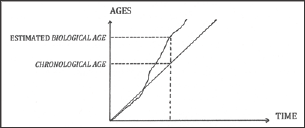
Figure 1: Comparing the estimated biological age and the

Lupinepublishers-openaccess-Forensic-Genetics

The Figure 1 is an imaginary example: the chronological age curve of an individual is a straight line, while the estimated biological age curve is erratic. On a given date, when the biological age exceeds the chronological age, an individual looks older than the average (Figure 1).

The Technical Age

The "technical age" takes into account the material aging, the wear, the maintenance, as well as the planned obsolescence or not. « Artifact: from Latin « artis factum », made from art. ».

The Aging of Bacteria

Bacteria are prokaryotic unicellular organisms whose genome consists of DNA with one chromosome. The statistical modeling of their development can help.com to understand aging. Bacteria reproduce by splitting through scissiparity one mother turns into two daughters, « ... which in their turn become mothers, each giving two. » daughters, etc. The population doubles with each generation; the exponential increase leads to a mathematical modeling such as:

1 → 2 → 4 → 8 → 16 → 32 → 64 → 128 ... 2 Exp (n)

    We start with one bacterium: 1 is written: 2 Exp(0)

    The first generation gives 2 bacteria, written: 2 Exp (1)

    The second generation gives 4 bacteria, written: 2 Exp(2)

    At the nth generation we have N = 2 Exp (n) bacteria

In a homogeneous medium, the generations reproduce at approximately the same rate "μ" (Greek letterμ); therefore, the number "n" of generations is approximately:

n & μ t

where "t" is the time indicated by the laboratory chronometer after "n” duplications. The number of bacteria finally reads:

    N # 2Exp (μ t) (1)

    The proliferation rate "μ” has three causes:

    a) Endogenous factors, specific to the bacterium. They depend on its heredity that is its genotype. One factor is the virulence, defined as the ability to multiply: Escherichia coli are able to divide every 20 minutes. Mbovis (Mycobacterium bovis) has a slower generation rate, but it is just as pathogenic. Benet [2].

    b) Exogenous factors, specific to the environmental surrounding: hygrometry, light, temperature, presence of sugar or nitrogen, gravity; for example, salmonella typhimurium is three times more virulent in microgravity.

    c) The potentiation of endogenous and exogenous factors, one making the other more effective in some way.

    Genotype + surrounding + potentiation ⇒ μ

Temperature is an exogenous factor that is easy to control, and bacteria are very sensitive to temperature: between 20°C and 25°C, a population of Salmonella will double every hour, and within 10 hours, their number will be multiplied by 1000. When the temperature is lowered, the energy intake is reduced and their development is slowed down due to lack of homeothermy: "μ” decreases. Below4°C, the deactivation sets in, and in liquid nitrogen, at c.-196 C (c.77°K), μ = 0.

    Homeothermy: Internal regulation of temperature, controlled by the hypothalamus. Dinosaur slacked this function, as do many modern animals, including reptiles.

    These experiments have a double interpretation:

    a) The rate of proliferation "μ" contains energy components (glucose, heat), hygrometric, gravitational, and chemical components, and possible stochastic factors.

    b) Time "t" is not the cause of their development. A "substitution rule” provides a theoretical confirmation: the angle of terrestrial rotation "α” is such as

    α =ωt

    where "ω” is terrestrial rotation speed. It leads to

    t = α / ω

    In equation (1) we replace”t” by "α / ω”, and we obtain

    N= 2 exp (μ α / ω) (2)

Equation (2) proves that the number of bacteria does not depend on time. Time has no impact on bacteria aging. Work done in the USA has observed non-pathogenic bacteria which are deactivated after about hundred transitions, through exhaustion of their genetic ability of scissi parity prescribed by the genome: this is the clinical death of the line, by completion of a genetic program, without temporal impact. At the 100th generation issued from a primary bacteria, the theoretical population reaches c. 2100 bacteria at time "t100" measured when the duplications, observed with a microscope, stop: then μ = 100 / t100 is the average duplication speed.

From t = 100/n, which is the life expectancy of a bacteria line, and from t100/100, which is the average lifespan of a bacterium, it appears that a favourable environment, by activating vitality (that is the factor "μ”), reduces the life expectancy of a population of bacteria and the average lifespan of a bacterium. Professor Valter Longo, director of the USC School of Gerontology (CA), discovered that bacteria deprived of sugar could double their lifespan. Interesting conclusions can be drawn for human health.

The Aging of Cells

L. Robert refers to the activity of biological clocks in the cell aging process. But the rhythms which are observed are irregular and imprecise, and they depend on the environment: therefore they do not have the reliability and accuracy that a clock should have. The metaphor of the biological arrow of time which is supposed to orient cell development is inappropriate; moreover L. Robert describes interactions between the extracellular matrix and the cell: the cell and the matrix have their own modalities of aging which modify the program sequence of the ECM synthesis and its action on the cell as well Klein. [3] This action, which partly determines mitosis (cell division), finally exhausts its abilities: the author recalls the work done in vitro by L. Hayflick (in the USA in the early 1960s), which has shown a limit of 50 to 60 duplications of the cell population: the analogy with a biological arrow of time is obviously disqualified.

The innocuousness of time is clear from Hayflick conclusions: the life expectancy of a cell depends on the rate of duplication (rate of transtability). Transtability is the ability of a cell, which is unstable like any system, to divide into two cells, themselves unstable, whereupon each new cell then divides in its turn: cytoplasmic division is caused by the quest to reach a steady state which is never in fact achieved. The weaker the transtability, the slower the aging; therefore the aging of a cell can be reduced by acting on main causes of imbalance: stressors and genetic weaknesses. The longevity of a cell is determined by the length of its telomere, which is a segment located at the ends of a chromosome. The telomere gets shorter as the number of cell divisions increases, and also due to stressors. This segment, which is protected by an enzyme (telomerase protects the integrity of the genome), controls the start of mitosis. The telophase, or terminal phase of mitosis, consists in the splitting of the cell nucleus into two nuclei, followed by cell division. Unlike non-pathogenic cells, cancer cells are able to subdivide indefinitely: on a human scale, they do not age, because telomerase is hyperactive inside tumoral cells. A cell does not age because of a biological arrow of time, but because of a genetic and environmental mitogen induction: mitosis is induced by the gene, the environment, and a possible potentiation of these two causes.

The Causes of Aging

Time is not the cause of aging in bacteria and cells. But can this refutation of the confusion between time and aging be generalized to all systems? The innate and the acquired are active components of the aging of any system, living or not: even before it is completed, any building or human-made system begins an aging process: what is innate in a bridge is its architecture, its structure, and the quality of the work and materials; what is acquired derives from functional and climatic stressors, maintenance, and repairs. The anonymous concept of aging is replaced by a more detailed analysis, involving complex engineering and a suitable maintenance protocol.

The Millau Bridge was designed by the English architect Norman Foster for an approximate lifespan of 120 years, which corresponds to 120 terrestrial revolutions. In comparison, the pyramids of Giza are still standing after over 4000 years. They are not simple assemblages of stones: their interior layout includes chambers, passages, and complex anti-intrusion devices. Aging is the normal outcome of the development of living things, regardless of their complexity (ontogeny in humans); it corresponds to a systematic evolution of their state towards different states, resulting from degradation of all their parts, and everything that links and orders these parts. The transtable process. In Latin, trans means beyond (inCaesar); transabeo means go across, go beyond in Virgilius. Gaffiot In the Dictionnaire Larousse 1923, trans means beyond, through. The Dictionnaire Quillet 1929 defines prefix Trans: transition from one state to another.

What is innate in a living being consists essentially of its genetic heritage. The genetic program controls its transtable faculties, as it does inside bacteria and cells. Similar systems age differently from each other, and of course, this would not be the case if time was the cause of their aging. What is acquired is the lifestyle, i.e., the interaction with the rest of the Universe. So a lack of medicalization and hygiene, superimposed on endemic nutritional deficiencies, which generate a range of different pathologies, can reduce life expectancy by a factor of 3 or 4, bringing.com back to the standard of living of the Eneolithic; as shown by the destitution of a billion or so of our fellow humans in the early twenty first century. A report by the Haut Comite de la Sante. Publique [4] gave, for the French male population in 1996, the proportions of deaths due to certain kinds of behaviour relative to the total number of deaths due to all causes: accident 9%, alcohol 13%, tobacco 21% (HCP). The gradual reduction of the gap in average lifespan between men and women which has been observed in recent years is explained by increased smoking and alcohol consumption by women, from adolescence and even pre-adolescence. Data collected in the late 1980s in India showed an inversion of the average lifetimes of men and women: 45 years for men and 43 years for women. (OMS) This reversed gap was explained by the fact that men ate first, while women and children shared the leftovers; in addition, the situation was worsened by smoking among women .The potentiation of reciprocal action between the innate and the acquired constitutes an additional category of active causes of aging (allergies, stressors from different sources, e.g., physical.

Eneolithic: end of Neolithic (3000-2500 BC).

Aging and Organic Degradation

Public access to caves occupied by humans in the paleolithic broke the precarious environmental and atmospheric equilibrium, and triggered a rapid deterioration of petroglyphs by oxidation of pigments and mildew, as observed in the Lascaux caves. In some Egyptian sanctuaries, the same causes brought about the same effects on the magnificent polychromatic frescoes which were found in their original state just before the sanctuaries were opened to crowds of visitors. Museum curators do not consider time to be the cause of aging in the works of art they look after. Light (mainly ultraviolet radiation), temperature, and humidity (and in particular, changes in temperature and humidity), air pollution, inappropriate handling, and specific micro-predators are acknowledged in museum conservation as major aging factors for many materials (wood, leather, paper, textiles, pigments). This is why museums protect their artworks by exposing them only to dim light and ensuring proper ventilation. Very focused efforts are thus made to fight against aging due to physical and chemical stressors, not against the ghostly intervention of time.

The Self Organisation

Belousov's oscillating chemical reactions involve the selforganisation of dissipative structures (Prigogine) [5]. It turns out that these striking experiments are dependent on the necessary supply of fresh reagent: this energy intake modifies the physical state and the organization of the structures. Without it, the reaction would stop. The energy is the sole cause of the observable phenomenon of self-organisation:

No energy ⇒ no self - organization

Therefore, there is no chemical arrow of time in selforganization.

The Biological Arrow Of Time

Spontaneous and extended pulsations of a myocardiac fragment in a glucose solute proceed with the same atemporal protocol; namely, we observe a transtability of the physical state of the fragment, with consumption of energy in the form of sugar. Time is powerless once again:

No energy ⇒ no pulsation

The cardiac pulsations are perfectly observable: a pulsation is not a concept, and the confusion between pulsations and time is obviously a mistake. In addition, the biological rhythms do not comply with the accuracy and regularity requirements of a clock. Therefore, we may talk about biorhythm, but in no way about chronobiology: the biological arrow of time is an inappropriate metaphor.

The Paradox of Aging

These results confirm that aging is not related to time. However, time can be expressed in relation to symptoms of aging of any system, including ourselves:

« Symptoms of aging (observable reality) >⇒» « time goes by »

We conclude with an astonishing paradox, which is summarized by the aphorism:

We don't age because time goes by, but time goes by because we age [6].

Read More About Lupine Publishers Journal of Forensic Sciences Please Click on Below Link:
https://forensic-journal-lupine-publishers.blogspot.com/
Thursday, 11 March 2021

Lupine Publishers | Critical Analysis of the Definition of the Meter

 Lupine Publishers | Journal of Forensic & Genetic Sciences


Abstract

Defining the meter is an inavoidable step towards identifying the nature and properties of physical space. It turns out that the international definition of the meter raises some questionings, partly because of the vagueness and the inconsistency of the wordings.

Introduction

The Concept of Length

Given that length is a concept, we do not measure the length of an object, but we measure what separates its ends: the result of the measurement is called length of the object .

Origin of The Meter

The definition of the length unit is the object of an impressive diachrony, as it is testified in the Manuel des Poids et Mesures published by A. Tarbé in 1840.

The uniformity of weight and measures was wished since a long time. This whish of Charlemagne, Philippe-le-Long (1321), Louis XI, François I (1540), Henri II (1557), Henri III (1575) and Louis XV (1766) had found insurmountable obstacles, owing to provincial prejudices and mainly local habits. However, there are only few abuses as much inconvenient as the diversity of measures, because it introduces uncertainty and mistrust...

The Académie des Sciences has been mandated by the constituent assembly (France, 1789-1791) for determining the weights and measures units. The Academy used the quarter of the terrestrial meridian between the equator and the north pole for basis of the metric system [...] the length of the quarter of the meridian was approximately 5,132,430 toises; and the ten millionth part of this arc was almost exactly equal to 3 feet 11 lines 44/100. The impatience to decide, pushed to decree that this would be the size of the provisional meter (Law of August First 1793).

The diachrony was not caused by time; instead, it was led by tenacious searchers.

A First Definition of The Meter

The law of 18 Germinal an III (April seventh 1795) stated:

Art. 2. There will have only one standard for Weights and Measures There will have only one standard for Weights and Measurements for the enter Republic; it will be a platinum rule on which will be inscribed the meter, which has been adopted as the fundamental unit for the whole system of measurements [...] it will be registred at the legislature [...].

Art. 3. A model in accordance with the reference prototype will be sent in each district capital [...].

Art. 5. One will name: meter, the length measure equal to the ten-millionth part of the meridian arc between the north pole and the equator (Tarbé, p. 368).

The Law of 19 frimaire an VIII (December tenth 1799) retained the final value of the meter at 3 feet 11 lines 296 thousandths (Tarbé, p. 15). We can draft a first definition of the meter from these data: The meter is a concept which corresponds to the ten millionth part of the quarter of the meridian.

Proposal for a Speed Unit

In 1983, the Conférence Générale des poids et Mesures decided:

La vitesse de la lumière dans le vide c est égale à exactement 299.792.458 mètres par seconde .

The speed of light in the vacuum c is exactly 299,792, 458 meters per second.

The speed of ligth c is a fundamental constant which is currently expressed in meter per second, m s -1. We could replace m s-1 by cel, as international unit of celerity. Then the speed of light would read : c = 299,792s,458 cel.

Definition of the meter

The same Conference of 1983 gave the meter a new definition: Le mètre est la longueur du trajet parcourue dans le vide par la lumière pendant une durée de 1/299.792.458e de seconde.

The meter is the length travelled in the vacuum by the light during a duration of 1/299,792,458th of second.

This definition is questionable for three reasons :

a) In 1983, the words meter , length , duration and second had no consistent scientific definitions.

b) Use the meter to define the speed of light, then in the wake, use the speed of light to define the meter , is a truism There will have only one standard for Weights and Measurements for the enter Republic; it will be a platinum rule on which will be inscribed the meter, which has been adopted as the fundamental unit for the whole system of measurements [...]it will be registred at the legislature [...].

If we refer to definitions of time and space1, it’s a nonsense: Time is a concept corresponding to what separates two states of a system. Space is a concept corresponding to what separates two systems. According to these definitions, there is no relation between time and space. In 2011, the Conférence Générale des Poids et Mesures declared: Le mètre, symbole m, est l’unité de longueur ; son amplitude est déterminée en fixant la valeur numérique de la vitesse de la lumière dans le vide à exactement 299.792.458 lorsqu’elle est exprimée en unités SI m s-1.The meter, symbol m, is the length unit; it’s amplitude is determined by setting the numerical value of the speed of the light in the vacuum at exactly 299,792,458 when it’s expressed in m s-1 SI units. This definitions does not add any substantial information to the definition of 1983; space is still depending on time.The frequency of cesium is a constant of nature, une constante de la nature CGPM [1]; hence, the meter can be defined compared to the wavelenth of cesium, which is a fundamental constant : l = c/u = (299,792, 458 cel / (9,192,631,770 Hertz). cel/Hertz has the dimension of the international length unit, which is called meter : l = 0, 032612256 m. Therefore, 1m = 30, 663319 l. The meter is equal to 30, 663319 times the wave length of More serious, the wording makes the meter dependant on the second ; with an obvious consequence : space is forced to depend on time. If we refer to our definitions of time and space, it’s a nonsense:

Time is a concept corresponding to what separates two states of a system .

Space is a concept corresponding to what separates two systems .

According to these definitions, there is no relation between time and space.

In 2011, the Conférence Générale des Poids et Mesures declared:

Le mètre, symbole m, est l’unité de longueur; son amplitude est déterminée en fixant la valeur numérique de la vitesse de la lumière dans le vide à exactement 299.792.458 lorsqu’elle est exprimée en unités SI m s-1.

The meter, symbol m, is the lengthunit ; it’s amplitude is determined by setting the numerical value of the speed of the light in the vacuum at exactly 299,792,458when it’s expressed in m s-1SI units .

This definitions does not add any substantial information to the definition of 1983 ; spaceis still depending on time.

Next Paragraph “The frequency of cesium is a constant of nature, uneconstante de la nature (cf.CGPM – 2011) ; hence, the meter can be = c/ndefined compared to the wavelenth of cesium, which is nota fundamental constant :

= (299,792,458 cel / (9,192,631,770 Hertz)

cel/Hertz has the dimension of the international length unit, which is called meter :l# 0, 032612256 m.

Therefore, 1m # 30, 663319 l

The meter is approximatelyequal to 30, 663319 times the wavelength of cesium.

The Metric System

The law of July fourth 1837 made the metric system mandatory from January first 1840, in replacement of the traditional measures Tarbé [2].

Shortly before the end of World War II, an International Economic Conference was held between the 1st and the 10th of November 1944 in Rye in New York State: among various issues, it advocated the universal adoption of the metric system Céré [3] 6th part.

It is remarkable that Anglo-Saxon countries and the countries of their former areas of influence are still not willing to comply with these provisions: the two systems are still used, with the risk of serious confusions.

In this connection, let’s remind the decree of May 8th 1790 of the French National Assembly: [...] the King (Louis XVI) will be begged to write to her British Majesty, and ask her Majesty to convince the Parliament of England to contribute with the national assembly in fixing the natural unit for measures and weights [...] Tarbé [1].

Read More Lupine Publishers Forensic & Genetic Sciences Journal Please Click on Below Link
https://forensic-journal-lupine-publishers.blogspot.com/

Wednesday, 10 October 2018

The Compromised, Pre-Diseased or Post-Diseased Terrain, Malaria and Germ Terrain Dualism: (PRJFGS) - Lupinepublishers


The Germ-Terrain duality theory of disease states that the aetiology of certain diseases/diseased states is better explained as a complex interplay between germs and the inherent anatomical/ physiological integrity of the body cells. It argues that the aetiology of certain diseases is not fully explained merely by the presence of germs (Germ Theory) or by a mere loss of cellular integrity (Terrain Theory). As a result, the prevention and treatment of such diseases should focus not just on fighting germs but on maintaining/ restoring the anatomical/physiological cellular integrity. The Germ-Terrain duality theory is a harmonization of the current Germ Theory (popularized by Louis Pasteur) and the hitherto discarded Terrain Theory (popularized by Pierre Bechamp).