Lupine
Publishers- Environmental and Soil Science
Abstract
Due to increasing environmental radionuclide background, the
scientists and specialists constantly face the problem of developing
technologies
for producing plant-based, therapeutic-purpose foods and food
supplements enriched with biologically active substances, which are
characterized
by high immunomodulating, radioprotective and antioxidant activity. From
such therapeutic-purpose foods and food supplements, of particular
importance are the beverages because their improved composition, sensory
and liquid consistency provide high availability and increased
therapeutic capacity.
Introduction
Natural and special wines form the great part of the export
potential of Georgia. The fact that according to figures on exports
of wine and alcoholic beverages only for the first nine months
of 2017, Georgia exported 52.7 million bottles (0,75 l) of wine.
According to the National Wine Agency, wine exports have grown
up on 63% in comparison with corresponding period last year
[1,2]. It is also noteworthy that since the 80s of the last centuries,
poor-quality and expensive sprays and brought to our country
have caused significant damage to the indigenous and alien grape
varieties. Georgian farmers were forced to switch partly to growing
of nontreated and hybrid grape varieties, because they do not
require expensive and imported from outside sprays, and besides,
hybrids and clones are easy to grow, and different types of fungi
and other diseases are no big deal for them. Today, wineries cannot
apply even industrial varieties of colored grapes such as Aladasturi,
Dzelshavi, Mgaloblishvili and Black Pinoa [3,4].
In view of the foregoing, it reasonable and relevant to develop
the innovative technologies for producing natural and special wines
from common to western Georgia Therefore reasonable and relevant
to western Georgia-known less marketable local raw materials
of colored grape industrial varieties and nontreated grape clones
enriched with from biologically active substance enriched with
innovative technology of special wines, which are characterized by
high sensor, radioprotective and antioxidant activity therapeutic properties for preventing food-borne diseases [5-7]. The goal
of the work is to develop special wine technology enriched with
biologically active substances from the grape raw materials of grape
varieties cultivated in the Imereti Viticulture and Winemaking
Area, which is characterized by improved sensory indicators and
increased therapeutic and preventive capacity. In addition, in this
special wine technology, for the first time in Georgia, there will be
used raw materials of the nontreated colored Zeibeli grape variety
cultivated in the Baghdati Viticulture and Winemaking micro-zone,
rosehip and grape-seed alcohol-wine extracts and small quantity
of white honey for the purpose of increasing the flowers tonality.
Objectives and Methods
Object of Study
Raw materials of “Otskhanuri Sapere” grape variety from the
Imereti Viticulture-Winemaking subzone, particularly from the
Zestafoni district’s village of Sviri and the Bagdati district’s village of
Obcha; raw materials of “Aladasturi” grape variety from the Middle
and Lower Imereti Viticulture-Winemaking subzone, particularly
from the Bagdati district’s village of Rokhi and the Vani district’s
villages of Pereti and Kumuri, from the Patele Area’s vineyards;
raw materials of “Zeibeli 5455” (“Zeimberi”) grape variety from
the Lipnari vineyards; vacuum-must; grape-seed extract; wildgrowing
dog-rose from the Zekari and Sairme valleys and extracts and concentrates obtained from their skins and fleshes; lime-tree
flower honey from the Zekari and Sairme valleys; rectified ethyl
alcohol [8].
Research Methods
When determining the physical-chemical indicators of grape
raw materials, wine materials and finished special wine, we used
the standard, universally accepted and modified organoleptic
and physical-chemical methods, including chromato-massspectrometry,
high-performance liquid and gas chromatography,
spectrophotometry and fluorometry
Results and Analysis
To implement this goal, the following objectives should be
attained [9-14]:
a. To study the mechanical composition of selected raw materials;
b. To provide uvological evaluation of raw materials;
c. To study the chemical composition and sensory characteristics
of raw materials;
i). To justify theoretically and experimentally the optimal
composition of grapes raw material required for special wine
ii). To develop rational technology of colored grape raw materials
processing, alcoholic fermentation and ageing;
iii). To study the influence of thermal conditioning regimes of
the seeds and skins on the extraction of phenolic and dye
compounds;
iv). To develop the optimal technological regimes and approaches
for the production of ingredients required for special wine:
semi-fermented wine, condensed grape vacuum-must, and
grape-seed and dog-rose extracts;
v). To provide quantitative and qualitative evaluation of
biologically active substances of special wine;
vi). To develop technological schemes for producing ingredients of
special wine;
vii). To develop technological schemes for special wine production;
viii). To assess sensory characteristics and antioxidant activity of
special wine.
ix). At the initial stage we studied and evaluated the mechanical,
physical, chemical and sensory characteristics of the selected
grape raw materials.
The grapes are the main raw material for wine production,
and we have identified the mechanical composition of the bunch
in compliance with the requirements suggested by Prostoserdov.
(Table 1) We have carried out studies and evaluation of the
chemical composition and variety flavor of selected grape raw
materials (Table 2). Studies show that the value of sugar-acid ratio
affects numerous characteristics of wine, in particular the higher is
this ratio, the better is the quality of special wine. Along with the
selection of high-quality raw materials in the production of red
special wines, the fermenting and fermentation processes have the
main function in the formation of a sensory bunch [15,16].
Table 1: The uvological characteristics of grape varieties from Imereti.
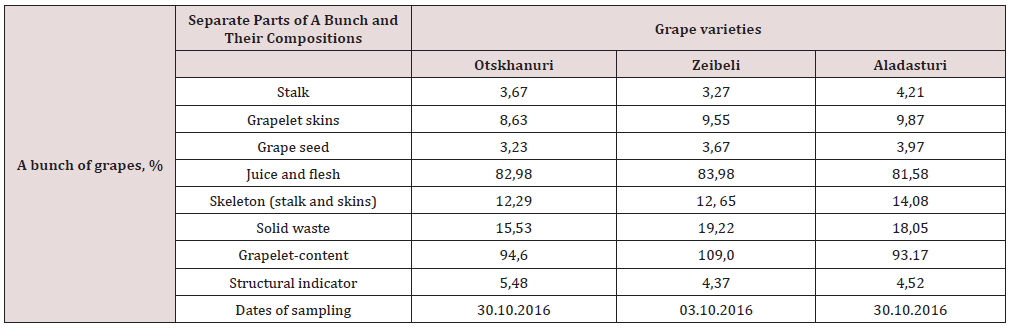
Table 2: Physical-chemical characteristics of the selected grape raw materials.

The List of the Proposed Innovations is as Follows:
I. Adding of pectolytic (with activity 2000-2200 unit/g) enzyme
(Rapides CR) to the seeds and skins during the process of
pressing in a grape stalk separator, increases the yield of the
must by 5-7% and the content of biologically active substances
for 1-2 ml/100 kg.
II. Adding of potassium metabisulfite within 54-63 mg/dm3
significantly increases extraction of anthocyanins, increases to
1.2 - 4.3 g/dm3 the reduced extract and the content of dyes,
contributes to purification, the growth in terpenic compounds
by 2,1-2,7%, and the growth in a stable fraction of a phenolic
complex (within 20-25%) in wine.
III. We added 1-2% of Aspergillus fungus of the dry active yeast in
a grape stalk separator (C-R-9001 or C-RB-9001- fungus works
at the temperature of 12 - 280C, pH=3.0-5.4 and increases
alcohol content up to 24%, and significantly increases the
content of terpens and esters in wine).
IV. Adding of the condensed concentrate with the content of
dry substances up to 54-63 % through the dog-rose lyophilic
drying to the seeds and skins within 50-75 mg/dm3, in the
presence of or cadifite (40-70 mg/dm3) either SO2 (90±10 mg/
dm3) increases by 1.5-1.8 the development of variety flavor in
a special wine.
V. During the fermentation of the seeds and skins, we raised
the sugar content up to 27% by adding the vacuum-must and
honey, due to which terpenic compounds were increased by
0.7-1.2 %, and esters by 24-27%.
VI. We have established that after tye 6-day extractionfermentation
at a temperature of 270C, the seeds and skins are
subject to heat treatment at a temperature of 540C, and hot
pressing, which significantly increases separation of phenolic
and dye compounds.
VII. Adding of the grape-seed and dog-rose concentrates and
heat-treated grape-seed (5 g/dal) and oak shavings (5 g/dal)
significantly improves the rancio tones and sensory bunch.
VIII. In 16-18 months, adding of dry dog-rose pulp and peel (20 g/
dal) increases the flavor-forming complexes.
IX. Adding of the grape-seed and dog-rose concentrates and
heat-treated grape-seed during the ageing process, under
conditions of periodic pasteurization and stirring within 2-3
months, increases the total amount of phenols by 0.3 - 0.4 g/
dm3, and improves the rancio tones and sensory bunch.
X. Prohibition of using gelatin and bentonite clays, because
for processing wine materials, bentonite clays reduced the
anthocyanins by 27-36% on 2-3 kg/t, while the use of gelatin
reduced the compounds of phenolic compounds by 6-9% on
2-3 g /t.
XI. Creating a new technology by using new varieties and honey
flower tones.
XII. We have studied the impact of the temperature of the
fermentation of the seeds and skins on the extraction process
anthocyanins from the skins in the fermenting mass. Studies
were carried out at four temperature intervals 34-360C, 27-
300C, 21-250C and 16-180C.
Table 3: Physical and chemical characteistics of pomace
fermentation.
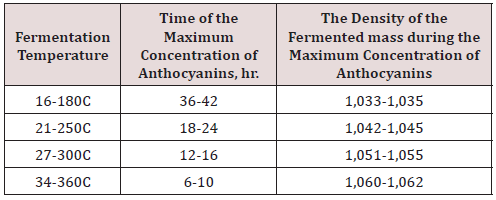
Table 4: Special wine characteristics after the 18-month ageing.
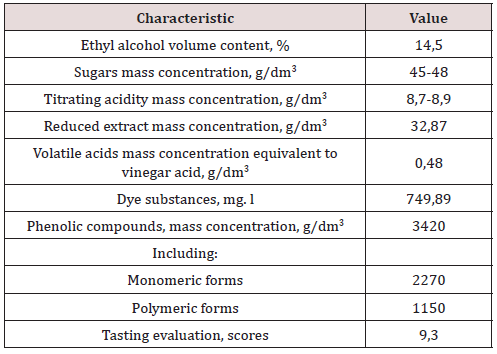
Table 3 shows the main fermentation temperature, the
duration of maximum extraction of anthocyanins and the density
of the fermented mass. Table 4 contains the physical, chemical and
sensory characteristics of the special wine after the 18-month aging.
In all five samples, the content of raw materials of Zeibeli grape
variety varied between 10-20%, while the amount of raw materials
Aladasturi and Otskhanuri Sapere grape varieties - between 20-
50%. Aladasturi and Otskhanuri Sapere grape varieties were
blended in the proportion 36:48:16 (percentage ratio). As shown
from the table, the wine produced has a high sensitivity rate (9,7
cents), which is the result of the composite effects of the selected
raw materials of the selected raw materials, the use of ingredients
and the technological processes of individual technologies.
Conclusion
A. It has been experimentally determined that the grape picking
should be done when the concentration of the sugar content
in the grapes is not less than 23-24g/100 cm3 and titrated
acidity is 6-8 g/dm3. And pressing of grapes in a rolling grape stalk separator enriches the seeds and skins with the phenolic
complexes of stalk.
B. It has been established that colored grape raw materials
blended with an optimal ratio of “Aladasturi”, “Otskhanuri
Sapere” and “Zeibeli 5455” grape varieties is promising for the
production of high-quality special red wines with a distinctive
variety flavor, and rich technological reserves of phenolic
(3765-4314 mg/kg) and dye (976-1432 mg/kg) compounds.
C. The optimal version of blending for producing a special dessert
wine with the best sensory bunch has been determined
experimentally:(“Otttsanuri Sapere”): (“Aladasturi”): (“Ziebeli
5455”) = (27-36%): (42-54%): (16-18%).
D. It has been investigated that in the process of pressing in a
grape stalk separator, in the composition with the enzyme
preparation Rapidase CR the kernel gap in the 1-2 mL / 100 kg
of enzyme preparation in potassium metabisulphite with 54-
63 mg/dm3 and special (dry active yeast) Aspergillus fungus
1- 2% Composition (CR-9001 or C-RB-9001-fungus works at
temperature of 12-280C, pH = 3,0-5,4 and stands alcohol up to
24%), increases the the yield of must, sensory characteristics,
the content of extractive (increases the reduced extract up to
1,2- 4,3 g/dm3) and dye substances in wine and contributes to
its rapid purification.
E. It has been established that sulphiting of the seeds and
skins with potassium metabisulphite with 54-63 mg/dm3,
contributes to the emergence of the variety flavor (increase of
terpenic compounds by 2,1-2,7%) and the increase in phenolic
complex (within 20-25 in wine).
F. There has been determined the relationship between the
creation of the flavor-forming complexes and the sugar mass
concentration in grapes raw materials, in particular the
content of terpenic compounds is increasing by 0,7-1,2%, and
the content of esters-by 16-27% when the sugar content in
grapes raw materials is 22-27 g/100 cm3, then when sugar
content in the grapes is less than 18.6%.
G. It has been studied that through the dog-rose lyophilic drying
until 54-63%, adding of the condensed concentrate to the
seeds and skins within 50-75 mg/dm3, in the presence of or
cadifite (40-70 mg/dm3) either SO2 (90±10 mg/dm3) increases
by 1.5-1.8 the development of variety flavor in a special wine
H. It has been experimentally determined that during the aging
process of wine material, adding of:
i). dehydrated dog-rose pulp and peel at 20 g/dal,
ii). thermally-treated oak crumb at 5 g/dal,
iii). thermally-treated grape-seed at 5 g/dal
I. Under conditions of periodic pasteurization and stirring
within 2-3 months, increases the total number of phenols by
0.3-0.4 g/dm3, improves the rancio tones and sensory bunch.
J. It has been established that after completion of ripening (16-
18 months), adding of dog-rose condensed extract to wine
material within 50-70 mg/dm3, slows down the phenolicquinone
transformations and increases the flavor-forming
complexes.