Showing posts with label Journal of Clinical & Community Medicine. Show all posts

Friday, 3 June 2022

Lupine Publishers | Gold Nanoparticle Sensor for The Detection of CKD and Use of Nanomedicine in The Treatment of Kidney Diseases

 Lupine Publishers | Journal of Clinical & Community Medicine


Abstract

Aim: To study the use of nanotechnology in the diagnosis by the mean of breath and its treatment with nano medicine.

Material and Method: The study was carried out in 40 patients of different age groups and their breaths were exhaled. These breaths were analyzed by the use of sensors which were basically functionalized with gold nanoparticles. Sensitivity and specificity with relation to CKD patient classification according to estimated glomerular filtration rate were determined using cross-validation. The medicine was induced after the proper analysis of the target.

Results: It was found that the sensors were very useful when 2-3 nanoparticles were used together, and it showed that in between stage 1 and 2 CKD with an accuracy of 60% and in between stage 4 and stage 5 of CKD accuracy was 67%. There were various substances in breath which could identify many toxins which were accumulated due to kidney function loss. It was found that when treatments were provided using the nanomedicine the administration of the drug to target site was getting easy and many side effects due to drugs were avoided and was found to be a very useful method in the treatment of the patients with kidney diseases.

Conclusion: Nanotechnology in terms of both gold nanoparticles as well as nanomedicine has been proven to be a cost effective, reliable and a great source to target the tissues which need to be treated and shows a greater future potential in the diagnosis and treatment of kidney diseases.

Introduction

A novel process for identifying chronic kidney disease (CKD) and disease progression was explored that utilizes breath testing. CKD is a disease which causes the loss of kidney function from months to years and may lead to decreased kidney function [1]. It has been classified based on severity CKD in five stages according to the reduction in glomerular filtration rate (GFR), with stage 1 being a mild illness that is characterized by few symptoms and stage 5 being a severe illness that can be shown by a poor life expectancy if left untreated [2]. Untreated CKD progresses inevitably to stage 5, and various other procedures are applied in the patients with complete kidney loss like dialysis and kidney transplant this stage is also called as end stage kidney disease (ESKD) .up to 60% of the kidney function may be lost before serum creatinine begins to rise. These limitations and the onset of the disease without any symptom, contribute currently to delayed diagnosis and therapy of CKD. A conventional diagnostic technique that relies on the detection of volatile organic compounds (VOCs) among the plasma CKD biomarkers, or their metabolic products, are transmitted to the alveolar exhaled breath through exchange via the lung, even at the very onset of the disease, causing in later stages the fishy smell characterizing the breath of these patients. There is a very high progress in these coming years in the fields of nanotechnology and towards the standardization of breath sampling [3]. This could lead to the development of efficient and cost-effective methods for diagnostic breath testing that could eventually be introduced into standard medical practice, diagnostic imaging tests and conventional biomarker monitoring in blood and urine [4]. This shows that early detection of CKD and its disease progression helps in its treatment even in non-specialist treatment [5].

Haick et al. [6] had demonstrated the ability of an array of carbon-nanotube based sensors to differentiate between healthy states and induced ESRD in rats through breath samples, using a model of bilateral nephrectomy, and have achieved a success rate over 95% [1].

Nanotechnology involves the engineering of atoms and molecules at the submicron scale. The unique optical, electrical, physical, and chemical properties of matter at this scale can yield materials that behave differently from their macroscale counterparts [7]. This is referred to be as the most important and useful procedure to be used as it improves the pharmacokinetic and biodistribution and enables targeted delivery of drugs to specific tissues, cells, or sub cellular compartments. Additionally, achieving spatiotemporal, triggered, and controlled release of a variety of payloads (such as small-molecule drugs, contrast agents, peptides, proteins, deoxy and ribonucleic acids, and their combinations) over extended periods might be possible. Nanomedicines are typically degradable, biodegradable, and bio eliminable structures [8].

There are no clinically approved nanoparticles that specifically target the kidney for therapeutic or imaging applications. However, several recent pre-clinical studies describe nanomaterials that appear to selectively target renal tissues.

Several kidney diseases may benefit from the development of nanoparticle therapeutics that allow for the site-directed accumulation, controlled temporal release, and protection of a therapeutic payload [2]. Among candidate diseases are lupus, glomerulonephritis, and renal cell carcinoma (RCC), which often arises in the proximal tubules. Pharmacological therapeutic options for these diseases are limited, thus it is necessary to increase the efficacy and decrease side effects of current drugs. Irrespective of a molecular targeting element, nanoparticles may localize in one of several organs due to the particle surface chemistry, size, and zeta potential. The purposeful application of this mechanism may allow for the treatment of diseases regardless of the expression of molecular targets or the size of a lesion [9]. Nanomaterial size has a demonstrated effect on biodistribution. Certain synthetic polymers, low-molecular weight proteins, and peptides less than 20 kDa in molecular weight exhibit renal tubule biodistribution but are quickly cleared from the body.

This study mainly aims to the diagnosis of the disease in its early stages by using organically functionalized gold nanoparticles (GNPs).and to provide its treatment using the nanotechnology for the betterment of the patient before it becomes life threatening [3].

Material and Method

Study design: This study was a prospective study in which patients of the nephrology department of a secondary care hospital.

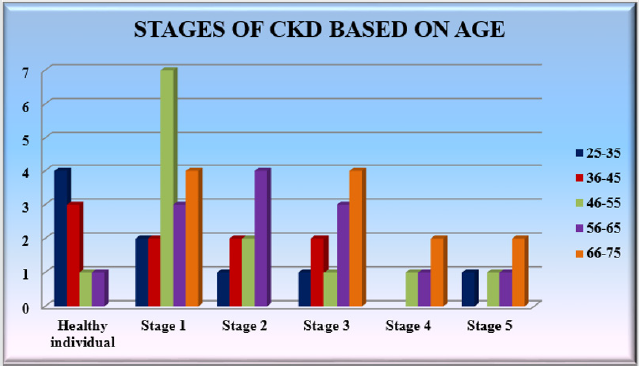
Study population: a total of 56 volunteer’s of age between 25-75 were randomly selected and their demographic details and previous reports were evaluated. There were 18 patients with stage 1 CKD, 20 patients who had intermediate CKD (stage 2-3), 9 patients with chronic CKD (stage 4-5) and 9 healthy individuals. They were undergoing with the treatment (calcium channel blockers, diuretics, angiotensin receptor blockers) (Table 1 & Graph 1).

Graph 1: Distribution of CKD based on age.
Lupinepublishers-openaccess-cancer-Oncology

Breathe collection and breathe analysis by using GNP sensors

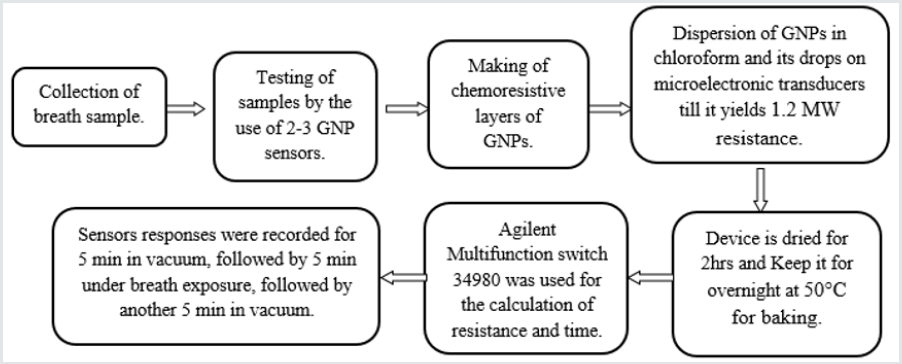
Alveolar breaths of patients were collected using an ‘offline’ procedure that effectively separates the endogenous from the exogenous breath volatile biomarkers and excluded the nasal entrainment [3]. The breath samples were tested with suitable combinations of two to three GNP sensors that were selected from a reservoir of 20 different GNP sensors developed by Haick and coworkers [1]. The sensors used were cross-reactive chemi resistors which were based on the four types of spherical GNPs with a core diameter of 3–4 nm. The organic ligands were: 2-ethylhexanethiol (S1), tert-dodecanethiol (S2), hexanethiol (S3), and dibutyl disulfide (S4). GNP chemi resistive layers which were formed by the dispersion of the GNPs in chloroform and then putting their drops on the microelectronic transducers. Then these were blown with dry nitrogen. This process was repeated several times to yield a resistance of approximately 1.2 MW. Then the device was dried for 2 hrs at a normal temperature and then it was put in a vacuum over night at 50 °C for the baking purpose. The microelectronic transducers had ten pairs of circular interdigitated gold electrodes that were deposited by an electron-beam evaporator TFDS-870. The outer diameter of this circular electrode was 3 mm and the width of each electrode and gap between each of them was 20μm. In total of 20 different GNP sensors were mounted on a custom polytetrafluoroethylene circuit board inside a stainless-steel test chamber with a volume of 100cm3. The sampling system delivered pulses of breath to the sensors and the chamber was evacuated between exposures. An Agilent Multifunction switch 34980 was used to measure the resistance. The sensors responses were recorded for 5min in vacuum, followed by 5min under breath exposure, followed by another 5min in vacuum. The cycles were repeated two- to three-times to test reproducibility (Figure 1).

Figure 1: Diagrammatic representation of breath collection and analysis by GNP sensors.
Lupinepublishers-openaccess-cancer-Oncology

Nanoparticle targeting of renal tissues

In particular there are no clinically proven nanoparticles that are used for the treatment of kidney diseases but some of them are being present that specifically target the renal tissues in 2 different forms.

Glomerular targeting

Various studies describe the targeting of nanoparticles to the glomerulus, portending the targeted treatment and imaging of this part of the kidney. Within the glomerulus, nanoparticles have been shown to target the glomerular basement membrane and mesangial cells. One study describes the localization of PEG-coated gold nanoparticles 80 nm in diameter in mesangial cells, although the majority of the particles accumulated in the liver. Follow-up work has suggested that similarly-sized nanoparticles transporting siRNA and composed of cationic polymers can accumulate and disassemble in the glomerular basement membrane. Nanoparticle surface charge appears to affect glomerular deposition. Cationic ferritin nanoparticles 13nm in diameter accumulated in the rat glomerular basement membrane, while negatively charged ferritin nanoparticles did not. Additionally, investigators have conjugated specific targeting agents such as antibodies to nanomaterials to increase their glomerular localization.

Tubular targeting

There have been few successful attempts to develop nanoparticles that target the renal tubules. One described strategy is the engineering of nanoparticles small enough to pass through the glomerular filtration barrier which could subsequently be absorbed by epithelial cells lining the lumen of the nephron. This strategy is similar to that employed for low-molecular-weight polymers and proteins.

A second strategy has employed biodegradable nanomaterials that pass through glomerular endothelial fenestrations but not the glomerular basement membrane. The hypothesized mechanism of uptake was degradation of the nanoparticle at this deposition site and subsequent megalin-mediated uptake of the degradation products by the luminal membrane of proximal tubular epithelial cells.

The authors of this review recently found selective targeting of the proximal tubules by large “mesoscale” nanoparticles which were much larger (~400nm) than the fenestration of the glomerular basement membrane. The authors hypothesized a mechanism whereby the nanoparticles transcytosis across peritubular capillaries to be endocytosed by proximal tubule epithelial cells from the basal side of the tubule. These nanoparticles localized in the kidneys with high specificity-up to seven times greater than any other organ.

Results

The choice of the GNP sensors for the identification of early-stage CKD

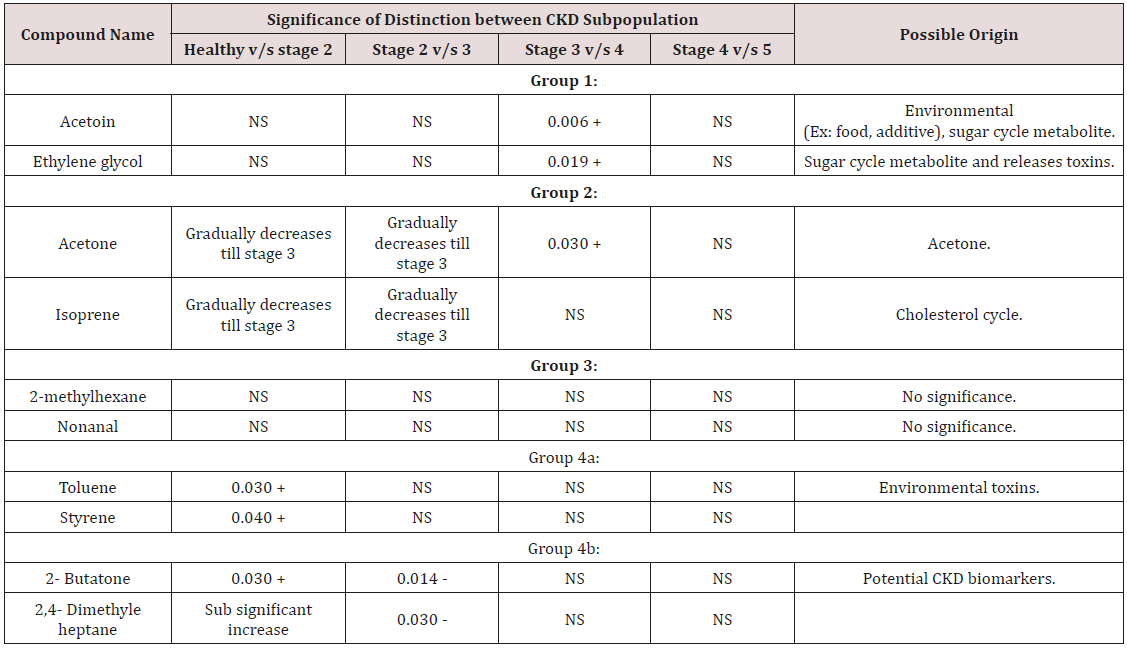
The feasibility of the GNP sensors for diagnosing the early stages of CKD was tested by comparing breath samples of 20 patients with stage 2 and 3 CKD to breath samples of 9 healthy controls (Table 1). Before the exposure to the breath samples, we examined the response of the GNP sensors to several representative VOCs found in exhaled breath. Each sensor underwent a rapid and fully reversible change in electrical resistance when exposed to the characteristic VOCs at concentrations ranging from tens of parts per billion to hundreds of parts per million, showing typical detection limits of 1-5 parts per billion [4]. The responses were unique because of the chemical diversity of the GNP ligands. The device-to-device variations between sensors based on the same type of GNP were within ± 15%, whereas the responses of different types of GNPs to the same VOC were typically several-fold different. So far, we have shown that part of the GNP sensors has a very low response to water. This is an important feature because otherwise, a sensor’s response to the high background humidity in exhaled breath could easily mask the signal to the much lower concentrations of the breath VOCs that indicate disease. The breath which is exhaled is mainly composed of nitrogen, oxygen, carbon dioxide, water vapor, and inert gases [10]. The VOCs that are generated by the cellular biochemical processes of the body are present in much lower amounts in exhaled breath, and many diseases, among them CKD, manifest themselves through very subtle changes in concentration of a multitude of these breath VOCs. The exposure of the GNP sensors to the breath samples resulted in rapid and fully reversible responses. Several sensing features were read out from the timedependent response of each sensor that related to the resistance response upon exposure (F1); the area under the response curve (F2); the sensor’s response time (F3) and the relaxation time after the end of the exposure (F4). Each sensor responded to all (or to a certain subset) of the VOCs found in the exhaled breath samples. However, the comparison between patients was based on compound masses and retention times. Three distinct trends were observed. The first group comprised isoprene and acetone, which are always present in exhaled breath in large quantities. Both substances decreased during stage 2 and remained relatively constant thereafter. Ethylene glycol and acetoin made up the second group of VOCs [11]. They remained relatively constant up to stage 3, showed a significant increase in stage 4 and a further, sub significant increase towards stage 5 [12]. The third group of compounds can be divided into two subgroups. Group 3a comprised the known industrial toxins styrene and toluene. Both compounds showed a significant increase during early-stage disease (stage 2), reached a plateau during stage 3 and remained relatively constant thereafter [13]. Group 3b contained two methylated hydrocarbons and a ketone, which showed a significant, brief increase during stage 2 CKD before their abundance decreased again to the levels observed in healthy controls. The fourth group comprised six compounds that were present in >75% of the CKD and healthy breath samples but showed no significant

Table 1: Distribution of stages of CKD based on age.

Lupinepublishers-clinical-community-medicine

Discussion

Identification of CKD & disease progression using the GNP sensors

It was done between the healthy individuals and diseased individuals:
a) Healthy individuals with early stage CKD (I.e. stages 2 and 3)
b) Late-stage (stages 4 and 5) CKD.

(Table 2) differing it from the best feature set for the distinction of advanced and end-stage CKD. This can be understood if one considers the observed changes in the chemical composition of the breath during CKD disease progression [13]. However, the sensing mechanism of chem iresistive GNP layers is still the subject of scientific controversy. However, the organic ligands of the GNPs provide only a moderate chemical selectivity, so that the sensors are cross-reactive. The ligands are selected based on their ability to absorb certain (classes of) small VOCs that are typically found in exhaled breath as metabolic products. The changes in chemical composition between healthy and early-stage CKD differ from the changes in chemical composition between advanced and end-stage CKD [14]. Hence, distinct combinations of sensing features for the different chemistries would provide the optimal results in these two cases. This is because metabolic breath VOCs may appear at different concentration ratios in the breath of healthy persons, CKD patients, and is also different in individuals with different diseases.

Table 2: Changes in chemical composition of the breath during chronic kidney progression.
Lupinepublishers-clinical-community-medicine

The SVM classification revealed 73% sensitivity, 78% specificity, and 74% was the accuracy rate for the early-stage detection of CKD states. The obtained values fulfill the criteria for a good diagnostic method. The GNP breath test could be applied by general practitioners in non-specialist settings to ensure the speedy referral of a new patient to a specialist. Detecting progression from stage-4 to stage-5 is equally important because it usually marks the onset of dialysis treatment. The sensitivity, specificity, and accuracy of detecting the progression from early to late-stage disease using a single sensing feature were 75, 77 and 76%, respectively. Age, gender, diet, smoking habits, medication and exposure to hospital atmosphere are known to affect the chemical composition of the exhaled breath. Ideally, the study population should be matched in terms of these confounding factors. We have previously shown that the GNPs used by us have very little sensitivity to VOCs stemming from the above confounding factors. Shows that the population in the three studied cases was nevertheless relatively well-matched in terms of most of the confounding factors [1]. The compared groups are age-matched in the first two cases and gender-matched in the third case. Most of the volunteers were nonsmokers and the populations were well matched with respect for their smoking habits in all three cases. All CKD patients in this study were treated with calcium channel blockers, diuretics and/or a-blockers. The healthy controls did not receive these medications. Hence, the study population was matched in terms of medication in the last two cases. And then all the patients and the healthy controls were kept in the same hospital to give them the same environmental condition. Every other detail was also recorded because CKD patients suffer from various types of carbohydrate metabolism disorders, which could affect the breath concentrations of the VOCs in the first two groups. The majority of CKD patients suffer from glucose intolerance, which is mainly attributed to insulin resistance. Still, ethylene glycol could be of exogenous origin, because it is a known environmental toxin, and its accumulation during late-stage CKD could be attributed to the failure of kidney function. We assume that this is related to the continual death of kidneys nephrons, as up to 60% of the nephrons die before an accumulation of creatinine and urea could be observed. Styrene is an environmental toxin that causes DNA damage, and hydrocarbons are often released as environmental pollutants by the petrochemical industry the compounds in group 4 show no significant trends that could be related to the disease progression. The detected small molecules are VOCs that are either metabolic products or toxins that are absorbed from the environment and are accumulated in the body due to reduced kidney function. As such, each separate compound may appear not only in the breath of healthy persons but also in CKD patients. This way breathe samples of patients suffering from distinctly different diseases may have some common constituent compounds, but at different concentration ratios [15-16].

Conclusion

It concludes that there is a method in nanomedicine for detection of the early-stage CKD and monitoring disease progression from the exhaled breath of patients. Suitable combinations of GNP sensors can be used to identify the high accuracy patients with early-stage CKD and determine disease progression from advanced CKD to ESRD. The transition from early disease (stages 2 and 3) to advanced disease (stages 4 and 5) could be identified from a single sensing feature. Further in coming time we can use GNP sensors to distinguish with a higher resolution between CKD patients, so that the five stages of CKD progression can also be identified. For this purpose, a larger clinical trial will be conducted following this pilot study. GC-MS analysis identified three classes of VOCs in the breath that show distinctly different trends in average abundance during disease progression. The VOCs could be associated with accumulated environmental toxins or endogenous biomarkers of CKD-related medical conditions and body processes. A biomarkerbased breath test that utilizes GNP sensors could form the basis of a future cost-effective, fast and reliable (early) diagnostic test and monitoring tool for CKD. The nanoparticle field holds great potential for the diagnosis, imaging, and treatment of disease. An increasingly large body of pre-clinical work has demonstrated the potential for addressing renal diseases. In this review, we have outlined the applications of nanomedicines and highlighted recent work in the targeting of the kidneys. We also summarized the current state of the use of nanomaterials in renal disease treatment and diagnosis, and we pointed out several nephrological areas of need. We expect to see the increasing use of nanomaterials to fill technological gaps in the treatment and diagnosis of kidney diseases.

Read More About Lupine Publishers Journal of Clinical & Community Medicine Please Click on Below Link:
https://journalofclinicalcommunitymedicine.blogspot.com/

Thursday, 13 January 2022

Lupine Publishers | A Critical Review of Publications related to Al-Hijama Therapy

 Lupine Publishers | Journal of Clinical & Community Medicine


Short Communication

Evidence-based clinical practice emphasizes the use of information from well designed and conducted research in healthcare decision-making. It largely depends upon the outcomes from prospective randomized clinical trials in which the number of patients are sufficiently high to ensure that the results are robust. Such trials need to be adequately powered and to define from the beginning what magnitude of difference between treatments is being sought. The classical approach when assessing the value of new medications has been the use of blind assessments in which both patients and assessors do not know which drug or placebo they are receiving. The application of such an approach in Al-Hijama is either impractical or even unethical as it would require use of sham wet cupping. A recent review from Iran Bamfarahnak et al. [1] suggested Al-Hijama is currently prescribed for up to 120 diseases that are difficult to treat, including cutaneous (21.7%), musculoskeletal (15%), and central nervous system (13.3%) disorders. However, the number of such treatments subjected to rigorous assessment is relatively limited. In this review those studies which have dealt with pain will be considered first. Subsequently studies dealing with hypertension and cardiovascular risk factors will be assessed. In addition, its potential benefit in management of shingles will be considered. Al-Hijama and wet cupping are used in many other conditions, but research papers published in peer reviewed journals during the last twenty years are mainly restricted to the above fields. Of note few of the reported studies draw attention to the religious distinction between the technique of Al-Hijama and simple wet cupping, the recipients and the practitioners. However, in 2014 the Taibah theory was put forward as the basis for a physiological explanation of how Al-Hijama works and its distinction from simple wet cupping [2].

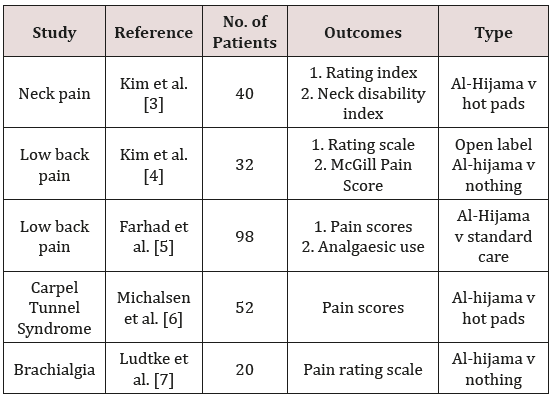
Spinal and related pain has been treated in controlled trials on several occasions. (Table 1) In only two studies were patients randomized to one of two interventions. The alternative treatment was with heat pads. In the other studies patients either received standard care or no active intervention. The numbers involved in these studies were small with the largest being of 98 patients with low back pain. Outcome measures were mainly pain rating scores. However, in all studies, patients who received Al-Hijama or wet cupping did significantly better than those who were controls. Future studies need to be larger and conducted over longer periods with independent blinded assessors of the efficacy of the treatments using well-recognized validated tools.

Table 1: Summary of Recent Studies on the use of Al-Hijama in the treatment of painful conditions.

Lupinepublishers-clinical-community-medicine

Similar approaches need to be adopted in assessing the role of cupping in the management of hypertension. Lee et al identified two studies after a systematic search of 15 different data bases. Lee et al. [8] One assessed the effectiveness of dry cupping on changes in cerebral vascular function compared with drug therapy. There was a significant effect in favor of cupping on vascular compliance and degree of vascular filling. An uncontrolled observational study tested wet cupping for acute hypertension and found that a one-time treatment reduced blood pressure. Such evidence is not convincing, but it is tantalizing and there is an urgent need for more rigorous assessments especially of wet cupping.

Other areas in which cupping has been investigated includes its role in the management of infection. Cao et al. [9] presented a systematic review of eight randomized controlled trials involving 651 patients who had infection with Herpes zoster which had resulted in shingles. The methodological quality was considered generally fair in terms of randomization, blinding, and intention-totreat analysis [9]. Meta-analyses showed wet cupping was superior to medication in the number of cured patients (Relative Risk 2.49, 95% Confidence Interval 1.91 to 3.24, p < .00001), the number of patients with improved symptoms (RR 1.15, 95% CI 1.05 to 1.26, p = .003), and reducing the incidence rate of post-herpetic neuralgia (RR 0.06, 95% CI 0.02 to 0.25, p = .0001).

In addition to considering whether and how effective cupping can be researchers have looked into its mechanism of action. Tagil et al. [10] investigated 31 healthy volunteers in whom they measured serum nitric oxide, malondialdehyde levels and the activity of superoxide dismutase and myeloperoxidase in venous blood. Levels fell consistent with the removal of oxidants and decreased oxidative stress. However, the study was flawed because of the absence of a control group [10]. This contrasts with a randomized controlled trial of 47 healthy young men in whom wet cupping led to a substantial decrease in LDL cholesterol (p < 0.0001) and in the LDL/HDL ratio (p < 0.0001). (10) In 2014 El Sayed [11] attempted to give an integrated physiological explanation as to how Al-Hijama works. His Taibah theory suggests that Al-Hijama works through a “surgical excretory procedure.” During the first cupping step a fluid mixture is collected inside the uplifted skin due to the negative pressure inside the sucking cups [11]. This fluid mixture contains collected interstitial fluid, iron, ferritin and haemolyzed red cells, filtered fluids from blood capillaries, haemolysed white cells and platelets. This fluid mixture does not contain intact blood cells as they are too big to pass through the pores of skin capillaries and cannot be filtered. Puncturing the skin up liftings and applying a second cupping creates a pressure gradient and a traction force across skin and capillaries and increases filtration at the arterial end of capillaries at net pressure of -163 to -433mmHg and at venous end of capillaries at net pressure of -143 to -413mmHg resulting in a clearance from the blood of iron, ferritin and haemolyzed cells [12]. However, this theory needs independent confirmation and does not have the “solid scientific and medical base” claimed by the authors-yet!

In conclusion Al-Hijama continues to show clinical benefit in a range of conditions. Unfortunately, there have been few robust clinical trials which would convince a sceptic of its value. It is important that Muslim practitioners and patients are open to such studies. If this attitude is adopted it will ensure that practitioners deliver Al-Hijama to the highest standards and will reassure new patients and indeed attract more people for therapy. Once its value in clinical conditions has been demonstrated to the wider medical audience then the preventive benefit of Al-Hijama could be more easily investigated.

Read More About Lupine Publishers Journal of Clinical & Community Medicine Please Click on Below Link:
https://journalofclinicalcommunitymedicine.blogspot.com/
Thursday, 19 August 2021

Lupine Publishers | Commentary: Pediatric Asthma Management in the Kingdom of Saudi Arabia: The Need for Culturally Sensitive Research and Practice

 Lupine Publishers | Journal of Clinical & Community Medicine


Abstract

Asthma is the third most common chronic disease in Saudi Arabia, affecting two million people. Asthma is also a leading cause of death among allergic disorders. Uncontrolled asthma may considerably decrease the quality of life for children and their families. Over the years, the Saudi government has included asthma as a major concern in their strategic health plan and has encouraged research in this area. However, paediatric asthma management remains under-researched and needs to be investigated further in the Saudi context. This review summarizes the recent advances in the paediatric asthma management in Saudi Arabia, including the need for culturally sensitive research and practice. The authors discuss the recent context of asthma management in KSA. The authors discuss the need for culturally and ethnically sensitive asthma management research and practice.

Keywords: Asthma; Management; Children; Saudi Arabia; Culturally sensitive care

Introduction

Asthma is a potentially life-threatening condition and is one of the most common respiratory problems causing lung airway obstruction [1]. It is a disease which has no cure but can be controlled by use of proper medication and effective selfmanagement through education [2]. In 2010 an estimated 300 million people were currently asthmatic globally [3]. Poor control of asthma may also lead to frequent use of emergency departments, hospitalization, and, in severe cases, death. Despite several decades of advances in its control and management, asthma remains a common worldwide health and socio-economic problem [4].

Approximately 1.4 million children aged 2-15 in the UK are currently receiving treatment for asthma [5]. In the US, nine million children aged under 18 years have asthma [6]. Asthma is an increasingly significant child health problem within the Kingdom of Saudi Arabia (KSA). Although the prevalence rate of asthma among Saudi adults is unknown, estimations by the Saudi Initiative for Asthma (SINA) [7] placed the overall prevalence rate among Saudi children between 8-25 % in 2012 [8]. The prevalence of lifetime wheeze, wheeze over one year and physician-diagnosed asthma in children have been reported as 25.3%, 18.5% and 19.6%, respectively [9]. According to international statistics, in 2016 it is estimated that the Saudi population will comprise 29.4% citizens aged under 15, and 67.6% aged 15-64. This indicates that paediatric asthma continues to be a major public health concern in KSA, especially as asthma control for many patients remains suboptimal. For example, a recent asthma control survey conducted in KSA showed that only 5% of child and adult patients were controlled, 31% were partially controlled, and 64% were uncontrolled [10].

Another recent cross-sectional study conducted among children with asthma aged 4-11 years revealed that uncontrolled asthma was present in about 59.3% of children [11]. This situation has considerable consequences for children in reducing their quality of life through increased hospitalisations and emergency visits [12]. For children, uncontrolled and poorly managed asthma also results in frequent school absences, affecting their educational attainment and future employment prospects and general life outcomes, including health [13].

The Context of Asthma Management in KSA

Internationally, achieving effective asthma management can be challenging for health professionals for a range of reasons, including under-diagnosis, lack of patient education, poor health facilities and limited treatment choices [14-15]. Such issues make asthma management even more challenging in KSA. For example, although there are available written protocols for the diagnosis and management of asthma in the country, there is still inadequate knowledge and application of these guidelines among health care providers [16-17]. Overall, the level of awareness of general knowledge, diagnosis, classification of severity, and management among physicians is considered average (52%), while that of other health professionals in general is considered low [7].

A shortage of Saudi healthcare professionals means that KSA has long employed doctors and nurses from other countries, resulting in the majority of healthcare professionals in KSA being expatriates. There are also issues in KSA which make the professional management of asthma more challenging. The Saudi Ministry of Health (MoH) for example reported that only 38% of its total health workforce were Saudis [18]. The use of health professionals from other countries contributes to high employee turnover rates and can cause barriers during clinical consultations, as foreign professionals usually lack Arabic language skills to communicate with children and parents [19-20].

In many other countries, including the UK and USA, asthma management services are provided by doctors and nurses working collaboratively. Nurses have an active role in the long-term asthma management and education of patients [21], but this is not the case in KSA where nursing staff typically have a negligible, ad hoc role in asthma management [8]. As the role of nurses in asthma care in KSA is under-developed, the burden of asthma management in Saudi therefore primarily falls on doctors rather than being shared with nurses. In recognition of this medical load, and the need to develop asthma care, SINA asthma guidelines were introduced in 2009 to mirror other national and international guidelines like GINA and NAEPP [8,22-23], particularly highlighting the importance of good asthma education [7].

One of the specific challenges of providing effective paediatric asthma management in the KSA is inadequate awareness of the condition. An estimated 50% of the populations of the major Saudi cities of Riyadh Jeddah and Dammam do not know asthma symptoms [24]. Public awareness campaigns regarding asthma, its symptoms, medications, and consequences are urgently required in KSA with specific initiatives targeted towards parents of children with asthma, because parental lack of asthma knowledge is likely to contribute to delays in children accessing health services and receiving asthma treatment which may lead to higher morbidity and mortality rates [13]. To that end, an on-going, nationally funded nurse-led research is being conducted to enable nurses working in KSA to better support doctors in the management of asthma by becoming more involved in the provision of pediatric asthma education, which requires more information about the current nursing role in this field and how it can be improved.

In addition to these contextual barriers to effective paediatric asthma management in KSA, there is also a lack of asthma research specifically conducted in the country. Saudi studies have tended to investigate asthma control or drug use using quantitative methods such as surveys, but rarely cohort designs [12,25-26]. Most Saudi asthma research has focused on the prevalence of asthma among children [4,9,27-28], investigating relationships between asthma and other factors including triggers and symptoms [29-31] and assessment of risk factors [27,32-34]. For instance, there has been a lack of research evaluating asthma management interventions, including the delivery of asthma education programmes for children and parents and their outcomes within a Saudi context. It can be argued that some of the risk factors could be avoided by providing children with sufficient education about asthma. Therefore, there is a need in KSA to educate children with asthma about their illness and to test the effectiveness of these educational programmes in the Saudi context.

The Need for Culturally and Ethnically Sensitive Asthma Management Research & Practice

In recent years recognition has been growing of the need to provide asthma care that is sensitive to the cultural and ethnic needs of patients and parents [35]. A systematic review on barriers and facilitators to asthma management in the care of South Asian children identified some key ethnic and cultural issues, including the impact of parental and professional knowledge and beliefs, health service utilization pattern explanations and the impact of prejudice and stigmatization on the improving of asthma management, and language barriers [36]. In the UK, substantial ethnic variations in hospital admission and deaths from asthma have been noted in Scotland [37]. Cultural factors, including selfmanagement and health seeking behavior as well as variations in the quality of primary care provision, are the most likely explanations for these differences. Such leading research on culturally sensitive care focuses on countries like the UK and USA, where Arabic patients/parents are an ethnic minority. However, in countries like KSA it is necessary to conduct quantitative research on asthma outcomes (e.g. to determine whether non-Saudi health professionals communicating in English to Arabic children/ parents have the same outcomes such as hospital admission rates as Saudi professionals who speak Arabic). While the vast majority of the indigenous population are Arabic nationals, asthma services and management are often provided by health professionals recruited from other countries. Even where foreign personnel are Arabic native speakers (e.g. Egyptians and Palestinians), these professionals may have differing beliefs and values to their Arabian patients and may also lack knowledge about Saudi culture.

Culturally and ethnically sensitive asthma care is also needed for general care purposes, so professionals do not misinterpret extraordinary behavior as Saudi social norms [38]. Asthma management advice and recommendations offered by some professionals may also not fully reflect Islamic beliefs and values, decreasing compliance among clients. When health professionals and patients belong to different cultures, culture based misunderstandings can influence their relationships and interactions adversely [39]. The structure of society and families may be another factor preventing culturally specific pediatric asthma care in KSA. In Saudi Arabia there are no laws in place defining a minimum age of children, although numerous drafts for possible laws and regulations have been created since 2011 [40]. For instance, children under 12 years old are seen in children’s hospitals, whereas children above 12 years are treated in adult hospitals.

The Royal College of Pediatrics and Child Health (RCPCH) in the UK advocates that young people need special support to manage their long-term condition, with emphasis on developing positive health behaviors that continue into adulthood [41]. This is in line with the UN Convention on the Rights of the Child, which formally and explicitly acknowledges the rights for children under international law to be recognized as subjects of rights, rather than merely recipients of adult protection, and that their views are entitled to be heard. These values are recognized in international asthma guidelines which, for example, encourage children to be involved in decisions made about their care, where appropriate research on self-management conducted in western countries may not be transferable to a Saudi context as self-management by children may not be possible within cultural conventions (i.e. they are socio-culturally expected and conditioned to adhere to what their parents say).

There are other barriers which may prevent the delivery of culturally sensitive pediatric asthma management in KSA, such as asthma management advice being provided by female/male health professionals to all genders. However, the current literature on culturally and ethnically sensitive asthma care is gender blind or gender neutral, and has totally over looked gender as a factor that could affect asthma care and outcomes in cultural context where the mixing of men and women is generally avoided, such as conservative Islamic and orthodox Jewish communities [42]. In Saudi Arabia, male health professionals never attempt to interview or examine female patients without a chaperone (typically a father, brother or adult son) being present. It is highly recommended to have female nurses present if female parents and child patients are to be accorded full recognition in decision making for collaborative asthma care recommended internationally [38]. Although SINA guidelines refer to partnerships between patients and healthcare workers, these values are not in-line with the Saudi culture where women and children are still not given full recognition, and as such they are likely not to be involved in asthma management decisions [7].

However, this issue has been over-looked and un-recognized to-date. Despite the fact that SINA guidelines indicated that asthma education program should be conducted by well-trained health care providers with good communication skills to the families, the cultural barriers to this are not acknowledged (e.g. the need for specific education sessions for mothers and for fathers). There is an urgent need for future research into this area to better understand the issue and to identify in what ways asthma management and education can be better tailored to the cultural needs of children and their parents in countries like KSA. Studies of pediatric asthma management also show indications of inadequate culturally sensitive management different settings in Saudi Arabia.

Culturally sensitive asthma care in KSA confers a key role on qualitative research, for instance observation of asthma consultations might enable exploration of whether non-Saudi health professionals are able to offer culturally sensitive asthma care, and how the situation can be improved. During doing a qualitative research, it can be argued that interviews could be harder when women are covered and veiled since it is agreed that studying verbal and non-verbal communications could not be fully understood without obtaining the views and feelings of the people concerned (Holloway & Wheeler, 2002; Parahoo, 2006). Obviously, any such disadvantage was greatly reduced for me due to my cultural competence with veiled Saudi women (see section 4.3.2). Nevertheless, I did not merely rely on the participants’ memories, but I also distinguished between participants’ descriptions in words and their actions to determine any inconsistencies between what they said and what they did (Holloway & Wheeler, 2002).

Asthma knowledge can only be applied effectively with culturally sensitive practices and attitudes adopted by nurses in their interactions with clients [38]. To navigate these cultural issues, interviews with parents of children with asthma and their health professionals enrich the nursing understanding of asthma management and patient education in KSA, providing culturally appropriate, tailored care and avoiding the mismanagement common in developing countries whereby Western (cultural) models are imported and applied wholesale, without consideration of the local context.

Conclusion

The prevalence of asthma amongst children in KSA is high in comparison to the rest of the world and it is increasing. This results in significant costs for individual children, their families and the country. This paper highlights specific contextual issues which make effective pediatric asthma management in KSA challenging. The need for culturally sensitive asthma care has been raised in countries such as the UK, where Arabic patients are a minority. This paper highlights that there is also a need for culturally sensitive asthma care in countries like KSA where Arabic patients are cared for by health professionals recruited from other countries who do not share their culture, beliefs and values. Culturally and ethnically sensitive asthma care is an un-recognized issue within pediatric asthma care generally and needs to be better understood to be fully addressed by qualitative research.

Read More About Lupine Publishers Journal of Clinical & Community Medicine Please Click on Below Link:
https://journalofclinicalcommunitymedicine.blogspot.com/