Showing posts with label Journal of obesity. Show all posts

Monday, 19 September 2022

Lupine Publishers| Excess Weight, Obesity, Diabetes and Coronavirus Disease

 Lupine Publishers| Journal of Diabetes and Obesity


Introduction

SARS-CoV-2 virus has created an unprecedented public health and global economic crisis. Despite the fact, that this virus was discovered half a century ago, earlier version of this RNA virus (SARS-CoV) was less virulent than the 2019 version of the virus (CoV-2), which turned out to be the most potent killer virus. According to the Johns Hopkins University (JHU) Coronavirus Resources Center (coronavirus.jhu.edu), globally there are 28 million Covid-19 infected individuals and 900,000 deaths. In the USA, we have over 6.4 million infected individuals and 192,000 confirmed covid-related deaths. The response from the public health perspective is important, to prevent further escalation of the SARS-CoV-2 epidemic. Having said that, it is important to note, that each country has responded differently. Vietnam, and Taiwan have done well in keeping the Covid-19 infection rate and death to a minimum. Public health experts worldwide, should study the response of Taiwan, in preventing the spread of this highly contagious disease, without massive tests and lockdowns. Currently the oldest (USA) and the youngest (India) democracies, are competing for the number one position, interns of highest number of infected individuals. India has over 4.5 million infected individuals and 76,000 deaths. According to the JHU report dated September 10, 2020, Mexico has the highest observed case-fatality ratio (CFR) of 10.7%, compared to the USA (3.0%), and India (1.7%). In earlier articles we have discussed the role of comorbidities such as hypertension, excess weight, obesity, diabetes (Type-2) and vascular diseases, on the severity of Covid-19 infection [1-6]. However, if one looks at this situation from a historic perspective, in the last four decades cardiometabolic disease such as hypertension, excess weight, obesity, diabetes (Type-2), and vascular diseases, have increased in prevalence and incidence to epidemic proportions worldwide [7-16]. Added to this global burden of metabolic diseases, a killer virus has taken advantage of the existence of these metabolic risks, which are known to promote, oxidative stress, inflammation, vascular and immune dysfunction.

China Medical Treatment Expert Group for Covid-19, reported in January of 2019, that on admission, 20-51% of patients reported as having at least one comorbidity, with diabetes (10-20%), hypertension (10-15%), and other cardiovascular diseases (7-40%) being the most common [17]. In this guest editorial, we will briefly discuss the role of metabolic diseases such as hypertension, obesity, and diabetes in the progression and severity of the coronavirus disease. According to news reports, the first group of people to get hit by the virus in Italy were the elderly. They also noted that Italy has the second oldest population in the world, after Japan. Irony of this comparison is, that Japan did not suffer such devastating effect from the SARS-CoV-2 as Italy and Spain. In China, of the 1590 patients hospitalized in the early days of Covid-19 pandemic, the mean age was 48.9 years. In the USA, rates were highest among persons aged 65 years (12.2%), 65-74 (17.2%), and population older than 85 (54.4%). Public health experts believed that younger population was less susceptible for the SARS-CoV-2 infection. As is with any prediction about the Covid-19, the story keeps changing as the timeline changes. Currently there are over 500,000 infected young students in the USA. Earlier reports from China, indicated hypertension and diabetes (Type-2) as the two major comorbidities. However, in the recent months, dozens of studies have reported that many of the sickest patients have been people with obesity [18]. Furthermore, studies have demonstrated that even people who are merely overweight, also are at higher risk for Covid-19. The study by Ogden et al reported, the prevalence of childhood and adolescent obesity, and noticed grater increases (2-fold) in non-Hispanic Black and Mexican American adolescents [19]. This is particularly concerning, because adolescents with severe obesity are at high risk for the development of serious comorbidities including hypertension, diabetes as well as Covid-19. In a recent editorial in JAMA, Rodgers and Gibbons discuss the role of obesity and hypertension as comorbidities of Covid-19. SARS-CoV-2 pandemic has brought out the susceptibility of minority communities of color, and has exposed the complex interplay of contributing factors, that are rooted in the social determinants of health, and racial inequities. A 6-fold increase in the rate of death for African Americans, living in the USA due to a ubiquitous virus should be deemed unconscionable, as reported in the recent issue of JAMA (April15, 2020). What is currently known about these differences in disease risk and fatality rates? In Chicago, more than 50% of COVID-19 cases and nearly 70% of COVID-19 deaths involve African American individuals, although they make up only 30% of the population. This trend can me tracked down in various US Cities. Poor living conditions, health care disparity, unhealthy nutrition, and high incidence of metabolic diseases, seem to contribute to the excess CFR in this ethnic group, as well as in other minority communities [20, 21].

Considering the contribution of comorbidities to the progression and severity of the coronavirus disease, one would expect that China and India, with the largest populations of diabetic subjects, should have the highest CFR (Deaths per 100,000 population) for Covid-19. On the other hand, Mexico (10.7%), Iran (5.8%), and Spain (5.4%) have lot more mortality than the USA (3.0%) and India (1.7%). Since the two major populations with highest number of diabetics have not shown comparatively high case fatality rate, it is worthwhile discussing the other two comorbidities (hypertension and obesity) as the chief contributors for the Covid-19 progression and severity. Trends in the prevalence of hypertension in the USA, according to the NHANCE survey of age standardized prevalence, decreased from 48.4% in 1999-2000 to 45.4% in 2015-2016. However, absolute burden of hypertension consistently increased, from 87.0 million in 1999-2000 to 108 million in 2015-2016 [22]. Hypertension appears to be more common in Mexico, than among Mexican Immigrants in the United States. As far as the obesity goes, the number of obese children and adolescents aged five to 19 years, has risen tenfold in the past four decades and if current trends continue, there will be more obese children and adolescents than those moderately or severely [23]. Among adolescents, obesity prevalence in the USA was 16.8% in 2007 and 18.5% in 2016. Age standardized obesity in adults increased from 33.7% in 2007 to 39.6% in 2015. Whereas, 62% of the participants in Mexico reported, at least, being overweight [24]. When considering obesity data based on the BMI, we should keep in mind that South Asians have a different body fat distribution, compared to the European and Western population. South Asians in general have central abdominal obesity.

Data from 6916 patient records that researchers from Kaiser Permanente reported, compared to normal body mass index (BMI) of 18-24 Kg/m2, the risk of death more than doubled for patients with a BMI of 40-44 Kg/m2 and nearly doubled again, for those with a BMI of 45kg/m2 or more [25] In an accompanying editorial, David A Kass, a Cardiologist at the Johns Hopkins University, wrote, “that these findings taken with prior research -should put to rest the contention that obesity is common in severe COVID-19, -because it is common in the population.” The pathophysiology of hypertension involves, complex interaction of multiple vascular effectors, including activation of the sympathetic nervous system, of the renin-angiotensin-aldosterone system, and of the inflammatory mediators. Oxidative stress and endothelial dysfunction are consistently observed in hypertensive subjects [26]. As we have discussed earlier, obesity has reached epidemic proportions worldwide. In the USA alone, the prevalence of obesity has increased 50% in the past three decades, with 70% of all adults being classified as either overweight or obese [27]. Beyond an impaired response to infections, people with obesity also suffer from chronic, low grade inflammation. Fat cells secrete inflammation triggering chemical messengers called cytokines, and more come from immune cells called macrophages, that clean up dead and dying fat cells. These in turn, impair vascular homeostasis and lead to endothelial dysfunction [28].

If we carefully analyze a series of clinical events, that develop post SARS-CoV-2 infection, we can begin to understand, why metabolic diseases serve as independent risk factors for the progression and severity of coronavirus disease. Initial route of entry is via nasal and oral mucosa, -the preferred receptor that facilitates the transmission seems to be the ubiquitous ACE2, which is found in multiple types of cells and tissue including vascular endothelium. Recent findings, that following the injury to the lung tissue, the virus gets entry into the endothelium, opens a whole new avenue for the progress of the disease and its severity. Endothelium is the largest organ of the body, covering a large surface area and reaching out to every tissue and organ. As such, the injury to the endothelium could introduce a cascade of events, leading to platelet activation, thrombin generation, and promotion of both thrombotic and thrombolytic events [3]. Furthermore, people with metabolic diseases such as, hypertension, excess weight, obesity, diabetes (Type-2), and vascular disease, already have a compromised endothelium and invasion of the SARS-CoV-2 virus leads to further injury to the vascular system, by the disruption of vascular integrity and endothelial cell death. These events lead to the exposure of the subendothelial basement membrane, and results in the activation of thrombotic and clotting cascade of events.

The question of why China and India with the largest populations of diabetics, have relatively low rates of Covid-related mortality, is quite puzzling. In China, -Covid-19 pandemic’s epicenter, Wuhan, and its province, Hubei, Chinese Center for Disease Control-network, formed 1300 epidemic investigation teams, in addition to the 40,000 doctors and nurses. They used very clever tracing tools with big data support. In the first week of January the novel coronavirus infection was detected, and on 23 January 2020, they locked down the city of 11 million people and soon the rest of the Hubei-a province of nearly 60 million. The WHO-China Joint Mission on Coronavirus Disease 2019 Task Force concluded, “In the face of unknown virus, China has rolled out perhaps the most ambitious, agile, and aggressive, disease containment effort in history.” The strategy that underpinned this containment effort was initially a national approach, that promoted universal temperature monitoring, masking, and hand washing [29]. As far as India is concerned, the general population thinks, that they have innate immunity, as they are exposed to a variety of Asian viruses. On the other hand, some scientists speculate that the SARS-CoV-2 in India is a milder version, compared to the European and US strains. According to a news report by Rajesh Nair in ‘The Hindu’ of September 11, 2020, “Diabetes seems to be the main cause of COVID-19 deaths in the Union Territories (UT) of India. A survey conducted by the Jawaharlal Institute of Postgraduate Medical Sciences and Research (JIPMER) showed 30% of the government servants in Puducherry (UT) were diabetic.

In the same report by Nair, Emergency Surgeon of New Medical Center, Dr T. Arjun Sundaram expresses his optimism by saying, “It is an obedient (SARS-CoV-2) virus, if treated early for even people with comorbidities. But people with comorbidities try to ignore early symptoms, as part of their existing medical conditions, - just as flu-like symptoms.” Comorbidities such as hypertension, excess weight, obesity, diabetes, and vascular diseases increase COVID-19 related hospitalization by 6-fold and deaths, by 12-fold. In a recent report from the USA, underlying conditions were reported in 71% of individuals admitted to hospital with COVID-19 and in 94% of the deaths [30]. In a study done at Westchester County, New York, among Covid-19 patients, who presented with a comorbid condition, more than 57% had high blood pressure, while 41.7% were obese and 33.8% had diabetes. This study also found 90% of coronavirus patients, who were put on ventilators died. A recent global estimate published in Lancet, estimated that one in five individuals worldwide are at risk for infection by SARS-CoV-2 virus. A recent report by Jain and associates from New Delhi, India, discusses differential mortality in COVID-19 patients from India and Western Countries [31]. The authors discuss the age of the population, genetics of the virus, mutation of the virus, immune variations of Indian subjects and the expression of the ACE2 receptor in the adipose tissue.

Authors claim that they have investigated and identified the possible reasons and hypotheses for this disparity in observed or reported Covid-19 related mortality. However, we feel strongly, that there may be other, as yet unknown causes, and only future history will reveal all the mysteries of coronavirus disease.

Read More About Lupine Publishers Journal of Diabetes and Obesity Please Click on Below Link: https://diabetes-obesity-lupine-publishers.blogspot.com/

Monday, 7 February 2022

Lupine Publishers| Type 2 Diabetes and Hypertension among Saudi Patients with Obesity

 Lupine Publishers| Journal of Diabetes and Obesity


Abstract

Background and Objective: Obesity is a major risk factor for non communicable diseases.

Obesity, diabetes and hypertension are so tightly linked. This study aims to determine the frequency of type 2 diabetes and hypertension among obese Saudi population.

Main results: A total of 2452 participants were studied. The mean age of the study population was 45.7±14.6 years, 46.9±15.3 years for males and 45.1±14.2 years for females. Moreover, the prevalence of males was 805(32.8%) and the prevalence of females was 1647(67.2%) with males to females ratio was 1.00: 2.01. Mean BMI was 34.9±4.4. Type 2 diabetes and hypertension had been diagnosed in 930(37.9%) and 538(21.9%) respectively. In the study population, 1502(61.3%) were obese Grade I, 671 (27.4%) were obese Grade II while 279 (11.4%) were morbidly obese (obese Grade III). Moreover, increased body mass index were strongly linked to females, 61.8%, 72.7% and 82.8% respectively and this was found to be statistically significant (p<0.0001). Moreover, increased with body mass index categories were strongly linked to females and this was found to be statistically significant (p<0.0001). There were no significant differences between different with body mass index grades and mean age, frequency of type 2 diabetes and hypertension. The peaks for all mean and body mass index categories were at age 30–34 years and 50-54 years with higher mean and body mass index categories for females. There were nonsignificant associations between obesity and hypertension or diabetes. In regard to the relationship between body mass index categories and type 2 diabetes and hypertension in different age ranges, it was observed that type 2 diabetes, hypertension and type 2 diabetes associated with hypertension are increasing among 45-49 years and 50-54 years age ranges, with female predominance in those age groups.

Conclusion: This study found the frequency of type 2 diabetes and hypertension was not associated differently between different obesity subclasses. Indeed, weight gain associated with aging seems to further constitutes a threat to public health status in developing societies. Clearly, despite the small sample size, this study has posed important public health issues that require immediate attention from the health authority.

Keywords: Type 2 Diabetes, Hypertension and obesity

Introduction

Obesity is a major risk factor for illness and death [1]. It is defined by a 30 or higher body mass index (BMI) irrespective of whether objectively measured or based on self-report [2]. A BMI of 35 or more with serious comorbidity, or a BMI of 40 or more, is considered morbid obesity. Other definitions of morbid obesity include more than 45.2 kg over the ideal body weight as defined by the 1983 Metropolitan Life Insurance Height and Weight tables or a body weight exceeding 200% of the ideal body weight. There was a 12-fold excess mortality compared with the general population in the 25- to 34-year-old group and 6-fold excess mortality in the 35- to 44-year-old group. The hallmark study in 1980 clearly demonstrated during the course of the study, 25% of the group died [3]. At least 2.8 million adults die each year as a result of being overweight or obese. In addition, 44% of the diabetes burden, 23% of the ischaemic heart disease burden, and between 7% and 41% of certain cancer burdens are attributable to overweight and obesity [4]. Socially, obesity is now perceived as a health problem and a risk factor for many diseases [5]. The Global Burden of Disease 2010 study found that elevated BMI was the leading risk factor for disability-adjusted life years in Saudi Arabia [6].

In 2008, the WHO estimated that at least 500 million adults are obese, over 200 million men and nearly 300 million women were obese [7]. About 11% of adults aged 20 were obese [5]. The prevalence of obesity was highest in the Americas (26%) and lowest in South East Asia (3%) [8]. obesity is increasing in Saudi Arabia, especially in females. The research studies find prevalence of obesity range from 3.8% to 63.6% [9-24]. The current trends and future projections of adult obesity prevalence showed that the overall obesity will increase to 41% in men and 78% in women by 2022 in Saudi Arabia [20].

Severely obese individuals who are 45–90 kg or more or BMI ≥40.0 kg/m2 have on average far more complex health issues and encounter very different challenges in the health care system than the majority of moderately obese individuals (BMI 35.0–39.9). Over the last 3 decades, mean BMI has increased by 0.4 kg/m2 per decade worldwide [25]. According to recent studies, the United States has the highest mean BMI among high income countries, resulting in 1 in 3 adults having a BMI over 30 based on objective measurement or 1 in 4 adults based on self-reported height and weight [25- 27]. The prevalence of moderate obesity may be stabilizing or at least increases are occurring at much smaller rates than prior to 2005 in the US [26-28]. This plateauing may or may not apply to more severe/ morbid obesity. Clinically severe or morbid obesity is not a rare pathological condition afflicting a fixed proportion of the population, nor is it directly coupled to the prevalence of moderate obesity. Instead, severe obesity is part of a population BMI distribution that has become more heterogeneous (a larger proportion of individuals far away from the average) while shifting to the right simultaneously (an increase in mean BMI) [26,29].

Obesity and diabetes are so tightly linked that the American Diabetes Association recommends physicians test for type 2 Diabetes and assess risk of future diabetes in asymptomatic people ≥45 years old simply if they are obese, and regardless of age if they are severely obese [30]. Obesity raises risk of developing type 2 Diabetes by a factor of seven, compared to normal weight [31]. While not every obese individual has diabetes, 80% of those with diabetes are overweight/obese [32]. In Saudis studies, it was shown that the prevalence of obesity was significantly higher in diabetic and hypertensive Saudis compared to the non-diabetic and non-hypertensive controls [33-35]. This study aims to determine the frequency of T2DM and HTN among obese Saudi population.

Methods

For the present study, we analyzed participants who are older than 18 years old. A total of 2452 cases with BMI ≥30.0 kg/m2 were selected to be enrolled for the present study. All patients were from the population of the Primary health and Diabetic Centers at King Fahad Armed Forces Hospital. Participants were defined as having T2DM according to self-report, clinical reports, use of anti diabetic agents and HbA1c (≥6.5) [30]. All data were collected by personal interview and on the basis of a review of electronic medical data. Weight (kg) and height (cm) were measured by physician and nurse interviewers and recorded. Obesity was defined as BMI ≥ 30.0 kg/ m2 [36]. BMI values of ≥30.0 kg/m2 were sub classified into groups as obese Grade I (BMI=30 – 34.9 kg/m2), obese Grade II (BMI=35.0– 39.9kg/m2) and morbidly obese Grade III (BMI≥40 kg/m2). The total number of subjects were separated on basis of age values into 10 groups; <25 years, 25–29 years, 30–34 years, 35–39 years, 40– 44 years, 45–49 years, 50–54 years, 55–59 years , 60–64 years and ≥65 years. Blood Pressure readings were within a gap of 15 minutes using a mercury sphygmomanometer by palpation and auscultation method in right arm in sitting position. Two readings were taken 15 min apart and the average of both the readings was taken for analysis. Hypertension (HTN) was also diagnosed based on anti HTN medications or having a prescription of antihypertensive drugs and were classified as Hypertensive irrespective of their current blood pressure reading or if the blood pressure was greater than 140/90 mmHg i,e systolic BP more than 140 and diastolic BP more than 90 mm of Hg – Report of the American College of Cardiology/American Heart Association Task Force on Clinical Practice Guidelines [37].

Statistical Analysis

Univariate analysis of demographic and clinical laboratory was accomplished using one-way analysis of variance (ANOVA) with post hoc analysis between variables, to estimate the significance of different between groups where appropriate. Unpaired t-test was used to analyze univariate analysis when appropriate. Chi square (X2) test were used for categorical data comparison. The adjusted odds ratio (OR) with a 95% confidence interval (CI) was calculated. All statistical analyses were performed using SPSS Version 22.0. The difference between groups was considered significant when P<0.05.

Results

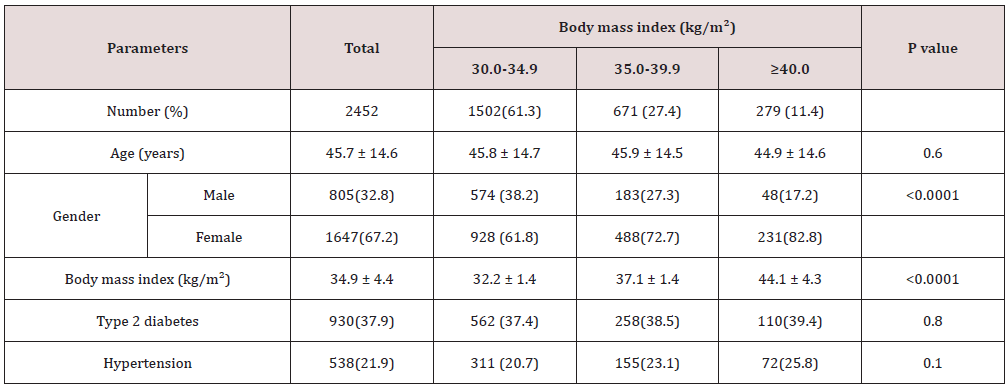
A total of 2452 participants were studied. The mean age of the study population was 45.7±14.6 years with 46.9±15.3 years for males and 45.1±14.2 years for females. Moreover, the prevalence of males was 805(32.8%) and the prevalence of females was 1647(67.2%) with males to females ratio was 1.00: 2.01, Table 1. Mean BMI was 34.9±4.4kg/m2. T2DM and HTN had been diagnosed in 930(37.9%) and 538(21.9%) respectively. In the study population, 1502(61.3%) were obese Grade I, 671 (27.4%) were obese Grade II while 279 (11.4%) were morbidly obese (obese Grade III). Moreover, increased BMI were strongly linked to females; 61.8%, 72.7% and 82.8% respectively and were found to be statistically significant (p<0.0001), as indicated in Table 1. Moreover, increased BMI categories were strongly linked to females and this was found to be statistically significant (p<0.0001), as indicated in Table 1. There were no significant difference between different BMI grades and mean age, frequency of T2DM and HTN.

Table 1: Characteristics of patients according to body mass index (kg/m²).

lupinepublishers-openaccess-journal-diabetes-obesity

Data are means ± SD or number (%)

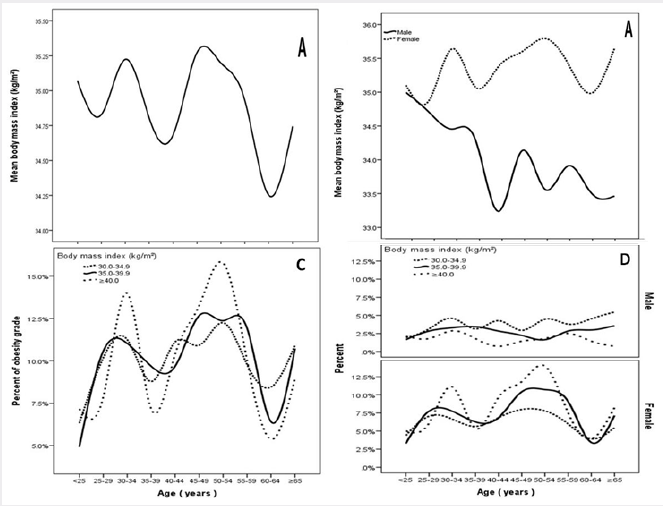
Figure 1: A-D, Description mean and body mass index category by different age ranges and according to gender.

lupinepublishers-openaccess-journal-diabetes-obesity

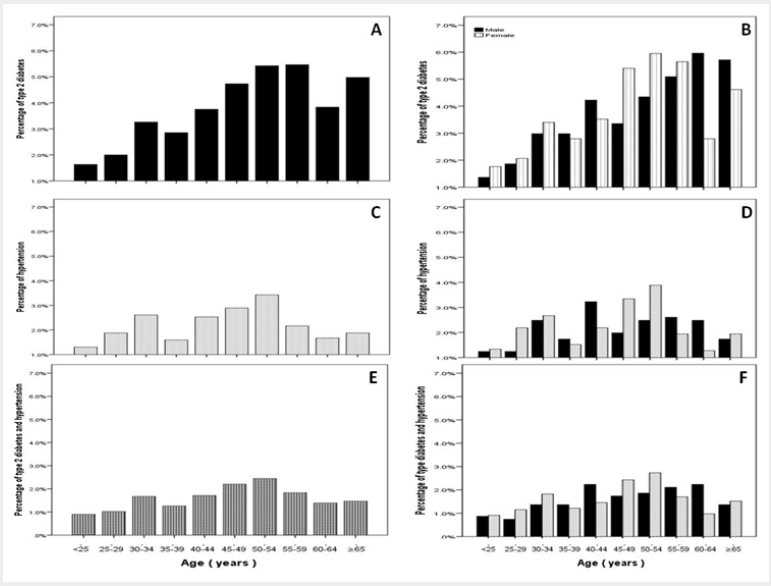
Figure 1 summarizes the relationship between obesity and different age groups. The peaks for all mean and BMI categories were at age 30–34 years and 50-54 years, as indicated in Figure 1, A and C with higher mean and BMI categories for females, Figure 1, B and D. There was no significant association between obesity and hypertension or diabetes. In regard to the relationship between BMI categories and T2DM or HTN in different age ranges, it was observed that T2DM, HTN and T2DM associated with HTN are increasing among 45-49 years and 50-54 years age ranges, with female predominance in those age groups, Figure 2, A-F.

Figure 2: A-F, Description type 2 diabetes, hypertension and diabetes associated with hypertension by different age ranges.

lupinepublishers-openaccess-journal-diabetes-obesity

Discussion

The Global Burden of Disease 2010 study found that elevated BMI was the leading risk factor for disability-adjusted life years in the Kingdom of Saudi Arabia [38]. Previous studies in Saudi Arabia indicate an increasing trend in the prevalence of obesity. Data from the late 1980s through mid-1990s show a prevalence of obesity averaging about 20% ranging from as low as 13.1% among men to as high as 26.6% among women. However, all prevalence estimates from 1995 and beyond are above 35% [10,13,24,33].

Our study showed the peaks for all mean and BMI categories were at age 30–34 years and 50-54 years, as indicated in Figure 1, A and C with significant higher mean BMI ( 34.0±3.7 vs. 35.4±4.6, p<0.0001 ) and BMI categories for females in concordance with other reports [38-41]. The Asia Pacific Cohort Studies Collaboration reports obesity prevalence rates ranging from less than1% to higher than 20% for countries in the Asia-Pacific region [42]. According to National Health and Nutrition Examination Survey of the United States, the prevalence of obesity in individuals aged 20–74 years was 34% in females and 31.7% in males [43]. The corresponding figures in Australia were 19% and 17%, respectively [44]. In the United Kingdom, the prevalence of obesity was estimated to be 24.2% in females and 23.7% in males [45]. The results from most of our neighbouring countries, including Oman, 23.8% in females and 16.7% in males [46]. Lebanon, 18.8%in females and 14.3% in males [47]. Turkey as well, the prevalence of obesity is higher in females 24.6% vs. 14.4% in males and Iran, the prevalence of obesity to be 22.3% among Iranian adults (30.6% in females and 14.2% in males [48,49]. In Saudi Arabia, the National Epidemiological Household survey among Saudi subjects over the age of 15 years in different regions of Saudi Arabia showed the prevalence of overweight among male subjects was significantly higher than for female subjects (29% vs. 27%), and the prevalence of obesity among female subjects was significantly higher than for male subjects (24% vs. 16%) [23].

In Saudi Arabia A community-based national epidemiological health survey, conducted by examining Saudi subjects in the age group of 30-70 years of selected households over a 5-year period between 1995 and 2000 showed that the rate of obesity among adults remained steady at 22.1% (males 17.8% and females 26.6%) in 1990 and 1993 and increased thereafter to 35.6% (females 44% and males 26.4) in 1995 and 2000. This trend can also be seen in overweight Saudis as the percentage of overweight adults in the Saudi Arabia increased from 31.2% (33.1% males and 29.4% for females) to 36.9% (42.4% of males and 31.8% of females) in the same time period [13]. The multiple logistic regression analysis showed that age and gender are statistically significant predictors of obesity. The observed prevalence and pattern of overweight and obesity with age and gender is similar to those observed in the Arab community and some Western nations.

In a cross-sectional study in the Gassim region of Saudi Arabia, 6,044 subjects (2,727 males and 3,317 females) had their BMI computed in the following age groups, namely, 0-5, 6-12, 13-49, 50-69 and 70+ years. In general, the trend for BMI was to increase with age in both genders, but the curve pattern showed some plateauing from about the age of 50, with a slight decline in later life. Females had significantly higher indices than males [50]. Recent study showed the prevalence of obesity was 40.3% where 62.0% of the total female population was obese compared to 49.7% of the total male population. The magnitude of the difference in prevalence of obesity in the males and females was significantly high (p<0.0001) [51]. With the increase in life expectancy, obesity is causing more years of disability [52]. Hence, the increased cost of obesity and its sequelae will put a strain on the resources of governments and individuals [53].

There is apparently gradual weight gain with age, which tends to decrease gradually after the age of 55 years. The decline in mean BMI in the oldest age group was consistent with other studies [54- 57]. The increase in obesity levels with age is of concern, as it has been shown that obese elderly are more likely to present with major chronic health conditions and poor general health [58].

The association we found between obesity and chronic non communicable diseases among Saudis is informative on the impact of obesity on chronic diseases in Saudi Arabia. Different studies have documented that more than 80% of T2DM are obese, and adult males are more likely to be obese than females [59-60]. In Arab societies, it has been found that the high prevalence of Noninsulin dependent diabetes mellitus (NIDDM) is associated with high prevalence of obesity [61]. In Bahrainis, the high rate of diabetes is associated with obesity, but not with overweight [62]. We report high frequency of T2DM, 32.8% of the male, and 67.2% of the female, p<0.0001. In a study from KSA to assess the effect of obesity on diabetes and hypertension, the prevalence of obesity among T2DM and HTN patients was 46% and 54% respectively which are lower than our report [63].

Frequency of T2DM, HTN or both was not associated with different categories of obesity in our study in disconcordance to others [64-65]. With the inclining rates of obesity over the last 8 years in Saudi Arabia, we would expect an effect on these conditions in our community. The global obesity epidemic has been strongly linked with these diseases [66]. In 2010, hypertension was the second leading risk for death worldwide, and diabetes caused more than 1,200,000 deaths, compared with fewer than 600,000 in 1990. 66 Hypertension and diabetes are contributing extensively to these unhealthy years lived with disability, increasing health expenditures and reducing quality of life. Although we focused in our study on obesity as an extreme measure of excess weight, overweight should also be a target for prevention. Intervening with overweight Saudis before reaching the obesity level would be easier and more beneficial, especially if they have not yet developed adverse health events.

Our study has some limitations. First, our data are retrospective, so we cannot assess causality in associations. Conversely, our study is based on a large sample size and used standardized methods for all its measures. The results of this study have three important implications for national obesity management programs. First, it appears that obesity prevalence rates will almost certainly continue to rise in the Saudi population over the next decade. The rapid aging of the currently very young Saudi population into highrisk older age-groups will maintain the spread between incidence and morbidity into the foreseeable future. Even if incidence rates were flat or declining due to a breakthrough in obesity prevention, prevalence rates would continue to rise. As a result, the health burden due to all types of obesity complications will likely continue. This means that the health care and social service systems should start preparing now to provide the prevention and support services and systems, a large number of adults with obesity are going to require maintaining quality of life.

These include healthy life programs which are currently implemented in our institution, dietary counselling services, and enhanced infrastructure at the community level to facilitate independent living by adults with limited mobility and eyesight. Second, “upstream” population-based primary prevention programs need to be aggressively implemented to ensure that obesity incidence begins to decrease in the future. The dramatically higher rates of obesity in the Saudi population highlight the urgency of this activity. Because obesity appears to be closely related to the adoption by people of many aspects of the modern lifestyle including diet and low levels of physical activity, prevention programs that draw upon Aboriginal traditions and ways of life and that focus on the lifestyle habits of Aboriginal youth need to be implemented. A number of very promising primary prevention programs that draw upon Aboriginal traditions and ways of life have been implemented in our institution. Third, the reason for the higher prevalence of obesity in Saudi women observed in this study also needs to be better understood.

Conclusion

This study found the frequency of T2DM and HTN were not associated differently between different obesity subclasses. Indeed, weight gain associated with aging seems to further constitutes a threat to public health status in developing societies. Clearly, despite the small sample size, this study has posed important public health issues that require immediate attention from the health authority.

Acknowledgment

We are grateful to the staffs from the diabetic centre at King Fahad Armed Forces Hospital for their valuable contributions in data collection. The authors have no conflict of interest to disclose.

a) Stimulating the glucose uptake in L6 myotubes [13,14]

b) Inhibiting adipocyte differentiation [14]

c) Improving glucose homeostasis and symptoms in animal model of gestational diabetes [15]

d) Promoting formation of brown adipocytes and exerting thermogenic effects [16]

With this editorial, we would like to propose a start point for discussion and an input for further investigations about the role of RSV-based nutraceuticals, which have been shown to be not a mere palliative but a novel and promising natural approach for the management of diabesity. We hope this Journal will encourage the scientific discussion regarding the role of nutraceutical sciences in metabolic diseases focusing on the evidences, safety and absence of side-effects, enlarging the knowledge of physician on this issue.

Read More About Lupine Publishers Journal of Diabetes and Obesity Please Click on Below Link:
https://diabetes-obesity-lupine-publishers.blogspot.com/

Wednesday, 26 June 2019

Lupine Publishers-Journal of Diabetes and Obesity


83 year-old Caucasian female with past medical history of hypertension, chronic kidney disease stage3-4 secondary to hypertensive nephrosclerosis with minimal proteinuria, hypokalemia, and Sjugrene syndrome without extra-glandular involvement. The patient was admitted to hospital because of urinary tract infection and edema of the lower extremities. She was treated with antibiotics, and diuretics for the edema. Her blood pressure was not optimum at this visit and spironolactone 25mg was added to her medication to control her BP, hypokalemia, and proteinuria. She was on amlodipine, frusemide, clonidine, Irbesartan, and potassium supplement. The treating nephrologist decided to try spironolactone for better control of high BP and hypokalemia and phased out the potassium supplementation. At this encounter her micro-albumin-creatinine ratio was 379.3mg/ gr, (normal value <29.9mg/gr creatinine). Physical examination was otherwise normal except bilateral leg edema, and high blood pressure (149/65mmHg). Her estimated glomerular filtration rate (EGFR) was 28ml/min).

She returned to the nephrology clinic after 2 weeks for bilateral lower extremities itch, burning and painful rash involving the buttocks, upper thighs and shins bilaterally as shown in the (Figures 1 & 2). The rash was palpable, purpuric nodules symmetrically distributed over the lower extremities. She was sending for dermatological opinion and skin biopsy of the rash. The biopsy was consistent with leukocytoclastic vasculitis. On further questioning the patient, she recalled that she had had a similar rash long time ago when she was placed on “aldactone” and the doctor had to stop the medication because of the rash, subsequently, the rash went away. This triggered discontinuation of the spironolactone and she was treated with prednisone and topical steroids by the dermatologist. The current rash faded away in 3-4 weeks; however, she was still on 5mg of prednisone when she was last seen in the clinic.Spironolactone is potassium sparing mineral ocorticoid receptor antagonist (MRA) which acts on the distal tubules and collecting ducts of the kidneys and antagonizing the effect of aldosterone, thereby causing inhibition of sodium and chloride re absorption, and potassium secretion in the distal tubules. The bioavailability of spironolactone is 73%, and it is >90% protein-bound. The drug is extensively metabolized in the liver and excreted by renal (47- 57%), bile and eventually fecal route (35-41%). The elimination half-life of the drug ranges from 1.4 to 15- hours depending on the type of metabolites. It is indicated for heart failure with reduced ejection fraction, hypertension especially when associated with hyperaldosteronism, hypokalemia, precocious puberty, hirsutism and female virilization syndrome. The American geriatric association (AGS) recommends that the drug should be avoided in patients >65 years old when creatinine clearance <30ml/minute due to increased potassium levels associated with the medication [1]. Spironolactone has also been used for liver cirrhosis with as cites and diabetic nephropathy with proteinuria. It can be added to patients with metabolic alkalosis with hypokalemia due to diuretic use.To know more click on below link.

 
For more Lupine Publishers Open Access Journals Please visit our website: https://lupinepublishers.us/