Showing posts with label Lupine Publishers Environment Journals. Show all posts

Friday, 12 February 2021

Lupine Publishers | Focusing on Food Security or Targeting the Economy: A Study on Maize and Cotton Production in Kandi Commune

 Lupine Publishers | Journal of Environmental & Soil Sciences 


Abstract

Maize and cotton are two crops that are highly produced in North Benin. Their production has advantages as well as constraints. These advantages and constraints are taken into account in the choice of the producer to cultivate one of them. The objective of this study is to present, at first, the advantages and constraints that the producers of Kandi commune face on these two crops. It also aims to expose the producers’ preference according to the advantages and constraints listed by them. To achieve this, the data were collected in two districts of the municipality over a period of two weeks. Semi-structured interviews were conducted with fifty producers through an interview guide. Data processing was carried out using a dual approach (quantitative and qualitative) which, on the one hand, consisted in carrying out statistical tests and, on the other hand, analyzing the statements collected during the data collection. The main statistical test used in this study is Kendall’s W-concordance test, which has been used to prioritize constraints. At the end of the analyses, it appears that cotton, just like corn, enables producers to meet the needs and social development of their households. On the other hand, the non-organization of the maize sector, the lack of inputs and the delay in their distribution, maize prices fluctuation and difficulties in the evacuation of cotton are the main constraints reported by producers. Despite its lack of organization and the other constraints to which it is subject, maize crop is the most preferred. In view of this, it would be appropriate to consider the organization of the maize sector and the optimization of the services provided by the organizations in charge of the cotton sector. This will be beneficial to both production systems and also to all actors involved.

Keywords: Food security; Income; Advantages; Constraints; Farmer’s choice

Introduction

Agriculture is one of the crucial activities that human being cannot neglect for his survival. It keeps the human species alive and contributes to its evolution. In Benin, it plays a great role in strengthening the economy and provide about 75% of jobs [1]. Among all the crops produced in the territory, two prove to be vital both in the constitution of the national economy and in the fight for food security: Those are corn and cotton. Known as the main cash crop in Benin [2] and the engine of the Beninese economy [3], cotton alone counts for 27% of exports and contributes by 7% to the national GDP. Its production has not stopped growing over the last five years. It reached in 2016, a tonnage of 451,000, which is an increase of more than 70% from the year 2015 [4]. Due to its multiple outlets, the cotton sector remains the country’s best organized sector [5]. If cotton receives a lot of attention from the Beninese government, corn itself does not have such a privilege. Nevertheless, it is the crop that could be an alternative to cotton production [6] in northern Benin. It comes second, after cotton as a subsistence and cash crop [7]. Indeed, its cultivation occupies nearly 70% of the total area devoted to cereals in Benin and represents about 75% of cereal production [8]. Together with cowpea, cassava and yam, it forms the staple crops of people’s diet [9]. Studies have shown that 63.1% of households in Benin consume 7 days out of 7, maize being the main cereal in the food ration [9]; [10]. Apart from the aspects raised, corn also has medicinal properties. According to [11], the corncob is used in combination with other plants to cure knee and low back pain. Some use it to treat diseases such as malaria.

Material and Methods

Study Area

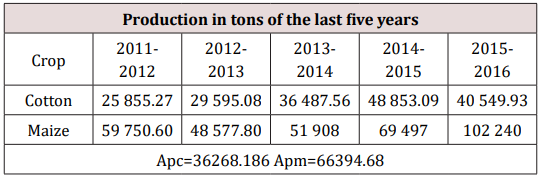
The study took place in the municipality of Kandi, county town of the department of Alibori. Located in the agro ecological zone of the cotton pan, it is limited by the communes of Malanville (North), Gogounou (South) Ségbana (East) and Banikoara (West). It is spread out an area of 3421Km2 and includes ten districts, sixty-seven villages and fifteen districts. The climate in Kandi is of Sudanese type characterized by two seasons that follow each other: The first, rainy from May to October and the second, dry from November to April. Climate change in sub Saharan Africa does not leave the Kandi commune on the side-lines. It is worth noting since a few decades in the commune and its surroundings an early drying up and a late or sometimes violent arrival of rains. Several studies carried out in the region have noted this [12-15]. In addition, the soil found at Kandi is of tropical ferruginous type. The relief is made up of plateau and one distinguishes by place hills made of granites and quartzite. As for vegetation, the town has grassy savanna, shrub and trees with some gallery forests. In terms of agricultural production, Kandi has a good reputation coming in second place after Banikoara, the giant cotton supplier in Benin. Apart from this asset, the municipality is essential in the department in terms of corn production. The following table gives an idea of the evolution of these two crops from 2011 to 2016 (Table 1).

Table 1: Production in tons of the last five years.
lupinepublishers-openaccess-journal-environmental-soil-sciences

Analysis of this table shows a peak of cotton and maize production between 2014 and 2016 with a respective tonnage of 48853.09 and 102240. The respective average production of the two crops is 362681.86 and 66394.68 tons.

Methodological Approach

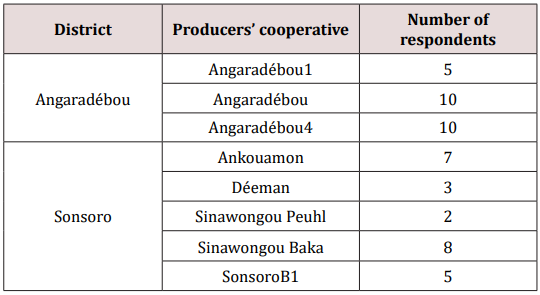
Among the ten districts of Kandi commune, only two were chosen to shelter the study. These are the districts of Angaradébou and Sonsoro. This choice was made in a participatory way with the coordinator of the Interprofessional Association of Cotton Producers. Firstly because of their performance in the production of both crops within the municipality and secondly because of their positioning. This choice was made for a wide variation of collected data and the obtaining of a socio cultural diversity in order to better touch the realities of the producers of Kandi as a whole. The data was collected using an interview guide designed to collect qualitative and quantitative data. The collection took place during the month of April of the year two thousand and eighteen (2018) and lasted 2 weeks. After an individual interview with five producers, the questionnaire underwent a slight adjustment. Faced with the unavailability of some farm managers, other people who were relatively close to them and involved in the farming activities of the households proved to be able to provide the necessary information for the study. A total of 25 subjects per district producing maize and cotton were included in the study. These have been identified by secretaries of cooperatives who hold leadership positions within their community. The following Table 2 provides an overview of the structure of the sample considered in the study.

Table 2: Structure of the study sample.
lupinepublishers-openaccess-journal-environmental-soil-sciences

Data Analysis

The data capture and analysis was carried out exclusively with SPSS v21.0 32bits software. The data processing was done using descriptive statistics, speech analysis and Kendall’s W-concordance test. The descriptive statistics essentially allow to obtain the frequencies and average of variables characterizing from a social and demographic point of view the interviewed farmers. The comments received from producers were analyzed and then used to model the “benefits and constraints” section. This technique was chosen inspired by the work of several authors including [16- 18]. The Kendall’s W-concordance test was also used to prioritize production constraints in order of importance.

Results

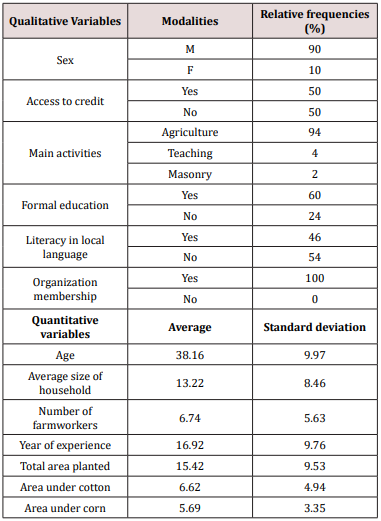
Table 3 below summarizes the socio-demographic characteristics of the producers surveyed in this study. It indicates that the subjects included in the sample are predominantly male (90%) with a low representation of women (10%). Ninety-four per cent of them live entirely depending on agriculture, compared to six per cent who make it as a secondary activity. Their farming experience varies from 3 to 40 years with an average of 16.92 years. Compared to the size of farm households in both localities (13 persons), the average number of farm active Worker (7 approximately) is relatively small. Farmers send their children to school until they are unable to move on. Sixty percent received formal education and forty percent got literate in local languages. Among those who have been literate 22% hold the certificate of primary school, 10% hold the certificate of secondary school and 2% hold the high school diploma and bachelor’s degree. Anyone wishing to cultivate cotton is required to belong to a Village Cooperative of Cotton Producers, this justifies the membership to an organization unanimously own by the respondents. The average area of cotton planted is 6.62 ha on an average total area of 15.62 ha. In contrast, the average area of maize grown is 5.69 ha. An observation of these figures allow to say that the cotton takes with a small difference, the top on the corn in terms of cultivated area in the commune. This could be explained by the several constraints faced by corn producers. Note that these results are quite similar to those obtained by [19] in their studies in the same commune. able 2: Structure of the study sample ese two crops from 2011 to 2016.

Table 3: Socio-demographic characteristics.
lupinepublishers-openaccess-journal-environmental-soil-sciences

Advantages

Advantages Related to Cotton Production

Cotton plays a major role in the lives of Kandi producers. From the exchanges held with the 50 people surveyed, it appears that several benefits are derived from the production of cotton. It allows heads of households and farms to make investments (buying cattle for traction, rolling stock, building houses ...), to perform ceremonies (marriage, baptism, burial ...) and then to meet regular expenses in their households and farms (schooling, food, expenses and debts of agricultural campaigns). The Interprofessional Cotton Association known as ‘’AIC’’ is the structure in charge of the cotton sector throughout the national territory. It has set in place a mechanism that allows producers to get inputs on credit before the campaign. They receive the inputs on credit, use them for production, and subsequently pay their debts at the time of payment. This approach is appreciated by the producers because, they lack sufficient financial means at the time of starting the campaign. Through the comments transcribed below, two producers support what has been said above. “The cash of cotton appears for me like a tontine, it allowed me to buy my bike, to build the house where I live. Thanks to the cotton I bought a ginning machine that serves me a lot after the corn harvest. My eldest son is already old enough to marriage. I need to buy him a motorcycle and prepare for his wedding by next year. It is on the cash of the cotton that I count to be able to do it. “ “The cash we get from cotton also allows us to do ceremonies. It is an obligation for us. In our culture, when someone close to your family dies, that means that your money is dying too. You cannot have money hidden somewhere without doing it. It’s like a duty for us.

Advantages Related to Maize Production

Corn in the first place ensures the food needs of households and the farm. After production, much of the crop is set aside to allow the producer, his family and those who serve him to overcome hunger, one of Maslow’s primary human needs. In the same way, the seeds used by the producers are taken from the previous crops. Apart from these two aspects, a great part of the producers have said that corn helps them financially. In fact, after harvest they reserve a larger portion for commercial purposes. The main reason behind this, is to cover regular expenses and household contingencies. These unforeseen events are usually cases of illness or death. Growing maize for the farmer is therefore a way to keep his relatives in safe from the food and financial point of view. The comments collected on this issue were analyzed and reissued below. “Corn helps us a lot, that’s what we eat at home almost all the time. In the form of dough, boiled, and akassa (local meal made with corn). When we are facing a financial problem we just have to take a bag of maize, sell it and the problem is solved. “Cotton’s cash lasts before coming. All the while, it’s corn that keeps us alive. Corn helps us a lot without lying to you.”

Cotton Production Constraints

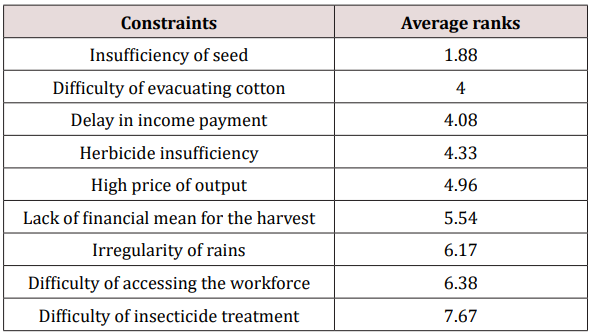
The benefits of cotton and corn production are enormous. However, during the survey, producers listed a number of constraints they face every day. Seven main constraints came back during the exchanges. They have been grouped in the following table with their respective average ranks. It is noted after analysis of the table that the main constraint reported by the population studied is the insufficiency of the seeds supplied to them. The majority of producers have not only deplored the lack of seeds but also the late availability of these inputs. Similarly, the removal of seed cotton, the late payment of cotton costs, the inadequacy of herbicides and the high cost of inputs are the secondary constraints recorded in this study. It is also important to note through the Kendall coefficient (0.379) that the order of importance of these constraints varies quite remarkably from one producer to another (Table 4).

Table 4: Classification of constraints related to cotton production.
lupinepublishers-openaccess-journal-environmental-soil-sciences

Corn Production Constraints

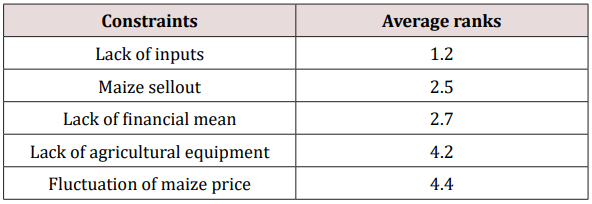
Concerning corn production constraints, there is a relatively high degree of agreement on the ranking (Kendall’s coefficient = 0.698). The first three constraints recorded are the lack of specific inputs for maize, the obligation to sell cheap the crops, and the lack of financial means to cover the expenses inherent to production. The lack of agricultural equipment and the fluctuation of the price of maize occupy the last places in this ranking (Table 5).

Table 5: Classification of constraints related to corn production.
lupinepublishers-openaccess-journal-environmental-soil-sciences

Corn or Cotton

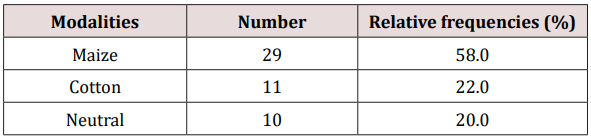
The objective of this section is to expose the respondents’ position after having simulated a situation where they are faced with making a choice between the two crops. It also aims to explain the reasons justifying their respective positions. Table 6 presents the distribution of producers according to the crop chosen. From this table, it appears that more than half of the producers (58%) chose corn, 22% cotton and 20% decided not to take a position. Table 7 below is a summary of the reasons given by the producers following the choice made. Producers, who opted for cotton justify their choice by the fact that the sector is organized, the price is fairly stable, and inputs are provided on credit. At the same time, those who chose maize justify this by its ability to cope with the producer’s financial problems, its ability to keep them alive before the arrival of cotton revenue and also by its easiness and short production cycle. Producers who have maintained a neutral stance argue that the two crops are inseparable and that in the current context, corn production is necessary in order to reap the benefits of cotton.

Table 6: Crop chosen by farmers.
lupinepublishers-openaccess-journal-environmental-soil-sciences

Table 7: Summary of the reasons given by the producers following the choice made Farmer stances.

lupinepublishers-openaccess-journal-environmental-soil-sciences

Discussion

As maize is a foodstuff, it is mainly used to cover the food needs of producers and their households. The forms under which it is consumed differ from one region to another, or even from one social category to another [20]. In Kandi commune, it is consumed in the form of porridge, paste and akassa. Secondarily, it is the subject of a commercial transaction and generates significant income for producers. After discussions with these producers, it is noted that the income earned is used for security purposes and social fulfilment. Purchases of food, buildings and ceremonies (marriage, baptism, death ...) are the main uses made of these incomes. They also, but very rarely, invest money that can add value to their production. Purchasing production equipment is generally limited to the minor tools that are necessary. This could be explained not only by the relatively large size of households living at the expense of these incomes, but also by the primacy of physiological and security needs over other needs. The difficulties that undermine the maize sector in the municipality are enormous, as well as the benefits that result from it. The lack of specific maize inputs outweighs all constraints by unlawfully resorting to inputs for cotton production. According to [5]; [7] and [21], this diversion is reflected in the low yields obtained at the cotton level. One could say that maize seems to be in the study area a parasite of the cotton crop. Studies conducted by [22] on the corn seed production and distribution system in accordance with this study revealed that the lack of input is one of the main weaknesses of the maize sector. The study also shows that, apart from the lack of inputs, the sale at low prices of harvests is a strategy developed by producers in urgent need of financial means. They are often lacking when they harvest the cotton. Cases of illness or other unforeseen events arise occasionally. In response to these problems, they sell corn crops. Those who do not adhere to this practice generally resort to Micro Finance Institutions (MFIs) loans as mentioned by [23]. The ‘‘warrantage’’, (a sort of securing by storing a part or the full harvest) implemented in Benin for more than a decade [24] in response to this situation hasn’t unfortunately had a significant impact in the study area. With regard to cotton, it is noted that income from production has the same purpose as corn, with the difference that cotton is exclusively sold and used more for sustainable projects. In some localities in the study area, cotton producers pay contributions after receiving cotton income to build classrooms or other community infrastructures. Numerous producers greet the organization around the cotton sector and mainly the credit-input which is granted to them. This credit would allow them, according to [25], to effectively fight against pests and raise the level of fertility of their land. Nevertheless, the high cost of inputs, the insufficiency of seeds supplied and especially the delay in their delivery are denounced as the real handicaps of the sector. Many are forced to informally leave money in order to have the extra amount of seed needed. Added to this, the evacuation of cotton harvests from the production areas to the factory loses its nature of gratuity at a given period of the campaign. All these constraints call into question the performance of the production system.

Conclusion

The aim of this study was to shed light on the two most important agricultural value chains in northern Benin. This, through the advantages and constraints that characterize their productions. At the end of the study, it appears that cotton as much as maize represents a lot. farmers. Corn is the staple of their diet and significant revenues are derived from the production of both crops. These revenues are mainly used to meet the needs of households and their social development. Cotton, on the other hand, enables producers to meet their economic and social needs. Besides, the two production systems are subject to constraints that need to be considered for the betterment of these sectors and the actors involved. Giving common attention to both crops through the organization of the maize sector and the optimization of the services provided by the AIC are means likely to boost the satisfaction of all the actors involved.

Acknowledgments

The authors of this paper express gratitude to all those who contributed to the success of this study. They especially thank Mr. Soufianou ARZOUMA, Mr. Washiou ATCHAOU and Mrs. SANNI Adéline for the introduction in the investigation zones and the preparation in local language. A kind regard is also addressed to Mr. Lafia Baky and Mrs. Gauthe Faïdath.

Read More Lupine Publishers Environmental & Soil Sciences Journal Articles:
https://lupine-environmental-soil-sciences.blogspot.com/

Tuesday, 17 September 2019

The Biodiversity of Aquatic Gastropods in the Steppe Zone the West Siberian Plain (Western Siberia, Russia)


Lupine Publishers- Environmental and Soil Science


Abstract


This study describes the species diversity, abundance and biomass of gastropods in the ecosystems of the southern part of Western Siberia (Karasukskii district, Novosibirsk Oblast). Distribution and Quantitative Characteristics of Common Species of Gastropoda are calculated. Twenty-one species of snails belonging to seven families were recorded, Lymnaeidae, Planorbidae, Bulinidae, Physidae, Bithynhdae, Succineidae, and Zonitidae. The biodiversity of mollusks was studied using the Shannon- Weaver index.

Introduction

The ecology of pond snails has been studied in the waterbodies of the central part of European Russia [1], but the authors emphasize the necessity of conducting similar studies in Siberia, and in other regions of our country. Gastropoda are widely distributed in the water bodies of the southern part of Western Siberia. They are an important component of benthic communities and take part in a number of trophic relationships. Some information about the ecology of freshwater snails’ species is presented in the publications [2-4] but many aspects are still poorly studied. In particular, quantitative data on the communities of mollusks are scanty [5,6]. We, in a previous work [7] Jacquard index biodiversity gastropods are calculated. The aim of the present investigation was to identify the occurrence and distribution of freshwater snails in the lake, rivers systems from the steppe zone the West Siberian Plain.

Materials and Methods

The species composition and biomass of snails in August of 2009 were studied (Novosibirsk Oblast, south of Western Siberia). Samples were collected in different parts in the Karasuk River in the upstream(near the villages of Bystrukha N 54026’ 53,2’’; E 800 55’ 50,5’ and Chernovka N 540 09’ 53,2’’; E. 800 02’ 54,2’) and downstream near the villages of Gramotino and Sorochikha (N 500 45’ 19,4’’; E. 780 20’ 15,1’ and N 530 43’ 19,7’’; E 770 56’ 29,5’), and in six lakes of the Karasuk system: Astrodym N 53036’ 59,4’’; E 770 48’ 04,7’, Krivoye (reaches: Blagodatnoye N 530 49’ 59,3’’; E. 780 03’ 17,3’’, Sopatoye N 530 48’ 28,7’’; E 78002’ 18,5’’ and Gusinoye N 530 48’ 13,0’’; E 78004’ 00,8’’), Krotovo N 530 43’ 30’’; E 770 51’ 31’’, Kusgan N 53044’ 23’’; E 770 53’25’’, Melkoye N 530 47’ 37,9’’; E 780 16’34,91’’, Titovo N 530 45’ 25,8’’; E 770 56’13,2’’.
The hydrological and hydrochemical characteristics of the rivers and lakes in steppe zone in the West - Siberian Plain are presented in the study by Savchenko (2010). The study was based at the Karasuk Field Station (Institute of Systematics and Ecology of Animals Russian Academy of Sciences; Karasukskii district, Novosibirsk region). Mollusks were collected according to the standard technique [8]. For a quantitative analysis of snails in the lake-river systems they were collected by hand from sites of 0.25 m2 (50х50 cm). The control sites were in open parts and in macrophyte stands at a depth of 0.1-1.1 m. To determine biomass, the collected mollusks were dried on a filter paper for ≥1 min and weighed. The species identification was made according to the shell and genital system using the keys [9,10]. The ICA index (index of copulatory apparatus) was one of the major criteria for the species definition of mollusks. The species definition within the Lymnaeidae index for mature specimens into account [6].

Results

Species Composition of Gastropods

In the Karasuk river - lakes system, of 21 species from 7 families of gastropods were recorded: Pond Snail - [Lymnaeidae]; Lymnaea (Radix) auricularia (L.,1758), L. (Peregriana) balthica (L., 1758); L. (P.) fontinalis (Studer, 1820), L. (P.) ovata (Drap., 1805), L. (P.) ampla (Hartmann, 1821), L. (P.) tumida (Held, 1836), and Lymnaea (Stagnicola) saridalensis (Mozley, 1934) and Great Pond Snails (Lymnaea) stagnalis (L., 1758), L. (L.) fragilis (L., 1758), L. (L.) doriana (Bourguignat, 1862); Ramshorn snails, Planorbis planorbis (L., 1758), Anisus vortex (L., 1758), A. contortus (L.,1758), Segmentina nitida (Mull., 1774) [Planorbidae], and Planorbarius corneus (L., 1758) [Bulinidae]; Physa fontinalis (L., 1758), Aplexa nypnorum (L., 1758) [Physidae]; Bithynia tentaculata (L., 1758) and B. troscheli (Paasch, 1842) [Bithyniidae]. Terrestrial gastropods were defined by genus, Succinea sp. [Succineidae] and Zonitoides sp. [Zonitidae].
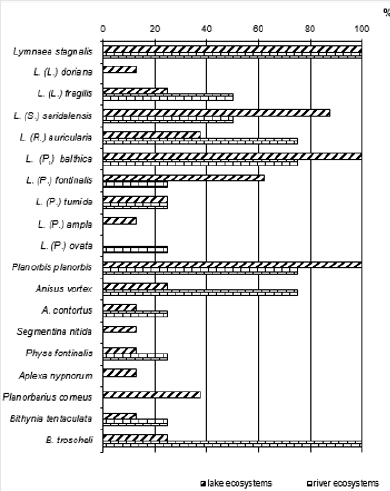
Figure 1: Distribution (%) of gastropods in the Karasuk River and lakes of the Karasuk system
lupinepublishers-openaccess-journal-environmental-soil-sciences
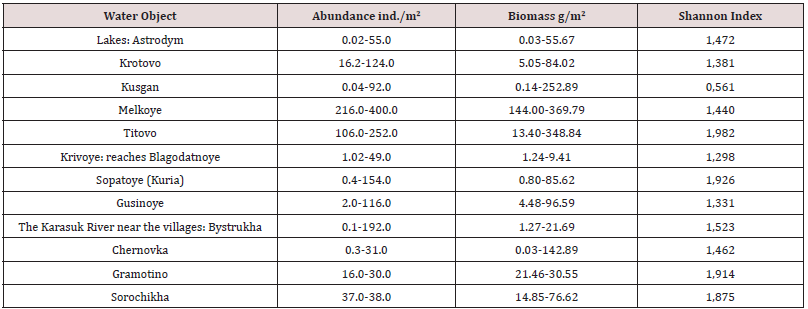
Table 1: Abundance and biomass of gastropods and the Shannon index in water objects from the Karasuk system.
lupinepublishers-openaccess-journal-environmental-soil-sciences
Sixteen gastropod species were recorded in the river and 20 in the lakes (Figure 1). Fifteen species were common for both the river and the lakes. The snails L. (P.) ovata were found in the river only and five species were found only in the lakes: (L. (L.) doriana and L. (P.) ampla, only in the Astrodym lake; S. nitida only in the Krotovo lake; A. nypnorum only in the Melkoye lake). Ramshorn snails P. corneus were found in the Krivoye Krotovo and Titovo lakes. Gastropoda in modern freshwater water bodies (the steppe zone West Siberian Plain) are represented by Pulmonata and Prosobranchia species. Both secondary aquatic pulmonate snails (four families) and terrestrial species (two families) were recorded in the study area. The terrestrial snails inhabit plants that grow close to the water’s edge and appear in the samples of aquatic species. Prosobranchia snails are primarily aquatic; they are the most ancient colonizers of the continental water bodies and are represented by only one family, Bithyniidae. Both bithyniid snails were recorded only in the upper stream of the Karasuk River (close to Bystrukha Village) and in Krotovo Lake [11].

Assessment of the Abundance and Biomass of Gastropods

The abundance of snails in the river varied from 10 up to 192 ind./m2 (Table 1). Lymnaeidae snails dominated, followed by Bithyniidae snails were sub-dominants. The Shannon-Weaver index, as calculated under the gastropod population density, indicated an increase of the species diversity from 1.4-1.5 bit/ind. (upper stream) up to 1.8-1.9 bit/ind. (lower stream). The maximum abundance of snails in the lakes varied from 49 up to 400 ind./m2. (Blagodatnoye reach and Melkoye). In lakes the Shannon-Weaver index varied from 0.56 bit/ind. (Kusgan) up to 1.9 bit/ind. (Titovo; Sopatoye reach). The maximum biomass of gastropods in the river varied from 21.7 to 142.9 g/m2; or in lakes from 9.4 to 369.8 g/ m2 (Blagodatnoye reach and Melkoye). Lymnaeidae snail’s biomass were dominated by, both in the river and in the lakes [12,13]. It should be mentioned that high abundance did not always correlate with high biomass. Thus, the high abundance (192 ind./m2) of L. stagnalis corresponded to the biomass 1.26 g/ m2, which can be explained by the prevalence of young snails in the samples. Although an adult L. stagnalis can weigh 4.9 grams.
Twenty-one species of snails belonging to seven families were recorded, Lymnaeidae, Planorbidae. Bulinidae, Physidae, Bithynhdae, Succineidae, and Zonitidae. All the recorded mollusk species are common in water bodies that are characterized by slow cur rents, in stagnant (mostly perennial) and semilotic water pools; they are common species in the southern part of Western Siberia. Lymnaeidae snail’s biomass were dominated by, both in the river and in the lakes.

For more Lupine Publishers Open Access Journals Please visit our website:
For more Open Access Environment Journal articles Please Click Here:
To Know More About Open Access Publishers Please Click on Lupine Publishers


Wednesday, 4 September 2019

Sub-Soil Properties of Hydrocarbon Contaminated Sites in Parts of The Eastern Niger Delta, Nigeria


Lupine Publishers- Environmental and Soil Science

Abstract

This study aims at assessing the subsurface soil properties of contaminated sites in parts of the Niger Delta with a view to providing basic data that would guide not only future development and construction in the region but in choosing remediation options for contaminated sites. Standard soil sampling and analytical methods were employed in the study. Soil moisture content values range from 5.2 to 97. 9 with spikes at Okrika OKR-CTRL and BM-CTRL probably due to shallow water table encountered at shallow depth of 2.0 m. While the average moisture level at contaminated sites was 20.08 while that of the control sites was 17. 85. The variation also suggests higher water retention potential of contaminated soils against normal clean soil which in essence will enhance contaminant persistence in the soil. The soil pH value for control sites tends to normal range i.e towards 7.0, while the values for impacted sites are slightly lower. Most samples had normal soil pH ranges except BM-SS1 which indicated acidic soil conditions with ranges of 4.5-5.8. Liquid Limit is higher for control samples than contaminated sites at Okrika, Ogu-Bolo, Bomu manifold and Norkpo while Liquid Limit value for impacted site at Sime is higher than the control site and similar for Nonwa sites. This variation could be as a result of the impact of the contamination on the soil. The plastic limit is highest at BM-SS, OGB-SSOKRSSNOR- SS and lowest at SIM-CTRL, NOW-CTRL, NOW-SS, OGB-CTRL and BM-CTRL. Generally, hydrocarbon contamination decreases liquid limit, plastic limit and Plasticity index of the soil. There is a generally slight reduction in porosity values at the impacted sites as compared with the control sites. The soil profile across the study area grade from fine silty sands to fine gravel sand and the soil profile up to depth of investigation were generally dominated by silts, sands and sandy clay in different proportions. Following this, stoppage of infiltration of liquid hydrocarbon product and movement of contaminated water through it will continue unhindered.

Introduction

There has been extensive oil contamination of swamp, rivers, creeks and groundwater in Ogoniland [1-3]. The contamination levels were high enough to cause significantly severe effects on human health and the ecosystem [4-6]. It is reported that surface waters had extractable petroleum hydrocarbons (EPHs) (>10-C40) concentration of up to 7420μg/l, found in drinking water wells and 9000 μg/l benzene in groundwater [7]. These values are 900 times higher than the WHO guidelines of 2009. Sediments had as high as 17, 900mg kg−1 EPH concentrations with Polycyclic aromatic hydrocarbons concentrations values recording 8.0mg kg-1, in most of the samples analysed. The UNEP [1] assessment reported that the effects of the contamination have destroyed mangrove areas. Climatic conditions are favourable for natural degradation of petroleum hydrocarbon contaminants however continuous re-pollution has prevented quick environmental regeneration [8,9]. Effective determination of contaminated sites can only be achieved with adequate knowledge of the interplay of site-specific factors such as geology, nature of the contaminant, pathway receptors linkages, toxicity levels and deployment of appropriate contamination management techniques and legislation [10-13].
The challenge of development to poor soil conditions, a situation which has escalated project cost and as a consequence impeded development (NDES, 1995) [14]. The understanding the interplay of the geomorphology, geology and the engineering behavior of the soils in the region is critical [15-17]. The slow physical development of the Niger delta region has been a major reason for youth restiveness, with its ramified impacts on crude oil production levels, security, employment, etc. This study therefore investigates the geotechnical behavior of soils.

The Study Area

The Niger Delta has spread across a number of ecological zones comprising sandy coastal barriers, brackish or saline mangrove, freshwater and seasonal swamp forests. The Niger Delta consists of three diachronous units, namely Akata (oldest), Agbada and Benin (youngest) formations. The Benin Formation (Oligocene to Recent) is about 2100m thick at the basin centre and consists of medium to coarse grained sandstones, thin shales and gravels [18]. The hydrogeology of the area at different times has described the Benin Formation as a highest yeilding water bearing zone of the area [19]. Overlying the 40m-150m thick Quaternary deposits, the Benin Formation consists of sequences of sands and silty clay alternating which later become increasingly prominent seawards [20]. Based on strata logs in the area, described the aquifer in the area as a stack of alternating aquifers lying upon each other in a multiple fashion such that the uppermost ones are mostly unconfined and underlain by the confined aquifers [21].
The Niger Delta has two most important aquifers, Deltaic and Benin Formations. With a typically dendritic drainage network, this highly permeable sands of the Benin Formation allows easy infiltration of water to recharge the shallow aquifers. Nwankwoala et al. [22] described the aquifers in this area as a set of multiple aquifer systems stacked on each other with the unconfined upper aquifers occurring at the top. Recharge to aquifers is direct from infiltration of rainfall, the annual total of which varies between 5000mm at the coast to about 2540mm landwards. Groundwater in the area occurs in shallow aquifers of predominantly continental deposits encountered at depths of between 45m and 60m. The lithology comprises a mixture of sand in a fining up sequence, gravel and clay. Well yield is excellent, with production rates of 20,000 litres/hour common and borehole success rate is usually high [23]. Across the area, measures transmissivity varies from 59 to 6050m2/d, Hydraulic conductivity from 0.04 to 60m/d and storage coefficient from 10-6 to 0.15 [24]. Surface water occurrence includes numerous networks of streams, creeks and rivers.
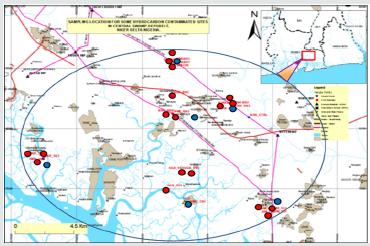
Groundwater recharge system in the study area is sourced from direct precipitation with an annual intensity of as high as 2000 – 2400mm. Water permeates the Benin formation sands to recharge the aquifers. The multi-layer aquifer system has shallow unconfined aquifers at the upper limit of the geologic units providing most of the domestic water needs of the communities’ inhabitants [6]. The water table in the area is between 0.7m to 3.5m depth and fluctuates with the prevailing land profile and season [1,25]. These aquifers are therefore vulnerable to pollution from a range of contaminants ranging from, hydrocarbon contaminant plumes, solid wastes and leachates [26,27] (USEPA, 2009) (Figure 1).
Figure 1: Location map of Study Area showing sample locations.
lupinepublishers-openaccess-journal-environmental-soil-sciences

Materials and Methods

Location and sample point positions were gotten with use of a hand held Global Positioning System device (GPS). Soil samples were collected from hand augered holes at depths of 1m, 2m, and 3m. Soil samples were duplicated while the National and international standards and methods were used during sample analyses using competent personnel and the right equipment and materials. The geographical position of the sample point is established and read off using a GPS device and recorded. Discrete Soil Samples were collected using the grab method with aid of a hand auger and water samples were also collected from boreholes drilled using percussion drilling methods. The investigation comprised drilling of 4 boreholes by cable percussion, recovered of samples and borehole logging.

Cable Percussion Boreholes

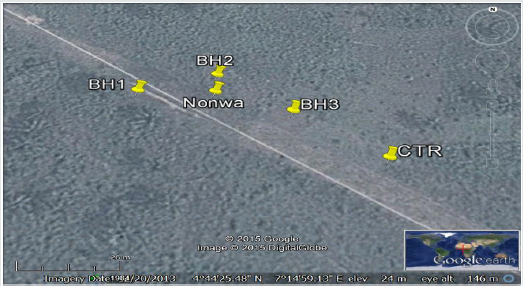
Four (4) Cable percussion boreholes were designed e.g NOWBH1, NOW-BH2, NOW-BH3 and NOW-CTR for drilling at the 4 locations - Nonwa, Sime, Norkpo and Bomu sites respectively to depths of 10m below existing ground level (bgl). Standard cable percussion boring equipment was used to produce 150mm diameter boreholes. Clean drilling techniques were employed at the sites, including the use of casing made the ground and any contaminated underlying strata in each borehole in order to avoid cross-contamination. Detailed records of the cable percussion boreholes have been produced in accordance with national and international standards. Details of the borehole installations were provided on the respective borehole records as appropriate.

Geotechnical Samples

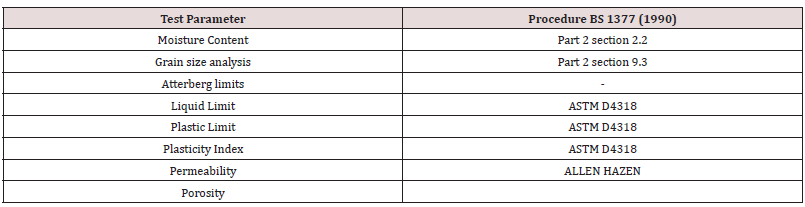
Samples for geotechnical analysis were collected in aluminium plates. This was done to ensure the integrity of the samples. The device uses an exclusive two-probe measuring system which allows both probes to be inserted into the same depth in the soil and allows the metals to be exposed to the same amount of soil providing the most effective way to consistently and properly measure soil pH. The pH was then read on the calibration and recorded. The pH and moisture meters are made of sensitive tips with and sampling devices were washed with sterilized water after each measurement. The Moisture Meter is a Brass soil moisture probe with an eightinch metal stem and Meter with 0 -10 calibrations mounted on top. The probe has a sensor at the tip and penetrates to root level. The moisture reading is then indicated is read off at the tip of the pointer needle and recorded. The analytical procedures adopted for the various parameters are APHA methods (Figure 2) (Table 1).
Figure 2: Typical Google map showing sampling point locations.
lupinepublishers-openaccess-journal-environmental-soil-sciences
Table 1: Geotechnical Parameters and Procedures of Analysis.
lupinepublishers-openaccess-journal-environmental-soil-sciences

Discussion and Results

Soil Geotechnical Analysis

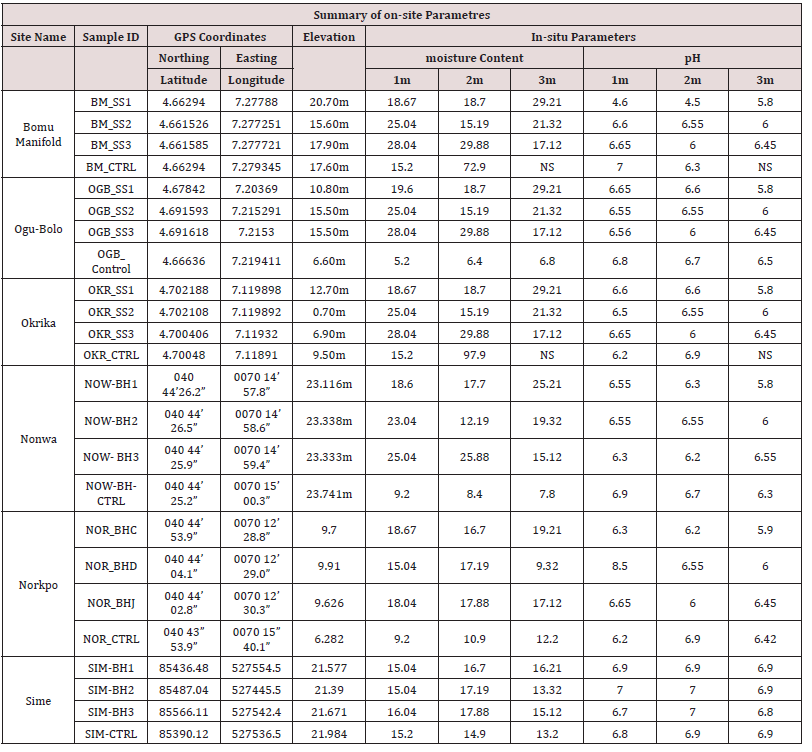
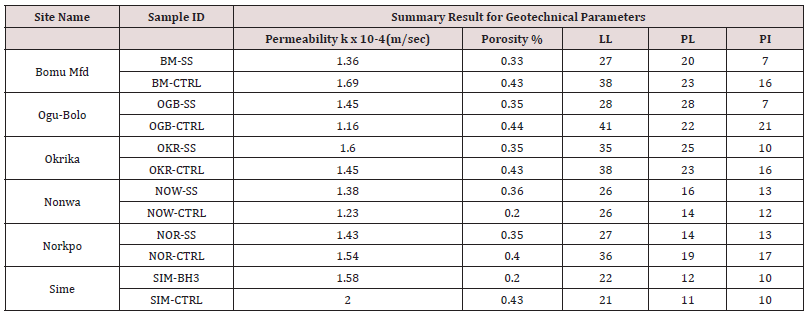
(Table 2) Hydrocarbon products when released to the environment are hazardous to the ecosystems [7]. Although it is naturally insoluble in water, it can infiltrate the soil and contaminate the groundwater. Some of the trapped hydrocarbons clog within the voids and pore spaces, making it difficult and costly to remove. These chemicals degrade the soil engineering properties and hence distort the soil behaviours. The controlling factors for soil-water system behaviour is controlled by (i) the quantity and type clay mineral (ii) nature of pore fluid, (iii) associated anions and cations (iv) organic matter. Almost all soil Properties are affected by Soil-waste interactions basically due to ion exchange or nature of pore fluid. However, it is better to consider the effects of the pollutants independently for better understanding owing to the complex nature of the effects. The effects may differ based on soil type. Pollutants have different effect on different clayey soils and these pollutants are considered based on index properties and Permeability. Atterberg limits, permeability and porosity will be discussed based on their role in contaminant transport and persistence in contaminated media (Table 3).
Table 2: Results of Physical Parameters.
lupinepublishers-openaccess-journal-environmental-soil-sciences
Table 3: Summary Results for Geotechnical Parameters.
lupinepublishers-openaccess-journal-environmental-soil-sciences

Soil Moisture Content

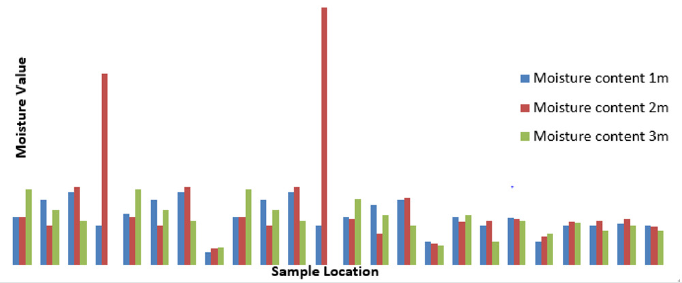
Soil moisture content values range from 5.2 to 97.9 with spikes at Okrika OKR-CTRL and BM-CTRL probably due to shallow water table encountered at shallow depth of 2.0 m. While the ave moisture level at contaminated sites was 20.08 while that of the control sites was 17.85. This slight difference in moisture could have resulted from the introduction of the fourth phase on the soil structure which possible gave rise to more water molecules adhering unto the soil grains and in effect creating an atmosphere for chemical reactions to take place in the soil. The variation also suggests higher water retention potential of contaminated soils against normal clean soil which in essence will enhance contaminant persistence in the soil. Table 2 and Figure 3 show the variation of moisture across various sites and depths.
Figure 3: Variation Chart of In-situ Soil Moisture Across Various Sites and Depths.
lupinepublishers-openaccess-journal-environmental-soil-sciences

Soil pH

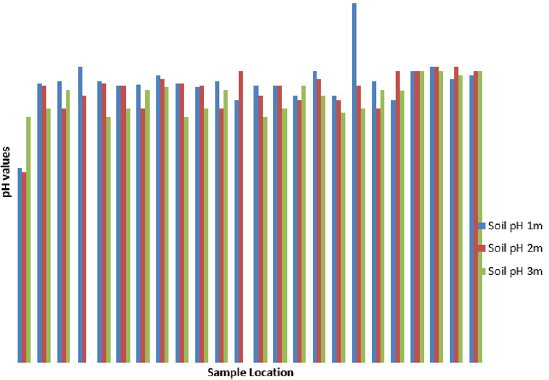
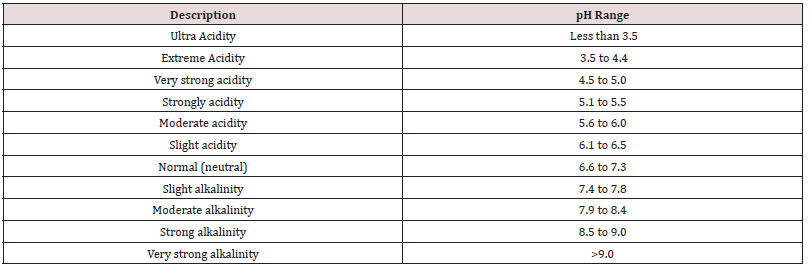
Soil acidity or alkalinity is measured using a pH scale. The device is calibrated on 0 - 14 mangitude, with 7 as the midpoint or normal. The smaller the values indicate higher levels of acidity while higher values i.e above 7, indicates increasing alkaline conditions (Table 4) (Figure 4). Bioremediation processes are significantly affected by Soil pH levels just like soil properties (physical, biological and chemical) and processes. Reduced microbial activities in contaminated soil for instance imply persistence of hydrocarbon contaminants in such soil [28]. Low pH leads to decrease in nutrition, growth, and yields of most crops. These factors improve as optimum pH levels are restored. Optimal pH range is between 5.5 and 7.0. Some plant however can adapt to pH ranges outside of the normal range. As shown in Figure 4 the soil pH values for control sites tends to normal range i.e towards 7.0 while the values for impacted sites are slightly lower.
Figure 4: Soil pH Variation across the Various Sample Points.
lupinepublishers-openaccess-journal-environmental-soil-sciences
Table 4: Soil pH Classification Range (Source: Torstensson et al. [30]).
lupinepublishers-openaccess-journal-environmental-soil-sciences
Most samples had normal soil pH ranges except BM-SS1 which indicated acidic soil conditions with ranges of 4.5-5.8. Formation of acid soils can be due to any of several processes which may include use of fertilizer, activity of plant root, rainfall and the weathering of soil minerals etc. At a petroleum impacted site as observed BHSS (Figure 4), pH readings tend to strong acidity probably due to history of prolonged hydrocarbon contamination (Zihms, et al., 2013). Small changes in pH values can induce severe changes in the sensitive biochemical environment thereby altering biological and chemical processes.

Atterberg Limits

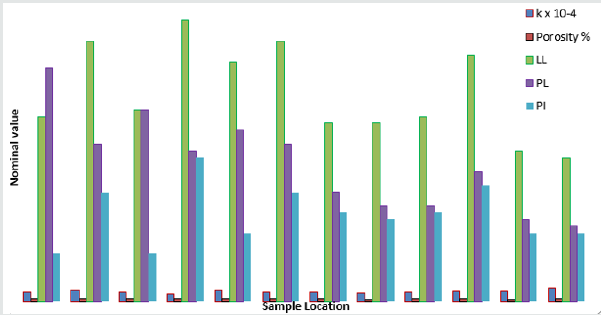
As shown in Figure 5, the general reduction in the Atterberg Limits values for the contaminated sites compared with the values at control sites. This is most likely the result of the soil degradation due to contamination at the sites. Liquid Limit is higher for control samples than contaminated sites at Okrika, Ogu-Bolo, Bomu manifold and Norkpo while Liquid Limit value for impacted site at Sime is higher than the control site and similar for Nonwa sites. This variation could be as a result of the impact of the contamination on the soil. It implies that the impacted soil has less ability to hold water than the clean soil, the flow and movement of contaminants in impacted soil will therefore be easier and faster than clean soil. The plastic limit is highest at BM-SS, OGB-SSOKR-SSNOR-SS and lowest at SIM-CTRL, NOW-CTRL, NOW-SS, OGB-CTRL and BMCTRL. Generally, hydrocarbon contamination decreases liquid limit, plastic limit and Plasticity index of the soil.
Figure 5: Soil Permeability, Porosity and Consistency Chart.
lupinepublishers-openaccess-journal-environmental-soil-sciences

Porosity

From Figure 5, Porosities and permeability values at impacted sites are generally lower than control sites. Permeability at BM-SS is lower than BM-CTRL and may be as a result of the much soil agitation due to ongoing remediation works at the time of the investigation. The impacted sections of the site have suffered some distortions and so is the soil profile. There is a generally slight reduction in porosity values at the impacted sites as shown in Figure 5 compared with the control sites. These reductions may be attributed the effects of the crude oil contamination. The control sites BM-CTRL, OKR-CTRL, NOR-CTRL and SIM-CTRL showed higher permeability values than impacted sites. These changes in soil characteristics have the capability of determining the behaviour of contaminants in the soil.

Particle Size Distribution

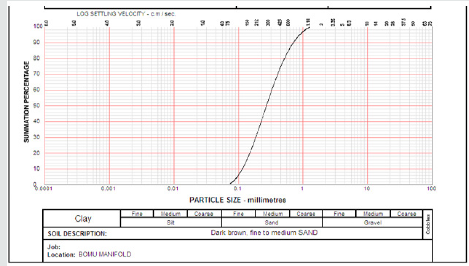
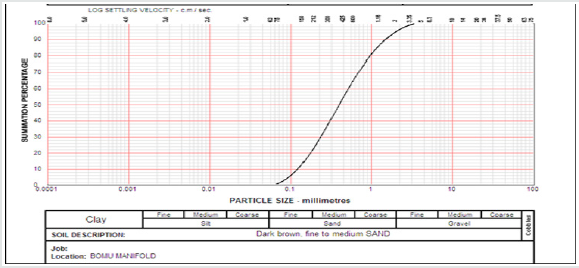
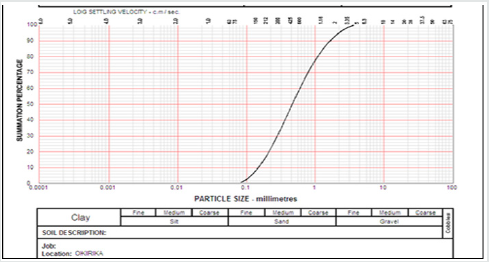
The grain sizes of soils in the area are poorly graded, from fine sands of 0.07mm sieve sizes to fine gravel sizes of 4mm sieve sizes. (Figures 6-8). This grading is typical of beach sands. The grain distribution increases as one moves towards the sea from Norkpo to Okrika indicating that the ease of contaminant infiltration into the subsurface will as well increase in that order owing to increasing permeability of the soil.
Figure 6: Soil Particle Size Distribution for Bomu Manifold.
lupinepublishers-openaccess-journal-environmental-soil-sciences
Figure 7: Soil Particle Size Distribution for Bomu Manifold.
lupinepublishers-openaccess-journal-environmental-soil-sciences
Figure 8: Soil Particle Size Distribution for Okrika.
lupinepublishers-openaccess-journal-environmental-soil-sciences

Atterberg (Consistency) Limits

The Atterberg Limits are generally lower in the impacted samples as shown in Figure 5. Liquid limit values for impacted soils range from 22-35 and control sites values fall between 21-41; Plastic limit is 12-28 for impacted and 11- 23 for control, Plasticity index is 7-13 for impacted and 10-16 for control sites. This is an indication of alteration due to the presence of contaminants in the impacted samples.

Soil Profile

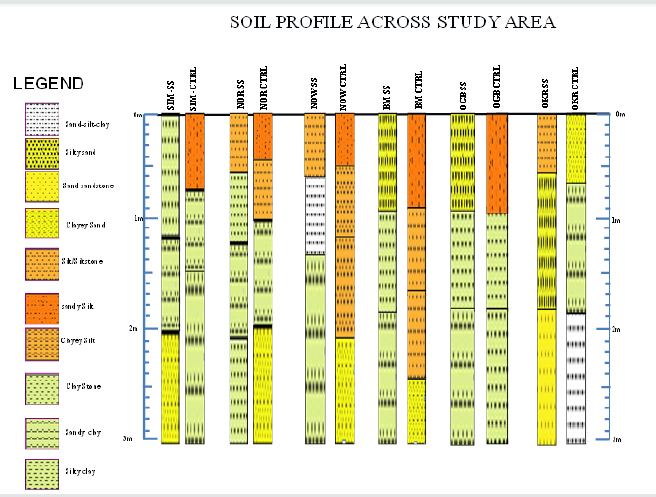
The soil profile across the study area grade from fine silty sands to fine gravel sand. The soil mixtures were as varied across the sites as shown in Figure 9. However, the soil profile up to depth of investigation is generally dominated by silts, sands and sandy clay in different proportions. This kind of soil will not be able to stop infiltration of liquid hydrocarbon product and movement of contaminated water through it will continue unhindered.
Figure 9: Soil Profile in the Study Area.
lupinepublishers-openaccess-journal-environmental-soil-sciences


Conclusion

This study revealed that the soil moisture content values range from 5.2 to 97. 9 with spikes at Okrika OKR-CTRL and BM-CTRL probably due to shallow water table encountered at shallow depth of 2.0 m. This slight difference in moisture could have resulted from the introduction of the fourth phase on the soil structure which possible gave rise to more water molecules adhering unto the soil grains and in effect creating an atmosphere for chemical reactions to take place in the soil. Most samples had normal soil pH ranges except BM-SS1 which indicated acidic soil conditions with ranges of 4.5-5.8. At a petroleum impacted site as observed BH-SS, pH readings tend to strong acidity probably due to history of prolonged hydrocarbon contamination at the site. Liquid Limit is higher for control samples than contaminated sites at Okrika, Ogu-Bolo, Bomu manifold and Norkpo while Liquid Limit value for impacted site at Sime is higher than the control site and similar for Nonwa sites. This variation could be as a result of the impact of the contamination on the soil.


The plastic limit is highest at BM-SS, OGB-SSOKR-SSNORSS and lowest at SIM-CTRL, NOW-CTRL, NOW-SS, OGB-CTRL and BM-CTRL. Generally, hydrocarbon contamination decreases liquid limit, plastic limit and Plasticity index of the soil. There is a generally slight reduction in porosity values at the impacted sites as compared with the control sites. The grain sizes of soils in the area are poorly graded, from fine sands of 0.07mm sieve sizes to fine gravel sizes of 4mm sieve sizes. The soil profile across the study area grade from fine silty sands to fine gravel sand. The soil mixtures were as varied across the sites. However, the soil profile up to depth of investigation is generally dominated by silts, sands and sandy clay in different proportions. This kind of soil will not be able to stop infiltration of liquid hydrocarbon product and movement of contaminated water through it will continue unhindered. Regular soil monitoring is recommended.

For more Lupine Publishers Open Access Journals Please visit our website:
For more Open Access Environment Journal articles Please Click Here:
To Know More About Open Access Publishers Please Click on Lupine Publishers

Wednesday, 28 August 2019

Change of Evaporations Leads to Climate Change

Lupine Publishers- Environmental and Soil Science

Short Communication

The basis of all floods and droughts is water, its excess in some places and lack of it in others. Both here and there the biota dies. Water is the main mediator, means and condition for the existence of life on the planet. Water accumulates in the clouds, moves, precipitates, dissolves minerals and organic matter in itself, delivers it to animals and plants. Water itself is not a product, it is a supplier, component and builder of cells, matter of all biota. Each plant species and a living organism, and within each species, each individual has his own personal ability to extract the substances dissolved in it. And water does not disappear, it is contained in every cell of the body and leaves the body after performing its functions in the form of exhalation, excretions, sweat, transpiration of plants have their own specific individual properties. The structure of each type of discharge is strictly individual and has its own purpose. This is how we feel the fragrance of flowers when inhaled; animals smell their victims and partners by smell. Exhalation and urine doctors diagnose diseases. All of these secretions are concentrated in the atmosphere and are called aeroplankton [1]. American microbiologist Parker found that air contains a large amount of organic matter and a variety of microorganisms, including algae, some of which are active. The temporary location of these organisms can be, for example, cumulus clouds. Acceptable for the flow of vital processes temperature, water, trace elements, radiant energy - all this creates favorable conditions for photosynthesis, metabolism and cell growth. According to Parker, “clouds are living ecological systems,” giving multicellular microorganisms the opportunity to live and multiply. “ From this it can be assumed that this plankton is formed into a single substance and creates a special mechanism that programs the volumes, terms and places of precipitation, forms special clouds. The volume of water in the balance, the composition of the substance and the cycle time cycle corresponds to all biota on the planet. The symbiosis of biota and the water cycle over millions of years has built a graph of the distribution of moisture - the amount, time and place of precipitation. It was these conditions that led to the creation of various arid zones in terms of volumes and cycles of water rotation - deserts and tropics, forests and steppes were formed. The allocation of moisture and waste of the animal and plant worlds is the most important link in the circuit. Processing time and the movement of water in food chains, and the release of waste has a certain pattern and duration. For example, drunk water, being processed in the lungs, mixing with air in the lungs, comes out with an exhalation after a few minutes, and the other part of the water enters other organs, is converted into blood, muscles, bones, and other body tissues and is released in months and years. For example, from the bones after the death of the subject. All biota accumulates moisture in itself and releases waste with distribution by time, portions and quality.
The development of our civilization has destroyed a significant part of the biota - almost 70 percent of the land we used for arable land, mines, landfills, asphalt, artificial reservoirs, cut down forests. A man who uses water not only and not so much for drinking, but as a tool for the production of material goods, comfort, many different needs, has become a working body, a tool in many technological processes, where only its physical and chemical properties are used. Changing and destroying its chemical composition, for example, removing salts before boiling and heating in heat exchangers, in water treatment systems, we use it in many processes. It is washing, cooling, boiling, transportation, energy production and other uses in production, agriculture and municipal processes. After them, the water evaporates directly and after discharge into the sewers and rivers. As a result of industrialization, humanity is increasing its water consumption for these purposes at an increasing rate. Almost all waters taken from nature by man have lost their natural functions, their natural meaning. The historical process of processing evaporation in the atmosphere, the formation and distribution of cloud systems, broke down. Precipitation began to fall in other volumes, not in the former places, not in the periods specified by nature. Often, they fall in such volumes that overflow rivers and flood large areas with floods. Or in such reduced amounts that everything dries up and fires begin. This is confirmed by recent studies:

“At present, according to new analyzes of data collected at meteorological stations around the world, half of the precipitation a year falls in just 12 days. By the end of the century, climate models predict that this one-sided distribution of rain and snow is likely to become even more asymmetric, and half of the annual precipitation will fall in 11 days. These results were published in geophysical research letter from the Journal of the American Geophysical Union [2]. Currently, in 2018, the water cycle on the surface of the Earth consists of 520,000 km3 of water. At the same time, 109,000 km3 a year falls on the continents, and 72,000 km3 or 72 trillion tons evaporates, the rest flows into the seas and oceans [3].

The officially accepted hypothesis of climate change found the culprit - carbon dioxide. According to UN experts, “the increase in CO2 emissions ranged from 0.5 to 5% per year. As a result, over the past hundred years, 400 billion tons of carbon dioxide has just entered the atmosphere due to the burning of fuel [4]. On average, over a hundred years - 4 billion tons per year. We divide by 2.2 trillion by 4 billion, we get 18,000. It is eighteen thousand times that evaporation exceeds carbon dioxide emissions in terms of volumes lifted into the atmosphere in 1 year. In other words: the atmosphere accepts 1 part of CO2 and 18000 parts of water vapor. Only from this alone, it can be concluded that the effects on climate and weather produce more water evaporation, and not CO2. Each of us feels this on an overcast day. According to the data of [5], annually mankind extracts up to 20 thousand cubic kilometers of groundwater for its needs. Plus, according to [6], people irrevocably take away about 2 thousand cubic kilometers of fresh water from rivers and lakes. Annually. All this water through pipes and channels goes into another redistribution. Redistribution of unnatural consumption. Washing sewage into the sewage system, water solutions of a wide variety of chemical and biological substances - from household chemicals to residues of petroleum products during washing, to pesticides from the fields. Sewage is drained to septic tanks and rivers. Water molecules react with molecules of a multitude of chemicals and organics, and, for sure, they take something into the atmosphere when they evaporate. Such an assumption can be made if we consider the appearance of acid rain. Maybe they do not capture, but their own quality, structure is not the same as that of vapor molecules exhaled by biota. Evaporation from drying washed things - dishes, linen, asphalt, from coolers and evaporators of many factories, from the surfaces of sumps, nature is not provided. All such evaporations can be safely called artificial evaporations. Research on the quality of evaporation from biota and artificial evaporation was not found. This is just an assumption, a hypothesis and, as each hypothesis, needs proof. Studying the issue is quite simple, but very important - it determines the differences between organic and artificial fumes, can provide a fundamental basis for conclusions about the role of water in climate change. And a real means of preserving and restoring climate.
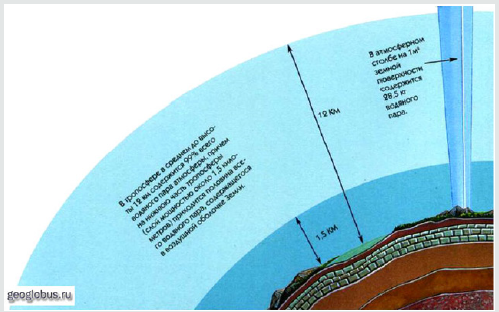
Without focusing on the quality of evaporation, it is necessary to pay attention to the quantitative and temporal parameters of evaporation. To these should be added and the total evaporation from degraded areas - landfills, arable land, reservoirs. The precipitation they do not find their natural consumers and evaporate without structural changes - what came, then went. Significant amounts of destruction of water molecules occur directly in the air by a variety of internal combustion engines, compressors, all furnaces and heaters. Each volume of atmospheric air contains water in a molecular state. According to the information [7] The absolute humidity of air the amount of water vapor contained in the air, expressed in grams per cubic meter, is sometimes also called the elasticity or density of water vapor. At a temperature of 0°C, the absolute humidity of saturated air is 4.9 g/m3. In equatorial latitudes, the absolute humidity of the air is about 30 g/m3, and in the polar regions - 0.1 g/m3 Figure 1.
Figure 1:
lupinepublishers-openaccess-journal-environmental-soil-sciences
When this steam enters the burner of the furnace or cylinders of engines, compressors, this moisture does not burn, does not disappear. It changes its structure and after the exhaust joins the artificial vapors. How many planes fly around the world, crossing the clouds, how many ocean-going ships in the world draw in air with moisture from the surface of the oceans .... On average, a plane that has flown by for 1 hour burns about 50 tons of air. It is assumed that the total volume of artificial evaporation has become commensurate with the total evaporation of land and has reached a critical level in terms of the volume and cycle time of the circuit. The mechanism of natural transformations broke down in the troposphere. Nature had no such amount of evaporation before, before the development of civilization. There was a transition from quantity to quality. The new substance of the clouds has led to new atmospheric phenomena - to new for nature actions in the troposphere. So unusual clouds appeared [8] Figure 2.
Figure 2:
lupinepublishers-openaccess-journal-environmental-soil-sciences
Began natural disasters, climate change. The growth of artificial vapors continues with the development of industry and our comfort. Moreover, this growth has a rather strong acceleration, as industrial and utility technologies develop and expand, increasing productivity in agriculture, mining, construction of cities and roads, and hydroelectric power plants with water accumulation in reservoirs. Artificial evaporation has a speed greater than natural. In the soil, water spreads and accumulates by plant roots, microbes, worms, and exhales over time, in accordance with the properties of plants or living organisms. Each accepted portion of water passes, all stages of organic transformations of the body and goes with the distribution in time after a few days with breathing steam, secretions and transpiration of the plant. The water, which stood in a puddle on asphalt or heated in a kettle, leaves instantly in a few minutes. Consequently, artificial evaporation returns to the atmosphere much faster, and dense clouds hang over us almost continuously. We have rarely felt sunny days.

Analysis of natural disasters shows that there are areas of the planet where precipitations of unprecedented rainfall occur, leading to flooding. Conversely, areas that are not subject to precipitation for a long time - there are droughts and fires. Abnormal precipitations began to appear where they had never been - in the deserts [9]. The usual rhythm was brought down: in the past three years, the rains in Atacama were frequent (March and August 2015, and then June 2017).
The loss of stability in the distribution of precipitation by geographic location gives the right to think that the burdened clouds do not reach the polar and mountain glaciers and precipitate along the way. This explains the rise in ocean levels with a simultaneous decrease in glaciers. Thus, the quality, volume and speed of artificial evaporation broke the mechanism of water circulation valid for millions of years and lead to a global catastrophe. If we want to leave our descendants a normal climate, then we must now begin to return nature to its organic evaporation and reduce artificial. To accomplish this, it is necessary to develop a new concept, a new strategy for saving the planet. The main focus of the concept should be the reduction of artificial vapors. It is assumed that it is not too late to start developing such a reduction. Here are a few of these elements. The most wasteful evaporator is agriculture. Up to 9% of all fume’s accounts for his case. Deep plowing of fields destroys underground living creatures - 20 tons of it per hectare. Every organism, every stalk of biota has its own mode of water consumption. Dead arable land, especially during the nongrowing season, without recycling water, returns it back to the atmosphere without organic transformations. Especially a lot of water is consumed in growing rice and cotton. About 1,350 billion m3 of water is consumed annually in the rice fields of the world -21% of the total water consumption for growing crops [10]. Global cotton production in the amount of 18 million tons per year implies the transfer of 100 billion tons of water” [11]. In the concept it is necessary to set tasks for replacing these products with others. For example, it is known that clothing can be made from wood, from artificial fibers. More important is the development of ways to reduce water consumption during cultivation. Barbaric irrigation methods based on irrigation systems, sprinklers are used. It has long been known and used drip irrigation methods. For example, in Israel and the United Arab Emirates. It is necessary to fully switch to these measures in all other regions, [12]. Drip irrigation is a method of irrigation, in which water is fed directly into the root zone of cultivated plants in small amounts controlled using dropper dispensers. Allows for significant savings in water and other resources (fertilizer, labor, energy, and pipelines).

Among the most destructive human activities on Earth in its relationship with water is hydropower. Developing alternative energy, following the recommendations of the Paris Agreements, we are building and launching new hydropower plants. They, from their reservoirs, raise into the sky new artificial vapors that harm the climate more than they give the benefit to man. Known nonpressure diversion hydroelectric. They are effective in mountainous areas, but such inventions are also known for plain places. With the possibility of using existing hydroelectric power plants with the release of reservoirs. In general, everything that concerns the accumulation of water, river turns, flooding of new territories is directed against nature. We must leave the existing rivers alone. At the same time, all the problems of transboundary rivers will be removed. A significant proportion of artificial evaporation occurs from flooding of coastal areas of rivers with flood waters. Rivers in constant motion wash off coastal particles and build up their bottom. Intensive economic activity. human complements this process with its garbage. Increasing the bottom leads to an increase in the level of rivers and, with heavy rainfall, to the release of water from the banks. An urgent deepening of the river bottom is needed to eliminate flooding. We spend very large volumes of water in everyday life. In this area it is necessary to revise all plumbing devices to reduce water consumption. For example, means are known for saving water by simple washing. We use this in aircraft and railcar toilets. There are a lot of such moments and take it over everything. A total saving of water consumption is needed in every enterprise, in every apartment, by all countries, by each person.


For more Lupine Publishers Open Access Journals Please visit our website:

For more Open Access Environment Journal articles Please Click Here:
To Know More About Open Access Publishers Please Click on Lupine Publishers

Tuesday, 27 August 2019

Soil Texture of Nesting Sites and Breeding Population of Four Tern Species, Western Reef Heron, and Crab Plover in Mond Marine National Park in Persian Gulf


Lupine Publishers- Environmental and Soil Science


Abstract

Investigating the breeding population and soil texture of breeding sites of four Terns, Crab Plover, and Western Reef Heron on the islands of Khan, Nakhilou, Om-al-Gorm, and Tahmadon in Mond Marine National Park in Persian Gulf carried out in the spring and summer in 2015. Twenty-two species of water birds identified on the islands. Eight species of them were breeder and reminder (14 species) was passage. The dominant species was Bridled Tern Sterna Anaethetus with 170427 breeder pairs that had bred on sandy ground under the Atriplex bushes. The populations of Lesser Crested Tern Sterna bengalensis and Greater Crested Tern Sterna bergii were 19933 pairs in Nakhilou and Om-al-Gorm Islands that had bred also on the Sandy ground. The breeder population of Western Reef Heron Egretta gularis was 12, 72, and 45 pairs in Om-al-Gorm, Nakhilou, and Khan Islands respectively. The nests have been built on the short bushes. The breeder population of Crab Plover Dromas ardeola was 2266 on Nakhilou and 481 on Om-al-Gorm. The nests of this species have been built under ground in tunnels. Soil texture of tern’s nests sites in Nakhilou, Island consisted of 94.6% sand, 1.3% silt and 4.1% Clay, and under Atriplex bushes was 95.4% sand, 1.7% silt and 3.9% Clay. Soil texture of terns nesting sites in Om-al-Gorm, Khan, and Tahmadon consisted of 93.4% sand, 1.7% silt, and 4.9% clay; 92.8% sand, 2.7% silt and 4.7% clay, 89.4% sand, 3% silt and 7.6% clay respectively. The soil texture of the nesting sites on four islands did not differ significantly (p=0.05).

Introduction

Tern’s species make nests on the ground [1-3] so soil texture is essential for nesting and protecting chicks. Iran, with its 105 important bird area (IBA) for native and wintering and breeding birds ranked first in the Middle East [4]. Accordingly, it is important to study the habitats of breeding species. Soil structure and vegetation studies of breeding habitats are important for long term identification of factors affecting reproductive successes, demographic trends, conservation and management plans for breeding species and sites [5-8] Many of the Persian Gulf islands are sensitive habitat for breeding seabirds and have been continuously changing since decades ago as the most important habitat for the reproduction of terns species, Crab Plover and Western Reef Heron [9,10]. These changes have increased in recent years due to developing in the islands. The islands of Khark, Kish, Lavan, Siri, and Qeshm are among the islands that are no longer suitable habitat for reproduction for seabirds Sea birds had bred on these islands in 1970s [11,12]. Perhaps we will see similar events in the islands of the MMNPI in the near future. The four-small sandy, inshore islands with extensive intertidal mudflats in the northern Persian Gulf, extremely important for breeding and wintering habitat seabirds, these islands located in (MMNPI) in the Bushehr province, which annually produce tens of thousands of terns of different species. Despite the great value and importance of the islands in preserving the generation of tern, shore birds, and sea turtles, unfortunately, little research has been carried out on this issue. The lack of awareness and understanding of environmental managers of the importance of the natural environment of the islands has limited their conservation process. So far, there has been no investigation into the identification of habitat selection by breeding Terns species and soil structure in the breeding habitats in the four islands of the (MMNPI) in Bushehr province. Few studies have included counting and identifying breeding seabirds, and sea turtles. The islands of Om-al-Gorm, Khan, Tahmadoun, and Nahilou were declared as an important breeding habitat in 1994.Tuck performed studies on Persian Gulf birds in 1974 [13]. In 1985, the habitat conditions for the reproduction of tern’s species on the islands are said to be sandy-clay soils [14]. In 1998, Snow and colleagues carried out research on tern’s species, and they reported that terns are reproducing on the islands on sandy-clay soils [15]. In 2005 and in 2002, sandy habitats were also described for breeding terns [16]. Scott in 2008 lists the status of rare birds in Iran, including the breeding species on the Persian Gulf islands [17]. In 2008, studies have been carried out in relation to nest counting of four species of terns and Western Reef Heron on the 10 Island in Persian Gulf [18,19]. In 2008, Persian Gulf water birds, including the islands of Bushehr Province, have been published in the book of Dictionary of Persian Gulf Water birds [20]. In 2002, coastal bird population and breeding studied by Aspinal [21]. By reviewing the published articles, it is clear that the soil texture of tern’s species reproduction sites in Persian Gulf Islands has not been studied. The purpose of this study was to determine the breeding population of four tern’s species, Western Reef Heron, Crab Plover and soil texture of breeding sites of breeding species in four islands in (MMNPI).

Materials and Method

Study Area

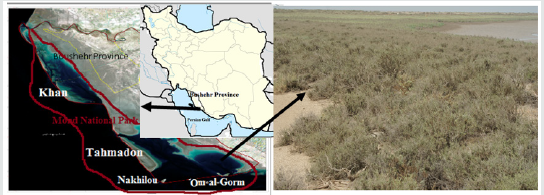
There are four islands called Om-al-Gorm, (55o27’E33o51N’) Khan (Um-al-Sileh) (29o27’N16o51’) Nakhilou (27049’19”N54051’28”), and Tahmadon (Gabarin) (24o51’28”N50o27’12”E) in the (MMNP) (Figure1). Four small sandy inshore islands with extensive intertidal mudflats in the northern Persian Gulf are extremely important for breeding Crab plover, Western Reef Heron, tern’s species and also important for nesting sea turtles [22]. The islands are located at a distance different from the coast and almost along each other. The climate of these islands is warm and humid. The average annual temperature is 26 °C, the average air pressure is 1008.6 H.P., the average relative humidity is 62%, and the average annual precipitation is 220 mm. The average annual rainfall is 56 days, mostly in the autumn and winter (Office of Meteorology of Bushehr Province, 2015). None of the four islands are inhabited. But fishermen stay at the nights during fishing seasons [23,24]. Due to the proper texture of the soil, massive vegetation, the richness of the surrounding waters of the food and the absence of natural predators, these islands are a safe and suitable environment for the nesting and egg lying for aquatic migratory seabirds as well as sea turtles. But terns, Crab Plover and Western Reef Heron are considered to be the most important habitat for the islands [10,12].
Figure 1: Location and vegetation cover of Islands in Mond Marine National Park in Persian Gulf (Google Earth, 2015).
lupinepublishers-openaccess-journal-environmental-soil-sciences

Data Collection

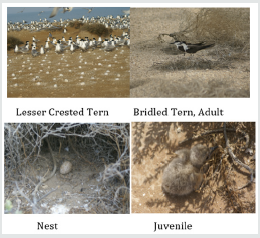
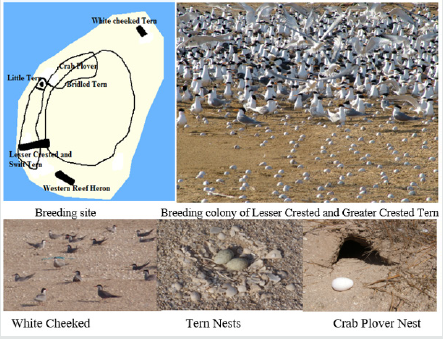
The study period on (MMNPI) ran from March 2015 to September 2015, in the nesting period of six tern species, Crab Plover and Western Reef Heron. We used Binocular 10× 40 Zeiss and a telescope 15×60 to identify the birds and the total count method to count the all species of breeders. Six tern’s species Lesser Crested Tern, Greater Crested Tern, Caspian Tern, Little Tern, and Whitecheeked Tern were nesting in open fields with sandy soils (Figure 2). The Crab Plover nest in the form of a tunnel in the sandy soils counted by total count Method also. The Bridled Tern nests were under the shade of the Atriplex bushes and nests were counted by lifting the branches of the Atriplex.
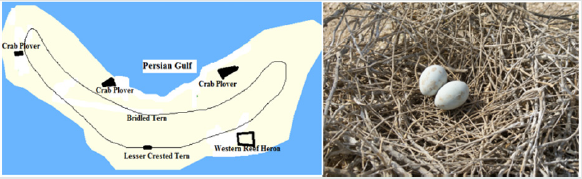
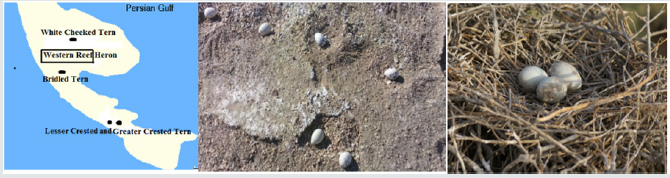
Figure 2: Nest site of Lesser Crested and Greater Crested Tern and Bridled Tern on Nakhilou Island in 2015.
lupinepublishers-openaccess-journal-environmental-soil-sciences

Soil Texture of Islands

Soil texture is determined by hydrometric method. In this study, 152H-62 hydrometers were used to determine soil texture. The basis of this is the measurement of the density of the suspension of soil and water, which gradually decreases due to the deposition of the material, and the hydrometer falls further in the liquid. The numbers read on the hydrometer are proportional to the volume of fluid displaced [25].

Chemical Parameter of Water

PH, EC, TSS, TDS B.O.D., C.O.D., T.H. NO3, PO4, and TS have been measured in spring and summer according to Standard method 2005 [26] for the determination of chemical parameters of around water of island by certified laboratory.

Result and Discussion

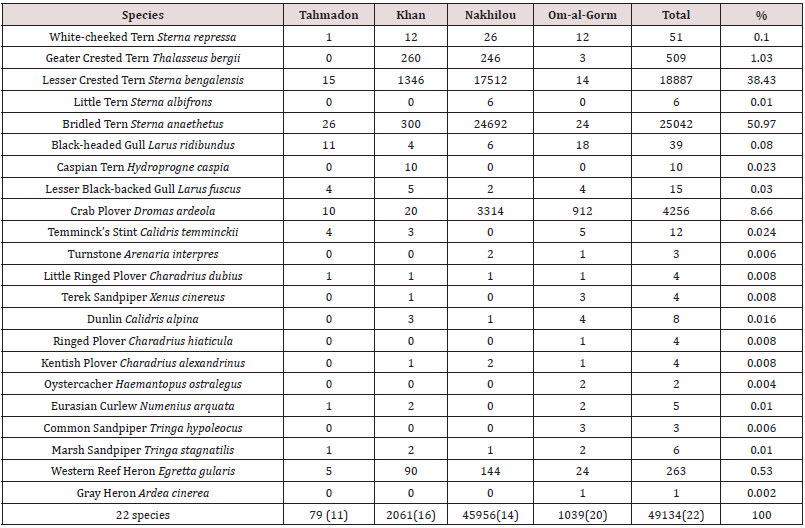
The Terns, Gulls, and shore bird’s species of the four islands were identified in spring and summer in 2015 (Table 1). The most species were identified on the Om-al-Gorm Island (20 species) and the least species on the Tahmadon Island (11 species). Fourteen species were identified on Nakhilou and sixteen species on Khan Island. Seven species were seen on each of the four islands, and four species only on one island (Table 1).
Table 1: Water birds recorded on 4 islands in the spring and summer in 2015.
lupinepublishers-openaccess-journal-environmental-soil-sciences

Breeding Species

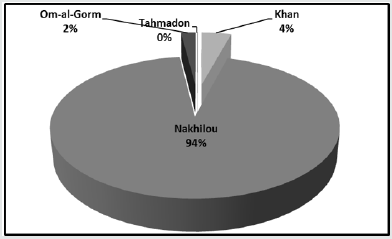
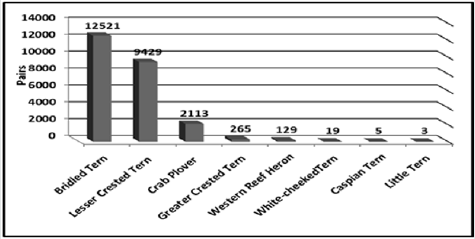
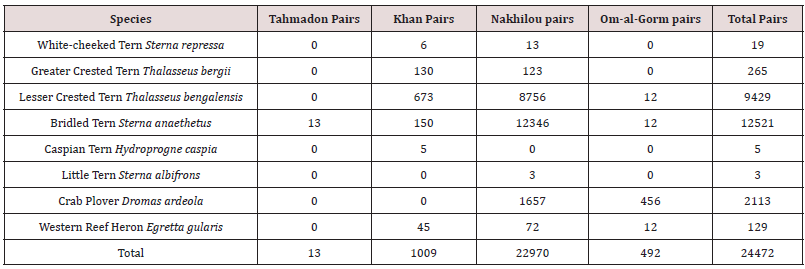
Seven species of birds had bred on 4 islands (Table 2). Breeding species migrate to the islands and breed which have enough security and other environmental factors. After breeding they leave islands end of summer. 94% of birds had bred on the island of Nakhilou and 6% on the other three islands (Figure 3). The Bridled Tern has a large population and has bred on Nakhilou Island (12521 pairs). Only three pairs of Little Tern have bred on Nakhilou. Lesser Crested Tern was the second with 123 breeder pairs (Figure 4).
Figure 3: Breeding population percent on four Islands in 2015.
lupinepublishers-openaccess-journal-environmental-soil-sciences
Figure 4: Number of breeding species reported on four islands in 2015.
lupinepublishers-openaccess-journal-environmental-soil-sciences
Table 2: Breeding species counted on the four islands in 2015.
lupinepublishers-openaccess-journal-environmental-soil-sciences

The Habitat Conditions of the Islands

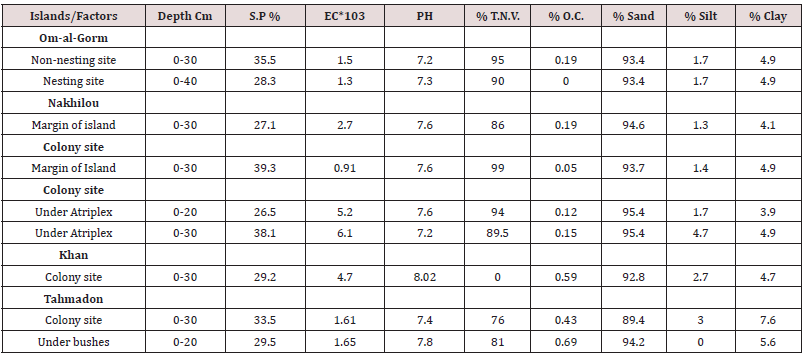
The habitat conditions of the four islands that are used by breeding terns and other species are shown in Tables 3 & 4. Table 3 show that the soil texture of the islands in the breeding sites of seabirds has a sandy structure with an average of 93% of the sand. Perhaps because of the softness of the soil, easy nesting, conditions for the survival of newborn chicks are appropriate. Most of tern’s reproduction has been reported on open area among density vegetation coverings. The salinity of the surrounding water of islands near the colony of nests was 38.5 mg/l. The Atriplex species are dominant in each of the four islands, and the Tamarix sp, Chenopodium murale, Suaeda vermiculata, Ephedra foliolata, Cyperus conglomerates, Lycium edgeworthii, Bromus japonicas, Limonium iranicum, Cistanche tubulosa, and Stipa capensis are seen on each of the four islands, but their densities are higher in Nakhilou and Om-al-Gorm than Khan and Tahmadon. The vegetation of the various parts of the islands varies from 30 to 90 percent (Figure 1). Table 4 shows the chemical parameters of water at around of the islands is similar to Persian Gulf waters, and also there was no significant difference (P=0.05) between the chemical parameters of four islands.
Table 3: Soil texture of nesting sites on four Islands in 2015.
lupinepublishers-openaccess-journal-environmental-soil-sciences
Table 4: Water parameters of islands in spring and summer in 2015.
lupinepublishers-openaccess-journal-environmental-soil-sciences

Soil Texture of Islands

Soil Texture of Om-al-Gorm

The shape of the island is arched and in the form of a half circle with its convex side facing south. The origin and structure of the island is the result of the collision of the sea floor irregularities with the sedimentation of the water entering the Mond River in the northeast of the island to the sea. In terms of its topography, there are no significant natural complications. Only in the middle part of the south and southwest of the island there are low-lying sand dunes (up to 2 meters). Soil texture of island is fine sand gravel, particularly in the west and southwest with shellfish, resulting in a kind of coarse-grained and distinct texture. Two soil samples were taken from the soil to compare the differences in the texture structure nesting sites (Table 3). Tern’s species nesting sites were with sandy soil structure with more than 93 percent sands (diameter 0.02-2 mm) and no specific building. These parts are lacking vegetation. Soil lime (Ca, MgCo3) was about 93.4%, which causes the soil texture to be slightly tight. Electrical Conductivity of Saturation percent is about 1.3 Ds/m, PH was 7.3, the amount of organic matter in this part of the soil was zero, and the moisture was 35.5%. Soil drainage is very good, and its permeability is high. These types of soils are suitable for the nesting of Crab Plover. Soil margin structure of the island contains a lot of shellfish. There is moisture in this area, and drought-tolerant plants have an annual growth. The soil texture is sandy (93.4%), with a saturation of 28.3%, an electrical conductivity of 1.5 DS/m and a saturated acidity of 7.2. The equivalent amount of lime in this part is 95% and organic matter content is about 0.2%, which is due to plant remains (Table 3).

Soil Texture of Nakhilou

The island of Nakhliou, in terms of its origin and structure, has the same conditions as the island of Om-al-Gorm. Nakhilou, the westernmost of the islands and the furthest offshore, is a small, almost circular island of about 35 ha, comprised mainly of sand with some rocky shore in the south and west. Soil texture of island is fine sand gravel, particularly in the central parts with shellfish (Figure 5). There are two small brackish pools near the south end and Shiekh Karameh grave near the west coasts. The island is fringed with low sand dunes which encircle a central basin almost completely covered in dance, low scrub. The island is without inhabited. The soil structure of the island is twofold due to the presence of bivalve and gastropod shellfish, depth of soil and low elevations and soil color. The central part of the island, with its shellfish’s, is a sandy soil structure, and the margins of the island, where the amount of shellfish is much more, and the color of the soil is white. In the central part of the island, the plant has become densely populated with Atriplex species and some other species. Soil characteristics of the breeding sites are sandy. The large amount of feces of breeding birds accumulated in this area and caused a slight soil hardening. Overall, the thickness of the (A) layer is about 2 cm. Its electrical conductivity is 5.2, sand 92.6% and organic matter is 0.12%, while the amount of sand under the Atrepilex is 88.4%, there are some plant leaves, organic matter is 0.15%, and electrical conductivity is 9.1 Ds/m (Table 3).
Figure 5: Sugar beet leaf spot disease (Cercospora beticola Sacc.).
lupinepublishers-openaccess-journal-environmental-soil-sciences

Soil Texture of Tahmadon (Geberin)

The area of Tahmandon Island is between 700 and 1000 hectares. Its shape is triangular and its distance from the coast is about 300 meters. More than four-fifth, of the island, goes under water when it is high tide. The conditions for the formation of the island are similar to the other three islands. The central parts of the island are submerged by two canals in the tide and soil texture of this part is salty. Characteristics of both soils are shown in Table 3. Due to under watering a large part of the island, the birds do not breed in it. Because most of the time, surface is often muddy and wet.

Soil Texture of Khan (Um-al-Sileh)

Khan Island is a long narrow island consisting of a broad expanse of bare mudflats with a chain of low vegetated sand dunes along its southwestern (seaward) margin and round the southern end. The dunes are separated by narrow tidal channels which open into a chain of shallow lagoons on the mudflats on the landward side of the dunes. The area of the island varies and reaches 1000 hectares. At the time of the low tide, the island is connected to the land. Its geographic location is 29o 27’N51o 22’E (Figure 1). It is surrounded by mudflats and the surrounding waters are very shallow. The island has very little vegetation, but the trunks and shrubs of many trees have been brought to the island by the Mond River. The soil texture is sandy, and its sand is 92.8 percent (Table 3). Island soil is classified in the group of saline soils. Due to the drowning of the island during the time of the high tide, the nests of Terns are destroyed, or their eggs breaks down, which makes the birds less nest on the island.

Chemical Parameters of Water

Chemical parameters of water around of 4 islands have been showed in Table 4.

Breeding Sites of Birds on Islands.

Nesting Site of Lesser Crested and Greater Crested Tern
The Greater Crested (Swift Tern) and Lesser Crested Tern breed in mix colony with together and breeds on many islands in the Persian Gulf including Shidvar, Khabre Nakhoda, Boneh, Dara, Banifaror and (MMNPI) [18,19]. The nest is a shallow scrape in the sand on open, flat, or occasionally sloping ground. It is often unlined, but sometimes includes stones or shellfish. The breeding places of these species have a sandy soil (Figure 5). As shown in Table 3 soil texture of the nesting site of these species in 4 islands of (MMNPI) are sandy and the soil texture has more than 90% sand. Because these species do not use materials in building nest, they put eggs on the soft ground with sandy soils. Figures 2 & 5 shows nest of Lesser Crested and Greater Crested Tern on the Nakhlou Island. Bridled Tern occupied the central part of the island and other species bred on margin of island. Western Reef Heron on Short bushes and the Lesser Crested and Greater Crested Tern on sandy soil and Crab Plover in tunnel (Figure 6). Breeder species on Om-al Gorm were Bridled Tern, lesser Crested Tern, Western Reef Heron (each of them 12 pairs) and Crab plover (456 pairs, 2%) in 2015. Crab Plover had bred on three colonies (Figure 6) and (Table 2).
Figure 6: Nest sites of Crab Plover, Bridled Tern, Lesser Crested Tern, and Western Reef Heron on Om-al Gorm in 2015.
lupinepublishers-openaccess-journal-environmental-soil-sciences
Figure 7: Breeding sites of Lesser Crested and Greater Crested Terns, Western Reef Heron and Bridled Tern on Khan Island in 2015.
lupinepublishers-openaccess-journal-environmental-soil-sciences

Conclusion

The nest of Lesser Crested and Greater Crested Terns were a shallow scrape in the sand on open, flat on the four islands. It is often unlined, but sometimes includes stones or a few shellfish [27]. The data obtained showed that the Bridled Tern breed in covered vegetation parts on the islands. This species was only species that had bred on four islands, because all islands have proper vegetation. Density of the vegetation on Khan Island is lower than the other three islands and Atriplex sp is not dominant. The Bridled Tern creates the nest in the shade of Syperus on Khan. The soil texture in this place is sandy also. The amount of sand in the soil texture is more than 90 percent and soil are very soft in all islands in nesting sites. Due to the presence of massive vegetation (Atriplex) in the Nakhilou Island the dominant species of breeding seabirds was Bridled Tern with a population of 12346 pairs. Small sandy dunes near the sea are nesting sites of Lesser Crested and Greater Crested Terns. Breeding population of these two species were 8872 pairs on the Nakhilou Island. On the Thamadon Island there was a small colony of Bridled Tern (13 pairs) in 2015 (Table 2). White cheeked Tern was other breeding species on the Nakhliou Island, which nested on the beach of the Island near water with shellfish (13 pairs) (Table 2). Nests were bowl-shaped and have distinct buildings (Figure 5). The soil surface of this area of island is covered with shellfish and its texture is rough. On the island of Nakhilou and Om-al-Gorm, 2113 pairs of Crab Plover had bred (Table 2). The nest of this species is different from the other breeding species in the islands. This species dug a tunnel for nest, is about 1 to 1.5 meters long, so it needs to have a soil texture that is a bit tight and usually there is little vegetation on the surface of the soil. The roots of the vegetation help to tighten of soil structure so, the nest does not crumble during breeding period. On the other hand, the soil texture should be soft that Crab Plover can dig the tunnel. These conditions exist among the open vegetation spaces of all 4 islands. But other environmental factors needed to survival of chickens, such as security on the two islands of Tahmadoun and Khan, are not provided enough.129 pairs of Western Reef Heron had bred on Khan, Nakhilou and Om-al-Gorm (45, 72, 12 Pairs respectively). This species was made on the two islands of Nakhihou and Umal- Gorm on the Atriplex shrubs, but on the island of Khan on the branches of the trees that brought water to the island. The structure of the nests is not directly related to the soil texture. Only 13 pairs of Bridled Tern have been bred on Tahmadon Island in 2015, on central parts of island under the small bushes. Table 3 shows soil of breeding sites of Lesser Crested and Greater Crested Tern has a sandy structure that is consistent with the findings of Flasola and Canova in 1991[28]. Terns preferred to nest in the middle third of the beach, on areas with shell cover, and on ridges and slopes. On sparsely vegetated beaches, nests were closer to vegetation than were the random points; on heavily vegetated areas, nests were further from vegetation than were the random points. In the study of the habitat selection of Terns, they have also described these two species breed on the sandy soil’s islands [8]. Lesser Crested and Greater Crested and Bridled Terns breed in mixed large colonies [21,29,30]. This finding confirmed the results of studies in the four islands of the (MMNPI). Behrouzi-Rad in 2008 and Behrouzi- Rad and Tayfeh in 2008 reported that tern’s species breed in large colonies on sandy islands in Persian Gulf [9,18]. Scott reported breeding population of terns on Mond National Parks sandy islands were 15000 pairs in 2007 [11, 12]. Breeding four species of terns reported by Symens and Alsuhaibany on southern sandy island of Persian Gulf in 1996 [27]. Therefore, tern’s species in the Persian Gulf islands in the open areas of vegetation breed on sandy soils. In the soil analysis, the amount of sand in each of the four islands with an average of 93.4% in Om-al-Gorm, 94.7% in Nakhlilou, 92.8% in Khan and 91.8% in Tadamond, was not significantly different. Analyzing the amount of silt and Clay in 4 islands showed no significant difference among them(p=0.05) (Table 3) Therefore, terns and Crab plover prefer sandy soils for breeding, but the number of species, density, and reproductive population in the islands are related to other environmental factors such as security, vegetation percentage, etc., which need further investigation. The four islands of (MMNPI) were introduced in 1994 as important bird area (IBA) [4]. The islands became known as sensitive habitats for breeding terns, Western Reef Heron and Crab plover in 2008 [10]. Other tern species like Sooty Terns [8], Yellow-billed Tern and Large-billed Tern [31] and whiskered Tern [32] breed on bare sand or in sites with sparse, low vegetation. The study of breeding access illustrated that area has a good stability in environmental condition, availability of food, nest sites, and lack of natural predators for a variety of birds such as terns, Crab Plover and Western Reef Heron. Besides terns, some terrestrial animals also inhabit the islands. These include a considerable variety of insects and spiders, which have not been studied in any details, a couple of species of lizards, and mice. The sandy and rocky beaches of the islands support the same of type organisms of Persian Gulf. Conspicuous among beach animals are the tower-building ghost Crab Ocypode saratan on sand beaches, and turban snails Turbo species on the algae-covered rocks. Several species of intertidal animals which are either uncommon or absent on the mainland beaches are abundant on the islands. These include the Large Rock Dwelling Crabs Eriphia sebana smitbii and Grapsus tenuicrustatus, frequently seen running about the exposed rocks at night. Another beach animal common on the islands is large terrestrial Hermit Crab coenobita species feeding on algae. However, their plant and animal population are rich and unique, and are exceptionally beautiful and instructive as well as being of great scientific interest. Also, they represent a valuable, fragile, and irreplaceable resource, where preservation for the benefit, enjoyment, and instruction of future generation will demand increasingly careful attention in the face of the rapid development of industry, population, and recreational activity now taking place in some islands. However, for these reasons this area is under Department of Environment, Iran, and Marine National Park List and is protected.

For more Lupine Publishers Open Access Journals Please visit our website:
For more Open Access Environment Journal articles Please Click Here:

To Know More About Open Access Publishers Please Click on Lupine Publishers