Lupine Publishers| Modern Approaches on Material Science (MAMS)

Abstract
Snails are beautiful creation of nature. They occur in rivers as well as ponds. But these sources of water are contaminated by effluents, pollutants, acid rain, particulates, biological wastes etc. They can change the pH of water. Water is absorber of carbon dioxide and it converts carbon dioxide into carbonic. Other above-mentioned wastes also increase the concentration of H+ ions in water. They produce hostile environment for snails. The outer part of snails is made of CaCO3. It produces chemical reaction in acidic medium and corrosion reaction is accelerated thus deterioration starts on the surface of snails. This medium their survival becomes miserable. For this work corrosion of snails study in the pH values of water is 6.5 in H2CO3 environment. The corrosion rates of snails were calculated by gravimetric methods and potentiostat technique. Aloe Vera was used for corrosion protection in acidic medium. The surface adsorption phenomenon was studied by Lungmuir isotherm. Aloe Vera formed thin surface film on the interface of snails which adhered with chemical bonding. It confirmed by activation energy, heat of adsorption, free energy, enthalpy and entropy. The results of surface coverage area and inhibitors efficiency were indicated that Aloe Vera developed strong protective barrier in acidic medium.
Keywords: Corrosion; Snails; Aloe vera; Carbonic acid; Potentiostat; Thin film formation
Introduction
Corrosion occurs in living organisms [1]. The animals’ outer layer is created by calcium carbonate [2] to corrode in acidic environment. Corrosive substances interact with living organism [3] to produce corrosion cell which is exhibited autoredox with snails [4] and disintegrated their outer layers. It observed that carbon dioxide [5,6] reacts with water to form carbonic which produce hostile environment [7] for snails and [8] Ocean water [9] is major absorber of carbon dioxide to change pH. Carbonic acid interacts with snails to exhibit chemical thus calcification [10] starts on their surface. The oxides of Sulphur [11] dissolve in water to produce sulphrous and sulphuric acid. These acids produce corroding [12] effect with snails. Oxides of nitrogen [13] absorb water to form nitrous and nitric acids and they generate corrosive environment for molluscs [14] Acid rain [15] can change pH of water and produce acidic medium for snails. Industrial wastes and human wastes contaminate water sources and alter the pH values of water in this way it makes water corrosive for snails and molluscs. The temperature [16] of the earth is increasing due to global warming thus water sources temperature is also increased and snails [17] undergo corrosion reaction. Various types of techniques use for corrosion protection [18] like anodic and cathodic protection, galvanization and electroplating, dipping [19] anodization, spray, nanocoating and inhibitors action. Aloe Vera is used for skin corrosion protection in acidic environment. Snails’ corrosion [20] can be control by inhibitor action of Aloe Vera in above mentioned environment. Aloe Vera form a thin barrier on the surface of snails and it is confirmed by activation energy, heat of adsorption, free energy, enthalpy and entropy and these thermal parameters results is noticed that Aloe Vera has good inhibition properties in acidic medium. It forms complex barrier on the surface of snails.
Experimental
Snails dipped into carbonic acid solution which pH value was 6.2. The corrosion rates of snails were determined by gravimetric method at mentioned periods 1,2,3,4 and 5 years at 288,298,303,308 and 3130K temperatures without use of Aloe Vera. Aloe Vera was used as inhibitor in carbonic acid medium and the calculated of corrosion rate of snails above mentioned years and temperatures at 50, 60, 70, 80 and 90M concentrations. Potentiostat 324 model used to determine the corrosion potential, corrosion current density at different temperatures and concentrations. These results were obtained by application of calomel electrode as auxiliary electrode and Pt reference electrode. The snail kept between these electrode and external current passed through without and with inhibitor. The results were noticed that anodic current decreased and cathodic current increased by the use of Aloe Vera. The gravimetric method corrosion rate results were approximated to potentiostat corrosion obtained results.
Results and Discussion
The corrosion rate of snails were determined by without and with Aloe Vera in mpy (miles per year) at different temperatures, concentrations and times in years by the use of formula K=534XΔW/D A t (where ΔW is weight loss in g, A is area in sq inch, t is immersion time in year). The dipping times were 1,2,3,4 and 5 years and temperatures are 288,298,303,308 and 3130K without inhibitors corrosion rate of snail is calculated and their values were recorded in Table 1. The addition of Aloe Vera in carbonic acid medium and corrosion rate of snail calculated at 288,298,303,308 and 3130K temperatures and 50, 60, 70, 80 and 90M concentrations and its values were mentioned in Table 1. It observed that without action of inhibitor corrosion rate of snail increased as duration of times and temperatures were increased and, but its values were decreased after addition of Aloe Vera such types of trends noticed in Figure 1 K Vs t, Figure 2 K Vs T and Figure 3 K Vs C. The surface coverage area and inhibitor efficiency were calculated by formula θ= (1-K/Ko) and %IE= (1-K/Ko) X100 (where Ko corrosion rate without inhibitor and K corrosion rate with inhibitor) and their values were given in Table 2. The surface coverage area and inhibitor efficiency were calculated by formula θ= (1-K/Ko) and their values were given in Table 2. The results of Table 2 were shown that surface coverage area and percentage inhibitors efficiency were enhanced when inhibitors added at different temperatures and concentrations as per year. Such types of trends were noticed in Figure 4 θ Vs T and Figure 5 θ Vs C.
Figure 1: K Vs t for snails at different years.
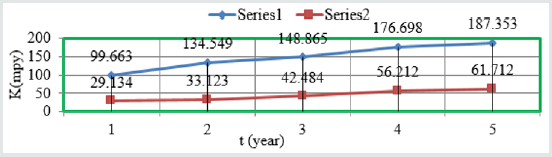
Figure 2: K Vs T for snails at different tempertaures.
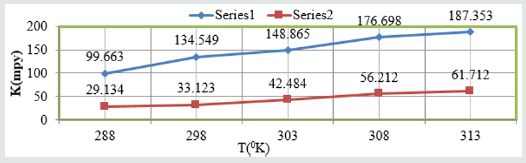
Figure 3: K Vs C for snails at concentations.
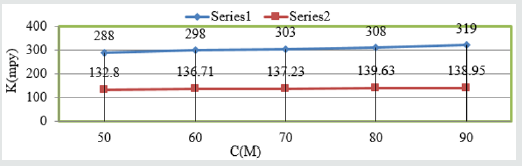
Figure 4: θ Vs T for snails in Aloe Vera.
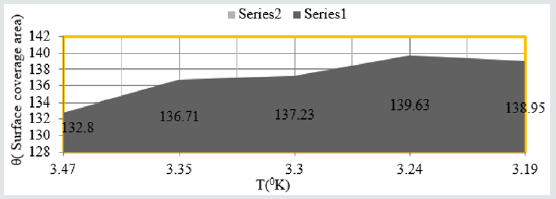
Figure 5: θ Vs C for snails in Aloe Vera.
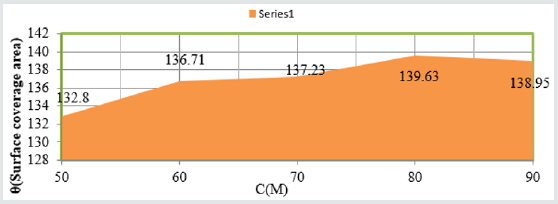
Table 1: Corrosion rate of snail absence and presence of Aloe Vera in H2CO3.

Table 2: Surface coverage area develop by Aloe Vera on the snails in H2CO3.

The percentage inhibitors of Aloe Vera at different temperatures and concentrations as one-year interval were calculated by %IE= (1-K/Ko) X100 (where Ko corrosion rate without inhibitor and K corrosion rate with inhibitor) and the values were written in Table 3. The results of Table 3 were depicted that percentage inhibitors efficiency were increased as temperatures and concentration were enhanced. Such types of trends also observed in Figure 6 %IE Vs T and Figure 7 %IE Vs C. Surface adsorption phenomenon was studied by activation energy, heat of adsorption, free energy, enthalpy and entropy. Activation energy was determined by formula K=A e-Ea/RT (where K is corrosion rate, Ea is activation energy and T is absolute temperature without and with action of Aloe Vera at different temperatures and concentrations and their values were recorded in Table 4. It observed that activation energy increased without inhibitors but its values decreased after addition of inhibitors. These results were shown in Table 4 which indicated that inhibitors adhered on snails by chemical bonding and their values were obtained by Figure 8 plotted logK Vs 1/T. Heat of adsorption values were found to be negative which indicated that Aloe Vera was shown an exothermic reaction in H2CO3 medium. It adsorbed on the surface of snail by chemical bonding. The values of heat of adsorption were determined by Langmuir isotherm log(θ/1-θ) = logA +logC-q/2.303RT and Figure 9 plotted log(θ/1-θ) Vs1/T and Figure10 plotted against log(θ/1-θ) Vs logC and their values were recorded in Table 4.
Figure 6: %IE Vs T for snails in Aloe Vera.
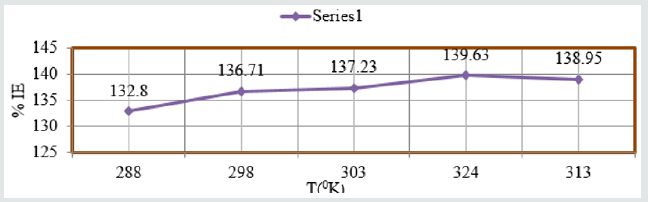
Figure 7: %IE Vs C for snails in Aloe Vera.
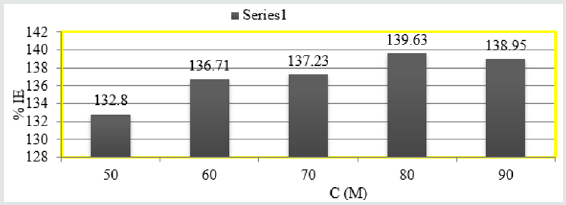
Figure 8: logK Vs 1/T for snails in Aloe Vera.
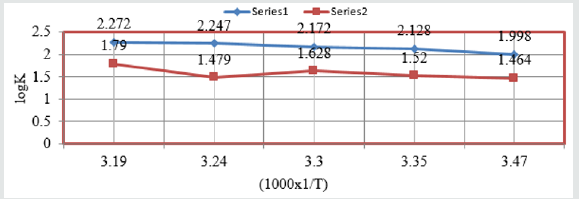
Figure 9: log(θ/1-θ) Vs 1/T for snails in Aloe Vera.
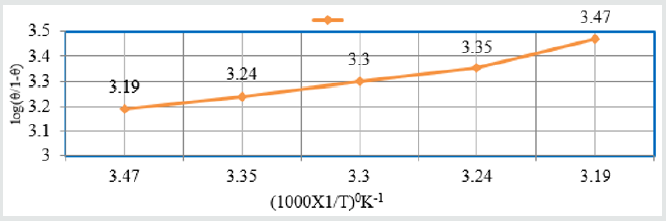
Figure 10: log(θ/1-θ) Vs logC for snails in Aloe Vera.
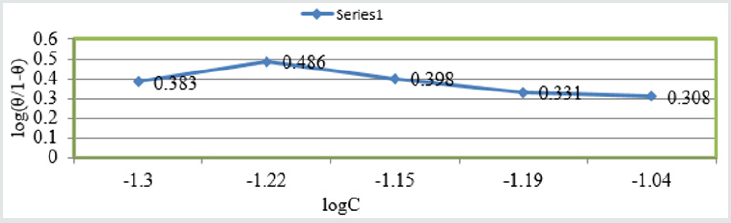
Table 3: Inhibition efficiency develop by Aloe Vera in H2CO3.

Table 4: Thermal parameters of Aloe Vera with Snails.
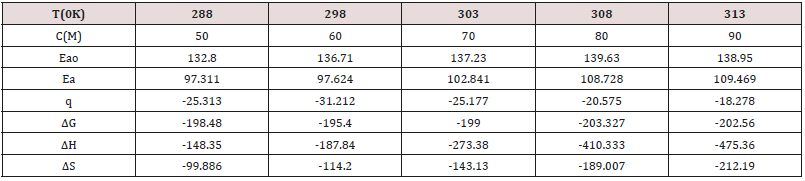
Table 5: Potentiostatic results of snails for Aloe Vera.

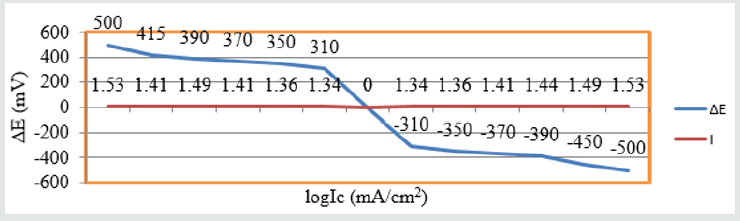
Free energy of inhibitor Aloe Vera was calculated by equation ΔG=2.303 log(33.3K) and their values were given in Table 4. Their values noticed that inhibitor action a chemical reaction because free energy values were negative, and their values mentioned in Table 4. Enthalpy of used inhibitors was determined by transition state equation K=RT/Nh eΔS/R e-ΔH/RT and its values were recorded in Table 4. These values indicated that inhibitor’s Aloe Vera boned with snail by chemical bonding. Entropy of Aloe Vera was determined by equation by ΔG = ΔH – TΔS and their values were mentioned in Table 4. Their values were shown that deposition of Aloe Vera on the surface of snail was an exothermic process. It formed stable barrier on the surface of snail. All five values of thermal parameters plotted against T in Figure 11 and Figure 12 against C. The corrosion potential, corrosion current density and corrosion rate were determined by the equation ΔE/I=1/2.303 βaβc/(βa+βc) and C R(mpy)=0.1288 Ic (mA/cm2) XE/ρ and values were recorded in Table 5. It observed that without inhibitor corrosion potential and corrosion current were decreased but after addition of Aloe Vera corrosion current densities were increased. It also reduced the corrosion potential and corrosion current. The corrosion rate calculated by potentiostat technique and their values were tallied with the corrosion rate determined by gravimetric method. Corrosion potential versus corrosion current density was plotted in Figure 13. This plot indicated that anodic current reduced as addition of inhibitor but cathodic current enhanced Table 5.
Figure 11: Themal energies Vs T for Aloe Vera with Snails.
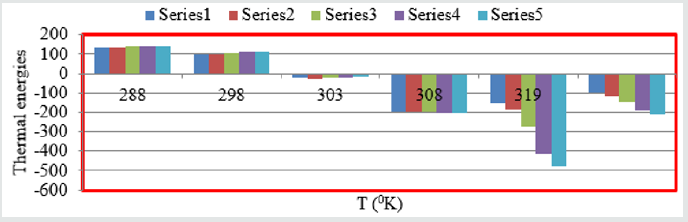
Figure 12: Thermal energies Vs C for Aloe Vera with snails.
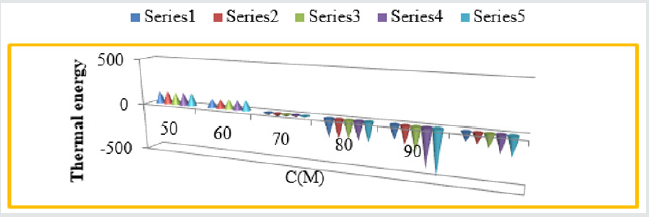
Figure 13: ΔE Vs Ic for snails with Aloe Vera.
Conclusion
Snails’ corrosion occurs due to change the pH of water. Water pH is altered by contamination effluents, industrial polluters, and various types of wastes and acids rain. Snails outer layers are constructed by calcium carbonate. In acidic medium calcification starts on their surface by chemical process. It produces pitting, stress and crevice corrosion. For the protection of such types corrosion Aloe Vera is used as inhibitors. Aloe Vera forms thin film on the surface of snails. The thin film formation is confirmed by thermal parameters like activation energy, heat of adsorption, free energy, enthalpy and entropy. Aloe Vera surface adsorption phenomenon on snails is also satisfied by Langmuir isotherm. Aloe Vera is reduced the concentration of H+ ions and enhance the concentration of oxygen molecules. It is nitrogen containing rich organic compounds which capture H+ ions and less H2 gas is released thus corroding effect of snails suppressed.
Read More About Modern Approaches on Material Science (MAMS) Please Click on Below Link:https://lupine-publishers-material-science.blogspot.com


