Showing posts with label Journal of Psychology and Behavioral Sciences. Show all posts

Thursday, 9 February 2023

Lupine Publishers | Well-being at a glance:with special focus on Geriatric population


Introduction

The various models on wellbeing define wellbeing as a multidimensional construct integrating mental and physical health regarding health promotion by preventing disease. WHO also holds a holistic view of health comprising of physical mental and social wellbeing. Researches nowadays are more alert towards public health model rather than the medical model proposed during earlier times. The advent of positive psychology has led to a paradigm shift in health management strategies from pathogenic orientation which lays more emphasis on treatment and cure for illness to maltogenic approach that focuses on prevention of illness and health promotion. At an elementary level, wellbeing can be defined as how people perceive and evaluate the actions and activities in their life, the positive outcome that stands significant for individuals. The factors that can significantly affect the state of an individual’s wellbeing are presence and the degree of positive relationship, self actualization, resilience, positive emotions contentment and purpose in life. Researches reveal global judgment of life satisfaction and feelings ranging between joy to depression to be included under wellbeing [1-6].

Numerous cross sectional and longitudinal researches have revealed that wellbeing is associated positively with the following variables [5,7]:

a) Self-perceived health
b) Longevity
c) Healthy behaviors
d) Mental and physical illness
e) Social connectedness
f) Productivity
g) Factors in the physical and social environment

Research studies also state higher levels of wellbeing are associated with decreased risk of physical ailments like cardiovascular risk, injury and other types of illnesses; it improves immune functioning leading to quick recovery from ailments thus increasing the longevity. Further it is also related positively to job productivity and social contributions. The positive affect component of wellbeing is associated with extraversion and negative affect component to neuroticism [8-10].

Aspects of Wellbeing

The Concepts Identified are the Following

a) Attitude of an individual towards his own self
b) Self actualization
c) Integration
d) Autonomy
e) Perception of reality
f) Environmental mastery

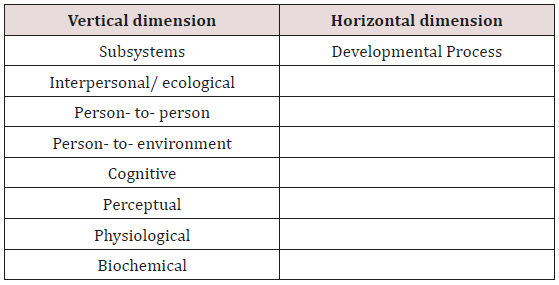
Seeman’s model is based on the behavioral subsystems of all human systems. It is based on the concept of organismic integration where organismic would refer to a pervasive process that comprehends all the subsystem such as biochemical, physiological, perceptual cognitive and interpersonal dimensions of behavior. The model proposed, looks like (Table 1). The horizontal dimension of the model emphasizes the point that wellbeing is a longitudinal development terms so as to include the concept of health as an ongoing process. Crompton’s model finally proposes that psychological wellbeing can best be assumed by a tripartite model that includes subjective wellbeing, personal growth and religiosity. Research conducted by Crompton (2001) found that as people strive to gain greater psychological wellness they may seek interpersonal relationship to enhance self esteem, search for existentialism for self actualization. He further concluded that the conflict people experience in search of their happiness and good life may be related to a relative stable sense of identity. Correlates and determinants of individual wellbeing: Wellbeing is dependent upon good health, positive social relations and the basic/ primary needs of the individual, so as to quote the definition of health by W.H.O. “The physical, mental and social health of the individual”. Individual wellbeing is determined by factors like autonomy, environmental mastery, life satisfaction, self acceptance, positive regard with others, and purpose in life and happiness. As individual correlates are based on the environment, might vary from one individual to the other. Personality and genes at the individual level are related to wellbeing. Researchers have shown that positive emotions are heritable to some degree suggesting that there may be some set points for emotions like happiness and sadness to be felt or experienced. Although it is not solely the genetic effects that would determine positive emotions, environmental factors would also play a role significantly. Genetic factors and personality factors would interact closely to influence the individual wellbeing of individuals. Age and gender as correlates of wellbeing show that men and women would almost have the similar levels of wellbeing, however with age [8] there has been found a U shaped distribution wherein, wellbeing will be more among the younger and older population than the middle aged adults [1]. In terms of relationships, positive relations turn up to be one of the strongest correlates of wellbeing, having a positive effect altogether [10-12].

Table 1: Interpersonal dimensions of behavior.
Lupinepublishers-openaccess-journals-psychology-behavioral-science

Some Reviews on Well Being Based on Report Prepared by CDC

a) Employed women would show higher levels of wellbeing and also used fewer professional services to cope with stress than non employed ones, data from NHANES (1971-1975) revealed [13].
b) The other review from NHIS and quality of wellbeing scale (2001) found that males and females between the age group of 20-39 showed significantly better sense of wellbeing than the ones aged 40 years and older [7].
c) Data from BRFSS revealed that 8.6% of adults in US reported of never or rarely receiving emotional and social support [12].

Statistics on Wellbeing

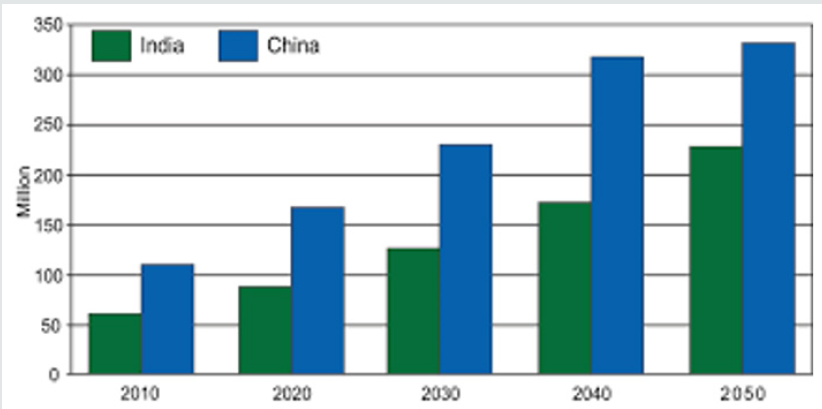
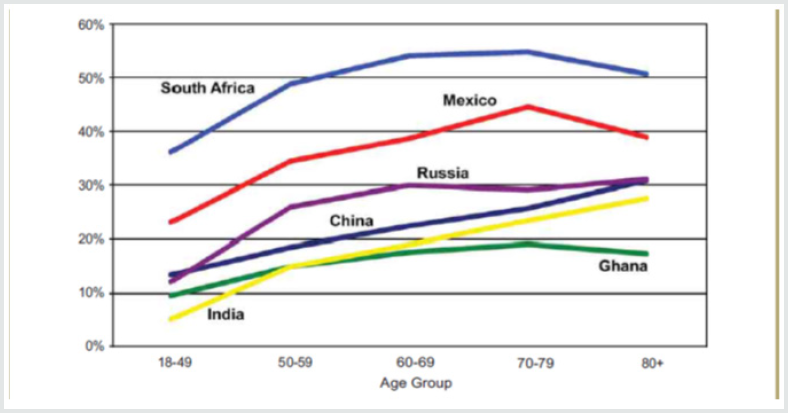
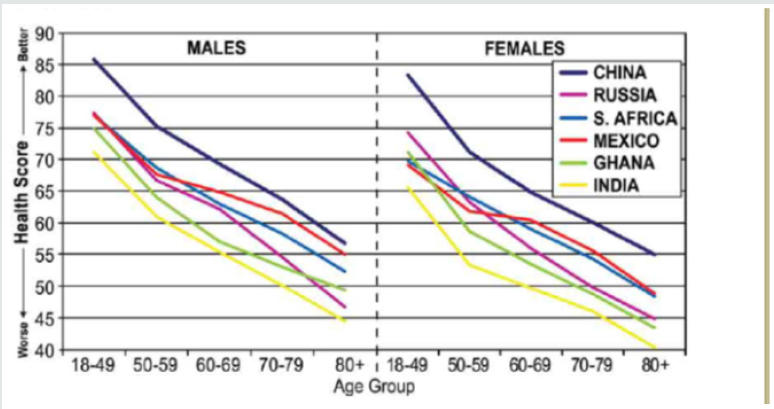
Report presented on ageing statistics by World Health Organization shows that India’s current elderly population is 60 million, which is projected to increase to 227 million in 2050 which shows an increase of 280 percent from the current situation. Similarly, glancing at China’s current elderly population i.e. 65 and above, from 110 million shall likely reach to 330 million by 2050 (Figure 2). In a study conducted by global AGEing and adult health (SAGE) six major health risk factors viz. physical inactivity, current tobacco use, heavy alcohol consumption, high risk waisthip ratio, hypertension and obesity have been identified. The study reported that three of these six health risk factors rises with age however the patterns and percentage would vary by country. The pattern and percentage has been depicted in Figure 2 below. One of the goals of further researches in this direction might be to study and find out the outcome of such health conditions on the well being of the country’s population. Number of disabilities seems to increase among the developing nation as the number of older people tends to increase. Health services in the developing nations needs improvement in their health services in order to understand the health risks faced by older people and accordingly plan for prevention and intervention. Further studies conducted in this direction show the health status score of males and females from six different countries. In the figure below (Figures 3 & 4), it has been depicted that health status score declines with age, as expected. The graph shows the score for males is higher than females. However females tend to live longer than males on an average but have poorer health status. The health score in the figure ranges from 0 (worst health) to 100 (best health).

Introduction

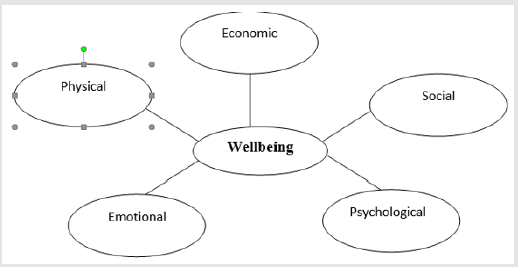
Figure 1: psychological Life cycle.
Lupinepublishers-openaccess-journals-psychology-behavioral-science

Figure 2: Showing the growth of elderly population aged 65 and above in India and China
Lupinepublishers-openaccess-journals-psychology-behavioral-science

Figure 3: Showing the percentage of people with three major health risk factors country wise.
Lupinepublishers-openaccess-journals-psychology-behavioral-science

Figure 4: Showing the health status scores for six countries for both males and females.
Lupinepublishers-openaccess-journals-psychology-behavioral-science

Conclusion

India has acquired the label of “an ageing nation” with 7.7% of its population being more than 60 years. In India, the elderly population suffers from dual health issues i.e. either communicable or non communicable diseases. According to the Government of India statistics, cardiovascular diseases account for one third of elderly mortality. Respiratory disorders account for 10% mortality. As a concept, wellbeing can be defined as to how people evaluate their lives. Psychological well being as a construct comprises of positive affective state like happiness on one end and optimal functioning on the other end [14]. Thus accordingly, psychological wellbeing can be observed as a combination of feeling happy and functioning effectively. Studies and researches conducted further have reported that people who are high on psychological wellbeing report of feeling happy capable and good availability of social support and higher degrees of life satisfaction. The authors in a study concluded positive emotions as a potential promoting agent for population longevity and health [15]. Apart from the psychological factors it is also dependent upon physical health conditions that can be mediated by brain activation patterns neuro chemical effects and also genetic factors. The focus of any future research can be to increase the life expectancy rate of the elderly population and accordingly explore the ways of ensuring good quality of life with increasing age. With a special focus on the developing nations of the world, better medical aid and services should be provided by the community based health care centers and hospitals. The aim of these health care centers should be to plan interventions and improve the overall health conditions of the elderly population.

Read More About Journal of Psychology Please Click on Below Link:
https://lupine-publishers-psychology-journal.blogspot.com/

Friday, 10 September 2021

Lupine Publishers | September 21: World Day of Alzheimer’s Disease

 Lupine Publishers | Journal of Psychology


Opinion

Before talking about Alzheimer’s disease, we must understand the concept of dementia, which is conceptualized as the progressive loss of cognitive functions due to brain damage or disorders. Characteristically, this cognitive alteration causes inability to perform the activities of daily life mainly seen in memory, calculation, way of relating and living together, as well as in decision making. Many times, dementia is caused by other types of ailments, such as brain tumors, hydrocephalus, multiple cerebral infarcts, metabolic diseases such as hypothyroidism, chronic infections; or it can also be simulated by anxiety and chronic depression. Being the most frequent cause of dementia (although we already stressed that it is not the only one), Alzheimer’s disease was discovered and reported in 1907 by the German Alois Alzheimer, and it is when until a few years ago it was of unusual characteristics due to the poor expectation of life, but by increasing this, a series of chronic degenerative diseases are derived at the same time, with an increase in their frequency of appearance, among them the condition that welcomes us today.

This degenerative dementia is characterized by a gradual onset, but irreversible at the same time, consisting of depression, anxiety, loss of memory, failure of judgment and calculation, view of the handling of money, unexpected exits of the patient from his home, repetition of ideas, as well as altered visions of reality and persecutory thoughts; this series of symptoms are increasingly frequent and intense, leading the patient to prostration, and being prey to respiratory or urinary tract infections, but not before altering the mental state of relatives and caregivers surrounding the patient. There are 40 million Alzheimer’s patients in the world, and it will continue to rise, due to the investment of the age pyramid, and the expected increase in the duration and quality of life in people, through the new medical interventions They are discovering day by day. The drugs are often symptomatic and fail to effectively stop the clinical picture, often the basis of treatment is the patient’s previous struggle, is the “store for the winter”; we refer to that we would face the eventual possibility of this disease through what we do in previous stages, and more specifically in a healthy lifestyle. A healthy lifestyle is always to have proper sleep habits, avoid smoking and drinking, have the habit of reading and always fortify our thoughts with education and culture, not live situations too stress, care and anticipate our economy with an adequate pension system and try to belong to a health system that has adequate coverage for problems of adults of the third age.

Read More About Lupine Publishers Journal of Psychology Please Click on Below Link:
https://lupine-publishers-psychology-journal.blogspot.com/

Thursday, 25 February 2021

Lupine Publishers | Comparative Analysis of Development Program of Concepts and Categories Through Cognitive Perceptive Networks in Students with Autism Spectrum Disorder

 Lupine Publishers | Journal of Psychology


Abstract

Individuals with autism spectrum disorder (ASD) exhibit social- communicative impairments, which cognitive and neuropsychological deficits are evident. This research study presents an experimental study to prove effectiveness of a psychologic program, designed to facilitate conceptual and categorical development through learning of links between concepts. A total of 27 students with ASD participated in study, evaluated over 9 months, throughout three successive measures, distributed in two groups: an experimental group (n= 14) and a control group (n= 13). Results found through ANOVA comparative analysis and independent samples t- test for equality of means show there´re significant differences in the cognitive conceptual development among experimental group participants compared to their peers of control group.

Keywords: Autism; Perception; Cognition; Sensory Integration; Semantic Memory

Introduction

According to International Classification of Mental Disorders of American Psychiatric Association [1], people with autism spectrum disorder (ASD) show a characteristic perceptual processing, which also extends to evaluation of experience, both external and internal, since processes of analysis are conditioned, both the information coming from environment, as the existing contents in permanent memory. Mevel, Fransson and Bölte (2015) affirm that these deficits are due to complex interaction of genetic and environmental factors, which affect cerebral maturation, synaptic function and cortical networks. [2] deepen into an etiological study and conclude that analysis performed with a comparative genomic hybridization matrix (array-CGH), indicates that copy number variants (CNV) are associated with the susceptibility of people with ASD, which is an important specificity of these individuals. Likewise, [3] points out that cognitive processing follows a sequence in which, neuronal system determines strength of signals detected, so process transforms initial visual stimulus into neuronal impulses, which are transformed from retina to the brain in many ways, of which, the most remarkable is the lateral geniculate nucleus. Then, arrive to primary visual cortex, where it occurs analysis process of individual features observed of initial stimulus. From this moment, it´s distributed to several areas, that process the isolated features, which are combined in multiple ways to configure a global representation of initial image of retina. But, there hasn´t yet been conceptual- categorial attribution, thus, still must go to an intermediate and superior perceptual level, where inferior temporal cortex will develop an essential performance, so any deficit on any area of lower temporal cortex can cause deficits to the recognition of perceived object [4] have explored specificity of the activation of facial processing in people with ASD and its results demonstrate a hypoactivation in facial processing system of human faces, but not of animals, possibly due to limitations in ability to represent value of social stimuli [5] say these neurological deficits aren´t limited to one or several domains, but in their interaction, exhibiting limited cerebral axes, related with ability to modify attention and executive function, while indicating better potential in activities planning [6].

Deepen into the possible causes of conceptual integration deficits, which´s explained by the cognitive hypotheses of coherence and conclude that people with ASD during joint attention processes showed reduced temporal-central alpha coherence in right hemisphere compared to their peers in the typical development group. Then, studies about presence of a local perception are corroborated, just as the theory of cognitive central coherence affirms [7]. Likewise, these hypotheses were analyzed by [8], that suggest global integration is reduced, being an important factor of weak central coherence. Whereby, executive system is affected, with great limitations for conceptual integration and categorical hierarchy. In this sense [9], investigate the computational work and suggests these deficits may be result of atypical representations in people with ASD in cortical maps, derived the idiosyncratic perceptual processes observed.

Aims

Adapted various methodological proposals related to people with ASD to respond to these specific needs [10,11]. However, a recurring theme is existence of an empty in programs design to create links between the concepts; therefore, this research´s main aim is to design a specific program to facilitate of conceptual and sensory integration development, through creation of relational links or networks. Thus, basic aims are the following:

A. Design and apply a specific program to facilitate conceptual sensory integration, through creation of perceptivecognitive networks to people with ASD.

B. Evaluate the application of program on the experimental group participants, compared with his peers of control group.

Method

Design: Research design is supported by an experimental model of two groups, 1 Experimental Group (EG), to which a specific program was applied, and 1 Control Group (CG), whose participants followed the regular programs.

Participants: A total of 27 students with ASD participated in study, of three diagnosis levels, of both sexes and of ages between 4-15 years, which have been divided heterogeneously in both groups: the experimental and control group.

Instruments: Evaluation analysis was developed with the following psychometric tests, operationalized in the variables: “frostig” y “text”:

a) “frostig” variable was measured with the Visual Perception Test of “FROSTIG” (Frostig, 2009).

b) “text” variable was evaluated throughout texts adapted to the curricular competence of each participant.

Variables: The variables: “frostig” and “text” for their three evaluation measures were statistically calculated to form a new variable named “networks” for the three measures: “networks1-2-3” (Table 1).

Table 1: Variables name.

Lupinepublishers-openaccess-journals-psychology-behavioral-science

Procedure: The authorizations and ethical considerations were requested. Then, participants were distributed proportionally in the experimental group and control group.

Over a period of 9 months 3 successive evaluation measures were carried out to both groups: 1) first measure: “frostig1” y “text1” (experimental group began the application of a specific adapted program, while control group continued the regular programs), 2) after 4,5 months, second measurement was made: “frostig2” and “text2, and 3) finally, 4,5 months later, third measure of comparison between experimental group and control group was assessed: “frostig3” y “text3”.

5.6 Data analysis: Results were calculated for the variable: “networks” (1-2-3), in relation to variable “group”, through the ANOVA analysis of repeated measures and independent samples ttest for equality of means, of statistical package SPSS, version 23.

Program

Program was applied to the participants of the experimental group, which get eight general phases [12]:

a. Presentation of global stimulus.
b. Subdivision of initial global stimulus into meaningful parts.
c. Decoding of the previous parts.
d. Concept understanding.
e. Learning links (networks) about the concept.
f. Experiential practices through multisensory processes (psychomotricity, music, video).
g. Perceptual- cognitive reconstruction of the contextual stimulus.
h. Recover information from the learned links.

Results

The sample

A total of 27 participants join in this study, 9 students are diagnosed with ASD1, 9 with ASD2 and 9 with ASD3; 6 students are 4-6 years old, 7 are 7-9 years old, 7 are 10-12 years old, and 7 are 13-15 years; 23 are men and 4 females.

Sample was distributed in two groups: 1 EG (n = 15) and 1 CG (n = 15), that can be seen in Table 2.

Table 2: Participants´ distribution (N = 27).

Lupinepublishers-openaccess-journals-psychology-behavioral-science

Comparative analysis intergroup

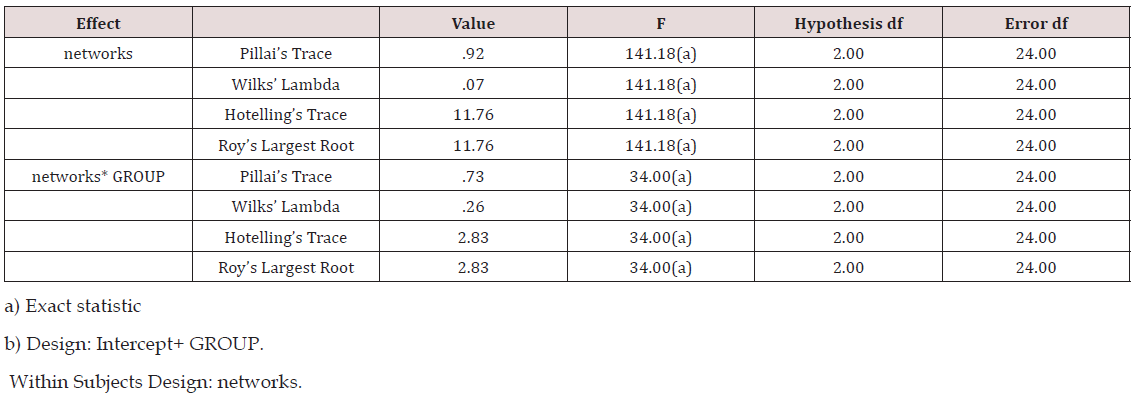
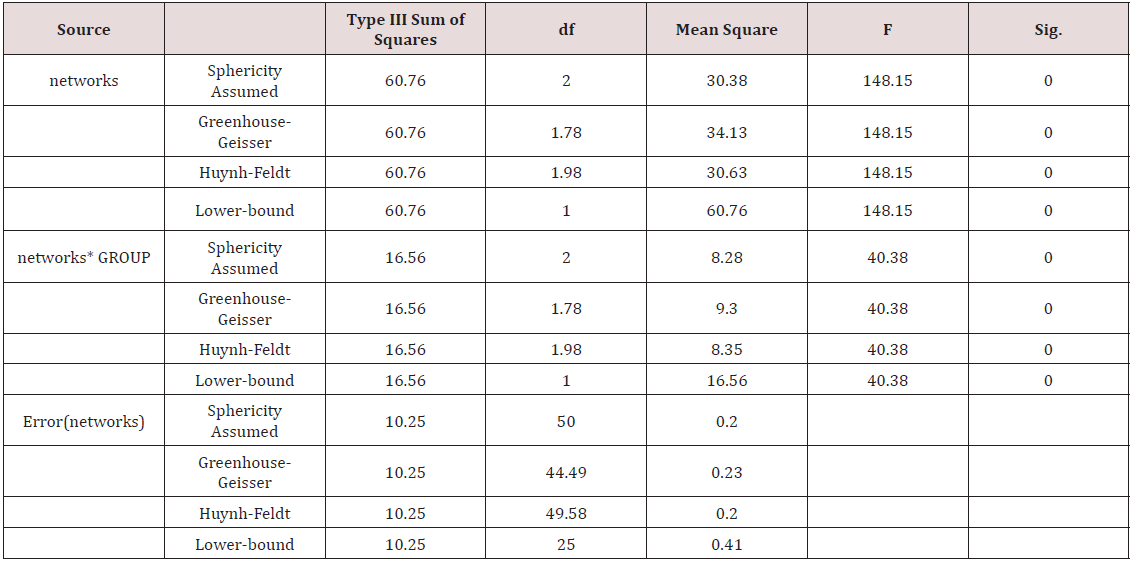
In Table 3 can be observed the multivariate test for the 3 successive measurements. Results found significant changes throughout research study (9 months), concluding that there´re meaningful differences for the variable “networks” (value= .92, F= 141.18, error= 24.00, sig= .00). Likewise, the data of 3 measures to the variable “networks” in relation to the variable “group” point that there´re significant differences between participants of the experimental group and participants of the control group (value= .73, F= 34.00, error= 24.00, sig= .00). However, the comparative effects test between groups of Mauchly (Table 4) doesn´t allow refuse the equality hypothesis of means with about the “networks” variable evolution, nor in relationship to the variable “group” (sig = .20), so it´s necessary to complete analysis with the Within-Subjects Effects Tests (Table 5). Indeed, in the Within Subjects Design Test of Table 6, data of previous multivariate analysis are confirmed, in which significant critical levels are found, both, for the variable “networks1-2-3” (sig.= .00, F= 148.15), as well as significant differences in relation to variable “group” (sig= .00, F= 40.38, mean square of error= .205).

Table 3: Multivariate Tests(b).

Lupinepublishers-openaccess-journals-psychology-behavioral-science

Table 4: Mauchly’s Test of Sphericity(b).

Lupinepublishers-openaccess-journals-psychology-behavioral-science

Table 5: Tests of Within-Subjects Effects.

Lupinepublishers-openaccess-journals-psychology-behavioral-science

Table 6: Tests of Within-Subjects Contrasts.

Lupinepublishers-openaccess-journals-psychology-behavioral-science

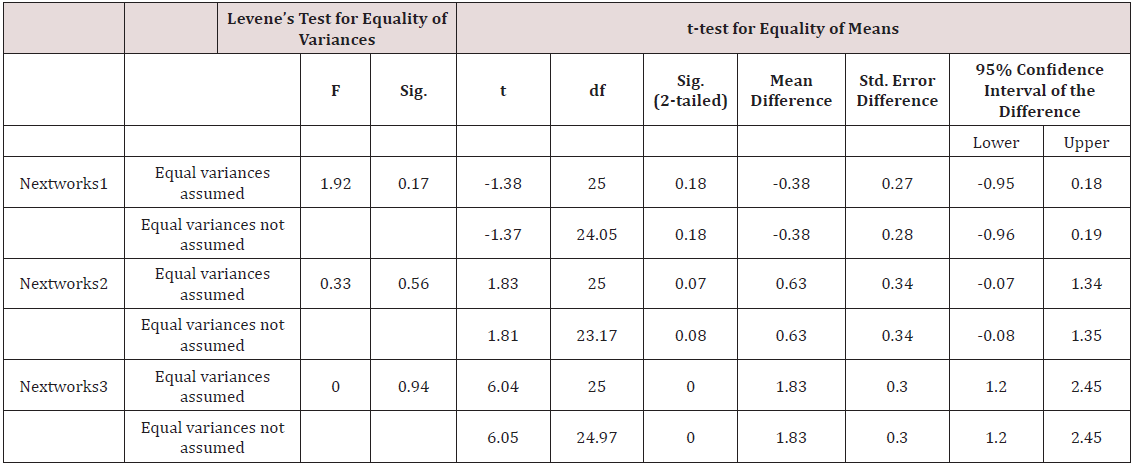
Data summary of ANOVA is estimated that the evolution of the variable “networks1-2-3” evidence significant differences throughout its evolution (sig= .00, linear F= 242.20) and, also, this evolution is significantly different depending on the participants group type (sig= .00, linear F = 66.86). Indeed, changes found in variable “networks” related to the group type can be seen in Table 7. It looks like experimental group develop from 2.00 in “networks1” to 3.79 in “networks2” and 5.21 in “netswork3” (difference= 3.21 p.). Control group data is slightly lower, since develop from 2.38 in “networks1” to 3.15 in “networks2” and to 3.38 in “networks3” (difference = 1 p.), being total difference between the EG and CG of 2.21 p. The independent samples t- test for equality of means (Table 8) confirms the differences found in the 3 successive measures in the variable “networks” in relation to variable “group”. This test points out that the differences in first measure aren´t significant contrasts (“nextwork1” = .18), second measure also doesn´t find significant different levels: “networks2” (sig = .07), nevertheless, third measure: “networks3”, show significant differences between the experimental group participants and the peers of the control group (sig= .00).

Table 7: Group Statistics.

Lupinepublishers-openaccess-journals-psychology-behavioral-science

Table 8: Independent Samples Test.

Lupinepublishers-openaccess-journals-psychology-behavioral-science

Conclusion

In this research the effectiveness of the applied program could be contrasted, since students of the experimental group have improved significantly, compared to their peers of control group. The improvements found at a comparative level refer to two fundamental aspects:

i. To the levels of sensory integration and gestalt organization, measured through the Frostig test, operationalized in variable “frostig”.
ii. To semantic integration and conceptual understanding processes, evaluated throughout improving the understanding of a text adapted to age and curricular competence, operationalized in variable “text”.

The data found to variable calculated: “nextworks”, which unifies both variables: “frostig” and “text”, allows conclude that the experimental group students have improved sensibly compared to control group peers in sensory perception integration and in processes of semantic coding. Conclusions confirm existence of a neural interrelation between the basic psychological processes during activity of the cognitive development, then specific programs are necessary that facilitate creation of the networks and semantic links, related with the conceptual information and the previously learned concepts. Likewise, it´s essential to forward creation of conceptual categories in semantic memory along the learning process, which globalizes sensory information perceived. Indeed, CG participants also evolved in conceptual creation, but they didn´t significantly as the EG participants, who improved more than their peers of control group, due to application of this program.

Discussion

Indicate that processing of information depends on global perception of stimuli, understanding and semantic analysis, but in people with ASD this process doesn´t occur spontaneously, owing to limited perception and to deficits in construction of interrelated links between the new information and previous contents. Several studies of Cognitive Psychology [13-17] conclude that cognitive functioning is an interrelated systemic process, in which the different basic psychological processes don´t act alone, but that these processes: perception, attention, emotion, motivation and memory interact dynamically during human cognitive action and any component that impedes the functioning of a process, thus, all processes will be affected, not only at the sensory perception, but also in the coding processes. This systemic interaction is developed through intersection of inherent thought process, which is linked to a semantic- pragmatic process about its own functioning dynamics, through which it´s understood and, finally, encoded. In this sense, the analysis and codification of the perceived reality configure a peculiar mode of information processing in people with ASD that influences its global processing mode. There´re previous studies that show the mutual influence of the cognitive process performing how a continuous process that goes from the perception of internal or external stimulus to execution of action itself, therefore, there´s a great number of researches have like aim to ease specific perceptual- cognitive development programs for individuals with ASD [18-22].

Study Limitations

This study is limited by small number of participants because working with people with specific needs is always limited to small samples, so new tests are necessary to corroborate these results.

Acknowledgment

I would like to express my gratitude to the families and professionals of the Association of Families of People with Social Communication Disorders in Ourense, as well as to families and professionals of the educational centers who have participated in this study.

Read More Psychology and Behavioral Science Journal Lupine Publishers Articles:
https://lupine-publishers-psychology-journal.blogspot.com/

Monday, 6 May 2019

Psychology journals-Lupine Publishers


Individuals with autism spectrum disorder (ASD) exhibit social- communicative impairments, which cognitive and neuropsychological deficits are evident. This research study presents an experimental study to prove effectiveness of a psychologic program, designed to facilitate conceptual and categorical development through learning of links between concepts. A total of 27 students with ASD participated in study, evaluated over 9 months, throughout three successive measures, distributed in two groups: an experimental group (n= 14) and a control group (n= 13). Results found through ANOVA comparative analysis and independent samples t- test for equality of means show there´re significant differences in the cognitive conceptual development among experimental group participants compared to their peers of control group.To know more click on below link.


For more Lupine Publishers Open Access Journals Please visit our website: http://www.lupinepublishers.com/

For more psychology journals articles Please Click Here: https://lupinepublishers.com/psychology-behavioral-science-journal/
 

Friday, 5 October 2018

Why Should We Learn to Swim?: (SJPBS)-Lupinepublishers


Why Should We Learn to Swim? by Gabriel Miranda Nava in SJPBS in Lupinepublishers

There is an anecdote in which an intellectual was being transported in a small boat by a person of scarce academic resources, when when trying to mock this poor man he asks “young… do you know? Of mathematics? And the poor boatman answers NO, and the unfriendly scholar tells him “because he thinks you’ve lost 30% of your life, later he asks him if he knew about philosophy and when he answered with a second refusal, the scholar in question tells him that he had he lost another 30% of his life, and he maintained it until suddenly the boatman, smiling, asked him, “Sir, do you? Can you swim? The intellectual in question responds, “naturally not” and the boatman ends up telling him “well, pretend that you lost 100% of your life because the ship sinks”.


Wednesday, 3 October 2018

Perceived Effects of Development-Induced Displacement on Low-Income Households in Addis Ababa: (SJPBS)-Lupinepublishers


The profile of Addis Ababa city has been changing due to the promotion of privatization, slum area clearance, construction of condominium houses, and conversion of agricultural fields in the suburbs to urban lands. Hundreds of low-income households have been displaced and, as an aftermath, were adversely affected by this development-induced displacement. The objective of this study was to describe and explore the perceived social and psychological effects of the “development-induced displacement” on a sample of Twenty-three purposefully selected participants in Addis Ababa. Data were collected from those low-income households who were originally residing in Kebele houses around Tikur Anbessa Hospital and later resettled into one of the suburbs of Addis Ababa called “Jemo Three Condominium site” through open-ended interviews and questionnaire. As expected, findings have indicated that displacing people from the inner city to new resettlement sites in the outskirts was associated with social breakdowns (such as frustration to form close relationship with neighbors and absence of warm and trusting relationship) as well as psychological problems (like lack of confidence and motivation to earn a living and poor self-esteem). The finding also indicated that the displacement has additionally created loss of jobs, incurred high transport costs, and challenged access to education and healthcare. The damage caused by resettlement on poor resettles far outweighs its benefits and, therefore, the government needs to revisit its housing strategy.

The Current Problem of Oral Health Due to Improper Tooth Brushing in the State of Mexico: (SJPBS)-Lupinepublishers


In ancient times the importance to oral hygiene was already taken, diseases were often considered a punishment of the gods for offenses inflicted on them. Subsequently, dental caries was attributed to vitiated bodily fluids or worms. The medicine of Greek and Roman times are the problems of teething (Hippocrates, 460- 377 BC, Galen, 130-200 AD) persistent milk teeth (Celso, 25 BC JC 50 Be JC) and the presence of erupted teeth in newborns (Pliny the Elder, 23-79 AD JC).In 1743 Rober Bunon, “Father of Pediatric Dentistry.” Other authors who also intervened in the birth of this specialty were LT Duchein (1759) and ND Dechément (1804) in France and Z. Fraenkel (1817) in Denmark. In Mexico, caries is a public health problem that affects about 95% of children under 8 years of age and even 99% of adults.

Depression: From Sorrow to Melancholia: (SJPBS)- Lupinepublishers


Sometimes we have felt so sad and so disappointed for a few hours or days, a situation that leads us to sleep badly, have constant awakenings, decreased appetite, easy crying, tiredness, attention deficit, cranky, even wanting to you “swallow the earth” which is a minor thought to “want to die”; These situations are normal in the mood swings we experience throughout the day or in a few weeks, and that is recovering over time, thanks to the adjustment in your brain experienced by neurotransmitters, which we have already mentioned are substances chemical in the brain that allow to carry out the different phases of thought. This series of symptoms or sensations come to us from a series of external stimuli or characteristic experiences that all, absolutely all of us must cross at some time in our life, as are the love breaks, both the conjugal separation and the diverse breaks of the courtship, the loss of a loved one, an economic bankruptcy, a robbery, a labor dismissal, in short.

Friday, 28 September 2018

The Problems of the Dream in Mexico: (SJPBS)- Lupinepublishers


As we discussed in our previous talk, we will talk in general about sleep disorders in our country. Fifty years ago, the first national studies began to learn about the dream and its suffering, all this thanks to clinical, neurophysiological and neuropsychological studies to understand the stages of sleep, which helped in turn to understand some statistics in general as is the fact that one third of Mexicans are snorers, which is probably increasing due to the concomitant problem of weight, and it is also known that these snoring patients have moderate to severe apneas, just under 10%, or the fact that that when sleeping badly increases the prevalence of depression and anxiety in the population and at the same time its treatment becomes increasingly difficult.