Showing posts with label Journal of Research and Review. Show all posts

Friday, 5 May 2023

Lupine Publishers | Association of Blood Group with Tea Likeliness

 Lupine Publishers | Journal of Research & Reviews Healthcare


Abstract

The objective of the present study was to interlink Blood grouping with Tea likeliness. Total of 138 subjects took part in the study and the Subjects were students in Bahauddin Zakariya University Multan, Pakistan. Consent was taken from the subjects to analyze their Blood group and then collected information by making a Questionnaire that either they like tea or not according to their Blood groups. Statistical Analysis was done by using MS Excel. It was concluded from the present study that the Subjects having O Positive Blood group like tea very much while the subjects having A Negative, B Negative and AB Negative Blood groups don’t like tea.

Keywords:Tea likeliness; Blood grouping system; Tea lovers

Introduction

ABO blood group system is one of the most common Blood group systems of human beings which are categorized according to the inherited elements of Erythrocytes. It is determined by the presence of Antigens A and B which are present on the surface of red blood cells. Antigens (Red blood cells) and Antibodies (Serum) are produced opposite to each other in ABO blood group system according to which Blood transfusion occurs from person to person. ABO Antibodies in the serum are formed naturally. ABO antigens produced before birth and remain throughout life. ABO blood group system was first introduced by Austrian Immunologist KARL LANDSTEINER in 1901. There are four major types of ABO blood group system: Blood group A, Blood group B, Blood group AB, Blood group O. Blood group A contains Antigen A and the Antibodies produced will be Anti-B and its genotype will be AA or AO. Persons having Blood group A can donate blood to the persons having Blood group A or AB. Blood group A is the most common in AUSTRALIA. Blood group B contains Antigen B and the Antibodies produced will be Anti-A and its genotype will be BB or BO. Persons having Blood group B can donate blood to the persons having Blood group B or AB. Blood group B is the most common in ASIA. Blood group AB contains Antigen A and Antigen B and no Antibodies will be produced and its genotype will be AB. Persons with Blood group AB can donate blood to the persons having Blood group AB. Blood group AB is the universal recipient. Blood group O contains no Antigens but Antibodies produced will be Anti-A and Anti-B and its genotype will be OO. Persons having Blood group O can donate blood to the persons having Blood group O, A, B or AB. Blood group O is the Universal donor. Blood group O is the most common Blood type throughout the World [1]. The Rh Blood group is one of the complex blood groups in humans and it has become the second most important Blood group system after ABO system. It was first discovered in Rhesus monkey. The term Rh factor consists of Rh positive and Rh negative refer to the Rh (D) antigen. After testing the ABO Blood group in human beings, it is very important to check Rh status.

Hence, Blood groups can be A+, A-, B+, B-, AB+, AB-, O+ or O-. Rhesus positive consists of a protein (D antigen) which is found on the surface of our red blood cells. Rh positive blood type is present in almost 85% of the population. Persons with Rh+ blood can receive blood from persons with Rh- blood without any problem. Rhesus negative does not consist of a protein (D antigen. Rh negative is rare in the population. Persons with Rh- blood does not have Rh Antibodies naturally in the Blood plasma. Persons with Rh- blood cannot receive blood from persons having Rh+. Rh incompatibility can cause a serious disease like Erythroblastosis fetalis. It is an hemolytic disease in the new born child in which an Rh-/ type O mother carrying an Rh+/ type A, B, or AB foetus causes resistant to the Rh+ factor and start producing antibodies against the foetus blood group which leads to anemia in the child [2]. Tea is an aromatic beverage which is prepared by gushing hot or boiling water from the young leaves of Camellia Sinensis (Tea plant), found in Asia and it is the most widely consumed drink in the World after water. The story of tea began in china in 2737 BC and then, this beverage spreaded in the whole World like fire. Tea contains L-theanine, theophylline, caffeine and some amount of nicotine due to which man becomes its addictive and it regulates our Blood. More than four cups of tea per day are not good for our health. There are four basic types of Tea: White tea, Green tea, Oolong tea and Black tea. The benefits of taking tea include alerting our brain for some time and reducing heart attack. Tea also helps in reducing body weight and protecting our bones. Its side effects include headache, sleeping problems, diarrhea, kidney problems and convulsions. Besides its side effects, there are many Tea lovers i.e. 9 out of 10 persons like tea very much. Tea is like a passion for tea lovers or it is a hope for them to spend their hectic day along with tea because it is a symbol of relaxation for them. Besides this, Tea time is a family time in which everybody enjoys a lot. Some tea lovers don’t care about their health and take tea many times a day which can be dangerous for them. The objective of the present study was to interlink Blood Grouping with Tea likeliness.

Materials and Method

Blood Grouping

First of all, we laid out all the components of the kit in front of you which consisted of Antiserum A, Antiserum B, Antiserum D, Glass slides and Prickers (Needles). Secondly, took a pricker (needle) and pricked the upper portion of a finger for taking some drops of blood of a subject. Then, we made three spots of blood of considerable amount on a slide and added a small drop of Antisera A, Antisera B and Antisera D. After adding this, we mixed up little with the needle and after few seconds, noted the Agglutination in Blood drops. The Agglutination by the Antisera A and Antisera B in the drops of blood decided the blood group of that subject while Antisera D showed the positivity and negativity of the Blood. We Checked the Blood group of some subjects and the subjects whose blood drops containing Antisera B and Antisera D agglutinated, it meant subjects had Blood group B positive. The subjects whose Blood drops containing Antisera A and Antisera D agglutinated, it meant subjects had Blood group A positive. The subjects whose Blood drops containing Antisera A, Antisera B and Antisera D agglutinated, it meant subjects had AB positive Blood group. The subjects whose Blood drops containing Antisera A and Antisera B did not agglutinate while Blood drop containing Antisera D agglutinated, it meant subjects had Blood group O positive and the subjects whose Blood drops containing Antiserum D did not agglutinate in any condition given above then it meant, subjects had O negative blood group.

Project Designing

Consent was taken from the subjects to check their Blood group and then collected information by making a Questionnaire that either they like tea or not according to their Blood groups. Total of 138 subjects participated in the study. The subjects were students in Bahauddin Zakariya University Multan, Pakistan.

Statistical Analysis

Statistical Analysis was performed by using MS Excel.

Results and Discussion

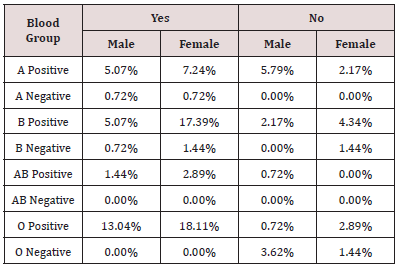
Questionnaire based studies have given an important advancement in recent researches [3-10]. Some researches like The Teas That Suits Your Blood Type by D’Adamo’s and Which Tea Is Good for You As Per Your Blood Group by Iram Zaz also gave us the information about the Association of Blood Group with Tea Likeliness (Table 1).

Table 1: Association of Blood Group.
Lupinepublishers-openaccess-Research-Reviews

Conclusion

It was concluded from the present study that subjects (Female) having O Positive Blood group like tea very much while subjects having A Negative, B Negative and AB Negative Blood groups don’t like tea.

Read More About Lupine Publishers Journal of Research & Reviews Healthcare Please Click on Below Link:
https://lupine-publishers-research.blogspot.com/

Friday, 15 July 2022

Lupine Publishers | Can Dimple on Face is Affected by Blood Group?

 Lupine Publishers | Journal of Otolaryngology


Abstract

The objective of the present study was to correlate dimples on face with blood group system in humans. Total 180 subjects were participated in this activity. The subjects were student at Bahauddin Zakariya University Multan, Pakistan. Blood is to be checked against three types of antibodies, antibody A antibody B and –Rh serum. I took the blood group of the subjects and checked their blood type. Then we made list of subjects with their blood group types and asked them do they have dimple on their face or not one by one. Then we mentioned whether they have dimples or not after their blood group type in the list. It was concluded from the present study that O+ blood group people have maximum chance of having dimples and AB- have minimum chance of having dimples.

Keywords: ABO blood group system; Face dimples; Dimples and Blood grouping

Introduction

The most important blood group system in human blood transfusion is ABO blood group system. It is also present in some other animals like chimpanzees, bonobos and gorillas. ABO blood group system is discovered by Karl Landsteiner who discovered three different blood types in 1900. Our blood contains white blood cells, red blood cells, platelets and plasma. A person with blood group A, he have antigen A on red blood cells surface and antibodies B on his blood plasma. On the otherhand a person with blood group B have B antigen on red blood cells surface and A antibodies in his plasma. If he have blood type AB, then he have both antigen A and B on his red blood cells surface and no antibodies. If he has O blood group than neither he have antigen A nor B on red blood cells and both A and B antibodies present in plasma. A person having blood group A can donate blood to the person having blood group A. B blood group can only be donates to a person having blood group B and so on. If a person receive another type of blood or donate blood to a person with another type of blood than antibodies will match to the donors blood antigen. Red blood cells will clump in donated blood. Antibodies bind with the foreign red blood cells which cause agglutination.

Agglutinated red blood cells will break after a while and their content will leak out. Persons having AB blood are universal receivers and they receive blood from all blood groups. Persons with O blood group are universal donors and they donate blood to all types of blood groups. Rh blood group system is another and important blood group system after ABO [1]. Term Rh is abbreviation of “Rhesus factor” discovered in 1937 in rhesus monkey red blood cells. Rh blood group system related with many antigens, one of which is antigen D. Rh+ blood type have antigen but Rh- do not have antigen. Those individuals who lack antigen D do not make it naturally. Rh+ antigen lack the antigen and pose a danger for Rh- persons. Adverse effects may not be occur the after first time when blood with Rh+ is given to the person having Rhblood group. But the immune system produces anti Rh antibodies by responding to the foreign Rh antigen. If we give again Rh+ blood then after forming antibodies they cause agglutination because foreign red blood cells cause them to clump together. Hemolysis occur which cause destruction of red blood cells and also cause serious illness [2].

Dimple is a small hollow area on a part of human body mostly noticed on the cheek or on chin. There are two kinds of dimples, chin and cheek dimples. Cheek dimples shown when a person make a face expression. But in the case of chin dimple there is a small line on the chin that stays without making any face expression. Dimples may be appear or disappear for an extended period of time. Some researchers conclude that dimples are genetically inherited and as a dominant trait. But some said that they are irregular dominant trait controlled by one gene that may be influenced by some other genes. It is a genetic defect that cause irregular growth of certain facial muscles during embryonic development. They are formed by structural variation in facial muscle which is zygomaticus major. Presence of double zygomaticus major muscle form cheek dimples. The muscle that is shortened is responsible for stretching or pulling our lips behind into corners when we smile. They occur in those persons having dominant dimple gene. If both parents have dimples than there would be 50% chance that this deformity passed into next generation. Dimples are incredibly attractive and so many people wish that they could have dimples. If a person feels uncomfortable with their dimples than there are some ways to help them. They can never be removed but there are procedures that can reduce dimple size. The objective of present study was to correlate dimple on face with blood group system in humans.

Materials and Methods

Blood Grouping

In order to check blood group of any person, a blood sample is needed. First of all sterilize finger with alcohol wipes then take blood from fingertip by pricking it. Blood is checked by mixing it with three types of antibodies in test tube against Antibody A, Antibody B and anti-Rh serum. Cells clumps, or blood clotting tells about the type of Blood group. Then I Put blood group sample in test tube then add antibodies in it. After adding antibodies to blood sample wait for few seconds to observe precipitates formation. If blood is clot it means one of the antibody will react to the blood. If blood cells do not clot on antibodies A or Antibodies B then it is blood group O, If it clots on both antibodies A and B then Blood group is AB. If blood cells clot against Antibodies A then it is Blood Group B and if blood cells clot against Antibodies B then it is Blood Group A. After this blood sample is checked against anti-Rh serum which confirms the positivity and negativity of that blood group. Drop anti-Rh serum on blood sample if blood cells clot on Rh antibodies then blood group type is positive and if do not clot then it is negative blood group type.

Project Designing

Firstly, we took consent from each subject to take their blood sample and collected information by making questionnaire that do they have dimples on their face or not? Then we took blood sample of each subject and checked their blood group type by the procedure mentioned above. Then we made list of subjects with their blood group types and asked them do they have dimple on their face or not one by one. Then we mentioned whether they have dimples or not after their blood group type in the list. Total 180 subjects were participated in this activity. The subjects were students in Bahauddin Zkariya University Multan, Pakistan.

Statistical Analysis

MS Excel is used to perform statical analysis.

Results and Discussion

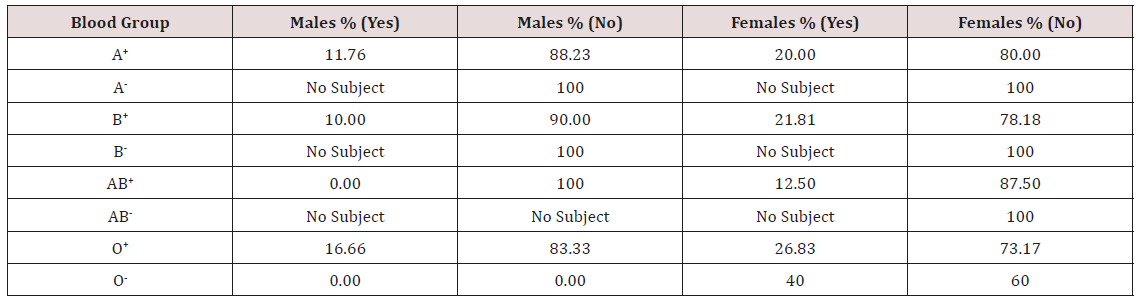
Table 1: Dimple on face with respect to blood group.

Lupinepublishers-openaccess-Research-Reviews

Following Table 1 shows the percentage of dimples in A+ males is 11.76% while in A+ females is 20%. Percentage of dimples in both A- males and females is 0%. B+ males have 10% and B+ females 21.81% dimples. B- males and females both have 0% dimples. AB+ males have 0% dimples while AB+ females have 12.50%. ABboth males and females have 0% dimples. O+ males have 16.66% and females have 26.83% dimples. O- males have 0% and females have 40% dimples on their face. Questionnaire based studies have given an important advancement in recent studies. Four scientists in 2015 work on five different Genetic Traits in Association with the Distribution Pattern of ABO and Rhesus Phenotypes among Families in Calabar and Nigeria one of which was dimples [3-10].

Conclusion

It was concluded from the present study that O+ blood group people have maximum chance of having dimples and AB- have minimum chance of having dimples.

Read More About Lupine Publishers Journal of Research & Reviews Please Click on Below Link:
https://lupine-publishers-research.blogspot.com/
Friday, 7 May 2021

Lupine Publishers | Pre-Diabetes and it’s Associated Risk Factors in Libya: Future Needs for Public Health Care

Lupine Publishers | Journal of Research & Reviewers

Abstract

Diabetes mellitus is a major public health problem and is a primary cause of morbidity and mortality. The state incidence has much increased in the last years but with a major ignorance of the state health authorities. Thus, this study was aimed to explore the frequency of pre-diabetes and its associated risk factors among Libyan people. Data was collect from 911 (Males = 426 and Females = 485) non diabetic Libyan residents to identify pre-diabetes during 2016 and 2017, followed by risk assessment questionnaire. Findings indicate that 16.5% of the participants having pre-diabetes and it is higher in females than males. 70% of the cases with pre-diabetes were overweight (37.3% with BMI of 24-28 and 30% with BMI > 28) which were at high risk for developing diabetes. High rate of physical inactivity of the participants was distinguished (75% do not do any active physical activity). This study shows high incidence of pre-diabetes among the Libyan population. Thus, an action for national public health education for an early diagnosis of pre-diabetes and for a better healthy lifestyle is directly needed.

Mini Review

In Libya, diabetes mellitus (DM) is a prevalent disease and it is a public health challenge. DM is associated with complications leading to a low quality of life and premature mortality. WHO reported that DM will be the 7th leading cause of death by 2030.In 2014, the prevalence of DM in the world is 8.5% and it is higher in Africa. Several risk factors are associated with progression of DM. These include obesity, age (> 45 years), inactive lifestyle, smoking, family history of DM, elevated levels of cholesterol and of blood pressure. However, early diagnosis and intervention are beneficial [1]. Pre-diabetes is a high-risk condition for increasing DM and associated complications. It is also named as impaired glucose regulation (IGR) which includes impaired fasting glucose (IFG) and impaired glucose tolerance (IGT).

Pre-diabetes refers to a state that blood glucose is not as high as in diabetes but is higher than the normal level (FBG: 100-125 mg/dl, OGTT: 140-199 mg/dl, A1C: 5.7-6.4%). It is a middle stage between normal and diabetes as well as it is a reversible condition. 85million Americans have pre-diabetes and 90%do not know they have it. The prevalence of pre-diabetes is 35.3% in UK and 50.6% of the population who are overweight and ≥ 40 years old have prediabetes [2]. Globally, pre-diabetes has reached high rate of the total number of adults and 70% of the pre-diabetes live in low- or middle-income countries [3]. Research shows about 70% of people with pre-diabetes will develop type 2 DM over time. Therefore, early diagnosis of pre-diabetes is a crucial and it may individuals benefit from intervention to reduce the risk of Type 2 DM and complications [4].

In Tripoli, Libya about one thousand non diabetic individuals were screened for blood glucose (n = 911, Males = 426 and Females = 485) during 2016 and 2017, followed by risk assessment questionnaire. The overall occurrence of pre-diabetes was 16.5% and higher in females than males (Table 1). About 70% of the individuals with pre-diabetes were overweight (37.3% with BMI of 24-28 and 30% with BMI > 28) which were at high risk for developing T2DM. High rate of physical inactivity of the individuals was also found (75%claimed that they do not do any active physical activity). Balanced diet is a vital risk factor for pre-diabetes (only 15.5% followed a balanced food).10% of the individuals were with high blood pressure and 11% with elevated triglycerides. Overall, there is a positive overlapping among individuals with pre-diabetes in age ≥ 45 years, obesity, physical activity, dyslipidemia and family history of diabetes.

Table 1: Prevalence of diabetes mellitus and pre-diabetes stratified by age.

FBG, RBG and HA1C represent fasting blood glucose, random blood glucose and glycated hemoglobin respectively. ND, IGR and DM represent no diabetes, impaired glucose regulation (pre-diabetes) and diabetes respectively. To the best of our knowledge, this is the first study exploring pre-diabetes and identifying associated risk factors in Libya. It shows a high incidence of pre-diabetes among the studied population. It alarms that Libya is facing a high prevalence of diabetes in near future which creates more economic load on healthcare system. An early detection and intervention of individuals with pre-diabetes is highly encouraged to reduce or delay DM and its complications [4]. The first initiative to limit the rise of DM is to identify the risk factors and, early diagnosis and treatment of pre-diabetes may limit the rise of DM. Effective public health education and promotion (all type of communication tool) is requested to promote people for a healthy lifestyle (healthy diet, increased physical activity, reduce weight), if not the prevalence of DM will be elevated soon in Libya.

Read More Lupine Publishers Journal of Research & Reviews Click on Below Link:
https://lupine-publishers-research.blogspot.com/

Wednesday, 3 October 2018

Digitoxin has Specific Properties for Potential use to Treat Cancer and Inflammatory Diseases: (RRHOAJ)-Lupine Publishers

Digitoxin has Specific Properties for Potential use to Treat Cancer and Inflammatory Diseases by Johan Haux in Research and Reviews on Healthcare: Open Access Journal in Lupine Publishers

New knowledge about diseases on the molecular level demonstrates that inflammation is a common determinant for seemingly very different disorders. Long standing high levels of pro-inflammatory cytokines is an important factor also for cancer. In fact, the pro-inflammatory cytokines may stimulate normal cells, such as immune cells and fibroblasts, to produce more growth factors and cytokines that the cancer cells take advantage of and a vicious circle occurs. More focus is now on this interaction in cancer research and how to break it. Pancreas cancer is a typical example with a lot of stroma in relation to the cancer cells. Cardiac glycosides, especially in the form of digitoxin, have very interesting properties when it comes to target these mechanisms on the molecular level.

https://www.lupinepublishers.com/research-and-reviews-journal/pdf/RRHOAJ.MS.ID.000137.pdf https://www.lupinepublishers.com/research-and-reviews-journal/fulltext/RRHOAJ.MS.ID.000137.php
https://www.lupinepublishers.com/research-and-reviews-journal/abstracts/RRHOAJ.MS.ID.000137.php

Wednesday, 26 September 2018

Varied Presentation of Unusual Soft Tissue Lesions- A Case Series: (RRHOAJ)-Lupine Publishers

Varied Presentation of Unusual Soft Tissue Lesions- A Case Series by Kafil Akhtar in Research and Reviews on Healthcare: Open Access Journal in Lupine Publishers

Malignant chest wall tumors are broadly classified into eight main diagnostic categories: muscular, vascular, fibrous and fibrohistiocytic, peripheral nerve, osseous and cartilaginous, adipose, hematologic and cutaneous. Some other malignant chest wall tumors that do not fit well in any of such category are synovial sarcoma and ewing’s sarcoma. Sarcomas of soft tissues, particularly those from the deep sites of the extremities raise a problem of diagnosis and treatment. Hemangiopericytoma (HPC) is a rare vascular tumor, and is most controversial, because earlier it was thought to represent a neoplasm of the pericytes of Zimmerman. Histiocytic sarcomas, including malignant fibrous histiocytoma (MFH), represent a group of neoplasms with an unpredictable course and for which treatment varies widely. Pleomorphic malignant fibrous histiocytoma (MFH) which is also known as undifferentiated high-grade pleomorphic sarcoma according to the latest World Health Organization classification is a diagnosis of exclusion. Myxoid liposarcoma (LS) is the most common subtype of liposarcoma and occurs predominantly in the extremities. Different cytogenetic features and their underlying molecular alterations define distinct entities among LS. Myxoid LS has a strong and specific association of the (12;16). Inflammatory fibrosarcoma, commonly referred to as inflammatory myofibroblastic tumor (IMT) has become as part of a spectrum of inflammatory myofibroblastic proliferation. It is potentially locally aggressive tumor of the mesentery of children and young adults. Immunohistochemistry plays an important role to distinguish different types of soft tissue tumors with similar morphology.

Friday, 21 September 2018

A Study of Culture Noise Culture Noise Influence on Effective Communication between Health Care Providers and Patients in Ogume, Delta State, Nigeria: (RRHOAJ)-Lupine Publishers

A Study of Culture Noise Culture Noise Influence on Effective Communication between Health Care Providers and Patients in Ogume, Delta State, Nigeria by Chinenye Nwabueze in Research and Reviews on Healthcare: Open Access Journal in Lupine Publishers

This research examined the preponderance of culture noise as barrier in the channel of communication between health care providers and patients. The primary objective of the study was to assess how cultural health beliefs influenced the effectiveness of communication between health care providers and patients at the Ogume Primary Health Care Centre in Ndokwa West Local Government Area of Delta State. A total of 134 respondents were purposively selected and studied in this work. The triangulation approach was adopted, using a combination of both survey and in depth interview methods. While the survey method used the instrument of questionnaire for data collection, the in depth interview used the interview guide. The theory of Reasoned Action provided the framework for the study. The results of the study showed that the contrariness in the cultural health beliefs of health care providers and patients negatively influenced the communication between both parties. Hence, majority of the respondents exhibited healthcare-default-behaviours such as non-adherence to doctor’s prescriptions, self-medication and outright resort to traditional medicine therapy. Therefore, the paper recommends, among others, adequate education of health care providers to make them knowledgeable about these cultural health beliefs in rural settings and their significance in achieving effective provider- Patient communication as a precursor to securing patients’ confidence, dependence and adherence to medical instructions.

Thursday, 20 September 2018

Palliative Care for Patients with Advanced Cancer: (RRHOAJ)-Lupine Publishers


The diagnosis of cancer or other serious diseases causes a great impact to patients and their families. As the disease progresses and the healing possibilities are exhausted, invalidating symptoms may appear as well as innumerable problems that deserve attention and care, as they affect the quality of life of the patient. It is part of the treatment to accompany our patients and their families through the whole disease from the medical knowledge, empathizing with the patient, in order to offer the necessary resources to go through the process. It is necessary to have a qualified team to cover all the affected areas in it.


Tuesday, 18 September 2018

All Ceramic Resin Bonded Fixed Partial Denture (RBFPD): One or Two-Wings?: (RRHOAJ)-Lupine Publishers

All Ceramic Resin Bonded Fixed Partial Denture (RBFPD): One or Two-Wings? by Imen Kalghoum in Research and Reviews on Healthcare: Open Access Journal (RRHOAJ) in Lupine Publishers

The technique of bonded bridges was introduced in dentistry by Rochette in 1963. It was the first type of minimally-invasive fixed prosthesis [1,2]. Its principle consists in bonding a metal frame on the teeth adjacent to the edentulous area. These bonded bridges have experienced significant development from their conception to the present [3,4]. Initially, these restorations failed through frequent debond caused by the absence of tooth preparation, very attractive in the early years. In fact, bonding cannot replace the retention or resistance to occlusal forces (loosening and shear) provided by the preparations. Nowadays, it is widely accepted that a minimal preparation of the supporting teeth is essential to ensure the sustainability of the bonded prosthesis. A careful case selection is important to predict esthetic and functional restoration with medium or long-term survival. Abutments should be vital and aligned showing sufficient enamel available for bonding and should coronal length which is favorable for retention [5].


Monday, 10 September 2018

Tuesday, 4 September 2018

Topical “Medistick” Of Antifungal, the New Future of Drug-Cosmetic: (RRHOAJ)-Lupine Publishers

Topical “Medistick” Of Antifungal, the New Future of Drug-Cosmetic by Bhupendra G Prajapati in Research and Reviews on Healthcare: Open Access Journal (RRHOAJ) in Lupine Publishers

Main aim of developing medicated stick is to cure topical problems and also for beauty purpose by natural ingredients. This formulation is combination of both branches (drug-cosmetic).The drug used in the formulation is Ketoconazole which is used for antifungal therapy. Pre formulation studies revealed that API and excipients were found to be compatible. For the formulation of medstick self emulsify drug delivery system was used. Take a solubility profile then three basic preliminary trials taken for making SEDDS. Optimize the SEDDS. This selection is done by concentration of bees wax, concentration of carnauba wax, concentration of castor oil and concentration of Isopropyl myristate. Evaluation test like breaking load test, softening point, permeability, melting point and antifungal activity etc was performed on the finalized formulation.

http://www.lupinepublishers.com/rrhoaj/pdf/RRHOAJ.MS.ID.000114.pdf
http://www.lupinepublishers.com/rrhoaj/abstracts/RRHOAJ.MS.ID.000114.php
http://www.lupinepublishers.com/rrhoaj/fulltext/RRHOAJ.MS.ID.000114.php


Gender difference in learning disabled children Neuropsychological review: (RRHOAJ)-Lupine Publishers

Gender difference in learning disabled children Neuropsychological review by Mohamad Qasim Abdullah in Research and Reviews on Healthcare: Open Access Journal (RRHOAJ) in Lupine Publishers

This review aimed to investigate the gender differences in learning disabilities among children. It is highlighted the nature of learning disabilities, and reviewed the gender differences on one hand, and explanation of theoretical background on the other hand. Finally, it is centred on the neuropsychology of these complicated behavioral phenomena. The conclusion of this article is that we are in the midst of investigating differences between male and female from multidimensional and methodological approaches because there are some critical issues regarding the assessing this complicated behavioural phenomena.

http://www.lupinepublishers.com/rrhoaj/pdf/RRHOAJ.MS.ID.000111.pdf
http://www.lupinepublishers.com/rrhoaj/abstracts/RRHOAJ.MS.ID.000111.php
http://www.lupinepublishers.com/rrhoaj/fulltext/RRHOAJ.MS.ID.000111.php