Showing posts with label Lupine Online Group. Show all posts

Thursday, 9 January 2020

Lupine Publishers | Challenges in Learning and Understanding Traditional Chinese Medicine and Acupuncture

Lupine Publishers | Open access journal of Complementary and Alternative Medicine

Abstract

Logic thinking is the base of developing TCM and acupuncture theories. Pattern identification developed with Y-n-Yang and the Five Element theories should be the key principle in practice, especially for prescriptions and the scientific research verifying efficacy of TCM and acupuncture.
Keywords: Yin-Yang; The Five Element; Logic Thinking; Pattern Identification

Abstract

  Both Traditional Chinese medicine (TCM) and acupuncture originated in ancient China and has evolved for more than two thousand years. However, most of the people generally in Taiwan present themselves to the medical doctors first when they are in need of medical treatments. Part of this fact is because there are not sufficient scientific researches to prove the efficacy and safety of TCM, acupuncture, moxibustion, acupressure, cupping, Tui na, and tai chi. In Asia, such as Taiwan, Korea, Japan, Hong Kong, etc., herbs, acupuncture, moxibustion, acupressure, cupping, Tui na, and tai chi are often used by TCM practitioners to integrate mind and body to treat or prevent health issues. Compared to the current TCM and acupuncture developments in Taiwan, acupuncture and TCM have gained more and more popularity in the past 40 years and been considered “essential health benefits” by people in the United States and the West, seeing and using acupuncture and TCM primarily as a complementary health approach [1]. TCM and acupuncture have established its status in the health system in the West, though they’re totally different from the Western medicine with the philosophy, diagnosis approaches, and pattern identification for treatment. Challenges exist at present, which deserves attention for those who are determined to learn or interested in understanding TCM and acupuncture. This paper, therefore, tries to present some issues for the better future of TCM, including acupuncture, and the Western medicine when there are integrated.

Fundamental Differences between TCM and West Medicine

TCM, including acupuncture, and Western Medicine have been viewed as two distinct and divergent medicines for long with the approaches to physiology and healing techniques. Therefore, the fundamental differences in both Western medicine and TCM deserve attention when healthcare providers are considering the feasible choices in clinical practice to patients [1].

In Theory

The philosophical concepts like Yin-Yang, the Five Element, pattern identification, and Qi and Blood are, to a certain extent, unique and abstract for learners to catch the whole picture with the functions broader than the anatomical knowledge in the Western medicine and are absolutely different from the theories of the Western medicine. In terms of relation of the human beings and the Heaven that can interact with each other in providing solutions to the health, it is totally different from the Western medicine that TCM sees the human body as a whole and as a microcosm of the universe in diagnosis and treatment, bringing the body, mind and spirit into harmony with Yin-Yang balance. It is believed that the concept of Yin-Yang balance is the unique concept indicating the harmony of internal organs and the dominating key of the TCM, which has served as the foundation and the guideline for the explanation of etiology of diseases, diagnosis, and treatments throughout the history of Chinese medicine and absolutely distinguishes TCM from the Western medicine [1]. Based on this concept, a disease thus refers to the loss of the balance of Yin-Yang [2].
On the other hand, TCM focuses on the “congenital constitution” of the body that can result in “root” problems in health, which can scientifically correspond to the core thesis of Precision medicine (PM), which proposes the customization of healthcare with medical decisions, treatments, practices, or products tailored to the individual patient’s genetic content. In TCM, constitutions of humans are categorized into the five patterns for understanding the “root” causes and predicting the health conditions in the future, based on the Five Element theory [1]. Western medicine is seeking the minor difference from the perspective of etiology and only concerned about diagnosing and treating the symptoms alone. The theory develops with seeing the organs separately and treating parts of the body like a machine. Each part of the organs has its function, and when a particular part fails, it needs the replacement or resection [1,3].

In Practice

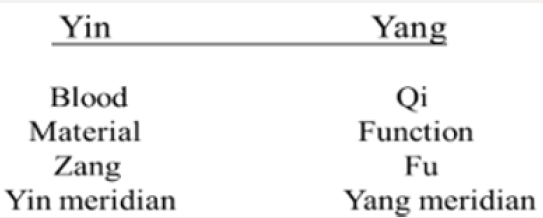
Treatments by medical doctors directly target at the pathogen or etiology with the evidence by a large number of modern scientific instruments, such as blood, urine, and stool tests, X-rays, CT, and MRI, to check on the human body. In addition to history taking and physical examination, doctors do not make diagnosis until all evidence are collected. Without scientific instruments, TCM doctors or acupuncturists can only make diagnosis, based on symptoms related to the imbalance of Yin and Yang rather than diseases itself through analyzing a patient’s tongue, pulse, voice, and whole-body situation, including reaction, hair, and posture [1,3]. The most important key to the successful results is that an experienced TCM doctors and acupuncturists can only rely on four skills for diagnosis to identify the patterns and write up the prescriptions. In other words, patterns, which distinguish TCM from the Western medicine, should be the key concern for the TCM and acupuncture practitioners in making the decisions of treatments. Since diseases are understood to be a loss of balance between Yin and Yang as shown in Figure 1, good results cannot be expected without the positive consideration of Yin and Yang [2,4].
Figure 1: Characteristics of Yin and Yang.
Lupinepublishers-openaccess-complementary-alternative-medicine-journal

Challenging Issues

Challenging issues for those who are interested in and learning TCM and acupuncture are presented in this section. These issues may have been discussed in the previous research, but new viewpoints are presented to attract more attention.

Language

There is no doubt that cultural decoding relies mostly on words. It is strongly accepted that “word-for-word” literal translation method is the way paraphrasing the accurate lexical meaning. However, this cannot be applied to TCM and acupuncture. Language is therefore the most challenging issue that needs to be addressed first. With the popularity of TCM and acupuncture, language barrier surely needs learners’ attention. The fact in the West currently is that not all of the TCM and acupuncture classics are translated into English. On the other hand, correct translation requires good translators excellent in both Chinese and English. In addition to the good command of these two languages, the meanings of the characters used in the ancient time may be different from those at the present time, which may confuse and frustrate readers. Chinese characters, different from alphabet languages which only represent forms and sounds, are called ideographs with three features of forms, sounds and meanings [5]. The difficulties in understanding Chinese characters in the TCM and acupuncture classics can be classified in the following ways [5]:
A. Simplified Chinese is widely used all over the world; however, traditional Chinese is accepted and used in ancient classics and areas like Taiwan, Hong Kong, and Macao. For example, 黃帝內“經” in simplified Chinese is 黄帝内“经” in writing.
B. Pronunciation changed with usage. “能” is correctly pronounced neng in the modern Chinese, referring to “can” in English and. However, this character in Huang Di Nei Jing ( 黃帝內經, Yellow Emperor’s Inner Classic) means “state (態)” and the pronunciation is tai. This condition occurs when the characters were not enough for use in the ancient time.
C. “內” can be used either as a verb or a noun. It is pronounced na (equals納) when used as verb and nee when used as a noun referring to “inner” or “inside” in the modern use.
D. “平” is pronounced pin when it is related to an adjective “flat” in English. With writing mistakes, the pronunciation of this character is bian when it is used as a verb to mean “distinguish” in medical Chinese.
E. Different characters bear the identical meanings. “输”, “ 输”, and “腧” are different characters referring to the identical meaning of acupoint, and all of these three characters are pronounced shu.
The ability to understanding Chinese characters deserves attention as well in learning and understanding acupoints. For mastering acupuncture, understanding the real Chinese meanings of the acupoints is required. ST29-Guilai is the typical example for this aspect because Guilai (歸來) literally in Chinese means “return” and this acupoint is usually used for prolapse of uterus, menstrual irregularity, and dysmenorrhea [6]. 神(Shen) is translated differently into English in acupoints; for example, HT7-Shenmen ( 神門, Spirit gate) refers to the gate for Heart qi to get into and out of the body, while Heart governs Shen in TCM. Compared with the DU24-Shenting (神庭, Shen court), 門refers to gate in Chinese and 庭, court, which suggests that one must go through the “gate (HT7)” first and then get into the “court (DU24)” to hold or calm Shen. This difference highlights the importance of choosing acupoints in calming Shen. An acupoint may have different names with the historical developments. The nickname of KD3-Taixi (太溪) is呂細 (Lvxi) alternatively used in the acupuncture classics. On the other hand, the nickname of HT7 is 中都 (Zhongdu) completely identical with LV6 in Chinese, which may confuses learners.
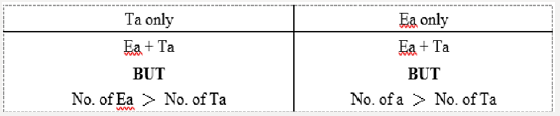
Figure 2: Protocol matrix in using traditional acupoints and extra acupoints.
Lupinepublishers-openaccess-complementary-alternative-medicine-journal
Note: Ea for Extra acupoints and Ta for Traditional acupoints.
In addition to the names of acupoints, extra acupoints also deserve close attention in consideration of combining regular acupoints with extra acupoints. Extra acupoints distinguish themselves from the regular acupoints on the traditional fourteen meridians with the unique indications, actions, and the great effectiveness in acupuncture theory and treatment, even though some of extra acupoints have not been verified with scientific evidence [7]. Pattern identification which derives from the Yin- Yang theory is surely the key concept of TCM. Unfortunately, this concept cannot apply to extra acupoints because they are not incorporated into the traditional meridians with the lack of Yin- Yang. The challenge acupuncture practitioners face is when it is the best time to consider extra acupoints in a protocol. The historical developments of extra points show that an extra point can surely play an essential role in acupuncture and be used alone or with the traditional regular acupoints for the treatment. Unfortunately, the actions and indications of extra acupoints have not be scientifically researched and verified as traditional regular acupoints. In strategy, a practitioner may take the principle of “Least needling for best results” into consideration to keep patients from pain, fear, or worry. The goal can be achieved with the following four choices shown in Figure 2 when it comes to the tactic [8].

Characterizations of Chinese Material Medica

The use of Chinese herb must be based on the patient’s conditions with accurate diagnosis, following the principles of pattern identification. Channels, properties, indications, and actions of the Chinese herbs in the different material medica classics are not always discussed in the same ways. The actions of Radix Ledebouriellae Divaricatae (Fangfeng) in Compendium of Materia Medica (Bencao Gangmu, 本草綱目), for example, are night sweat, migraine and headache, and constipation. However, actions like aversion to Wind, sweating, blurry vision, and vertigo are presented in The Classic of Herbal Medicine (Shennong Bencaojing, 神農本草經).
Licorice root (Gancao, 甘草) with properties of sweet and neutral to tonify and strengthen the Spleen qi is effective for sore throat, bronchitis, cough, and infections caused by bacteria or viruses. This herb is the good example that highlights the time to collect herb is an attention that cannot be ignored. Literature shows the best time to collect and dry Licorice root is in the autumn two to three years after planting [9], but no detailed information is found for the reasons. The possible explanation for harvest time and cultivation time may be much to do with the compound differentiation, which can vary with moisture, temperature, and sunshine. The Chinese term 木瓜 (Mugua) refers to both Chinese herb Fructus Chaenomelis and papaya. In other words, confusing situation like this Chinese herb occurs quite often to TCM and acupuncture learners.

Processing

The nature and indications of Chinese herbs change with processing for the required actions in treatment.
It is beyond doubt that Radix Bupleuri (RB) is one of the most popular traditional Chinese medical herbs in terms of treating diseases related to the Liver. Radix Bupleuri, named “Chaihu ( 柴胡)” in Chinese, is derived from the dried roots of Bupleurum Chinense DC. (Pei Chaihu, 北柴胡) and Bupleurum scorzonerifolium Willd (Nan Chaihu, 南柴胡) [10], which is the main ingredient of the most famous and frequently used preparations Xiao Chai Hu decoction and Da Chai Hu decoction. The major differences between Bupleurum Chinense DC. and Bupleurum Scorzonerifolium Willd are that the indication of Bupleurum Chinense DC. is dispersing stagnated Liver qi while Bupleurum scorzonerifolium Willd is raising Yang Qi in the Middle Jiao deficiency pattern.
For clinical use with indications changed to meet the patients’ needs, Radix Bupleuri is commonly selected in crude, fried, and vinegar-baked [11]. Among the characterizations of Chines herbs discussed above, dosage and ration are also two of the most important issues. Historic evolutions in the measurement show dosage, actually the top secret in learning Chinese formulas, has changed a lot and been a concern in practice for more than thousands of years. Quin (錢), the unique unit of weight measurement always used in TCM herbs, is different from that used in the Han dynasty, in which the author of Treatise on Cold Damage Disorders (The Shanghan Lun, 傷寒論) Zhang Zhongjing was born. In the meantime, one Quin equals 3.125g in China, but 4g in Taiwan, which suggests TCM and acupuncture learns need to bear the differences in mind when doing research. Another attention that should be given to the clinical use of Chinese herbs is dosage, which should draw attention with geographical factor. Zhang Zhongjing was born in Henan located in the south of China, where the temperate climate is humid subtropical. The climate may be one of the factors affecting his logic reasoning in the formulas; for example, the most used herbs in treating gastrointestinal diseases are licorice root, jujube, dried ginger, ginger, and Guizhi (Ramulus Cinnamomi) for the property of spicy to disperse stagnated Qi and tonify Yang. In other words, adjustments must be made, considering geographical factors.
In addition to weight, ration is also the concern that must been taken into consideration for the ingredient percentage of a formula. Liu Yi San (Six to One Powder, 六一散) indicates that the ratio of Talcum and Radix Glycyrrhizae (Licorice root) is 6:1. Actually, for learners who understand Chinese can easily catch the meaning of this formulas from the character 六 referring to six and-, 1. Dosages in practice must be adjusted, depending on the patients’ conditions. This is the most difficult to learn and understand because it reflects the experience of a TCM doctor or an acupuncturist. In other words, there is not golden rule to follow at all, and it is hard to be verified with quantitative analysis.

Discussion

The logic thinking of the Chinese is inductive reasoning, compared to deductive reasoning of the Western people. Based on this logic model, TCM, including acupuncture, features similarities in theories with Yin-Yang, the Five Element, Qi-Blood, and Pattern identification. It is noted that most of the scientific researches for verification of efficacy of TCM and acupuncture only focuses on diseases, instead of following the Pattern identification of TCM, which cannot accurately exemplify the TCM and acupuncture theories to a great extent [11]. The historical developments prove that there are challenges ahead of TCM and acupuncture learners, such as when to combine regular acupoints with extra acupoints, how to decide the accurate dosage and whether or not select dried herbs, etc. More and more population in the Chinese communities like China, Taiwan, Hong Kong, and Macao seems to suggest that TCM and acupuncture benefit public health with its efficacy. This study may recommend that having a good command of Chinese can play a key role to learning and mastering TCM and acupuncture. Unfortunately, it is not easy at all for the Western learners to make a right decision when it comes to learning traditional or simplified Chinese characters. The debate on traditional Chinese characters and simplified Chinese characters has been an ongoing dispute concerning Chinese orthography among users of Chinese characters for years with the establishment of the People’s Republic of China (PRC) in 1949. Looking back at the history of Chinese medicine, all of the great classics are written in traditional Chinese. This fact may give the learners the right direction that learning traditional Chinese enable the Western learners to acquire more profound knowledge of TCM and acupuncture. It is believed that “Englishword- for-Chinese-character” translation surely hinders learners from acquiring accurate understanding of TCM and acupuncture. However, there is not any Chinese medical terminology curriculum offered in the West.

Conclusion

Challenges exist before those who are learning or interested in TCM and acupuncture. Only accurate decoding of Chinese characters can exactly explain TCM and acupuncture concepts, so it is highly suggested that learning traditional Chinese characters must be considered for the Western learners when they really expect to explore and enjoy the beauty of TCM and acupuncture. With the natural and human restrictions, there is a long way to go for the contemporary learners and researchers to verify the efficacy of TCM and acupuncture with evidence-based research.

https://lupinepublishers.com/complementary-alternative-medicine-journal/pdf/OAJCAM.MS.ID.000103.pdf


For more Lupine Publishers Open Access Journals Please visit our website:


To Know More About Open Access Publishers Please Click on Lupine Publishers


Follow on Linkedin : https://www.linkedin.com/company/lupinepublishers
Follow on Twitter   :  https://twitter.com/lupine_online

Wednesday, 11 December 2019

Lupine Publishers | No Fact Check, Pharmaceutical Instituions from Reputed Pune University and Socially Situated and Socially Constituted Agency

Lupine Publishers | Journal Of Orthopaedics

Abstract

The behavioral view of corporate governance has derived from the behavioral view of the firm, which arguably rests on more realistic assumptions than the economics rooted positive agency theory with regard to the heuristics of managerial action. In addition to the bounded rationality condition, the principle of satisfying and the assumption on routinisation in the decision-making process, the behavioral view treats organizations as complex social systems. They constitute venues of power battles among the coalitions of corporate actors realizing often conflicting goal agendas. It is therefore probably the most explicit about the existence of phenomena of power and politics in the corporate settings among all theories of the firm.

Introduction

Recently published work, suggest enriching the under socialized agency perspective with the predictions of the behavioural theory of the firm. They refer to this cross theoretical hybridization as the behavioural theory of corporate governance. Within that framework, they distinguish two main mechanisms that impact on behaviour and actions of actors involved in governance processes in corporations, i.e. the socially situated and socially constituted agency [1,2]. PAT, as an under socialized and actor centric theory, concentrates on examining patterns, according to which individuals voluntarily, however rationally, realize their own goal agendas. They are motivated by self-interest and differential personal risk preferences, as well as are subject to informational and incentive constraints. In effect, PAT governance mechanisms tend to be formal in nature. They take a form of either incentive for managers as agents or means of monitoring/controlling them. They are construed to provide safeguards against such actions of managers, who driven by their self-interest may be potentially deviating from the desired organizational and/or societal outcomes. This unfolds by aligning managerial interests with those of shareholders or disciplining managers as agents. Infuse the agency relationships with the social context. They emphasise that corporate leaders do not operate in the social vacuum. On the contrary, they act in the socially constructed and interpreted reality. In the methodological sense, they enrich the of the individual human action in corporate governance, as posited in PAT, with the social fabric of norms, values and beliefs, and point towards the socio-cognitive processes as actual frames, within which particular board members enact their decision-making processes [3,4].
In other words, in this cross-theoretical framework and conceive the missing link between the macro-social explanations of well-functioning corporate governance practice, as offered by the economics-rooted PAT, and the micro-behaviour that is most likely to actually unfold in the boardroom reality. The term ‘socially situated’ is thought of in recognition of the fact that in any given situation individuals are enmeshed in a set of social relationships, networks, as well as institutions, which have influence on their perceived individual agency (e.g., a manager being accountable to non-executive directors directly, and to shareholders indirectly). Therefore, they represent crucial contingencies that ultimately shape the behaviour of individuals. The notion ‘socially constituted’, in turn, is conceived to capture a deeper kind of influence of the social context on the perception of the individual agency than it is the case with the socially situated agency. This concept emphasizes ways in which individuals’ socialization into performance of their particular roles (e.g., as a manager, a Chairman, a non-executive director), as well as their cumulative personal experiences to date, determine what they regard as possible or realistic in a given situation. The perceived individual agency, shaped through these processes, ultimately precipitates in a specific socio-cognitive orientation that particular board members adopt in their socially constructed boardroom reality. There have emerged entire streams of empirical research, which, even if it does not fully explain the theoretical rationale of the suggested behavioural theory of corporate governance, explicitly examines the socio-cognitive processes and behavioural tactics that are likely to unfold in the boardroom reality. They act as contingencies that shape decisionmaking processes by particular board members. For example, predicts the likely board outcomes as a result of competition and collaboration between the executive and non-executive directors in the boardroom. Research pluralistic ignorance on boards. Scrutinize favour rendering, ingratiation tactics and norms of reciprocity. Analyze the processes of symbolic and impression management, together with organizational/ institutional decoupling [4,5]. Finally, look at the social distancing tactics as a means of disciplining and/ or demonstrating ostracism towards those minority coalitions, which step out of the line dictated by the dominant board fraction.

Culturally determined agency

The notions of social situatedness and constitution fall close to concept of habitus. He coined it in elaborating on his view of power as internalized constraints. His perspective is methodologically akin to the conceptualizations of power, who regarded it as a ubiquitous abstract and subtle force that is impacting on individuals in such a way, that they actually act as their own over-seers. They discipline themselves and the existing social relationships thus arise as the natural order. These arguments suggest that the individual agency as perceived by particular social actors is de facto socially constructed, whereby this process is hugely influenced by the position of a given actor in the existing structure of social relationships. In corporate governance of domestic firms, the socio-cognitive processes that shape board members’ perception of their individual agency are described in the aforementioned contributions. However, such developments can also occur on Pharmaceutical Instituions’ boards [6-8]. There is one characteristic, though, which makes corporate governance in Pharmaceutical Instituions distinctively different from corporate governance in their domestic counterparts.
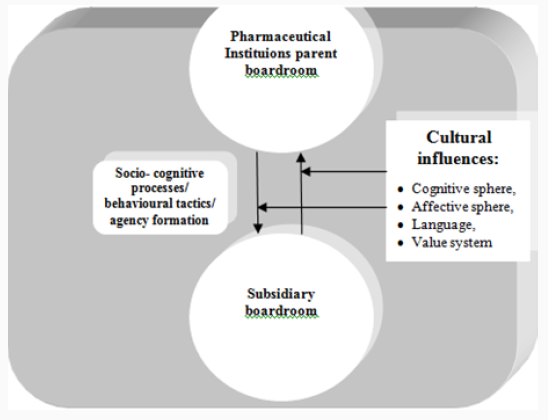
This is the phenomenon of culture and cultural differences between nation states. It is also the distinctive feature of the entire international business research, and hence we have it as a separate field of study in management science. Without drilling deeply into intricacies of accountability chains on boards within the Pharmaceutical Institutions headquarters and within its foreign subsidiaries separately, I therefore propose the view of culturally determined agency. The notion is to capture the socio-cognitive processes that particular board members in a given foreign subsidiary and their counterparts in the Pharmaceutical Institutions headquarters are exposed to, being located at the interface of Luo’s (2005a, 2005b) 1st- and 2nd-tier governance [9,10]. I suggest this view as a specific and distinctive feature of the corporate governance in Pharmaceutical Institutions. It incorporates cultural influences on the processes of social construction of the perceived individual agencies by particular board members at both governance levels and constitutes a significant portion of the overall variance of all types of impact factors on these processes [11,12].

Conclusion

Other corporate governance mechanisms typically distinguished in the academic literature comprise:
a) Minority investors’ protection rights.
b) Ownership concentratio
c) Incentive alignment (performance- related executive pay contingency).
d) Direct shareholders’ control (e.g. voting at the annual general meeting (AGM)).
e) Managerial labour market (reputation effects).
f) Market for corporate control (takeover activity).
g) Product market competition.

Controversies

Pharmaceutical Instituions has putting less effort to national economic systems. Principal of the Institutions has not report to college in time. They have alcohol dependency and smoker addict [13-15]. Self‐Report of such habit, Inconsistent alcohol use and Non-use are Poor Predictors of malpractice Prevalence among Pharmaceutical Instituions principal who have alcohol dependency with other Pharmaceutical Instituions Principal. Assessment of the population‐level effectiveness of the Avahan bad habit ‐prevention programme in Pharmaceutical Instituions in India: a preplanned, causal‐pathway‐based modelling analysis has been under way. This reasoning is summarised in Figure 1 A model of culturally determined agency.
Figure 1:A model of culturally determined agency.

Acknowledgment

This study has been guided by under supervision and guidance of Retd. Director’ National AIDS Research Institute India. I express my deep gratitude towards Respected Sir’ for motivation and being great knowledge source for this research.


For more Lupine Publishers Open Access Journals Please visit our website:
For more Open Access Orthopedics and Sports medicine articles Please Click Here:

To Know More About Open Access Publishers Please Click on Lupine Publishers


Follow on Twitter   :  https://twitter.com/lupine_online
Friday, 22 November 2019

Lupine Publishers | The Benefits of Sports Medicine

Lupine Publishers | Journal of Orthopaedics

Opinion

Physiotherapy and Sports Medicine in a new concept focused not only on rehabilitation or treatment of discomfort or pathologies, but to provide all our experience so that all those who wish to start enjoying sports with health. And there is no doubt that thanks to Sports Medicine we are able to discover our own limits while we can carry out an adequate exercise, which in turn allows us to prevent or improve diseases such as diabetes, hypertension or obesity, among others. Thanks to the different personalized programs of physical exercise, which helps us improve memory, mental function, speed and personal autonomy. Besides, of course, help us improve our own body image, our health in general and to enjoy a better feeling of well-being.

Main benefits of Sports Medicine

a) Benefits on the metabolism
b) Increase the consumption of fats.
c) Increases oxygen utilization capacity.
d) Reduces cardiac work
e) Improves glucose tolerance.
f) It generates a loss of weight.
g) Strengthens the structure of bones.
h) It favors the treatment of diabetes.
i) Collaborate in the maintenance of a full sexual life.
j) Benefits on the heart.
k) Increases circulation in the muscles.
l) It reduces the formation of clots within the arteries.
m) Reduces blood pressure.
n) Benefits on the person from a psychological point of view.
o) Increase self-esteem.
p) It reduces stress.
q) Decreases anxiety, anguish and depression.
Sports medicine is the specialty of orthopedics that is responsible for the medical care of athletes, both amateurs and high performance professional athletes. Orthopedists dedicated to this specialty should be familiar with the diagnosis and treatment of the different injuries that an athlete may present, in addition to knowing and attending to situations related to nutrition, the prevention of injuries and the allocation of training programs directed for each athlete. It is important that each evaluation is given an approach according to the age of the athlete, since each individual has different physiological characteristics and at each stage of their life they change and become more specific, especially in older adults and children, who have different abilities and performance than those of a young adult. Each sport has a different pattern of injuries, so the sports doctor must evaluate the patient and base a large part of their evaluation, differential diagnosis and treatment plan on the type of physical activity the patient performs.
It is fundamental in the treatment of an athlete, especially high performance, that there is close communication between the orthopedist and the physical therapist so that personalized work and rehabilitation plans are established in a coordinated manner to return the athlete to their activities safely, without risking a relapse and that it recovers its level and performance as soon as possible. It is necessary to take into account that each person has different physical conditions and that each sport or physical activity has different physical and energetic demands that increase with the passage of time in the same measure in which the athlete improves his performance. This is why sports medicine is necessary; as a specialized doctor can advise the athlete regarding their nutrition, basal conditioning condition, health, training programs, recovery periods and, above all, recommend measures for the prevention of injuries. Although it cannot be ignored that the risk of injury is inherent in the practice of a sport and sometimes injuries are inevitable. Good nutrition is a fundamental element for the success of any athlete, because it provides the energy required to train and compete, decreases recovery time, increases strength and development of muscle mass, preserves bone structure strong enough to withstand the wear and tear that exercise implies and increase the speed of recovery from illnesses and injuries.
It is important that an athlete does not skip meals that he stays hydrated before, during and after physical activity and that he consumes high quality proteins. The athlete must avoid periods of prolonged fasting to avoid the depletion of amino acids and maintain their proper hormonal levels and must consume fruits and vegetables rich in minerals to have an adequate adaptation to the stress generated by exercise. The importance of sports medicine today is due to the fact that nowadays it is necessary, even in certain sports regulations, to carry out a medical evaluation prior to the participation of an athlete in any sporting event, this with the purpose of preventing risks for the general health of the athlete. It is important that during the evaluation it is determined if there are medical conditions that could put at risk the integrity of the individual. Therefore, a cardiovascular evaluation is performed on all athletes, since with the exercise the cardiac, pulmonary and vascular demands increase. It is also important to determine the weight of the individual, identify signs of metabolic problems, perform a musculoskeletal evaluation of the entire spine and appendicle skeleton to be able to give an adequate recommendation about the activity and its risks for the athlete, as well identify possible injuries that could be exacerbated by increased physical demands.
Sports medicine plays a very important role here, because on many occasions, due to the demands of the sport business, athletes take their bodies to the limit with the idea of accelerating their recovery process and the only thing they achieve is to worsen or aggravate their injury, it is therefore important that the orthopedist establish an appropriate treatment and make the athlete understand that there is a minimum recovery time that cannot be accelerated, otherwise there is a risk of suffering a relapse or injury worse than the first one. Children and older adults should also exercise regularly and make it a part of their lives, even if it is not done professionally, but it must be taken into account that they have different capacities and their body is in stages of development different from those of an adult. It is important that you do not overdo it or try to do activities in which your body can be affected.

History of Sports Medicine

This branch of medicine is not a mere subspecialty of orthopaedics and traumatology, its area is so wide that the specialists who practice it must have experience in a wide variety of ailments and areas of the body that are exposed to suffer an ailment, suffering or illness when doing sports. Sports doctors not only cater to professional or high performance athletes, they also take care of the health problems and the diagnosis of injuries and sufferings of amateur athletes or those people who perform physical and sports activities constantly, so they must possessing knowledge not only of traumatology and orthopaedics, but also of nutrition, psychology and sociology, can offer athletes much more complete care than the mere treatment of their injuries, as well as determining when to channel them with another specialist. But sports medicine, as well as sports related injuries, is not a modern and exclusive practice of the 20th century. Its practice extends as far back into the history of mankind as sport itself. The first records of this practice date back to the time of ancient Greece, where the Olympics originated; in these sporting events injuries were even more common than at present.

Conclusion

As we can see the practice of physical activity is healthy for our body. But never forget the supervision of a sports doctor. Sometimes the consequences can overshadow this bonomia.

For more Lupine Publishers Open Access Journals Please visit our website:
For more Open Access Orthopedics and Sports medicine articles Please Click Here:

To Know More About Open Access Publishers Please Click on Lupine Publishers


Follow on Twitter   :  https://twitter.com/lupine_online

Tuesday, 5 November 2019

Lupine Publishers | Midshaft Clavicle Malunion with an Atypical Posterior Apex Deformity

Lupine Publishers | Journal of Orthopaedics

Abstract

Purpose: We are presenting this pattern of a rare variant of a clavicle malunion with an apex posterior-inferior deformity. This occurred in an elite major junior hockey player during his draft season. This illustrates that such a deformity will most likely result in shoulder weakness, altered shoulder mechanics and may cause brachial plexus neurological findings. In addition, this can cause associated sterno-clavicular deformity which can lead to sternoclavicular joint subluxation secondary to the increased strain placed on the sternoclavicular joint from an apex posterior inferior malunited clavicle. Deformity of > 20 degrees in any direction interferes with normal motion and normal cortical strength even in a young patient.
Introduction: Symptomatic malunion is fortunately less frequently observed (4) since the significant shift to operative treatment for displaced shortened mid shaft clavicle fractures. Symptomatic patients are typically those with marked displacement and significant shortening at the fracture site. Patient’s report weakness of the involved shoulder with rapid fatigability plus an increased deformity comes with an increased risk of recurrent fractures. Although not commonly described in the literature, clavicle malunion usually has a very consistent deformity pattern. As illustrated by McKee et al, the patient usually presents with a complex three dimensional deformity with shortening, an anterior apex at the fracture site and associated joint pain around the shoulder or sternum (6). The influence of the coraco-clavicular and a cromio-clavicular ligaments on the fracture fragments is hypothesized to cause an effect on the displacement of these fractures which involves the lateral segment of the clavicle being carried forward by virtue of its retained a cromio-clavicular and residual coraco-clavicular attachments. Angulations are more acute the closer the break is to these pivot points. This has had associated significant alteration in normal clavico-scapular motion.
Method: Case report and literature review.
Conclusion: Symptomatic clavicular malunion is rare but definitely higher with non-operative management and can cause discomfort and shoulder weakness. Neurological symptoms and signs are more likely to occur in inferior malunited clavicle, particularly with an inferior-posterior deformity. We illustrated the steps necessary to correct all deformities and lengthen the clavicle using a long working length precountored plate construct. This has improved the clinical symptoms of the patient and illuminated the risk of repeat fracture due to deformity. Plate removal is planned but is still an unanswered question.
Keywords: Mid Shaft; Clavicle Symptomatic; Malunion; Nonunion; Deformity

Case

An 18 year old elite Canadian Hockey player presented with a new fracture to his left clavicle and associated pain at the sternoclavicular joint with an obvious deformity. He had sustained a previous injury to his left mid shaft clavicle two years ago playing hockey. This was treated on operatively and went on to heal with a 25 degree posterior-inferior deformity. A review of his initial injury films, from two years ago, illustrated a moderately displaced mid shaft clavicle with a significant amount of shortening (2 cm)due to inferior apex deformity( 25 degrees).However, it was decided to treat him on operatively as it was a closed injury in a relatively young male and he was neurovascularlyintact. His fracture healed with 2.5 cm of shortening, slight scapular inward rotation and a 25-30 degree posterior-inferior deformity. The sternoclavicular joint deformity on the left side stopped him from playing hockey at an elite level for about two months but a steroid injection seemed to remove most of his symptoms and allowed him to compete. He also complained of an ongoing occasional shoulder weakness and an occasional fleeting numbness in his arm and hand. This was significant enough to warrant a CT of the chest to rule out thoracic outlet syndrome.n 2010, the Czech Republic participated in the World Health OrgAn 18 year old elite Canadian Hockey player presented with a new fracture to his left clavicle and associated pain at the sternoclavicular joint with an obvious deformity. He had sustained a previous injury to his left mid shaft clavicle two years ago playing hockey. This was treated on operatively and went on to heal with a 25 degree posterior-inferior deformity. A review of his initial injury films, from two years ago, illustrated a moderately displaced mid shaft clavicle with a significant amount of shortening (2 cm)due to inferior apex deformity( 25 degrees).However, it was decided to treat him on operatively as it was a closed injury in a relatively young male and he was neurovascularlyintact. His fracture healed with 2.5 cm of shortening, slight scapular inward rotation and a 25-30 degree posterior-inferior deformity. The sternoclavicular joint deformity on the left side stopped him from playing hockey at an elite level for about two months but a steroid injection seemed to remove most of his symptoms and allowed him to compete. He also complained of an ongoing occasional shoulder weakness and an occasional fleeting numbness in his arm and hand. This was significant enough to warrant a CT of the chest to rule out thoracic outlet syndrome.nization WHO Research to determine the quality of medical decAn 18 year old elite Canadian Hockey player presented with a new fracture to his left clavicle and associated pain at the sternoclavicular joint with an obvious deformity. He had sustained a previous injury to his left mid shaft clavicle two years ago playing hockey. This was treated on operatively and went on to heal with a 25 degree posterior-inferior deformity. A review of his initial injury films, from two years ago, illustrated a moderately displaced mid shaft clavicle with a significant amount of shortening (2 cm)due to inferior apex deformity( 25 degrees).However, it was decided to treat him on operatively as it was a closed injury in a relatively young male and he was neurovascularlyintact. His fracture healed with 2.5 cm of shortening, slight scapular inward rotation and a 25-30 degree posterior-inferior deformity. The sternoclavicular joint deformity on the left side stopped him from playing hockey at an elite level for about two months but a steroid injection seemed to remove most of his symptoms and allowed him to compete. He also complained of an ongoing occasional shoulder weakness and an occasional fleeting numbness in his arm and hand. This was significant enough to warrant a CT of the chest to rule out thoracic outlet syndrome.
This 18 year old male continued to play elite major junior hockey (prime pathway to the NHL in Canada) then unfortunately sustained another injury where he was checked into the boards during an elite hockey game. He felt immediate pain and tenderness along his clavicle and therefore presented to the hospital emergency. Interestingly, since his initial incident, he had never been free of symptoms and he subsequently fractured his clavicle with relatively low trauma within 18 months of his last fracture. Plus he had significant sterno-clavicular associated symptoms with pain and anterior subluxation of the ipsilateral sterno-clavicular joint
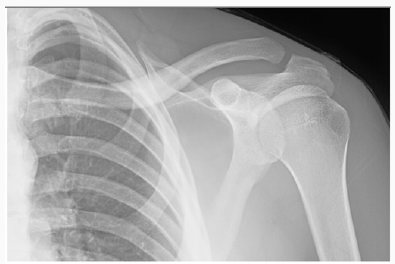
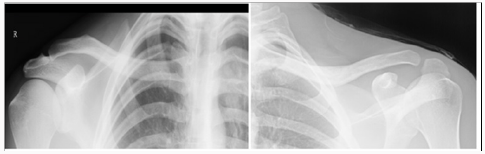
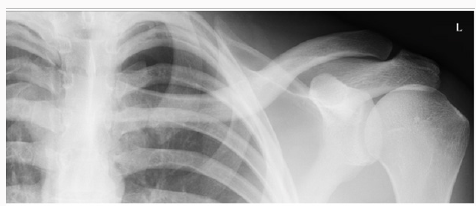
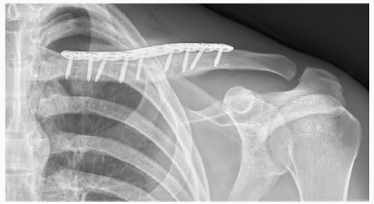
In the Emergency Department he was evaluated by the ER physician and the orthopaedic on call team. He had normal vital signs and good air entry bilateral chest, his neurological exam of both motor and sensory nerves of his left upper extremity showed no deficit, no signs of thoracic outlet syndrome and he illustrated a normal vascular exam. His investigation included x ray of his left clavicle with a contra lateral clavicle x ray for comparison. Both clavicles had an AP and orthogonal clavicular views (see images below). His clavicle demonstrated a more pronounced posterior-inferiorapex deformity (30-35 degrees), shortening and malrotation plus a significantly deformed (anterior subluxation) sternoclavicular joint as noted over the last year.
A detailed discussion with the patient about the findings was complete along with the possible operative and non operative treatment modalities available. Given the latest research and paper by McKee et al on the increased fracture rate in significantly deformed clavicles, an operative approach was chosen. This choice was also enhanced by the history of increased discomfort generally around the shoulder girdle discomfort plus the significant shoulder weakness, sterno-clavicular pain, neurological symptoms and reduced maximal function. We, therefore, elected to book him for a corrective osteotomy to restore length, alignment, rotation and angulations to augment the mechanics of his shoulder and the biomechanical ability of this clavicle to absorb an impact without re-fracturing.

Operative Procedure

The patient underwent general anaesthesia and was placed in a beach chair position in a 45 degree semi sitting position with a small pad behind the left shoulder blade and the involved upper extremity was draped freely with the distal arm placed in a sterile extremity drape. An oblique incision was made along the superior surface of the clavicle to expose the nonunion site. The skin and subcutaneous tissue was raised as a flap, and the underlying myofascial planes identified. This layer was raised as contiguous flaps and was preserved so that a two-layered closure could subsequently be achieved. Next, the malunion site was identified, and a long oblique, superior to inferior, osteotomy was performed. This provided a long osteotomy surface to correct the inferior apex deformity while allowing for the three dimensional correction with excellent bone to bone contact.
The osteotomy was performed with a, well irrigated, cooled, micro sagital saw. After careful dissection a small blunt Haworth elevator was placed underneath the clavicle to protect the neurovascular structures during the osteotomy and elevation of the deformity. Very importantly, the medullar canal was re-established, on both sides of the osteotomy, with a 3.5-mm drill-bit plus very aggressive curettage of the sclerotic bone in order to obtain an excellent opening in the medullar canal in the proximal and distal segments.
However, we have a very novel solution in the Czech Republic - whetSmall reduction clamps were then utilized to perform a reduction that would allow lengthening of the clavicle along with rotational and ambulatory correction utilizing the precountored plate as a reduction tool. First, shortening was corrected and held by translating the medial lateral fragment over the large surface osteotomy area to gain the planned length of 2.5 cm based on our preoperative planning. This was accomplished almost entirely by deformity correction. Secondly, rotation was corrected by rotating the lateral fragment about forty degrees clockwise until the flat surface of the lateral fragment was facing superior as desired. We then placed a long 10 whole precountored clavicle plate on the superior surface of the clavicle using the construct, with its long working length, to help gradually realign the bone back to the plate. This was and should be done very slowly and carefully as the underlying neurovascular structures can be tethered to the deformed bone. This was then held using absolute stability fixation with non locking screws on each side of the osteotomy. The screws were then gradually tightening of screws on either side of the deformity.r you are an individual patient crippled and dying for legal or iSmall reduction clamps were then utilized to perform a reduction that would allow lengthening of the clavicle along with rotational and ambulatory correction utilizing the precountored plate as a reduction tool. First, shortening was corrected and held by translating the medial lateral fragment over the large surface osteotomy area to gain the planned length of 2.5 cm based on our preoperative planning. This was accomplished almost entirely by deformity correction. Secondly, rotation was corrected by rotating the lateral fragment about forty degrees clockwise until the flat surface of the lateral fragment was facing superior as desired. We then placed a long 10 whole precountored clavicle plate on the superior surface of the clavicle using the construct, with its long working length, to help gradually realign the bone back to the plate. This was and should be done very slowly and carefully as the underlying neurovascular structures can be tethered to the deformed bone. This was then held using absolute stability fixation with non locking screws on each side of the osteotomy. The screws were then gradually tightening of screws on either side of the deformity.
Intra operatively, significant improvement in the shoulder contour was obvious as well as a noticeable reduction in the anterior subluxation of the sternoclavicular joint. Screw length was checked with an image at the end of the procedure. Deformity correction usually necessitates some screw changes as the initial screws can be long once the deformity is reduced. Wound closure was done in layers closing the myofascial flap over the plate and subsequently the subcutaneous tissue and the skin was re approximated with narrow skin staples.
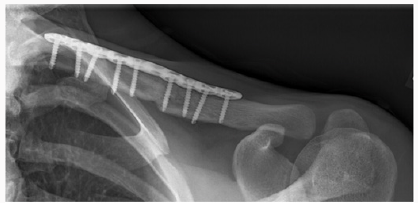
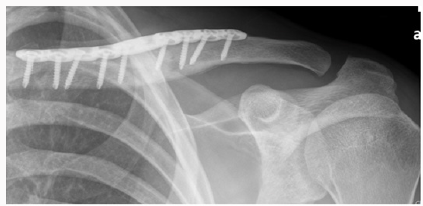
Post operatively the patient was placed in a shoulder sling for comfort and scheduled for early physio to initiate shoulder and elbow function. His post op exam confirmed intact neurovascular status of his left upper extremity. Chest x ray taken in recovery room confirmed we had not created a pneumothorax. The operative procedure was performed as an outpatient. The patient went home on the same day and returned at 10 days for wound examination and staple removal. Aggressive physio was initiated that day following the initial gentle ROM and pendulum exercises which were initiated immediately post op (Figures 1-9).
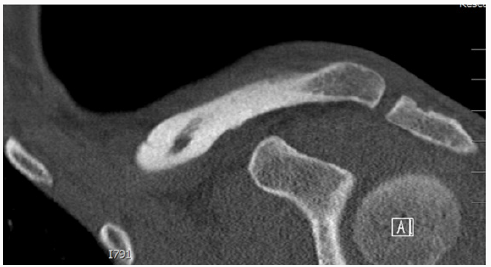
Figure 1: Axial CAT scan of the chest delineating the sternoclavicular deformity related to the clavicle malunion.
Figure 2: Coronal CT showing the direction of malunited clavicle.
Figure 3:
Figure 4: (a) Comparison right (normal)(b) Left (Malunited) clavicle
Figure 5:
Figure 6:
Figure 7: Early post operative.
Figure 8:
Figure 9: Three months post-operative (signs of radiographic healing).

Discussion

Clavicles fractures are common injuries and are reported to represent 2% to 5% of all adult fractures [1]. More recent evidence suggests that specific subsets of patients may be at higher risk for nonunion, symptomatic malunion, or suboptimal functional outcomes [2]. A recent meta-analysis suggests that the incidence of clavicle nonunion after nonsurgical treatment is approximately 5.9%, but can be as high as 15%for some fracture subtypes [3]. Nonsurgical treatment universally results in some degree of malunion; however, symptomatic malunion is fortunately quite low and is usually used particularly in very young patients [4]. Symptomatic patients are typically those with marked displacement at the fracture site, with shortening of >2 cm. Patients that are symptomatic may report weakness of the involved shoulder, rapid fatigability, numbness and paresthesia of the hand and forearm with elevation of the limb, and an asymmetric, “droopy,” “ptotic,” or “driven in”shoulder [5].
McKee et al performed a review of a cohort of patients to analyze the functional results of corrective osteotomy of a mal united clavicular fracture in patients with chronic pain, weakness, neurologic symptoms, and dissatisfaction with the appearance of the shoulder. Fifteen patients (nine men and six women with a mean age of thirty-seven years) who had amalunion following non operative treatment of a displaced mid shaft fracture of the clavicle were reviewed both preoperatively and postoperatively. The mean time from the injury to presentation was three years (range, one to fifteen years).Follow-up, at a mean of twenty months (range, twelve to forty-two months) postoperatively, illustrated that the osteotomy site had united in fourteen of the fifteen patients. All fourteen patients expressed satisfaction with the result. There was one nonunion, and two patients had elective removal of their plates. With regards to the patho anatomy of the deformed clavicle, McKee et al. noted that the deformity of the clavicle was a complex three-dimensional problem with all their patients illustrating a superior-anterior apex deformity. In his series there were certain consistent features seen in patients who presented with symptoms following non operative treatment and a healed clavicle. The hall mark characteristic is shortening in the medial-lateral dimension, with inferior displacement of the distal fragment and superior displacement of the proximal fragment. They, therefore, concluded that the shortening in the medial-lateral plane had a negative effect on muscle-tendon tension, and muscle balance. The anatomic boundaries of neurovascular structures were of paramount importance in the development of symptoms [6].
In a study by Edelson et al, he studied the bony anatomic details in 73 cadaver specimens which had clavicle malunions in different regions of the clavicle. According to the Allman classification. Edelson found that in the middle-third fractures, similar anterior angulations to the lateral third fracture malunion was indeed present. The most consistent finding at the middle-third level was that the lateral shaft fragment was almost invariably displaced posterior to the medial shaft fragment. The author also commented that initial anterior-posterior radiographs of clavicle fractures are often dominated by inferior displacement or ptosis of the lateral fragment. However, in the cadaveric specimens, anterior angulations rather than drooping of the lateral fragment were the predominant deformity. Although often initially displaced in a down ward direction, the lateral fragment does not usually heal in this position, unless it is a greenstick fracture as occurred in our patient.
Therefore the literature concludes that the principle deformity in a healed malunionis anterior, superior angulations. In this series there were only 4 cases in which the lateral clavicle healed with downward angulations of 20° or more at the fracture site as occurred in our young patient with his greenstick type of fracture. The author hypothesized that inferior displacement of the lateral fragment, which predominates on the initial radiographs, is most likely due to post-traumatic muscle a tony, principally of the deltoid and trapezius, similar to that which can cause the glenohumeral joint to appear subluxed after fractures of the humeral head and claimed that as soon as the muscle tonus returns, the clavicle resumes a horizontal orientation, and fracture position is then dominated by the pronators and internal rotators of the scapula and upper arm, which reposition the fragments into the anteriorsuperior apex position [7].
We believe that corrective osteotomy can lead to predictably good results (> 95%), however one should be careful with the inferior dissection as it can and has produced neurological and vascular issues in the past. So which fracture requires surgical correction? In general principles, according to the Canadian Orthopedic Trauma Society (COTS)and the McKee et al papers, “symptomatic deformity” with significant shortening of 2-3 cm , angulations deformity >30 degree or translation of >1cm . This has been supported in numerous repeated studies since 2008. In addition softer indications would be symptoms of thoracic outlet syndrome, weakness or rapid fatigability with overhead activity, a relatively weak arm at over a year from the fracture or more commonly a combination of all of these symptoms, should be considered for an operative correction [6].
Another area of controversy between surgeons who treat this type of injury is the need for hardware removal to decrease the risk of re-fracture. Some surgeons prefer to remove the implant in all patients after clavicle fracture union, whereas others plan for additional surgery only if the patient complains of symptomatic hardware. In either case, adolescent patients undergoing surgical fixation for clavicle fracture must be warned of the possibility of return to the operating room to remove the implant.

Conclusion

Malunion of the clavicle with > 20 to 30 degrees of deformity and symptoms of weakness and malfunction should be considered for corrective osteotomy. The success rate is very high (.95%) and results in excellent patient satisfaction. This again supports McKee’s initial study that highlighted the clinical impact of mid shaft clavicle deformity and the importance of surgical reconstruction with an absolute stability. We also believe that if a surgeon carefully follows the steps of the surgical technique described in this case report; the incidence of vascular and neurological injuries can be mitigated although not entirely illuminated as a risk.

For more Lupine Publishers Open Access Journals Please visit our website:
For more Open Access Orthopedics and Sports medicine articles Please Click Here:

To Know More About Open Access Publishers Please Click on Lupine Publishers


Follow on Twitter   :  https://twitter.com/lupine_online

Thursday, 24 October 2019

Lupine Publishers | On A Criminal Trace of Crippling and Often Even Lethal False Diagnosis: Lege Artis Cz

Lupine Publishers | Journal of Orthopaedics  

Case Report

In 2010, the Czech Republic participated in the World Health Organization WHO Research to determine the quality of medical decision making in determining diagnosis and to determine an adequate individual choice of patient treatment. The conclusions were really frightening: the relative frequency of fatal medical decision-making errors is 10%, with a statistical accuracy of the tolerance estimate of +/- 2%, with a statistical reliability of conclusions of about 95%. Approximately rewarding results are found in all OECD countries - in all types of outpatient or inpatient health services. In real terms, this means that approximately every 10th accidental visit of the patient to the doctor will end up with an additional health problem. For example, a late-diagnosis of B-type jaundice, a medical prescription of an inappropriate medication that contravenes the health of a particular patient, or contraindicates the contraindication effects of other concurrent medications, or a radiologist misinterprets an X-ray image-with overlooked by emerging stomach cancer, overlooked severely fatal osteoporosis-disturbed bone, a preventive standard examination of the colonoscopy will occur with careless medical manipulation of the colon perforation probe in a hitherto healthy patient. In general, they are seriously threatened patients, sometimes even seriously endangered patient lives.
If the above mentioned documented WHO research results refer to the whole Czech pupil - that is, for the total population of the Czech Republic, 10.6 million living people and an average of at least one annual patient visit to any doctor in the Czech Republic. approximately 1 million citizens are probable expected to be expected to receive approximately one million people instead of the actual assistance needed in the Diagnosis and appropriate individual treatment, likely to have an unexpected, addictive - crippling health risky next complication - and some patients even due to a deteriorated health condition, probably some of them die sooner - many years before the bio statistic mean survival estimate for the remaining years would be the same-if the medical error did not become the correct diagnosis or treatment. The Providers Health care and medical staff said: It is fatal legal yearly irrevocable Facts - but I have said NO!

On a Criminal Trace of Repeated Mass Medical Mistakes With False Coded Working with Regards Lege Artis CZ

The First Criminal suspicious for Mass Illegal Medical Workflow CZ

If approximately one million Patients CZ are seriously threatened annually with incorrect medical decision-making contrary medical Knowledge’s WHO, logically at least Sum 50,000 Patients CZ are unnecessarily mutilated yearly. They are mostly casual preliminary dying - a long time ago from the adequate Cluster with similar Patients CZ with the same Diagnoses, Age, similar variant of Treatments they are growing differenced Health consequences and ever-increasing causal next health risks to die after medical mistakes - All these cases should end annually with ignoring of the Czech Justice Courts, supervising Criminal Police CZ, supervising from State Penalty Offices CZ - and survivors or heavily crippled patients of the Czech Republic should receive from the responsibly Health instance CZ of the Providers nets of Health Services of the Czech Republic - approximately there are ignored 3 million compensation for financial satisfaction per 1 case per annum.
The total should therefore be a probable compensation in the astronomical annual amount yearly - 50 thousand persons CZ x 3 million crowns - the result is 15 x 10x10x10x10x10x10x10x10x10x10 = 150 milliard CZK / year!!! Thus, in the Czech Republic’s national income about Sum CZK 330 Milliard, almou nearly half of the annual income is a waste of medical work. This is for the Healthcare of the Czech Republic, for the Provider of Health Services and their Employees, for the Judiciary CZ, for the State Budget of the Czech Republic, for the Criminal Police of the Czech Republic, for the Public Prosecutor’s Office of the Czech Republic unprivileged by national, political.
However, we have a very novel solution in the Czech Republic - whether you are an individual patient crippled and dying for legal or illegal medical mistakes very Cheap: All fatal cases will be placed in the category of “Unwanted inevitable medical and legal results of medical processes” with the unique cover false slogan LEGE ARTIS CZ. It is similar as a Italy Mafia with more strong laws, more servos as a OMERTA, who has taken a keen interest in all the injured patients in the medical, security, criminal and custody organizations: You are either a healthy, unnecessarily frozen or unnecessarily dying patient in the Czech Republic - but absolutely under the monotonic motto of observing Medical cases with false wisdom declination the principles of LEGE ARTIS CZ. So that any private truth criminalist evidence of Patients CZ, when that you are the Victim of a criminal way of providing medical health care will come out monotonously: You will almost never receive adequate financial justice satisfaction, because it is only derived of your preliminary “informed Patient consent” to planned risky and probably often including very technically illegal medical practice with Medical Devices, often with explicitly wrongly misused The Medical Devices- you have only one direction right Cementary route: sooner or later, without any patient comments to Court dealing CZ: to die without delay as a false result of the absolutely indifference responsible medical work “LEGE ARTIS CZ” with content many fatal explicit illegal technical partial medical mistakes [1-3].
Annual unnecessary severe mutilation of at least about 40 to maybe perhaps 50,000 patients in the Czech Republic with a much earlier causal death - this is a pre-agreed probable loss of life and health of the Czech Patients, which is the number of deaths and astronomically large national economic losses similar to the lives of Victims of the secret national continual war Physicians CZ - against their own patients in the Czech Republic, often absolute out of legal technical usage Medical Devices in hospital net CZ in regards to Technician Requirements of Laws EU/CZ.

The Perspective for Solutions to Limit and to Prevency the Mass Repeated Medical Mistakes in OECD

I know namely reliable coherent scientific processing to limit the Mass repeated similar medical mistakes with more efficiency sharing the best medical experiences only as perfect redefined scientific principles “LEGE ARTIS CZ“ - with more effective managing medical workflow with more effective usage samplings, clustering, validated medical processing, continual testing elementary partial medical activities of partial medical processing step by steps“ with more efficiency implanting Artificial intelligence, with more regards to Technician requirements of Laws EU/CZ for usage Medical Devices - with acquired my decision making method S_T_A_R_S in daily medical workflow - see the Literature Antonín Cuc: The Utility model 21532 CZ 2010, Czech Office for Industrial Laws. The Equipment for Retrieval and Search of sufficient statistic information to repeated similar strategic decision making with risk and computer support “the opened Sources to usage for Medicine US since April 17, 2017!
As a scientist, I am well educated in the field of Cybernetics and Statistics and in the field of H+S for Medical Devices, Technician requirements of Laws EU/CZ for legal processing usage Medical Devices in Providers Health care nets!

The précised and Redefined Logical Criminalist Definition Lege Artis Medical Processing in Health Care OECD

For example, violation of the Technical Requirements of the Laws on the Legal Safe Use of Medical Devices, for example in contravention of the Technical Requirements of EU / the use of Medical Devices, contrary to the requirements of related harmonized European standards, contrary to the instructions of the manufacturers of medical devices and contrary to the certified use of their installation and measuring instruments, contrary to the obligation to prevent known hazards declared in the Protocols on Medical Devices as products with use management conformity assessment rules “CE”.

The Logical Substantiation in Medical Processing OECD

In the Binary Logics so as in the Criminalist Logics for the conjunctions partial mixed procedural phenomenon’s with evaluating True, False - there are sum resulting evaluation the coherent sequential processing always resulting in evaluation F A L S E, when there are occurrence at least the One partial unit with evaluation with partial well criminal evidenced FALSE, definitely!
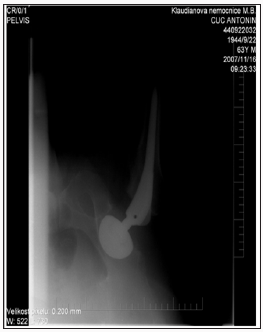
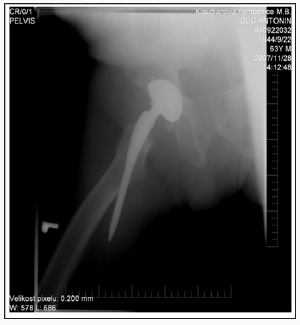
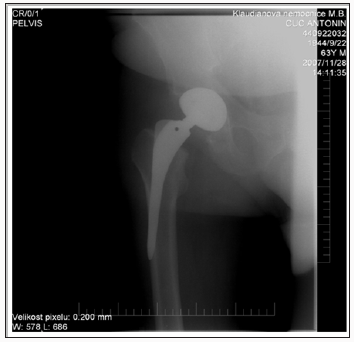
I am just needless dying Patient CZ because the implanting processing set Total Hip Arthroplasty since November 13, 2007 contained many illegal processing medical mistakes contrary functional assembling product processing for set THA Bicontact S, no cemented, nominal dimension 13 mm N, B.Braun Germany
- with false coaxial ties between the metallic Stem and my right femoral bone in the Surgery hall without preliminary Clinic Plan, with illegal declination coaxial ties 13,68 grads in sagittal Direction, out of acceptable assembling tolerance +/- 1 grad - The post operational first RTG images from date November 16, it was the sufficient criminal evidences about false illegal placement the spice the Stem in coordinate Xi, Yi, Zi - out of the firm installing radiologic Masks - but it should be controlled by the Laws and by the product ovoid on the Orthopaedic screen with the same scaling.
The wisdom false Court Medical Message from the Knowing Medical Institute - The Central Army Hospital Prague, CZ No. 36 C 181/2009-123 since the March 27, 2012 defined all Medical Orthopaedic Processing in Limits Lege Artis CZ, The fatal unhappy was defined not as Diagnose Fausse route stem on the Orthopaedic Surgery Hall - but as the results of the false medical Hypotheses in Complot of the Radiologic, Orthopads Doctors from the Orthopady Clinic and from the Knowing Medical Institute as Post operational tragic Event by Patient fallen“, despite such substitutions in truth Criminal traceing, Radiology, Geometry 3 D, Health Patient Documentation EHRs.
I laid down my life so that you and your physicians and technicians can work together in a responsible manner and in the real truth of God and in the same truth of the criminalist evidences.
I became an unnecessary Merthyr of human Stupidity and irresponsibility that threatens humanity and the patients of the Czech Republic who are denied the Constitutional Human Rights of the Czech Republic: for life, for a fair Court trials, for legal health care CZ. I believe that Medicine.com will never accept the falsity of the current approaches of „LEGE ARTIS CZ“, as now submitted to the world public by the Czech courts, the Criminal Police of the Czech Republic, the network of the State Prosecutor’s Offices of the Czech Republic.
I am just placing the principal private RTG images for Forensic reconstruction Crash of set THA Bicontact S, no cemented in Geometry 3 D since date November 13, 2007 on the Orthopaedic Surgery Hall of the Regional Hospital Mladá Boleslav. Most of Patients with similar Crash are dying in duration since 3 till 7 days after overlooked FAUSSE ROUTE STEM, I was reoperation till 17 days after Poly trauma on the Surgery Hall, when the preoperational THA processing was realised in the same profile of Surgeon catting as in first THA, but the Spice of the Stem was created met he blooding and full plegic dysfunction Nervus is achidici with destructions my structure muscles in right calf, I am just frequential happened fallen with risk the repeated breaking the proximal femoral bone with just 8x worse probabilities and I am dying earlier about many years as other Patients CZ in Cluster with right legal first THA surgery.
Figure 1:
My Orthopads, my Judge, the forensic doctors from the Knowing Medical Institute CZ, Departments of Criminal Police CZ, State Penalty Offices CZ are smiling to my nearly Death within forced me many growing casual orthopaedic and leukemic heavy injuring LEGE ARTIS CZ (Figure 1). The virtual „Shorten of the Length the Axes of metallic Stem “It is caused the false placement with fatal declination in sagittal Direction in angle 13, 68 grads, there are false installing position of the spice Stem on coordinates Xo, Yo, Zi - it is illegal „to observing the RTG image in hands and by intuitive views“, when the Orthopads should taken the Orthopaedic screen and comparison the placement the Spice contrary firm radiologic Mask for the stem!
The Doctors said by illegal daily habits: We are working Lege artis, only a few orthopaedic patient are sometimes legal dying! The Criminal police CZ gave legal agreements so as the Knowing Medical institute CZ too - The mortal injured Patient CZ on the Prosector Hall haven´t commentaries! We are dying needless and very Cheap and frequently in CZ, always Lege Artis CZ (Figure 2). This is the Image from date November 28, 2007 too, this is forensic nonsense to prented this Criminal traceing could be realised as Patient fatal post operational happened! The last moving of the Stem was realised in Surgery hall November 13, 2007 in Regional Hospital Mladá Boleslav CZ.
Figure 2:
In Court trials CZ the Judge could believe for medical illegal Stupidities each of workaday. No Protests from Patients CZ are accepted in legal care for Constitutional Human Rights CZ by Ombudsman CZ- despite me is the Sate investigator for occupational mortalities in Branche Medical Devices. My Death is very awaiting CZ Events, like a public Execution of a disagreeable world Scientist in 21st Century (Figure 3).
Figure 3: