Showing posts with label Lupine online. Show all posts

Thursday, 16 January 2020

Lupine Publishers | Hamstring Injuries in Taekwondo: Injury Patterns and Performance Following Conservative Therapy-A Case Series Involving Four Elite Athlete

Lupine Publishers | Journal of Orthopaedics

Abstract

Background: Hamstring injuries frequently occur in sports involving explosive movement patterns and can cause lengthy downtimes. Data on hamstring injuries in Taekwondo is completely lacking. In a case study with four top Taekwondo athletes we describe the specific characteristics of this type of injury, the resulting downtimes and the athletes’ performance following conservative treatment, for the first time.
Methods: In a retrospective study, the hamstring injuries of four top international athletes were examined. Injuries were diagnosed by means of MRI. All injuries were classified according to severity and given an MRI score (min. 3, max. 19 points). Performance parameters for assessment included the number match points achieved in the 12 months prior to and following injury, tournament participation and downtime. Recurrent ruptures and contra lateral injuries were also taken into consideration.
Results: Athletes were aged between 16 and 25 (average age 20.3 years).Injuries were exclusively proximal ruptures. The MRI score was between 5 and 9 (mean value 6.5 points). All injuries involved the semi membranous muscle. Ruptures did not extend significantly into the cross-section of the muscle. Manifestation of all injuries in the MRI was without retraction. The average downtime before returning to competition was 69.2 days. The number of match points gained in the 12 months following injury dropped by an average of 19.8. Two athletes suffered recurrent ruptures and two had contra lateral ruptures.
Conclusion: The most frequent form of hamstring injuries in Taekwondo appears to be the stretching type. They result in downtime and a considerable decline in performance. The high incidence of ruptures and the contralateral ruptures within the subsequent year emphasises the extreme biomechanical strain on this muscle group. Parameters are needed to determine the best time to return to the competitive level following conservative therapy.
Keywords: Conservative Treatment; Hamstring Injuries; Return to Competition Taekwondo

Introduction

Taekwondo (TKD) is a traditional martial art that originated in Korea. It is currently practiced in more than 200 countries throughout the world and became an Olympic discipline for the first time at the 2000 Games in Sydney. TKD is a full-contact martial art characterised by its emphasis on dynamic attack and kicking techniques requiring rapid reactions, speed, agility and endurance. TKD is a popular sport in Germany, where the number of active athletes has risen considerably in the last few years. Injuries to the hamstring group of muscles generally occur in the two-articulated sections following sudden over-extension of the muscles with a maximum degree of hip flexion and knee extension [1]. So far, sprint sports such as American football, in which the rapid changeover from muscle contraction to relaxation occurs, were known to be high-risk sports [2]. In TKD such movement patterns during explosive high kicks are especially important, as attacks to the opponent’s head are only permitted with the feet and generally score highly. The frequency of general injuries to the hip is approx. 11 % [3-5] and to the lower extremities 44.5 % [6]. To date there is no explicit data on the frequency and patterns of hamstring injuries in TKD, as information on the occurrence of TKD injuries in the literature is unspecific [3,4]. This retrospective study is based on a case series and describes injury patterns to the proximal hamstrings among top TKD athletes for the first time.

Materials and Methods

This retrospective study involves four top elite TKD athletes from an Olympic training centre who suffered hamstring injuries during training or a tournament between 2012 and 2016. All were top international athletes from the German national Taekwondo team with regular participation in national and international tournaments. The parameter for the athletes’ performance was the number of World Taekwondo Federation ranking points attained twelve and six months prior to and after injury [8]. This ranking system allows the comparison of different athletes throughout the world. Each athlete is awarded competition points according to the place achieved in an international tournament. The more matches the athlete wins, the more points he is awarded in the tournament.
All athletes were examined by a qualified sports physician. In the case of suspected injury in the hamstring area an advanced MRI diagnosis was made within three days to allow scores and the time interval since injury to be compared [9]. A record was also made of athletes’ other injuries. An experienced sports physician was in charge of the conservative therapy and treatment was based on an adapted training plan. This ensured the avoidance for six weeks of forced flexion in the region of the hip due to high kicks. This was accompanied by measures and exercises to reduce muscle tone in the affected area and stabilise the pelvic muscles. The MRI images were analysed retrospectively by a radiology specialist for musculoskeletal MRI diagnostics. Injuries were classified according to the radiological criteria of the MRI signal and a previously validated MRI score; which denoted the severity of the hamstring injury and was determined on the basis of age, number of injured muscles, and location of rupture, retraction, diameter of injury and intensity of T2 signal [10]. A minimum of 3 and maximum of 19 points were allocated depending on the severity of the injury (Table 1).
Table 1: Competition points 12 month bevor/ after Injury and time for return to competition.

Results

The athletes examined were aged between 16 and 25 (average age 20.3 years). All athletes participated in international tournaments with points system during the examination period (Tables 2 & 3). The MRI score for the hamstring injury was between 5 and 9. The mean value for all athletes was 6.5 points. Injuries and partial injuries were also differentiated (Table 2). With one exception, all athletes suffered injuries to the proximal hamstrings at the tuber are chiadicum. The semi membranous free tendon was involved in all injuries. Ruptures did not extend significantly into the cross-section of the muscle. Just one athlete exhibited an ectasia >75% with an injury at the musculo tendinous junction, the diameters of other ruptures were <25%.Manifestation of all injuries in the MRI was without retraction (Table 2). The athletes competed in an average of 2.8 tournaments in the six months prior to injury, this dropped to 2 tournaments, equivalent to a reduction of 29%, in the six-months following injury [8].
Table 2: Characteristics of Hamstring Injuries and MRI scoring.
Table 3: Involved Muscles and Re-Injuries.
The interval between injury and the return to international competition was between 28 and 158 days (average 69.2 days) (Table 3). The average number of points scored in a tournament during the examination period dropped from 57.8 points before injury to 38 points in the 12 months after injury [8]. This is equivalent to an average reduction of 19.8 points. None of the athletes achieveda score that equal ledor exceeded this level of performance in the six months prior to injury. Just one athlete achieved a higher score in the 12 months after the injury compared to the 12 previous months. It was interesting to note that this athlete also took the longest break before returning to competition after injury (Table 4). One athlete suffered Re-Injury during the examination period, while two athletes suffered contralateral ruptures of the proximal hamstrings (Table 2). No further serious injuries requiring downtime were recorded for any of the athletes during the 12 months after the return to competition.

Discussion

Hamstring injuries are often found in sports requiring sudden sprints such as soccer, football [10,11] and track and field athletics [12]. The result for the athlete, depending on the sport, is often considerable downtime. Sprinting in these sports involves hamstring extension with increasing hip flexion, which is compensated by a relative decrease in knee extension. This means, the hamstrings have a braking effect on the knee during maximum sudden hip flexion [13]. This study deals exclusively with proximal hamstring injuries, which can only be explained as taking place during high kicks with eccentric muscle contraction, inflected hip and (hyper)extended knee [14,15].Hamstring injuries are known to occur often at the myotendinous junction [16].
Risk factors under discussion are insufficient warming up, malalignment of the pelvis, exhaustion and previous injury [17-20]. Due to the insufficient contraction potential, the ischiocrural muscle group does not attain its full range of movement in the hip and the knee joints at the same time [15]. In TKD the opponent is kept at a distance by raising the leg and slightly bending the knee, meaning that initial flexion is usually greater at the hip than at the knee. When the athlete aims for the opponent’s head he or she adopts a position of full hip flexion to allow the leg to reach as high up towards the opponent’s head as possible with almost simultaneous knee extension to make full use of the entire length of the leg. The high kick in TKD is therefore preceded by considerable pretension at the hamstring origin.TKD athletes often exhibit muscular imbalance in the hip to accommodate the heavy demands on the hip flexors. The quadriceps femoris and iliopsoas muscles are generally more developed. The resultant pelvic tilt also increases pre-tension in the proximal hamstrings.
In sprinting sports the most common injury is to the long head of biceps femoris [21]. In this study, however, it was found that almost all athletes suffered injury to the proximal free tendon of semi membranous, also known to be common amongst dancers. The reason for this injury pattern could lay in the small source area with additional muscle adduction moment. In TKD it could therefore more likely to be a stretching type injury rather than a high-speed type [22]. The general limitation of extension and retraction in the injured muscles is also consistent with this observation. A certain predisposition to this injury pattern could also be due to chronic pre-existing damage at the myotendinous junction of this muscle group. The fact that ruptures and injuries to the contralateral muscle group occurred during the study period supports this observation. In a study involving NFL players, the classification of hamstring injuries correlated strongly with the players’ downtimes [23]. The average MRI score of 6.5 among TKD athletes is moderate but resulted in a relatively major downtime of 61 days, comparable to professional dancers with similar injury patterns [22]. The wide range of values (28-158 days) before returning to competition can be explained by the irregular tournament cycle and the systematic competition training plan before important tournaments. Downtimes are therefore more difficult to define than they are in sports with regular match schedules. No statistical correlation between the ascertained parameters could be shown due to the small number of cases.
In American football and rugby [23,24] it could be shown that players with moderate hamstring injuries did not necessarily have to miss an entire season. Good mid-term functional results have been achieved following surgical reification of the proximal hamstrings, however, this is only indicated for high-grade injuries (involvement of the conjoint tendon as avulsion at tuber ischiadicum and retraction > 2 cm) [25-27]. On average, a return to pre-injury performance was not possible until six months after surgery. There is no data whatsoever on outcomes following conservative treatment in TKD. In this study, top TKD athletes returned to the competitive level after an average of 61 days, albeit with significant performance deficits. The direct comparison with the results of surgical intervention is however futile, as injury patterns only exhibited minor retraction. It therefore remains to be seen whether a return to TKD competition is possible, despite the moderate severity of hamstring injuries in an MRI Score. A closer investigation of this question in Taekwondo would require a longterm follow-up study of the injured athletes taking all injuries into account.

Conclusion

There has been no study on the extent and effects of hamstring injuries in world-class TKD. This is the first study to describe in detail the injury patterns and effects on the competitive success of a small number of athletes following conservative treatment. All of them were found to be stretching-type proximal injuries with mid-range MRI scores, which resulted in less frequent participation in competitions and a significant drop in performance. The incidence of ruptures or injury of the contralateral muscles within the subsequent year emphasises the extreme biomechanical strain on this muscle group in TKD. The provision of further recommendations for optimised treatment and parameters for the best time to return to competition in this sport requires the longterm functional follow-up study of a greater number of cases.

For more Lupine Publishers Open Access Journals Please visit our website:
For more Open Access Orthopedics and Sports medicine articles Please Click Here:

To Know More About Open Access Publishers Please Click on Lupine Publishers


Follow on Twitter   :  https://twitter.com/lupine_online

Thursday, 9 January 2020

Lupine Publishers | Challenges in Learning and Understanding Traditional Chinese Medicine and Acupuncture

Lupine Publishers | Open access journal of Complementary and Alternative Medicine

Abstract

Logic thinking is the base of developing TCM and acupuncture theories. Pattern identification developed with Y-n-Yang and the Five Element theories should be the key principle in practice, especially for prescriptions and the scientific research verifying efficacy of TCM and acupuncture.
Keywords: Yin-Yang; The Five Element; Logic Thinking; Pattern Identification

Abstract

  Both Traditional Chinese medicine (TCM) and acupuncture originated in ancient China and has evolved for more than two thousand years. However, most of the people generally in Taiwan present themselves to the medical doctors first when they are in need of medical treatments. Part of this fact is because there are not sufficient scientific researches to prove the efficacy and safety of TCM, acupuncture, moxibustion, acupressure, cupping, Tui na, and tai chi. In Asia, such as Taiwan, Korea, Japan, Hong Kong, etc., herbs, acupuncture, moxibustion, acupressure, cupping, Tui na, and tai chi are often used by TCM practitioners to integrate mind and body to treat or prevent health issues. Compared to the current TCM and acupuncture developments in Taiwan, acupuncture and TCM have gained more and more popularity in the past 40 years and been considered “essential health benefits” by people in the United States and the West, seeing and using acupuncture and TCM primarily as a complementary health approach [1]. TCM and acupuncture have established its status in the health system in the West, though they’re totally different from the Western medicine with the philosophy, diagnosis approaches, and pattern identification for treatment. Challenges exist at present, which deserves attention for those who are determined to learn or interested in understanding TCM and acupuncture. This paper, therefore, tries to present some issues for the better future of TCM, including acupuncture, and the Western medicine when there are integrated.

Fundamental Differences between TCM and West Medicine

TCM, including acupuncture, and Western Medicine have been viewed as two distinct and divergent medicines for long with the approaches to physiology and healing techniques. Therefore, the fundamental differences in both Western medicine and TCM deserve attention when healthcare providers are considering the feasible choices in clinical practice to patients [1].

In Theory

The philosophical concepts like Yin-Yang, the Five Element, pattern identification, and Qi and Blood are, to a certain extent, unique and abstract for learners to catch the whole picture with the functions broader than the anatomical knowledge in the Western medicine and are absolutely different from the theories of the Western medicine. In terms of relation of the human beings and the Heaven that can interact with each other in providing solutions to the health, it is totally different from the Western medicine that TCM sees the human body as a whole and as a microcosm of the universe in diagnosis and treatment, bringing the body, mind and spirit into harmony with Yin-Yang balance. It is believed that the concept of Yin-Yang balance is the unique concept indicating the harmony of internal organs and the dominating key of the TCM, which has served as the foundation and the guideline for the explanation of etiology of diseases, diagnosis, and treatments throughout the history of Chinese medicine and absolutely distinguishes TCM from the Western medicine [1]. Based on this concept, a disease thus refers to the loss of the balance of Yin-Yang [2].
On the other hand, TCM focuses on the “congenital constitution” of the body that can result in “root” problems in health, which can scientifically correspond to the core thesis of Precision medicine (PM), which proposes the customization of healthcare with medical decisions, treatments, practices, or products tailored to the individual patient’s genetic content. In TCM, constitutions of humans are categorized into the five patterns for understanding the “root” causes and predicting the health conditions in the future, based on the Five Element theory [1]. Western medicine is seeking the minor difference from the perspective of etiology and only concerned about diagnosing and treating the symptoms alone. The theory develops with seeing the organs separately and treating parts of the body like a machine. Each part of the organs has its function, and when a particular part fails, it needs the replacement or resection [1,3].

In Practice

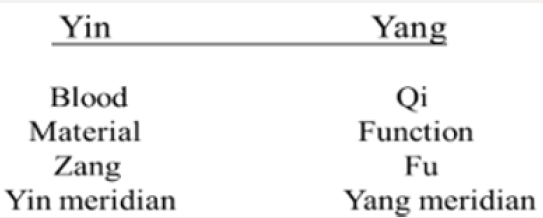
Treatments by medical doctors directly target at the pathogen or etiology with the evidence by a large number of modern scientific instruments, such as blood, urine, and stool tests, X-rays, CT, and MRI, to check on the human body. In addition to history taking and physical examination, doctors do not make diagnosis until all evidence are collected. Without scientific instruments, TCM doctors or acupuncturists can only make diagnosis, based on symptoms related to the imbalance of Yin and Yang rather than diseases itself through analyzing a patient’s tongue, pulse, voice, and whole-body situation, including reaction, hair, and posture [1,3]. The most important key to the successful results is that an experienced TCM doctors and acupuncturists can only rely on four skills for diagnosis to identify the patterns and write up the prescriptions. In other words, patterns, which distinguish TCM from the Western medicine, should be the key concern for the TCM and acupuncture practitioners in making the decisions of treatments. Since diseases are understood to be a loss of balance between Yin and Yang as shown in Figure 1, good results cannot be expected without the positive consideration of Yin and Yang [2,4].
Figure 1: Characteristics of Yin and Yang.
Lupinepublishers-openaccess-complementary-alternative-medicine-journal

Challenging Issues

Challenging issues for those who are interested in and learning TCM and acupuncture are presented in this section. These issues may have been discussed in the previous research, but new viewpoints are presented to attract more attention.

Language

There is no doubt that cultural decoding relies mostly on words. It is strongly accepted that “word-for-word” literal translation method is the way paraphrasing the accurate lexical meaning. However, this cannot be applied to TCM and acupuncture. Language is therefore the most challenging issue that needs to be addressed first. With the popularity of TCM and acupuncture, language barrier surely needs learners’ attention. The fact in the West currently is that not all of the TCM and acupuncture classics are translated into English. On the other hand, correct translation requires good translators excellent in both Chinese and English. In addition to the good command of these two languages, the meanings of the characters used in the ancient time may be different from those at the present time, which may confuse and frustrate readers. Chinese characters, different from alphabet languages which only represent forms and sounds, are called ideographs with three features of forms, sounds and meanings [5]. The difficulties in understanding Chinese characters in the TCM and acupuncture classics can be classified in the following ways [5]:
A. Simplified Chinese is widely used all over the world; however, traditional Chinese is accepted and used in ancient classics and areas like Taiwan, Hong Kong, and Macao. For example, 黃帝內“經” in simplified Chinese is 黄帝内“经” in writing.
B. Pronunciation changed with usage. “能” is correctly pronounced neng in the modern Chinese, referring to “can” in English and. However, this character in Huang Di Nei Jing ( 黃帝內經, Yellow Emperor’s Inner Classic) means “state (態)” and the pronunciation is tai. This condition occurs when the characters were not enough for use in the ancient time.
C. “內” can be used either as a verb or a noun. It is pronounced na (equals納) when used as verb and nee when used as a noun referring to “inner” or “inside” in the modern use.
D. “平” is pronounced pin when it is related to an adjective “flat” in English. With writing mistakes, the pronunciation of this character is bian when it is used as a verb to mean “distinguish” in medical Chinese.
E. Different characters bear the identical meanings. “输”, “ 输”, and “腧” are different characters referring to the identical meaning of acupoint, and all of these three characters are pronounced shu.
The ability to understanding Chinese characters deserves attention as well in learning and understanding acupoints. For mastering acupuncture, understanding the real Chinese meanings of the acupoints is required. ST29-Guilai is the typical example for this aspect because Guilai (歸來) literally in Chinese means “return” and this acupoint is usually used for prolapse of uterus, menstrual irregularity, and dysmenorrhea [6]. 神(Shen) is translated differently into English in acupoints; for example, HT7-Shenmen ( 神門, Spirit gate) refers to the gate for Heart qi to get into and out of the body, while Heart governs Shen in TCM. Compared with the DU24-Shenting (神庭, Shen court), 門refers to gate in Chinese and 庭, court, which suggests that one must go through the “gate (HT7)” first and then get into the “court (DU24)” to hold or calm Shen. This difference highlights the importance of choosing acupoints in calming Shen. An acupoint may have different names with the historical developments. The nickname of KD3-Taixi (太溪) is呂細 (Lvxi) alternatively used in the acupuncture classics. On the other hand, the nickname of HT7 is 中都 (Zhongdu) completely identical with LV6 in Chinese, which may confuses learners.
Figure 2: Protocol matrix in using traditional acupoints and extra acupoints.

Lupinepublishers-openaccess-complementary-alternative-medicine-journal
Note: Ea for Extra acupoints and Ta for Traditional acupoints.
In addition to the names of acupoints, extra acupoints also deserve close attention in consideration of combining regular acupoints with extra acupoints. Extra acupoints distinguish themselves from the regular acupoints on the traditional fourteen meridians with the unique indications, actions, and the great effectiveness in acupuncture theory and treatment, even though some of extra acupoints have not been verified with scientific evidence [7]. Pattern identification which derives from the Yin- Yang theory is surely the key concept of TCM. Unfortunately, this concept cannot apply to extra acupoints because they are not incorporated into the traditional meridians with the lack of Yin- Yang. The challenge acupuncture practitioners face is when it is the best time to consider extra acupoints in a protocol. The historical developments of extra points show that an extra point can surely play an essential role in acupuncture and be used alone or with the traditional regular acupoints for the treatment. Unfortunately, the actions and indications of extra acupoints have not be scientifically researched and verified as traditional regular acupoints. In strategy, a practitioner may take the principle of “Least needling for best results” into consideration to keep patients from pain, fear, or worry. The goal can be achieved with the following four choices shown in Figure 2 when it comes to the tactic [8].

Characterizations of Chinese Material Medica

The use of Chinese herb must be based on the patient’s conditions with accurate diagnosis, following the principles of pattern identification. Channels, properties, indications, and actions of the Chinese herbs in the different material medica classics are not always discussed in the same ways. The actions of Radix Ledebouriellae Divaricatae (Fangfeng) in Compendium of Materia Medica (Bencao Gangmu, 本草綱目), for example, are night sweat, migraine and headache, and constipation. However, actions like aversion to Wind, sweating, blurry vision, and vertigo are presented in The Classic of Herbal Medicine (Shennong Bencaojing, 神農本草經).
Licorice root (Gancao, 甘草) with properties of sweet and neutral to tonify and strengthen the Spleen qi is effective for sore throat, bronchitis, cough, and infections caused by bacteria or viruses. This herb is the good example that highlights the time to collect herb is an attention that cannot be ignored. Literature shows the best time to collect and dry Licorice root is in the autumn two to three years after planting [9], but no detailed information is found for the reasons. The possible explanation for harvest time and cultivation time may be much to do with the compound differentiation, which can vary with moisture, temperature, and sunshine. The Chinese term 木瓜 (Mugua) refers to both Chinese herb Fructus Chaenomelis and papaya. In other words, confusing situation like this Chinese herb occurs quite often to TCM and acupuncture learners.

Processing

The nature and indications of Chinese herbs change with processing for the required actions in treatment.
It is beyond doubt that Radix Bupleuri (RB) is one of the most popular traditional Chinese medical herbs in terms of treating diseases related to the Liver. Radix Bupleuri, named “Chaihu ( 柴胡)” in Chinese, is derived from the dried roots of Bupleurum Chinense DC. (Pei Chaihu, 北柴胡) and Bupleurum scorzonerifolium Willd (Nan Chaihu, 南柴胡) [10], which is the main ingredient of the most famous and frequently used preparations Xiao Chai Hu decoction and Da Chai Hu decoction. The major differences between Bupleurum Chinense DC. and Bupleurum Scorzonerifolium Willd are that the indication of Bupleurum Chinense DC. is dispersing stagnated Liver qi while Bupleurum scorzonerifolium Willd is raising Yang Qi in the Middle Jiao deficiency pattern.
For clinical use with indications changed to meet the patients’ needs, Radix Bupleuri is commonly selected in crude, fried, and vinegar-baked [11]. Among the characterizations of Chines herbs discussed above, dosage and ration are also two of the most important issues. Historic evolutions in the measurement show dosage, actually the top secret in learning Chinese formulas, has changed a lot and been a concern in practice for more than thousands of years. Quin (錢), the unique unit of weight measurement always used in TCM herbs, is different from that used in the Han dynasty, in which the author of Treatise on Cold Damage Disorders (The Shanghan Lun, 傷寒論) Zhang Zhongjing was born. In the meantime, one Quin equals 3.125g in China, but 4g in Taiwan, which suggests TCM and acupuncture learns need to bear the differences in mind when doing research. Another attention that should be given to the clinical use of Chinese herbs is dosage, which should draw attention with geographical factor. Zhang Zhongjing was born in Henan located in the south of China, where the temperate climate is humid subtropical. The climate may be one of the factors affecting his logic reasoning in the formulas; for example, the most used herbs in treating gastrointestinal diseases are licorice root, jujube, dried ginger, ginger, and Guizhi (Ramulus Cinnamomi) for the property of spicy to disperse stagnated Qi and tonify Yang. In other words, adjustments must be made, considering geographical factors.
In addition to weight, ration is also the concern that must been taken into consideration for the ingredient percentage of a formula. Liu Yi San (Six to One Powder, 六一散) indicates that the ratio of Talcum and Radix Glycyrrhizae (Licorice root) is 6:1. Actually, for learners who understand Chinese can easily catch the meaning of this formulas from the character 六 referring to six and-, 1. Dosages in practice must be adjusted, depending on the patients’ conditions. This is the most difficult to learn and understand because it reflects the experience of a TCM doctor or an acupuncturist. In other words, there is not golden rule to follow at all, and it is hard to be verified with quantitative analysis.

Discussion

The logic thinking of the Chinese is inductive reasoning, compared to deductive reasoning of the Western people. Based on this logic model, TCM, including acupuncture, features similarities in theories with Yin-Yang, the Five Element, Qi-Blood, and Pattern identification. It is noted that most of the scientific researches for verification of efficacy of TCM and acupuncture only focuses on diseases, instead of following the Pattern identification of TCM, which cannot accurately exemplify the TCM and acupuncture theories to a great extent [11]. The historical developments prove that there are challenges ahead of TCM and acupuncture learners, such as when to combine regular acupoints with extra acupoints, how to decide the accurate dosage and whether or not select dried herbs, etc. More and more population in the Chinese communities like China, Taiwan, Hong Kong, and Macao seems to suggest that TCM and acupuncture benefit public health with its efficacy. This study may recommend that having a good command of Chinese can play a key role to learning and mastering TCM and acupuncture. Unfortunately, it is not easy at all for the Western learners to make a right decision when it comes to learning traditional or simplified Chinese characters. The debate on traditional Chinese characters and simplified Chinese characters has been an ongoing dispute concerning Chinese orthography among users of Chinese characters for years with the establishment of the People’s Republic of China (PRC) in 1949. Looking back at the history of Chinese medicine, all of the great classics are written in traditional Chinese. This fact may give the learners the right direction that learning traditional Chinese enable the Western learners to acquire more profound knowledge of TCM and acupuncture. It is believed that “Englishword- for-Chinese-character” translation surely hinders learners from acquiring accurate understanding of TCM and acupuncture. However, there is not any Chinese medical terminology curriculum offered in the West.

Conclusion

Challenges exist before those who are learning or interested in TCM and acupuncture. Only accurate decoding of Chinese characters can exactly explain TCM and acupuncture concepts, so it is highly suggested that learning traditional Chinese characters must be considered for the Western learners when they really expect to explore and enjoy the beauty of TCM and acupuncture. With the natural and human restrictions, there is a long way to go for the contemporary learners and researchers to verify the efficacy of TCM and acupuncture with evidence-based research.

https://lupinepublishers.com/complementary-alternative-medicine-journal/pdf/OAJCAM.MS.ID.000103.pdf


For more Lupine Publishers Open Access Journals Please visit our website:


To Know More About Open Access Publishers Please Click on Lupine Publishers


Follow on Linkedin : https://www.linkedin.com/company/lupinepublishers
Follow on Twitter   :  https://twitter.com/lupine_online

Wednesday, 18 December 2019

Lupine Publishers | Persistent Wound Leakage After Total Knee And Hip Arthroplasty

Lupine Publishers | Journal of Orthopaedics

Abstract

In this mini-review the pathogenesis, pathophysiology, diagnosis, treatment and course of prolonged wound leakage after total hip and knee arthroplasty are discussed. It appears there is a disconcerting lack of research and knowledge concerning this topic. Wide variations in definition, classification, diagnosis and treatment hamper patient management, early mobilisation and rehabilitation, as well as the function of the operated joint, severely.

Introduction

The diagnosis and treatment of persistent wound leakage is an important and poorly understood topic in the field of joint arthroplasty. Persistent wound leakage after total knee and hip arthroplasty is associated with a higher risk of developing periprosthetic joint infection (PJI) [1-6]. PJI is a seious complication with great impact on a patient’s physical functioning and quality of life. Moreover, PJI is a high financial burden for society. Additional medical costs of PJI are approximately € 30.000 per patient with even higher societal costs because of productivity loss,home care and informal care provided [7,8]. Unfortunately, there are no evidence-based guidelines for the diagnosis and treatment of persistent wound leakage after joint arthroplasty [6].
Numerous issues hamper the development of sound guidelines. First of all, research on wound leakage is hard, as PJI is used as the major endpoint of wound leakage treatment, which has a low incidence (1,5%)- [9]. Secondly, there is no uniformly accepted definition of wound leakage and when to call it persistent. Clinical practices in orthopedic hospitals vary widely therefore. For that reason pathogenesis, pathophysiology, treatment and course of prolonged wound leakage after arthroplasty are discussed in this mini-review.

Pathogenesis

Following Winter’s original research in 1962, it is now widely accepted that a certain amount of moisture in the wound bed is necessary for optimal healing [10]. The difficulty is determining what that certain amount is and how long it should persist. Inflammation is the body’s normal protective response to any injury (including surgery) or foreign bodies.Acute inflammation follows the early stage of the foreign body response ( protein adsorption) [11,12]. Chemotactic agents within the provisional matrix play a key role in controlling the migration of neutrophils from the vasculature. The travelling leukocytes surrounding the implant become activated in response tothe cytokines released by the platelets e.g PDGF (platelet derived growth factor) and betathromboglobulin [13].
After localization and activation of macrophages and neutrophils tothe site of injury, enzymes are released and then the neutrophils mediated phagocytosis occurs. Theoretically, the phagocytosis should include the procedures of firstly recognizing and attaching to the foreign materials, the nengulfing and degrading them. However, due to the materials size, engulfment and degradation are often not possible,although the process of recognition and attachment occurs. Instead, the implants are coated with opsonins such as complement activated fragments C3b and IgG, which aid the adhesion and activation of neutrophils and macrophages [11]. Macrophages assemble at the implant site, leading to further production of chemoattractive-signalling molecules such as PDGF, tumor necrosis factor (TNF-alpha), interleukin 6 (IL-6), granulocyte-colony-stimulating factor (G-CSF) and granulocyte macrophage colony stimulating factor (GM-CSF), leading to further recruitment of macrophages to the implant site [14]. The foreign body response to bulk implant materials is abberant and prolonged.
At the end-stage of the foreign body response,or when the chronic inflammation occurs, mononuclear cells such as monocytes, lymphocytes and macrophages can present at the implant site. These macrophages which are added by the production of IL-4, IL-13 from Th2 lymphocytes, can fuse together to form a multinucleated foreign body giant cell (FBGC) at the implant surface [15,16]. Next the infiltrated fibroblasts, macrophages and neovascularisation will present within the newly formed granuloma tissue, which is a precursor for forming a fibrous capsule [17,18]. This capsule may contnue to grow following inflammation dueto mechanical motions or chemical leaching exerted in the joint. It was thought that the host response to most bulk biomaterials used in THA was identical and followed these main stages. However, the response tothe wear particles released by different biomaterials over time differ greatly [11,18,19]. Alumnium ceramics are the most biocompatible while Cobalt-Chromium and Ultra-High Molecular Weight Polyethylene (UHMWPE) have reduced bioavailability [18].

Pathophysiology

Total hip arthroplasty is a commonly performed operation and yet little information exists about the duration of wound oozing,the factors associated with this and the implications. Wood et al. Studied 62 consecutive patients undergoing total hip arthroplasty (THA). Time to dryness was associated with wound length (p=0,01), body mass index (BMI;p=0,05) estimated volume of blood in dissected tissues (p=0,05) and length of hospital stay (p=0,02). No association was found with duration of surgery or ASA (American Society of Anaesthesiologists) physical grades [20]. Local factors compromising wound healing include extensive scarring, lymphoedema, poor vascular perfusion and excessive adipose tissue. Systemic comorbidities affecting wound healing include diabetes mellitus, rheumatoid diseases, renal or liver disease, corticosteroid medication, poor nutrition HIV and smoking.Since a history of smoking is associated with a statistically significant increased risk of PJI, many centers use formal smoking cessation programs to assist patients n giving up, preferably before surgery [21].
Patel et al. conducted a retrospective study to determine the risk factors associated with prolonged wound drainage after hip and knee arthroplasty [5]. Risk factors included a BMI>40kg/ square meter, the use of low molecular weight heparin (LMWH) prophylaxis,and a high drain output after THAs. High drain output was the only risk factor associated with prolonged wound drainage after TKAs. HIV infection is also a risk factor for prolonged wound drainage after TKAs [22]. Obesity is a risk factor associated with prolonged operation times,and a higher rate of early postoperative complications, including excessive wound drainage and infection [23]. However,optimal peri-operative glucose control is an important factor in decreasing wound complications for all patients, including those without diabetes [24]. demonstrated that non-diabetic patients were three times more likely to develop PJI if the fasting blood glucose was > 140 mg/dl on the first postoperative day [25]. Proper selection, dosing and timing of prophylactic antibiotics are critical. Most commonly, a first generation cephalosporin is administered within one hour prior to the skin incision.In patients with allergies to penicillin or cephalosporins, clindamycin is an acceptable alternative. For patients with methicillin-resistant Staphylococcus aureus (MRSA) or coagulase-negative Staphylococcus colonisation, vancomycin is used [26].

Diagnosis and Management

Wound healing problems can range from superficial incisional, to deep incisional (outside the joint space) to involving the joint space. Gaine et al. reported a 10% incidence of superficial wound problems in primary TKAs [27,28]. Patel et al. [5] found that each day of prolonged wound drainage increased the risk of deep wound infection by 25% following TKAs. Drainage from the incision one to three days after surgery should be managed by immobilisation in extension, and application of a foam or rolled gauze compressive bandage over the incision. Use of immobilisation and observation should not exceed three days. Wound drainage that persists greater than three days is considered abnormal and should be treated surgically to decrease the chance of subsequent PJI [2,5,22,29].
Aspiration of the joint is necessary if there is a high level of suspicion. The synovial fluid should be analysed for white blood cell (WBC) count and differential.Cultures should also be obtained. There is some consensus with regard to the cell count. In patients with TKAs, a synovial WBC count>1700 cells/ul or a polymorphonuclear neutrophil (PMN) percentage > 65% is rhe recommended threshold for infection [30-32]. In THAs, the recommended thresholds are a synovial WBC count of > 4200 cells/ ul or PMN percentage>80% [33]. During the acute postoperative period,within 6 weeks of surgery, the thresholds are higher with a synovial WBC count>10.000 cells/ul and PMN>89% [34].

Treatment

Prolonged wound leakage after arthroplasty is induced by an inflammatory response , as described above (1,10-16). Conversely, surgical wounds may also show prolonged leakage for other reasons (hematoma,seroma or fatty necrosis) and take longer to heal without development of a PJI. Autoimmune disorders as e.g rheumatoid arthritis and SLE are also associated with prolonged wound leakage [35]. The causes of prolonged wound leakage are poorly understood and studies are scarce and methodologically flaw [6]. However,as expected orthopedic surgeons have been focussed primarily at the association between prolonged wound leakage and PJI.
In the Netherlands,the prevalence of prolonged wound leakage at day 9 after index surgery is about 4% ,2200 patients anually of 55.000 THAs and TKAs. The Dutch Arthoplasty Register reports a total of 3809 THA and 2667 TKA revision surgeries performed in 2015. Revision surgery within 1 year of index surgery was necessary in more than 600 patients and at least 30% of these were PJI related [36]. Persistent wound leakage can be treated by non-surgical and surgical treatment modalities. Non-surgical treatment can consist of relative rest (no exercise and bed rest), pressure bandages,and wound care with sterile bandages.Hospital admission can be required.
Surgical treatment typically consists of debridement, antibiotics and implant retention (DAIR) [37-42]. A DAIR procedure is meant to clean the prosthesis and wound,including break down of the bacterial biofilm, in order to treat the infection and render further infection. Treatment of persistent wound leakage varies considerably among Dutch orthopedic surgeons, as mentioned above [6]. There was a wide variation in classification, definition, diagnosis and treatment of wound leakage. The survey had only a response rate of 18,1%, suggesting wider variations are possible. More than 30 combinations of treatment modalities were used. Remarkably, 23, 4% of responders used antibiotics in the nonsurgical treatment of wound leakage, despite the fact that the efficacy of antibiotic treatment in persistent wound leakage has never been studied. Most respondents (43,8%) convert to surgical treatment if wound leakage is present for ten days after index surgery, implying a non-surgical treatment of 3-7 days. Literature offers litlle guidance but suggests that wound leakage more than 3-5 or 5-9 days after index surgery should be managed by surgical treatment.
Several authors have investigated the effect of DAIR for treatment of wound leakage and reported various results,statements or opinions,generally in favour of early DAIR [2-6], [38-42]. The most recent PJI consensus meetings suggest 5-7 days of wound leakage as the threshold to perform DAIR,but there is no solid evidence forthis statement. As early DAiR is hypothesized tobe helpful in treating or preventing infection and salvaging the implant, the Dutch Leak study will be started soon. This is a controlled randomized study, enrolling 388 patients, with prolonged wound leakage after THA or TKA. Patients are randomized for surgical treatment (DAIR at day 9-10 from index surgery) or continued non-surgical treatment. Primary outcome is the percentage of reoperations for PJI within one year of index surgery. Secondary outcomes are self-reported questionnaires regarding quality of life etc at 3,6, and 12 months after index surgery.

Course and Outcomes

There is a lack of data on the long-term outcome of THAs [43]. Short and medium- term THA studies report substantial improvements in the generic health related quality of life (HRQol) [44-48]. Mariconda et al. conducted a follow-up study to evaluate the quality of life and functionality of 250 patients an average of 16 years (11-23 years) after THA using a validated assessment set including the SF-36 questionnaire,Harris Hip Score,WOMAC score,Functional Comorbidity Index and a study specific questionnaire. The authors report that patients who had undergone THA have impaired long-term self-reported physical quality of life and hip functionality but they still perform better than untreated patients with hip osteoarthritis. However, the level of post-surgical satisfaction is high [43].
considerable proportion of patients report long-term pain after THA or TKA for osteoarthritis.Beswick et al conducted an extensive MEDLINE and EMBASE search of articles published to 2011. Of 1308 articles 115 reported patient-centered pain outcomes. Fourteen articles describing 17 cohorts (6 with hip and 11 with knee replacement) presented appropriate data of pain intensity. The proportion of people with an unfavourable long-term pain outcome in studies ranged from 7% to 23% after hip and 10% to 34% after knee replacements. In the best quality studies,an unfavourable pain outcome was reported in 9% or more of patients after THA and about 20% after TKA [49]. There are no specific short- or long-term studies (>3 years after index surgery) concerning the effect of persistent wound leakage after THA or TKA on quality of life and joint function, whatever the cause or treatment of prolonged oozing.

Conclusion

There is a disconcerting lack of research and knowledge concerning the treatment of prolonged wound leakage after THAs and TKAs, surgeries performed in huge numbers worlwide. With an estimated prevalence of 4%, patients with prolonged wound leakage after arthroplasty also represent a lot of people. Prolonged wound leakage is induced by inflammation, caused by infection immunologic incompability to the implant, autoimmunity as in rheumatoid disorders and SLE, or decreased host defence as in e.g.HIV infection. It will be no surprise that orthopedic surgeons primarily focussed on the association between the low incidence periprosthetic joint infection (1,5%) and prolonged wound leakage after THA or TKA. Recently, a Dutch survey among orthopedic surgeons showed a wide variation in definition, classification, diagnosis and treatment of prolonged wound leakage after arthroplasty.More than 30 combinations of treatment modalities were in use. Remarkably, the unproven use of antibiotics was present in nearly 25% of non-surgical treaments of this issue.
There is no evidence favouring non-surgical treatment above surgical treatment or vice versa. N evertheless, DAIR (debridement, antibiotics and implant retention) is favoured by most orthopedic surgeons at 3-5,5-7 and 9-10 days after index surgery. This arbitrarily and hypothetical timing of DAIR will be studied in an upcoming Dutch trial, the LEAK trial, randomizing 388 patients with prolonged oozing for DAIR at day 9-10 after index surgery versus non-surgical treatment. It is clear that whatever the cause and treatment of persistent wound leakage,early mobilisation and rehabilitation of the patient as well as the function of the joint are hampered severely. There are no sttudies availabale evaluating this topic. It is evident a lot has to be learned in managing and treating prolonged wound leakage after the most common performed arthroplasties in orthopedics.

For more Lupine Publishers Open Access Journals Please visit our website:
For more Open Access Orthopedics and Sports medicine articles Please Click Here:

To Know More About Open Access Publishers Please Click on Lupine Publishers


Follow on Twitter   :  https://twitter.com/lupine_online

Friday, 23 August 2019

Lupine Publihsers | The Development Fortified Pan Bread by Increasing Its Protein Content with High Levels of Live Yeast cells Saccharomyces Cerevisiae

Lupine Publishers | Journal of Veterinary Science

Abstract

The main objective of the research is to develop pan bread nutritional value through fortification with high concentration of live yeast cells (Saccharomyces Cerevisiae). Fortified pan bread boosts the nutritional status of poor people and reduces the incidence of infertility diseases. The bread was reformulated by adding various concentrations of S. Cerevisiae at 5, 10, 15, 20 and 30g/ kg wheat flour. The bread was baked using the straight dough method. Protein, carbohydrate, moisture, fat, vitamin B complex, minerals, energy value, amino acids profile and Sensory evaluation were conducted on the fortified pan bread were evaluated. Results revealed that the carbohydrate, moisture, vitamin B complex, minerals, protein content and amino acids pattern increased with the increase in concentration of S. Cerevisiae. The sensory test showed that pan bread fortified with S. Cerevisiae concentration at 5, 10, 15 &20g/kg wheat flour were accepted by panelists, while pan bread at 30g/kg concentration was unacceptable. This study shows the potential of using high concentration of S. Cerevisiaein improving protein quality and nutritional value of pan bread consumed by economically disadvantaged communities.


Introduction


Bread is the main product of wheat which is manufactured commercially. Eating grain foods, like bread consumed a lot by economically disadvantaged communities. it is plays an important role in the diet by providing many nutrients, such as carbohydrate, Protein, dietary fiber, vitamins and minerals, which are vital for the health and maintenance of the body Pareyt [1]. But wheat flour which is the basic ingredient in bread is lack crucial nutrients such as essential amino acid lysine and B complex vitamins Wardlaw [2]. One way of improving the nutritional quality of pan bread is fortification with bakery yeast Saccharomyces Cerevisiaeto enhancing bread protein content Friedman & Finot [3]. Saccharomyces Cerevisiae has high nutritional value is rich in content of the proteins, vitamin B complexes and minerals such as calcium, phosphorus, manganese, magnesium, zinc and copper and has high biological value of essential and nonessential amino acids so it has several health benefits Shrinandan [4]. Saccharomyces Cerevisiae as a single cell protein is a rich source of proteins which are necessary for replacing worn out tissues or recovery after infections and contains 18 amino acids and is considered to be 55% high quality protein. It is a rich source of B vitamins which aid in lowering stress, help in metabolism, prevent cancer and ensure a healthy skin and it is low in fat and hence low in cholesterol content it maintains optimum cholesterol levels, improves blood production and also improves liver health and function Bekatorou Saccharomyces Cerevisiae also contains gluthanione, an antioxidant and beta glucan which stimulates the immune system Hong [5]. Of the 15 minerals that it contains, Saccharomyces Cerevisiae consists of chromium a trace mineral which is known as glucose tolerance factor which is essential in the prevention of diabetes, lowers blood pressure and fluctuating blood sugar Zetic [6]. Production of proteins from Saccharomyces Cerevisiae (Biomass) is advantageous, because of high protein content and short growth times, leading to rapid biomass production be propagated using cheap raw materials and easily harvested due to their bigger cell sizes and flocculation abilities so it is utilized by biscuits manufacturing companies, as vitamin supplements. It is also used in pharmaceuticals and animal feeds as a source of proteins and vitamin supplements Yamada & Sgarbieri [7]. This work aims at using increased concentration of Saccharomyces Cerevisiae biomass as live cells to be added to bread dough for the formation of high protein content of bread for promoting good health. This was performed by determining the proximate chemical composition, vitamins, minerals, amino acids profile and sensory evaluation tests of bread.

Material and Method


Starter cultures

A commercial mesophilic Saccharomyces Cerevisiae starter culture obtained from (Pakmaya instant yeast, made in Turkey by Pak Gida) was used in bread manufacture as a negative control. One selected strain MY Saccharomyces Cerevisiae from my identified yeasts isolation (my previous work in protein research department- GEBRI/ SRTA- City) was used in four treatments and positive control to improve, increasing protein and amino acids content, fortification and enhances the flavor and texture of bread. MY Saccharomyces Cerevisiae was grown in YPD medium (10g/L yeast extract; 20g/L peptone; 20g/L glucose) broth at 30-35oC for 24-48h. then centrifuged on sterilized cups at 3000rpm in 25oC for 10 min to remove broth medium, then inoculated overnight in sterilized skim milk at 30 - 35oC, then re-centrifuged to get mediumfreelive cells. The viable count of Saccharomyces Cerevisiae after incubation was 6-8×10⁴ CFU/g by Homothito meter method.

Bread Preparation by Straight-Dough Method

The straight dough method is the easiest of the dough-making methods where all the ingredients are mixed at the same time in the mixer as described by Ayele [8] with some modification. The bread was reformulated by adding a commercial Saccharomyces Cerevisiae starter culture at 5g/kg wheat flour as a negative control, and selected strain MY Saccharomyces Cerevisiae at 5g/ kg wheat flour as positive control. Several of MY Saccharomyces Cerevisiae at concentrations of 10g/kg, 15g/kg, 20g/ kg and 30g/ kg wheat flour were prepared. Wheat flour was mixed with salt (10g/kg), sugar (30g/kg), live cell of starter culture Saccharomyces Cerevisiae (divided for negative control, positive control and other treatments) and water to make dough. Proofing of the dough was done at a standard time of 50 - 60 minutes at 30-35oC as first fermentation, then divided to five parts for positive control and treatments. More addition of Saccharomyces Cerevisiae live cells at 5, 10, 15, 25g /kg dough were added then putt in stainless pans and left for another 30 minutes as a final proofing step (second fermentation).Treatment and control baked in the electric oven at 250°C for 20min., then cooled for 2h., baked breads were packed in low-density polyethylene plastic bags and stored for three days at room temperature (24 ± 2°C).These dough mixtures and bread samples were evaluated for nutritional value and sensory evaluation.

Quality attributes evaluation

Proximate chemical composition
a) Moisture content
The sample (5g) was transferred into a Petri-dish of known weight. The weighed sample was put into an oven at 105 oC until constant weight was obtained AOAC [9]. The difference between the initial and final weight of the sample was recorded as the moisture content.
b) Determination of total carbohydrate
Determination of total carbohydrate was done using the phenol-sulfuric acid method as described by DuBois [10]. The total concentration of Carbohydrate obtained from bread samples was: Total carbohydrate (%) = (carbohydrate content from calibration curve/weight of sample) x 100.
c) Determination of crude protein
Nitrogen content was determined after digestion of about 0.5g sample by micro-Kjeldahl method and the ammonia was received in 4% boric acid according to the method of AOAC [9]. The crude protein (%) was determined by multiplying the total nitrogen by factor of 6.25.
d) Determination of fat content
Crude fat content was determined after extraction of 3.5 g sample with 50 mL diethyl ether by Soxhlet extraction method. The solvent was evaporated. The residue was recorded as crude fat content according to AOAC [9].
e) Determination of Energy value: Energy value (kcal per 100 g) was estimated using the Atwater conversion factor (Osborne & Voogt [11].
Energy (kcal per 100 g) = [9 × Lipids% + 4 × Proteins% + 4 × Carbohydrates%].
f) Determination of Vitamin B complex: The vitamin B group was extracted according to a previously described method (AOAC1990) the prepared sample was injected into the HPLC system. Quantification of vitamin B content was accomplished by comparison to vitamin B standards. Standard stock solutions for Thiamine,Riboflavin, Niacin, Pyridoxine, and Cobalamin were prepared as reported previously Aslam [12] and Ringling [13] .Chromatographic separation was achieved on a reversed phase- (RP-) HPLC column(Agilent ZORBAX Eclipse Plus C18; 250 × 4.6mm i.d., 5𝜇m) through the isocratic delivery mobile phase (A/B 33/67; A: MeOH, B: 0.023M H3PO4, pH = 3.54) at a flow rate of 0.5mL/ min. Ultraviolet (UV) absorbance was recorded at 270nm at room temperature Marzougui [14] and Rokayya [15].
g) Determination and analysis of Minerals: The mineral contents were assessed by flame atomic absorption spectrophotometer (FAAS - Analytik Jena, Germany) according to AOAC Official Method 985.35 [16] then expressed in fresh weight (mg/100g).
h) Determination of Amino Acids: Amino acids have been extracted from the wheat bread according to Knežević [17]. Each of the defatted samples was weighed (200mg) in to a glass ampoule, 5ml of 6N HCl/L was added to the ampoule, and the contents were hydrolyzed in an electric oven preset at 105°C for 22h. Oxygen was expelled in the ampoule by passing nitrogen gas in to it. Amino acid analysis was done by (SYKAM S433 Amino Acids Analyzer). The analysis was carried out with a gas flow rate of 0.5ml/min at 60°C, and the reproducibility was 3%. The amino acid composition was calculated from the areas of standards obtained from the integrator and expressed as percentages of the total protein according to Trajković [18].
i) Sensory Quality Attributes: Sensorial quality was evaluated by a10-panalists, from dept. of food science to score quality attributes of bread. Samples were scored for overall visual quality by using an interval hedonic scale, where the extremes and center of the interval were represented as follows: zero (dislike extremely, no characteristic of the product), 5 (neither like nor dislike, limit of acceptance from the consumer’s point of view), and 10 (like extremely, very characteristic of the product). The tested attributes such as texture, taste, odor, color and appearance and overall acceptance were evaluated, according to Eddy [19]. The end of shelf-life was reached when the average value of the samples was judged as unacceptable for consumption by the sensory panel.
j) Statistical analysis: All results were presented as means ± standard deviation (SD). (n =3) Values were statistically analyzed by one-way analysis of variance (ANOVA test) according to Steel [20] using SPSS 22 software package. Differences were considered significant at (P values) less than 0.05 using Duncan Multiple Range test.

Results and Discussion


Nutrient Analysis
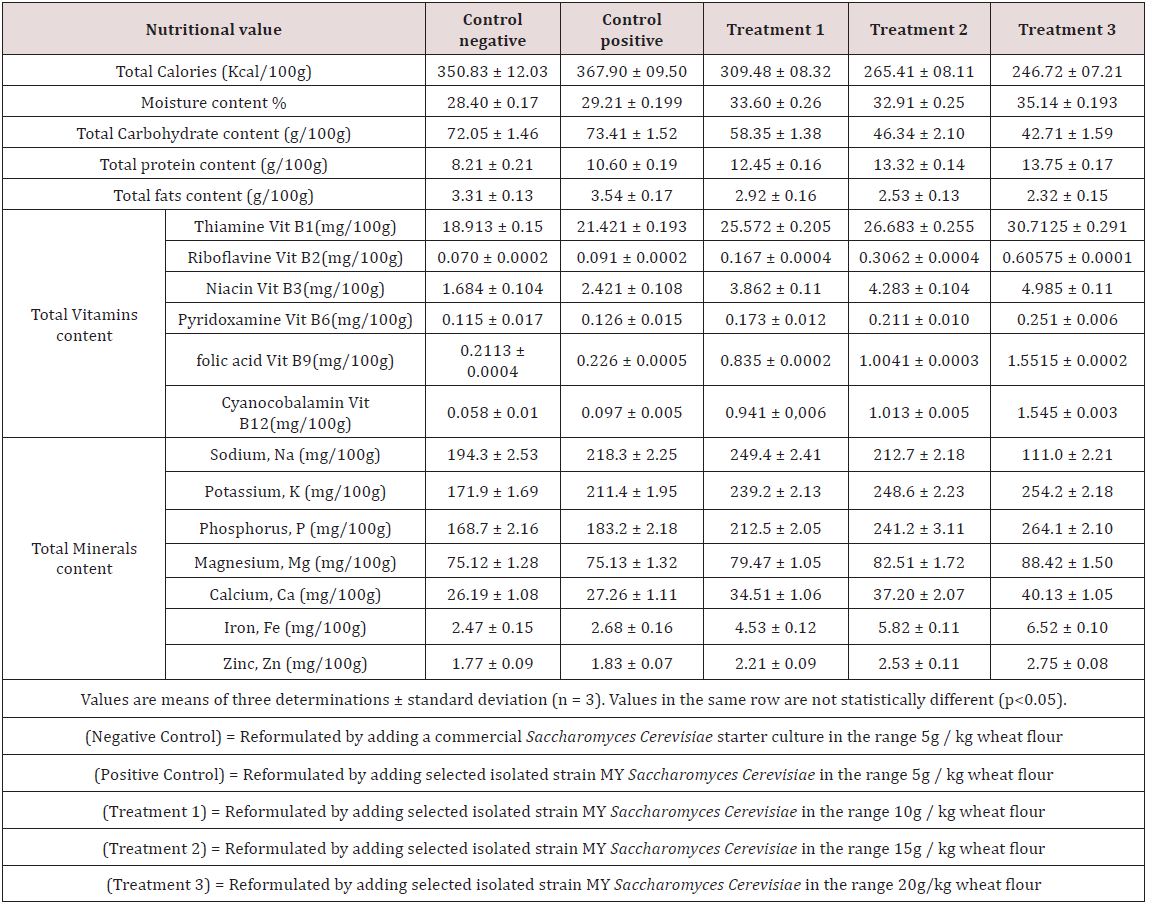
Table 1 shows the nutrient composition of bread. An increase in nutritional yeast concentration resulted in increase in the protein content of bread. Similar results were reported by Shogran [21] Udofia [22] Noorfarahzilah [23] and Masamba [24].The nutritional yeast used to fortify bread contains high quality protein which was reflected in the fortified bread. Proposed that nutritional yeast is a rich source of protein. Therefore the consumption of nutritional yeast fortified bread means exposure to higher quantity and quality protein Goesaert [25] and Gary [26]). The nutritional yeast fortified bread had a slightly higher content of carbohydrate, moisture and B complex vitamins (Thiamine B1, Riboflavine B2, Niacin B3, Pyridoxamine B6, folic acid B9 and Cyanocobalamin B12) compared to the non-fortified bread sample. These results are in agreement with Ndife [27] and Pareyt [1]. Table 1 revealed also that the fortified bread had higher content of minerals such as (Potassium, Phosphorus, Magnesium, Calcium, Iron and Zinc) compared to the non-fortified bread sample. These results are in agreement with Nwanekezi [28]. It was also noted that lipids and Sodium content were lower in fortified bread because of the addition volume of nutritional yeast. These results are in agreement with (Mashayekh [29] Sanful [30] [Table 1].
Table 1: Means of nutritional value of fortificated bread as influenced by adding three different concentrations of active Saccharomyces Cerevisiae.
Lupinepublishers-openaccess-Dairy-Veterinary-Sciences

Sensory Evaluation

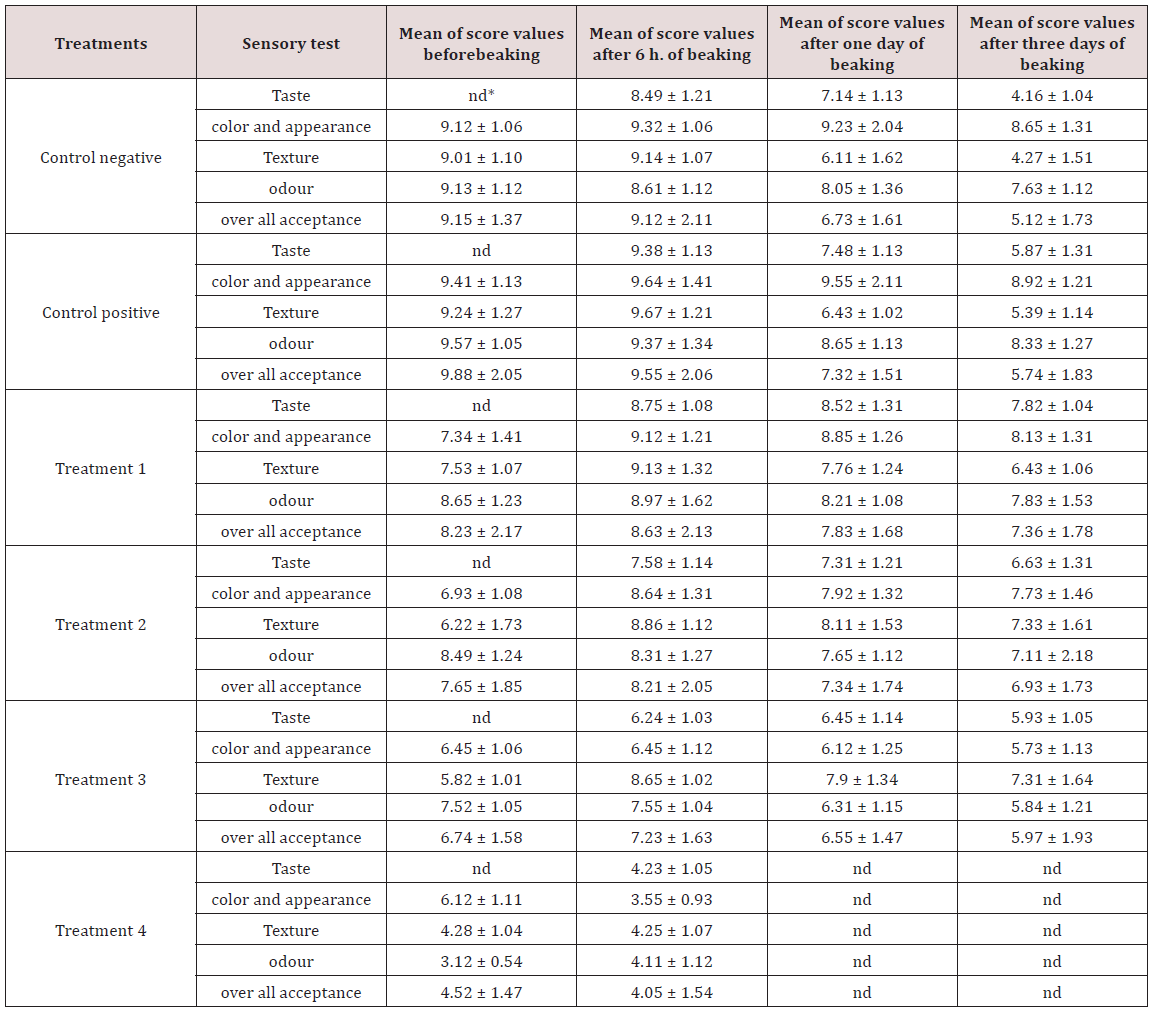
Color and Appearance of Bread: Data in Table 2 shows people responses to the appearances of bread samples. All the bread samples were baked using white flour and the change in color was a result of incorporation of different nutritional yeast concentrations. The darker color noticed in bread samples with higher concentrations of nutritional yeast was a result of enhanced Maillard reactions [42] between reducing sugars and proteins. Vaclavik and Christian [43] described appearance of food as the size, color, structure, transparency of turbidity and degree of wholeness or damage of the product. Structure and color are important in baked goods for example bread should have white and brown color and should have many holes uniformly spread throughout otherwise a slight drift from normal will be judged as a quality defect. Most people referred the appearance of bread sample T1 since it resembled the color of brown bread available on commercial market. This shows that many consumers prefer brown bread to white bread when considering color only. Sample T3was regarded as unacceptable by the respondents due to its dark brown color which they perceived as unattractive.
Taste of Bread:b Taste was the main attribute in rating of the samples since addition of the nutritional yeast had an effect of changing the taste of the bread. Tepper and Ulrich [44] defined taste as a combination of five major tastes: salty; sweet; sour; bitter and umami. Taste is detected by taste buds at the tips, sides and back of the tongue and the sensitivity to a particular taste depends on the concentration of the substance responsible for the taste. The responses to the taste of different bread samples are shown in Table 2 the respondents liked the taste of sample T1 most largely because it had the taste of what they already perceive as normal and fresh bread taste. Samples T2 and T3 had low scores due to the cheese like taste of the nutritional yeast which was appealing to most respondents who originally prefer cheese. Bread sampleT4 was regarded as unacceptable for human consumption as a result of a bitter aftertaste experienced by the consumers.
Table 2: Means of sensory score values of bread as influenced by adding four different concentrations of active yeast.
Lupinepublishers-openaccess-Dairy-Veterinary-Sciences
Values are means of three determinations ± standard deviation (n = 3). Values in the same row are not statistically different (p<0.05).
(Negative Control) = Reformulated by adding a commercial Saccharomyces Cerevisiae starter culture in the range 5g / kg wheat flour
(Positive Control) = Reformulated by adding selected isolated strain MY Saccharomyces Cerevisiae in the range 5g / kg wheat flour
(Treatment 1) = Reformulated by adding selected isolated strain MY Saccharomyces Cerevisiae in the range 10g / kg wheat flour
(Treatment 2) = Reformulated by adding selected isolated strain MY Saccharomyces Cerevisiae in the range 15g /kg wheat flour
(Treatment 3) = Reformulated by adding selected isolated strain MY Saccharomyces Cerevisiae in the range 20g /kg wheat flour
(Treatment 4) = Reformulated by adding selected isolated strain MY Saccharomyces Cerevisiae in the range 30g /kg wheat flour
Flavor of Bread: Flavor is one of the major sensory properties which are decisive in acceptance and selection. Vaclavik and Christian [43] defined flavor as a combination of smell and taste which is largely subjective. Table 2 shows consumer responses to bread flavor of different nutritional yeast concentration. As the level of nutritional yeast increased, the typical flavor associated with bread decreased. The respondents accepted flavor of bread samples T1, T2 and T3 but rejected bread samples T4 as a result of strong yeast smell. Consumers are more likely to accept products that they are familiar with. Any deviation in flavor is deemed as quality defect.
Bread Texture: Texture refers to those qualities of food that can be felt with fingers, tongue, palate or teeth Murano [34]. The texture of bread samples is shown in Table 2. The respondents found the texture of samples T1, T2 and T3 as highly acceptable. Sample T4was regarded as unacceptable in terms of texture due to the high amounts of moisture in the bread samples which resulted in a lumpy crumb structure instead of an open texture.
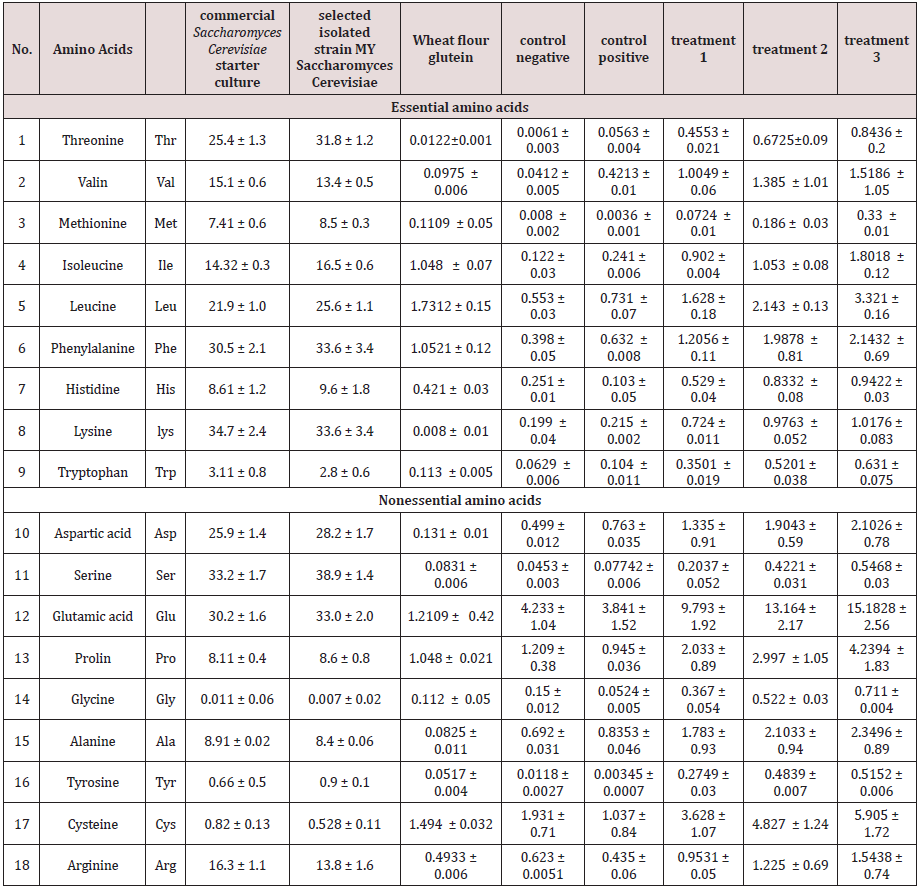
Amino acids Analysis: The results of Table 3 the qualitative analysis showed the variability in the amino acid composition in the examined wheat genotype. For all analyzed cultivars have been identified 18 different amino acids. These results suggest that wheat flour and non-fortified bread protein is deficient in certain essential amino acids, such as lysine, tryptophan, threonine, methionine and histidine. Wheat protein is rich in glutamic acid and proline, which are the dominating non- essential amino acids. Paterson [35] also reported the deficiency of lysine, tryptophan and methionine in wheat protein; likewise Khan [36] reported that lysine is the limiting essential amino acid in wheat grain protein. In contrast fortified bread treatments showed highly increase in certain essential and non- essential amino acids. At the same time it should be noted that the lysine has been higher increase value in fortified bread treatments which is in agreement with the experience of Yalçın [37] who used a similar technique with fortified bread. According to the results of the analysis the most present amino acids in the examined wheat flour were glutamic acid, glycine, sarcosine, valine, norvaline and tryptophan. It is well known, that glutamic acid and glycine are principal amino acids in all cereal protein fractions. Likewise Sejian [38] and Knezevic [39] found that increase in the protein content of wheat grain showed differences among wheat genotypes. Considering that amino acid composition of wheat flour proteins is genetically determined, it mean that changes of amino-acid composition is possible realize through changes of backing proceed. Similar results were reported by Paterson [35] there was a significant loss of lysine when dough is baked into bread. Ahmad & Hussain [40] and Jensen [41] also reported negative relation between the protein and lysine content of wheat (Table 3).
Table 3: Means of Amino acids concentration value of wheat flour and fortificated wheat bread as influenced by adding three different concentrations of active Saccharomyces Cerevisiae as (mg/gm).
Lupinepublishers-openaccess-Dairy-Veterinary-Sciences
Values are means of three determinations ± standard deviation (n = 3). Values in the same row are not statistically different (p<0.05).
(Negative Control)= Reformulated by adding a commercial Saccharomyces Cerevisiae starter culture in the range 5g / kg wheat flour
(Postive Control)= Reformulated by adding selected isoleted strain MY Saccharomyces Cerevisiae in the range 5g / kg wheat flour
(Treatment 1)= Reformulated by adding selected isoleted strain MY Saccharomyces Cerevisiae in the range 10g / kg wheat flour
(Treatment 2)= Reformulated by adding selected isoleted strain MY Saccharomyces Cerevisiae in the range 15g / kg wheat flour
(Treatment 3)= Reformulated by adding selected isoleted strain MY Saccharomyces Cerevisiae in the range 20g / kg wheat flour

Conclusion


The protein content spatially essential amino acids content of the homemade bread was improved through nutritional yeast fortification. The carbohydrate, B complex vitamins and minerals content of the fortified bread were improved. The flavor and taste greatly influenced consumer acceptance of the product. Addition of artificial flavorings to mask the strong flavor of the nutritional yeast could help improve the taste and consumer acceptability of the fortified bread. For increasing of amino acid content as well composition of free essential amino acids in grain of wheat we need to increase our knowledge about mechanisms of the control grain protein accumulation at the molecular, biochemical and physiological levels. Also, for improving nutritional value are necessary to select wheat genotypes in terms of essential amino acids content and higher protein content.


For more Lupine Publishers Open Access Journals Please visit our website https://lupinepublishers.us/
To Know more about Open access Publishers, click on Lupine Publishers.