Showing posts with label Open Access Journal. Show all posts

Thursday, 17 October 2019

Lupine Publishers | The Application Wearable Thermal Textile Technology in Thermal-Protection Applications

Lupine Publishers | Journal of Textile and Fashion Designing

Abstract

The needs for better thermal protection exist in various fields of our life, like the better thermal treatment, outside chill sports field and freezing working condition etc. However, the traditional passive thermal insulated clothing is insufficient, too blocky and heavy to constrain the movement of wearers and uncomforted to wear. Thus, an innovative light, flexible and active wearable thermal protection needs to be developed. This article reviews the relevant wearable thermal textile technology by utilizing the latest conductive textile materials in three developing levels: the fiber level, the yarn level and the fabric level, to provide more possibilities for new products development in various fields, which will facilitate the transfer from research achievement into mass production to realize its commercial benefits.
Keywords: Wearable technology; Thermal protection; Conductive textile; Silver-coated yarn

Introduction

With the capability of the human to survive in various extreme environments is growing stronger and stronger, the desire to act and move freely in chill condition is growing as well. Although the surviving ability in the extremely cold condition has been confirmed, the free motion and activity in the chill environment and the thermal comfort is still a problem. In some circumstance, people need to work or do exercises in this severely cold condition so that they may sacrifice their thermal protection for a period to exchange for free motions and activities, because this thermal protection is too heavy, thick and blocky and it is also a kind of striction. In these circumstances, human is easy to be cold injured, such as frostnip, frostbite, trench foot, and even whole-body hypothermia etc. These cold injuries can occur on any body part, but tends to occur more on exposed areas such as the face and on the extremities, which have a high surface area to mass ratio and are also more often exposed to conductive heat loss. Some cold injuries are permanent and incurable.
Meanwhile, although human can survive through the low temperature condition, thermal comfort is still a problem that the traditional passive thermal-insulate clothing protection, which is thick and in blocky multi-layer structure, to prevent the heat dissipation to the environment as less as possible. In this circumstance, the heat energy source is only the human body itself. While in these extreme condition, the tradition passive thermal protection is insufficient. Further, this bulky and massive multilayer structure constrains the free movement of human beings, especially when human doing exercises and conducting works in chill winter outside trials.
Typically, the applicators involve relatively thick bulky compresses which do not conform closely to the contour of the body. Failure of the compress to conform closely and to retain close contact once positioned, results in irregular heating of the ski area. This problem often results in irregular or non-uniform healing of the skin, swelling, and the like. Further, due to its passive working-machinimas, this protection is far insufficient to maintain the thermal comfort of wearers in extreme condition, especially for the children and the elderly groups. Thus, an innovative flexural wearable active thermal technology is under research [1-3].
On the other hand, wearable smart textile is a new technology emerged two decades ago. After 20-year continuous developing, this technology already expends its applications into different fields, such as fashion, home textile, medicine, sports, military etc. It integrates flexible conductive materials to form complete electric circuit or functional e-components and connected to external circuit to achieve designed responsive functions towards outside stimulus or to enlarge the human themselves capability to against outside the environment. Currently, textiles are transcending their traditional functions and embrace various new possibilities to fulfill new roles in innovative functional exploration. Fibers are dramatically transforming the world and environment around.com and as they do so, they are also inspiring radical new visions for the future.
In this way, thanks to the fast-growing wearable smart textile technology, conductive textiles with various electric resistant properties, can be applied for developing the proposed light, flexible active thermal-protective clothing products, through different fabricating methodologies to integrate these conductive textile materials together with different areas with different electric resistances so that following the Joule’s law, the target positions in a conductive fabric will enable to heat up actively when certain electric energy provided. This active thermal textile can be widely applied in the fields of professional and protective thermal wear, fashion, sport and well-being, home interiors, automotive, construction, medical and health care etc. Especially the fields, sports and medicine, are the two main drivers for further growth, because the attitude shift of our main consumption power that everybody is towards to pursuing for a healthy life manner, and the social aging problem is becoming more and more severe, the market potential is unpredictable [4-7].

The Thermal-protection in Various Scenarios

Scenario I-Thermal Treatment

Thermal treatment, or the manipulation of body or tissue temperature for the treatment of disease, can be traced back to the earliest practice of medicine. Cultures from around the world can point to ancient uses of hot therapy for specific medical applications, even including cancer. Today there are a growing number of clinical applications of thermal therapy that benefit patients with pain-relief, a variety of diseases and heat-activated drug delivery. In order to deliver a better therapy effects in a constant period, the thermal functional textile is required to closely fit with the body curve and contact the target skin position with large area and distribute the heat energy evenly in case any overheating occurs. Further, this technology can be extended to other fields, to offer this treatment all the time. It can integrate with fashion and textile, transportation and home textile, such as smart thermal mattress, sheets, pillowcases etc. to offer an active thermal comfort or thermal treatment to achieve better fatiguerelief and pain-relief effects. Especially, in the scene of home textile, through this next-to-skin technology, electric energy consumption can be significantly saved, compared to the traditional air-condition controlling manner [8-12].

Scenario II-Chilling Sports Field

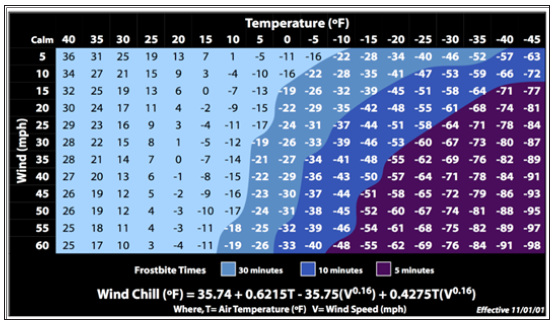
Driven by the public pursuit for a healthy modern lifestyle and a perfect body figure, an upsurge of physical training and fitness is sweeping the entire world that everyone, not only professional athletes anymore, is taking exercise all the year around, even in the chill winter outside fields. This trend also boosts the consumption of thermal-protective sportswear recently. When the environmental temperature drops below 5ºC, it is already dangerous to conduct outdoor exercises that cold injuries may occur, especially when taking wind this factor into consideration. The relationship among the health risk, the tense of wind, the environmental temperature and the time of human subject exposure in the outdoor, is well studied and listed in the Figure 1. It shows that in the condition where the temperature under 40°F (5 °C) and the wind intense than 5mph/h, and the exposure time exceeds 30 min, there is a high risk to get cold injuries [13,14].
Figure 1: Wind Chill Temperature Index in Fahrenheit [14].* Wind Chill Temperature is only defined for temperatures at or below 50°F and wind speeds above 3 mph. Assumes no impact from the sun, i.e., clear night sky. Frostbite times are for exposed facial skin.
Thus, sufficient thermal protection against the chill condition is critical both for elite athletes and common sports consumers. For elite athletes, injuries may lead to missing the whole season, which also means losing sponsor deals and possible prize money. For common sports consumers, injuries may cause, for example, sick leaves from work, monetary losses both for the society and the individual. Injuries can also cause mental problems, especially for elite athletes, whose career depends on their bodies and its functioning. Injuries also may harm the physical progress, especially on young athletes, who develop quickly and might fall behind because of the cold injuries [15].
However, facing this high injury risk, the only current solution is to wear multi layers of clothing, which is heavy and blocky in the end. The cumbersome and multilayer-structure cloth of such clothing restricts physical motions and normal consumers will feel more exhausted, which makes it impractical. It is critical that designers understand the movement needs of individuals who will wear these thermal protections. Movement involves time, energy and space. Among these three elements, they need to rank after their importance by gathering realistic information from the practices. Additionally, it is suggested to take off the out layer after excises and starting to sweat out. However, how to deal with the taken-off clothing will be a problem. Carry them around and do strenuous exercises simultaneously? Of course, it is a distraction from the exercises. Therefore, the proposed wearable thermal textile can act as the second layer of sports skin to against the chill weather intelligently [14].

Scenario III-Freezing Working Condition

Anyone working in a cold environment is at risk of cold stress. Some workers may be required to work outdoors in cold environments for extended periods, for example, snow clean-up crews, sanitation workers, police officers and emergency response and recovery personnel, l emergency medical technicians etc. The most relevant cold-related health problem was episodic finger symptoms (50%), followed by respiratory symptoms (21%), peripheral circulation symptoms (20%), and repeated pain in the musculoskeletal system (12%). Thus, in order to protect the life-safety, to prevent cold injuries and offer better welfare and protection, active wearable thermal-protective working uniform needs to be developed as soon as possible to lower the risk of cold injury. Besides these three scenarios, there are also other various situations. For example, in the fall-winter collection design of fashion clothing, flexible wearable and active-thermal textile technology can be applied, with a substantial market share [16,17].

The advantages of integrating textile and engineering

On one hand, this wearable electric thermal technology is an integration of both textile and electric engineering. Clothing is physically proximal (close to the body), is socially ubiquitous (worn almost all the time, in almost all situation), and has a large contact surface area with the human body. And it can better fit body curves so that, for the technology, the proposed electric thermal-functional device can more closely fit the body with more space offered for free motions, more evenly heating up the subject with less weight burdened simultaneously. These characteristics enable the proposed technology more friendly to wearers in more situations and to integrate more seamlessly into everyday or job-related activities [18,19].
On the other hand, electronic engineering offers another significant advantage-the ability to make a change (activated by the user) or response to external stimuli. This proposed wearable thermal technology can adjust its heating effect to against the changing outside condition and maintain in a stable thermal comfort for wearers. Thus, this active thermal functional clothing act as an intelligent barrier between the wearer and the hazard condition. Further, thanks to the clothing and textile property, the electric thermal function area and circuit connecting path can be arranged into fabric pattern design within different structures, consequently, with various surface resistance properties. Following the Joule’s law, multiple levels of heating effect can be achieved. When investigating the technology deeper, this thermal-functional textile can offer the listed detailed advantages:
a. Clothing embedded electrodes enable perfect electrode placement and shape with larger contact area, together with the textile flexibility property, guarantee the electrodes to have a proper skin contact to perform stably.
b. Cables and wires can be integrated into textile invisibly and the system invisibility makes it acceptable for more users.
c. The comfortability and softness of electrodes enable long time wearing, without a compromise of comfort.
Figure 2: The integration of textile and thermal engineering into one wearable electric thermal product.
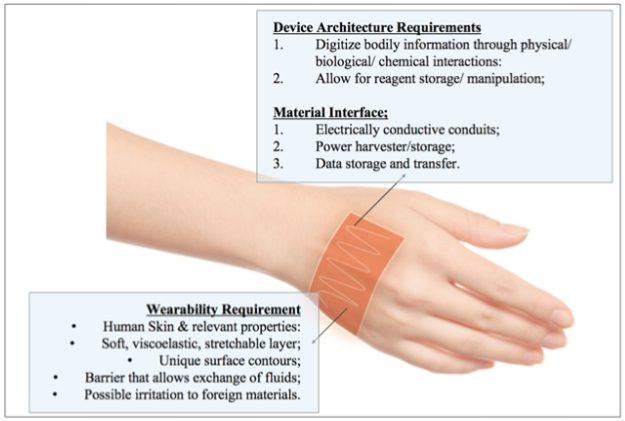
d. Artificial intelligent technology may further enable this thermal-functional fabric to collect physical/biological/ chemical signals from the wearers and allow for reagent storage/manipulation, such as a storing encapsulated medicine inside and paired with the electric heating ability, a better thermal treatment effect can be achieved. As shown in Figure 2, the further expectation about the product has been described in details.
Figure 3: The product development route
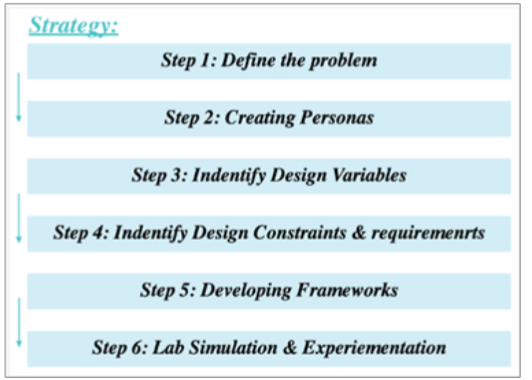
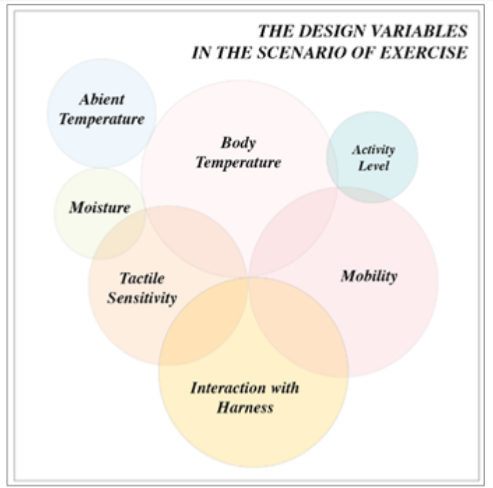
Figure 4: Product design variables in the scenario of doing exercises.
Wearable conductive textiles have been under development for decades, however, there are rare commercialized products on shelf and no transfer from this technology into final products in the three most common scenarios or etc. There is still a huge barrier between the lab-achievement or trials to commercialized products. A systematic technology developing methodology system (as shown in Figures 3 & 4) should be established to broad its applications and facilitate the transfer from lab-research outcome to the mass production and realize its commercial value.
Considering the three most common scenarios as the application background, the first step is always to precisely define the problem. Before coming up with the solution, the question that who is the real user and who is the decision-making consumers, should be answered at first with a full consideration even about their different pursuits on a same product, especially when creating different personas and associated with their customized design variables, constrains, and requirements. With these details settle down, they can be organized into a comprehensive framework to conduct the development and in the lab simulation & experimentation step, the performance of the prototype technology can be evaluated and be improved further.
Here, take Scenario II as an example to illustrate its developing methodology. First, the pain point is the insufficient thermal protection or the current thermal protection technology is blocky, heavy, inconvenient for athletes to do exercises or race in the cold condition, perform unsatisfied and easy to get cold injuries. The target personas can be both amateurs and professional athletes, who will be exposed to outside chill weather to do exercises for an extended period. Afterwards, when brain storming the design plan, numerous factors need be considered. Here, 4 main factors will influence the wearer’s thermal balance and comfort: the original body temperature, the ambient temperature, the activity level, the amount of perspiration (moisture), in the thermal convection and conduction these two ways. Additionally, factors, such as mobility, interaction with harness, tactile sensitivity etc., will influence the wearing comfort, especially for doing exercises, the freedom to do different motions is as important as the thermal-protection. Thus, these factors have the same weight in the design plan. In order to meet the requirement of light, flexible, thin conductive fabric with different parts with different electric surface resistances, which can fit tightly with the body curve as well, appropriate conductive textile materials should be sourced for further product development.

Conductive Material Selection

Electronic textiles rely heavily on fiber function and properties to create structures with specific architecture, functions and properties. Nowadays, advancing technical fibers are designed to be electrically conductive, lightweight, flexible and strong. Especially, metal such as silver, copper and nickel can be combined with technical fibers to create flexible, wearable substrates that conduct electrical signals, response to external stimuli and be electric-thermal active.
Answering the aforementioned product expectation, various conductive fibers (conductive modification made in the fiber-level) are sourced, they mainly include:
i. Metal/metal oxide fibers/yarns produced by wire drawing,
ii. Conductive synthetic fiber/yarn and through melt spinning and incorporating conductive fillers
iii. Treated coated conductive fibers
iv. Carbon black, metal wires, graphite and metal powder or flakes of Al, Cu, Ni, Ag). However, carbon fiber is likely to shatter when impacted and bristle, uncomforted to wear so it is not discussed here [19].
i. Metal/metal oxide fibers/yarns: The fibers through drawing die, usually consists of a steel mount with a core out of ceramics, carbide or diamond. The initial diameter of the metal wire varies depending on the material. Metal fibers are strength, stable composition, biological inertness and ready availability in textile form at low costs. Due to its inertness, it is not sensitive to washing or sweating. However, they cannot provide uniform heating and their brittle characteristics can damage spinning machinery over time. Additionally, they are heavier than most textile fibers making homogeneous blends difficult to produce. Therefore, based on the technology of conductive fiber/yarn, they are integrated into the textile production and construction and connection development to overcome the barriers. Meanwhile, the conductive metal fibers could be spun with non-conductive fibers to form blending conductive threads to integrate the advantages of metal fibers and traditional fibers, like cotton and polyester together.
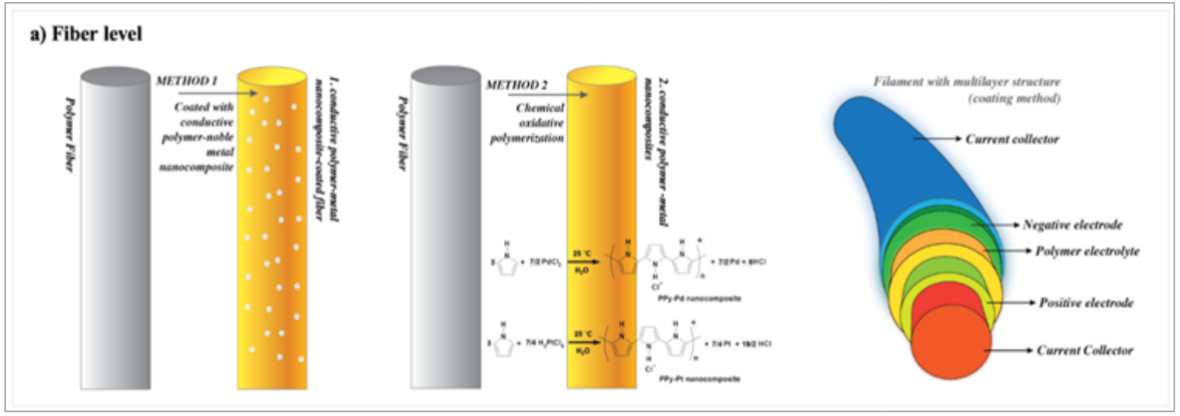
ii. Conductive fiber through melt spinning and incorporating conductive fillers: As the two methods shown in Figure 5, one way is adding electric conductive particles into fibers polymer to achieve conductive raw material chips to spine conductive fibers/filament afterwards. The other method is to modifying the polymer property, such as chemical oxidative polymerization, to enable the synthetic fiber conductive itself. Comparing the conductivity of these two kinds, the former one mainly depends on the wt. % of conductive particles added, while the second one’s resistance is relatively high. Meanwhile, this approach could be applied in the field of filament, bio-component fiber productions and piston spinning plant. These conductive particles could be carbon black, graphite, metal powder or flakes of Al, Cu, Ni, Ag etc. [20].
Figure 5: The conductivity modification at the fiber-level
iii. Coated Conductive Fiber: A layer of conductive substrate is coated onto the non-conductive fibers/filament. The advantage of coatings is that they are suitable for many fibers types and they produce good conductivity without significantly altering existing key substrate properties such as density, flexibility and handle. It is possible to make a conductive fabric through a coating treatment even though the main applications for these textiles are protection against static electricity charge and electromagnetic interference (EMI). The main advantage is that the textile properties of the yarns are preserved, particularly they remain flexible. Further, due to various coating materials and different adding wt.% of conductive particles in the coating layer, fiber or filament resistance may differ a lot.
Further, among various coating materials, silver particle coated layer exhibits excellent stable electric conductive property. This material enables the conductive thermal fabric lighter, softer, more flexible and elastic, which can tightly fit the body curve, evenly distribute the loaded pressure and distort and swing in large angles with various body movements. Further, through adding different wt.% of silver particles into the coating layer and binding different lines of coated fiber or filament, silver-coated conductive yarn (SCCY) products with different linear electric conductivities can be produced. Further, this kind of conductive yarn can withstand 20 times of washing and maintain stable conductivity at the same time. Therefore, through utilizing SCCYs with different resistances and embedding them into the proposed electric-thermal fabrics, fabrics with various resistance can be fabricated.
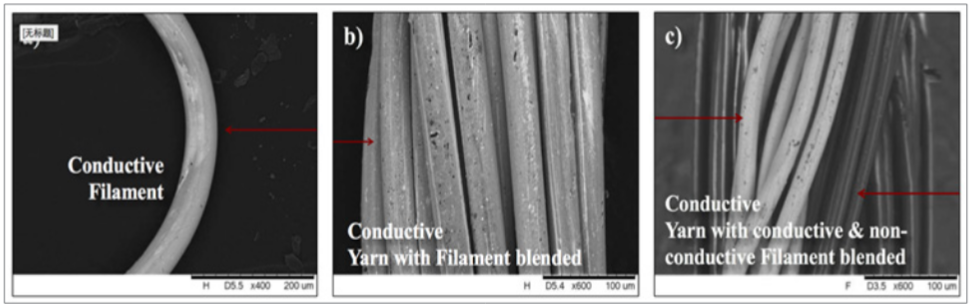
Following the Joule’s law, with certain voltage provided, fabrics with different resistances can achieve different thermal effects. Here, synthetic yarns in various morphologies coated with silver layer in different manners are shown in Figure 6, which show 3 main kinds:
a) Single conductive filament, of which with silver coated on synthetic fibers
b) Conductive yarn formed by conductive filaments blended
c) Conductive yarns formed by conductive and nonconductive filaments blended.
Additionally, through multilayer coated (blended with nonconductive and conductive, layer by layer), capacity and energy generator can even be developed, as shown in Figure 6.
Figure 6: Different forms of conductive fiber/yarns: a) Single conductive filament, of which with silver coated on polyester b) Conductive yarns formed by conductive filaments blended c) Conductive yarns formed by conductive and non-conductive filaments blended.
Spinning Methodology for Conductive Yarn Formation

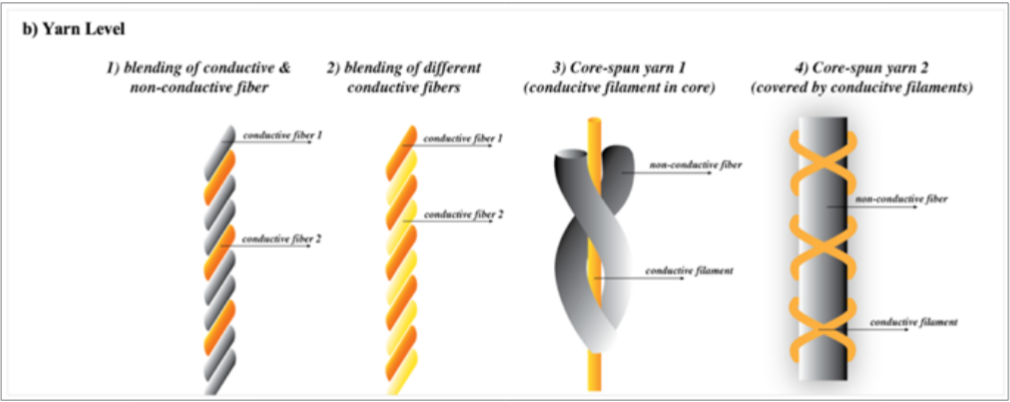
Thanks to the fineness of previous conductive fibers, especially the silver-coated conductive fibers, various conductive yarns (modified in the yarn-level) can be formed, as shown in the Figure 7. Through different spinning methodologies, mainly four kinds of conductive yarns can be formed:
a. Blending of conductive & non-conductive fibers, different blending ratio determines the yarn linear resistance
b. Blending of different conductive fibers: different blending ratio and different conductive material selection both determine the yarn linear resistance
c. Core-spun yarn 1, with conductive filaments in the core, and non-conductive fiber wrapped outside to protect the core
d. Core-spun yarn 2: with conductive fibers wrapped outside and the non-conductive filament/ yarn in the core. For these two kinds of core-spun yarn, especially when elastic fiber (such as spandex) combined with conductive fiber/yarn, the elasticity, flexibility and the strength of the proposed conductive yarns are greatly improved, to meet the previous mentioned thermal textile product expectation and enable it to be applied into various scenarios.

Fabrication Methodology for the Thermal Fabric

As previous mentioned, thermal-protective textile needs to arrange conductive yarns or materials in different parts of a fabric with different surface resistance, various fabricating methodologies can organize conductive yarns in different arrangement, in different kinds of integrations, along different directions to achieve different contact resistances. This contact resistance combines, with the linear resistance of conductive yarns themselves, forms the final comprehensive surface resistance. Conductive fabrics can be made by weaving or knitting a fabric entirely out of conductive yarn, by weaving or knitting insulated or no insulated conductors into a standard fabric, or by stitching conductors on the surface of a fabric.
Figure 7: The conductivity modification at the yarn-level
Considering other possible fabricating technologies, the techniques feasible to conduct electricity using a textile can be achieved by weaving, knitting, laminating, printing, or stitching conductive material into or onto the textile structure in general. While, he most challenge of creating a textile-integrated circuit is making conductive pathways that can connect components in different places on the textile. Standard textile structures such as weaving and knitting usually allow thermal pattern or conductive yarns to be integrated in a horizontal or vertical direction (or both) to form electric connecting path or thermal pattern, creating a grid of functional circuit once textiles are made into garments. Considering this character, wideness of different fabricating producing technology adopted and the further feasibility to promote the proposed technology, three main methods are discussed here: weaving, knitting and stitch/ embroidery, and together with their working principle, strength and weakness. Table 1 lists out how conductive yarns are integrated and Figure 8 illustrates out the format.
Figure 8: The conductivity fabrication at the fabric-level through different technologies.
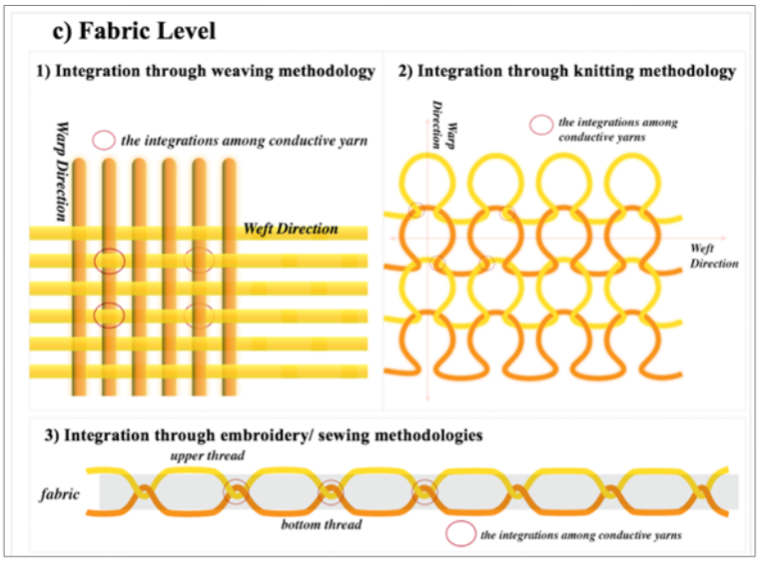
Table 1: The characters of the conductive pattern fabricated through different methodology.

I. Weaving: Weaving is an ancient technique that creates a simple and effective system today and continues to be at the forefront of materials innovation. In the weaving structure, the conductive warp and weft yarns can integrate with each other through square crossing. Meanwhile, the ordinary weft and warp yarns can be replaced by conductive yarns to form cross integrations among them and improve electric conductivity. Through weaving, the fabric stability quality is excellent and through various jacquard pattern design, multiple layers can be formed as well. And the warp & welt yarns can replace the original ones directly. Besides the pattern design, various conductive yarns can be arranged in specific area so that even following the same pattern structure, different part with different resistance can be formed and to achieve a complete functional electric thermal circuit further. However, in order to form the cross integration of conductive yarns both in the warp and weft directions, warp beam composed of conductive yarns need to form ahead. Meanwhile, for different weaving pattern, different warp beams need to be produced customized, which costs lots of time and raw material investment.
II. Knitting: In the knitting structure, conductive yarns can integrate with themselves in the former parts through loop interlocks or the conductive yarn can integrate with other conductive yarns, which are laid into their loops. Knitting fabric structure is more elastic, flexible and light-weight, which can be widely applied in the sportswear design and development. However, everything has its two sides. When the proposed conductive thermal fabric bearing different levels of external extension force, the loops will deform in different levels as well. Thus, the contact morphology between each loop will deform in different level as well, so that their resistance may fluctuate. Depending on specific application scenarios, whether this resistance fluctuation is acceptable or needs to be calibrated should be well studied in advance. However, compared to weaving, knitting production is more fast-response and the design pattern is more flexible to revise with less cost generated.
III. Stitch & embroidery: Stitching or embroidery to the surface of a textile allows for the pathway to be laid out in a more free-form fashion: the yarns can travel wherever needed over the textile surface so that, through pattern design, embroidery is the only textile technology in which threads can be trailed arranged in any direction. With the aid of embroidery, through fiber orientation, fiber-composite components can be created to withstand complex forces. When compared to standard textile technologies, is that reinforcement threads can be arranged direction, i.e. at any angle between 0° to 360°. Thus, embroidery allows an accumulation of reinforcement material by repeated embroidery across the same place. Through this repetition, even multilayer and 3D structure can be formed.
Although there is a hug advantage, the application of this technology into the fields of wearable textile, medical etc., has not been touched. This is particularly advantageous with relatively small motifs. As opposed to weaving, where threads are arranged at rigid angles, embroidery also enables rounded patterns. Additionally, made-up embroidery goods are dimensionally stable -unlike knitted fabrics. A further particularity of embroidery is that threads can be placed on top of one another, achieving threedimensional characteristics. Modern embroidery machines are equipped with color change devices, enabling switching from one material component to another during production.
Notably, many conductive yarns are too fragile to survive the many trips through the take-up mechanism of the needle thread of a sewing machine and must be used as bobbin threads. Some manufacturers report that conductive thread pass as much as 70 times through the needle before being embedded into the garment. Stitching a conductive pathway on the surface of a textile also requires that the pathway be electrically isolated in places where conductor cross each other and sometimes also be insulated from the outside so that the circuit is not affected by external moisture, perspiration and other factors, as mentioned in the various scenarios before and even the illustration listed in Figure 8.
It is also important that conductors not come into contact when the garment is folded, and so that the wearer is protected from any electrical shocks. For example, adjusting the tension on a lockstitch machine can allow the conductive yarn to float on one side of the fabric without passing through to the other side during each other without coming into contact by travelling on opposite side of the fabric. Stitched connective parts can also be insulated after sewing by laminating a protective fabric, film or coating over the stitching.

Conclusion

Through these three thermal textiles developing methodologies modified in the fiber-level, the yarn-level and fabric-level respectively, the feasibility to develop light-weight flexible and convenient wearable active electric thermal fabric has been confirmed and the possible variety to develop active thermal fabric in different format, patterns, with different properties and conductive resistance are well-explored. In the further research development, integrating different kinds of conductive textile materials by different combination and integration, it is believed the proposed lab research achievements can be translated faster into commercialized products to be utilized in different scenarios in our life to realize its scientific and social benefits value.


For more Lupine Publishers Open Access Journals Please visit our website:

For more fashion and textile research journal articles Please Click Here:

To Know More About Open Access Publishers Please Click on Lupine Publishers

Follow on Linkedin : https://www.linkedin.com/company/lupinepublishers
Follow on Twitter   :  https://twitter.com/lupine_online

Saturday, 12 October 2019

Lupine Publisher | The Definition Technological Parametres of One Chamber Two Saw Cylinders Gin

Lupine Publishers | Journal of Textile and Fashion Designing

Abstract


In article it is showed the definition technological parameters of one chamber two saw cylinder gin. For maintenance of efficiency of ginning and productivity increase it is necessary to choose correctly diameter of the working chamber, an arrangement corner saw cylinders under the relation of a horizontal axis. These factors are major factors influencing productivity and quality of a fiber at practical and theoretical researches of one chamber two saw cylinder gin.
Keywords: Regression Model; Optimization of Parameter; Angular Position; Saw Cylinder

Introduction

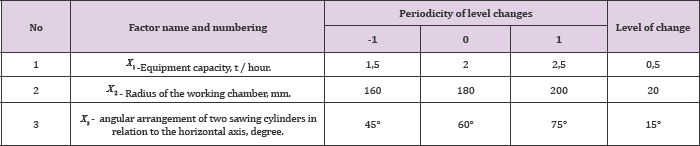
The choice of the necessary technological parameters is the main responsible stage in the design of cotton gin with new working bodies. In the process of fiber separation from the seed, the increase in productivity and the effective elimination of seed damage depend on the selected input parameters. The use of mathematical methods in planning practical experimental work in comparison with other methods of calculation, optimization parameters allows determining the influence of several factors acting together and their interaction among themselves in terms of separation. As a result, based on the few experiments that have been carried out, it is possible to obtain a mathematical model of the object under study; this model will allow obtaining optimal solutions at the time. In optimization, the main issue is this determination of the important factors affecting the process of hair removal of cotton fiber from seed this will serve for efficient fiber separation in the process of ginning [1-3]. The following parameters we chose for optimization:
Lupinepublishers-openaccess-journals-Textile-Fashiondesigning
Using the results of the theoretical study including the literary survey of gins and also taking into account the primary one-factor experiment, the choice of the output parameters affecting the incoming factors was chosen as follows.
Lupinepublishers-openaccess-journals-Textile-Fashiondesigning
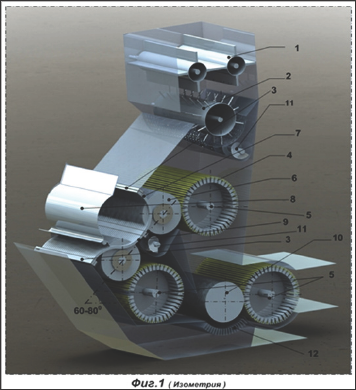
Feed rolls 1 feeding the pin drum 2, a bracket and a clamping bar 3, a brush drum 4, a shaft of the brush drum 5, a saw cylinder 6, an upper grate 7, a gin working chamber 8, a lower grate 9, a cement cylinder 10, a screw 11, knife-like mesh surface 12 (Table 1) and (Figure 1).
Table 1: Factor name and numbering.
Lupinepublishers-openaccess-journals-Textile-Fashiondesigning
Figure 1: New Gin Machine.
Lupinepublishers-openaccess-journals-Textile-Fashiondesigning
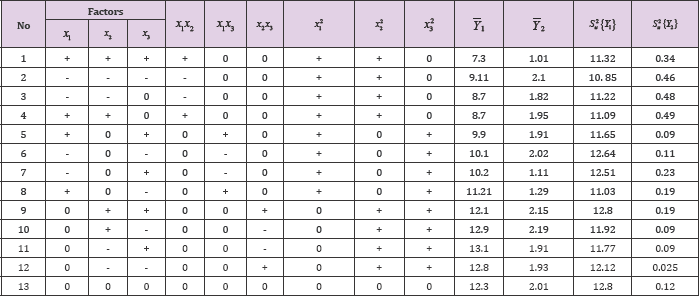
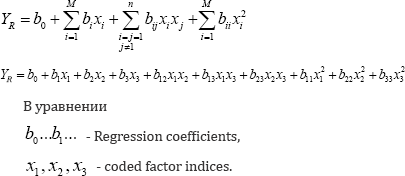
The theoretical studies, it was justified to create a new design for two-cylinder gin. The main working body of the new design is an additional saw cylinder, which allows uniform rotation of the raw roller of productivity. To ensure the efficiency of fiber separation and increase productivity, it's necessary to choose the diameter of the working chamber correctly, the angle of the sawing cylinders in relation to the horizontal axis. These factors are the main factors effecting the productivity and quality of fiber in practical and theoretical studies. The process of ginning associated with many factors is investigated by modern mathematical methods of planning and is calculated by modern computer programs with the help of a computer [4-6]. These methods allow you to get the optimal solution with the least cost. On the basis of the indicators of natural factors, we turn to the coded indicators. The full-factorial test results showed that the investigated process is expressed by the high-level equation. Because of this, to obtain a regression mathematical model of the second degree, this model is considered to be simple and convenient in comparison with other methods, and also in the primary cotton processing enterprises, a non-method method is widely used in technological processes. It was chosen and used in the conducted experiment. The results of the central non composite experimental matrix are given in Table 2.
Table 2: Central non-composite experimental matrix.
Lupinepublishers-openaccess-journals-Textile-Fashiondesigning
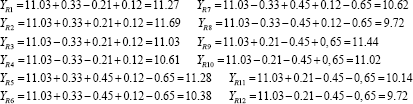
For each experiment it is necessary to use instruments with high accuracy of measurement. In our studies, to change the dimensions of the working chamber, we used already prepared working chambers of different diameters.The fiber performance we determined by the existing method and formula. When using a new working chamber, 100 kg of raw cotton was shipped from the feeder hopper. Each variant of the experiment was conducted five times. In the course of the experiment, the angular arrangement of the saw cylinders with respect to the horizontal axis exerted a great influence on the productivity. The design of the working chamber was made with a high level of measurement. The experiments were conducted according to the principle of randomization. After each experiment (at a certain time), the fiber yield level is determined. After the experiment, the samples were tested according to standard requirements in special laboratories for fiber and mechanical damage to the seeds. Based on the results obtained during the experiment, we use a multifactorial regression mathematical model of the second degree.
Lupinepublishers-openaccess-journals-Textile-Fashiondesigning
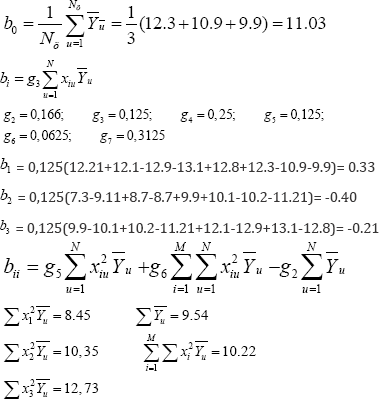
I. Calculation of the productivity of the fiber. Define the coefficients of regression:
Lupinepublishers-openaccess-journals-Textile-Fashiondesigning
Write the equation according to a certain regression coefficient:
Lupinepublishers-openaccess-journals-Textile-Fashiondesigning
Let.com determine the regression coefficient by acceptability.
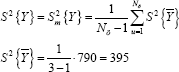
To do this, we define the variance of the output parameters
Lupinepublishers-openaccess-journals-Textile-Fashiondesigning
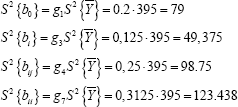
And based on the determination of the regression coefficient, we calculate the variance:
Lupinepublishers-openaccess-journals-Textile-Fashiondesigning
When determining the regression coefficient, we determine the standard deviation:
Lupinepublishers-openaccess-journals-Textile-Fashiondesigning
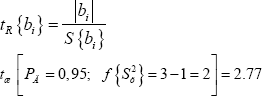
After this, using the following equation, we determine the indications by the Student's criteria:
Lupinepublishers-openaccess-journals-Textile-Fashiondesigning
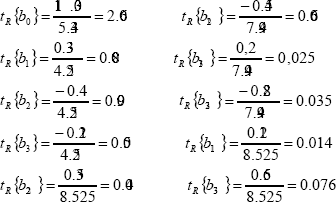
It is known that if the calculated criterion data are lower than those given in the data table, then the coefficient is not important and we derive the data from equation It was found that for the parameters under study, the coefficients of the experiments are not important and necessary:
Let.com re-write the equations with significant coefficients:
Lupinepublishers-openaccess-journals-Textile-Fashiondesigning
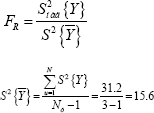
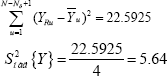
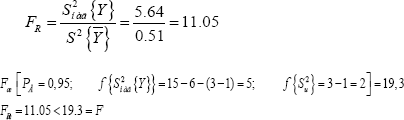
To determine the above regression mathematical model for adequacy and inadequacy, we use the test data of the Fisher criteria.
Lupinepublishers-openaccess-journals-Textile-Fashiondesigning
Here,
Lupinepublishers-openaccess-journals-Textile-Fashiondesigning
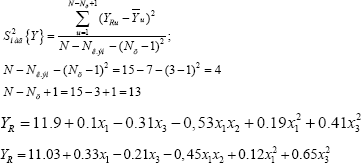
For the results of the output parameters, we use the three factorial two-power regression mathematical model of the equation:
Lupinepublishers-openaccess-journals-Textile-Fashiondesigning
An analysis was made of the data obtained from the three factor mathematical regression model taking into account the necessary regression coefficients by the Student's criterion and also the results of the models tested for Fisher's adequacy.
After In order to simplify the calculations, we create a Table 3:
Lupinepublishers-openaccess-journals-Textile-Fashiondesigning
Table 3: Indicators of the Student's test can be taken from the application:
Lupinepublishers-openaccess-journals-Textile-Fashiondesigning
It is known that if the data of the calculation criteria is lower in comparison with the data given in the table, then this coefficient is adequate and this makes the calculations correct.
Lupinepublishers-openaccess-journals-Textile-Fashiondesigning
From this it follows that the regression mathematical model obtained fully characterizes the process of investigation (Table 4) and (Figure 2).
Table 4: Regression model
Lupinepublishers-openaccess-journals-Textile-Fashiondesigning

Conclusion

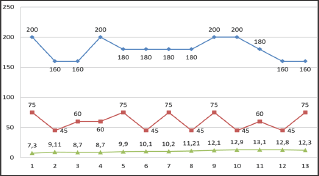
Comparison of the obtained data by the experimental method and the obtained regression mathematical model fully characterizes the process of research with accuracy. Thus, the optimal technological parameters of the single-chamber doublecylinder gin were determined. It can be seen from Figure 2 that when the saw cylinders are positioned at 450-600 degrees relative to the horizontal axis with a working chamber diameter of 180 mm, it makes it possible to increase the productivity by synchronizing the fiber quality. From this it follows that when designing a two-cylinder gin, it is necessary to comply with optimal regime for improving fiber quality and productivity.
Figure 2: Graph of the regression model.
Blue line-diameter of chamber;
Red line-saw cylinders positioned at 450-600 degrees
relative to the horizontal axis;
Green line-capacity of fiber kg/hour.
Lupinepublishers-openaccess-journals-Textile-Fashiondesigning


Thursday, 10 October 2019

Lupine Publishers | A Combined Material Substitution and Process Change Approach to Sustainable Batik Production

Lupine Publishers | Journal of Textile and Fashion Designing

Abstract

This paper empirically presents a batik production process optimization using sustainable production (SP) methods. The stages of batik production processes involve designing, methodology, dyeing, washing, and finishing. The cost of production is determined by the implementation efficiency and calculation of output to input ratio in the production process. The case study method is employed for production process optimization in two batik enterprises in the Kumasi metropolis. The main objective of this research, is to determine the impact of material sustainability, and the minimization of the production process cost in order to promote maximum operational economic benefits. The implications of this intervention shows that, in batik production process, there could be a saving cost of resisting material by GH₡ 31.00, with a process time of 290mins and an activity cost reduction of GH₡ 68.00 by just replacing paraffin wax with cassava starch. The identified intervention has also been found as significant to address the identified issues that bring a substantial change in the current manufacturing practices of the batik industry. It is recommended that much is to be gained in sustaining the practice when cultural themes are employed in the artifacts created.

Introduction

Batik is a process of dyeing fabric by making use of a resist technique classified by the United Nations Educational, Scientific and Cultural Organization (UNESCO) as part of the “intangible cultural heritage of humanity”. It is a traditional creative selfexpressionistic art form in fabric design which originated from the Far East and known throughout the world [1]. In Ghana today, the batik industry is recognized as a profitable enterprise in the fashion industry and is also classified under the small to medium scale creative industry. The potency of this small and medium industry at the local level cannot be over emphasized as its developmental efforts contribute to the quickening of the nation’s economic empowerment. Its merchandise is well-known in the creative industries as one of the leading developmental enterprises clustered in Ghanaian communities.
The expectation of the industry is to provide important support to the industrial sector’s contribution to local community revenue. However, its production methodology appears to be detrimental to the growth and development of the industry. The cause is not farfetched, in that the prime resist component - paraffin wax - used for its production is a foreign imported material, unsustainable in its supply and harmful to human health due to the heat it generates in the path of the melting and wax application. The cost of production makes its market price much higher than those from foreign lands. Comparatively, the cheapness of foreign batiks and the high selling price of locally produced batik compete unfavorably in the Ghanaian market. To avert this trend there is the urgent need for the implementation of sustainable production practices that offers an advantage for the progress and development of the batik industry.
This is premised on the fact that using cassava starch and its modification for batik making in Ghana due to its accessibility and sustainability is far more beneficial than the traditional use of the exportable paraffin wax which sometimes is unavailable and yet expensive in the marketplace. This makes the end product very expensive to the low income earner. Cassava offers a broad scope of applications with its overall benefits and provides livelihood to most farmers in the rural areas. Cassava cultivation is practiced in all the Agro-ecological zones in Ghana which gives strength to its sustainability in terms of cultivation [2]. In Ghana, it is estimated that 70% of farmers grow cassava, contributing 16% of Ghana’s Agricultural Gross Domestic Product (AGDP) according to Safo- Kantanka [3] and consumed by more than 80% of the population [3,4]. The cassava flours used for this innovative batik print are of two types, the white powdered flour starch used for laundry finishing treatment and the brown powdered flour starch used for food [5].
Thus far, the technique employed in Nigeria and elsewhere in the production of Adire is the white cooked starch as Braide and Adetoro [6] describe. The method of implementation is either by free-hand painting with the cooked cassava starch, or by stenciling the starch on the material. The stencils are made with corrugated zinc or a perforated tin sheet which allows the starch print on the fabric. Kadolph [7] advocates the use of cooked starch paste in Nigeria via the screen print method to force the paste out of the screen onto the fabric with the squeegee to produce Adire. Picton and Mack [8] also affirm the use of cooked cassava starch mixed with a small amount of copper sulphate to produce the Adire Eleko resist dyed fabric using the same procedure mentioned above.
Important materials commonly used as binders for traditional textiles are starch, derived from tree gums (acacia), food grains, stems or bases such as maize, wheat, tapioca and cassava. The choice of cassava starch as the vehicle for sustainable production practices is as a result of the following characteristics when applied in textile printing. Its high molecular weight compounds give a better viscous paste in water below 90⁰C since hot starch pastes continue to lose viscosity if maintained near boiling temperatures [9]. They impart adhesiveness and softness to the printing paste when used on a fabric surface without spreading. They are capable of maintaining the design outlines even under extreme pressure. They hold on to the dye particles in the desired area on the fabric until the transfer and subsequent fixation of dye onto the fabric. Its viscosity is sufficiently high to prevent rapid diffusion of the colour through the fabric and to avoid poor print definition outlines. It delivers a stable paste viscosity, which grants an even and measured flow through the sieve. The viscosity stability is not only durable in terms of the time during which the cloth is being printed, but even through the dyeing operation [10]. The resultant cohesiveness ensures that the forcefulness and the free flowing quality of the paste remains intact after its formulation and execution.

Disadvantages of Paraffin Wax

Burning from paraffin wax emit carcinogens into the air. This high temperature fast-burning wax creates a plethora of byproducts, including benzene, acetone, xylene, formaldehyde and acetaldehyde [11]. Paraffin wax as stated above has some limitations;
a. Their application process generates hazardous chemicals, creating worker safety concerns,
b. They may generate hazardous wastes, and
c. These waxes are not environmentally friendly. The soot created from these wax has been known to cause asthma and allergy flare-ups [11]. Paraffin wax is more expensive than regular cassava starch. Removing paraffin wax from the dyed cloth uses a difficult dewaxing process that requires hot boiling water and even much disturbing when bee wax is used which requires an addition of soap.
Cassava like starch on the other hand can be washed away with just cold water. Hot paraffin wax in use is very hot and thus devastating when it gets in contact with human skin. Cassava starch however is applied virtually in a cold state. “Ice patterns”, usually referred to as vein lines created when wax cools on fabric and the dye liquor penetrates, is perhaps a significant advantage of using paraffin wax over the use of starch. Its operational residue on the floor coming in contact with heat or the sun’s ray becomes a danger to workers due to its slippery nature.

Advantages of Cassava Starch

The natural thickening agent (cassava starch) used for the print paste is available and easily accessible to traditional batik and tie-dye printers all over the country. They impart adhesiveness and softness to the printing paste so it can be applied to a fabric surface without spreading. They are capable of maintaining the design outlines even under excessive pressure. They adhere to the dye particles in the desired place on the fabric until the transfer of the dye into the fabric and its fixation are complete. Its viscosity is sufficiently high to prevent rapid diffusion of the colour through the fabric, in order to avoid poor print definition outlines [12]. It has a stable paste viscosity, which allows an even and measured flow through the screen. The viscosity stability is not only durable in terms of the time during which the fabric is being printed, but even through the dyeing process, [10]. The resultant cohesiveness ensures that the strength and the free flowing quality of the paste remains intact even after its preparation and its execution [13].
Preparation of starch is much slower and at a cooler temperature than does paraffin wax. It is a process that emits less soot, if any, than paraffin wax and therefore environmental toxicity with implications on human health is eliminated. Because the starch is locally made, every purchase of it boosts the starch market and helps support farmers. Creating intricate design patterns with starch is easier to control than paraffin wax due to its cooler temperature and slower fluidity when in use than paraffin wax which tends to work better when hot with low viscosity making it difficult to control or require a higher expertise to control. Perhaps the greatest advantage in the use of starch as a resist medium is the whole change in technique that employs only a screen and squeegee.
Wax application as resist medium however, requires the use of wax application tools to print the design. The starch application technique, with its unique properties, has the ability to mimic any design and produce diverse textural effects on any substrate with high artistic value. The study, therefore, unveils the results of a pilot project that explored an abounding environmentally degradable organic material (cassava starch) as a vehicle and a resist medium in the process of batik production thus effectively reducing the production process time. This was made possible by the varied abilities of cassava to be transformed into different starch types, modified in its preparation to attain varied consistency and characteristics at different temperatures during preparation and application. The inference drawn is that the new methodology adapted is able to replace the melted wax effectively and yet maintain the batik characteristics with an enhanced well-defined images and clarity of colour prints at the end of the printing operation. This unique production methodology not only extends opportunities for adult creative work, but also makes room for kids from age 4 upwards with little help.

Methodology

In this study, a sustainable production method is used to optimize the production process of batik in two prominent batik enterprises in Ashanti Region of Ghana used for the pilot project. The main objective of this optimization is to minimize the costs incurred in the production process of batik in order to obtain maximum benefit. The innovative production method was designed to optimize the production goals of Asfatex enterprise and Craft Consult by using cassava starch and paraffin wax and other common limits of existing resources in their operations. The two basic materials in contention used are the paraffin wax and the starch and its modifications as resist mediums. A mixed methodology comprising case study, experimental and exploratory methods under the qualitative research approach was used. The experimental mainly employed the practice based research that depended on studio activities. The studio experiment contributed to the analysis established in the new sustainable production approach to create the unique type of dye prints [12]. Results of experiments conducted carefully recorded, analyzed and interpreted.
The qualitative research gave a holistic picture of what goes on in the dyeing industry [14]. The purposive sampling technique was used in selecting both the materials and the enterprises for the study, with interviews being a major tool for collecting data that was consequently authenticated by means of triangulation. The respondents were chosen based on their technical knowledge and batik-centered businesses and comprised home-based batik craft artisans, small scale batik enterprises, and consumers. There were 8 hand-drawn batik enterprises, 10 stamped batik enterprises, 2 printed batik enterprises, 7 batik garment manufacturers, 6 knowledgeable academicians, and 13 households-managed business units of batik trade.
These enterprises were used to ascertain their acceptance or rejection of starch as a substitute for paraffin wax in the manufacturing of batik. Since competition is no longer between enterprises, but among sustainable manufacturing practicing firms, effective, sustainable manufacturing practices assume a potentially valuable way of securing competitive advantage and improving industrial performance. This research conceptualizes and developed three dimensions of sustainable manufacturing practices which are the effective utilization of environmental material product and the culturally sustainable production practices and that of the manufacturing product. The anticipated benefits of sustainability though considered as latent variables was to:
A. Minimise health implications
B. Maximize financial benefits
C. And promote cultural communication that will lead to trade opportunities. The parameters used for the pilot experiments in its computations considered the use of water resources, the use of the resist medium, the consumption of the energy resources and its cultural sustainability.

Materials

Aside the main resist materials mentioned in the review, the following common materials were used in the project; 100 % mercerized cotton, tracing paper, powdered cassava starch, vat dye, distilled water for recipe preparation, aluminium/stainless pots, plastic palette bowls, cups and spoons, big plastic bowls as dyebaths. Others included small plastic palette bowls for measuring dyes, wax, mild detergent, heat source (coal pots), metal bucket, rubber gloves, thumb-tacks, P.V.A (Carpenters glue), Potassium dichromate, sodium hydrosulfite (Na2S2O4), sodium hydroxide (NaOH)), wooden ladle and aprons. Tools and equipment employed included, staple machine and pins, a pair of scissors, cutting tool, coating trough, squeegee, mesh, cello-tape, pens and pencils. A ruler, tjanting, masking tape, pressing iron, working table, and working shed, camera, computer, Wooden frames, and water reservoir for washing were additionally used. Corresponding differences in material and tool usage that were considered in the project were as follows; paraffin wax to replace cassava starch and vice versa, wooden designed stamps to replace silk designed screens

Results and Discussion

A Proposed Production Model

Based on the comprehensive study of the batik making process, a new production model was proposed with the aim of minimizing cost by utilizing an available environmentally friendly material like the local starch, to conserve energy. The new sustainable manufacturing model aims at integrating culturally sustainable approach to product design, with new application tools and methodologies in every single step of production. In fact, the case study of enterprises mentioned showed that the implementation of this new paradigm could lead to new market opportunities for the batik industry. Findings suggest that different types of environmentally sustainable manufacturing practices associated with different competitive outcomes may emerge. These specific findings could be helpful to textile designers and practitioners as they respond to environmental and competitive demands.
Though sustainable manufacturing is widely regarded as a business strategy, few researchers have concentrated on the validation of its positive link with business performance [15]. The proposed hypotheses have been tested to empirically validate the proposed model by means of conducting a summation survey among the 2 small enterprises (SMEs) located in Kumasi. The research hypotheses considered in the study indicated that the utilization of environmental resources, to promote economic benefits, and cultural sustainability is feasible in batik production. However, no previous study had tried to propose the possibility of utilizing environmental resources, to promote economic benefits, and the environmental sustainability of batik production in Ghana.
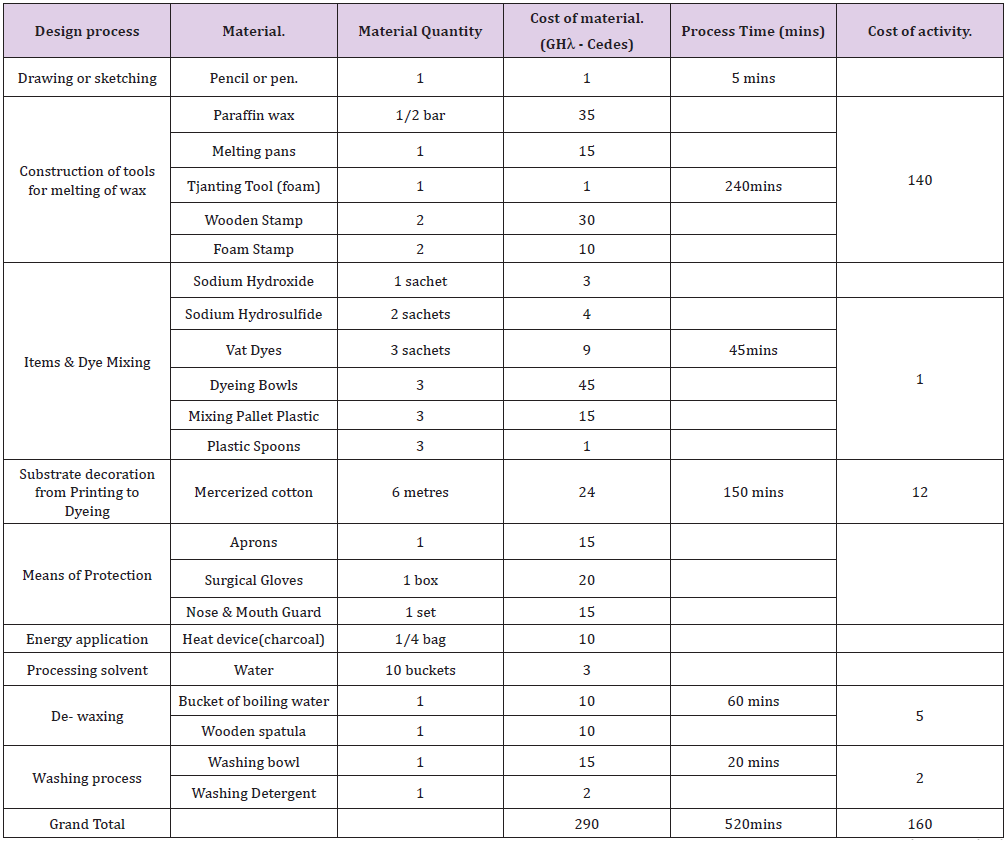
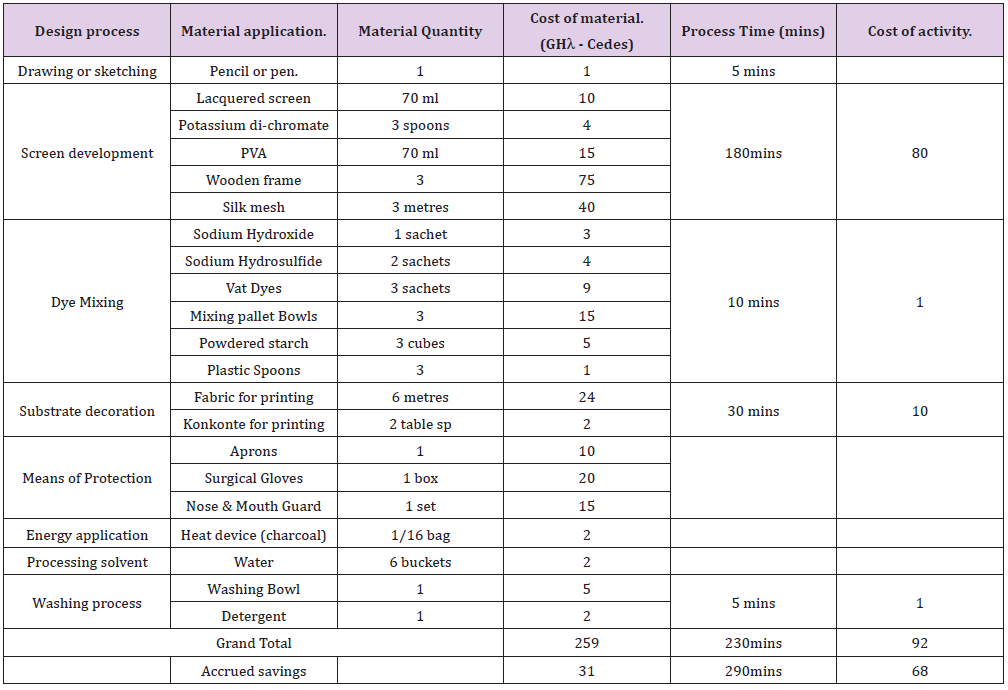
Table 1 shows the current key raw materials, material cost, process time and cost of activity in batik production process used to produce batik cloth. Table 2 shows the raw material, material cost, process time and cost of activity in batik production process used in the intervention model to produce batik. Cost of materials is stated in Ghana cedis, which indicates the amount of cost needed for the procurement of raw materials to produce 6 batik cloths for each model. The processing time is expressed in hours/minutes, which shows the amount of time required for the production process of 6 metres of batik cloth. The cost of an activity is indicated per work done at each stage of production for the 6 yards fabric and not necessarily the cost of production per month of each worker.

Traditional Manufacturing Practices

The entire production process adopted the current traditional practices that batik practitioners are familiar with using the coal pot and charcoal as a source of energy. The process engaged non-consumables and consumables but concentrated on the consumables and function driven activities since the two models all used the same non-consumables for the projects. The duration of the production process was between an hour and 2 days. The production process was executed by 2 employees from each enterprise. The production costs were calculated without taking their salaries into account. Tables 1 & 2 recorded the production process time for batik and the cost of raw materials needed as GHl 290.00 and GHl 259.00 with as much as 520 and 230 mins of production time respectively. The cost of activity for Table 1 was GHl160.00 as against GH₡ 68.00 for (Table 2). The savings accrued for material cost was therefore realized.
Table 1: Key Material Cost, Process Time and Cost of activity in Batik Production Process for traditional Batik manufacturing processes.
Lupinepublishers-openaccess-journals-Textile-Fashiondesigning
Table 2: Key Material Cost, Process Time and Cost of activity in Batik Production Process for the Proposed Intervention.
Lupinepublishers-openaccess-journals-Textile-Fashiondesigning
A critical factor worth mentioning was the fact that the chemical content within the various pastes formulated for Table 2, required a lacquered screen to secure its effectiveness of accommodating the various formulated print pastes. This was extremely important to avoid the chemical corrosion of the photographic film of the screen during the printing process [12]. To commence, four types of screens were developed,
a) Three of them was to transfer the varied dye paste to produce the printed fabrics and
b) The last, was to allow the resist konkonte paste to cover the already printed portions of the fabric, leaving the unprinted portions uncovered to allow the intake of the dye during dyeing by immersion.
Unlike the traditional batik printing process, all the three colors were printed one after the other, before the final konkonte covering and dyeing by immersion. Traditional dyeing however, followed a series of waxing, dyeing, re-waxing and re-dyeing of colour dyes within a two day period to achieve almost the same results. Thus, the differential materials used are the cassava starch and the silk screen instead of wax and wooden block. The outcome of the process is an improved quality, alongside improved efficiency in production, time management and waste minimization, an envisaged increase in market share, creation of new markets, lower costs, innovation and improved flexibility, which are all key performance criteria for industries engaged in sustainable practices. The implication of this intervention shows that use of the locally available raw material saves cost by GH₡ 31.00, with a process time of 290mins and an activity cost reduction of GH₡ 68.00. Additionally, operational cost was reduced, resulting in improved profitability, worker safety and the advantage of using an environmentally-friendly product and minimizing environmental pollution.
The efficient use of cassava starch obviously ensures that manufacturing activity are sustained due to their availability. Having dealt with the main material that impedes safety in batik manufacturing, the youth are likely to be encouraged to engage with the industry to promote sustainable rural and urban development. The implication of this intervention potentially offers the possibility of marketing its products to both local and international markets as it finds expression in traditional clothes and garments to government and private organizations. Its patronage will even increase if their aesthetic characteristics reflect the Ghanaian identity or are the expression of the people’s culture through cherished traditional apparels. This effort made to revitalize batik making is an important driver for sustainable rural development because any economy built on an available natural resource base has the likelihood of improving the vocational sector of the economy [16]. The youth equipped with such skill in schools will also strengthen the concept of made in Ghana goods to facilitate the patronage, promotion and the sustainability of locally made textiles. Holistic Economic Development based on technological innovation processes and natural resource exploitation is believed to be the key to the future of the batik industry

Conclusion

This paper examined the sustainability of batik production and its material development strategies in Ghana. It suggests that the batik enterprises are important in economic and social terms, in the short-run by providing incomes, jobs, especially for artisans, and foreign currency receipts and in the long run by providing the country the opportunity for sustained economic development through appropriate technology to enhance the dynamic effects of batik clothing. The potential of its raw materials and methodology to contribute to long-run growth and sustainable development depend not only on the qualities (desirable or otherwise) of the product, but also on the quality and effectiveness of production processes and availability of raw materials at a low cost within the country’s forest and market space. The effects on employment of the batik enterprises are quite significant for economic development compared to the overall share of the country’s total employment in the cloth manufacturing sector within the various communities in Ghana.
An important factor for the sustainability of an enterprise is the genuine involvement of the local people (farmers) as active participants whose beneficial concerns and experience are essential to the enterprise’s success [17]. The level of community support determines whether the enterprise becomes successfully established, and how it quickly responds and adapts to meet changing needs. By exploiting Ghana’s low labour cost advantages to fill emerging niches and meet buyer demands, its dynamic effects for sustainability becomes even greater, if more linkages can be built up between the production centres and the community. In effect, the characteristics of the batik product (relatively low capital intensity; low investment costs; and use of low skilled labour), also mean that the industry is relatively footloose and able to adjust to changing market conditions quickly and further increasing its sustainability [18].
Though batik making is seen as a productive venture with export potential, it lacks fast production approaches to meet higher consumer demands and therefore needs to be revived and sustained as an industry. Making room for new developmental ideas will inject new techniques of production and make production easier and sustainable. The selection of right material is critical, as it does not only affect the product’s cost, enhance methodology, quality, and growth of batik enterprises, but also impact the environment. Adopting such innovative practices will guarantee the benefits derived in the environment, to promote safety, minimize energy utilization and health of producers [19].

Recommendations

It is highly recommended that batik be introduced into a broader public space to provide a viable platform for engagement between academia and industry through studio base learning (workshops) of batik design processes not only in educational institutions, but also in batik making communities. The focus of sustainability and development in this direction needs to be strengthened using different local material components and design methodologies that relate to traditional African textile culture. Finally, for sustainability of the batik craft to be successful, it is also recommended that skills training of batik producers be intensified and encouraged to create new forms using varied methodologies.

Acknowledgement

We would like to acknowledge Miss Juliet and Miss Christina Mensah for their contribution to the background work and critical comment on the paper. The authors would like to thank the following for their support of this project: Asfatex enterprise in KNUST campus and craft consult at Bomso


For more Lupine Publishers Open Access Journals Please visit our website:

For more fashion and textile research journal articles Please Click Here:

To Know More About Open Access Publishers Please Click on Lupine Publishers

Follow on Linkedin : https://www.linkedin.com/company/lupinepublishers
Follow on Twitter   :  https://twitter.com/lupine_online

Thursday, 3 October 2019

Lupine Publishers | An Infrared Technique for Rapid Analysis of Pineapple leaf fibre-Acrylic Blends

Lupine Publishers | Journal of Textile and Fashion Designing

Abstract

An infrared technique used to analyze pineapple leaf fibre-acrylic blends of different blend compositions is reported. Blend estimations are effectuated from a calibration plot between the absorption of the 2235 cm-1 band (C≡N) and the composition percentages of acrylic fibres. The theoretical and actual blend composition by chemical method divulges matching with each other.

Introduction

Usage of unexplored lesser known natural fibres in the international arena are not only the burning issues but simultaneously to search out a suitable avenue for which separate spinning system is not widely available or established in developing countries like India. Pineapple leaf fibre is another unexplored natural fibre extracted from the green pineapple leaf; an agro waste reveals its immense potentiality for use as a fibre in the arena of sustainable fashion textiles particularly due to the disposal problem after harvesting for cleaner and green environment. PALF is well known for its silky lustre which possesses some advantageous physical and chemical properties like high tensile strength, dimensional stability, considerable resistance to heat and fire, and good dye ability while the demerits are coarseness, inextensibility. It is a low cost renewable resource and eco-friendly material. Due to non-availability of specialized spinning system for PALF in India, it will be much easier to promote PALF in any of the existing spinning systems provided an appropriate processing technology is developed.
Several workers have reported blending of pineapple leaf fibres alone or in blends with other fibres [1-4], but scanty work has been reported on the analysis of PALF blends since the early work by Dey et al [5]. Numerous methods are available for analyzing fibre blend composition, of which the chemical method is commonly employed when a sufficient sample is available. It is more desirable to opt for a micro technique that requires smaller samples of the order of a few milligrams. Such samples can be analyzed unambiguously in order to identify variations in blend composition from place to place for quality control and investigation of fabric defects that cause streaks or depth-of-shade variations in fabric.
Polyester and cotton or wool and acrylic fibres are complimentary to each other due to their versatility. Since PALF is often blended with acrylic fibres to improve performance and hand, information on specific changes that occur during blending should be of interest. The infrared spectrophotometer is a vital instrument for both qualitative and Quantative analysis of polymer blends. The occurrence of non-overlapping absorption bands in IR spectra makes such analysis easier and more reliable. Various examples of quantitative determinations of fibre blends have been reported including ramie/acrylic by Dey et al, cotton/Dacron by O’Conner [6], wool/ Terylene by Clark and Hickie [7], cotton/polyester by BhamaIyer et al. [8], and acrylic/wool by Soosamma et al [9]. In this paper, the authors report a simple technique based on an IR method for quantitative analysis of PALF/acrylic blends.

Materials and Methods

Specifications of Acrylic fibres-no shrinkable, 3 denier, 120 mm long, from Indian Petrochemicals Corporation limited (I.P.C.L) Baroda and pineapple leaf fibre from ICAR-Central Research Institute for Jute and Allied Fibres, Sorbhog, Assam procured for this research work. All chemicals were analytical grade. The average fineness and tenacity of the pineapple leaf fibre were 2.67 tex and 271.84mN/tex respectively. Acrylic fibres in this experiment having liner density of 0.33 tex and tenacity of 241.52 mN/tex. Decorticated PALF and acrylic fibres were blended at the first drawing stage in five different blend compositions 83:17, 67:33, 50:50, 33:67 and 17:83. Yarns of 84 tex were spun on a rove spinning machine using modified conventional jute processing machinery with blend proportions of PALF ranging from 17 to 83%. Samples need to be taken from all parts of the bulk sample in order to obtain representative test samples for blend analysis; this is known as zoning [10] and is an important step in preparing test samples.

Sample preparation and calibration plot

Acrylic and PALF fibres were finely cut with scissors and sieved through a 100 mesh screen. Acrylic/pineapple leaf fibre blends of predetermined compositions were prepared by carefully weighing finely cut fibres. The fibre mixture was mixed thoroughly with 400 mg spectral grade KBr powder by grinding for 5 minutes with a mortar and pestle. The sample-KBr mixture was placed in a die and pressed for 5 minutes under a pressure of 421.85 Kg/cm2. The sample was also subjected to evacuation in the die for 5 minutes prior to pressing. The pellets were taken from the die and mounted on a magnetic pellet holder. These pellets transmitted in the range of 20-80% while being scanned. A standard calibration plot was obtained by measuring the absorbance of the nitrile (C≡N) band.
a) Blend analysis: The same procedure was followed to analyze the blend composition of five different blended yarn samples. A known quantity of the sample was powdered thoroughly and mixed well and 4 mg of the sample was weighed accurately and mixed with 4oo mg of KBr. For each sample, two sets of pellets were prepared as described earlier (Figure 1).
Figure 1: Calibration Plot for determination of Acrylic content in Pineapple leaf fibre/acrylic blends by measurement of Absorbance of (C≡N) band.
b) Spectra Recording: Spectra of the Pellets were recorded by a Shimadzu double beam model IR PRESTIGE-21 spectrophotometer from 4000 to 400 cm-1 under a normal slit program and a scanning speed of nearly 19s/100cm-1. A KBr pellet without the sample was used in the reference beam. For each pellet, the nitrile band at 2243 cm-1 was scanned twice, the second scan corresponding to rotation of the pellet through 90°in its own plane with reference to the first position. If the transmittance differed by more than 1%, this was taken to indicate no uniformity of mixing the samples. Fresh pellets were prepared again discarding such samples and their spectrum was recorded. The peak intensity (absorbance) in each case was measured by the baseline technique [11].
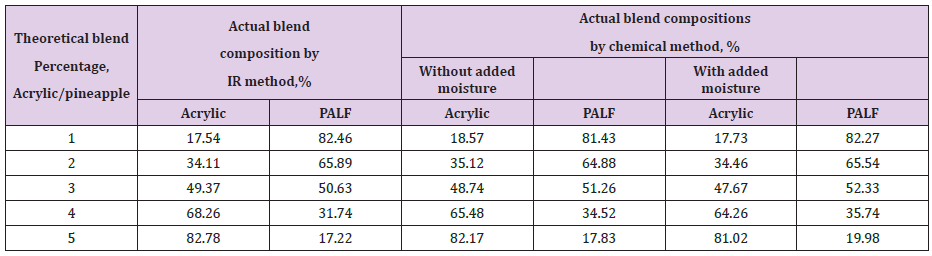
c) Chemical Analysis of Blends: The actual blend proportions were determined chemically as per the method IS: 3421-1966 for blend estimation [12]. All samples were extracted with a benzene-methanol (3:2) mixture to remove oil and any finishing materials that had been added during processing. Each blended sample was analyzed twice and the average value was reported in Table 1. Dey et al reported that the blend compositions of ramie-acrylic blends can be unambiguously assessed using infrared spectra with the help of calibration plot15. These compositions match those obtained by chemical methods (Table 1).

Results and Discussion

Acrylic fibres exhibit a strong nitrile band (C≡N) with a maximum at 4.48μ (2235 cm_1). This band is used for estimating the acrylic composition in blends. Regardless the origin of acrylic fibres, the position and intensity of the nitrile band are not much affected. The nitrile band is also independent of other functional groups, and so blend analysis by means of the infrared absorption spectra of the (C≡N) band is justified. Measurements of the intensity of the nitrile band for a series of acrylic/Palf blend samples yielded a calibration plot, shown in Figure 1. The individual points fall very much on a straight line, and scattering from the KBr disks is no problem. The calculated correlation coefficient is 0.9986 which is highly significant. BhamaIyer et al. observed that particle size plays a very important role in the peak intensity of the C=O stretching band of the carbonyl group in polyester, the absorption band recommended for analysis of cotton/polyester blends [13,14].
Table 1: Blend Extimation by Chemical Method.
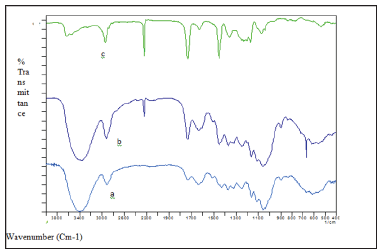
Figure 2: Infrared spectra of (a) PALF, (b) 50/50 PALF/ acrylic, and (c) acrylic fibre.
The absorbance of the C=O band versus composition does not yield a straight line. Soosamma et al. reported in their earlier work that the intensity of the (C≡N) band remains unchanged during ball milling period. This indicates that below a certain particle size, ball milling does not have any effect on the (C≡N) band. Hence, the absorption of the (C≡N) band versus composition gives a straight line. From such a calibration plot, the actual composition of any blend sample can be obtained rapidly with high accuracy. Blend compositions of the yarns based on the theoretical blend compositions of PALF/acrylic yarns spun on the jute spinning system measured by means of calibration plots and chemical methods are enumerated in Table 1. Figure 2 reveals the nature of the infrared spectra of PALF, 50%/50% PALF/acrylic blend and acrylic fibres. The results obtained with the infrared method using a calibration graph show the true compositions as given by the chemical method to a high degree of accuracy. After gaining some familiarity with the spectra of fibres, IR spectroscopy can provide a good technique for estimating blend composition-rapidly, reliably and with reasonable sensitivity.

Conclusion

The calibration plot will help to assess the blend compositions of acrylic/PALF blends unambiguously using their infrared spectra. The theoretical and actual blend composition by chemical method unveils matching with each other.

Acknowledgement

The authors wish to acknowledge Indian Council of Agricultural Research, New Delhi and National Institute for Research on Jute and Allied Fibre Technology (ICAR), Kolkata for providing facilities and keen interest for this study.


For more Lupine Publishers Open Access Journals Please visit our website:

For more fashion and textile research journal articles Please Click Here:

To Know More About Open Access Publishers Please Click on Lupine Publishers


Follow on Linkedin : https://www.linkedin.com/company/lupinepublishers
Follow on Twitter   :  https://twitter.com/lupine_online