Showing posts with label Lupine Publisher Group. Show all posts

Wednesday, 2 November 2022

Lupine Publishers| Pulmonary Valvular Endocarditis in the Patient with Pulmonary Stenosis A Case Report with Real-Time 3DTEE& MDCT-640.

 Lupine Publishers| Journal of Cardiology Research & Reports


Abstract

Pulmonary valvular endocarditis is rare disease, the majority of reported cases previously showed isolated PV endocarditis without clear underlying predisposition factors. We report here a 52 ages female patient with endocarditis of pulmonary valve associated with sub valvular pulmonary aneurism, the underlying pulmonary valvular stenosis and RVOT stenosis were confirmed. The 2DTTE, 3D TEE and MDCT-640 were used to make exactly the diagnosis. Patient was under went an un complicated surgical procedure.

Keywords:Pulmonary valvular stenosis; TTE: Transthoracic Echocardiography; TEE: Transesophageal Echocardiography; RT- 3DTEE: Real-time-3DTEE; Endocarditis; Vegetation; MDCT: Multidetector Computed Tomography

Introduction

Pulmonary valvular stenosis is usually an isolated congenital anomaly and occurs in 7% to 12% of patients with congenital heart diseases [1]. and accounts for 80-90% of native outflow tract obstruction. Severe PS often associated with some degree of sub valvular stenosis resulting from RV hypertrophy. 3DTEE, MRI, Cardiac computed tomography can be used to better define the level of obstruction [2]. Bacterial endocarditis is a rare complication of the disease. Pulmonary stenosis with moderate to severe degree is stratified to intermediate to high risk of endocarditis [3].

Case Report

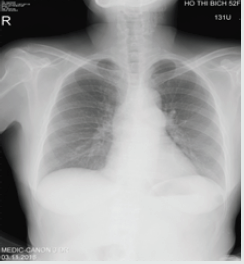
A female patient of 52 y.o presented at my hospital by persistent fever for one year, she had had this fever twice daily. Urine infection had been diagnosed and treated by Antibiotics in some hospitals, but the fever had been not interrupted. Finally, she came to MEDIC HCMC. Physical examination detected a 3/6 systolic murmur at the 3rd LICS like VSD. In her past history, no pathological finding has been noted. She was evaluated immediately by a chest X ray that demonstrated a slight prominence of the left second cardiac arch (Figures 1-4). The transthoracic echocardiography revealed a hypertrophic RV with normal TAPSE=20mm, normal LV size and function, EF=71%. Vegetation of 11x5mm in size that attached to the pulmonary valve, recorded from parasternal shorts axis view TTE.

Figure 1: Slighly prominent 2nd left cardiac arch was noted.

Lupinepublishers-openaccess-cardiology

The pulmonary cusps were doming and reduced opening degree, a severe pulmonary stenosis with max pressure Gradient=69mmhg, mean=42mmhg was confirmed by continue wave Doppler (Figures 5,6). Then Real-time 3DTEE was performed, and we found a mobile vegetation with greater size about 14x7mm associated with dilated pulmonary trunk of 35mm in diameter and a sub pulmonary valve aneurysm of 25x 36mm in measuring (Figure 7). CT angiography ( MDCT-640 ) with IV contrast medium Ultravist, slice thickness=0.5mm was indicated and detected a sub pulmonary valve aneurysm of 27x38mm and dilated pulmonary trunk: Annulus=27mm, Trunk=40-46mm, RPA=14mm, LPA=27mm. Furthermore, reduced RVOT size revealed: 9.5mm-10.2mm in diameter (Figure 8-11). Patient underwent uncomplicated surgical repair: opening RVOT, valvuloplasty and suture the perforated pulmonary cusp (this perforation was not seen prior to operation) with a favorable post-operative progress.

Read More About Lupine Publishers Journal of Cardiology Research & Reports Please Click on Below Link: https://lupine-publishers-cardiovascular.blogspot.com/

Tuesday, 1 February 2022

Lupine Publishers| The Future of Biodegradable Plastics from an Environmental and Business Perspective

 Lupine Publishers| Journal of Material Science


Abstract

Synthetic plastic waste is a major environmental issue around the world. There are several policies adopted in many regions to save the environment. Moreover, Governments and businesses are restraining synthetic plastics either by searching for a better alternative, or by reducing the public and industrial consumption of synthetic waste. However, the problem is finding a biodegradable and a price-competitive alternative for synthetic waste. This review paper studies markets for biodegradable and synthetic plastics and also the governmental policies being adapted around the world to combat synthetic plastics were analyzed. Additionally, the main issues that face developing countries before adapting environment-friendly policies were taken into consideration in this review paper. The authors aim at finding a solution for the price issue in a developing country like Egypt, as its results may as well reflect on several developing countries around the world. The market analysis indicates a very promising future for biodegradable plastics in developed countries, with CAGR levels reaching 20% in some industries. Meanwhile, from an environmental perspective, strict policies all around the world are needed to battle synthetic plastics. This need is recognized in developed countries; however, in developing countries, the price is still the issue. Nonetheless, the authors have been capable of conducting a method to produce plastic bags from chitosan pellets that would cut the costs to 2,000 USD/Ton. A price as such would make biodegradable plastics almost as competitive as synthetic plastics, even in developing countries.

Highlights

a) The only factor preventing Egypt from being environment friendly is money.

c) Plastic waste falling in our oceans is expected to reach 160 million tons in 2025.

d) Biodegradable plastic bags can soon be as competitive as synthetic bags.

Keywords: Plastics; Biodegradable plastics; Shrimp shell waste; Waste; Feasibility

Introduction

Over the last two hundred years, the world has become dependent on synthetic plastics, from industrial applications to consumer use [1] plastics are among the prime products in many different applications, where huge masses are used. The most important feature of plastics can be the flexibility, abundance and durability of the raw materials; however, this feature comes with a side effect. Scientists claim that every piece of synthetic plastics that has ever been made is still floating somewhere in the oceans or lying down in some open areas around the world [2]. Researchers have been looking for some more environment friendly features to battle our dependence on plastics. However, most of these alternatives are still not that competitive with synthetic plastics, which is why they are trying to limit the use of plastics instead. Actions that the European Union has taken to reduce the dependence on plastic bags, for instance, has been relatively successful, as while the global average consumption of plastic bags is 513 bags per person per year, the average in the European Union is now 80, going down to around 20 in some specific countries [3]. In short, there are two ways to fight this environmental problem, either by banning or controlling the use of plastics, or by finding an alternative. The problem with the first alternative is that it would take a long time with full state-level commitment to change the culture towards plastics. Meanwhile, the problem with the second alternative is reaching the competitive price compared to plastics. However, researchers around the world expect to find an alternative soon that is more price competitive than oil-based plastics [4]. By dividing the world into developed and developing countries, we find that state-level policies to combat plastics are more successful in developed countries, in addition to the fact that biodegradable plastics, which (may not be that competitive with synthetic plastics) have a rapidly growing market in these countries. Meanwhile, in a developing country like Egypt, it is difficult and expensive to implement such a policy, due to the high cost of implementing such a policy and moving to an environment-friendly alternative [5]. On the other hand, the markets for biodegradable plastics are rapidly growing, one possible alternative is to produce biodegradable plastics from Chitosan, that is taken from shrimp shell waste in Egypt. Globally, the price for chitosan is not competitive, given that 1 ton of plastics costs around 1500USD [6] while 1 Ton of chitosan for industrial use is priced at 10,000USD [7]. However, researchers at Nile University, in cooperation with Nottingham University have found a new method to produce chitosan that may reduce the final cost to around 2,000USD, which would make it after comparing the expected density of chitosan with the density of LDPE, more competitive to use chitosan to produce plastic bags. Chitosan is the plastic alternative investigated; however, in order to make chitosan a proper alternative for plastics, some other natural additives should be added. The additives will enhance the physical and mechanical properties of chitosan.

Hypothesis

The proposed hypothesis is that biodegradable plastics can actually compete in the near future with polymer-based plastics. Despite the fact that polymer based plastics have social costs on both the society and environment, the competition we are addressing is mainly on the economic cost resulting in the price of these products, as social costs are not taken into account especially in poorer economics like the Egyptian. Therefore, if we succeed in making biodegradable plastics economically competitive, it can be the norm not to harm the environment anymore with polymer-based plastics. The question that persists though is, how competitive can biodegradable plastics be in the near future?

Biodegradable Plastics

Biodegradable Plastics Worldwide

The market in North America, Europe and Asia has grown around 15% CAGR from 2012 to 2017. Therefore, global demand is expected to hit 525000 tons in 2017 [8]. The biodegradable Plastics market is a growing market globally. In North America particularly, biodegradable plastics market has grown significantly due to the fact that biodegradable plastics have become more cost competitive with petroleum-based plastics [7]. The market in the United States of America alone is expected to be worth of 3.4 Billion USD in 2020, with an annual CAGR of 10.8% by a five-year period ending 2020 [9]. In 2012, Europe was the dominant market for biodegradable plastic products with 55% of global consumption; North America was second with 29%, followed by Asia with 16% [8]. The biodegradable plastics market in Europe is expected to further grow with a 20% CAGR year [10]. In fact, reports expect the market of biodegradable plastic products in the EU to grow over 300,000 Tons in 2020 [11]. The United Kingdom currently imports 3000 Tons of biodegradable plastic bags and domestically produces 1000 Tons [12].

Biodegradable Plastics in Egypt

The market for biodegradable plastics is not well established in Egypt. The Egyptian consumer mindset still is not aware enough of the real impact that an individual consumer can have on the environment by choosing to shift into more environment friendly products, like biodegradable plastics. The Egyptian market is a poor market in terms of financial numbers and thus the Egyptian manufacturer always has a preference for the cheapest alternative no matter how damaging this alternative can be on the environment [5]. In addition, the ministry of environment, according to [5] is not taking enough procedures to tackle the environmental issues in Egypt in general.

Biodegradable Plastics Applications

Biodegradable Plastics Applications Worldwide

Biodegradable Plastics are used in many applications worldwide. Applications very from bio-waste bags and shopping bags into relatively more complicated technical equipment products [11]. Precisely, according to this study, about 68% of 100000 tons of biodegradable plastics produced in 2015 in the European Union are used as biodegradable plastic bags, 21% in plastic packaging, 7% in consumer goods and the rest 4% in several other uses. These numbers are expected to grow to 320000tons in 2020, with only %57 for biodegradable plastic bags, %31 for plastic packaging, %7 for consumer goods, and %5 for other uses [11].

Biodegradable Plastic Applications in Egypt

Except for the fact that some supermarkets are using compostable plastic bags, there is no relevant information upon which we can define the size or even the existence of a market for biodegradable plastics in general. Biodegradable plastics are, thus, a new concept to the Egyptian market.

Biodegradable Plastic Bags

Biodegradable Plastic Bags Globally

The European Union has an environmental strategy to reduce the usage of synthetic bags which also paves the way for biodegradable plastic bags as the best alternative in the European market [3] Italy, and lately France banned entirely the use of plastic bags [3]. In comparison, in the United States of America, the consumption of biodegradable plastic bags was reported to be about 95 billion biodegradable plastic bags yearly (conservingnow.com, 2016). Upon the authors assumption, the average weight of 1 plastic bag is about 12g. The overall American consumption of biodegradable plastic bags is about twice that of the United Kingdom.

Biodegradable Plastic Bags in Egypt

The situation for biodegradable plastics is not that different when it comes to biodegradable plastic bags [12] The market for biodegradable plastic bags in Egypt is dominated by petroleumbased plastics. There are no reports that prove that biodegradable plastic bags as an industry even exist in Egypt; however, some reports suggest that a big supermarket chain, KheirZaman which is a well-known hyper market in Egypt is importing biodegradable bags to promote their cause of a better environment in Egypt. The authors think, this as a sign that the market for biodegradable plastic bags might be well established in the middle-far future with the increased awareness of the younger generations, but not the near future. D2W, the technology through which these bags were made, is a new technology that makes convenient plastics biodegradable by adding some oxidants at the manufacturing level. “It is the only oxo-biodegradable (controlled-life) plastic additive to be awarded an internationally recognized eco-Label [13]. The additive is used in the manufacturing of plastic bags and plastic packaging. Also, only about 1% inclusion rate is needed to control the life of the plastic material [13]. This additive material is provided solely from a UK based manufacturer, which means that in the case of KheirZaman, this material is imported.

Compostable Bags and Their Material

Compostable Bags and Their Material Worldwide

Reports suggest that in 2015, 50% of polymers used in compostable and biodegradable products were stretch-copolyester compounds, 20% PLA, 15% co-polyester, 13% PLA copolyester compounds and %2 of other compounds [11].

Compostable Bags and their Material in Egypt

According to [5] companies that try to go environmentally clean by using materials that are environmentally friendly get out of the market for the simple fact that the Egyptian plastic market is extremely competitive [5].

Synthetic Plastic Bags

The materials used in manufacturing synthetic plastic bags globally are either polypropylene or polyethylene, high or low density of each. Both these materials are petrochemical compounds [5].

Synthetic Plastic Bags Worldwide

When it comes to the usage of traditional synthetic bags worldwide, it is quite noticeable that synthetic plastic bags are much less used in more developed countries. Countries with more individual awareness regarding global environment issues record fewer numbers of plastic bags used per individual. In the European Union alone, the average is about 200 plastic bags per individual [3]. However, the averages differ between different countries that in countries like Greece, Poland, Portugal, and Latvia the average is 514 bags per person, 468 of which are single-time use bags [3]. The average gets as low as about 80 bags per individual in countries like the UK and Germany, and even as low as 20 bags in Ireland [3]. A huge portion of these plastic bags are imported from east Asian countries for relatively low prices, which is why they still have a relatively big share of the European market. However, a country like Italy has quite a history with banning plastic bags, while France started to ban plastic bags recently in June 2016. Finally, huge taxes are being added to plastic bags to push European manufacturers to choose biodegradable plastic bags instead of the traditional, environment endangering synthetic plastic bags [3].

Synthetic Plastic Bags in Egypt

Given the developing characteristics of the Egyptian market, synthetic plastic bags have quite an advantage due to the fact that it is much cheaper to produce a plastic bag from petrochemical materials in comparison to biodegradable plastic bags [5]. The Egyptian market for plastic bags uses a total of 1 million tons of polyethylene; 600,000 tons are produced from the Egyptian gas field, that is high-density polyethylene; and 400,000 tons are imported from abroad as low-density polyethylene [5]. The plastic bags industry in Egypt makes up about 20% of the plastic industry in Egypt. Out of 1276 factories making up the Egyptian market in 2012, 265 factories worked on the plastic bags and plastic packaging sectors [14]. These factories produced a total of 1,000,000tons of plastic bags and packaging per year [5].

Global Exporters and Importers of Plastic Worldwide

Reports show the United States are on top of the list of plastic bags importers with 2.7 billion USD worth of imports in 2016. This accounts to about 18% of plastic bags import worth on global bases [15] Second on the list is Japan with about 1.5 billion USD worth of plastic bags imported, 10% of the plastic bags imports worth on global bases. Third on the list are both Germany and the UK, with about 1.05 billion USD worth of plastic bags imported, about 7% each of the worth of plastic bags imported on global bases [15].

Exporting Market for Egyptian Plastic Manufacturers

Most of the plastic produced in Egypt is produced as a supplementary product for local industries, unlike East Asian countries, Egypt does not rely on exporting plastic products as a part of its economic system.

Plastic Bags Physical Properties

The density of a synthetic plastic bag slightly differs according to the type of raw material used. However, it is still between 0.9 and 0.965g per cm3 [16]. For instance, low density polyethylene (LDPE) density ranges between 0.916 and 0.925g. while high density polyethylene (HDPE) density ranges between 0.941 and 0.965g [16]. The approximated dimensions of a flat plastic bag before production is 65×25cm. However, the most important and critical part of a plastic bag is the required thickness of a plastic bag. The UK standard for a plastic bag is 40 microns, while sizes between 35 and 50 are also acceptable. Also, in the USA the standard is 50 microns. Therefore, the thickness of a plastic bag lies between 35 for thin plastic bags and 50 for thick bags [17] Therefore, approximately the volume of plastic in a thin plastic bag will be 0.0035 × 60 ×25 = 5.25cm3; and the volume of a thick bag will be 0.005 × 60 × 25 = 7.5cm3. The corresponding g needed for each of the received values are 5.25 × 0.925 = 4.86g, and 7.5 ×0.925 = 6.94g. The conclusion specifies that the weight of an average supermarket bag can take between 4.86 and 6.94g. Given the fact that 1 ton of Polyethylene costs between1200 and 1500 USD, which accounts to between 21,000 and 27,000 EGP [13] one plastic bag can cost between 0.12 and 0.19 EGP, the price differs according to type of plastic and market fluctuations. That is only taking into account the direct material costs included in producing the plastic bags, without any direct labor, and indirect costs that might be incurred and taxes. Comparatively, while the market price for 1 ton of Polyethylene is about 25000 EGP, the market price for 1 ton of chitosan is USD10,000 [17] which equals about 175,000 EGP, that is 7 times that of polyethylene.

Cost of Chitosan

Cost of Chitosan Worldwide

Studies show that the market and applications for chitosan are growing rapidly on global bases. The industry size for chitosan in the United States of America alone is about 1.52 billion USD [18]. Its application includes water treatment, industrial applications, cosmetics, biomedicine and pharmaceuticals, food and beverages, and agrochemical products and other applications. The CAGR growth is expected to be about 16% annually, with most of the growth expected in biomedicine and pharmaceuticals in the near future [18]. The high CAGR level also suggests that the market in the United States of America alone in 2024 alone is going to reach 5 billion USD. The dollar price for 1 ton of chitosan differs depending on the quality provided and application needed; the price ranges between 10,000 USD and 1 million USD, with the average industrial price at 10,000 USD per 1 Ton [17]. The quality and application of Chitosan differs heavily driving the huge difference in the price of chitosan.

Read More about Lupine Publishers Journal of Material Science Please Click on Below Link:
https://lupine-publishers-material-science.blogspot.com

Tuesday, 25 January 2022

Lupine Publishers| Creative Process in the Design and Creation of Textile Manufacture

 Lupine Publishers| Journal of Textile and Fashion Designing


Introduction

Creative process

Man has his creative manifestations through his individual aspirations, thoughts and idealization. The need is a motivating factor that drives the search for knowledge, problem solving and satisfaction, Santis [1]. For Lobach [2] "The conduct of the human being is also driven by multiple and varied needs. The emergence of needs is not always logical, especially when other activities or processes have occasional preference. "Necessity seeks satisfaction; aspiration is the spontaneous will to obtain something that comes from idea or visualization. The aspiration consists in the desire to obtain something that can be reached or not. Needs and aspirations accompany the evolution of technology, information tools and economic development. Lobach [2] states that design consists of a systematized design, plan or method that includes problem solving incorporating ideas, innovation, sketching, samples, models to make concrete the solution found.

Over the centuries, the needs in its evolution have been accompanied by the development of instruments, methods and systems. The constant evolution through research and events show that innovative creativity has played a key role. The development of the human creative process has also been marked by various frustrations, problems in creativity and with innovation; these problems are constantly reported by various scholars. Several researchers and researchers [2] have already been affected by creative inertia, difficulty in exposing ideas, fears, and lack of innovation or even problems that seemed unsolvable. Even so, the creative process has become an important tool for resource development. And the stimulation and organization of the creative process is being studied in theories, techniques and tools such as: Design Thinking, Design Methodology, and Inventive Problem Solving Theory. These are applied for the development of textile products.

Product Development

Ostrower [3] states that the ability to understand, assimilate, configure, and signify is the creative act. Creating is a way of establishing a new relationship between the human mind and the object in order to understand meaning or to redefine (giving a new meaning, a new practice, the ability to perceive an object through a different vision). Already the creative process derives from the structuring of cognition (knowledge of facts), intelligence (human characteristic composed of logical thinking, communication, knowledge, sensibility, problem solving, emotional control, etc.), creation ability (giving meaning to something or something) and innovation (creating something unknown). To meet the new type of consumer coming from social and communication changes, manufacturers seek to align existing needs with functionality and aesthetics by creating values that can be applied to technological fabrics.

Barbará [4] calls the process a set of ordered and integrated actions for a specific productive purpose that at the end of the cycle generate products, services or information. In the process of manufacturing with synthetic fibers began the decade of 30, the developed fibers become part of the manufacture of fabrics and clothing. To give a small notion of what we call fiber, I find it interesting to contextualize the historical beginning, recalling some important facts. In this sense, the textile manufacturing manufacture uses the fibers to compose the yarn, and the woven yarn becomes fabric and various stamping and dyeing techniques. The textile production manufacture is divided into three cores: the yarn manufacturing, the fabric manufacture and the confection. According to Sanches [5] the fiber consists of the smallest element of the composition of the fabric in any natural or manufactured substance that has suitable characteristics that allow its processing. Being, the smallest component of hairy nature, which can be extracted or separated from a tissue.

In wire manufacturing, the breeding process establishes the mixing of the materials for processing. The processing consists of a rational part that modifies the form of a structure or system for the construction of a mixture, an irrational part that is compounded by bringing together psychological, emotional, innovative, creative and personal aspects. This means that the transformation depends on the creative aspects to innovate in the fiber blend. The creation procedure promotes finding strategies that encourage the production of new means of mixing the components, which can motivate, add capacity and add value to the basic and secondary functions of the product or service to generate probabilities of more interactive information in the market, Santis [6]. The set of productive operations or manufacturing should have as main focus of improvement; increase in productivity and also in quality.

On an industrial scale (manufacturing sizing) in the contemporary, the good use of the methodology of the project presents some techniques that promote to encourage the application processes of the project methodology consist of the interaction of tools, resources and manpower converted into energy that perform the connection between procedures and tasks, Santis [1]. The manufacturing of textile the object of study of this research produces knitted fabric, working in the circular knitting industry, among its articles produced we can mention: knitwear for fitness, linings, beach and microfiber. Knitted textile manufactures that also serve as object for this research have a tradition in the Brazilian economy and, considered as one of the great s manufactured in Latin America, consisting of several business units in the country, its most common products made of fabric composed of combinations of polyamide, cotton and elastane (synthetic filament) in circular and straight looms.

Thus, actions constitute a form of processes that are interconnected in a physical or virtual structure, which establishes a set of ordered processes in operations to modify the resources in products. For Agostinho [7]. The fixation of the scripts and manufacturing processes fix the knowledge manufacturing, or how to do it, being considered the pillar of fixation of manufacturing knowledge. Following the scripts and manufacturing processes, it is determined the times required for each operation of the script, consequently of the parts and set of parts that make up the product [8-52].

Finally, the manufacturing and creative processes interrelate in a chain of interdependent functions, considering (external environment) and dependent variables (internal environment). This functional interrelationship facilitates the systematization of the production of goods and services. Each function has a sequential operation flow for the development of an operation from the inflow of resources to the exit of the goods or services. The set of actions in the creative process developed by a sequence of operations establishes the construction of a product, whether it is a consumer good or a service and this facilitates innovation in creative development.

Read More About Lupine Publishers Journal of Textile and Fashion Designing Please Click on Below Link: https://fashion-technology-lupine-publishers.blogspot.com/

Tuesday, 14 December 2021

Lupine Publishers| Mitigating Disaster using Secure Threshold-Cloud Architecture

 Lupine Publishers| Journal of Computer Sciences & Applications


Abstract

There are many risks in moving data into public cloud environments, along with an increasing threat around large-scale data leakage during cloud outages. This work aims to apply secret sharing methods as used in cryptography to create shares of cryptographic key, disperse and recover the key when needed in a multi-cloud environment. It also aims to prove that the combination of secret sharing scheme and multi-clouds can be used to provide a new direction in disaster management by using it to mitigate cloud outages rather than current designs of recovery after the outages. Experiments were performed using ten different cloud services providers at share policies of 2 from 5, 3 from 5, 4 from 5, 4 from 10, 6 from 10 and 8 from 10 for which at different times of cloud outages key recovery were still possible and even faster compared to normal situations. All the same, key recovery was impossible when the number of cloud outages exceeded secret sharing defined threshold. To ameliorate this scenario, we opined a resilient system using the concept of self-organization as proposed by Nojoumian et al in 2012 in improving resource availability but with some modifications to the original concept. The proposed architecture is as presented in our Poster: Improving Resilience in Multi-Cloud Architecture.

Keywords: Secret Shares; Disaster Mitigation; Thresholds Scheme; Cloud Service Providers

Introduction

With the introduction of cloud services for disaster management on a scalable rate, there appears to be the needed succour by small business owners to get a cheaper and more secure disaster recovery mechanism to provide business continuity and remain competitive with other large businesses. But that is not to be so, as cloud outages became a nightmare. Recent statistics by Ponemon Institute [1] on Cost of Data Centre Outages, shows an increasing rate of 38% from $505,502 in 2010 to $740,357 as at January 2016. Using activity-based costing they were able to capture direct and indirect cost to: Damage to mission-critical data; Impact of downtime on organizational productivity; Damages to equipment and other assets and so on. The statistics were derived from 63 data centres based in the United States of America. These events may have encouraged the adoption of multi-cloud services so as to divert customers traffic in the event of cloud outage. Some finegrained proposed solutions on these are focused on Redundancy and Backup such as: Local Backup by [2]; Geographical Redundancy and Backup [3]; The use of Inter-Private Cloud Storage [4]; Resource Management for data recovery in storage clouds [5], and so on. But in all these, cloud service providers see disaster recovery as a way of getting the system back online and making data available after a service disruption, and not on contending disaster by providing robustness that is capable of mitigating shocks and losses resulting from these disasters.

This work aims to apply secret sharing methods as used in cryptography [6,7] to create shares of cryptographic key, disperse and recover the key when needed in a multi-cloud environment. It also aims to prove that the combination of secret sharing scheme and multi-clouds can be used to provide a new direction in disaster management by using it to mitigate cloud outages rather than current deigns of recovery after the outages. Experiments were performed using ten different cloud services providers for storage services, which at different times of cloud outages, key recovery were still possible and even faster compared to normal situations. All the same, key recovery was impossible when the number of cloud outages exceeded secret sharing defined threshold. To ameliorate this scenario, we look forward to employ the concept of self-organisation as proposed by Nojoumian et al. [8] in improving resource availability but with some modifications as proposed. The rest of the work is organised into section II, Literature Review takes a closer look at current practices, use of secret sharing and cloudbased disaster recovery with much interest in the method used in design. III. Presents our approach, in section IV, present Results and Evaluations and Conclude in section V with future works and lessons learnt.

Literature Review

There are research solutions based on different variants of secret sharing schemes and multi-cloud architecture that give credence to its resilience in the face of failures, data security in keyless manner, such as: Ukwandu et al. [9] - RESCUE: Resilient Secret Sharing Cloud-based Architecture; Alsolami & Boult, [10], - CloudStash: Using Secret-Sharing Scheme to Secure Data, Not Keys, in Multi-Clouds. Others are: Fabian et al. [11] on Collaborative and secure sharing of healthcare data in multi-clouds and [12] on Secret Sharing for Health Data in Multi-Provider Clouds. While RESCUE provided an architecture for a resilient cloud-based storage with keyless data security capabilities using secret sharing scheme for data splitting, storage and recovery, Cloud Stash also relied on the above strengths to prove security of data using secret sharing schemes in a multi-cloud environment and Fabian et al proved resilience and robust sharing in the use of secret sharing scheme in a multi-cloud environment for data sharing. Because our approach is combining secret sharing and multi-clouds in developing a clouddisaster management the need therefore arise to review current method used in cloud-based disaster in a multi-cloud system and their shortcomings.

a) Remus: Cully et al. [13] described a system that provides software resilience in the face of hardware failure (VMs) in such a manner that an active system at such a time can continue execution on an alternative physical host while preserving the host configurations by using speculative execution. The strength lies on the preservation of system’s software independently during hardware failure.

b) Second Site: As proposed by Rajagopalan et al. [14] is built to extend the Remus high-availability system based on virtualization infrastructure by allowing very large VMs to be replicated across many data centres over the networks using internet. One main aim of this solution is to increase the availability of VMs across networks. Like every other DR systems discussed above, Second Site is not focused on contending downtime and security of data during cloud outages.

c) DR-Cloud: Yu et al. [15] relied on data backup and restore technology to build a system proposed to provide high data reliability, low backup cost and short recovery time using multiple optimisation scheduling as strategies. The system is built of multicloud architecture using Cumulus [16] as cloud storage interface. Thus providing the need for further studies on the elimination of system downtime during disaster, provide consistent data availability as there is no provision for such in this work.

Our Approach

Our approach is in combining secret sharing scheme with multi-clouds to achieve resilience with the aim of applying same in redefining cloud-based disaster management from recovery from cloud outages to mitigating cloud outages.

The Architecture

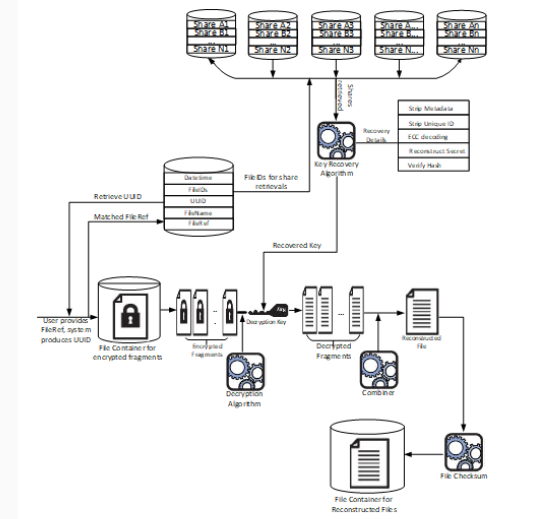
The architecture of as shown in Figure 1 shows key share creation, dispersal and storage, while that of Figures 2 & 3 is of shares retrieval and key recovery

Figure 1: Key Share Creation, Dispersal and Storage.

Lupinepublishers-openaccess-computer-sciences-journal

Figure 2: Share Retrievals and Key Recovery.

Lupinepublishers-openaccess-computer-sciences-journal

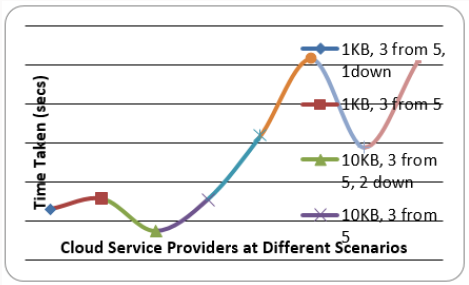
Figure 3: Cloud Service Providers at Different Scenarios.

Lupinepublishers-openaccess-computer-sciences-journal

Share creation and Secret recovery: The diagram above explains our design of key share creation, dispersal and storage using different cloud service providers (Figure 1). Share Creation: The dealer determines the number of hosts shares combination from which data recovery is possible known as threshold (t) and the degree of the polynomial, drived from subtracting 1 from the threshold. In this case, the threshold is 3 and the degree of polynomial is 2. He initiates a secret sharing scheme by generating the polynomial, the coefficients a and b are random values and c is the secret, the constant term of the polynomial as well as the intercept of the graph. He generates 5 shares for all the hosts H1… H5 and sends the shares to them for in an equal ratio and weights we, and thereafter leaves the scene [1].

Secret Recovery: Just as in Shamir [6] authorised participants following earlier stated rules are able to recover the secret using Lagrangian interpolation once the condition as stated earlier is met. The participants contribute their shares to recover the secret.

Results and Evaluations

Test: Cloud Outages against Normal situations. This test assumes that cloud outage prevents secret recovery.

Discussions

The results above show that cloud outage has no negative effect on key recovery, rather reduces the overhead in comparison with normal situations. It shows the relationship between cloud outage and normal operational conditions. From available results at twenty percent (20%) failure rate using 3 from 5 share policy, the system becomes faster by sixteen percent (16.41%), but at forty percent (40%) failure rate using same share policy, the download speed is faster by a little above fifty one percent (51.80%). Looking at a higher share policy of 6 from 10, at thirty percent (30%) failure rate, the system download speed is higher by a little above thirtyseven percent (37.90%), while at forty percent (40%) failure rate, the system performed better by about forty-three percent (42.99%). The implications therefore are that in as much as failure rate is not equivalent or above the threshold, system performance improves as there was no result obtained when the cloud outage exceeds or equal to threshold. These therefore do not support the assumption as above that cloud outage has negative effect in key recovery. There is no significant evidence to show that the size of the share has effect on the key recovery during cloud outages because at forty percent (40%) failure rate using share of 10KB in 3 from 5 shows performance rate of above fifty-one percent while in 6 from 10 share policy approximately forty-three (42.99%) percent performance rate.

Conclusions, Lessons Learnt and Future Work

Current cloud-based disaster recovery systems have focused on faster recovery after an outage and the underlying issue has been the method applied, which centered in data backup and replicating the backed-up data to several hosts. This method has proved some major delays in providing a strong failover protection as there has to be a switch from one end to another during disaster in order to bring systems back online, the need thus arises for research to focus on method capable of mitigating this interruption by providing strong failover protection as well as stability during adverse failures to keep systems running. This method we have provided here using this paper. Because, secret sharing schemes are keyless method of encryption, data at rest and in transit are safe as it exists in meaningless format.

The recovery of key is done using system memory and share verification is usually carried out using an inbuilt share checksum mechanism using SHA-512, which validates shares before recovery. Else, share recovery returns error and halts. We have learnt that cloud outage rather than prevent key recovery, using our method proved that it hastens key recovery from results available. Also, understand that when cloud outage exceeds threshold of the share policy, key recovery becomes impossible and to ameliorate this situation, we propose as future work to use the concept of Self- Organization as proposed by Nojoumian et al. [8] to manage cloud resources though with some modifications so as to maintain share availability from cloud service providers.

Read More About Lupine Publishers Journal of Computer Science and Applications Please Click on Below Link: https://computer-sciences-lupine-publishers.blogspot.com/

Monday, 1 November 2021

Lupine Publishers| Looking at Patients and Listening to Patients in Time of Technological Innovation

 Lupine Publishers| Journal of Dentistry and Oral Health Care


Editorial

We are in a globalized world, with fast and extensive changes, particularly in the appropriate use of technology in medical problems. The search for early diagnosis and treatment goes through a range of increasingly complex exams and interventions, based on technological advances. Smart phone interaction has the pontencial to improve clinical case discussion, for example. However some controversies persist: Are these advances also associated with patients satisfaction with quality of care received, according to their needs and perspectives? Several factors affecting negatively the effective communication between patients and health professionals as the limitations imposed by listeners and difficulty developing language skills and understanding. In the context of what has been described previously, looking at the individual and effectively understanding beyond first impressions represents one of the fundamental basis for healthcare, but not usually. Listening is presented as another essential communication strategy for relationship between health professional and their patients. It is considered therapeutic because of the reduction of anxieties, stress and suffering of the assisted, bythe dialogue. Therefore is very important a qualified listening and embracement in health practice. Technological resources must be expanded and improved, increasing our interpersonal relationship.

Read More About Lupine Publishers Journal of Dentistry and Oral Health Care Please Click on Below Link: https://lupine-dentistry-oral-health-care.blogspot.com/


Monday, 20 September 2021

Lupine Publishers| Electron Beam Additive Manufacturing with Wire

 Lupine Publishers| Journal of Civil Engineering and Architecture


Introduction

   Electron beam additive manufacturing with wire (EBAMW) is a novel technology which can directly fabricate 3-D near-net shape elements from metal wires. Of specific interest are the additive layer manufacturing processes with wires that are capable for producing fully dense metallic and hybrid parts in which the resulting parts may be used for loaded structure. This process is attractive because it eliminates contamination compare to powder process. Manufacturing near-net-shape elements layer-by-layer with wire as a deposit material offers a great potential for time and cost savings in comparison to conventional manufacturing technologies (such as casting, forging, etc.). The increasing market especially for aerospace industry demands for titanium, aluminum and other materials serial production parts has promoted wire- feed processes in recent years, as repeatability, material properties, material usage, possible part size, and building speed have also become issues.

Research carried out up to date was focused on the possibility of using EBAMW in space [1,2] and the ability to produce ready-made elements that meet the requirements of the space sector industry. Mitzner et al. [3] revealed that through the use of modulation of electron beam the refinement of the microstructure in the titanium alloy can be achieved. Gonzales et. al. [4] indicated that the use of flux cored wires containing aluminum, iron and boron allows manufacturing Ti-6Al-4V titanium alloys with a more stable and finer microstructure. The rapid prototyping process using a beam allows to produce a Ti-6Al-4V titanium airframe element at lower cost compared to older solution. The reduction of material consumption by 79% was achieved. The aim of the presented work was to carried out research on electron beam additive manufacturing with a stainless steel wire as a filler material. The scope of the work was to investigate the influence of selected EBAMW technological parameters such on stability of deposition process.

Methodology

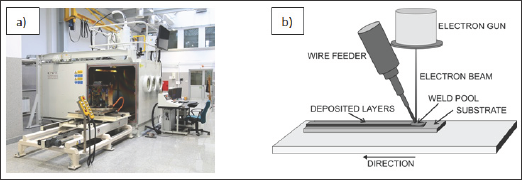
The EBAMW process was conducted based on EB machine CVE XW150 model: 30/756 (Figure 1). The device is equipped with a wire feeder and a working chamber with a volume of 4.9m3. The device is equipped with a system to monitor and record of the process parameters. The following parameters were applied during experimental tests: feeding angle 30°, working pressure 5•10-5mbar, beam current in the range of 1-30mA, accelerating voltage from 60 to 150kV, wire feed rate from 600 to 3600 mm/ min, travelling speed from 200 to 7000mm/min. To an additive manufacturing specimens welding wire 1.2mm in diameter (LNM307 Lincoln Electric: C 0.07%, Mn 7.1%, Si 0.8%, Cr 18.6%, Ni 8.0% wt.) was applied.

Figure 1: Electron beam additive manufacturing with wire set up a) EB machine b) scheme of the process.

Lupinepublishers-openaccess-journals-Civil-engineering-Architechture

Results and Discussion

The scope of the work was to investigate the influence of technological parameters such as: wire feed rate, beam current, travelling speed, acceleration voltage on stability of the deposition process and geometric dimensions of the padding welds, single layer as well as whole structure. The research revealed that, at low beam currents, the deposition process is unstable. The padding weld reinforcement is non-uniform. Irregularity of the width, height and straightness of the padding welds can be observed. At too high acceleration voltage and beam current, burn-through of plate and excess penetration weld can be revealed. When the wire feed rate is too high, the amount of energy supplied is insufficient to stabilize the fusion process of the wire. The wire is deeper feeding into the welding pool and limits the possibility of creating of a channel. The increased volume of filler material flooded the channel and caused that the welding pool becomes wider.

The gained knowledge as well as results of preliminary experimental tests including study of influence of technological parameters on with and high of single padding welds allowed to produce the fully dense metallic parts based on electron beam additive manufacturing process with wire. The results are presented in Figure 2. The EBAM 307 steel plate was fabricated in a vacuum chamber. The deposited path was scanned in one direction. It means that the return movements in opposite direction were dead. The spacing between two adjacent tracks (overlap) was 1.3mm. The scanning directions were alternated layer to layer and the time interval is 2 min. Eighteen layers were deposited and average height of each layer was approximately 1.0mm. The following technological parameters were applicable: accelerating voltage U=60kV, beam current 15mA, travelling speed 1000mm/ min, wire feed rate 1000 mm/min, feeding angle 30°. Number of padding welds in one layer was 42 [5].

Read More About Lupine Publishers Journal of Civil Engineering and Architecture Please Click on Below Link https://lupinepublishers-civilengineering.blogspot.com


Wednesday, 17 March 2021

Lupine Publishers| Association of Mother’s Genetic Sensitivity to the Taste of 6-N-Propylthiouracil (Prop) and Their Children’s Dental Caries Status in Nepal

 Lupine Publishers| Interventions in Pediatric Dentistry Open Access Journal (IPDOAJ)


Abstract

Introduction: Dental caries is a multifactorial disease and is one of the most prevalent infectious disease that affects mankind. Young children present a unique risk for dental caries as their host-defense systems and bacterial flora are in the process of being developed and also because the newly erupted tooth surfaces are more susceptible to dental caries. Mothers are the persons who generally influence their children via their own food preferences. Hence the mother’s taste perception plays an important role in the development of dental caries in their children. The need of this study is to examine the association of mother’s taste perception to 6-n-propylthiouracil with caries prevalence in their young children as well as with other caries risk determinants such as mothers and their children’s oral hygiene practices.

Material and Method: 180 pair of mothers and their children in the age group of 3 to 6 years of both sexes were selected for the study & 6-n-propylthiouracil testing is done. A trained and calibrated examiner who did not have any knowledge of the mother’s PROP test performed a comprehensive clinical examination of the children to determine the presence or absence of DMFT/dmft.

Results: It is observed that nonstarter mother and children have higher caries prevalence than medium tasters and supertasters. Discussion- Genetic sensitivity to taste is an inherited trait in children from their parents, inheritance from mother being more pronounced.

Conclusion: Dental caries is multifactorial. No significant correlation between susceptibility of mother and child to genetic sensitivity exists, and genetic sensitivity is not the only criteria for severity.

Keywords: 6-n-Propylthiouracil; dental caries; dietary habits

Introduction

Dental caries is a multifactorial disease and is one of the most prevalent infectious disease that affects mankind. The development of dental caries depends on several critical interactions between a susceptible tooth surface, oral bacteria, fermentable carbohydrates and frequency of consumption of sugar [1,2]. Young children present a unique risk for dental caries as their host-defense systems and bacterial flora are in the process of being developed and also because the newly erupted tooth surfaces are more susceptible to dental caries [3]. Parents must also negotiate the dietary transition from bottle feeding to solid food and also take into consideration the child’s tastes. Several risk factors such as salivary counts of mutant’s streptococci, past carious experience and frequency of sugar intake have been evaluated to identify children at high risk of caries [1,4-7]. However, none of the currently available caries screening methods can identify children at high risk of caries quite effectively [1,8].

The role of diet as a direct cause of dental caries has been extensively reported [1,4,9,10]. A high intake of sugar has been correlated with a high dental caries in pre-school and school aged children. A high sugar intake reflects a preference for a sweet substance. Genetic sensitivity to taste may be associated with a preference or no preference of some food by children. Sensitivity to taste is an inherited trait in children [1,11]. In 1991 it was found that there is a genetic variation in the ability to taste the bitterness of the chemical 6-n-propylthiouracil (PROP) [1,12]. This variation was found to be associated with food preferences in children. Fox in 1931 found that some individuals perceived chemicals related to PROP as bitter (supertaster) while others could hardly perceive them at all (nonstarter). Those who are PROP super taster are typically supertasters in general and tend to dislike sweet while those who are PROP none tasters like sweet food and prefer strong tasting food products. Mothers are the persons who generally influence their children via their own food preferences. In many households’ mothers generally reward their children using sugary snacks which might increase their children’s preference for that kind of food. Hence the mother’s taste perception plays an important role in the development of dental caries in their children. This study was carries out with following aims and objectives:

Aim

To find the association between mother’s sensitivity to 6-n-propylthiouracil (PROP) and their children’s dental caries status

Objectives

To compare mother’s and child’s oral hygiene practices with their dental caries status. To determine the taste quality and taste preferences of food products among these study groups.

Materials and Methods

220 pairs of mother and children were randomly selected from consecutive children who were accompanied by their mothers visiting the Department of Pedodontics and Preventive Dentistry in the institution. Out of these 220 pairs of mother and children 180 pairs fulfilled the inclusion criteria. A single trained and calibrated examiner who did not have any knowledge of the mother’s PROP test performed a comprehensive clinical examination of the children to determine the presence or absence of DMFT/dmft. All examinations were performed with a mouth mirror and explorer in a lighted operatory after taking consent from the mother. Demographic information of mothers, their oral hygiene practices, their oral health status and the presence of grandparents in the household was collected by an open-ended questionnaire. A second questionnaire was used to collect data regarding the oral hygiene and feeding practices of the child (e.g. frequency of tooth brushing, intake of sugary food and frequency of intake of sugary food).

Inclusion Criteria

For children

a) Age groups of 3 to 6 years.
b) ASA physical status I/II and stable mental condition
c) Should be accompanied by mother.

For mother

a) Participant cooperation and acceptance of the study programmer.
b) Should be healthy and mentally stable.
c) Should be literate.

Exclusion Criteria

For children

a) Should not be less than three years and not over six years
b) Should not have any medical / hereditary conditions.
c) No acute dental diseases.

For mothers

a) Should not be pregnant
b) Should not suffer from systemic diseases
c) Should not be allergic to 6-n-propylthiouracil (PROP)
d) Should not be under any medications that could alter the taste sensation and affect salivary flow.

Prop testing

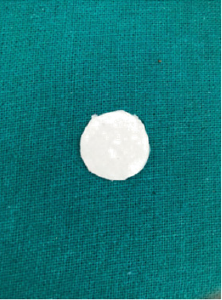
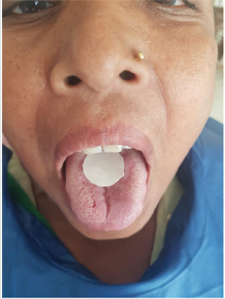
Figure 1: Filter paper with PROP solution.

Lupinepublishers-openaccess-pediatric-dentistry-journal

single examiner who did not have any knowledge of the mother’s and children’s oral health status had conducted the PROP test on the mothers. A small piece of filter paper (2 cm circle of Whatman’s grade 1 filter paper) containing approximately 1.6 mg (measured by calibrated dropper) of 6-n-propylthiouracil (PROP) was used to determine each mother’s taste type (Figure 1). The mother was asked to put the piece of filter paper in the mouth and moisten it with saliva for 30 seconds (Figure 2). After removing the filter paper, the mother was asked to quantify the intensity of bitter taste on the modified Green’s scale and was classified of supertasters (>60), medium tasters (12-60) and no tasters (<12). All examinations and PROP testing were carried out at the same time of the day (mid-morning) throughout the study. All the data gathered was tabulated and statistically analyzed. Student’s paired t test and chi square test was done.

Figure 2: PROP test on mother.

Lupinepublishers-openaccess-pediatric-dentistry-journal

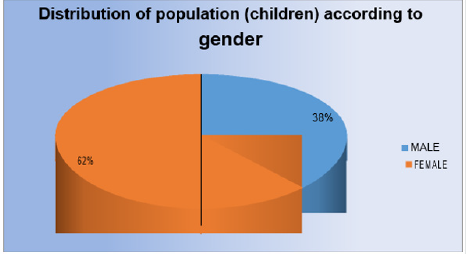
Figure 3: Distribution of population (children) according to gender.

Lupinepublishers-openaccess-pediatric-dentistry-journal

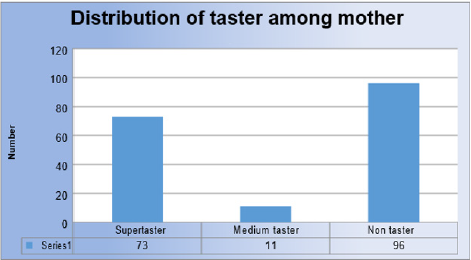
Figure 4: Distribution of taster among mother.

Lupinepublishers-openaccess-pediatric-dentistry-journal

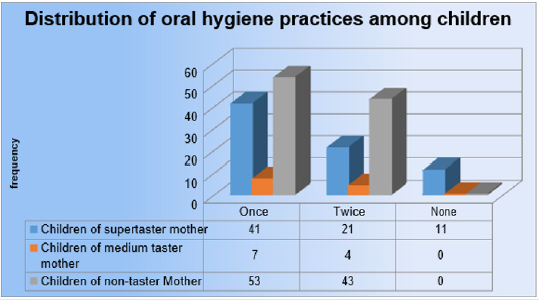
Figure 5: Distribution of oral hygiene practices among children.

Lupinepublishers-openaccess-pediatric-dentistry-journal

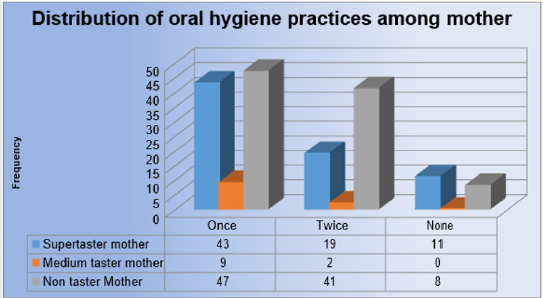
Figure 6: Distribution of oral hygiene practices among mother.

Lupinepublishers-openaccess-pediatric-dentistry-journal

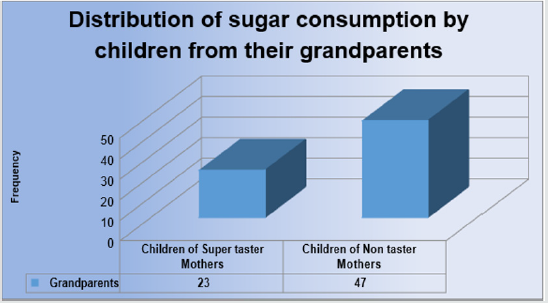
Figure 7: Distribution of sugar consumption by children from their grandparents.

Lupinepublishers-openaccess-pediatric-dentistry-journal

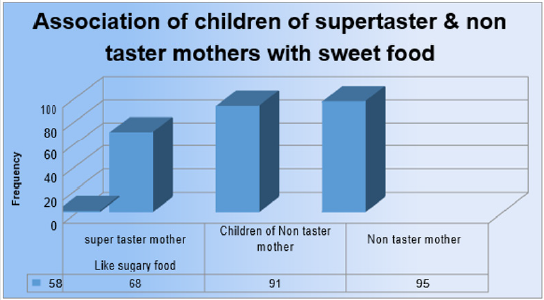
Figure 8: Association of children of supertaster & non taster mothers with sweet food.

Lupinepublishers-openaccess-pediatric-dentistry-journal

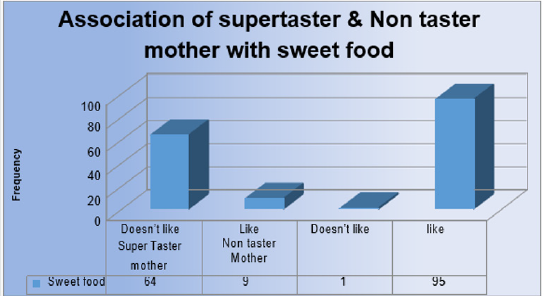
Figure 9: Association of supertaster & Non taster mother with sweet food.

Lupinepublishers-openaccess-pediatric-dentistry-journal

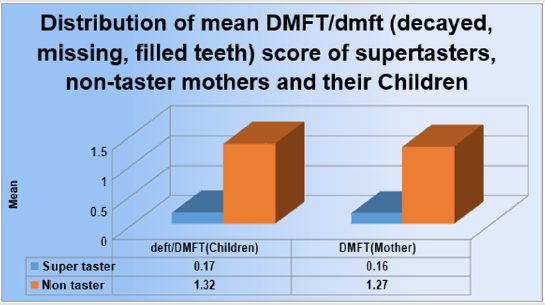
Figure 10: Distribution of mean DMFT/dmft score of supertasters, non-taster mothers and their Children.

Lupinepublishers-openaccess-pediatric-dentistry-journal

Table 1: Association of supertaster & non taster mothers and their children with sweet food.

Lupinepublishers-openaccess-pediatric-dentistry-journal

Table 2: Distribution of mean DMFT/dmft score of supertasters, non-taster mothers and their Children.

Lupinepublishers-openaccess-pediatric-dentistry-journal

Discussion

The present study comprised of 180 pairs of mother and child. The mothers were subjected to PROP testing and classified into super tasters, medium tasters and non-tasters according to the Green’s labeled magnitude scale. The mothers who were super tasters found the taste of PROP to be extremely bitter and the non-taster mothers described the taste of PROP to be tasteless while the medium taster mothers failed to categories the taste of PROP. The super taster mothers perceived the taste of PROP in lower concentration (1.6 mg per ml). This may be due to the presence of high-density fungiform papilla and taste receptors in the tongue compared to medium tasters and non-tasters. This may make the super taster mothers dislike sugary food. Mothers being the primary care givers to children influences the food habit of children. Mothers who prefers sugary foods are more likely to prepare and feed their children the same then those who do no prefer sugary food. In our study it was found that the mean dmft/ DMFT score among non-taster mothers (1.32) and their children (1.27) was higher than the mean dmft/ DMFT of super taster mothers (0.17) and their children (0.16) respectively. The influence of grandparents in the family cannot be neglected. Even in children of super taster mothers, 23 children reported they were given sugary snacks by their grandparents regularly while 47 children of non-taster mothers reported the same.
The pampering of grand parents may also be a causative factor for dental caries in children. The finding of the present study also showed that children who brushed their teeth once or twice per day experienced more dental caries if their mothers were non tasters whereas children of super tasters had less dental caries. This can be explained by the frequent intake of sugary food in case of children of non-taster mothers and also may be influenced by the food prepared by their mothers. Similarly, mothers who were non tasters had a higher dental caries experience than the super taster mothers. This may be due to their increased susceptibility to sugary food. In the present study when the super tasters and non-taster mothers were asked about their liking for sugary food, majority of the super taster mothers (64) stated that they did not prefer sweet food, while 95 non taster mothers stated that they preferred sugary food. In case of the children of super taster and non-taster mothers, the results were significant. The mother’s dietary habits and tastes probably affected the oral health status of the child. When the association between the preference of sugary food in super taster and non-taster mothers and their children was seen, it was found that the children of super taster mothers did not prefer sugary food while it was vice versa for the children of non-taster mothers. This may be due to genetic factors and also might be due to the dietary habits of the mothers which influenced the dental caries status of their children.

Conclusion

In the present study, the results suggested that the children of the mothers who are non-tasters or who prefers sweet food have higher dental caries experience. Factors such as the presence of grandparents in the household, frequency of brushing, preference of food and dietary habits may play an important role in the development of dental caries in children. Thus, mother’s genetic sensitivity to the bitter taste of prop can be used as a useful adjunct to identify children who are at risk of developing dental caries.

Read more about Interventions in Pediatric Dentistry Open Access Journal (IPDOAJ) please click on below link https://lupine-publishers-pediatric-dentistry.blogspot.com/


Tuesday, 4 August 2020

Lupine Publishers | Variant of Takotsubo Cardiomyopathy with Co-Existent Severe Coronary Artery Disease – A Case Report

Lupine Publishers | Advancements in Cardiovascular Research

Abstract

TakotSubo Cardio Myopathy (TSCM) is a reversible form of cardiomyopathy characterized by transient left ventricular (LV) systolic dysfunction. Clinically often mimics acute myocardial infarction (AMI) with chest pain or breathlessness with electrocardiographic, cardiac marker(s) and LV wall motion abnormalities. In a third of patients, significant emotional or physical stress precedes the presentation. Often, these patients have normal epicardial coronaries or non-flow obstructive coronary disease. In most patients, LV function shows complete recovery within weeks with favorable outcomes. We report a unique case of TSCM following sudden emotional stress with typical transient apical ballooning; nevertheless, with severe co-existent triple vessel coronary artery disease and complete recovery of cardiac function on medical management.
Keywords: Tako-Tsubo Cardiomyopathy; Apical Ballooning; Coronary Artery Disease

Case Presentation

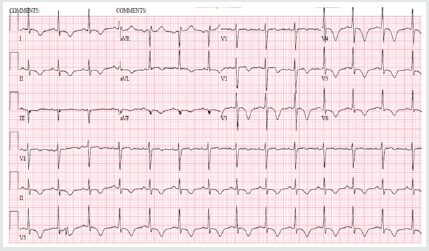
73 year old hypertensive female admitted with sudden onset intermittent chest pains and shortness of breath (< 24 hours after the death of her granddaughters in a road traffic accident). There were no other significant past medical history of note and she never smoked. On arrival, she was tachycardic (heart rate 102) in sinus rhythm, normotensive and clinical examination was unremarkable. Her initial ECG (Figure 1) demonstrated sinus tachycardia with deep T wave inversions in both precordial and limb leads. Her bloods revealed high sensitivity Troponin-T of 395ng/L [normal reference range <15ng/L]. Her bedside echocardiogram revealed typical pattern of “apical ballooning” with severe hypokinesis in the anterior, lateral, septal and inferior walls of the left ventricle, sparing the basal walls. Her left ventricular systolic function was moderately impaired with an ejection fraction (EF) of 40% (Figure 2). Both her clinical presentation and echocardiographic appearances were highly suggestive of “Takotsubo Cardiomyopathy”. Nevertheless, she was conventionally treated for presumed “Non-ST elevation myocardial infarction (NSTEMI)” at the initial stages [1].
Figure 1: ECG on admission showing sinus rhythm with deep T-wave inversions in both precordial and limb leads.
Lupinepublishers-openaccess-cardiology
Figure 2: 2-D Transthoracic echocardiogram (apical view) revealing typical apical ballooning with akinetic apical wall and preserved basal contraction of left ventricle.
Lupinepublishers-openaccess-cardiology
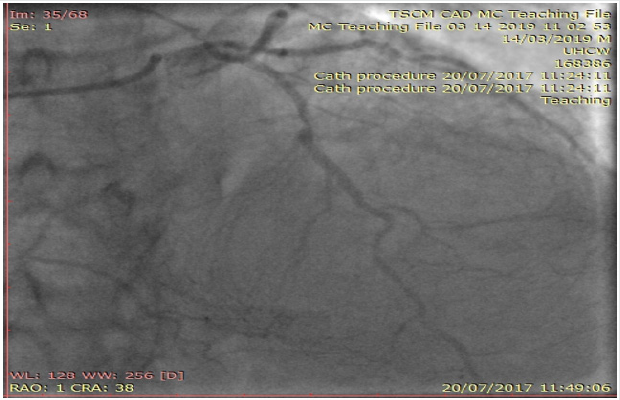
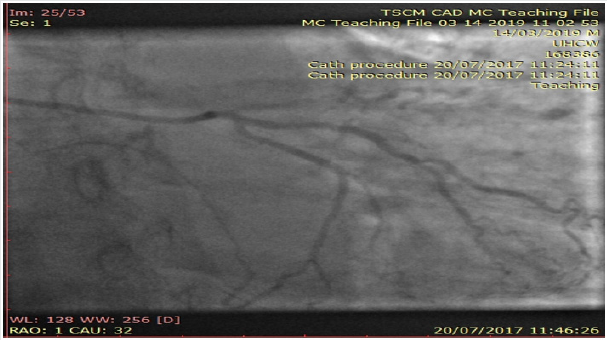
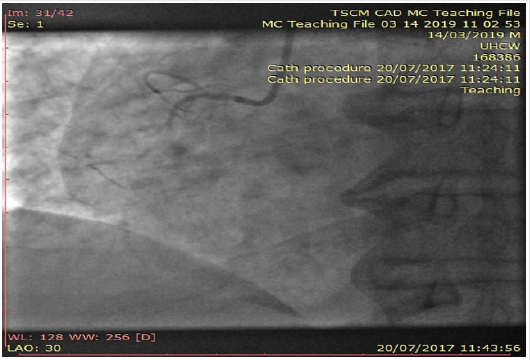
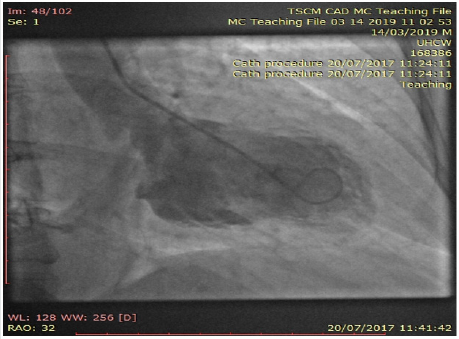
Interestingly, her inpatient coronary angiogram revealed severe triple vessel coronary artery disease (CAD). This was evident by the presence of mild disease in the left main stem, severe mid vessel calcific LAD lesion, severe obtuse marginal (OM1) disease (Figure 3) and chronic total occlusion of her mid right coronary artery (Figures 4a & 4b). However, her distal RCA appears well collateralized from contralateral LC system. The left ventriculogram revealed moderately impaired systolic function with moderate mid to apical anterior and inferior wall hypokinesis, sparing the basal segments consistent with “apical ballooning”. Figure 5, LV in systole] Given her clinical presentation (albeit coronary artery disease and LV dysfunction), multidisciplinary consensus favored medical management as NSTEMI. Expectedly patient agreed and preferred this option too. She was discharged on appropriate treatment and secondary prevention. Interestingly, her Cardiac MRI (CMR) scan at 1-month post discharge showed near normalization of LV function with calculated EF 50% with no evidence of infarction or myocardial oedema or fibrosis. Thence, improvement in her LV function with no evidence of infarction on CMR confirms the diagnosis of Takotsubo Cardiomyopathy, despite her significant CAD. At 12-month follow up, patient still remains stable and symptom free; therefore, with plans to consider surgical coronary revascularization, if worsening symptoms on top of medical therapy [2,3].
Figure 3: Coronary angiogram of left system revealing severe mid calcific left anterior descending artery disease with contralateral collaterals to distal right coronary artery.
Lupinepublishers-openaccess-cardiology
Figure 4a: Coronary angiogram of left system showing severe branch vessel disease in obtuse marginal branch of left circumflex artery.
Lupinepublishers-openaccess-cardiology
Figure 4b: Angiogram of right coronary artery showing chronic total occlusion at the proximal segment.
Lupinepublishers-openaccess-cardiology
Figure 5: Left ventriculogram at systole confirming the typical pattern of “apical ballooning” sparring the basal anterior and inferior segments.
Lupinepublishers-openaccess-cardiology

Discussion

With her established macrovascular risk factors for CAD (hypertension and age) and clinical presentation together with abnormalities in ECG, cardiac enzymes and echocardiogram, the working differential diagnoses were:
a. Acute Coronary Syndrome (ACS) i.e., Non-ST elevation myocardial infarction
b. TakotSubo Cardiomyopathy or transient apical ballooning syndrome or stress induced cardiomyopathy or broken heart syndrome.
Conventional electrocardiogram (ECG) still remains a costeffective important tool in the assessment of CAD. Nevertheless, its low sensitivity (<50%) and specificity (<80%) in predicting coronary disease still remains a major limitation. Clinicians mostly rely on surface ECGs to localize ischaemic myocardial territory (highly specific) prior to coronary revascularization of the culprit vessel(s) routinely in ACS patients. Clinically TSCM (typical LV appearance of Japanese “Octopus trap” with apical ballooning) often mimics AMI (chest pains, elevated cardiac enzymes and ECG changes) and is characterized by a transient left ventricular dysfunction. Though its incidence and prevalence doesn’t appear to have vastly changed over the years; however clinicians are more comfortable in diagnosing TSCM with better access to imaging (echocardiogram, Cardiac MRI) and invasive investigations (coronary angiogram) nowadays. The Revised Mayo Clinic Criteria suggested the presence of the following to confirm the diagnosis of TSCM [4,5].

a. Transient hypokinesis, akinesis or dyskinesis of the left ventricular mid segments with or without apical involvement– distinctively the extent of regional wall motion abnormalities observed will be beyond the distribution of single epicardial coronary vessel and with often a stressful trigger (but not always present).
b. Absence of obstructive coronary artery disease or angiographic evidence of plaque rupture
c. New electrocardiographic abnormalities or modest elevation in cardiac Troponin
d. Absence of pheochromocytoma and myocarditis.

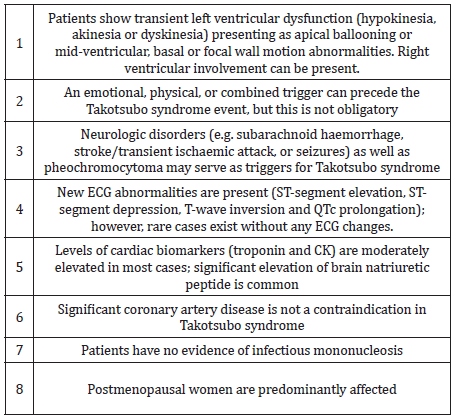
However, concomitant coronary artery disease (CAD) has been reported in 10 – 29% of patients who have been diagnosed with TSCM. In the International Takotsubo Registry (n=1750) 15.3% had some degree of coronary artery disease, although the extent of coronary artery involvement was not discussed in TSCM patients. The new Inter TAK diagnostic criteria highlight the clinical entity that TSCM can exist with concomitant CAD too (Table 1). Our patient meets with these diagnostic criteria for “Takotsubo Cardiomyopathy” together confirming that there was no evidence of infarction in her Cardiac MRI (no sub-endocardial late gadolinium enhancement in her LV or microvascular oedema) as well as complete recovery of her LV function rather than the initially presumed diagnosis of ACS [6].
Table 1: International Takotsubo Diagnostic Criteria (8).
Lupinepublishers-openaccess-cardiology
The pathophysiology for the condition is not well completely understood yet; nonetheless, stress related acute catecholaminergic surge, multi-vessel epicardial coronary spasm, micro-vascular dysfunction, abnormal fatty acid metabolism, myocardial stunning, micro-infarction, direct catecholamine toxicity to myocytes and possible reperfusion injury were proposed as possible mechanisms. On top of the typical transient apical ballooning, other atypical variants including inverted or reversed, mid ventricular or localized have been reported in the literature. In the majority of cases of suspected TSCM, it is appropriate to perform coronary angiography to exclude an acute coronary syndrome given the overlap of symptoms. Also, there is little evidence to support the clinicians in the management of TSCM with co-existent coronary artery disease as highlighted in this case and the clinical dilemma encountered. Therefore, we believe long term follow-up would be really helpful in understanding the disease as well as their management and prognosis for these TSCM patients [7,8].

Conclusion


We report an unusual case of Takotsubo Cardiomyopathy with co-existent severe triple vessel coronary artery disease. This case illustrates the importance of good history taking and the judicious use of diagnostic imaging to arrive at a prompt diagnosis and appropriate management. With limited evidence in literature to support clinicians as how best to manage these patients with severe coronary artery disease with Takotsubo Cardiomyopathy, we highlight the need for International registries with long term follow-ups.

Read More Lupine Publishers Journal of Cardiology & Clinical Research Articles :

Monday, 3 August 2020

Lupine Publishers | Peer Review of Statistics in Surgical Research: Identify The X-Factor or Toss a Coin!

Lupine Publishers | Advancements in Cardiovascular Research


Opinion

Professor Peter Bacchetti’s excellent article [1], highlighting “the other problem of peer review of finding flaws that are not really there based on unfounded statistical criticism, and its demoralizing effect on authors”. I wish to add some thoughts to the debated issues. Professor David Horrobin’s original classics on the subject [2,3]. have not yet been surpassed. It was updated recently [4] and prompted some contributory thoughts [5]. Having enough experience as author of reject articles and some as peer reviewer, I find the most devastating effect to author’s morale is making no comment, giving no reason for rejection or not replying all. The BMJ is guilty on this account as an article of mine was rejected that was accepted elsewhere after minor editing [6]. The BMJ, however, is in the good company of most biomedical journals who apply the COPE rules. The article lacked statistics of any kind that perhaps might be one of the reasons it was disliked at BMJ. To Editors’ credit, however, it took about a month to say ‘No’ that caused no momentum loss, unlike other Journals who reach the same verdict on other articles after 6 months or a year that drag another year or two before the author could recover and gather enough time, interest and energy to face the damn thing again. One subtle aim of that article [6], mentioned to BMJ Editors, was an attempt to say that “there is science and in particular evidence based medicine without statistics”.
It is a devil’s advocate to say statistics has not only been made into a “big lie” but also ‘false God’. It was invented elsewhere but currently worshiped only at most medical and surgical journals. A look at Science and Nature testifies such prestigious magazines have reduced statistics to real size and value as a “tool for testing a hypothesis”. It is not too basic a question for every biomedical peer reviewer to find out the exact role, aim and limitations of statistics. Some was mentioned in an article [7], nobody noticed save the late great Professor GD Chisholm editor of Br J Urology. It was based on a study that was rejected by a grant committee. It aimed at resolving 2 of the most serious puzzles of current clinical practice, postoperative hyponatraemia and the multiple vital organ dysfunction or failure syndrome [8]. However, giving data and statistics [7,8]. before clarifying the theories [9]. has proved as wrong as putting the cart in front of the horse. Einstein’s methods on proposing the special and general relativity theory is the correct way. When statistics was haled in the sixties everyone thought it was the only mean to discover “The Unifying Theory”.
This has proved both immensely costly and wrong. The basic fact is ‘statistics cannot, was not intended to and will never could, make a discovery’. Observation, mental experiments and the X factor are the only way to make a discovery long before it is verified and proved by practical studies and statistical tests. Before explaining the X-factor please allow me tell a relevant true story that symbolizes the current problem with statistics. Two friends of mine in UK had a disagreement, made a bit on a round of drinks and decided the first person to enter the hospital club will be the judge. Guess who did? I did but having no clue on how to resolve the conflict suggested that a flip of a coin might be the best way. They agreed also to my condition that while head or tail will determine the winner among them, if the coin stood on edge the judge should be the winner of all. It did and I won. Another conflict started on: Who should buy the 3rd round of drinks? Both agreed that it was my turn. I explained that buying the 3rd round will gain good company but lose all winnings, and my turn should be the 5th round! The point is statistics can tell the probability of head or tail and exclude the odd but when evaluating to either 0 or 100% and the truth is known, instead of expiring it generates residual arguments. Professor Richard Smith contributed to this debate by quoting Dr Hedge on Professor Robert Fox’s famous thought that “swabbing the rejects with the accepts does not make a difference.”

He added that perhaps it has already been done at BMJ” and asked “How can you know?” With due respect Sir, I frankly think nobody can. Despite a proven incremental value of an average article it does not make a noticeable difference or great loss to scientific advances. Statistically speaking that means a quality article submitted to BMJ has 50% chance of being accepted or rejected. So, why not save everybody the trouble and toss a coin? Here is where statistics has shot itself in the foot. It gives an average chance to the average and an odd chance to the odd but can’t tell which is important. The odd chance of a tossed coin to stand on edge matches that of a breakthrough scientific or medical article coming an editor or peer reviewer’s way but detecting such article makes all the difference. Some call it a hunch or gut feeling. Others qualify it by the three-pronged tests of quality, relevance and civility. Identifying the “X-factor” that makes such an article stand out is worth all the trouble. I honestly do not know but it is the arresting beauty found in Einstein’s famous papers, Newton’s laws, Mozart’s music and Shakespeare’s writing among many examples that include medicine [2-4]. I wrote 2 articles on such para-scientific para-medical stuff to identify the X-factor, “Rules and lures of the science game” and “The Mozarts of Science” sent to journals nearly two years ago and have not received a reply yet. I think a message of “Ignore the big headed bustard” arrived. Qualified people to find out the X-factor are COPE members. Another question that requires a ‘Yes’ or ‘No’ answer would be: if any of Einstein’s papers is evaluated using the current peer review standard and statistics adopted by most biomedical journals, would it be accepted?

Read More Lupine Publishers Journal of Cardiology & Clinical Research Articles :