Showing posts with label SJO. Show all posts

Tuesday, 19 September 2023

Lupine Publishers | Non-Hodgkin Lymphoma of Hard Palate

 Lupine Publishers | Scholarly Journal of Otolaryngology


Abstract

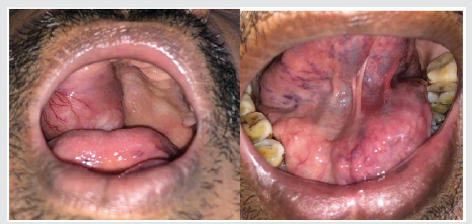
Oral cavity lesions are common complaints in clinical ENT settings. They are often misdiagnosed as a periodontal disease or granulomas. A 43-year-old male came to the our OPD with complaints of hard palate swelling on the right side for 1 year coupled with a swelling on the floor of the mouth for 2 years.

Keywords: Non-Hodgkin Lymphoma; Lymphoma; Hard Palate; Tumor; Maxilla

Introduction

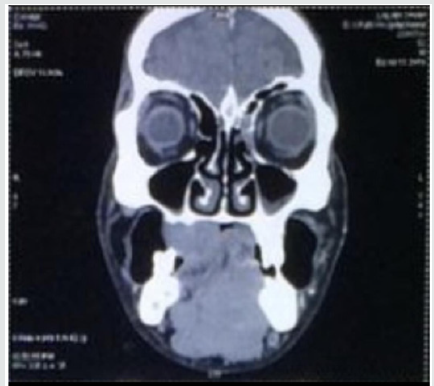
Lymphomas are primarily tumours of lymph nodes. They are further classified as Hodgkin lymphoma and Non-Hodgkin lymphoma. Non-Hodgkin lymphoma is primarily present in Lymph nodes. Its extra nodal presentation includes sites like GI tract, Waldeyer’s ring, lung, liver, spleen, bone, skin. However, it is rare to find Non-Hodgkin lymphomas in oral cavity and are thus often misdiagnosed. Vigilant clinical examination, radiological investigations and histopathological reports help in identifying the disease at an early stage. We therefore emphasize on a voracious workup to hasten diagnosis and early treatment. We report a rare case of a 43-year-old male presenting with a hard palate swelling (Figure 1). The swelling was associated with pain during chewing. His contrast enhanced CT face/neck was suggestive of soft tissue mass involving right half of hard palate up to the midline with bony erosion of the floor of maxillary sinus. Excision of growth was done and sent for Histopathology. Histopathology report of this growth showed Follicular B cell lymphoma.

Figure 1: The Human Normal Eye Anatomy.

Lupinepublishers-openaccess-otolaryngology-journal

Case Report

A 43-year-old male presented with complaints of swelling over the right half of the hard palate for 2 years along with swelling over the floor of the mouth on the left side for 1 year. He gave history of tobacco chewing for 15 years along with significant weight loss. The patient presented to us 2 years back when the lesion initially presented, failing to follow up. Examination: On intraoral inspection a 6*4*4cm lesion on the right side of hard palate extending from upper right canine to the third molar, crossing the midline. The swelling was firm, with visible dilated veins, without scars, sinuses or pulsations. On palpation it was cystic to firm in consistency, smooth, without any local rise of temperature. On inspection an ovoid, solitary swelling on the left side of floor of the mouth, measuring 5.5*3*3 cm was noted which occluded the gingivolabial sulcus without signs of scars, sinuses, discharge from the swelling. The swelling was firm and non-tender. Indirect laryngoscopy examination was normal.

Investigations

A Face CT along with that of paranasal sinuses was ordered so as to estimate the extent of the swelling which was suggestive of a soft tissue lesion involving the right hard palate, upper alveolus and bony erosion of the floor of the maxillary sinus. The swelling also extended posteriorly up to the right superior retromolar trigone causing erosion of the right medial pterygoid plate. The scan also revealed multiple non necrotic cervical lymph nodes on bilateral level Ib, II and Va. Following this an excision biopsy was planned for further evaluation (Figure 2). The samples were sent for histopathological evaluation. Biopsy revealed Lymphoid tissue arranged in variable sizes separated by thin and thick fibro cartilagenous septae was seen suggestive of? Non-Hodgkin lymphoma. For definitive diagnosis and to measure the extent/ spread of the condition FNAC of the cervical lymph nodes and Bone marrow aspiration was performed.

Figure 2: The Human Normal Eye Anatomy.

Lupinepublishers-openaccess-otolaryngology-journal

The samples were also subjected to Immunohistochemistry for classification, subtyping and further management. FNAC of the cervical lymph node showed similar morphology as that of the palatal swelling. Bone marrow aspirate had a hypercellular marrow with 25% lymphocytes. IHC Markers used were CD20(clone L26), CD3(CLONE PS1), CD5(CLONE SP19), CD43(CLONE DF-P1), CD10(CLONE 56C6), Bcl2(CLONE 100/B5), Bcl6(CLONE-PG- B6P), Ki67 which reported as: IHC markers that turned out to be positive were - CD20(CLONE L26)- Positive; CD10- focal positive; Bcl2- positive; Bcl2- positive; Bcl6- positive; Ki67- 15-20% in neoplastic follicles. IHC markers that were negative are - CD3- negative; CD5- negative; CD43- negative; He was thus diagnosed as a case of Non- Hodgkin – Follicular lymphoma grade II. The patient was referred to the Department of Medicine Oncology for further management.

Discussion

Lymphomas are primary tumour of lymph nodes. They have been majorly divided as Hodgkin lymphomas and Non-Hodgkin lymphoma. Named after Dr Thomas Hodgkin who identified the cells for the first time. NHL is further classified as B cell or T cell lymphomas depending on the cells they affect. GI tract is the most common extra nodal site for NHL followed by Oral cavity. Within oral cavity, Waldeyer’s ring is the most common area to be affected, other including mandible, hard palate, nasopharynx, parotid gland, paranasal sinuses, thyroid gland and orbit [1]. Incidence of oral cancers is high due to addiction to tobacco. Presentation of NHL with primary site in oral cavity is rare. The mean age of presentation of NHL is 42 years of age. and its incidence increasing as the age advances. They are ranked fifth in terms of cancer incidence and mortality worldwide [2]. Majority Non-Hodgkin lymphomas are that of B cell origin type. Presentation of the lymphomas in the oral cavity are usually tooth ache, numbness, painless swelling [3] The differential diagnosis for such swelling can be that of an infective aetiology, hence all baseline investigations like a complete blood count is equally mandatory. The presenting symptoms for lymphomas are an unexplained, painless swelling of the lymph node, , gradually increasing in size either in the neck, axilla or the groin region. It can also be associated with B symptoms (symptoms whose, presence or absence has an impact on outcome of disease) such as fever, night sweats, abdominal pain, unexplained weight loss.

Majority of the NHL’s are B cell in origin. In our patient the immunohistochemistry was CD20 (Pan B cell marker) positive, CD3 negative(Pan T cell marker) suggestive of Follicular lymphoma. The aetiology of Non-Hodgkin lymphoma remains unknown. It shows a strong association with immunocompromised patients [4]. In our patient there was no evidence of any immunocompromised state, His serological status was Negative for HIV. Lifestyle factors like smoking, tobacco chewing have all direct adverse effects with Non- Hodgkin lymphomas. There is a twofold risk for NHL in cigarette smokers and three-fold in bidi smokers [3] Standard treatment modalities for NHL is chemotherapy. Generally, a combination of Chemotherapy (cyclophosphamide, doxorubicin, vincristine, prednisone) and radiation is recommended [5].

Conclusion

Non-Hodgkin lymphomas of hard palate are a rare entity. Clinicians attending patients who come with growth in the oral cavity, or over the hard palate must rule out NHL as their differential diagnosis [6,7]. When detected in time, at early stages and treated either surgically or by chemotherapy, the prognosis of such patients is good [8].

Read More About Lupine Publishers Journal of Otolaryngology Please Click on the Below Link:

https://lupine-publishers-otolaryngology.blogspot.com/



Tuesday, 25 July 2023

Lupine Publishers | Moral Judgments as Speech Acts: A Re-Evaluation

 Lupine Publishers | Scholarly Journal of Otolaryngology


Introduction

Elsewhere I tried to show that Nietzsche has a Human solution to “Is vs. Ought” problem [1]. His notion of causality as free will is Human causality, viz., habit; his picture of the mind is epiphenomenal, with clear Human traces as he rejected noumenal self and “I” as a given; he takes “Is” to be type-facts, facts about what character one is, and “Ought” to be the second-nature of human beings as build upon the type-facts. And the communal feeling of a natural being, viz. feeling of responsibility given the causality of free will, links “Is” with “Ought” just as Mounce claimed Hume meant them to do. At this point, it seems to be the case that Nietzsche is of the firm conviction that the problem can be traced back to a specific feeling of the moral subject, viz. the feeling that s/he is the cause of his/her own actions. Moral subjects achieve the causality in the second sense of the term Hume uses via socialization and they become moral subjects along the way. And the bridge between the I-sentences and the O-sentences are the inter-subjective constraints that train them into the moral feeling of responsibility. Indeed, this is the familiar process of moral education, punishment and reward. As for causality, Nietzsche believes that “[w]e has combined our feeling of will, out feeling of ‘freedom,’ our feeling of responsibility and our intention to perform an act, into the concept cause’…” [2]. It is just an explanatory schema human beings project on the chaos of events to satisfy their need for an answer, facing the unfamiliar and the unknown. The origin of the concept can be traced back to our belief that we cause things, that we have free will. Freedom as causa sui, however, is the power of things-in-themselves which, Nietzsche avers, are not nonexistent. It is not a metaphysically necessary relation, but a feeling that human beings are free in their actions. Accordingly, the problem Nietzsche and Hume deals with can be seen as a question pertaining to account of free actions prescribed by the O-sentences, rather than the shift between the copula “is” and the modal operator “ought,” under the light of the belief that some facts, connected by causal links in the I-sentences, must justify free actions prescribed by the O-sentences. “Ought” as a performative, is to express causa sui, freedom in moral action, but when the expression of moral action prescribed by an O-sentence must express the moral freedom, the expression of the action is free from “Is” as well. Since, if utterance of the O-sentences can be seen as a moral action, it is a free action too. Hence the problem of “Is vs. Ought.” Nietzsche seems to provide the answer in the I-sentences that express the type-facts, i.e., facts about the natural needs of diverse human beings. In the next part, I will elaborate on this suggestion.

The Rules of “Ought”

Hume, in the mainstream reading of the infamous passage in Treatise [3], seems to express his disavowal of any metaphysically necessary link between the two, i.e., the moral and the factual, sets of judgments. I tried to show that Nietzsche follows his footsteps too. Their analysis in fact remains worth of studying, since any argument that assumes a necessary relation between the I-sentences and the O-sentences must find a solution to the problem of freedom. The relation of causality may be replaced by some other relation assumed to be metaphysically necessary but if moral actions expressed by the O-sentences are subject to the necessity among the facts expressed by the I-sentences, the problem would persist. The unperceivable shift between the two set of judgments, therefore, cannot be accounted by the metaphysically necessary relations between the facts, since the actions then would lose the crucial character which renders them moral. Since their time, however, philosophers have come up with other alternative accounts of the O-sentences. More crucially, they offered some brand-new ways of conceiving the relation between the judgments and the facts, such as speech-acts who not only describe but also constitute actions.

As Austin notes, what we have to study is not the sentence, but the issuing of an utterance in a speech situation. Our question is not, what does the sentence mean? but What happens? What does the speaker mean? or perhaps, how is the world altered by the occurrence of this utterance?” [4]. The world alters when somebody utters an O-sentence, since chances are there that one’s interlocutor may act as prescribed by the O-sentence. The O-sentence can then be taken as analogous to a command, then. “More frequently the point of an utterance is to evoke some particular action as a response ... When someone obeys a command, his action, of course,is a response to the command, not something caused by it.” That is to say, one appeals to the feeling of causa sui in uttering an O-sentence, since one believes that one’s interlocutor has freedom and control over his actions to change the course of the events as prescribed by it. Given that “[t]here must exist an accepted conventional procedure having a certain conventional effect, that procedure to include the uttering of certain words by certain persons in certain circumstances” [5], the use of the O-sentences must have such a conventional procedure as well. Supposing that utterance of an O-sentence is an “act of uttering a sentence which is a performative to perform an act (e.g. to give an order, or make a promise)” (Holdcroft, 1974, p. 3) the factual preconditions of uttering an O-sentence adumbrate the correct inferential procedure of a moral argument: like in “Jones ought to pay back, because he promised to do so.” In this vein, “the way in which in entailment one proposition entails another is not unlike the way in which “I promise” entails “I ought”: it is not the same, but it is parallel [6].”

It is parallel, since at the most basic level, there are factual preconditions of uttering any sentence, whether it is performative or not. If those preconditions are not satisfied, then the sentence is not functional and the speech-act unhappy. Since the O-sentences as performatives have a function, i.e., to indicate that the interlocutor has control over his/her actions, the preconditions for the fulfillment of the function may solve the way out of the “Is vs. Ought” problem. I shall not go into the question if those are the truth-conditions of the sentences, and the question about their truth values is irrelevant in this context since in the sense I take them to be as injunctions, they do not have truth values: “A moral judgment of and centrally serves as a kind of injunction, spoken aloud or in one’s heart, to others or to oneself, to behave or not to behave in a certain way. As such, it has no truth value...” [7]. When they take on other functions, i.e., not taken as injunctions, they may or may not have truth values, but I shall not broach it in this discussion. Nietzsche tried to show how “Ought” to enter into our language in a quite complex history of a natural being. It was introduced, he speculated, to satisfy the socio-political needs in language games of responsibility, or more precisely to render a natural being moral. Thus “Ought” to be not only used to express the moral behavior of a life form, but it also constitutes the rules of moral behaviour, and it is the moral action par excellence. In my reading, the socio-political institutions induced the belief in the causality of free will, building a language game, and then playing on the specific needs of them by punishment (inducing pain) and reward (inducing pleasure). The issue is that “Ought” to find its preconditions for its function –to make interlocutors responsible from their actions–in the sociopolitical context of natural needs. That is the context that provides the constitutive rules of “Ought” as a speech-act which expresses a new form of behaviour, viz. moral behaviour. Searle [7] defines the notion of “constitutive rules” as describing new possibilities of behaviour. A critique of Searle, Ransdell [8] he claims Searle’s definition does not consider the instances where one is not committed to the type of the behaviour. However, as I argued below, there is no exit-option in the moral language game. In the next part, I will put the conclusions I derived from the reading of Hume and Nietzsche into modern terms and explain further.

“Ought” Based on Constitutive Rules

To present some of the schemas and insights unavailable at the time of Nietzsche and Hume, I will present a review of the literature on the passage by Hume that formulated the problem for the first time. Dismissing some of the proposed accounts of the link in terms of “normal psychical function,” [9], of “reductive definition of some moral term” [10], and many others, I shall focus on only some, such as that of Hannaford [11], of MacIntyre [12], and of Searle [13], and the reason why is because those authors, engaging fruitful debates and laying original analyses of the question, seem to be the best representatives of the views they hold. Hannaford [11], adopts the perspective of “human behavior and needs” as the standpoint from which the “imperceptible” connection between I-sentences and O-sentences can be perceived as generating norms for endorsement of the conditions for free. Practices of a community. It is a vain move on the side of philosophers such as Kant, to disparage hypothetical judgments, he implies, for possibility conditions of moral discourse are the necessary conditions for free action: that is to say, once the value of free action is taken for granted, the moral judgments to the effect that one ought to respect them set off automatically, and other moral judgments are derivable from those. In other words, “[f]rom the knowledge of what is necessary to human action in general we can derive judgments of what we ought to do if we are to continue to engage in that action”. Such conditions, he further claims, are regulative functions of what it means to be a free member of a community of persons and yield, recursively on this quasiaxiomatic basis, particular O-sentences in particular situations that can be descriptively grasped by I-sentences.

As for the obvious objection that what Hannaford suggests is not a logical derivation in the strict sense of the term, he dismisses it on the ground that as “a normal and natural kind of derivation”, it does its job without having recourse to formal intricacies and being neutral against them. His implicit assumption that human beings, capable of moral action and consistent thought, can arrive at moral judgments by other means than strictly logical operations, given the conceptual relation between “Ought” as a prerequisite of moral action and the social-communal context of the action. Only and all moral agents capable of action can raise the question of what ought to be done, thus he claims, and only in the context of preceding moral dispute can agents make moral sense of an action, for, as in a Kantian understanding, the shift between the two sets of sentences are made possible by the universalized conditions of action in the community of free equals.

However, two objections could be raised at this point:

a) What philosophers have been pursuing for ages does not seem to be the Hannaford’s “natural derivation” of O-sentences via hypothetical judgment: Indeed, most would argue against him that judgments of this type, ones that establishes the means to do X given that one wills X, presupposes the value of moral action in a community. Hypothetical judgments may take off once it is presupposed that human beings value taking part in the sociomoral game but does not account for why they ought to take part. Indeed, that seems to be what is called “technical,” rather than purely moral, sense of ‘Ought’ that enables the natural derivation [14].

b) It is quite ambiguous to re-frame the question in terms of conditions of moral action that would emerge in communal debate, without having settled first the conditions of idealized moral debate: indeed, this may prove the foundationalist approach to the question as regressive, as some still other moral premises may be needed to do so, yet the I-sentences as they enter into Hannaford’s theoretical picture, provide no defensive strategy against it.

The vices aside, Hannaford’s analysis has virtues:

a) The derivation of O-sentences from I-sentences, he thus avers, may be achieved by extra-logical, yet semantical, operations on contextual, rather than sentential, level. Therefore, most of the philosophers perhaps looked for a strictly necessary relation on the propositional level in vain since Hume and Nietzsche.

b) Therefore, the objection (i) may indeed lose its force, provided that there is no exit-option in moral game: one may simply remind the famous remark of Aristotle and insist that one who is not in the game would be either a beast, or a god. Is it a water-proof argument? Hardly so, for one may believe that free conditions of actions are not realized in actual games of actual communities and cannot be reached by moral debate of the agents, but to be sure, burden of the proof lies not with the defender.

Interpreted as such, the riddle of Hume and Nietzsche has no formal solution, but like the renowned Gordian knot, it can be cut loose by recourse to the preconditions of free action which is the basis of moral causality and responsibility as the function of “Ought” implies. But as for the exact character of those conditions that render human agents capable of moral action and responsibility, Hannaford is silent, but MacIntyre [12] is not: such an approach to moral judgments discover, or ought to discover, as its focal point, he takes Hume to suggest, “a foundation in human needs, interests, desires, and happiness”. Hudson [15], in criticizing MacIntyre’s exegesis of the passage by Hume, claims: “it is undoubtedly the case that moral judgments are made in situations where we want, need, etc., and Hume is aware of this ; but it does not follow that he was, or thought he was, deducing ought from is. To say that a game is played in certain circumstances is not to say that the circumstances are part of the game.” But it seems obvious that rules are responses to the circumstances of a life form, a natural form of life that is subject to the constraints of the circumstances in moral action.

Austin’s [5] introduction of “performatives” is the following:

a) They do not ‘describe’ or ‘report’ or constate anything at all, are not ‘true or false’; and

b) The uttering of the sentence is, or is a part of, the doing of an action, which again would not normally be described as saying something.

Searle [13], following him, elaborates upon the rules of the performatives. He takes the so-called pejorative sense of ‘Ought’ as tautological with that of ‘obligation’ under the institutional facts therein, and therefore establishing a connection between the I-sentences and the O-sentences as the sup-species of the former. Therefore, he claims, if one acceded to play in the game of “obligation,” one has to play by the rules of the game, which is constitutive of it. In other words, a moral game like “obligation” is none other than its rules that constitutes it, i.e., institutional/ constitutional facts. Some believed all of this is irreparably wrong, as “Searle’s confusion, then, arises from his having conflated a question of entailment with a question of entitlement,” in the sense that the obdurate gap retains between the I-sentences and the O-sentences. Indeed, the objection would have a point to the effect that the institutional facts would always be divorced from the facts simpliciter, had the divorce could be rendered intelligible without recourse to the institutional facts of other speech-acts. “I suppose this amount to saying that judging, acknowledging, classifying someone else’s act as an ‘institutional act’ comprise themselves a distinct group of institutional acts [16].” Yet individuation of such facts must again resort to other language games or presume the preconditions of free action in order to account for the moral character of the action at stake-freedom. And the preconditions of free action for a form of life, viz., human form of life are quite wellestablished in terms of needs and interests. “That is not agreement in opinions but in form of life [17].”

“Is” in “Ought”

As I attempted to show above, Hannaford following the Kantian tradition finds the solution to the problem in preconditions of free action human beings feel that they are capable of. McIntyre elaborated and specified these conditions as needs, interests, desires and happiness as facts to be expressed by I-sentences. On the other hand, Austin and Searle held the mirror to the judgment side of the problem and gave some hints that moral judgments as expressed by O-sentences can be seen as speech-acts. That is to say, the O-sentences not only express those facts, but building upon them as the ineluctable preconditions of what they aim at, viz., free action, they constitute the moral facts. In fact, that is what my Human reading of Nietzsche implied as well. Conditions of free action, to be sure, relates to free will and causality of will as an inexplicable feeling that enters into the moral picture. If morality be intelligible and moral actions be possible after all, one may presume freedom of action in metaphysical terms as a necessary relation, too. Yet that is not to say that freedom will is to be taken as a tangible and observable causal relation that makes itself manifest in the action as Hume and Nietzsche put it. And if that relation is not possibly observable, it cannot be expressed by the I-sentences. If it cannot be expressed by them, then the formal gap between them and the O-sentences opens up. At this point, following Searle, I argue that the O-sentences comprise a sub-set of speech-acts. They do not only express moral facts, but also constitute them as moral. I believe Hume’s second definition of causality must come into the picture to account for freedom of action that enables the use of speech-acts as capable of articulating moral facts. Human beings feel that they are the cause of their actions. Indeed, as compatibilists argue, causality of free will and physical causality may be co-operating on human actions, though the former is not demonstrable by any means, since it is not observable, ostensible and determinable. In fact, to put it brashly, it makes no difference to the argument from free will at all that causa sui is indemonstrable. The gist of the matter is that unless one is willing to give up the whole edifice of morality and related institutions, which is Nietzsche’s point and aim, one is compelled to presume causality in the second sense.

Moreover, given the naturalistic fallacy, one cannot demonstrate moral properties and actions by the I-sentences. Thus, human beings need a second set of judgments, viz., the O-sentences, to express them. But then the problem is that, given that causality of will is indemonstrable as well, the odds are against the attempts to establish the necessary semantic connection between the I-sentences and the O-sentences, as the rules of the speech-game are centered on freedom, i.e., freedom from the factual constraints. It is in fact not a paradoxical situation where one is supposed to establish the necessity imposed by factual restraints when the game is designed to illustrate that one can get rid of them in free action. That a necessary connection is indemonstrable does not boil down to the conclusion that there is no such connection. The semantic necessity in question seems to be established by fixing the referent of the moral terms, though we may not demonstrate their semantic content. The notion of “fixing the referent” goes back to Kripke [18], who distinguished between the two functions of Sinn, viz. that of determining the semantic content and that of determining the referent. People in the past referred to the same natural object as we do to as a piece gold but did not know the factual restrictions on the speech-act at stake before they discovered physical properties of the element described by the semantic content of the term “gold.” Even then the necessary relation between the factual restrictions and the speech-act did hold. Analogously, we may never point to the necessary relation between the semantic content of the moral terms and operators and that of amoral ones, but that is no reason to deny that there may be necessary relations between the moral speech-acts and the amoral facts [19-25].

To conclude, my reading of Nietzsche via Hume put in sharp relief three points: the subjective feeling of human causality gives a sense of the necessary connection between the O-sentences and I-sentences. Human beings feel, after a long history of moral education, that they are the cause of their own actions and they act, on the beliefs expressed by the I-sentences and as prescribed by the O-sentences [26-32]. It is necessary for them to assume causality of will as natural and social beings in order to satisfy their needs, pursue their interests, and aim at happiness in the context of socio-political institutions. That in turn assumes they can cause the facts to change accordingly if these preconditions of free action are satisfied. The I-sentences in a moral argument thus can be seen as expressing the facts about their interest, needs, and happiness as the preconditions of free action[33-42]. However, causality of free will also implies freedom from factual constraints, whether in causal relations, or in any other metaphysically necessary relation, and that is why constitution of a distinct speech-act in the form of the O-sentences is inevitable, since the action of uttering an O-sentence is a moral one too [43-55]. Given that causality of free will is not demonstrable on the factual level, the factual speechacts, i.e., the I-sentences cannot convey the autonomy presumed in moral actions. The O-sentences on the other hand, given the shift of the logical operator from the copula “is” to “ought,” give a sense that moral action is divorced from the factual constraints. However, all that they demonstrate is the feeling that human beings cause their own actions. It is not a formal epistemological ground from which the O-sentences can be derived from the I-sentences. Yet, they act on the belief that they ought to cause the action prescribed by an O-sentence when it contributes to their interest, needs, and happiness [56-60].

Thus, in the feeling of causa sui, there is no gap to be bridged. It seems obvious that there are only amoral facts to form beliefs and act upon. The shift from the I-sentences to the O-sentences, however, is based on a selective interpretation of some facts. Minimally, those facts must, in principle, relate to the rules of the moral speech-act, viz., necessary conditions of free action. Once expressed by a moral speech-act, those facts are constituted as moral. Thus, the feeling of causa sui, which divorces the O-sentences from the I-sentences, re-connects them since some of the I-sentences express the factual preconditions of this feeling. It seems obvious that human beings must satisfy some of their needs and pursue their interests to enjoy freedom of action. Therefore, the I-sentences that express those needs and interests which are the prerequisites of enjoyment of freedom of action can be seen as expressing the facts which are evaluative in themselves. Some of the facts Nietzsche calls typefacts seem to be promising in this context. The facts relating to biological-physiological and psychological needs are no doubt cut out for the job of the inferential shift between the I-sentences and the O-sentences as such needs must be met so freedom of action must be enjoyed. To clarify the conclusion, the rules of the moral speech-act in the O-sentences serve to express the feeling of causality in the second sense of the term Hume uses. Moral action must be caused freely, and the feeling of moral freedom finds its expression in the modal shift from “Is” to “Ought.” As it is the case, some of the I-sentences express the preconditions of the enjoyment of freedom in the action prescribed by an O-sentence, and as such, they can be used to close the gap opened up by the feeling of moral freedom. Even if free will is not indemonstrable, then, provided that free will is to be possible at all, if morality is to be possible at all, one should be able to demonstrate what makes its factual enjoyment possible. All human beings need food, sleep, shelter, recognition, education, social interaction and context, among many other things, so they can enjoy their moral freedom implied in the moral speech-act [61,62]. The previous sentence above can be taken as an instance of the conjunction of the basic I-sentences that makes use of the O-sentences possible. That is to say, in order for the gap to be possible, in order for the problem of “Is vs. Ought” to be intelligible, the factual preconditions and implications of the problem must be possible and finally in order to close up the gap and solve the problem, one should inquire into what makes its expression possible. Moral freedom expressed on the linguistic level, thus, must be traced back to the preconditions of its enjoyment on the factual level [63,64]. Further study is required to dig deeper into the litany of the basic needs and preconditions that would make freedom of action possible. I believe it would be wise to pursue the naturalist strand of thought in Hume and Nietzsche to pursue the question at stake [65].

Read More About Lupine Publishers Journal of Otolaryngology Please Click on the Below Link:

https://lupine-publishers-otolaryngology.blogspot.com/


Tuesday, 30 May 2023

Lupine Publishers | Anxiety and Language Development Correlation in Hearing Impaired Children

 Lupine Publishers | Journal of Otolaryngology


Abstract

Background: Hearing is critical for normal development and acquisition of language and speech and Hearing impairment exists when there is diminished sensitivity to the sounds normally heard. Several studies have suggested that one out of every two to three school-aged children with any degree of hearing impairment have academic, social, and behavioral difficulties. Purpose: To compare the degree of hearing loss regarding the Anxiety Related Emotional Disorders of hearing-impaired children and correlates this to language scale.

Methods: 75 children divided equally to three groups, mild, moderate and severe hearing impaired Arabic speaking children aged between 6 to 8 years were included in this study and were subjected to psychometric evaluation, audiological assessment, Arabic language scale, and The Screen for Child Anxiety Related Emotional Disorders (SCARED) questionnaire(Arabic version).

Results: Hearing-impaired children showed more language, emotional difficulties, and spent less time communicating than children with normal hearing. The lowest academic, social, and emotional scores were in severe hearing-impaired group than in the other two groups.

Conclusion: Even slight/mild hearing impairment can result in negative consequences in the psychological, social, and emotional and there is significant relationship between delayed language, anxiety, and child emotionalrelated problems.

Keywords: Hearing Impairment; Psychological; Anxiety; Emotions; Language; Speech

Introduction

Hearing, auditory perception, or audition is the ability to perceive sound by detecting vibrations changes in the pressure of the surrounding medium through time, through an organ such as the ear [1]. Hearing is critical for normal development and acquisition of language and Speech [2]. Hearing impairment exists when there is diminished sensitivity to the sounds normally heard [3]. According to Smith, the term hearing impairment is usually reserved for people who have relative insensitivity to sound in the speech frequencies [4]. The severity of a hearing impairment is categorized according to the increase in volume above the usual level necessary before the listener can detect it. Along the world approximately one child in 1,000 is hearing impaired from birth, and the number rises to about 1.6 per 1,000 in adolescents. The causes are hereditary in 30-39%, acquired in 19-30% and the cause remains unknown in 31-48% of children [5]. Language plays a central role in development. It is not only the medium for social exchange, but aids in internalizing social norms and the development of behavioral control [6]. Hearing impaired children do not acquire language and speech the same as normal hearing children because they cannot hear the language spoken around them. In normal language acquisition, auditory comprehension precedes the development of language [7]. So, children who have hearing impairment as they move into school are at risk of a raft of difficulties. Impacts of poor oral language skills go well beyond early literacy development and ‘school readiness’s to increasingly apparent associations with emotional, behavioral and social difficulties [8]. Hearing impaired children can be viewed as being different from the majority because of their observable hearing aids, use of sign language, and/or their distinct speech production. Moreover, hearing impaired children’s language problems and impaired socially skilled behaviors have been frequently reported. Refs [9,10] reports that school-aged children who are hearing impaired may be as much as five times more likely to suffer from emotional disturbance, defined as a pattern of behavior that deviates from the acceptable patterns of behavior in school that impact their ability to maintain normal social relationships. Questionnaires are frequently used in quantitative Marketing research and social research. They are a valuable method of collecting a wide range of information from a large number of Individuals often referred to as respondents. Adequate questionnaire Construction is critical to the success of a survey [11].

Objectives

The aim of this work is to compare between the different degrees of hearing loss regarding the Anxiety Related Emotional Disorders of hearing-impaired children and then correlate the data to their language scale.

Subjects & Methods

This research was conducted during the period between the months November 2018 and September 2019. The study protocol was approved by the Otolaryngology Department Council of King Abd Alaziz Specialized Hospital, Jouf, Saudi Arabia. Consent to participate in this research was obtained from the subjects’ parents before commencement of the study. This study was applied on 75 child, 53 males and 22 females. Their ages ranged from [72m (6 years) to 93m (7 years and 3m)] with a mean (81.15±5.53) diagnosed as hearing impairment. They were divided into three equal groups each one consists of 25 patients.

a) Group A? (mild hearing impairment) consisted of 16 males and 9 females with age range (72m-93m) with a mean (80.08±5.83).

b) Group B? (moderate hearing impairment) consisted of 19 males and 6 females with age range (72 m-90 m) with a mean (82.96±5.22).

c) Group C? (severe hearing impairment) consisted of 18 males and 7 females with age range (72m-90m) with a mean (80.40 ± 5.29). The subjects were randomly selected from a group of typically developing children in Nurseries and schools in Jouf area. All children were coming from Families of moderate socio-economic status. They were all reported to be free from profound hearing impairment (>90db) or those with cochlear implantation, hearing impairment with other psychological disorder (Autism, ADHD), neurological or physical handicap e.g. BDMH (brain damage motor handicap) and serious medical/chronic problems. The children were diagnosed as sensorineural or conductive hearing loss: (Mildmoderate- moderate to severe and severe), all the children were fitted with either unilateral or bilateral hearing aids (according to their audio logical needs) with regular use and follow up and with minimum two years ago. Arabic spoken as a primary language (monolingual Arabic-speaking family, where Arabic is the primary language) and regular use of satisfactory hearing aids and language rehabilitation sessions twice 20 minutes per week for minimum one year. All children were subjected to the following protocol of assessment: Audio logical assessment: Many formal audio logic testing to determine the type and etiology of hearing loss and the optimal treatment plan, such as, e.g. Auditory Brainstem Response (ABR) and Pure Tone Audiometry to measure the degree of hearing impairment then classify them accordingly to mild 20-40 dB, moderate 41-70 dB and sever 71-95dB. Psychometric and cognitive assessment by Stanford-Binet Intelligence Scales Fourth Edition (SB: FE): [12]. Language assessment by Language scales [13].

Screen for child anxiety related emotional disorders (SCARED)

The Questionnaire was translated to Arabic language and back translated by two of the psychiatric staff. Then pilot study was done for checking and is sure of its reliability although it is already applied on normal hearer attending to psychiatry department so, there was no mandatory need for control group. The SCARED has 41 sentences describing various feelings and behaviors possibly associated with anxiety symptoms [14]. The SCARED was chosen to measure the children for anxiety disorder SCARED could significantly discriminate between anxious and depressed children. Items that can be grouped into five subscales. Four of these subscales measure anxiety disorder symptoms as conceptualized in the Diagnostic and Statistical Manual of Mental Disorders DSM-IVTR: panic disorder, generalized anxiety disorder, separation anxiety disorder, and social anxiety. The Scared questionnaire in this study rated each symptom on a 3-point scale: 0 (no), 1 (sometimes), or 2 (yes).The subscales of the questionnaire are: panic disorder (13 items), generalized anxiety disorder (9 items), separation anxiety disorder (8 items), and social anxiety (4 items), and school anxiety (4 items). A total score of ≥ 25 may indicate the presence of an Anxiety Disorder. Scores higher that 30 are more specific.

a) A score of 7 for items 1, 6, 9, 12, 15, 18, 19, 22, 24, 27, 30, 34, 38 may indicate Panic Disorder or Significant Somatic Symptoms.

b) A score of 9 for items 5, 7, 14, 21, 23, 28, 33, 35, 37 may indicate Generalized Anxiety Disorder.

c) A score of 5 for items 4, 8, 13, 16, 20, 25, 29, 31 may indicate

d) Separation Anxiety Disorder.

e) A score of 8 for items 3, 10, 26, 32, 39, 40, 41 may indicate Social Anxiety Disorder.

f) A score of 3 for items 2, 11, 17, 36 may indicate Significant School Avoidance.

The data was collected, coded and entered to computer. The data was analyzed with the program (SPSS) statistical package for social science version 16 under windows 7. Statistical tests used in this thesis were: description of qualitative variables by frequency and percentage, description of quantitative variables in the form of mean and standard deviation (mean ± SD) and Chi-square (x2) test was used for comparison of qualitative variables with each other. Comparison between quantitative variables was carried by using Student t-test of two independent samples while ANOVA test was used for more than two independent samples. The differences were considered significant if p<0.05. Spearman-rho method was used to test correlation between numerical variables (r > 0.3=no correlation, r=0.3-0.5=fair correlation, r=0.5-0.1=good correlation).

Results

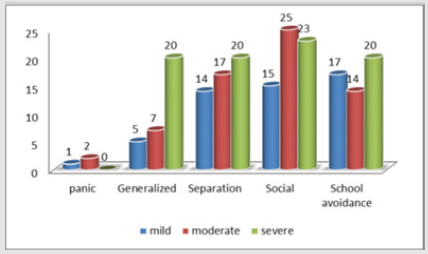
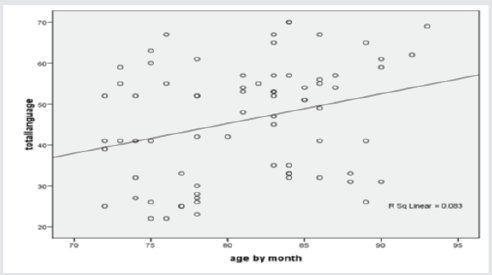
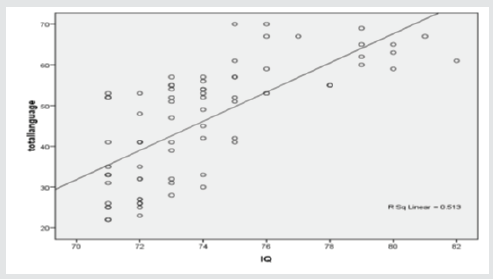
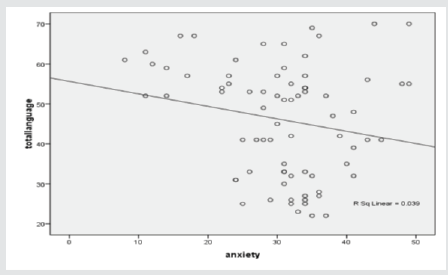
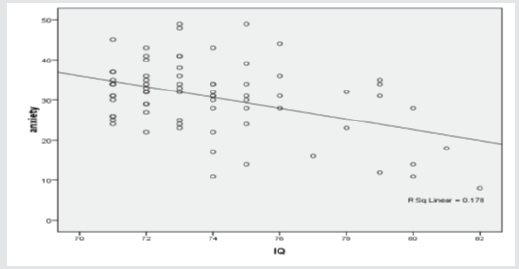
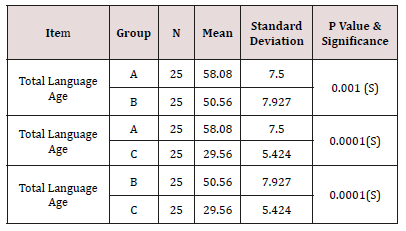
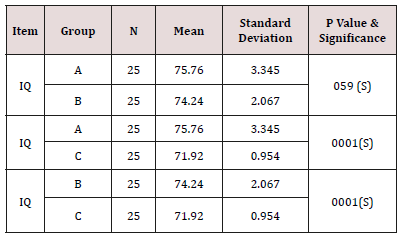
Sex and age distribution for each group regarding mean and SD show no significant difference. Table 1 shows that there is significant difference between the three groups A, B and C (mild, moderate and sever hearing impairment) as regard the total language age. Also, there is significant difference between the three groups A, B and C (mild moderate and sever hearing impairment) as regard the IQ (Table 2). Figure 1 shows the subtypes of Child Anxiety Related Emotional Disorders (SCARED) test regard no. and % shows significant difference between the three groups A, B and C (mild, moderate and severe HI) in generalized and social disorders (p=0.0001). There was no significant difference between the three groups in panic (p=0.353), separation and school avoidance disorders (p=0.191). Figure 2 shows significant positive correlation between all children chronological ages (the three groups A, B and C) and their total language ages (R=0.0288). Figure 3 shows highly significant positive correlation between IQ scores of all children (the three groups A, B and C) and their total language ages (R=0.716). Figure 4 shows negative correlation between total language ages and Child Anxiety Related Emotional Disorders (SCARED) (R=- 0.197). Figure 5 shows significant negative correlation between anxiety scores and IQ total scores (R=0.422) of all children (the three groups A, B and C).

Figure 1: Subtypes of anxiety test regard no. and % shows significant difference between the three groups A, B and C (mild, moderate and sever hearing impairment) in generalized and social disorders (Value=0.0001) and there was no significant difference between the three groups in panic (Value=0.353), separation and school avoidance disorders (Value=0.191).

Lupinepublishers-openaccess-otolaryngology-journal

Figure 2: Shows significant positive correlation between all children chronological ages (the three groups A, B and C) and their total language ages (R=0.0288).

Lupinepublishers-openaccess-otolaryngology-journal

Figure 3: Highly significant positive correlation between IQ scores of all children (the three groups A, B and C) and their total language ages (R=0.716).

Lupinepublishers-openaccess-otolaryngology-journal

Figure 4: Significant negative correlation between total language ages and Child Anxiety Related Emotional Disorders (SCARED) (R=-0.197).

Lupinepublishers-openaccess-otolaryngology-journal

Figure 5: Significant negative correlation between anxiety scores and IQ total scores (R=0.422) of all children (the three groups A, B and C).

Lupinepublishers-openaccess-otolaryngology-journal

Table 1: Significant difference between the three groups A, B and C (mild, moderate and severe hearing impairment) as regard the total language age.

lupinepublishers-openaccess-otolaryngology-journal

Table 2: Significant difference between the three groups A, B and C (mild, moderate and sever hearing impairment) as regard the IQ scores.

lupinepublishers-openaccess-otolaryngology-journal

Discussion

Hearing is critical for normal development and acquisition of language and speech. Hearing impairment in children may affect the development of behavior and language and can cause work related difficulties for adults [15]. Hearing loss brings with it some emotions and psychological problems before acceptance of the loss. These emotions can include denial and anger, as well as a sense of isolation [16]. All children with different degrees of hearing impairment had delayed language development and this can be explained by the interference of hearing impairment with the child detection and recognition of speech as well as the development of auditory skills that are prerequisites of the development of receptive and expressive language skills, as well as speech intelligibility [17]. Such auditory skills include detection, discrimination, recognition, comprehension, and attention and in turn, a delay in the early development of these auditory skills caused by hearing loss negatively impacts child’s ability. To learn and use an auditory-oral language system [18]. Strong positive associations between the degree of hearing impairment and language skills were proved and mild hearing-impaired children had better receptive and expressive language than the other two groups. So, their total language ages were highest than the other two groups. These results were also found by Halliday and Bishop [19] who discovered that even subtle deficits in sound processing can lead to marked impairments in language development and severe hearing impairment in childhood often leads to marked delays and deficits in the acquisition of spoken and written language.

However, children with mild hearing impairment usually attend regular schools and communicate with the others and when these children receive hearing aids, they usually find that school is easier, and their school performance improves. But the other two groups entail not only lowered hearing thresholds, but also distortion of sounds, and this means that language input is partial and degraded in spite of the significant positive correlation between the children chronological ages and their total language ages, the older the child age, the higher the speech perception abilities whatever the degree of hearing impairment and the higher its ability to learn [20]. These results were also found by Halliday and Bishop [19] who discovered that even subtle deficits in sound processing can lead to marked impairments in language development and severe hearing impairment in childhood often leads to marked delays and deficits in the acquisition of spoken and written language. However, children with mild hearing impairment usually attend regular schools and communicate with the others and when these children receive hearing aids, they usually find that school is easier, and their school performance improves. But the other two groups entail not only lowered hearing thresholds, but also distortion of sounds, and this means that language input is partial and degraded in spite of the significant positive correlation between the children chronological ages and their total language ages, the older the child age, the higher the speech perception abilities whatever the degree of hearing impairment and the higher its ability to learn [20]. Children intelligence quotient (IQ) scores and their determinants are generally considered predictors of eventual school performance, quality of life, and psychiatric morbidity. Focusing on the relationships between the cognitive assessment (IQ) and the three groups of the study, it will be found that IQ scores range between below average and dull average in hearing impaired children whatever the degree of hearing impairment with strong positive associations between the IQ score and the degree of hearing impairment as mild hearing impaired children have higher IQ than the other two group which is in agreement with Welch D, Dawes PJ (2007) who discovered that even slight to mild hearing loss (<30db) has been documented to have lifelong effects. Among children with losses <15db HL i.e., whose hearing is considered normal, some research has found that slight fluctuations in auditory perception affect neurocognitive outcomes [21]. Children with severe hearing impairment may have a higher frequency of poor cognitive and academic performance when compared with children with mild or even moderate hearing impairment. Also, the descriptive analysis shows highly significant positive correlation between cognitive assessment (IQ) and total language ages in the hearing-impaired children, the higher the language age the higher the IQ score.

As primary reasons why students with hearing deficits perform, on average, lower than their peers on cognitive assessments such as IQ tests, language and communication skills of these hearing impaired children are often delayed due to their disability and these students’ language skills and reading level are lower than average, which may also affect cognitive skills which was proved by Gallaudet Research Institute (2003) who proved that an estimated 40% of children with hearing loss have additional impairments that affect education and adaptive development and children with hearing impairment may have a higher frequency of language problem and had significantly lower intelligence coefficients when compared with children with normal hearing [22].

The descriptive analysis shows that hearing-impaired children -whatever the degree of hearing impairment fell lonely event if they are mild hearing impaired without significant different between the three groups because children feel that they are different from their peers and start to avoid them. Also limited access to services and exclusion from communication can have a significant impact on everyday life, causing feelings of loneliness, isolation. So, even slight/mild hearing impairment can result in negative consequences for the bio psychosocial development of children who often report feeling lonely, without friends and unhappy in school [23]. Anxiety is a normal human emotion that everyone experiences at times. Many people feel anxious, or nervous, when faced with a problem at work, before taking a test, or making an important decision. Anxiety disorders, however, are different; they can cause such distress that it interferes with a person’s ability to lead a normal life [24].

Hearing impaired children with anxiety disorders had an increased physical and psychological reaction to stress. Their reaction to danger, even if it is a small one, is quicker and stronger [25]. Research question investigated the feeling of anxiety in hearing impaired children and the analysis shows that the three groups has different degrees of anxiety feeling and each group shows number of children with anxiety. Mild hearing-impaired children have less anxiety feeling than the other two groups. Mild hearing-impaired children have less disability and better communication than the other two groups which lead to less stress and anxiety disorder, so the results are expected. Knutson et al. [26] found that the risk for clinically significant emotional distress and anxiety disorder (generalized anxiety disorder, social, separation, school avoidant disorder, and panic disorder; each has its own characteristics and symptoms) was two to four times higher among persons with hearing impairment than among persons with normal hearing. These results were also founded by Castrogiovanni [27] who found that school-aged children with any degree of hearing impairment have academic, social, emotional and behavioral difficulties because hearing impaired children, even with a minor degree, often miss information during play and are a target for bullying (person who is curl to other). Strong negative correlation between language and cognitive scale with anxiety disorder is expected that hearing impaired children, who experience significant disruptions in auditory input, are likely to show delays not only in the production of oral language but in other important aspects of development such as anxiety, emotion and behavioral control. With regard to socio-emotional aspects, Zandberg [28] studies have reported that hearing impaired children encounter difficulties acquiring spoken language, which often affects their communication abilities and social development. In turn, the children’s friendship relations and social feelings and mild hearing-impaired children have better language and cognitive scale than moderate or severe ones and the more the affected the child with hearing impairment the more the behavior problem and anxiety disorder or even other psychological interruptions. In addition to a small samples size, the limitations differed across a variety of factors such as duration of deafness, previous degree of benefit from hearing aids, mode of communication, device settings, and age.

Conclusion

Children with hearing impairment-whatever its degreeface multiple concurrent health, developmental, communicative and exhibit anxiety and emotional problems when they do not understand what is going on around them. Without appropriate interventions, these children are at risk of developing mental health disorders.

Read more about Lupine Publishers Journal of Otolaryngology Please click on below link

https://lupine-publishers-otolaryngology.blogspot.com/


Monday, 3 April 2023

Lupine Publishers| Language Development as An Objective Indicator of Neurodevelopment

 Lupine Publishers| Journal of Otolaryngology


Short Communication

Language development is an objective indicator of developmental and cognitive skills in children. It is also one of the fundamental pillars for a child to acquire autonomy and be able to adapt to social and academic situations. A language delay (including both verbal and non-verbal skills) is an indicator that some aspect of development in young children is not going well. Language delays may be primarily due to four causes: hearing problems, neurodevelopmental conditions, such as the risk of having Developmental Language Disorder (DLD, formerly Specific Language Impairment –SLI-), Intellectual Disability -which at an early age is labeled as Developmental Global Disorder (DGD), or Autism Spectrum Disorder (ASD).

Hearing Problems

According to WHO (2000), 10% of children are born deaf or hard-to-hearing. To a large extent, neonatal hearing screening can detect most of individuals with hearing loss, when there is a genetic or congenital etiology. Birth defects also include hearing loss and congenital deafness; it is estimated that between 2,000 and 6,000 children are born with these conditions each year in Mexico [1]. However, for those individuals with mild or moderate hearing loss, which is not detected by neonatal screening, a delay in language development can be evidenced around eighteen months of age. For example, recurrent otitis media has been known to contribute to language delays in young children under 2 years of age. However, a systematic review informed that it only contributes to phonological deficits in children [2]. Recurrent otitis interferes with the quality of the sound signal received by the child, especially the perception of some phonemes (e.g. fricative and voiceless sounds) but is not directly related to language and communication delays.

Late Talkers (LT)

When hearing loss is excluded as the cause of language delays, the developmental condition to be considered as the most prevalent is “Late Talker” (LT). According to various authors [3-5], this condition exhibits a prevalence of 13.5%, which is not caused by sensory, anatomical or neurological problems. The delay is primary manifested, but not exclusively, in the domain of expressive language (production of gestures, words and sentences) [6,7]. About 70-75% of LTs will catch up to their peers at 36 months of age. But approximately 25-30% of these children will continue with more severe language difficulties, which may evolve into a Developmental Language Disorder (DLD) [8]. Most of the studies about LTs agree that these children produce less than 50 words [9,10] and have not combined words at 24 months [11,12]. In many cases, children under the age of three, who speak little or not at all, go unnoticed at school or clinical services, since initial language delays are generally not considered a major problem that should be addressed by the health and/or education system.

Intellectual Disability (ID)

Neonatal metabolic screening is mandatory in many countries, and since 1998, it has been performed in all newborns in Mexico. This screening can detect congenital or metabolic conditions that can be treated promptly to prevent irreversible conditions such as ID. According to WHO [13], the frequency of congenital anomalies in the world is 2 to 3% in live births. However, there is still a big proportion of children with a risk of ID that go undetected in developing countries. In a recent study, Rizzoli Córdoba [14] reported that 4.2% of children were at risk of delay, being the communication and cognition domains the most affected at 24 months of age. Although the diagnosis of ID cannot be established until the psychometric measurement of IQ around the age of 4, the data suggests that in developing countries, Global Developmental Delay [15] with communication, cognition and other developmental domains affected might be more pervasive due to socio-demographic associated factors, such as the insufficient consumption of nutrients during pregnancy, poorer access to healthcare and screening, among others. According to WHO [13], it is estimated that about 94% of severe congenital anomalies occur in low- and middle-income countries. Moreover, in these countries 39% of children younger than 5 years, might be at risk of not reaching their developmental potential [16].

Autism Spectrum Disorder (ASD)

In the third order of prevalence, language delays in young children may be associated with the risk of presenting ASD, which is characterized by difficulties in the use of social communication (among other features), although said difficulties are not exclusively pragmatic [17]. This condition is frequent in neurodevelopmental disorders being present in about 1% of the children [18]. At least half of the children with ASD who develop language, lag behind their peers in phonological processing, use of gestures, symbolic play and social routines, expressive and receptive vocabulary, grammar (morphology and syntax), and pragmatics (social use of language). Early delays include social difficulties to establish joint attention with adults and peers, lack of response to their names, problems initiating social play and a reduced production of gestures and symbolic play. Said delays, specifically those with difficulties to establish joint attention and the lack of response to their own names, commonly mislead parents into falsely suspecting their child might have hearing problems. Moreover, delays on social and communicative outcomes, are sometimes unseen by health and education professionals.

What is recommended?

Although neonatal metabolic and hearing screenings are good sources for early detection of some conditions that affect child development, one of the greatest challenges for developing countries is to establish screening models that are useful for early detection of language delays before 30 months of age. No recommendations exist for screening language delays at these ages, being early identification a big challenge. An implication of this review is twofold: First, typical developmental language benchmarks of children under 30 months of age should be well known among primary health care clinicians, pediatricians, otolaryngologists, neurologists and preschool educators in order to early identify language delays. Second, identification of language delays under three years of age can serve as an important step forward for public health, because language can just be a symptom of a developmental condition. Finally, there is sufficient evidence supporting the effectiveness of treating language delays and disorders in children [19]. The development of expressive language, mainly the onset of first gestures, words and phrases is a relevant clinical tool, since its early appearance is associated to better long-term life outcomes and to better prognosis [20]. Early identification can help them receive a diagnosis and reduce the negative impact of any of these conditions throughout life.

Read More About Lupine Publishers Journal of  Otolaryngology Please Click on Below Link: https://lupine-publishers-otolaryngology.blogspot.com/

Lupine Publishers| Allegric Rhinitis: Pearls of Wisdom

 Lupine Publishers| Journal of Otolaryngology


Abstract

Statement of The Problem

This provides an overview of Allergic Rhinitis and its management. It is very useful for students of Rhinology and clinicians managing this disease. It introduces them to a systematic approach of assessing allergic rhinitis patients which is very commonly found in most populations and causes considerably morbidity. Allergy per se is a very difficult subject to master and it is with great perseverance one can treat patients suffering from this condition. The cornerstone of managing a patient of allergic rhinitis is first and foremost obtaining a good history. This is to be followed by a thorough examination and investigations. The general practitioner is the first expert to be involved in management of allergic rhinitis patient followed by specialists otorhinolaryngologists, and finally by allied healthcare personnel. Inflammation of nose and paranasal sinuses are characterized by two or more symptoms-namely, either nasal blockage; obstruction; congestion or nasal discharge. Associated symptoms include facial pain; pressure and either reduction or loss of smell. Certain diagnostic endoscopic signs of nasal polyps and or mucopurulent discharge and or mucosal oedema in the middle meatus and or CT changes of mucosa within the ostoemeatal complex, and or sinuses are seen. Definitions, aetiologies, clinical presentations, diagnosis; prognosis and management of allergic rhinitis is dealt with. Common allergens causing the disease are mentioned, pathophysiology and classification of allergic rhinitis is discussed in detail. Different types of allergen testing are highlighted along with their specific role and uniqueness. Principles of immunotherapy in treatment of allergic rhinitis are discussed here. Health effects of allergic rhinitis along with its impact on physical quality of life is mentioned. The basic idea of this presentation is to improve diagnostic accuracy by promoting appropriate use of ancillary tests like nasoendoscopy, allergy testing, computed tomography etc. and reduce inappropriate antibiotic use. The basic treatment plan of allergic rhinitis is according to the severity and duration. It consists of allergen avoidance, pharmacotherapy, allergen immunotherapy and surgery which has limited role.

Keywords: Allergy; Rhinitis; Pollens; Molds; Insects; Penicillium; Cladosporium; Hypersensitivity; Histamine; Hay fever; Rose Fever; Transverse Nasal Crease; Rhinorrhea; Allergic Salute; Allergic Shiners (Dennie -Morgan Lines); Cobblestone Appearance Of Oropharynx; Scratch Test ; Intradermal Test; Patch Test; Rhinomanometry; Antihistaminics; Immunotherapy; Topical Nasal Steroids; Cochrane; Mast Cell Stabilizer

Abbreviations: IgA: Immunoglobulin A, IgE: Immunoglobulin E, AR: Allergic Rhinitis; NAR: Non-Allergic Rhinitis; ARIA: Allergic Rhinitis & its Impact on Asthma; Greater than; Less than; TM: Tympanic membrane; NPT: Nasal Provocation Test; n NO: Nitrogen in Nitric Oxide; PNS: Para Nasal Sinuses; OM: Occipito Mental; CECT: Contrast Enhanced Computerized Scan; L.A: Local Anaesthesia GA: General Anaesthesia; PQLI: Physical Quality of Life Index; WAO: World Allergy Organization; SCIT: Subcutaneous immunotherapy; SLIT: Sublingual immunotherapy; AIT: Allergic Immunotherapy; e-Health: Electronic Health; DBPC: Double Blind Placebo Controlled; RCT: Randomized Controlled Trial; FDA: Food & Drug Administration federal agency in USA; SMD: Submucous Diathermy; IT: Inferior turbinate; FESS: Functional Endoscopic Sinus Surgery; OMC: Osteo Meatal Complex

Introduction

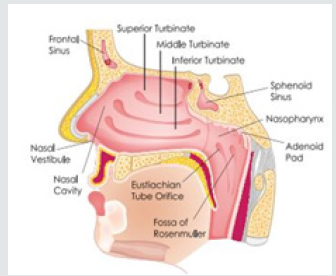
Rhinitis is a common presentation in E.N.T. clinics across the globe & allergy compounded with it causes even more difficult to treat for the clinician. This article is useful and handy for students and clinicians managing Allergy& Rhinitis. There is something in this for everyone-General Practitioners, Otorhinolaryngologists, Allergologists, Rhinologists and Allied Healthcare personnel. Special computer based newer modalities of investigations are highlighted in this which helps in assessing the nasal function of the affected patient. It’s very common to sometimes feel like sneezing & have running nose but please see a doctor if the feeling persists and do take care of yourself. Allergic Rhinitis is made so easy to comprehend. Nasal function includes temperature regulation, olfaction, humidification, filtration and protection [1]. Nasal lining contains secretion of IgA, proteins and enzymes. Nasal cilia propel the matter towards the natural ostia at frequency of 10-15 beats; min. Mucous moves at a rate of 2.5 -7.5ml. per min (Figure 1). Rhinitis is the presentation of two or more nasal symptoms for more than one a day namely Nasal congestion; obstruction, Rhinorrhea, Sneezing, Itching, Impairment of smell. Rhinitis occurs most commonly as Allergic Rhinitis. Non-infectious rhinitis has been classified as either Allergic or Non-Allergic Rhinitis. Allergic Rhinitis affects 15-30% of population with a wide geographic variance. It is more common in children & adolescents. 50% of all rhinitis in E.N.T. Clinics is Allergic Rhinitis. Allergic Rhinitis is defined as immunologic nasal response, primarily mediated by IgE. Non-Allergic Rhinitis is defined as rhinitis symptoms in the absence of identifiable allergy, structural abnormality or sinus disease. So, Allergic Rhinitis is an inflammation of the nasal mucosa, caused by allergen. It is the most common Atopic allergic reaction.

Figure 1: The Human Normal Eye Anatomy.

Lupinepublishers-openaccess-otolaryngology-journal

Aetiology

Aetiology is classified as Precipitating factors and Predisposing factors. Precipitating factors are classified into aerobiological flora and nasal physiology. Aerobiological flora are Allergens present in the environment, House dust & dust mites, Feathers, Tobacco smoke, Industrial Chemicals and Animal dander. Nasal physiology are Disturbances in normal nasal cycle. Predisposing factors are classified into genetic, endocrine, psychological, focal sensitivity tests, infections, physical, age & sex, IgA deficiency and common allergens [2]. Genetic factors indicate towards Multiple gene interactions are responsible for allergic phenotype. Chromosomes 5,6,11,12 & 14 control inflammatory process in atopy. 50% of AR pts. Have positive family history. Endocrine factors are Puberty, Pregnancy; Postpartum stages and Menopause. Infections such as Fungal. Physical factors are Degree of pollution of air, Humidity & Temperature differences, Temperature changes. Common allergens such as pollens (Spring tree pollens (Maple ; Alder ; Birch), Summer grass pollen (Blue grass, Sheep sorrel etc.), Autumn Weed pollen (Ragweed)), molds) Penicillium, Cladosporium etc.), INSECTS (Cockroaches, Houseflies, Fleas, Bedbugs) (Figure 2). Rhinitis is the presentation of two or more nasal symptoms for more than one a day namely Nasal congestion; obstruction, Rhinorrhea, Sneezing, Itching, Impairment of smell. Rhinitis occurs most commonly as Allergic Rhinitis. Non-infectious rhinitis has been classified as either Allergic or Non-Allergic Rhinitis. Allergic Rhinitis affects 15-30% of population with a wide geographic variance. It is more common in children & adolescents. 50% of all rhinitis in E.N.T. Clinics is Allergic Rhinitis [3]. Allergic Rhinitis is defined as immunologic nasal response, primarily mediated by IgE. Non-Allergic Rhinitis is defined as rhinitis symptoms in the absence of identifiable allergy, structural abnormality or sinus disease. So, Allergic Rhinitis is an inflammation of the nasal mucosa, caused by allergen. It is the most common Atopic allergic reaction.

Figure 2:

Lupinepublishers-openaccess-otolaryngology-journal

Pathophysiology

Immunoglobulin IgE mediated type 1 hypersensitivity response to an antigen (allergen) in a genetically susceptible person. IgE is produced from plasma cells & the process is regulated by T-Suppressor lymphocytes or T-helper cells. IgE has affinity for mast cells & basophils and gets fixed to the surface of mast cells by its Fc end. Type 1 Hypersensitivity causes local vasodilation & increased capillary permeability. There is edema of the submucosal tissue by allergic fluid followed by infiltration by eosinophils and plasma cells leading to vascular dilatation which causes engorgement of the inferior turbinates and there is increased activity of seromucinous glands [4]. Histamine exerts its pharmacologic effect on smooth muscle, vascular endothelium & mucous glands. Number of IgE molecules has been estimated as 5300 to 27,000 in non-allergic subject & 15,000 to 41,000 in allergic subjects. Hypersensitivity of the host depends on antigen dose, frequency of exposure, genetic make-up, and hormone activity of the body.

Classification

Allergic Rhinitis is currently classified into intermittent and persistent. In intermittent AR the symptoms are present less than 4 days per week and less than 4 weeks per year [5]. In persistent AR the symptoms are present for greater than 4 days per week and for greater than 4 weeks per year. The severity of AR is classified into mild and moderate to severe. Mild AR doesn’t interfere with daily activities or doesn’t produce any troublesome symptoms. Moderate to severe AR interferes at least with one of the factors such as impaired sleep, hampered daily activities/work, school/ sick absenteeism, also produces troublesome symptoms. AR is formerly classified into seasonal and perennial based on the allergens. Seasonal Hay Fever, misnomer- no hay/no fever. Summer Cold caused by viruses causing URTI. Rose Fever seen usually in Indian Subcontinent (colorful/fragrant flowering plants). Perennial Allergens present throughout the year.

Read More About Lupine Publishers Journal of  Otolaryngology Please Click on Below Link: https://lupine-publishers-otolaryngology.blogspot.com/

Monday, 13 February 2023

Lupine Publishers| Parental Perspective Pre- and Post-Cochlear Implantation in Tanzania

 Lupine Publishers| Journal of Otolaryngology


Abstract

Background: The National Cochlear implant program in Tanzania was established in the year 2017. Prior to this, very few children with Profound Sensorineural Hearing Loss benefited from this surgery abroad through grants from the Ministry of Health. Since the establishment of the local program, there is an increased awareness amongst parents’, and many are seeking to benefit from this initiative. The challenge, however, remains the measurements of expectations of the parents and the actual outcomes after the surgery. This is mainly due to the perspective of the parents which comes about from their understanding of the whole process of surgery and the rehabilitation after surgery that determines expected outcomes.

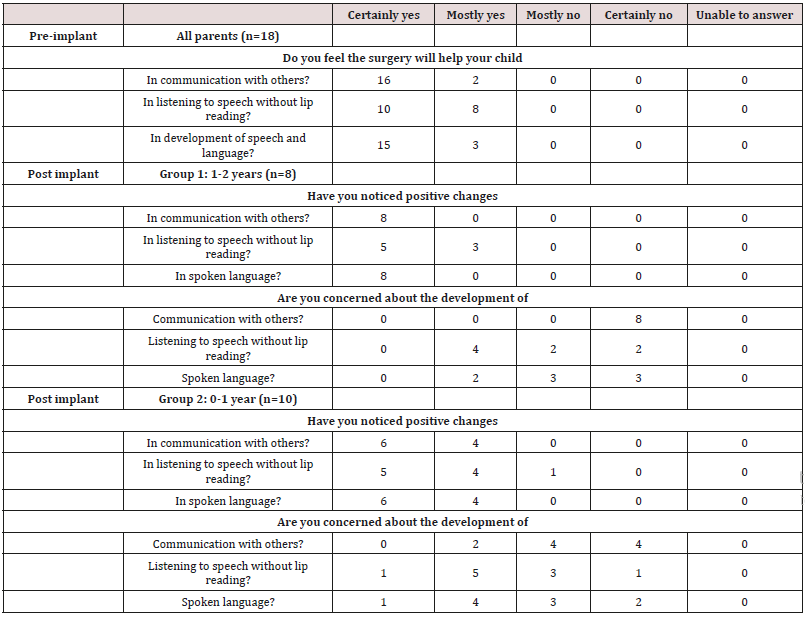
Aim: This study aims to establish a direct link between the parental perspective pre and post cochlear implant surgery. Participants: A total of 18 children between ages of 3 years and 6 years, divided in two groups, G1=children who have been implanted for 1-2 years (n=8) and G2=children who have been implanted for 0-1 years (n=10).

Method: A non-standardized closed ended questionnaire with questions on perspectives of three domains i.e. Communication, Listening Skills and Speech and Language development was administered to the parents, pre-implantation and 1year post implantation for G1 and 6 months post-implantation for G2.

Results: In all of the 18 cases, pre-implantation expectations were higher than the actual perspectives post-implantation. However, G1 parents had higher scores than G2 i.e. The preimplantation expectations were somehow met after 1 year of implantation.

Conclusion: The study demonstrates the ability of Cochlear Implantation to meet the parental expectations in the 3 outcome domains i.e. communication, listening skills and the development of speech and language. However, this is subject to the time frame post implantation i.e. the longer the time, the better the pre-implant perspectives are met.

Introduction

Cochlear implants, as prosthetic devices designed to replace the function of the inner ear, have become a widely used intervention method for people with severe to profound sensorineural hearing losses who gain little or no benefit from conventional hearing aids. Since their approval by the United States Food & Drug Administration (FDA) in 1990 for children as young as the age of two [1], pediatric cochlear implantation has become an increasingly routine procedure in numerous countries worldwide as a management option for permanent childhood hearing loss. The foundation of cochlear implant programs for these patients began in developed countries and over time the devices, surgical methods, and rehabilitation programs improved, which thus led to their initiation in developing countries. Prior to the commencement of locally performed cochlear implant surgeries in Tanzania, candidates for implantation had to travel to other countries for the procedure. This was a costly and intensive process for privately and government funded patients alike, a factor that fueled the need for a local program. In 2017, six children were implanted for the first time at Muhimbili National Hospital in Dar es Salaam, Tanzania, and to date a total of thirty patients have been implanted altogether. Over the time, since the first surgeries, local professionals and rehabilitation centers have become more proficient in evaluating and caring for these patients, and an increased awareness of hearing impairments as a whole has been observed. Perceptions regarding cochlear implants of health professionals, the general public, and in particular parents of implantees and potential candidates have also been seen to change, becoming more informed and understanding. Candidacy for cochlear implants is assessed on a case-by-case basis, with referrals for assessment primarily made according to candidacy criteria set out by the Cochlear Implant Group Tanzania [2].

Currently, the indications for cochlear implantation from an audiological perspective are as follows; bilateral severe to profound sensorineural hearing loss (typically >90dBHL at 2kHz and onwards), limited benefit from hearing aids, and the absence of contraindications for implantation. The candidates undergo thorough examinations by audiologists, speech-language pathologists, radiologists, otorhinolaryngologists, pediatricians, social services, psychologists, and other professionals where necessary. This process is not unlike guidelines in other countries with cochlear implant programs, and the National Institute for Health and Care Excellence (NICE) in the United Kingdom make similar recommendations, although in 2018 with suggestions from the British Cochlear Implant Group (BCIG) updated the eligibility criteria to define severe to profound deafness as only hearing sounds greater or equal to 80dBHL at two or more frequencies between 500Hz and 4kHz [3]. These recommendations and procedures differ slightly between countries and programs and may also change depending on whether the candidate is privately or publicly funded. Outcomes for pediatric cochlear implantation worldwide have encouraged their use as an intervention method for hearing impairments, reinforced by their widespread success and relatively low rate of complication [4]. A prospective longitudinal study of spoken language development in children implanted before the age of five, conducted over a period of three years, revealed significant improvements in spoken language performance (comprehension and expression) particularly over the first three years of device use. Greater improvements were seen in younger children and children with more residual hearing prior to implantation, although in all children outcomes surpassed the improvements predicted by their pre-implant assessment baseline scores [5]. A retrospective study evaluating the outcomes of cochlear implantation in relation to age of implantation conducted by Govaerts et al. [6] studied children with congenital deafness who were implanted before the age of six with a multichannel cochlear implant, evaluating them using Categories of Auditory Performance (CAP) scores and correlating outcomes with age of implantation.

All children demonstrated an increase in scores postimplantation, appearing to benefit from the device. The study identified that implantation between the ages of two and four always resulted in age-appropriate CAP scores after three years of implant usage, while implantation before the age of two years always resulted in immediate normalization of CAP scores. Implantation after the age of four, however, hardly resulted in normal CAP scores, signifying the importance of early intervention in preventing losses of auditory performance following the procedure, and only 20% to 30% of these children were eventually fully integrated into mainstream primary schools [6]. While this study reinforces the significance of age at implantation as a predictor of auditory and language outcomes, it also demonstrates the efficacy of cochlear implants as intervention for pre-lingually deafened children; even in patients implanted later than recommended, significant benefits were observed and a percentage of these patients developed the ability to integrate into mainstream education.

An integral part of the process towards pediatric implantation is continued counselling of parents of patients regarding their child’s impairment, amplification, the device, the surgery, rehabilitation, and of their expectations and outcomes. Parental expectations prior to implantation are considered a key factor in the process of candidacy assessment, so much so that they have been used previously as a criterion in the evaluation of the child’s eligibility for an implant [7]. Without the appropriate counselling and guidance, parents can be led to believe that the implant will work on its own, and that the child will be able to hear and speak shortly after switch-on [8]. Kampfe et al. [7] identified that these expectations can be influenced by the fact that the device is very expensive and high-tech, leading to unreasonable expectations. They also suggest that these expectations can also be partly due to the influence of the media, which presents the implant as an immediate change to hearing – often showcasing only significant reactions of patients in response to sounds [7]. Twenty-six years later, this statement still holds truth, as videos of ‘sensational’ reactions to sounds by implantees are spread on social media and on the news, particularly in countries where programs are in their infancy. These can lead to unrealistic expectations, subsequent stress, and disappointment when their expectations are not met. Families’ stress in relation to cochlear implants has been looked at in numerous studies and is due to a number of sources [9]. One such source is the surgical procedure itself. Although the procedure is quite safe with a low chance of complications [4], it is still a surgical procedure that has its risks, and this results in some anxiety or worry experienced by the parents [9]. It is vital that the procedure is explained appropriately to parents, and sources of clear information about it and the risks it may pose are made easily available. Another source of stress, as previously identified, is the parent’s perceptions when their expectations are not immediately met [10]. Over time this lessens as a stressor particularly as children begin to show improvements. In order to better understand parental expectations, it is important for clinicians to be aware of the reasoning behind their choice in going forward with implantation. A study by Sach & Whynes [11] interviewed 216 parents of children implanted at the Nottingham Pediatric Cochlear Implant Programmes using a mix of structured and open-ended interview formats. When asked about the decision to implant their child, 38% of parents stated that the benefit they expected was ‘improved hearing’, 23% anticipated psychosocial and behavioural benefits, 19% mentioned greater opportunities later in life while 16% cited improvements in speech [12].

In most cases outcomes were reported to be in line with their expectations, and 93% of interviews mentioned ‘improved hearing’ as an outcome of implantation. When interviewed about their expectations, 5% of parents admitted to having high and unrealistic expectations, while 16% mentioned that initial expectations had been low. With its large sample size and extensive data collection, this study has provided an insight into parental perspectives of cochlear implantations and the effect various factors can have on stress, expectations, and outcomes [12]. A study by Hyde et al.

investigating parental expectations and [13] experiences related to their children’s outcomes with implants, surveyed 247 parents in eastern Australia, and compared reports of pre-implant expectations with post-implant outcomes. Findings from this study indicated that while parents had relatively high expectations, these had mostly been met by their children’s outcomes post-implantation. 10% of parents, however, reported that expectations had not been met. Furthermore, the study established that professionals generally did a good job in providing parents with realistic expectations prior to implantation and during rehabilitation [13].

A child’s home and family environment can lead to variations in outcomes seen in implanted children [10,14,15]. Perspectives of parents and guardians towards the device and their children can influence development of the implanted child, as they can affect factors such as the level of support given at home, roles undertaken by family members in therapy, their interactions with the child, and organization and control in homes [14]. Amongst outcome predictors such as duration of deafness and learning style, family structure and support has been identified as a significant predictor of outcome following cochlear implantation as demonstrated by use of the Nottingham children’s implant profile (NChIP) to assess children, family, and support services prior to implantation [16]. Various studies into predictors of spoken language development and good outcomes with cochlear implantation have supported these findings. Better outcomes have been associated with lower ages at implantation [17], early identification of hearing impairment, number of active electrode channels effectively ‘mapped’, and bilateral implantation when compared with unilateral or bimodal stimulation [17]. Boons et al. [17] divide predictors of language development in pediatric cochlear implant recipients into three categories:

a) Auditory factors such as age of implantation or identification,

b) Child-related factors such as the presence of other disabilities and etiology of hearing loss, and

c) Environmental factors such as parental involvement and socioeconomic status.

A retrospective study into these factors involving 288 prelingually deaf children with cochlear implants was conducted through the use of numerous validated outcome measures and standardized questionnaires. The study identified that amongst the factors that can influence outcomes of cochlear implantation, environmental factors related to parental characteristics played an important role. One such factor was the communication mode between parents and their child, as participants were asked whether communication was oral, total (using signs along with spoken language), or bilingual. Another factor looked at whether the parents’ involvement in the rehabilitation process was ‘sufficient’, as it would be in a well-functioning family, or ‘insufficient’ if parents were seen to be unmotivated or unable to fulfill commitments in relation to the child (Table 1).

Table 1: The DR lesion types descriptions.

lupinepublishers-openaccess-otolaryngology-journal

Boons et al. [17]acknowledge the oversimplification of these classifications and have identified that while it is not a validated measure of parental involvement it can suggest an undesirable attitude of parents towards the child’s impairment and rehabilitation. 96% of parents in this study were seen to be sufficiently involved in their child’s rehabilitation, but in 4% of cases issues were mentioned highlighting insufficient involvement in the process. This factor did not show a significant variation in outcomes in the first two years following implantation, but after a certain amount of time the study identified that the advantages and possible positive effects of a supportive environment become measurable. Multilingualism in communicating with the child also consistently correlated with lower language scores over time and was accompanied by low parental involvement in rehabilitation. These findings suggest that the effects of environmental factors increased as time went on and were more measurable after two years post-implantation [15,17] also reported more significant individual variations in outcomes in children over time and found that levels of parental involvement in the rehabilitation process was associated with children’s linguistic ability four years after implantation [15]. In comparison, higher language achievement in implanted children was associated with parents reporting lengthier and detailed processes in deciding about the implant pre-implantation and who showed a higher level of involvement and commitment with the child’s rehabilitation post-implantation [15]. This correlation was also identified by Niparko et al. [5], who found higher parent-child interaction scores being significantly associated with greater rates of increase in comprehension and expression of spoken language [5]. These findings are supportive of the conclusion that variability in parental involvement, quality and quantity of parent-child interactions, and commitment to rehabilitation are significant factors in outcomes of children with cochlear implant and can lead to significant measurable differences in spoken language development after longer periods of time.

Read More About Lupine Publishers Journal of  Otolaryngology Please Click on Below Link:

https://lupine-publishers-otolaryngology.blogspot.com/