Showing posts with label dairy and veterinary journals. Show all posts

Friday, 30 August 2019

Lupine Publishers | Amaranth - A Functional Food

Lupine Publishers | Journal of Veterinary Science

Abstract

Amaranthus, collectively known as amaranth or pigweed, is a cosmopolitan genus of herbs. Approximately 60 species are presently recognized, with inflorescences and foliage ranging from purple and red to gold. Because of recent concerns about global food security and malnutrition scientists all over the world are engaged in exploring the plant biodiversity to broaden the crop list. Due to described agricultural advantages, unique nutritional properties and versatile usage, grain amaranth (Amaranthus spp.) has gained increased attention. Amaranth seeds have a high content of storage proteins (14-19%) whose amino acid composition is rich in lysine and methionine, two limiting amino acids in cereals and legumes, respectively. Amaranth (Amaranthuscaudatus), quinoa (Chenopodium quinoa) and ka~niwa (Chenopodiumpallidicaule) are originally from the Andes of South America where they have remained a staple since Pre-Hispanic times. Due to its good protein quality which is comparable to casein, high fibre content and bioactive compounds, and these gluten-free grains are formidable food alternatives for celiac patients and/or those suffering from gluten-sensitivity.


Introduction


Amaranthus is recognized as a promising plant genus that may provide high-quality protein, unsaturated oil, and various other valuable constituents. Amaranths are valued as leaf vegetables and cereals.It is noted not only for its environmental hardiness but also for the excellent nutritional quality of its seeds (Bejosano, [1]). Due to its unique nutritional properties and versatile usage, grain amaranth (Amaranthus spp.) has gained increased attention. Amaranthus, collectively known as amaranth or pigweed, is a cosmopolitan genus of herbs. Approximately 60 species are presently recognized, with inflorescences and foliage ranging from purple and red to gold. Most species are considered as opportunistic weeds and only three of them, Amaranthuscaudatus, Amaranthuscruentus and Amaranthushypochondriacus, are commonly consumed by humans as a seed or used as a functional ingredient in foods (Gamel). Amaranth is a pseudocereal because of its flavor and cooking similarities to grains. The word “Amaranth” comes from the Greek amarantos, the ‘one that does notwither’ or the never-fading flower. It contains high content of fibre and bioactive compounds Repo-Carrasco [2], these gluten-free grains are formidable food alternatives for celiac patients and/or those suffering from gluten-sensitivity. It also provides a good source of dietary fiber and dietary minerals such as iron, magnesium, phosphorus, copper, and especially manganese. Amaranth was recognized as gluten-free and is therefore suitable for diets of celiac disease patients (Fasano and Catassi [3]; Thompson [4]. The seeds are eaten as a cereal grain. They are ground into flour, popped like popcorn, cooked into porridge, and made into a confectionery called alegría. The leaves can be cooked like spinach, and the seeds can be germinated into nutritious sprouts. The leaves are variable in size, green or purple, with slender stalks. These are alternate, usually simple, with entire margins and distinct markings, depending on species. Amaranth species are also cultivated and consumed as a leaf vegetable in many parts of the world. In India the leaf is added in preparation of a popular dal called thotakurapappu. In China the leaves and stems are used as a stir-fry vegetable. In East Africa amaranth leaf is known as mchicha- “a vegetable for all”. The seeds are used as a source of lipids and a material for the production of flour, flakes, popped seeds, several sorts of bread (Januszewska-Jóźwiak and Synowiecki, [5]) and confectionery Sindhuja [6].

Chemical Composition and Nutrition Value

The small seeds are usually shiny black in colour, in contrast to those of grain types which are cream-coloured. There are up to 3 000 seeds per gram. The tiny, lens shaped seeds are usually pale in colour.A seed of grain amaranth is on average composed of 13.1 to 21.0% of crude protein; 5.6 to 10.9 % of crude fat; 48 to 69% of starch; 3.1 to 5.0% (14.2 %) of dietary fibre and 2.5 to 4.4 % of ash Grobelnik [7]. Enzyme inhibitors and allergens are known to be present in cereals. Protein isolated from wheat, rice, maize and barley may cause allergic reaction, a gliadin fraction isolated from wheat causes celiac disease. But these components are not available in pseudocereals and legumes such as soybean and amaranths Kuhn [8]. Furthermore, amaranths contain dietary fibre in high proportion, which improves lipid metabolism. Its nutritional value is mainly due to its protein fraction (Gorinstein [9] Oleszek [10]). Amaranth, a pseudocereal, is an unconventional and interesting source of proteins. Its seeds contain a large amount (14-17%, w/w) of high nutritional quality proteins (Bolontrade [11]), whose amino acid composition is rich in lysine and methionine, two limiting aminoacids in cereals and legumes, respectively [4,5]. Amaranth’s balanced amino acid composition is close to the optimum protein reference pattern in the human diet according to FAO/ WHO requirements. Protein is high in amino acid lysine but low in leucine. This is the opposite of most other grains. Thus mixing would form an almost perfect protein (Good ratio of unsaturated fat to saturated fat that is beneficial for hypertension and coronary heart disease).The nutritional quality of amaranth seed is high because of its high protein content and balanced essential amino acid composition (Oszvald [12]). Moreover, amaranth grain protein is rich in lysine, which is usually deficient in cereal grains. Proteins have high digestibility (approx. 90%) and are rich with lysine (4.9 to 6.1g/100 g protein) which usually appears in grains as a limiting amino acid. This high lysine concentration is complemented with elevated levels of sulphur amino acid content (2 to 5%), which is higher than that measured in the most important legumes (1.4% on average), such as peas, beans and soybeans (Gorinstein and Moshe, [13]). Leucine, isoleucine, valine, the limiting amino acids in amaranth, are not considered a serious problem since they are found in excess in most common grains, and therefore, amaranth is well suited for blending with cereals.The main protein fractions present in the amaranth grain are albumins, 11S-globulin, P-globulin, and glutelins .
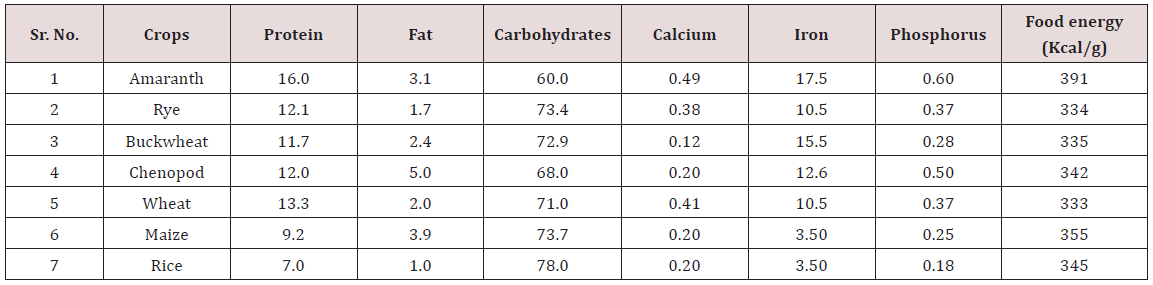
Amaranth starch is of promising use. The features of starch like high solubility and digestibility are due to its uniquely small size which is about one-tenth the size of cornstarch and therefore offer new possibilities for food processing, pharmacology and cosmetics Resio [14]. The total mineral content has been reported to be generally higher than that observed in cereal grains, especially calcium and magnesium Alvarez-Jubete [15]. On the other hand, it is characterized by higher dietary fibre and lipid content than most cereals and also contains between 50 and 60g of starch per 100 g of grains Alvarez-Jubete [15]. Amaranth has recently become a focus of interest for its high nutritive values and great potential as a functional food given its cholesterol-lowering effect observed in animal models Mendonça [16]; Plate &Arêas [17]. According to Becker [18] seed of grain amaranth is a rich source of iron (72 to 174mg/kg), calcium (1,300 to 2,850mg/kg), sodium (160 to 480mg/kg), magnesium (2,300 to 3,360mg/kg) and zinc (36.2 to 40mg/kg) as well as vitamin riboflavin (0.19 to 0.23mg/100g of flour) ascorbic acid (4.5mg/100g), niacin (1.17 to 1.45mg/100g), and thiamine (0.07 to 0.1mg/100g). Amaranth oil is reported to have high levels of tocotrienols and squalene, which are natural organic compounds that are involved in the metabolism of cholesterol and that could play an important role in lowering LDL-cholesterol in blood. Amaranth lipid is unique with high squalene content ranging from 2.4 to 8.0% of the total oil contents (Rodas and Bressani, [19]. A comparative account of nutritive value of grain amaranths and other cereals is presented in Table 1. On the average pale-seeded amaranths contain 8% of dietary fibre and black coloured 16% with soluble fibre rate of 30 to 40% and 18 %, respectively (Schnetzler and Breene [20], Tosi [21] reported 14.2% of dietary fibre in the A. cruentus flour (8.1% soluble, 6.1% insoluble).
Table 1: Comparative account of nutritive value of grain amaranths and other cereals.
Lupinepublishers-openaccess-Dairy-Veterinary-Sciences

Health Benefits

Amaranth leaves are a good source of energy in the body sicne the crude protein content in the leaves ranges is very high i.e.20 to 32%, on a dry weight basis. Amaranth leaves are a good source of elements like manganese, iron, copper, calcium, magnesium, potassium and phosphorus necessary to maintain adequate electrolyte balance in the body. People suffering from gluten intolerance or those suffering from celiac diseases can get daily recommended dose of protein from amaranth greens. Compared to other plant sources, such as wheat and rice amaranths are glutenfree and contain 30% more protein with complete set of amino acids. It can improve the digestive system and reduce constipation due to the high content of dietary fibre which is three times that of wheat. The protein in the leaves helps to reduce insulin levels in the blood and also releases a hormone that lessens hunger pranks and prevent over eating. One of the key health benefits of vegetable amaranth leaves is their cholesterol-lowering capacity. Due to the high fibre content, this leafy vegetable is effective in reducing LDL levels in the blood and promotes weight loss. Tocotrienols, a type of vitamin E available in vegetable amaranths, also contributes to its cholesterol lowering ability. Iron-rich (five times that of wheat) red amaranth leaves promote coagulation and increase haemoglobin content and red blood cell counts. It is also an excellent source of folic acid which is necessary to increase the blood haemoglobin level. Amaranth leaves are excellent dietary source of phytosterols that lowers blood pressure and prevents heart ailments including stroke. The presence of lysine (anessential amino acid) along with vitamin E, iron, magnesium, phosphorus, potassium and vitamin C helps to fight against free radicals responsible for ageing and formation of malignant cells which helps in fighting against cancer. The high calcium present in amaranth leaves (two times that of milk) is helpful to reduce risk of osteoporosis and other calcium deficiency- related disorders. Amaranth leaves are excellent source of β-carotene. Inclusion of amaranth leaves in the daily diet can help to prevent vitamin A deficiency. It was reported that the incidence of blindness in children due to malnutrition has been reduced with the consumption of 50-100 g of amaranth leaves per day Das [22].

Bioactive Components and Medicinal Properties

The health benefits of amaranths have always been recognised in homoeopathic and Ayurvedic medicines. Both the seeds and leaves of amaranth are used as herbal remedies and have nutraceutical value. Amaranth protein contains a low proportion of prolamins which makes it a safe ingredient for people with celiac disease and recent studies have shown that amaranth peptides displayed antihypertensive and anti-inflammatory activity. Peptides contained in amaranth seed proteins have shown various biological activities. Some studies using amaranth flour and protein isolates reported the occurrence of peptides with biological activities such as anti-hypertensive, anti-oxidant, anti thrombotic,anti-proliferative among others. Amaranth is ranked as one of the top five vegetables in antioxidant capacities Walter [23]). It contains ample amount of bioactive components, such as L-ascorbic acid, betacarotene, polyphenol, anthocyanins and lutein Walter[23]. It has been used as an antipyretic to reduce labour pain in Indian and Nepalese traditional medicine, as astringent, diuretic, haemorrhage and hepatoprotective agent (Kirtikar and Basu [24]. Amaranths have also been used to treat bladder distress, piles, toothache, blood disorders and dysentery (Madhav [25]. The health beneficial antioxidant activities are related to their bioactive components. The cholesterol- lowering effects in amaranth may be due to unsaturated fatty acids. Being a good source of magnesium which is effective to relax blood vessels and prevent constriction and rebound dilation, it helps to fight migraines. Cooking had no deleterious effect on total bioactive component except for the reduction of anthocyanins content. Home cooking increases the antioxidant activities and the contents of arytenoids, especially by steaming. Both simmering and blanching increased the betacarotene and lutein in the cooked amaranth (Han and Xu [26].

Food Uses of Amaranth

Vegetable amaranths are widely consumed as leafy vegetables in India and other Asian and Southeast Asian countries, also in African countries where as in North and South America grain amaranths are widely consumed. Amaranth leaves are a good source of high amount of protein, vitamins, minerals and dietary fibre. Chopped plants can also be used as forage for livestock. Amaranth seed oil has been reported to contain large amount (7-8% and 11%) of squalene which is often used in cosmetics and medicine, where olive oil contains only 1% of squalene. Amaranth oil is also a rich source of tocotrienols which is very effective to lower the LDL cholesterol (Becker [27] Plate and Areas [17]. In India A. hypochondriacus is known as the ‘king grain’ and is often popped to be used in confections. Amaranth grain may be processed in various ways, like grains can be popped, flaked, extruded and ground into flour. Popped amaranth can be enjoyed on its own or can be served with milk or soymilk and fruit for a healthy breakfast. Amaranth can be used as a substitute in porridge, stirred into soups; Amaranth grains can be cooked whole in a pot, rice cooker or pressure cooker to prepare breakfast porridge or savory ‘polenta’. The grain flour or flaked grains are combined with wheat or other flours to make cereals, cookies, bread and other baked goods. As per general recommendation, amaranth grain flour should contribute only 10-20% of the mixed flour blended with wheat flour. But it has been shown that amaranth grain flour blended up to 50-75% of the mixed flour, it will still retain functional properties as well as flavour.

Processing

Amaranth is cleaned with screens, by winnowing, with a fan or other blowing device. After harvesting, it is important to further dry the crop to ensure it won’t spoil during storage. It can be left on trays in the hot sun or placed near an indoor heat source. Amaranth has no hulls to remove unlike beans or true grains, Amaranth is relatively a small sized grain with average diameter of about 1mm. The embryo part accounts for about 25% of the kernel and situated in the peripheral region. The kernel consists of storage tissue or per sperm and the endosperm part is present as a two layered tissue Coimbra and Salema [28]. The seed coat of the amaranth grain is smooth and thin. Amaranth seed contains 26% of bran and germ components and 74% of flour. The nutrients are not uniformly distributed throughout the grain like other cereals. Nutrients are concentrated in bran and germ fractions of the grain. The amaranth grain can be toasted, popped, extruded or milled into flour and can therefore be consumed as such or included in other cereal products such as bread, cakes, muffins, pancakes, cookies, dumplings, crepes, noodles and crackers [29-84].

Conclusion


Amaranths especially the grain amaranths are considered as the golden crop of future. Much of the research activities done on amaranths has focussed on its exceptional nutritive value. The health benefits of amaranths have been recognized in homoeopathic and Ayurvedic medicines. Both the seeds and leaves of amaranth are used as herbal remedies and have nutraceutical value.


For more Lupine Publishers Open Access Journals Please visit our website https://lupinepublishers.us/
To Know more about Open access Publishers, click on Lupine Publishers

Tuesday, 25 June 2019

Journal of veterinary science - Lupine Publishers


Most consumers of dairy products accept that pasteurization provides a guarantee that products are safe to eat and drink. However, research [1] using a new highly sensitive technology has revealed that live mycobacteria can exist in retail milk even after pasteurization and explains how this may happen. Live Mycobacterium avium subspecies paratuberculosis (MAP) - which causes Johne’s disease in cattle and has been implicated in Crohn’s disease in humans - was found in just over 10% of shop-bought pasteurized milk samples that were tested in the UK. The prevalence of MAP is higher than previous studies have shown due to the high sensitivity of the new phage-based technology that was used to conduct the milk testing. In the study of 386 samples of retail-purchased milk, Actiphage was able to detect live mycobacteria at levels as low as 1-2 cells per 50ml in comparison to other tests that cannot detect cell-counts lower than 100 cells. There is a growing body of research that implicates MAP in the development of Crohn’s disease [2], with MAP found in the bowel tissue of a proportion of patients with the condition. Although no causal relationship between MAP and Crohn’s has been directly established the dairy industry recognizes that limiting human exposure to MAP would be sensible on a precautionary principle [3]. Furthermore, there are clinical trials underway with anti-mycobacterial drugs that are directly assessing the benefit in Crohn’s disease. Some retailers are already removing dairy farmers from their milk pool if they are not engaged with Johne’s control plans. 
The Actiphage assay, developed by PBD Biotech, uses a virus (phage) that finds, infects and replicates in viable mycobacteria cells. Within hours the virus breaks open the mycobacteria cells, releasing DNA determining whether live organisms were present in the sample. Previous quality control procedures to monitor the levels of MAP in pasteurized milk have been difficult as these mycobacteria are extremely slow growing. Culturing these bacteria takes up to 18 weeks to determine if any MAP cells have survived a food safety or control process and the sensitivity of the procedure is low. The new phage-based detection method, which was used within the research published in the Elsevier journal of Food Microbiology (September 2018) [1], allowed experiments to be performed quickly (6-8 hours); providing the insight dairy producers and processors need to further improve control measures. The test’s underlying biotechnology was originally used for the detection of human TB-under the FastPlaque brand - but was only suitable for use on sputum. Now the highly specific phage-based diagnostic has been optimized, so it can detect the presence of mycobacteria in blood or milk in just six hours. Contrary to previous hypotheses, this research also suggests that MAP does not enter the milk solely due to faecal contamination, but via somatic cells within the udder. This intracellular location and the fact that these cells appear to clump may help explain how the mycobacteria are protected against heat inactivation during pasteurization and could lead to new processing methods to ensure the mycobacteria are inactivated. Earlier published work in 2016 [4] using the same technology also demonstrated the presence of live MAP in infant formula milk further increasing the value of this technology as a screening tool.


For more Lupine Publishers Open Access Journals Please visit our website: lupinepublishers.us

For more Journal of veterinary science articles Please Click Here: https://lupinepublishers.com/dairy-veterinary-science-journal/

Tuesday, 18 June 2019

Journal of veterinary science- Lupine Publishers


Persistent Organic Pollutants and Heavy Metals and the Importance of Fish as a Bio-Indicator of Environmental Pollution by Nikola Puvača in CDVS in Lupine Publishers

Nowadays water pollution is the burning issue all over the world. Aquatic ecosystems are frequently contaminated with different toxicants through anthropogenic activities, and some of them such as metals may be naturally present and essential in low concentration but toxic and harmful in higher concentrations. Having in mind that not all chemical forms of pollutants are equally bioavailable, and some pollutants can be accumulated in living organisms to a greater extent than others, there is a need to study the levels of pollutants in the organisms to be able to predict the environmental risk. Thus, chemical analyses of the tissues of aquatic organisms are used as a routine approach in studies of aquatic pollution, providing a temporal integration of the levels of pollutants with biological relevance at higher concentrations than those present in water or sediment, and facilitating their quantification [1]. Fish are among the group of aquatic organisms which represent the largest and most diverse group of vertebrates. A number of characteristics make them excellent experimental models for toxicological research, especially for the contaminants which are likely to exert their impact on aquatic systems [2]. Due to feeding and living in the aquatic environments fish are particularly vulnerable and heavily exposed to pollution because they cannot escape from the detrimental effects of pollutants. Fish, in comparison with invertebrates, are more sensitive to many toxicants and are a convenient test subject for indication of ecosystem health. Heavy metals are produced from a variety of natural and anthropogenic sources. In aquatic environments, heavy metal pollution results from direct atmospheric deposition, geologic weathering or through the discharge of agricultural, municipal, residential or industrial waste products. Heavy metals are able to disturb the integrity of the physiological and biochemical mechanisms in fish that are not only an important ecosystem component, but also used as a food source. Previous studies have shown that marine and farmed fish and shellfish are significant contributors to consumer intake of some contaminants due to their presence in the aquatic environment and their accumulation in the flesh of fish and shellfish. The objective of this article is to describe the effects of different persistent organic pollutants and heavy metals on the fish used as bioindicator of environmental pollution. Fish have been found to be good indicators of water contamination in aquatic systems because they occupy different trophic levels; they are of different sizes and ages and in comparison with invertebrates, are also more sensitive to many toxicants [3]. Last but not least, fish are the final chain of aquatic food web and an important food source for human. Therefore, some toxicants in aquatic environments can be transferred through food chain into humans.

https://lupinepublishers.com/dairy-veterinary-science-journal/fulltext/persistent-organic-pollutants-and-heavy-metals-and-the-importance-of-fish-as-a-bio-indicator-of-environmental-pollution.ID.000131.php

For more Lupine Publishers Open Access Journals Please visit our website: http://www.lupinepublishers.com/

For more Journal of veterinary science articles Please Click Here: https://lupinepublishers.com/dairy-veterinary-science-journal/


Tuesday, 30 April 2019

Journal of veterinary science impact factor- Lupine Publishers


The popularity of the circular economy is due to the increasing amount of waste-produced in the agro-food processing industry; new solution of waste recycling with biotech innovation are available. In the EU 3.5 ton per capita of waste are annually produced, including more than 400kg per person per year of domestic waste. The projections suggest that this increase at worldwide level, will continue at least until 2030 and there is no real evidence of decoupling between waste and economic growth despite progresses in waste recycling. While all sectors are potentially eligible for funding under the Eco-innovation initiative, certain activities have been singled out as priority areas because of their considerable impact on the environment and their potential contribution to meeting the EU’s own environmental objective.


Tuesday, 23 April 2019

Open access veterinary science journals- Lupine Publishers


In recent years, in farm and private livestock farms in Uzbekistan there has been a decrease in the resistance of animals and, especially, young animals to various bacterial and viral infections. Often there is a decrease and a complete lack of protective action of known vaccines and serums, which causes serious economic damage to livestock. One of the leading factors of this pathology is the unfavorable ecological situation which has developed in many regions of the Republic owing to various anthropogenic influences, including: application of pesticides and other toxic xenobiotics and also emissions of industrial productions.

https://lupinepublishers.com/dairy-veterinary-science-journal/fulltext/prevention-and-correction-of-immunodeficiency-states-of-animals-chemical-etiology.ID.000133.php

For more Lupine Publishers Open Access Journals Please visit our website: http://www.lupinepublishers.com/

For more Open access veterinary science journals articles Please Click Here: https://lupinepublishers.com/dairy-veterinary-science-journal/

Tuesday, 16 April 2019

open access veterinary science journals- Lupine Publishers


Usage of antibiotics concerning animal nutrition and as antimicrobial growth promoters is undoubtedly beneficial for the improvement of zootechnical performance parameters and prevention of disease. Nevertheless, because of the bio-security threats for human and animal health which come from escalating resistance of pathogens to antibiotics and the accumulation of antibiotic residues in animal products and the environment, there is a global need to remove antimicrobial growth promoters from animal diets. The intensive broiler production sector of the poultry industry is keen to optimise performance and minimise economic losses as a result of antimicrobial growth promoter removal, as well as ensuring the safety of broiler meat via the control or elimination of foodborne pathogens.


Tuesday, 9 April 2019

Open access veterinary science journals- Lupine Publishers


This present study was carried out to assess the prevalence of brucellosis and blue tongue in a trans humane sheep flock of Tamil Nadu, India. This Sheep flock had a history of inconsistent abortion, repeat breeder, poor fertility rate and higher prevalence of still birth. Serum samples were collected from sheep by random sampling. Serum samples were subjected to Rose Bengal Plate agglutination test (RBT) and ELISA. The risk factors like pregnancy, abortion, age and sex were correlated to the Brucella seropositivity. This study also assessed for the presence of Bluetongue in aborted sheep. It was found that ELISA could be the choice of test for testing of Brucellosis (with the percentage of 57.14). Clinically healthy rams were found to be with brucellosis seropositivity and posed infertility to ewes. It was observed that in trans humane flocks. Brucellosis and Blue tongue has a confounding phenomenon for ovine abortions.


Thursday, 10 January 2019

Molecular Typing Of Capsular Polysaccharides of Staphylococcus Aureus Isolated From Cases of Bovine Mastitis by PCR (CDVS)- Lupine Publishers

Molecular Typing Of Capsular Polysaccharides of Staphylococcus Aureus Isolated From Cases of Bovine Mastitis by PCR (CDVS)- Lupine Publishers

Forty five Staphylococcus aureus isolated from cases of bovine mastitis were subjected to Molecular typing by Polymerase chain reaction to determine their capsular polysaccaharide type. Of the 45 isolates, 33 were confirmed to carry a cap5 locus and cap8 locus was detected in remaining 12 isolates. To the best of our knowledge this is the first report of capsular polysaccharide typing of S.aureus isolates from India

https://lupinepublishers.com/dairy-veterinary-science-journal/fulltext/molecular-typing-of-capsular-polysaccharides-of-staphylococcus-aureus-isolated-from-cases-of-bovine-mastitis-by-pcr.ID.000102.php

For more Lupine Publishers Open Access Journals Please visit our website: http://www.lupinepublishers.com/

For more journal of veterinary science impact factor articles Please Click Here: https://lupinepublishers.com/dairy-veterinary-science-journal/