Monday, 8 March 2021

Lupine Publishers| The Sociometric Science of Disease: The Ultimate Who Shall Survive in Sociometric Epidemiology

 Lupine Publishers| Online Journal of Neurology and Brain Disorders


Introduction

In 1934, Jacob L. Moreno, M.D. published his ground-breaking book Who Shall Survive?Foundations of Sociometry, Group Psychotherapy, and Sociodrama.Dr. Moreno was a contemporary of Freud, Adler and Jung pioneering the study of social dynamics and the therapeutic power of “live and therapy in action.” Today, we have a challenge that few are prepared for. We are an extremely mobile civilization with interaction with others and environments that others contact. If one person touches the handle to enter a store, how many other people touch that handle? If you count the number of people one person is within two feet of in a 24-hour period, how many would that be? One of the saving graces of most infections is that there is a short incubation period. This means that within a short period a person would know that they are ill and be able to limit exposing others. For those who design biological weapons, long, asymptomatic incubation periods are best to insure the spread of an infection. The longer the time that the incubation period is, the more individuals can spread it and the less prepared communities and countries are in limiting the spread. If we use the science of sociometry with the science of epidemiology, we start to understand the scope and the obstacles to prevention of epidemic and pandemic concerns. I find it interesting that Dr. Moreno entitled his book Who Shall Survive? in 1934 when the application in today’s world is so profound[1].
Let us examine how sociometric epidemiology works. A person goes to a major airport to catch a flight on a business trip. Besides those within the breathing distance of that person, there are key places of infection. In sociometry, a sociometric star is one who is chosen most by others. If we expand this to things where pathogens can be exchanged, we start to see the risk. The infected person enters the airport, goes to the ticket counter, has a coffee, sits in the waiting area, and goes to the restroom. The sociometric stars would be the hands on the doors in the airport, the money given to the coffee shop, the counter where he/she picked up the coffee, the creme and sugar counter, the chair in the waiting room, and the handle on the restroom (both in and out). How many individuals would touch the same areas without washing their hands before they touch their face? If the infected person is asymptomatic, there are hundreds infected even before you count the individuals in close proximity or on the plane. Depending on the pathogen and the incubation period, it becomes very easy to understand the potential of a pandemic and the tendency of the public to underestimate risk.
Depending on the pathogen and transmission, there are other sociometric stars. As anyone who has knowledge of air exchange systems knows, specific filtering is needed for various pathogens.Unfortunately, not all commercial entities invest and maintain the best equipment. If we were to diagram pathogen droplet flow and concentrations, there are locations which are at higher risk. Also, money changing comes another location for sociometric stars. The cash registers may become petri dishes.There are some high contamination towns that are likely to suspend use of paper money and coinage. It would be an error in thinking to believe that in a world where nanotechnological medicine and pathogens [2] exist accidental or intentional use of both may not result in mutations which do not operate on the level of a standard infection. Making assumptions about the viability of a pathogen without monitoring a significantly extended time period could easily result in placing additional individuals at risk. In addition, standard laboratory testing may inadvertently show false negatives. Although this is quickly brought to like, potential carriers of an infection can be release back into circulation.
In itself, the natural evolution and mutation of pathogens represent a diverse profile which is more than challenging for healthcare providers.When combined with current technology, development of pathogens useful in biochemical warfare poses a profound challenge. Although there are some providers who have training in treating biochemically infected patients, most have very little training or orientation.During the last two decades, efforts were taken to train at least one individual in each hospital in the use of hazmat protocols.
The history of biological weapons can be traced back to 1155 Tortona, Italy when Emperor Barbarossa poisoned well water with human bodies. During the first and second World Wars, the use of biological weapons grew. In 1969, the United Nations’ disarmament forum discussed the concerns about biochemical warfare. One of the problems with weaponized biological pathogens is that, unlike troops, they are not aware of or recognize country borders. On April 10, 1972, Biological Weapons Convention (BWC) created a legally binding treaty that outlaws’ biological arms [3]. As of August of 2019, 183 countries have agreed to the BWC. Through the various conventions, the one caveat to the agreement is that biological agents can be collect (stockpiled) for “prophylactic, protective or other peaceful purposes.” Over the same period of time, the development and blending of various other sciences occurred. We developed a better understanding of nanotechnology, ways of utilizing nanotechnology in medicine, and engineer ethnically targeted pathogens based on DNA. Most individuals thing of this level of technological development as science fiction, but the knowledge base of these technologies is significant and growing.
Regardless of agreements and protective protocols, accidents can occur resulting in threats to human and animal life. One of the unfortunate realities is that it is easier to develop a pathogen that to develop a cure. Regardless of the intent or development of a pathogen, it can result in a pandemic.More complicated pathogens can impact type of contagion (i.e., airborne, tactile, droplets, fluid exchange, etc.), its life span, and other factors making prevention and control a nightmare. These variables alter the sociometric epidemiologic dynamics. It is essential that the sociometry of the individuals, the pathogens, and the environment be fully considered in the prevention and control of disease.
The next element of sociometric epidemiology is examining the sociodynamic factors which support or negate containment. In olden times when the best modes of transportation were on foot, in carts, or on ships, spread of a contagion was limited because of the amount of time which it took people to get outside a catchment area. Also, communication was limited by the same constraints. If a pathogen showed symptoms within a week, the contagion could be isolated. This is what resulted in “plague ships” which were held off coast rather than being allowed to land. Today, people from Southeast Asia can be in the USA within 32 hours via air travel. Depending on the speed of response, many contagions can be limited.What are the sociodynamic factors which impact this? It is an issue of controlling the information. If a government does not want to instill a panic, information may be controlled minimizing the risk so that countermeasures can be put in place to limit those who could move outside the catchment area. The trade-off is that this delays appropriate response by healthcare professions. Another factor is the impact on economics. If a contagion is identified, it will impact the movement of consumers and products to the point of halting commerce. Rather than a motivation which may be based on common good, the motivation is more likely because of greed, profiteering, or fear of unwanted consequences. The trade-off is that the very consumers who would purchase items are likely to become infected and, in the long term, be removed from the equation. Epidemiologically speaking, the best action would be to isolate the individuals who are connected to the sociometric stars. Sanitizing sociometric star locations while not isolating the individuals connected to those areas is just likely to reinfect the areas and spread the disease.It is very easy to see how the expanded, sociometric approach to epidemiology can introduce more complex factors which are at play in the spread of disease. As we move towards faster mobility and the incubation period for infections are counted in days and weeks rather than hours, our ability to enhance our understanding of these factors becomes even more important.
If one is dealing with a highly contagious, mutating pathogen, it is better to look at the pathogen itself as the infected carrier. By doing this, the matrix of risk is inclusive of the places, things and people that the pathogen contacts. If one only looks at active cases (human), it is like the turtle trying to catch up with a hare. The result is an ever-increasing pandemic. Preventative epidemiology using this sociometric matrix of the pathogen will shut down daily functions quickly and have far reaching economic impact, but it is the one sane action to minimize loss of human life. In the long run, normal life and societal function will return sooner.

Read more about Online Journal of Neurology and Brain Disorders please click on below link

https://brain-disorders-lupine-publishers.blogspot.com/

Friday, 5 March 2021

Lupine Publishers | Survey on Pathological Lesion and Its Financial Losses in Ovine Slaughtered at Jimma Municipal llll Abattoir, Jimma, Ethiopia

 Lupine Publishers | Journal of  Diary & Veterinary Sciences


Abstract

A cross-sectional study was conducted from October 2016 to July 2017 on ovine slaughtered at Jimma municipal abattoir with the aim of identifying main pathological lesions causing organs and carcass condemnation, and associated direct financial losses. In this, 384 sheep were recruited to the study using systematic random sampling and standard antemortem (AM), and postmortem inspection (PMI) procedures were employed. Nasal discharge, tick infestation, coughing, lameness, emaciation, depression and salivation are recorded as the major AM findings of the current study. Accordingly, 47 (12.2%) sheep showed signs of diseases and abnormalities; of which 23(6%) were conditionally approved whereas 11 (2.9%) sheep were unfit and judged to be detained and rejected. In the present study age, body conditions and geographic origin of the animals were considered as study variables, and the results showed BCS and age groups had statistically higher (p ≤ 0.05) rejection probabilities. PM examination findings indicated a total of 192 lesions were encountered, of which 48.9%, 29.2%, 6.8%, and 5.7% lesions were recorded from livers, lungs, GIT, and hearts and kidneys, respectively. During the PM inspection, both total and partial condemnation judgments were passed on organs and carcass appeared with a sign of abnormality. C. teniculosis 58 (30.2%), calcification 36(18.7%), abscess 31(16.2%), hydatid cyst 23 (12%), hepatitis 10 (5.2%), pericarditis 4(2%), bruise 3(1.6%) and nephritis 2(1%) were found to be the major pathological lesions recorded. In two sheep all organs and carcass were totally condemned as their entire bodies appeared yellowish. The direct loss due to the condemnation of organs and carcasses at Jimma municipal abattoir was also investigated in slaughtered sheep, and there were about 56,576 USD losses per year. In conclusion, this study has identified the pathological lesions affecting edible organs and meat, and then rendering them unfit for human consumption. The study also estimated pathological lesions associated direct financial losses at Jimma abattoir. Therefore, further studies focusing on the primary causes of the abnormalities were recommended in the study area.

Keywords: Abattoir; Financial loss; Lesion; Organ condemnation; PMI; Sheep; Jimma

Introduction

The livestock sector globally is highly dynamic, contributes 40% of the global value of agricultural output and support the livelihoods and food security of almost a billion people (Thornton [1]). Within African society, small ruminant comprises a greater proportion of the total wealth of the rural families, because of the low input requirements such as low initial capital, fewer resources and maintenance cost. They are also able to produce milk and meat in readily usable quantities using marginal lands and poor pasture and crop residues. Furthermore, their production cycle makes them need only short periods to reconstitute flocks after a disaster and respond quickly to the demand (Getenby, [2]). Ethiopia is the leading African country in livestock population, having around 34-40 million TLU (Tropical livestock unit) out of which 17% and 12% cattle and small ruminants, respectively, are found in Ethiopia (Ministry of information (MOI) [3]. According to (Development, pp Statis, [4]), the population of sheep and goats in Ethiopia is estimated to be 26.1 and 21.7 million respectively. It was the third largest number of sheep and goat among African nations and rank eighth in the world (Alemu and Merkel, [5]).

They generate cash income from export of meat, edible organs, skins and live animals (Ibrahim, 1998). There is also a high domestic meat demand from these animals, particularly during religious festivals. Even though this sub-sector contributes much to the national economy, its development is hampered by various constraints. These include endemic animal diseases, insufficient nutrition, poor husbandry, and lack of sufficient infrastructure, trained labor and government policies (PACE, [6]). Each year a large loss results from the death of animals and weight loss during transportation; and condemnation of edible organs and carcasses at slaughter.

Abattoir meat inspection is essential to remove gross abnormalities from meat and its products, to prevent the distribution of contaminated meat and to assist detecting and eradication of certain livestock diseases. More specifically, antemortem inspection attempts to avoid introduction of clinically diseased animals into slaughter house and also serves to obtain information that will be useful in making sound post mortem inspection. Likewise, postmortem inspection is the center around which meat hygiene revolves since it provides information essential for evaluation of clinical signs and pathological process that affect the wholesomeness of meat (Herenda, et al. [7]).

As the meat is the sources of protein to a human being, it should be clean and free from diseases of particular importance to the public such as tuberculosis and cysticercosis. Meat is also condemned at slaughterhouse to break the chain of some zoonoses which are not transmitted to man directly via meat like hydatidosis and other important diseases of animals such as fasciolosis (Arbabi and Hooshyr [8]; Fufa et al. [9]).

Each year a significant economic loss results from mortality, poor weight gain, condemnation of edible organs and carcasses at slaughter. This production loss in the livestock industry is estimated at more than 900 million USD annually (Jacob, [10]; Abebe, [11]; Jobre et al. [12]). The major causes of pathological lesion during PMI of slaughtered ovine at abattoir are the disease caused by parasites, bacterial and other abnormalities. The final judgment as to action to be taken with an organ, the carcass or part of a carcass is based on the total evidence produced by the visual observation, palpation and incision (Teka, [13]). Abattoir data is an important option for observing the diseases of both economic and public health importance (Arbabi and Hooshyr, [8]; Fufa, et al. [9]). Nowadays, several modern abattoirs like: HELMEX, ELFORA, Metehara, Modjo and Luna are established in Ethiopia. This increase in a number of slaughterhouse shows that increase in demand for meat supply, but the provisions have been challenging due to diseases, production problems and other factors. Given this, proper evaluation of financial losses due to organ condemnation resulting from various diseases at abattoirs is needed (Ezana, [14]). It is necessary to have enough information on a pathological lesion that causes organs and carcass condemnation at the abattoir. Hence, having information on where and how to reduce the losses that may be caused by the various abnormalities (lesions/pathology). Various studies (Jembere, [15]; Yimam, [16]; Aseffa, [17]; Getachew, [18]; Regessa et al. [19]) were carried out in the country in this regard to know the causes and losses associated. However, in Jimma there are no recorded studies conducted on major causes and financial losses associated with organs and carcass condemnation along with survey on pathological lesions. Therefore, the objectives of this study were to:

    a) Identify major pathological lesions causing organs and carcass condemnation in slaughtered sheep at Jimma municipal abattoir

    b) Estimate the direct financial losses attributed to condemned organs and carcass in sheep

Materials and Methods

Study Area

The study was conducted from November 2016 to July 2017 at Jimma municipal abattoir in Jimma zone. Jimma two is found in Oromia region south-western part of Ethiopia at a distance of 346km away from Addis Ababa and lies between 36°50'E longitude and 7°40'N latitude atan average elevation of 1750 meter above sea level. Jimma is the largest city in south-western Ethiopia. It is special zone of the Oromia Regional state and is surrounded by different Jimma woreda. The climate of the area is characterized by humid tropical with bimodal heavy rainfall which is uniform in amount and distribution, ranging from 1200 to 2800mm per year, with short and main seasons occurring from mid-February to May and June to September, respectively. The rainy season extends from mid-February to early October. Temperatures at Jimma are in a comfortable range, with the daily mean staying between 20 °C and 25 °C year-round. The total human populations of Jimma town was about 174, 446(88, 766 males and 85, 680 females). The livestock population of the area was reported to be about 2, 016, 823cattle, 942, 908 sheep, 288, 411 goats, 74, 574 horses, 49, 489 donkey, 28, 371 mules, 1, 139, 735 poultry and 418, 831bee hives (GOR, [20]).

Study Population

The study animals were sheep brought Jimma municipal abattoir and destined for slaughter. All animals were male and belonged to indigenous breeds kept under extensive management system. Sheep destined for slaughter had come from different parts of the weredas in the Jimma zone such as Dedo, Serbo, Saqa and Bilida inspected by standard AM, and PMI.

Study Design

A cross-sectional study using systemic random sampling technique was conducted from December 2016 to April 2017 to determine the pathological lesion that causes organs and carcass condemnation and to estimate the magnitude of direct financial loss attributed in sheep slaughtered at Jimma abattoir.

Sampling Method

Sample size determination

In this study, systematic random sampling method was applied to include study animals, and study animals were grouped into young (under 1year and three months) and adult above this based on the eruption of one or more incisor teeth according to Vatta et al. [21]. Since there was no published work on lesion survey from Jimma abattoir, 50% expected prevalence is considered to calculate the total sample size with 95% CI, 5% level of precision (Thrushfield, [22]). The sample size was 384 and determined using the formula given by

Lupinepublishers-openaccess-Dairy-Veterinaryscience

Where N= required sample size, Pexp= expected prevalence and d is desired absolute precision. Accordingly, the total sheep included in the study were 384.

Abattoir Survey

In the cross-sectional study of active abattoir survey, both AM and PMI were carried out in accordance by the procedures of Ethiopian Meat Inspection Regulation (Belina and Melese, [23]).

Ante-mortem Inspection (AMI)

The AMI (pre-slaughter examinations) of ovine was conducted at lairage both in motion and at rest and information related to study variables such as the behavior of an animal, age, BCS and origin and were recorded. At the same time, various signs of diseases and abnormalities were inspected with physical animal examination and its judgment were approved, conditionally approved, detained and rejected. Study animals were grouped into young and adult age groups according to standard dentation method (Vatta et al.[21]).

Post Mortem inspection (PMI)

During PMI all internal organs (liver, lungs, heart, kidney, gastro-intestinal tract), and carcasses were thoroughly inspected by visualization, palpation and making systematic incisions for the presence of cysts, parasites and other abnormalities. Pathological lesions were differentiated and judged according to guidelines on meat inspection for developing countries as totally fit for human consumption, and conditionally approved, and totally or partially condemned when unfit for human consumption (FAO, [24]).

Assessment of direct Financial Loss

In the current study, the total financial loss due to organs and carcass condemnation was computed by considering the condemnation rate or percentage of each edible organ and carcass, average number of animals slaughtered in the abattoir per year from retrospective data of the abattoir. The average weight of each organ and carcasses in kg, average current local market price of major organs and carcass, and each condemned organ was counted to estimate the financial loss. The average current local market price of each organ and mutton was collected by questionnaire from the butcheries in Jimma town for ease of computing the loss.

The retail average market prices obtained from butcher shops found in Jimma town in ETB were: Liver=30, lung=20, kidney=15, heart=18, GIT=90,whole carcass=4000 and mutton =150ETB/kg. In the case when there was whole carcass plus organs (whole body) rejection at PM, the average price of sheep came for slaughter was considered (4,000ETB). The direct loss is calculated according to the procedures described by Ogurinade and Ogunrinade [25], and the formula:

Lupinepublishers-openaccess-Dairy-Veterinaryscience

LOS is direct annual financial loss due to organs and carcass loss, MAK is annual average number of sheep slaughtered at Jimma abattoir, PL is overall prevalence of lesion, Pi is prevalence of each organ and carcass condemned, Ci is average market price of each organ and 1kg mutton at butcher shops of the Jimma town. The direct financial loss was expressed in.com Dollar ($) based on the current currency exchange rate of 1 USD = 22.5 Ethiopian Birr (ETB).

Data Analysis

The active abattoir data, and questionnaire survey were entered into Microsoft Excel- 2016 spread sheet and the process of coding, cleaning and validating was done on this sheet and analyzed using SPSS version 20. For the data from PMI, descriptive statistics were used to determine organ and carcass condemnation rates, defined as the proportion of organs and carcasses condemned to the total number of organs and carcasses examined. Each financial loss was also calculated. Possible variation between rejection rates of specific organs, age groups and origin, were taken into consideration.

Results

Abattoir Survey

Antemortem Inspection (AMI)

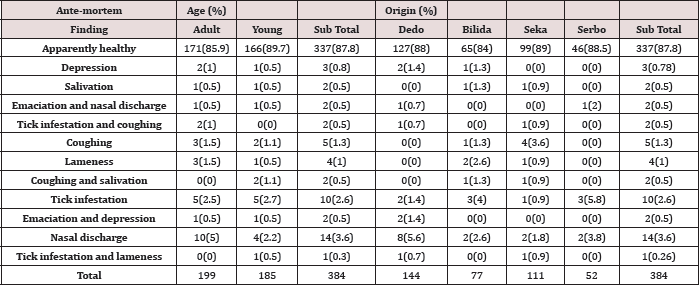
Detail AMI was conducted on a total of 384 sheep destined for slaughter at Jimma municipal abattoir and 47 (12.2%) of ovine were found to have different abnormalities. Nasal discharge, coughing, tick infestation, depression, emaciation, and lameness were those frequently observed among signs of diseases encountered in both age groups. The result also showed 6% (23/384) animals were conditionally passed for slaughter because of abnormalities such as lameness, respiratory problem, and their collection with tick infestation. On the other hand2% (8/384) sheep were unfit for human consumption and rejected during AMI. Since, they showed two and more signs of diseases such as emaciation with nasal discharge and depression 1% (4/384), salivation and salivation with coughing 1%(4/384) were the major cause of rejection (Table 1).

Table 1: Abnormalities encountered during AM inspection within Age groups and Origin of the animals.
Lupinepublishers-openaccess-Dairy-Veterinaryscience

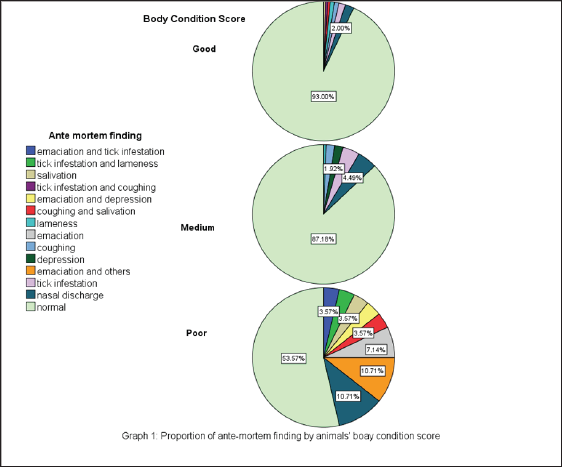
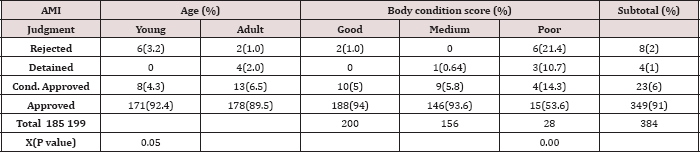
The AMI result also depicted of 28 sheep with poor body conditions 46.43% were found to have one or more sign/s of illness whereas in those with good BCS only 7% of the sheep were showed sign/s of diseases (Graph 1). In the current study, four different decisions were passed as AM judgments where apparently healthy sheep were passed for slaughter (91%), and others showed mild sign of illness and conditionally approved (6%) whereas 2.9% of sheep were detained and rejected as unfit for slaughter. Rejection rate was significantly higher (p ≤ 0.05) in young animals with poor BCS than in adult animals with good and medium BCS (Table 2).

Figure 1: proportion of ante-mortem finding by animals'boay condition score.
Lupinepublishers-openaccess-Dairy-Veterinaryscience

Table 2: Proportion of animals rejected and passed the AMI judgments by age group and BCS at the abattoirs.
Lupinepublishers-openaccess-Dairy-Veterinaryscience

Postmortem Inspection (PMI)

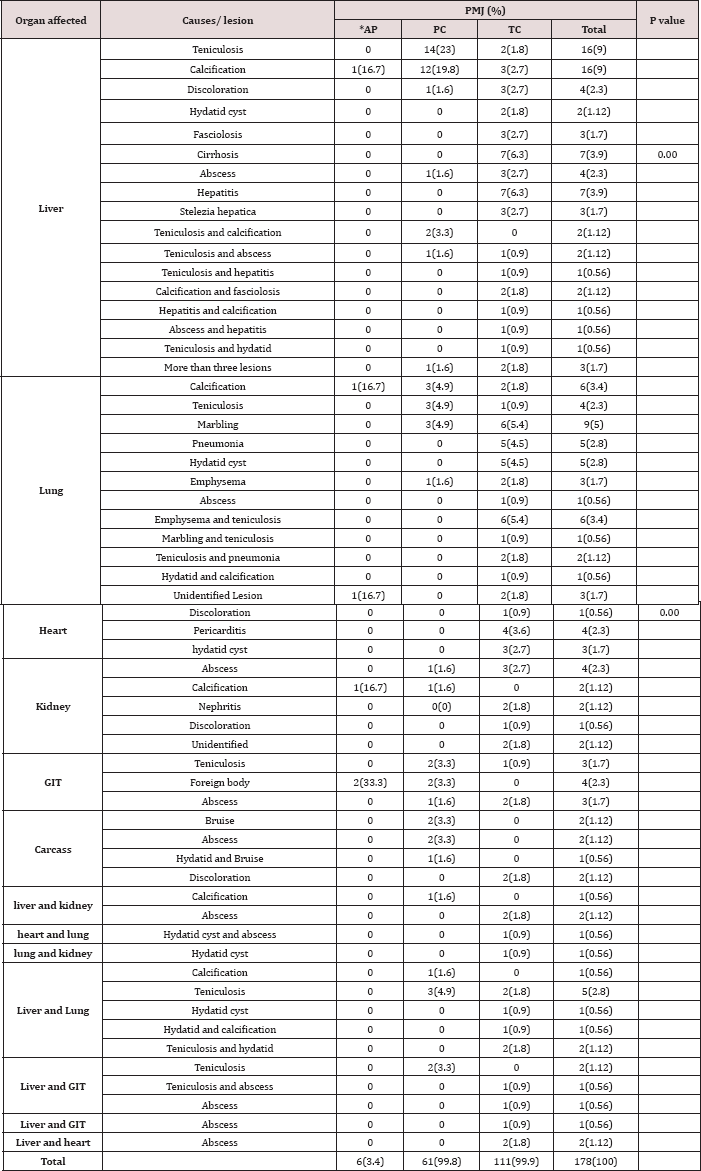
Among animals that had been examined during AMI 373 were slaughtered and subjected to through PMI following standard postmortem procedure and a total of192gross pathological lesion leading to partial and total condemnation of organs and carcasses were recorded. Among these abnormalities, lesions were frequently encountered from liver; and of which Cyst cercus teniculosis (34%) and calcification accounted 25.5%. These followed by abscess (13.8%), hepatitis (10.6%), cirrhosis (7.4%) and hydatid cyst (7.4%), fasciolosis (5.3%) and stelezia hepatica (3.2%).

Table 3: Relative percentages of pathological lesions resulted in condemnations of organs and or carcasses at the abattoir.
Lupinepublishers-openaccess-Dairy-Veterinaryscience

*AP=organs conditionally passed for human consumption

A total of 56 lungs were also condemned as they were affected abscess (3.6%) and 5% with unidentified lesions. In this study by teniculosis (35.7%), Hydatid cyst (21.4%), marbling lesion abscessation was also inspected in other organs like heart, kidney (17.8%), Emphysema and calcification (16%), pneumonia (12.5%), and GIT, and carcass (Table 3).

Table 4: Summary of direct financial losses and organs and carcass condemned at abattoir.

Lupinepublishers-openaccess-Dairy-Veterinaryscience

There was a condition of examining, a single to multiple lesions per organ e.g., we examined teniculosis and Calcification from a single liver; and all are recorded as different lesions.

*=Whole carcass plus organs totally rejected at PM; except in carcass, PC indicates 50% loss.

Out of a total of 11 hearts condemned (Table 4), hydatid cyst Renal problems were observed in 11 kidney examined and 54.5% and pericarditis recorded as major causes contributing 45.5% and found to be caused by abscess whereas 27.3% and 18.2% were 36.4% which followed by abscess (18.2%) and discoloration (0.9%). due to calcification and nephritis and other unidentified causes, respectively.13 GITs were also encounter as with abnormalities likecyst cercus teniculosis and abscess and foreign bodies, and they were subjected to total and partial condemnation accordingly.

The major pathological conditions for carcass rejection from local market were bruising accounting for 42.9%. Out of 7 rejections judgments2 were total and the rest 5 were partial (Table 3&4). There was a condition of examining, a single to multiple lesions per organ e.g., we examined teniculosis and Calcification from a single liver; and all are recorded as different lesions.

*=Whole carcass plus organs totally rejected at PM; except in carcass, PC indicates 50% loss.

Assessment of Direct Financial Losses

The direct financial loss was computed based on average cost/ price of individual condemned organs and carcasses during the study period, applying the formula given by Ogurinade and Ogunrinade [25]. The study indicated that there had been a total loss of 12,729,960 ETB which is 56,576 USD due to a partial and total condemnation of organs and carcass at slaughterhouse annually. The study result also indicated there was a total condemnation of 2(1.3%) whole carcasses (carcass plus organs) (Table 4). For the calculation, alive price of one sheep is considered as 4000ETB for total carcass condemnation.

Discussion

The AM and PM inspections were conducted in the abattoir for the purpose of identifying an abnormality and removing animals' products with pathological lesions which were unsafe for human consumption and having poor aesthetic values (Van L logtestijn, [26]; Gracey et al. [27]). In this research, out of 384 study animals 11(2.9%) were rejected and detained as unfit for human consumption suspecting different zoonotic diseases such as rabies in the case of salivation with high fever and tuberculosis in animals with a sign of emaciation with high coughing, depression and nasal discharge. Similarly, suspecting rabies in the case of salivation and bovine TB in animals with sign of emaciation with high depression and coughing was reported by Belina and Melese [23]. Radostits et al. [28] stated that in domestic ruminants, cobalt deficiency results in appetence and loss of body weight, emaciation, weakness, decreased growth, unthrifty appearance, diarrhea, and anemia. Again during the AMI, 23(6%) of sheep were found to be showing signs of abnormalities such as lameness, tick infestation along with coughing and nasal discharge frequently encountered and passed with judgments of conditional approval where due attention was given for whole body part and specific organ at postmortem examinations.

One of the causes of lameness was trauma caused by hitting with a thick stick during driving to abattoir on foot and inappropriate vehicles and loading and off-loading negligence during transportation to marketplaces and to the abattoir. During the AM examinations, it was found that respiratory disorders were higher than other abnormalities encountered during the AMI 14(3.7%) nasal discharge and 5(1.3%) coughing. The respiratory signs such as the presence of nasal discharge and coughing were most probably related to stress due to lack of feed and water that may lead to immune suppression enhancing opportunistic pathogens. On the other hand, overcrowding during transportation is also a source of stress (Getachew, [18]). In agreement to the current study, coughing, depression and lameness are frequently observed abnormalities encountered during AMI (Mandefro et al. [29] ) at Elfora Export Abattoir, Ethiopia.

The rejection rate was significantly higher (p<0.05) for those poor body conditions than good and medium body conditions (Table 2). Because of poor BC by itself may be due to unidentified abnormalities that increase rejection probability. Jibat et al. [30] studied and determined the rate of organs and carcasses condemned and the associated annual financial loss at HELMEX abattoir in Ethiopia and they reported out of 2688 sheep and goats examined 188 (7%) carcasses were condemned due to poor body condition cases.

On the other hand, there was a significant difference (p=0.051) within the age groups of animals in rejection at AM more young than the adult which were 3.2% (6/185) and 1% (2/199) respectively. It may due to difficulty in protection from stress, shortage of feed and water, not getting enough rest. Herenda et al. [31] stated that leanness (Poorness) is often observed in case of poor quality pasture and young growing animals which have had protein-deficient diet.

In the present study, organ condemnation rate showed that, liver and lung were the most frequently affected organs with the highest condemnation rate followed by GIT, kidney and heart and carcass significantly (p=00), which is 94(48.9%), 56(29.2%), 13(6.8%), 11(5.7%), 11(5.7%) and 7(3.6%) respectively. This finding is in agreement with reports of Cadmus and Adesokan [32] who recorded that lungs (45.7%) and the liver (32.9%) were the most affected organs with the kidney (0.02%) and the heart (0.01%) being the least. The current study introduced that parasites are the major causes of organ condemnations. Parasitic causes like, Cyst cercus teniculosis, hydatidosis, fasciolosis and Stelezia hepatica were found to be the major parasitic conditions responsible for organ condemnation. There was no statistical difference in the rate of organ and carcass condemnation from parasitic infestation considering the age and origin of animals. This shows that parasitic diseases of sheep are widely spread in all age groups and everywhere in the country.

The presence of small ruminant hydatidosis at slaughterhouse has been documented in Ethiopia. (Bekele et al., [33]) reported a prevalence rate of 16.4% in sheep which is higher than the finding in this study (7.4%). Similarly (Jobre et al. [12]) reported prevalence rate of 11% and 6% from South Omo and Debrezeit slaughterhouses, respectively in sheep and goats. In present finding, hydatid cysts were more frequently observed in lungs than liver of sheep (6.3%) and (3.6%) respectively. Additionally, similar findings were also reported by different authors (Khan et al. [34], Dalimai et al. [35] and Daryani et al. [36]). However, the most common site for hydatid cyst was the liver followed by the lungs in the Middle East (Kamhawi et al. [37]). Lungs are most commonly affected by hydatidosis because at old age the liver capillaries are dilated, and most cysts passed directly to the lung. Secondly, the cyst passes to the lung via the thoracic duct without involving the liver (Gracey, [38]). And also, many researchers reported that liver and lung are the most commonly affected organs by hydatid cyst (Abunna and Hordofa, [39]; Denbarga, [40]; Jobre, [12]). The reason being that lung and liver contain highest capillary bed in the body and therefore, the majority of the oncospheres were filtered out and trapped in the fine blood capillaries and only small number of oncospheres reaches the remaining organs (Gracey, [38]). In present study also lungs and liver 12(6.3%) and 7(3.6%) respectively, were affected by hydatidosis.

Out of 94 condemned liver teniculosis is the most frequent cause of organ lesion (34%) followed by calcification (25.5%), abscess 13(13.8%), hepatitis 10(10.6%), cirrhosis 7(7.4%), discoloration 4(4.3%), more than 3 lesion on liver 3(3.2%) and parasites like teniculosis, Stelezia hepatica, Fasciola species and hydatid cyst were found to be the major causes that rendered liver rejection from the local market (Table 3). Fascioliasis constitutes both economic and public health constrains to ruminant production. It is caused by two trematode species, Fasciola hepatica and F.gigantica, which develop in different livestock species mainly sheep and cattle; but, also in many other domestic herbivores (Gracey, and Collins, [41]). The reported prevalence of Fasciolaspp. (5.3%) was lower than other studies in bovine, like Belina and Melese [23] study result showed fasciolosis and hydatidosis alone contributed 690(35.1%) gross pathological lesions.

Previous studies have indicated a higher economic loss resulting from a condemnation of edible organs and carcasses due to parasitic causes (Negategize et al. [42]; Jembere, [15]; Jibat, [43]). In the current study, these parasitic causes of liver lesion might be due to improper wasting of condemned organ and the stray dog feed it at abattoir and selling of infected offal for dog which is final host for teniculosis and hydatidosis and stay them. Sissay et al. [44] studied the prevalence and seasonal incidence of cestodeparasite infections of sheep in Eastern Ethiopia for two years (2003-2005). During this period, viscera including liver, lungs, heart, kidneys and the gastro-intestinal tract were collected from 655 sheep slaughtered at four abattoirs. One of the most prevalent metacestodes was C. teniculosis. In sheep, the overall prevalence was 79% for C.teniculosis.

The causes for calcification abscess, hepatitis, cirrhosis and discoloration were difficult to identify grossly and it may be due to systemic infectious diseases. Calcification is also another lesion that we encountered; it can be caused by injury, infection, and autoimmune disorders. Large-scale tissue damage is associated with extensive loss of cells, a situation referred to as tissue necrosis. The death of tissue in a specific area of the body leads to the release of signaling factors that attracts cells to clean up and heals the dead tissue. This process, known as an inflammatory response, attracts calcium into the damaged area as it heals (Carne, [45]). This study indicates 24(12.5%), 9(4.7%) and 3(1.6%) of Liver, lung, and kidney, respectively were affected by calcification.

Abscess was also apathological condition; which is a collection of .com circumscribed by fibrous tissues. It occurs with great frequency throughout many organs and the carcasses of the meat animals and may be associated with a general condition or be found as isolated lesions (Libby, [46]). In present study 13(6.8%), 6(3.1%), 6(3.1%), 2(1%) and 2(1%) of liver, GIT, kidney, heart and carcass were affected by abscess. In agreement with (FSIS, [47]) stated that caseous lymphadenitis is a disease of sheep and goats caused by the C.Pseudotuberculosis. Postmortem findings may include, enlarged abscessed lymph nodes with greenish white- yellow caseous exudate, which tends to become dry and granular, cross-sections of lesions contain remnants of connective tissue capsules (resembles the concentric rings seen on the cut surface of an onion). Lesions found in many lymph nodes, especially the subiliac, superficial cervical, deep popliteal, tracheobronchial, and mediastinal lymph nodes, as well as lungs, heart, liver, spleen, and kidneys. (Asrat, [48]) stated that occasionally the worms penetrate the bile duct wall into the liver parenchyma causing liver abscesses.

The study conducted in Gondar abattoir (Mesele et al. [49]) and Nekemte (Moje et al. [50]) also revealed that livers and lungs are the most rejected organs by PM inspection and fasciolosis and hydatidosis are the major causes of rejections. However, in the current study different calcifications, cirrhosis, hepatitis, abscessations, emphysema, pneumonic lesions, marbling (contagious caprine pleuropneumonia (CCPP)) lesion, nephritis, foreign body, traumatic lesions and others non parasitic abnormalities and unidentified lesion contributed to a condemnation of organs and carcasses were investigated. Lungs were condemned because of C.teniculosis, hydatid cysts, marbling, emphysema, calcification, pneumonia, other unknown caused lesion and abscess which were (35.7%), (21.4%), (17.8%),(16%), (16%), (12.5%), (5%) and (3.6%) respectively. C.teniculosis accounts for 35.7% as a principal cause of lung condemnation in sheep This might because of increased number of a stray dog in the area, the principal cause of lung condemnation was parasitic. However, the report observed during a retrospective study (Regassa et al., [19]) reported pneumonia as a principal cause of lung condemnation in central Ethiopia accounting for 42.1% (Getachew, [18]). In current study, from the total lungs inspected higher 56 (29.2%) lungs were condemned. It may because of the animals unable to resist stress within a short period of time during transportation along way on foot, shortage of feed and water, stress due to hitting of animal by personnel who driving animal to market from the farmer and to abattoir and does not getting sufficient amount of rest at lairage may causes this respiratory problem.

FSIS [47] reported that pneumonia is an inflammatory condition of the lungs that maybe caused by infectious agents, parasites, physical trauma, or foreign material inhalation. In similar reports pneumonia might also be as a result of endemic diseases of sheep and goats such as pasteurellosis, which is triggered by stress, contagious caprine pleuropneumonia (Radiostitis et al. [51]). The other cause was marbled appearance (CCPP) lesions: CCPP is a disease peculiar to shoat and takes the form of a chronic inflammation of the lungs and pleura. It is not communicable to man and the carcass and the lungs found to be positive for CCPP can be passed for human consumption after a partial condemnation of the diseased part Gracey and Collins [41]. On the other hand, Emphysema is an abnormal and permanent enlargement of air spaces distal to terminal bronchioles with destruction of their alveolar walls, whereas oedema is a nonspecific lesion in which interstitium and alveoli are accumulated with fluid (Carne, [45]).

Also, different lesions of infectious and noninfectious causes like abscess, pericarditis, nephritis, and discoloration were found to be important causes for the condemnation of edible organs like liver, heart, and kidney. Similarly the same causes were found at central Ethiopia (Getachew, [18]; Regassa et al. [19]) and in goats slaughtered at Nigeria (Ojo, [52]).

In the present study, out of the 11 (5.7%) kidneys condemned abscess 6 (54.5%) account, whereas calcification accounts 3(27.2%), nephritis 2(18.2%) and other unidentified causes 2(18.2%) (Table 3). In this study abscess was a principal cause of kidney condemnation, however, the result in (Dejene et al. [53]) study revealed out of the 57 (6.71%) kidneys condemned Nephritis 20 (2.35%) accounting for 11 (2.59%) and 9 (2.12%) kidneys in Ovine and Caprine respectively, was the principal cause of condemnation. Radostitis et al., [28] stated that embolic nephritis occurs after septicemia or bacteremia when bacteria lodge in renal tissue.

The major causes of heart condemnation were found to be pericarditis, hydatid cyst and abscess. Out of the total of 11 (5.7%) hearts condemned due to gross abnormalities, pericarditis contributes about 4 (36.4%) and hydatid cyst also contribute 4(36.4%) and abscess 3(27.3%) out of condemned organs (Table 3). The main cause of lesion in GIT condemnation primarily parasitic C.teniculosis and abscess 6(46.2%) and foreign body 4(30.8%). As a septic lesion, whenever localized abscess is found, partial condemnation is recommended Gracey and Collins [41].

The main management practices that rendered organs and carcasses unfit for human consumption were bruising of the carcass mainly brought about by not proper handling of animals during transportation to the slaughterhouses by hitting the animal with thick stick and mechanical damage to organs due to faulty evisceration especially liver. Apart from affecting carcass value, bruising has also animal welfare implications as excessive use of sticks while driving to the abattoir, mishandling of animals during loading and unloading, improper transport vehicle and at slaughter could be responsible causes (Mungube et al. [54]). It is stated that bruising of animals during transport is the major source of economic loss in Africa and Asia (Mitchell and slough, [25]). In the present study out of 7 carcass condemnations, 2 (28.6%) whole carcass was also totally condemned due to the yellowish discoloration, suspecting liver disease which may toxicity, systemic disease causing prehepatic and hepatic jaundice. Herenda et al. (2000) stated that icterus is the result of an abnormal accumulation of bile pigment, bilirubin, or of hemoglobin in the blood. Jaundice is divided into three main categories. Prehepatic jaundice occurs following an excessive destruction of red blood cells. Tick-borne diseases such as Babesiaovis and Anaplasmosis cause this type of icterus. Hepatic jaundice occurs due to direct damage to liver cells as seen in liver cirrhosis, systemic infections, and in chemical and plant poisoning. In sheep, jaundice may have been caused by phytogenic chronic copper poisoning. Obstructive jaundice occurs when the drainage of the bile pigment bilirubin is blocked from entry into the intestine.

However, parasitic C.teniculosis and Stelezia hepatic have no public health importance; they are considered as the important cause of economic loss in the meat industry since viscera harboring them are rejected for aesthetic reasons. The threat these parasites pose to small ruminants' meat industry in Ethiopia is evident due to the present situation of improper disposal of offal at abattoirs and backyard slaughter. The presence of freely roaming stray dogs on grazing land together with livestock and the deeply-rooted habit of feeding dogs with offal, including sheep heads, are important risk factors. This may lead to the perpetuation of the life cycle between intermediate hosts (sheep) and the final hosts (dogs) for C.teniculosis and hydatidosis.

The financial loss in the abattoir was high, in this study analyzed those losses through condemnation of organs and carcass from local market. A total loss of (56,576 USD USD) was incurred in the abattoir. Carcass condemnation accounts highest part of the losses of the total direct losses whereas liver, lung, GIT, heart and kidney takes, respectively. The indirect losses from body weight gain, mortality at the farms, public health implications (cause of treatment for a human when diseased upon eating of the affected edible organ which is zoonotic) were not included in the analysis in this study. Thus, the total financial loss attributable to diseases of ovine and, hence, abattoir wastage could be much higher. The economic analysis of livestock diseases in Ethiopia is scarce and inadequate because of lack of information on the prevalence and partly by the complexity of the analysis. Negategize et al. [42] have reported a financial loss associated with a liver condemnation due to ovine fasciolosis alone in the central highlands of Ethiopia amounting to be 2.3 million Ethiopian Birr (460,000 USD). Similarly Jobre et al. [12] have estimated a total annual loss of 1.3 million Ethiopian Birr (260000 USD) resulting from offal condemnation and carcass weight loss [55,56].

Conclusion And Recommendations

The current study revealed that, during the study period different signs of diseases, and abnormalities leading to conditional approval, rejection and detain of animals were encountered at AM inspection. In lesion survey, a total of 192 gross pathological lesions resulting in partial and total condemnations of liver, lung, kidney, heart, GIT and carcass were investigated. Different calcifications, parasitic teniculosis, hydatidosis, fasciolosis, Stelezia hepatica, pneumonic lesions, abscess, cirrhosis, marbling (CCPP), emphysema, hepatitis, nephritis, pericarditis, bruising (mechanical damage), discoloration and foreign body were the main abnormalities recorded as causes of (56,576 USD) losses. There is perpetuation of the life cycle between intermediate hosts (sheep) and the final hosts (dogs) for C. teniculosis and hydatidosis by wasting the condemned organ near abattoir; and sometimes selling of affected organ. The results of the study showed that teniculosis and calcification were the two most frequently examined conditions, contributing 58(30.2%) of gross pathological lesions [57,58].

Based on this conclusion, the following recommendations are recommended:

    a) Awareness should be created for the animal attendants, farmers, customers, abattoir workers and butchers regarding the public health significance of diseases of animal origin and the related losses.

    b) The government must empower veterinarians and other meat inspector more in passing professional judgments and, avoid complains of investors working in meat industry sector on inspectors judgments.

    c) Immediate, safe and controlled elimination of all condemned abattoir materials and the sale of contaminated.

Thursday, 4 March 2021

Lupine Publishers | Nanotechnology in Concrete: Small Things Shape a Great Future

 Lupine Publishers | Journal of Civil Engineering


Abstract

Concrete changes the world. Nanotechnology changes the concrete world. The nano-engineered concrete can be intelligent, strong, durable, easy to fabricate, recyclable and eco-friendly. Its potential benefits include improved infrastructures reliability and longevity, enhanced structural performance and durability, improved safety against natural hazards and vibrations, reduced lifecycle costs in operating and managing infrastructures, and reduced burdens on resources, energy and environment.

Concrete related to sustainable development of human society

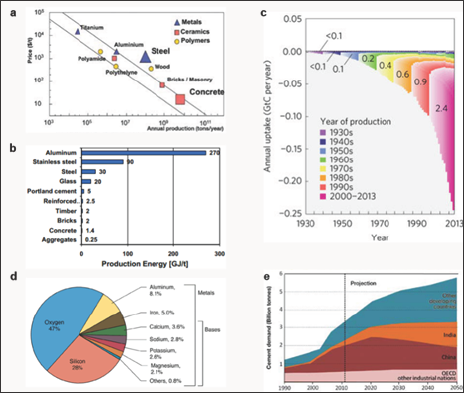
Figure 1: Concrete price and usage; b) Energy consumption for concrete production; c) The cumulative carbon sequestration from 1930 to 2013; d) Elemental composition of the earth; e) Cement demand prediction [1-5].

Lupinepublishers-openaccess-journals-Civil-engineering-Architechture

Concrete's excellent properties and low cost have made it tremendous quantity of concrete (4 billion cubic meters per year) the world's most widely used engineering material (Figure 1a). A has been consumed worldwide for infrastructure construction. China accounts for approximately 60% of the total concrete consumption with the per capita amount of 2 cubic meters. The manufacturing of cement, a key ingredient in concrete, has a significant impact on nature source, energy and environment. In fact, concrete has lower energy consumption and carbon emissions compared to other engineering materials (Figure 1b). According to recent research, as carbon sequestration, concrete can reabsorb a large fraction of CO2 released from cement production. From 1930 to 2013, carbonating concrete absorbed 43% of the cumulative CO2 emissions associated with the high-temperature calcination of carbonate minerals during cement production (Figure 1c). In addition, in terms of resource, it is almost impossible to find an alternative construction material to concrete. This is because O, Si, Al, Fe, Ca, Na, K and Mg comprise 98% of the crustal composition, which are the main components of concrete (Figure 1d). In the long term, on the basis of the urban development of the developing countries and the world's population growth rate, concrete will continue to be massively consumed as construction materials in the whole world. Taking the developing countries such as China and India for example, concrete usage converted by the total amount of cement will nearly double in the coming several decades (Figure 1e). Therefore, concrete is the largest material foundation bearing the civilization in today’s society and even in future society. The production and utilization of concrete are closely related to source, energy and environmental issues, thus having a strong effect on the sustainable development of human society [1-5].

Improving concrete performance to meet the ever-increasing demand for infrastructure construction

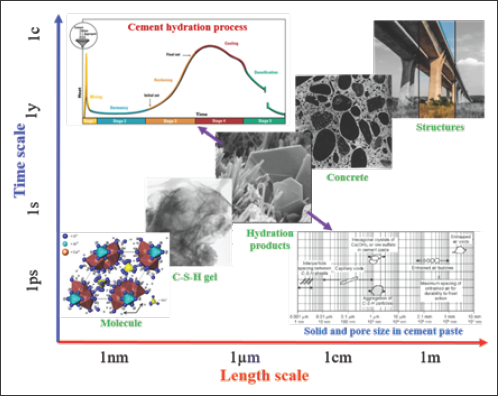
Figure 2: Multi-component, multi-phase and multi-scale nature [4].

Lupinepublishers-openaccess-journals-Civil-engineering-Architechture

Concrete has a multi-component, multi-phase and multi-scale nature and is considered as the most complicated composite while fabricated with the simplest production process (Figure 2). The feature of thermodynamic metastability has an effect on the concrete volume stability. Under deformation, shrinkage and loading, it is vulnerable to interrupt or destroy homophase continuity and heterophase bonding. In addition, concrete is known for its brittleness with low tensile strength, poor deformation performance and high cracking tendency. The presence of cracks tends to weaken the integrity and bearing capacity of structures and severely affect their safety, serviceability and durability, causing potential safety problems on construction. Especially with the trend toward large-scale and complicated infrastructures, extreme service environment, multi-factor coupling and ever-enlarging application field, these problems are becoming more serious and facing with a plenty of new challenges as well. In this case, high- performance and smart/multifunctional concrete becomes the only way to implement the sustainable development of concrete structures. High-performance and smart/multifunctional concrete has excellent mechanical properties, durability and processability needed for structural material. Meanwhile, it also presents selfsensing, self-healing and self-adjusting features. Making use of high- performance and smart/multifunctional concrete can effectively enhance the safety, comfort and durability of infrastructures and maintain a coordinated relationship between infrastructure and environment.

Nanotechnology adding new impetus for developing high-performance and smart/multifunctional concrete

As shown in Figure 2, concrete is a multi-scale complex system. Generally, the normal aggregate in concrete has a particle size ranging from millimeters to centimeters and the particle size of ordinary cement itself is usually 7-200|im. However, cement hydrated phases are primary nano structured materials mainly condensed by C-S-H gel tens of nanometers in size. Therefore, due to its natural attribute, concrete has the properties of nanomaterials. In addition, the scientific community and industry are always spontaneous to manipulate the nano-scale behavior inside concrete using nanotechnology to enhance or modify concrete performance in the process of concrete development, such as nano crystals, mineral admixtures and chemical admixture used for concrete preparation. It should be recognized that nanotechnology in concrete is not a new technique. It is just attributed to the rapid development of nanotechnology in recent two decades improving the understanding of the nano-scale behavior inside concrete and enriching the methods for concrete reinforcement and modification via nanotechnology. In this manner, research in the application of nanotechnology in concrete reaches a very active period.

Awareness of nanotechnology applications in concrete starts at 2001. The addition of nano-SiO2 to concrete was first used for concrete reinforcement. After that, nano-ZrO2, nano-TiO2 and nanocarbon material were applied one after another for the enhancement and modification of concrete. Much work indicated that the big gains in mechanical, durable and functional properties of concrete were achieved by nano nonmetallic oxide and metallic oxide modification. The addition of nano-SiO2 increased the 3d/28d compressive and flexural strengths by 48.1%/48.7% and 45.6%/16.0%, respectively. Meanwhile, the addition of nano-SiO2 can increase the freeze-thaw resistance, chloride penetration and permeability, abrasion resistance and fire resistance of concrete [6]. The fracture toughness of concrete can be enhanced by 400% when nano-ZrO2 is used as fillers [7]. The flexural and compressive strengths of concrete with nano-TiO2 at age of 28 d achieve increases of 87% /6.69 MPa and 12.26%/12.2 MPa with respect to concrete without nano-TiO2, respectively. Nano-TiO2 can also endow concrete with the photocatalytic effect to decompose both organic pollutants and oxides such as NO, NO2 and SO2 [8]. Moreover, extensive research endeavors demonstrated the potential of various nano carbon materials including carbon nanotubes (CNTs), carbon nanofibers (CNFs), and graphene for enhancing/modifying concrete materials [9].

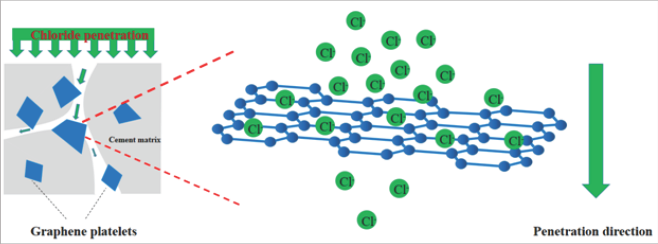
Figure 3: Graphene platelets acting like�filters�for chloride ions [11].

Lupinepublishers-openaccess-journals-Civil-engineering-Architechture

The observed best performance enhancement of concrete with CNTs or CNFs include a relative/absolute enhancements of 79%/74MPa and 64.4%/5.6MPa in compressive and flexural strength [10], a 34.28% increase in tensile strength, a 270% increase in fracture toughness, a 14% increase in fracture energy, an over 600% improvement in Vickers’s hardness at the early ages of hydration, a 2200% increase in deflection, a 130% increase in ductility, an over 430% improvement in resilience and a 227% increase in Young’s modulus. Graphene can improve the tensile, flexural and compressive strength of concrete by 78.6%, 60.7% and 38.9%, respectively. The presence of CNTs obviously enhances the transport property and durability of concrete materials. Graphene significantly improves the moisture transport performance, the acid resistance and the chloride ion penetration resistance (as listed in Table 1 and Figure 3) of the concrete.

Table 1: Chloride migration coefficient of concrete with grapheme.

Lupinepublishers-openaccess-journals-Civil-engineering-Architechture

DRCM: Chloride migration coefficient from non-steady-state migration test

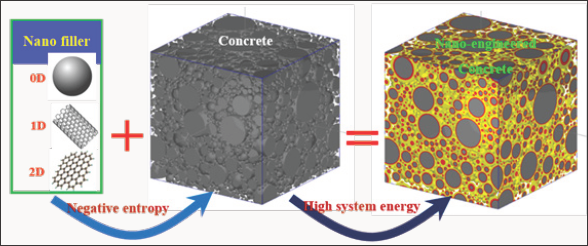
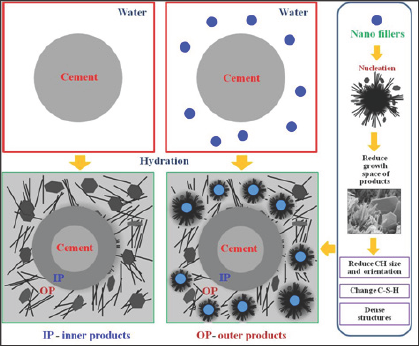
The electrical resistivity reduction extent of concrete materials than that of concrete without CNTs. The damping capacity of with CNTs/nano carbon black composite filler is 99.9%. The concrete with CNTs is 1.6 times than that of concrete without CNTs. thermal conductivity of CNTs concrete composites is 85% greater The addition of CNTs into concrete materials can lead to a 27%decrease in electromagnetic wave reflectivity at a frequency of 2.9 GHz. Additionally, the composites with CNTs, CNFs or graphene feature smart self-sensing (e.g. sensing stress, strain, crack, damage, temperature and smoke), self-heating and steel cathodic protection performances. Nano fillers not only can enhance/modify the also have strong impact on the rheology and workability of fresh concrete [11]. Nano fillers have higher surface energy compared with cement particle. Therefore, as shown in Figure 4, the addition of nano fillers raises the system energy of cementitious composites, thus importing negative entropy to the system of composites.

Figure 4: System of nano-engineered concrete [7].

Lupinepublishers-openaccess-journals-Civil-engineering-Architechture

The mechanisms of nano-core effect on the enhancement/ modification are mainly due to two aspects: intrinsically excellent mechanical, electrical, thermal and electromagnetic properties and morphology features (high aspect ratio); and promoting cement hydration, optimizing C-S-H gel structure and forming ultrafine and compact crystals, improving interfacial transition zone and pore structure, controlling nano-scale cracks, autogenous curing, improving early strength and decreasing autogenous shrinkage through nucleating effect (Figure 5).

Figure 5: Schematic diagram of effect of nano fillers on the hydration products growth around cement particles [11].

Lupinepublishers-openaccess-journals-Civil-engineering-Architechture

Conclusion

As a new industrial revolution, nanotechnology infiltrating in the field of civil engineering provides new impetus for developing high- performance and smart/multifunctional concrete. To restructure or modify material structural units in nanoscale via interpreting material genetic code and drawing the blueprint of nanoscale properties provides new theory and method to develop high- performance, durable, smart/multifunctional, and environmentally friendly concrete (Figure 6). The utilization of nanotechnology helps promote the understanding of concrete behavior, manipulate and design concrete performance, lower the concrete production and ecological cost, extend the service life of engineering infrastructures and reduce the relative demand of concrete. It is of profound significance to guide the sustainable development and application of concrete material and infrastructures.

Figure 6: Nano-engineered concrete based on nano-core effect.

Lupinepublishers-openaccess-journals-Civil-engineering-Architechture

Acknowledgment

The authors thank the funding supported from the National Science Foundation of China (51578110 and 51428801).

Read More About Lupine Publishers Civil Engineering Journals Please Click on:
https://lupinepublishers-civilengineering.blogspot.com/

Wednesday, 3 March 2021

Lupine Publishers | The Newest Agricultural Technologies

   Lupine Publishers | Current Investigations in Agriculture and Current Research


Abstract

The primary objective of agricultural production is to provide an economical, sustainable and productive industry in plant and animal production. For this purpose, alternative solutions are provided to the problems that need solution or improvement and to facilitate agriculture in various areas such as increasing productivity and product quality, minimum input usage, food reliability, protection of natural resources and environment in agricultural production. In this study, the technologies which are successfully applied in plant production and animal breeding were addressed by taking into consideration the advances made especially in recent years.

Keywords: Precision agriculture; Smart farming; Precision livestock farming; Autonomous tractor; Unmanned aerial vehicles

Introduction

The agricultural sector has been adversely affected by global market instabilities, economic crisis, animal diseases and climate changes in recent years. In addition, structural problems such as the average size of farms not allowing adequate investments to increase productivity, absence of large-piece agricultural lands, lack of education, agricultural employment and population growth as well as the emergence of alternative uses of agricultural products such as biofuels cause inefficiencies [1]. Due to the rapid increase in the world population and urbanization, agricultural land per capita and natural resources such as water are decreasing due to the decrease in agricultural areas. For this reason, it has become necessary to increase productivity in agricultural production through technological and genetic methods. Excessive use of chemicals and fertilizers, during the intensive agricultural practices made to increase efficiency, has caused problems such as environmental pollution in soil and ground water and the loss of the production power of the field over time. Today, increasing product quality, minimum input usage, food reliability, protection of natural resources, increased environmental awareness, economic production and sustainable agriculture concepts have become a priority, despite the previous goals of increased yield and productivity.

As a result of the rapid developments in information technology following the mechanization, automation, and control technologies during the development period of agricultural production, today, intelligent machines and production systems that control machines have begun to take over traditional production methods. Information technology consists of hardware, algorithms and software developed for the management of the collection, processing, storage, transfer and use of information processes. The implementation of present knowledge and experiences in agriculture together with the machine learning, deep learning, artificial intelligence, modeling and simulation applications enabled the development of real-time and automated expert systems, autonomous tractors or agricultural machines and agricultural robotics applications.

Precision Agriculture

Precision agriculture technologies, combining with control, electronics, computer and data base with the account data, present an advanced system approach. Using global positioning system, geographic information system, variable rate application and remote sensing technologies, precision agriculture technologies, contrary to common fixed-level application methods which are applied at all same to whole land, use the variable-level application methods (based on application of fertilizer and chemicals to each section to its own needs, tillage at different levels, planting at different norms, irrigation and drainage at different levels) determining land and plant characteristics of small sections (soil moisture, nutrient level of soil, soil structure, product requirements, yield, etc.). As a result, Precision agriculture technologies are agricultural production and management methods whose targets are more economic and more environmentally sensitive production [2].

Precision agriculture practices start with the acquisition of data through the use of various sensors and remote sensing technologies and continue with the determination of soil properties of the production area through soil tests. All information such as yield values, fertilizer and pesticide application norms, climatic data, topographic data, weed density, disease status of the previous production seasons are associated with their actual location in the production area. Then, the applications to be done are decided using appropriate hardware and software. And, it ends with the application of variable-level practices in the field according to the application form decided. In addition, variable rate application systems and real-time product monitoring systems have been developed as a result of the sensors and software developed by the manufacturers of precision agricultural equipment and technologies:

a) Increased production efficiency,

b) Improved product quality,

c) The use of more effective chemicals and other inputs,

d) Energy saving,

e) The soil and ground water protection.

In addition to the production of field crops, precision agriculture technologies have been successfully applied in vineyards and orchards, pasture and meadow management and in animal production. Applications vary from tea industry in Tanzania and Sri Lanka to sugar cane production in Brazil, rice in China, India and Japan, grain and sugar beet production in Argentina, Australia, Europe and the United States [3]. Although it is expressed using different terms such as precision agriculture, precision farming, smart farming, variable rate application, site specific farming, site specific management, computer aided farming and prescription farming, the term smart farming has become more widely used recently.

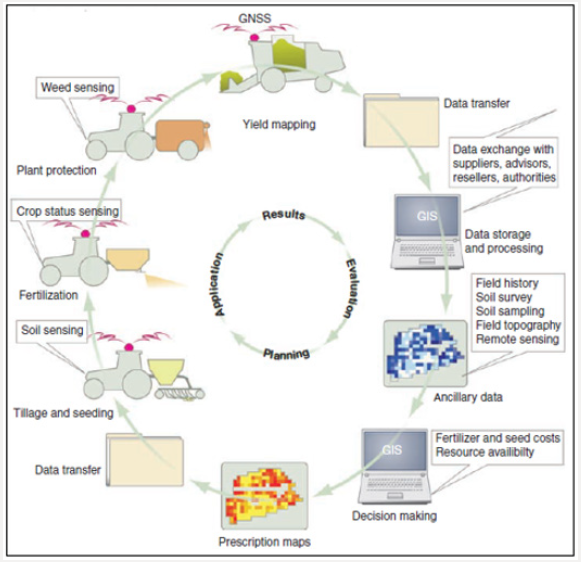
Figure 1: A typical crop growing cycle in precision agriculture [5] modified [4].

Lupinepublishers-openaccess-Agriculture

The precision agriculture, or the knowledge-based management of agricultural production systems, has emerged in the mid-1980s as a method for implementing the right process at the right time in the right place. The increased awareness of the variability in soil and product conditions has been combined with emerging technologies such as global navigation satellite systems, geographic information systems, and microcomputers. In the beginning, precision agriculture has been used to adapt the fertilizer distribution to the variable soil conditions in the agricultural area. Since then, additional applications have been developed, including the automatic steering applications of agricultural vehicles, autonomous machinery and processes, product monitoring, farm research and software for the general management of agricultural production systems. A typical crop growing cycle in precision agriculture is shown in Figure 1 [4].

Precision Livestock Farming

The first desired condition in animal production is breeding races with higher meat and milk yield. Second one is to make sure that the highest level of individual potential of animals is achieved through an adequate and balanced nutrition. The third is to take preventive health measures against diseases that cause the major losses in animal production and to minimize the use of drugs with the early detection of diseases and the necessary intervention [5]. Precision livestock production practices have contributed significantly to the solution of the problems experienced in animal breeding and in increasing the desired yield and quality in meeting the increasing animal food needs. Effective decisions are made by using precision livestock production practices in animal production and by monitoring individual animal conditions (amount of mobility, water consumption, milk conductivity value, amount of milk, etc.); necessary health measures are taken as soon as possible with the early identification of negative changes in animal health; and, sustainable and productive management is provided by ensuring that the individual potential of the animals is utilized at the highest level by making the herd management applications accurate and timely [6].

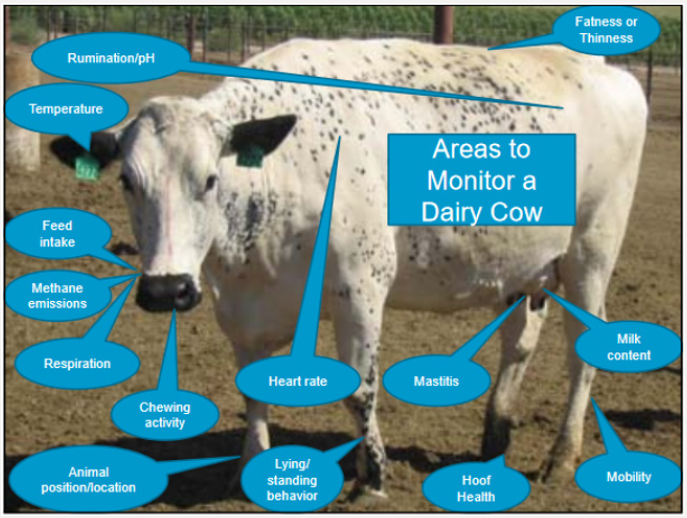
Precision livestock production allows collecting data at individual cow level as well as precision (individual) nutrition, regular milk recording (yield and components), pedometer, pressure plates, milk conductivity indicators, automatic oestrus detection, body weight, temperature, lying behavior, ruminal pH, heart rate, feeding behavior, blood analysis, respiratory rate, rumination time and movement skill scoring using image analysis. In this way, it minimizes drug (antibiotics) use and provides and proactive animal health strategy through preventive health by focusing on health and performance [7]. Benefits from precision animal production technologies include increased efficiency, reduced cost, improved product quality, minimized negative impacts on the environment and improved animal health and welfare. These technologies are likely to have a major impact on health, reproduction and quality control [8]. Figure 2 shows the areas observed in dairy cattle in precision livestock production.

Figure 2: The areas to monitor in dairy cattle in precision livestock production [9].

Lupinepublishers-openaccess-Agriculture

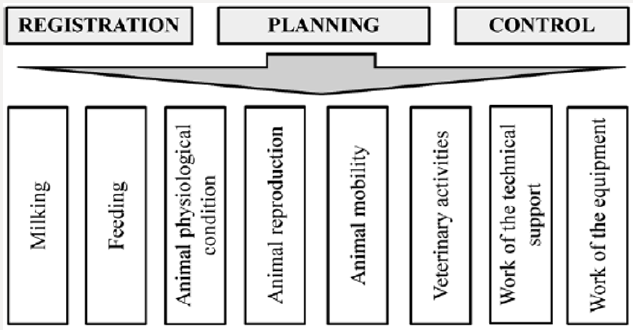
Figure 3: The tasks of the automated control systems for dairy farming [10].

Lupinepublishers-openaccess-Agriculture

Automatic control systems developed for dairy cattle farms provide solutions to the following tasks (Figure 3) [10]:

a) Getting the current information about animals;

b) Fast access to the animal history;

c) Increasing the milk yield because of the preclinical disease diagnosis;

d) Structure analysis of the herd and the animal physiological condition;

e) Reducing veterinary medicine costs;

f) Detection of the breaches in the herd reproduction technology;

g) Reducing the number of unpregnant animals and increasing the calf’s productivity;

h) Increasing the feeding effectiveness;

i) Reducing work costs and the improvement of work culture.

Autonomous Tractor

The concept of autonomous refers to the functions performed by the tractor without any human intervention. The concept of autonomous tractor and automatic steering should not be confused with each other. A tractor with automatic steering requires an operator for safety, avoiding unknown obstacles and performing unspecified tasks. An autonomous tractor can operate without the operator in overcoming the numerous uncertainties in the agricultural environment. In autonomous tractors, the necessary hardware and software are developed for obstacle avoidance, localization and mapping in addition to determining algorithms, models and methods for movement control. In order to implement route planning and navigation for this purpose, it is necessary to accurately estimate the position of the vehicle and to detect the environment sensitively during the movement of the vehicle.

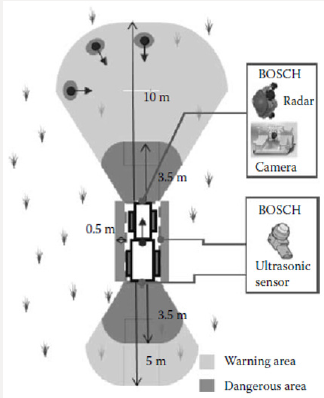
Figure 4: Safety sensor for an autonomous tractor [11].

Lupinepublishers-openaccess-Agriculture

Various equipment and systems are used to determine the position of autonomous tractors, to set the desired route correctly, and to map the obstacles and objects around correctly. The information collected from the sensors should allow the autonomous tractor to move safely. Since autonomous tractors operate in outdoor and in diverse environments, errors may occur due to inability to receive information from some of the sensors or due to the errors in the information received. For this reason, it is preferable to process the data from different sensors together and unique advantages of the different types of sensors are used together to obtain a more comprehensive perception (Figure 4). In this way, the information from the sensors provide more detailed information about the location, environment and surrounding objects during the movement of the tractor. And, in order to turn this information into useful information, advanced decision mechanisms, utilizing applications such as image, audio and video processing algorithms, neural networks, machine learning, statistical data analysis, are used and the autonomous tractor is operated successfully in this way. The equipment used in autonomous tractors are listed below:

a) Radar Sensors

b) Laser Scanners,

c) Lidar,

d) GPS / Inertial Navigation System,

e) Ultrasonic Sensor,

f) Cameras.

When developing an autonomous tractor, combining a large number of tasks to increase operational success will relatively facilitate the task. These tasks include [12]:

a) Coordination: The coordination of multiple vehicles can be done centrally. Each vehicle operates independently and does not know necessary information about other vehicles, but it has its own tasks to fulfill.

b) Solidarity: Solidarity refers to the awareness of multiple vehicles, working in the same field, from each other and tasks of the others. For example, if three vehicles carry out the same task, such as clearing the same area from the weeds mechanically, then each vehicle needs to know the rows in which other vehicles were running before selecting a new row to begin. It would not make sense to have two vehicles come to head-to-head at the same time. Real-time communication is needed between the paired vehicles.

c) Cooperation: It refers to multiple vehicles sharing the same task at the same time. Using multiple vehicles to pull a large trailer that a vehicle cannot pull alone is an example of cooperation.

Agricultural Robots

Agricultural robots are classified as indoor and outdoor robots, in general. Outdoor robots include GPS assisted steering systems, meadow robots, pruning robots, spraying robots, seeding/planting robots and silage robot. Indoor robots include harvesting robots, milking robots and barn robots [13]. Autonomous agricultural robots are now an alternative to tractors in the fields. Breeding operations can be carried out by the fleets of autonomous agricultural robots in the future, such as seed sowing, spraying, fertilization and harvesting robots. Agricultural robots must have some basic capabilities and the ability to support multiple applications. A navigation system is required for safe and autonomous navigation as a basic capability [14]. When different applications of autonomous vehicles in agriculture have been compared with conventional systems, it has been found that the first three main groups of potential practical applications include plant cultivation, plant care and selective harvesting [15].

In the last two decades, special sensors (machine vision, GPS, RTK, laser-based devices and inertial devices), actuators (hydraulic cylinders, linear and rotary electric motors) and electronic equipment (embedded computers, industrial PC and PLC) have integrated into numerous autonomous vehicles, especially the agricultural robots. These semi-autonomous/autonomous systems provide correct positioning and guidance in precision agricultural tasks, when equipped with appropriate equipment (agricultural tools or equipment) [16]. Field map can be generated by estimating the location of the plants in the surrounding environment through image processing and recorded data detected by sensors. The position estimation of the robot can be done by a navigation system or relative calculation of the movements of the robot. The distance of the plants to the robot can also be detected by sensors or image processing, and the calculated positions can be marked on a map [17].

The Use of Unmanned Aerial Vehicles in Agriculture

Aerial vehicles that can operate through remote control or autonomously with its own power system, and that can load and unload payloads depending on the place of use are called Unmanned Aerial Vehicles (UAV). There are two types of aerial vehicles, including UAVs that can fly autonomously on a certain flight plan and remote controlled drones. Although these vehicle names are commonly used interchangeably, the term UAV is a general term for all unmanned aerial vehicles, whether autonomous or remotecontrolled.

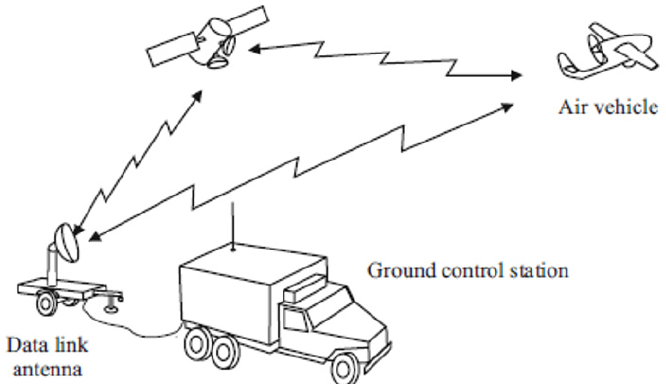
A typical UAV system consists of the aircraft, one or more ground control stations and/or mission planning and control stations, payload and data connection. In addition, many systems include launch and recovery subsystems, aerial vehicle carriers and other ground services and maintenance equipment. A very simple general-UAV system is shown in Figure 5. Being more complex and having more parts than drone systems increase [18] the cost of system installation of UAVs. In drone systems, however, drones can be used immediately after purchasing drones together with the apparatus without the need for any other costs. Due to the lower cost of purchasing than the UAVs, their ease of use and their capabilities, drones are preferred in agricultural applications.

Figure 5: Generic UAV system [18].

Lupinepublishers-openaccess-Agriculture

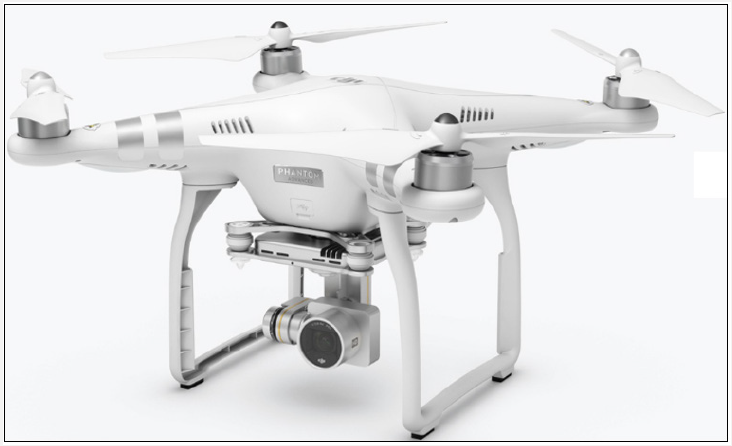
Drone systems provide fast and safe solutions and analysis for numerous situations, particularly for military applications, including natural disasters, monitoring of various sports activities, traffic control, wildlife monitoring, and agricultural applications. Therefore, drone systems are produced in different formats according to their area of use. One of the most preferred applications of drone systems is the four-rotor drone system known as the quadrotor shown in Figure 6. Quadrotor, as the name suggests, is a general term of the drone systems with four independent rotors. The most important advantage of the quadrotor is its high maneuverability. This superiority gives the quadrotor the capability of vertical takeoff and landing in dangerous and confined spaces. Due to the highpower consumption of four rotors of a quadrotor, it cannot perform long-term flight duty. The capacity of the device can be increased by increasing the number of rotors. Six-rotor hexacopters and eightrotor octocopters are the examples of different forms of quadrotor obtained by increasing the number of rotors [19].

Figure 6: Four-rotor drone system [20].

Lupinepublishers-openaccess-Agriculture

Increasing productivity and improving product quality in agricultural production depends on good monitoring of the plants’ development process and taking the necessary actions at the most appropriate time. Drone systems, which have a simple technical structure and are easy to use, offer farmers an opportunity to make plans in agricultural activities using their embedded sensors and cameras, providing high quality and 3D images. Varies studies are carried out with drone systems, such as product development monitoring, plant species separation, crop harvest determination, automatic harvest, drought, detecting diseases, agricultural pests, etc., damage detection, fruit and vegetable and soil moisture classification, field management, organization of agricultural activities, and agricultural insurance [21].

Drone systems have 5 effective use areas in agriculture. These are [22]:

a) Product status monitoring: Farmers can inspect their growing products faster and more effectively with drones with NDVI or NIR sensors.

b) Irrigation systems monitoring: Large enterprises are able to monitor irrigation systems for the supply of water needed for certain products such as corn, which are spread over large areas, after having reached specified sizes.

c) Weed identification: Weed maps are generated by postprocessing the flight images and NDVI sensor data. In this way, farmers can easily distinguish between high density weeds growing together with healthy plants.

d) Variable rate applications: Variable-rate maps are rapidly and practically generated with the use of NDVI sensors in drone systems, instead of using variable-rate application maps prepared by ground-based or satellite images. In this way, it is possible to increase the efficiency by decreasing fertilizer costs.

e) Herd management and monitoring: The amounts and activity levels of free-bred ovine or bovine animals can be monitored from above through a drone.

Conclusion

Agriculture is a vital industry due to its contribution to the sustainability of lives of people, to national income and employment and its provision of raw materials to other industries. Therefore, the agricultural sector has a direct impact on all segments of the society with its economic, social and environmental dimensions. Economically, subjects such as increasing agricultural production and farmer revenues, minimum use of production inputs, improving marketing conditions, etc. are addressed. Socially, there are topics such as food quality and safety, agricultural employment, socio-economic sustainability of rural areas, animal welfare, etc. And, environmental issues include biodiversity, protection of wildlife, meadow-pasture, forests, underground and surface waters, and soil resources. Utilizing the opportunities offered by advanced technologies is becoming increasingly mandatory in order to achieve high success in studies conducted on all these comprehensive issues, due to the importance of the subjects and difficulties involved.


Read More Lupine Publishers Agriculture Journal Article: