Thursday, 20 April 2023

Lupine Publishers | Complementary Medicine in Cancer Patients in The View of Health Literacy

 Lupine Publishers | Journal of Complementary & Alternative Medicine


Abstract

While nowadays anticancer therapies had gone through fundamental changes, health care providers must pay attention to the emerging utilization of dietary supplements, functional foods and further complementary and alternative therapies. The appropriate health literacy is a key element in the management of cancer patients’ life too, so it has worthwhile implication in the questions of complementary and anternative therapies. Hence, we wanted to measure the food supplements, functional foods and such agent’s utilization and basic knowledge about them in the Semmelweis University Oncology Center. To our questionnaire 71 patients answered. Due to their knowledge about their antitumor therapies, we divided participants to two groups (N=41 for those, who know their therapies; N=30 for those, who do not know it). However, only 43.9% of those, who know their therapies were precise about it, but grouping was not modified by this data. Tendentious differences were seen between the two groups in the vitamin and/or mineral containing food supplements, herb and/or mushroom containing food supplements, functional foods, special diets, utilization of homeopathy, but significantly more people tried deuterium depleted water in the group of those, who know their therapies. All in all, the type of food supplements etc. seems to be a more prominent factor where from the patient heard about it, in the further sources of information, and in the procurement. Still, health care professionals have a significant role in the good patient education and health literacy, because patients better ask their physician about these products while they mainly purchase them in pharmacies, hence pharmacists have a noteworthy role in the revision of harmful therapies.

Keywords: Oncology; Dietary Supplements; Complementary Medicine; Health Literacy

Introduction

While new and more sophisticated therapies emerged in the treatment of cancer, it should not be forgotten, that the use of complementary and alternative therapies are also increasing. Buckner et al (2018) also studied, why people choose these products. Mainly people try every option to help in themselves, but the real spectrum of the reasons can be much more widespread. All in all, it can be problematic, because some of these agents can cause interactions, while the utilization of such therapies may cause loss of trust in the doctor-patient relationship [1,2]. It is also wellknown, that even supplements are in the category of foods. Hence their effects are not comparable with drugs against cancers [3]. On the other hand, their effects should not be underestimated, as they can be supportive agents in the treatment of a tumor – as well as they can cause life-threating interactions [4].

While the management of life by a patient is an element of health literacy, it seems necessary to improve health literacy of cancer patients [5,6]. This theory has been already proven by Cartwright et al. (2017), as they found negative correlation between health literacy and hospitalizations [7]. Not to mention, there has been present literature about the development of health literacy at cancer patients [8]. For that, in our work we wanted to characterize the health literacy of the Oncology Center of Semmelweis University’s patients about the utilized food supplements, and functional foods, then describe intervention points.

Materials And Methods

Study Design

The study was conducted as guided interviews in the Oncology Center of Semmelweis University (Tömő utca 25-29, Budapest, H-1083, Hungary). Our questionnaire concerned with demographic data, dietary supplements and functional foods. In the study we asked some well-known facts about food supplements. These questions were concerned with safety requirements (if there is any difference between food supplements vs. medical products); differences between manufacturers; the importance of informing someone’s physician about the consumed products; and the risks of food supplement in the light of chemotherapy (or other therpaies). From these data we made a cumulative number, named as “knowledge-point” (maximum = 4 points).

In the questionnaire, to clarify for the patients, an appropriate definition was also given for the above mentioned categories of foods. Furthermore, we asked about the illness, the antitumor therapy and therapies or diets that were not prescribed in the institute. Some pharmaceutical quality products (for instance vitamin C tablets, magnesium tablets) were utilized without a physician’s advice, hence we could not distinguish between some over the counter drugs and food supplements or same products (like foods for special medical purposes), as it was also noticed in the literature [9,10].

Participation in the study was optional and anonymous. The survey was in accordance with the Declaration of Helsinki, approved by the Health Science Council, Scientific and Research Ethics Committee [ETT-TUKEB (Egészségügyi Tudományos Tanács, Tudományos és Kutatásetikai Bizottság) approval number: 31/2016].

Statistical Analysis

Statistical analysis was carried out with Microsoft Excel 2013 (Microsoft Corp., Redmond, USA) and R (R Foundation for Statistical Computing; Austria).

Results

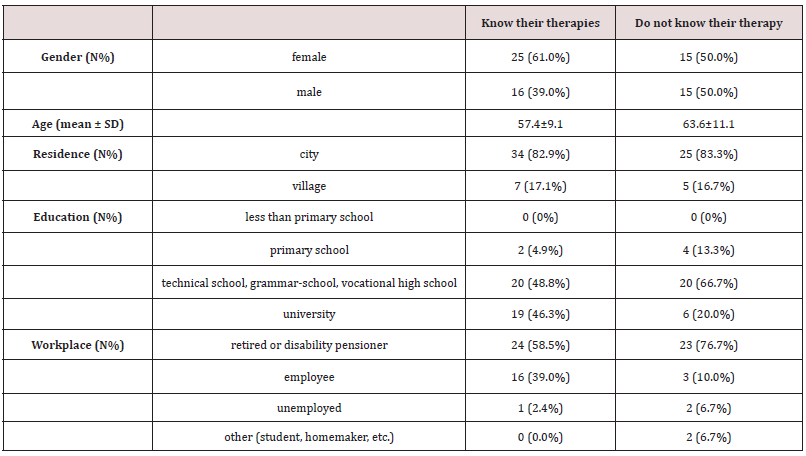
Demographic parameters are shown in (Table 1). It should be mentioned that the survey was mainly conducted in the older generation, but younger patients were also answered to the questions. The youngest patient was 31-year-old women with breast cancer. Most participants lived in cities (83.1%). Patients mainly had higher education. As it can be seen in Table 1. 56.3% had technical school, grammar school or vocational high school education, while 35.2% had a diploma from a university. Rest of the participants had primary school education, no one fulfilled less than primary school. The majority of participants were disability pensioner or retired (66.2%), but more than quartel of the patients were employee (26.8%).

Table 1: Demography.
lupinepublishers-complementary-alternative-medicine-journal

As in the question of interactions the current therapies have to be observed, it has been asked from the patients. Mainly people said, they knew their therapies with or without help (41 people; 57.7%), but relevant number of them had no idea about their therapy (30 people; 42.3%). It should be mentioned that significantly more participants from the younger generation knew its therapy. Furthermore, therapies were supervised. Sadly, less than half of the participants (43.9%) know their therapies accurately.

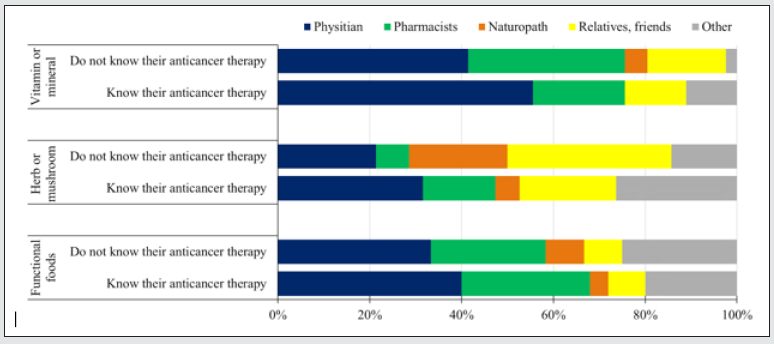
Almost all participants used some kind of vitamin or mineral containing supplement, only two people have not used these kinds of agents. They were from the group of those, who do not know their therapies have not used. In the pattern of where people heard about the vitamin and mineral containing supplement there was no relevant difference, but it is an intriguing difference in the sources of further information between those who knew their therapies. While Figure 1 shows the percentage of every answers, more than 1 answer were acceptable. All in all, 14 from 28 people who do not know their therapies would better use internet, or ask their pharmacist, versus those who knew their therapies. Only 36.6% and 22.0% would use these sources for further information. Furthermore, two more people would ask their naturopath for such information in the group of those, who do not know their therapies. At the questions about vitamin and mineral containing food supplements strangely those, who knew their therapies had slightly less knowledge points (2.97 points) than those, who do not know it (3.03) (Figure 2).

Figure 1: The source of further information about a product The figure shows if a patient needs further data about a product. Numbers are represented in the percentage of every answers.
lupinepublishers-complementary-alternative-medicine-journal

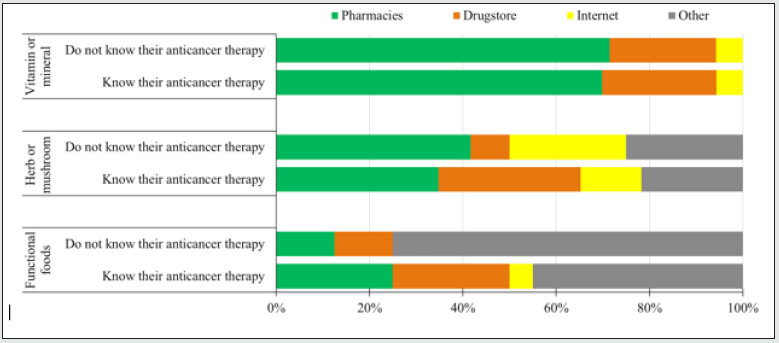
Figure 2: Procurement of a food supplements and functional foods. The figure shows the places where pateints purchased the utilized product. Numbers are represented in the percentage of every answers.
lupinepublishers-complementary-alternative-medicine-journal

Less people (N=24) answered to the questions about herbs and/or mushroom containing products, but some differences should be highlighted. For herb and mushroom containing food supplements the pattern of answers seems different not only between the two patient groups, but also in the content of food supplement. For instance, in the first question, we asked whom they heard about the therapies. At those people, who know their antitumor therapies, the most important sources were the internet and other advertisements, the second were physicians, pharmacists etc. and the third most important sources were relatives and friends. In the group of people, who do not know their anticancer therapies, the first most important sources were relatives and friends and the second most important were the internet and other advertisements. It should be noticed, that at the question, where these people heard about these herbs and/or mushroom containing products, physician, pharmacist, etc. as well as naturopaths were mentioned only as third most important sources (22%). In the sources of further information, the internet (in the subgroup of others) was the main tool. In the group of people, who do not know their anticancer therapies relatives and friends were also the main sources of information, but in the other group it seems less relevant, while a physician’s advice was prioritized. In these kinds of food supplements pharmacies were the main place where people (in every group) purchased them. An intriguing tendence was seen in the knowledge-points between the group of people who know their antitumor therapies vs, those who do not know it. The mean knowledge-point was almost 15% less in those participants, who do not know their therapies.

Even less people were answered to the questions about functional foods (N=22). People heard about these foods mainly from the internet or other advertisements, but in the group of people, who do not know their anticancer therapies physicians and pharmacists had the same result. If further information would be necessary, people would ask mainly from their physicians, but the second most common sources were pharmacists in the group of people, who now their therapies as well as at those, who do not know Relevant difference from the upper mentioned food supplements is where people purchase them. As these foods are visibly foods, the two groups of participants bought them in food marts.

We asked about further treatments, like diets or nonprescribed medications. From the 41 participants, who know their therapies, 11 utilized some kind of diets. From the 30 people, who do not know their therapies, also 11 utilized some kind of diet. We asked also about homeopathy. Marginal number of participants (N=5) used these medicines, but all of them was in the group of those, who know their anticancer therapies. From these 5 people 2 utilized it because of the cancer, but these two patients also thought that someone should not cease their therapies because of homeopathy, or the utilization of food supplements. All in all, only one, 54-year-old, male participant believed, that he may stop its current therapies (i.e., not only anticancer therapy), because of the utilization of food supplements and/or homeopathy. We also asked about the utilization of deuterium depleted water. Only 7 patients utilized it from the group of participants, who know their therapies, which was significant (p<0,05) by Fisher’s exact test.

Despite of the questions about the supplements, we further asked from people, whether herb or mushroom containing supplements can influence their therapies. In the group of participants, who know their therapies 51.2% thought it may affect their therapies, but these interactions mainly not do serious harm. Twenty-two percent of them thought, that these interactions can cause serious harm, but 26.8% believed, that these products are safe. In the cases of those participants, who do not know their therapies, 46.7% thought, these agents may affect their therapies, but these interactions mainly not do serious harm, 16.7% thought, these interactions can cause serious harm and 36.7% believed that these products are safe.

Discussion

As health literacy raises relevant questions in the whole healthcare systems, the oncology-related health literacy should be also revised and developed, with special attention to complementary and alternative medicines. For that, we wanted to describe the Oncology Center of Semmelweis University’s healthy literature about the utilized food supplements, functional foods, diets and other, non-prescribed therapies in the view of their knowledge about their own antitumor medication.

Limiting factor of our work is the relatively low number of participants, hence statistical analysis may not as punctual. It should be also mentioned that only one cancer center was in the study. On the other hand, as Table 1 shows, the Oncology Center of Semmelweis University provides not only the capital city.

We assessed our data by grouping it to those, who know their therapies and those, who do not know it. Sadly, those, who know their antitumor therapies were also imprecise, and only 43% know it well. On the other hand, we have not seen numerous significant differences between groups. Significantly more younger people know their therapies, which seem to be in good accordance with the well-known history and development of physician-patient relationship [11]. Another significant difference is that those who know their therapies more likely utilized deuterium depleted water. For now, there are clinical trials assessing this complementary agent in therapies, but clinical and preclinical results seem promising [12,13]. On the other hand, it is not clear, why were more utilized at these participants. It is a noteworthy concept, that those, who better know their therapies may try to find more way to help on themselves – while the concept was not really supported by the other complementary therapies (but the small numbers may bias the results).

In the last decades, internet become a main source of information, as well as a main point, where people can purchase products [14]. Even so, physicians are the most important sources of information, and pharmacies are the most important places to purchase these products. Two exceptions should be highlighted: in the group of those, who do not know their therapies, the main source of information was relatives and family members at the herb and/or mushroom containing products; and functional foods were mainly purchased from food marts. In the second highlighted case it should be mentioned that these products seem to be foods, and easy to mix with normal foods.

On the other hand, physicians have a noteworthy opportunity to inform patients about food supplements or functional foods, etc. regardless of how patients know their therapies. This can be crucial in the case of herb or mushroom containing products because these agents’ interaction spectrum is less studied than vitamin or mineral containing supplements. However patient education is not the duty of only the physicians, and the literature has many examples that they may need help in this work [15, 16]. The alteration in the education of pharmacists and other healthcare specialists are reliable opportunities in these questions, as pharmaceutical training for example contains lectures about herbs and mushrooms.

Another intervention points are the pharmacies. They are one of the last healthcare specialists before the patient may use a product. It seems an important point to check the food supplements and such products. Also it can be necessary for the patient to know their therapies – which means, 42.3% of the participants posed to some kind of pharmaceutical risk, and a further 43.9% had a minor risk, as they know some information about their therapies. While questioning a patient can lengthen the dispensing, pharmacists may provide better information to patients than other places [17].

All in all, food supplements, functional foods, special diets, etc. are common in the complementary and alternative therapies of patients in an oncology center. While these products and products are easily available, health care professionals have to describe intervention points and find tools to inform patients about the risks and benefits.

Conflict of Interest:

The authors declare that they have no conflict of interest.

Funding

We would like to thank for the ”Together for the Local Communities” application, provided by Hungaropharma Zrt.

Acknowledgement

We would like to thank Hungaropharma Zrt. for its support in the “Together for Local Communities” application and to dr. Dorina Ali, dr. Szonja Bóta dr. Diána Simon for the help at the questionnaires. Dietary supplements and supplemented diets

Read More About Lupine Publishers Journal of Complementary & Alternative Medicine Please Click on Below Link:
https://lupine-journal-complementary-medicine.blogspot.com/

Wednesday, 19 April 2023

Lupine Publishers| The Age Old Misnomer: Oral Pyogenic Granuloma–A Case Report

 Lupine Publishers| Journal of Dentistry and Oral Health Care


Abstract

An essential diagnostic challenge often faced by oral physicians is diagnosing soft tissue enlargements of the oral cavity. The fundamental reason being there are a diverse group of pathologic processes that can produce such lesions. Any intra-oral enlargement seen may represent a variation of normal anatomic structures, developmental anomalies, inflammation, cysts or even a neoplasm. Confined to these are the group of reactive hyperplasias of the oral cavity, which develop in response to a chronic, recurring tissue injury that stimulates an exuberant or excessive tissue repair response. Pyogenic granuloma comes under as one of the most common entities responsible for causing soft tissue enlargements.

Keywords: Pyogenic Granuloma; Oral Cavity; Inflammatory Hyperplasia; Misnomer

Introduction

Pyogenic granuloma is one of the inflammatory hyperplasia seen in the oral cavity [1]. It is not associated with pus as its name suggests and histologically it resembles an angiomatous lesion rather than a granulomatous lesion [2]. Thus, the term is a misnomer and in reality arises in response to various stimuli such as low-grade local irritation, traumatic injury or hormonal factors [1,2]. Typically, it presents as an exuberant, red painless mass that easily bleeds, ulcerates and grows rapidly and is frequently seen on the gingiva [3]. Surgical excision with linear closure allows histologic examination of the tissue. It also has the lowest rate of recurrence and is therefore the treatment of choice [4]. Hereby, we present a case of a 21-year-old male patient who presented with a growth on the gingiva and bleeding in upper front teeth region.

Case Report

A 21-year-old male patient reported with a growth behind the teeth in the upper front tooth region. The growth had first appeared two months back and had been slow growing to attain the present size. The patient gave a history of mild intermittent pain which aggravated on chewing food and was concerned about the compromised esthetics. His medical, dental and family histories were non-contributory. He was an avid pan and gutkha chewers since three years. On examination an exophytic growth on the palatal aspect of upper right canine between the right canine and first premolar was seen. The growth was irregular in shape, about one cm in size, smooth and lobulated (Figure 1A). It was pedunculated, soft in consistency and there was bleeding on provocation (Figure 1B). Based on the clinical examination we came to a provisional diagnosis of pyogenic granuloma. An excisional biopsy was carried out under local anesthesia (Figure 1C) and the report confirmed the same (Figure 1D). The patient was recalled after one, three and six months and it showed no recurrence of the growth.

Discussion

In 1844, Hullihen [5] described the first case of pyogenic granuloma in English literature. In 1897, pyogenic granuloma in man was described as “botryomycosis hominis.” Hartzell [6] in 1904 is credited with giving the current term of “pyogenic granuloma” or “granuloma pyogenicum.” It was also called a Crocker and Hartzell’s disease [6]. Angelopoulos histologically described it as “hemangiomatous granuloma” due to the presence of numerous blood vessels and the inflammatory nature of the lesion [7]. Cawson et al. [8] in dermatologic literature have described it as “granuloma telangiectacticum” due to the presence of numerous blood vessels seen in histological sections. They described two forms of pyogenic granulomas, the lobular capillary hemangioma (LCH) and the non-lobular capillary hemangioma (non-LCH) [2]. The exact etiopathogenesis remains unknown, although contributory factors include trauma, inflammation and infectious agents. Female sex hormones may also play a role as the condition occurs at increased frequency in pregnant women and in those who use oral contraceptive pills. It is believed that trauma and female sex hormones enhance expression of angiogenic factors such as basic fibroblast growth factor (bFGF) and vascular endothelial growth factor (VEGF) which will lead to evolution of the pyogenic granuloma. Medications such as isotretinoin, acitretin, cyclosporine, lamivudine, docetaxel, imatinib, and indinavir may also be contributing factors. Infections such as caused by herpes simplex type-I and Epstein-Barr virus have also been incriminated [4]. Oral pyogenic granulomas occur in all age groups, children to older adult, but are more frequently encountered in females in their second decade due to the increased levels of circulating hormones estrogen and progesterone [2]. Pyogenic granuloma of the oral cavity appears as an elevated, smooth or exophytic, sessile or pedunculated growth covered with red hemorrhagic and compressible erythematous papules, which appear lobulated and warty showing ulcerations and covered by yellow fibrinous membrane [9]. The color varies from red, reddish purple to pink depending on the vascularity of the growth. The gingiva, especially the marginal gingivais affected more than the alveolar part [10,11]. Besides the gingiva it is also noticed on the lips, tongue or buccal mucosa, affecting the maxilla more than the mandible, the anterior region than the posterior with the buccal surfaces being affected more than the lingual surfaces. The size varies from a few millimeters to several centimeters and it is usually slow growing, asymptomatic, painless growth, but at times it grows rapidly [9,10].

Differential diagnosis of pyogenic granuloma includes peripheral giant cell granuloma, peripheral ossifying fibroma, fibroma, peripheral odontogenic fibroma, hemangioma, conventional granulation tissue, hyperplastic gingival inflammation, Kaposi’s sarcoma, bacillary angiomatosis, angiosarcoma, and non Hodgkin’s lymphoma [12]. Radiographic findings are usually absent. However, Angelopoulos [7] concluded that in some cases long standing gingival pyogenic granulomas caused localized alveolar bone resorption [12]. Histologically, the lesion appears as a lobular proliferation of capillaries with each lobule containing a central feeder vessel surrounded by aggregates of capillaries [4]. The lobules are separated by a fibro-myxoid stroma. In those lesions that are undergoing regression, there may be extensive fibrosis [4,13]. For gingival lesions, excising the lesion down to the periosteum and scaling adjacent teeth to remove any calculus and plaque that may be a source of continuing irritation is recommended. Although surgical excision is the considered the treatment of choice, management of pyogenic granuloma depends on the severity of symptoms [3,14]. If the lesion is small, painless and free of bleeding, clinical observation and follow up are advised. Other treatment modalities include laser surgery, electrodessication. Injection of absolute ethanol, sodium tetradecylsulfate (sclerotherapy) and corticosteroids have also been tried with successful results in cases with recurrent lesions [15]. The prognosis is usually excellent, and the lesion usually does not recur unless inadequately removed. The recurrence rate is higher for pyogenic granulomas removed during pregnancy. Other possible reasons for recurrence include; incomplete excision, failure to remove etiologic factors, or due to re-injury to the area, making follow up necessary [14,16].

Conclusion

Despite the fact that pyogenic granuloma is a non-neoplastic growth in the oral cavity; a proper diagnosis, timely prevention and appropriate management are of utmost importance, careful diagnosis is essential to differentiate this lesion from other vascular lesions. Surgical excision of the growth, along with curettage should be done to prevent recurrences of this common lesion. And though the term pyogenic granuloma is still the used terminology of choice, it is a well-known fact that it is not associated with pus and histologically it resembles an angiomatous lesion rather than granulomatous lesion. Thus, it indicates that despite the term “pyogenic granuloma” being a misnomer, sometimes the good old quote - “Change is the only constant” gets a reality check as clearly time wants this terminology to stay in the literature books despite it lacking any accuracy at all.

Read More About Lupine Publishers Journal of Dentistry and Oral Health Care Please Click on Below Link
https://lupine-dentistry-oral-health-care.blogspot.com/

Monday, 17 April 2023

Lupine Publishers| Hyponatremia in Psychiatric Inpatients: A Native Pilot Study

 Lupine Publishers| Journal of Neurology and Brain Disorders


Abstract

Introduction: Hyponatremia is one of the most frequent ion and water disorders and severe hyponatremia is associated with well-known clinical symptoms and manifestations. In the present assessment the incidence and clinical profile of hyponatremia have been probed among a great sample of non-western psychiatric inpatients and compared with the available data in literature regarding prevalence and other associated clinical characteristics.

Methods: All inpatients with idiopathic hyponatremia during the last sixty-four months had been included in the present study. Clinical diagnosis, as well, was in essence based on ‘Diagnostic and Statistical Manual of Mental Disorders, 5th edition (DSM-5)’. Statistical significance had been defined as a p value ≤0.05.

Results: While the annual incidence of hyponatremia in current evaluation was around 0.01%, the annual incidence of mortality due to hyponatremia was around 0.001%. It was significantly more prevalent among male psychiatric inpatients (p<0.04) and patients with duration of illness in excess of one year (p<0.04). Furthermore, it was meaningfully more evident among schizophrenic patients (p<0.007), in comparison with remaining primary psychiatric disorders. There was no significant relationship between hyponatremia and symptomatic profile, or serum level of sodium and occurrence of seizure.

Conclusion: Hyponatremia was significantly more prevalent among male patients and cases with duration of illness in excess of one year. Furthermore, it was meaningfully more evident among schizophrenic patients.

Keywords: Hyponatremia; Psychiatric disorders; Psychotropic drugs; Schizophrenia

Introduction

Hyponatremia (serum sodium concentration < 136mEq/L) is one of the most frequent ion and water disorders. It is generally due to disproportionate renal water retention. Severe hyponatremia (<125mEq/L) is associated with well-known clinical symptoms and manifestations. However, even mild reductions in sodium blood levels have been shown to be associated with increased mortality and with the risk of falls and fractures. The diagnosis of hyponatremia, although requiring simple clinical and laboratory tests, may be complex and difficult [1]. Hyponatremia is a prevalent and potentially dangerous medical comorbidity in psychiatric patients, too [2]. Hyponatremia can occur in the context of water intoxication, where water consumption exceeds the maximal renal clearance capacity along with a low serum and urine osmolality. Cross‐sectional studies of chronically ill, hospitalized psychiatric patients have found the prevalence of water intoxication to be approximately 5% [3]. It may occur, as well, due to drug‐induced Syndrome of Inappropriate Antidiuretic Hormone (SIADH), where the kidney retains an excessive quantity of solute‐free water. In this situation, serum osmolality is low and urine osmolality is relatively high. The prevalence of SIADH has been estimated to be as high as 11% in acutely ill psychiatric patients [4]. Risk factors for antidepressant induced SIADH (increasing age, female gender, medical co‐morbidity and polypharmacy) seem to be less relevant in the population of patients treated with antipsychotic drugs [5]. Overall prevalence of antipsychotic‐induced hyponatremia has been estimated at 0.004% [6] and 26.1% [5] of patients. Mild to moderate hyponatremia presents as confusion, nausea, headache and lethargy.

As the plasma sodium falls, these symptoms become increasingly severe and seizures and coma can develop. So, while monitoring of plasma sodium is desirable for all those receiving antipsychotics, signs of confusion or lethargy should provoke thorough diagnostic analysis, including plasma sodium determination and urine osmolality [3]. Prevalence of polydipsia in a population of chronic psychiatric patients can be as high as 6 to 17% [7]. Schizophrenia represents 80% of cases reported [8]. Early onsets of psychiatric disorder and long duration of that or poor response to psychopharmacotherapy have been identified as significant risk factors for appearance of hyponatremia [9]. Patients with hyponatremia may be asymptomatic or present with nausea, anorexia, muscle cramps, weakness, fatigue, confusion and disorientation. Severe hyponatremia may result in serious neurologic sequelae such as coma and seizures, and death. Advanced age, too, appears to be a risk factor for this adverse effect, as does the concomitant use of diuretics [10]. Like other psychotropic medications, it is suspected that atypical antipsychotics can induce hyponatremia by either stimulating antidiuretic hormone release from the brain or enhancing antidiuretic hormone activity in the kidneys [10]. Currently, there are no reliable estimates of incidence or risk of hyponatremia from atypical antipsychotic drugs in older adults [11]. On the other hand, while acute hyponatremia is characterized by onset of symptoms <48h, chronic hyponatremia develops over >48h and most patients have chronic hyponatremia. The serum sodium concentration is usually above 120meq/L. Brain adapts itself to hyponatremia by generation of idiogenic osmoles. This is a protective mechanism that reduces the degree of cerebral edema; it begins on the first day and is complete within several days. Hence in chronic hyponatremia patients may appear asymptomatic [12]. Mild chronic hyponatremia is not benign as previously thought and can directly contribute to increased morbidity and possibly, mortality [13,14]. In the present assessment the incidence and clinical profile of hyponatremia have been probed among a great sample of non-western psychiatric inpatients and compared with the available data in literature regarding prevalence and other associated clinical characteristics.

Methods

Razi psychiatric hospital in south of capital city of Tehran, as one of the largest and oldest public psychiatric hospitals in the Middle East, which has been established formally in 1917 and with a capacity around 1375 active beds, had been selected as the field of study in the present retrospective assessment. For evaluation, all inpatients with idiopathic hyponatremia during the last sixty-four months had been included in the present study. Clinical diagnosis, as well, was in essence based on ‘Diagnostic and Statistical Manual of Mental Disorders, 5th edition (DSM-5)’ [15].

Statistical Analysis

Analysis of dependent variables had been accomplished by ‘t-test’ and appraisal of independent variables had been explored by means of ‘comparison of proportions’. Statistical significance, as well, had been defined as a p value ≤0.05. MedCalc Statistical Software version 15.2 was used as statistical software tool for analysis.

Results

As said by results, among 20118 psychiatric patients hospitalized in razi psychiatric hospital, during the last sixty-four months (April of 2014-August 2019), eighteen patients had been diagnosed as hyponatremic, whether symptomatic or asymptomatic, during their inpatient treatment, based on laboratory checkups. So, the annual incidence of hyponatremia in the current inpatients’ evaluation was around 0.01%. In spite of referral to intensive care unit and given medical treatment, one elderly chronic female patient died by reason of hyponatremia. Accordingly, in the present survey the annual incidence of mortality because of hyponatremia was around 0.001%. Also, with regard to gender difference and in keeping with results, while there was no significant difference regarding age between male (mean: 43.92±9.51y/o) and female (mean: 52.50±8.34y/o) patients (t = 1.962, p< 0.08, CI 95%: -18.29, 1.13), hyponatremia was significantly more prevalent among male psychiatric inpatients (z= 2.00, p<0.04, CI 95%:0.006, 0.660). besides, concerning chronicity of psychiatric disorders, comparison of proportions showed that hyponatremia was significantly more prevalent among psychiatric patients with duration of illness in excess of one year (p<0.04) (twelve patients in the chronic wards versus six patients in the acute districts of the hospital). Moreover, with respect to prevalence of primary psychiatric disorders among patients, who have experienced hyponatremia during the last 64 months, schizophrenia (n=13) was significantly more prevalent in comparison with remaining disorders [mental retardation (n=1), schizoaffevtive (n=1), bipolar disorder (n=2) and major depressive disorder (n=1)] (z=2.66, p<0.007, CI 95%: -0.11, 0.77). While, eleven patients had different clinical symptoms due to hyponatremia (Table 1), seven cases were asymptomatic, and diagnosis had been confirmed based on merely coincidental checkup. Quantitatively, analysis revealed no significant difference between those groups (z=1.33, p<0.18, CI 95%: -0.54, 0.10). Also, though mean total plasma level of sodium was around 121.72±4.97, there was no significant difference between serum level of sodium in seizure cases (mean total= 119.75±1.29) and non-seizure patients (mean total=122.64±5.06) (t = 1.929, p< 0.28, CI 95%: -6.07, 0.29).

Read More About Lupine Publishers Journal of Neurology Please Click on Below Link:
https://brain-disorders-lupine-publishers.blogspot.com/

Tuesday, 11 April 2023

Lupine Publishers| Is There Any Fluctuation in Normal Blood Pressure While Watching Horror Movies?

 Lupine Publishers| Journal of Medical Sciences


Abstract

Relation between normal body temperature and dimple on the chin is the main objective of this study. A total of 130 undergraduate students participated in this research activity. All the subjects were undergraduate students in Bahauddin Zakariya University, Multan, Pakistan. Normal temperature of the body was calculated by using thermometer. It was concluded from the study that there was no relation of normal temperature of the body with the dimple on the chin.

Keywords:Normal temperature of body; Dimple on chin; Fever; Cleft on chin

Introduction

The “ordinary” body temperature is 98.6°F (37°C). This number is just a normal. Our body temperature might be somewhat higher or lower. A body temperature perusing that is above or beneath the normal doesn’t naturally mean we’re debilitated. Various elements can impact our body temperature, including our age, sex, day time, and movement level. As we grew older, our body becomes less efficient to regulate temperature. Older people have less temperature of body because their bones have less stamina to bear the environmental factors that effect on their body. In babies, the normal temperature of body ranges from 97.9 °F to 99 °F. In adults, the normal temperature of body is 97 to 99 °F and for the adults with age above 65 has body temperature less than 98.6 °F. Remember that ordinary body temperature fluctuates from individual to individual. Our body temperature may be up to 1°F higher or lower than this. The specialists called attention to that our bodies will in general warm for the duration of the day. Thus, a fever in the early morning may happen at a lower temperature than a fever that seems later in the day. The main factor is not the time of the day that can impact temperature. More youthful individuals will in general have higher normal body temperatures. This is on the grounds that our capacity to manage body temperature diminishes with age. Physical action levels and certain nourishments or beverages can likewise impact body temperature. Ladies’ body temperatures are impacted by hormones too and may fall or rise at various focuses during a lady’s menstrual cycle.

Body temperature readings change contingent upon where on the body an individual takes the estimations. An infant’s temperature is higher because they have a bigger body surface region in respect to their body weight. Their bodies are likewise more metabolically dynamic, which creates heat. Infant bodies don’t direct temperature just as grown-up bodies. They sweat less when it is warm, implying that their bodies hold more warmth. It might likewise be progressively troublesome for them to chill them off amid a fever. A region of the cerebrum called the nerve center controls body temperature. On the off chance that body temperature transcends or plunges beneath the 37°F imprint, the nerve center kicks in to control the temperature. In the event that the body is excessively cool, the nerve center sends signs to make the body shudder, which warms the body up. In the event that the body is excessively hot, it sends messages to start perspiring, which gives heat a chance to leave the body. Contaminations cause generally fevers. A fever creates as the body’s normal method for responding to and battling disease. Fever occurs when the normal temperature of the body fluctuates and it reaches to the 100 or above 100°F. Side effects include hunger misfortune, a cerebral pain, touchiness, muscle hurts, shuddering, perspiring, shortcoming. Temperature of the body is a proportion of the body’s capacity to produce and dispose of warmth. There are 4 different methods by which we can take the temperature of the body. These include below armpit (axillary strategy), inside the mouth (oral technique), in the ear (tympanic technique) and in the rectum (rectal technique). The rectal reading or reading taken by ear might be higher than the oral reading but the reading taken by the armpit will be lower than the oral one. The most suitable methods from all of them is the reading taken by the rectum.

The cleft on the chin happens in light of the fact that the muscle that shows up around the jawbone neglects to close at the jaw, subsequently leaving a hole and is in fact viewed as a blemish. Dissimilar to cheek dimples, which speaks to energy and honesty, a jaw dimple is viewed by most ladies as ugly as they think having such is more manly than ladylike. There are various approaches to improve the presence of the profound separated jaw. A standout amongst the most well known and most clear courses is to utilize dermal fillers to fill in the jawline dimple. Dermal fillers can be utilized to fill the hole making a progressively female appearance. In Persian writing, a dimple on the chin or jaw pit is viewed as the characteristic of magnificence. The term ‘chin pit’ or ‘jaw well’ is a similitude alluding to the pit or well into which a head over heels sweetheart has fallen and is caught. The terms split chin, jaw separated, dimple on the chin, or jaw dimple, allude to a dimple on the focal point of the jaw. It is a Y-molded gap on the jaw with a fundamental impossible to miss space on the bone itself. The jawline gap pursues the gap that is on the lower jaw bone that came about because of the inadequate combination of the left and right parts of the jaw bone, or the muscle, amid the embryonal and fetal advancement [1].

For a few people, a cleft on the chin can create after some time, since one portion of the jaw is longer than the other, prompting facial asymmetry. The cleft on chin or separated jaw is an acquired quality in people, where the predominant genes causes a split jawline, while the recessive genotype will display without a cleft on the chin. Everybody acquires two arrangements of genes that decide the state of their jaw, with one from each parent. The accomplice’s hereditary makeup will factor into whether the kids will have a parted jaw or a smooth one. If the two parents have acquired two separated jawline genes, at that point the probability of the youngsters having a cleft on the chin is 100 percent [2]. Relation between normal body temperature and dimple on the chin is the main objective of this study.

Materials and Method

Measurement of Normal Body Temperature

For measuring the normal body temperature eat home, we need a digital thermometer. The digital thermometer showed the body temperature of the individual in points as 97.02 °F. We measured the normal temperature of the body of all the students with thermometer by placing it in the armpit. While some students placed it in the center of the arm. There was an ON button on the thermometer. Press the button and the thermometer will show the reading after one minute. Note down the reading on the thermometer.

Task Design

A total of 130 undergraduate students participated in this research activity. All the subjects were undergraduate students in Bahauddin Zakariya University, Multan, Pakistan. The purpose of research was to correlate the normal body temperature with dimple on the chin.

Data Analysis

MS-Excel was used to done data analysis.

Results

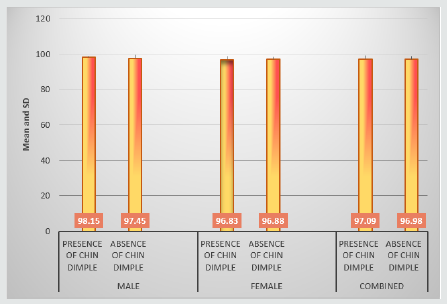
Figure 1: Load vs crack initiation life with only ML.

Lupinepublishers-openaccess-journals-medical-science-journal

Table 1: Relation of normal temperature of the body and dimple on the chin (p value).

Lupinepublishers-openaccess-journals-medical-science-journal

p>0.1 these are non-significant results.

Relation of normal temperature of the body and dimple on the chin is given in (Figure 1) and (Table 1). These figures showed that there was no significant relation of the normal temperature of the body and dimple on the chin as all the p values were higher than the significant value that was 0.1. The high ratio of presence of chin dimple was in males but there was no significant relation with the normal body temperature.

Discussion

Important advancement had been made by recent researches [3-11]. Levander et al. [10] did an investigation on the temperature of the body in men and women. They observed the rectal, oral, tympanic and axillary temperature of the body. The motivation behind this examination was to research ordinary body temperature in grown-up people. A methodical audit of information was performed. Studies were incorporated that was from 1935 to 1999. Articles were named strong, genuinely strong and weak proof. While condensing contemplates with strong or genuinely strong proof the range for oral temperature was 33 to 38 Celsius, rectal temperature was 34 to 37 Celsius, tympanic temperature of body was 35 to 37 Celsius and axillary body temperature was 35 to 37 Celsius. The range in oral temperature for people, separately, was 35 to 37 Celsius and 33 to 38 Celsius, body temperature in rectal was 36 to 37 Celsius and 36 to 37 Celsius, and temperature of body in tympanic was 35 to 37 Celsius and 35 to 37 Celsius. While surveying body temperature it is critical to happen of estimation and gender orientation into thought. Concentrates with arbitrary examples are expected to affirm the scope of typical body temperature as for gender orientation and age.

Action of Salicylate on the normal temperature of the body in rats was also studied by Satinoff [11]. Rats accepting intraperitoneal infusions of sodium salicylate demonstrated a decrease in rectal temperature of up to 5 degree Celsius when set in a 5 Celsius area. The portion of salicylate was by the body load as 30 to 300mg. Elevated amounts of salicylate brought down the temperatures of rats kept in a 23 Celsius condition. The verdict that salicylate can bring down non-feverish temperature of the body recommends that antipyretic specialists affects routine temperature direction.

Conclusion

It was concluded from the study that there was no relation of normal temperature of the body with the dimple on the chin.

Read More About Lupine Publishers Journal of Medical Sciences Please Click on Below Link:  https://lupine-publishers-medical-sciences.blogspot.com/

Saturday, 8 April 2023

Lupine Publishers | Aquatic Exercise Intervention Is Effective for Spasticity Inhibition in Children with Cerebral Palsy: A Clinical Controlled Study

 Lupine Publishers | Journal of Pediatrics and Neonatology


Abstract

Introduction: Spasticity has been implicated as a major hindrance to motor development and overall functional performance in children with cerebral palsy (CP). Recent evidence have suggested aquatic therapy as an alternative means for inhibiting spasticity in children with CP. However, these previous studies have provided contrasting results, thereby creating some dearth of evidence in the use of aquatic therapy to manage spasticity in children with CP.

Objective: To investigate the effectiveness of aquatic exercise intervention in inhibiting spasticity in children with CP.

Materials and methods: Thirty children aged 1-12 years participated in this study. They were randomised into 2 groups (experimental and control). The experimental groups received manual passive stretching on affected muscles of both upper and lower extremities followed by weight bearing exercises in water (temperature 28-32ºC) while the control group received same exercises on land for 10 weeks. Degree of spasticity on treated group of muscles was assessed using Modified Ashworth Scale (MAS). Mann-Whitney-U test was used to compare the change in degree of spasticity between both groups. The level of significance was set at p<0.05.

Results: The experimental group showed significant reduction in spasticity of all the tested muscle groups while the control group showed no significant improvement in spasticity of wrist flexors and knee flexors. No significant difference was observed for change in spasticity between both groups.

Conclusion: Aquatic exercise intervention is effective for inhibiting muscle spasticity in children with cerebral palsy.

Keywords: Aquatic Exercise; Intervention; Spasticity; Cerebral Palsy.

Introduction

Spasticity is a widespread problem among children with cerebral palsy (CP) as it affects function and can lead to musculoskeletal complications [1]. It occurs as a result of pathologically increase in muscle tone and hyperactive reflexes mediated by a loss of upper motor neuron inhibitory control [2]. Spasticity is considered an important neural contributor to muscle hypertonia in children with cerebral palsy [3].It adversely affects muscles and joints of the extremities, causing abnormal movements, and it is especially harmful in growing children[4]. Reduction of spasticity and improvement of motor control is a prerequisite for functional performance in children with cerebral palsy [5,6]. With reduction in spasticity, improvement in gross motor function and independent performance of ADLs are expedited which in turn reduces the burden cerebral palsy poses on the children and their caregivers [5,6,7] .The management of spasticity in children with CP is often complex and poses a great challenge to healthcare professionals. Effective treatment requires a multidisciplinary approach involving pediatricians, physiotherapists, occupational therapists, orthotists and surgeons. Previous studies have suggested various treatment approaches and modalities to manage spasticity associated with spastic CP. These include the use of oral neuropharmacological agents, injectable materials such as botulinum – a toxin or surgical treatment, use of orthotic devices, massage techniques, strengthening exercises to the antagonist musculature, use of electrical stimulation and the application of cryotherapy or ice therapy [8,9]. Aquatic intervention is one of the most popular supplementary treatments for children with neuromotor impairments, particularly CP [10]. Several studies have reported aquatic intervention as a veritable tool in the rehabilitation of children with CP [11-13]. The intervention may provide safe and beneficial alternative low-impact exercise for children with disabilities [14]. This study was aimed at investigating the effectiveness of aquatic exercise intervention in inhibiting spasticity in children with spastic cerebral palsy.

Methods

Thirty children undergoing rehabilitation were recruited for this study from a center for developmental challenges in Lagos, Nigeria. Their age range was from 1 to 12 years and were diagnosed with the spastic form of cerebral palsy. Those with other neurodevelopmental conditions were excluded from the study.

Ethical Approval and Informed Consent

Ethical approval for this study was obtained from the Health Research and Ethics Committee of the Lagos University Teaching Hospital, Idi-Araba, Lagos, Nigeria (Ref. No: ADM/DCST/HREC/ APP/1525). Parents of the participating children gave their informed consent.

Procedure

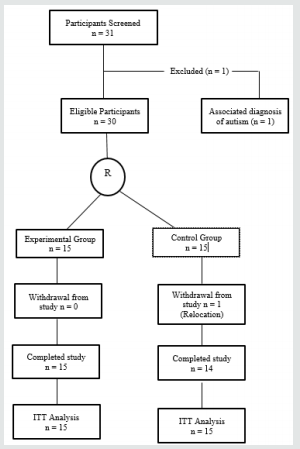
A detailed history and thorough physical examination was initially carried out on each participant. Those who met the criteria for the study were then randomly assigned into experimental and control groups. The flow chart of the study is presented in Figure 1.

Assessment Protocol

Functional Level Assessment: This was assessed using the Gross Motor Function Classification System- Expanded and Revised according to standard [15].

Degree of Spasticity Assessment: This was done using the Modified Ashworth Scale (MAS). Both upper limbs (shoulder adductors, elbow flexors and wrist flexors) and lower limbs (hip adductors, knee flexors and ankle plantar flexors) were assessed for spasticity bilaterally (left and right) according to the pattern presented by the participants. Each participant was placed in a relaxed supine position and the starting position of testing each muscle group was a maximal placement of the joint in a position of their primary function and then maximally moved to a lenghtened position opposite to their primary movement. Participants were then scored based on the amount of resistance to passive movement as described in MAS. To accommodate the score of “1+” modification for numeric analysis, grade ‘‘1+’’ was recorded as 1.5[16].

Figure 1: Flow chart of the study. Key: R: Randomization. ITT: Intention –to-treat.

lupinepublishers-openaccess-journal-pediatrics-neonatology

Intervention

The participants in both experimental and control groups had a total of 20 treatment sessions consecutively for 10 weeks at the rate of two sessions per week. It was ensured that participants in both groups were not on any form of anti-spastic medication throughout the study.

Those in the experimental group received exercise training in water of temperature ranging between 28-32 ºC for 10 weeks with the exercised parts fully immersed in water. The exercise protocol consisted of 3 categories of exercises:

Exercise 1 (Manual passive stretching): Each joint involving the spastic group of muscles was passively stretched and held in this in fully lengthened position of the muscle groups for up to 60 seconds follow by relaxation of 30 seconds. This procedure was repeated five times for each part

Exercise 2: Weight bearing one or both upper extremities in sitting with or without support for 60 seconds and repeated 5 times.

Exercise 3: Weight bearing on both lower extremities in standing with or without support for 60 seconds and repeated 5 times.

Control group

Participants in the control group received same exercise intervention as those in the experimental group except that the intervention was carried out on land.

Post-intervention Assessments

Participants in both groups were re-assessed after 4 weeks, after 8 weeks and after 10 weeks of intervention for changes in spasticity using the Modified Ashworth Scale (MAS). All assessments were carried out by blinded assessors.

Data Analysis

Data was analyzed using the Statistical Package for Social Sciences version 21.0 version. Participants in both groups were compared for age using the Independent t-test. Friedman test was used to compare post intervention changes in degree of spasticity within each group across the duration of treatment while Mann- Whitney U test was used to compare the change in spasticity between both groups. All statistical tests were performed at the 0.05 level of significance (p<0.05).

Results

Physical Characteristics

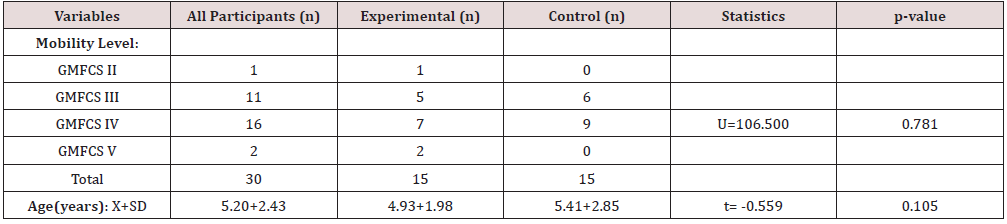
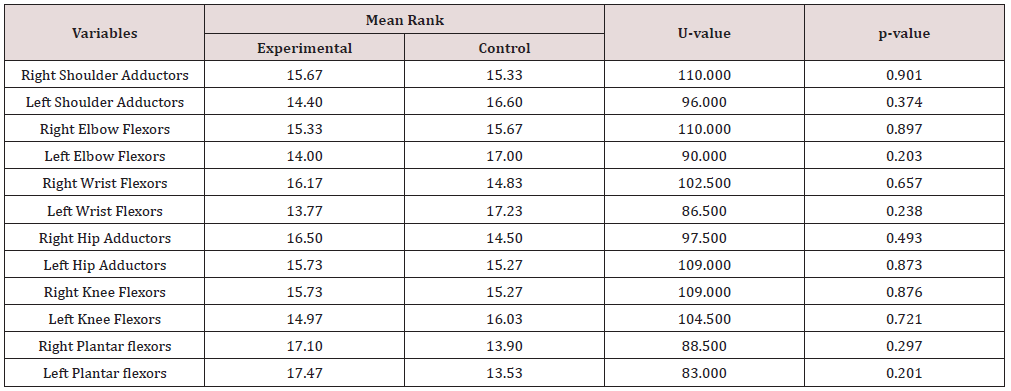
The mean age of all participants was 5.20+2.43 years and no significant difference in age was found between both groups of participants at baseline Table 1,2. Most of the participants were in level IV of the GMFCS. Quadriplegic spastic type of CP predominated among all the participants as shown in Figure 2.

Figure 1: Distribution of Type of Spastic Cerebral Palsy among Participants.

lupinepublishers-openaccess-journal-pediatrics-neonatology

Table 1: Comparison of Age and Mobility Level between both Groups at Baseline.

lupinepublishers-openaccess-journal-pediatrics-neonatology

Key: X+SD: Mean + Standard deviation.

Table 2: Mean Rank Comparison of Spasticity between both Groups at Baseline.

lupinepublishers-openaccess-journal-pediatrics-neonatology

Aquatic Intervention and Spasticity

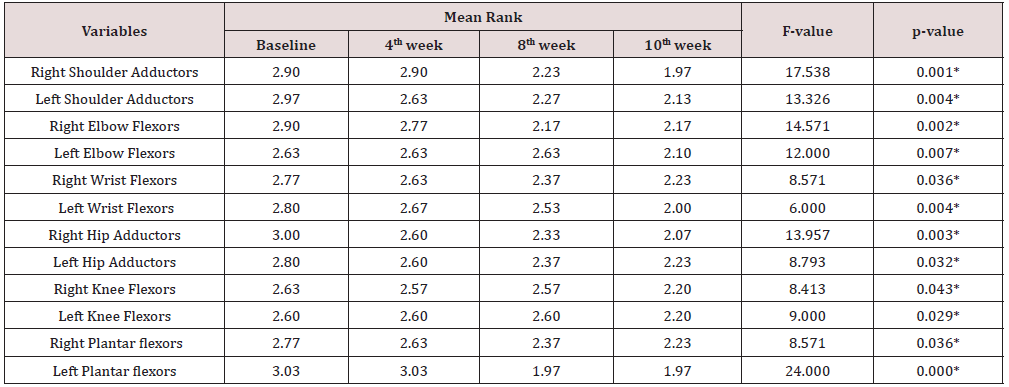
Significant change in spasticity was observed on all tested group of muscles of participants in the experimental group following aquatic exercise intervention Table 3.

Land-based Exercises and Spasticity

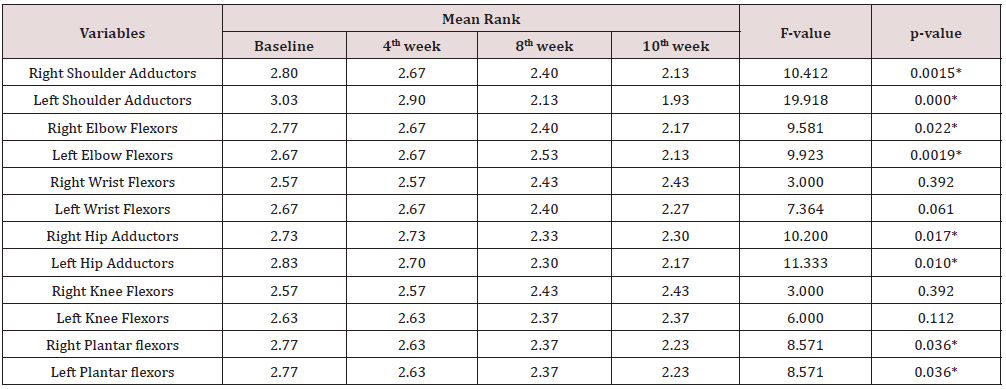
Significant change in spasticity was also observed on tested group of muscles among participants in the control group following land-based exercise intervention, except for right and left wrist flexors; and right and left knee flexors as shown in Table 4.

Table 3: Comparison of Mean Rank Changes in Spasticity in Experimental group of Participants across the duration of Intervention.

lupinepublishers-openaccess-journal-pediatrics-neonatology

*Significant at p<0.05

Table 4: Comparison of Mean Rank Changes in Spasticity in Control group of Participants across the duration of Intervention.

lupinepublishers-openaccess-journal-pediatrics-neonatology

*Significant at p<0.05.

Comparison of Spasticity Change between Experimental and Control Groups

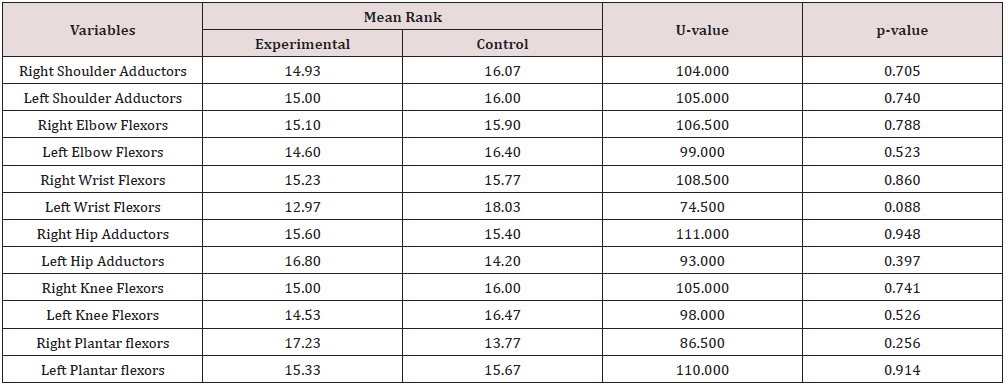
Despite the gross improvement in spasticity of participants in experimental group compared to the control group which showed no improvement for few groups of muscles, no significant difference was found in the spasticity change between both groups as represented in Table 5.

Table 5: Mean Rank Comparison of Spasticity between both Groups after 10 weeks of Intervention.

lupinepublishers-openaccess-journal-pediatrics-neonatology

Discussion

Quadriplegic type of spastic CP was more predominant in this study. This is consistent with reports from earlier studies in Nigeria [17-19]. However, reports from studies in other parts of the world showed that there were more diplegic type of spastic CP [11,20][21- 23]. Geographical differences may be considered for this variation.

In this present study, statistically significant improvement was observed in both intervention groups for spasticity of shoulder adductors, elbow flexors, hip adductors and ankle plantar flexors. This finding shows that therapeutic exercises such as manual passive stretching and weight bearing exercises which are used by physiotherapists in the management of spasticity in children with cerebral palsy are effective as documented in previous studies [21,24,25,26]. The report of statistically significant improvement in spasticity of hip adductors and knee flexors following 10 weeks of aquatic intervention in this study has been supported by a study by Chrysagis et al in 2009 where there was further significant improvement in the passive range of motion of the hip and knee joints [11]. However, the aquatic training adopted for their own study was different from the one used in this present study. This improvement in spasticity is attributable to the therapeutic benefit of buoyancy property of water which can help to relax spastic muscles by providing antigravity positioning. This study revealed that landbased exercise intervention improved the spasticity of shoulder adductors, elbow flexors, hip adductors and ankle plantar-flexors as observed among participants in the control group. This finding was corroborated by a systematic review on the effectiveness of passive stretching on spasticity in children with cerebral palsy [24]. They found out that 4 of the 6 reviewed studies reported significant reduction in spasticity including that of shoulder adductors, elbow flexors, hip adductors and ankle plantar flexors following passive stretching while the remaining 2 studies did not consider spasticity in their outcome variables. This improvement in spasticity may be attributed to fatigability of stretch receptors as a result of stretch on the muscle spindles which induces inhibition on the gamma-motor neurons and allowed more lengthening of muscle fibres thereby counteracting the effect of spasticity.

There was no significant improvement observed for spasticity of the wrist flexors and knee flexors in this present study after 10 weeks of land-based exercises. These findings are contrary to the findings of Akinbo et al. (2007) and Akinbo et al. (2007) who in their separate studies found out that manual passive stretching alone significantly improved spasticity of wrist flexors, passive range of motion of the wrist as well as hand function in children with spastic cerebral palsy with and without the use of cryotherapy. They however both concluded that a combination of passive stretching, and cryotherapy produced better improvement in the spasticity of wrist flexors in children with spastic cerebral palsy [25,26]. The reason for lack of significant improvement in spasticity of wrist flexors and knee flexors following 10 weeks of land-based exercises in this present study could not be ascertained but there may be needed to go further beyond 10 weeks to get a significant improvement. Comparison between the experimental and control groups revealed no significant difference in the change in spasticity of all tested muscle groups. This implies that either of the two forms of intervention can be adopted in the management of spasticity in children with cerebral palsy. However, considering the result of this study which had earlier shown that aquatic intervention significantly improved the spasticity of all the tested muscle groups including those of wrist flexors and knee flexors which were not significantly improved by land-based exercises after 10 weeks, the beneficial pendulum might as well be tilted towards the aquatic exercise intervention when there is need for clinical decision making in the management of a patient presenting with spasticity of all the tested muscle groups in this study.

Conclusion

Aquatic exercise intervention is effective in inhibiting spasticity in children with Cerebral Palsy and should be an intervention of choice when considering affectation of all muscles of both upper and lower extremities.

Read More About Lupine Publishers Journal of Pediatrics and Neonatology Please Click on Below Link:
https://lupinepublishers-pedaitrics.blogspot.com/

Wednesday, 5 April 2023

Lupine Publishers | The Climate does not Change from Carbon

 Lupine Publishers | Journal of Food and Nutrition


Opinion

The climate is changing from the artificial fumes that mankind has created. Artificial fumes differ from natural fumes in quality, volume and speed. Water is intended only for consumption-for drinking. But we, not understanding her essence, made her a slave. Turned into a working reagent, a means of increasing comfort. They began to use it as a liquid to wash everything and everything, move it with pumps, heat and boil, cool, dissolve all chemical elements in it, fill in the fields, destroy its molecules in the air with engines, furnaces and compressors. Almost everything used goes into the atmosphere, bypassing the biota, with unnatural fumes directly and from the sewer sumps. Artificial fumes destroyed the everlasting process of sedimentation, which has been developing for millions of years. A different structure of water molecules of new volumes, evaporation rates form a different mechanism. New quantities create new qualities. The processes of concentration, movement, interaction with the atmosphere have changed - pressure, temperature, moisture transfer in new time parameters have changed. Uncontrollable in volume and time, precipitation is formed in other volumes, in a different quality, and falls in other places. Therefore, floods occur in some places, droughts - in others. Therefore, the level of the oceans rises - heavy clouds do not reach the mountain and polar glaciers. The hypothesis requires proof. The proof of the hypothesis leads to discovery. The discovery should lead to a new concept. The basis of the concept is the return of its natural functions to water. These functions are embedded in wild forests and untouched areas. But with our desire for comfort, we took over 70% of the land from nature -flooded with reservoirs, plowed, covered with garbage and ore landfills, structures, and roads (Figure 1).
Throughout this area there was vegetation and living creatures, which processed water into vapors and vapors having special qualities. You can still save life on the planet. Not by appeals and wishes, but by fundamentally restructuring our attitude towards water, reducing our water needs, making this a strategy of every state, every person. Nature urgently needs to return its natural process of water circulation. All the cares, work, movement on green technologies, reducing carbon dioxide emissions, alternative energy, preserving biodiversity, protecting, and restoring nature-all this is combined under a single action. There are such opportunities if we use the experience of developed countries and use many inventions in this direction. It is known that in the Scandinavian countries and Japan there are no more landfills; in Israel, plant products are grown with minimal water consumption. Famous houses with vertical and roof landscaping. Known inventions that allow you to generate electricity without reservoirs in rivers. There are ways to economically consume water on airplanes and trains. All such measures should be developed and applied when using water in all technologies in all cities and countries. Only returning it to nature, the accumulated water cycle for millions of years, can reduce natural disasters and stop climate change. Performing such tasks is necessary for the whole world, each enterprise, each country, each person.

Lupine Publishers| Is There Any Fluctuation in Normal Blood Pressure While Watching Horror Movies?

 Lupine Publishers| Journal of Medical Sciences


Abstract

  The purpose of recent research was to probe any close linkage concerning the normal blood pressure with viewing scary films. Total 185 subjects contributed in this survey. Blood pressure is the force that transports blood throughout the vascular system. It is expressed by two figures. The systolic blood pressure defines the pressure in blood vines when our heart strokes. The diastolic pressure estimates pressure when the heart relaxes between pumping. The readings are shown in the form of 120 systolic and 80 diastolic. It is the normal blood pressure. We can say “120 over 80” or note “120/80 mmHg.” There is a constructive relation between watching a horror movie and the blood pressure. We encounter some physical situations while watching these events. We detect an increase in heart rate, rise up in blood pressure, stressed muscles and a reduction in body temperature. It activates the release of dopamine and adrenaline hormone. It triggers aggressive behavior and emergency situation. we applied automatic digital device for the precise measurement of blood pressure. We placed the cuff on naked arm on inch above or below the curve of the elbow. We pressed the start button and the cuff began inflating and then slowly deflated. We recorded the measurement of the blood pressure during this period. It was deduced that there is no significant fluctuation in normal blood pressure while watching horror movies.

Keywords: Horror Movies; Blood Pressure; Systolic; Diastolic; Digital Monometer; Dopamine

Introduction

Blood pressure is the power that transports blood throughout the vascular system. It is defined via two figures. The systolic blood pressure determines the pressure in blood vessels when our heart propels the blood. The diastolic pressure evaluates the pressure when the heart relaxes between pumping. The readings are shown in the form of 120 systolic and 80 diastolic. It is the normal blood pressure. We can say “120 over 80” or record “120/80 mmHg.” The fluctuations from normal reading indicates low and high blood pressure which can be dangerous to our health. It reads highest at the beginning from our heart and it is lowest when it enters the minute branches of arteries. It is also significant as the afore mentioned carries leukocytes and antibodies for immunity, hormones i.e. insulin. It is not only vital in delivering O2 and nutrients but also eliminates toxic carbon dioxide and toxins that removes through liver and kidney. It also helps in thermoregulation and prevents bleeding with the help of clotting platelets.

Blood runs across our body because of a variance in pressure. The state of the arteries alters blood pressure and flow. If the arteries become thicker and smaller, it will lead to blockage of the blood circulation and this condition cause stroke and heart attack. In recent age, the majority watch scary movies but they do not know about the facts of watching horror movies. Now a days, the internet source is easily accessible to everyone. So, we can download any type of horror videos. There is a worthy relation between watching a horror movie and the blood pressure. We face some physical situations while watching these events. We observe an increase in heart rate, rise in blood pressure, tense muscles and a fall in body temperature. It activates the release of dopamine and adrenaline hormone. It triggers aggressive behavior and emergency situation. There is a heart attack risk due to high blood pressure during this activity of viewing horror film. When we are habitual to these movies then there is no fear and no anxiety. Hence, low blood pressure or equal to normal BP is observed [1,2]. The target of this project was to investigate the relationship between the normal blood pressure and watching horror movies [3-8]

Materials and Method

we used automatic digital device for the accurate measurement of blood pressure. We positioned the cuff on naked arm on inch above or below the curve of the elbow. We pushed the start button and the cuff began inflating and then slowly deflated. We recorded the measurement of the blood pressure during this period. The screen displayed the blood pressure in the form of ‘120/80’ mm of Hg. In this way, we counted the subjects’ blood pressure.

Project Designing: Over-all 185 took part around the survey. The participants were the undergraduates getting education in BAHA UD DIN ZAKARIYA UNIVERSITY MULTAN, PAKISTAN. Their blood pressures were gaged through automatic digital sphygmomanometer and cited the blood pressure. A feedback form was supplied to them. Their replies accumulated and explored later in this study.

Statistical Analysis: This process was completed utilizing MS Excel software. T-test was manipulated to examine the following findings. P value (< 0.05) was indicated being substantial.

Results and Discussion

From above Table 1, we can describe that female subjects show the significant result because their actual P* value (0.05) is very equal or similar to original p value (<0.05). Table 2 displays that there are greater actual p values than original value. So, there is non- significant results in situation of diastolic BP. But seeing the averages of 1st Table, greater systolic blood pressure avg for male explains their attraction towards watching horror movies. The same result seeks from the 2nd Table. While in case of female and combined gender, they have greater avg values for hating to watch scary movies.

Read More About Lupine Publishers Journal of Medical Sciences Please Click on Below Link:  https://lupine-publishers-medical-sciences.blogspot.com/

Monday, 3 April 2023

Lupine Publishers| Language Development as An Objective Indicator of Neurodevelopment

 Lupine Publishers| Journal of Otolaryngology


Short Communication

Language development is an objective indicator of developmental and cognitive skills in children. It is also one of the fundamental pillars for a child to acquire autonomy and be able to adapt to social and academic situations. A language delay (including both verbal and non-verbal skills) is an indicator that some aspect of development in young children is not going well. Language delays may be primarily due to four causes: hearing problems, neurodevelopmental conditions, such as the risk of having Developmental Language Disorder (DLD, formerly Specific Language Impairment –SLI-), Intellectual Disability -which at an early age is labeled as Developmental Global Disorder (DGD), or Autism Spectrum Disorder (ASD).

Hearing Problems

According to WHO (2000), 10% of children are born deaf or hard-to-hearing. To a large extent, neonatal hearing screening can detect most of individuals with hearing loss, when there is a genetic or congenital etiology. Birth defects also include hearing loss and congenital deafness; it is estimated that between 2,000 and 6,000 children are born with these conditions each year in Mexico [1]. However, for those individuals with mild or moderate hearing loss, which is not detected by neonatal screening, a delay in language development can be evidenced around eighteen months of age. For example, recurrent otitis media has been known to contribute to language delays in young children under 2 years of age. However, a systematic review informed that it only contributes to phonological deficits in children [2]. Recurrent otitis interferes with the quality of the sound signal received by the child, especially the perception of some phonemes (e.g. fricative and voiceless sounds) but is not directly related to language and communication delays.

Late Talkers (LT)

When hearing loss is excluded as the cause of language delays, the developmental condition to be considered as the most prevalent is “Late Talker” (LT). According to various authors [3-5], this condition exhibits a prevalence of 13.5%, which is not caused by sensory, anatomical or neurological problems. The delay is primary manifested, but not exclusively, in the domain of expressive language (production of gestures, words and sentences) [6,7]. About 70-75% of LTs will catch up to their peers at 36 months of age. But approximately 25-30% of these children will continue with more severe language difficulties, which may evolve into a Developmental Language Disorder (DLD) [8]. Most of the studies about LTs agree that these children produce less than 50 words [9,10] and have not combined words at 24 months [11,12]. In many cases, children under the age of three, who speak little or not at all, go unnoticed at school or clinical services, since initial language delays are generally not considered a major problem that should be addressed by the health and/or education system.

Intellectual Disability (ID)

Neonatal metabolic screening is mandatory in many countries, and since 1998, it has been performed in all newborns in Mexico. This screening can detect congenital or metabolic conditions that can be treated promptly to prevent irreversible conditions such as ID. According to WHO [13], the frequency of congenital anomalies in the world is 2 to 3% in live births. However, there is still a big proportion of children with a risk of ID that go undetected in developing countries. In a recent study, Rizzoli Córdoba [14] reported that 4.2% of children were at risk of delay, being the communication and cognition domains the most affected at 24 months of age. Although the diagnosis of ID cannot be established until the psychometric measurement of IQ around the age of 4, the data suggests that in developing countries, Global Developmental Delay [15] with communication, cognition and other developmental domains affected might be more pervasive due to socio-demographic associated factors, such as the insufficient consumption of nutrients during pregnancy, poorer access to healthcare and screening, among others. According to WHO [13], it is estimated that about 94% of severe congenital anomalies occur in low- and middle-income countries. Moreover, in these countries 39% of children younger than 5 years, might be at risk of not reaching their developmental potential [16].

Autism Spectrum Disorder (ASD)

In the third order of prevalence, language delays in young children may be associated with the risk of presenting ASD, which is characterized by difficulties in the use of social communication (among other features), although said difficulties are not exclusively pragmatic [17]. This condition is frequent in neurodevelopmental disorders being present in about 1% of the children [18]. At least half of the children with ASD who develop language, lag behind their peers in phonological processing, use of gestures, symbolic play and social routines, expressive and receptive vocabulary, grammar (morphology and syntax), and pragmatics (social use of language). Early delays include social difficulties to establish joint attention with adults and peers, lack of response to their names, problems initiating social play and a reduced production of gestures and symbolic play. Said delays, specifically those with difficulties to establish joint attention and the lack of response to their own names, commonly mislead parents into falsely suspecting their child might have hearing problems. Moreover, delays on social and communicative outcomes, are sometimes unseen by health and education professionals.

What is recommended?

Although neonatal metabolic and hearing screenings are good sources for early detection of some conditions that affect child development, one of the greatest challenges for developing countries is to establish screening models that are useful for early detection of language delays before 30 months of age. No recommendations exist for screening language delays at these ages, being early identification a big challenge. An implication of this review is twofold: First, typical developmental language benchmarks of children under 30 months of age should be well known among primary health care clinicians, pediatricians, otolaryngologists, neurologists and preschool educators in order to early identify language delays. Second, identification of language delays under three years of age can serve as an important step forward for public health, because language can just be a symptom of a developmental condition. Finally, there is sufficient evidence supporting the effectiveness of treating language delays and disorders in children [19]. The development of expressive language, mainly the onset of first gestures, words and phrases is a relevant clinical tool, since its early appearance is associated to better long-term life outcomes and to better prognosis [20]. Early identification can help them receive a diagnosis and reduce the negative impact of any of these conditions throughout life.

Read More About Lupine Publishers Journal of  Otolaryngology Please Click on Below Link: https://lupine-publishers-otolaryngology.blogspot.com/