Showing posts with label Journal of Drug Design and Research. Show all posts

Tuesday, 9 November 2021

Lupine Publishers| An Overview on Pharmaceutical Supply Chain: A Next Step towards Good Manufacturing Practice

 Lupine Publishers| Journal of  Drug Designing & Intellectual Properties


Abstract

The top priority in any health system is delivering of medicine as a strategic product. In the present context of a health-conscious society, management of pharmaceutical supply chains has become more complex because it involves the life-saving interest of human being and requires the participation of different stakeholders such as pharmaceutical manufacturers, wholesalers, distributors, customers, information service providers and regulatory agencies. Limited research is available in the area of pharmaceutical supply chains. Pharmaceutical companies, a most important player of the drug supply chain, are subject to many risks. These risks interrupt the quantity and quality of supply of medicine and their delivery to the accurate place and customers and at the correct time.

Keywords: Drug Counterfeiting; Temperature Controlled Logistics; Supplier Qualification; Performance Management; Globalization; Sustainability

Abbrevations: OTC: Over the Counter; CDSCO: Central Drug Standards and Control Organization; NPPA: National Pharmaceutical Pricing Authority; RFID:Radio Frequency Identification Technology; EPC: Electronic Product Code; EPC: Electronic Product Code

Introduction

Supply chain management is defined as the amalgamation of key business processes across the supply chain for the rationale of generating value for customers and stakeholders. Indeed supply chain management integrates supply and demand within and across companies in an efficient business model. [1,2] The Council of Supply Chain Management Professionals defines supply chain management as planning and management of all activities involved in sourcing, procurement, conversion and all logistics activities. There are a variety of aspects of evaluating in the supply chain; eliminating bottlenecks, balancing between tiniest material cost and transportation, optimizing manufacturing flow, maintaining the right mix and location of factories and warehouses, vehicle routing analysis, dynamic programming and efficient use of capacities, inventories, and labors are of main aspects of supply chain optimization [3, 4]. All stockholders need to institute the right configuration and adaptability to create best practice and to overcome the obstacles in continues changing environment. Pharmaceutical supply chain should provide medicines in the right quantity, with the acceptable quality, to the right place and customers, at the right time and with optimum cost to be consistent with health system's objectives and also it should make benefits for its stockholders. Supply chain is a set of players, processes, information, and resources which transfers raw materials, and components to finished products or services and delivers them to the customers. It includes suppliers, intermediaries, third-party service providers and customers. It also includes all of the logistics activities, manufacturing operations and activities with and across marketing, sales, product design, finance and information technology [5-7].

Benefits of Supply Chain Management

Supply chain management in the pharmaceutical industry can renovate the organization to make better use of assets and resources, to engender profits, to boost shareholder value, and to optimistically respond to customer demand. Effective supply chain management can effect and develop virtually all business processes, such as data accuracy, operational complexity reduction, supplier selection, purchasing, warehousing and distribution. Other benefits include [8]:

    a) Quicker customer response and fulfilment rates

    b) Shorter lead time

    c) Greater productivity and lower costs

    d) Reduced inventory supply throughout the chain

    e) Improved forecasting precision

    f) Fewer suppliers and shorter planning cycles

The Pharmaceutical Supply Chain

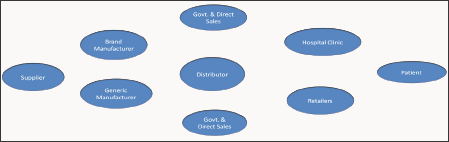
After a drug is launched, a completely different set of objectives, drivers, and constraints become dominant. The key stakeholders in Main Issues Related to Pharmaceutical Supply Chain final product. The Pharmaceutical Supply Chain this supply chain include multiple government agencies, hospitals, clinics, drug manufacturers, drug distributors, pharmacy chains, retailers, research organizations, and the FDA. To compound matters further, the same supply chain is responsible for the distribution of prescription drugs, over-the-counter (OTC) medicines, generics, as well as biologics having different handling needs and operational objectives. Indeed, there are numerous other organizations, such as insurance companies, healthcare management organizations, and GPOs, that further increase the complexity. Due to very different business objectives, these organizations make the task of managing supply chain all the more difficult. Furthermore, due to the regulatory nature of the industry and numerous merger and acquisitions to acquire more R&D expertise, many pharmaceutical supply networks have grown in an uncontrolled fashion rather than being planned for optimal performance [9] (Figure 1).

Figure 1: The Pharmaceutical Supply Chain.
Lupinepublishers-openaccess-Drugdesigning-Intellectualproperties


Main Issues Related to Pharmaceutical Supply Chain

    i. Issues related to Counterfeiting.

    ii. Unfavorable reaction of the drug to the patients.

    iii. Issues rose due to entities of supply chain operations.

    iv. Manufacturing issues like mixing incorrect input raw materials, or cross contamination due to manufacturing more than one drug in the same facility, or improper labeling of the final product.

    v. Retailer's issues including improper temperature controls and handling.

    vi. Transportation issues caused by mishandling, improper temperature controls, and the use of improper shipping mode.

    vii. Storing and warehousing issues such as using improper temperature controls, improper handling in the warehouse and mixing products with raw materials.

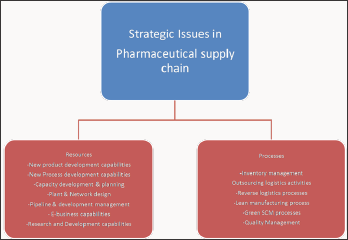
Figure 2: Strategic issues in pharmaceutical supply chain.
Lupinepublishers-openaccess-Drugdesigning-Intellectualproperties


    viii. Raw material suppliers issues like improperly prepared raw material, raw material with high impurity levels and mislabeling of raw material shipments (Figure 2).

The Regulatory System

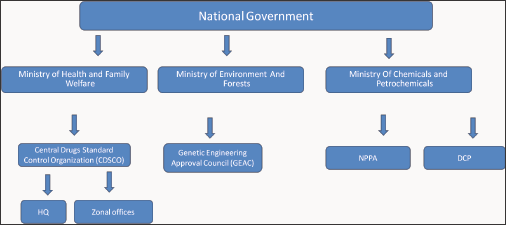
The regulatory system of the Government of India has a federal form that divides the medical regulatory system into national and state authorities. The principal regulatory bodies that are answerable for the approval, production, and marketing of quality drugs in India are the following entities [10]:

    a. Central Drug Standards and Control Organization (CDSCO): This agency sets standards to ensure the safety and quality of drugs, diagnostics, cosmetics, devices, and supervision of the importation of drugs.

    b. National Pharmaceutical Pricing Authority (NPPA): This agency fixes or revises the prices of decontrolled bulk drugs.

    c. Ministry of Chemicals and Petrochemicals: This organization supervises pharmaceutical sector policy, planning, development, and regulatory activities pertaining to the chemicals, petrochemicals (Figure 3).

Figure 3: Regulatory system of government of India.
Lupinepublishers-openaccess-Drugdesigning-Intellectualproperties


Temperature Controlled Logistics

India is a vast continent with different temperatures and environmental conditions varying 25 to 500c at different places. This presents a whole different set of challenges for the drug manufacturers to ensure drugs are maintained at the requisite temperatures throughout their lifecycle. The problem of temperature controlled logistics is one of the common noteworthy problems. The failure to maintain drugs at their prescribed temperature often results in the loss of efficacy. The drugs that require stringent cold storage and transport are often expensive and are often targeted by the drug counterfeiters due to their high value.

Radio Frequency Identification Technology (RFID) and Electronic Product Code (EPC) and its Effect on The Pharmaceutical Supply Chain [11, 12]

A RFID system fundamentally consists of four items, a host computer, readers, encoders and tags. Tags are manufactured of a microchip, size is approx 0.2 mm or 0.4 mm and a bendable antenna entrenched in a plastic-coated inlay having numerous forms and dimensions depending on the context and performance required. The information can be written onto the tags by an encoder printer, which is consequently read by a reader that converts the electromagnetic wave pattern coming from the tag into digital signals and transmits them to the information system by a terminal computer. Data are stored into the tag chip in the form of an Electronic Product Code (EPC).

Read More About Lupine Publishers Journal of Drug Designing & Intellectual Properties Please Click on Below Link: https://lupine-publishers-drug-designing.blogspot.com/

Monday, 27 September 2021

Lupine Publishers| Breaking into Merck's CCK Patents: the Starting Point of PNB Vesper Life Science to Design and Develop Cholecystokinin(CCK)-Antagonists as Targeted Chemotherapeutics

 Lupine Publishers| Journal  of Drug Designing & Intellectual Properties


Abstract

Early anti-cancer research was dominated by the development of alkylating agents, followed by the discovery of a variety of anti-metabolites, which were useful anti-viral agents at the same time. Current anti-cancer drugs are designed towards molecular targets in order to reduce their toxicity and to enhance the selectivity on the cancer cells. Within an increasingly growing number of molecular targets, the cholecystokinin, as a neuro modulator, became an important anti-cancer target, especially when it was shown that cholecystokinin regulates the invasiveness of human pancreatic cancer cell lines via the protein kinase C pathway. The low potency and the lack of subtype receptor selectivity of those early non-peptide CCK-antagonists, was improved in the following generations of CCK antagonists. These potent and selective antagonists have shown disappointing results in clinical trials due to a poor bioavailability. Initially cholecystokinin was discussed as growth factor, not only in pancreatic cancer, but also for lung, breast, colon and brain cancer, followed by a detailed discussion of over 20 different chemical classes having been developed to date, mainly for the area of neuroscience. Loxiglumide, CI-988, Devazepide, L-365,260 and YM022 are highlighted including in vivo studies and clinical trials. Moreover, CCK antagonists were found useful in the enhancement of the analgesic effects of morphine and the anti-neo plastic effect of cis-platinium. Clinical trials are ongoing. It is concluded that non peptidal cholecystokinin receptor antagonists are modern, non-toxic anti-cancer agents.

Abbrevations: GI: Gastrointestinal: Bt2cGMP:Dibutyryl Cyclic Guanosine Mono Phosphate; Bt2cGMP:Dibutyryl Cyclic Guanosine Mono Phosphate; CCK: Cholecystokinin

Introduction

Several gastrointestinal (GI) hormones, such as gastrin, cholecystokinin, and bombesin, have been reported to affect the development of pancreatic cancer. The receptors for these hormones are found in normal and neo plastic pancreatic cells. Activation of these receptors enhances pancreatic carcinogenesis and promotes the growth of established pancreatic carcinoma either in vitro or in vivo. Studies have shown that these GI hormones may play an inhibitory role in the development of pancreatic cancer. In recent years, increasing emphasis has been placed on the effects of GI hormones on cancer invasion and metastasis. As the transition from non-invasion to the invasive state is the crucial event in cancer development, further investigation of the way in which GI hormones affect the invasion and metastasis of pancreatic cancer may be important for the development of new therapeutic approaches with eventual clinical utility [1].

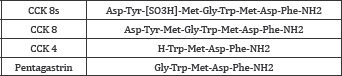
Cholecystokinin (CCK) is produced by I cells of the duodenal and jejunal mucosa and exists most prominently as an eight amino- acid hormone (CCK-8). CCK has been long been recognized as having an effect on the regulation of pancreatic secretion [2] and of gall bladder contraction [3]. Cholecystokinin has also been found in the brain, where it is widely distributed and may therefore have an effect as a neuromodulator or perhaps as a neurotransmitter. CCK is characterized by the a -aminated terminus Trp-Met-Asp- Phe-NH2 aminated sequence. It was initially identified as a 33 amino acid chain [4] and was later synthesized [5]. Subsequent studies have revealed the existence of multiple forms [6,7]. CCK is derived from a primary prepro-CCK polypeptide of 115 residues. After transcription, enzymatic cleavage results in the formation of many different fractions. CCK58, CCK39, CCK33, CCK22, CCK8s (sulphated), CCK8ns (non-sulphated), CCK7, CCK5, CCK4 all of them demonstrate biochemical activity [8]. The predominant circulating form is a sulphated tyrosine residue at position 7. It is important to distinguish between the CCK tetra peptide [9] and octapeptide (Sincalide) [10] as shown in Table 1. Both of them have been extensively studied, particularly in relation to food intake regulation, and have brought a great deal of confusion when it came to anxiety and panic. They have differential affinity for CCK receptors [11,12] different distribution in both the periphery and the brain [13,14] and have various effects on behavior.

Table 1: Amino acid sequence of Cholecystokinin and Penta gastrin fragments.

Lupinepublishers-openaccess-Drug-Designing-Intellectual-Properties


Cholecystokinin and Cancer

Cholecystokinin (CCK) plays an important role in the invasiveness and the production of matrix metalloproteinase-9 (MMP-9) in human pancreatic cancer cell lines. The pathway of the invasiveness may be associated with MMP-9 of those lines regulated by CCK. Two human pancreatic cancer cell lines were treated with CCK-8 alone, CCK-8 and staurosporine, or CCK-8 and indomethacine. The invasiveness and the production of MMP-9 were decreased with staurosporine but not indomethacine. These results suggest that CCK may regulate the invasiveness and the production of MMP- 9 via protein kinase C in human pancreatic cancer cell lines [15]. Cholecystokinin (CCK) receptors play a role in the development and growth of pancreatic cancers. The expression of mRNA encoding CCK-A and CCK-B receptors in eight human pancreatic tumour cell lines was detected using reverse transcription-polymerase chain reaction (RT-PCR), but not by RNase protection assays. The K-ras gene, which can be activated by G-coupled protein receptors such as CCK receptors, was mutated in codon 12 in five of the cell lines. In addition, Mia PaCa-2 pancreatic cancer cells did not respond to CCK or gastrin in cell proliferation or focal adhesion kinase (FAK) phosphorylation assays. In contrast, mouse NIH3T3 fibroblasts transfected with human CCK-B receptor (NIH3T3CCK-BR) showed increased proliferation and phosphorylation to the peptides [16].

The gut hormone cholecystokinin exerts various actions on the gastrointestinal tract, including the regulation of growth. The hormone has been reported to induce hypertrophy and hyperplasia of the pancreas and to enhance chemically-induced pancreatic carcinogenesis in animals. Stimulation of endogenous cholecystokinin secretion through the induction of deficiency of intra intestinal proteases and bile salts by trypsin-inhibiting nutrients, bile salt-binding drugs or surgical intervention is also capable of stimulating growth and tumor development in the rat. In man, factors suggested to increase the risk of pancreatic cancer, such as a high-fat and high-protein diet or gastrectomy, are known to stimulate plasma cholecystokinin secretion. Receptors for cholecystokinin have been demonstrated on human pancreatic adenocarcinomas, and cholecystokinin has been demonstrated to enhance the growth of xenografted pancreatic cancer and to inhibit growth of gastric and bile duct cancer [17].

From CNS Drugs to New Anticancer Agents

Gastrointestinal polypeptide hormones regulate growth of various normal gastrointestinal tissues as well as certain visceral cancers [18]. If Cholecystokinin promotes cell growth, CCK antagonists are ideal chemical anti-cancer targets and many scientists have discovered specific peptide and non-peptide antagonists of CCKB/gastrin receptors up to date, mainly for the area of neuroscience. As a result of extensive research, a number of new chemical classes have been developed with a high potency and selectivity towards the cholecystokinin receptor subtypes.

Amino Acid Derivatives

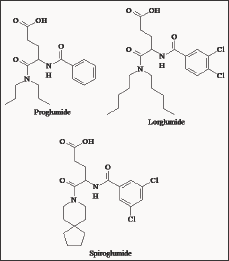
Figure 1: Structures of early amino acid derivatives as CCK antagonist.

Lupinepublishers-openaccess-Drugdesigning-Intellectualproperties


During the 1970's amino acid derivatives (Figure 1) were found to contain anti gastrin activity [19,20]. The chemical similarities of gastrin and CCK made it possible for such derivatives to demonstrate CCK antagonist activity. Proglumide, the first putative gastrin antagonist clinically available, has long been used in the treatment of peptic ulcers, because of its anti secretory and gastro protective activities. Several studies have subsequently demonstrated that proglumide is also a weak CCKA receptor antagonist [21] and despite its low potency, it has been the reference CCK and gastrin antagonist for several years.

Rotta research group produced analogues of proglumide, which showed varying degrees of selectivity for CCKA receptors and even suggested possible sub-types of the peripheral receptors. Some derivatives had a higher affinity for pancreatic CCK receptors mediating gallbladder contraction. Lorglumide showed up to a 26-fold increase in potency for blocking CCK-stimulated gallbladder contraction but only a two-fold increase for blocking CCK-stimulated pancreatic amylase secretion [22]. Intravenous administration of Lorglumide [23] antagonized the CCK-induced reduction of gastric emptying in rats, acceleration of intestinal transport in mice, increase in ileal motility in rabbits, gallbladder contraction in guinea pigs and acceleration of gallbladder emptying in mice but showed reduced activity when orally administered. Further structural modifications to Lorglumide resulted in CR2194 (spiroglumide). Spiroglumide exhibited CCKB/gastrin antagonist in the micro molar range, with excellent oral bioavailability. However, it has poor selectivity for CCKB/gastrin receptor, which raises doubts of its potential therapeutic usefulness. The effect of loxiglumide (LXG) was studied on the invasiveness of two human pancreatic cancer cell lines. Cells were treated with LXG for 24 h, and examined in the invasion assay. Interestingly, the invasiveness of cancer cells and expression of MMP-9 were decreased by LXG in a dose-dependent manner [24].

Read More About Journal of Drug Designing & Intellectual Properties Please Click on Below Link:
https://lupine-publishers-drug-designing.blogspot.com

Thursday, 13 June 2019

Lupine Publishers-Drug Designing Journal


Recently much emphasis is being laid on the development of micro particulate DDS in preference to single unit systems because of their potential benefits such as increased bioavailability, reduced risk of systemic toxicity, reduced risk of local irritation and predictable gastric emptying. The objective of the present study is to prepare and evaluate micro particulate drug delivery systems of Gliclazide using starch acetate, a new modified starch for oral controlled release. The starch acetate (DS 2.75) was freely soluble in chloroform and insoluble in several aqueous fluids and organic solvents. Chloroform could be used as solvent for starch acetate in the preparation of micro particles, microcapsules and in film coating Spherical starch acetate- Gliclazide micro particles could be prepared by the emulsification-solvent evaporation method. The method is industrially feasible as it involves emulsification and removal of the solvent, which can be controlled precisely. The emulsification solvent evaporation method was reproducible with regard to size and size distribution of the micro particles. About 65-70% of micro particles in each batch were in the size range 35/50 mesh (398.5μm) Encapsulation efficiency was in the range 96.0-99.3 % in the preparation of micro particles. Gliclazide release from the starch acetate micro particles was slow and spread over longer periods of time. The drug release depended on the proportion of core: coat in the micro particles. A good linear relationship (R2=0.826) between percent coat and release rate (ko) was observed. 


For more Lupine Publishers Open Access Journals Please visit our website: https://lupinepublishers.us/

Tuesday, 21 May 2019

Lupine Publishers-Journal of Drug Designing


Single mother cannot produce benefit properly which is required to children, playing, and other food source into energy. Researcher has been looking for simple and effective ways to deliver benefit into the children who have a single mother to child by their choices as well as single mother has to her choice. The most common one is taking orally that has financial support from organization which is privately manage and ruled out by under the surveillances of Pharmacy council of India. However research shows that is easily broken down by the system. This problem has solved by using intervention by secretarial level department of health research (DHR) government of India. These can be done by binding pharmacy council of India by department of health research with government of India. The encouragement is protected with monthly salary that has single mother by choice which is service privately manage under the influence pharmaceutical Institutions which is linkage of slums and rural area in India. To know more go through the below link.


Tuesday, 2 April 2019

Journal of Drug Designing-Lupine Publishers


Single mother cannot produce benefit properly which is required to children, playing, and other food source into energy. Researcher has been looking for simple and effective ways to deliver benefit into the children who have a single mother to child by their choices as well as single mother has to her choice. The most common one is taking orally that has financial support from organization which is privately manage and ruled out by under the surveillances of Pharmacy council of India. However research shows that is easily broken down by the system. This problem has solved by using intervention by secretarial level department of health research (DHR) government of India. These can be done by binding pharmacy council of India by department of health research with government of India. The encouragement is protected with monthly salary that has single mother by choice which is service privately manage under the influence pharmaceutical Institutions which is linkage of slums and rural area in India. Once financial support reaches the children’s, another pathway takes over to help financial pass into the children needs. Binding of regulatory of pharmacy council of India to single mother by choice residing in private pharmacy institution in slum makes the financial hitch a ride on this protected supply chain, where it is released to do its work. Financial help also causes stimulation of brain which leads to increased release of sertraline moieties. Finding simpler ways to deliver cause into the slums pharmacy institution is one important avenue for tackling the myth of single mother by choice that is sweeping the developing world and GDP in slum occupied pharmacy Institutions. Single mother by choice has specific mechanisms for protecting and absorbing valuable things that would usually be correlate by financial conditions and better delivery method to their children.


For more Lupine Publishers Open Access Journals Please visit our website: http://www.lupinepublishers.com/

For more journal of Drug Designing articles Please Click Here: https://lupinepublishers.com/drug-designing-journal/


Friday, 22 March 2019

Journal of Drug Design and Development-Lupine Publishers


Historical records show that scientific advancements accounted for substantial changes in our life-style and wellbeing. The Industrial Revolution took place in the western countries in the 1700s when people first appreciated the terms ‘science’ and ‘technology’ and valued the applications of ‘technological innovations’ for their commercialization. During the World Wars, people experienced use of science and technology for destructive purposes. The 20th century science revolutionized the living standard of mankind and offered solutions to great socio-economic or strategic challenges of the time. Though industrialization is considered as an essential feature of economic growth, it at times is infamous due to the adverse environmental health consequences caused by the release of pollutants. Policies are being placed to create a course of action, followed by enactment (of a law), and then rules & regulations that are designed to carry out that law successfully. 


For more Lupine Publishers Open Access Journals Please visit our website: http://www.lupinepublishers.com/

For more Journal of Drug Design and Development articles Please Click Here: https://lupinepublishers.com/drug-designing-journal/


Tuesday, 26 February 2019

Drug Designing & Intellectual Properties journals- Lupine Publishers


Beyond Pain, Fear, Withdrawal-Findings, And Problems Involving Change - Treatment and Application for A Chronic Addiction on Alcohol Do Not End by Loai Aljerf in DDIPIJ in Lupine Publishers

Alcohol use disorders (AUD) involving hazardous, harmful and addictive misuse of alcohol are widespread in most parts of the world. The aim of this study was to review the effect of the common inhibitors in the treatment of patients with AUD, taking into consideration, the short- and long- terms abstinence. An extensive literature search conducted in MEDLINE, PubMed, Scopus and CINAHL databases identified 776 articles, which were then evaluated for pre‐specified criteria for relevance and quality assurance. A total of 38 articles, including 36 human studies and 2 animal studies, were selected for this review. Many inhibitors used in the treatment of alcoholism and some were considered of effective medication when their intakes are supervised by an expert. However, their therapeutic efficacies vary widely; for instance, disulfiram is a pro-drug that requires its transformation into an active form and because it shows a wide range of secondary effects, it often prevents the use of doses that ensure full therapeutic effectiveness. Sex hormones play an important role in establishing sex‐distinctive brain structural and functional variations that could contribute to the sex differences in alcohol consumption behavior. Existing evidence supports the association of increased testosterone level and increased risk for alcohol use and AUD in males. In contrast, the evidence supports the association of increased estrogen level and increased alcohol use in females. Much less is known about the impact of progestins on alcohol use and misuse in human subjects. Future observational and experimental studies conducted in both sexes with a comprehensive hormone panel are needed to elucidate the impact of the interplay between various sex hormone levels during various developmental stages on alcohol userelated phenotypes and AUD. On the other hand, alcohol withdrawal-especially delirium tremens (DT)-is a potentially life-threatening condition. While short-term treatment regimens and factors that predispose to more severe symptomatology have been extensively studied, little attention has been paid to the clinical epidemiology and long-term care of the chronic medical, addictive, psychiatric, and psychosocial problems faced by these patients. Chronic alcoholic patients are frequently suffering from specific micronutrient deficiencies, including vitamins involved in one carbon metabolism. The deficiencies commonly involve folate, vitamin B6, thiamine, and vitamin A. Inadequate dietary intake is a major cause of the vitamin deficiency. As a consequence of chronic alcohol intake, could lead to metabolic disruption and potentially to hyperhomocysteinemia. Alcoholism can affect the absorption, storage, metabolism, and activation of many of these vitamins.  

https://lupinepublishers.com/drug-designing-journal/abstracts/beyond-pain-fear-withdrawal-findings-and-problems-involving-change-treatment-and-application-for-a-chronic-addiction-on-alcohol-do-not-end.ID.000130.php
https://lupinepublishers.com/drug-designing-journal/fulltext/beyond-pain-fear-withdrawal-findings-and-problems-involving-change-treatment-and-application-for-a-chronic-addiction-on-alcohol-do-not-end.ID.000130.php

For more Lupine Publishers Open Access Journals Please visit our website: http://www.lupinepublishers.com/

For more Drug Designing & Intellectual Properties journals articles Please Click Here: https://lupinepublishers.com/drug-designing-journal/

Monday, 18 February 2019

Journal of Drug Design and Development-Lupine Publishers


State Department evacuates a number of Americans from the US consulate in Guangzhou, China after they experienced unexplained health issues. A group of US diplomats stationed in China have been brought back to the states after being inflicted by a mystery illness that reportedly resembles the brain injuries previously suffered by staff in Cuba. Heather Nauert, a State Department spokeswoman, said in a statement that the individuals from the US office in Guangzhou were returned home for further evaluation. It was unclear if there was any connection to last year’s situation in Cuba where 24 US government employees experienced a range of ailments after hearing an unusual sound.  


Monday, 11 February 2019

Journal of Drug Design and Development- Lupine Publishers


Depression in Pregnancy: Treat or Do Not Treat? by Amani Mohsen in DDIPIJ in Lupine Publishers

Globally, mental health disorders are increasingly prevalent worldwide with depression particularly contributed to the largest percentage of global disability (7.5% of all years lived with disability in 2015). It is more common in females than males affecting 4 -7% of women in reproductive age group [1]. Women with mild depression are treated with cognitive based therapy and antidepressants are used depending on the severity of the symptoms [2]. Utilizing antidepressants preconception and during pregnancy was assessed in wide range of studies to evaluate the risk of associated congenital anomalies. Ornoy et al reviewed the association between tricyclic antidepressants (TCA) and congenital anomalies. Early studies showed slight increase in the associated risk however the following large studies showed no association [2].

https://lupinepublishers.com/drug-designing-journal/abstracts/depression-in-pregnancy-treat-or-do-not-treat.ID.000128.php
https://lupinepublishers.com/drug-designing-journal/fulltext/depression-in-pregnancy-treat-or-do-not-treat.ID.000128.php

For more Lupine Publishers Open Access Journals Please visit our website: http://www.lupinepublishers.com/

For more Journal of Drug Design and Development articles Please Click Here: https://lupinepublishers.com/drug-designing-journal/


Tuesday, 5 February 2019

Journal of Drug Designing- Lupine Publishers


An Extra-marital affair relationship can break heart. Extramarital affair women, according to a study, have a higher risk for heart disease. Turns out, for women, being extra-marital affair can be injurious to health. According to a study conducted by the New York University, extra-marital affair women have a higher risk for heart disease compared with non-extra-marital affair women across several modifiable risk factors [1-3]. “Our findings highlight the impact of sexual orientation, specifically sexual identity, on the cardiovascular health of women and suggest clinicians and public health practitioners should develop tailored screening and prevention to reduce heart disease risk in extra-marital affair women,” Little is known about the impact of sexual orientation on heart disease risk in women, despite the fact that widow and extramarital affair women may be at a higher risk based on modifiable factors like tobacco use and poor mental health. In this study, the researchers examined differences in modifiable risk factors for heart disease and heart disease diagnoses in women of different sexual orientations. Risk factors measured included mental distress; health behaviours such as tobacco use, binge drinking, diet, and exercise; and biological risk factors such as obesity, hypertension, diabetes, and cholesterol [4].


Tuesday, 15 January 2019

Semiconductor Quantum Dots as In-Vivo Imaging Agent:(DDIPIJ)- Lupine Publishers


Inability to early diagnosis is a major concern for the treatment of fatal disease like cancer. Early diagnosis and treatment enhances the scope of disease curability. The accurate identification, realtime monitoring and targeting the cancerous tissues in a precise manner hold the key for longer progression free survival of a patient. Among different diagnostic techniques, fluorescence based minimally invasive bio-imaging techniques are considered to be ideal to have clear understanding about the physiological processes of the infected tissues as well as to reduce physical and mental stress of a patient. Super-resolution fluorescence microscopy has improved the spatial optical resolution of biological molecules, living cells and tissues with the use of highly fluorescent inorganic semiconductor nanocrystals, also known as quantum dots (QDs), with sizes ranging from 2 nm to 15 nm [1]. These nanocrystals comprised of elements belong to groups II–VI (eg, CdSe and CdTe), groups III–V (eg, InP), groups IV–VI (eg, PbS and PbSe) [2].


For more Lupine Publishers Open Access Journals Please visit our website: http://www.lupinepublishers.com/

For more drug designing journal articles Please Click Here: https://lupinepublishers.com/drug-designing-journal/

Friday, 4 January 2019

»N2B-Patch« – Nose-To-Brain Delivery of an Active Pharmaceutical Ingredient via the Olfactory Region:(DDIPIJ)- Lupine Publishers


Within the EU funded project »N2B-patch« eleven partners from eight countries aim to develop an innovative technology for the nose-to-brain delivery of an active pharmaceutical ingredient via the olfactory region for the regenerative treatment of multiple sclerosis using novel multi-functional biomaterials combined with a medical device. The four year EU-funded research involves an innovative method of bypassing the blood-brain barrier by delivering a potential multiple sclerosis drug with a special medical device via the nose directly to the brain. 


For more Lupine Publishers Open Access Journals Please visit our website: http://www.lupinepublishers.com/

For more Healthcare Open Access Journal articles Please Click Here: https://lupinepublishers.com/drug-designing-journal/


Thursday, 1 November 2018

A Review on Biomedical Applications of Polymeric Nanoparticles: (DDIPIJ) - Lupine Publishers

A Review on Biomedical Applications of Polymeric Nanoparticles by A Krishna Sailaja in Drug Designing & Intellectual Properties International Journal in Lupine Publishers


Splendid achievements have been made in management of disease through invention of drugs over past decade. The present conventional drug delivery systems often have side-effects and complications due to their wide distribution throughout the body fluids. The localization of drug action in injured tissue is a promising way to solve this problem. The objective of drug targeting isto achieve a desired pharmacological response at a selected site without undesirable interaction at other sites. This is especially important in cancer chemotherapy and rheumatoid arthritis treatment. Recently invention of drugs has been generated by various drug delivery systems like microspheres, liposomes, noisomes, nanocapsules and nanoparticles. Among all colloidal drug carriers’ nanoparticles are gaining more popularity because of their stability, easy preparation, for achieving reduced toxicity, for increased drug efficacy & site targeted action. Nanoparticulation is a very useful strategy towards targeted drug delivery and also for enhancement of bioavailability of low soluble drugs. In this article nanoparticles preparation methods and their biomedical applications were discussed in detail.

http://www.lupinepublishers.com/drug-designing-journal/abstracts/a-review-on-biomedical-applications-of-polymeric-nanoparticles.ID.000140.php
http://www.lupinepublishers.com/drug-designing-journal/pdf/DDIPIJ.MS.ID.000140.pdf