Showing posts with label LTTFD. Show all posts

Wednesday, 4 October 2023

Lupine Publishers | The Characteristics of Korean Traditional Fabric of Saekdong

 Lupine publishers | Journal of Latest Trends in Textile and Fashion Designing


Abstract

The origin of Saekdong is assumed from Kyung-Geum of Ancient Joseon of Korea. Kyung-Geum is warp faced multiple colored weave with patterns of relatively thick dense silk fabric and was precious in that time. It’s patterned with the shapes of cloud, antler, swirling objects with gorgeous thick end-curved lines. Go-Joseon is very civilized society focusing Joyang and Geum-Ju near Balhae Bay civilization providence and the people wore colorful clothing trimmed with animal furs with jade and bronze decoration buttons. They produced a variety of yarns and Geum fabrics, and they had various colored design of tripod pottery as well as Saekdong or modernized Kyung-Geum, inferring to their high level of dyeing technique and eye for beauty. And from bronze mirror with delicate-pattern, violin-shaped bronze dagger, and fan-shaped hatchet with elegant curves as well as high-quality Geum design we found out they had high experties in delicate casting and craft skill.

Keywords: Warp Double Fabric of Silk; Antler Pattern; Balhae Civilization; Color Sensation; Pattern Design

Introduction

Sericin, which is the name of silk protein originates from the word ‘Seres’, which is Roman for East Asian fabric merchants and their land. Henry Yule(1820-1889), a Scottish orientalist, about BC 5th century ‘Seres, Serica’ and their land, “Their Country is expansive in size reaching from Bactria, Imaus in the west to the coasts of East Asian seas. They are frugal, and good tempered in nature, they are educated and open-minded people avoiding unnecessary conflicts to neighbor countries but not actively engaging in intimate relations. Also, they were never stingy about trading away their manufacture goods, such as silk, fur and high quality of iron”. Some view ‘Seres’ as the Qin (BC221-206) or Qin people of China, but we believe otherwise, ‘Seres’ is from ‘Suksin 肅 愼 or Joseon’, first country of Korea, because,

a. BC 5th century, the Warring states period, Qin of China did not border coasts of East Asian seas.

b. Chinese imported fur not exported fur.

c. Contrary to the peaceful nature of the Seres people, Jin actively engaged in wars and conquest.

Silk road had its shortest cut of east end to Joyang near Balhae sea for northern hemisphere and topography. Go-Joseon had high manufacturing techniques of iron, fur, dyes and silk as well as horse riding, astronomy and archery skills. Silk road can not be studied without research of north horse-riding people, who was one of tribes of Go-Joseon(古朝鮮), ancient Joseon of Korea. It is told that Geum is first made in East Asia, and it is assumed that Geum was introduced to the western world around the Warrior states period (BC403~BC221)[1]. By Herodotos, Greek and Persian merchants visited East Asia at BC 6-5th century. And Geum silk of Ancient East Asia was spread to Central Asia, north Africa, and Rome. Geum(錦) is silk fabric with beautiful patterns woven using multi-colored warp threads, differing to Ki(綺) which is one colored. The letter of Geum (錦) is a combination word of two different characters meaning of expensive gold(金) and total silk fabric (帛)[2]. The first historical record mentioning Geum is found in the Odes songs (詩經, about BC1000-200), for example, 錦衣狐裘 Geum apparel decorated with fox fur, 裳錦 Geum skirt, 錦衣 Geum apparel, and 貝錦 luxurious Geum.

Kyung-Geum of Ancient Joseon (BC2333~)

While China was going through its Warring state period, GoJoseon(古朝鮮), ancient Joseon of Korea which had an expansive land, located north of China was at its golden age, controlling power East Asia[3]. Go-Joseon has much lower tax than China, and salubrious. Kyung-Geum(經錦), which colored threads are warps, earliest form of Geum, is being massively discovered in the historical site of Joyang, Liaoning (朝陽, 遼寧市), one of the capitals of Go-Joseon. Joyang is not only a big city of Go-Joseon but also the center of cultural development of Balhae bay(渤海灣), which was the center of Hongshan(紅山) or Liao river(渤河) Civilization (BC 5000). And we call this civilization as Balhae civilization or Go-Joseon people. As known, here is the Lelang Commandary(渤 浪), Dangun Joseon(檀君 朝鮮, BC2333~108), Buyeo(夫餘, BC200- AD494), early Goguryo(高句麗) and early Baekje(百濟). The Liao ha river ran besides, and Joyang has lots of rivers running along the city which make the soil rich, and one of those rivers was called Joseon ha (朝鮮河) and the name was changed to Jo ha (潮河) after Ming Dynasty(1368-1644) [4]. In ancient record, Suksin, Jusin or Siksin 息愼 are the names used interchangibly, and the word Joseon originates from Suksin [5].

Silk is told to be originated from Sil-kurry(실꾸리), which ‘Sil’ means threads in Korean(실) and ‘kurry’ means spool(꾸리) or reel from ancient Joseon or Goguryeo time. When Persian merchants saw silk or silk bobbin of Goguryeo, they might call this as silk. Go-Joseon was very rich abundant society and produce enormous quantities of silk, various furs and good iron. Records indicate that even Confucious said hoping peoples good manner that he wanted to live in a peace in Go-Joseon. The Yellow river downstream and neighboring Balhae bay which were both rich and productive soil allowing for Mulberry field, every household had a facility for culturing silk worms[The Odes]. Among the Kyung-Geum being discovered till today, those discovered in Joyang have the longest history [2]. Even these are very small pieces of fabrics, they are high value as first excavated warp double silk woven of multicolored. In Chinese and Japanese historical records, they said the origin of Kyung Geum is unknown, or maybe from Xinjiang Uyghur(新疆). But for the above reasons we believe the origin of Kyung Geum is Joyang region of Balhae or Go-Joseon civilization. Here we have lots of relics proofs from Wee-young-ja (Chaoyang Wei-ingts, 朝陽 魏 營子, BC 13-10C), and Sip-i-dae-young-ja (Chaoyang Sier Tai-ingts remains, 朝陽 十二大營子 遺蹟, BC 9-6C) [6].

Geum-Ju (錦州), which was the center of Geum production, is in the Joyang region. San-hae-kwan(山海關), called as 天下第 一關, the first or number one gate in the world was located near Joyang as international trade harbor BC 9th century as well [7]. This wonderful city of Joyang is possible because Balhae, Hongsan or Liao river civilization existed almost 1000~1500 years ago before Yellow river civilization. And we think Xinjiang Uyghur is more trading center rather than a place of cultivation of silk worms or manufacture of Kyung Geum, which cumulated wealth after activated silk roads between the west and the east. The record says that diplomats from Buyeo(夫餘) which was main country of GoJoseon wore the apparels made of Geum and Kye, wool Geum and overcoat of fur during visits to other countries [8]. Fabrics from Goryeo (高麗, 918-1392) after Goguryo had beautiful patten of luxury Geum(貝錦, PaeGeum) resembling precious sea shells, its patterns and colors were of superior beauty compared to Chinese Donghwa-po(橦華布), its woven pattern were splendid and highly detailed, Jeo-po(苧布) and Mapo(麻布) were as white as fresh snow according to the praises from Chinese emperor of Later Jin 後晋 (936-946) [7]. Therefore, fabrics from ancient Korea has a great value of research due to its beauty and complex weaving techniques, distinct from the fabrics of neighboring countries. But this area of ancient Korean fabrics has never been studied carefully and is mostly unknown. Thus, we will like to collect concrete evidences for the visualization of the clothing and lifestyle of Go-Joseon people.

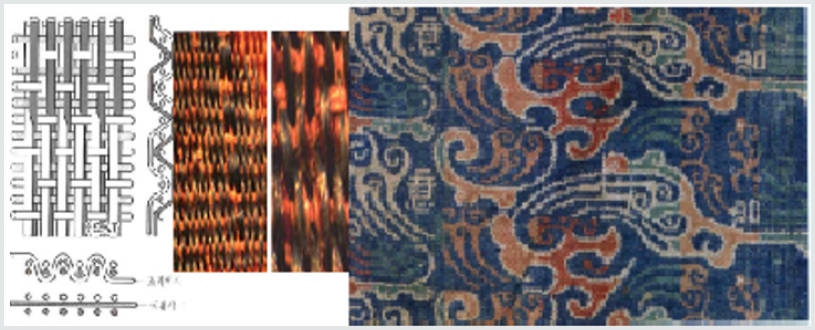
Figure 1: Model of Warp double fabric & Kyung Geum with colored stripe band of Go-Joseon.
Lupinepublishers-openaccess-journals-Textile-Fashiondesigning

In Figure 1, it has overlapping colored yarns as vertical warp threads –creating patterns through occasional emergence of different colored thread layers to the surface (warp faced double rib structure). Thus the fabric is dense and thick, which was not for the hot and humid weather. This fabric swatch was excavated in Sinkiang relic, and we assume that it is of Go-Joseon origin. The warp yarns are ordered as green, yellow, red, green, yellow and green, having constant widths and its own rule of color arrangement. These colored stripes in the Geum pattern are rhythmical yet natural, containing traces of whimsical randomness. The orderly and rhythmical pattern makes Geum aesthetically pleasing through its simpleness, while the randomness incorporated within gives a natural and organic feeling. The Tibetians have similar color stripes in their costume, but theirs are not always vertical, nor have the same thickness throughout the whole pattern (Figure 1) [2]. The weaving technique for the Kyung-Geum travelled to western Asia around AD 0. During this process, the weaving technique was modified to use colored thread as the filling thread. This technique produced a new form of Geum, Wee-Geum(緯錦). Wee-Geum started to replace Kyung-Geum from Balhae dynasty(AD700) [8].

The bigger patterns and curves of Wee-Geum gained more popularity over the traditional Kyung-Geum and Kyung Geum disappeared for its complex manufacture process. But it has survived in Korea as the form of Saekdong, which is warp faced satin with vertical colored band and with simple pattern. The ancient Kyung Geum had its own beautiful characteristics. The patterns were often decorated with vibrant portrayals of clouds, whirlpools and antlers. The fabric consisted of complex combinations of straight and curved lines within the patterns. The Geum pattern also often contained pictures of great beasts, and ancient characters “韓” Han means Korea and “王” wang means king[8]. Art depicting great beasts is characteristic of the Northern horseback-riding tribes’ culture. The records say Goguryeo (BC237-AD668) had lots of Kyung Geum such as beautiful Cloud Geum 雲錦, King letter Geum 王字文錦, and Geum tent or wide long shawl fabrics of Geum [7].

The uniform widths of the stripes represent equality, a valued characteristic of the Go-Joseon people. They valued the virtues of equality, peace, worshiping the heavens, justice, manners, and Hongik Human 弘益人間- Wide goodness for Human [3]. also the stripes composed of five to seven different colors, the garment of the gods. The Mongolians have called the Goryo(高麗) people “Solongus,” meaning “rainbow” in their tongue. From this evidence, we can infer that Goryeo people had a colorful and vibrant culture. The Saekdong consists of colored stripes of uniform widths. The vertically woven warp threads are the main color threads, just like the Geum. The repeated color stripe pattern of Saekdong is rhythmic, concise, natural and elegant – rather than fancy and gorgeous. Within the vertical colored stripes, Geum had gorgeous and complex patterns that symbolize the power of the king or gods. But as it evolved into the Saekdong pattern, the complex designs were simplified in order to emphasize the restrained beauty and order of the striped pattern itself. The color stripes are emphasized, and the patterns are minimalized, opposite to the characteristics of Geum.

Kyung-Geum of Baekje Socks (~AD660)

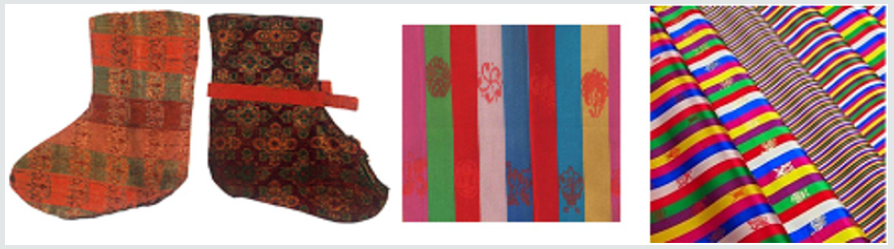
The Figure 2 shows the Kyung Geum socks(Mal, 錦襪) from Baekje, which went oversea to to island and build Nara dynasty in Asuka period. we assume this was worn by Baekjae King Family. After this royal family of Baekje died, Shosoin temple (正倉院, 東大 寺) wanted to keep all of the royal family’s belongings in storehouse as their own treasures. But the Japanese say that this sock belonged to the musicians of temple ceremony, and they sent people all over the world to learn the weaving techniques of Geum and Neung ( 陵, twill) in AD 711 in order to produce their own Geum[9]. But we think that only the skillful master of Geum could make this gorgeous fabric, and because it was precious it was only worn by a royal family. Both socks have colored stripes and small patterns: the purple one has Buddha with lotus, whereas the orange one has curly haired lion’s head (symbol of Buddha). These Geum socks of Baekjae represent religious values as well as the prosperity of Baekjae (Figure 2)[9].

Figure 2: Baekje socks of Kyung Geum, Saekdong of 1950’s, and current of Korea.
Lupinepublishers-openaccess-journals-Textile-Fashiondesigning

Color Beauty of Saekdong

Red, yellow and blue were used as warp thread in Geum. Red represents fire, the sun and summer, while blue represents the supernatural or sky. According to the Yin-Yang theory [10], when these two extremes meet, they support each other through synergy and produce a power of revitalization [11,12]. Additionally, the third color yellow means center, earth, brightness, peace, gold and hope. Using these three colors together, the Go-Joseon people invited good luck and protected themselves from evil [13]. We can easily find Saekdong of three basic colors, but today’s Saekdong includes a larger variety of colors. Adding white creates space and a sense of relaxation, also emphasizing the pattern and accentuating the neighboring colors. And adding colors on the opposite side of the color wheel enhances the color scheme. The Go-Joseon people were ingenious in assembling the Saekong pattern with their unique aesthetics. The vivid color is bordering another vivid color, but they do not collide with each other, forming a harmonious mood [14]. This type of arrangement is crucial in making patterns, since a wrong arrangement can induce a sense of discomfort. Saekdong pattern cleverly avoids this, and on top of being harmonious, it even has delightful touch to it. Even with only 2-3 colors, the complex arrangement of it makes the Saekdong pattern far from monotonous. Recent Saekdong has smaller patterns and longer intervals, compared to the Geum.

Conclusion

As a result of tracing the history of Kyung-Geum - a famous fabric of East Asia –many evidences were found to confirm that Kyung-Geum originated from Go-Joseon around B.C. 500. Joyang, Geum-Ju and Balhae civilization has exposed its oldest swatches. Kyung-Geum is double-woven with vertical colored threads (warp double rib fabric), and it is characteristic for its repeating vertical stripe patterns. The fabric itself is rather thick with a high thread count and was a major export to other surrounding nations during the period. The stripe patterns have a uniform width, as it is with the current Saekdong. Saek dong is a warp satin, and it is a simplified and modernized version of the ancient Kyung-Geum. The Saekdong consists of complementary colors, and its color scheme is harmonious, delightful, simple yet active. Since Saekdong was thought to produce supernatural powers, it is still being used in shaman’s costumes, and in children’s hanbok for a purpose of warding off evil spirits. Go-Joseon was governed through eight major laws (8條禁法), and the people led a prosperous life. Because Geum was so abundant in Go-Joseon, everyone from the king to the common people wore it as daily clothes. During the cold seasons, they would add a layer of fur on top or bottom of their Geum clothing or wool Geum, Kye.

From the excavation sites of Go-Joseon, a variety of spindles were found threads of various thickness were produced to weave all kinds of complex fabrics, and the clothes were decorated by numerous jade gems and bronze buttons. The trims of the fabrics were decorated with furs of tigers, leopards, foxes, and weasels. The Go-Joseon people were fond of using multiple colors: the fashion back then was to wear mismatching colors for top and bottom, pants for riding purpose - which is one of unique styles in the world, colorful pottery of tripod as well as Kyung-Geum fabrics of multiple colored stripes were very popular. The color scheme used by the Go-Joseon people closely resemble the vibrant and complementary color scheme of the modern Saekdong. The Go-Joseon people had an eye for aesthetics and color, which also contributed to their development of advanced fabric dyeing techniques. The cloud and antler patterns present in the Kyung-Geum fabrics can also be found with the bronze mirrors with fine lines and violin-shaped bronze daggers of the Go-Joseon excavation site. These exquisite designs made by the skillful craftmanship highlight and represent the prosperity and elegance of the Go-Joseon people.

Acknowledgment

The research was supported by the National Research Foundation of Korea (NRF) (NRF2016-R1D1A 1B01015336).

Read More About Lupine Publishers Journal of Latest Trends in Textile and Fashion Designing Please Click on the Below link:

https://fashion-technology-lupine-publishers.blogspot.com/


Wednesday, 9 August 2023

Lupine Publishers | Operations Management Strategies for the TextileClothing Sector in Colombia

 Lupine Publishers | Latest Trends in Textile and Fashion Designing


Mini Review

The textile and clothing industry in Colombia represents a productive sector that has more than one hundred years of experience, which has allowed it to position both nationally and internationally, mainly due to the added value of fabrics, the quality of clothing, design innovation, and the occupation of local labor. However, in recent years the textile-confection, design and fashion sector in Colombia has faced many difficulties due to phenomena such as tax reforms, demand contraction, unfair competition, smuggling, money laundering, import and export policies, exchange rates, trade agreements, among others [1,2]. Additionally, challenges related to high energy costs, environmental costs, and demand for a wide variety of products with short life cycles must be addressed [3].

These changes in the textile-clothing industry have motivated the redesign of production and logistics processes, leading to optimization of operations to achieve satisfactory competitiveness levels, which depends on factors such as production costs, sales prices, human capital, technological development, product differentiation, infrastructure, geographic location, market size, among others [4]. Likewise, it should be considered that the apparel sector presents seasonal demands, in which the inventories must be constantly renewed to satisfy the demand, avoiding unsold inventories that represent large losses to the companies, and it requires convergence with the operations planning process in order to increase the inventory turnover and add value to products. Given this situation, it is absolutely necessary to apply operations management and supply chain management strategies, aiming to integrate, optimizing and coordinating business processes from raw material suppliers to the final consumer, managing forecasts to recover consumers and retailers confidence [5,6]. Therefore, members of the textile-clothing supply chain must conduct a thorough analysis of the fundamental logistics and operations to fulfill sale promises to final consumers and increase their productivity. It can be achieved using proper operations management strategies in the textile-manufacturing sector, creating value and addressing the intense competition in both the national and international markets.

Strategies for Inventory Management

In order to reduce the levels of sales and low turnover, the textile-clothing industry can identify the attributes of the supply networks of each type of retailer so that the manufacturers can understand how they should respond to the requirements for different classes of apparel [7]. This allows a greater integration of retailers and producers to manufacture garments under a quick response approach that meet the requirements of the market, even involving vertical integration in some industrial functions [8]. The textile-clothing companies must avoid shelf-out-of-stock at all costs since it implies the loss of a particular sale and the possible future sales of customers. For this, it is recommended use forecasting techniques, such as Fourier analysis methods, that can be easily implemented on SMEs through the use of common spreadsheets [9].

Likewise, it should be considered that the characteristics of the demand in the clothing industry are related to high impulse purchasing, demand uncertainty, high product variety, and a high number of references. In addition, the demand should be classified according to the specific attributes (smoothness, intermittence, uncertainty, and slow-moving). To cope with this issue, it is necessary to manage the historical series to facilitate the use of effective forecasting methods [10].

Strategies for Over Inventory and Overproduction

Over inventory and overproduction not only represent an economic problem for the companies but also an environmental and even social problem, which must be addressed to guarantee the sustainability of the business. For that, it is recommended to design pull production systems guaranteeing the integration of the echelons within the textile-clothing supply chain, such as integrating design and retail processes, leading to a flexible design process, quickly product delivery to the market and avoiding building up stock that will not be sold [11,12].

Similarly, involving retailers and store managers in the S&OP process can help determine what is or is not selling especially in the case of new product introductions and end of life product forecasts [13], and implementing demand forecasting methods such as Arima and Arimax can reduce the difference between planned inventory and real demand because these methods can process multiple variables and consider periods of high demand that vary from year to year, such as holidays [14]. Another strategy is related to integrating Point of Sale systems (POS) with stochastic computer-simulation models to provide quick response procedures for seasonal merchandise, thus reducing the replenishment time and the potential for lost sales [15], thus obtaining timely and accurate inventories for effective and efficient use of automatic replenishment systems and vendor partnerships [16].

Once over inventory or overproduction occurs, refashion strategies can be applied developing prototypes through deconstruction and reconstruction processes. Refashion is a process that intercepts overproduction, over inventory, discarded clothing, reclaims, and re-cuts, returning the item to the clothing stream, reducing wastes and the demand on raw materials required in the manufacture of new textiles and garment [17]. In this sense, another alternative is the donation of overproduction to improve sustainability indicators related to social dimensions (support to communities in need) and environmental dimensions (waste reduction and mitigate the damage to the natural environment). However, these donations must avoid replacing existing markets, so they must go to different and distant markets of the textile-clothing companies that manufacture said overproduction [18].

Strategies for Reducing High Production Costs

Production costs can be reduced through proper production planning and operations scheduling, which optimizes the resources available in the production facilities. For this, it is recommended to perform an adequate aggregate production planning process in order to minimize total costs associated with labor and inventory levels in a medium-term horizon [19]. For the short term, scheduling techniques must be applied to assign jobs to resources in clothing manufacturing plants reducing the time lost in assembly modules and setup operations [20]. Regarding the planning process of the required resources such as manufacturing modules, setup staff, floor area, machinery, equipment, among others, the use of simulation techniques has been proved to allow the minimization of total production costs under different operating scenarios [21]. Likewise, technologies such as RFID and cloud computing can capture and monitor real-time information to provide production scheduling solutions based on intelligent optimization techniques such as heuristics and metaheuristics [22,23]. Production systems based on lean manufacturing are also a great alternative to reduce costs and increase product quality [24-26], promoting the implementation of tools and methods such as 5S, DEMAIC, Kaizen, SMED, and TPM, as well as Six Sigma approaches [27].

On the other hand, under a global supply chain approach, it is necessary to consider global sourcing for materials and production services in order to get products and services with the flexibility and speed required by the market [28-30]. Thus, textile-clothing companies can focus on performing own processes that add value and outsourcing those for which the companies do not have sufficient competitiveness. For the case in which textileclothing companies need to acquire materials from suppliers, it is recommended to implement material requirements planning (MRP) systems to reduce excessive raw materials and provide on-time inventory, avoiding cost overruns and production delays [28,29].

Conclusion

Operations management allows addressing problems related to low levels of sales and low turnover, over inventory and high manufacturing costs in textile-clothing companies in order to improve productivity and competitiveness. Operations management provides strategies that promote the supply chain integration, adequate demand forecasting methods, S&OP methodologies, lean manufacturing principles, implementation of information technologies, and production planning techniques for the long, medium and short term.


Read more about Lupine Publishers Journal of Textile and Fashion Designing Click on the below link:

https://fashion-technology-lupine-publishers.blogspot.com/


Wednesday, 14 June 2023

Lupine Publishers | Sustainability, gives Impetus to Innovation and Research

 Lupine Publishers | Latest Trends in Textile and Fashion Designing


Abstract

An increasing population of the Globe in general and that of India and China in particular brings before us a number of challenges of providing the people enough food, shelter, clothing, sanitation & health facilities, infrastructure, etc. To meet these challenges, unbridled manufacturing activities disregarding environment and society has been taking place almost all over the world which has resulted in alarming level of increase in Green House gases and depletion of valuable nonrenewable resources and water bodies. Under this backdrop business practices based on sustainability are becoming inevitable and textile sector is no exception to it. India’s aspiring young population, like consumers from developed countries, further demands quality apparels with multifunctional performance properties and thus Technical Textiles consumption is growing rapidly. The present paper explains how innovation and sustainability driven research can meet the challenges of coming decades. In this paper a few examples of the research work and their findings are summarized and their potential in meeting such challenges is presented.

Introduction

Indian Textile Industry being Mother industry, its growth is weaved with the future of over 55 million people connected directly or indirectly to this sector. Many a times Business as usual manufacturing activities are carried out with unbridled freedom, and total disregard to optimization and use of raw materials/ processes and energy sources. This is leading to air & water pollution; Green House Gases Emission and rapid depletion of fossil fuels and water resources. It has been reported that Globally we have ploughed in extra 30% of earth’s resources depriving our future generations. Hence, it is natural that Sustainability issues take center stage. It is inevitable that we adapt to Sustainable value model.

Environment has to be protected and people have to be respected and looking after the profitability of any business enterprise. Planet, People and Profit are these three pillars on which business success is to be measured. While following sustainability agenda, the steps to be taken include more and more use of renewable raw materials and energy; process intensification to conserve energy, water, and use of utilities, etc. increase the use of products which are biodegradable, etc. Thus, SUSTAINABILITY is never to be considered as financial burden; in fact, it is a key driver for Innovation based research as well as Technological Developments which can give an enterprise competitive advantage.

When we look at the respect to environment and people over the profitability, it is not a philosophical or wishful thinking. Top management needs to have commitment to sustainability; intern it, it is a matter of commitment to ethically doing the business. Indeed, when ethics becomes core component of business, only then no one would compromise environment and the society for the paltry sum of profits. Sustainability requires multipronged approach. It necessitates exploration of newer ways of processing, newer raw materials, technologies which require minimum energy/water inputs and has lowest level of emissions and effluents. Hence, naturally the regular processes and technologies need to be relooked in to the sustainability lens and explored giving impetus to research and developments. Fortunately, awareness about use of products made by eco-friendly processing technologies is increasing and such products based on green technology are being preferred even paying slight premium. Positive development in India is the introduction of new company law, making it compulsory for the companies to spend 2% profit of theirs for Corporate Social Responsibility projects, which again creates mental frame among the corporates about social commitment and corporate philanthropy.

India is a Young Nation as 65 % of its population is below the age of 35 years. This aspiring young Population with increasing standard of living and surplus disposable income, are quite aware about Consumer rights and environment, and are Brand conscious and quality conscious. They need improved quality of life and Standard Medical care. And to meet these demands of enlightened and economically affording section of customer base, we have to switch from traditional Textile manufacturing to the diversification towards manufacture of Technical Textiles. Coming decade is thus going to be decisive in terms of adapting to various products based

on Technical Textiles of different segments.

Many of the reported technologies such as Digital Printing; Transfer Printing; Ultrasonic /Laser Energy, Supercritical Carbon dioxide dyeing of Polyester; Plasma application etc. can be further extrapolated and up-scaled to see their application potential on large scale level. Also, a number of efforts in Process intensification giving rise to optimum use of utilities, with improved performance of the product and quality , various Fibre Modification processes and Nano -Technological applications need to be thoroughly investigated to extract the un-tapped value in these technologies which can propel us toward the fulfillment of our sustainability agenda.

Personally, I have been privileged to guide the research in the field of fibre science, technical textiles and textile processing for close 40 years with over 200 students for Master and Ph D degrees. Due to the paucity of the space and time, it will be prudent to describe here the outlines of a few pieces of our research work which are deeply rooted in sustainability, process intensification and technical textile applications. The examples taken here are not exhaustive and they are just representative samples.

Ecofriendly and Economical Finishing agents for Cotton and Cellulosic fibres

Cotton and cellulosic fibres enjoy important position in clothing. In fact, today Cotton garments have become revenue earners and are the materials for those who can afford to have them. However, fibre lacks wrinkle resistance and it is important that these required properties are imparted to cotton. Traditional way is to modify this fibre by resin finishing, which makes use of formaldehyde-based resin. This itself gives rise to the issue of release of formaldehyde during wearing. Hence low formaldehyde and formaldehyde free finishing agents are in demand. Polycaroxylic acid such as 1,1,2,2, butanae tetra carboxylic acid(BTCA) is presented as an alternative to this; however, it is cost prohibitive and hence used only in a limited extent. We have worked on similar lines making use of polycarboxylic acids such as polymaleic acid, citric acid and their combination and we have found interesting results with respect to crease recovery properties. The use of Polyethylene emulsion further helps in reducing the stiffness caused and thus fabric does not suffer on that account too. In addition, when this formulation is mixed with Chitosan, (We had prepared the naturally occurring biopolymer Chitosan from shrimp shells obtained from the fish market), it gets further enhanced with regard to imparting antibacterial properties. Padding through the solution was done with Wet pick up of 95% and then drying on pin frames at 80°C for 2 min. This was followed by curing at 160°C for 2 min .The results indicate very good degree of CRA and wrinkle resistance properties as well as acceptable softness level, and antibacterial properties [1].

Dyeing of finished Garments as per the Market needs

The limited aim was to address the need of the Garment dyers to quickly deliver the goods as per the purchase order, which is fluid. Since the demand for typical fashion colors keep changing fast, it is important to avoid the unnecessary large inventory of the garments in specific color combinations. The wise things to do is to have the garments finished in un-dyed form which can be dyed in a short time as per the orders placed and made available promptly. Technologically this is a bit difficult thing to do as after finishing the color uptake of the garments is reduced to as low as 10% of the unfinished garments.

We undertook this work with an aim to convert the finished un-dyed garment into dyeable form as and when needed as per color requirements. To that effect we used N- containing Additives in finishing formulation for garment dyeing. Nitrogen containing additives such as Triethanol amine can act in acidic conditions of dyeing enabling protonation of the fabric due to cationisation effect and the exhaustion of the reactive dye takes place very easily which can then be fixed well. The results were quite promising, and additives used in finishing were found to give the dyeability as good as or near about equivalent to that when finish was absent [2].

Simultaneous ACID Dyeing and Finishing of Cotton

It is well known that Acid dyes are cheaper than that of direct dyes; however, they do not have any substantivity for cotton and hence one is compelled to restrict the use of acid dyes only to proteinic fibres. In this piece of work, we attempted to establish linkage between acid dyes and cotton using a bridging chemical such as multifunctional resin or polycarboxylic acids. The resin as well as polycarboxylic acid while reacting with hydroxyl groups in cellulosic chains on one end, can be made to react with amino groups of acid dyes at the other end ,in one single operation of pad, dry and cure technique. A lot of trials to optimize conditions were taken and it was concluded that acid dyes which contain free primary or secondary amino groups can participate in this reaction with cross-linking agents, which intern can also react with the cellulosic fibre and impart wrinkle resistance properties as well as dyeability. The padding bath contained cross-linking agent, catalyst, acid dye and after padding the fabric with 100%expression, it was dried and cured at 150oC for 3 mins. Detail studies showed that the dye forms a covalent bond with the cross-linking agent which inturn is covalently bonded with the fabric. Hence the fastness properties exhibited by these dyeing were exceptionally good. The Advantages of this process include capacity to make dyeing operation continuous; acid dye application on Cotton and cellulosic fibres; high performance properties; simultaneous resin finishing happening and thus saving on energy, chemicals and water. Shortening of the process will give rise to extra production and thus this process is Eco-friendlier and more sustainable one [3,4].

Development of Hygienic, Fragrant and Mosquito repellent Cotton

Fragrance and essential oil have specific effects on individual’s feelings and emotions such as relaxation, exhilaration, sensuality, happiness and wellbeing through odour via stimulation of brain. Essential oils also have antibacterial, insect repellent, and mosquito repellent properties. However, many of these oils are volatile and hence lose their property very rapidly. However, the storage life of a volatile compound can be increased markedly by micro-encapsulation technique. Microencapsulation of fragrance compounds maintain fresh aroma on textiles, so that material retains its freshness for longer duration. Capsules rupture by friction during wearing giving necessary fragrance and under normal conditions remain intact. Fragrance oil has been encapsulated in gum Arabic and gelatin. The microcapsules containing these oils (Cederwood , Lavender, Lemon grass oils) with aroma are applied on cotton fabric from resin as well as binder bath.

The evaluation of the final finished fabric involved estimation of intensity of aroma, washing durability of the aroma, Antibacterial activity of these oils in microcapsules and efficiency of Mosquito repellency of microcapsule treated fabric. All these anticipated properties were found to be imparted on to the cotton fabric using this one shot natural herbal recipe. In other words, finished fabric in addition to being wrinkle resistant, also showed, pleasant aroma, antibacterial property, as well as mosquito repellency. The feasible end uses of such products include ribbons, handkerchiefs, curtains and furnishing fabrics [5].

Conclusion

These are just a few examples of actual research having carried out by my group of students, it shows that there lies a great potential to exploit commercially the findings of these pieces of research work and convert them into acceptable novel technologies/products which can satisfy the parameters of sustainability and requirement of technical textiles demanded by the modern consumers. Indeed, they can provide the products of high-quality performance, the products which can be delivered in shorter dwell time, the products having optimized use of utilities and thus low Carbon foot prints. The novel products and technologies developed can offer a very good potential of industrial exploitation.

Read more about Lupine Publishers Journal of Textile and Fashion Designing Click on the below link

https://fashion-technology-lupine-publishers.blogspot.com/


Tuesday, 28 February 2023

Lupine Publishes| Online and Brick-and-Mortar Strategy in Fashion Industry: Co-Existence or Cannibalization?

  Lupine Publishers| Journal of Textile and Fashion Designing


Abstract

Since the 1990s the Internet affected different industries and forced firms to change their business models and pushed toward the adoption of new strategies. The same happened in fashion industry, where e-commerce, personal computers, and smartphones created the opportunity for fashion firms to be closer to their customers, adopting CRM, and multichannel or omnichannel strategies. The main aim of this study is to analyze the potential conflicting presence of online and brick-and-mortar strategies in the fashion industry. We used a representative sample of 19 large firms in Europe, operating in the retailing brand fashion industry. Our data analysis shows how leading firms, facing a disruptive technology (the emergence of e-commerce), have been able to absorb it, in a context of co-existence between online and brick-and-mortar strategies.

Keywords:Innovation; Fashion Industry; Brick-and-Mortar; Commerce Online; Business Model

Introduction

Since the 1990s, many firms working in retailing adopted innovations spurred from Internet, such as e-commerce, to better service their customers. After a while, the entire fashion industry started using the online channel, either as exclusive channel or adopting multichannel or ominchannel strategies. Scholars focused on the adoption of e-commerce in fashion, studying the market structure [1-3], the use of the Internet, and the development of multichannel or omichannel selling modes [4-7]. Analyzing the changes occurred in the retailing industry, they showed the emergence of new business models among firms operating in the market [6,8-11].

The aim of this work is to provide some evidence about the effect of a disruptive technology like e-commerce, showing that this is still not cannibalizing the market of fashion. In section 2 we will shortly present the main research questions, in section 3 we will go through a short literature review. In section 4 we will present the methodology adopted. In section 5 we will present and discuss our data, and, finally, in section 6 we will conclude this paper.

The Aim of this Study and the Main Research Questions

The aim of this study is to show the disruptive effect of the entry of new technologies (e-commerce) in the fashion industry. Are we assisting to the failure of the main incumbents? Are firms operating in the fashion market suffering because of the presence of the e-commerce? Are existing large incumbents in the fashion industry able to absorb the new technology? All these questions can be summarized just in one main research question: do we have a cannibalization process between online and brick-and-mortar business models? In order to provide an answer, we collected data about the international investments made by a sample of 19 large fashion retailing firms operating in Europe.

Literature Review

Christensen, in his book “The innovators dilemma” [13], used the term disruptive technologies to explain why companies, that stay at the top of their industry, fail when they face a technological change. He provided evidence about the fact that it is costly for existing firms to adopt a new innovation and/or change the market. In contrast, Tripsas [14], using the history of the typesetter industry, provided some evidence about the fact that incumbents may survive, being able to absorb the new technology, due to their technical capabilities in learning from the new technology and in developing complementary assets. Many scholars agree on the fact that the introduction of radical and breakthrough innovations tends to stimulate the change of the incumbent business models [15-25]. Today, there is a general consensus on the idea that the transformation of a firm’s business model is crucial for firms’ renewal [26].

During the 1990s, in fashion retail, we saw the rise of new internet-based firms [27], but simultaneously a large reorganization of the firms’ value chains occurred. Increasingly, due to the complexity of ICT adoption, users developed an unpredictable pattern of hybrid forms [28-31]. Thus, nowadays, we may observe not only the rise of new internet-based firms (e.g. the German Zalando or the French Vent-Privée), but also new “reorganized” traditional fashion brand retailers [9-12]. Socrescu et al. [6] and Vorhoef et al. [8] have underlined how ICT allowed firms to be closer to their customers, increasing brand awareness and customers’ loyalty [4-7]. The use of the multichannels modality, allowed firms to develop new business models, integrating in their operative activity the online business, selling on-line [4,32,33] through ample catalogues and through the shops (where on-line orders could be collected). In more recent years, the “omni-channel” opportunity become more significant, thanks to the use of mobile apps linked to different devices: smartphones, tablets, and other devices [34-36].

An interesting contribution to the explanation why “hybrid” business model (on-line and offline) are successful has been provided by Bernstein et al. [24]: firms do not benefit very much from online sales (in terms of profits’ growth), but consumers do; thus, traditional retailers have to adopt the online new commercial channels for strategic purposes.

Methodology

Starting from information available in the FDI Markets database, provided by the Financial Times Group, which collect individual firm FDI operations, we selected a sample of the largest retailers firms, operating the in fashion retail industry in Europe, sampling both luxury and low costs large retailers. The unit of analysis is the FDI specific investment. Then, using Thomson Reuters database, we add the information on yearly sales, and number of shops opened and closed in the world. Where some data where incomplete, we filled the gap looking at the annual financial report. We included in our sample 19 large retailers. When it was possible, we unbundle data for the specific brand of the group. The period analyzed was 2008-2016.

Data Analysis

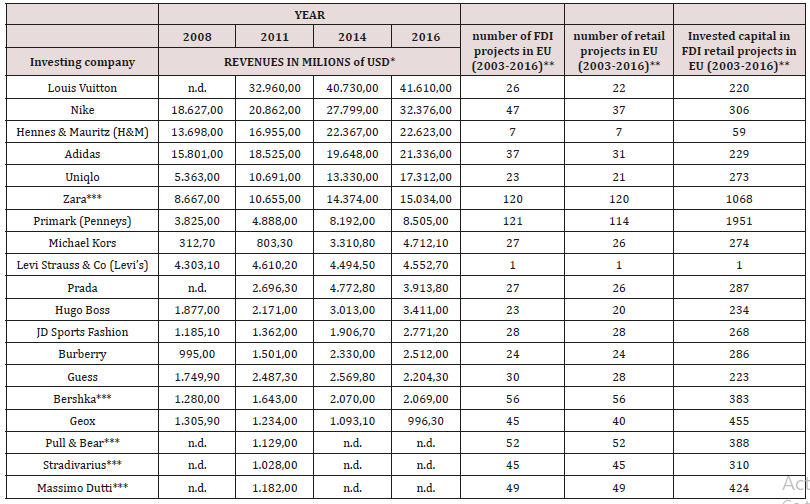
Table 1: List of fashion retailers by sales (2008 - 2016) millions of dollars.

Lupinepublishers-openaccess-journals-Textile-Fashiondesigning

n.d. : no data are available

*Data available on Thomson Reuters

**Data from FDI Markets Database

***Inditex group

Source: authors’ elaboration on Thomson Reuters data

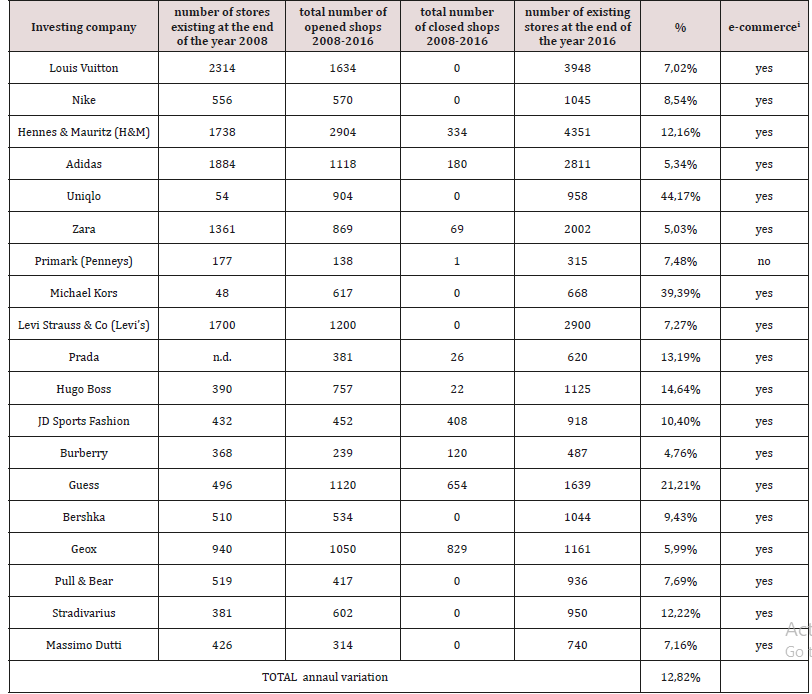
Table 1 shows the list of the largest investing company and the revenues expressed in millions of US dollar. The largest firms analyzed are Louis Vuitton (luxury segment), Nike, H&M, Adidas and Zara. Their sales oscillate from 40 billion to 17 billion. The typical firm in the luxury market is smaller with sales ranking from 4 to 2 billion (Prada, Hugo Boss, and Michel Kors). All firms, in this period, showed an increasing growth trend, with the exception of Geox. The biggest firms in terms of number of shops are H&M (4351), Louis Vuitton (3948), Levi Strauss &Co (2900), Adidas (2811) and Zara (2002). In our database is also included a large Japanese retailer, Uniqlo. In the period observed all firms showed a very positive increase in the number of shops opened (Adidas opened 927 new shops, Bershka 534, Pull&Bear, 417, Massimo Dutti and Stradivarius 569). Even if the introduction of e-commerce affected the market, the old brick-and-mortar business model is not dying. As it is shown, all firms (with the exception of Primark) adopted the e-commerce and transformed themselves into on-line/offline retail organizations. They both adopted new models of selling, opening on average each year more than 12% of new shops.

Table 2: Number of shops opened and closed per each firm in the world, the total number of shops at the end of the period, and e-commerce presence.

Lupinepublishers-openaccess-journals-Textile-Fashiondesigning

i: our analysis on firms’ web sites. Source: authors’ elaboration on Thomson Reuters data.

Thus, even if new players entered the market (such as Amazon, Zalando, Yoox, and many others), large incumbents did not fail. Sales through e-commerce are disclosed by firms in the financial reports. Zara, Adidas and Hugo Boss, declared a percentage of e-commerce sales on total sales between 5 and 7% in the last years (Table 2).

Conclusion

The aim of this paper was to analyse the impact of e-commerce on traditional retailing. In the first part of the paper, we went through a short literature review, showing how e-commerce is an innovation which can deeply transform the fashion industry. In the same vein, this literature highlights how this topic can be analysed from different approaches (e.g. business model, innovation, and others). In the second part of this work we showed some data obtained by two different databases. Data support our idea that there is no cannibalization among the online and brick-and-mortar channels. This work has some limitations. The number of firms chosen for this analysis in not too large. Then, another limitation is due to the fact that official databases contain only few information about online business.

Read More About  Lupine Publishers Journal of  Textile and Fashion Designing Please Click on Below Link:  https://fashion-technology-lupine-publishers.blogspot.com/ 

Monday, 27 February 2023

Lupine Publishes| Development of Woven Fabrics with High-Count and Cooling Collagen

 Lupine Publishers| Journal of Textile and Fashion Designing


Abstract

The 60’s cooling collagen viscose rayon blended yarn was fabricated by using ring spinning system. The blended yarn constitutions included 50wt% of regular viscose rayon with 1.5d and 38mm, 35wt% of cooling viscose rayon with 1.25d and 38mm, and 15 wt% of collagen viscose rayon fibers with 1.5d and 38mm. As mension above 60’s cooling collagen viscose rayon ring yarn was used as filling yarn. The 60’s Model Rayon(60wt%) ring yarn was used as warp yarns. The grey cloth specifications included warp density 198 ends/ 2.54cm and filling density 146 picks/2.54cm as well as the fabric width is 170cm which was produced by Picanol air-jet shuttleless loom. From the experimental results, the finished woven fabric was fabricated throuth souring, bleaching, dyeing, finishing, and heat setting processes. The color fastness of woven fabrics with high-count and cooling collagen achieved grade 4-5 according to CNS1494 testing standard.

Furthermore, the Functional Properties of Finished Woven Fabric were Processed as Follows

The instant cooling feeling value (Qmax) achieved 0.206W/cm= according to CNS 15141 testing standard. The static thermal image temperature difference achieved 1.3℃ according to FTTS-FA-010 testing specification which was draw up Functionality and Industrial Textiles Certification and Verification Review Committee in Taiwan. The Anti-pilling achieved grade 4 according to CNS 15141 testing standard. The electrostatic voltage caused by friction achieve grade 2 (100≤V< 500). The woven fabrics with highcount and cooling ccollagen blended yarn can be used in bedding, shirts, jackets, scarves, pants, pajama, etc.

Keywords: Cooling collagen viscose rayon ring blended yarn; Instant cooling feeling (Qmax); Static thermal image temperature difference; High count woven fabric

Introduction

The development, manufacture and design of Taiwan’s functional home bedding fiber products, main problem lies in the functional design of the bedding fiber products, fashion design, cost assessment and comfort. The advantages of cotton fiber made bedding products include good water absorption and air permeability. However, there are disadvantages of large shrinkage rate and wrinkle after washing. The advantages of polyester fiber made bedding products include not easy to wrinkle and shrink, and high heat resistance, but it is easy to generate static electricity and contaminate dust and has the disadvantage of being stuffy when used. The advantages of cellulose series fiber-made bedding products included better moisture absorption and dyeing, which are suitable for blending with other fibers such as polyester, and polyamide, but it is easy become longer after hanging, easy to shrink after laundry, and dry cleaning is required. The advantages of acrylic fabrics fiber made home bedding products, included nonwrinkle, better chemical resistance, sunlight resistance and thermal insulation, but have the disadvantages of easy raising, worse heat resistance and sultry heat in summer. Especially on the printed cloth, it is not suitable for the strong sunlight. Due to long-term sunlight radiation, it will cause the pattern on the fabric to fade. It is recommended to install it in a cool and ventilated place in the house. The jacquard woven fabric was weaved according to the predesigned pattern, which is visually elegant and textured. Therefore, it is suitable for installation in the bedroom, study, and elder room are also high-priced products. The long-term use of home furnishings and bedding products mainly emphasizes the beauty, style and brand. Due to the problems of comfort and functionality, the development of woven fabrics with high counts of cooling collagen bedding has stagnated and lacks interest. Therefore, the development of this case uses the advantage of blending rayon fibers with cooling collagen fibers to improve the general use of materials such as cotton and polyester to improve the quality, comfort and structural design of the bedding. Improve and declare the quality, comfort and structural design of bedding products, which is the future path for the development of international bedding product market.

In recent years, the collagen is more important in the fields of health food, cosmetics, medicine and man-made fiber. In the field of collagen textile fiber production in recent years, the additive is mainly composed of papolis, collagen extracted from milkfish scales, bone-extracted collagen and artificial collagen [1]. Collagen is a natural substrate in the natural ecology, which has the following three aspects of health effects on the human body.

a) Comfort - collagen is composed of 18 kinds of amino acids, which has excellent biocompatibility with the human body.

b) It has humidity regulation function, because collagen is rich in hydrophilic groups such as many amine groups (-CONH) and amino groups (-NH2), the structure is porous, easy to diffuse water molecules, and can be adjusted in humid air as well as have a certain amount of water.

c) Tryptophan and Tyrosine in collagen absorb ultraviolet rays, and ultraviolet rays are harmful to the skin, so collagen can protect the skin from ultraviolet light radiation [2-7]. The special collagen formula and the polymerization method of the innovative process to enhance the performances of collagen rayon staple fibers such as heat resistance, durability, moisture retention, skin-friendly and comfort, etc., and have higher added value and economic benefits [8].

Experiment

The 60’s cooling collagen viscose rayon blended yarn was spun by ring spinning method. The cooling collagen yarn constitution was made from 50wt% regular viscose rayon, 35% cooling viscose rayon and collagen viscose rayon through ring spinning sytem which through scoutching and opening, carding, combing, 3-passage drwaing, roving, ring spinning, and autocorner processes to fabricate the blended yarn. Furthermore, 60’s cooling collagen viscose rayon blended yarn was used as filling yarn (40wt%) and 60’s Model rayon yarn as the warp yarn(60wt%). The grey cloth specifications included warp density 198 ends/ 2.54cm and filling density 146 picks/2.54cm as well as the fabric width is 170cm and fabricated by Picanol air-jet shuttleless loom. The fabric structure is sateen, weight is 213g/yd and width 157cm (62in).

Results and Discussion

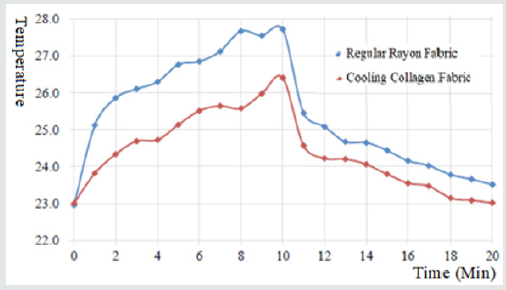
Figure 1: Comparison the thermal absorption and diffusion between cooling collagen and regular knitted fabrics.

Lupinepublishers-openaccess-journals-Textile-Fashiondesigning

The color fastness of woven fabrics with high-count and cooling collagen achieved grade 4-5 according to CNS1494 testing standard. The finished woven fabric passed through souring, bleaching, dyeing, finishing, and heat setting processes. Furthermore, the functional properties of finished woven fabric were processed as follows: Quality specifications in accordance with FTTS-FA-019 testing specification [11], instantaneous cooling value of woven fabric with high count and cooling collagen could be achieved 0.206W/cm2. The static thermal image temperature difference achieved 1.3℃ according to FTTS-FA-010 testing specification [10] which was draw up Functionality and Industrial Textiles Certification and Verification Review Committee in Taiwan. The Anti-pilling achieved grade 4 according to CNS 15141 testing standard. The electrostatic voltage caused by friction achieve grade 2 (100≤V< 500). The water absorption height along warp and filling direction was 59mm and 51mm respectively according to FTTS-FA-004 testing specification [9]. The thermal absorption and diffusion behaviors between cooling collagen and regular woven fabrics was shown in Figure 1. After irradiating by a 500W halogen lamp, there is a tendency to gradually increase the temperature as the irradiation time increases since thermal absorption behavior. The halogen lamp is turned off, after the irradiation for 10 minutes, and the temperature gradually decreases as time increases since thermal diffusion behavior. Furthermore, the higher thermal absorption and diffusion of regular viscose rayon woven fabric than cooling collagen woven fabric, since the lower moisture content and absorption of regular viscose rayon woven fabric than cooling collagen woven fabric. It is probably because the collagen has much more amino acid and hydroxyl functional groups, so the moisture content and absorption ability would be better. Due to superior functionality, physical and chemical properties, the woven fabrics with high-count and cooling collagen staple yarns can be used in bedding, shirts, jackets, scarves, pants, pajama, etc.

Conclusion

The yarns and woven fabrics with high-count and cooling collagen performance was fabricated successfully. The spring and summer bedding used woven fabrics are designed as the product, and the related physical and chemical properties (washing dyeing fastness test- faded and stained, anti-pilling, etc.) and functionality (instant cool heat flow, static thermal image, water absorption height, electrostatic voltage caused by friction, etc). The experimental results show that the physical and functional properties can meet the basic requirements of bedding used woven fabric in spring and summer. The development of spring and summer bedding is in line with the industrial upgrading and transformation and industry innovation research and development theme, including the combination of upstream (functional fiber), midstream (yarn, fabric), downstream (dyeing and finishing) industry and women’s products to integrate cooperated supply chain. The cooling collagen woven fabric has lower temperature than regular viscose rayon fabric. Due to superior functionality, physical and chemical properties, the woven fabrics with highcount and cooling collagen staple yarn could be used in bedding, shirts, jackets, scarves, pants, pajama, etc.

Acknowledgement

Much appreciated to the Industrial Bureau, Ministry of Economic of the Executive Yuan in Taiwan for providing financial support for this project (B10710200). This industrial- academicals project is jointly developed by Dong Chu International Textile Co., Ltd. and Textile and Materials Industry Research Center of the Feng Chia University (TMIRC). During the implementation of this project, we are very grateful to the supply chain manufacturers for their assistance in mass production and finished product design and testing method of woven fabrics. We would also like to thank the students from the Organic and Inorganic Composites Laboratory, Department of Fiber and Composite Materials (FCM) of Feng Chia University (FCU) and the colleagues of TMIRC for their assistance in testing and experiments.

Read More About  Lupine Publishers Journal of  Textile and Fashion Designing Please Click on Below Link:  https://fashion-technology-lupine-publishers.blogspot.com/


Monday, 16 January 2023

Lupine Publishers| Fashion and Sustainability

 Lupine Publishers| Journal of Textile and Fashion Designing


Opinion

The fashion industry is one of the oldest industries in the world. It is responsible for thousands of jobs and it generates thousands of billions of dollars and euros every year. But the apparel manufacturing is interconnected with many sustainability and environmental issues, such as, water consumption, energy, heavy metals, professional diseases, low wages, waste of raw materials, etc. The fashion industry must to have concerns about the issue of sustainability and environmental impacts. Many brands are already sensitive to these issues, but others are still not. If you ask me if it is feasible fashion be sustainable, I reply: yes, fashion must be sustainable. But there is a lot of work to do and many rules to follow. “The times when sustainability was a ‘nice to have’ are gone. These days it is a ‘must have’, an inevitable trend and subsequently a competitive advantage” [1]. According Georg Kell [2], “the $2.5 trillion fashion and apparel industry is an economic heavyweight. One of the largest consumer industries, it employs over 60 million people along its global value chain. For many emerging markets it is a stepping stone out of poverty with women making up over 70% of the supply chain.”

To correct the huge environmental disasters, we must be alert and wide-eyed. Stacey Dooley [3] uncovers the shocking environmental impact caused by an insatiable appetite for cheap clothing. Thus, cotton cultivation for the fashion industry is responsible for the almost disappearance of the Aral Sea near Uzbekistan, where river water has been diverted to cotton cultivation. Due to cotton of our clothes, where before there were fish, wildlife, tourists, employment, vegetation, etc., there is now a huge desert, a lot of sand, some camels, diseases, climate change, unemployment, toxic dust, etc. Without water there is not life. They are necessary 10,850 liters of water to produce one jeans pants 2,700 liters of water to produce one cotton t shirt [4]. Thus, by some estimates, the fashion industry is responsible for up to 10% of global CO2 emissions, 20% of the world’s industrial wastewater, 24% of insecticides and 11% of pesticides use [2].

We cannot ignore environmental disasters such as the Indonesian River Citarum, which supplies 28 million people with water, but where heavy metals such as mercury, lead, cadmium and arsenic, among others, are dumped. In this dirty river many children take a bath and have fun. It is perhaps the most polluted river in the world, an open sewage to where all kinds of toxic waste from about 400 textile factories is dumped [3]. Other countries such as Bangladesh or China also have huge environmental problems.

It is imperative to find solutions to these problems. The planet earth is our common home. Humans have no other planet where they can live. Why not collaborate with those who provide us with the materials of which our clothes are made? Why not help them get their space clean? Is it far? and our conscience do not alert us? or do we live in the world of hypocrisy where the problems of others do not interest us? Governments of affected countries and industry’s leading executives of fashion brands have to face these problems. Namely, heads of government must contribute to their resolution, subsidizing those who wish to collaborate and punishing those who are only interested in profit at any price.

If Corporate Social Responsibility (CSR) is not voluntarily accepted, there must be laws that impose it. And there must be consequences for those who do not comply. We cannot continue to wear our clothes and ignore the problems that have arisen in the countries that supply the materials. We cannot continue to send the dirtiest jobs to more distant places and we pretend no one sees them.

But solutions to this complex world begin to appear. On the one hand, after the appearance of standard ISO 14001-Environmental Management Systems (EMS) in 1996, environmental problems have declined, particularly in Western countries where laws and rules are more respected. Hence, it is feasible in most cases to implement the ISO 14001 Environmental Management System at Indonesian, Uzbekistan, Bangladesh, China and other countries chemical companies. On the other hand, the Fair Fashion Center (FFC) located on the Glasgow Caledonian New York College campus, is proving the business case for sustainability by turning global issues into industry opportunities. The FFC develops market-based solutions that combine economic value creation with environmental stewardship, social inclusion, and sound ethics. The goal is nothing less than the Re-design of Fashion [5]. Overcoming challenges created by gaps in traditional ecosystems, the FFC creates the enabling space for cross-sector collaboration, yielding innovative solutions and unique partnerships. With guidance from public sector organizations like the United Nations and various other subject matter experts, the priorities of the FFC have been established together with the industry’s leading executives. The FFC moves company initiatives beyond CSR, empowering organizations to embed sustainable practices across all business functions [5].

Other interesting solution is supported by CITEVE - a Technology Center, a private non-profit organization, based in Vila Nova de Famalicão - Portugal. STeP (Sustainable Textile Production) is a certification system for manufacturers, retailers and brands in the textile supply chain, who wish to communicate to consumers the results of sustainable production in a transparent, credible and clear way. This certification is applicable to production facilities of all stages of textile processing, from fibber production, spinning, weaving, knitting to finishing and confection [6]. The goal of STeP certification is the permanent implementation of environmentally friendly production processes, safe, healthy and socially acceptable working conditions. In addition, the dynamic development of the STeP standard and its benchmarks enable certified companies to continually improve their environmental performance and CSR, as well as, their efficiency. This, in turn, allows them to achieve the best position possible in the market in competitive terms.

Many companies have embraced a CSR framework, but it is known that there are still very few in the universe of the fashion industry. According Kozlowski et al. [7], to reduce the social and environmental impacts of apparel throughout its life-cycle, CSR policies developed by fashion companies are increasing. Hence, developing policies is an important step but implementation and integration of the policies is vital. The design and development stages in the fashion industry can play a pivotal role in incorporating these policies and/or strategies.

On the other hand, the main benefits gained from the EMS certification are, among others [8]: prevention of environmental risks; environmental protection; improvement of company image; most SMEs with certified EMS fulfil legal requirements, thus ensuring compliance with legislation; effective use of natural resources; promoting recycling; awareness of employees regarding environmental, decreased waste generation; clear, organised work environment; decreased consumption of energy and materials. Sustainability involves complex and changing environmental dynamics that affect human livelihoods and well-being, with intersecting ecological, economic, and socio-political dimensions, both globally and locally [9]. Thus, process and product innovation is vital for businesses to achieve sustainable development. Important requirements are needed imposed, or not, by government regulation, among others [10]: Respect for people (at all levels of the organization), the community, and its supply chain; respect for the planet, recognizing that resources are finite; and generating profits that arise from adhering to these principles. Very important also is a sense of a moral obligation and the opportunity presented by ‘ethical’, ‘green’ or ‘eco’ marketing in response to consumer demand [7]. The potential to realize cost reductions-particularly related to production materials, waste handling and/or liability is also very important.

The rapid development of technology, communications and business, has reduced the distance between nations and shortened the time from order to delivery. Hence, today’s economy is global. Thus, in today’s global markets, issues related to environmental sustainability, ethics, working environment conditions and safety, stakeholders’ relations and the protection of workers’ rights must have greater importance on business performances, also in the fashion industry. The adoption of CSR strategies by a company can bring benefits, of which we highlight [11]: facilitated hiring’s; increase in staff motivation; increase in transparency towards stakeholders ; greater control over the Supply Chain; improvement in customer loyalty; improvement of the relationship with employees; improvement of corporate image and reputation; improvement of productivity and management efficiency; achievement of economic benefits; reduction of labour conflicts; reduction of risks at work; reduction in absenteeism; development and consolidation of partnerships; achievement of a competitive advantage over competitors. The fashion industry, being the saving of jobs in developing countries, cannot be, simultaneously, the terror of pollution and occupational diseases. Fashion brands, especially the most important ones must to take into account the working conditions of those who provide them with the materials and cheap labour for their products. They must do so in a timely manner, so that workers do not get sick because of pollution.

In the recent years, the fashion and apparel industry has seen intense competition and increasing production quantity, along with growing concern about the sustainability issues and the environmental impacts. Many companies in fashion supply chains have tried various approaches to be “greener” and procurement is one of the most important functions which influences supply chain sustainability, because procurement does not only affect the supply chain output but also change the supply chain structure [12]. It is show that, punishing can only reduce the order size, while subsidizing may induce the retailer to change its procurement strategy from control to agency, when the subsidy exceeds a threshold. Thus, the objectives of improving sustainability and maximizing social welfare may be conflicting, so it is an important task to find a balance between them for the government [12]. In developed countries, suppliers of fashion brands have to fulfil all the requirements of environmental legislation and many requirements of social responsibility. Brands, looking for a bigger profit, are going to stock up in countries where environmental and social responsibility rules are not fulfilled. This is not ethically correct, even because suppliers who fulfil these requirements regarding the environment and social responsibility lose competitiveness. We are hopeful that the fashion industry will fulfil its obligations and contribute to sustainability and a better world.

Read More About  Lupine Publishers Journal of  Textile and Fashion Designing Please Click on Below Link:  https://fashion-technology-lupine-publishers.blogspot.com/

Tuesday, 6 December 2022

Lupine Publishers| Quality Analysis and Testing of Undergarments

 Lupine Publishers| Journal of Textile and Fashion Designing


Abstract

The quality of the undergarments is a combination of design and materials of the desirable products for intended use and the target market. No one will buy a product of poor quality or with any visual defects. The industry critically depends on the factories, the complex supply chain, and if the best procedures are maintained in their quality control systems. A good quality control system maximizes production according to specified requirements in the first attempt. To achieve an acceptable level of satisfaction, quality control is important for design quality, colours, suitability of products, stylistic approach and brand name impact on the market. The most common reason for fabric breakage on cheap undergarments is the fact that there are no set quality standards for most of the cheap products. The consumer checks the quality of undergarments in order to ensure product reliability and quality. While prices for items having higher quality, standards are higher than that of cheap fabrics, high quality tested garments are always a better choice. There are internationally recognized standards that follow a specific format of the inspection process to verify the product quality. This paper describes the most common testing standards required for undergarment production.

Keywords: Quality; Testing; Underwear; Undergarments; Innerwear; Brassiere; Lingerie; Slip; Fabrics

Introduction

Undergarments, underwear, innerwear, underclothes, undergarments, undies, smalls and sometimes underthings are a category of apparel that gets us down to the bare bones of ourselves. It relates to our body, comfort, sense of self, sex appeal and underpinning. Undergarments are worn next to the skin, underneath a person’s outer clothing. It is the foundation for all our clothes helps to keep the outer garments clean by absorbing sweat and oils from skin. It helps to keep warm in the cold climates. While we spend years curating the perfect wardrobe, we often overlook its foundation - our underwear drawer. Right underwear, can change the way we feel in our clothes, giving us the confidence and the coverage, we need to wear everything from our everyday t-shirts to our evening dresses.

Women’s undergarments are collectively known as ‘lingerie’. The words underwear and lingerie are sometimes used interchangeably but tend to be reserved for women’s wear. The French word lingerie means undergarments and applies for either sex, but in English-speaking countries, the term has come to be associated exclusively with more attractive or sensual lightweight underwear or nightclothes. The French word in its original form derives from the old French word ‘linge’, meaning linen. They may also be called ‘intimate clothing’ or simply ‘intimates’ made up of several product segments like bras, panties, shapewear, sleepwear, lightweight robes, and daywear, which means mostly slips and camisoles. The specific choice of the word often is motivated by an intention to imply the garments are alluring, fashionable or both [1].

Generally, regular underwear is more economical having a simple design. It is typically made from inexpensive cotton and can be purchased in packs. Lingerie, on the other hand, is typically a bit more expensive. It is often made from an expensive material, having intricacy of designs. One big difference between underwear and lingerie is the reason it is worn. Although lingerie is usually worn beneath the clothes as well, it is not usually chosen for practicality or comfort. Instead, lingerie is chosen because it is fashionable or enticing. Women often wear lingerie that they believe will be attractive. Informal usage suggests visually appealing or even erotic clothing. Although most lingerie is designed to be worn by women, some manufacturers now design lingerie for men [2]. Technically, all lingerie is underwear, but not all underwear is lingerie. Underwear is worn for practicality and comfort by both genders, while lingerie is typically worn by women because it is attractive. Regular underwear is usually less expensive than lingerie, and it has been around much longer.

Lingerie has been marketed for generations that reflect deep emotions and attitudes about themselves, their roles, and history as women. The underwear industry has been selling something that seemed sexy for years, even if it was not necessarily comfortable or functional. Many lingerie brands seem to design products form, in a voyeuristic perspective, it is for someone else’s pleasure, not necessarily the wearers. The definition of what is sexy has changed steadily. It is now about women feeling comfortable in their own skins, as opposed to pleasing someone else. It is not about the shape - it is about the way one feels.

Origins of Underwear and Lingerie

The origins of underwear and lingerie are also quite different. Underwear is believed to have been around since ancient times. Historians believe that ancient Egyptians, Greeks, and Romans all wore undergarments. In fact, a loincloth is also considered a primitive type of underwear. The concept of lingerie being visually appealing was a development of the later 19th century. In the 19th century, undergarments were typically not spoken of in polite society, and it was bulky as well as unattractive. Lady Duff- Gordan, a prominent fashion designer, decided to change this. She began to design women’s undergarments that were smaller, less restrictive, and more attractive. These alluring types of underwear eventually became known as lingerie. Up through the first half of the 20= century, women selected underwear for three major purposes: changing into a perfect shape, for preserving modesty and for hygiene reasons. Women’s underwear before the invention of crinoline was very large and bulky [3]. As the 20th century, progressed underwear became smaller and more form fitting. In the 1960s, lingerie manufacturers begin to glamorize lingerie and the idea of lingerie having a sexual appeal slowly developed. The lingerie industry has expanded in the 21st century with designs that double as outerwear by categorizing lingerie as an accessory with details such as straps and lace trim that should be layered and shown as part of one’s outerwear. Wearing underwear as outerwear is a fashion trend.

Underwear is gender-differentiated. Boxers, briefs, vest, banian for men; panties and bras for women. Our intimate connection with underwear clothing acts like a ‘second skin’. Underwear especially fits this metaphor because it resides closest to the skin. This ‘skin’ functions as part of our boundary system even as it retains an independent reality. These aspects intersect and render possible deeply personal experiences of clothing. It is no exaggeration to regard underwear as the most personal kind of clothing having the most intimate association. There is more than one reason for this intimate connection. First, a basic utilitarian function of underwear is to protect our natural skin from our other clothes and simultaneously protect those clothes from soiling produced by our own bodies. As a ‘second skin’, the first boundary formed is between us and the other clothes we wear; a reality that creates not only physical distancing but some psychological distancing as well. No such distance intervenes with underwear, as a popular advertisement proclaimed about its apparel, nothing comes between us and our undergarments. Just as we take care of our natural skin through washing it, applying lotions, and so forth in order to be healthy and comfortable, so we do with our underwear. Over time the emphasis in making and marketing underwear has changed from utilitarian and health reasons to comfort and pleasure. In fact, as comfort increases through the pure sensuousness of fabric and fit, so does the intrinsic potential to eroticize the garment by the symbolic substitution for the body regions the apparel resides by.

Performance and luxury are the biggest drivers. The underwear industry operates the same way as the clothing industry. Moreover, much like the clothing industry, most underwear is made in Asia. In part, because it is cheaper and the technical skills and machinery needed to make underwear, in particular, lingerie does not exist at scale elsewhere. Lingerie and underwear brands must ensure a high degree of comfort and the right fit for different markets and body shapes. The brand must ensure that the product matches with customer expectations of fit, quality, size, comfort, functionality and safe for skin. A high level of cleanliness/hygiene is guaranteed in their production and they have the right suppliers, with the right expertise and technology, who are able to handle the production process and its quality. Product inspection for undergarments can be a complicated process. Many manufacturers are not sure what criteria to apply for inspection and tests to perform to ensure their items meet the customers’ expectations.

Aesthetic and performance factors are, of course, inextricably linked with a price. The often-repeated statement that ‘you get what you pay for’ is generally associated with performance, but a customer’s concept of what the level of performance should be will vary considerably. It is often influenced by aesthetic considerations. Thus, the concept of good quality is not a static issue operating at one level for all customers; it is influenced by aesthetics, performance, and price, and is specific to an individual customer. While poor product quality may not be the most common reason for a customer to return a product, it is a factor. Garment inspection is one of the best ways to verify the quality of a clothing item before it leaves the factory. Today’s educated consumer is focused on finding apparel with the best balance of style, quality, and price, manufactured under the highest possible ethical standards. Increased consumer awareness is making apparel quality control more important than ever. The brand should have off-the-shelf customizable productspecific inspection checklists for quality control and assurance services at all stages of the supply chain-from source to shelf. It is vital for brands to focus on building trust in terms of quality, and an outstanding reputation for great customer service.

Objective

The main objective of this paper is to highlight the quality testing parameters that are essential for manufacturing of undergarments following the American Society for Testing Materials (ASTM) and American Association of Textile Chemists and Colorists (AATCC) standard norms known worldwide. These methods served as a basis and are equivalent to other national level standards. The study will serve as a knowledge base both for the manufacturers and the consumers.

Methodology

Methodology in writing of this paper is secondary and primary research both. As the secondary research, published articles/ papers, books related to textile and apparel quality, websites of the quality testing solution providers are studied and as the primary study, interviews of people working in the undergarment sector are taken into consideration. The primary study helps in finding out which quality systems that are prevalent in the manufacturing of undergarments and what exactly are being followed.

Literature Review

Quality of undergarments has been related to the longevity of products, functionality, and comfort. The physical characteristics and functionality of undergarments are very important for the consumer. In the study of Hume and Mills [4], brand recognition is highly significant for companies whose customers repurchase based on the comfort, functionality, and quality of garments. According to Suzianti et al. [5] client fashion e-commerce is related to product quality and warranty replacement and return of the garments. Therefore, the conditions exist to suggest that companies in the textile underwear, marketed by internet tend to have higher sales and long-term relationship with customers when considering the quality of both the product and the distribution channel.

The choosing or designing of undergarments that makes a suitable foundation for costume is a challenge to any girl’s good taste. She may have attractive underwear if she is wise in the selection of materials and careful in making it or in choosing readymade garments. It is not the amount of money that one spends so much as it is good judgment in the choice of styles, materials and trimmings. No matter how beautiful or appropriate a girl’s outer garments may be, she is not well dressed unless she has used good judgment in making or selecting her underwear. Every girl likes to have attractive, well-fitting underwear. The right kind protects the body and acts as a foundation for outer garments, improving their appearance without calling attention to what is underneath. Usually we think of undergarments as including brassieres, girdles, foundation garments, panties and slips [6]. The utilitarian functions of intimate apparel are basic fit and support that are considered the key criteria for lingerie [7]. The products could be easily imitated by others in the fashion market. It is necessary to build an innovative strategy to ensure that businesses compete in an invincible position, based on meeting new needs of customers [8]. Material from which an undergarment is to be made should be soft and smooth, as fine a quality as one can afford, attractive in appearance, up to date in style, easy to launder, and reasonably durable considering the quality of the goods and the price paid [9].

The primary purpose of textile testing and analysis is to assess product performance and use the test results for predictions about its performance. Product performance is considered in conjunction with end use; hence, tests are performed with the ultimate end use in mind [10]. The esthetic factors provide the initial impulse of attraction and may be the only factors that influence the decision to buy clothing items. The exception is the requirement that the item should fit. But even fit may be a function of fashion and style. Such aesthetic factors as handle, drape, colours, and style all interact in a complex manner and are crudely and subtly influenced by social factors-a desire to be in fashion, a desire to present an image [11]. An item of clothing is a summation of materials, starting with fiber, through yarn, fabric, and trimmings which go to make it up. The complexities of balancing aesthetics, performance and cost factors, therefore, apply to the selection and use of these materials. Customers have perceptions of the aesthetic and performance values of all components of clothing items, although of course, their judgment may be faulty and subject to misunderstood technical factors as well as ingrained social habits [12].

Standardization in Garment Sector

Standardization is essential to maximize compatibility, interoperability, safety, repeatability, or quality. It started mainly in the beginning of the 19th century, with the need of practical interchangeability of screws and later with other machine parts [13]. There are different types of standards and are essential for the society. These can include standards for terms and definitions, specifications, management systems, test methods. Standards can be internal of an organization, but for trade, it is important that they are accepted for a large community. There are standards used in a private or local community or in a certain region. Standardization have many developments at national levels, under the supervision of national standardization bodies. But the need for the interchange of products and services at global level has led, especially since the second half of the 12th century, to a strong development of international standards. Standards are developed and published by many different groups and organizations using various degrees of consensus in their preparation and approval. Formal standards are approved or adopted by one of the National, Regional or International Standards bodies [14]. Few examples are mentioned below.

a) The Bureau of Indian Standards (BIS) is the National Standard Body of India working under the aegis of Ministry of Consumer Affairs, Food & Public Distribution, Government of India. It is established by the Bureau of Indian Standards Act, 1986 on 23 December 1986.

b) The South Asian Regional Standards Organization (SARSO), established in 2010 to achieve and enhance coordination and cooperation among South Asian Association for Regional Cooperation (SAARC) members in the areas of standardization and conformity assessment with the objective to develop harmonized standards for the region, to facilitate intra-regional trade, and to enhance access in the global market for the SAARC Region suppliers.

c) The International Organization for Standardization (ISO) is an International Standard setting body composed of representatives from various national standards organizations. It is headquartered in Geneva, Switzerland, and works in 162 countries. It was one of the first organizations granted general consultative status with the United Nations Economic and Social Council. Founded on 23 February 1947, the organization promotes worldwide proprietary, industrial and commercial standards. While, Informal Standards are published by another Standards Development Organizations (SDOs), many of which are very well known and highly respected, e.g.

d) ASTM publishes textile standard specifications and test methods for physical, mechanical, chemical properties of fibers, yarns, fabrics, and garments, used worldwide.

e) AATCC is known worldwide for developing and publishing test methods for textiles, especially related to dyeing and finishing. Many of these methods served as a basis and are equivalent to ISO standards.

f) The International Wool Textile Organization (IWTO) publishes specifications on test methods developed within the committees of IWTO for the measurement of wool fiber, yarn, and fabric properties.

Read More Lupine Publishers Journal of Textile and Fashion Designing Please Click on Below Link:
https://fashion-technology-lupine-publishers.blogspot.com/