Wednesday, 21 June 2023

Lupine Publishers | Optimal Block Design for CDC Method (3)

 Lupine Publishers | Current Trends on Biostatistics & Biometrics


Abstract

In the present article, we are presenting the method of construction of block designs for Griffing’s complete diallel cross method (3) by using a complete set of (p-1) mutually orthogonal Latin squares, when p is a prime or a power of prime. The block designs for Griffing’s methods (3) are new and universally optimal in the sense of [1]. The block designs for methods (3) are orthogonally blocked designs. In an orthogonally blocked design, no loss of efficiency on the comparisons of interest is incurred due to blocking. The analysis of data obtained through proposed designs is presented. The analysis includes the analysis of variance, estimation of general combining ability, specific combining ability and reciprocal combining ability. The analysis is illustrated with the help of numerical data. Tables of universally optimal block designs have been provided. AMS classification: 05B15, 62 K 05.

Keywords: Mutually orthogonal latin squares; complete diallel cross; block design; optimality

Introduction

A complete set of (p-1) Latin squares of order p are called mutually orthogonal Latin squares (MOLS), if they are pair-wise orthogonal. MOLS are used for the construction balanced incomplete block designs, square lattice designs and complete diallel cross designs. A set of p-1 MOLS of side p can always be constructed if p is a prime or power of a prime. If p = 4t + 2, t > 1, then there exist more than one mutually orthogonal Latin squares of order p [2]. An exhaustive list of these squares is available. A common experimental design in genetics is the diallel cross, in which pairs of distinct lines (strains) are crossbreed in order to estimate genetic effects. Let p denote the number of lines and it is desired to perform a diallel cross experiment containing v= p(p-1) crosses of the types (i × j) and (j × i) between lines i and j , where i , j = 1,…, p. This type of crossing is the CDC method (3) mating design of [3]. Griffing B (1956) [3] discussed in detail the analysis of CDC method (3) in randomized block design (RBD). Later incomplete block designs were introduced by many authors for diallel cross design [4]. However, this approach did not find favor if one is interested in optimal designs for diallel cross experiments. Several authors such as [5] investigated optimal block designs either for modified diallel i.e. Griffing’s method (4) or for partial diallel crosses to estimate both general and specific combining ability or only general combining ability. .Optimal block designs for CDC method (1) and (2) and variance balanced designs for CDC method (3) in 1- way elimination of heterogeneity set up have been constructed by [6] by using Mutually orthogonal Latin squares(MOLS). The universal optimality and combinatorial aspects for CDC experiment methods (1), (2) and method (4) in the 1-way elimination of heterogeneity setting was studied by many authors. However, optimal block designs for complete diallel cross methods (3) did not received any attention so far in statistical literature. In the present paper, we are proposing block designs for complete diallel cross method (3) through a complete set of (p-1) mutually orthogonal Latin squares, where p is a prime or a power of prime. The rest of this article is organized as follows: in section 2, we give some definitions. In section 3 we give method of construction of block design for method (3) through complete set of MOLS with example. In section 4 we discuss the model and estimation of parameters. In section 5 we discuss optimality in the sense of [1]. In section 6 we discuss about the efficiency factor of this design. In section 7 we give the analysis of CDC method (3) using numerical data.

Some definitions

Definition: A Latin square is said to be in the standard form if the symbols in the first row and the first column are in natural order, and it is said to be in the semi-standard form if the first row are in natural order.

Definition: According to [7], a diallel cross design to be orthogonally blocked if each line occurs in every block r/b time, where r is the constant replication number of the lines and b is the number of blocks in the design.

Method of Construction

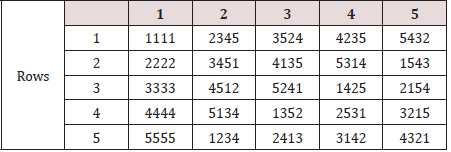
It is known from the work of that when p is a prime or a prime power, it is possible to construct (p-1) MOLS in such a way that they differ only in a cyclical interchange of the rows from 2nd to the path. Here we take a complete set of (p-1) semi - normalized Latin squares for the construction of row-column CDC designs for p varieties because this operation preserves the orthogonally. By superimposition of all the (p-1) semi-normalized orthogonal Latin squares, we obtain a composite square, say, C. Now we transpose the composite C square. The transpose composite square can be partitioned into p rows and p columns where each column contains (p-1) ordered elements in p rows. In the transpose composite square the entry (1, i) contains (p-1) elements i and in the entry (2, i) all the (p-1) elements are different where i = 1, 2, . . p. None of the elements of the entry (2, 1) can coincide with the elements of the entry (1,1). Indeed, if the two elements from this entry are equal to j, then the entry (i,j) contains a pair of element j, which contradicts orthogonality. Hence none of the different elements of the entry (2,1) can coincide with the elements of the entry (1,1) Let us consider that the elements in p rows and p columns represent the number of p varieties. Now we give the method of construction of block designs for [3] methods (3) in two parts by using transpose composite square as follows: Ignoring the first column in the transpose composite square C and perform crosses between any two elements, say, (i × j), in the second column and its corresponding elements in p rows, where i ≠j = 1, 2, . . . p . Thus, we get p cross in the second column. Similarly, we make cross between (j×k) and corresponding elements in other (p-2) columns and p rows, we get mating design for CDC experimental method (3) containing p (p-1) crosses in p (p-1) experimental units. We call this mating design as the first part of CDC experimental method (3). Similarly for second part of CDC design for method (3), we perform crosses between two different elements, say( k × l) other than first selected elements in the second column and corresponding elements in each row and corresponding two elements, say, (r × s) in other cells of the (p-2) columns and corresponding elements in each row, where k ≠l ≠r ≠s = 1, 2, . . . p, we get second part of mating design of CDC experimental method (3) containing p (p-1) crosses in p (p-1) experimental units. Now we juxtaposed the second part with the first part. We get mating design d for CDC method (3) with parameters v = p (p-1), b =2(p-1), k =p and r =2 for CDC method (3). OR Ignoring the first column, we may also get above design by initial row of the design by performing crosses between any two elements, say, (i × j), where i ≠j = 1, 2, . . . p, in first row of the second column and corresponding elements in other (p-1) columns, we get initial row of the design. Now developing the initial row by mod (p), we get mating design as the first part of CDC experimental method (3) in p (p-1) crosses in p (p-1) experimental units. Similarly we may get another initial row by performing crosses between any two different elements other than the first selected elements in the second column and corresponding elements in (p-2) column say, (k × l), where k ≠l = 1, 2, . . . p, we get another initial row. Now developing the second initial row by mod (p), we get mating design as the second part of CDC experimental method (3) of p (p-1) crosses in p (p-1) experimental units. Now we juxtaposed both designs obtained from both initial columns. We get mating design d for CDC method (3) with parameters v = p (p-1), b =2 (p-1), k =p and r =2 for CDC method (3). Example 1. Let us take p = 5, for construction of designs for method (1), we take 4 mutually semi-normalized Latin squares of order 5. After superimposing and transposing, we get the following composite square which has been shown in five rows and five columns. Ignoring first column, we cross any two elements in second column and also cross corresponding elements in other four rows of the second column and similarly we cross corresponding elements in other 3 columns and 5 rows. We get first part of CDC method (1) containing 25 crosses in 25 experimental units. Now we perform crosses between two elements other than the first selected elements in the second column and also corresponding elements in 4 rows of the second column. Similarly, we cross corresponding elements in other 3 columns. We get second part of CDC method (1) containing 25 crosses in 25 experimental units. By juxtaposition both the parts and considering columns as blocks, we get following block design with parameters v = 20, b =8, k =5 and r =2 design for CDC method (3). Block design d For CDC method (3).
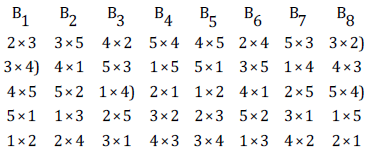
Remark1: According to [7] these designs are orthogonally blocked. In an orthogonal design no loss of efficiency on the comparisons of interest is incurred due to blocking. A block design for which N = θ 1p 1′b is orthogonal for estimating the contrasts among GCA parameters, where N denotes the line versus block incidence matrix and θ is some constant.

Remark2: [8] proved that orthogonally blocked designs remain optimal for the estimation of gca comparisons even in the presence of SCA effects in the model when each cross is replicated twice.

Now we state the following theorem.

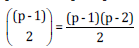
Theorem: The existence of a complete set of MOLS of order p, where p is prime or power of prime, implies the existence of optimal block designs for complete diallel cross methods (3) with parameters v = p(p-2), b =2(p-2), k =p and r =2.
Model and Estimation

For the analysis of data obtained from design d, we will follow [5] and [6] two stage procedures for estimating gca, sca effects and reciprocal cross effects with some modification. The first stage is to consider the proposed designs to estimate cross effects, say, ô = (ô 01, ô 02,..., ô (p-1)(p-2) for design d by the following model.

ìy1=+ X ô+ D â + e (5.1)
where y be n×1 vector of observations, 1 is the n×1 vector of ones, X is the n × v design matrix for treatments and D is an n x b design matrix for blocks, that is, the (h,l)th element of X (respectively, of D) is 1 if the hth observation pertains to the lth cross (respectively to lth block),and is zero otherwise, μ is a general mean, τ is a v × 1 vector of treatment parameters, β is a b × 1 vector of block parameters and e is an n × 1 vector of residuals. It is assumed that vector β is fixed and e is normally distributed with E(e) = 0 , V(e) ó= 2I and COV (â, e) = 0, where I is the identity matrix of conformable order. The least square method for the analysis of a proposed design leads to the following reduced normal equations for design d.

ôCd= Q d
Where Cd = rä –N k N´ and Qd =(Q1 ,...,Qv )= T - N kä B In the expression above rδ and kδ are diagonal matrices of designs d of order v × p with elements 2 and p in the diagonal respectively. N = X´D is the v × b incidence matrix of the designs d, T = X´ Y is the v × 1 vector of treatment totals and B = D´Y is the b × 1 vector of block totals. The sum of squares due to crosses for design d is Qd′ C-d Qd with degrees of freedom. = rank (v-1), where is the generalized inverse of with property C C ˉ C = C and expectation and variance of is

ôEa (nQd V) = Cd = (Qd) ó2 Cd

Now we will utilize the above equations to estimate the genetic parameters of proposed design. Now we give below the estimation procedure of genetic parameters in Design d.

Estimation of GCA, SCA and reciprocal effects in design d: The second stage is to utilize the fact that the cross effects can be expressed in terms of GCA , SCA and reciprocal effects. Now we can write

ôij =gi +gj +sij +rij (5.2)

where gi (gj) is the gca for the ith (jth) parent , sij ( sij = sji ) is the sca for the cross between the ith and the jth parents and rij is the reciprocal effects (rij = -rji) where (i< j = 1,2,…,p) and we also assume that Σj sij = 0, for all i. The above equation (5.2) can be written in matrix notation as

ô = Z g + s + r (5.3)

where Z = (zui) (u = 1,2, …, v ; i = 1,2, …, p) is the cross and gca relation matrix. zui = 1 if the uth cross has only one parent i. = 0, otherwise Now

Cd ô = CdZ g + Cd s + Cdr

i.e. E(Qd) = CdZg + Cds + Cdr, óV(Qd ) = 2Cd (5.4)

Since the matrix is singular, we use the unified theory of least square due to and we get the estimate of general combining ability g.

gˆ = (Z ´C C-d Z) ˉ Z´Qd = (Z´ CdZ) ˉ ôZ =´C Pd ô 1 (5.5)
where P1 = (Z´ CdZ) ˉ Z´ Cd
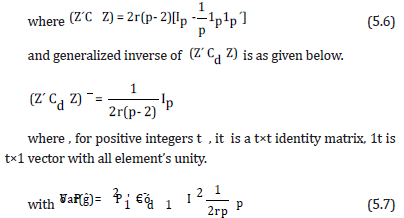
This shows that all elementary contrast among general combining abilities effects through design d is estimated with the same variance. Thus, the design d is variance balanced. We thus have the following result.
Theorem: The design d obtained from super imposition of mutually orthogonal Latin squares of order p, where p is a prime or prime power, is variance –balanced for general combining ability effects.
Now the sum of squares (SS) due to GCA can be calculated as

SS(gca) = Q'd Z(Z' Cd Z)- Z'Qd (5.8)
Since estimate of τ does involve reciprocal effects of reciprocal crosses which occur with it in r blocks. To obtain the correct estimate of τ, we eliminate the effects of the reciprocal crosses. So we estimate first the effects of reciprocal crosses. The contrast (τi j – τj i) (i, j = 1, 2,…, p) is estimable and we obtain an estimate of the reciprocal effects of the crosses as given below. Thus we have
rôˆij =-ôij ji
Since rij =-rij , we get ôijij =2rij from equation (5.2), we may write the above expression in matrix notation as

(5.9)

where S = (Su i ) is a v × v matrix with row and column indexed by the pairs (i×j) where i,j = 1,2,…,p, such that If (i×j ,i×j) = (i×j, i×j) then (i×j,i×j) entry of S is 1 and if (i×j,i×j) =( j×i, i×j) then (i×j, i×j) is -1 otherwise 0. Now substituting the estimate of g and r in equation (5.3) and simplifying, we get the estimate of s.

Since P1 1v = P2 1v = P31v = 0 and rank (P1) = p-1 , rank (P2) = p(p-3)/2 and rank(P3) = p(p-1)/2 ,it follows that the ĝ , sˆ and r´ are represented by treatment contrasts that carries (p- 1) and p(p-3)/2 and p(p-1)/2 degrees of freedom respectively. It means the proposed design d allows for general combining ability, specific combining abilities and reciprocal effects to be estimated independently.

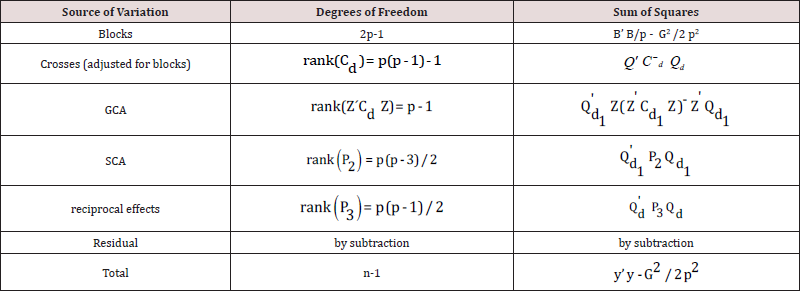
The ANOVA is then given in Table 1.

Table 1.
Lupinepublishers-openaccess-Biostatistics-Biometrics-journal

Optimality

Now we take up the optimality aspects. The optimality criterion chosen is the minimization of the average variance of the best linear unbiased estimators of all elementary comparison between general combining ability effects. According to [1], a design is universally optimal in a relevant class of competing designs if:
a. The information matrix C of the design is completely symmetric means C has all its diagonal elements equal and all its off – diagonal elements equal; and
b. The matrix C has maximal trace over all designs in the class of competing designs.
c. Now using proposition of [1], we have the following theorem.
d. Theorem 3: Let d* ɛ D (p, b, k) be a block design for diallel cross, satisfying
e. trace (Cd*) = k-1b{2k(k-1-2x) + p x (x+1)} and
f. Cd* = (p-1) -1 k--1 b {2 k (k -1-2x) + p x (x+1)} (Ip – p-1 1p 1′p) is completely symmetric.
where x = [2k/p], and for square matrix A, tr(A) stands for the trace. Ip is an identity matrix of order p and 1p 1′p is a p × p matrix of all ones. Furthermore, using d* ε D (p, b, k) all elementary contrasts among gca effects are estimated with variance

Then d* is universally optimal in D (p, b, k) and in particular minimizes the average variance of the best linear unbiased estimators of all elementary contrasts among the general combining ability effects.

In our case the C matrix of designs d is (Z´ Cd Z) which is completely symmetric. From (5.6) it is easy to see that the trace of design d is 2 r p (p-1) which is equal to Theorem 3. Hence, we have the following theorem.

Theorem: The designs d obtained from mutually orthogonal Latin squares of semi standard order after superimposing (p-1) mutually orthogonal Latin squares for diallel crossing experiments method (3), are universally optimal.

Illustration

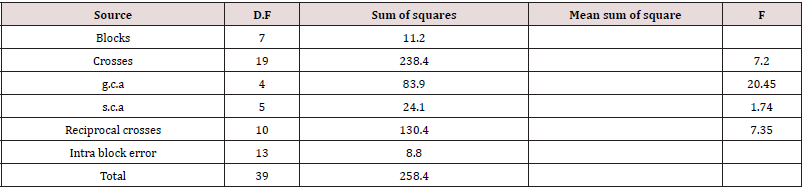
We show the essential steps of analysis of a diallel cross experiment, using an incomplete block design proposed in this paper. For this purpose, we take data from an experiment on the number of tillers per plant in pearl millet, reported by on page 180. The author used a randomized complete block design with v =20 as he considered all possible p (p-1) crosses including selfing and reciprocal crosses, among p =6 inbred lines. On the purpose of illustration, we take the data of relevant crosses from this experiment. The design chosen is d. There are 20 crosses and the design have 8 blocks, each of size five. Each cross is replicated twice. The layout and observations in parentheses are given below.
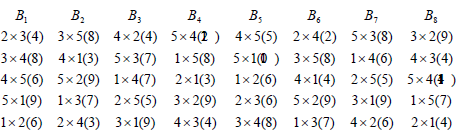
The following are the vector of treatment total, block total and adjusted treatment total respectively.
T = ( 12,14,13,15,7,10,5,10,18,18,22,16,16,7,10,8,11,19,18,15, 26)
B = (33, 30, 32, 36, 35, 30, 34, 38)
Q= ( -1.6, 2.0, -0.2,0.2, -7.8, -3.6, -7.0, -3.2, 4.8, 3.2, 2.4, 4.0, -5.0, -3.2, -6.8, -2.6, 5.4, 6.0, 1.8, 11.2) A NOVA and estimates of GCA, SCA and reciprocal effects along with their standard errors are shown in [Tables 4-7].

Table 2: Analysis of variance of proposed design d as mating and environment design.
Lupinepublishers-openaccess-Biostatistics-Biometrics-journal

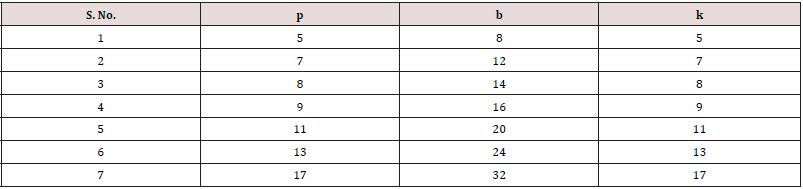
Table 3: Block designs for complete diallel crosses method (3) with p ≤ 17 generated by superimposition of mutually orthogonal Latin squares .
Lupinepublishers-openaccess-Biostatistics-Biometrics-journal

Table 4: Analysis of variance of the data on number of tillers (design d).
Lupinepublishers-openaccess-Biostatistics-Biometrics-journal

Table 5: Estimates of the general combining ability and their estimated standard error on number of tillers.

Lupinepublishers-openaccess-Biostatistics-Biometrics-journal

Table 6: Estimates of SCA effects and their estimated standard error.

Lupinepublishers-openaccess-Biostatistics-Biometrics-journal

Table 7: Estimates of reciprocal effects and their standard error.

Lupinepublishers-openaccess-Biostatistics-Biometrics-journal


Read more about Lupine Publishers Journal of Biostatistics and Biometrics Click on the below link: 


Tuesday, 20 June 2023

Lupine Publishers | An Investigation of the Effects of Surface Treatment on the Fatigue Property of Titanium Alloy for Femoral Stem and Bone Fracture Fixation

 Lupine Publishers | Modern Approaches on Material Science


Abstract

Titanium alloy (Ti6Al4V) is used for medical prosthetic devices and implants. This study investigated the effect of three types of surface treatments on fatigue and tensile properties of the metal. Representative samples were treated using polishing and chemical passivation using hydrogen peroxide and nitric acid. The surfaces of the treated and untreated samples were observed under an optical microscope and then the samples were subjected to tensile and tensile-fatigue tests using an Instron Servo-Hydraulic machine. The mechanically polished samples had 17% higher fatigue life than untreated samples. In contrast, the hydrogen peroxide and nitric acid treated samples had 5% and 7% lower fatigue life than untreated samples, respectively. Etched grain boundaries were observed on the surface of treated samples. It was concluded that when the samples were subjected to cyclic tensile load, the etched grain boundaries acted as crack initiation points and resulted in low fatigue life. Mechanical polishing on the other hand removed surface damages that could initiate fatigue failure and thus the polished samples had higher fatigue life. Hence, chemical passivation using hydrogen peroxide and nitric acid was unfavorable while polishing was favorable for enhancing fatigue life of the titanium alloy.

Keywords: Fatigue; titanium alloy; surface treatment; biomaterials

Abbreviations: MRI: Magnetic Resonance Imaging; HCF: High Cycle Fatigue; LCF: Low Cycle Fatigue

Introduction

Many metallic biomaterials composed of nontoxic and allergy-free elements have been developed in the recent years. Generally, all metal implants must be non-magnetic and high in density, to be compatible with magnetic resonance imaging (MRI) techniques and visible under X-ray imaging [1]. Titanium and its alloys are commonly used materials for this purpose as they have low specific gravity, excellent corrosion resistance and strength, high biocompatibility, and are non-magnetic. With these advantageous features, titanium is an optimum material for medical prosthetic devices.Approximately one million patients worldwide are treated annually for total replacement of arthritic hips and knee joints, whereas numerous numbers of patients use various devices for bone fracture fixations [1]. Some of the fixers such as screws, plates and intramedullary nails that are commonly made of Ti6Al4V alloy or stainless steel are used for bone fracture treatments [2,3]. Femoral stem hip implant treatments use Ti6Al4V alloy [4].

Most artificial implants are subjected to either static or cyclic loads. For such applications combination of strength and toughness are very important [5]. Metals like titanium alloys have that superior characteristic. Specific requirements of metals depend on the specific implant applications. Stents and stent grafts are implanted to open stenotic blood vessels; therefore, it requires plasticity for expansion and rigidity to maintain dilation. For orthopedic implants such as bone fixations, metals are required to have excellent toughness, elasticity, rigidity, strength, and resistance to fracture [5]. For total joint replacement, metals used should have high wear resistance; so that debris formation from friction can be avoided. Due to the fluctuating nature of the loadings on hips, joints and other movable body parts, fatigue resistance is an important mechanical property that is required for femoral stem and bone fracture fixation applications. Implanted metallic components can experience a spectrum of cyclic loading from normal day-to-day patient activities, thereby an increased chance of high cycle fatigue failure of the components with patient size and level of activity [6]. An implanted metal surface is generally modified by mechanical or chemical methods, or combination of both to improve the biocompatibility and mechanical property [7]. Common mechanical methods are grinding, polishing, machining, blasting and attrition. Chemical treatments that are based on acidic, alkaline, hydrogen peroxide, sol–gel, chemical vapour deposition and biochemical modification are common in modifying a metal surface. Mechanical modification can provide specific surface topographies, clean, or roughen the surface, which can lead to improved adhesion in bonding, as the roughness of the structure can be more favourable for biomineralization due to increased surface area [8]. Chemical methods can improve biocompatibility, bioactivity and bone conductivity, corrosion resistance and removal of contamination [8]. These methods also provide titanium with bioactive surface characteristics.

The addition of 6% aluminum and 4% vanadium to commercially pure titanium results in an alloy having mechanical properties like cold-worked stainless steel (including superior fatigue resistance) yet retaining excellent corrosion resistance. In addition, titanium alloy (Ti6Al4V) is easily weldable and machinable than the pure form. Its principle drawback remains its poor resistance to erosion, making it unacceptable for surface to surface contacts. Titanium based alloys are typically the material of choice for patients having known hypersensitivity reactions to any of the constituents of stainless steel or cobalt-chromium alloys [9].Titanium alloys do not exhibit good seizure toughness. In general, a surface treatment must be applied if the component is subjected to sliding contact. For surface hardening, it is well known that oxygen and nitrogen treatments can be used because they are easily available, inexpensive elements. However, these treatments have a drawback since they cause reduction in fatigue strength [10]. The reason for the decrease in fatigue strength is due to oxygen diffusion into metal surface leading to the development of residual tensile stress on the surface. Shot peening is an effective technique to improve the fatigue strength of oxygen diffusion treated titanium [10].In this study, three types of surface treatments that could easily be applied in a laboratory were investigated for a commonly used medical implant Ti6Al4V. Representative samples were made from commercially available Ti6Al4V rods and their surfaces were treated. Polishing and chemical passivation using hydrogen peroxide and nitric acid surface treatments were employed. The surfaces of the treated and untreated samples were observed under an optical microscope and then the samples were subjected to tensile and tensile-fatigue tests. The effect of the treatments on fatigue and tensile properties was analysed.

Materials and Methods

<

urface treatment

A mechanical and two chemical surface treatment methods were chosen to modify the surface of commercially available Ti6Al4V alloy rods of 6 mm diameter.

Mechanical surface treatment

A common mechanical surface modification method, polishing was used. An ultrafine abrasive polishing cloth was mounted on buffering wheel of a lathe machine. The lathe machine was set to run at 200 rpm. Each of eight specimens of 150 mm long rod were held firmly against the polishing cloth to polish the specimen.

Hydrogen peroxide treatment

Hydrogen peroxide (H2O2) treatment is a chemical passivation method. Eight clean specimens of 150 mm long titanium alloy rod were immersed in the solution of 30% of hydrogen peroxide. After heating the solution at 95oC with the specimens for 1 hour, the specimens were rinsed with distilled water and ethanol.

Nitric acid treatment

Eight clean specimens of 150 mm long titanium alloy rod were immersed in 30% nitric acid (HNO3) and heated to 60℃ for 30 mins. The specimens were carefully removed and rinsed with distilled water and ethanol.

Visual inspection microscopy

Surface of untreated and treated specimens were examined using a Nikon Epiphot 300 incident light microscope under 100 magnification.

Mechanical tests

Tensile test: Three specimens from each type of untreated, H2O2 and HNO3 surface treated samples were used for tensile test. The test was performed in accordance with the ASTM E8 / E8M - 16a Standard using an Instron servo hydraulic machine 8516. The maximum load, maximum strength and modulus of elasticity were calculated for each specimen.

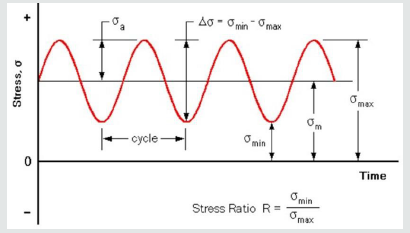
Fatigue Test: Five specimens from each of untreated, H2O2and HNO3 surface treated samples were used for fatigue test using an Instron servo hydraulic machine 8516. A sine curve fatigue cyclic (Figure 1) load was applied for the test. The mean load of the fatigue cycle for all test specimens was maintained at 25 kN which is approximately 80% of the average tensile maximum load that was measured from untreated specimens. The frequency and stress amplitude of the cycle were maintained at 10 Hz and 5 kN, respectively for all tests. The number of cycle and time taken for the failure of each specimen were recorded.

Figure 1: Typical sine curve load cycle for fatigue test.

Lupinepublishers-openaccess-material-science-journal

Results and Discussion

Micrographs of specimen surface

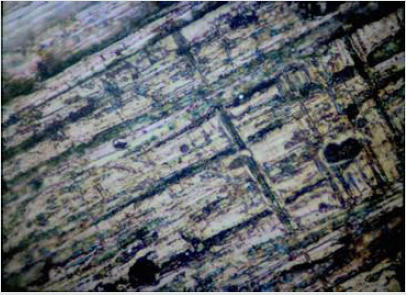
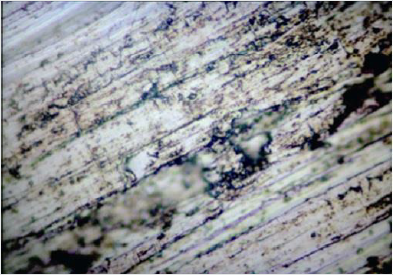
Figure 2: Microscopic image of the surface of a reference (untreated or unpolished) sample at x100

Lupinepublishers-openaccess-material-science-journal

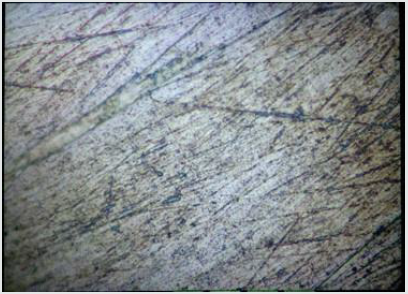
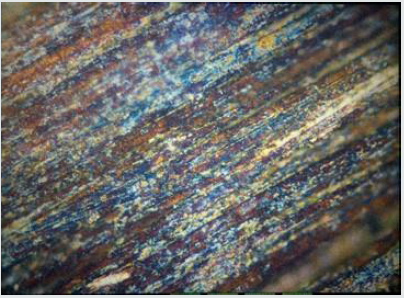
Mechanical polishing provides a smooth surface finish compared to unpolished surfaces. Microscopic image (Figure 2) shows untreated samples had rougher surface with large defects. The surface of polished samples shows apparently smooth surface with very fine scratches as shown in (Figure 3). The H2O2 chemical treatment, referred to chemical passivation method, formed an oxide layer on the surface of the specimens. This treatment is usually conducted to improve corrosion resistance as well as to remove contaminants on the surface of the Titanium alloy. After the hydrogen peroxide treatment, the surface turned into blackish – grey color (Figure 4). It seems a thin film of coating was formed on the surface of the Titanium alloy. The chemical passivation procedure based on nitric acid is used for cleaning and removing contamination, oxides, and small defects. It could dissolve a thin layer of material from the surface and improve the corrosion resistance. Removal of thin layer material could be observed as seen in (Figure 5). The surface defects that existed before the treatment were clearly visible under a microscope as dark patches (Figure 5).

Figure 3: Microscopic image of the polished surface of a sample at x100

Lupinepublishers-openaccess-material-science-journal

Figure 4: Microscopic image of the H2O2 treated surface of sample at x100.

Lupinepublishers-openaccess-material-science-journal

Figure 5: Microscopic image of the HNO3 treated surface of sample at x100.

Lupinepublishers-openaccess-material-science-journal

Tensile property

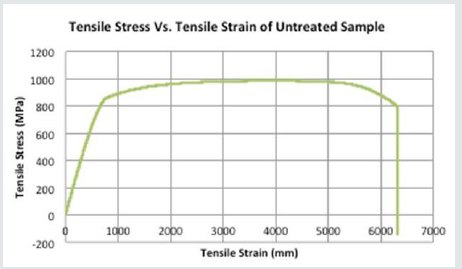
There were no differences in tensile property of untreated and treated specimens observed. A tensile stress-strain graph is shown in (Figure 6) and the tensile test result of treated and untreated specimens is presented in Table 1.

Figure 6: Tensile graph of an untreated specimen.

Lupinepublishers-openaccess-material-science-journal

Table 1: Tensile property Titanium alloy.

Lupinepublishers-openaccess-material-science-journal

Fatigue property

The average number of cycles for failure of untreated, polished, and chemically treated samples are given in Table 2. The fatigue test was designed, and the parameters were set to accelerate the failure for comparative study of different surface treatments.Polished samples had higher number of cycles than untreated and treated samples. H2O2 treated samples took 1,000 more cycles than HNO3treated to fail. However, both chemically treated samples failed earlier than untreated samples. Fatigue failure of a material is usually initiated and propagates from a defect on the surface. When the material is subjected to a cyclic load, cracks at a very small, microscopic scale will begin to form at the stress concentration zone located on the surface of the material [11]. The crack will then propagate and become large with increasing cycle of load and eventually lead to fatigue fracture. The fracture is normally dependent on the size of the defect, and structure of the crack. Untreated (unpolished) samples had surface cracks and failed earlier than compared to polished samples. HNO3 and H2O2treatments that were used for chemical passivation did not improve the fatigue resistance since they neither removed the surface defects nor strengthened the surface.

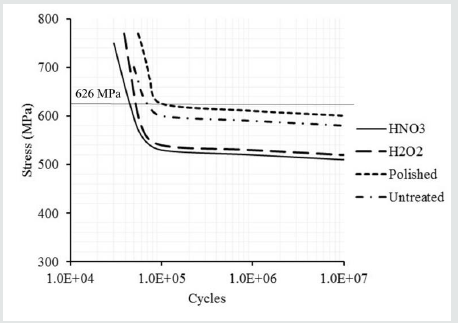
Figure 7: Comparison of S-N curves of untreated, polished and HNO3 treated Ti6Al4V alloy samples.

Lupinepublishers-openaccess-material-science-journal

Table 2: Number of cycles for failure of different types of samples.

Lupinepublishers-openaccess-material-science-journal

In general, there are two different types of fatigue: high cycle fatigue (HCF) and low cycle fatigue (LCF). HCF is likely to occur at low stress levels and a high number of cycles to failure. LCF occurs at high stress levels and a low number of cycles to failure. Some materials have a fatigue limit or endurance limit that is the stress level below which the material is unlikely to fail.Five different surface treatments such as annealing, shot-peening, ultrasonic shot-peening, deep-rolling, and laser shock-peening were investigated elsewhere for Ti6Al4V alloy [12]. The fatigue test was performed for each type of treated samples and the stress-number of cycle (S-N) curves were discussed [12]. The ultrasonic shot-peened samples had lowest endurance limit 600 MPa than other samples. The highest endurance limit 700 MPa was observed for laser shock-peened treated samples. In this study, the S-N curves were obtained from curve fitting and extrapolating for the untreated, polished, and HNO3and H2O2treated samples. These curves are illustrated in (Figure 7). For the same mean stress of 625.6 MPa, the polished and chemically treated samples failed at low fatigue cycles when compared to shot-peened, ultrasonic shot-peening, deep-rolled, and laser shock-peened samples. As from the comparison the polished specimen was able to endure 105 cycles whereas the shot peened and deep rolled specimens could endure 106 cycles. However, polished samples had the same endurance limit as shot-peened, ultrasonic shot-peened and deep-rolled samples.The fatigue test was performed in an accelerated condition to complete testing of sample in a day. Using a higher amplitude and frequency would have affected the fatigue strength of the specimens. These factors might cause more surface damages during the test and result in rapid initiation of failure. Hence, determining appropriate test parameters is important for such chemically treated samples of Ti6Al4V alloy.

HNO3 and H2O2 passivation treatments could not remove the surface damage or defects. The HNO3 was also etched the grain boundaries of the titanium alloy (Figure 5). Both chemical treatments were unfavorable to fatigue resistance although they have an advantage in chemical passivation. When comparing the number of cycles achieved by the specimens under different surface treatment, it is determined that the mechanically polished Ti6Al4V alloy had a greater number of cycles and had a longer time to reach failure. The Ti6Al4V alloy that gave the chemical treatments distinctly had a reduced time of failure. The micrographs of the specimens also indicated that when the Ti6Al4V alloy was polished, the weak points on the surface were removed. The surface of the Ti6Al4V alloy appeared to be unblemished by application of the HNO3.

Conclusion

The polishing method did improve the fatigue life of the Ti6Al4V Titanium alloy. The chemical passivation method, even though the advantage of the method is to minimize corrosion, the method was unfavorable to fatigue resistance since the number of cycles and time taken for the specimen to break were lower when compared to the untreated specimens. The combination of polishing method and chemical passivation method on the Titanium alloy might help improve the property of the material such as minimize the corrosion factor and at the same time the polishing might increase the fatigue life of the material. Implants used in Brunei Darussalam are mostly treated through the autoclave process. Polishing of the implants could be introduced in Brunei Darussalam so that the fatigue life of implant can be increased by up to 2-3 years more since the common life span of titanium implant can last for around 10-15 years.

Read more about Lupine Publishers Journal of Modern Approaches on Material Science Click on the below link: https://lupine-publishers-material-science.blogspot.com/


Monday, 19 June 2023

Lupine Publishers | Insecticidal Activity of Plant Extracts

 Lupine Publishers | Drug Designing & Intellectual Properties International Journal


Abstract

Insecticides are a group of compounds with heterogenous toxicity, whose intended purpose is to kills insects. Synthetic insecticides are known for their very harmful environmental and health impacts. This therefore generates a need for a safer solution. Botanicals are a special group of insecticides with a natural origin, obtained primarily from plant parts. There is a continued interest to screen plants for their insecticidal activities in light of the great destruction done to crops that affect the livelihood of the populace worldwide, especially in countries, whose GDP depends primarily on agriculture. Guyana, a country on the mainland of South America is no exception. Agricultural produce is now threaten by emerging new species of insect pests, such as in the rice sector. Thus, there is a need to screen Guyana’s richly biodiversified flora for its insecticidal activities and to promote research in biological control of crop pests and boost the agro industry.

Keywords: Insectides; environmental; Guyana; biodiversified flora

Introduction

Background

Insects, though useful in many ways to mankind, have had negative effects in the field of agriculture. They have attacked plant parts such as stored grains, seeds, flowers, leaves, stems, fruits etc and have had a significant effect on the agroeconomy of many countries [1-3] . One way to control insects deleterious effects on crops is to utilize chemical pest control, which employs potent chemical pesticides to curb, reduce or eliminate pests and thus sustain crop production throughout the world. However, most synthetic insecticides used to date are deleterious to human health and the environment [4]. Thus, an alternative strategy is necessary. That alternative strategy is the use of plant extracts and phytochemicals as natural antifeedant, insect deterrents and repellent [4]. Plant extracts are safe alternatives that are of low cost, convenient to use and environmentally friendly. Plant products have been successfully exploited as insecticides, insect repellents and insect antifeedants [1-3]. In addition, natural products insectides have been isolated from plants and serve the basis for structure mimicry synthesis. Figure 1 show a list of structure of some isolated natural products from crude plant extracts. Figure 2 shows a notorious insecticidal natural product, Azadirachtin Many countries whose GDP (Gross Domestic Product) depends on agriculture, have in recent times being affected by insects. Guyana, a country on the mainland of South America is of no exception. Agricultural produce is currently threaten by emerging new species of insect pests. One notable example is in the field of rice cultivation. Recent research in Guyana has shown that rice production is threatened by paddy bugs, leaf miners, water weevils and caterpillars [6]. Natural insecticides from Guyana flora, should be a good choice, apart from the synthetic analog imported. Thus, there is a need to screen Guyana’s richly biodiversified flora for its insecticidal activities and to promote research in natural pesticides control. There is not much report of plant being screened for their insectidal activities here, even though research is currently being done. So, this area of research needs intensification in Guyana. In addition, the crude plant extracts can be subjected to chromatographic separation, which will lead to the isolation of known and unknown natural products which will continue to provide the platform for novel insectidal discoveries and structure activity relationship.

Figure 1: The structure of some selected isolated insecticides.

Figure 2: Azadirachtin, a notorious insecticidal isolate from Azadirachta indica.

Brief survey of some selected natural insectides

Internationally, there are many reports of plant extracts being used for their insecticidal properties. Several will be briefly reviewed here. For example, Morinda citrifolia leaf extract was tested for larvicidal activity against three medically important mosquito vectors such as malarial vector Anopheles stephensi, dengue vector Aedes aegypti, and filarial vector Culex quinquefasciatus Insecticidal activity of essential oil [7], extracted from Morinda lucida was tested on pulse beetle Callosobruchus maculatus, which is a pest that causes serious damage to several pulses. The insecticidal activity was compared with two pesticides, Phostoxin and Primo-ban-20. Results clearly indicate that M. lucida essential oil can be used as an effective alternative for pulse beetle C. maculatus control, and it could be tested against other pulse beetles affecting Asia and Africa and throughout the world, thereby reducing use of synthetic pesticides [8].

The insecticidal and antifeedant activity of the ethanolic extracts from Allium rotundum L has been noted against the larvae of the L.decemlineata [9]. It was found that the ethanolic extracts from the aerial part possessed moderate level (40.0%) of insecticidal properties against the larvae of the L. decemlineata and low against the imago (6.7-13.3%0) [9]. The petroleum ether, ethanol and aqueous extracts from the leaves of Artemisia herbalba, Asso, Euclayptus camaldulensis Dehnh and Rosmarinus officinalis L were investigated for their insectidal activity against 3 to 4 days old Myzus persicae individuals at 1,2.5, 5 and 10% and observations were made after 24 hours. Etheric extracts of all plants were effective and induced mortalities (100%, 53% and 60% respectively) at the highest concentration. However, the ethanolic and aqueous extracts did not show any significant insecticidal effect [10] Sixteen aromatic plant extracts from three species belonging of the Asteraceae family, were tested for their insectidal activity against adults and larvae of confused flour beetle Tribolium confusum du Val (Coleoptera Tenebrionidae).

The methanolic and ethyl acetate extracts of Mantisalca duriaei Briq. Cavill. and petroleum ether, chloroformic and methanolic extracts of Raconteur acute DC, significantly induced larval growth. Antifeedant properties were detected in methanolic extracts of M. duriaei and R. acaule, petroleum ether and chloroformic extract of R. acaule and ethyl acetate extract of M. duriaei. For all extracts, mortality was higher for larvae than adults. Values of 83% and 77% were obtained using petroleum ether and methanolic extracts of R. acaule. These results suggest that M. duriaei and R. acaule may be used in grain storage against insect pests [11]. Leaf oil of Psidium guajava L obtained from Soxhlet extraction was tested for insecticidal effect and phytochemical screening against khapra beetle, Trogoderma granarium Everts (Coleoptera: Dermestidae. The application of the oil at the rate of 0.5ml gave significantly (p < 0.05) higher percentage mortality than the control [12].

A study was conducted to determine the insecticidal activity of essential oils from oregano, Origanum onites L. (Lamiales: Lamiaceae), savory, Satureja thymbra L. (Lamiales: Lamiaceae), and myrtle, Myrtus communis L. (Rosales: Myrtaceae) against three stored-product insects such as the flour moth Ephestia kuehniella Zeller (Lepidoptera: Pyralidae), the Indian meal moth Plodia interpunctella Hübner (Lepidoptera: Pyralidae) and the bean weevil Acanthoscelides obtectus Say (Coleoptera: Bruchidae). A. obtectus was the most tolerant species against the essential oils. However, the insecticidal activity of the myrtle oil was more pronounced than other oils tested against A. obtectus adults. The essential oils of oregano and savory were highly effective against P. interpunctella and E. kuehniella, with 100% mortality obtained after 24hrs [13].

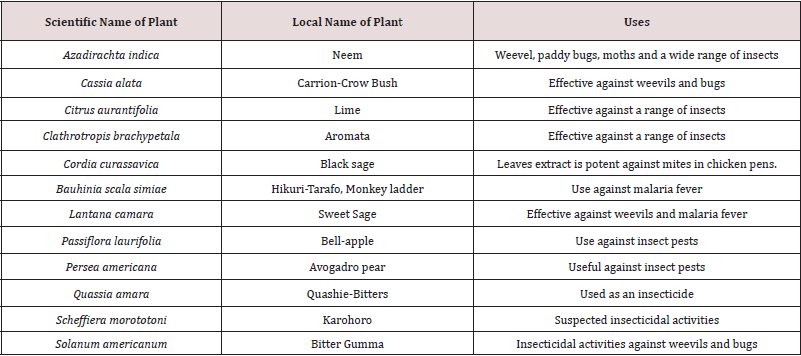
Table 1: Some selected plants from the Guyanese flora with folklore insecticidal activities.

lupinepublishers-openaccess-drug-designing-journal

Six different indigenous plants were screened for antifeedant and insecticidal activities against fourth instar larvae of Epilachna beetle, Henosepilachna vigintioctopunctata, a severe pest on brinjal. Amongst the plants screened, Achyranthes aspera showed higher activity against the selected pest. Ethyl acetate extracts of A. aspera showed higher antifeedant index and insecticidal activity against fourth instar larvae of H. vigintioctopunctata. Preliminary phytochemical analysis revealed that the presence of alkaloid and quinines in the ethyl acetate extracts indicating higher percentage of activities [14]. The insecticidal activities of four local plants extracts Rhazya stricta Decne, Lantana camara L., Ruta chalepensis L. and Heliotropium bacciferum Forssk against subterranean termites Psammotermes hybostoma (Desneux) were reported. Of the four extracts, the hexane extract of R. stricta was more pronounced, having an acute (24hr) and chronic (48hr) LC50s of 194.8 and 147.4ppm, compared to 221.7 and 149.9; 288.9, 185.6 and 391.3 and 244.5ppm for L. camara, R. chalepenesis and H. bacciferum respectively [15]. There are other reports of plant extracts used for their insecticidal activities [16-22]. There are few reports of plants from the Guyana flora with insecticidal activities, even though research has been pursued in that direction. Table 1 shows a list of ten plants with selected insecticidal activity from the richly biodiversified Guyana flora.

Conclusion

Insects are indeed a threat to mankind, especially in the field of agriculture. Many countries, whose economy depends on the agro-industry are threaten with new emerging destructive insects. Guyana is of no exception. Whist synthetic insecticides can do the job in many cases, there use is deleterious to the environment etc. Insecticides derived from plant extracts is far more environmentally friendly and far less expensive to make compare to synthetic ones. From an economical point of view, it would be best to use the aqueous extract of selected plants with insecticidal activities. There are many plants with folklore insecticidal activities in Guyana and their extracts: organic and aqueous need insectidal investigation. Also, the isolation of natural products from the crude plant extracts can lead to the discovery of new isolates and it would form the basis for continued novel drug discovery.

Read more about Lupine Publishers Journal of Drug Designing and Intellectual Properties Click on the below link: https://lupine-publishers-drug-designing.blogspot.com/


Saturday, 17 June 2023

Lupine Publishers | Basic Sciences and Clinical Implications of Alzheimer’s Disease

 Lupine Publishers | Journal of Clinical & Community Medicine


Abstract

Alzheimer’s disease (AD) is an irreversible and chronic progressive neurodegenerative disorder characterized by progressive cognitive dysfunction, memory loss, and decline. This disorder is the most common dementia type in elderly, accounts for 60%-80% of all cases [1-4]. Current estimates described that about 50 million people are living with dementia worldwide and treatment options are limited, placing significant suffering and financial burden on families and society. This number of people with dementia is predicted to increase to 131.5 million by 2050, as the population ages [4,5]. Although the AD etiology is still unknown, certain risk factors may influence on the clinical course of this illness, such as: age, gender, ethnicity, expression of the epsilon4 allele of apolipoprotein E (ApoE4), advanced parental age, cerebrovascular disease, severe or repeated head trauma, hypertension, myocardial infarction, diabetes mellitus, hyperlipidemia, and immunological defects; genetic factors as chromosomal defects (e.g., Down syndrome); and environmental factors as infective agents, toxins, smoking, elitism, limited education resulting in low neurofunctional stimulation, and sedentary lifestyle. Despite some controversies, authors report that limited education can be related to the high incidence of AD, once low neurofunctional stimulation could result in less cerebral metabolism and, as a consequence, favor the β-amyloid peptide (Aβ) deposits in the brain [1,6-8]. About 1% of cases of AD is autosomal dominant inheritances which is caused by high penetrance mutations in three genes, including APP (amyloid precursor protein, chromosome 21), PSEN1 (Presenilin 1; chromosome 14) and PSEN2 (Presenilin 2; chromosome 1) genes. The presence of the ApoE gene, located on the long arm of chromosome 19 (locus 19q13.2), increases the risk of developing AD. Among the three common ApoE allelic forms (epsilon2, epsilon3, and epsilon4), the ApoE4 is the most significant genetic risk factor for formation and deposition of β-amyloid peptide (Aβ) plaques in the brain tissue. These plates are neurotoxic agents which impair the synapses and ultimately cause neurodegeneration for early-onset and late-onset AD [2,3,6,8,9].

Introduction

This neurological condition is characterized by the following cardinal signs and symptoms: presence of extracellular senile plaques (extraneuronal deposition of beta-amyloid fibrils) and intracellular neurofibrillary tangles (intraneuronal aggregates of tau protein), gradual and progressive loss of episodic memory or other cognitive domains, inability to recognize common objects, family or friends (visual agnosia), to comprehend or formulate language (aphasia), and to carry out their basic activities in daily living (apraxia), and motor dysfunction. This last feature leads to immobility, inanition due to severe weakness and wasting from lack of food, and death. Personality changes, delirium, depression, and various behavioral abnormalities are also identified [3,10]. AD may affect a person in different ways and the disease progression depends upon the impact of the disease itself, the person’s personality, and health conditions. Considering these contexts, this illness has been divided into three stages: mild, moderate, and severe. The literature has still described that chronic cardiovascular and respiratory diseases and their comorbidities, e.g. obstructive sleep apnea, may increase the risk for development of AD and/or accelerate its progression. So, the treatment of these illnesses may contribute to AD prevention and/or control its progression [11]. Thus, it is important to comprehend the impact of pathogenesis on daily living and to know the clinical implications and approaches of this disease to provide good health for patients with AD, especially for institutionalized elders. Furthermore, the continuous application of the best transdisciplinary practices in health may result in good general health status and better preservation of stomatognathic system in this population.

Probably, these practices together may contribute to construction of knowledge, creation of new work philosophies and, consequently, improvement of lifestyle quality and longevity of people with dementia.

With respect to AD progression, elders become more dependent, resulting in major limitations in their self-care for general and oral health‐promoting practices. Then, it is extremely important that family members and/or caregivers are continually guided by physicians and dental physicians to control the evolution of preexisting illness and to avoid the appearance of new comorbidities. As a support therapy, transdisciplinary approaches must be applied to activate his/her memory and cognitive skills, including games, music therapy, physical exercises, and others. This may allow a good adaptation to several limitations which are caused by chronic and progressive exacerbation of AD.

An overview of the oral healthcare scenario, many dental physicians have great difficulty in assisting this public-target due to the physical, behavioral, and mental impairments. Oral dysfunctions sucking habits and involuntary oral and perioral movements are very frequent, compromising an appropriate oral rehabilitation. So, the choices of therapeutic approaches depend upto the evolution stages of AD. In initial stage, the dental physicians must remove all the infection foci (e.g., caries, periodontal diseases, and periapical abscess and cysts) and to restore the functions of the oral and maxillofacial complex. In severe stage, oral healthcare must be performed through safe and effective clinical procedures using intravenous sedation or general anesthesia in a hospital environment.

Conclusion

Considering that the World Health Organization has recognized AD as a global public health priority due to the increase of the elderly population and disparity in health inequality in all around the world, continuous collaborative efforts of specialized health multiprofessionals must be done to provide a well-being and satisfactory health conditions for these individuals. Furthermore, the best transdisciplinary and clinical practices in continuing healthcare must be recommended in private and public health units, as an irrefutable fact, mainly in healthcare services of long-term private or public nursing homes. In this manner, great benefits may be attained with success, leading to the management and control of AD progression, reduction in appearance of new comorbidities, decline of morbidity and mortality, and finally preservation of good quality of life of this target public.

Read More About Lupine Publishers Journal of Clinical & Community Medicine Please go through the Below Link:
https://journalofclinicalcommunitymedicine.blogspot.com/

Friday, 16 June 2023

Lupine Publishers | Calligraphic Handwriting (CCH) Effects on Moods and Anxiety of Type II Diabetes Patients

 Lupine Publishers | Journal of Complementary & Alternative Medicine


Abstract

Background

Chinese Calligraphic Handwriting (CCH), a WHO (2019) recognized effective treatment, enhances our cognitive abilities, relaxed bodily conditions and stabilized emotions. It has successfully treated the emotion-related anxieties and the moods that are associated with several diseases and disorders. The present study tested this intervention on Diabetes patients.

Method

16 type II diabetes patients and 16 healthy subjects participated. Each group performed both the CCH tasks of brush handwriting of Chinese characters and the brush drawing of geometric patterns. The Chinese versions of STAI and POMS measured the effects of brush writing and brush drawing tasks. on the participants. Both scales were administered to all participants before and after a 40-minute training session.

Findings

The patients group significantly improved on Pre-Post measures of the STAI in both the brush writing (F= 11.97; p=0.004) and brush drawing (F=14.08, p=0.002) tasks. However, the healthy subjects group also showed similarly a pre-post significant effects on the STAI scores from the brush writing (F = 32.02; p = 0.000) and the drawing tasks (F= 14.05, p=0.002).

Moreover, both groups showed a significant reduction in the postforms states of Tension-Anxiety, Depressed-Dejection and Confusion-Bewilderment in the brush writing task (P<0.001), but only Tension-Anxiety and Depressed-Dejection in the brush drawing tasks (P<0,001), The reduction in each case from the patient groups is greater than that from the healthy subject’s group (0.001).

Interpretation

The Brush Writing and Brush Drawing as treatments have shown significant improvements in STAI and some POMS states of the practicing Type II diabetes patients.

Chinese Calligraphy

Chinese handwriting, especially with a brush, can be conceptualized as an act involving the whole body of the writer in which cognitive planning, organizing, and processing of visualspatial patterns of the character take place. Motor control and maneuvering of the brush following the character configurations involve the whole body projected relative to the geometry of each character. The activity of brush writing is essentially an external projection and execution of the writer’s internal cognitive images of the character. There is therefore an integration of mind, body, and character interwoven in the dynamic calligraphic process. The heritage of Chinese calligraphy is traditionally used to enhance an individual’s self-reflection and cultivation.

Our research in the past 30 years has identified five dimensions of beneficial behavior arising from the practice of Chinese calligraphy handwriting (CCH). These are visual attention, cognitive activation, physiological slowdown, emotional relaxation and behavioral change and development Kao [1]. These findings have contributed significantly to the improvement of the practitioner’s psychological health and wellbeing.

Chinese characters have different visual geometric properties. Some characters are extremely detailed and require several strokes (Fly, dragon) while some other characters are symmetrical (South, grass) some are parallel (Wang, book. Of course, there are also characters that are neither asymmetrical nor parallel (Heart, Yao).

Directional characters possess character forms of shapes that orient upwards, downwards, to the right or to the left (Mountain, dry). Some characters have strokes that are closely linked together as a unit (Foot, Shen); characters without such features are nonconnected characters (Small, swimming). Closed characters have enclosed or holes in the construction (Crystal, vessel) and the nonclosed characters do not have these features (Than, coincidence). We have found that these visual-spatial variations of the characters have a powerful impact on the practitioner’s writer’s bodily and psycho-emotional states during dynamic calligraphic execution.

Effects of Calligraphy Training

Cognitive Effects

The practice of Chinese calligraphic training has been confirmed to facilitate and increase some cognitive changes. Cognitive changes associated with CCH practice include such intellectual abilities as Spatial Ability, Abstract Reasoning, Short-term Memory, Picture Memory, and cognitive Reaction Time Kao [2] as well as cognitive and perceptual tasks such as visual and auditory attention, concentration, and spatial reasoning Kao [3].

Physiological and Cognitive Neural Effects

Some of the psychological effects studied over the years have included reduced heart rate, blood pressure, skin conductance, raised skin temperature, slower respiration, and relaxed muscular tension. This calligraphic impact has also been confirmed for attention and emotional stability and mental relaxation Kao et.al. [4]. In addition, recent brain-imaging studies have further confirmed the CCH training and practice effects on shaping the structure and functions of the brain Xu et.al. [5]; Chen et al. [6] and better executive functions and stronger resting-state functional connectivity in related brain regions Chen et al. [7]. These findings provide powerful confirmation of CCH’s impact on the brain’s cognitive neural dimensions of the practicing calligraphers.

Bio-emotional Effects

The direct outcome of such changes as well as the overall physical quiescence evokes sensory feedback: states of emotional relaxation, calmness, tranquility, and peace of the mind, which offers a psychological incentive for further motor control and execution of the brushing acts. In other words, the reason for continuing is due to the physiological slowdown as well as the soothing and relaxing states of emotions Kao, 2006; Kao [8]; (Kao, Zhu, Chao, Chen, Lie & Zhang, 2014). Our recent study on CCH training effects on HRV coherence increase is another evidence of its effectiveness Lam et.al. [9].

Foundations of CCH Treatment on Emotional States of Diabetes

We know that diabetes can cause a wide array of complications, which would exert great influence on diabetic patients’ emotions and increased stress. Anxiety and depression are common occurrences among these patients and often debilitate them Karlsen et.al.[10] It is found that in a meta-analysis that the prevalence of depression among people with diabetes was about twice as high as that among those without diabetes Anderson et.al.[11] Therefore, in the treatment of diabetes, it is not enough to consider physical factors alone. Healthy nutrition and regular exercise are important, but we must also pay attention to the emotional factors that are closely related to the quality of life of diabetic patients. Evidencebased behavioral interventions are pressing and needed.

Researchers have advocated over the years a behavioural approach, which involves biofeedback and relaxation training in the treatment of diabetes Fiero et.al. [12]; Mcginnis et.al. [13]. In addition, they have also found the CCH practice can relax the emotions and mood states of schizophrenic patients Fan et.al. [14] and the autistic children Kao et.al. [15]. In recent years, our CCH interventions have further been applied to treat patients with emotion-related diseases, conditions, or disorders. These have included patients with anxiety disorders (Dong, e; al, 1996); Chinese Nasopharyngeal Carcinoma patients experiencing mood state disturbances (Yang, Li, Hong & Kao, 2009), childhood survivors of the 2008 Sichuan-China earthquake with moods disturbance and distress symptoms -- helping reduce PTSD symptoms, cortisol levels and stress, (Zhu, Wang, Kao, Zong, et., al. 2014) as well as breast cancer patients with anxiety and comorbid depression Liu et.al. [16]; Wagner [17].

On the strength of the foregoing clinical studies, the present investigation aimed to test and demonstrate the effectiveness of the CCH training in helping patients with Type II diabetes to reduce their stress, anxiety and mood states.

Method

Measures

Sixteen participants diagnosed with type II diabetes and sixteen healthy control subjects received the CCH treatment, the brush writing of Chinese characters or drawing treatment, which involved drawing of geometric figures with a brush. The Chinese version (STAI; Form Y-1, translated by Ye, 1988) of the State and Trait Anxiety Scale (STAI) Form Y-2, STAI: Speilberger et.al. [18] was employed to measure the anxiety level of the participants. The Profile of Mood States (POMS) Lorr et.al. [19,20] was adopted to evaluate subjective emotional experiences of the normal subjects as well as the clinical patients in six mood states: Depression- Dejection (D), Tension-Anxiety (T), Anger-Hostility (A), Vigour (F), and Confusion-Bewilderment (C).

Design

The 16 normal adults and 16 diabetic patients were randomly assigned to either the CCH practice group or the figure-drawing group with 16 participants in each group. They each performed the respective brush task, writing or drawing, for 45 minutes. The instruments used included a brush made of lamb hair and the rice paper. The writing materials were Chinese characters in a style containing mainly linear strokes and topological properties, while that for drawing consisted of meaningless geometric patterns. The STAI and the POMS were administered to all participants before and after the brush task for the patients as well as the healthy controls.

Results

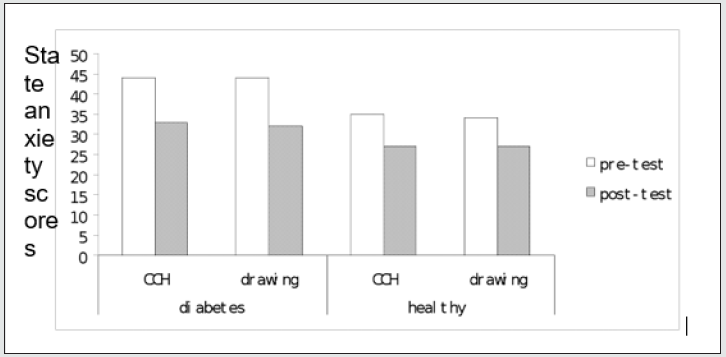
Based on the State-Anxiety Inventory (S-AI), patients significantly improved on measures of state anxiety (SA) in both the brush writing task (F= 11.97; p=0.004) and the brush drawing task (F=14.08, p=0.002) treatment conditions. In addition, the healthy controls also showed an improved positive effect on SA in both the brush writing (F = 32.02 (p = 0.000) and the brush drawing tasks (F= 14.05, p=0.002). Overall, the patient group’s SAI magnitude reduction is shown greater than that of the healthy controls when the brush writing and the brush drawing tasks are pooled together. (F=5.84, p<0.05?). In addition, The SAI magnitude reduction from the drawing tasks is found to be greater than that of the brush writing task is interesting (F = 5.33; p <0.05?). (Figure 1).

Figure 1: Mean changes in state anxiety scores in practising calligraphy or drawing for diabetes and healthy subjects.

lupinepublishers-complementary-alternative-medicine-journal

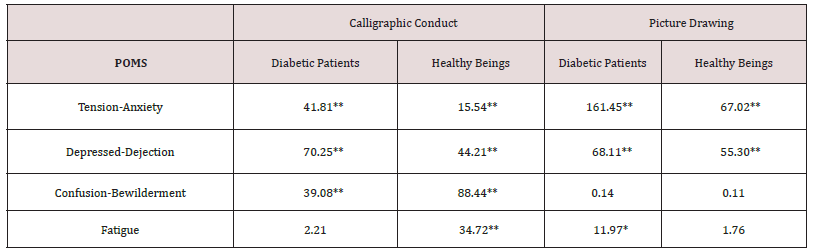
On the other hand, using the POMS, all participants, including both the patients and the healthy adults, showed a significant reduction in the mood states of tension-anxiety, depresseddejection and confusion-bewilderment after the CCH practice, while a reliable decrease in the states of tension-anxiety, depresseddejection was observed after drawing in both groups. Furthermore, healthy adults, but not the patients, improved in fatigue after the CCH practice, while the patients, but not the healthy adults, improved in fatigue after the brush drawing session (Table 1).

Table 1: Comparisons of scores in POMS before and after treatments (F values).

lupinepublishers-complementary-alternative-medicine-journal

Note * P<0.05 **P<0.001

Discussion

This study was designed to investigate the effects of the calligraphy handwriting and drawing on emotional modulation of patients with Type II diabetes and the normal adults. Results have firstly confirmed the stabilizing functions of both tasks, resulting in a relaxation of anxiety. Secondly, improvement in several states of the moods has been found to relate to both types of brushing tasks: Tension-Anxiety, Depression-Dejection, and Confusion- Bewilderment after the CCH practice and Tension-Anxiety and Depression-Dejection after the drawing practice. The contribution of brush writing and brush drawing to the emotional regulation of the diabetes Type II patients is supported in this study. Finally, the findings help to validate the viability of both the calligraphy practice and brush drawing as a new technique as well as an alternative model of behavioural treatment, with special reference to the intervention of emotional and psychosomatic symptoms of diabetes.

These preliminary results are overwhelming and are in line with those similar findings obtained in our other clinical studies on the CCH effects on the moods, anxiety, symptom distress and other emotions that are previously reported.

We have established that Chinese brush handwriting has measurable behavioral, psychological, and emotional effects. We also know that CCH practitioners have enhanced brain functioning, improved cognitive abilities and intellectual skills, and better emotional states. The World Health Organization (WHO) has recognized and endorsed our earlier clinical investigations as having contributed to a major body of theory, knowledge, and a system of treatment Fancourt et.al. [21]. CCH is an effective method for health and therapeutic interventions on cognitive activation, affective-emotion-related anxieties, moods, and distress and as a tool that contributes to the practitioner’s wellbeing and general health. We are pleased that the present research on Type II diabetes has added clinical validation of the CCH intervention for the benefit of human health, wellbeing, and disease treatment.

Funding

Not applicable.

Read More About Lupine Publishers Journal of Complementary & Alternative Medicine Please Click on Below Link:
https://lupine-journal-complementary-medicine.blogspot.com/

Thursday, 15 June 2023

Lupine Publishers | Prevalence and Determinants of Low Birth Weight in Burundi: An Investigation from The National Demographic and Health Survey

 Lupine Publishers | Journal of Pediatrics and Neonatology


Abstract

Background: Birth weight is an important determinant of neonatal and child health outcome. For instance, evidence has shown that low birth weight (LBW) has a negative impact on the baby’s growth, cognitive development, and on neuro-motor development and immune function. Underweight babies are prone to increased risk of infections and stunting. LBW remains prevalent worldwide and is more pronounced in low- and middle-income countries. Several factors including mothers’ socio-economic characteristics, maternal health behaviors and maternal and pregnancy health conditions determine birth weight outcome. This study sought to determine the prevalence and investigate determinants of LBW among Burundian women of reproductive age.

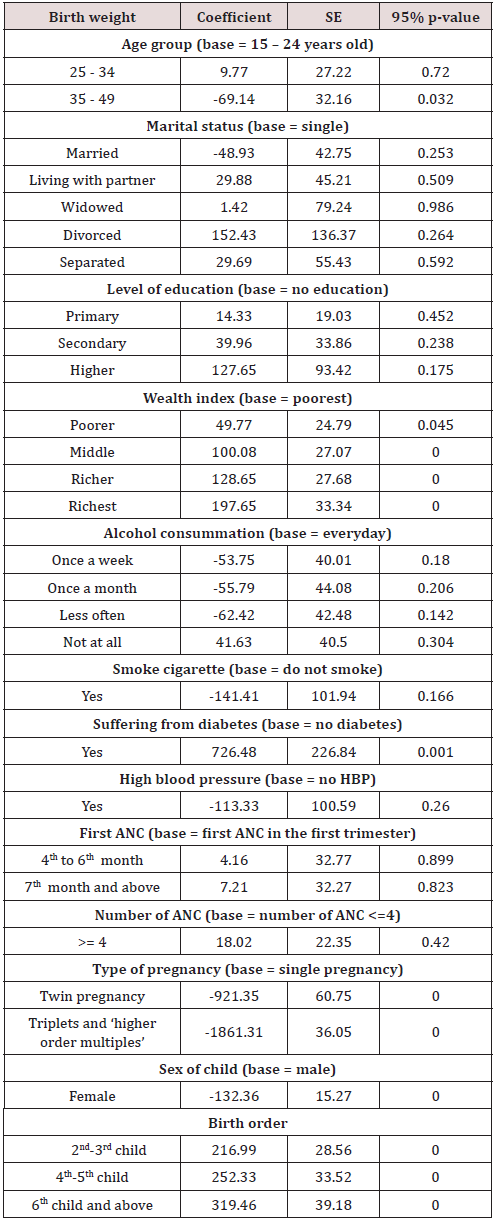
Methods: This study used data extracted from the 2016-2017 National Demographic and Health Survey (DHS) conducted on 7047 women who reported a live birth history in the five years preceding the survey and whose birth weight was recorded at childbirth. The study used linear regression to explore socio-economic, maternal, and pregnancy related factors that determine birth weight and further employed a logistic model to unpack factors with higher likelihood of LBW.
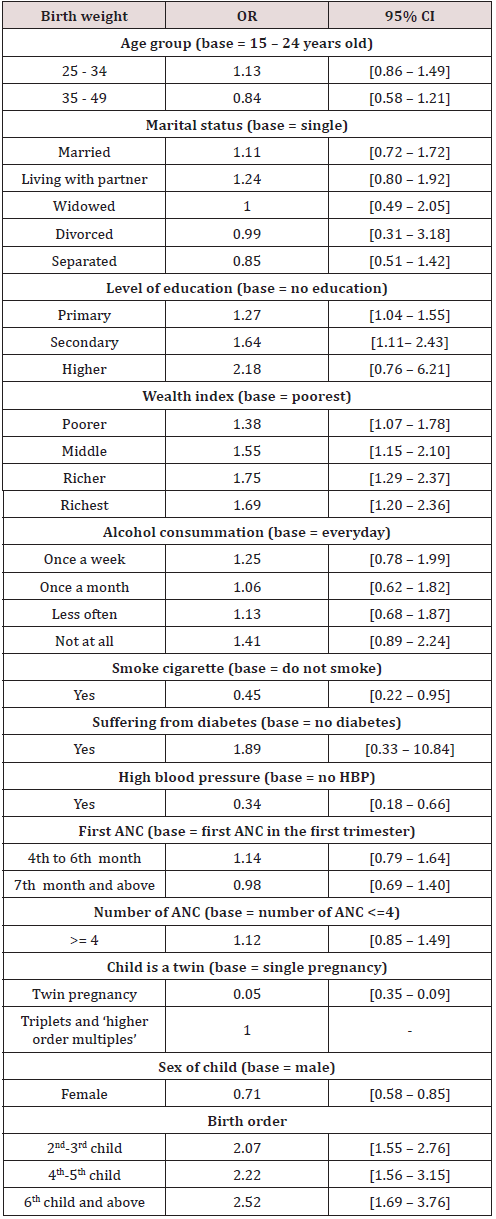
Results: Of 7,047 babies born between 2012 and 2017, 660 (10%) were underweight. Findings suggested that birth weight decreases with older women’s age, multiple pregnancies (twin or triplet), and female babies. Conversely, birth weight increases with a diabetes condition, wealthier quintiles, and higher party orders. Results from the linear regression were supported by those implemented in the discrete model. In fact, higher parity orders and wealthier women were more likely to deliver normal weight babies. High blood pressure, smoking, multiple pregnancies, and female child’s sex were negative predictors of normal birth weight. For instance, twin babies were twice more likely to be underweight compared to single pregnancies.

Conclusion: This study unpacked high prevalence of LBW in Burundi and further highlighted areas of improvement to deliver on global neonatal and child health targets.

Results: From this work could be used to implement targeted interventions to reduce poverty, tackle chronic conditions in pregnancy, and reduce tobacco use among pregnant women as the above predicted LBW. Other interventions include modern contraception through health educational programs.

Keywords: Low birth weight; Determinants; Burundi

Introduction

Normal birth weight, defined as live-born neonates weighing from 2500 g to 4000 g at birth, is an important determinant of better neonatal and child health. Evidence has established the impact of low birth weight (LBW) on increased neonatal deaths and child stunting [1,2]. Furthermore, low-birth babies experience perinatal growth failure, reduced cognitive and neuro-motor functioning, and poor school performance [3, 4]. There exists a widening negative correlation between birth weight and children’s better health with extreme low-birth-weight babies experiencing major health conditions [4, 5]. Most importantly, underweight babies who survive tend to have impaired immune function and increased risk of disease; they are likely to remain undernourished, with reduced muscle strength, cognitive abilities, and intelligence quotient (IQ) throughout their lives [6]. Despite efforts to improve pregnancy experience and combat LBW, many countries still report high numbers of underweight babies until today. In 2012, the World Health Assembly (WHA) resolution set the goal to achieve 30% reduction in the number of LBW newborns by 2025 [7]. This target was further reemphasized by the Sustainable Development Goals (SDGs) agenda by setting an aim to “end all forms of malnutrition” including among pregnant women to “reduce neonatal mortality to at least as low as 12 per 1,000 live births and under-5 mortality to at least as low as 25 per 1,000 live births” [8]. Global efforts did not yield expected results as some countries continue to experience high rates of LBW.

Of about 21 million low birth babies – representing nearly 15% of all live-births worldwide – 19 million of too small babies are from Africa and Asia (excluding Japan). Altogether, more developed regions namely Northern America, Europe, Japan and Australia, and New Zealand account for less than 10% of low births [5]. According to available data, the whole sub-Saharan Africa excluding Rwanda suffers from LBW. Countries with higher LBW rates (15 to 20% of all live births) include Angola, Benin, Burundi, Botswana, Cote d’Ivoire, Guinea Equatorial, Madagascar, Namibia, Togo, and Western Sahara. Guinea Bissau exceeds 25% of LBW rate and is among the highest worldwide [5]. Despite Burundi having declined LBW from 17.4% [CI: 11.9–22.9] in the year 2000 to 15.1% [10.9– 19.4] in 2015; the country remains above the global average and is further top-ranked LBW rates [5, 9]. To better tackle LBW and deliver on maternal and children global targets, countries need to invest into evidence-based interventions that have been found to undermine childbearing and fraught with child growth among pregnant women.

An amounting evidence has established a causal link between a woman’s characteristics, maternal and pregnancy health conditions, and maternal health behaviors with birth weight outcome. For instance, WHO developed a framework that explains causal pathways for an increased risk of LBW. The framework comprises distal and proximal or immediate factors leading to small babies. Among distal determinants of LBW include

a) maternal characteristics such as extreme age, multiple parity, poor birth spacing, and wealth index.
b) maternal health conditions namely chronic diseases
which have been found to increase maternal risk (i.e. high blood pressure and diabetes).
c) maternal malnutrition characterized by anemia and extreme maternal weight.
d) and other risk behavioral factors such as increased alcohol and tobacco consumption [5]. During the course of the pregnancy, LBW can result from a premature birth (a birth occurring before 37 weeks of pregnancy) and/or the growth faltering in the mother’s womb [5]. Other researchers of whom Alfred Kwesi Manyeh in Ghana [10] and Getaneh Baye Mulu in Ethiopia [11] found similar evidence. They both established the effect of the mother’s age, wealth, parity, gestational hypertension, maternal height, antenatal care (ANC), mother’s education attainment and the child’s sex on birth weight [10, 11]. Furthermore, a study conducted on 10 developing countries incriminated the place of the woman’s age, ANC, literacy level, body max index, and wealth on babies weight at birth [12]. Despite the topic being of national focus today, little has been done to explore factors leading to LBW in Burundi. The aim of this study was to determine the prevalence and investigate determinants of LBW in Burundi. Results of this study inform the design of maternal and neonatal policies with an aim to deliver on global and national targets by 2030.

Methods

Source of data

This study is a secondary data analysis using the Burundi Demographic and Health Surveys (DHS) 2017 datasets. To better understand predictors of birth weight, the study used women’s individual recorde dataset. This study used a sample of 7,047 women who reported a birth history during five years prior to the survey and whose information on birth weight was included in the dataset.

Outcome and explanatory variables

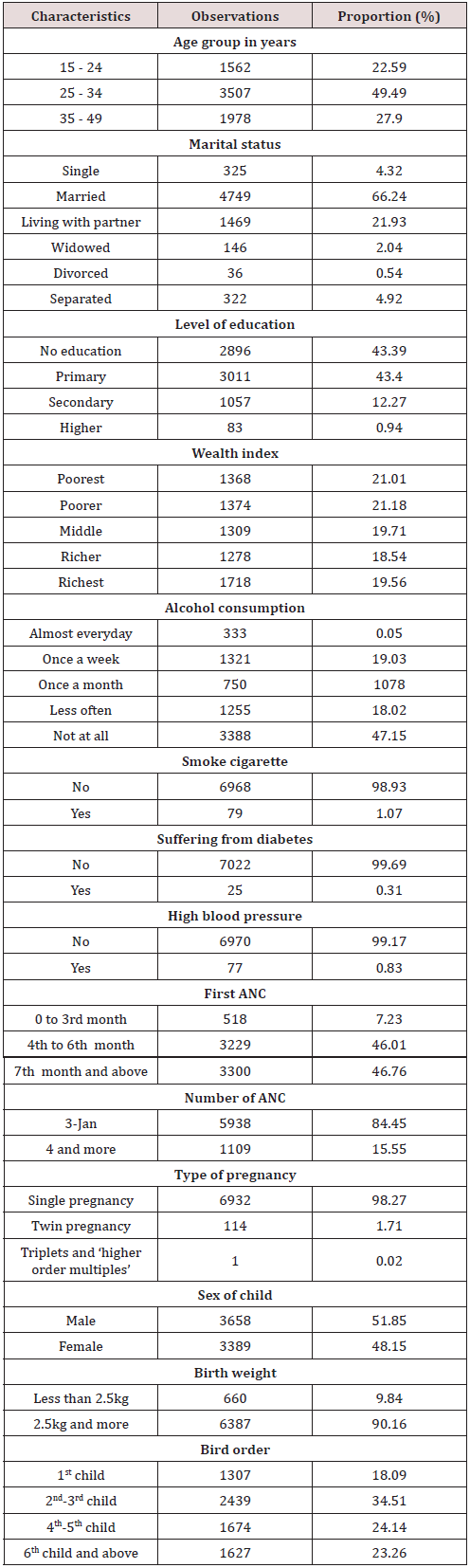
This study used “birth weight” as the dependent variable which was considered as continuous first to allow a linear regression analysis and again as dichotomous to enable the discrete model. We based on WHO guidelines to define cut-offs of the dichotomous “birth weight” outcome [13]. A dummy variable was generated taking value 0 for babies weighing less than 2,500 g at birth and value 1, otherwise. Selection of independent variables was informed by the literature search and by the understating of local context. We included individual woman’s characteristics, behaviors and underlying health conditions as well as factors related to pregnancy health. With an aim to better grasp the effect of coefficients on birth weight, all explanatory variables were categorized as summarized in Table 1.

Table 1: Socio-economic and demographic characteristics.

lupinepublishers-openaccess-journal-pediatrics-neonatology

Key: X+SD: Mean + Standard deviation.

Data management and models specification

In the first instance, owing to DHS study design which used multiple sampling stages, the dataset was survey set before analysis. In the second stage, we constructed the linear and logistic models as specified below:

In the above linear estimation, Yi is the outcome variable (i.e. birth weight). The model includes an intercept and a random error term. Independent variables are represented by a vector of covariates Xi and B1 captures the magnitude of change in birth weight corresponding to a unit change in explanatory variables. Significance of linear coefficients was ascertained based on p-value at α = 0.05.

Equation 2 is the logistic specification model. In this model, the dependent variable is the log odds that a woman i delivers a normal weight baby (i.e. a baby weighing at least 2,500 g) relative to those giving birth to underweight babies (i.e. babies with less than 2,500 g). 0 β captures fixed effects and 1 β detects random effects on the probabilities of giving birth to normal weight babies. The vector of covariates Xi includes independent variables described in Table 1. For the logistic model, significance of explanatory factors was determined based on a corresponding 95% confidence interval that does not contain value 1.

Results

Results of this study are sectioned into three main subheadings. In the first instance, we describe socio-demographic characteristics of study participants. In the second time, we summarize findings from the linear model of socio-economic and maternal health factors on birth weight. In the final stage, we present results of the logistic model on the probability of low versus normal birth weight.

Socio-economic characteristics

Table 1 summarizes socio-economic characteristics of participants. Of 7047 women of reproductive age, half were aged between 25 and 34 years old. Overall, majority of women did not achieve university education. Further, the prevalence of tobacco and alcohol consumption as well as the prevalence of health conditions with evidence to complicate pregnancy or childbirth was considerably low. Results also showed that mothers delayed in attending ANC as only about 7% attended their first ANC in the first trimester and only about 16% achieved recommended four or more ANC visits during the course of the pregnancy. More than half of surveyed women were married, and majority had a parity of two to three. Surveyed women were evenly scattered across the wealth quintiles. Low birth weight babies represented the vast minority (less than 10%) and male babies constituted a slightly higher proportion.

Determinants of birth weight

As can be viewed in Table 2 below, birth weight significantly decreases with older women’s age and increases with a diabetes condition. Also, there was evidence of a sharp increase in birth weight with wealthier quintiles. For instance, women who belong to the richer and richest quantiles gave birth to babies with almost 130 grams and 200 grams more; respectively. Moreover, there was a significant increase of birth weight with party. Mothers who had four to five and six and more parity gave birth to babies with 253grams and 320 grams more respectively. Most importantly, diabetic women gave birth to babies with 750 grams more compared to women without diabetes condition. The effect of a woman’s age on birth weight is linearly negative with a 70 g decrease for women above the age of 35 years. In contrary to the above, multiple pregnancies and female babies are associated with low birth weights. The decrease in birth weight is more evident for triplet pregnancies; reaching nearly 1800 grams lower compared to single pregnancies. The decrease in birth weight halves from triplet to twin pregnancies (1800 versus 900 grams). In the same perspective, female births tended to yield lower birth weights up to 130 grams less compared to male babies.

Table 2: The effect of socio-economic determinants on birth weight.

lupinepublishers-openaccess-journal-pediatrics-neonatology

Determinants of low birth weight

On the one hand, women’s education attainment, parity, and wealth index were predictors of higher likelihood of normal birth weight. With reference to poorest women, the likelihood that a woman gives birth to a normal weight baby increases with wealth quintiles to nearly double for women belonging to richer quantiles. Similarly, higher education level predicted higher likelihood of normal birth weight. For instance, women who attained tertiary education were about twice more likely to deliver normal weight babies compared to their counterparts who did not attend schooling. Furthermore, compare to women with one parity, the likelihood that a woman gives birth to a normal weight baby increases with high parity to become two times more and nearly three times for women with four to five and six and more parity respectively. On the other hand, high blood pressure, multiple pregnancies, smoking cigarette, and bearing a female child were negative predictors of normal birth weight. In other words, chances of low birth weight among women who reported smoking cigarette and those with high blood pressure were more than twice likely compared to women without the above conditions. Furthermore, the likelihood that women give birth to underweight babies was nearly double among women bearing female children or multiple pregnancies. Results of the logistic model are summarized in Table 3.

Table 3: The effect of socio-economic determinants on low birth weight.

lupinepublishers-openaccess-journal-pediatrics-neonatology

Discussion

This study used secondary data from the national Demographic and Health Survey 2017 to determine LBW prevalence and explore socioeconomic and demographic factors that predict LBW among Burundian women. LBW in Burundi was found to be close to other low- and middle-income countries namely Ethiopia and Iran. In Burundi, LBW is nearly 10% against 10% and 9.4% in Ethiopia [14] and Iran [15]; respectively. Conversely, LBW was found to be much higher in other countries such as India with one fifth of live births weighing less than 2,5 kilograms [16]. In our study, significant determinants of birth weights included wealth, parity, chronic health condition, pregnancy type (single versus multiple), woman’s age, and child’s sex. On the one hand, birth weight consistently increases with higher wealth quintiles, higher parity levels, and having diabetes. Compared to poorest women, birth weight increases of 50 grams for women belonging to poorer families. This increase doubles (100 grams) for women from middle class and again doubles for richest women who gave birth to babies weighing 200 grams more. Similarly, second and third order newborns weighed 220 grams more compared to first order babies. The increase in birth weight was consistent with higher birth orders and reached more than 300 grams for babies born to multiparous women from sixth pregnancy going forward. Diabetes was associated with an increase of more than 700 grams. On the other hand, multiple pregnancies, older age, and female babies were significant predictors of decreased birth weight. The most appealing evidence concerns multiple pregnancies which cause birth weight to decrease of about 1900 grams for triplet babies and about 920 grams for twin babies. Women older than 35 years gave birth to babies lower of 70 grams weigh and female newborns weighed 130 grams less compared to their male counterparts. Results from the linear model corroborate with those implemented using the logistic regression. Wealth index and higher parity determined the likelihood of giving normal weight babies while smoking, multiple pregnancies, child’s sex, and a woman’s chronic condition were significant predictors of the likelihood of LBW. Higher birth orders were associated with more than twice likelihood of bearing a normweight baby compared to first pregnancies.

In the same perspective, wealthier mothers and those highly educated were nearly two times more likely to give birth to normal weight babies. However, similar to the linear model results, twin pregnancies and female babies were nearly twice more likely to be underweight. Additionally, there was a double chance of giving birth to underweight babies among women who smoke cigarettes during the course of pregnancy were and those who had high blood pressure. Determinants of birth weight in Burundi corroborate with evidence from other settings. In Sri Lanka for instance, wealthier women and higher educated women were more likely to give birth to normal weight babies [17]. In this study, other significant determinants of birth weight were mother’s age at childbirth, newborn’s sex, and parity level. Contrary to the context of Burundi where antenatal care did not predict birth weight, Indian women who completed at least four recommended ANC visits were more likely to deliver normal weight babies [17]. Similar evidence has also been found in India [18]. Furthermore, similar to our findings, a wealth evidence has established the correlation between women with chronic health conditions such as diabetes with macrosomia [19, 20]. Multiple pregnancies were significant predictors of LBW in Burundi and in other similar settings. The example is the study by Taywade et. Al [21] in India where women bearing multiple pregnancies were 21 more likely to give birth to underweight babies [21]. Additionally, male sex was found to be a protective predictor of LBW in India and Ghana [18, 22]. Smoking was also a negative predictor as women who reported having smoked cigarette during pregnancy were at high risk of LBW in Ethiopia [23] and in India [21].

Conclusion

This study which used a nationally representative sample of Burundian women of reproductive age yielded evidence on LBW prevalence and factors affecting it. The prevalence of LBW was considerable when compared to many countries around the world (10%). Among important predictors affecting birth weight included a women’s age, wealth, education, parity, chronic health condition, smoking, pregnancy type (single versus multiple) and child’s sex. Markedly, LBW was highly associated with multiple pregnancies, female babies, the history of smoking over the course of the pregnancy, and high blood pressure. Despite considerable efforts put in place by the government to improve maternal and child health, LBW remains a public health concern. This study suggests the need for the implementation of targeted innovative interventions to tackle identified LBW risk factors among women of reproductive age. For instance, socio-economic interventions targeting poor household may help to improve economic status of women with an aim to reduce LBW prevalence among poorer women. Our study used secondary data analysis which has limit in establishing causal inference between predictors and the study outcome. This shortcoming could be addressed by cohort studies of pregnant women which have the possibility to unpack factors determining LBW with a much stronger evidence than cross-sectional surveys. Therefore, this study provides important evidence and a threshold for further research works in the field.

Read More About Lupine Publishers Journal of Pediatrics and Neonatology Please Click on Below Link:
https://lupinepublishers-pedaitrics.blogspot.com/