Monday, 7 September 2020

Lupine Publishers | Effects of Urban Farming Practices on Income Poverty Reduction in Dodoma Municipality, Tanzania

     Lupine Publishers | Current Investigations in Agriculture and Current Research


Abstract

The main objective of this paper is to reveal the less known effects of urban farming practices on income poverty reduction in Dodoma Municipality, Tanzania. Collected primary and secondary data were analyzed both manually and by the use of SPSS software in which descriptive statistics and multiple responses presented by frequencies and cross tabulation employed. The findings show that the male raised higher income (61.7%) compared to women (38.3%) resulted from urban farming practices. It also shows that the majority of urban farmers use rain water compared to other sources of water. The capital availability found to be a problem (73.3%); has income below TZS 90,000 per month. The study also revealed that urban farmers use poor technology in farming activities. However, the study found that urban farmers practice agro-forestry which help to prevent land degradation and to enrich soil fertility as well as acting as wind breakers and shade provision. It was found that, though urban farming practices contribute to reduce income poverty in the study area but there are some factors which found to hinder the improvement of urban farming such as inadequate water supply, inefficiency laws and by laws and lack of improved seeds due to insufficient capital. These problems can be minimized through early seed provision from government and NGOs, use of irrigation technology rather than depending on rainfall, efficiency and effectiveness implementation of laws and by-laws and increase area for urban farming as population increase in Dodoma municipality due to concentration of colleges/universities and government activities.

Keywords: Urban farming; Urban famers; Income poverty; Land degradation

Introduction

Background information

farming is very extensive in urban areas in developing countries. Urban farming includes activities such as crop farming, vegetables, gardening, livestock keeping and poultry. It is estimated that; urban farming is practiced by about two thirds of urban workforce in developing countries [1]. Urban farming could contribute to mitigating the two most intractable problems facing third world cities which are poverty and waste management. Urban farming is one of several food security options for households. Similarly, it is one of several tools for making productive use of urban open spaces, treating urban waste, saving or generating income and employment and managing fresh water resources more effectively ibid, 2000.

The main motivation for urban farming is food production and/or higher income for personal consumption or sale ibid, 2000. Tanzania economy is still depending on agriculture as its main stay. In the year 2015, the contribution of the agriculture to the total GDP has been around 29%, and contributed 70% to the total employment and 55% of the country’s foreign currency [2]. Dodoma urban as one of the semi-arid areas in the country, through municipal councils’ authorities set strategies on encouraging farmers to put priority on production of drought resistant crops such as cassava, millet, sorghum and sunflowers in all areas with an annual rainfall between 400mm-600mm (Municipal Agricultural and Livestock Development Officer, 2016). In Miyuji ward there was more than 13.6 hectares which were used for growing grapes and other plants but now only 6.2 hectares are used for these activities (Dodoma Municipal Report, 2016). This shows that there is a decrease in urban farming practices in Miyuji ward more than half of the area which planned for agriculture.

Statement of the problem and significance of the study

Dodoma municipal council has 196,000 hectares suitable for cultivation but only 137,200(70%) hectares have been cultivated. Out of cultivated area, 11433(12%) hectares are used for urban farming and only 1509(1.1%) hectares are used by small farmers in Dodoma municipal council. Urban farming in Dodoma was mostly practiced by farmers in Miyuji, Msalato, Veyula, Mzakwe, Makutupora and other areas in Urban and Peri-Urban (Dodoma Municipal report, 2016). About 68% of the estimated 16,579 human population (2016) in Miyuji ward are relying on arable farming and livestock keeping.

The ward estimated to have 3832 hectares of arable land but only 1734.7 hectares are used for farming (Miyuji WEO office report, 2016).Despite of the hectares used for urban farming in Miyuji ward is being decreasing, yet the living standard of people, especially urban farmers, is very poor in the ward. Therefore, this study intended to examine the effects of urban farming practices on income poverty reduction in Dodoma municipality. The findings of the study will be useful in reducing income poverty to urban farmers by promoting urban farming through identified constraints and opportunities facing urban farming practices and formulating competent national policies which will be used in improving urban agriculture, and help to add literature related to urban farming.

Research objectives

General objective: The main objective of this research was to examine the effects of urban farming practices on income poverty reduction in Dodoma municipality.

Specific Objectives: Specifically, the study was intended to:

Examine factors affecting the performance of urban farming practices in the study area

Examine contribution of urban farming on income poverty reduction in the study area.

Examine the effects of urban farming on the environment in the study area.

Conceptual framework

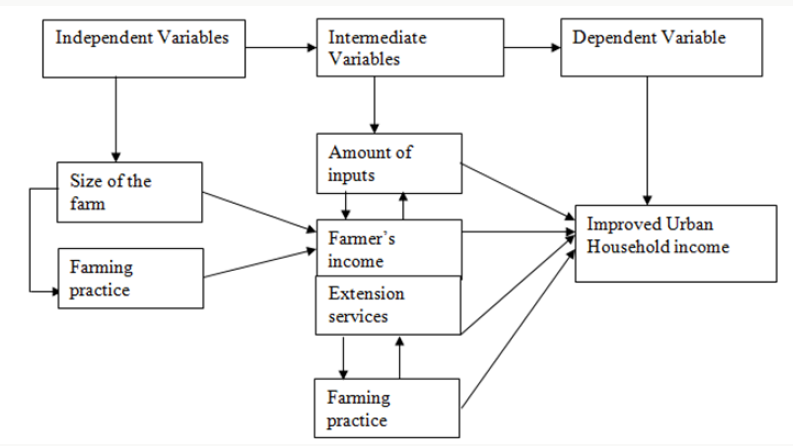
The primary interested variable of this study is the dependent variables which is assessment of urban farming practices. The intermediate variables will be used in attempt to explain the dependent variables; these variables are amount of inputs, farmers’ income, Extension services and farming practice. Independent variables acting on and operating through intermediate variables which cause or determine or influence dependent variable to occur. The Figure 1 below shows the conceptual framework in a clear and simple way.

Figure 1: Conceptual Framework of the Study.
Lupinepublishers-openaccess-Agriculture

Research Methodology

The study area

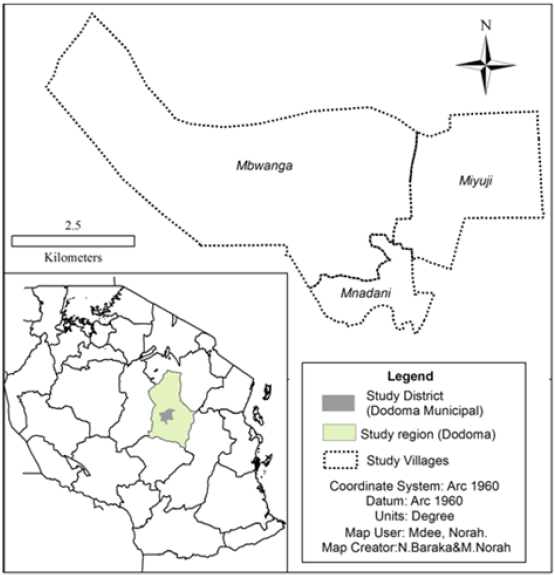
The researcher chooses Miyuji ward as the study area in Dodoma municipality due to the fact that, it is among the area which urban farming practices were given priority and there were planned land for such activities (Dodoma Municipal council report, 2016). Miyuji ward is located in urban area of Dodoma Municipality which lies between Latitude 60–6030/ South and longitude 3503/–36002/ East. Dodoma Municipality has an area of 421km2 of which 346km2 is arable land, 57.1km2 is residential and industrial area 17.9km2 occupied by natural resources and planted forests, mountains and non-arable land (Figure 2). According to projection basing on year 2012 population census, the current population of Dodoma municipality accounts to 446, 579 inhabitants, where by 240, 481 inhabitants live in urban areas and 206, 098 live in peripheral zone consisting of villages. The population size of Miyuji ward in 1988 was about 14,288; 2002 was about 15,779; and 2012 was about14, 965. This situation shows that the size of Miyuji was dramatically decline for about -0.47%/year from 2002 to 2012.

Figure 2: Map of the study area.
Lupinepublishers-openaccess-Agriculture

Data types and sources

Both primary and secondary data were used. Primary data such as income levels and farm sizes were collected in Miyuji ward by using household questionnaire. Secondary data such as number of extension workers, number of market centers were collected from street and ward executive offices by reading different reports and documents existent.

Sampling design

Sampling frame: A list of all households was used to pick respondents where a sample of 70 respondents was taken to represent the total population. Judgmental sampling was categorizing samples into different groups such as household with large arable land, household with small arable land, local leaders, extension workers (EW) and District Agricultural Officer (DAO)

Sampling unit: The sampling unit for this study was a household.

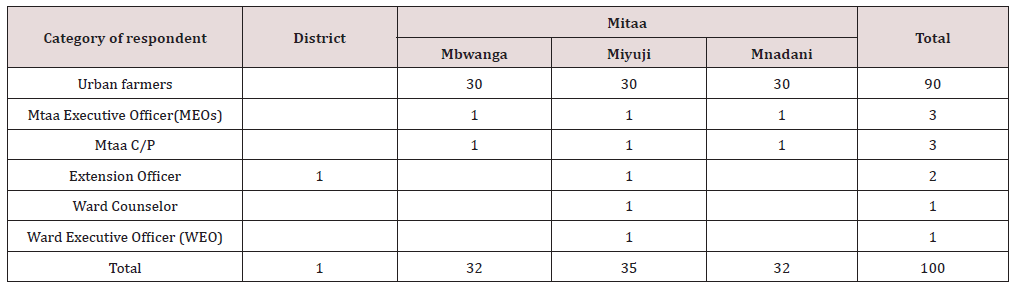
Sample size: The sampling size for this study was 100 (Table 1), which involves 90 households and key informants. Yamane (1967), provides a simplified formula for calculating sample size as follows:

n=N/1+N(e)2

Where: n=Sample size

N=Population size (Number of households in my case)

e=Level of Precision

In Miyuji ward: N=3684

e= 10% as recommended to social sciences

n=3684/1+3684(0.1)2

n= 97~100 households

Sampling procedure: Both probability and no-probability sampling techniques was used.

Probability sampling: The method was used to obtain the sample required by employing stratification where the population was divided into a number of homogenous sub-population and a sample helped the researcher to obtain 90 respondents.

Table 1: Respondent Sample Composition.
Lupinepublishers-openaccess-Agriculture

Non-probability sampling: The method was used to obtain the sample required by employing purposive sampling technique to select the 10 sample required to meet the objectives includes selection of AO (Agriculture Officers), MEOs (Mitaa Executive Officers), and WEO (Ward Executive Officer).

Data collection methods

Both primary and secondary data collection methods were used.

Primary data: Primary data was collected by using the following methods:

Interview: Structured questionnaire was used to enable face to face meeting in which the interviewer asked the interviewee questions and recorded responses. This method was used to obtain information from different respondents.

Observations: The method was used by visiting the selected areas to observe different things related to study such as how urban farming is practiced.

Focused group discussion: Focused group discussion enabled respondents to express and exchange their views on how they practice urban farming. This group involved Mtaa C/p, Extension officer, and few urban farmers. Group of not more than 25 people is recommended since they will be difficult to manage [3]. Fourteen respondents were invited to participate in focus group discussion for Miyuji ward as follow; Ward executive officer (1), Mtaa government chairpersons (3), Mtaa executive officer (3), Ward agriculture extension officer (1), and prominent urban farmers (6). Group discussions were conducted in a ward executive office where flip charts and marker pens were available after seeking permission from ward authorities. Questions were written on the flip chart, and the chairman who was elected by the participants guided the discussions by first reading the questions loudly for every member to hear and allowed for contributions through raising a hand. The group leader’s role also was to make sure that one person does not dominate and influence the discussion. The researcher took notes as well as probing questions when judged that the respondent’s statement was ambiguous. The information collected was used to supplement the household questionnaire.

Secondary data: Secondary data was gathered through.

Documentary review: The method was involving reading various published and unpublished materials related with the study. These materials include internet, books, Magazine, newspaper and Journals.

Data Processing, analysis and presentation

Data processing: Data was processed both manually and by computer using SPSS (Statistical package for social sciences) and MS-Excel where the exercise involved editing questionnaires, coding, clearing and verifying the entered data for easy interpretation.

Data Analysis: The data was analyzed manually and by the use of SPSS Version 11.5 software. Bivariate analysis technique was used in which the researcher examined the relationship between two variables for example farm size and Household income by the use of Cross- tabulation method.

Data presentation: The results from the research are presented by using charts, tables and graphs.

Limitations of the study

Time was not enough to cover the whole ward instead only 3 streets (mitaa) were represented.

Some respondent especially key informants were reluctant to give out the needed information as they thought that, they will be responsible when the wrong things/issues concerned with urban farming been recognized by the institution, however observation and literature review overcome this difficult.

Disturbances/bureaucracy of getting permission to conduct research in a study area.

Results and Discussion

General characteristics of the respondents

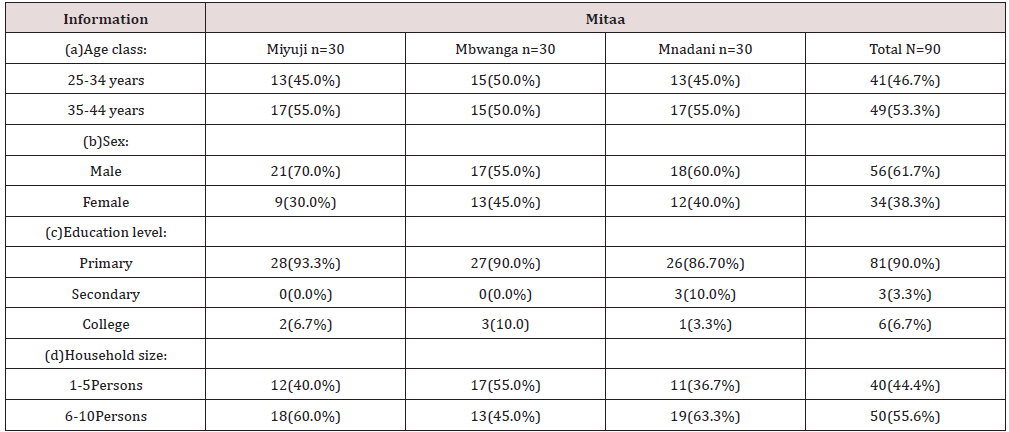
The study population comprised of males and females with different ages, family size and education background (Table 2). Of the household heads interviewed, 53.3% of the respondents were between 35-44 years old and 46.7% were between 25-34 years old. This was important because these age groups are the one who practice urban farming; understand the historical trend of their areas as well various indigenous technical knowledge. The study mitaa were found to have large household sizes. Results show that 55.6%have 6-10 persons per household and 44.4% have 1-5 persons. This is due to the behavior and culture of excluding family plan, of which results into a lot of dependents to feed and take care of Education background of the surveyed population is mainly primary education (90.0%), very few had college education (6.7%), and 3.3% had secondary education. Despite of having primary and secondary schools but the number joining secondary schools is small due to financial base of study population.

Table 2: General information on residents of study villages.
Lupinepublishers-openaccess-Agriculture

According to URT [4]; World Bank (2014); and Deloitte [5], one of the signs of both income and non-income poverty in the country is the low level of literacy and numeracy. The literacy level in Tanzania is now estimated to be 68%, down from 90% achieved in the 1980s. The gross enrolment rate for primary school pupils was 77.8% in 1996, down from 90% in 1980s. the literacy rate for youths and adults in the year 2014 was 76% and 73% for male and female youths respectively; and 75% and 61% for male and female adults respectively World Bank (2014).The Tanzanian government has managed to pay teachers’ salaries and allowances but number of teachers employed is not enough despite the efforts made to recruit more teachers due to agenda of having at least one secondary school in each ward and primary school in each village. With free tuition fees in public schools, the number of girls will be increased in schools as parents had have tendencies to choose between boys and girls to educate before the year 2016 because of cost sharing [6-8].

Factors affecting the performance of urban farming practices

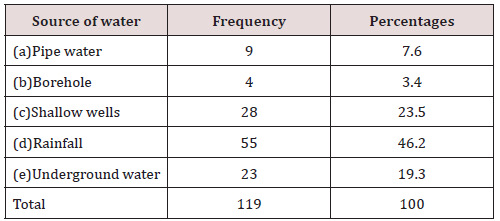
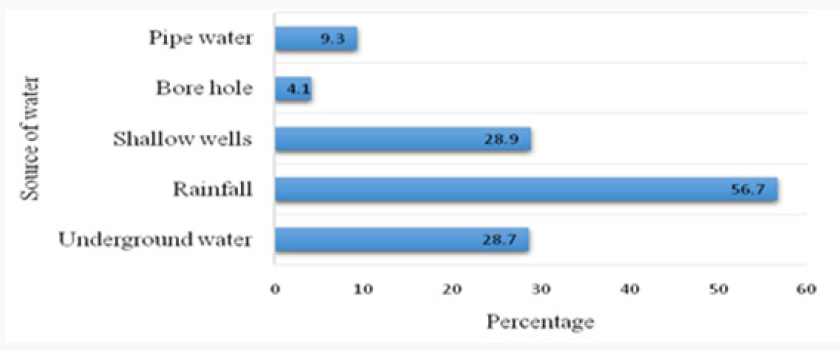
Water availability: Availability of water is an important factor for urban farming practices. Miyuji ward is within semiarid region of Dodoma where enough rainfall for urban farming practices is a problem. The study mitaa in miyuji ward based on multiple responses (Table 3) found to have water mostly from rainfall (46.2%), 23.5% shallow wells, 19.3% underground water, 7.6% pipe water and 3.4% borehole. The results show that many urban farmers in Miyuji ward prefer rain harvesting as source of water, and due to low water table in Dodoma region, underground water also seems to be preferred although it require some fund for investment in it like pump machine, fuel etc.

Table 3: Main source of Water in Miyuji Ward.
Lupinepublishers-openaccess-Agriculture

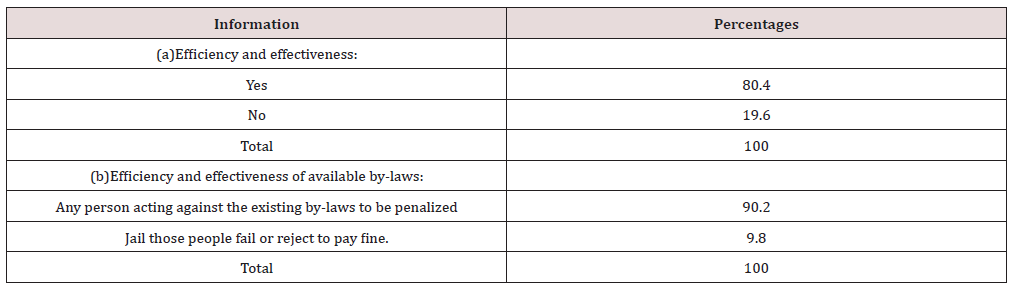
Laws and by laws: The study mitaa found to have by laws that deal with urban farming. The results Table 4 shows that 77.7% of respondents in study mitaa understand and respect by laws present while only 22.3% claims that they do not know if there is by laws for making urban farming sustainable. By laws is very important for guiding urban farming practices. The following by laws which enforced in the study area based on multiple responses Table 5 shows that 45.3% of urban farmers responded to bylaw dealing with protection of soil erosion by restrict quarry activities, 36% protection of forests (cutting down of trees), 10.7% protection of water and 8% protection of illegal farm burning. The study made revealed that 80.4% of the urban farmers in the study area are aware with existing by-laws and its effectiveness. However, 19.6% of urban farmers complained that the existing by-laws are not enforced hence are not effective. It was established that 90.2% of urban farmers want any person acting against the existing by-laws to be penalized the rest 9.8% want any criminal to be jailed (Table 6).

Table 4: Presence of by Laws Dealing with Urban Farming.

Lupinepublishers-openaccess-Agriculture

Table 5: By laws guiding urban farming.

Lupinepublishers-openaccess-Agriculture

Table 6: Efficiency and Effectiveness of By-laws Guiding Urban Farming.
Lupinepublishers-openaccess-Agriculture

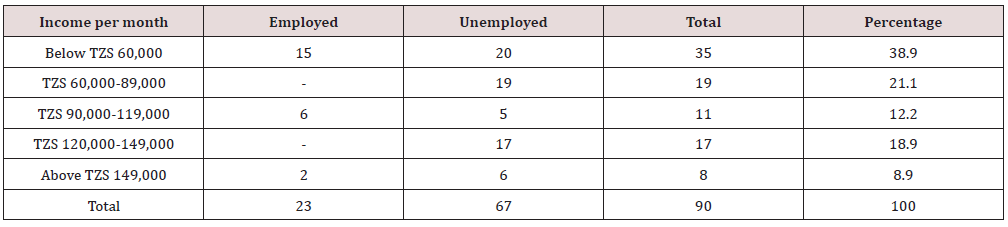
Table 7: Income level of Respondent per Month.
Lupinepublishers-openaccess-Agriculture

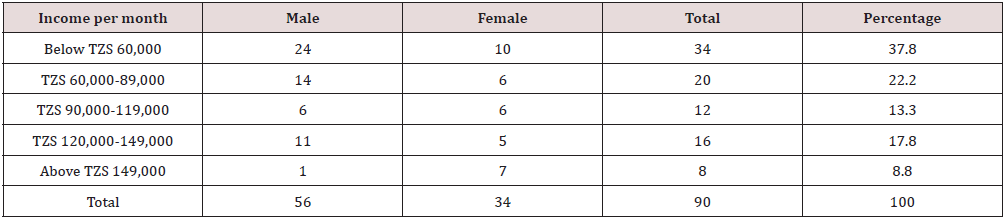
Capital Availability: Urban farming needs starting and operating capital so as to harvest considerable crops per acre and end products results from livestock and poultry. Capital helps to buy chemicals, fertilizers and other inputs helps in farming practices (Personal Observation). The study mitaa found to have different income groups in which 61.1% of study population has income per month above TZS 60,000 (Table 7). The results show that 38.9% of the urban farmers are living in absolute income poverty for both employed and unemployed and cannot even have power to buy any input for farming or self-sustenance. That majority with high income above TZS 60,000 can use the money earned to buy different equipment. During focus group discussion it was found that, urban farmers are not recognized in financial institutions for providing them loans unless they form a group of five persons or above and follow long procedures until given that loan. Also these urban farming practices are also done by employed people so as to raise household income, reduce income poverty and provide food to households’ members who are large in number. Also the study found that, urban farmers in Miyuji ward are practiced by both men and women from all income groups where by the majority of them were from below TZS 60,000 income earners as shown in Table 8. It was established that those urban farmers grow food crops for security and income generation as stipulated by Nugent [9,10] and URT [7]. In Miyuji ward women who engaged in urban agriculture are actively participate in urban garden for home production but also in food processing and marketing though in Miyuji ward women are involved in small scale production as explained much by Mouget [10] and URT [7].

Table 8: Income level of Respondent per Month interms of Sex.
Lupinepublishers-openaccess-Agriculture

Market availability: The study area found to have markets for their products from urban farming practices. The results show that 87.7% of study households said they have market for their farming products. This shows that in Miyuji ward market for urban farming products is not a serious problem what is required is to increase crops production. Crops produced includes millet, cassava, sorghum, sunflower, grapes, groundnuts, njugu, maize, vegetables, tomatoes and others; while livestock keeping includes cows, goats and pigs; and poultry which mostly includes hens (Table 9). Due to increase of higher learning institutions in Dodoma urban, it is likely the market to be extended and scarcity of this products resulted from urban farming practices increase and leads to poverty reduction to those people involved in these practices.

Table 9: Market availability of Crops, Livestock and Poultry.

Lupinepublishers-openaccess-Agriculture

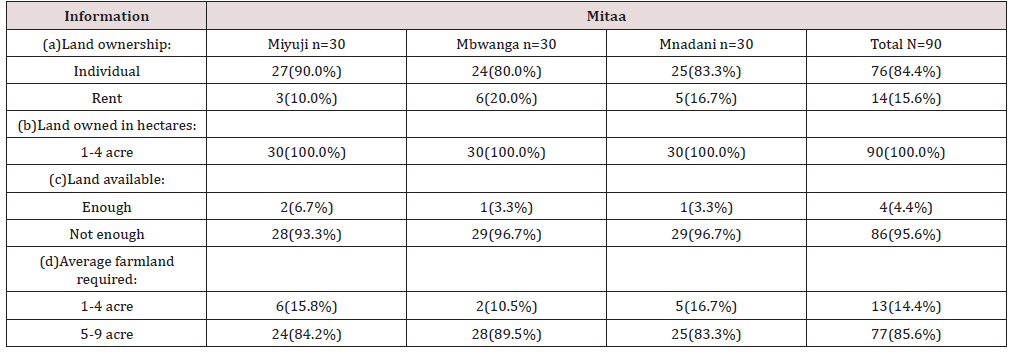
Plot size and type of tools used for agriculture: The study area found to have scarcity of land for urban farming. The results show that 84.4% of study households own land and only 15.6% rent those lands for urban farming plots (Table 10). Also 100% of the study area own 1-4 acres of land and within this study population 95.6% claims that land is not enough and 85.6% propose average farmland required to be 5-9 acres and 14.4% propose to remain 1-4 hectares with maximum land size of 4 acres. Due to the use of hand hoe (low technology) in study area for agricultural activities, farmland shortage will continue to be a problem until the situation is reversed. Most urban farmers claim that, though urban agriculture is potentially viable and productive but not a panacea to solve the most severe problems of food security in Miyuji ward as explained also much by Nugent [9] and Mboganie [11].

Table 10: Market availability of Crops, Livestock and Poultry.
Lupinepublishers-openaccess-Agriculture

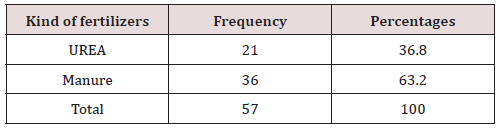
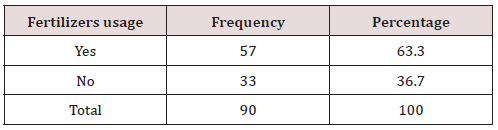
Use of fertilizers: The made in the study area found to have high fertilizers users. The results show that 63.3% use fertilizers and 36.7% are not using fertilizers (Table 11). This shows that disparities of income groups are the determinant for using fertilizers as those urban farmers with high income group are the one with ability to buy fertilizers. Also those practice either livestock keeping and agricultural or poultry keeping and agriculture can use manure type of fertilizer which is not costly [12]. Kinds of fertilizers used are shown in Table 12. The increase in fertilizer prices and reduction in credit have hit urban farmers harder because they are on poorer land which needs more of fertilizer which they are less able to afford. This has resulted in increasing cultivation of marginal areas with associated deforestation and erosion problems.

Table 11: Fertilizers Usage in Farming.
Lupinepublishers-openaccess-Agriculture

Table 12: Kind of Fertilizers Used.

Lupinepublishers-openaccess-Agriculture

Contribution of urban farming on income poverty reduction

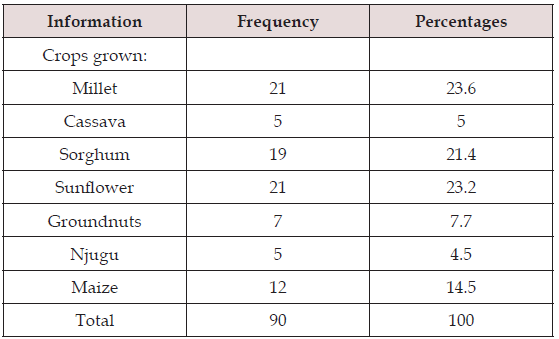
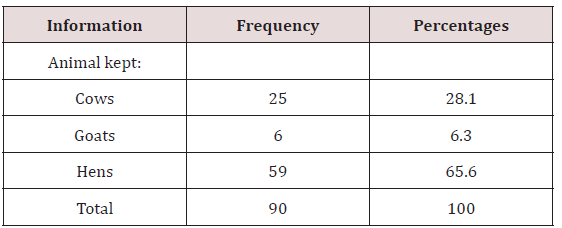
Activities of urban farming: The study made found to have high number of household using rain fed farming as their main source of water for urban farming [13]. Results shows that, 56.7% use rain harvesting only 9.3% and 4.1% use pipe water and borehole respectively (Figure 3). This shows that those use pipe water from DUWASA are the one who cultivate leafy vegetables includes chinese, beans, sweet potatoes leaves, cassava leaves and non-leafy vegetable includes tomato, cucumber and carrot; and cultivate both vegetable and fruits includes orange, grapes and pawpaw. The common crops grown by both groups of different main water sources includes millet (23.6%), sunflower (23.2%), sorghum (21.4%), maize (14.5%), groundnuts (7.7%), cassava (5%), and njugu (4.5%)(Table 13). Also livestock kept includes cows (28.1%), goats (6.3%) and poultry (hens) (65.6%) (Table 14). These crops grown and livestock kept are both for subsistence use in families and business to increase income of household whereby keeping hens found to be done by large number of households in study area. The study found that, men in Miyuji ward dominate commercial urban food production such as sunflower and groundnuts and selling of livestock kept. Most of women earn/control the money from milk and eggs selling. The study also revealed that children were involved in urban farming activities through weeding and watering. Involving children is contrary to child labour rights [14].

Figure 3: Source of Water in Miyuji Ward.
Lupinepublishers-openaccess-Agriculture

Table 13: Crops grown kept in Miyuji Ward.
Lupinepublishers-openaccess-Agriculture

Table 14: Livestock kept in Miyuji Ward.
Lupinepublishers-openaccess-Agriculture

Table 15: Crops production per acre.

Lupinepublishers-openaccess-Agriculture

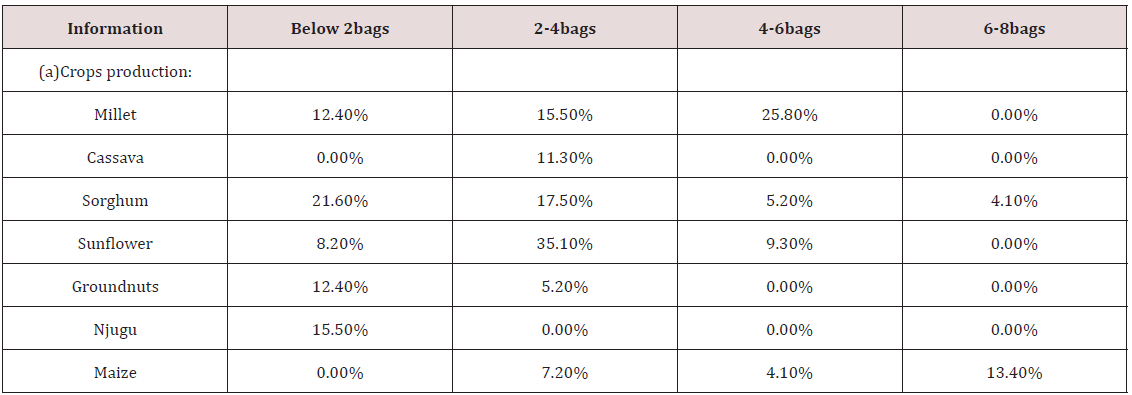
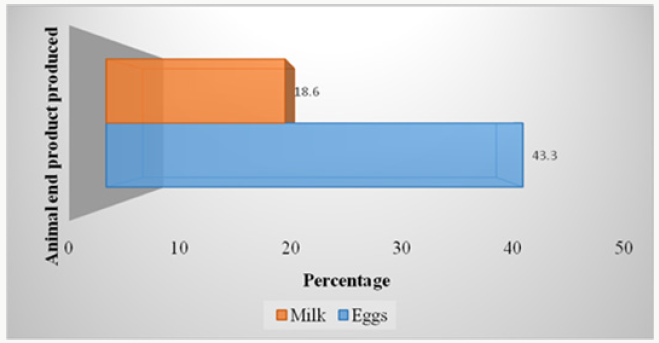
Amount produced and sold and price of products: The study population found to have medium production of urban farming products [15]. Crops production per acre as shown in Table 15 below shows that, 35.1% produce 2-4 bags per acre of sunflower, 21.6% below 2bags of sorghum, 25.8% produce 4-6 bags of millet per acre, 13.4% produce 6-8 bags per acre of Maize, Njugu 15.5% produce below 2bags per acre, 11.3% produce 2-4bags of cassava per acre, and 12.4% produce Groundnuts below 2bags per acre. Animal production based on end products shows (Figure 4) that, 43.3% produce hens’ eggs and 18.6% produce milk During focus group discussion, it was shown that, urban farmers of Miyuji ward use products obtained for home use and business whereby most of them sell all products in order to get income for covering some expenses for example paying fees for their children, health issues, water bills and all other household necessities needed rather than priotised using crops produced to solve the problem of food insecurity. Market availability for products produced is not a problem in a study area [16]. Results in Figure 4 shows that 88% of the respondents in study area have market for their products and only 12% have no market. This shows that as population increase in Dodoma urban then demands for urban farming products increases, therefore production should be increased in order sustain the available population.

Figure 4: Animal end product produced.
Lupinepublishers-openaccess-Agriculture

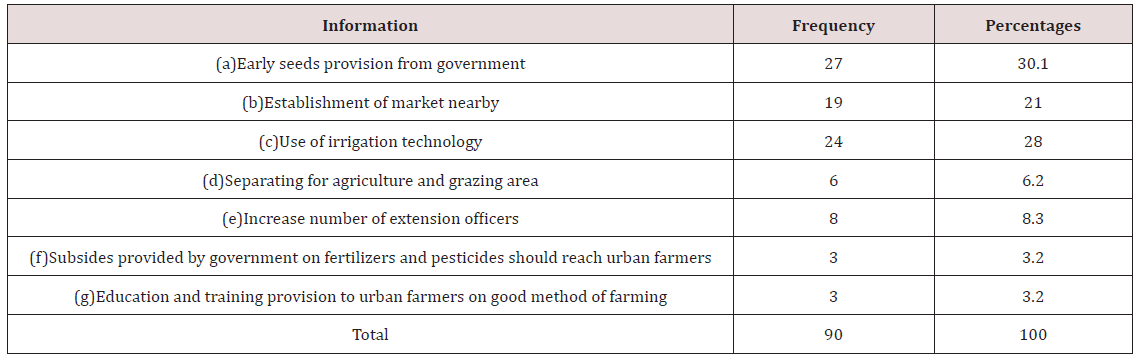
When the researcher interviewed households, it was found that, price of crops products varies depending on demand especially during parliamentary meetings and higher learning students’ institutions studying semester’s periods. Animal products includes milk and eggs found to have constant price of TZS 1000 per liter and TZS 500 per egg while the price of cow and chicken are subject to change ranging from TZS 300.000 to 600,000 depending on size and specie of cow, while chicken range from TZS7000 to 15,000. In order this farming practices to be improved so as to increase production, the study households suggested as shown in Table 16. 30.1% said if they can be supplied by early seeds provision, adopt irrigation technology (28%), establishment of market nearby, increase number of extension officers (8.3%), separating agriculture and livestock area (6.2%), education and training provision to urban farmers on good method of agriculture (3.2%) and Subsides provided on fertilizers and pesticides to reach urban farmers (3.2%) tgether with financial support from Banks and Credit agencies [17], altogether can improve urban farming practices and more urban dwellers can engage themselves as explained much by Nelson, 1996.

Table 16: Suggestion given by urban farmers on the improvement of their farming practices.
Lupinepublishers-openaccess-Agriculture

Effects of urban farming on the environment

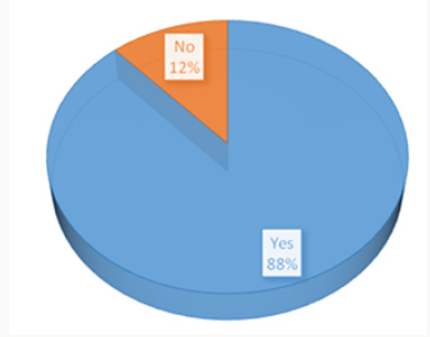
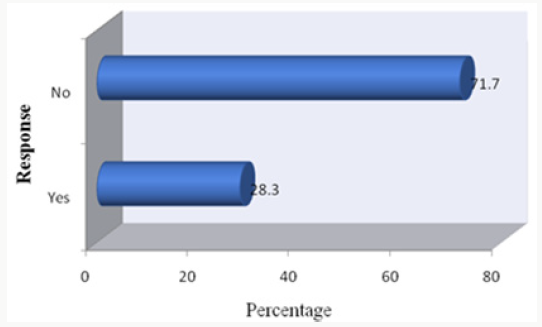
Chemicals used and cow dung disposal: The study found that urban farmers have low usage of chemicals in farming practices. Results shows that, 71.7% do not use any insecticides or pesticides in crops production and only 28.3% use insecticides and pesticides for the crops production (Figure 5). This shows that farming products produced in Miyuji ward have little concentration of chemicals which can have negative effect to human being. However, during interview with ward agricultural officer, it was shown that sometimes aerial sprays to kill “koleakolea” have been done in the area few years ago. Also during focus group discussion, it was revealed that cow dung disposal in farm plots make them to increase nutrients as a results production per acre increase compared to plots without any fertilizer. Additionally, it was found that cow dung can be used for production of bio-gas which is alternative source of energy rather than concentrating using fuel wood and charcoal as the main source of energy in study area.

Figure 5: Market availability for crops and animals products.
Lupinepublishers-openaccess-Agriculture

Figure 6: Insecticides/Pesticides usage in farms.
Lupinepublishers-openaccess-Agriculture

Figure 7: Land Degradation Resulted From Urban Farming Practices.
Lupinepublishers-openaccess-Agriculture

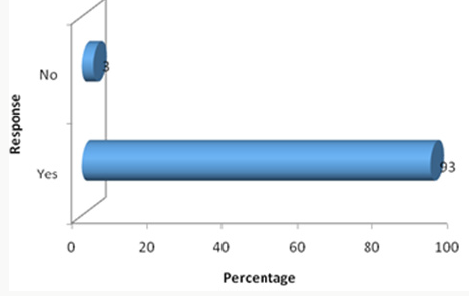
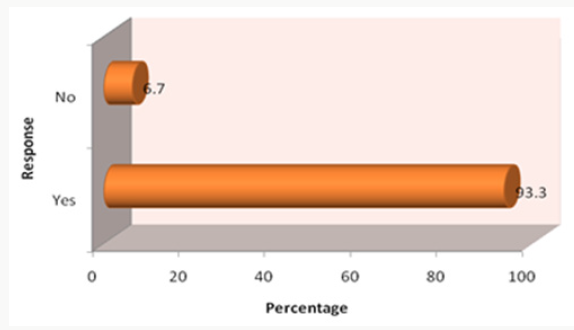
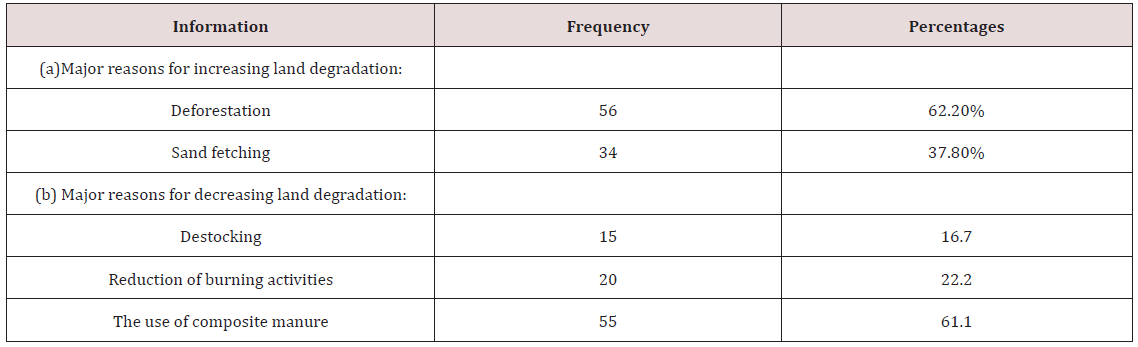
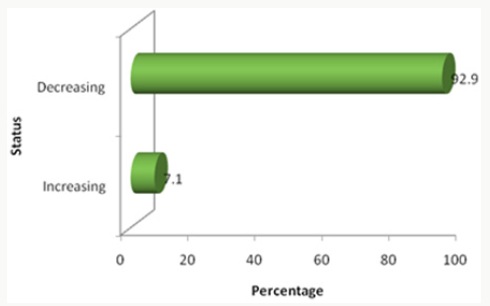
The study area found to have land degradation resulted from urban farming practices. Results shows that 93.3% of study households experienced land degradation resulted from urban farming practices and only 6.7% do not experience it. This shows that poor farming practices present in the area, so the duty of extension officers to reverse the situation will be appreciated (Figure 6). Land degradation is among of the effects on urban farming which experienced in the study area [18]. Types of land degradation experienced are shown in Table 17. Also it shows that this land degradation decreasing. Results from observation and household questionnaire shows that, 92.9% of study households have seen this degradation as decreasing and only 7.1% responding to increasing land degradation (Figure 7). This shows that presence of extension officers helps to conservation of environment by teaching community proper way of practicing urban faming. Major reasons for increasing and decreasing land degradation are shown in Table 18.

Table 17: Types of Land Degradation experienced in study area.

Lupinepublishers-openaccess-Agriculture

Table 18: Major Reasons for Increasing and Decreasing Land degradation.
Lupinepublishers-openaccess-Agriculture

Figure 8: Status of Land Degradation.
Lupinepublishers-openaccess-Agriculture

Figure 9: Tree planting.

Lupinepublishers-openaccess-Agriculture

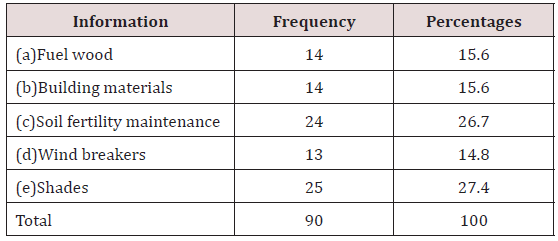
Table 19: Purpose of growing trees in study area.
Lupinepublishers-openaccess-Agriculture

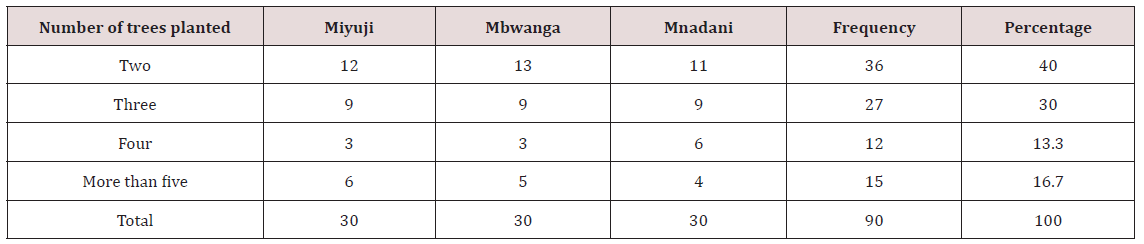
Planting trees: Planting trees is a positive strategy towards environmental in many areas of the world, and collaborative measures whereby, all community together practice this tree planting for the benefit of extracting carbon dioxide gas concentration resulted from daily productive activities Smit and Nasr, 1997. The study found that 93% of respondents in study area planted trees and only 7% did not plant trees (Figures 8 & 9). This shows that indigenous technical knowledge and NGOs play a good role in providing conservation education and importance of growing trees for the benefit of urban farming practices. The study population found to have behavior of planting trees for shades rather than combating fuel wood shortage. Results shows that 27.4% of planted trees are meant for shades, 26.7% for soil fertility maintenance, 15.6% for fuel wood and building materials respectively, and 14.8% for wind breakers (Table 19). Also the study revealed that in Miyuji ward have high populations who plant few trees per year. Results in Table 20 shows that 40% of respondents planted two trees per year and 60% plant more than two trees per year. This implies that, as times goes on and those trees planted being protected then in few years to come Miyuji ward can have large amount of tree.

Table 20: Number of Trees Planted Per Year.
Lupinepublishers-openaccess-Agriculture

Conclusion and Recommendations

Conclusion

Generally, urban farming practices contribute much to reduce income poverty in Dodoma Municipal especially in Miyuji ward. Based on analyzed data most of respondents are in a position of improving their living standard and getting their basic human needs due to involvement in urban farming practices though there are some factors which observed to hinder urban farming practices in the study area such as inadequate water, inefficiency laws and by laws which govern urban farming practices, lack of enough capital, small plot size, low technology and lack of nearby market to sell their crops and livestock products.

Recommendations

Urban farming practices is a new employment opportunity to urban dwellers as the study shows it increase income to households, fight food insecurity, provide room for environmental conservation through planting trees and adopting proper way of farming and other benefits associated with urban farming. In order this sector to be improved and increase production, the following issues found in the study area must be taken into account:

Early seed provision from the government and non-government organization can help to improve urban farming practices in Miyuji ward. This can be facilitated by ward agricultural extension officer.

Improvements of irrigation method can help to improve urban farming practices rather than depends much on tap and rain harvest water. Urban farmers, extension officers and government are in position to incorporate in order to reach consensus.

Regular education to the urban farmers from urban farmers’ expertise can help to increase the crop and livestock yield hence poverty reduction to the urban farmers.

The village government must ensure implementation of existing laws and by laws governing urban farming practices which help to conserve the environment so as to be conducive for practicing urban farming.

Town planners should plan an alternative area for urban farming practices to suit the urban farmers as their areas are too small as compared to the size of their family.

Read More Lupine Publishers Agriculture Journal Articles:

Saturday, 5 September 2020

Lupine Publishers | We Hear With our Brain as the same as our Ears?

 Lupine Publishers | Journal of Otolaryngology


Abstract

There are some studies which confirmed that dysfunction in Central Nervous System (CNS) may cause a malfunction in the Peripheral Auditory system (Cochlea_ Auditory Nerve, Auditory Neuropathy), but the question is could Brain Disorder without any lesion in Cochlea and/or Auditory nerve cause Sensorineural Hearing Loss? It seems that there are a lot of Sensorineural hearing loss which they have neither Sensory nor Neural lesion, Brain is involved causing them. We deal with this subject in this paper and we propose a new theory that External Ear Canal is not the only input of Auditory Signals, Sounds could receive by the head and Cerebral Cortex and approach to the Cochlea (Backward Auditory input of Sounds).

Discussion

There are some studies that verified Otosclerosis and Meniere Diseases which are Peripheral pathologies initiated from CNS [1,2]. Increasing Cortisol Level and lack of Dopamine in Hypothalamus is involved in Meniere Disease and in Otosclerosis infection of CNS by Measles Virus [1,2]. According to these studies medications such as Ribavirin, Interferon, Inosine Pranobex with or without other medications such as, bisphosphonates, Sodium Fluoride with Calcium may be a cure or treatment of Otosclerosis and Dopamine Agonist Medication may be helpful for the treatment of Meniere Disease, further studies need to be done to find out the usefulness of these medications for these disorders and side effect, interaction and so on [3,4]. There are some papers which indicated Auditory Neuropathy occurred following Inferior Colliculus Disorder and Sudden Deafness following Primary Auditory Cortex infarction so it seems Central Auditory processing disorders may cause damage in Peripheral Auditory system, however, there are some patients with normal Audiogram(normal peripheral hearing) but they suffer from Central Auditory Processing Disorder(CAPD) such as Autism spectrum, therefore, malfunction in CNS may cause peripheral hearing loss but it depends on the site and degree of Lesion in the CNS, probably mild lesion in some part of CNS does not affect peripheral Auditory system [5-13]. We had a case who suffered from unilateral sudden deafness MRI showed Tumor on Occipital Lobe which is a Visual Central System, not an Auditory section perhaps because two Lobes are near to each other and because of correlation between them this occurred, so not only disorder in Central Auditory system may cause peripheral hearing loss malfunction in other parts of Brain may involve in causing hearing loss [3]. Neurofibromatosis type II is a genetic condition which may be inherited or may arise spontaneously. The main manifestation of the condition is the development of symmetric, benign brain tumors in the region of the cranial nerve VIII, which is the “auditory-vestibular nerve” that transmits sensory information from the inner ear to the brain and Auditory Brainstem Implant (ABI) is a solution for individuals with hearing loss due to a nonfunctioning auditory nerve (Neurofibromatosis Type 2). Bypassing both the inner ear and the auditory nerve which stimulates the cochlear nucleus (CN) and provides users with a variety of hearing sensations to assist with sound awareness and communication [14]. There are some case studies which verified that non- tumoral cases such as cochlear hypoplasia, Mondini dysplasia who underwent Auditory Brainstem Implant could even understand speech with phone so if hearing without Cochlea and/or Auditory Nerve is possible it is obvious that hearing loss because of lesions in some part of brain without any lesion in Cochlea and/or Auditory Nerve is possible [3,14].

We have seen a lot of patients with Sensory Neural hearing loss and normal Otoacoustic emissions this could be because of Auditory Neuropathy, lack of cooperation of patient during the Audiometry test, neural lesion, the collapse of the ear canal, but it is not always the case. There are some studies which showed normal or near normal OAE and compound action potential in those who suffer from the sensorineural hearing loss which indicated Cochlea and the Auditory nerve is intact therefore the reason of hearing loss could be because of lesions in the brain with or without mild lesion in Cochlea and/or Auditory nerve [3,15] FMRI and PETSCAN show that Prefrontal and Temporal Lobes are more responsible for High-Frequency Auditory system and Cerebellum and brainstem typically subcortical areas are more in charge of understanding Low-Frequency Signals [5,8,13,16]. Reticular Formation and Prefrontal Lobe has a tremendous role in the hearing system typically in Speech recognition and selective hearing and the correlation between these part and other parts of the brain such as whole Cortex and Hippocampus are involved in speech recognition and Listening [16,17].

Backward auditory input theory

It is impossible that our small Pinna and our tiny external ear canal is the only input to the auditory system, Cerebral Cortex and Brain could receive the sound from the Head [18]. It seems that there are two paths, Forward Auditory input signals which are the information from the external ear canal and the other one Backward Auditory input signals that is the information of signals which receive by Cerebral Cortex from the head [3]. Information from Forwarding Auditory input system reach to the Cochlear which is more Low frequencies and information from Backward Auditory input system comes down from the brain to approach to the Cochlear, typically more high-frequency information received by Backward Auditory input system [3,19]. The cochlea is the rendezvous between signals which come from Forwarding Auditory input, more low frequencies and signals which come from the Backward Auditory input, more high Frequencies and all information will be combined and organized and coding by Cochlea and will be sent to the Brain for final processing [3,18,19]. There are some examples which can confirm Backward Auditory input signals.

The First Maximum Conductive Hearing loss is 50 to 60 Decibels and not more than that and still we can hear [3]! Second studies showed that earmuff and ear plugs could not protect our ears from noise-induced hearing loss entirely [20]. Third, Spontaneous Otoacoustic Emissions (SOAE) s are sounds that are emitted from the ear with any external stimulation and are measurable with sensitive microphones in the external ear canal. If SOAEs is only because of Cochlea, why there are some studies which verified normal SOAE despite lesion in Cochlea? [21]. There is a possibility that SOAEs are because of backward Auditory input signals because there is a link between Tinnitus and SOAEs, nowadays we know that Tinnitus is more related to CNS, Limbic system and less related to Auditory system, so all these could confirm Backward Auditory input of sounds theory and the fact that our external ear canal is not the only input of sounds [22].

Conclusion

Cochlear Implant is a successful prosthesis not only because of Cochlear role in the hearing system because of transmission of sounds to the Brain and intensifies the Backward Auditory input system. Some of the contraindications of Cochlear Implant are Psychosis, Autism spectrum, patients who suffer from Central Auditory Processing Disorder (CAPD), so it means that hearing without CNS is impossible. Sensorineural hearing loss without lesions in Cochlea and/or Auditory Nerve is possible. Top-Down Auditory system disorders may cause disruption in Backward Auditory input system, receiving the sounds by Brain and cause hearing loss. For preventing Noise-Induced Hearing Loss new protections should design which can cover entire head and Auricles. There are a lot of similar sensorineural hearing losses which are the same in type and degree, but in inside the site of lesions may different.

Read More Lupine Publishers Otolaryngology Journal Articles:
https://lupine-publishers-otolaryngology.blogspot.com/
Read More Lupine Publishers blogger Articles: https://lupinepublishers.blogspot.com

Friday, 4 September 2020

Lupine Publishers | Management of Mesiodens In Mixed Dentition- Molariform and Tuberculate: A Case Report

 Lupine Publishers | Journal of Pediatric Dentistry


Abstract

Timely intervention is the key to any setback in the mixed dentition. Teeth which are supplemental to the normal dentition are supernumeraries, the most common being mesiodens, present in the premaxillary region. Certain pathological consequences may arise due to mesiodens like unaesthetic midline diastema, rotation, displacement, root resorption and cyst formation. The current case report presents the management of developing malocclusion in the anterior region due to the presence of mesiodentes- a molariform and a tuberculate. The molariform mesiodens was impeding the eruption of the maxillary right central incisor, thus the surgical removal of both mesiodentes was planned and executed. In addition to this soft tissue uncovering was done for the unerupted maxillary central incisor. On follow up, uneventful healing was observed successfully.

Keywords:Mesiodens; Mesiodentes; Mixed Dentition; Molariform; Tuberculate

Introduction

Supernumerary teeth, or hyperdontia, is a term that describes teeth that are surplus in number when compared to the normal complement of teeth [1]. The etiology of supernumerary teeth remains unclear and not yet completely understood [2]. Among the various proposed theories that have attempted to explain the causes behind the development of supernumerary teeth, current literature favors the ‘lamina hyperactivity theory’ that states hyperdontia results from independent, locally conditioned hyperactivity of the dental lamina [1]. The most commonly occurring supernumerary tooth is the ‘mesiodens’, a term that was initially coined by Balk in 1917. As the name suggests, the mesiodens is usually located mesial to the central incisors in the premaxillary region [3]. With a frequency of prevalence between 0.15-3% in the permanent dentition and 0.02-1.9% in the primary dentition, it may occur as single or multiple, unilateral or bilateral, may be erupted or impacted and frequently found in conjection with cleft lip and palate and syndromes like Cleidocranial dysostosis, Gardner’s syndrome, Ellis-Van Creveld syndrome, Ehlers- Danlos syndrome, Incontinentia Pigmenti, and Tricia-Rhino- Phalangeal syndrome [4,5]. Also, mesiodentes may vary in shape from simple conical form to a larger, more complicated crown shape with several tubercles [6]. The dysfunctional nature of mesiodens is known to cause a variety of clinical complications such as being unaesthetic, pathological disturbances in the normal eruption and positions of adjacent teeth, altered growth and development in the area, retention of primary teeth, odontogenic cysts, caries, pulp necrosis of the adjacent teeth, dilaceration of developing tooth, nasal teeth, gingival and periodontal problems [2,7]. Accordingly, their early diagnosis and management is vital to waive off complications of such kind.

Case Report

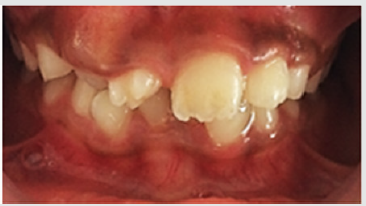
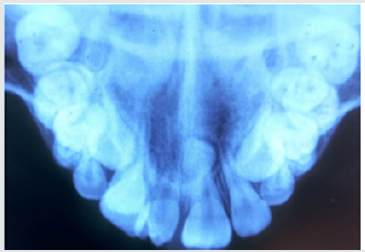
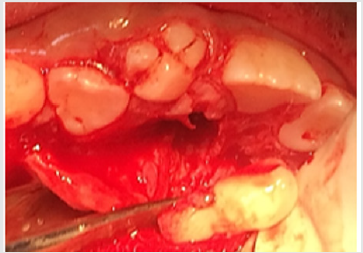
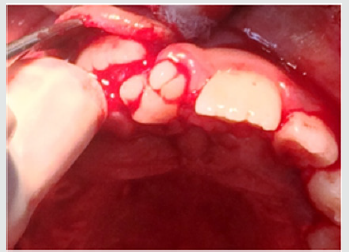
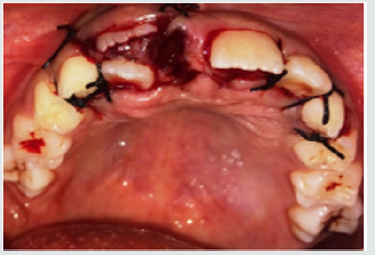
A 9-year old female patient reported to the department of Pedodontics and Preventive Dentistry with the complaint of irregularly placed upper front teeth and wanted it to be corrected. The patient was normal and healthy with non-contributory medical and dental histories. The extra oral examination did not reveal any abnormalities. Intraoral examination revealed a Class I mixed dentition with a missing upper right central incisor and an erupted molariform mesiodens in its place. In addition, there was a firm bulge palpable in the upper right central incisor area which suggests the impediment in the path of eruption of the central incisor by the erupted mesiodens (Figure 1). An occlusal radiograph was taken to rule out the possibility of multiple supernumerary teeth and surprisingly another unerupted and impacted inverted mesiodens with an incomplete root was found mesial to the upper left central incisor (Figure 2). The SLOB technique confirmed that the impacted mesiodens was present palatially. Both informed and written consent was obtained from the parents before initiating the treatment. We decided to extract both mesiodentes under local anesthesia. The erupted mesiodens was extracted by intra- alveolar extraction. The impacted mesiodens was surgically removed by raising a mucoperiosteal flap from maxillary first premolar to contralateral first premolar (Figure 3). Rotary cutting instruments with simultaneous irrigation were used for removing enough bone around the impacted mesiodens for its easy retrieval. Soft tissue uncovering was done for the unerupted right central incisor by placing an elliptical incision over the incisal portion of the palpable bulge (Figure 4). The extraction socket was checked for any pathological tissue and the flap was relocated and sutured with interrupted sutures (Figure 5). The patient was recalled after a week for suture removal and followed-up after 3 months. Uneventful healing with no associated symptoms was observed.

Figure 1: Preoperative view showing erupted molariform mesiodens along with unerupted maxillary central incisor.

lupinepublishers-openaccess-journal-pediatric-dentistry

Figure 2: Occlusal radiograph showing unerupted and impacted inverted mesiodens with an incomplete root.

lupinepublishers-openaccess-journal-pediatric-dentistry

Figure 3: Surgical removal of impacted mesiodens by raising a mucoperiosteal flap from maxillary first premolar to contralateral first premolar.

lupinepublishers-openaccess-journal-pediatric-dentistry

Figure 4: Soft tissue uncovering for the unerupted right central incisor by placing an elliptical incision over the incisal portion of the palpable bulge.

lupinepublishers-openaccess-journal-pediatric-dentistry

Figure 5: Interrupted sutures placed.

lupinepublishers-openaccess-journal-pediatric-dentistry

Discussion

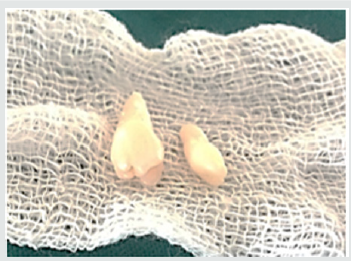
The realm of pediatric dentistry incorporates the practice of interceptive orthodontics, thereby bestowing upon the pediatric dentist, opportunities of providing timely guidance in the development of occlusion. The current case report presents the management of developing malocclusion in the anterior region due to the presence of mesiodens. A mesiodens occurring in the primary dentition is a rarity even though, it being the most common dental abnormality in the permanent dentition [8]. Most cases of mesiodens are discovered during the first decade as maxillary central incisors are erupting and radiographic examinations are performed as an aid to screening for any other malformations and abnormalities [1]. Various theories regarding the etiology of mesiodens have been reported in the literature but the subject remains controversial [3]. Heredity has been suggested to be an etiologic factor based on the observation that supernumeraries are more common in family members; however, it does not follow a simple Mendelian pattern [9]. It was originally postulated that the mesiodens represented a phylogenetic relic of the extinct ancestors who had three central incisors. This is known as phylogenetic theory reversion (atavism) which has now been discarded by the embryologists [10]. The dichotomy theory states that, a mesiodens arises due to the splitting of the tooth bud. On the contrary, Taylor argued that splitting of the tooth bud may either form two equal sized teeth or one normal and one dysmorphic tooth [8]. The hyperactivity theory states that development of mesiodens is due to the hyperactivity of the dental lamina. The ‘field model’, proposes that a tooth bud which is forming at a given location develops according to its position within the field, further determining its shape. The ‘clone model’ postulates that that each tooth class is derived from a clone of ectomesenchymal cells which are programmed by epithelium to produce teeth of a given pattern. Depending upon the specific factors expressed from these ectomesenchymal cells, the shape of the accessory tooth germ forms in the vicinity of the incisors class of teeth becomes evident at the bell stage [11]. This case report presented with an erupted molariform mesiodens and an unerupted tuberculate mesiodens with an undeveloped root (Figure 6). Since the molariform mesiodens was impeding the eruption of the maxillary right central incisor, the surgical removal of both mesiodentes was planned and executed. Timing of interceptive treatment should be as soon as possible following clinical detection of an abnormal eruption pattern. It has been suggested that a tooth delayed in its eruption by more than six months with respect to its antimere should be radiographically investigated. Hogstrum and Andersson [12] suggested two alternatives exist.

The first option involves removal of the supernumerary as soon as it has been diagnosed. This could lead to an unpleasant experience that may have a psychological effect on a very young child and has been said to cause devitalization or deformation of adjacent teeth. Secondly, the supernumerary could be left until root development of the adjacent teeth is complete. The potential disadvantages associated with this deferred surgical plan include; loss of eruptive force of adjacent teeth, loss of space and crowding of the affected arch, and possible midline shifts. In the present case, since the roots of the adjacent teeth were completely formed and the child was at an age where she could sustain a surgical procedure, the surgery was undertaken with utmost attention to detail and caution. Access to mesiodens during surgery must dealt carefully considering the quantity of bone amputation and the possible damage to the adjacent teeth [7]. Follow up is indispensable in such cases since the eruption status should be monitored. The patient revealed satisfactory healing and suitable eruption of the maxillary central incisor. Pediatric dentists are the firsts to usually identify developing malocclusions and thus it is their responsibility to intervene and intercept in an apt manner to prevent future unfavorable sequalae.

Figure 6: Molariform and tuberculate mesiodens.

lupinepublishers-openaccess-journal-pediatric-dentistry

Acknowledgements

Authors are thankful to their colleagues and faculty.

Read More Lupine Publishers Pediatric Dentistry Journal Articles: https://lupine-publishers-pediatric-dentistry.blogspot.com/

Read More Lupine Publishers Articles: https://lupinepublishers.blogspot.com/

Wednesday, 2 September 2020

Lupine Publishers | Primary Determinant in Quality Deterioration of Fish Seed in Captivity

     Lupine Publishers | Current Investigations in Agriculture and Current Research


Abstract

This study was primarily undertaken to review the current status of fish seed production at freshwater sector of West Bengal, Bihar and Assam – three leading seed producing states of India (Figure 1) and its distribution range within the state and throughout the country. Main emphasis of the work was to assess how far the current practices are following the principle objectives of the technology i.e. production and supply of quality seed out of captive breeding. With the immediate standardization of the technology, West Bengal farmers adopted the technology of their own (in 98% cases) and started practicing the technology, initially through hapa breeding and afterwards through the establishment of Chinese hatchery. The realization of huge profit margin within a short period (4-6 months), attracted people from diverse sectors and soon mushroom hatcheries came, who started practicing seed production by learning the mechanical aspects of the technology from neighboring farmers.

The profit-making proposition attracted farmers from Assam and Bihar, who by learning the mechanical aspects of the technology from ignorant fish breeders of Bengal, started seed production in captivity by hiring skilled laborer from Bengal, which continues still today. Even today the entire hatchery operation in Bihar and part of the hatchery operations in Assam is under the control of hired people from Bengal. Misappropriation and profit-making proposition [1] of the technology and subsequent deterioration of quality starts from this point. In the subsequent years, the fish breeders, not being apprised of their faulty breeding practices due to want of any primary training on their part, used the technology only for profit. In the compromization with quantity, quality lost its fragrance and as a consequence a worthy technology became a curse in disguise for the sector.

Within very short period of introduction of technology, the ignorant farmers started practicing improper breeding practices like mixed spawning, use of small number of under aged and undersized breeding population and indiscriminate hybridization for their profit and convenience. Mixed spawning leads to hybridization inadvertently and ultimately affect the native gene pool. Maintenance of small number of founder population leads to inbreeding and the obvious genetic consequences are the increased fry deformities (37.6%), decreased food conversion efficiency (15.6%) and fry survival (19%). Again, the undesirable hybrids [2,3] when find their way into natural system results in “genetic intermixing” and affects the genetic biodiversity of the native fish fauna of Bengal. Along with these the fish breeders are introducing alien fishes almost every year without maintaining any code of practice. This alien introduction and repeated use of unauthorized drugs and feeds (composition totally unknown) severely affecting the native biodiversity and unless checked early it may lead to the extinction of some of the prized fishes of Bengal.

Keywords: Seed quality; Misappropriation; Mixed spawning; Genetic intermixing

Introduction

Indian carps are seasonal breeders and gonadal recrudescence in these fishes occurs after vernal equinox i.e. on 22nd March prior to breeding seasons [4]. These fishes develop eggs but cannot shed them in captivity. To overcome the demerits of natural collection of spawn, the techniques of induced breeding otherwise known as hypophysation was developed in experimental condition. The technique later transferred to field condition, which revolutionized the fish seed production and trade in Bengal in particular. It is observed that Bengal fish seed producer’s/hatchery owners, being illiterate and totally unaware of the scientific basis of the technology; inadvertently use the technology only for profit making purpose. In most cases the farmers learn the technology from the neighboring farmers and there was complete absence of any institutional transfer or training program and follow-up action. The Bengal farmers adopted the technology very well and shouldered the responsibility to produce more than 70% fish seed requirement of the country. At the same time, the farmers modified and refined the technology time to time with their innovative approach From Bengal the technology was transferred to Assam first and then to Bihar, while farmers of both the states visited Bengal hatcheries, may be at the end of seventies. The farmers of both the learn the technology from the ignorant and illiterate fish breeders of Bengal and for establishing hatcheries in their individual states hired skilled labors from Bengal. This indicates that initial establishment and implementation of such a novel technology were done without any scientific approach of program.

Now, with the standardization of the technology and entry of more and more entrepreneurs and business sector, a competitive approach developed among the fish seed producers. This led the farmers to adopt some unfair means and use the technology for profit making purpose. This includes mixed spawning, indiscriminate hybridization (and introduction alien species from neighboring countries. Added to this the farmers out of ignorance never considered potency of the gland and started using immature fishes due to scarcity of brooders during breeding seasons. All these phenomena resulted in serious genetic consequences like inbreeding, genetic introgression etc. The obvious consequences are the negative impact on stock integrity and genetic biodiversity of the native fish fauna. Target oriented research program with strict imposition of laws need to be initiated to check the further loss in biodiversity and maintaining sustainability.

Materials and Methods

The study conducted involving the leading hatchery owners in some of the major seed producing districts of West Bengal, Assam and Bihar. A questioner schedule was prepared and detailed field information was accounted based on the schedule. Fish breeders were interrogated and detailed information were documented regarding the present mode of the application of the technology. The data were compiled and presented in the text. The photographs presented in the text were taken during the field study. Initial study started with West Bengal as it was the pioneer state in implementing the technology, the technology for quality seed production in captivity. Then we proceed to Assam and Bihar as because after standardization of the technology in West Bengal it was transferred to the said two states from West Bengal hatcheries.

In case of Assam, the farmers turned fish breeders learn the technology from the ignorant and illiterate fish breeders, after visiting West Bengal hatcheries during late seventies or early eighties. The scenario of implementation of technology in Bihar is somewhat different. It was envisaged during visit that the entire hatchery operation is controlled by some ignorant hired fish breeders of Bengal, locally known as fish doctor. Even the doctors carry entire batch of pituitary gland with them from West Bengal. The entire operational procedure of implementation of the technology in captivity itself indicate how such a novel technology lost its significance within a period of 30 years and went away far away from its original goal to produce quality seed in captivity. Out of field study 25 hatcheries from each state were selected for and the operational procedure was incorporated in the present paper

Results and Discussion

The quality deterioration of seed, through the implementation of induced breeding technology, started with the following misappropriation.

Dissemination of Technology

The quality deterioration starts with the faulty implementation of the technology, after its discovery at the CIFA centre of Indian council of Agriculture Research, Orissa, India. The transfer of technology, if we count the codes of transfer of technology, developed in the scientific laboratory, here induced breeding technology, didn’t follow the code of practice of transfer. Here, we may consider it as an adoption instead of transfer as because the pioneer fish farmers turned fish breeders adopted the technology of their own from neighbouring 1 or 2 hatchery owners, who learned only the manual aspects of the technology from Govt. Official. Very soon Mushroom hatcheries has come up in and around two districts of West Bengal, India, and in most cases the fish farmers learned only the manual aspects of the technology as there was, practically, no initiation from the Govt. Sector and/or Institutional level to appraise the fish breeders about scientific basis of the technology at any level. Quality deterioration starts with the very first step of unscientific dissemination and as the short-term profitmaking quality is appraised, more and more people opted for captive breeding program by learning only the manual aspects of the technology.

Improper Potency of Pituitary Gland

At the initial stage, before the discovery of synthetic inducing agents like Ova prim, Ova tide, Wova FH etc., pituitary gland was the sole inducing agent. Following the principle of induced breeding, for initiating complete spawning, a pituitary gland should have the right potency. As indicated a rightly potent gland would be that one which is collected from the properly matured fresh fish i.e. fish should be in the 2+ age group and freshly collected. Initial dependence on pituitary led to the development of a chain comprising of gland collector, retailer and supply chain. Collectors are hired persons by the retailers and collects gland from the beheaded head parts of the ice preserved fish from the market. The second phase of the quality deterioration occurs with the collection of impotent pituitary gland about which all involved, from gland collector to fish breeders are not concerned out of ignorance and illiteracy. Final impact is the reduction in population size with consequential genetic phenomenon like inbreeding, genetic drift etc.

Brood stock – its Availability and Management

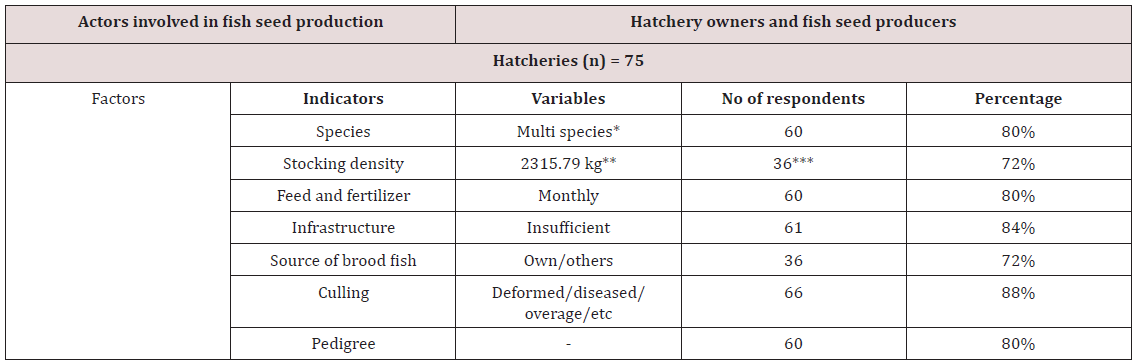
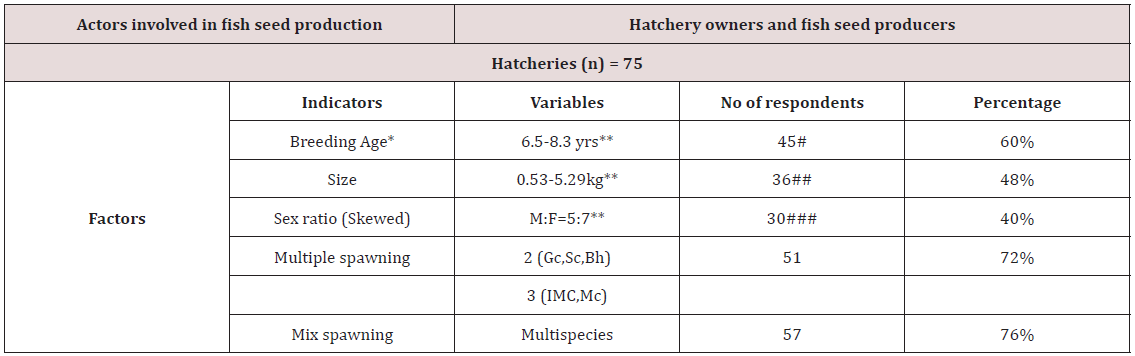
In a breeding program, the primary input is the readily available male and female fish at the peak of their maturity stage. Along with maturity age and size of the brood fish is also an important consideration for the successful spawning. According to the principle of induced breeding a brood fish in the age and size group of 2-5 is suitable. Collection of brood stock in adequate number from different geographical territories, cataloguing of their geographical origin, their genetic characterization and maintaining their pedigree record are important pre – requisites for breeding program. These aspects are of much genetic relevance for a scientific breeding aiming at quality seed production. Further proper feeding of brood stock and their health maintenance are some important management aspects. Different fish show considerable variations in the number of eggs develop i.e. Fecundity varies. As fecundity refers to number of eggs/kg of body weight so it is easy to assess the requirement of brood stock for production of specific number of eggs. The dietary intake of blood stock found to have profound influence on maturation and fecundity of fishes. Experimental results indicate decreased egg production (75%) when ration size reduced to half, again decreased ration size during second half of reproductive cycle decrease egg size (Table 1).

Table 1: Brood stock management practice in the area of study.

Lupinepublishers-openaccess-Agriculture

*(>6 species); * *Average; *** (>1500) kg.

Infrastructure for Brood Stock Raising

The available brood stock raising area, nursery, spawning pool, hatching pool, brood stock biomass etc. available in the hatcheries of study area was insufficient. Altogether, 84% of the hatchery owner had insufficient area for growing of brood stock in their farm (Table 1). Formula for calculation of the area required for brood fish pond according to Thomas (2003) is:

ABRP = BR×1/SD, where

ABRP = Area of brood fish production pond

BR = Weight of brood fish expressed in kg

SD = Stocking density of brood fish per ha.

Source and pedigree of brood stock

The study revealed that 72% of the hatchery owners do not have sufficient numbers of brooders to sustain the level of spawn production in their hatchery (Table 1). The small farmers depend entirely on outside source for collection of brood fish prior to breeding programme. The big and medium farmers depend both on farm raised and outside source. It was observed that 62% (average) of the total brood fish comes from farmers own pond and the rest 38% (average) comes from outside source and share basis prevalent among the farmers. The breeders in the hatcheries (80%), visited during study period, are least bothered to know the pedigree of fish stock they have for the breeding programme to be carried out in their farms (Table 1). None of the farms were found to maintain pedigree record of the brood stock, repeatedly using for seed production since long back, required to avoid the mating of close relatives. Cultured populations should be identified by using a proper marking system. Females & males should be from two different lines.

Culling

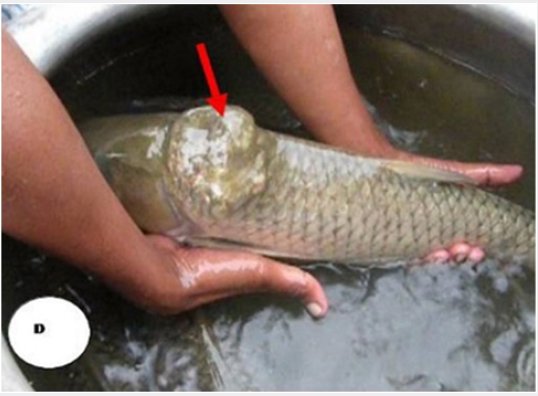
The practice of eliminating or culling of fish from the breeding programme is the necessity of the modern breeding programme. The culling of fish could be based on the criteria based on the phenotype of fish such as growth, disease, deformity, age, size, and most catchable fish than least catchable during harvesting. No such activity was adopted by any of the fish seed producers of the study area, instead one of the breeder was seen injecting a grass carp fish for induce spawning with a tumour like lump on the skull region of the fish (Figure 1). According to the information provided by him, it was learnt that he has been breeding the same fish for the last couple of years. Table1 conforms that majority of the breeders have no idea about the importance of culling of fish from the breeding programme. Quality deterioration finds its easy routes when a diseased fish used as brooders.

Figure 1: Tumour like lump on upper Cephalo -thoracic region, a potent candidate as brood fish.

Lupinepublishers-openaccess-Agriculture

Feed and fertilizer

Majority of the hatchery managers do not have proper feeding schedule for the brood stock or nursery management and provide (80%) feed and fertilizer on monthly basis (Table 1). It is just before the start of the breeding season there is a change in feeding schedule. From February onwards, protein rich feed composed of cereals, broken rice, fish meal etc., after boiling in large pot (karai) are broadcasted in the pond arbitrarily two times a day, without any consideration to the bodyweight. In West Bengal and Bihar, the farmers and fish breeders are more interested in using floating feeds, the reason, as they advocated that as the feeds are floating so it helps them to gaze the amount of feed required by the total biomass, besides it creates no pollution. Whatever it may be the entire supply chain of all the aquaculture products like feed, medicine, chemicals, probiotics and inducing agents are under the control of some unscrupulous middleman/agents. Many a times these products fail to fulfil the criteria of the specific needs for which they are used. The consequences are that the users are deprived of getting the expected results.

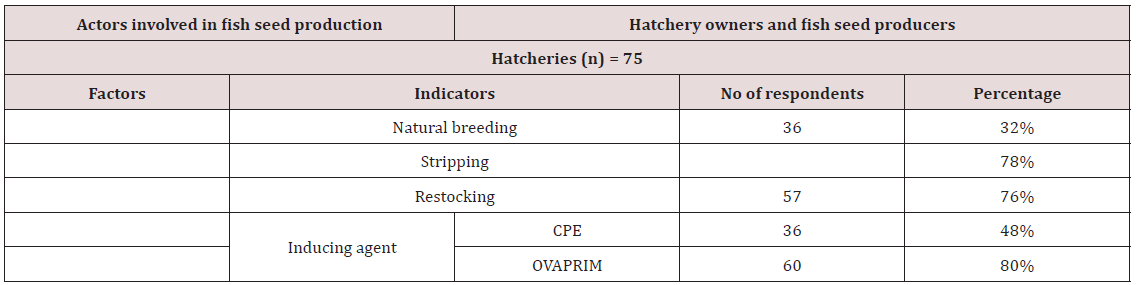
Table 2: Breeding Practices as adopted by the Fish breeders of Three States.

Lupinepublishers-openaccess-Agriculture

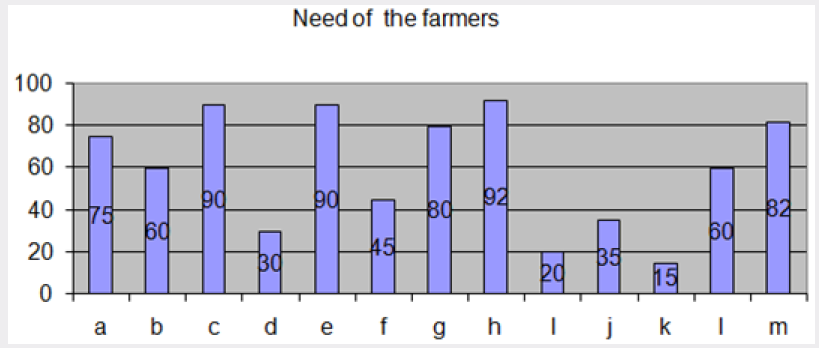
Figure 2: Need of the farmers as quantified (%) from the survey. (a=specialized training, b=Institutional Finance, c=soil and water testing d=institutional coverage, e=organized fish seed market, f=unhealthy competition, g=exemption of taxation during transportation, h=introduction of new species, i=change in land revenue act, j=supply of quality food, k=removal of discrepancy in breeding program, l=supply of quality brooders m=specific aquaculture medicine).

Lupinepublishers-openaccess-Agriculture

As indicated, the actors involved in operating the captive breeding program are totally ignorant about scientific basis of the technology and they are using the technology only for profit making proposition. Mixed spawning, multiple breeding (Figure 2) is the normal practice due to convenience and profit. Mixed spawning (more than 80%), is mainly undertaken to cut the water and electricity budget, as because in case of single species breeding, separate breeding pool is required. Mixed spawning leads to indiscriminate hybridization resulting in genetic introgression and other related consequences [5].

In Bihar the entire hatchery operations are under the control of some hired skilled labourer, but in Assam the operations are partly under the control of some hired skill labourer from Bengal. Not being appraised of the basic principles of the technology and to meet the demand of the customers as also to fulfil the profit of the hatchery owners, they adopt all sorts of misappropriation, starting from the use of impotent gland to mixed spawning, hybridization, multiple breeding, use of under aged diseased fishes as brood fishes. Cross verification of some of the leading hatchery owners of three states emphatically said that in more than 80% cases the fish breeders adopt all sorts of misappropriation to achieve their target.

Problems & Suggestions from Farmers

a) Inadequate technical know how

b) Finance

c) Poaching, poisoning of water body

d) Labor dispute, flooding and water logging of the farm sit

e) Availability of quality pituitary gland

f) Excavation of pond in agriculture land

g) Selling of fish seed on 3rd and 4th day of incubation.

8. Suggestions from the Fish Breeders/Farmers

a) Institutional Training Program

b) Changes in Land Revenue Act.

c) Easy Finance.

d) State wise Hatchery establishment for reducing mortality during transportation.

e) Standardization in breeding should be stopped.

f) Dishonesty in breeding should be stopped.

g) Some progressive farmer suggested that household waste water should be drained to a common place on a cluster basis and may be used for backyard fish farming so that some kind of social fishery might be developed. The farmer also suggested that suitable drainage plan should be incorporated during the plan making of house building.

h) Poaching should be stopped.

i) Management of water quality.

j) Subsidy in electricity.

Conclusion

The study indicates that how proper and scientific dissemination of a technology is important for sustenance of the technology. Here, illiteracy, ignorancy on the part of fish breeders about the scientific basis of the technology plays a negative role against its proper implementation. This is the 1st phase of the beginning of quality deterioration of fish seed in captivity. The initial phase starts with use of impotent gland in most of the breeding program. With the increasing demand for quality carp seed from captivity, the demand for pituitary glands were becoming more ex-pensive and their availability is decreasing. Often, batches of these pituitaries are bad as they are collected from the market where dead fishes are preserved under ice. Decrease in their potency is leading to failure in spawning. To overcome these problems, induced spawning of carps and other important fishes, in many countries, are now carried out with GnRH or its analogue [6] which release endogenous GTH and effects spawning in a much confident manner than the crude pituitary extract.

Besides, Pituitary extract very often also contains pathogenic micro-organisms causing infection in fishes. Moreover, pituitary GTH is glycoprotein in nature and is extremely sensitive to temperature denaturation. Hence, GnRH is no doubt a better alternative for induced spawning. But there is one problem with GnRH use; its activity is inhibited by endogenous dopamine. Dopamine occupies GnRH-receptor and thus blocked its action on pituitary gonadotroph cells. Use of domperidone (or pimozide), a dopamine antagonist, increases GnRH-receptor capacity, thus enhancing GnRH responsiveness [7]. Therefore, for induced ovulation, together with salmon GnRH-analogue, pimozide (antidopamine) has been use. On the basis of information, Ova prim, a commercial product has been prepared by the Syndel Laboratories, Canada, which is now marketed by Glaxo Laboratories Ltd for induced breeding of fish.

Though Assam breeders exclusively use synthetic hormones, the West Bengal and Bihar breeders still use the pituitary extract as the primary inducing agent. They claim that pituitary is more effective in stripping and also put blame about the ineffectiveness of synthetic hormone in many cases. Comparative study on the efficacy of two inducing agent on individual species may help in dissolving confusion.Though brood stock can maintain on maintenance ration but recent information, as revealed by various experimental results, indicate deficiency of certain dietary ingredients such as fatty acids (PUFA), vitamins, trace elements, can have negative impact on maturation, breeding, spawning, larval vigor and survivality. Keeping in mind that nutritional requirement varies according to species, proper experiment should be designed to formulate right food for individual brood stock so that supply of quality seed will be ensured to the farming sector.

Experimental study on wild stocks of C. catla represent a diversified genetic resource and indicates that in situ management practices, such as preventing the wanton capture of fish and creating sanctuaries for protecting small stocks such as those in major rivers, can help maintain and conserve the present diverse gene pool. Hatchery owners are accustomed to operating negative selection and polygynous breeding systems in which some males mate with many females year after year, resulting in genetic deterioration that subsequently cause a negative impact on aquaculture production. Based on our present findings, hatchery owners can collect their brood fish or replace their existing breeding populations with genetically diverse fish from stocks like those in the rivers and increase their effective breeding populations and thus improve the aquaculture production. However, the strict implementations of correct management practices are essential to maintaining the genetic diversity of the natural stocks.

Table 3: Faulty Approaches in Breeding practice & related criteria.

Lupinepublishers-openaccess-Agriculture

A further important point is that breeding between two genetically discreet or distant populations may have a positive impact on aquaculture production. As indicated in Table 3 due to dire scarcity of brood fish, except large hatchery owners there was no organized brood stock management practice, the fish breeders adopt all sorts of misappropriation to manage the customers demand. This create some important avenues for quality deterioration of seed in captivity, Mixed spawning, another profit-making approach by the fish breeders, leads to genetic introgression [8] among the genetically flexible different species of fish [9] while repeated use of small number of founder population for seed production results in inbreeding. All these faulty breeding practices throughout the years has eroded the qualitativeness of the technology, as established by the frequent claim by the seed buyers regarding the poor performance in terms of growth in particular. Other related criteria like use of skewed sex ratio and immature brood fish are also producing negative impact against quality of seed. A consolidated program from Govt. and institute level need to be initiated for general appraisal of the misappropriation with implementation of suitable laws banning the faulty practices can provide sustainability to such a novel technology [10].

In all, it can be said that the first criteria to consider the development of aquaculture sector is the steady availability of quality seed locally (within the states and country) to meet the requirements of the industry. Where ever this has not been possible, seeds and /or brood stock may be introduced through certification. It is encouraging to observe that we are in a stage where the emphasis is slowly shifting from quantity to quality. Only in very recent years farmers began to realize the importance of quality seed i.e. pathogen free uniform size seed to remove their sufferings and to maximize production. It may not be entirely wrong to say that this shift in emphasis (attitude) to seed quality has come about largely because of the recurrent disease problems that has besieged the aquaculture industry especially shrimp and fresh water prawn.

Read More Lupine Publishers Agriculture Journal Articles:


Tuesday, 1 September 2020

Lupine Publishers | Occupational Noise-Induced Hearing Loss (ONIHL) and Fishing?

 Lupine Publishers | Journal of Otolaryngology Impact Factor


Abstract

Fishing is a working environment, which, due to the presence of engines and noisy equipment, can lead to hearing problems, especially for workers who are more exposed, such as motorists. It is emphasized that prevention, the only weapon available, is more difficult at sea.

Keywords: Occupational noise-induced hearing loss; Epidemiology; Noise; Audiometry

Introduction

Occupational noise-induced hearing loss (ONIHL) describes an acquired hearing impairment attributable to excessive workplace noise exposure. ONIHL is likely to contribute to a very high proportion of the cases of hearing loss in adults. In Italy noise deafness affects almost two thirds of fishermen. The motorists and the Commanders present a greater risk of developing noiseinduced hearing loss compared to sailors. These data agree with those reported in studies conducted in other countries. The main source of noise inside of the boats is represented by the engines that produce high sound levels too in fishing vessels of less than 30 m in length. A further aspect related to noise on fishing vessels is represented by exposure sometimes continuous; it is estimated that a 24-hour exposure at 85dB (A) matches at an exposure of 8 hours to 90dB (A). The high and constant exposure to noise, even during the few hours of rest on board, helps to develop not only the hearing loss but also sleep disorders and alterations of blood pressure and favors the occurrence of injuries. On the boat, the exposure time cannot be reduced, but the researchers recommend that measures are taken to decrease the intensity of the noise. Besides, they ask to the workers to receive a training and oration on the hearing health and on the raising awareness and sensitization to the noise exposure, to take regularly hearing tests and to be followed in the long term to warn the risks of the deafness further to the noise [1-5].

Conclusion

The relationship between fishing and deafness appears to be widespread among sea workers. It must to promote the culture of safety and health protection of workers in the maritime sector, in order to detect, analyze and study the risk factors in the fishing sector.

Read More Lupine Publishers Otolaryngology Journal Articles:
https://lupine-publishers-otolaryngology.blogspot.com/
Read More Lupine Publishers blogger Articles:
https://lupinepublishers.blogspot.com