Wednesday, 20 January 2021

Lupine Publishers | Innovative Indoor Horticultural Systems (iHORT) for the 21st Century

   Lupine Publishers | Current Investigations in Agriculture and Current Research


Abstract

With the increasing global population, urbanization, the current unsustainable and expansive agricultural practices would be expected to further elevate the risk of food and nutritional insecurity of the global population, which is recognized as a global threat for the 21st century. This paper reviews the demographic changes, urbanization, sustainability of the conventional agricultural systems, the environmental and resource implications and presents possible sustainable alternatives. While this is still in its infancy, we present a potential integrated, innovative model where the universities, technologists, innovators, investors, municipal councils, provincial and federal governments all can collectively engage, creating iHORT ecosystem to develop an Innovative Horticulture (iHORT) systems that could impact the global society in advancing sustainable horticultural systems for the 21st century and beyond providing food and nutritional security irrespective of any location on this planet, under any dire environmental conditions reducing the carbon footprint. In addition to developing innovative technologies, adopting a cluster business model and flexible, life-long educational approaches would be beneficial for the success of the industry.

Introduction

Global population continues to increase, and it is predicted that it would reach 11 billion in 2100 [1]. Thus, there would be an additional 2.5-3 billion people to feed. This means we need an additional 140 million ha of arable lands to produce food [1]. Urbanization is also on the raise. It is estimated that nearly 2/3rd of the global population live in urban cities, who are to be fed and food generally travels from long distances sometimes as far as 8000- 9000 km in some northern latitude countries like, Canada. Globally, nearly 26% of our current arable lands are already degraded or less fertile. The conventional agriculture (CA) is expansive, contributing to deforestation thus, contributing to species extinction, reducing diversity [2]. CA also uses significant water resources. Nearly, 70% of the fresh water is used for agricultural production (both animal and plant agriculture) while the Earth’s recharge capacity reduced to 40% [1]. In addition, agriculture is known to contribute significantly to the climate change due to use of fossil-fuel based fertilizers, application of liquid manure, tillage practices and methane emissions from animal agriculture [3]. It is estimated that agriculture adds 12,000 megatons of carbon dioxide to the atmosphere each year, which is nearly 24% of total GHG emissions potentially contributing to climate change. Global drought events, increase in global temperatures, sea level raise, increases in heavy precipitation events, flooding are all on the raise, which are attributed to climate change. These factors challenge field crop production and raises significant concerns on food availability and access. Use of pesticides to control insects, diseases and weeds have increased globally contributing to environmental pollutions, contaminating aquifers, rivers, seas and oceans. Some of the agrochemicals used cause significant health risk to human beings and are implicated in neurological disorders, various types of cancers, renal failures, diabetics and skin and eye irritations and so on.

Thus, the conventional agricultural practices are not sustainable, and this alone cannot be a solution for feeding the world in the future. We need to find innovative ways of producing more food with less resources (space, water, nutrients), low carbon foot print and free of agrochemicals. This review is an attempt to provide an insight into various types of innovative indoor horticulture systems (IIHS), the challenges and opportunities and an innovative partnership model for enhancing the viability of the IIHS.

Sustainability of Conventional Agriculture

Sustainability is judged by managing resources in a responsible way without causing irreversible damage to the environment or harming nature and without depleting resources [3]. The extensive agriculture to achieve green revolution with an unprecedented yield increases from 1960s caused a significant pressure on the planets natural resources including land, water and environment. “Land and water resources are central to agriculture and rural development and are intrinsically linked to global challenges of food insecurity and poverty, climate change adaptation and mitigation, as well as degradation and depletion of natural resources that affect the livelihoods of millions of rural people across the world” (FAO, 2011: The State of The World’s Land and Water).

Over the last 50 years, the world’s cultivated area has increased by 12%. The global irrigated area has doubled over the same period, accounting for most of the net increase in cultivated land. In total, global agriculture is estimated to use 11% of the world’s land surface for crop production. Agriculture uses 70% of all global freshwater withdrawals [4]. Models suggest that global agricultural land will have to expand by another 140 million hectares by 2050, a land area roughly the size of Brazil to feed the global population increase by 2100 [1]. While the arable lands are limited for expansion of agriculture, agricultural intensification causes significant environmental damages that include habitat fragmentation, disruption of ecosystems services and reduces biodiversity. Furthermore, agriculture is a leading contributor to global greenhouse gas (GHG) emissions, with agricultural related activities contributing about one-third of the global net CO2 emissions amounting to 12000 megatons per year primarily through deforestation and burning [5].

Water availability will also be a critical factor in food production soon. Farming using irrigation is an extremely productive method, evident in that 40% world’s food production is from 20% irrigated land (300 MA hectares). Under semiarid conditions, yield of nonirrigated crops is substantially reduced (Pimentel, 2009). Model predictions suggest water withdrawals must rise by 11% in the next three decades to meet crop production demands. It is imperative that water-use-efficiency In agricultural systems must increase. Considering all the facts, finite use natural resources, agricultural intensification is necessary to increase production to meet future demands. However, under expansive farming systems, crop yields are maintained through the heavy use of chemical fertilizers, pesticides, and herbicides. Excessive use of these agro-chemicals can lead to pollution of soils and ground-water, and agricultural runoff threatens to damage environments, reducing biodiversity and contributes to eutrophication of freshwater systems. Intensification is also associated with increased GHG emissions related to fuel consumption for equipment, food processing, and chemical production, an example of the latter being that Haber process for nitrate fixation consumes 5% of the world’s natural gas production and 2% of the world’s annual energy supply [6]. It is time that we redefine and redesign our agricultural systems to be resource efficient and sustainable. We need to think about alternative innovative sustainable solutions to feed the world.

Climate Change

Climate change threats to agriculture cannot be ignored. Several global climate change models predict increased incidence of drought, high temperature, extreme low temperatures, frost, flooding, increasing pest pressures leading to unexpected loss of crop production. We have already started seeing this phenomenon in several parts of the world. The impact can disproportionately be significant in world’s poorest regions. Water scarce areas will become much drier and hotter, there will be a decrease in rainfall in semiarid to mid-latitudes and interior of large continents [6]. With climate change some northern latitude countries may benefit by yield increases. Such an impact of climate change can have significant food insecurity problems.

Sustainability of Urban Cities

Cities occupy nearly 2% of the world’s surface. Urban cities are the home for nearly nearly 66% of the global population. It is predicted that this trend will continue to increase [1]. Nearly, 6000 tonnes of food are imported daily to feed the urban population in the megacities around the world [7]. Nearly 75% of the global resources are consumed by the urban population and the urban cities are the major contributors to GHG emissions and centers of water and air pollution [6]. It is imperative to avoid catastrophic effects, the cities must improve sustainability by reducing city’s ecological footprints (water, energy, land and wastes) and become centres of food production rather than food consumption while enabling healthy environment and improve quality of life.

Types of Urban Horticulture Systems

The urban horticulture systems consist of production of crops by non-profit organizations, community gardens, roof-top farming, green walls, land sharing, greenhouses and backyard gardening. While this is a dynamic concept, it still competes for resources such as land, water, energy and labour. There is a potential synergistic effect of urban horticulture systems and building-integrated horticulture. This approach does not require additional space and thus, it is called as indoor farming, zero farming or z-farming. This has the potential with no additional space, utilize residential or industrial waste water, utilize sunlight and sequester higher level of carbon dioxide using the CO2 generated within the building or in the cities. This can be a small space resources recycling or saving system, which could reduce ecological footprint of a city, contributing to sustainability [8]. More recently, vertical farming (VF) has become increasingly popular, generating greater interest and excitement, which can contribute to food security of the cities and perhaps in location where food access is limited such as northern territories where agriculture and food access is constrained by extreme environments.

Vertical farming (VF) is fairly a new concept born out a school project in the USA producing leafy greens for the school kitchen by the students. VF can use any indoor space (thus called indoor horticulture) such as abandoned buildings, tunnels, parking garages or integrated into the building architecture. This can also be integrated into existing greenhouses. The concept of VF is utilization of vertical space effectively and thus, it provides space for multi-layer production (also called multi-layer farming). This system uses hydroponic, aeroponics, aquaponics or nutrient-film technologies to supply water and nutrients. Nutrients are precisely monitored for their pH, EC, BOD and macro- and micro- nutrients using sensor continuously and adjusted as needed and recycled thus contributing to nearly 95-98% of water and nutrient use efficiency without polluting the underground water sources. The evaporated water is also collected and reutilized further contributing to water use efficiency. In VF, there is no need for Sunlight. The light requirements are met by various spectrums of red, blue and far-red LED lights to 18-24-hour photoperiod. The use of LED lights reduces energy costs compared to HS (high pressure sodium) lamps used in greenhouses. Heating or cooling may be needed depending on the location, which can be achieved by recirculating hot/cold water in the buildings or from the geothermal sources.

The VF systems contributes to 95-98% water and nutrient use efficiency, with no runoff, with yields as high as 100 times depending on the crop, and crops can be harvested throughout year. In addition, there are no pesticides or fungicide applied thus, ensuring food quality and safety. There is growing evidence that VF can be the most sustainable way to produce crops. This approach is used in sky farming or space farming or plant factories under any adverse environmental conditions. The growth, maturity and quality can be precisely monitored and manipulated to produce nutritious and phytonutrients rich- food. The automated control systems are used to regulate light intensity, spectral quality, duration, humidity, temperature, carbon dioxide levels, nutrient concentrations. Robotics are used to monitor quality of the produce and for harvesting. Crop produced in VF have no pesticide residues and no agrochemicals (pesticides or fungicides or herbicides) and safe and ready- to- eat. While there need to be a lot of research done to fine tune the iHORT systems in the areas of crop and varietal suitability, the light spectral specificity for each crop and variety, the nutrient requirement, manipulation of growing environment, assessment of quality and phytonutrient concentration, evaluation of energy costs and operational costs in comparison to other production systems, sensor technologies to monitor the quality, automation and robotics, the iHORT systems present a significant hope for a sustainable future. While this may not be a suitable system for all crops and the intension is not to replace the conventional production of field crops, the iHORT systems need to be considered for high value horticulture crops to provide nutritious fruits, vegetables, and herbs throughout the year in a sustainable way. It is our hope that the future city planers and architects integrate iHORT systems into their design to provide sustainable, healthy living solutions as they currently do with providing a spa or a health and fitness club or a swimming pool or a tennis court. iHORT system also have a very short supply chain. Fresh products are directly sold or used, or it directly goes to local market, reducing the carbon foot print significantly as against the conventional production system where the produce is transported to collection centres, then to distribution centres, then to whole sale, then to the market and to the consumers.

Applications and Adaptation of iHORT systems in Vertical Farming

Sky greens, Singapore

Sky Greens is the world’s first low carbon, hydraulic driven vertical farm. It uses green urban solutions to achieve production of safe fresh and delicious vegetables, using minimal land, water and energy resources. They produce sky Nai Bai, Sky Cai Xin, Sky Bai Cai, Sky Chinese cabbage, Sky lettuce, Sky Bayam, Sky Kai Lan, Sky Kang Kong and Sky Spinach. They use a patented vertical farming system consisting of rotating tiers of growing troughs mounted on a “A” type frame. The frame is 9 m tall with 38 tiers of growing troughs which can accommodate various media, soil or hydroponics. This system provides high yield (10 times), high quality, high flexibility, low energy use, low water use and low maintenance.

Plant lab, Netherlands

Plant lab is a privately-owned Dutch company that specializes in controlled environment agriculture with a global reach. Plant lab employs plant production units based on a revolutionary technology and propriety algorithms to optimize production of various crops including potted plants, flowers, specialty foods, vegetables and fruits. They use proprietary mathematical models, state-of the art LED systems, air control advances and a maximum water control system. It also integrates R and D facility to further advance the production system.

London Growing Underground, Grow up Urban Farm, UK

At Growing underground, fresh leafy vegetables and salad greens are produced 33 meters below the busy streets of London using hydroponic systems, LED technology and crops are grown year-round in the perfect, pesticide free environment. The production system is unaffected by the weather conditions. Their hydroponic system uses 70% less water than traditional open field systems and the nutrients are kept in a close loop.

TruLeaf, Truro, Nova Scotia, Canada

Founded in 2011, Truleaf’s systems offer the opportunity to grow a sustainable year-round supply of leafy plants to replace and enhance current sources. The multi-level farm can be built anywhere, offering key advantage of growing plants closer to markets, maximizing freshness and reducing transportation costs and spoilage. Their goal is to enhance the local food supply with year-round reliance on imported produce. Truleaf specialises in high-value crops. Their system includes a customized multi-tier production system and specializes in LED spectrum selection, plant production formulation, automation, and data collection. They produce fresh, quality greens using clean and sustainable practices and supplying to the local stores. Their commercial operation expanded as Good Leaf.

Cluster Model for iHORT Business Development

The success of iHORT systems development heavy relies on the acceptance of the business model in the horticulture cluster. As like in any other successful Fortune 500 companies, iHORT requires a successful business model. The success, the speed of adaptation and growth of this business model is all about creating an “innovative ecosystem”, which provides solutions for the relating to

i) Responsiveness and resilience;

ii) New innovation and business models;

iii) Cross-overs between and among sectors and scientific domains;

iv) Inclusive society;

v) Sustainability and societal embodiment and

vi) Globally and locally balanced.

1. To achieve this, we need to switch our minds

a. From linear towards an integrated innovative ecosystem;

b. From projects towards integrated programmes;

c. From science-driven towards business-driven research and innovation; and

d. From separate stakeholder agendas towards joint agendas of the members in an “ecosystem”.

2. We need a system innovation or transition for the future business models. In creating an innovative business models, the ecosystem may comprise of

i) Entrepreneurs/industries;

ii) Government and policy makers;

iii) Research institutions;

iv) Educational institutions and

v) Investors [9].

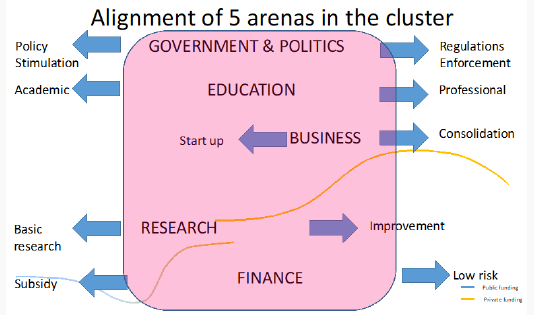
These different network partners are organised in arena’s, with a specific set of drivers and culture. The business is profit driven, the government is power driven, the researchers seeking for recognition etc. The challenge in the innovative ecosystem is to combine and align the different drivers and values. VF is relatively new and very attractive for all stakeholder groups or arenas. Mobilising and feeding the ecosystem to grow is one of the challenges. New intermediary adaptive support structures emerge to activate membership and cross-overs between these arenas [9]. The innovative business model the Greenport West-Holland in the Netherlands developed is business driven (Figure 1). The stakeholders in the cluster signed a public private partnership: Innovation Pact. The business partners defined an ambition to develop a leading cluster for iHort industry in the world. Several essential strategic development topics are identified and accepted by the stakeholders in the ecosystem. Next step is to organise the ecosystem to align all the activities and to get focus of the investments of all the stake holder’s groups in the different arenas. For example: research and educational institutes align the research and educational programs according to the innovation topics of the business. The intermediary organisation, Greenport West-Holland, facilitates and challenges all actors in the network and stimulated cross-overs between the different arenas.

Figure 1: Proposed innovative business model for the success of the iHORT industries [9].
Lupinepublishers-openaccess-Agriculture

Training and Capacity building in iHORT

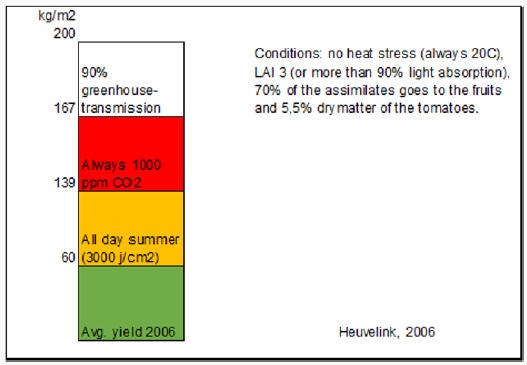
A decade ago, the average yield of a cluster tomato produced in a greenhouse was 60 kg/m2. In theory, the calculated production could be 200 kg/m2 [10] In 2008, in a trial set at the Improvement Centre in Bleiswijk, 100 kg/m2 of tomatoes were produced. However, in the current system of cultivation of tomatoes using artificial light, the targets for crop managers are around 95 kg/m2. The next step is indoor horticulture. Using this innovative cultivation system, it is possible to create the environment to reach yields as high as 200 kg/m2. To reach higher yields or a more sustainable production knowledge is needed. So, training people working in the industry, building their knowledge and capacity using innovative techniques and technologies are essential for the industry’s success and sustainability (Figure 2). For indoor growing, there are various best practice cases in leafy crops, such as lettuce and herbs. However, large scale food production in the main food sources, the experience is limited. Even in the Certhon Innovation Centre (www. certhon.com), a large- scale testing facility for indoor farming, they are constant learning how to cultivate under indoor circumstances. Traditional cultivation methods/ theories are not relevant in this environment (Table 1). The results are impressive, but Certhon realizes that this is just a beginning. There is still a lot to learn, so the results will become even higher.

Figure 2: The changes in tomato yield in relation to various technological advancements. (Source: [10]).
Lupinepublishers-openaccess-Agriculture

Table 1: Results of pepper trails Certhon Innovation Centre (Source: www.certhon.com).

Lupinepublishers-openaccess-Agriculture

Dare to learn! The slogan of in Holland university of applied sciences. When this slogan is related to the complex emerging cultivation systems as indoor farming, what is it that should be learned? The answer is: SKILLS. How to approach a complex problem? How to deal with new techniques? Are we able to connect what we know to different circumstances? To accomplish an effective implementation of innovations it’s vital that the industry, government, research facilities and knowledge institutions work together. In the Netherlands, the development of a new curriculum starts by exploring what the needs or demands from the industry are. After consulting the industry, a curriculum mapping is performed. In the curriculum, an important aspect is the structural relationship with the industry. Students will work on assignments or research not only just for curiosity but also for commissioners from the industry. Therefore, the students work and learn always on a relevant issue or topic. The commitment from the government is shown in the infrastructure in the industry for knowledge development and sharing. Together, the university, the industry and the government will become a part of an “academic ecosystem”, creating the opportunities to educate and train necessary skills, advance knowledge and develop appropriate attitude in people needed for the horticultural industry.

The development of “Flexible Learning” programs is a perfect example how the cooperation between companies (industry), government and the university that is flourishing. ‘New’ learning pathways are connecting work- and learning environments together. Furthermore, it becomes clear that in the 21st century we need to adept to a “Life Long Learning”. For example, “Job learning” is a learning method where the job environment is also the learning environment. By creating learning challenges on the work floor and using these challenges to build up evidence in a portfolio on capacity in skills, knowledge and professional attitude. A student determines their own learning path and speed, so the path is personal and customized for each student. All students can graduate with a bachelor’s degree, but the ways to get to this diploma is non-traditional and it is very innovative.

Future Challenges and Conclusion

The challenges relating to population increase, declining resources, climate change, environmental pollution and the sustainability of the conventional agriculture in feeding the global population by 2100 are real. With the integration of current knowledge in plant science and horticulture, current sensor, software, hardware, automation and robotic technologies, we could create a sustainable iHORT production systems to meet the future challenges. The model we described would build partnerships among universities, technologists, innovators, entrepreneurs, investors, policy makers, governments and consumers to create an innovative, inclusive and transparent approach for research, innovation, education and training, creating a climate for investment and engagement of governments at various levels in revolutionizing iHORT technologies for a sustainable future. While there are several questions to be answered regarding cost: benefits, return on investment, energy utilization, carbon footprints, the foremost important solution that the iHORT systems can provide a “safe, pesticides free” food year-round under any environment itself is worth considering as an innovative solution for feeding the world with nutritious, fresh, safe food in the 21st century.

Read More Lupine Publishers Agriculture Journal Article:

Tuesday, 19 January 2021

Lupine Publishers | Impact Assessment of Adoption of Improved Varieties of Millet in North Kordofan State Sudan

  Lupine Publishers | Current Investigations in Agriculture and Current Research


Abstract

This study was carried out with the objective to assessment the impacts of adoption of improved varieties of millet on the farm income of households in three localities of Sheikan, Umrawaba and Elrahad in the North Kordofan State. Data for this study was primarily from farm household surveys conducted in seven seasons (2006/2007 to 2014/2015) in three localities of Sheikan, ElRahad and UmRawaba in North Kordofan State. A random sample of 794 households was randomly drawn from different villages in the study area. Multi-stage random approach was adopted. Treatment effect regression was used to assess the impact of adoption of improved varieties in the study area. Analysis was completed using STATA12 and SPSS22 software packages to draw results and test hypotheses.

Factors which positively affected farmers’ decision to adoption improved varieties of millet were education (0.016), attending training (0.223), family members male (0.004) and sex of HH (0.198), Income from farm increased by 29727.86 SDG per year as a result of adoption of millet improved varieties. Area of improved varieties would increase by 9.63 Hectare per year as a result of adoption improved varieties of millet.

Introduction

There has been much discussion on the need to increase productivity and sustainability in agriculture globally in the medium to long terms, but much less information is available on specific means to achieve this aim. Increasing agricultural productivity is critical to meet expected rising demand and, as such, it is instructive to examine recent performance in cases of modern agricultural technologies (FAO, 2011). In Sudan, sorghum, millet, groundnut and sesame yields per unit area of land are higher at research level and well managed farms than in typical farmers’ fields. The yield gap is mainly attributed to ineffective extension and technology transfer, lack of access to inputs, poor access to finance, and problems related to marketing.

The rain-fed farming sector in Kordofan region has been contributing considerably to the country’s annual crop production. It produces about 40% of the total millet production, 15% of sorghum, 25% of groundnut, 30% of sesame, and 5% of maize. Other crops grown in the region include roselle, cowpea, and cotton.

Problem Statement

In general, agricultural production and productivity could be increased by allocation of more resources to agriculture and improvement of agricultural technology which requires more investment in education, health and infrastructure. In the context of Sudan profile, various governments have declared a policy aiming at self-sufficiency in food. The means towards achieving this objective has always been an expansion in cultivated area and/or improvement in yield.

It is no longer possible to meet the needs of increasing numbers of the world population and to achieve food security objectives by expanding areas under cultivation since the fertile land is not increasing over time. But this problem can only be better solved by increasing agricultural productivity of farm households. Still, achieving agricultural productivity growth will not be possible without developing and disseminating yield-increasing technologies and application of these technologies by farm households. A main feature of farming in North Kordofan is continuous deterioration in the natural resources base and production. Such deterioration has resulted from various influential factors, among them are poor genetic resources, biophysical factors including topography, low rainfall, soil quality, insect, diseases. To answer the below key questions, studies are required to be conducted in the area but accessed information does not show that such adoption studies have been conducted in North Kordofan state in general and Sheikan, Elrahad and Umrawaba localities, in particular to identify the determinants the impact of adoption of improved varieties of millet on the farm income.

Objectives of the study

The overall objective of this study is to measure the impacts of adoption improved varieties on the yields of millet and household income and. The study also aims to achieve the following specific objectives:

a) To identify and analyze socioeconomic factors that influences the adoption of improved varieties of millet among farmers.

b) To understand the factors that determines the adoption and intensity of use of improved varieties of millet.

c) To study the impact of adoption on yield and household incomes.

d) To provide policy makers and related institutions with a clear picture of the impact of adopted improved varieties on the livelihoods of smallholder farmers.

Research hypotheses

a) Adoption of improved varieties leads to high yields of sorghum and millet.

b) Farmers’ perception of technology characteristics significantly affects their adoption decision.

c) Adoption of improved crops varieties leads to higher household income and increase farm income of households.

Data Sample Procedures

The sampling: Data for this study comes primarily from farm household surveys conducted in seven seasons (2006/2007 to 2014/2015) in three localities: Sheikan, ElRahad and UmRawaba in North Kordofan State. Multi-stage random approach was adopted. The localities were used as a sampling frame. From the three localities we selected nine locality units randomly, from theses nine locality unit eight to twelve villages were randomly selected for conducting interviews for individual households. In each village eight to sixteen household heads, in both male- and female-headed households, were randomly selected for interviews.

Accordingly, a sample of 794 households was randomly drawn from different villages in the study area. Selection was structured on the basis of ensuring a representative sample of male and female household heads. Farmer’s household heads were interviewed using questionnaire. Each male and female household heads was interviewed annually for seven seasons. Analysis was undertaken using STATA12 and SPSS22 software packages according to which results, and hypotheses were drawn.

Treatment Effects Regression

A treatment effect is the average causal effect of a binary (0 -1) variable on an outcome variable of scientific or policy interest. The term treatment effect originates in medical literature concerned with the causal effects of binary, yes or no, such as an experimental drug or a new surgical procedure. But the term is now used much more generally. The causal effect of a subsidized training program is probably the mostly widely analyzed treatment effect in economics (see, for example [1] for one of the first examples.

A treatment effect is the average causal effect of a binary (0 -1) variable on an outcome variable of scientific or policy interest. The term treatment effect originates in medical literature concerned with the causal effects of binary, yes or no, such as an experimental drug or a new surgical procedure. But the term is now used much more generally. The causal effect of a subsidized training program is probably the mostly widely analyzed treatment effect in economics (see, for example [1] for one of the first examples.

The Gain from treatment is

Lupinepublishers-openaccess-Agriculture

For a particular unit I, the gain treatment is

Lupinepublishers-openaccess-Agriculture

If we could observe these gains for a random sample, the problem would be easy: just average the gain across the random sample. The key problem with this model is that for each unit i, only one of Yi (0) and Yi (1) is observed and in effect, there is a missing data problem. It assumes a random sample of units from the population, but we do not observe both outcomes.

In the treatment effects regression model, there are two parameters of primary interest:

a) The average treatment effect (ATE) which is the expected gain for a randomly selected unit from the population.

Lupinepublishers-openaccess-Agriculture

b) The average treatment effect on the treated (ATT) is the average gain for those who actually were treated:

Lupinepublishers-openaccess-Agriculture

With heterogeneous treatment effects – that is, when Yi (1) – Yi (0) is not constant the average treatment effect and the average treatment effect on the treated can be very different.

With heterogeneous treatment effects – that is, when Yi (1) – Yi (0) is not constant the average treatment effect and the average treatment effect on the treated can be very different.

Lupinepublishers-openaccess-Agriculture

The key assumptions of the treatment effects regression are:

a) Confoundedness; rather than assume random assignment for each unit i a random vector representing the population distribution of covariates Xi is drawn. The strongest form of confoundedness is conditional on X, the counterfactual outcomes are independent of W. For units in the subpopulation defined by X = x, assignment of treatments is randomized.

b) Overlap: for all x in the support X of X,

Lupinepublishers-openaccess-Agriculture

In other words, each unit in the defined population has some chance of being treated and some chance of not being treated. The probability of treatment as a function of x is known as the propensity score

Lupinepublishers-openaccess-Agriculture

Results and Discussion

Adoption Rate

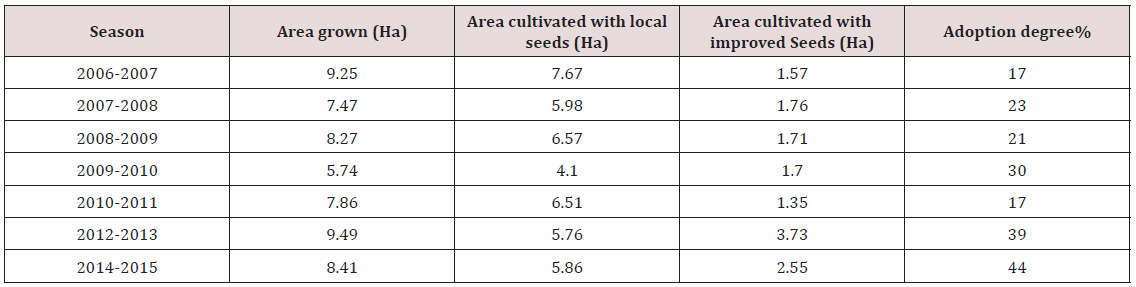
The crop varieties grown by farmers are usually local varieties with very few cases where improved varieties are used in small acreage (Tables 1 & 2).

Table 1: Average distribution of farmers according to adoption of improved varieties in Sheikan, Um rawaba and Elrahad localities. seasons 2007-2015. Source: Field surveys, 2007-2015.

Lupinepublishers-openaccess-Agriculture

Table 2: Distribution of respondents according to adoption degree of improved varieties of sorghum, millet, and groundnut and sesame%.

Lupinepublishers-openaccess-Agriculture

Source: Field surveys, 2007-2015.

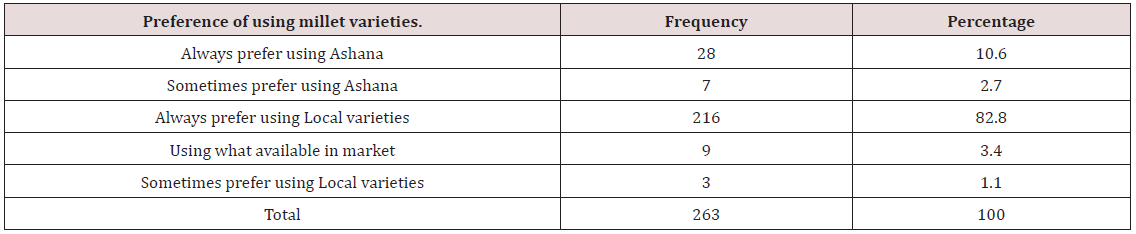
Preferences of using millet varieties (Table 3)

Table 3: Farmers preferences of using millet varieties in Sheikan, Umrawaba and Elrahad localities.

Lupinepublishers-openaccess-Agriculture

Source: Field surveys, 2007-2015.

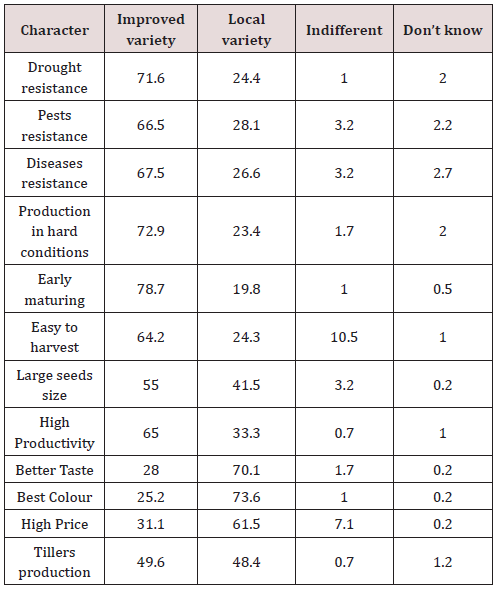
Varietal Characteristics

The farmers state that the improved varieties of millet has better characters than the local varieties, except for the characters taste, color and price Table 4.

Table 4: Millet characteristics in Sheikan, ElRahad and Umrawaba localities 2007/2015.

Lupinepublishers-openaccess-Agriculture

Source: Field surveys, 2007-2015.

Impact of Using Improved Varieties of Millet on Farm Income

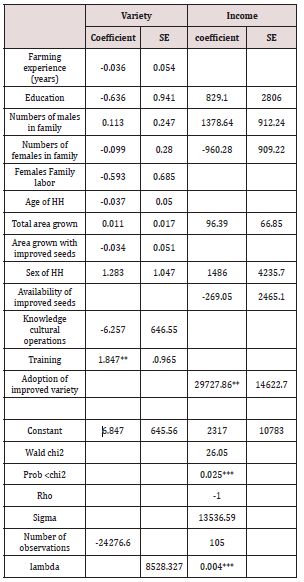
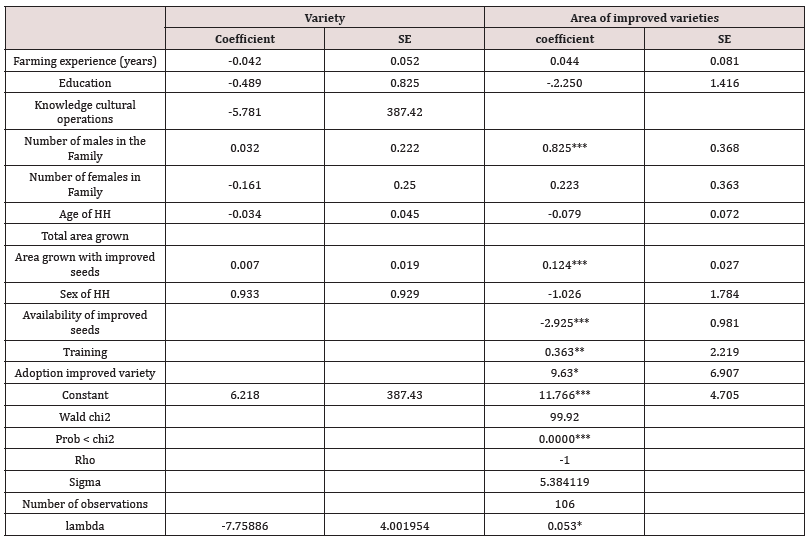
The treatment effects regression was used to assess the impacts of using improved varieties of millet on farm income, using improved varieties is the treatment used in the first equation of this model. In the first step it was regressed against different variables which affect the likelihood to adopt improved varieties of millet and was used to estimate impacts in the second step of the treatment effects model (Table 5). For the impact of adoption of improved varieties of millet on farm income, the most important factor which increase the likelihood to adopt improved varieties of millet is attending training (1.847**). The effect of variety in the outcome equation (farm income) was significant at 0.01level (Table 5).

Education (829.10), total grown area (96.39), male’s family members (1378.64), sex of household head (1486) were the most important factors which increased farm income (Table 5). Income from farm increased by SDG 29727.86 per year as a result of adoption millet improved varieties. This finding agreed with the adoption of improved technologies was expected to enhance productivity and consequently increase incomes, reduce poverty and accordingly ensure equity among beneficiaries [2-4].

Table 5: Estimates of the treatment effects regression on farm income for millet. Symbols *, ** and *** indicate significant differences at 0.1, 0.05 and 0.01 levels of significance, respectively.

Lupinepublishers-openaccess-Agriculture

Area of improved varieties would increase by 9.63 hectare per year as a result of adoption of millet improved varieties. Attending training (0.363**), total grown area (0.124***), number of male’s family members (0.825***), were the most important factors which increased area of improved varieties, whereas, availability of improved varieties (-2.925***), decreased area of improved varieties Table 6.

Table 6: Estimates of the treatment effects regression on area of improved varieties for millet.

Lupinepublishers-openaccess-Agriculture

Symbols *, ** and *** indicate significant differences at 0.1, 0.05 and 0.01 levels of significance, respectively.


Read More Lupine Publishers Agriculture Journal Article:

Monday, 18 January 2021

Lupine Publishers | Success Story of Common Bean Technology Pre-Scaling Up in Southern Ethiopia

 Lupine Publishers | Current Investigations in Agriculture and Current Research


Introduction

Pulses grown in 2016/17 (2009 E.C.) covered 12.33% (1,549,911.86 hectares) of the grain crop area and 9.69% (about 28,146,331.73 quintals) of the grain production was drawn from the same crops. Faba beans, haricot beans (white), haricot beans (red), and chick peas were planted to 3.40% (about 427,696.80 hectares), 0.63% (about 78,910.13 hectares), 1.68% (about 211,292.30 hectares) and 1.79% (about 225,607.53 hectares) of the grain crop area. The production obtained from faba beans, haricot beans (white) haricot beans (red) and chick peas was 3.02% (about 8,780,108.79 quintals), 0.43% (about 1,259,801.75 quintals), 1.23% (3,579,424.75 quintals) and 1.53% (4,441,459.26 quintals) of the grain production, in that order CSA [1]. Common bean (Phaseolus vulgaris L.) is the second most important source of human dietary calories and also it has a high nutritional value with important protein contents (~22%), minerals (calcium, copper, iron, magnesium, manganese, zinc), and vitamins necessary to warrant the food security of people in the developing countries Misgana and Taddese [2].

Production of common bean by introducing the improved and high yielding varieties could make an important contribution to increase agricultural production and productivity in the area where there is low practice of using improved varieties of common bean. To this end, using the improved common varieties could be one of the alternatives to improve productivity by small farmers. However, production of common bean using the improved varieties is not yet introduced and studied in the target area. Thus, this research work is initiated to investigate the success story of using improved common bean varieties in Irish Aid Operational Technology Dissemination Project Mandate area of Areka Agricultural Research center Tekle. et.al [3].

Preface

In Southern Nations, Nationalities, and Peoples Region (SNNPR) particularly the project target Woredas are characterized by persistent food insecurity with many farming household not producing enough food and income to meet families’ food requirements. Improved agricultural technologies largely focusing on increasing yield and market value have an important role in increasing productivity, income and building household food security. The increased agricultural productivity also boosted by the availabilities and access of new and improved agricultural technologies. Improved agricultural technologies, management practices, and inclusion of resource poor household for enhanced technological access also have a proven track record on improving food security and decreasing susceptibility to individual stresses. Thus, investing in dissemination of improved agricultural technologies is key to improve the livelihood of low-income and food insecure households. By recognizing this, Irish Aid has launched technology dissemination initiative with aims to reducing poverty for poor and marginalized farmers, particularly women; driving agricultural growth by linking poor farmers into new and improved crop, livestock, and natural resource conservation technologies.

The Operational Research Technology Dissemination project (ORTDP) is addressing key agricultural development challenges prioritized by both the Ethiopian and Irish governments: improved food security, poverty reduction and greater gender equity, better nutrition outcomes and more climate resilient food and farming systems through supporting of rural poor household by accessing for improved agricultural technologies. Southern Agricultural Research Institute (SARI) in collaboration with Irish-Aid has been currently investing in agricultural research and dissemination of improved agricultural technologies focusing on crop, livestock, and natural resource management. The technologies being disseminated are tested and proven to have potential for up scaling to improve productivity, food and nutrition security, and climate resilience of resource poor farmers. For the past five years, the project has disseminated more than 33 proven crop, livestock, and natural resource management technologies for more than 13266 resource poor household in seven food insecure woredas of the region especially for whose landholding less than 0.25 hectare and women.

The project has reviewed its performance and status to lay out strategic directions and priorities for agriculture technologies dissemination and extension in the region. As one component to address the OR project goal particularly to reduce poverty or improve nutrition, common bean is one of the crop technologies disseminated by the project and its performance has been evaluated giving an account in addressing issues related to productivity, income, nutrition and adaptability to ever changing environment. Of the technologies successfully disseminated by the project, the common bean case studies presented as proven bestbet agricultural technologies and innovations that are available for uptake and up scaling. This case study was conducted in five ORTDP project woredas of common bean disseminated. Farmers for the case study were selected randomly from beneficiary and non-beneficiaries. Thus, from the project woredas 135 farmers were selected of which 80(60%) farmers were beneficiaries and 55(40%) farmers’ non-beneficiaries. Data collection sheet was prepared to collect quantitative and qualitative data regarding the productivity, income, food, and nutrition, trends on use of improved seed, adoption, and challenges. The data collected was subjected for simple descriptive statistical analysis.

Justification of the Intervention

Common bean is one of lowland pulses produced on hot regions. It has been known as an export crop for long period contributing to the foreign exchange earnings. It is also grown for home consumption. Common bean is consumed in traditional dishes. In SNNPRS, it is a popular food as “nifro” with maize and it is also consumed with Kocho. Despite its role in the farming system and in supporting the national economy, yield has been low and stagnant for several years. There could be several reasons for this but the most important ones are lack of improved varieties with desirable agronomic practices, low yield potential of local varieties, and diseases. Especially low production and distribution of improved seed is limited among resource poor farmers. Besides this, the access of the improved varieties has been low for poorest farmers. Therefore, ORTDP project has proposed to promote various improved common bean varieties (hawassa dume, and nassir) for five consecutive years and wajo and tatu for the past two years only aimed to improve income, diversify diets, and improves nutritional status of poorest households in six project intervention woredas.

Result and Achievement

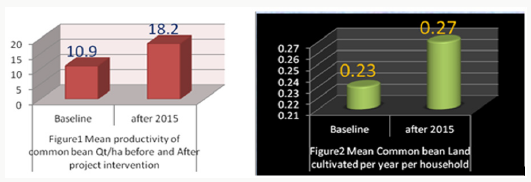
In the last five project intervention years, ORTDP has addressed 1357 resource poor households with improved common bean dissemination, especially for farmers who unable to access improved seeds and had smaller land (farmers their landholding less than 0.25ha). Through revolving seed, more than 1160 households have benefited. Totally, 2517 households are benefited by direct provision and revolving of improved common bean seeds. The project has provided 241 quintals of four improved common bean varieties (hawassa dume, Nasir, wajo and tatu) and popularized on 591 hectare of land throughout the project intervention years. These varieties have been successfully promoted in all woredas using cluster-based approaches accompanying with practical agronomic practice training and its related input as a package. Participatory technology dissemination method and cluster approach was a key element of the implementation of this project. The study in line with Bassa et al. [4], which confirmed enabling poor farmers to use full packages of agriculture through direct provision, capacity building, awareness creation and sustainable supporting the extension system promotes agricultural productivity there by enable the small-scale farmers to be in position of food security and build assed (Figure 1).

Figure 1: Mean Productivity of common bean Qt/ha before and After project intervention.

Lupinepublishers-openaccess-Agriculture

Improved Productivity

Based on the suitability and agro-ecological adaptability of crops ORTDP has disseminated different crop varieties for beneficiaries. While the project proposes four common bean varieties for demonstration, the primary criterion was its contribution to increase of productivity of common bean. The advantages of theses common bean varieties include their high yield potential, early maturity, and nutritional values. Midterm impact evaluation revealed that yields of common bean have increased by 66% twofold over 4-years period among beneficiaries in comparison to a 30% increase of mean yield for non-beneficiaries. The increase in productivity mainly attributed the higher productivity of new varieties, slight increase of common bean cultivated land by beneficiaries, and the application of fertilizer (NPS) for common bean, which was uncommon among many farmers in many project woredas. The survey report also indicates that 10% increase in average annual cultivated land per household for common bean (Figure 2).

Figure 2: Mean Common bean Land cultivated per year per household.

Lupinepublishers-openaccess-Agriculture

Food and Nutrition Security

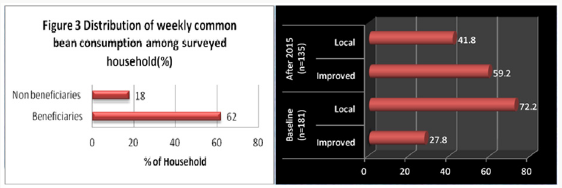
Increased production has also led to significant improvement in food security and nutrition. As survey report in Figure 3, over 62% of project beneficiary household consume common bean at least once in a week while only 18.8% of non-beneficiary household consume common bean at least once in a week. Consumption of common beans was much more prevalent in among beneficiaries, while lesser extent among non-beneficiaries. This indicates that project beneficiaries tend to produce more for food than cash. Through their consumption household can have food nutrients like protein and iron that common bean contains. Caution needs to be taken in interpreting these nutritional results. While it reveal some interesting trends on contribution to nutrition, what is not mean that household access all required food items that meets the nutritional security standards (amount of killo calories per day/week). The data to what extent reflects the availability and access of common bean, which rich in nutrition through their own production. This also have a significant contribution to food security with many nutritional benefits, as it is rich in protein, iron, zinc, and dietary fibre. These constituents contributed to the improvement in food and nutrition and the common bean acceptance by farmers.

Figure 3: Distribution of weekly common bean among surveyed household(%).

Lupinepublishers-openaccess-Agriculture

Improved Income

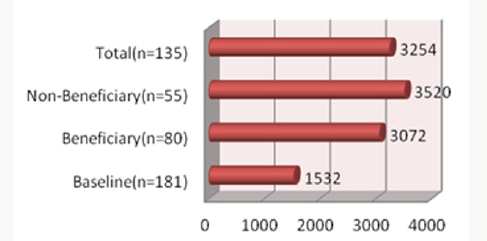
Farmers in all woreda use common bean both for cash generation and for home consumption although the majority use for cash. Common bean is grown in both production seasons; belg and meher seasons with the main growing season being belg. Farmers are in great need of cash for the meher season especially wheat and teff producing woreda to buy agricultural inputs like fertilizer and seed. The yield of the new varieties is about two times those of local bean and generated an additional income for household. Therefore, common bean is strategic cash crop, which fulfils the immediate cash demand for input purchase. Moreover these, its short production period, legumness and related soil fertility improvement characteristics increased, and erratic rain fall and relatively less susceptibility to weather change increased the demand of common bean production maximization year to year. During interviewees farmers mentioned that most of the common bean produced during, Belg season is sold to generate income. As indicated in the baseline report, crop income for farmers in SNNPR ORTDP project woreda comes from sale of cereals such as wheat, teff, and sorghum, and during the survey time, the annual income from cereals was 1532 ETB (ORTDP baseline survey report, 2012). After four years of project implementation, the annual mean cash income obtained only from sale of common bean for both project beneficiaries and non-beneficiaries reaches over 3,254 birr per household (Figure 4). The actual mean annual cash income for non-beneficiaries is higher for beneficiaries; this is because when compared to beneficiaries, non-beneficiaries sold more of what they produced.

Figure 4: Mean annual income of households from common bean after intervention in Birr.

Lupinepublishers-openaccess-Agriculture

Technology Adoption

The common bean varieties disseminated by the project were evaluated against the local variety by using 13 criteria. More than 59% farmers in the survey districts evaluated Nasir and Hawassa Dume by seed emergence, suitability for inter cropping, seed size, seed color, early maturity, yield, taste, and marketability. Over all rank calculated shows that Nasir and Hawassa Dume have first preference by farmers in the all project location. Both the local and new varieties have the same market demand as they have the same color. Trends on planting of improved common bean varieties in project woredas during base lines ranged from 10% to 50% with mean value 27.8%. After four years of intervention, trends on use those common bean varieties has become 59.2%. Three different successful aspects of the new bean varieties were identified by farmers during the survey: improved taste, higher productivity, and market-preferred attributes reported among both beneficiaries and non-beneficiaries. In addition, drought tolerant and early maturity aspects of varieties has also contributed to the better adoption not only project kebele but also in neighboring kebeles. As this was one of the outputs of the operational research programme, and 60% of households included in the survey were programme participants, it suggests more work has to be done through regular extension in disseminating and promoting of those improved common bean varieties among non-beneficiary household.

Drivers to Success

As it described in section 2.1 higher productivity, marketability, and compatibility with the color preference of farmers were the main drivers for the successful dissemination of those common bean varieties. Beside this, the project full package approach enables poorest to increase their productivity using fertilizer as a package. The use of fertilizer for the common bean especially NPS were uncommon in most project woredas and the project has tried to demonstrate the yield difference using NPS fertilizer. Moreover, the project’s cluster-based technology dissemination and transfer approach played a significant role to easily diffusion of knowledge and practice from one cluster to the other and created a critical mass on disseminated technologies.

Challenges

Despite the significant contribution of common bean for food security, income and nutrition challenges are remaining. Farmers reported that the susceptibility to disease and pest and less tolerant to flood and heavy rainfall and management problem especially improper application of fertilizer. The significant number of farmers reported that they have not applied fertilizer mainly NPS as recommended rate.

Opportunities for Further Scaling Up

As indicated above in section 2.4, high productivity, early maturity, its color acceptability, its taste, suitability for intercropping and marketability played a significant contribution for the successful popularization and adoption of common bean varieties disseminated in project woreda as well as beyond project area. Beside this the ever-increasing market demand on common bean, availability of seed at local level, availability of organized seed and marketing system and availability of diverse agro-ecology that suitable for cultivate common bean in the region was the major opportunities to further scale up the common bean technologies in the region.

Key Lesson and Recommendation

The interventions in agricultural research and dissemination have been strong components in strategies to promote sustainable agricultural development. Previously the technology dissemination approaches were focused on strengthening the productivity aspects of the technologies. Currently the project has disseminated the common bean varieties focused demand of farmers. The project considers the multi-benefits and interactions of common bean technologies disseminated with interest and demands of farmers for technologies. In all project woreda, farmers give equal priority for income generating potential of technology as productivity potential. Therefore, common bean technologies disseminated by the project has great demand by the community for food consumption as well as for income source and is a major crop in the area. A technology, which has great demand by beneficiaries, have multi-benefit and agro-ecologically suitable, ultimately leads to success. The varieties distributed by the project fulfill most of farmers’ interest and their production objectives and that is why it became successful.

Therefore, the food and income security of poorest and marginalized people could be enhanced through accessing poorest household for demand driven better yielding and high valued agricultural technologies. Moreover, the project’s cluster based technology dissemination and transfer approach played a significant role to easily diffusion of knowledge and practice from one cluster to the other and created a critical mass on disseminated common bean technologies. This approach can bridge the research with extension in more interlinked way and accelerate technology transfer between farmers. In addition, most of farmers prefers to plant common bean as intercropping rather than mono cropping. Their preference varies with the primary objective of farmers. Farmers whose primary objective is for household consumption and have land shortage tends to cultivate as intercropping while farmers with their primary objective for cash tends to cultivate as mono-cropping. Intercropping production of common bean among households having less than 0.25ha is more advantageous over mono cropping cultivation.

Generally, it can be concluded that farmers demand driven technology dissemination can lead to accelerated technology adoption and knowledge transfer. Dissemination of any research outputs or technologies likes common bean to address multi-fated problem of resource poor farmers can be successful if it considers the primary production interest or objectives of poor farmers and the multi-benefit potential of the technologies. In addition, it was recommended that the greater use of research or technology for income generation might have the greater contribution to speed up improvement of livelihood of resource poor farmers and adoption of the technologies.

Acknowledgement

The research teams provide acknowledgements and own great appreciation on Ireland Embassy, All Ireland people and its Irish Aid department of foreign affairs for financial support of project implementation and case study successful accomplishment, Addis Ababa, Ethiopia and Southern Agricultural Research Institute and Areka Agricultural Research center for supporting in implementation.


Read More Lupine Publishers Agriculture Journal Article:

Friday, 15 January 2021

Lupine Publishers | Varied clinical and Oral Presentation of Beckwith – Wiedemann Syndrome - Report of a Case from Saudi Arabia

 Lupine Publishers | Journal of Pediatric Dentistry


Abstract

Beckwith – Wiedemann syndrome is congenital, genetic and epigenetic pathologies with low prevalence and diverse clinical presentations. It is characterized by triad of omphalocele, macroglossia and gigantism. This syndrome has been widely studied with a current emphasis on improvement of prenatal diagnostic techniques and a multidisciplinary approach towards treatment. We report a case of BWS from Saudi Arabia, with unique presentations and misleading history which delayed diagnosis, due to cultural and religion constraints.

Keywords:Congenital; Epigenetic; Genetic; Prenatal

Introduction

Genetic and epigenetic changes or a human genomic imprinting disorder is characterized by phenotypic variability which might shows its occurrence either as sporadic or inherited. The pathology presents wide range of effect on psychological and social wellbeing of patients and families. One such congenital, multigenic, multisystem human genomic imprinting disorder with complex molecular etiology and variable complex phenotype is Beckwith – Wiedemann Syndrome (BWS). Beckwith-Wiedemann Syndrome is most common overgrowth syndrome described by Beckwith in 1963 and Wiedemann in 1964 with similar findings. It is rare congenital deformity with low prevalence but at same time have high prevalence within genetic abnormalities of overgrowth [1]. The presentation of triad features of omphalocele (exomphalos), macroglossia and gigantism was described earlier as EMG syndrome which now is referred as Beckwith – Widemann Syndrome. The incidence of BWS reported is approximately 1:13700 births and the major cause is thought till date is genetic and epigenetic defects within the chromosome 11p15.5 regions [2].

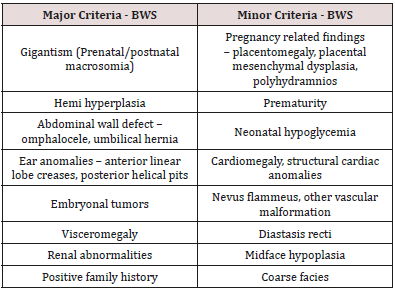
BWS presents wide array of clinical manifestations such as congenital abdominal wall defects as hernia (exomphalos), gigantism, macroglossia, nevus flammeus, ear pits/hearing loss, midface hypoplasia, cardiac anomalies, hemihypertrophy, genitourinary anomalies and musculoskeletal abnormalities. To standardize the diagnostic criteria various attempts have been made to classify the major and minor criteria. Elliot et al described the diagnosis of BWS with the presence of either three major features (abdominal wall defect, macroglossia, gigantism) or two major and three minor features (ear pits, nevus flammeus, hemi hyperplasia, nephromegaly, neonatal hypoglycemia) [3]. In spite of diverse clinical presentations of BWS, most of the cases do not show characteristic features at birth but develop later in life. Also, children with BWS have significantly increased risk of cancer during early childhood which need strict follow up and monitoring. Here, we present a case of BWS with unique dental and medical presentation and its differential diagnosis with literature review.

Case Report

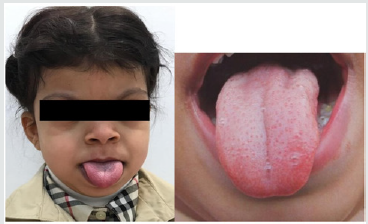
A 5-year-old female patient, accompanied by her mother, presented to the dental unit with complaint of decay tooth in upper front region of mouth. Extra oral examination revealed dysmorphic features, coarse facies and developmental problems (Figure 1). Intra oral examination of hard tissue showed high arched palate, decayed teeth in relation to 51, 52, 55, 61, 62, 74, 75, 84,85. Oral soft tissue examination revealed macroglossia, enlargement of fungiform papillae and mild loss of filiform papillae (Figure 2). Speech and feeding difficulty were noticed due to macroglossia. History revealed she is the youngest 7th child born out of consanguineous marriage in 30th week by cesarian section. She has a chronic history of constipation for 9 months of age. She passes hard stool once in every 8 to 10 days, by spending long time in washroom. It is associated with decrease in appetite and abdominal pain. She was given Movicol (half the adult dose) twice a day for constipation without any medical prescription. She was also tried with lactulose, glycerin suppository and mineral oil. Under medical supervision fleet enema and contrast enema were performed to relieve constipation and to rule out Hirschsprung disease.

Figure 1: Photograph showing dysmorphic features and hypertelorism.

Lupinepublishers-openaccess-pediatric-dentistry-journal

Figure 2: Macroglossia with enlarged fungiform papillae and loss of filiform papillae.

Lupinepublishers-openaccess-pediatric-dentistry-journal

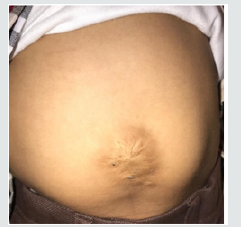
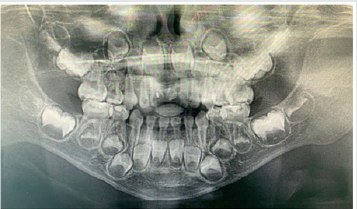
Other medical findings noticed omphalocele, ear pits, large child at 90th centiles, large rounded eyes with hypertelorism, abdominal soft lax, enlargement of kidney, distention of left renal pelvis with significantly distended urinary bladder, abnormal anatomy of the colon located in left abdomen and partial colonic non – rotation with no evidence of obstruction (Figure 3). Based on the clinical and past medical history a diagnosis of Beckwith – Wiedemann Syndrome (BWS) was made. Series of laboratory investigation were reviewed which presented negative urine examination, alpha – fetoprotein, karyotype, microarray and methylation analysis for BMS. Patient was advised for gene analysis and targeting testing for parents. The gene analysis of CDKN1C gene showed heterozygous alteration consistent with BWS but targeting gene tests were refused by parents. Panoramic radiograph was advised considering the patient chief complaint, which revealed multiple developing permanent tooth buds, protrusion of anterior teeth, open bite and increase in mandibular dimension (Figure 4). Under preventive measures the patient was treated for the decayed teeth and is under follow up from past 6 months.

Figure 3: Photograph showing abdominal wall defect with surgical scar.

Lupinepublishers-openaccess-pediatric-dentistry-journal

Figure 4: Panaromic radiograph showing multiple developing permanent tooth buds, open bite and increased mandibular dimension.

Lupinepublishers-openaccess-pediatric-dentistry-journal

Discussion

Diagnostic criteria for BWS is still a matter of research due to its varied clinical presentations and overlapping features with other various conditions. The presence of major and minor findings is generally helpful in establishing the clinical diagnosis (Table 1). The oral findings as mentioned in the literature and observed in our case has been tabulated in Table 2 [4,5]. The incidence of BWS is difficult to assess in Saudi Arabia, as most of the cases goes undiagnosed and unnoticed. Also attributed to its diverse clinical presentation and difficulty in diagnosing. In the present case, features of macroglossia, macrosomia, omphalocele, abdominal wall defect (treated immediately after birth and surgical scar observed clinically), Renal involvement, ear crease, high arched palate, open bite and increased mandibular dimension, leads to the diagnosis of BWS. Various molecular mechanisms and alterations have been involved in BWS such as abnormal methylation of H19DMR, loss of imprinting of IGF2, chromosomal rearrangements, loss of imprinting of LIT1, uniparental disomy of 11p15 and CDKN1C mutations [2]. The full gene analysis of CDKN1C gene profile were suggestive of BWS in our case and the alteration is thought to be located in the allele inherited from the mother. Parental testing was advised which was refused by the parents. There are various endocrine and overgrowth syndromes that was considered in the differential diagnosis. These included Simpson-Golabi-Behmel syndrome (mutation in X-linked gene, GPC3), Perlman syndrome (Increased risk of neonatal mortality), Costello syndrome (missense mutation in HRAS), Sotos syndrome (Mutation in NSD1) and Mucopolysaccharidosis type IV (lysosomal storage disorder) [6]. Oral findings like macroglossia of BWS needs differentiation from other lesions like lymphangioma, idiopathic muscular hypertrophy, hemangioma, rabdomyomas, amyloidosis, cretinism and acromegaly.

Table 1: Presenting major and minor features of BWS.

lupinepublishers-openaccess-pediatric-dentistry-journal

Table 2: Oral findings of BWS.

lupinepublishers-openaccess-pediatric-dentistry-journal

The overall risk of BWS for tumor development/malignancies is estimated to range from 4 – 21%. The tumors reported with BWS are mainly embryonal tumors such as Wilms tumor, hepatoblastoma, rabdomyosarcoma, adrenocortical carcinoma and neuroblastoma [7]. The prenatal diagnosis with current technology is increasing representing an important tool to determine some features of BWS before birth. In our case, parents were highly orthodox and refuse to share the detailed prenatal and ultrasonic reports. Few misguided information’s were given by mother which was later clarified with the reports from the subsequent medical hospitals. Patient’s parents were advised for periodic follow up with genetic counselling and the possibility of surgical interventions in the medical units, but they refused to follow and changed the hospitals every time. Hence, an effort was put forward to retrieve the information’s related to the patient while giving her the primary treatment for which she reported to our dental unit. This suggest the need of awareness required in the country like Saudi Arabia, where most of the cases goes unreported/unnoticed or parent’ consent not given or the cultural and religion barriers that prevent reporting such cases. Though the patient was treated with dental fillings, the follow up of the patients is been restricted by the family members.

Conclusion

Beckwith – Wiedemann Syndrome patients usually grow and do well despite being at increased risk of childhood cancer. Hence, strict follow up, awareness of parents and cancer screening is mandatory. Families, physicians and dentists should determine screening schedule including abdominal ultrasound in every three months, blood test to measure alpha-fetoprotein in every six weeks, dental check-up in every six months and other symptomatic treatment schedule as and when required.

Read More Lupine Publishers Pediatric Dentistry Journal Articles:
https://lupine-publishers-pediatric-dentistry.blogspot.com/

Lupine Publishers | Endoscopic Recording (or its Absence): A Disappointment

 Lupine Publishers | Journal of Otolaryngology


Short Communication

One of the advantages of being old and seeing science and clinical practice advance is that as time passes, we can observe those things that succeed and those that fail if we are perfectly honest in our assessments. Moreover, we can determine if practices we thought were transferable to our colleagues simply by describing them in the literature have often proven to be false hopes that leave us scratching our heads in order to determine just what went wrong. Such is the case with endoscopic procedures designed to assess the upper airway anatomy and physiology [1]. Between the two of us, we have more than 75 years of combined experience with flexible fiberoptic nasopharyngoscopy of the upper airway, literally thousands of cases examined both individually and together, and between us, we have published approximately 200 articles, chapters and books that directly or indirectly report on the use of flexible fiberoptic nasopharyngoscopy in people with upper airway disorders, respiratory obstruction, speech disorders, and voice disorders. In other words, time has afforded us the opportunity to see the application of endoscopic procedures from their beginnings to the current state of the art practice [2,3]. What we see disturbs us mightily.

The first author was introduced to endoscopic procedures for assessing velopharyngeal insufficiency in 1974 when he met and became familiar with the work of two pioneers in imaging procedures who were on opposite ends of the planet, specifically the United Kingdom and Japan. Ron Pigott, a plastic surgeon at Frenchay Hospital in Bristol, UK, and Tadashi Miyazaki, head of the Department of Maxillofacial Surgery at Osaka University Dental School in Japan published and presented papers in the late 1960s and early 1970s describing the application of nasopharyngoscopy to assess velopharyngeal closure [4]. Mr. Pigott published papers describing the use of both flexible fiberoptic endoscopes and rigid endoscopes in 1969. Dr. Miyazaki and his colleagues, Drs. Matsuya and Yamaoka, described the use of a side-viewing flexible fiberoptic endoscope of what at that time was a narrow diameter just above 3mm. We were introduced to narrow diameter endviewing pediatric fiberoptic endoscopes several years later and immediately applied them in day-to-day clinical use and research, both for children and adults. With flexible nasopharyngoscopy applicable to assessing speech, voice, respiration, and swallowing being available in the Americas since the 1970s, the market for the instruments expanded dramatically and smaller, narrow diameter endoscopes with improved optics and light transmission characteristics were rapidly developed by a number of companies. The introduction of recording the examinations with video were introduced by both the team in Osaka and Mr. Pigott in Bristol nearly simultaneously. In our own institutions, the ability to record the examinations and share them with our interdisciplinary cleft palate teams advanced our treatment techniques dramatically and increased a transdisciplinary appreciation for the complexity of normal speech production.

Today, flexible fiberoptic nasopharynges laryngoscopes are ubiquitous in the offices of otolaryngologists worldwide. High definition video/sound recordings are easy to accomplish and should be inexpensive and easy, whether equipment is purchased as a package from commercial medical instrument companies or rigged by clinicians who have some knowledge of digital recording of endoscopic images. The process is not difficult. Because the information is used often in the assessment of speech and vocal production, the recording of speech synchronous to the video recording is essential. Data storage is inexpensive with digital recording devices storing four terabytes of information available for as little as $100. Four terabytes provide even busy clinicians enough storage space for years. Nonetheless, many clinicians do not record office endoscopies, or they record video without sound thereby rendering later review impossible. Modern computer equipment is the perfect platform for recording endoscopic studies with sound and high quality (high definition video with 1080p or higher resolution) digital images. The first author on this paper put together his own system consisting of a Mac computer (any Mac computer would do) with video recording software (lowest price would be approximately $1,000), an endoscopic video camera (available for approximately $1500 and higher), a microphone ($50) and digital storage ($100). Thus, an entire system to allow recording and storage of digital video and sound would be well under $3,000, the cost of which would be amortized within a very short period.

Why would it be essential to record endoscopic examinations? That the question has to be asked is disappointing. Let’s develop an imaginary scenario. You, the reader, have a complaint of difficulty catching your breath, coughing frequently, a fever, and malaise. The doctor who sees you thinks that you may have pneumonia, so the doctor orders a radiographic procedure to look at your lungs. The doctor does a fluoroscopy but does not record it or print a picture from the study. You go to a second doctor who believes you simply have a severe allergic reaction to pollen and wonders why the other doctor thought you had pneumonia. The second asks the first doctor for copies of the x-ray study. The first doctor says, “I didn’t put it on film, but I saw evidence of pneumonia.” The second doctor indicates his displeasure because the first doctor’s findings disagree with the second doctor’s. Would you trust a verbal report of a radiographic procedure that only one person has seen? A rhetorical question, I hope. Moreover, the interpretation of endoscopic studies is variable leading to possible false positive/ negative findings affecting treatment recommendations. If not recorded, the value of the study is questionable. Reviewing 1,525 consecutive nasopharyngoscopic examinations with recorded video and sound resulted in 598 surgical recommendations including velopharyngeal reconstruction, adenoidectomy, and/ or tonsillectomy and surgical airway management. In all cases, surgery was based on review of recorded studies by the surgeon and endoscopist, and often by other clinicians and students. In a subset of 200 consecutive reviewed by three or more clinicians, we found that interpretation disagreements occurred in 48% of cases. Disagreements were relevant to treatment decisions in 94%. Group reviews eventually resulted in consensus agreement. Efficacy was measured by surgical outcomes for velopharyngeal insufficiency and obstructive airway procedures (94% and 95% respectively). Because we currently consult on cases from the U.S. and overseas, we often request copies of endoscopic videos; 296 requests have been made since 2012, 221 from the US, 75 from Europe Of these, 48% from the U.S. and 39% from overseas had available video recordings with less than one-third of the videos having sound [5]. The inability to review completed studies may lead to treatment error, unacceptable for any imaging procedure. It is time that clinicians stop doing imaging procedures that cannot be reviewed by more than one person. An endoscopic study without video and sound recording is archaic, inadequate, and not to be trusted.

Read More Lupine Publishers Otolaryngology Journal Articles:
https://lupine-publishers-otolaryngology.blogspot.com/

Tuesday, 12 January 2021

Lupine Publishers | Integrated Pest Management for Rodent in Buildings

  Lupine Publishers | Current Investigations in Agriculture and Current Research

Abstract

The objectives of the study are to provide an integrated control program for rodents in buildings and to clarify the most important preventive methods that can be used in the control process and to make some important observations when the application of control methods such as mechanical control, biological and chemical to get the best anti-rodent program inside buildings.

Keywords: Integrated Control Program; Preventive Methods; Control Process; Anti Rodent

Introduction

Rats and mice can be a major pest problem in buildings. They damage food, books, documents, and clothing. Damage to a structure occurs when rats and mice gnaw on structural components, including wiring, wood, and plastics. The gnawing on wire insulation can result in electrical shorts and fires. Rodents have also been implicated in the spread of dangerous human diseases. In short, structural risks, health risks, and a general lowering of environmental quality accompany any rodent infestation. All rodents require food, shelter, and water. The shelter provides protection from predators, inclement weather, and a favorable place to bear and rear their young. Although rodents require water, those water requirements vary greatly by species. Because rodent food and cover (i.e., vegetation) can be influenced by human activities, there has been considerable development of strategies to reduce populations and damage by manipulating vegetation [1].

Follow the tips in the sections below and you will be one step closer to keeping your home permanently free of rats and mice (SRC)

Preventive Methods

The most important steps in controlling rodents are preventive methods because prevention is better than control. The following means:

a) Healthy buildings should be constructed to prevent the entry of mice and rats.

c) Repair / seal any cracks or holes small diameter or inch or larger in the foundation, walls.

d) Repair broken windows and doors - Make sure that the door seals are tight for any inhabited buildings.

e) Place the wire on all building windows.

f) All edible foods (lunch and snacks) will be stored in rodent-resistant containers and not in office drawers.

g) Cracked or unusual food will be cleaned and removed from the intake area at the end of each day.

h) Garbage containers are emptied in the dining areas daily or have narrow blankets.

i) There will be no garbage dumps in the uninhabited buildings.

j) The external garbage areas will remain clean and devoid of organic debris on the ground.

k) Remove rodent attractions such as food or shelter by ensuring that the food is stored safely and that the surrounding environment is clean.

l) Rinse food and beverage containers before disposing or recycling.

l) Rinse food and beverage containers before disposing or recycling.

n) Keep firewood away from the ground and away from structures as much as possible to mitigate shelter opportunities.

o) Fruit trees will be free of fruit that has fallen to the ground during summer and fall.

p) Birds, squirrels and other wildlife will not be fed within 200 feet of any building in the province.

q) Prevent the entry of animals into warehouses and houses.

r) Keep stove tops clean and free of food scraps.

s) Separate your home from paper, fabric, and any similar materials that attract rodents to nest.

4. Methods of Treatment

Mechanical Control

Using Traps

Using traps instead of rodent poisons gives you clear confirmation of a captured rodent and allows you to better gauge the effectiveness of treatment. You are also able to dispose of rodents immediately rather than dealing with the foul odor of rotting carcasses from poisoned rodents inside your walls or otherwise out of reach. Most important, using traps allows you to avoid rodenticides, which pose a greater threat of exposure to children, pets, and non-target wildlife, including natural predators (SRC).

Traps Description

i. Live Animal Trap: This is a catch and release system that avoids killing a rat or mouse. Some states prohibit releasing rodents into the wild. The Center for Disease Control (CDC) warns that captured rats or mice might urinate and increase risk of spreading disease. Muhammad Sarwar (2015)

ii. Snap Trap: This is the oldest type of trap and uses a springloaded bar to kill a rodent on contact. Some modern snap traps prevent risk to children and pets by enclosing the device in a plastic box.

iii. Multiple Catch Live Mouse Trap: This is a catch and release system that allows for capture of multiple mice.

iv. Glue Trap: Glue traps are not recommended because the adhesive plate that is used to capture rodents can also trap birds, baby animals, lizards, and even pets. These traps also cause undue suffering to rodents. The CDC warns that captured rats or mice might urinate and increase the risk of spreading disease. Enclosure boxes are plastic boxes that can fit a single snap trap, sometimes more, to provide an additional layer of protection for kids and pets. These boxes also hide the dead rodent, making for easier disposal of rodent, and can be re-used (SRC)

v. Electronic Trap: This battery-powered trap delivers an electric shock that kills rodents quickly. This is a newer type of trap, and models are available for both rats and mice.

vi. Important Notes:

a) Be sure to place traps in locations where children and pets cannot access them or place traps in safety enclosure boxes.

b) Place the trap sideways next to the walls.

c) Do not place the trap continuously.

d) Wash the trap after the fishing process.

e) Remove rodents by using traps be cautious with live traps as rodents might urinate which increases the risk of spreading disease.

f) Use gloves when disposing of dead rodents, nests, or any nesting material.

g) Spray the dead rodent or nesting material with a disinfectant solution and allow them to soak for 5 minutes before disposing rodent or materials in a secure plastic bag.

g) Spray the dead rodent or nesting material with a disinfectant solution and allow them to soak for 5 minutes before disposing rodent or materials in a secure plastic bag.

i) Place the plastic bag with rodent or nesting material into another plastic bag along with any wipes or rags that were used to sanitize the surrounding area.

i) Place the plastic bag with rodent or nesting material into another plastic bag along with any wipes or rags that were used to sanitize the surrounding area.

Destruction of Burrows

Pruning both for adult trees or foliage with disposal of pruning products so as not to be a cache of mice to form a nest on these wastes.

Biological Control

Using Natural predators such as cats can help to control rodent populations by feeding on rats and mice. (SRC).

Chemical Control

Conditions to be Available Before Rodent Control

a) The control process should be carried out in case of the presence of mice or their effects.

a) The control process should be carried out in case of the presence of mice or their effects.

c) You should use bra-baiting so that avoidance of poison bait does not occur.

d) The control should be performed when the population density is as low as possible [3].

e) The food available should be as low as possible.

f) The control method varies depending on the location and food available.

g) You must use a bait different from the food available in the place.

h) Use attractants if necessary.

Using Rodenticides

Rodenticides consist of different types of poisons used to kill rodents. Rodenticide baits can be lethal for any mammal or bird that ingests them and are not only poisonous for rodents. As a result, all baits pose a high risk of poisoning for non-target animals that might eat the bait or consume a poisoned rat or mouse [4].

a) The use of rodenticides must be used with preventive measures such as gloves.

b) If you choose to use rodenticides, you should be ready to deal with these potential consequences:

c) Rodents are likely to die in locations where they cannot be retrieved

d) The smell of a dead animal will persist for several weeks to several months.

e) Always read and follow the label instructions on the pesticide product. The label is the law and you could be liable for any damage resulting from not following the label instructions.

f) Indoors, only place rodenticide bait stations in locations that are completely inaccessible to children and pets-inside walls, under heavy appliances, or in enclosed crawlspaces [5].

g) It is best to use anticoagulants because they are environmentally safe [6].

h) Passage on the bait’s stations in the early morning or before sunset.

i) The lids of all bait stations must be securely.

j) All bait stations should be numbered, and their location marked on a simple floor plan map.

k) Bait stations should be inspected during every service visit for monitoring purposes and to ensure stations are not providing harborage to non-target pests [7].

l) When dead mice must be disposed of quickly because they have dangerous external parasites.

m) Once all signs of rodents are gone, remove bait stations promptly by placing in a secure plastic bag. (UCDIO) [8].

Read More Lupine Publishers Agriculture Journal Article: