Showing posts with label nanomedicine research journal. Show all posts

Wednesday, 8 December 2021

Lupine Publishers| Determination of Heavy Metal Toxicity in Blood and Health Effect by AAS (Detection of Heavy Metals and its Toxicity in Human Blood)

 Lupine Publishers| Journal of Nanomedicine


Abstract

Metals like lead, copper, cadmium dispersed in environment. Heavy metals considered toxic. They have adverse and acute after effects on humans. These metals although have beneficial effect but hazards are pronounced. Level of heavy metals is increasing due to rapid industrialization and pollution. Toxicity of metals causes diseases and health issues among people. It is complicated to measure possible health risk of occupational persons. So detection of these metals in blood is important issue. Even at low amount intake of trace element can lead to health problems among people. Blood is directly influenced by toxicity when inhaled these metals from environment where existence of heavy metal is high. This presently, initiate to work on scientific detection of metals effect on human and health assessment. From study metals copper, cadmium, lead concentration in blood samples were found slightly above the recommended values. Cadmium concentration examined at moderate. Results predict the lowest and high concentration in whole blood of contacted HM group was (0.56–8.78ppm) and (.08 – 4.67ppm). Cadmium highest value among whole blood exposed samples range (.03 - .98 ppm). Range of copper in blood from table in whole blood is from (0.01 – 1.107ppm).In affected person’s blood samples metals found at greater level and related with contact period. Inhalation of fumes of metal in industrial places causes hazards.

Keywords: AAS, Copper, Cadmium, Lead, Whole Blood, Serum, Vaccutainer, Nitric Acid, Heavy Metals, Nitrification

Introduction

Irnius [1] worked on heavy metals copper, cadmium, and lead by using FAAS techniques. He proved that metals present in blood makes bond with blood and are hazardous for health. He compared the toxicity level and influence of theses metals on health. Tautkus [2] investigated metal concentration of cadmium, lead and cobalt in diseased persons by using AAS techniques. After centrifugation sample of blood were burned in furnace followed by nitrification. He concluded that these metal concentrations were under below limits because they were bonded with blood cells. These metals were present in different form. He also worked on presence of metal in blood cells and plasma. Ivanenko [3] analyze the trace metals in blood by using technique GFAAS. Samples were diluted only with 1:5 ratio .Digestion pretreatment was not performed. It consumes time and makes it possible to use in precise research. Trace elements in whole blood were determined by graphite furnace atomic absorption spectrometer. This technique is advance and modulated techniques which need no sample digestion before analysis this work illustrate the metal analysis by using only deionized water. As surface modified noble gases were used. Results of metal concentration were found precise. Blood samples were collected in vacum tube. This technique can be used for toxic metals investigation Ivanenko [4].

Blood estimation of thallium direct analysis by applying Zeeman absorption background. Digestion process of sample not necessary in this research .Five time dilution of samples with tritox was performed .0.2microg/liter was the limit of the estimation of thallium. The blood samples were directly entered into furnace of instrument these performed experiment give accurate result for whole blood samples analysis. Procedure is validated. This is conventional method for determination of heavy metal in blood samples. Level of trace metal in blood is in small amount in this study. Accuracy was achieved successfully. Kensova [5] used EDTAa indicator and metal lead coordination was studied in blood. Heavy metals are very toxic mostly lead present in plasma instead of whole blood. A minute amount cause cancer but results were still inconclusive. Limited data was also collected with changing metal. Cobalt instead of lead which is less harmful as metal mentioned above plasma sample were micro wave digested. After that these mixture were analyzed by using electrochemical atomization for determination of trace metals carbon electrode was used .multi instruments were used to estimate the blood plasma lead and found compatable.

Perumal [6] worked on lead and chromium in humans whom exposed to these metals mostly workers of industries. These metals were collected from different industries. Samples were washed digested and analyzed .The concentration of metal resulted high due to environmental issue or food intake and chemical industries .in this research scientist also observed that lead level is high in males instead of female. Concentration of heavy metal was different in different location of under observed area. Metal concentration found inverse relationship with age. Zhang [7] in this study lead and harmful metal cobalt was analyzed by using atomic absorption. The present study emphasize on heavy metal toxicity, effect on human health, beside this it also cover different analytical technique for metal detection, digestion method, and results of work of previous research workers.

Materials and Methods

Reagents and Solution

Analytical reagent grade HCl and HNO3 were procured from E. Merck Germany. Certified standard solution of copper, lead, cadmium was prepared. Fresh standard solution was prepared from stock solution whenever required in work. They were diluted with 5% HNO3 solution in distilled water. Blank solution were treated and prepared exactly in same way. Nitric acid HNO3 (perk grade 65%), Hydrogen peroxide H2O2 and De ionized water used was de ionized in all standard solution. Washing of all equipment was done by distilled water [8].

Apparatus

All glassware and apparatus used were cleaned by soaking in nitric acid before use. All working solution was prepared in deionized water. AAS model Varian AA 240 was used for blood samples analysis. Triplicate sample prepared to ensure the accurate results [9].

Specification of AAS

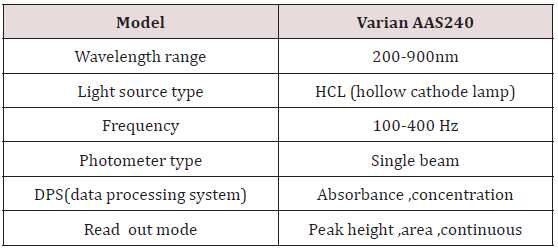
For precise work correct analytical procedure glassware used were high quality and were borosilicate Pyrex glass. Leaching effect of chemicals was not susceptible. Glassware used were of 50, 100, 250ml flasks, beakers, and pipettes, measuring cylinders. Calibrated apparatus were used Specification of AAS (Table 1).

Table 1: AAS specification detail.
Lupinepublishers-openaccess-Nanomedicine

Sample Selection

Criteria of selection of blood samples are cited below. There were different working places and common places of Lahore. The age was between 25-60yrs. Working duration period of exposure was noted. Freshly collected blood samples were analyzed. All blood samples from industrial or non industrial places followed by aseptic condition. Amount of blood sample was 5ml from forearm and kept in median cubital vein. Samples were divided in two parts first kept into the anti coagulated Vaccutainer and other 3ml collected in serum Vaccutainer.36 blood samples were collected from different places of Lahore mostly exposed and non exposed from heavy metals in November 2014 [10]. Blood were collected into phlebotomist from median cubital vein with sterilized disposable syringe . Ant coagulant was added for whole blood analysis and place in refrigerator.

Physical parameter determination of blood

Examination includes quantity of blood, age of blood taker, residential area, and contact time period of heavy metal acquision. Quantity of blood was equal for all samples .All samples were collected at same cite of persons [11-13].

Preservation of blood samples

After collection and examine the blood samples of persons blood samples were divided into two parts .First for analysis of total blood and other for serum. Centrifugation process separate blood and serum. Serum after adding de ionized water analyzed by instrument after digestion. For whole blood samples wet digestion apply before analysis. Blood samples before analysis were kept in freezer.

Digestion of samples

Different method of digestion are prescribed as pretreatment like dry digestion process, wet digestion procedure and microwave digestion process digestion in this work used is wet digestion for optimization. Wet digestion includes decomposition by acids carried out on hotplate. Same procedure can also be done in aluminum heating block, closed vessels at high P, with thermal heating. Took 5ml of sample in 100ml volumetric flask, followed by adding 10ml of nitric acid. Put it on hot plate for round about 2hr and allowed temperature to increase 160C.Continued boiling regularly for two hour to reduce volume .Filtration applied to samples by filter discs which were grade of 389 and blood samples kept allowed to cool. After completion of digestion add 10ml of hydrogen per oxide. At the end dilute it up to 50ml and filtered. Important parameters under investigation were acids volume, digestion time period, pre digestion period, temperature and also the amount of samples [14- 16].

Sample and standard solution preparation for analysis

Blood samples were prepared in two steps. Preparation of standards (Cu, Cd ,pb) was done followed by wet digestion and analysis of HM. Standards of different concentration for heavy metals prepared from SS (standard solution). There was correlation in standard and signal. Working standard produced by liquefy solution. After signal analysis graph was plotted. After all, concentration of unknown metal found by graph.

Result and Discussion

Standard calibration of metal

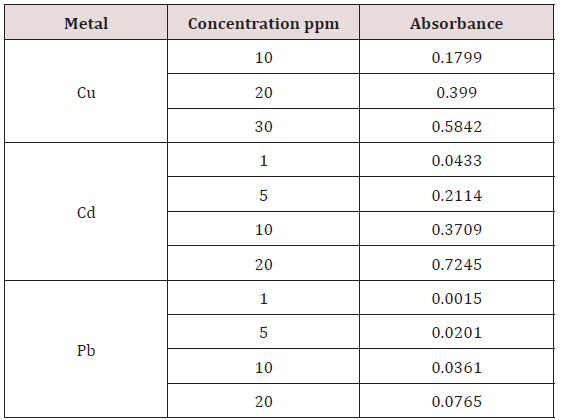
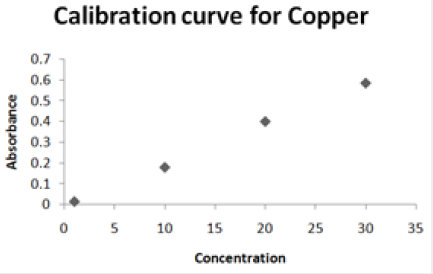
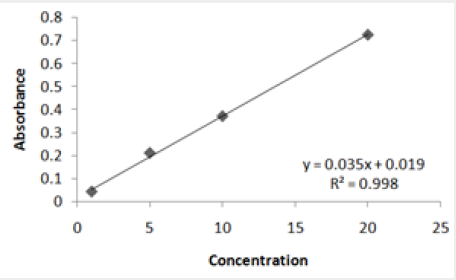
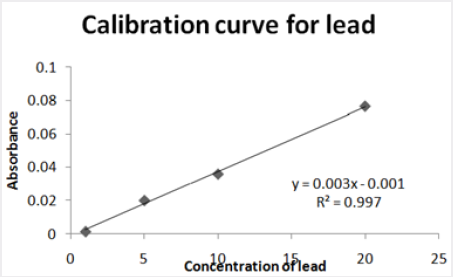
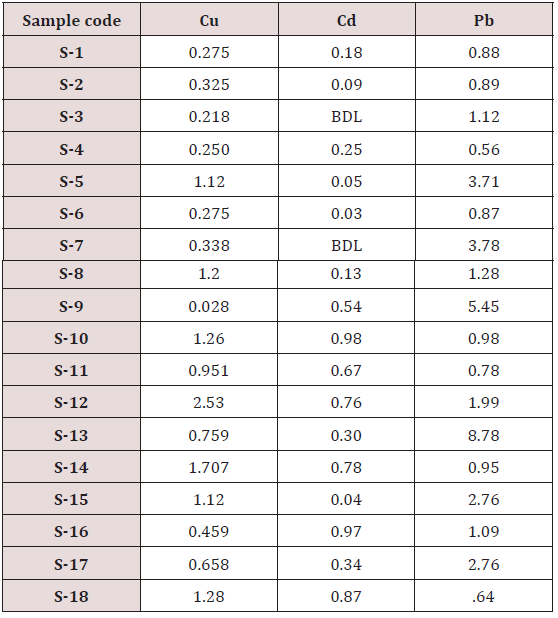
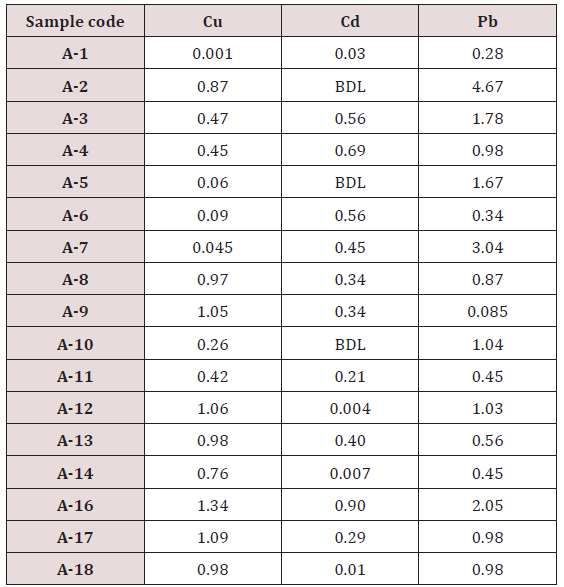
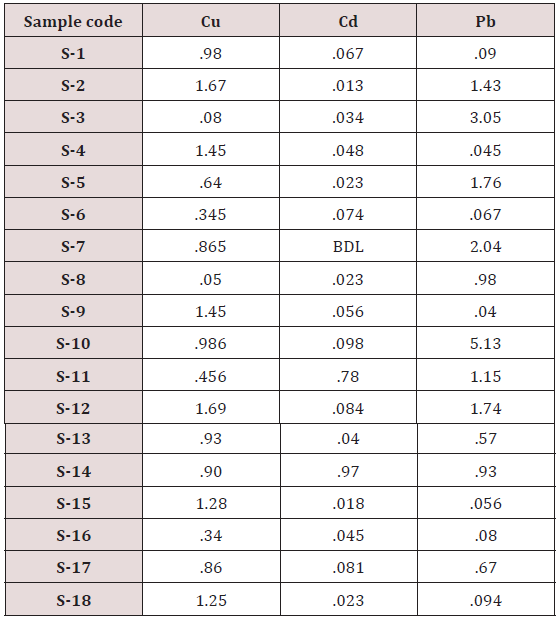
Absorbance of different concentration of metals is given below for calibration (Table 2) and (Figures 1-3). Calibration curve for Cu was straight line. Linear regression was shown to Y=0.019X-0.007 with R=0.998. Calibration curve for Cd was straight line .linear regression was shown to be Y=0.035-0.019 with R=0.998 while the calibration curve for Pb was straight line .linear regression curve was shown Y=0.003X-0.001 with R=0.997.Concentration of lead, cadmium, copper (mg/liter) in whole blood of exposed samples (Table 3). Concentration of lead, cadmium, copper (mg/liter) in whole blood of non exposed samples (Table 4). Concentration of copper, cadmium, leads in serum blood of exposed samples (Table 5). Concentration of copper, cadmium, lead in serum blood of non exposed samples Table 6.

Table 2: Absorbance of Cu, Cd and Pb.
Lupinepublishers-openaccess-Nanomedicine

Figure 1: Calibration curve of Cu metal.
Lupinepublishers-openaccessjournals-Nanotechnology-nanomedicine

Figure 2: Calibration curve of Cd metal.
Lupinepublishers-openaccessjournals-Nanotechnology-nanomedicine

Figure 3: Calibration curve of Pb metal.
Lupinepublishers-openaccessjournals-Nanotechnology-nanomedicine

Table 3: Concentration of Cu, Cd and Pb in WB-E samples.
Lupinepublishers-openaccess-Nanomedicine

Table 4: Concentration of Cu, Cd and Pb in WB-Ssamples./p>
Lupinepublishers-openaccess-Nanomedicine

Table 5: Concentration of Cu, Cd and Pb in S-E samples.
Lupinepublishers-openaccess-Nanomedicine

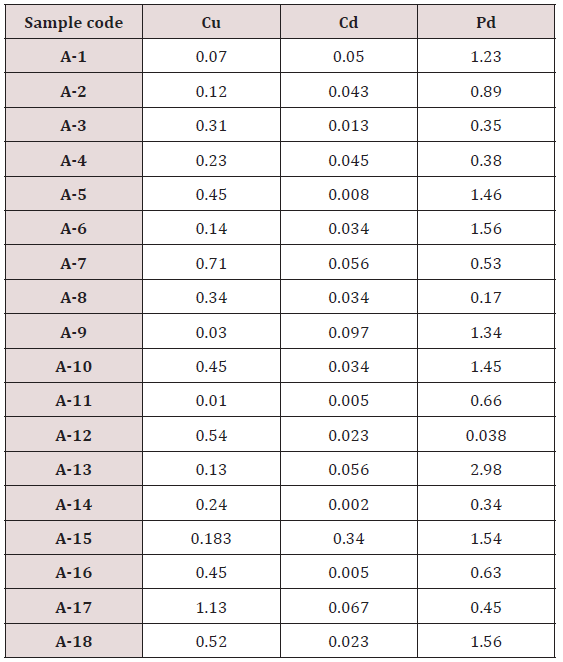
Table 6: Concentration of Cu, Cd and Pb in S-S samples.
Lupinepublishers-openaccess-Nanomedicine

Range of metal concentration in (mg/liter) in blood

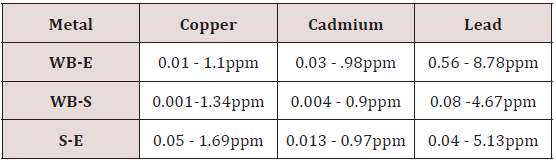
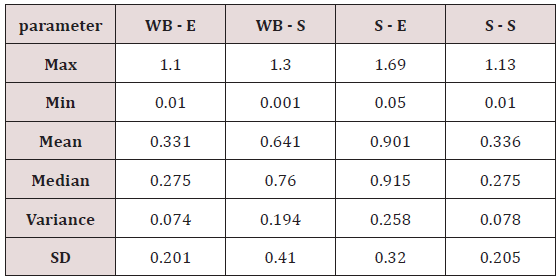
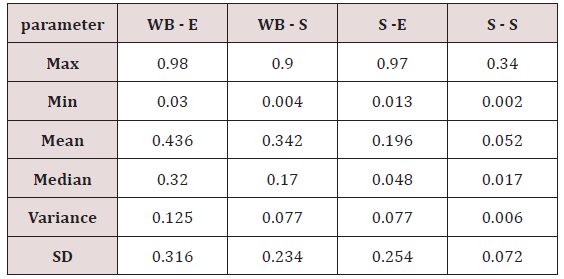
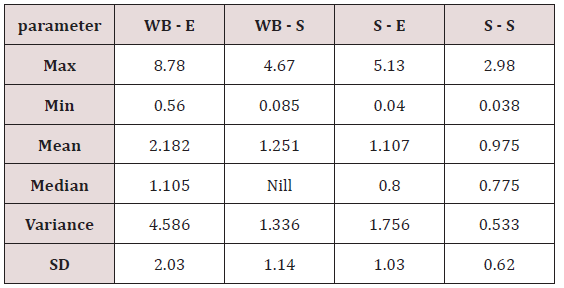
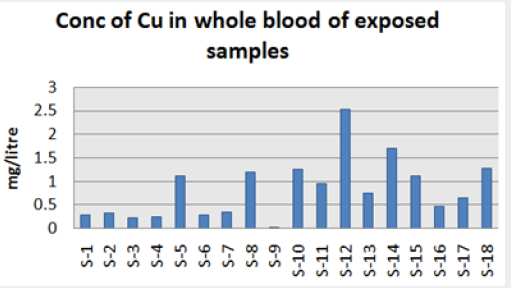
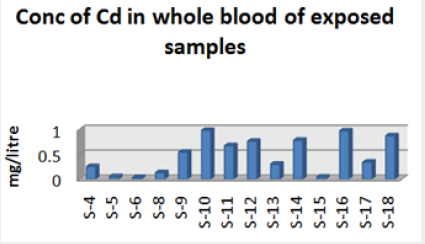
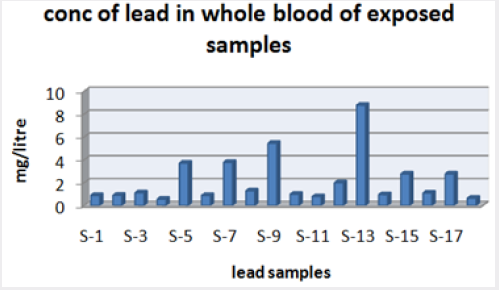
Maximum and minimum limit in blood samples was not regular. In whole blood exposed and not effected samples found increase lead metal. Copper and cadmium level moderate. There was not gradually fall or up in serum samples. Random range of copper, cadmium, lead is listed in table 7. Mean, median, maximum and minimum were calculated by statistical formulas. Mean was calculated as Mean = total sum all of blood samples/total no of blood samples. Variance was calculated by subtracting mean from individual reading and squares the resulted value. After that sum up all the square digits divided by n-1 no of blood samples. Standard deviation was calculated then taking square root of variance. Analyzed all the blood and serum samples statistically. Results after calculation are listed in (Tables 8-10) and (Figures 4-9). Study has shown that heavy toxic metals are increasing in exposed working people or persons directly in touch with toxicity.

Table 7: Concentration of Cu, Cd and Pb in WB-E samples.
Lupinepublishers-openaccess-Nanomedicine

Table 8: Statistical analysis of copper in blood samples.
Lupinepublishers-openaccess-Nanomedicine

Table 9: Statistical analysis of cadmium in blood samples.
Lupinepublishers-openaccess-Nanomedicine

Table 10: Statistical analysis of lead in blood samples.
Lupinepublishers-openaccess-Nanomedicine

Figure 4: Graphical representation of WB-E samples concentration of copper.
Lupinepublishers-openaccessjournals-Nanotechnology-nanomedicine

Figure 5: Graphical representation of WB-E samples concentration of cadmium.
Lupinepublishers-openaccessjournals-Nanotechnology-nanomedicine

Figure 6: Graphical representation of WB-E samples concentration of lead.
Lupinepublishers-openaccessjournals-Nanotechnology-nanomedicine

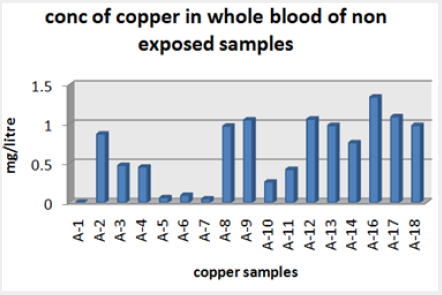
Figure 7: Graphical representation of WB-S samples concentration of copper.
Lupinepublishers-openaccessjournals-Nanotechnology-nanomedicine

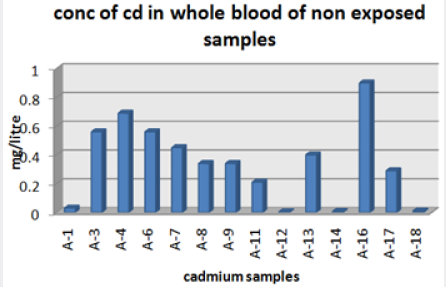
Figure 8: Graphical representation of WB-S samples concentration of cadmium.
Lupinepublishers-openaccessjournals-Nanotechnology-nanomedicine

Figure 9: Representation of WB-S samples concentration of lead.

Lupinepublishers-openaccessjournals-Nanotechnology-nanomedicine

A little bit different trend of metal existence in serum and whole blood was examined. Lead metal concentrate most in whole blood rather in serum. Cadmium and copper present in both in almost same amount. Lead and copper level observed high as compared to cadmium which was very low. There may be many other reason of high HM level in environment but we focus on working and common places use of these. Although level was not too much high in blood sample but toxicity effect are menacing. This study undertaken metal level in blood .Analysis of three prominent metals result shows level of increase trend is not parallel. Lead metal concentration high than copper and its amount comparatively higher then cadmium. All metals results show that elevation is above stated safe amount. Graphically comparison also performed. Blood serum and WB samples HM amount was not same. Study also reveals that elevation is positive influence by their working places. Exposed persons are in danger of toxicity. Moreover, exposed samples observed high values than general one. Furthermore it should be recognized good health and protection measures are required.

To Know More About Lupine Publishers Journal of Nanomedicine Please Click on Below Link:  https://lupine-publishers-nano-science.blogspot.com/

Monday, 14 June 2021

Lupine Publishers| Application of Nanotechnology for Phyto Constituents: Review

 Lupine Publishers| Archives of Nanomedicine: Open Access Journal (ANOAJ)


Introduction

Herbal medicines have been widely used around the world since ancient times. Medicinal plants are most effective when their active constituent reach at the site of action. Most of plant contains flavonoids, tannins, and terpenoids, which are hydrophilic and unable to cross the lipid membranes of the cells so poor absorption, results in less bio availability and efficacy hence need to take in high dose and frequency of dose also increases. If they are formulated using nanotechnology, due to nano ¬structured systems might be able to potentiate the action of plant extracts also reduce the required dose and side effects, and improving activity. Research has shown that use of nanotechnology and formulations like nano liposomes, nano emulsions, lipid nanocarries, phytosomes, micelles and poly (lactic-co-glycolic acid) (PLGA) nanoparticles beneficial in case of phyto constituent they increases the rate of absorption bio availability and result in better effect of herbal medicines [1-10].

The Techniques Commonly Used for the Formulation are:

a) High-pressure homogenization methods

b) Complex coacervation method

c) Co-precipitation method

d) Salting-out method

e) Nano precipitation method or solvent displacement method

f) Solvent emulsification-diffusion method

Types of Nano Pharmaceuticals

a) Polymeric nanoparticles

b) Solid lipid nanoparticles

c) Magnetic nanoparticles

d) Metal and inorganic nanoparticles

e) Quantum dots

f) Polymeric micelles

g) Phospholipids micelles

h) Colloidal nano-liposomes

i) Dendrimers

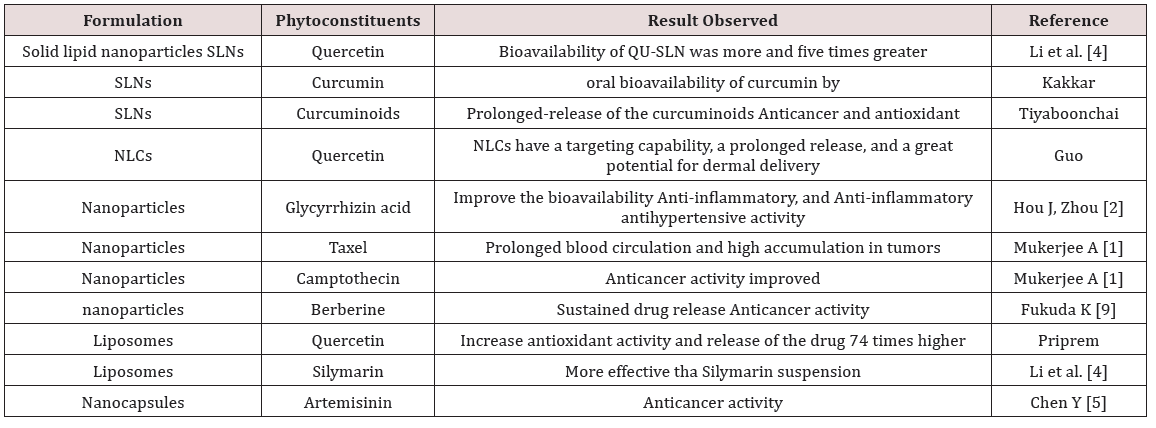
Table 1: Some examples of nano formulations related to phyto constituents.

Lupinepublishers-openaccess-Nanomedicine

Conclusion

Nanotechnology has potential future for enhancing the activity and overcoming problems associated with herbal medicines and phyto constituents Table 1. By applying nanotechnology principles it is possible to reduce the amount of drug to be loaded and hence prevent many dose-related adverse reactions. Several excellent phyto constituents have been successfully delivered using nanotechnology currently, not many products are available for clinical use, but looking at the amount of research activity happening in this field, the next few years many products being launched in the market for clinical use.

Read More About Lupine Publishers Archives of Nanomedicine: Open Access Journal (ANOAJ) Please Click on Below Link: https://lupine-publishers-nano-science.blogspot.com/


Wednesday, 7 April 2021

Lupine Publishers| Nano Toxicity: Due to Drug Delivery and Environmental Exposure

 Lupine Publishers| Archives of Nanomedicine: Open Access Journal


Abstract

Nanotechnology is undergoing a vast expansion in materials science, Research and Development. Nano scientists are focusing on synthesis and development of nanoparticles, nanomaterials, and bio nano composite materials. The drug delivery is also a recent development where in bio nano materials are being used for diagnosis of the various diseases. The synthesis of nanomaterials at large scale causes health risk due to the exposure via inhalation, skin contacts and ingestion; based on the characterisation of bio nano materials. The use of bio nanomaterials in drug delivery as well as the environment exposure during the large-scale synthesis of nanomaterials, the bio nanomaterials into human body.The exact mechanisms, chemical reactivity and enzymatic reaction is not well understood, documented, and studied. Therefore, the intake bio nanomaterials via drug delivery or environment exposure amounts to health risk and need to be studied in detail.

Introduction

Nanosciences and Nanotechnology is the study and use of nanomaterials falls in the range of 0.1nm to 100nm which corresponds to 0.2nm- water molecule, 7nm-haemoglobin, 10-100nm - virus, -1μm - microbial cells and >2μm - protozoa. The synthesized and developed nanoparticles, nanomaterials, and Bio nanomaterials are being used in various fields. The recent advances in the field of material sciences include the synthesis of Bio nano material for use in drug delivery. Bio nanotechnology companies are designing drugs for various diseases such as heart disease, kidney stones, and cancer cosmetic generic products using a short fragment of DNA as a new type of drugs. These drugs are assembled in nano chips and as nanoparticles for delivering into human body and are effective in using the sick/diseased and healing the injuries. Bio nano products are diverged as bio chip and Nano medicine, bio nanotechnology products which include Nano medicine, nano material, micro detectors, Nano sensors and herbal medicine [1].

Drug nano crystals are particles made from 100% drug; typically, surfactants or polymeric steric stabilizers stabilize them. These particles possess a 100% drug loading in contrast to matrix nanoparticles consisting of a polymeric matrix (polymeric nanoparticles or a lipidic matrix i.e. Nano emulsions, liposomes | or lipid nanoparticles. Thus, the high loading makes them very efficient in transporting drug to or into cells, reaching a sufficiently high therapeutic concentration for the pharmacological effect [4-8].

Health Risk

The scientific evidence demonstrates the potential for nano material to be toxic to the humans or the environment; therefore, synthesis of nanoparticles and bio nano composites and their use causes health risk due to intake – drug delivery and environment exposure that need to be studied before making the wider application of bio nanomaterials. The smaller a particle, the greater it’s surface area to volume ratio and the higher its chemical reactivity and biological activity. The extremely small size of nanomaterials also means that they are more rapidly taken up by the human body than larger sized particles. Nanomaterials can enter into the body through inhalation, ingestion or skin contacts. Nanomaterials are able to cross biological membranes and access cell tissues and organs. The greater chemical reactivity of nanomaterials results in increased production of reactive oxygen species, including free radicals. Reactive oxygen species and free radical product is one of the primary mechanisms of nanoparticles toxicity. Other properties of nanomaterials that influence toxicity include chemical composition, shape, surface structure, surface charge, aggregation and solubility and the presence or absence of functional groups of other chemicals [9-11].

Mode of entry of Nano particle:

The Nano particle ranges between 1nm to 100nm which can enter into the body through inhalation, skin contact and ingestion. The synthesis of nano particle at large scale will cause exposure through these routes.

a. Inhalation:

Inhalation is the most important route for the intake of airborne nano particle. Depending on the size, particles are trapped in mucous layer and alveoli. For nano particle the position is more complex. Particles of 1 micron diameter or more tend to be deposited, but only those less than 7.0 microns, deposit deep inside the lungs. Those more than 7.0 micron deposit in the conductive airways. Particles in size less than 0.1 micron deposit in the alveolus. Most of the particles between 0.1 and 0 micron size are exhaled. The pattern and depth of breathing and irritant effects of inhaled material may alter the deposition of particles and may remain permanently within the lung tissue.

b. Skin contact:

The large scale synthesis of nano particles in industry for wider application will cause exposure of nano particle through skin absorption; the penetration of nano particle through skin occurs via lipids and dissolved material. Lipid solubility and molecular size are the most important factors, so that higher lipid solubility and small molecular size enhance penetration through skin. Abrasion and irritation also encourage penetration. This route is particularly important for organic solvents and can occur in a number of ways.

(i) Direct absorption through wounds or abrasions.

(ii) Degreasing of the skin followed by absorption of the degreasing agents.

(iii) Degreasing of the skin allowing absorption of other chemicals.

(iv) Sensitisation, local and general.

b. Skin contact:

Ingestion of nano materials during the process of synthesis may result from the contaminated object into the mouth. Ingestion of toxic substance along with food in the workroom occurs where housekeeping is not good, or where workers are careless to nano particles in their clothes, or wash their hands with soap. If the toxic nano dust swallowed with food or saliva is not soluble in body fluids, it is eliminated directly through the intestinal tract. Toxic materials that are readily soluble in body fluids are absorbed in the digestive system and circulated by the blood. Compared with inhalation and skin absorption, ingestion, plays a minor role in the absorption of toxic materials in industries [2-3].

Toxicity of Nanomaterials

The intake of bio nanomaterials in human body undergoes biochemical mechanism and enzymatic interaction and height cause. Toxicity of nano particles depending on nature of chemical used for the synthesis, type of precursor, concentration of precursor, duration of exposure, personal susceptibility, and mode of entry, size of nano particle, environmental factors, and threshold limit value.

Conclusion

The drug delivery is one of the routes for treating diagnosis using the bio nano material. The exact fate of bio chemical reactivity, enzymatic interaction is not well understood and studied and might lead to toxicity similar to that of exposure of nano material through inhalation, skin contact and ingestion. Therefore, synthesis of nano particle, bio nano composite, their use and environmental exposure need to be studied before making the wider application for the diagnosis of disease using bio nano materials. The detail of physico chemical characteristics, stability of nanomaterials and their specification to target organs as human body system need data base scientific research.

Read More Lupine Publishers Archives of Nanomedicine Open Access Journal Please Click on Below Link https://lupine-publishers-nano-science.blogspot.com/

Tuesday, 28 May 2019

Nanomedicine open access journal- Lupine Publishers


Nanotechnology employs substances comprising particles of one to 100 nanometres (nm) in size [1,2], in other words, finely powdered ‘dusts’. These are generally manufactured, and do not occur in nature, although natural materials of small particle size are included in the definition.
Nanomaterials reputedly display ‘unique phenomena’, offering economic potential through manipulation of nanoparticles for novel applications [3]. Hence nanotechnology requires study and ‘fine-tuning’ of atomic, molecular and macro-molecular materials, whose properties may vary from those manifested by materials in ‘bulk’ dimensions [4]. These aims imply existing (and growing) expertise regarding the required ‘fine-tuning’ processes and suggest that manipulating nano-dusts will create benefits for society, in technological and, for instance, medical, applications.

https://lupinepublishers.com/nano-science-nano-technology-journal/fulltext/understanding-parallels-between-homeopathy-and-nanomedicine.ID.000124.php

For more Lupine Publishers Open Access Journals Please visit our website: http://www.lupinepublishers.com/


Thursday, 7 March 2019

Nanomedicine Open Access Journal-Lupine Publishers


Energy is an extensive view for industrial advancement. Solar thermal energy is designed by light and heat which is radiated by the sun, in the form of electromagnetic radiation. Solar energy is the highest promptly and sufficiently applicable authority of green energy. Impact of nanoparticle shapes on the Hiemenz nano fluid (water based Cu, Al2O3 and SWCNTs) flow over a porous wedge surface in view of solar radiation energy has been analyzed. The three classical form of nanoparticle shapes are registered into report, i.e. sphere , cylinder and laminar . Nanoparticles in the water based Cu, Al2O3 and SWCNTs have been advanced as a means to boost solar collector energy through explicit absorption of the entering solar energy. The controlling partial differential equations (PDEs) are remodeled into ordinary differential equations (ODEs) by applying dependable accordance alteration and it is determined numerically by executing Runge Kutta Fehlberg method with shooting technique. It is anticipated that the lamina shape SWCNTs have dynamic heat transfer attainments in the flow improvement over a porous wedge surface as compared with the other nanoparticle shapes in different nano fluid flow regime.

https://lupinepublishers.com/nano-science-nano-technology-journal/fulltext/solar-radiation-energy-issues-on-nanoparticle-shapes-in-the-potentiality-of-water-based-cu-al2o3-and-swcnts.ID.000110.php

For more Lupine Publishers Open Access Journals Please visit our website: http://www.lupinepublishers.com/

For more Nanomedicine Open Access Journal Please Click Here: https://lupinepublishers.com/nano-science-nano-technology-journal/


Monday, 4 March 2019

Journal of nanoscience and nanotechnology-Lupine Publishers


Metals like lead, copper, cadmium dispersed in environment. Heavy metals considered toxic. They have adverse and acute after effects on humans. These metals although have beneficial effect but hazards are pronounced. Level of heavy metals is increasing due to rapid industrialization and pollution. Toxicity of metals causes diseases and health issues among people. It is complicated to measure possible health risk of occupational persons. So detection of these metals in blood is important issue. Even at low amount intake of trace element can lead to health problems among people. Blood is directly influenced by toxicity when inhaled these metals from environment where existence of heavy metal is high. This presently, initiate to work on scientific detection of metals effect on human and health assessment. From study metals copper, cadmium, lead concentration in blood samples were found slightly above the recommended values. Cadmium concentration examined at moderate. Results predict the lowest and high concentration in whole blood of contacted HM group was (0.56–8.78ppm) and (.08 – 4.67ppm). Cadmium highest value among whole blood exposed samples range (.03 - .98 ppm). Range of copper in blood from table in whole blood is from (0.01 – 1.107ppm).In affected person’s blood samples metals found at greater level and related with contact period. Inhalation of fumes of metal in industrial places causes hazards.To know more click on below link.


Friday, 1 March 2019

Nanotechnology peer reviewed articles-Lupine Publishers


γ-ray radiation was used to reduce graphene oxide thin films to partially reduced graphene oxide films at ambient conditions. Micro-Raman spectroscopy showed that irradiation of GO with γ-rays did not change the structure of graphene. The γ-rays are only active on the oxygen functional groups bonds because they are short and highly energized wavelengths. γ-rays penetrate the C-C lattice isotropically hence sustaining the graphene layer structure. This results in transparent and intact r-GO thin films with no structural defects. The defects on the structure would result to the opaqueness of the C-C lattice hence compromising the transparency of the material. The Scanning electron microscopy, Transmission Scanning electron, Fourier transform infrared and Raman spectrometry are presented.To know more click on below link.


Monday, 25 February 2019

Nanomedicine Open Access Journal-Lupine Publishers


Peptic ulceration is one of the common modern age epidemics affecting nearly 10% of world population [1]. Even though numerous potent anti-ulcer drugs are marketed, most of them were associated with toxicities, thus emphasizing the essentiality in search for new alternatives. Approximately 80% of the world’s population trust on herbal-derived medicines reinforcing herbs was advantageous sources for new drugs. Leea indica a traditional Chinese medicine found to be distributed in India, Srilanka, Bangladesh, Burma, Nepal, Thailand, Laos, Camboida, China, Vietnam, New Guinea, Malasia, Solomon islands, North Australia, Santa Cruz island, New Hebrides and Fiji [2-4]. Leea indica, an evergreen large shrub of family vitaceae [5,6] grows up to 8mt. Leaflets are ovate-lanceolate with crenate to serrate margins. Leaves are 1-3 pinnate bearing 7 leaflets, with petioles 7-20cm long. Fruits are purplish black, bearing six seeds with 1 cm in diameter. Flowers are greenish white with 5mm across. Stems are glabrous to pubescent.To know more click on below link.


Monday, 18 February 2019

Nanotechnology peer reviewed articles-Lupine Publishers


Peptic ulceration is one of the common modern age epidemics affecting nearly 10% of world population [1]. Even though numerous potent anti-ulcer drugs are marketed, most of them were associated with toxicities, thus emphasizing the essentiality in search for new alternatives. Approximately 80% of the world’s population trust on herbal-derived medicines reinforcing herbs was advantageous sources for new drugs. Leea indica a traditional Chinese medicine found to be distributed in India, Srilanka, Bangladesh, Burma, Nepal, Thailand, Laos, Camboida, China, Vietnam, New Guinea, Malasia, Solomon islands, North Australia, Santa Cruz island, New Hebrides and Fiji [2-4]. Leea indica, an evergreen large shrub of family vitaceae [5,6] grows up to 8mt. Leaflets are ovate-lanceolate with crenate to serrate margins. Leaves are 1-3 pinnate bearing 7 leaflets, with petioles 7-20cm long. Fruits are purplish black, bearing six seeds with 1 cm in diameter. Flowers are greenish white with 5mm across. Stems are glabrous to pubescent.


For more Lupine Publishers Open Access Journals Please visit our website: http://www.lupinepublishers.com/

For more
nanotechnology peer reviewed articles Please Click Here: 

Wednesday, 13 February 2019

Nanomedicine research journal-Lupine Publishers


Nanoparticles have been used to protect the exteriors of built structures for many years, with nTiO2 having a major role in the production of self-cleaning surfaces. Photo catalysis leads to the liberation of substances such as Reactive Oxygen Species, which can effectively remove organic contaminants, including the disfiguring microbial growths, from the surfaces. Light exposure is not essential for this activity, however some engineered nanoparticles have been shown to have inherent antimicrobial properties. Other nanometals have been employed, sometimes together with TiO2, or with materials such as stone consolidants. A brief review of some recent research in the area, including ecological problems that can arise when the particles are released into the environment, is presented. It is essential that standard testing methods, both for nanoparticle efficacy and for ecotoxicological effects, be developed.


For more Lupine Publishers Open Access Journals Please visit our website: http://www.lupinepublishers.com/

For more
nanomedicine research journal Please Click Here: 

Friday, 8 February 2019

Nanomedicine research journal-Lupine Publishers


Peptic ulceration is one of the common modern age epidemics affecting nearly 10% of world population [1]. Even though numerous potent anti-ulcer drugs are marketed, most of them were associated with toxicities, thus emphasizing the essentiality in search for new alternatives. Approximately 80% of the world’s population trust on herbal-derived medicines reinforcing herbs was advantageous sources for new drugs. Leea indica a traditional Chinese medicine found to be distributed in India, Srilanka, Bangladesh, Burma, Nepal, Thailand, Laos, Camboida, China, Vietnam, New Guinea, Malasia, Solomon islands, North Australia, Santa Cruz island, New Hebrides and Fiji [2-4]. Leea indica, an evergreen large shrub of family vitaceae [5,6] grows up to 8mt. Leaflets are ovate-lanceolate with crenate to serrate margins. Leaves are 1-3 pinnate bearing 7 leaflets, with petioles 7-20cm long. Fruits are purplish black, bearing six seeds with 1 cm in diameter. Flowers are greenish white with 5mm across. Stems are glabrous to pubescent.

https://lupinepublishers.com/nano-science-nano-technology-journal/fulltext/anti-ulcer-activity-of-leea-indica-in-wistar-albino-rats.ID.000105.php

For more Lupine Publishers Open Access Journals Please visit our website: http://www.lupinepublishers.com/

For more nanomedicine research journal Please Click Here: https://lupinepublishers.com/nano-science-nano-technology-journal/


Wednesday, 23 January 2019

Multi-Purpose Functional Materials Based on Thermosensitive Poly (N-vinylcaprolactam):(ANOAJ)-Lupine Publishers

Multi-Purpose Functional Materials Based on Thermosensitive Poly (N-vinylcaprolactam) by Emerson R de Camargo in ANOAJ in Lupine Publishers.

Worldwide mortality rates have experienced a remarkable decline in recent decades, a trend that projects to continue over the next years, increasing the older population. As a result of increased life expectance, people are living more and better. Virtually every country in the world is experiencing growth in the number and proportion of elderly people. Dealing with the population growth, its aging and treatments of typical health problems found in older people are just some of urgent demands for near future. Particularly, several developing countries are experimenting a fast transition from young to old population, which is affecting their national health system and families budgets. Getting older bring senior health challenges.

https://lupinepublishers.com/nano-science-nano-technology-journal/fulltext/multi-purpose-functional-materials-based-on-thermosensitive-poly-n-vinylcaprolactam.ID.000102.php

For more Lupine Publishers Open Access Journals Please visit our website: http://www.lupinepublishers.com/

For more Nanomedicine Open Access Journal Please Click Here:
https://lupinepublishers.com/nano-science-nano-technology-journal/

Wednesday, 16 January 2019

Nano Toxicity: Due to Drug Delivery and Environmental Exposure:(ANOAJ)-Lupine Publishers


Nano Toxicity: Due to Drug Delivery and Environmental Exposure by Suriyaprabha R in ANOAJ in Lupine Publishers.

Nanotechnology is undergoing a vast expansion in materials science, Research and Development. Nano scientists are focusing on synthesis and development of nanoparticles, nanomaterials, and bio nano composite materials. The drug delivery is also a recent development where in bio nano materials are being used for diagnosis of the various diseases. The synthesis of nanomaterials at large scale causes health risk due to the exposure via inhalation, skin contacts and ingestion; based on the characterisation of bio nano materials. The use of bio nanomaterials in drug delivery as well as the environment exposure during the large-scale synthesis of nanomaterials, the bio nanomaterials into human body.The exact mechanisms, chemical reactivity and enzymatic reaction is not well understood, documented, and studied. Therefore, the intake bio nanomaterials via drug delivery or environment exposure amounts to health risk and need to be studied in detail.

https://lupinepublishers.com/nano-science-nano-technology-journal/fulltext/nano-toxicity-due-to-drug-delivery-and-environmental-exposure.ID.000101.php

For more Lupine Publishers Open Access Journals Please visit our website: http://www.lupinepublishers.com/

For more nanotechnology peer reviewed articles Please Click Here: https://lupinepublishers.com/nano-science-nano-technology-journal/