Lupine Publishers| Journal of Nanomedicine
Abstract
The present study was aimed to account a green synthesis of copper
nanoparticle is by interaction of leaf extract and copper salt.
The bio-synthesis of nanoparticles put forward a cost free and
eco-friendly method of nanoparticle synthesis. Copper nanoparticles
were synthesized by using aqueous solution of copper sulphate and
extract of Aloe barbadensis. The prepared leaf extract was
observed when 1mM copper sulphate solution is added in it. Color change
of the reaction mixture was observed from deep blue
to colorless and then to brick red and dark red indicating the formation
of copper nanoparticles. The synthesized CuO NPs was
characterized by using different technique such as UV, IR, XRD, and SEM.
ward a cost-free and environmentally suitable method
of nanoparticle synthesis. Synthesized CuO nanoparticles with average
particle size of 60n. Shape of copper nanoparticles was
spherical and cubic and their range was 80-120nm Different functional
group in synthesized nanoparticles are examined by FTIR.
UV spectrophotometer confirm peak of copper nanoparticle experiments
Copper oxide nanoparticles shows maximum absorbance
at 272nm. Catalytic activity of synthesized nano particles is also
examined on the degradation of malachite green. This catalytic
effect of copper oxide nanoparticles can be contributed to its small
size.
Keywords: Aloe Barbadensis, SEM, Copper Oxide Nanoparticles, Green Synthesis, XRD, Green Synthesis, Highly Stabilized
Nanoparticles , Ecofriendly, Phenolic Content, Degradation of Malachite Green
Introduction
Nanotechnology deals with manipulation of matter at low size
normally lesser then that of the 100nm. Metallic nanoparticles can
be prepared by chemical and physical method. These methods
have certain flaws like toxic chemicals and also dangerous
to environment [1]. Developing research in green chemistry
employed prominent part in nanotechnology to attain benefit
to society surface area and mass ratios increase adsorption
property [2]. Green synthesis has been concerned in synthesis of
highly stabilized nanoparticles. Synthesis of nanoparticles taking
assistance of ecofriendly methods has achieved huge attention
in the modern era. The particles produced by green synthesis
differ from those using physio–chemical approaches. [3] Green
synthesis, a bottom up approach, is similar to chemical reduction
where an expensive chemical reducing agent is replaced by extract
of a natural product such as leaves of trees/crops or fruits for the
synthesis of metal or metal oxide NPs. Biological entities possess
a huge potential for the production of NPs. Biogenic reduction of
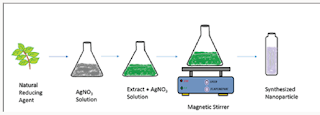
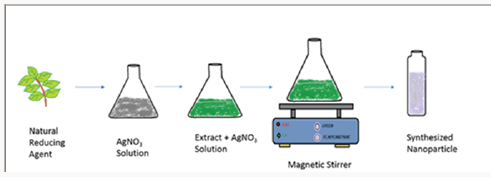
metal precursors to corresponding NPs is eco-friendly [4] (Figure
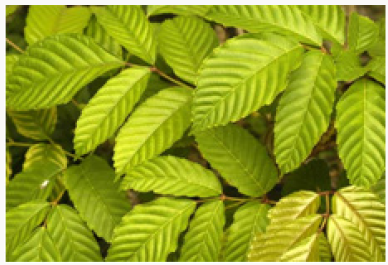
1). Copper nanoparticles were synthesized by leaf extract of Aloe
barbadensis plant. The plant is also known as “Aloe vera”. The green
synthesis of copper nanoparticle by Aloe vera plant extract is fast,
easy and (Figure 2). environmentally suitable method [5].
Figure 1: Green synthesis of NPs.
Phenolic content in plant extract dissolved in water, degradable
and catalyzed synthesis of nanoparticle as capping and reducing
agent [6]. This old plant is well known for deeper healing effects. It
is majorly present in cosmetics and skin creams. It has the ability to
clean skin and anti-aging effects of it is also famous [7]. Aloe vera
contains antioxidant vitamins A, C, and plus vitamin B12, folic acid,
and choline [8]. Its gel juice is taken as power drink. Minerals such
as calcium, copper, selenium, chromium, manganese, magnesium,
potassium and zinc are present in aloe vera. Leaves of aloe vera
provide anthraquinones [9]. Copper nanoparticles synthesis by
using electron microscopy represented that their range is upto
50 to 130nm [10]. Copper nanoparticles important as compares
to other nanoparticles due to their properties that are found at
less cost than that of expensive metal such as gold and silver
such as examination of catalytic activity of copper nanoparticles
by degradation of malachite green [11]. Copper oxide particles
show effective catalytic removal of organic dyes such as malachite
green, when particles were added into it [12]. The use 0fgreen
method increased so much because of its easy preparation and low
manufacturing cost. Moreover, less to toxic starting materials and
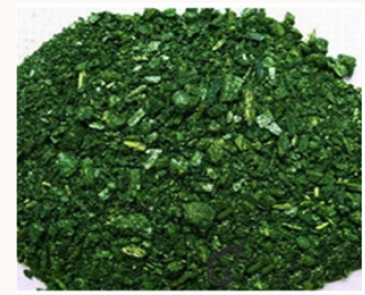
ease of handling make it more favorable [13]. Malachite green is
extensively used in many industries as a dye for leather, textiles and
also in aquaculture industry to control fish parasites and disease
[14]. Malachite green is classified as a class II health hazard and
they pose toxicity (mutagenicity, genotoxicity) to the aquatic
organisms like fish, algae, bacteria etc. and it’s proved to be highly
carcinogenic and is banned by many countries [15] (Figure 3). The
removal of organic pollutants and dyes from industries remain
as a challenge as these dye molecules are difficult to decompose.
Varieties of organic and heavy metal pollutants were removed by
nano adsorbents by various research groups [16].
Figure 2: Aloe veraplant.
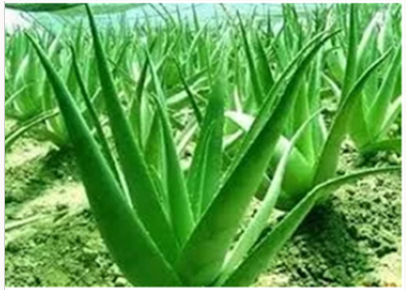
Figure 3: Malachite Green
Materials and Methods
Material
Copper sulphate, Aloe barbadensis leaves, sodium borohydride
(NaBH4), organic dyes such as Malachite green
Preparation of Plant Leaf Extract
50g of the Aloe vera is taken
from the nearby garden. The leaves of aloe vera are first separated
from the gel part o0f aloe vera. The leaves are then washed thoroughly
with distilled water to remove soil and dust particles. After washing
leaves were dried and finely chopped. These finely chopped leaves
were allowed to boil for 15min at 100 °C with 100mL of de-ionized
water in a250-mL flask and then allow to cooled down to come at
least at room temperature. The resulting solution is passed through
a filter paper to remove any solid particles and then again filtered
throughaWhatmanfilterpaperofporesize0.2μm.Thefiltrate is stored
at 6 °C as a stock for the synthesis of CuO NPs.
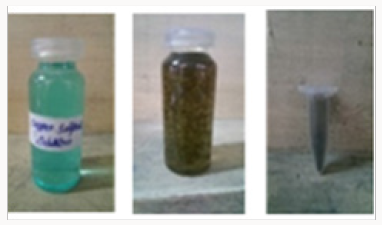
Green Synthesis of Cuo NPs: A copper sulphate solution of
fifty milliliters was added to 15ml aloe vera leaves extract. The
solution was stirred on a magnetic stirrer at 120degrees. The
color change was observed. The color changes from deeply blue to
colorless and then dark red at saturation. Brick red color confirms
the nanoparticles formation. The resultant solution was centrifuged
for ten mints at speed of 50,000rpm. After discarding supernatant
copper oxide nanoparticles were dried in a watch glass. After
drying, black color particles (Figure 4). were assemble for further
characterization.
Figure 4: copper NPs synthesis.
Characterization of Green Synthesis Copper Nanoparticles
The morphological, structural and chemical composition of
CuO NPs were analysed by using SEM (jsm-6480) and XRD (XPERTPRO)
equipment. Optical properties of synthesized particles are
investigated by UV spectrophotometer (DB-20). Size and shape of
copper oxide nanoparticles were observed by SEM (jsm-6480). The
crystal structure of synthesized nanoparticle is examined by XRD
(XPERT-PRO), FTIR analysis is performed for the collection of the
functional groups, present in this synthesis of CuONps.
Colour change observation: Color changes indicate the
formation of nanoparticles of copper oxide. Blue color solution
was turned into red or brick red indicated for formation of copper
nanoparticles synthesis.
Result
X-Rays Diffraction Studies
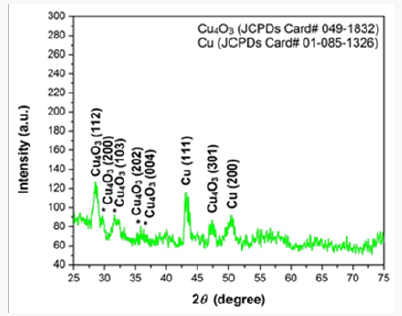
Copper oxide nanoparticles were examined by X-ray
diffractometer (XPERT-PRO). Copper oxide powder was put in
cubes of XRD for calculation of intensity. The resultant pattern
of synthesized nanoparticles was analyzed. The peaks at 2θ
correspond to intensity as the peaks at28, 29.8, 32.1, 35.8, 36, 43.3,
47.5, 51.1, and have 112, 200, 103, 202, 004, 111, 301 and 200,
pattern which is compare to JCPDS card no (049-1832). The pattern
of Cu nanoparticles compared to JCPDS card no (01-085-1326), the
peaks at 2θ. XRD pattern confirmed that CuO nanoparticles are
highly crystalline with cubic crystal structure. The average size of
the particle calculated by Scherrer equation was 60-100nm (Figure
5).
Figure 5: XRD pattern of Cuo NPs.
FTIR Analysis
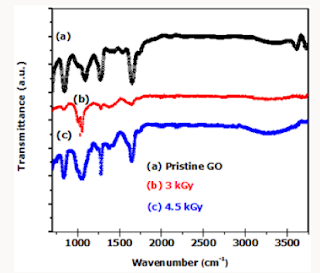
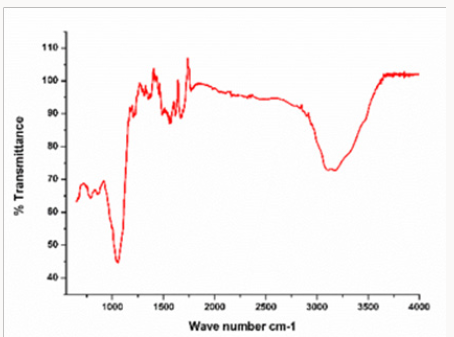
In this analysis, FTIR (IPRrestige-21) spectrum was analyzed.
The analyzation confirms the presence of copper nanoparticles.
Different peaks were observed at 1100cm-1 confirm formation
of Copper oxide nano particle speaks was observe in range of
400-4000cm-1. The FTIR spectrum of Copper oxide nanoparticle
exhibits that the broad absorption band at 32cm-1 corresponds
to the hydroxyl (OH) functional group in alcohols and phenolic
compounds. The peak at 1601.2cm-1 is due C=C aromatic bendindg.
Absorption peak at 1038.0 cm-1 stretching vibration of C–O group of
primary and secondary alcohols (C–O), while smaller peaks at 900-
700cm-1 were also (Figure 6). Assigned to the aromatic bending
vibration of C–H group (Table 1).
Table 1: Absorption peak at 1038.0cm−1 stretching vibration of
C–O group of primary and secondary alcohols (C–O), while
smaller peaks at 900–700 cm−1 were also assigned to the aromatic
bending vibration of C–H group.

Figure 6: FTIR spectra of copper oxide nanoparticles.
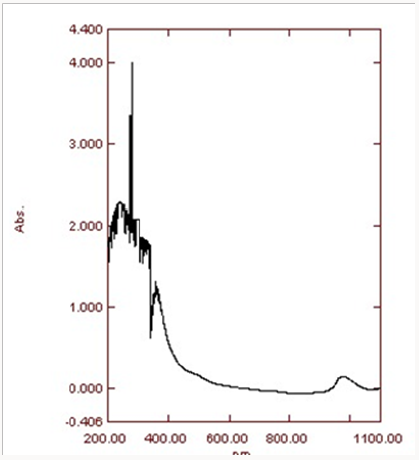
Ultra violet spectroscopy: The presence of copper oxide
nanoparticles is confirmed at the range of 200-1100nm. The ecofriendly
method for the synthesis of copper oxide nanoparticles
using Aloe vera leaves extract proved feasible, coast free and
successful method. UV-Vis spectra analysis has apparently shown
the formation of copper oxide nanoparticles. Nanoparticles
synthesized have variety of application in the different field. The
maximum absorption peak is between 265-285nm.The peak
at about 280nm was achieved (Figure 7).This peak confirmed
formation of the copper oxide nanoparticles.
Figure 7: Nanoparticles synthesized have variety of
application in the different field.
SEM Analysis
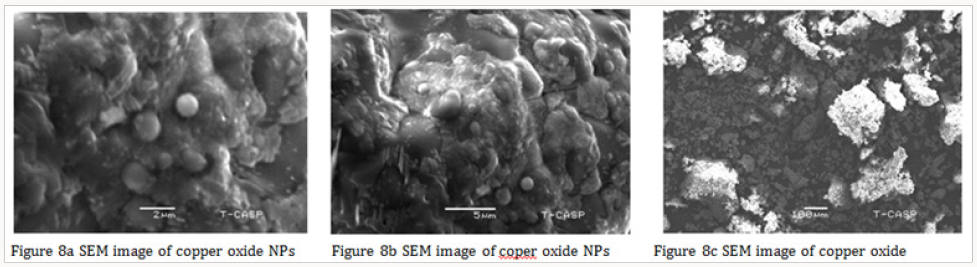
The average particle size of copper nanoparticle was analyzed
by SEM model (JSM-6480). The range of grain of copper oxide
nanoparticle was calculated about 50.5-130nm by SEM micrograph.
It was observed that particles were smooth with a spherical shape
(Figure 8). The catalytic activity of the CuO NPs analyzed by the
degradation of malachite green dye. The catalytic activity of the
CuO NPs analyzed by the degradation of malachite green dye.
Preparation of 1000mg/l dye S.S. 1000ppm solution of Malachite
green dye was prepared by dissolving dye in 1-liter distilled water.
Different concentration of dyes was prepared from stock solution.
100ppm solution was prepared from 1000ppm solution after
dilution. After that 150,200,250-ppm solution was prepared. 18g of
NaBH4 is made up to 10mL and kept aside. Different concentrations
of NaBH4 and catalyst are tested on the methylene blue dye. The
catalytic degradation of organic dyes was observed by measuring
UV-Visible spectra at regular time intervals.
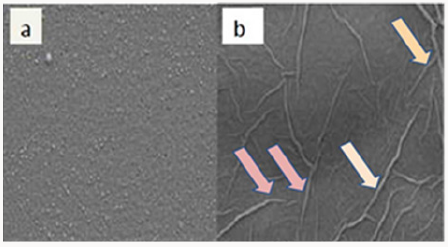
Figure 8: SEM micrograph.
Malachite Green: Malachite green is extensively used in many
industries as a dye for leather, textiles and also in aquaculture
industry to control fish parasites and disease. The use has increased
so much because of its easy preparation and low manufacturing
cost (Table 2) (Figure 9).
Figure 9: Stucture of dye (malachite green).
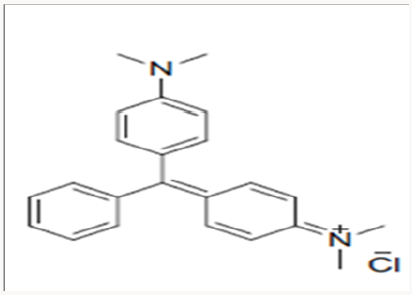
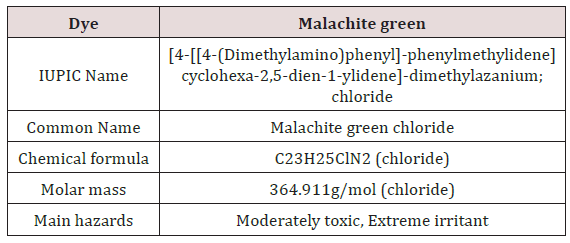
Table 2: The use has increased so much because of its easy
preparation and low manufacturing cost.
Structure
Dye Degradation: The degradation of malachite green in the
absence and presence of CuO NPs were studied spectrotometrically
by using DB-20 UV-Vis spectrophotometer determining the
decrease in the absorbance at 631nm.The reaction was study
spectrophotometrically at room temperature (25 0C). The colour
of the reaction mixtures faded, indicating that degradation had
occurred. The same procedure was followed for uncatalyzed
reactions, in absence of CuO NPs.
1-Time Effect on Dye Removal: Decolorization of dye
Malachite Green at room temperature was analyzed. Initially 20ml
dye solution was taken and 1mg of greenly synthesized copper
nanoparticles using aloe vera leaves extract dissolved in it. 0.1mg
of NaBH4 was dissolved as a reducing agent. The solution was
heated for 10- 20 mint at 100 degrees. The time interval was taken
in consider gradually during reaction. The removal percentage of
decolorization was calculated and draws graphically. The maximum
time was 120 mints with70% color removal. This confirms the rapid
reaction of copper oxide nanoparticles (CuO NPS) (Figure 10).
Figure 10: The time interval was taken in consider
gradually during reaction.
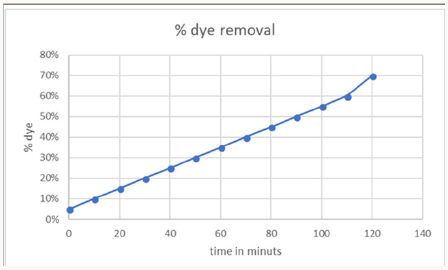
Figure 11: Aloe vera synthesized copper oxide nanoparticles
showed maximum percentage decolorization as pH
was increased at a certain limit after more increase has a
negative effect.

2-pH effect on dye removal: pH of the solution also majorly
affected the de-colorization of dye. pH effect on the decolorization
of copper oxide nanoparticles was analyzed in this research. Aloe
vera synthesized copper oxide nanoparticles showed maximum
percentage de-colorization as pH was increased at a certain limit
after more increase has a negative effect. This may be happened
due to the formation of more positive ion competition. Maximum
de-colorization 70% was at pH 5 (Figure 11).
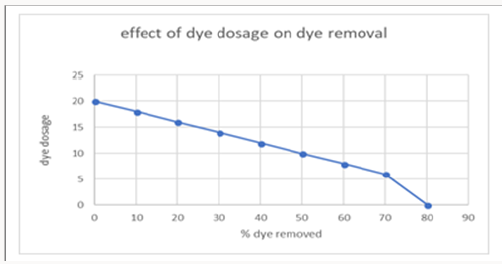
3-Concentration of dye effect on decolorization of dye: The
increase or decrease in the concentration of Malachite green MG
dye is also considerable in decolorization efficiency. The graph
was obtained after experimenting various concentration of dyes.
The maximum amount of dye taken was 20mg/l. After increasing
concentration no effect on 70 decolorizatioof dye was observed
(Figure 12).
Figure 12: After increasing concentration no effect on70
decolorizatioof dye was observed.
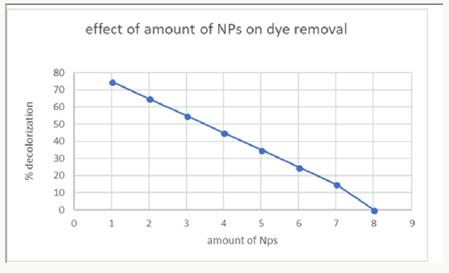
4-Effect of Copper Oxide Nanoparticles Amount on Dye
Removal: The number of copper oxide nanoparticles exhibits
positive results on decolorization. The number of nanoparticles
1 gram was taken showed maximum de-colorization power. This
confirmed from the experiments that increasing of nanoparticle
showed no effect on de-colorization. This concentration of
nanoparticles was used in further experimentation of research
(Figure 13).
Figure 13: This concentration of nanoparticles was used in
further experimentation of research.
Conclusion
Here in conclusion, we concluded a method of green synthesis
of Cu nanoparticles by leaf extract of Aloverabarbadensis plant.
This eco-friendly way of synthesis of nanoparticles is more
recommended over other methods as green synthesized CuO NPs
are cost-effective, biogenic molecules with the capability to serve
as dye absorbent. From vast of analyzation on nanotechnology for
synthesis of nanoparticles it is declared that it is safer and best by
using natural plants. With the huge plant variety much more plants
are still not known for the synthesis of nanoparticles. Nanoparticles
synthesized can be applicable in the different field of biochemistry,
Pharma, agriculture and industry. Copper oxide nanoparticles
have the ability to remove carcinogenic dyes. In the present study,
Malachite green dye was removed by nanoparticles and its time,
pH, contact time was observed. The maximum contact time was
120min, pH was observed 5, nanoparticle amount 1mg which
proved green synthesized copper nanoparticles, as best removal of
carcinogenic dye like Malachite green.
Read More About Lupine Publishers Journal of Nanomedicine Please Click on Below Link https://lupine-publishers-nano-science.blogspot.com