Thursday, 9 January 2020

Lupine Publishers | Challenges in Learning and Understanding Traditional Chinese Medicine and Acupuncture

Lupine Publishers | Open access journal of Complementary and Alternative Medicine

Abstract

Logic thinking is the base of developing TCM and acupuncture theories. Pattern identification developed with Y-n-Yang and the Five Element theories should be the key principle in practice, especially for prescriptions and the scientific research verifying efficacy of TCM and acupuncture.
Keywords: Yin-Yang; The Five Element; Logic Thinking; Pattern Identification

Abstract

  Both Traditional Chinese medicine (TCM) and acupuncture originated in ancient China and has evolved for more than two thousand years. However, most of the people generally in Taiwan present themselves to the medical doctors first when they are in need of medical treatments. Part of this fact is because there are not sufficient scientific researches to prove the efficacy and safety of TCM, acupuncture, moxibustion, acupressure, cupping, Tui na, and tai chi. In Asia, such as Taiwan, Korea, Japan, Hong Kong, etc., herbs, acupuncture, moxibustion, acupressure, cupping, Tui na, and tai chi are often used by TCM practitioners to integrate mind and body to treat or prevent health issues. Compared to the current TCM and acupuncture developments in Taiwan, acupuncture and TCM have gained more and more popularity in the past 40 years and been considered “essential health benefits” by people in the United States and the West, seeing and using acupuncture and TCM primarily as a complementary health approach [1]. TCM and acupuncture have established its status in the health system in the West, though they’re totally different from the Western medicine with the philosophy, diagnosis approaches, and pattern identification for treatment. Challenges exist at present, which deserves attention for those who are determined to learn or interested in understanding TCM and acupuncture. This paper, therefore, tries to present some issues for the better future of TCM, including acupuncture, and the Western medicine when there are integrated.

Fundamental Differences between TCM and West Medicine

TCM, including acupuncture, and Western Medicine have been viewed as two distinct and divergent medicines for long with the approaches to physiology and healing techniques. Therefore, the fundamental differences in both Western medicine and TCM deserve attention when healthcare providers are considering the feasible choices in clinical practice to patients [1].

In Theory

The philosophical concepts like Yin-Yang, the Five Element, pattern identification, and Qi and Blood are, to a certain extent, unique and abstract for learners to catch the whole picture with the functions broader than the anatomical knowledge in the Western medicine and are absolutely different from the theories of the Western medicine. In terms of relation of the human beings and the Heaven that can interact with each other in providing solutions to the health, it is totally different from the Western medicine that TCM sees the human body as a whole and as a microcosm of the universe in diagnosis and treatment, bringing the body, mind and spirit into harmony with Yin-Yang balance. It is believed that the concept of Yin-Yang balance is the unique concept indicating the harmony of internal organs and the dominating key of the TCM, which has served as the foundation and the guideline for the explanation of etiology of diseases, diagnosis, and treatments throughout the history of Chinese medicine and absolutely distinguishes TCM from the Western medicine [1]. Based on this concept, a disease thus refers to the loss of the balance of Yin-Yang [2].
On the other hand, TCM focuses on the “congenital constitution” of the body that can result in “root” problems in health, which can scientifically correspond to the core thesis of Precision medicine (PM), which proposes the customization of healthcare with medical decisions, treatments, practices, or products tailored to the individual patient’s genetic content. In TCM, constitutions of humans are categorized into the five patterns for understanding the “root” causes and predicting the health conditions in the future, based on the Five Element theory [1]. Western medicine is seeking the minor difference from the perspective of etiology and only concerned about diagnosing and treating the symptoms alone. The theory develops with seeing the organs separately and treating parts of the body like a machine. Each part of the organs has its function, and when a particular part fails, it needs the replacement or resection [1,3].

In Practice

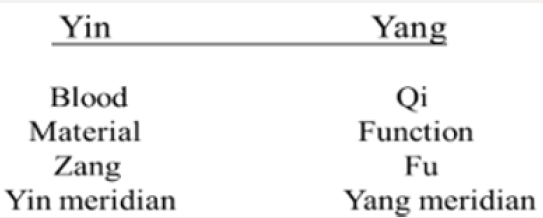
Treatments by medical doctors directly target at the pathogen or etiology with the evidence by a large number of modern scientific instruments, such as blood, urine, and stool tests, X-rays, CT, and MRI, to check on the human body. In addition to history taking and physical examination, doctors do not make diagnosis until all evidence are collected. Without scientific instruments, TCM doctors or acupuncturists can only make diagnosis, based on symptoms related to the imbalance of Yin and Yang rather than diseases itself through analyzing a patient’s tongue, pulse, voice, and whole-body situation, including reaction, hair, and posture [1,3]. The most important key to the successful results is that an experienced TCM doctors and acupuncturists can only rely on four skills for diagnosis to identify the patterns and write up the prescriptions. In other words, patterns, which distinguish TCM from the Western medicine, should be the key concern for the TCM and acupuncture practitioners in making the decisions of treatments. Since diseases are understood to be a loss of balance between Yin and Yang as shown in Figure 1, good results cannot be expected without the positive consideration of Yin and Yang [2,4].
Figure 1: Characteristics of Yin and Yang.
Lupinepublishers-openaccess-complementary-alternative-medicine-journal

Challenging Issues

Challenging issues for those who are interested in and learning TCM and acupuncture are presented in this section. These issues may have been discussed in the previous research, but new viewpoints are presented to attract more attention.

Language

There is no doubt that cultural decoding relies mostly on words. It is strongly accepted that “word-for-word” literal translation method is the way paraphrasing the accurate lexical meaning. However, this cannot be applied to TCM and acupuncture. Language is therefore the most challenging issue that needs to be addressed first. With the popularity of TCM and acupuncture, language barrier surely needs learners’ attention. The fact in the West currently is that not all of the TCM and acupuncture classics are translated into English. On the other hand, correct translation requires good translators excellent in both Chinese and English. In addition to the good command of these two languages, the meanings of the characters used in the ancient time may be different from those at the present time, which may confuse and frustrate readers. Chinese characters, different from alphabet languages which only represent forms and sounds, are called ideographs with three features of forms, sounds and meanings [5]. The difficulties in understanding Chinese characters in the TCM and acupuncture classics can be classified in the following ways [5]:
A. Simplified Chinese is widely used all over the world; however, traditional Chinese is accepted and used in ancient classics and areas like Taiwan, Hong Kong, and Macao. For example, 黃帝內“經” in simplified Chinese is 黄帝内“经” in writing.
B. Pronunciation changed with usage. “能” is correctly pronounced neng in the modern Chinese, referring to “can” in English and. However, this character in Huang Di Nei Jing ( 黃帝內經, Yellow Emperor’s Inner Classic) means “state (態)” and the pronunciation is tai. This condition occurs when the characters were not enough for use in the ancient time.
C. “內” can be used either as a verb or a noun. It is pronounced na (equals納) when used as verb and nee when used as a noun referring to “inner” or “inside” in the modern use.
D. “平” is pronounced pin when it is related to an adjective “flat” in English. With writing mistakes, the pronunciation of this character is bian when it is used as a verb to mean “distinguish” in medical Chinese.
E. Different characters bear the identical meanings. “输”, “ 输”, and “腧” are different characters referring to the identical meaning of acupoint, and all of these three characters are pronounced shu.
The ability to understanding Chinese characters deserves attention as well in learning and understanding acupoints. For mastering acupuncture, understanding the real Chinese meanings of the acupoints is required. ST29-Guilai is the typical example for this aspect because Guilai (歸來) literally in Chinese means “return” and this acupoint is usually used for prolapse of uterus, menstrual irregularity, and dysmenorrhea [6]. 神(Shen) is translated differently into English in acupoints; for example, HT7-Shenmen ( 神門, Spirit gate) refers to the gate for Heart qi to get into and out of the body, while Heart governs Shen in TCM. Compared with the DU24-Shenting (神庭, Shen court), 門refers to gate in Chinese and 庭, court, which suggests that one must go through the “gate (HT7)” first and then get into the “court (DU24)” to hold or calm Shen. This difference highlights the importance of choosing acupoints in calming Shen. An acupoint may have different names with the historical developments. The nickname of KD3-Taixi (太溪) is呂細 (Lvxi) alternatively used in the acupuncture classics. On the other hand, the nickname of HT7 is 中都 (Zhongdu) completely identical with LV6 in Chinese, which may confuses learners.
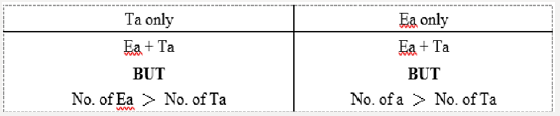
Figure 2: Protocol matrix in using traditional acupoints and extra acupoints.
Lupinepublishers-openaccess-complementary-alternative-medicine-journal
Note: Ea for Extra acupoints and Ta for Traditional acupoints.
In addition to the names of acupoints, extra acupoints also deserve close attention in consideration of combining regular acupoints with extra acupoints. Extra acupoints distinguish themselves from the regular acupoints on the traditional fourteen meridians with the unique indications, actions, and the great effectiveness in acupuncture theory and treatment, even though some of extra acupoints have not been verified with scientific evidence [7]. Pattern identification which derives from the Yin- Yang theory is surely the key concept of TCM. Unfortunately, this concept cannot apply to extra acupoints because they are not incorporated into the traditional meridians with the lack of Yin- Yang. The challenge acupuncture practitioners face is when it is the best time to consider extra acupoints in a protocol. The historical developments of extra points show that an extra point can surely play an essential role in acupuncture and be used alone or with the traditional regular acupoints for the treatment. Unfortunately, the actions and indications of extra acupoints have not be scientifically researched and verified as traditional regular acupoints. In strategy, a practitioner may take the principle of “Least needling for best results” into consideration to keep patients from pain, fear, or worry. The goal can be achieved with the following four choices shown in Figure 2 when it comes to the tactic [8].

Characterizations of Chinese Material Medica

The use of Chinese herb must be based on the patient’s conditions with accurate diagnosis, following the principles of pattern identification. Channels, properties, indications, and actions of the Chinese herbs in the different material medica classics are not always discussed in the same ways. The actions of Radix Ledebouriellae Divaricatae (Fangfeng) in Compendium of Materia Medica (Bencao Gangmu, 本草綱目), for example, are night sweat, migraine and headache, and constipation. However, actions like aversion to Wind, sweating, blurry vision, and vertigo are presented in The Classic of Herbal Medicine (Shennong Bencaojing, 神農本草經).
Licorice root (Gancao, 甘草) with properties of sweet and neutral to tonify and strengthen the Spleen qi is effective for sore throat, bronchitis, cough, and infections caused by bacteria or viruses. This herb is the good example that highlights the time to collect herb is an attention that cannot be ignored. Literature shows the best time to collect and dry Licorice root is in the autumn two to three years after planting [9], but no detailed information is found for the reasons. The possible explanation for harvest time and cultivation time may be much to do with the compound differentiation, which can vary with moisture, temperature, and sunshine. The Chinese term 木瓜 (Mugua) refers to both Chinese herb Fructus Chaenomelis and papaya. In other words, confusing situation like this Chinese herb occurs quite often to TCM and acupuncture learners.

Processing

The nature and indications of Chinese herbs change with processing for the required actions in treatment.
It is beyond doubt that Radix Bupleuri (RB) is one of the most popular traditional Chinese medical herbs in terms of treating diseases related to the Liver. Radix Bupleuri, named “Chaihu ( 柴胡)” in Chinese, is derived from the dried roots of Bupleurum Chinense DC. (Pei Chaihu, 北柴胡) and Bupleurum scorzonerifolium Willd (Nan Chaihu, 南柴胡) [10], which is the main ingredient of the most famous and frequently used preparations Xiao Chai Hu decoction and Da Chai Hu decoction. The major differences between Bupleurum Chinense DC. and Bupleurum Scorzonerifolium Willd are that the indication of Bupleurum Chinense DC. is dispersing stagnated Liver qi while Bupleurum scorzonerifolium Willd is raising Yang Qi in the Middle Jiao deficiency pattern.
For clinical use with indications changed to meet the patients’ needs, Radix Bupleuri is commonly selected in crude, fried, and vinegar-baked [11]. Among the characterizations of Chines herbs discussed above, dosage and ration are also two of the most important issues. Historic evolutions in the measurement show dosage, actually the top secret in learning Chinese formulas, has changed a lot and been a concern in practice for more than thousands of years. Quin (錢), the unique unit of weight measurement always used in TCM herbs, is different from that used in the Han dynasty, in which the author of Treatise on Cold Damage Disorders (The Shanghan Lun, 傷寒論) Zhang Zhongjing was born. In the meantime, one Quin equals 3.125g in China, but 4g in Taiwan, which suggests TCM and acupuncture learns need to bear the differences in mind when doing research. Another attention that should be given to the clinical use of Chinese herbs is dosage, which should draw attention with geographical factor. Zhang Zhongjing was born in Henan located in the south of China, where the temperate climate is humid subtropical. The climate may be one of the factors affecting his logic reasoning in the formulas; for example, the most used herbs in treating gastrointestinal diseases are licorice root, jujube, dried ginger, ginger, and Guizhi (Ramulus Cinnamomi) for the property of spicy to disperse stagnated Qi and tonify Yang. In other words, adjustments must be made, considering geographical factors.
In addition to weight, ration is also the concern that must been taken into consideration for the ingredient percentage of a formula. Liu Yi San (Six to One Powder, 六一散) indicates that the ratio of Talcum and Radix Glycyrrhizae (Licorice root) is 6:1. Actually, for learners who understand Chinese can easily catch the meaning of this formulas from the character 六 referring to six and-, 1. Dosages in practice must be adjusted, depending on the patients’ conditions. This is the most difficult to learn and understand because it reflects the experience of a TCM doctor or an acupuncturist. In other words, there is not golden rule to follow at all, and it is hard to be verified with quantitative analysis.

Discussion

The logic thinking of the Chinese is inductive reasoning, compared to deductive reasoning of the Western people. Based on this logic model, TCM, including acupuncture, features similarities in theories with Yin-Yang, the Five Element, Qi-Blood, and Pattern identification. It is noted that most of the scientific researches for verification of efficacy of TCM and acupuncture only focuses on diseases, instead of following the Pattern identification of TCM, which cannot accurately exemplify the TCM and acupuncture theories to a great extent [11]. The historical developments prove that there are challenges ahead of TCM and acupuncture learners, such as when to combine regular acupoints with extra acupoints, how to decide the accurate dosage and whether or not select dried herbs, etc. More and more population in the Chinese communities like China, Taiwan, Hong Kong, and Macao seems to suggest that TCM and acupuncture benefit public health with its efficacy. This study may recommend that having a good command of Chinese can play a key role to learning and mastering TCM and acupuncture. Unfortunately, it is not easy at all for the Western learners to make a right decision when it comes to learning traditional or simplified Chinese characters. The debate on traditional Chinese characters and simplified Chinese characters has been an ongoing dispute concerning Chinese orthography among users of Chinese characters for years with the establishment of the People’s Republic of China (PRC) in 1949. Looking back at the history of Chinese medicine, all of the great classics are written in traditional Chinese. This fact may give the learners the right direction that learning traditional Chinese enable the Western learners to acquire more profound knowledge of TCM and acupuncture. It is believed that “Englishword- for-Chinese-character” translation surely hinders learners from acquiring accurate understanding of TCM and acupuncture. However, there is not any Chinese medical terminology curriculum offered in the West.

Conclusion

Challenges exist before those who are learning or interested in TCM and acupuncture. Only accurate decoding of Chinese characters can exactly explain TCM and acupuncture concepts, so it is highly suggested that learning traditional Chinese characters must be considered for the Western learners when they really expect to explore and enjoy the beauty of TCM and acupuncture. With the natural and human restrictions, there is a long way to go for the contemporary learners and researchers to verify the efficacy of TCM and acupuncture with evidence-based research.

https://lupinepublishers.com/complementary-alternative-medicine-journal/pdf/OAJCAM.MS.ID.000103.pdf


For more Lupine Publishers Open Access Journals Please visit our website:


To Know More About Open Access Publishers Please Click on Lupine Publishers


Follow on Linkedin : https://www.linkedin.com/company/lupinepublishers
Follow on Twitter   :  https://twitter.com/lupine_online

Tuesday, 7 January 2020

Lupine Publishers | Chemical Contaminants in Food Grains: The Burning Health Issues in Asian Countries


Lupine Publishers- Environmental and Soil Science Journal

Abstract


Food security is a high-priority issue for sustainable global development both quantitatively and qualitatively. Once pesticides are applied, residues may be found in soil, on plant, on harvested product, on application equipment, in water and irrigation canals, in pesticide storage area, on cloth of applicant. Short term poisoning effects like nausea, vomiting, headache, chest pain, eye, skin and throat irritation etc. and potential long-term health effect like allergies, cancer, nervous system damage, birth defects, reproductive problem have been reported in recent decades, adverse effects of unexpected contaminants on crop quality have threatened both food security and human health. Heavy metals, metalloids (e.g., Hg, As, Pb, Cd, and Cr) from pesticides and fertilizers can jeopardize human metabolomics, contributing to morbidity and even mortality. Those during crop production include soil nutrient depletion, water depletion, soil and water contamination, and pest resistance/outbreaks and the emergence of new pests and diseases.

Discussion

Growth in global population means that farmers must produce food for an estimated 9.1 billion people expected to inhabit the earth by 2050 [1]. Humans cultivate only about 150 of an estimated 50,000 edible plant species worldwide, with only 30 plant species comprising the vast majority of our diets. Just three of these (rice, maize and wheat) provide about 60% of the world’s food energy intake [2,3]. These plants are susceptible to 80,000 to 100,000 diseases caused by everything from viruses to bacteria, fungi, algae, and even other higher plants [4]. Again, Food plants have to compete with some 30,000 different species of weeds worldwide, of which at least 1800 species are capable of causing serious economic losses [5]. Globally, around 20-30% of agricultural produce is lost annually due to insect pests, diseases, weeds and rodents, viz, growth, harvest, and storage [1,6]. According to World Bank, South Asian countries are home to home to 33% of the world’s poor and economies have among the highest levels of public debt in the world [7]. Mean consumption of whole grains 38.4 g/day in between 1990 to 2010. Southeast Asian nations along with 2/3 Sub- Saharan African regions had the highest intakes. Overall, 23 of 187 countries had mean whole grain intake ≥2.5 (50g) servings/day, representing 335 million adults and 7.6% of the world adult population [8]. Southeast Asia is a region that produces high amounts of key food commodities and includes areas of divergent socio-economic status. The major grain crops produced in the region are rice and maize [9]. The potential sources for the contamination of grains are mostly environmentally based and include air, dust, soil, water, insects, rodents, birds, animals, microbes, humans, storage and shipping containers, handling and processing equipment [10]. The rates of destruction often are higher in less developed nations and they are now accounting for a quarter of the world’s pesticide use [5,11]. Therefore, judicious use of pesticides plays a major role in plant protection. Today’s more than 10,400 pesticides are approved worldwide. It has been reported that the consumption of pesticides accounts two million tons every year worldwide [12]. Interestingly, many pesticides still widely used in the USA, at the level of tens to hundreds of millions of pounds annually, have been banned or are being phased out in the EU, China and Brazil [13]. Pesticide residues reported in fruits, vegetables and grains of India [14], Nepal [15], Bangladesh [16], China [17] and Indonesia [18]. Farmers habitually apply fertilizers and hazardous insecticides in high quantities without assessing the actual field requirements due to inadequate knowledge [1,19]. Since pesticides are directly applied on crops, fruits, and vegetables in most agricultural applications, infants, children, and adults can be exposed to pesticides by the ingestion of those pesticide-contaminated foods [20-23]. Pesticides can exist in residential air by the evaporation of volatile and semivolatile pesticides, such as organochlorine pesticides, from crops and residential surface soil [24-27]. Soil is an important source for heavy metals (like mercury/cadmium) in crops and vegetables since the plants’ roots can absorb these pollutants from soil, and transfer them to seeds [28,29]. According Retamal-Salgado et al. 2017 cadmium (Cd) distribution in the different plant organs, more than 40% of Cd is absorbed and translocated to the aerial part of the plant (grain and straw), and it could be directly (grains) or indirectly (animals) ingested and negatively affect humans [30]. It accumulates in the liver and kidneys for more than 30 years and causes health problems. Toxicity of this metal involves kidney and skeletal organs and is largely the result of interactions between Cd and essential metals, such as calcium [31-35]. China feeds 22% of the world population with 7% of the worlds arable land. Sodango et al. 2018 reported that 20 million hectares (approximately 16.1%) of the total arable land in China is highly polluted with heavy metals, according to Ministry of Environmental Protection (MEP), China [36]. It is estimated that between 900,000 and 1,360,000 kg arsenic per year was introduced into Bangladesh soil through contaminated groundwater used for irrigation [37]. The use of sewage sludge for agricultural purposes can be limited by the potential content of heavy metals and toxic organic compounds that pose a threat to the environment [38]. Pajewska-Szmyt et al. 2019 reported that maternal exposure to heavy metals as Pb or Hg and persistent organic pollutants were associated with children neurodevelopment delay and also indirectly affects reproductive, respiratory, and endocrine system [39]. The use of pesticides has helped to increase rice yields but has also led to an increased pollution that presents a potential toxicity threat to the environment and public health [40]. Combined with outdated waste management technologies, there are potential health risks to farmers through occupational waste management practices, along with consumers through consumption of waste-contaminated products [41]. The WHO has estimated that more than three million farmers in developing countries are poisoned by agrochemicals each year [42]. In another study, WHO) and UN Environmental Program estimated that one to five million cases of pesticide poisoning occur among agricultural workers each year with about 20000 fatalities [43]. Skin injury, eye injury, headache, stomachache, and fever reported in cotton workers in southern Pakistan due to pesticide exposure [44]. Pesticide induced occupational hazards has been reported to many other similar studies in Nepal [45], China [46-48], India [49-51], Bangladesh [52], Sri Lanka [53], Myanmar [54] and Philippines [55]. The US Centre for Disease Control and Prevention confirmed more than 11,000 foodborne infections in the year 2013, with several agents like viruses, bacteria, toxins, parasites, metals, and other chemicals causing food contamination [56]. Widespread agricultural use of pesticides and home storage make them easily available for acts of self-harm in many rural households. Stability of organophosphorus pesticides are also important issue [57]. It was found that malathion was more unstable than dichlorvos and diazinon, there was an over 70% loss in 90 days even at -20 °C in coarsely chopped form [58]. It could be another reason for haphazard use of pesticides in the field and stored food commodities [59]. Around 600 million food borne illnesses and 420,000 deaths occur each year due to poor food handling practice. Such contaminants get access to contaminate food mainly due to food handler’s poor knowledge and negligence during handling activities [60,61]. Hassan et al. says increased prevalence of diabetes in South Asia may be related to the consumption of arsenic contaminated rice depending on its content in the rice and daily amount consumed [62]. Sabir et al. demonstarted that arsenite can bind covalently with sulfhydryl groups in insulin molecules and receptors, enzymes such as pyruvate dehydrogenase and alpha ketoglutarate dehydrogenase, and glucose transporters (GLU-T), which may result in insulin resistance [63]. According to Kumar et al. 50%-60% cereal grains can be lost during the storage stage due only to the lack of technical inefficiency. Use of scientific storage methods can reduce these losses to as low as 1%-2% [64]. Factors like increasing climatic variability, extreme weather events, and rising temperatures pose new challenges for ensuring food and nutrition security in Asian region. The South Asian region is one of the least integrated regions according to Washington based-IFPRI [65]. Agriculturally beneficial microorganisms may also contribute directly (i.e., biological N2 fixation, P solubilization, and phytohormone production, etc.) or indirectly (i.e., antimicrobial compounds biosynthesis and elicitation of induced systemic resistance, etc.) to crop improvement and fertilizers efficiency [66]. Overuse of chemical fertilizers and pesticides have effects on the soil organisms that are similar to human overuse of antibiotics. Indiscriminate use of chemicals might work for a few years, but after a while, there aren’t enough beneficial soil organisms to hold onto the nutrients [67]. Also, resistance to certain pesticides against brown planthopper (BPH), Nilaparvata lugens, and the white-backed planthoppers (WBPH), Sogatella furcifera reported in Asian countries has been reported [68-72]. Also, the higher exposure of crop plants to heavy metal stress reduces growth and yield and affect the sustainability of agricultural production [73]. Cadmium (Cd) is a well-known metal imposing threats to human health, and it can be accumulated in polished rice over the permitted range of 0.2mg kg1 [74]. It leads to reduction in the plant productivities as well by inhibiting their growth, photosynthesis, pigments, nutrient uptake, germination, electron transport chain [75]. Applications of phosphorusbased fertilizers improve the soil fertility and agriculture yield but at the same time concerns over a number of factors that lead to environmental damage need to be addressed properly [76]. Easy availability of pesticides has another interesting but pathetic outcome. approximately 110,000 pesticide self-poisoning deaths each year from 2010 to 2014, comprising some 14% of all global suicides [77]. According to Serrano-Medina et al. higher rates of suicide committed in areas with intensive use of pesticides compared to areas with less use of pesticides [78]. In Bangladesh, selfpoisoning by pesticide is responsible for about 40% of poisoning cases admitted to hospital and 8-10% of overall mortality in medical wards [79]. At the Philippine General Hospital in Metro Manila, Philippines (2000- 2001), recorded pesticide poisoning cases showed that more than 80% were intentional in nature [80]. Public concern about the adverse environmental and human health impacts of organochlorine contaminants led to strict regulations on their use in developed nations since 1940 [81]. Nevertheless, DDT and several other organochlorine insecticides are still being used for agriculture and public health programs in developing countries in Asia and the South Pacific [82-86]. As a consequence, humans in this region are exposed to greater dietary levels of organochlorines (Figure 1).
Figure 1: Asian Continent with subregions (Source: Wikipedia)
lupinepublishers-openaccess-environmental-soil-science-journal

Recommendations

Around 600 million food borne illnesses and 420,000 deaths occur each year due to poor food handling practice. Such contaminants get access to contaminate food mainly due to food handler’s poor knowledge and negligence during handling activities [87,88]. Accordingly, alternative methods for exposure and risk assessment have to be developed, which vary from the use of expert opinion and pre-marketing models to the use of combination of data from the literature, measurements, and expert opinion [89]. Many studies are there to overcome fertilizer/pesticide induced health effects. Rastogi et al. reported use of silicone nanoparticles can provide green and eco-friendly alternatives to various chemical fertilizers without harming nature [90]. It has been reported that selenium (Se) application decreases Cd uptake [75]. In similar studies, selenium, copper, zinc oxide and many other metallic nanoparticles [91-97] have been studied in food processing, packaging and preservation against phytopathogens and rodents. The washing with water or soaking in solutions of salt and some chemicals e.g. chlorine, chlorine dioxide, hydrogen peroxide, ozone, acetic acid, hydroxy peracetic acid, iprodione and detergents are reported to be highly effective in reducing the level of pesticides [98]. Various foodprocessing operations include sorting, trimming, cleaning, cooking, baking, frying, roasting, flaking, and extrusion that have variable effects on mycotoxins [99]. Cooking rice in excess water efficiently reduces the amount of arsenic (As) in the cooked grain [100].

For more Lupine Publishers Open Access Journals Please visit our website:
For more Open Access Environment Journal articles Please Click Here:
To Know More About Open Access Publishers Please Click on Lupine Publishers

Follow on Twitter   :  https://twitter.com/lupine_online

Monday, 6 January 2020

Lupine Publishers| Focusing on Food Security or Targeting the Economy: A Study on Maize and Cotton Production in Kandi Commune

Lupine Publishers- Environmental and Soil Science Journal


Abstract

Maize and cotton are two crops that are highly produced in North Benin. Their production has advantages as well as constraints. These advantages and constraints are taken into account in the choice of the producer to cultivate one of them. The objective of this study is to present, at first, the advantages and constraints that the producers of Kandi commune face on these two crops. It also aims to expose the producers’ preference according to the advantages and constraints listed by them. To achieve this, the data were collected in two districts of the municipality over a period of two weeks. Semi-structured interviews were conducted with fifty producers through an interview guide. Data processing was carried out using a dual approach (quantitative and qualitative) which, on the one hand, consisted in carrying out statistical tests and, on the other hand, analyzing the statements collected during the data collection. The main statistical test used in this study is Kendall’s W-concordance test, which has been used to prioritize constraints. At the end of the analyses, it appears that cotton, just like corn, enables producers to meet the needs and social development of their households. On the other hand, the non-organization of the maize sector, the lack of inputs and the delay in their distribution, maize prices fluctuation and difficulties in the evacuation of cotton are the main constraints reported by producers. Despite its lack of organization and the other constraints to which it is subject, maize crop is the most preferred. In view of this, it would be appropriate to consider the organization of the maize sector and the optimization of the services provided by the organizations in charge of the cotton sector. This will be beneficial to both production systems and also to all actors involved.

Introduction

Agriculture is one of the crucial activities that human being cannot neglect for his survival. It keeps the human species alive and contributes to its evolution. In Benin, it plays a great role in strengthening the economy and provide about 75% of jobs [1]. Among all the crops produced in the territory, two prove to be vital both in the constitution of the national economy and in the fight for food security: Those are corn and cotton. Known as the main cash crop in Benin [2] and the engine of the Beninese economy [3], cotton alone counts for 27% of exports and contributes by 7% to the national GDP. Its production has not stopped growing over the last five years. It reached in 2016, a tonnage of 451,000, which is an increase of more than 70% from the year 2015 [4]. Due to its multiple outlets, the cotton sector remains the country’s best organized sector [5]. If cotton receives a lot of attention from the Beninese government, corn itself does not have such a privilege. Nevertheless, it is the crop that could be an alternative to cotton production [6] in northern Benin. It comes second, after cotton as a subsistence and cash crop [7]. Indeed, its cultivation occupies nearly 70% of the total area devoted to cereals in Benin and represents about 75% of cereal production [8]. Together with cowpea, cassava and yam, it forms the staple crops of people’s diet [9]. Studies have shown that 63.1% of households in Benin consume 7 days out of 7, maize being the main cereal in the food ration [9]; [10]. Apart from the aspects raised, corn also has medicinal properties. According to [11], the corncob is used in combination with other plants to cure knee and low back pain. Some use it to treat diseases such as malaria.

Material and Methods

Study Area

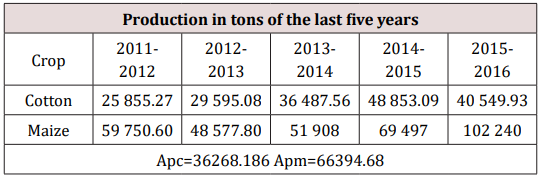
The study took place in the municipality of Kandi, county town of the department of Alibori. Located in the agro ecological zone of the cotton pan, it is limited by the communes of Malanville (North), Gogounou (South) Ségbana (East) and Banikoara (West). It is spread out an area of 3421Km2 and includes ten districts, sixty-seven villages and fifteen districts. The climate in Kandi is of Sudanese type characterized by two seasons that follow each other: The first, rainy from May to October and the second, dry from November to April. Climate change in sub Saharan Africa does not leave the Kandi commune on the side-lines. It is worth noting since a few decades in the commune and its surroundings an early drying up and a late or sometimes violent arrival of rains. Several studies carried out in the region have noted this [12-15]. In addition, the soil found at Kandi is of tropical ferruginous type. The relief is made up of plateau and one distinguishes by place hills made of granites and quartzite. As for vegetation, the town has grassy savanna, shrub and trees with some gallery forests. In terms of agricultural production, Kandi has a good reputation coming in second place after Banikoara, the giant cotton supplier in Benin. Apart from this asset, the municipality is essential in the department in terms of corn production. The following table gives an idea of the evolution of these two crops from 2011 to 2016 (Table 1).
Table 1: Production in tons of the last five years.
lupinepublishers-openaccess-journal-environmental-soil-sciences
Analysis of this table shows a peak of cotton and maize production between 2014 and 2016 with a respective tonnage of 48853.09 and 102240. The respective average production of the two crops is 362681.86 and 66394.68 tons.

Methodological Approach

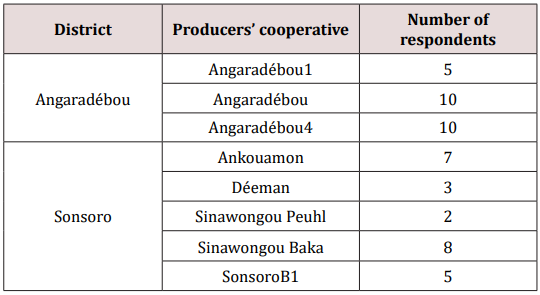
Among the ten districts of Kandi commune, only two were chosen to shelter the study. These are the districts of Angaradébou and Sonsoro. This choice was made in a participatory way with the coordinator of the Interprofessional Association of Cotton Producers. Firstly because of their performance in the production of both crops within the municipality and secondly because of their positioning. This choice was made for a wide variation of collected data and the obtaining of a socio cultural diversity in order to better touch the realities of the producers of Kandi as a whole. The data was collected using an interview guide designed to collect qualitative and quantitative data. The collection took place during the month of April of the year two thousand and eighteen (2018) and lasted 2 weeks. After an individual interview with five producers, the questionnaire underwent a slight adjustment. Faced with the unavailability of some farm managers, other people who were relatively close to them and involved in the farming activities of the households proved to be able to provide the necessary information for the study. A total of 25 subjects per district producing maize and cotton were included in the study. These have been identified by secretaries of cooperatives who hold leadership positions within their community. The following Table 2 provides an overview of the structure of the sample considered in the study.
Table 2: Structure of the study sample.
lupinepublishers-openaccess-journal-environmental-soil-sciences

Data Analysis

The data capture and analysis was carried out exclusively with SPSS v21.0 32bits software. The data processing was done using descriptive statistics, speech analysis and Kendall’s W-concordance test. The descriptive statistics essentially allow to obtain the frequencies and average of variables characterizing from a social and demographic point of view the interviewed farmers. The comments received from producers were analyzed and then used to model the “benefits and constraints” section. This technique was chosen inspired by the work of several authors including [16- 18]. The Kendall’s W-concordance test was also used to prioritize production constraints in order of importance.

Results

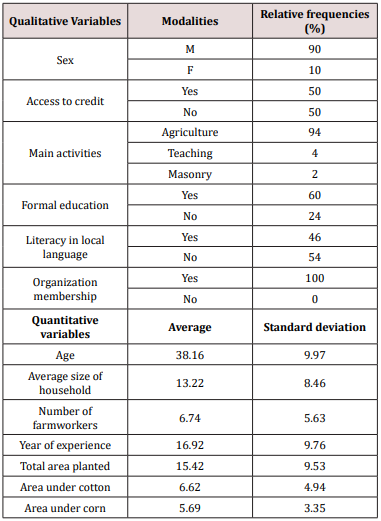
Table 3 below summarizes the socio-demographic characteristics of the producers surveyed in this study. It indicates that the subjects included in the sample are predominantly male (90%) with a low representation of women (10%). Ninety-four per cent of them live entirely depending on agriculture, compared to six per cent who make it as a secondary activity. Their farming experience varies from 3 to 40 years with an average of 16.92 years. Compared to the size of farm households in both localities (13 persons), the average number of farm active Worker (7 approximately) is relatively small. Farmers send their children to school until they are unable to move on. Sixty percent received formal education and forty percent got literate in local languages. Among those who have been literate 22% hold the certificate of primary school, 10% hold the certificate of secondary school and 2% hold the high school diploma and bachelor’s degree. Anyone wishing to cultivate cotton is required to belong to a Village Cooperative of Cotton Producers, this justifies the membership to an organization unanimously own by the respondents. The average area of cotton planted is 6.62 ha on an average total area of 15.62 ha. In contrast, the average area of maize grown is 5.69 ha. An observation of these figures allow to say that the cotton takes with a small difference, the top on the corn in terms of cultivated area in the commune. This could be explained by the several constraints faced by corn producers. Note that these results are quite similar to those obtained by [19] in their studies in the same commune. able 2: Structure of the study sample ese two crops from 2011 to 2016.
Table 3: Socio-demographic characteristics.
lupinepublishers-openaccess-journal-environmental-soil-sciences

Advantages

Advantages Related to Cotton Production

Cotton plays a major role in the lives of Kandi producers. From the exchanges held with the 50 people surveyed, it appears that several benefits are derived from the production of cotton. It allows heads of households and farms to make investments (buying cattle for traction, rolling stock, building houses ...), to perform ceremonies (marriage, baptism, burial ...) and then to meet regular expenses in their households and farms (schooling, food, expenses and debts of agricultural campaigns). The Interprofessional Cotton Association known as ‘’AIC’’ is the structure in charge of the cotton sector throughout the national territory. It has set in place a mechanism that allows producers to get inputs on credit before the campaign. They receive the inputs on credit, use them for production, and subsequently pay their debts at the time of payment. This approach is appreciated by the producers because, they lack sufficient financial means at the time of starting the campaign. Through the comments transcribed below, two producers support what has been said above. “The cash of cotton appears for me like a tontine, it allowed me to buy my bike, to build the house where I live. Thanks to the cotton I bought a ginning machine that serves me a lot after the corn harvest. My eldest son is already old enough to marriage. I need to buy him a motorcycle and prepare for his wedding by next year. It is on the cash of the cotton that I count to be able to do it. “ “The cash we get from cotton also allows us to do ceremonies. It is an obligation for us. In our culture, when someone close to your family dies, that means that your money is dying too. You cannot have money hidden somewhere without doing it. It’s like a duty for us.

Advantages Related to Maize Production

Corn in the first place ensures the food needs of households and the farm. After production, much of the crop is set aside to allow the producer, his family and those who serve him to overcome hunger, one of Maslow’s primary human needs. In the same way, the seeds used by the producers are taken from the previous crops. Apart from these two aspects, a great part of the producers have said that corn helps them financially. In fact, after harvest they reserve a larger portion for commercial purposes. The main reason behind this, is to cover regular expenses and household contingencies. These unforeseen events are usually cases of illness or death. Growing maize for the farmer is therefore a way to keep his relatives in safe from the food and financial point of view. The comments collected on this issue were analyzed and reissued below. “Corn helps us a lot, that’s what we eat at home almost all the time. In the form of dough, boiled, and akassa (local meal made with corn). When we are facing a financial problem we just have to take a bag of maize, sell it and the problem is solved. “Cotton’s cash lasts before coming. All the while, it’s corn that keeps us alive. Corn helps us a lot without lying to you.”

Cotton Production Constraints

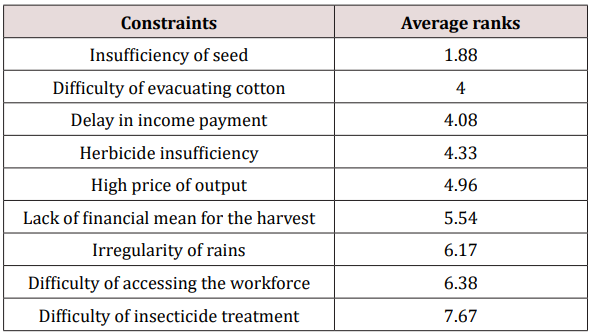
The benefits of cotton and corn production are enormous. However, during the survey, producers listed a number of constraints they face every day. Seven main constraints came back during the exchanges. They have been grouped in the following table with their respective average ranks. It is noted after analysis of the table that the main constraint reported by the population studied is the insufficiency of the seeds supplied to them. The majority of producers have not only deplored the lack of seeds but also the late availability of these inputs. Similarly, the removal of seed cotton, the late payment of cotton costs, the inadequacy of herbicides and the high cost of inputs are the secondary constraints recorded in this study. It is also important to note through the Kendall coefficient (0.379) that the order of importance of these constraints varies quite remarkably from one producer to another (Table 4).
Table 4: Classification of constraints related to cotton production.
lupinepublishers-openaccess-journal-environmental-soil-sciences

Corn Production Constraints

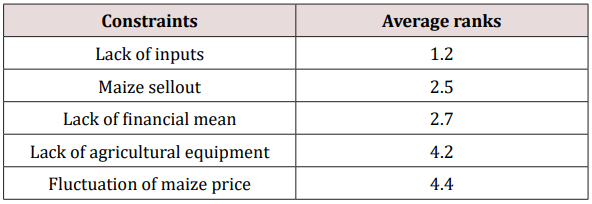
Concerning corn production constraints, there is a relatively high degree of agreement on the ranking (Kendall’s coefficient = 0.698). The first three constraints recorded are the lack of specific inputs for maize, the obligation to sell cheap the crops, and the lack of financial means to cover the expenses inherent to production. The lack of agricultural equipment and the fluctuation of the price of maize occupy the last places in this ranking (Table 5).
Table 5: Classification of constraints related to corn production.
lupinepublishers-openaccess-journal-environmental-soil-sciences

Corn or Cotton

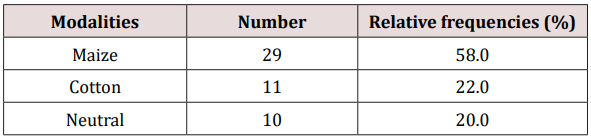
The objective of this section is to expose the respondents’ position after having simulated a situation where they are faced with making a choice between the two crops. It also aims to explain the reasons justifying their respective positions. Table 6 presents the distribution of producers according to the crop chosen. From this table, it appears that more than half of the producers (58%) chose corn, 22% cotton and 20% decided not to take a position. Table 7 below is a summary of the reasons given by the producers following the choice made. Producers, who opted for cotton justify their choice by the fact that the sector is organized, the price is fairly stable, and inputs are provided on credit. At the same time, those who chose maize justify this by its ability to cope with the producer’s financial problems, its ability to keep them alive before the arrival of cotton revenue and also by its easiness and short production cycle. Producers who have maintained a neutral stance argue that the two crops are inseparable and that in the current context, corn production is necessary in order to reap the benefits of cotton.
Table 6: Crop chosen by farmers.
lupinepublishers-openaccess-journal-environmental-soil-sciences
Table 7: Summary of the reasons given by the producers following the choice made Farmer stances.
lupinepublishers-openaccess-journal-environmental-soil-sciences

Discussion

As maize is a foodstuff, it is mainly used to cover the food needs of producers and their households. The forms under which it is consumed differ from one region to another, or even from one social category to another [20]. In Kandi commune, it is consumed in the form of porridge, paste and akassa. Secondarily, it is the subject of a commercial transaction and generates significant income for producers. After discussions with these producers, it is noted that the income earned is used for security purposes and social fulfilment. Purchases of food, buildings and ceremonies (marriage, baptism, death ...) are the main uses made of these incomes. They also, but very rarely, invest money that can add value to their production. Purchasing production equipment is generally limited to the minor tools that are necessary. This could be explained not only by the relatively large size of households living at the expense of these incomes, but also by the primacy of physiological and security needs over other needs. The difficulties that undermine the maize sector in the municipality are enormous, as well as the benefits that result from it. The lack of specific maize inputs outweighs all constraints by unlawfully resorting to inputs for cotton production. According to [5]; [7] and [21], this diversion is reflected in the low yields obtained at the cotton level. One could say that maize seems to be in the study area a parasite of the cotton crop. Studies conducted by [22] on the corn seed production and distribution system in accordance with this study revealed that the lack of input is one of the main weaknesses of the maize sector. The study also shows that, apart from the lack of inputs, the sale at low prices of harvests is a strategy developed by producers in urgent need of financial means. They are often lacking when they harvest the cotton. Cases of illness or other unforeseen events arise occasionally. In response to these problems, they sell corn crops. Those who do not adhere to this practice generally resort to Micro Finance Institutions (MFIs) loans as mentioned by [23]. The ‘‘warrantage’’, (a sort of securing by storing a part or the full harvest) implemented in Benin for more than a decade [24] in response to this situation hasn’t unfortunately had a significant impact in the study area. With regard to cotton, it is noted that income from production has the same purpose as corn, with the difference that cotton is exclusively sold and used more for sustainable projects. In some localities in the study area, cotton producers pay contributions after receiving cotton income to build classrooms or other community infrastructures. Numerous producers greet the organization around the cotton sector and mainly the credit-input which is granted to them. This credit would allow them, according to [25], to effectively fight against pests and raise the level of fertility of their land. Nevertheless, the high cost of inputs, the insufficiency of seeds supplied and especially the delay in their delivery are denounced as the real handicaps of the sector. Many are forced to informally leave money in order to have the extra amount of seed needed. Added to this, the evacuation of cotton harvests from the production areas to the factory loses its nature of gratuity at a given period of the campaign. All these constraints call into question the performance of the production system.

Conclusion


The aim of this study was to shed light on the two most important agricultural value chains in northern Benin. This, through the advantages and constraints that characterize their productions. At the end of the study, it appears that cotton as much as maize represents a lot. farmers. Corn is the staple of their diet and significant revenues are derived from the production of both crops. These revenues are mainly used to meet the needs of households and their social development. Cotton, on the other hand, enables producers to meet their economic and social needs. Besides, the two production systems are subject to constraints that need to be considered for the betterment of these sectors and the actors involved. Giving common attention to both crops through the organization of the maize sector and the optimization of the services provided by the AIC are means likely to boost the satisfaction of all the actors involved. 

For more Lupine Publishers Open Access Journals Please visit our website:
For more Open Access Environment Journal articles Please Click Here:
To Know More About Open Access Publishers Please Click on Lupine Publishers


Follow on Twitter   :  https://twitter.com/lupine_online


Friday, 3 January 2020

Lupine Publishers-Dirty Linen?

Lupine Publishers | Journal of Textile and fashion Designing


Introduction


Linen used to be the most widely used textile material for apparel clothing for ages during the primordial era. Additionally, owing to its strength, durability and long lasting property, the ancient Egyptians were considered to use it even as a currency. Thus, Linen was an intrinsic and intimate component of human life and it was valued so much that cleaning of household cloths in public place probably led to the popular colloquial term of washing dirty Linen (personal matters that could be embarrassing if made public). Linen which ruled the northern hemisphere garb for thousands of years lost its importance in the last few centuries as another natural fiber "Cotton" also initially marketed as white gold gained prominence during British colonization in Asia and the advent of industrialization. Availability of vast land mass for cultivation of cotton in Indian subcontinent, claimant tropical weather conditions, cheap labor, ease of downstream processing, etc boosted popularity of cotton and it became the most popular textile substrate around the globe within a short time. Linen, which enjoyed a lion's share among the natural farm-cultivated textile substrates until the 17th century, lost its mare and reduced to hardly 1 % of total textile fiber consumption by mid 19th century. However, last few decades have witnessed revival of Linen and usage of this long and thick fiber in apparel and home furnishing segment.
Linen is best grown in cold and moist climatic conditions, the claimant weather of Western Europe is considered to produce best quality of Linen. France, Belgium, Netherlands and other neighboring countries contribute to about 80% of global Linen fiber production of about 1,500,000 MT while remaining 20 % comes mostly from Egypt, Russia and China. Though, the Linen fiber cultivation is less in China, it has the highest Linen yarn spinning capacity amounting to almost 80 % of global production. The largest consumer of Linen made textile material worldwide is considered to be the USA, followed by Europe and India. However, their consumption pattern is different. In the.com and Europe about 30% of Linen is used in clothing and 70% in home furnishing, while in India almost 70% is consumed in clothing and remaining for home furnishing. India is considered to be one of the fastest growing markets for Linen and blended textile material and bout 30,0 MT was consumed last year and is believed to be growing at CAGR of about 15% in last decade. Linen's ability to absorb sweat and keep the body cool makes it a perfect fabric for India's climate.
Further, with the growing awareness about sustainability and various aspects of a textile material in terms of its environment impact, water footprint, biodegradability, long evity, etc the focus is shifting to Linen as it is one of the most eco friendly natural fibers. Cotton and Linen are both natural fibers of cellulosic origin containing hydro glucose units but there are many differences between them in terms of physical, environmental and usage performance. Apart from the use of Linen fiber in textile application, its other parts are also used as varnish for wood preservation and theOmega-3 fatty acid extract from its seeds "Linseed oil" as a nutrient for animal health. Linen has many fold advantages over cotton and other natural fibers as it
    a) Gains strength when wet and strongest among all natural fibers
    b) Provides natural drape due to crispy appearance
    c) Retains shape, does not shrink or stretch owing to nonelastic behavior
    d) Becomes soft and supple after washing
    e) Requires less quantity | thread count due to longer length and high fiber thickness
    f) Appears pleasant due to inherent luster and texture
    g) Wrinkles easily but become smoother through handling and use
    h) Absorbs up to 20% moisture before it begins to feel damp
    i) Enhances wicking property owing to hollow fiber interior
    j) Prevents bacterial growth making it ideal for towels, bed spreads, upholstery, curtains
    k) Retains heat and cold from human body due to insulating property
    l) Keeps cool in the summer and traps warmth in winter
    m) Resists static electricity and avoids danger of static shock during wear
    n) Alleviates arthritis and dermatitis due to hypo-allergenic power
    o) Induces better sleep due to anti-stress property
    p) Enhances usage comfort due to air permeability and breathability
    q) Needs less water, fertilizers and insecticides during farm cultivation
    r) Resists dirt and stains hence easy to wash and clean
    s) Retains physical appearance due to non-pilling tendency and no lint formation
    t) Enhances aesthetic appeal due to presence of slubs or small knots in the yarn
    u) Resists harmful electromagnetic radiation from sunlight
Gleaning from the research articles and review material on Linen, given below is concise information on flax farming, fiber extraction, yarn preparation, mechanical operation, machinery involved, wet processing methods and the end user applications. Cultivation. Linen fiber is extracted from flax plant (Latin name linum). Plant grows about 1 meter within 100 days from sowing to harvesting. A variety of seeds are used for plant breeding based on fiber content, weather tolerance, crop protection and weed control behaviour.
Traditional harvesting is usually done by plucking off the flax plants, tying them in bundles and allowing them to rot in the field to achieve decomposing of stalk and easy separation of fiber. This process is called retting it helps remove gummy substances from the bast fibers. Retting can also be done by other methods like:
    a) Pond retting-leaving the flax plant stalks in tanks of water, it takes about 2-4 weeks
    b) Stream retting-plants are immersed in slow moving streams the quality of the fiber separation is better than pond retting
    c) Chemical retting-involves immersion of the dried plants in a tank in acidic or alkaline solution. Though this process is comparatively economical and time saving it tends to affect color and strength of fiber if not controlled adequately.
    d) Enzymatic retting-fastest and costliest process makes use of pectinolytic enzymes for loosening fibers within few hours
    e) Dew retting-widely used, highly stainable but slow process, the stalks are left in the field for about 6 weeks, considered to provide best result. After retting, to remove the woody matter, the stalks "scotched" to remove woody matter by crushing them between two metal rollers. Then they are heckled and combed to separate out short fibers. The short fibers are collected for making coarser sturdy goods for upholstery usage while the remaining long and fine fibers are used for making apparel clothing. The fibers vary in length from about 25 to 150mm and 12-16 micrometers in diameter. The long fibers are then processed using a 'wet spinning' technique, while the short fibers are spun using a 'dry spinning' technique.
The long Linen fibers are put through machines called spreaders, which combine fibers of the same length and laying them parallel for creating a sliver. Then it is passed through a set of rollers to make a roving. The roving's are drawn out into thread and ultimately wound on bobbins or spools. The yarn is knitted or woven into fabric as 100 % Linen or in blends with other substrates as per the end use requirement.

Chemical composition

The stem of flax is made up of 5 layers-epidermis, cortex, bast, cambium and woody tissues. The outer layer is covered with thin layer of wax during plant growth. The cortex contains pectin and natural coloring components which impart hues varying from of grey to light brown. Linen fiber contains only about 70 % cellulose while remaining is hemi cellulose, lignin, wax and woody matter sprit. Hence, the conventional alkaline scouring and oxidative bleaching results in about 25-30% weight loss and adversely affects strength of the yarn.

Wet processing

The Linen fiber is processed in many of its forms like Rove yarn, packaged bobbins, knitted material or woven fabric depending on the substrate, machinery available and the subsequent processing steps. The pre-treatment is carried out depending on the requirement of whiteness for full white or for bright light | pastel shades, semi bleach (3/4 white) or partial bleach (1/2 white) by a multi-step scour bleach process.
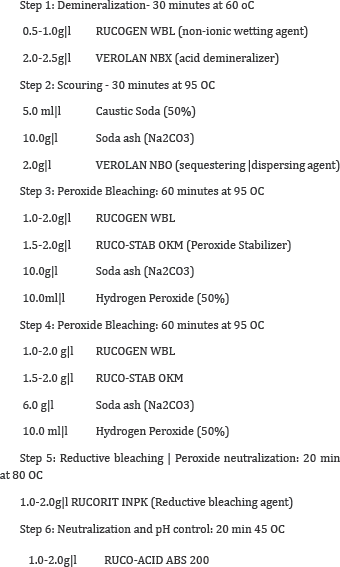
Demineralization is carried out first to get rid of heavy metal ion contamination from the fiber and to help achieve improved whiteness and minimum yarn strength damage. Oxidative bleach with Sodium Chlorite is considered to give best results, however, due to eco concerns non-chlorine bleach like hydrogen peroxide or per acetic acid is preferred. Further, it is considered that a final treatment with reductive bleaching agent helps improve whiteness. In practice it is desired to minimize and control weight loss during pretreatment process to about 10-12% from cost economy as well as yarn strength retention point. Given below is a guideline pretreatment process based on widely used industrial practice
Lupinepublishers-openaccess-journals-Textile-Fashiondesigning

Dyeing being a cellulosic fiber Linen can be dyed with a range of dyestuffs like Direct, Reactive, Sulphur and Vat. Considering the brilliancy of shade and fastness properties, Reactive and Vat dyes are most preferred. Depending on the substrate form and the machinery in use, Linen can be dyed by exhaust, semi continuous (Cold Pad Batch) and continuous (Pad-dry-Pad-steam, Pad-Dry- Cure) methods.
Considering the basic requirement of dye diffusion and uniform level dyeing, the high exhaust, high energy specialty bis-monochlorotriazine based Reactive dyes like TULACTIV XLE are most popular for exhaust application while TULACTIV C dyes for CPB and PDPS application. Linen is known for its long lasting durability, therefore for high end apparel clothing end use application it is desired that the color should also last till the fiber lasts. In this aspect Vat dyes owing to their excellent light, wash fastness properties are highly recommended. NOVATIC MD a micro disperse variety is widely used for both exhaust as well as continuous application and TULACON C a liquid variety is preferred for dyeing of light pastel shades in one step Pad-Dry-Cure process.


Summary

Based on various ecological and superior performance criteria, Linens regaining its lost position. It is used in apparel as well as various home furnishing items like bed spreads, towels, curtains, table cloth, etc, the fashion savvy young generation has realized benefits of Linen in terms of its wearing comfort in any kind of weather, varying climatic conditions, durability, sustainability as Linen is one of the most biodegradable and stylish fabrics in fashion history.


For more Lupine Publishers Open Access Journals Please visit our website:
For more Open Access Journal of Textile and Fashion designing articles Please Click Here:
https://lupinepublishers.com/fashion-technology-textile-engineering/fulltext/dirty-linen.ID.000124.php

To Know More About Open Access Publishers Please Click on Lupine Publishers


Follow on Twitter   :  https://twitter.com/lupine_online
Thursday, 2 January 2020

Lupine Publishers | Effectiveness of Health Education Programmed on Knowledge regarding Management of Orthopedic Appliances among Fracture Patients at RL Jalappa Hospital, Kolar

Lupine Publishers | Journal of Orthopaedics

Abstract

Introduction: Effectiveness of health education programme was evaluated among forty patients diagnosed as having fracture and admitted at RLJH and RC with different types of orthopedic appliances.
Methodology: Using quasi experimental one group pre and post test design, patients were assessed for their knowledge followed by a health education programme was administered on management of orthopedic appliances among fracture patients. After seven days, a post test was conducted.
Findings: The results showed that structured health education programmed was effective in improving the knowledge score among fracture patients on management of orthopedic appliances.
Conclusion: Health professionals should spend some time with fracture patient to educate regarding orthopedic appliances and its related complications. So that, future occurrence of complications related to orthopedic appliances can be prevented.
Keywords: Knowledge; Health Education; Orthopedic Appliances; Fracture Patients

Introduction

Fracture is a disruption or break in the continuity of the bone. It usually occurs as a result of blow to the body, a fall, or accident. Traumatic injuries account the majority of the fractures, although some fractures are secondary to a disease (pathological fractures). The highest incidence of fracture in males is between the age group of 15 to 24 years and in women it is 65 years or above [1]. Majority of patients with injuries of the musculoskeletal system will be managed by bed rest, immobilization and rehabilitation itself without requirement of surgical intervention. Immobilization is achieved by orthopedic appliances. These appliances produce skeletal changes by applying force with the help of plaster cast and braces [2]. The patient with plaster cast may develop cast syndrome due to obstruction of superior mesenteric artery and it can be prevented if symptoms are recognized quickly and treatment instituted in a timely manner. Expected complications of plaster of Paris cast are impaired blood flow, nerve damage, tissue necrosis, infection, cast syndrome and also other complications may arise due to prolonged immobilization like hypostatic pneumonia, foot drop, renal calculi, stiffness of joints, constipation, pressure ulcer etc [3]. A study was conducted to assess the knowledge on fracture among 127 osteoporosis patients with recent fragility fracture at Hamilton Health Sciences hospital. The results showed that, majority of patients were unaware of important risk factors related to fracture. The study concluded that education initiatives are essential in improving knowledge among individuals in fracture clinics, acute care and rehabilitation settings, as these areas are an ideal place to communicate information [4]. Majority of musculoskeletal disorders are relatively long time in nature. The care and management of this condition needs a specialized orthopedic nursing practice5. After going through the related literature it was found that there were no studies either in India or abroad specifically related to management of orthopedic appliances. Hence the researcher felt with an objective to evaluate the effectiveness of structures health education programmed on management of orthopedic appliances among fracture patients.

Materials and Methods

This study was based on Ludwig Von Bertalanff’s general system theory. The design used for the study was quasi experimental one group pre test and post test. Based on the objectives of the study, a structured knowledge questionnaire and a lesson plan of health education on management of orthopedic appliances among the fracture patients was prepared in English and then it was translated to Kannada since the study participants communication and understanding were only in Kannada. Later the tool and health education lesson plan was validated by eight research and subject experts for its adequacy and appropriateness. After obtaining an ethical clearance from an institutional ethical committee, a written consent was obtained from the Medical Superintendent of RL Jalappa hospital and research centre, Tamaka, Kolar. After taking consent from the patients, through simple random sampling technique lottery method, 40 patients were selected who were diagnosed as having fracture and admitted to hospital with different orthopedic appliances, with the age group of 20 to 60 years, able to communicate with kannada or English language and willing to participate in the study. Patients who were critically ill, developed complications during the study period and mentally challenged were excluded from the study. Then the data was collected by using structured knowledge questionnaire on management of orthopedic appliances. Followed by on the same day, a health education on management of orthopedic appliances were administered using chart, flash card, pamphlet and OHP by individually and in groups. After seventh day, post test was conducted using same questionnaire. The data was collected from 26th June 2014 to 30th July 2014 in orthopedic wards.

Results

Socio-demographic variables

Table 1 displays socio-demographic variables of fracture patients. The majority( 37.5%) of fracture patients in this study were in the age group of 20-30 years and 30% of them with age group of 51-60 years, most(55%) of them were males, 70% of them were married, 70% of them were Hindus, 80% of them were belong to rural area, 32.5% of them were studied up to high school, 65% of them were belong to joint family, 52.5% were coolie workers and 40% of fracture patients family income was below Rs.5000/- month.

Knowledge score of fracture patients

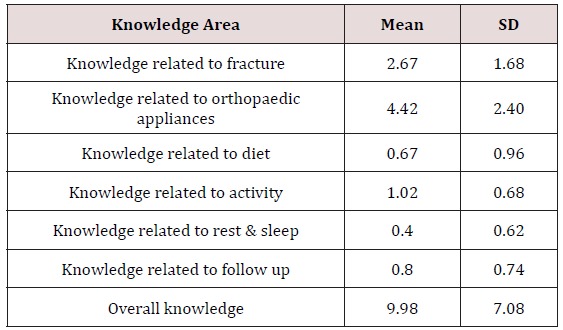
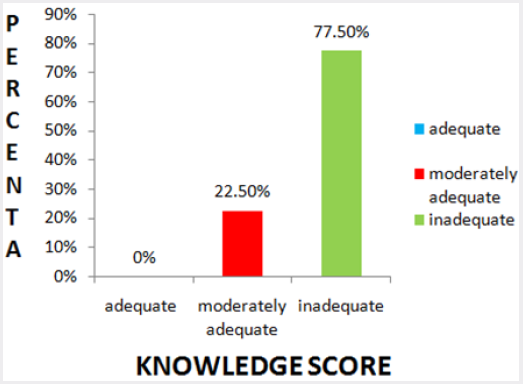
After obtaining socio-demographic data, the fracture patients were assessed for their knowledge score on management of orthopedic appliances and presented in Table 2. Based on overall knowledge score obtained by fracture patients, they were grouped under inadequate knowledge (who scored below 50%), moderately adequate knowledge (who scored 50 to 75%) and adequate knowledge (who scored 76% and above) and presented in Figure 1.
Table 1: The Socio-demographic variables of fracture patients.
Table 2: Area wise pretest mean Knowledge score distribution of fracture patients.
Figure 1: Distribution of fracture patients based on their Knowledge score.

Effectiveness of health education programmed in improving knowledge score

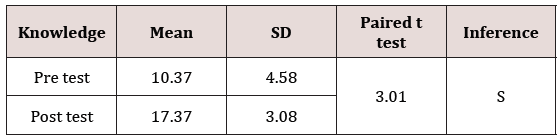
After administering health education programmed, a post test was conducted to know the effectiveness of health education programmed on management of orthopedic appliances and the results revealed that, the pre test mean knowledge score was 10.37 with SD of 4.58 where as the mean post test knowledge score was 17.37 with SD of 3.08, while enhancing the mean knowledge score of 7. The obtain t value was 3.01 which was significant at 0.05 level. This indicated that health education programmed was effective in increasing the knowledge score among fracture patients and the same was presented in Table 3.
Table 3: Comparison of overall pre and post test knowledge scores of fracture patients.

Association of knowledge score with selected sociodemographical variables

The association between post test knowledge score of fracture patients with selected socio demographic variables revealed that, there was no association between gender (x2=0.22), religion (x2=1.13), educational status(x2=0.02), type of family(x2=3.53 ), occupation (x2= 3.52) and family income (x2=0.6) except age in years(x2=7.91) which was significant at 0.05 level.

Discussion

Knowledge regarding management of orthopedic appliances among fracture patients is very essential in preventing complications. Hence the study was undertaken to assess the effectiveness of health education programme on knowledge regarding management of orthopedic appliances among fracture patients and the results showed that, with regard to socio-demographic variables, majority (37.5%) of them were in the age group of 20-30 years and most (55%) of them were males which was contradicted by the study conducted by Swati Kambli [6]. Related to knowledge score, the mean pre test knowledge score was 10.37 with SD of 4.58 where as the mean post test knowledge score was 17.37 with SD of 3.08, while enhancing the mean knowledge score of 7, indicating that health education programme was effective in improving knowledge score among fracture patients and this was supported by the study conducted by Saccone M, Jain AK [7]. With regard to association of knowledge score with selected socio-demographic variables, it was found that there was no association between knowledge with selected socio demographic variables except age.

Limitations

The study was limited to fracture patients admitted at RL Jalappa Hospital and Research centre, with different orthopedic appliances.

Conclusion

The present study concludes that, structured health education programme was effective in improving the knowledge score among fracture patients on management of orthopedic appliances.

Acknowledgement

Researcher expresses her sincere gratitude to all fracture patients who participated in the study and authorities of RL Jalappa hospital for granting permission to conduct the study.

For more Lupine Publishers Open Access Journals Please visit our website:
For more Open Access Orthopedics and Sports medicine articles Please Click Here:

To Know More About Open Access Publishers Please Click on Lupine Publishers


Follow on Twitter   :  https://twitter.com/lupine_online